Stories of History — explore world history through connected narratives
Stories of History

Stories of History: connected world history stories.

Browse a growing library of history stories from Ancient Egypt to the Cold War, with free stories and premium deep-dives all connected.

20 free stories·🔒 60 premium stories·9,000+ years of history

Start reading

Choose a first story

Search

Start reading

Strong first stories

Accessible entry points that give you a foundation for the wider library.
Featured

Core stories to continue with

Big turning points, broad arcs and free reads that connect naturally to the rest of the collection.

Recently added

New stories to explore

Full collection

Browse every story

80 stories in chronological order

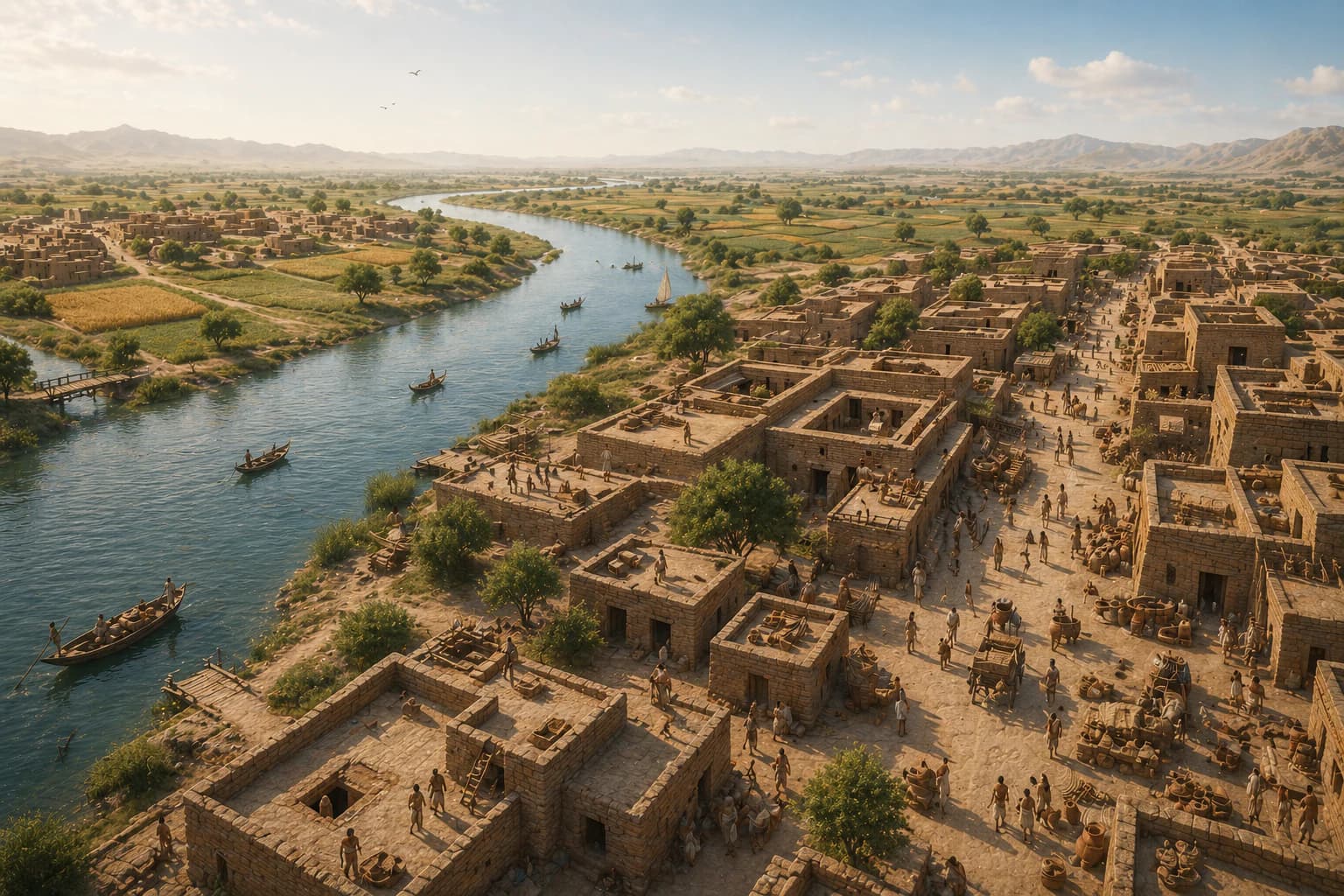
The planned cities and river plains of the ancient Indus Valley civilisation.
StoryPrehistoric
The Indus Valley
7000 BCE → 1900 BCE
Planned cities reveal a brilliant civilisation we still cannot fully read.
Read story →
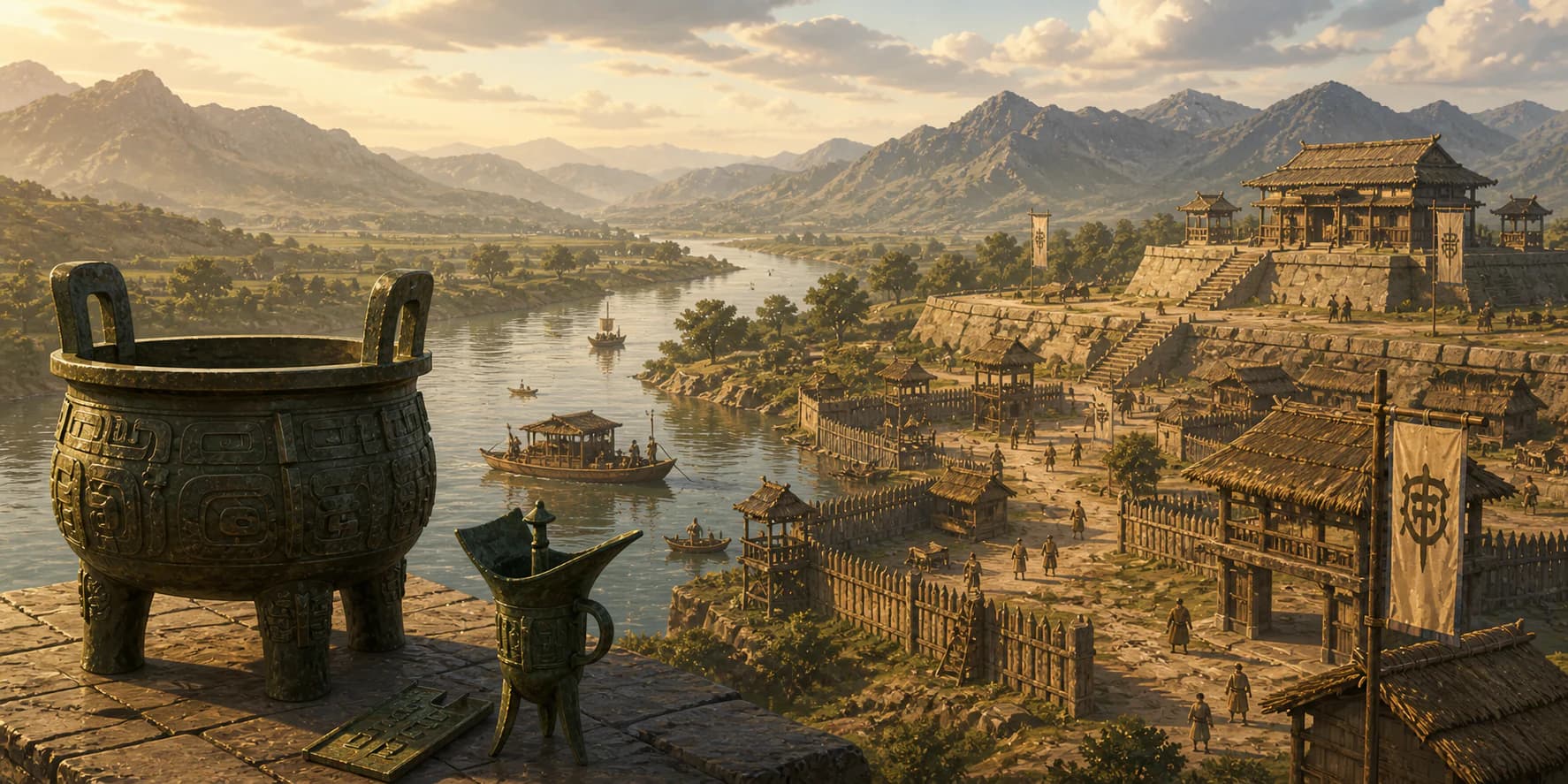
Bronze ritual vessels, oracle bones, and royal temples from the Yellow River civilisations of ancient China.
StoryPrehistoric
Early China
5000 BCE → 771 BCE
Bronze, writing and kingship shaped early China.
Read story →
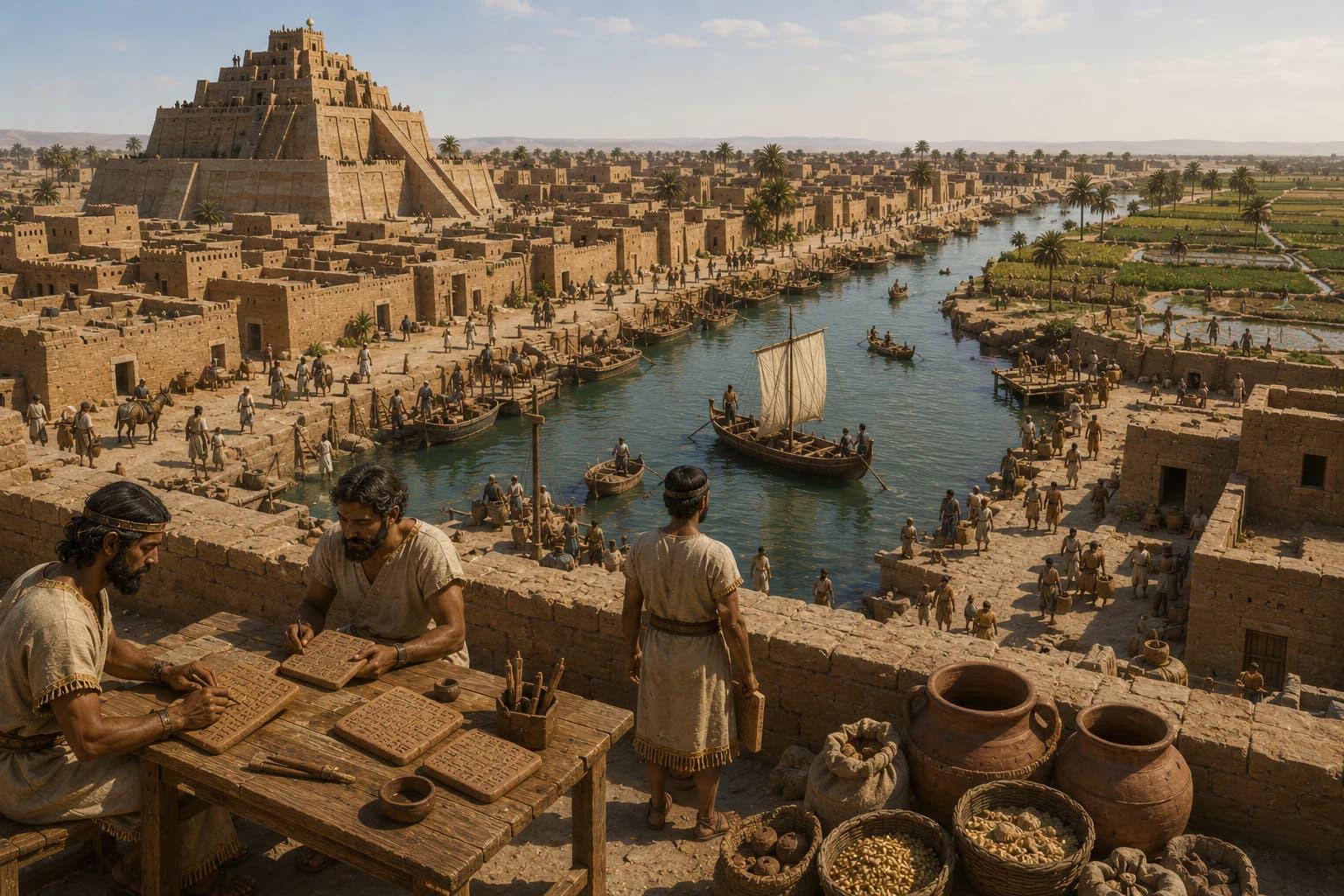
The ancient cities of Mesopotamia rising from the floodplains of the Tigris and Euphrates.
StoryPrehistoric
Mesopotamia
6500 BCE → 539 BCE
Between two rivers, people built cities and invented writing.
Read story →
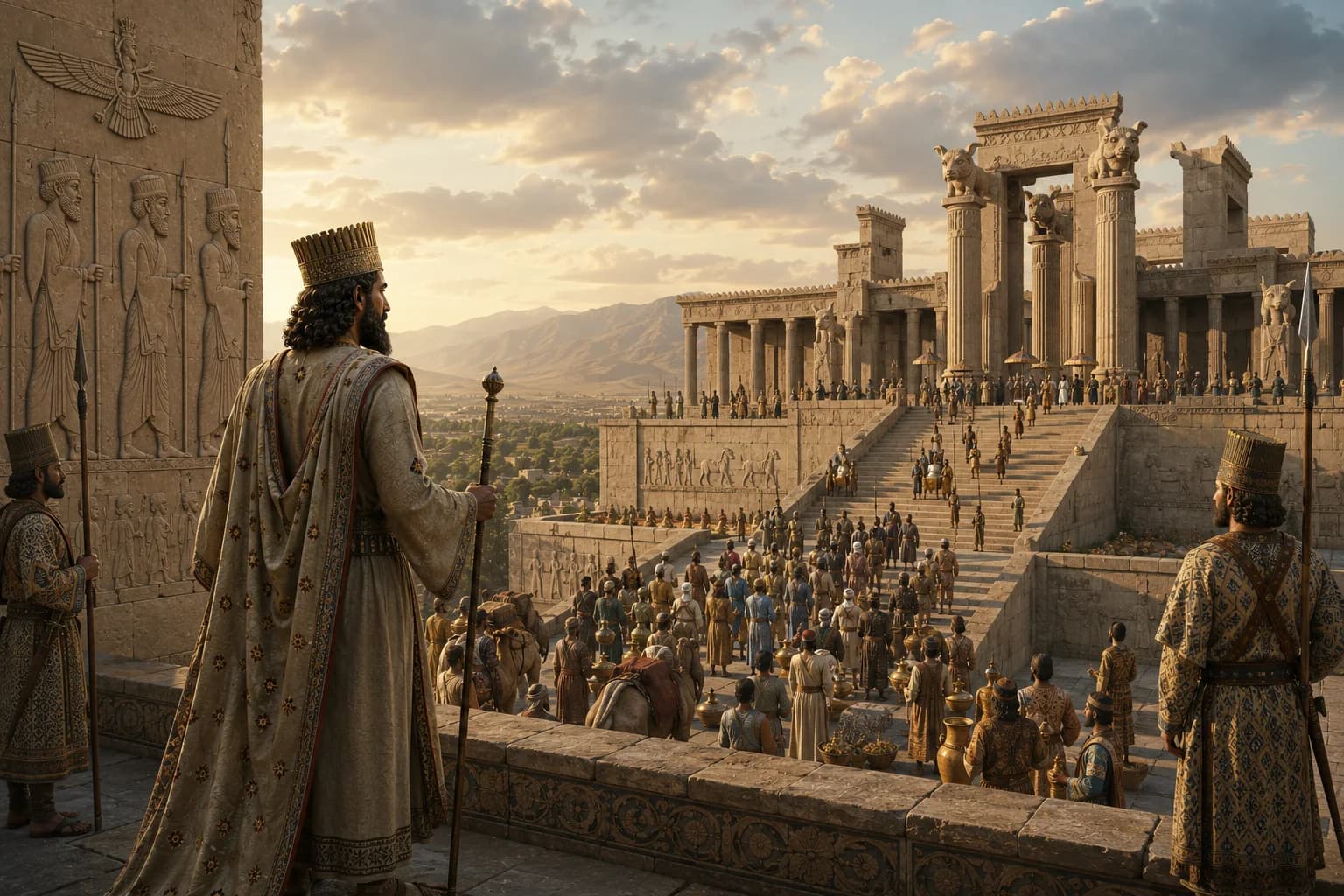
A Persian royal figure overlooking a monumental palace terrace with carved reliefs, columns, guards, and gathered subjects
StoryClassical
The Persian Empire
550 BCE → 330 BCE
Persian kings ruled a vast empire through roads and royal power.
Read story →
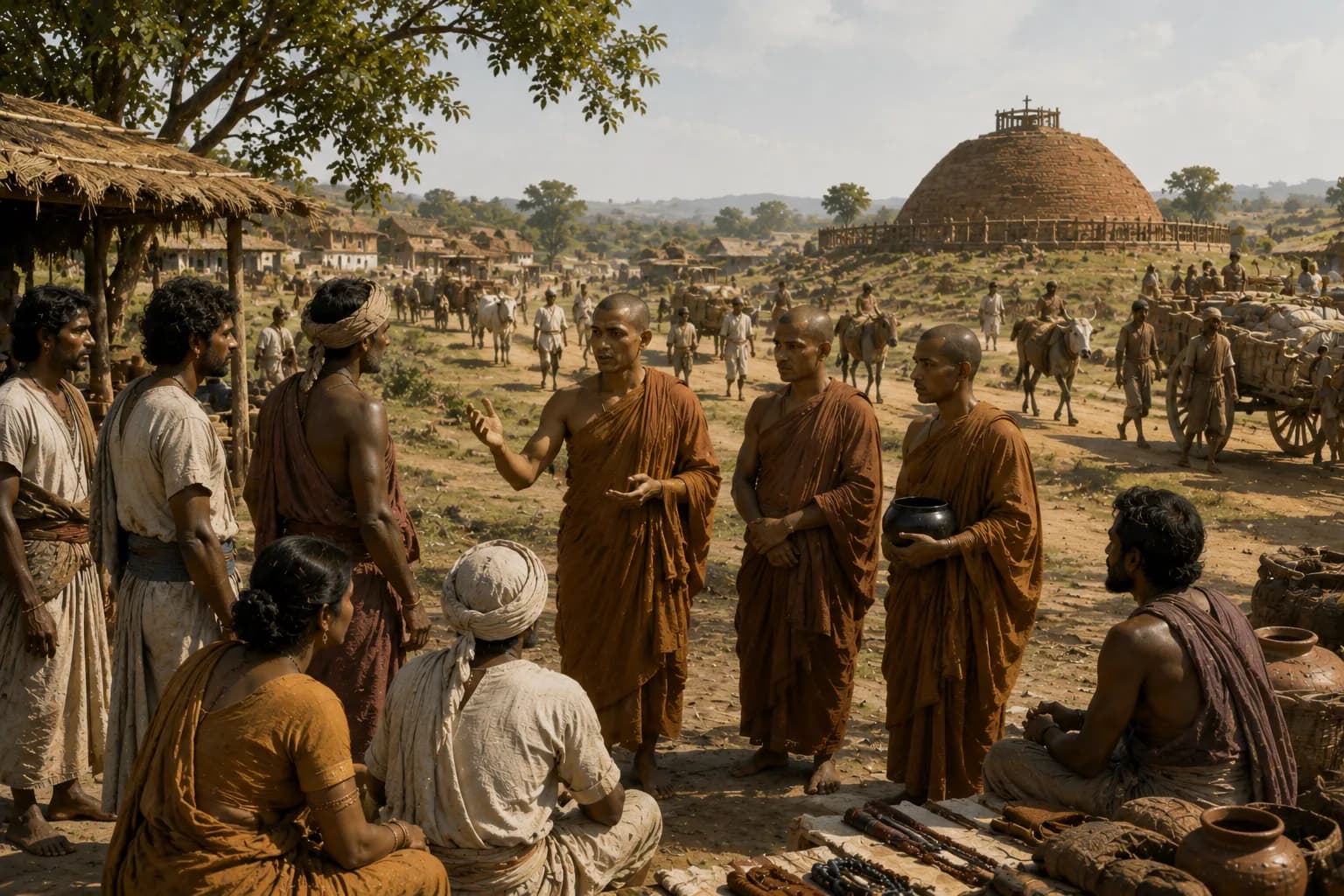
Buddhist monks teaching lay followers near a stupa and trade road in ancient India.
StoryClassical
The Rise and Spread of Buddhism
534 BCE → 232 BCE
The Buddha's teaching grew into a faith across Asia.
Read story →
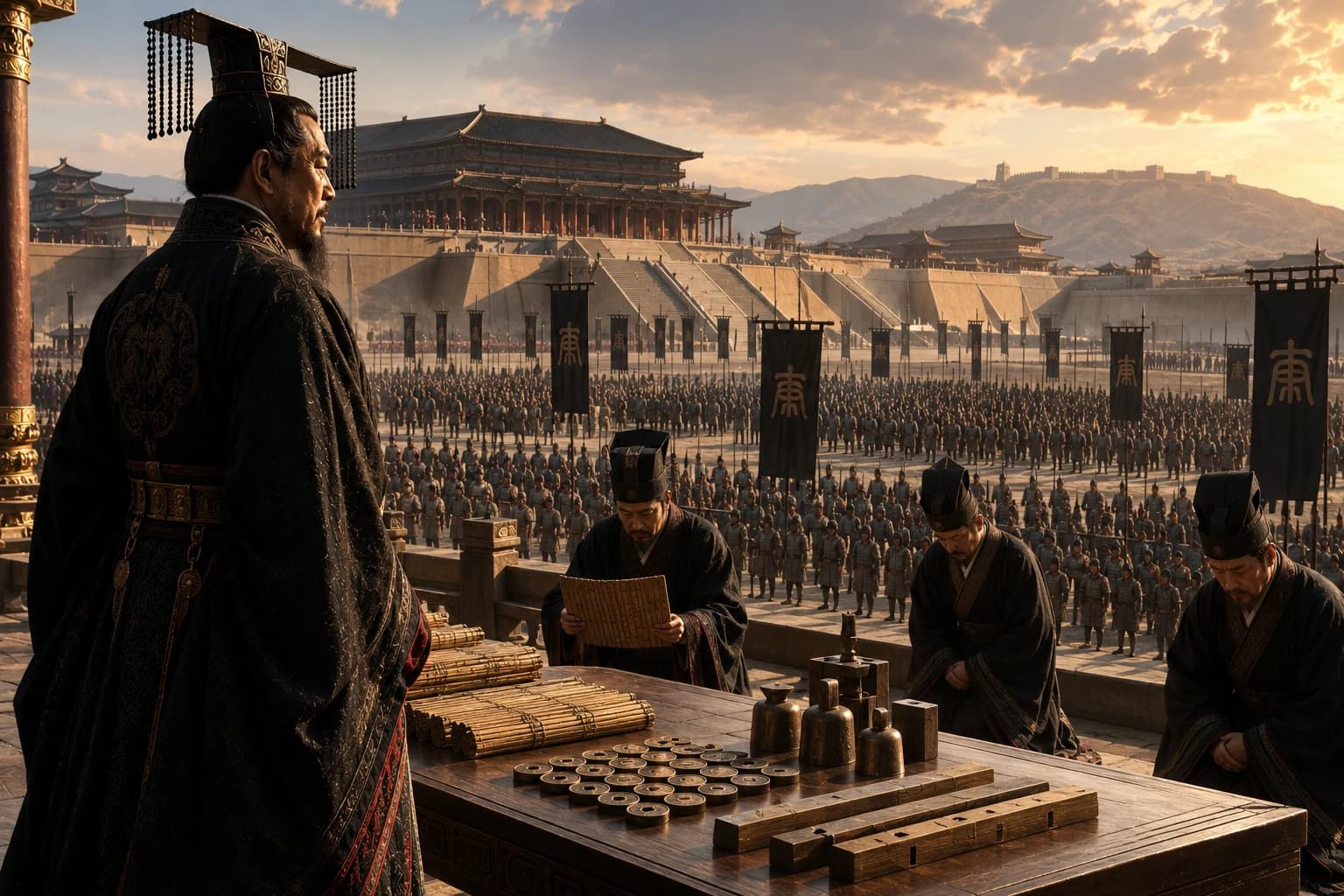
Qin Shi Huang overlooking officials, soldiers, standard weights, coins, and bamboo records after the unification of China.
StoryClassical
Qin China and Unification
403 BCE → 202 BCE
Qin unification created the model for imperial China.
View story →
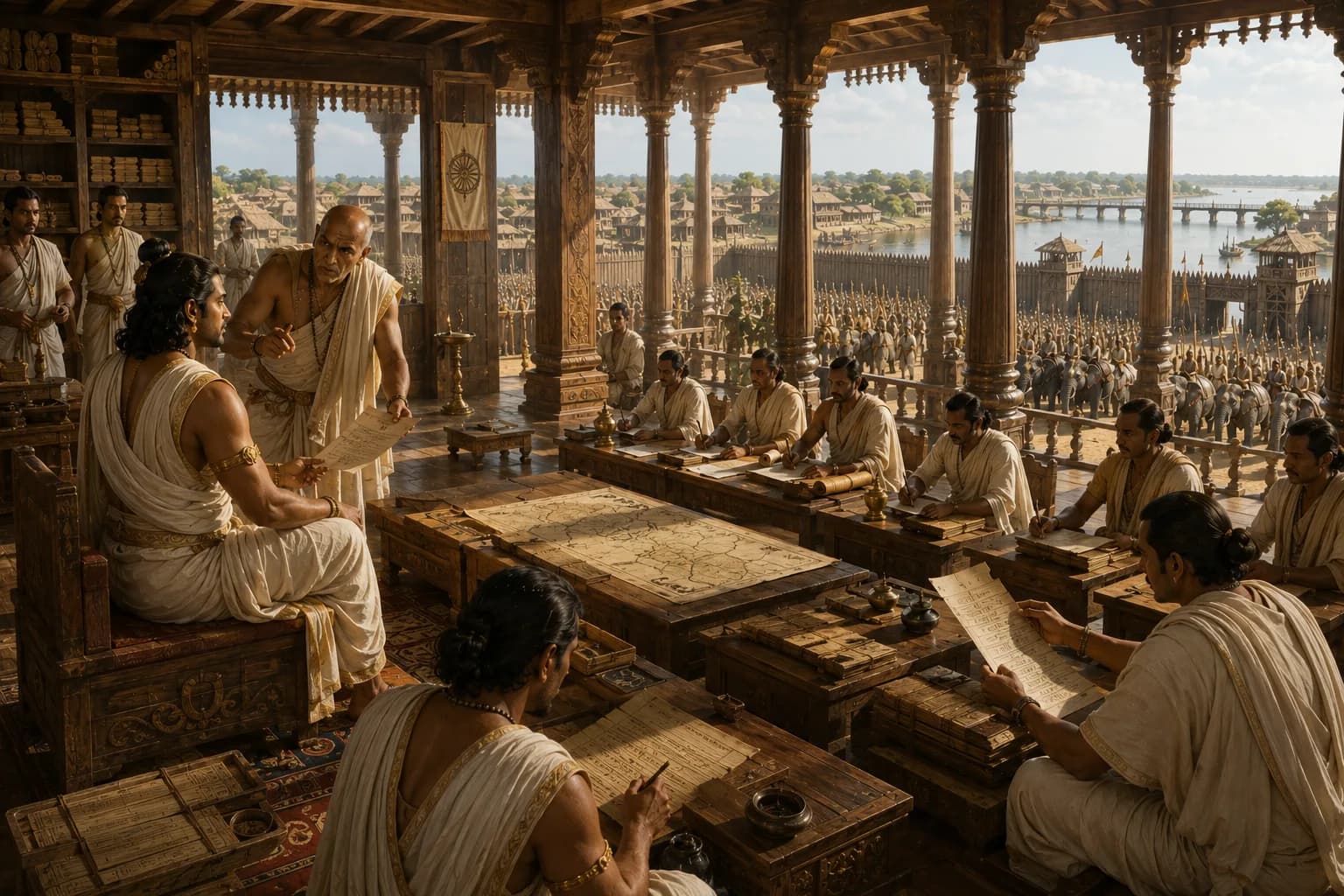
Mauryan officials and advisers studying maps and palm-leaf records inside a palace overlooking Pataliputra and the Ganges.
StoryClassical
The Maurya Empire
322 BCE → 185 BCE
One dynasty united much of India for the first time.
View story →
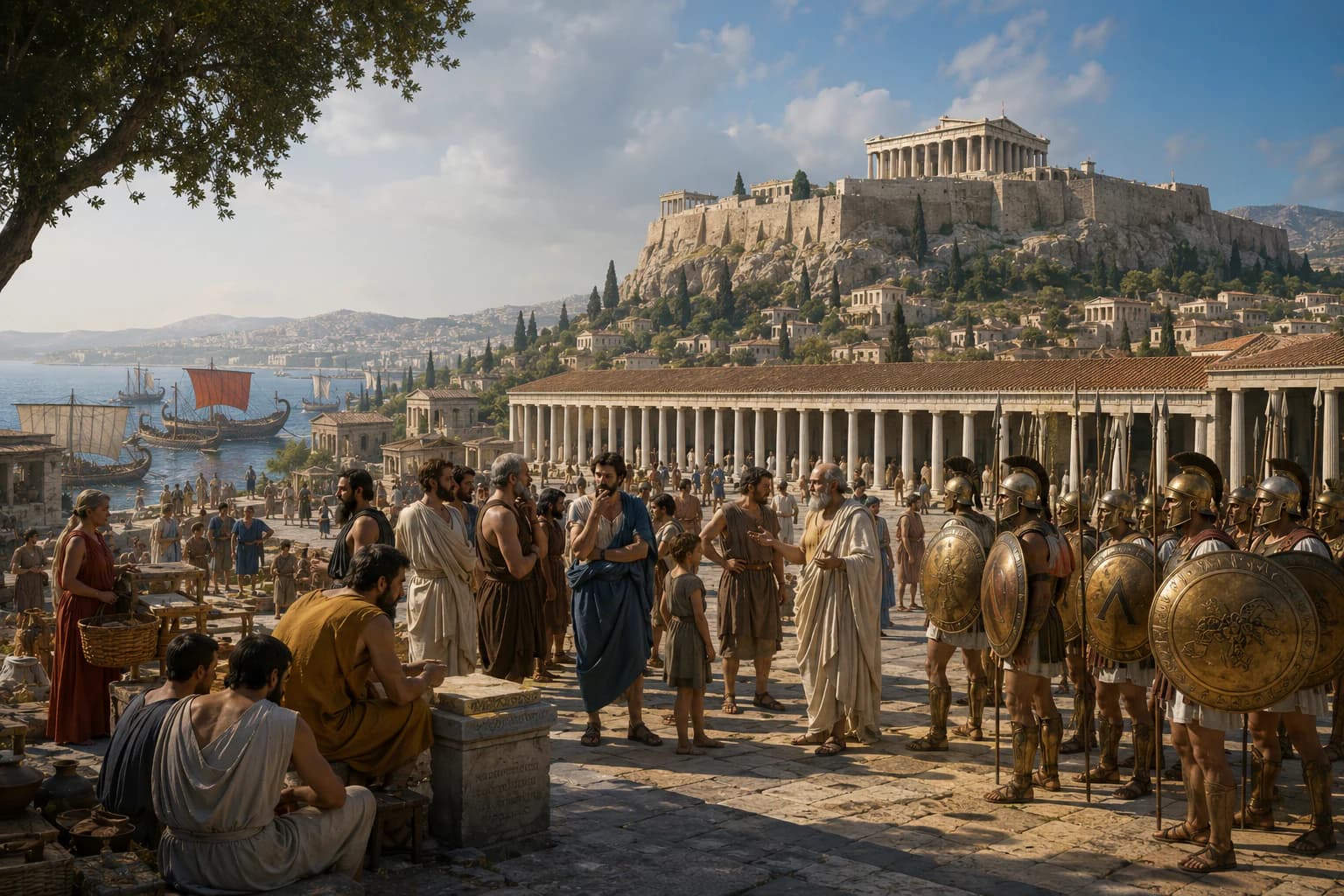
Sunlit temples above a bustling Greek polis, hoplites assembling below as philosophers debate in a colonnaded square
StoryClassical
Ancient Greece
800 BCE → 146 BCE
Greek city-states shaped ideas about politics, art and war.
Read story →
Roman and Carthaginian forces facing one another across the Mediterranean during the Punic Wars.
StoryClassical
The Punic Wars
264 BCE → 133 BCE
Rome and Carthage fought to rule the Mediterranean.
View story →
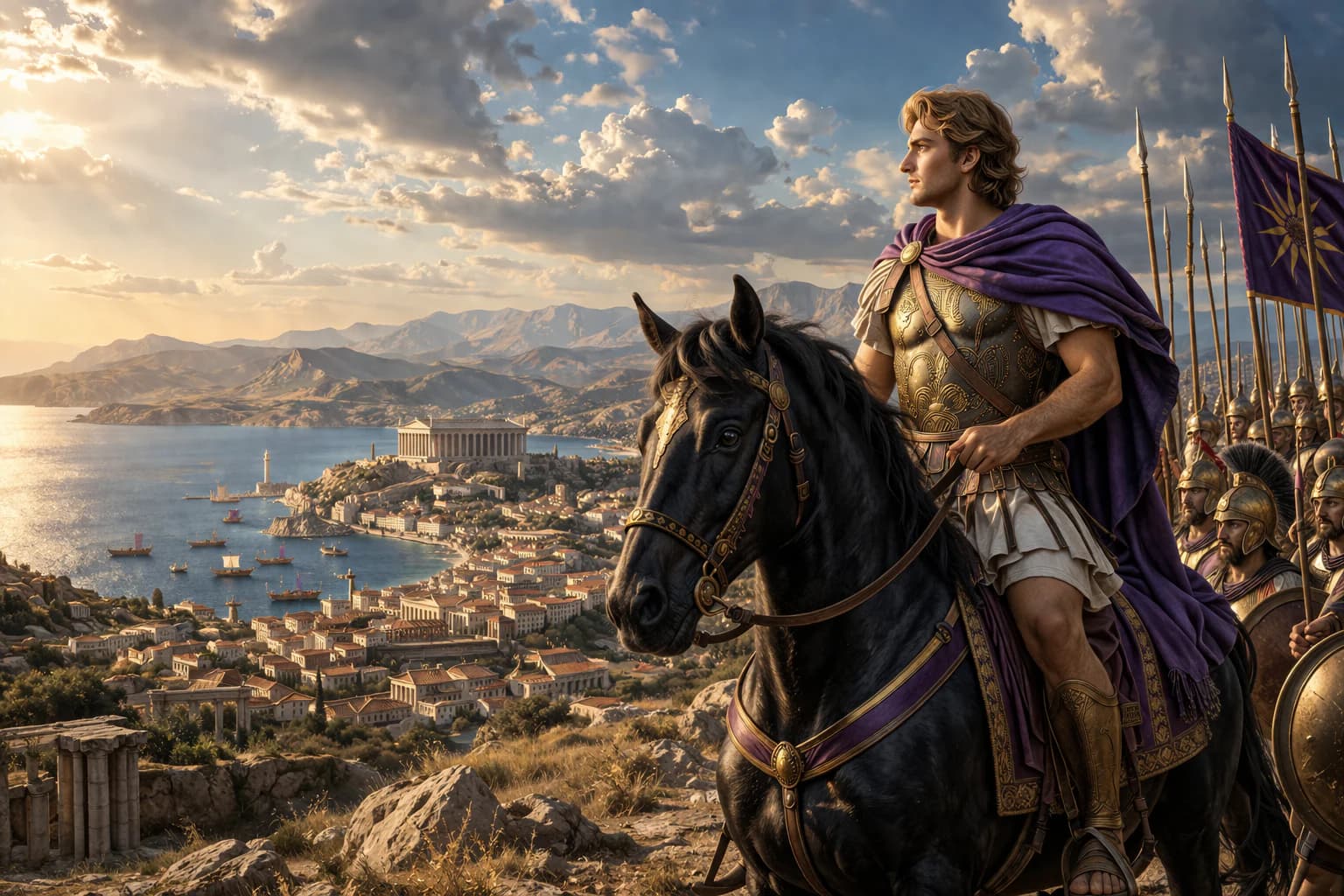
Alexander the Great on horseback leading his cavalry charge at Gaugamela, the Persian army breaking before him across a vast open plain
StoryClassical
Alexander the Great and the Hellenistic World
359 BCE → 30 BCE
Alexander's conquests spread Greek power across the ancient world.
View story →
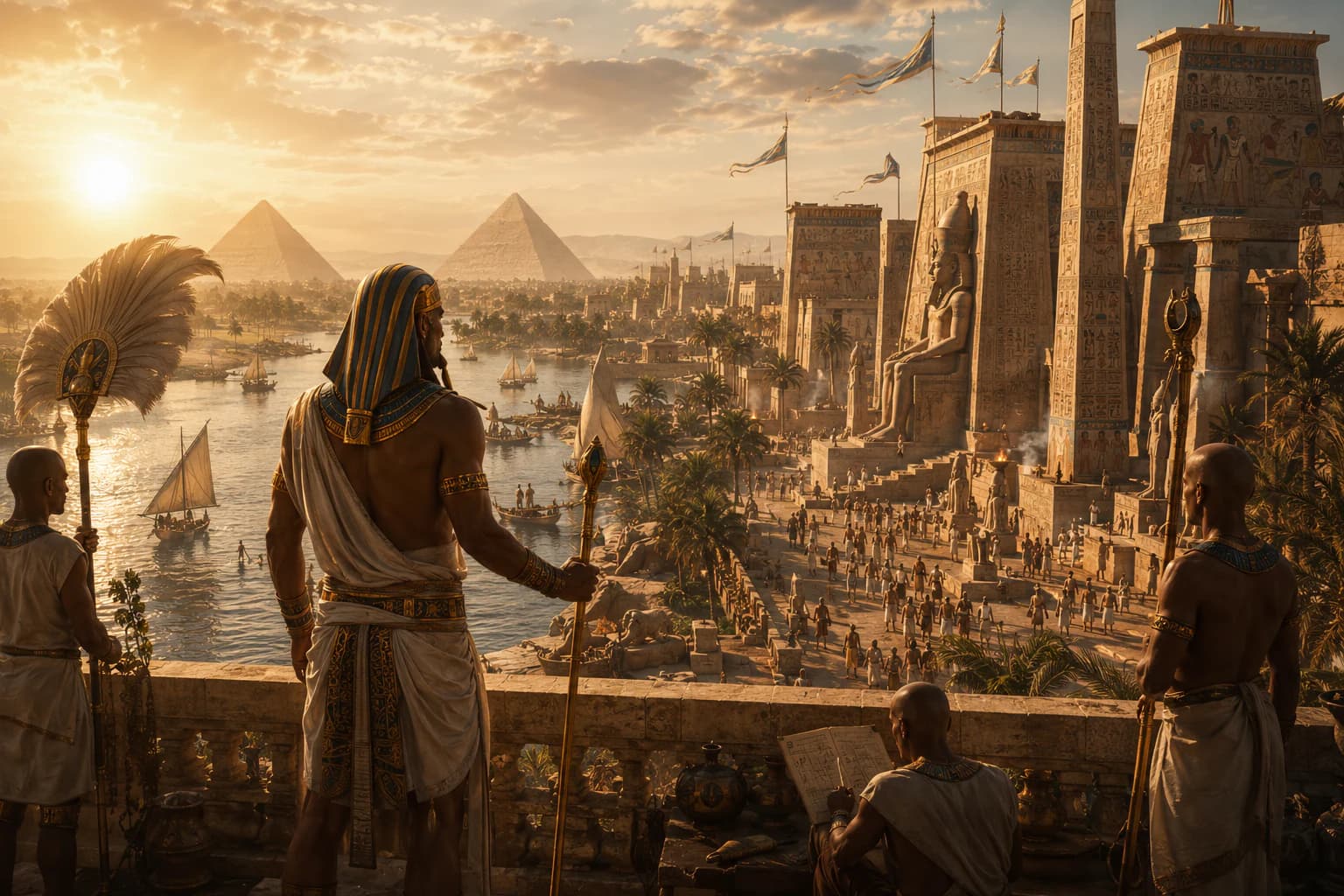
The Nile flowing past temples, pyramids, and royal cities of ancient Egypt.
StoryPrehistoric
Ancient Egypt
3100 BCE → 30 BCE
The Nile helped Egypt's pharaohs rule for thousands of years.
Read story →
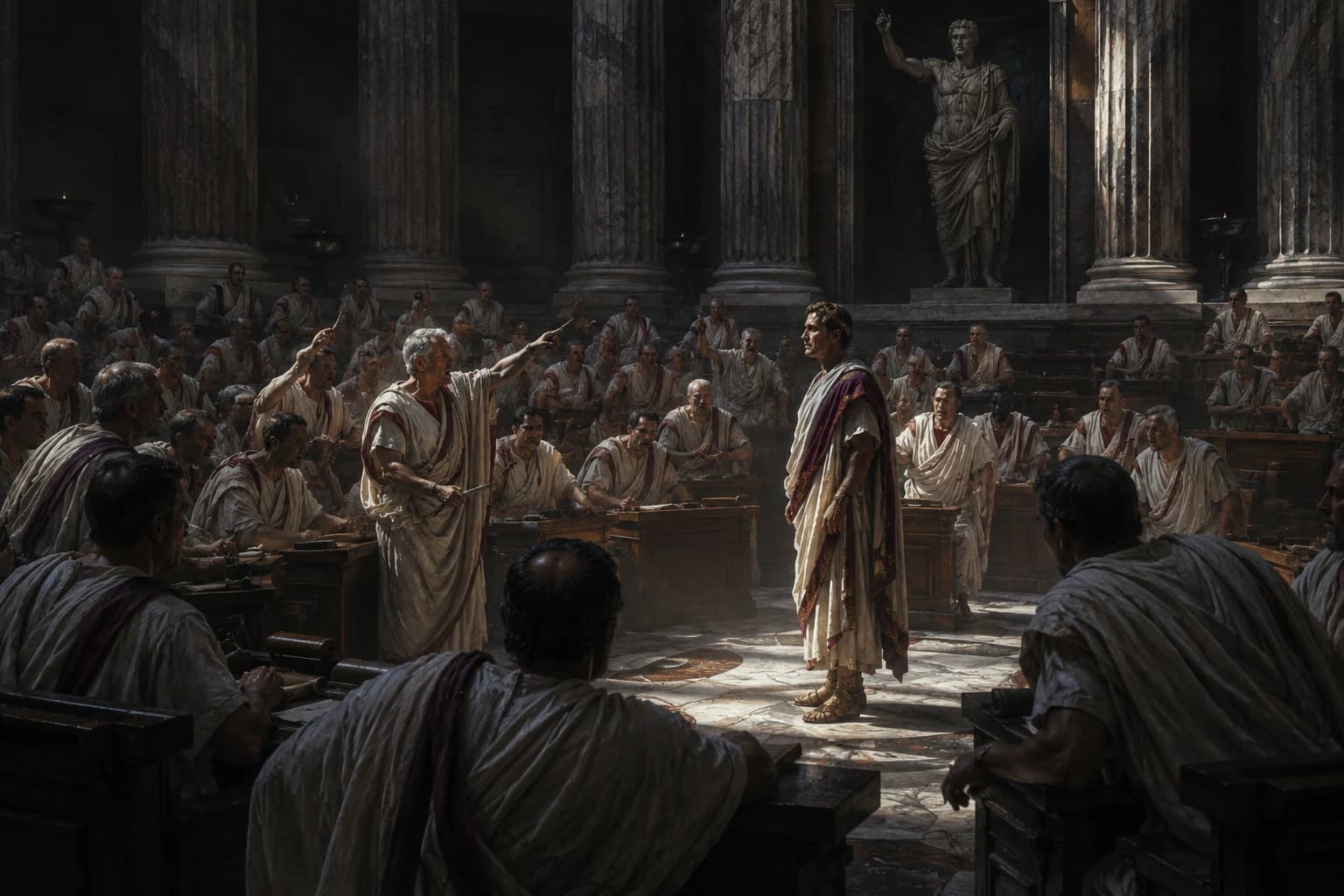
The Roman Republic with senators, citizens, soldiers and the growing city of Rome.
StoryClassical
The Roman Republic
509 BCE → 27 BCE
Rome's republic conquered widely before power fell to emperors.
View story →
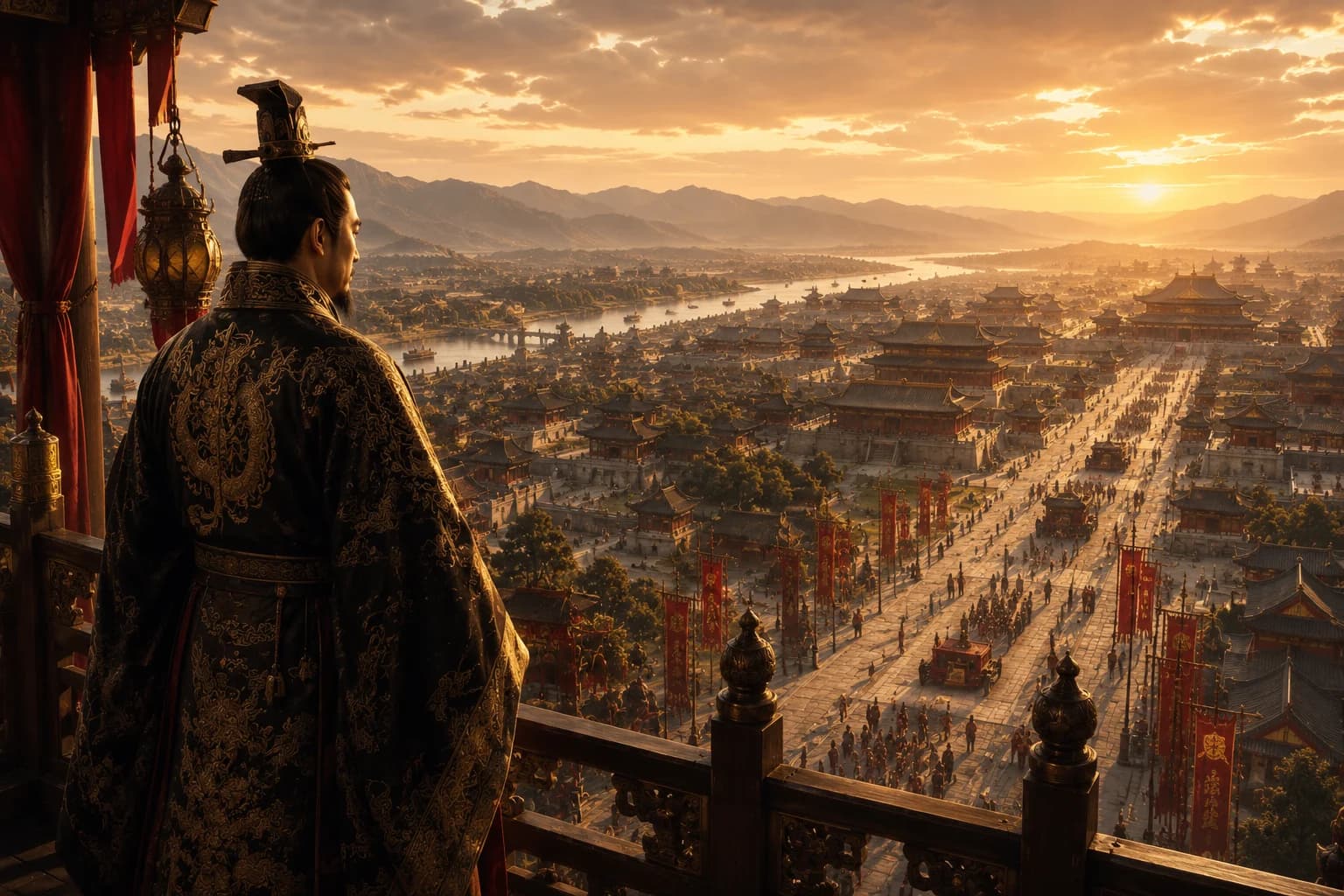
The Han dynasty at its height, with Chang'an, imperial officials, frontier soldiers, and Silk Road routes extending west.
StoryClassical
The Han Dynasty
202 BCE → 220 CE
The Han dynasty gave China institutions and a lasting name.
View story →
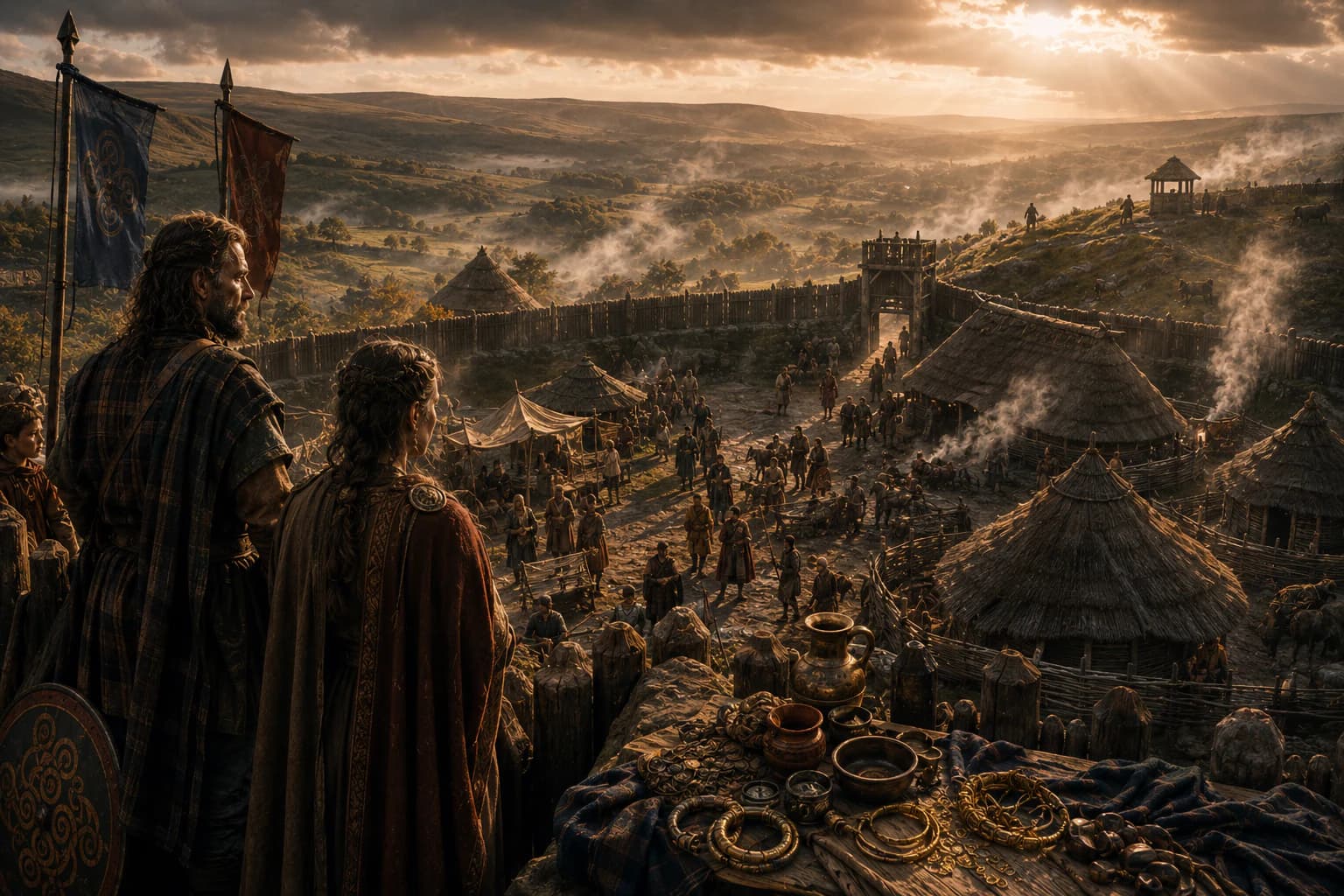
Celtic leaders and warriors look over a hillfort settlement before Roman conquest.
StoryClassical
The Celtic World Before Rome
800 BCE → 400 CE
Celtic communities shaped Europe before Roman conquest.
View story →
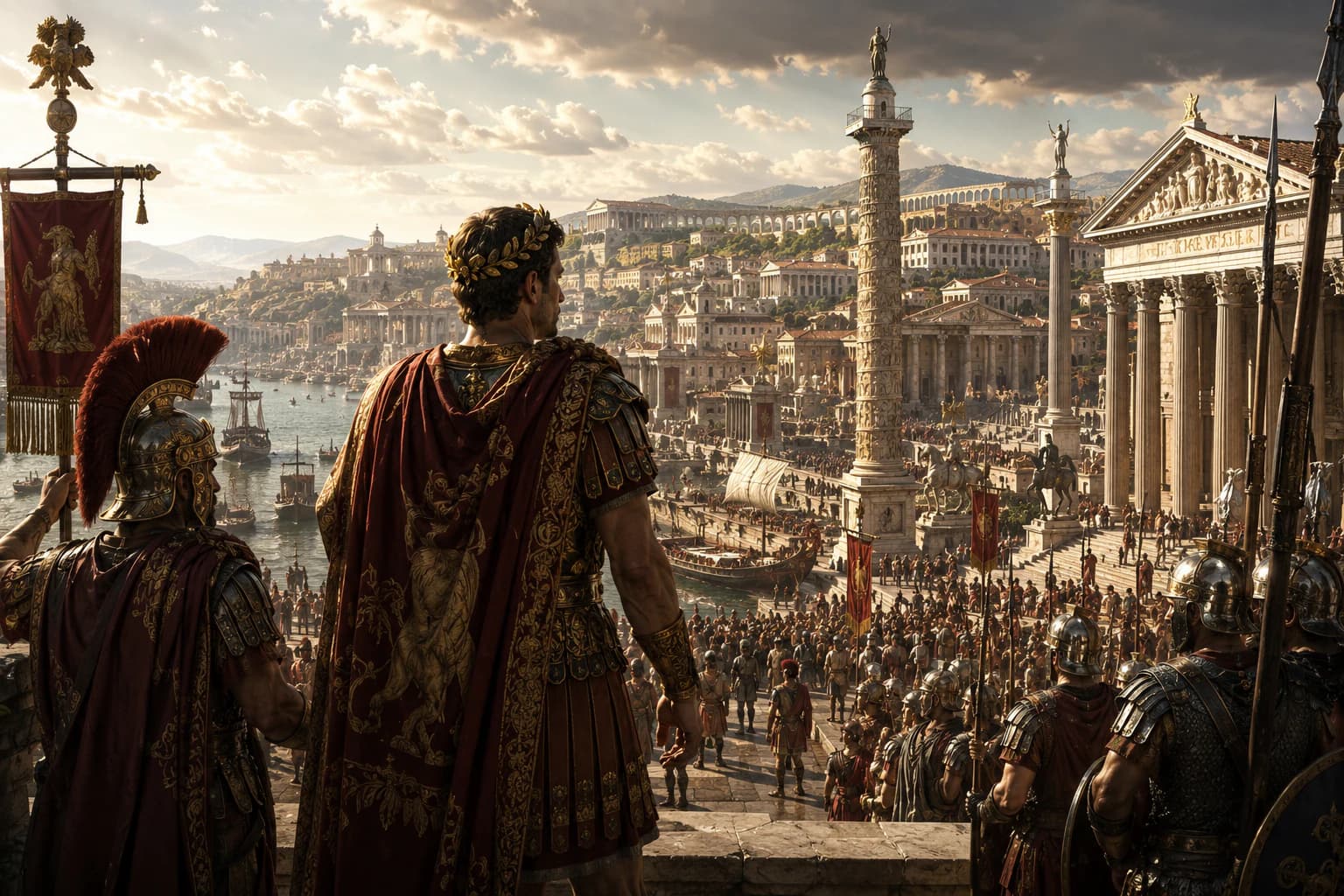
The Roman Empire at its height, with imperial architecture, roads, soldiers and Mediterranean trade.
StoryClassical
The Roman Empire
27 BCE → 476 CE
Rome grew from one city into an empire that shaped the world.
Read story →
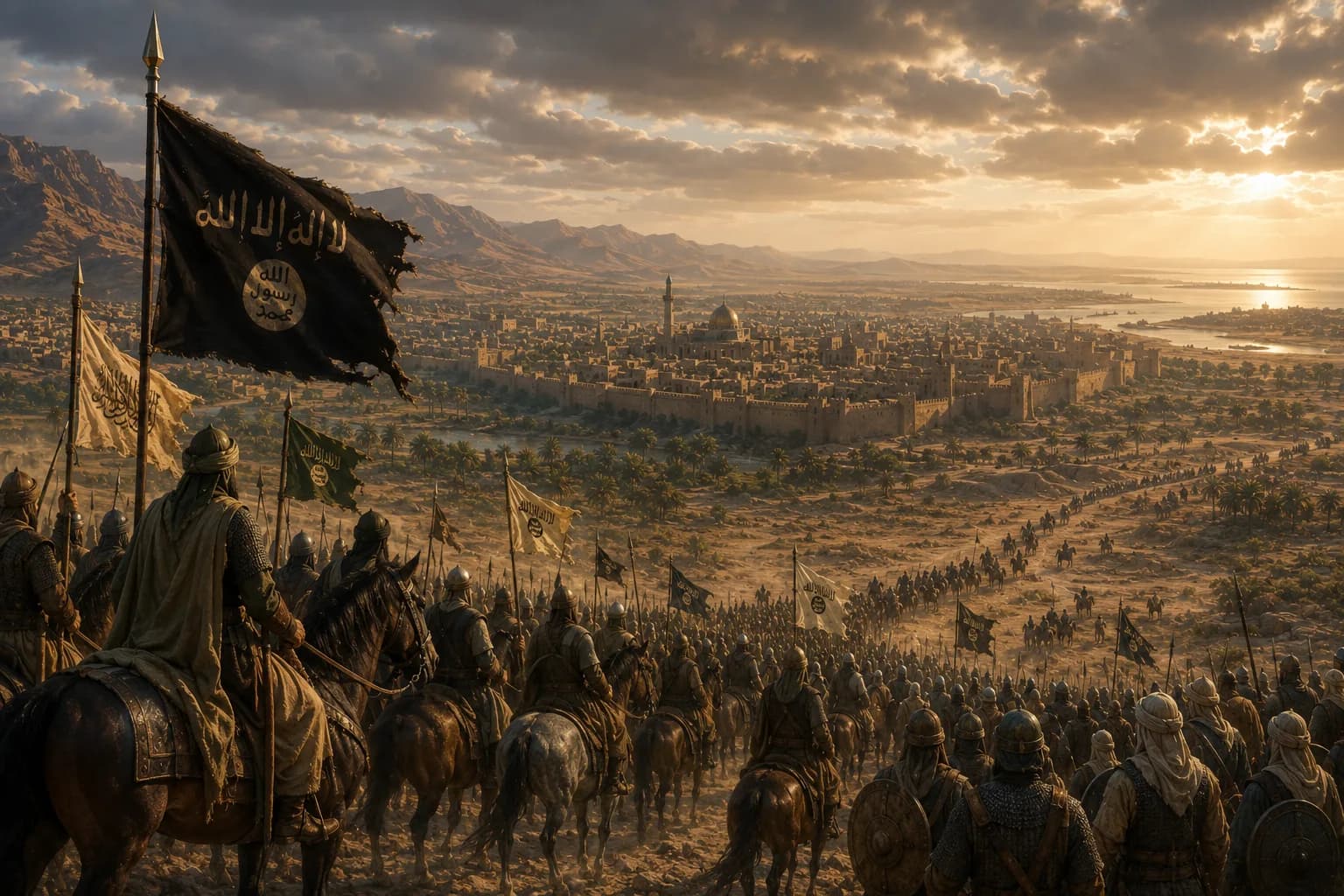
Early Muslim armies overlooking a walled city across a desert landscape at sunrise.
StoryMiddle Ages
The Rise of Islam
610 CE → 762 CE
Islam began in Arabia and spread across continents.
Read story →
A Roman city falling into ruin as Germanic warriors cross the frontier
StoryClassical
The Fall of Rome to Early Medieval Europe
376 CE → 800 CE
Rome's fall opened the way to medieval Europe.
View story →
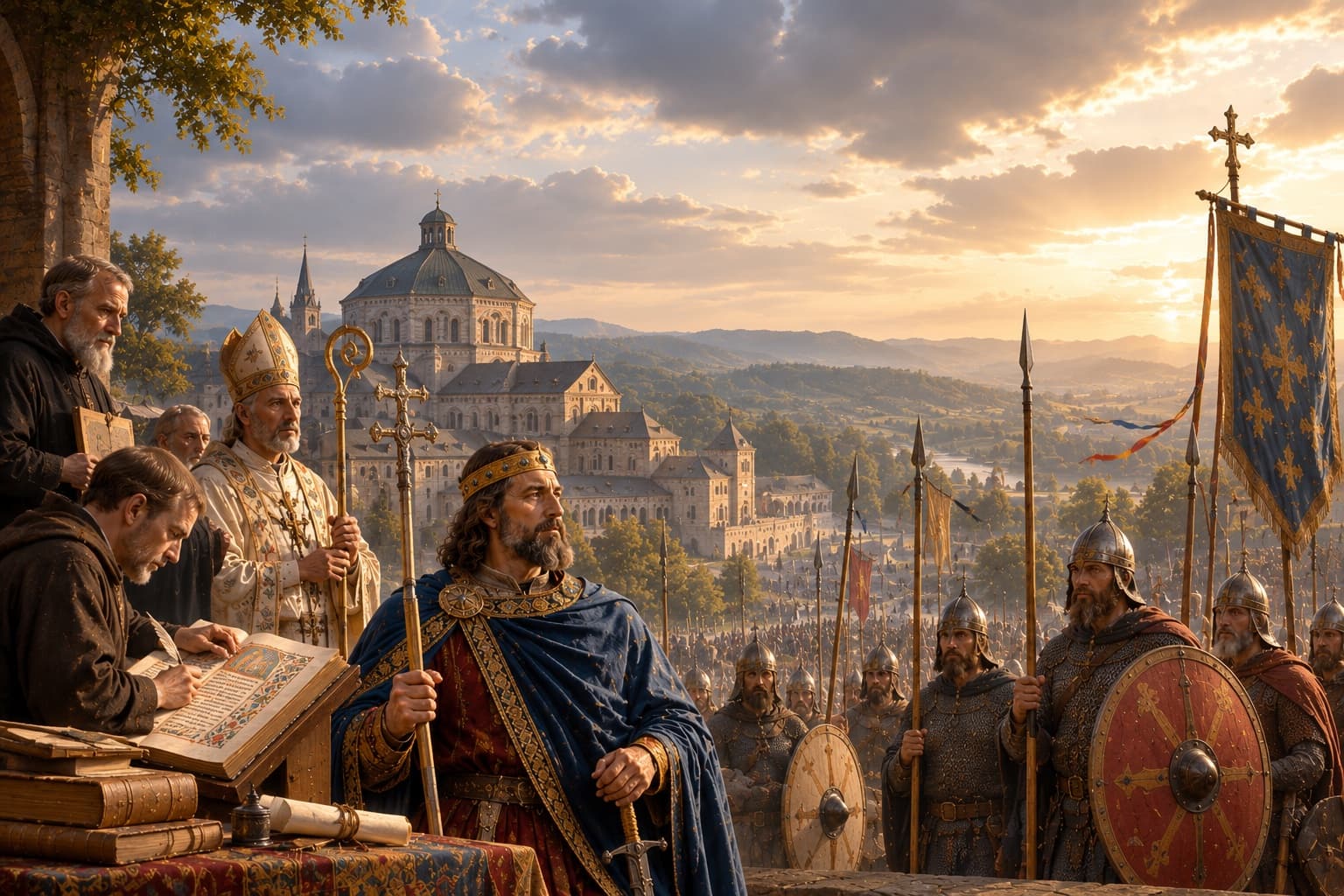
Charlemagne with bishops, scholars and Frankish soldiers overlooking a Carolingian city at sunset.
StoryMiddle Ages
Charlemagne and the Carolingian Empire
751 CE → 843 CE
Charlemagne built a western empire after Rome's fall.
View story →
Timber halls, misty fields, shield walls and monastery towers in Anglo-Saxon England.
StoryClassical
The Anglo-Saxons
410 CE → 886 CE
Anglo-Saxon kingdoms helped create early medieval England.
Read story →
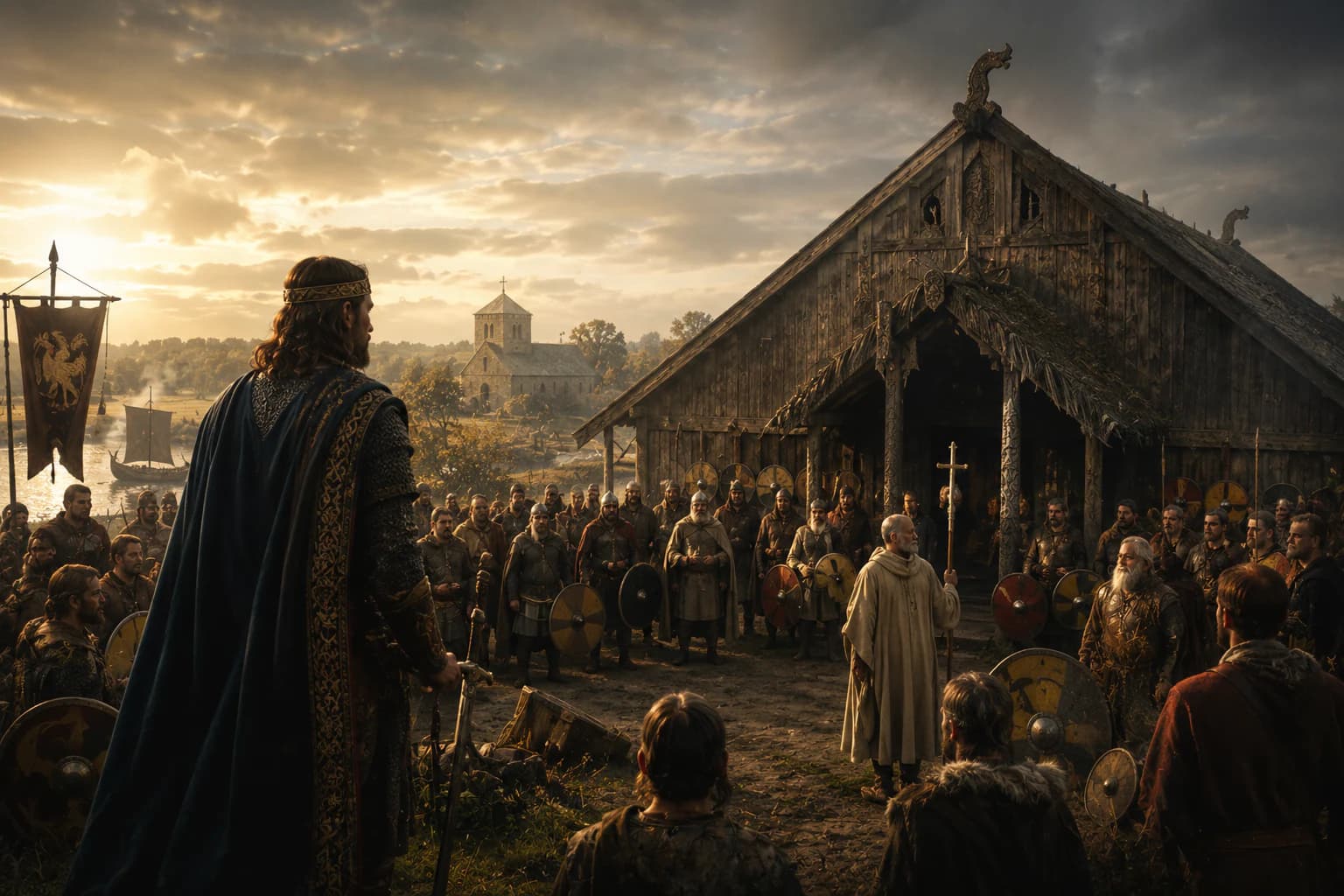
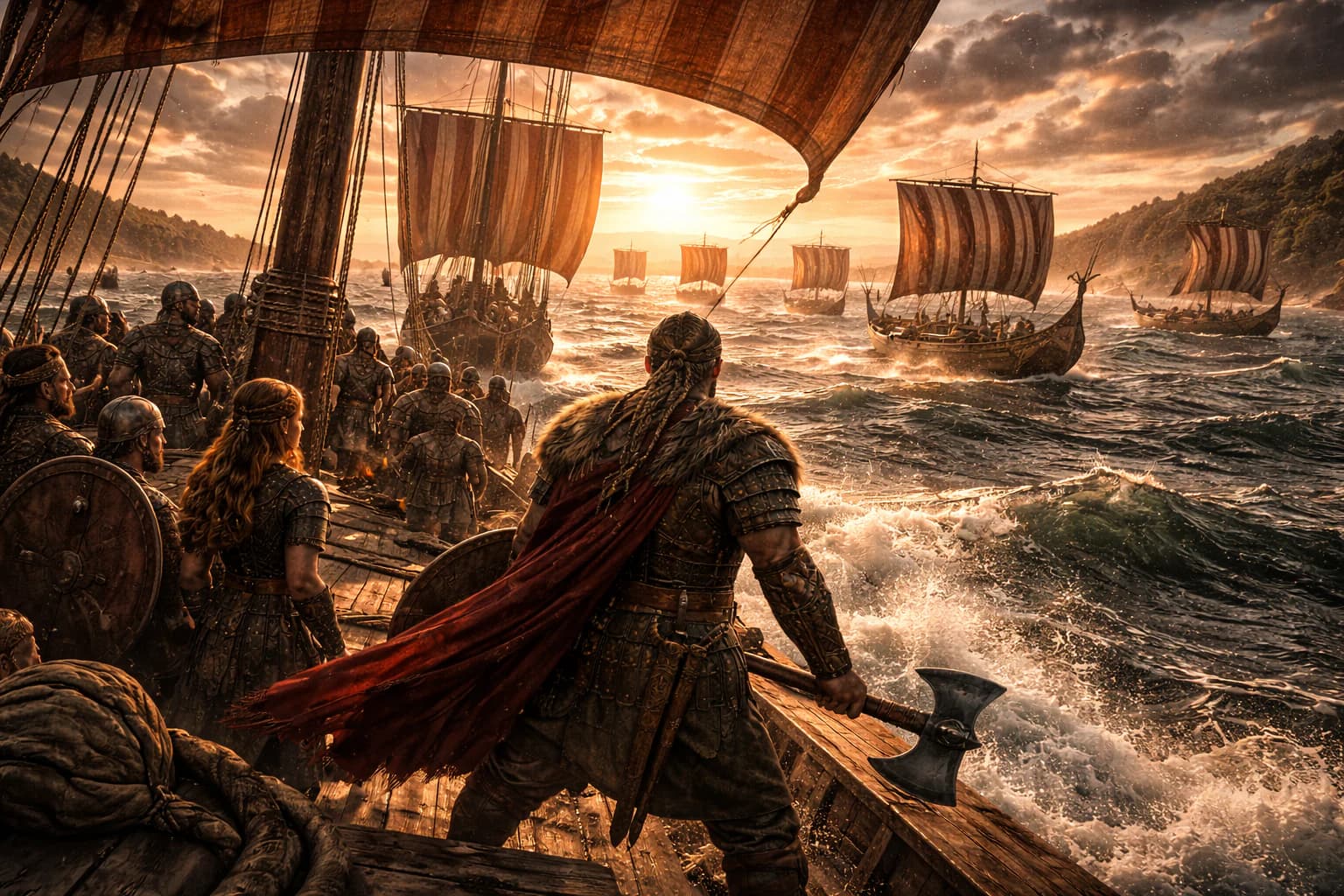
Viking longships crossing rough northern seas toward coastal settlements and trade routes.
StoryMiddle Ages
The Viking Age
793 CE → 1066 CE
Viking voyages brought raids, trade and settlement across Europe.
Read story →
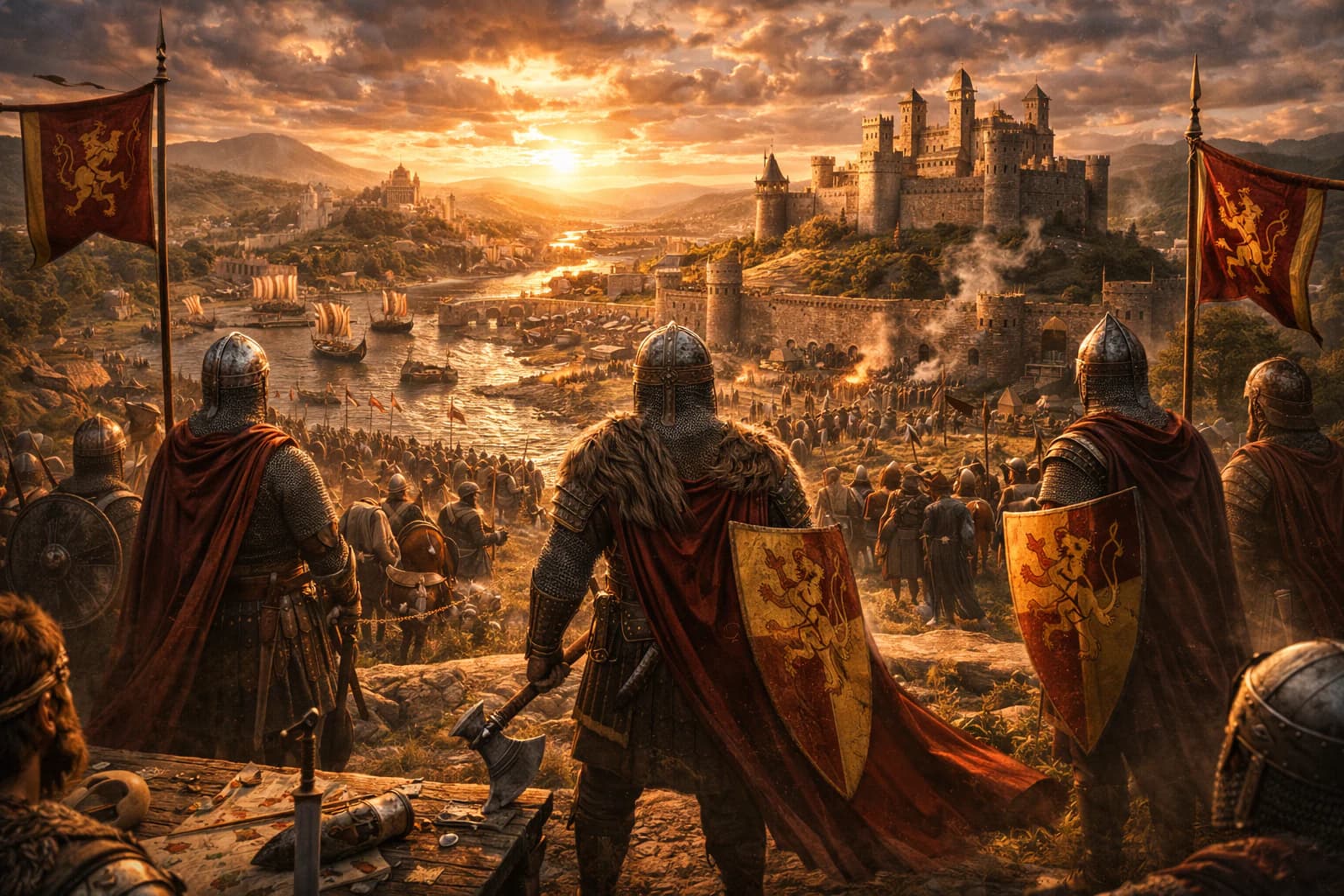
Armoured Norman horsemen during the Norman Conquest of England.
StoryMiddle Ages
The Norman Conquest of England
911 CE → 1154 CE
One invasion in 1066 changed England for centuries.
Read story →
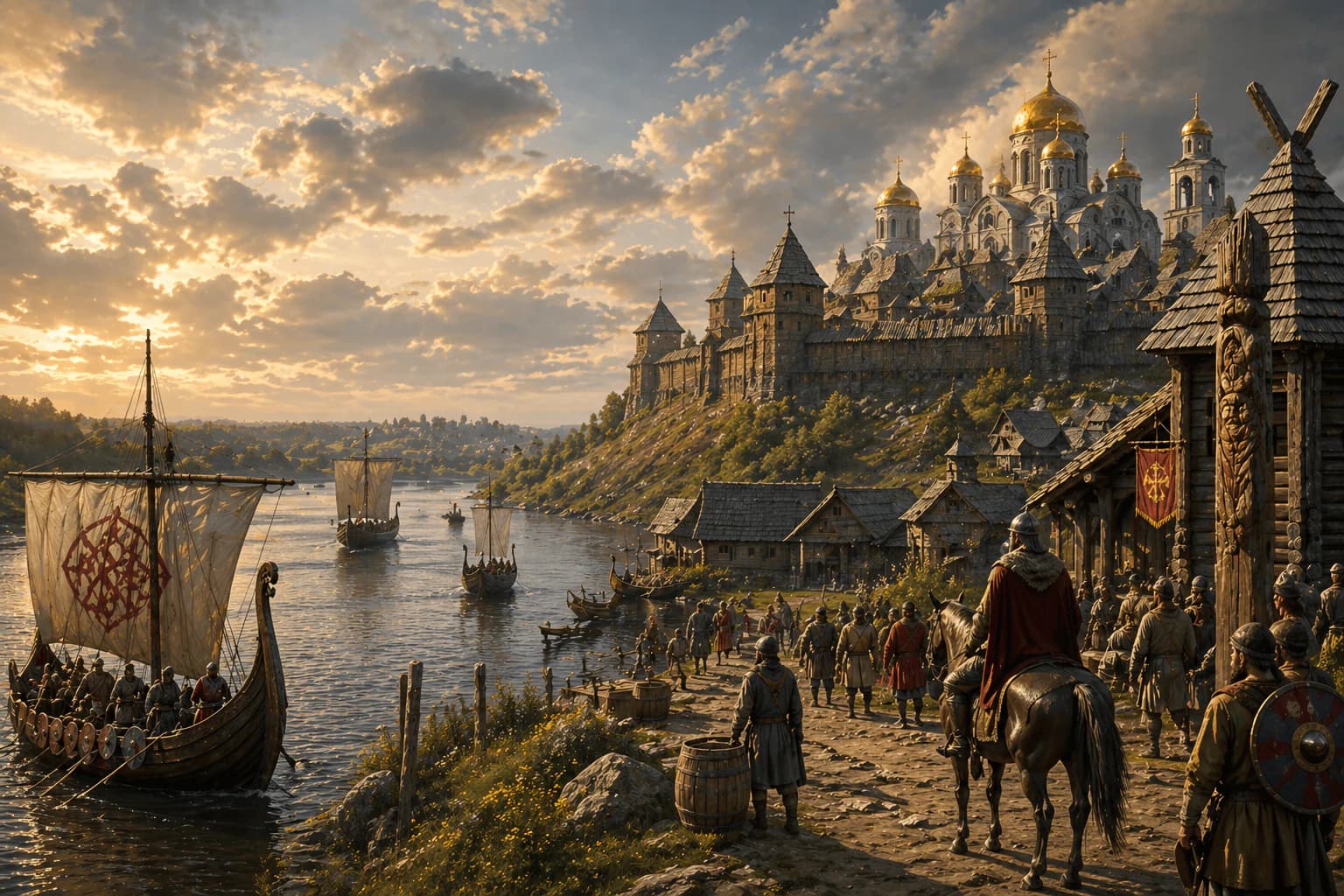
River traders, wooden strongholds and domed churches in the medieval world of Kievan Rus.
StoryMiddle Ages
Kievan Rus
862 CE → 1240 CE
River trade helped build the medieval world of Rus.
View story →
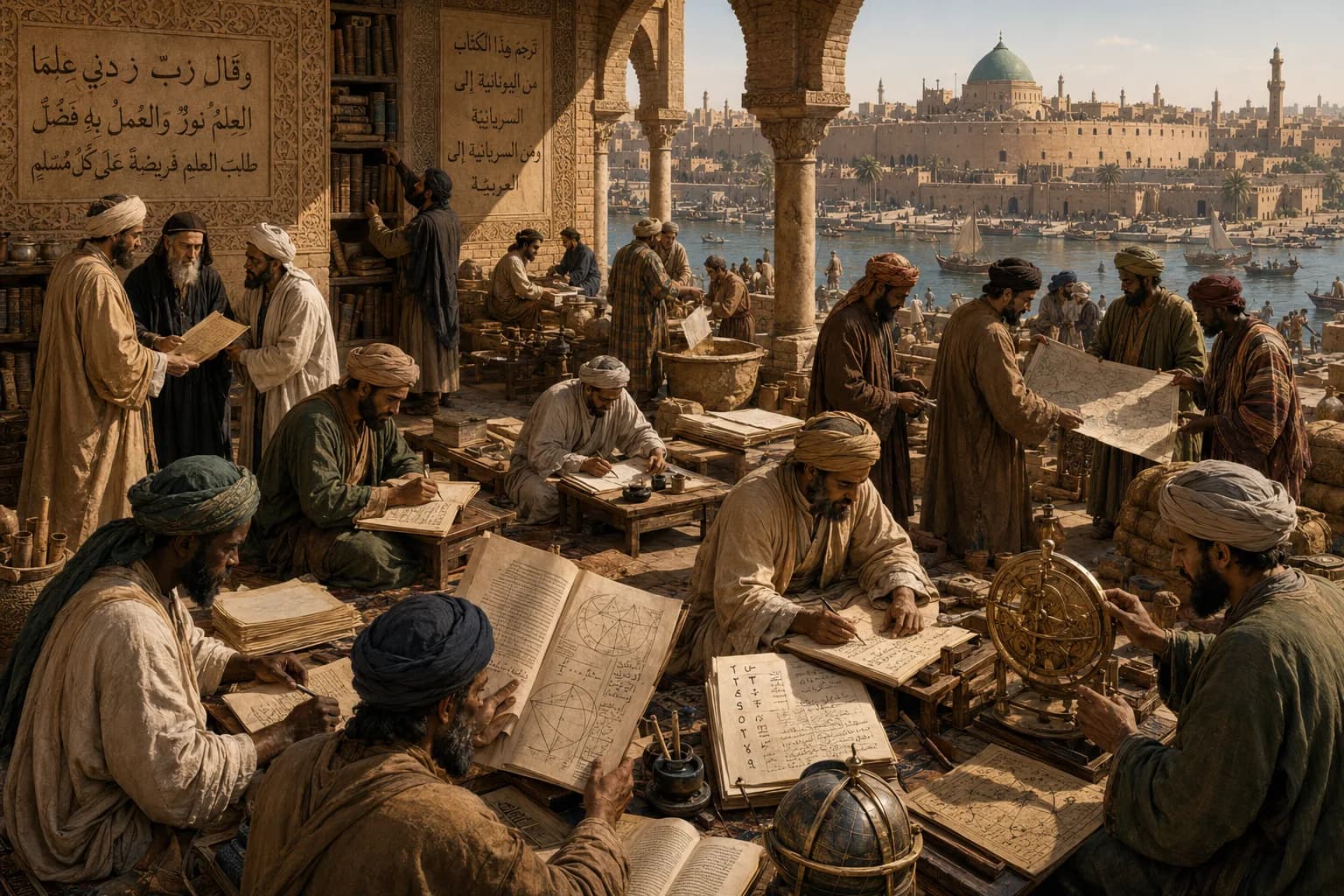
Scholars, translators, merchants and astronomers working beside books, maps and instruments in Abbasid Baghdad.
StoryMiddle Ages
The Abbasid Golden Age
750 CE → 1258 CE
Baghdad became a centre of books, science and big ideas.
View story →
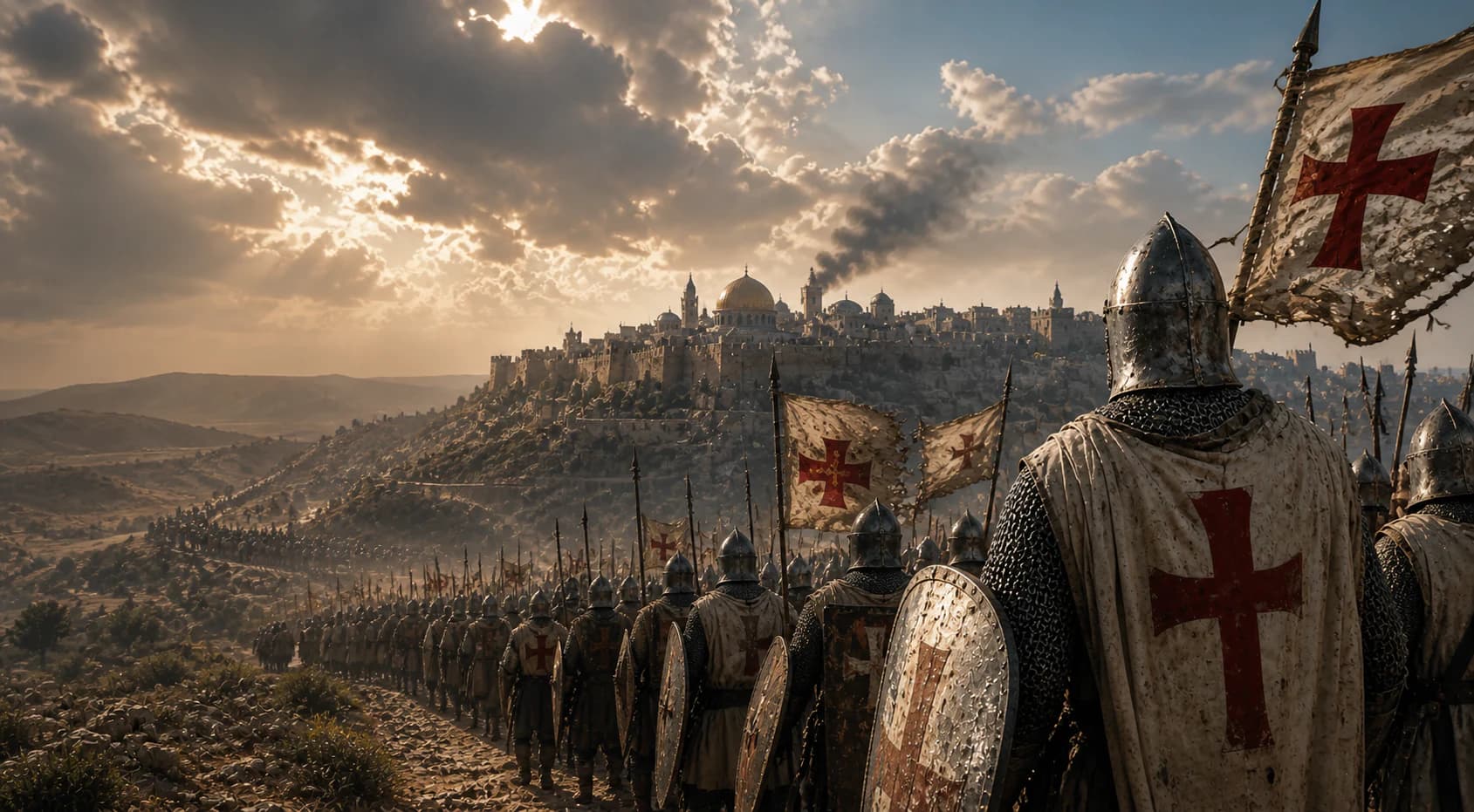
Crusader knights marching beneath a blazing sun toward the walled city of Jerusalem
StoryMiddle Ages
The Crusades
1095 CE → 1291 CE
Wars over Jerusalem reshaped Europe and the Middle East.
View story →
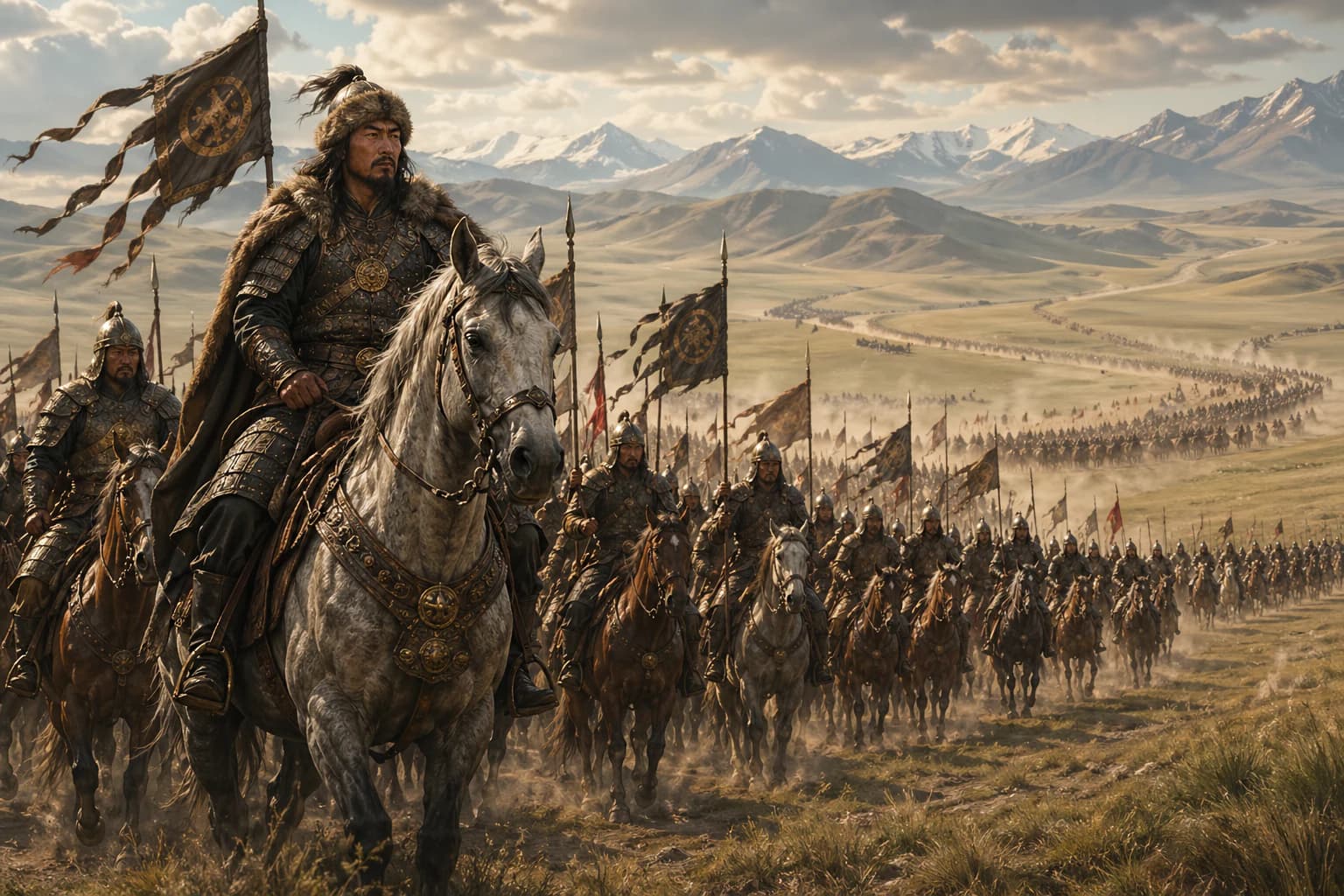
Mongol horsemen crossing the vast Eurasian steppe.
StoryMiddle Ages
The Mongol Empire
1162 CE → 1294 CE
Steppe riders built the largest land empire in history.
View story →
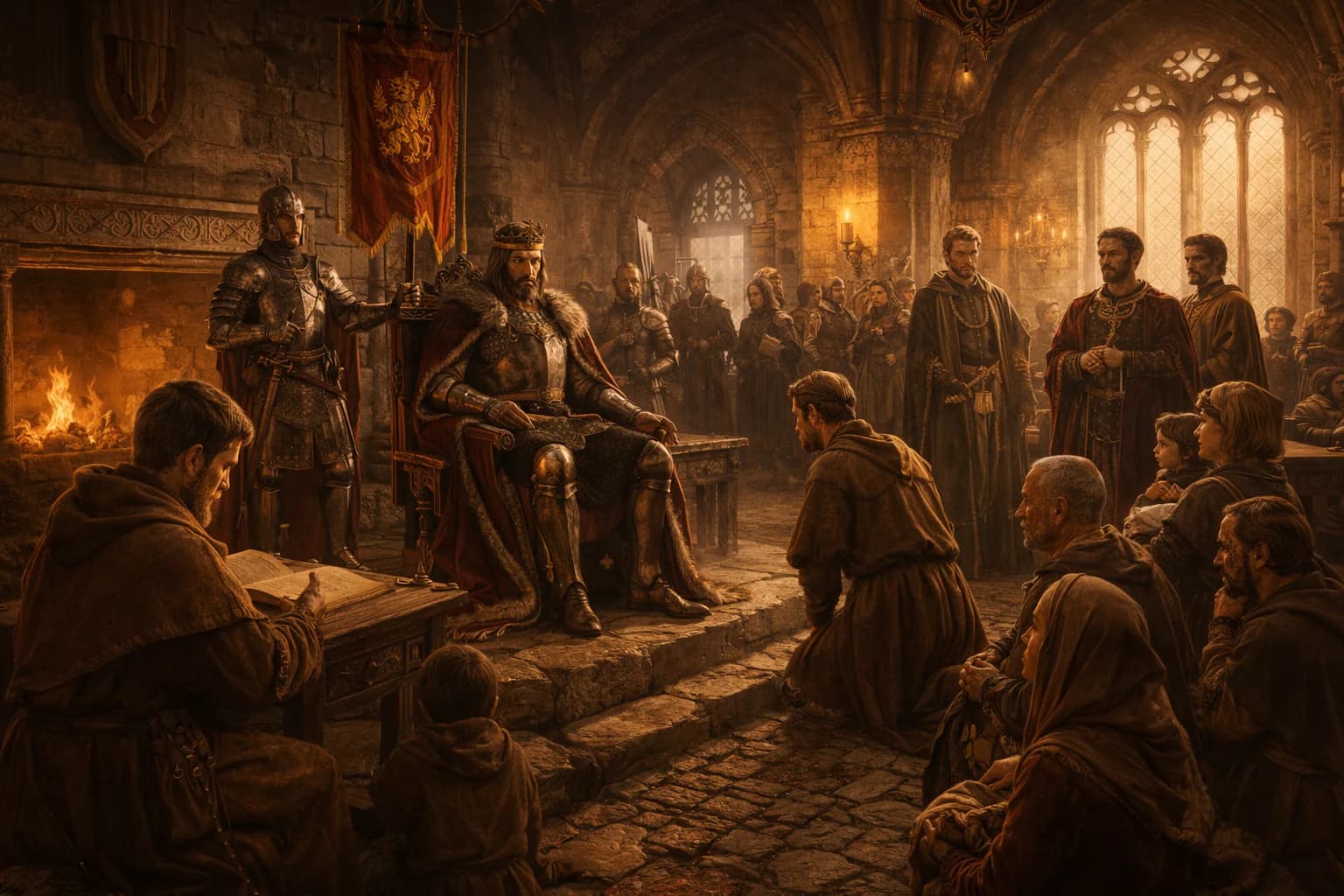
A medieval castle overlooking farmland and a village of serfs
StoryMiddle Ages
Feudalism and Medieval Society
800 CE → 1300 CE
Land, loyalty and the Church shaped medieval daily life.
View story →
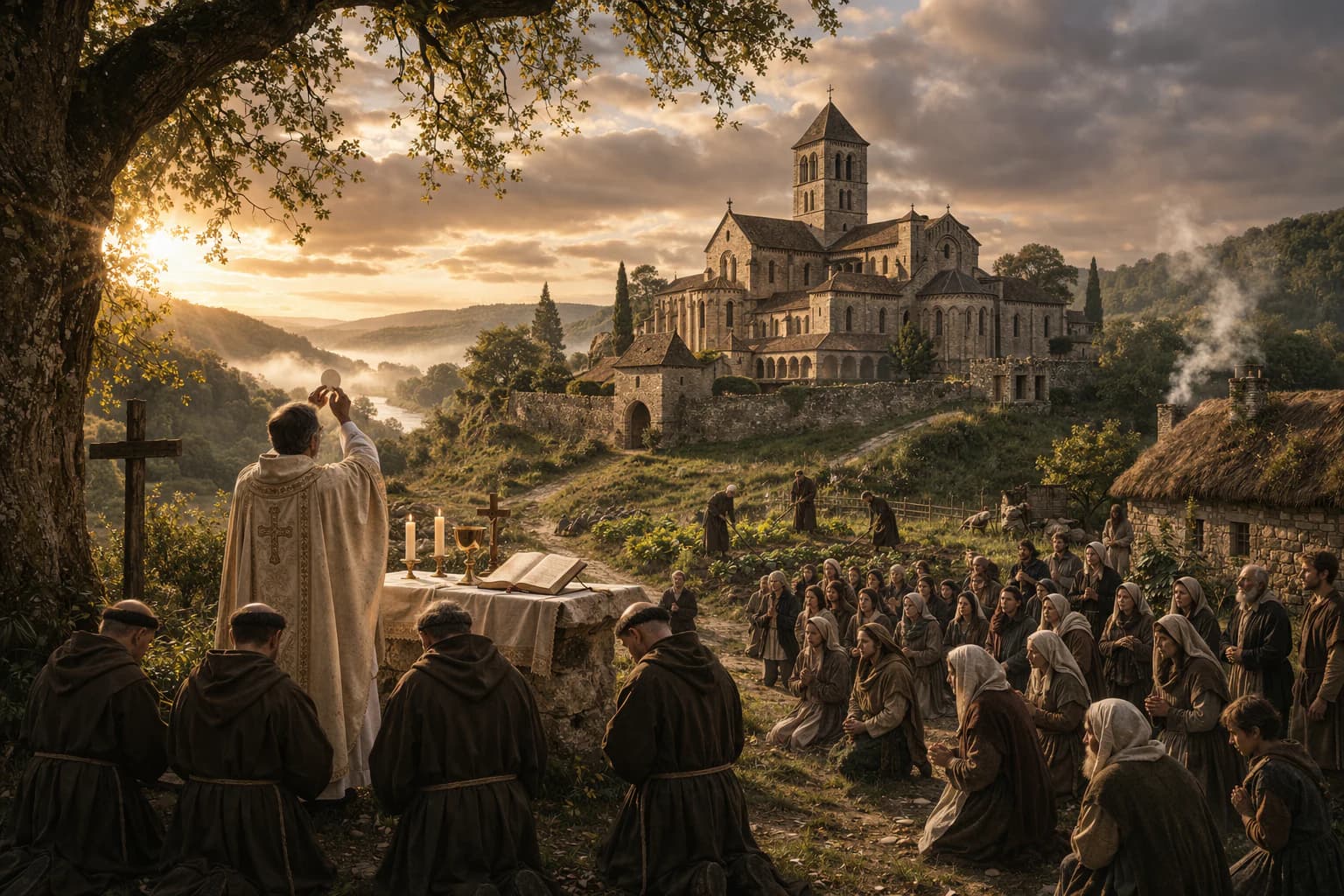
Medieval monks illuminating manuscripts in a great stone abbey
StoryClassical
The Rise of the Medieval Church
476 CE → 1309 CE
The medieval Church grew powerful through monasteries and popes.
View story →
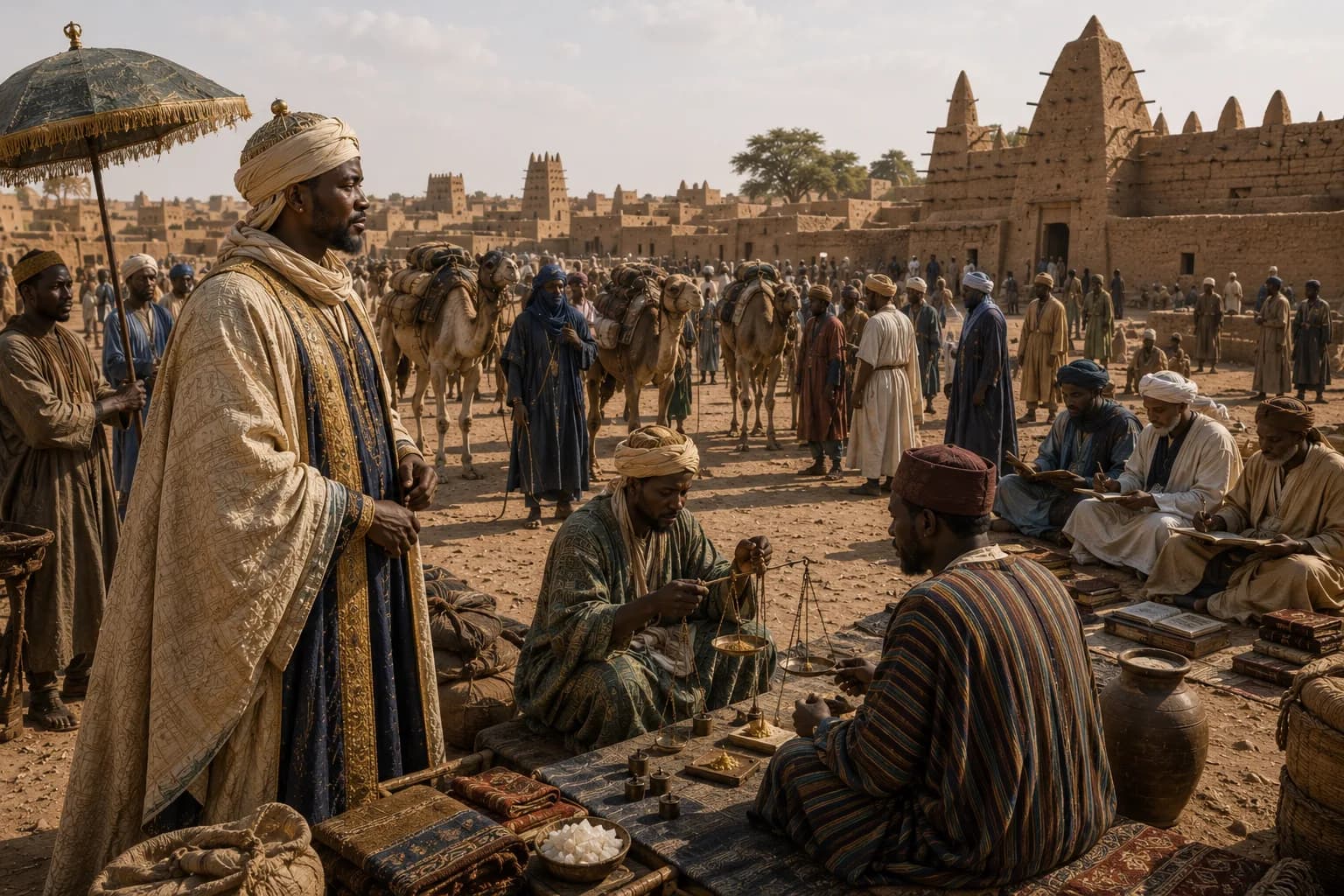
A wealthy Malian ruler watches merchants weighing gold in a busy Sahelian city with mud-brick architecture, camels, scholars and traders.
StoryMiddle Ages
The Mali Empire
1200 CE → 1400 CE
Mali grew rich through gold and trade, then amazed the medieval world.
Read story →
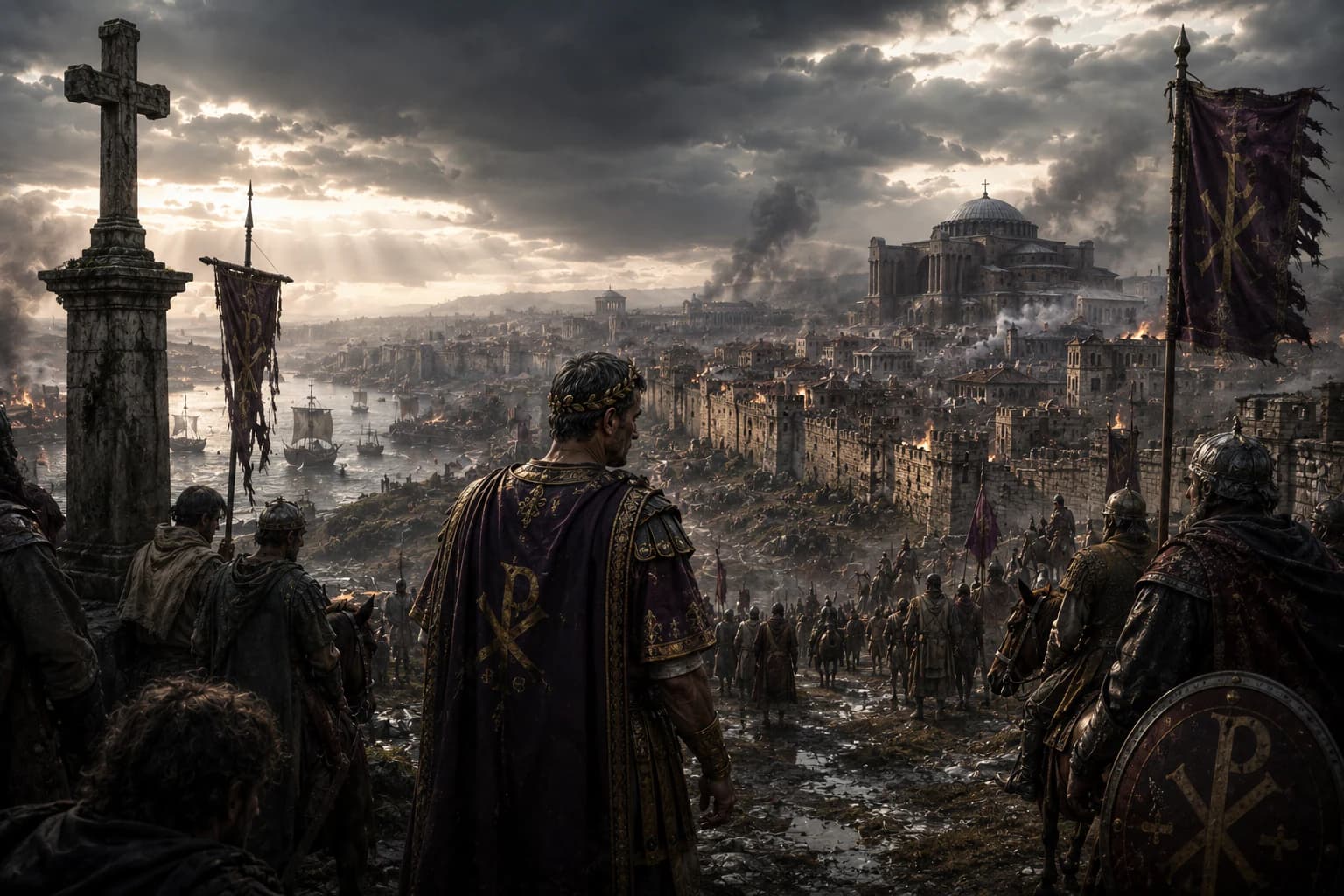
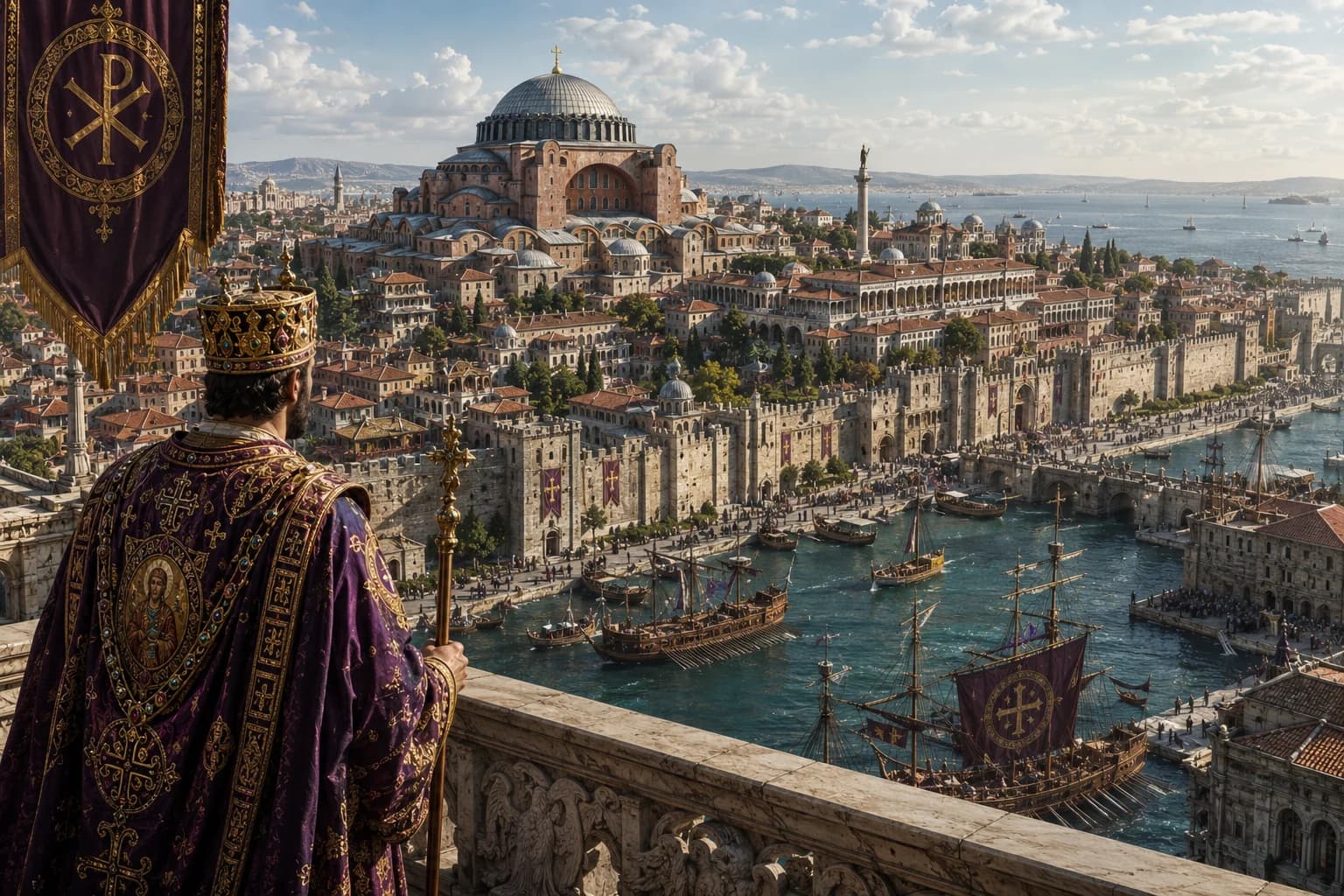
A Byzantine ruler overlooking Constantinople, Hagia Sophia and ships on the Bosporus beneath imperial purple banners.
StoryClassical
The Byzantine Empire
330 CE → 1453 CE
The eastern Roman Empire survived for centuries from Constantinople.
View story →
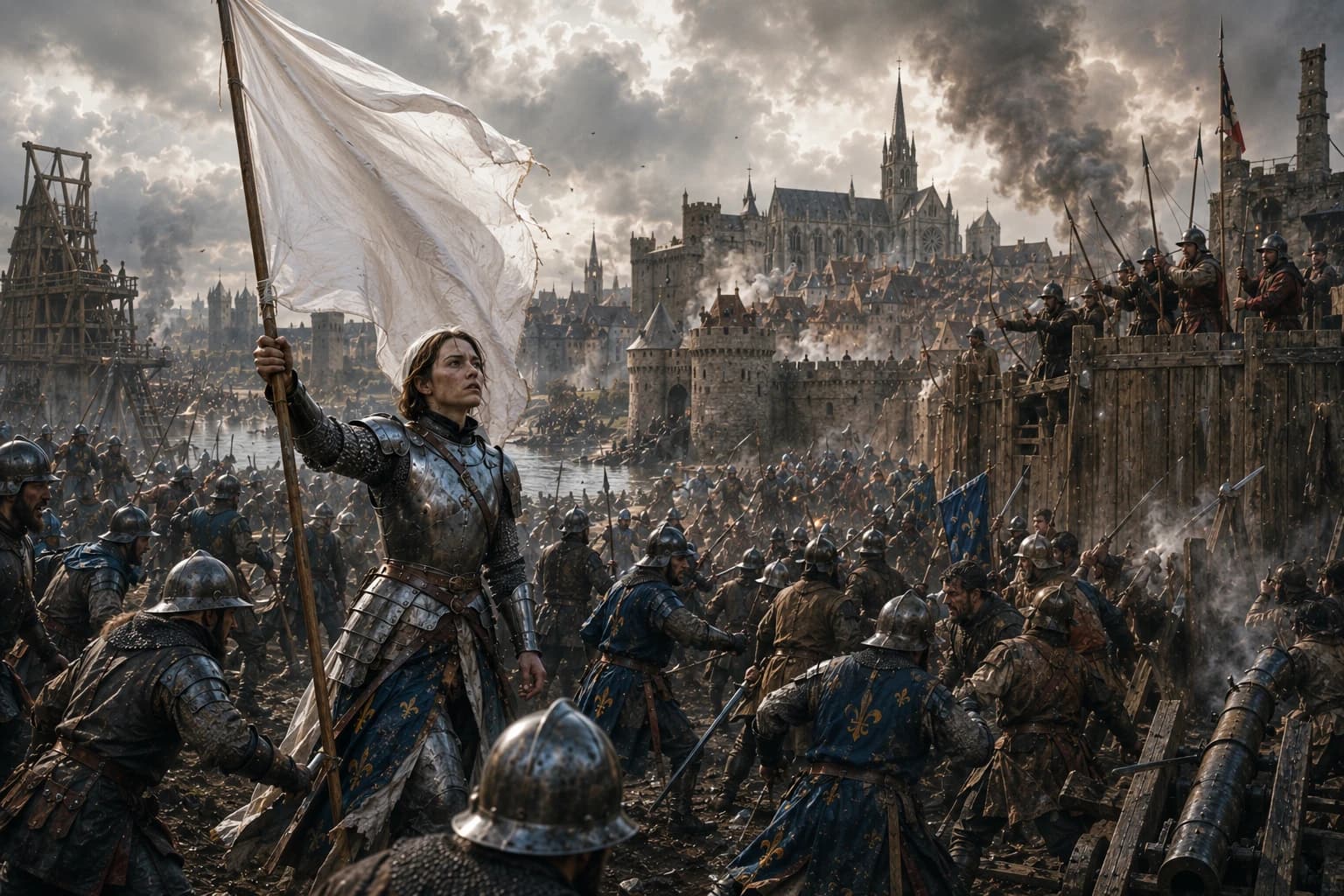
French and English soldiers clashing outside a medieval city during the Hundred Years War.
StoryMiddle Ages
The Hundred Years War
1328 CE → 1453 CE
England and France fought for a crown for more than a century.
View story →
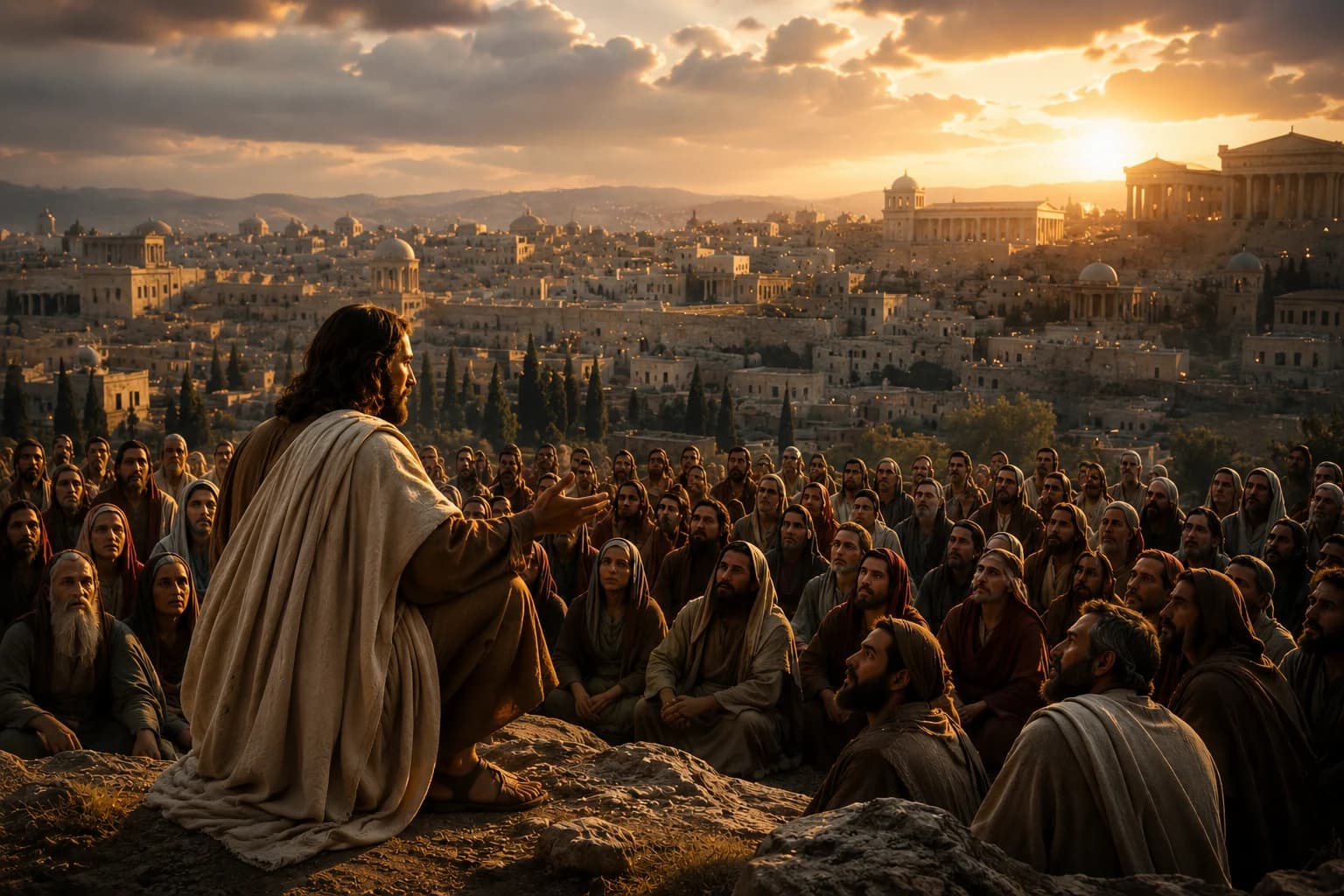
Early Christians gathering across the Roman world as imperial cities, churches and manuscripts mark the spread of the faith.
StoryClassical
The Rise of Christianity
30 CE → 1500 CE
Christianity grew from a small movement into an empire-wide faith.
Read story →
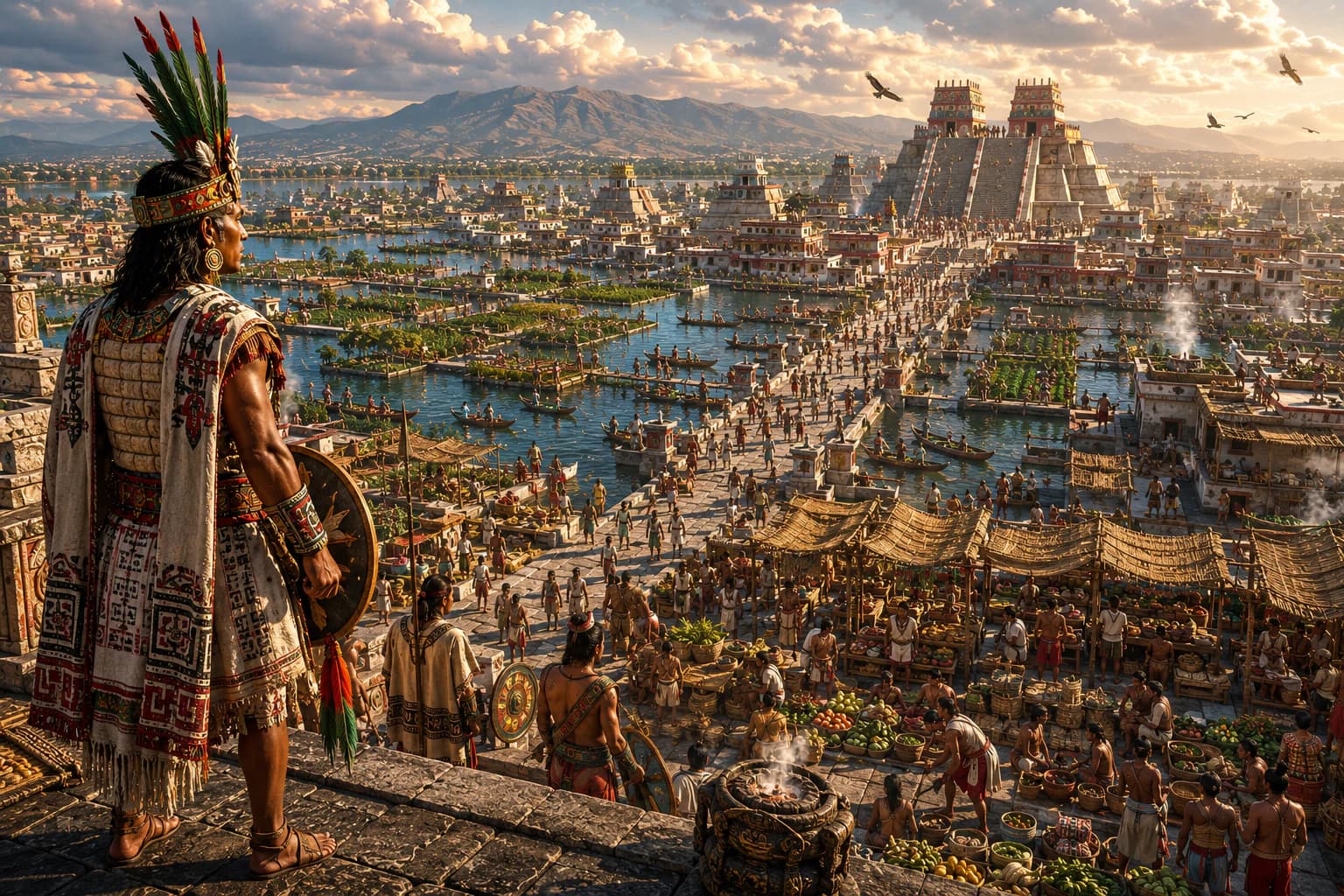
Tenochtitlan rising from Lake Texcoco with temples, causeways and Aztec warriors.
StoryMiddle Ages
The Aztec Empire
1200 CE → 1521 CE
The Aztecs built a great city empire before Spanish conquest.
View story →
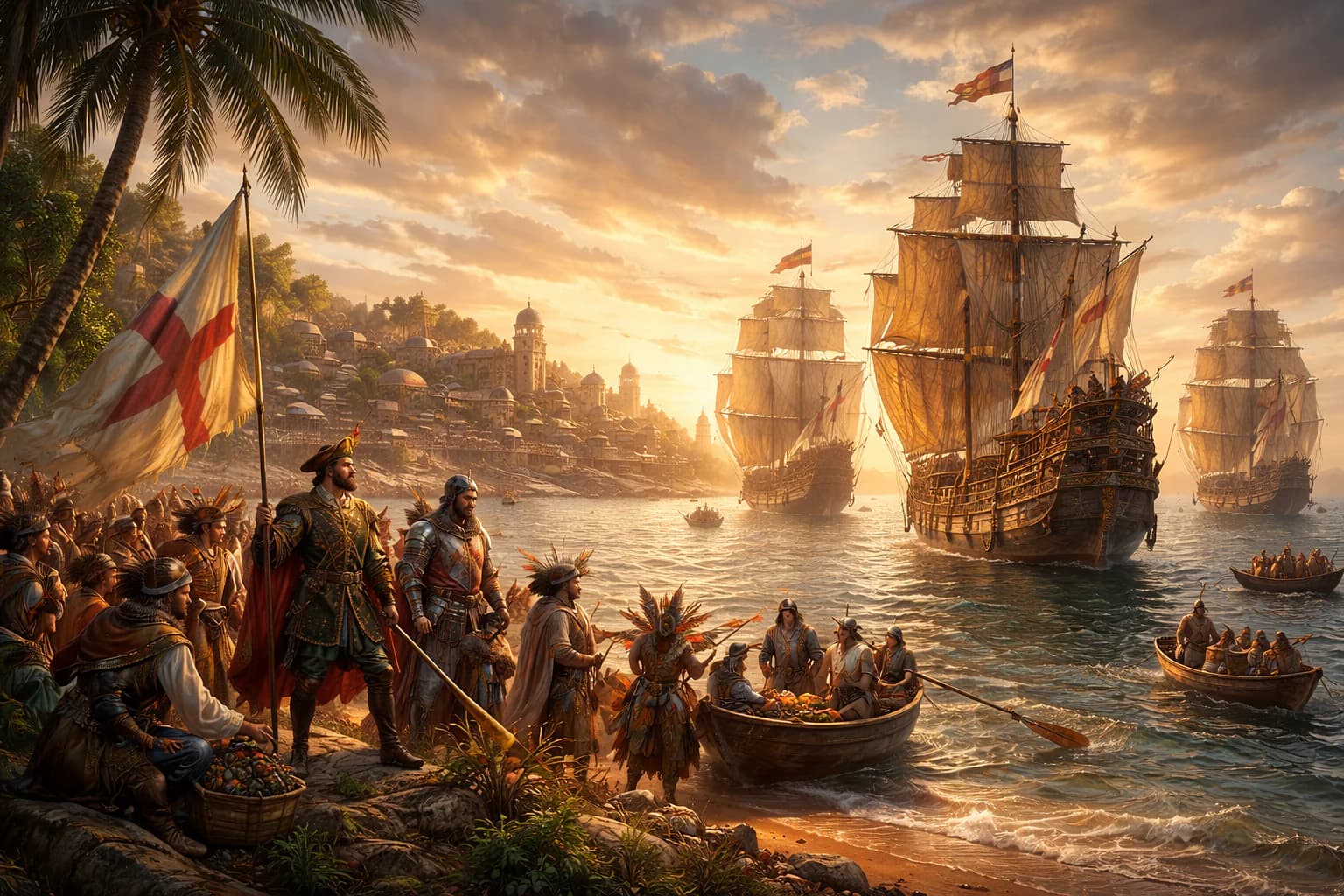
Ocean-going caravels arriving on distant shores during the Age of Exploration
StoryMiddle Ages
The Age of Exploration
1415 CE → 1600 CE
Ocean voyages connected continents in a new global age.
View story →
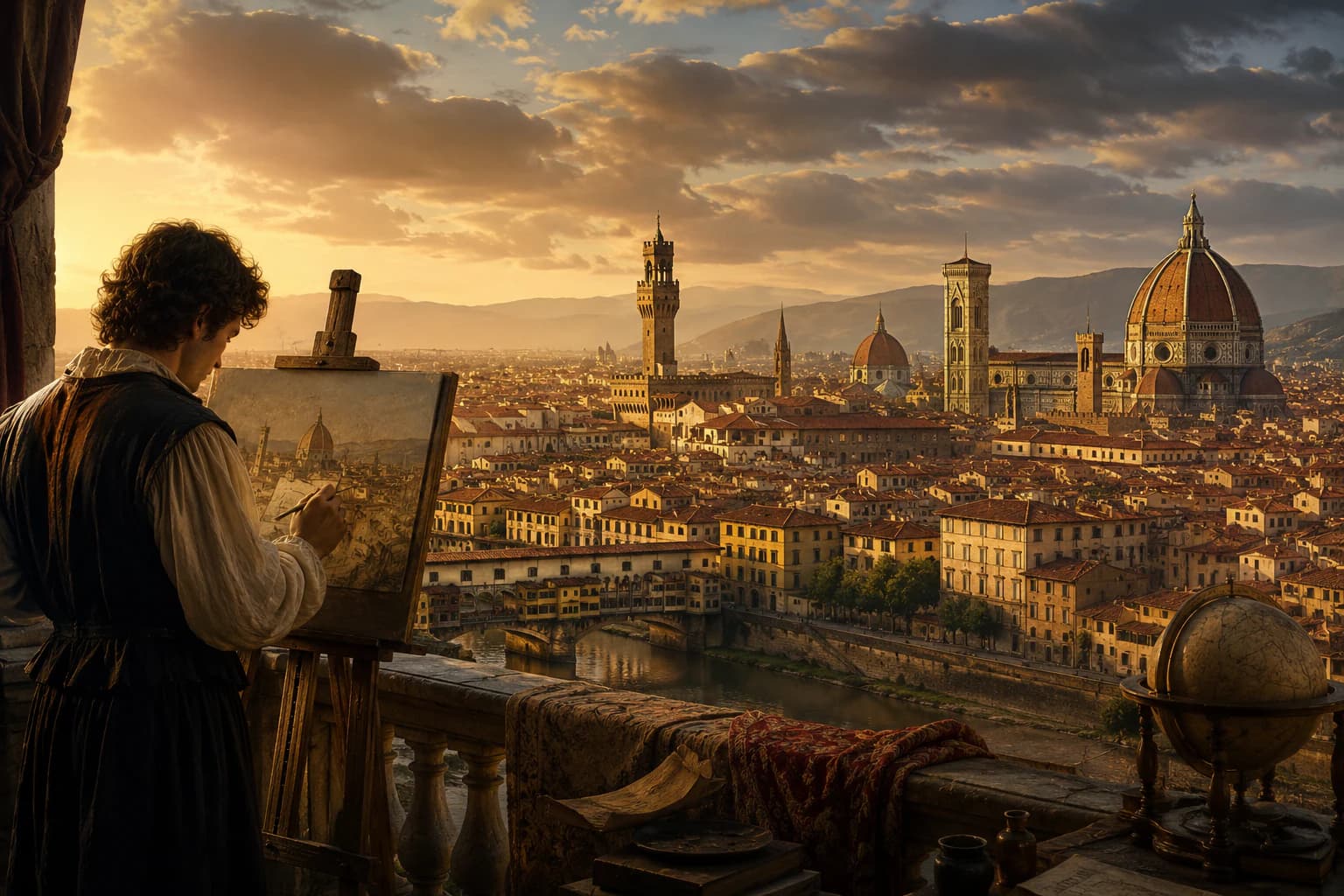
Renaissance scholars and artists in an Italian city, surrounded by books, architecture, and scientific instruments.
StoryMiddle Ages
The Renaissance
1304 CE → 1600 CE
Old learning, new art and fresh ideas helped remake Europe.
View story →
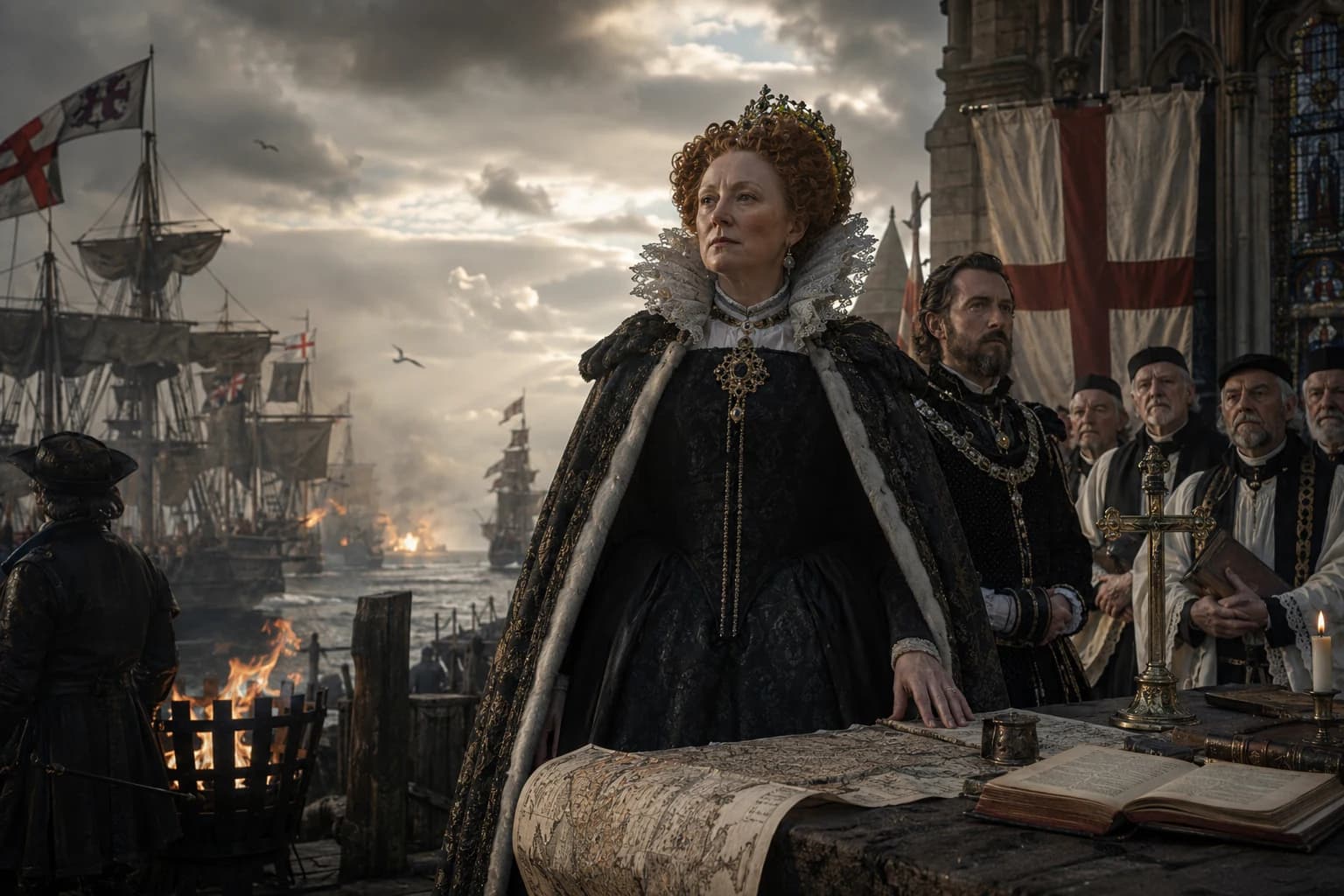
Queen Elizabeth I presiding over a flourishing Elizabethan court during England’s golden age
StoryEarly Modern
The Elizabethan Age
1558 CE → 1603 CE
Elizabethan England mixed theatre, sea power and royal danger.
View story →
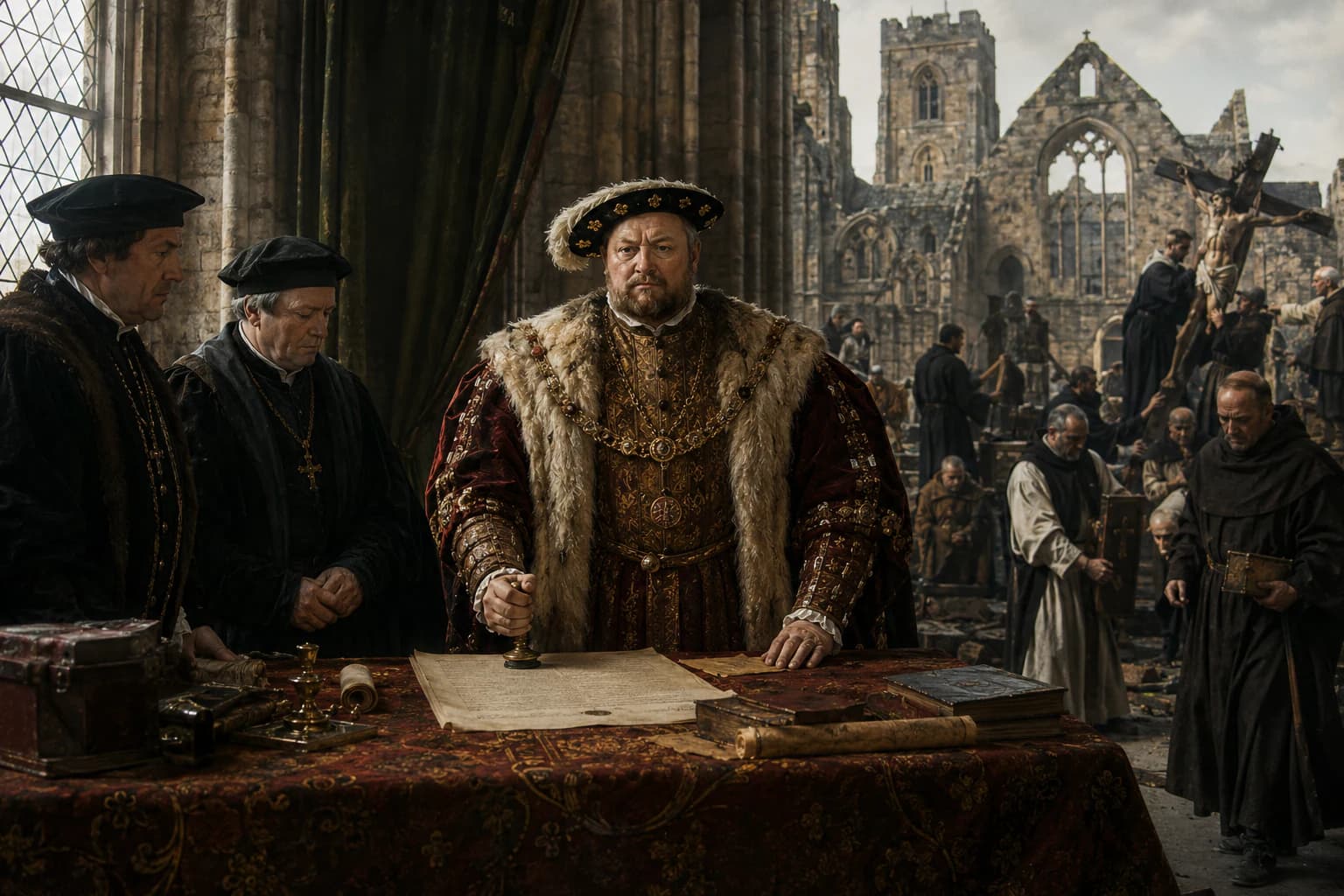
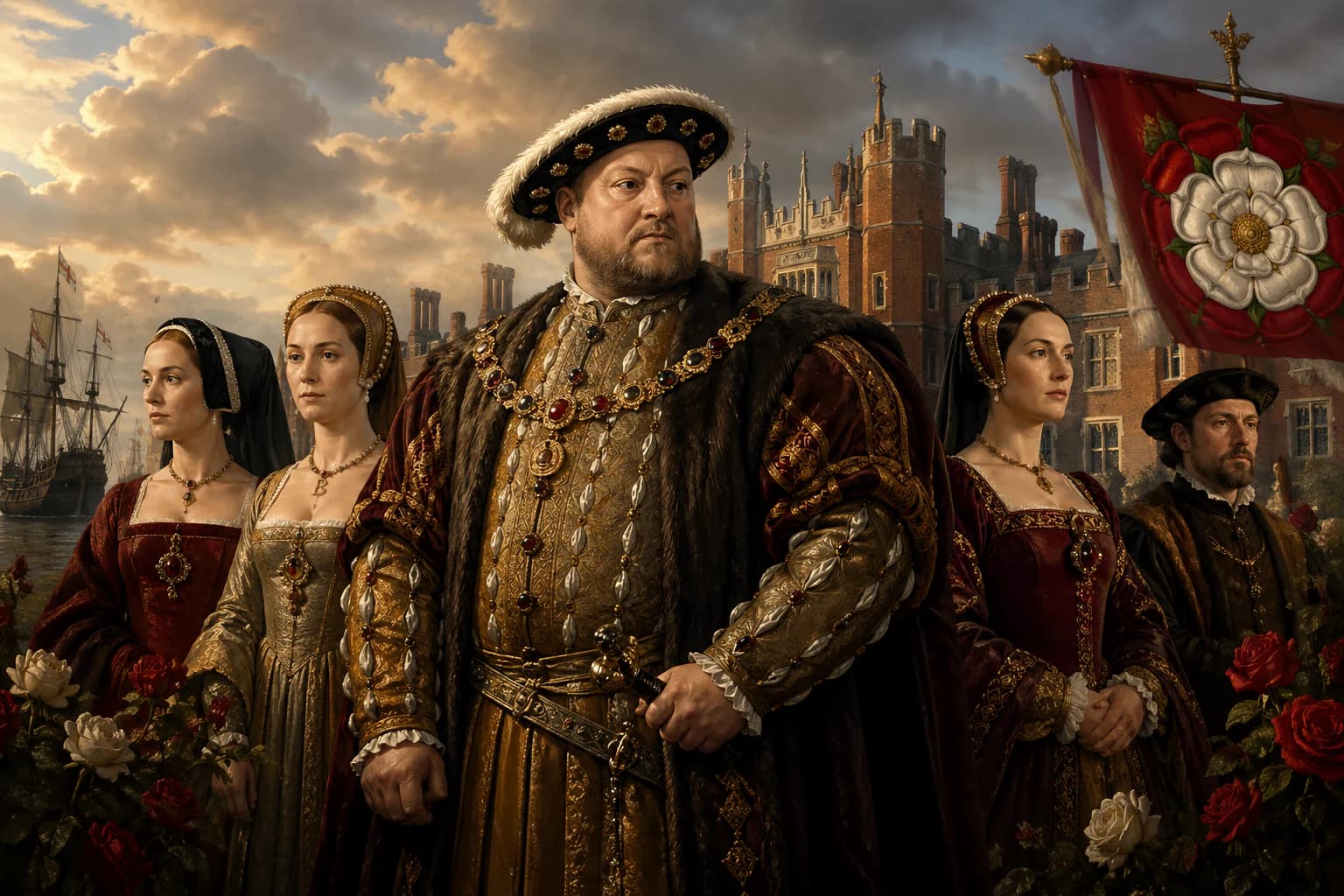
King Henry VIII presiding over a court during the English Reformation
StoryEarly Modern
The English Reformation
1527 CE → 1603 CE
A royal divorce turned into a religious revolution.
View story →
A Tudor royal court with Henry VIII and richly dressed nobles in a grand palace interior
StoryMiddle Ages
The Tudor Dynasty
1485 CE → 1603 CE
Tudor rulers reshaped England through power, faith and family.
View story →
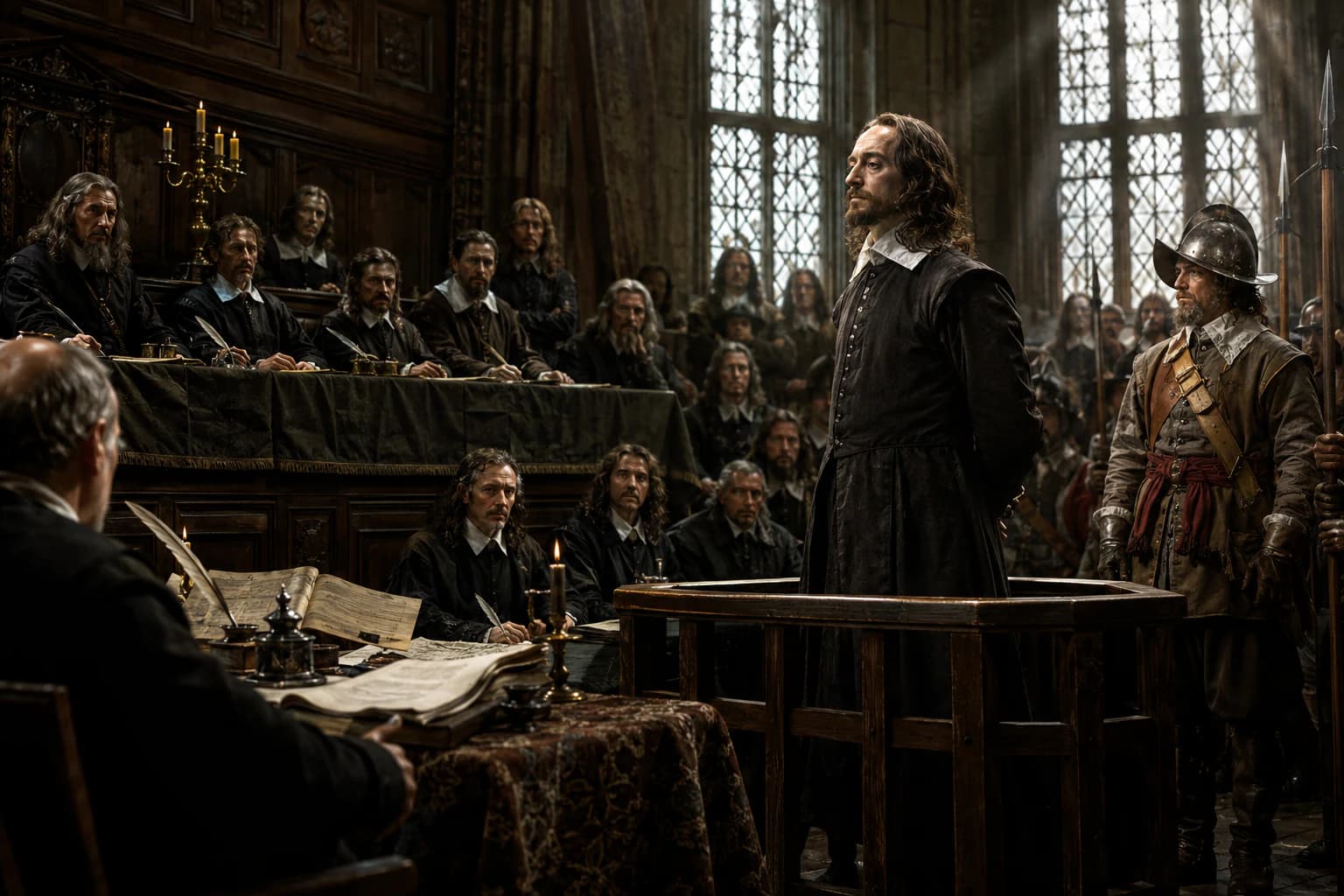
Parliamentarian and Royalist forces preparing for battle during the English Civil War
StoryEarly Modern
The English Civil War
1642 CE → 1660 CE
King and Parliament fought over who should rule England.
View story →
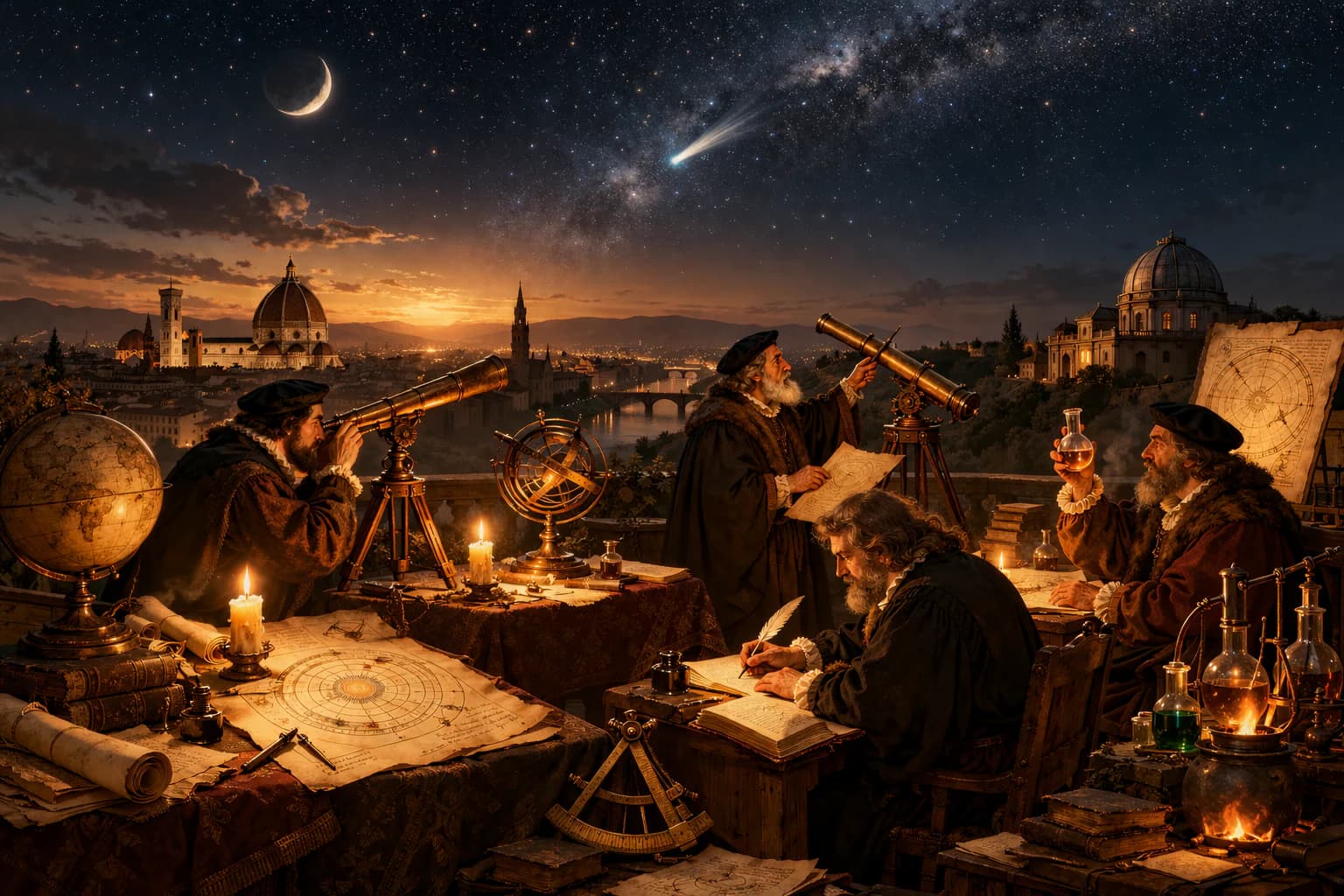
Astronomers and natural philosophers observing the cosmos with early scientific instruments.
StoryEarly Modern
The Scientific Revolution
1500 CE → 1720 CE
New experiments changed how people understood nature.
View story →
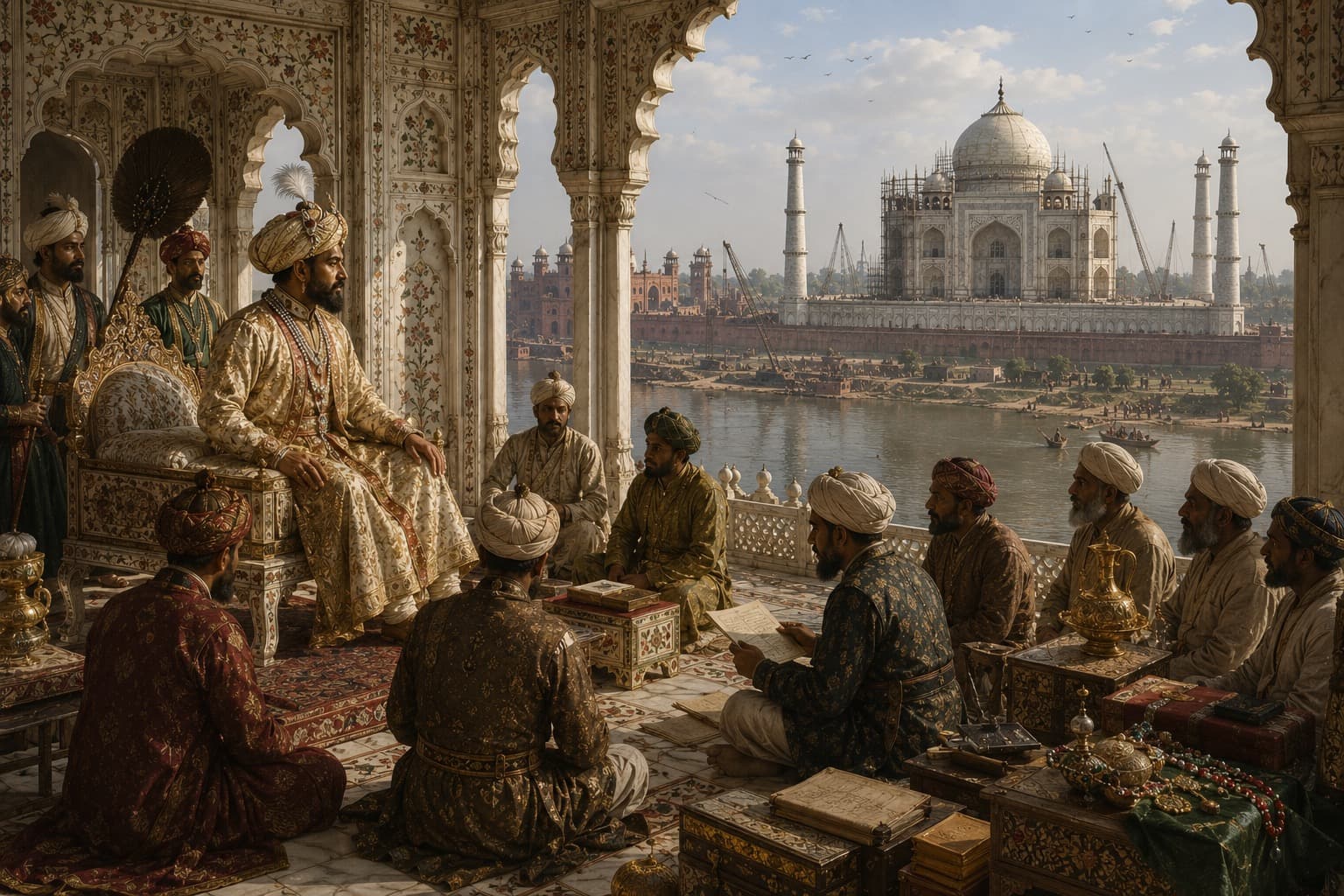
Mughal emperor and courtiers in a richly decorated palace overlooking the Taj Mahal under construction beside the Yamuna River.
StoryEarly Modern
The Mughal Empire
1526 CE → 1739 CE
Mughal rulers built one of India's richest and most powerful empires.
View story →
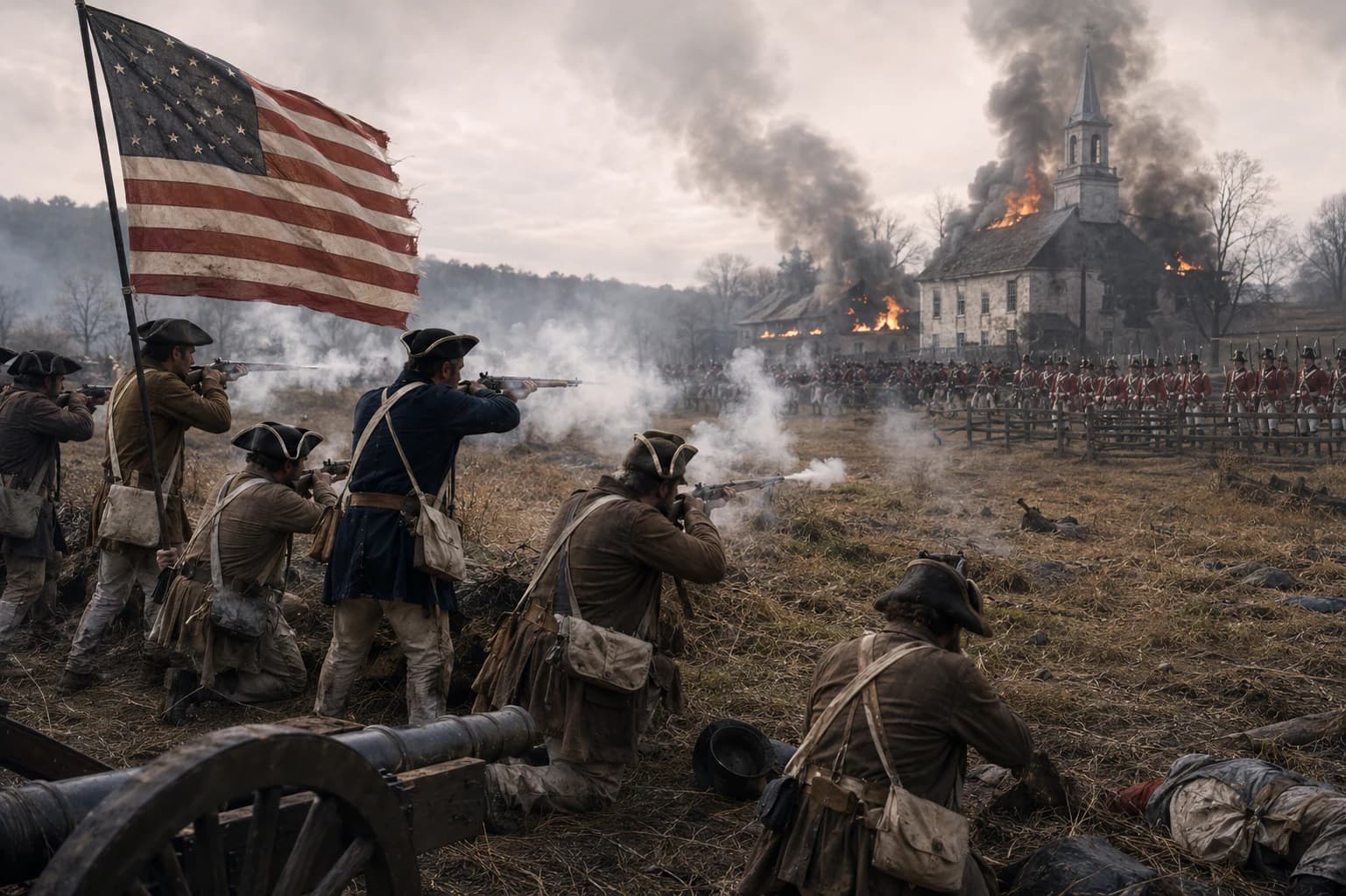
American revolutionaries and British troops facing each other during the struggle for independence.
StoryModern
The American Revolution and Early Republic
1763 CE → 1791 CE
Thirteen colonies rebelled and created a new republic.
View story →
Revolutionary Paris — crowds storming the Bastille, the tricolour rising over the old order.
StoryModern
The French Revolution
1787 CE → 1799 CE
France's old order collapsed into revolution, terror and republic.
View story →
Napoleonic armies crossing Europe between revolution and empire.
StoryModern
Napoleon and the Napoleonic Wars
1789 CE → 1815 CE
Napoleon turned revolution into empire and total war.
View story →
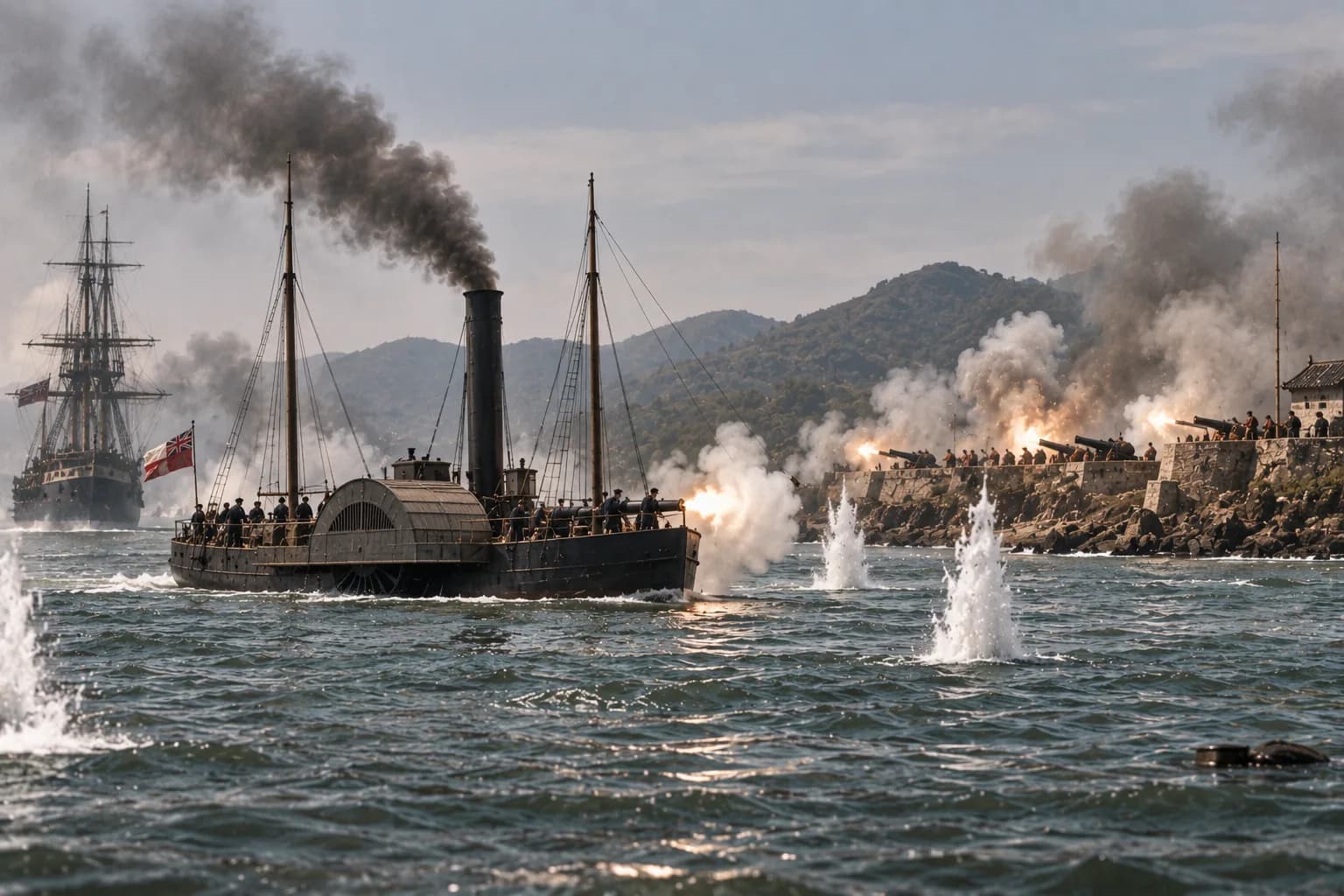
British steamships and sailing vessels bombard Qing coastal defences during the Opium Wars.
StoryModern
The Opium Wars
1757 CE → 1861 CE
British gunboats forced China into unequal treaties and lasting crisis.
View story →
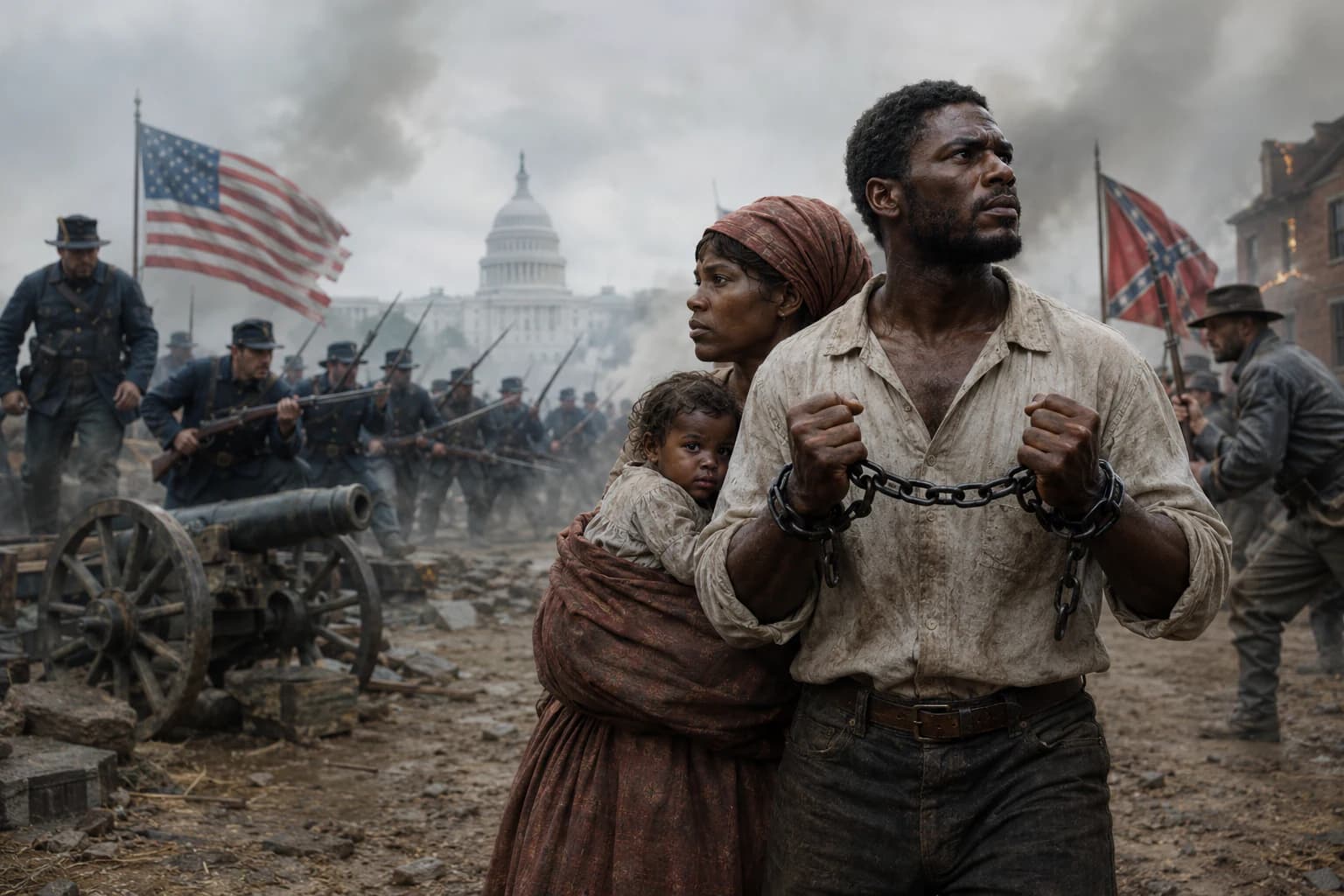
Union and Confederate soldiers advance across a smoky battlefield as enslaved people move toward freedom in the distance.
StoryModern
The American Civil War and the Abolition of Slavery
1861 CE → 1865 CE
Civil war decided the Union's survival and ended slavery.
View story →
Factories, steam engines and railways of the Industrial Revolution.
StoryEarly Modern
The Industrial Revolution
1700 CE → 1870 CE
Machines and factories changed work, cities and everyday life.
Read story →
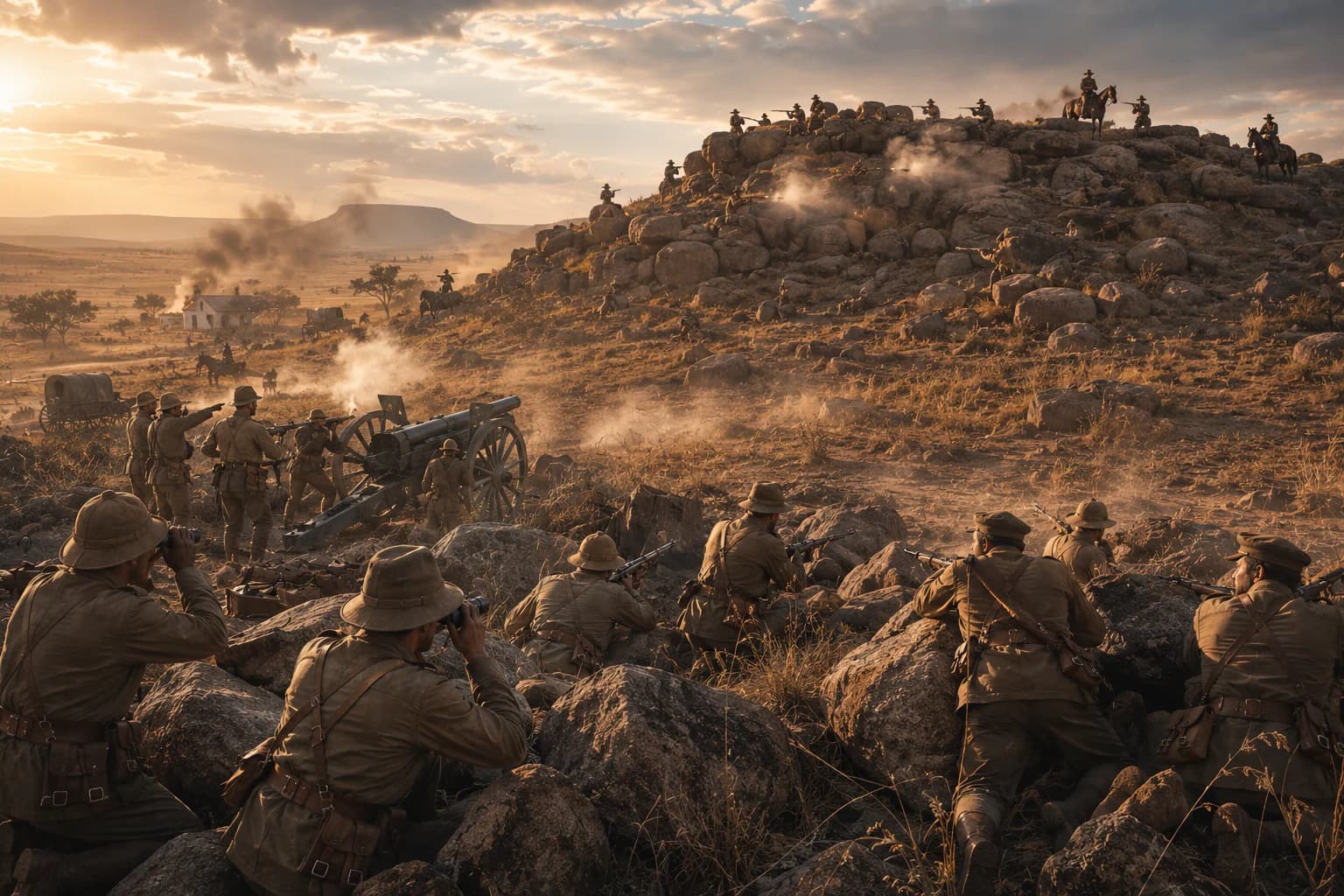
British imperial soldiers and Boer fighters on the South African veld during the Anglo-Boer War.
StoryModern
The Anglo Boer Conflict
1880 CE → 1902 CE
Britain's war with the Boers showed the human cost of empire.
View story →
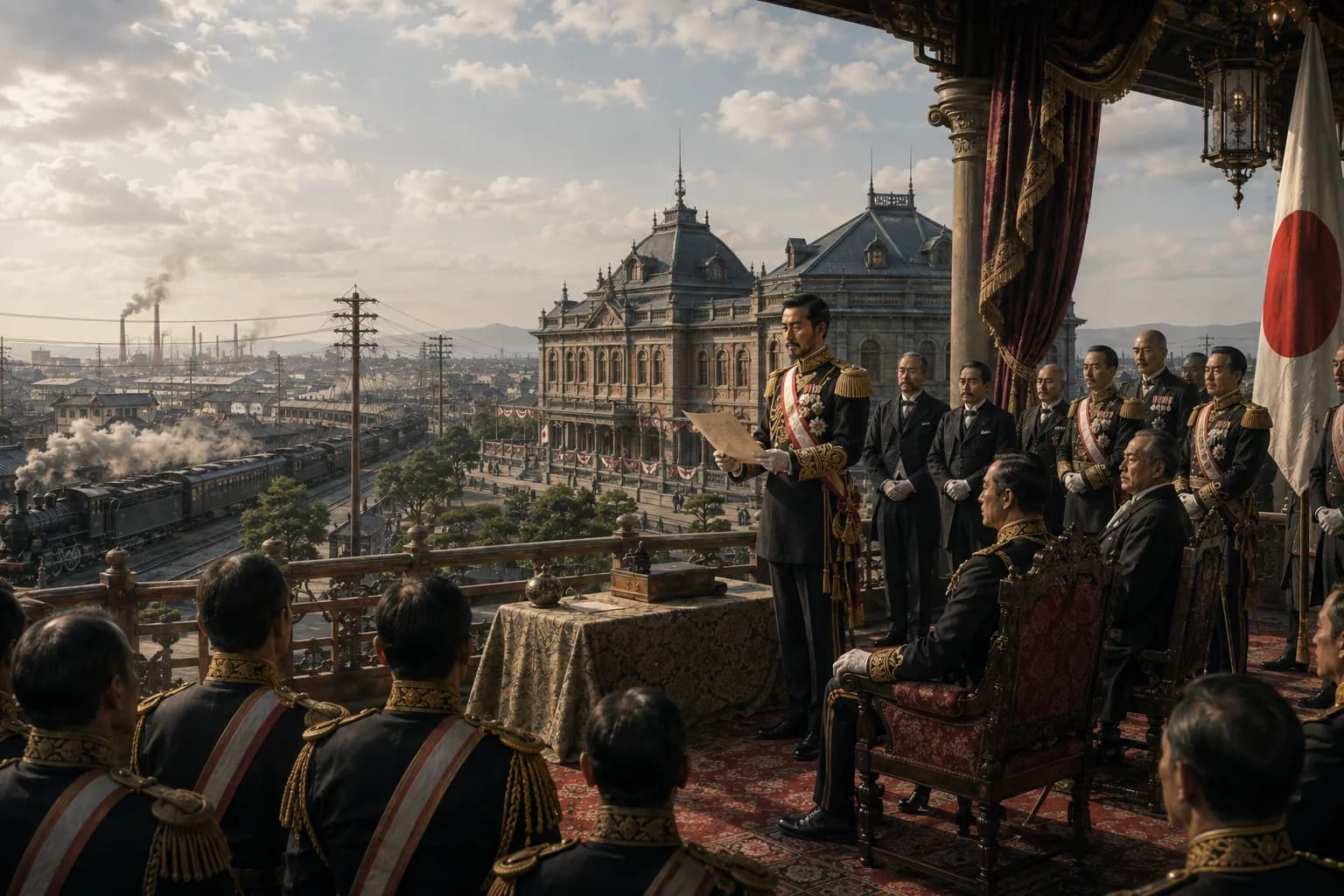
Emperor Meiji and officials overlooking a modernising Japanese city with railways, factories and imperial ceremony.
StoryEarly Modern
The Meiji Restoration
1603 CE → 1905 CE
Japan overthrew old rule and raced into the modern world.
View story →
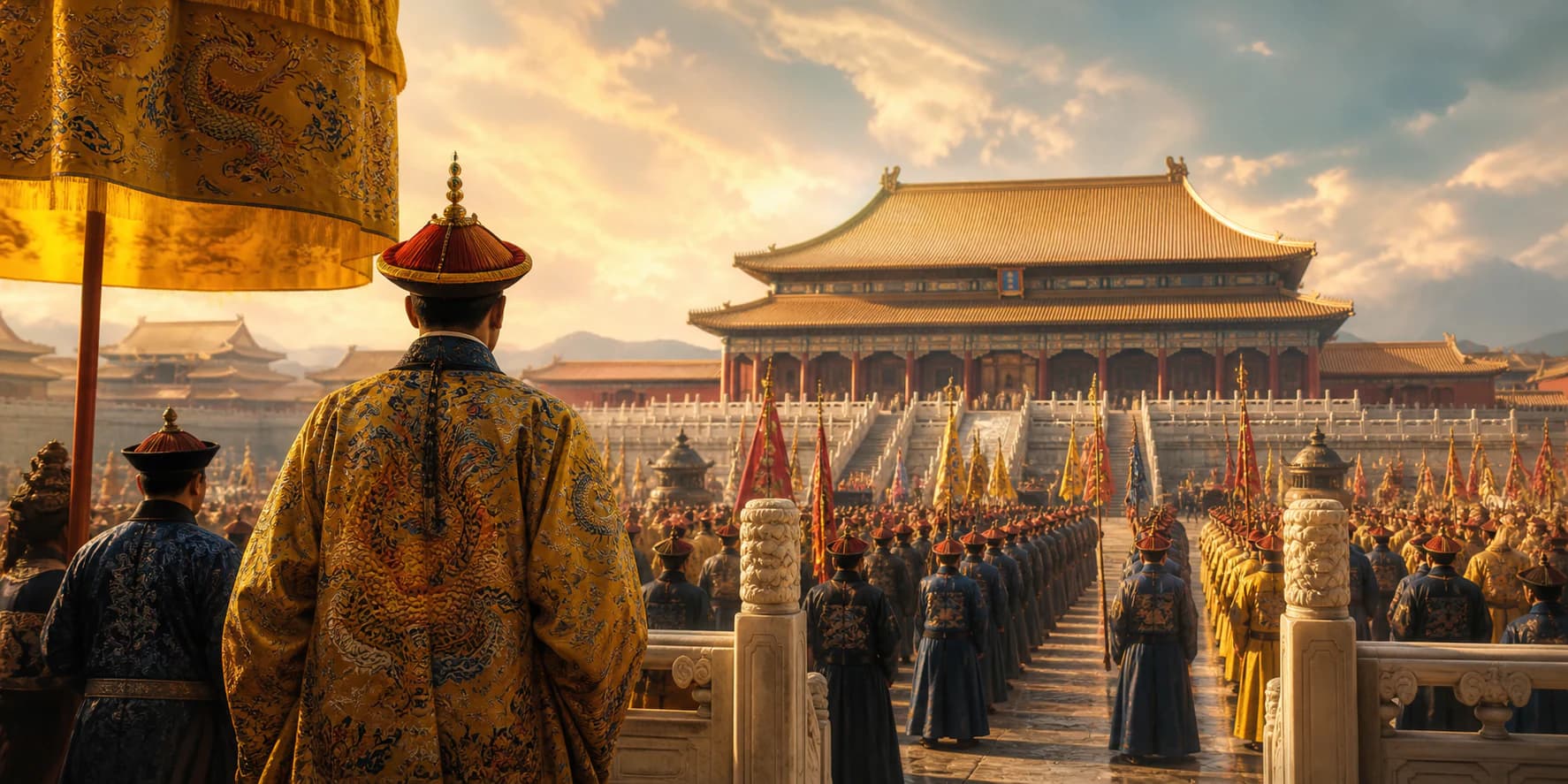
The Forbidden City in Beijing under the Qing dynasty, seat of imperial rule over the world's most populous empire.
StoryEarly Modern
The Qing Dynasty
1644 CE → 1912 CE
The Qing built China's largest empire before revolution ended it.
View story →
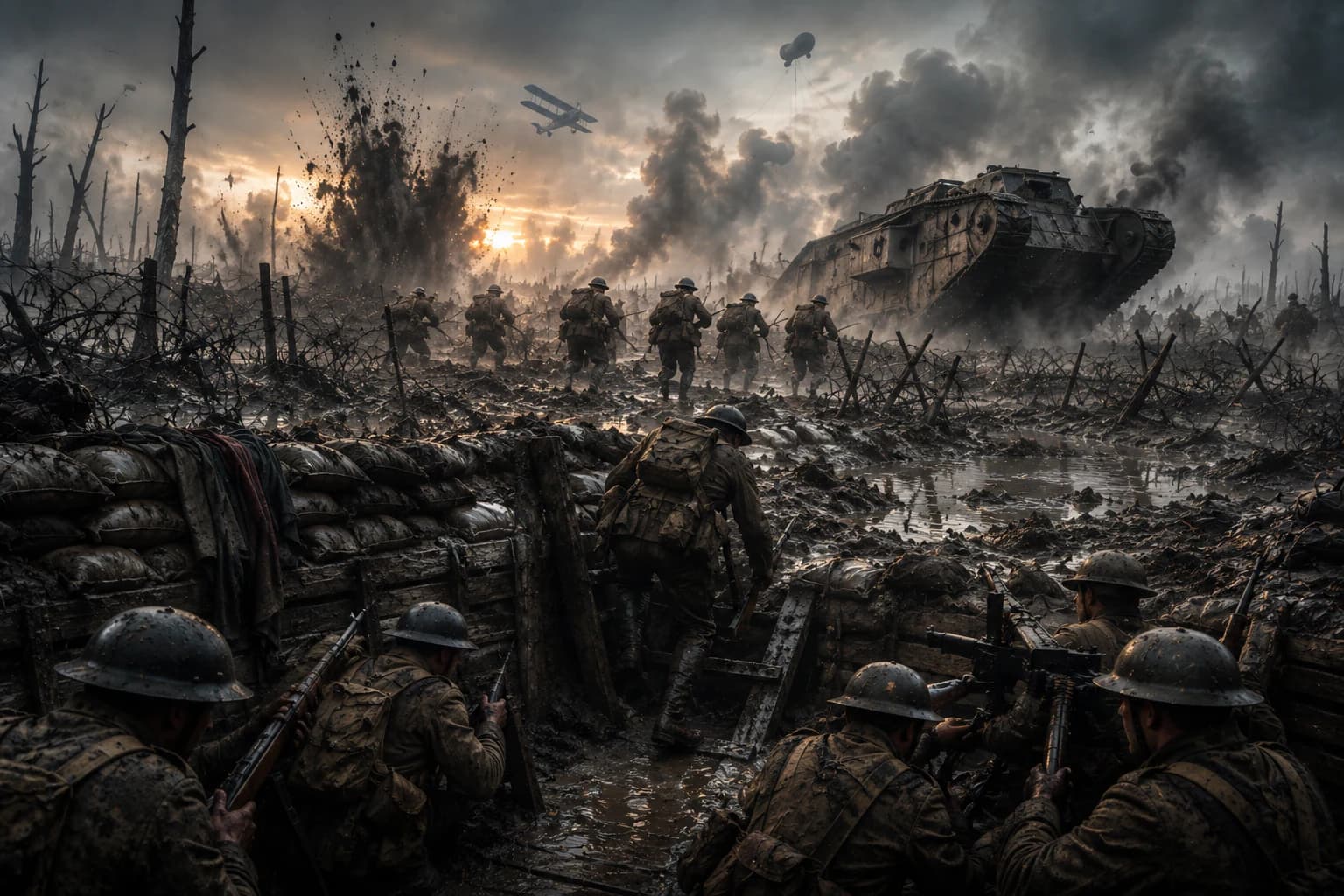
First World War soldiers in muddy trenches at dawn beneath smoke and artillery fire.
StoryModern
The First World War
1914 CE → 1918 CE
One assassination helped pull Europe into total war.
Read story →
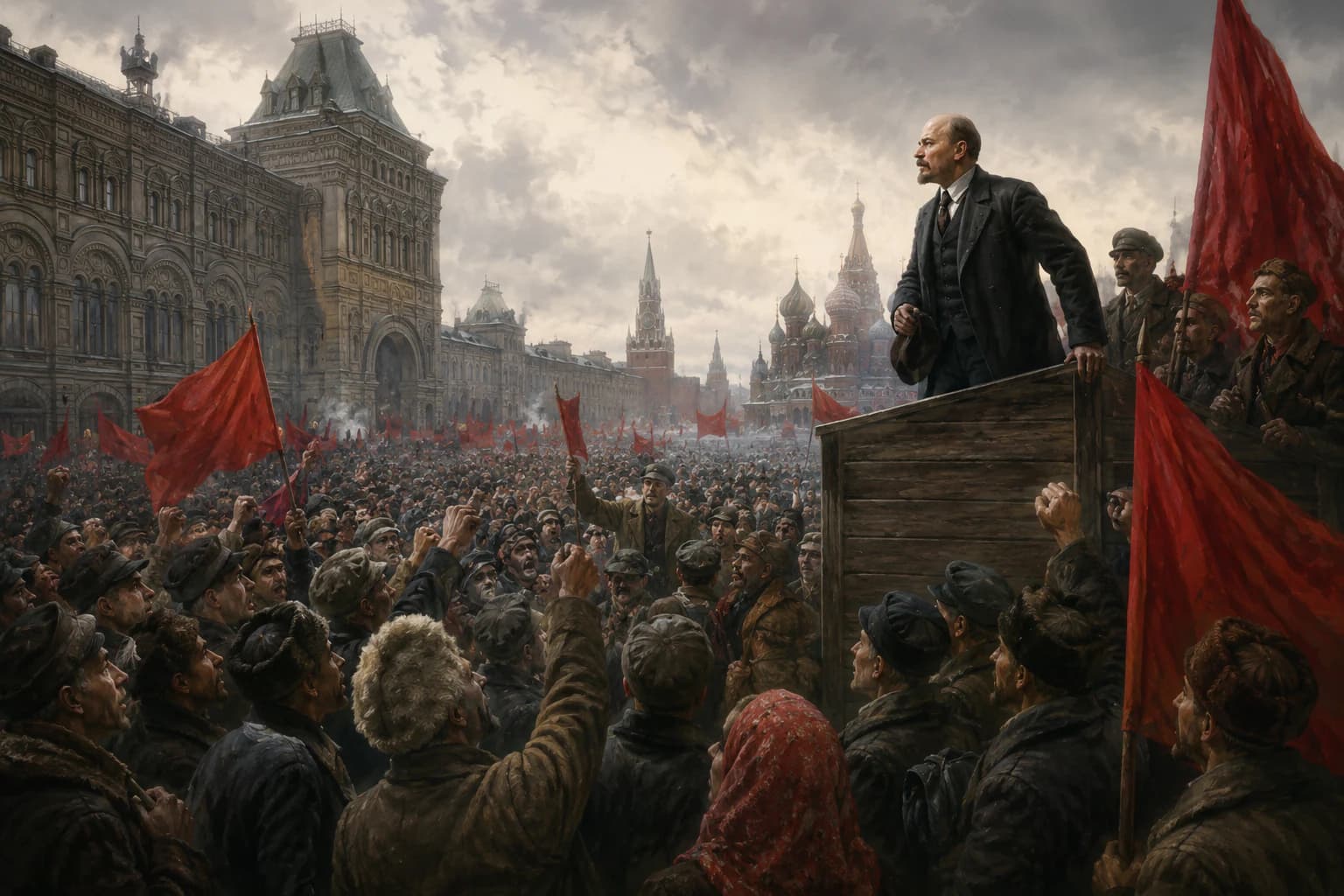
Crowds and armed workers in Petrograd during the Russian Revolution of 1917.
StoryModern
The Russian Revolution
1905 CE → 1922 CE
Revolution turned Russia's imperial collapse into Soviet power.
View story →
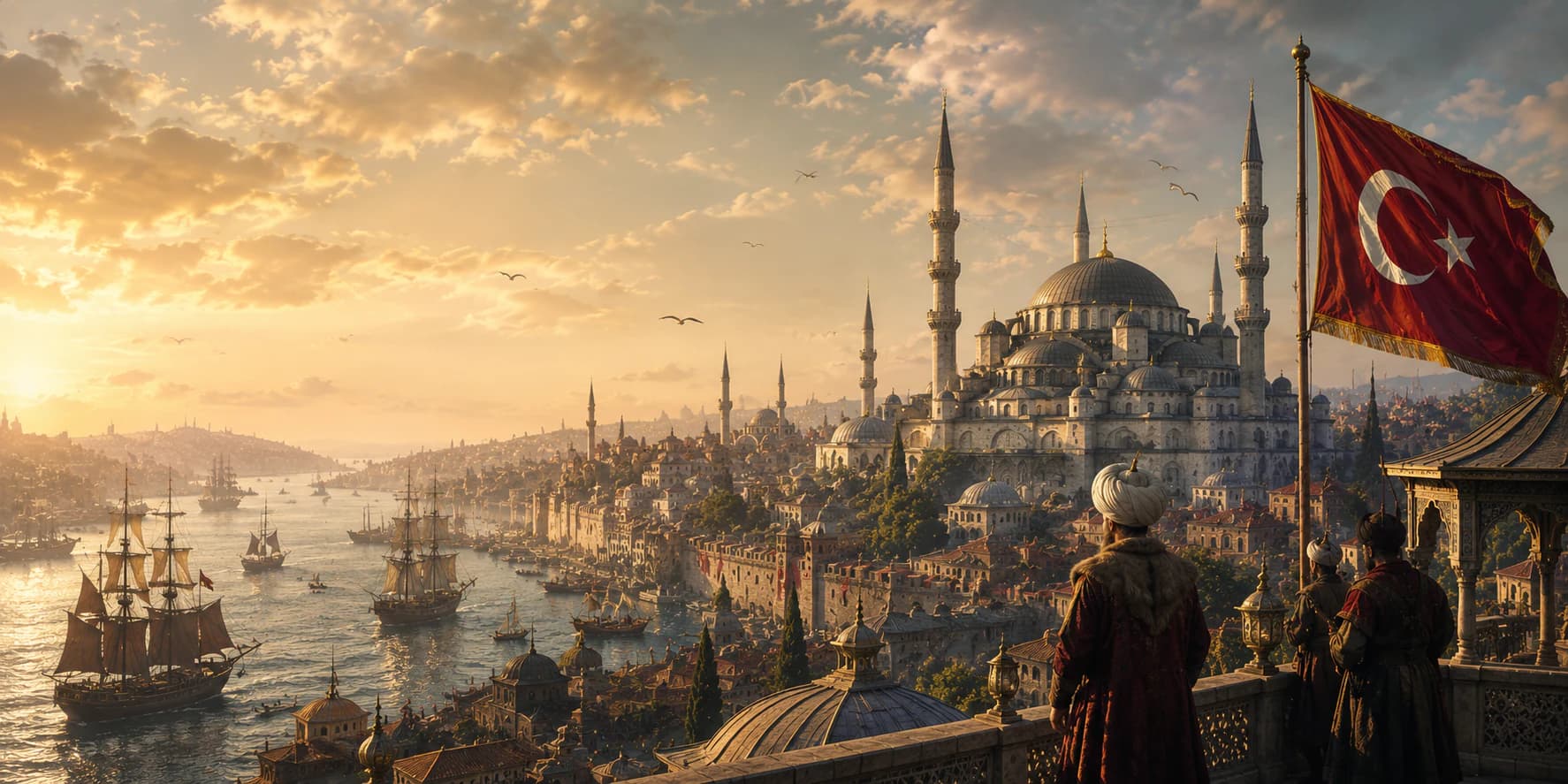
Ottoman banners over Istanbul, with soldiers, merchants, mosques, and imperial ships linking three continents.
StoryMiddle Ages
The Ottoman Empire
1299 CE → 1923 CE
A small frontier dynasty became an empire across three continents.
View story →
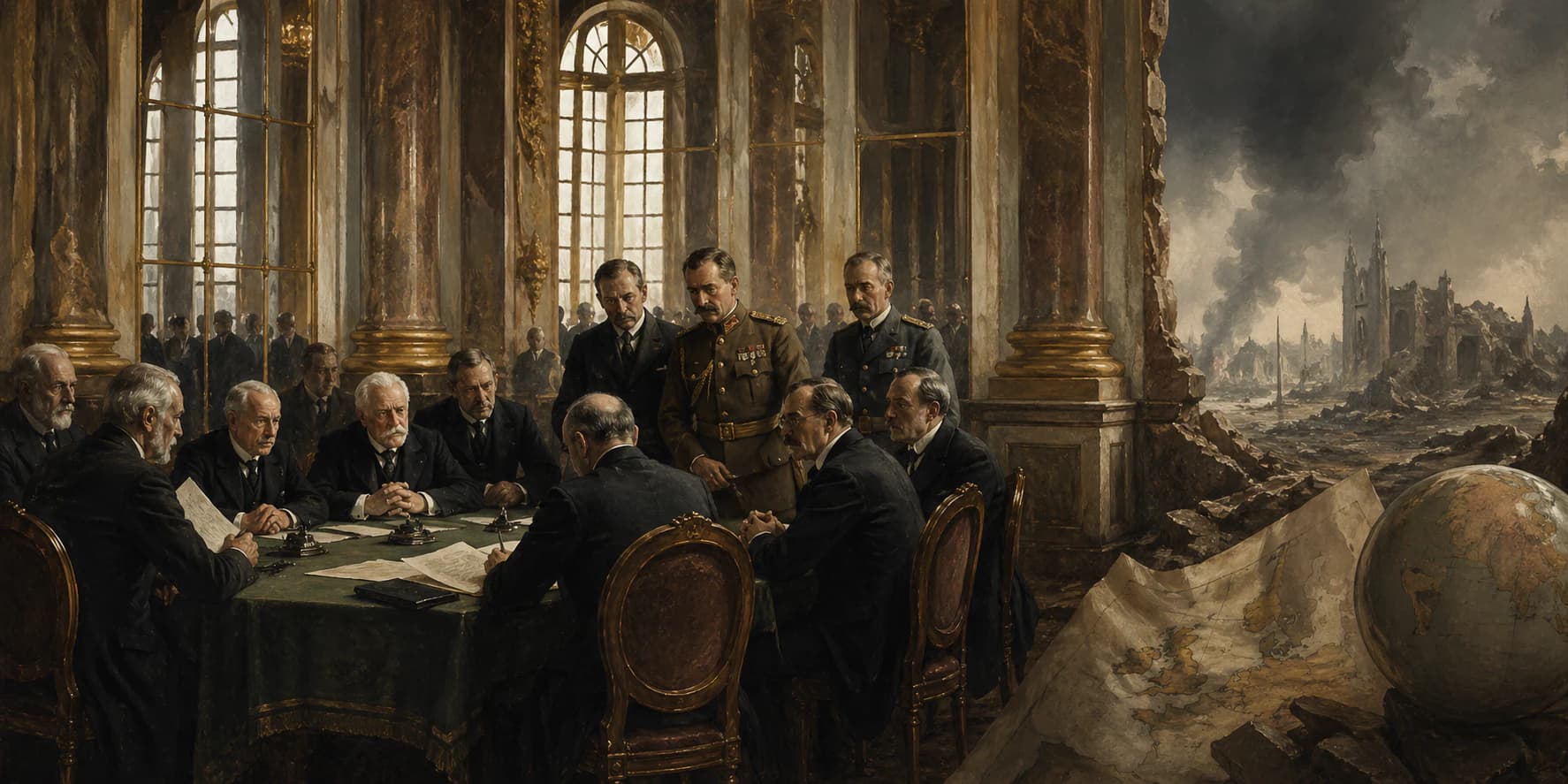
Delegates signing the Treaty of Versailles in the Hall of Mirrors in June 1919, watched by silent Allied officials as Germany's representatives took their seats
StoryModern
The Treaty of Versailles and Its Consequences
1918 CE → 1933 CE
A harsh peace after World War I helped fuel future conflict.
View story →
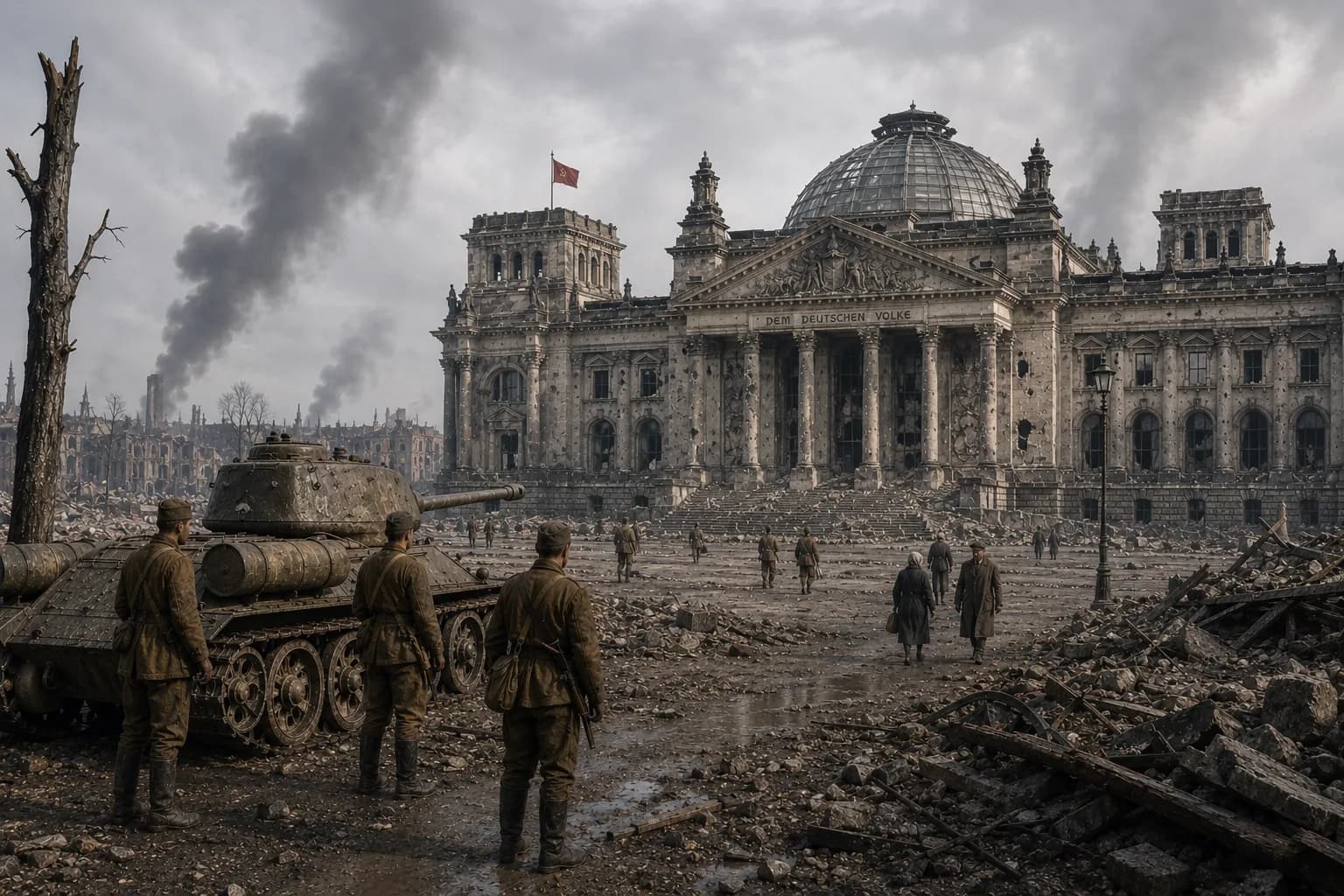
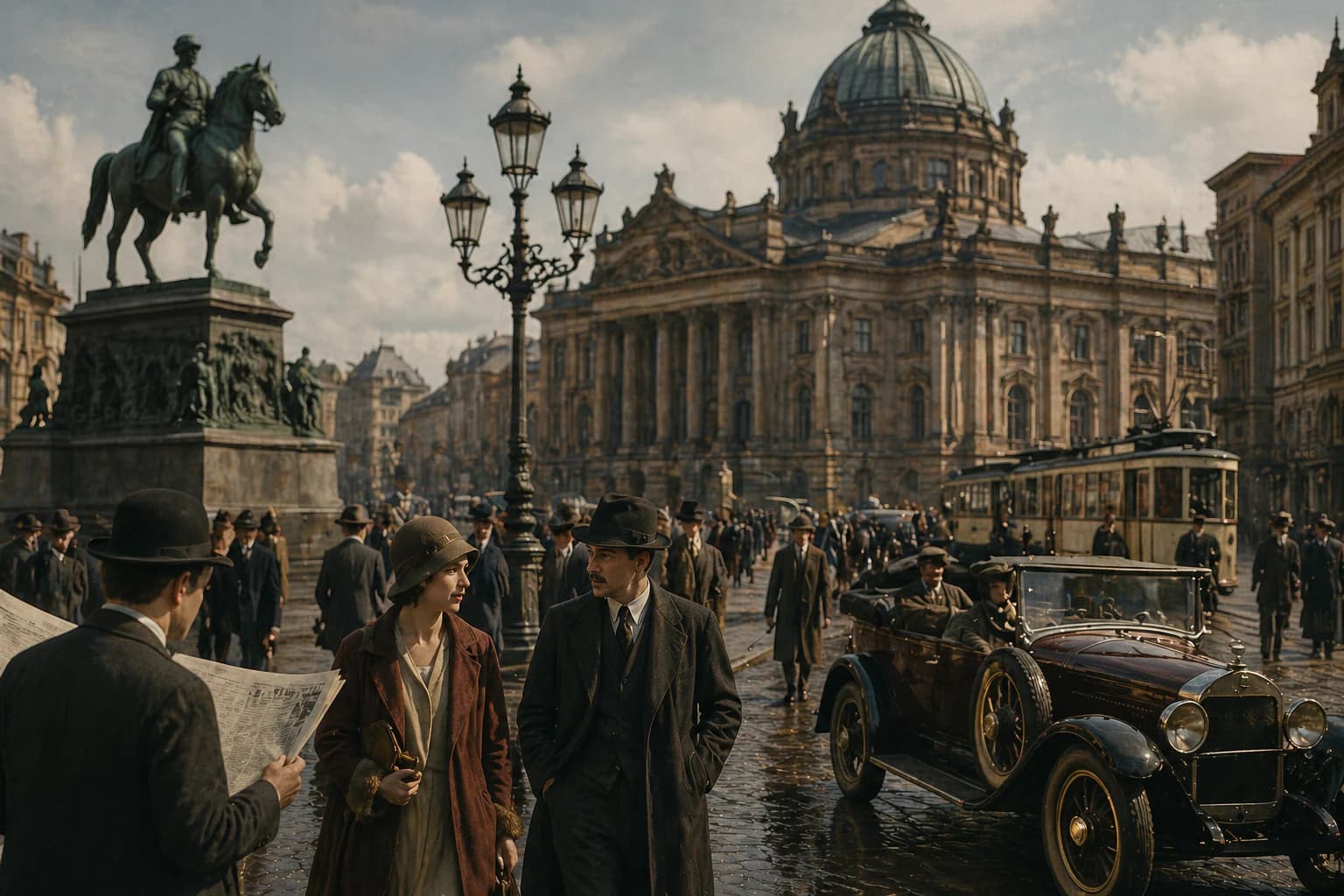
Berlin in the 1920s, with crowds, political tension and the Reichstag in the background
StoryModern
Weimar Republic
1919 CE → 1933 CE
Germany's first democracy faced crisis before Hitler took power.
View story →
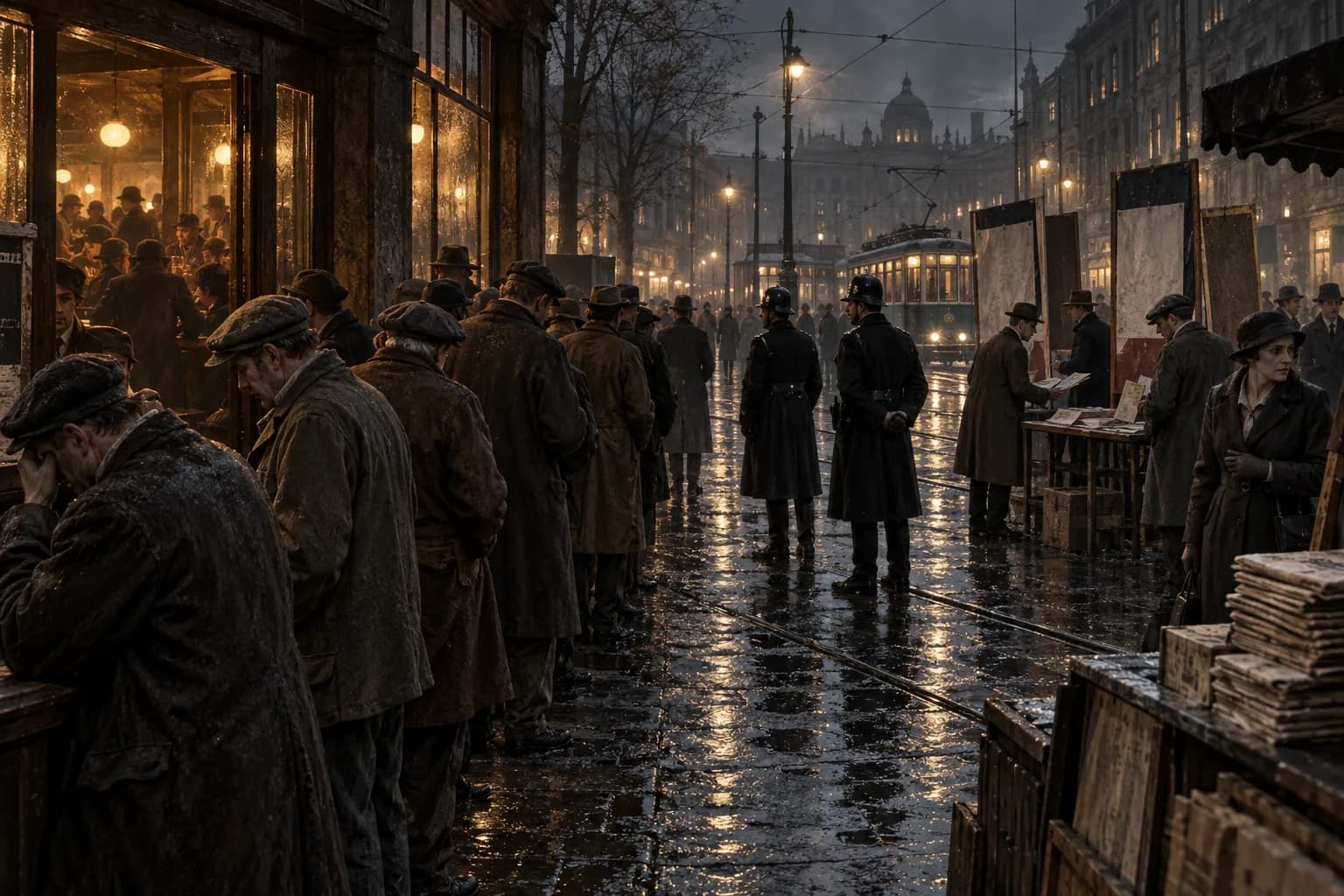
Unemployed workers, police, blank campaign boards, newspapers, and anxious passersby crowd a rain-darkened late-Weimar street.
StoryModern
The Rise of Adolf Hitler
1919 CE → 1934 CE
Hitler used crisis and propaganda to destroy democracy.
View story →
Europe in the 1930s: marching columns, mass rallies, and the shadow of another war gathering over the continent.
StoryModern
The Causes of the Second World War
1919 CE → 1939 CE
A fragile peace helped open the road to another world war.
View story →
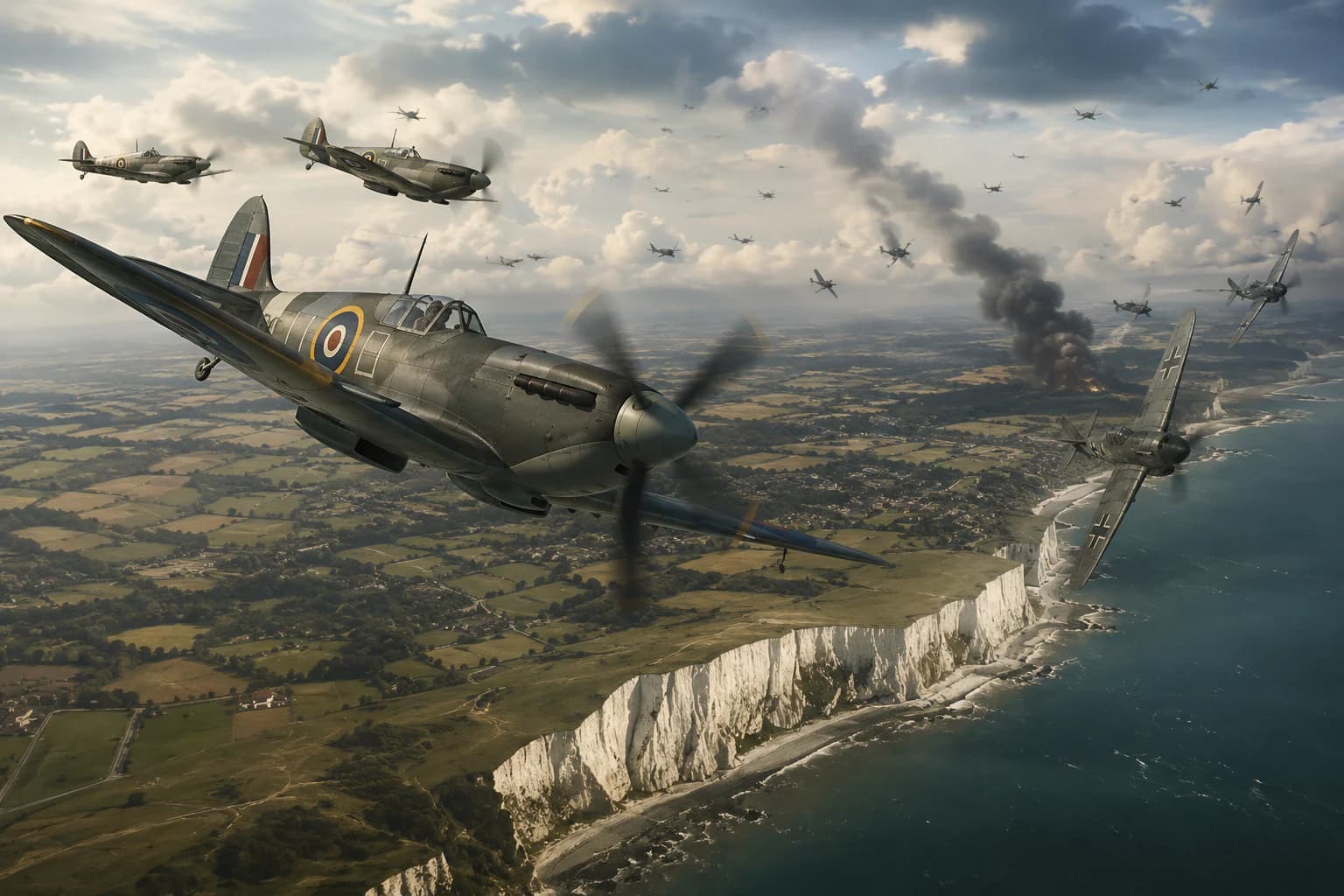
RAF fighters and German bombers over southern England as searchlights and fires mark the opening of the Blitz in 1940.
StoryModern
The Battle of Britain
1940 CE
Britain's air defence stopped Hitler's invasion plans.
View story →
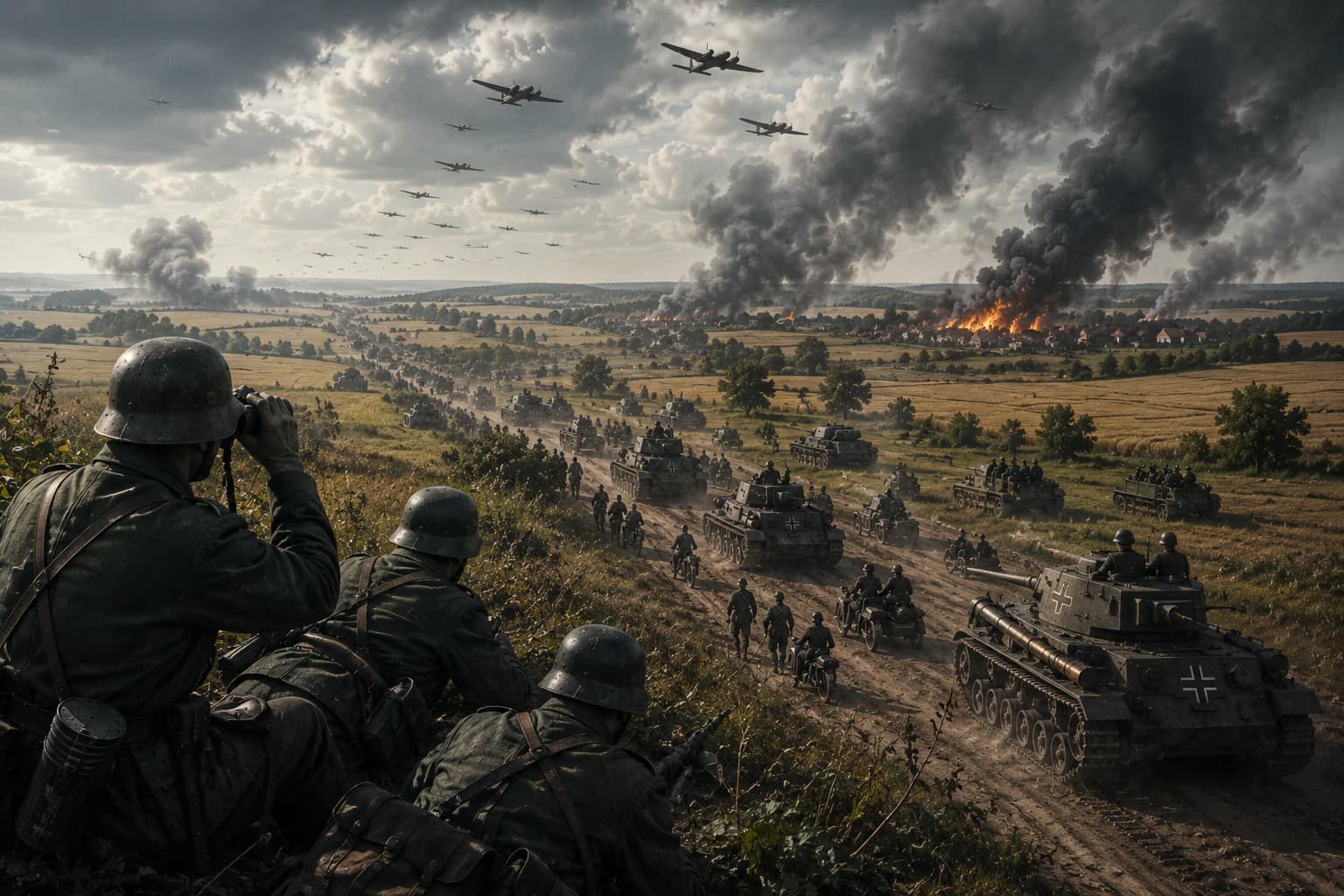
German columns moving east in 1941 as Soviet cities burn and civilians flee the widening front.
StoryModern
Operation Barbarossa
1940 CE → 1942 CE
Hitler's invasion of the Soviet Union became a catastrophe.
View story →
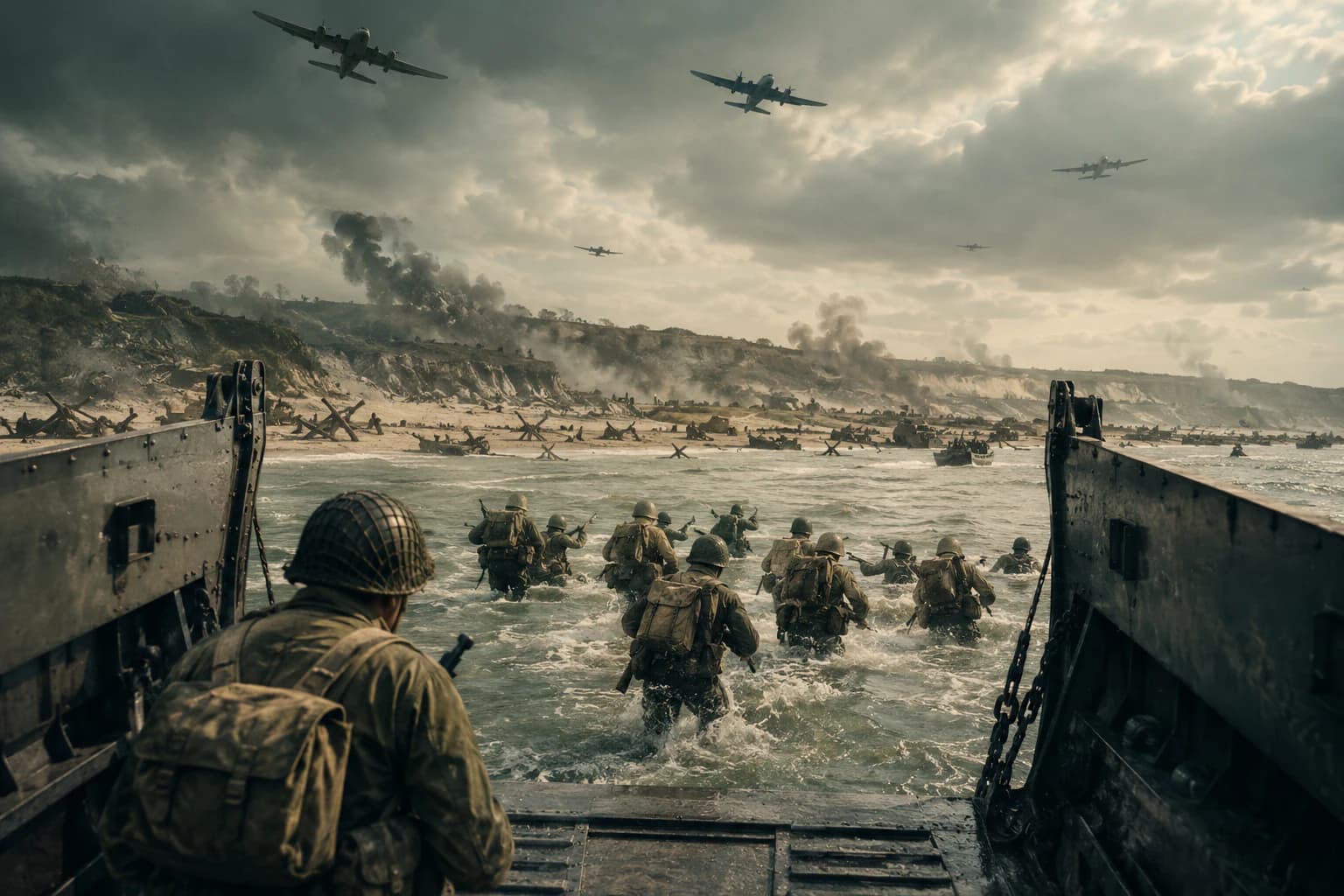
Allied troops landing in Normandy as landing craft open under fire and smoke rises across the coast in June 1944.
StoryModern
D-Day and the Liberation of Europe
1943 CE → 1945 CE
D-Day opened the road from Normandy to Nazi Germany.
View story →
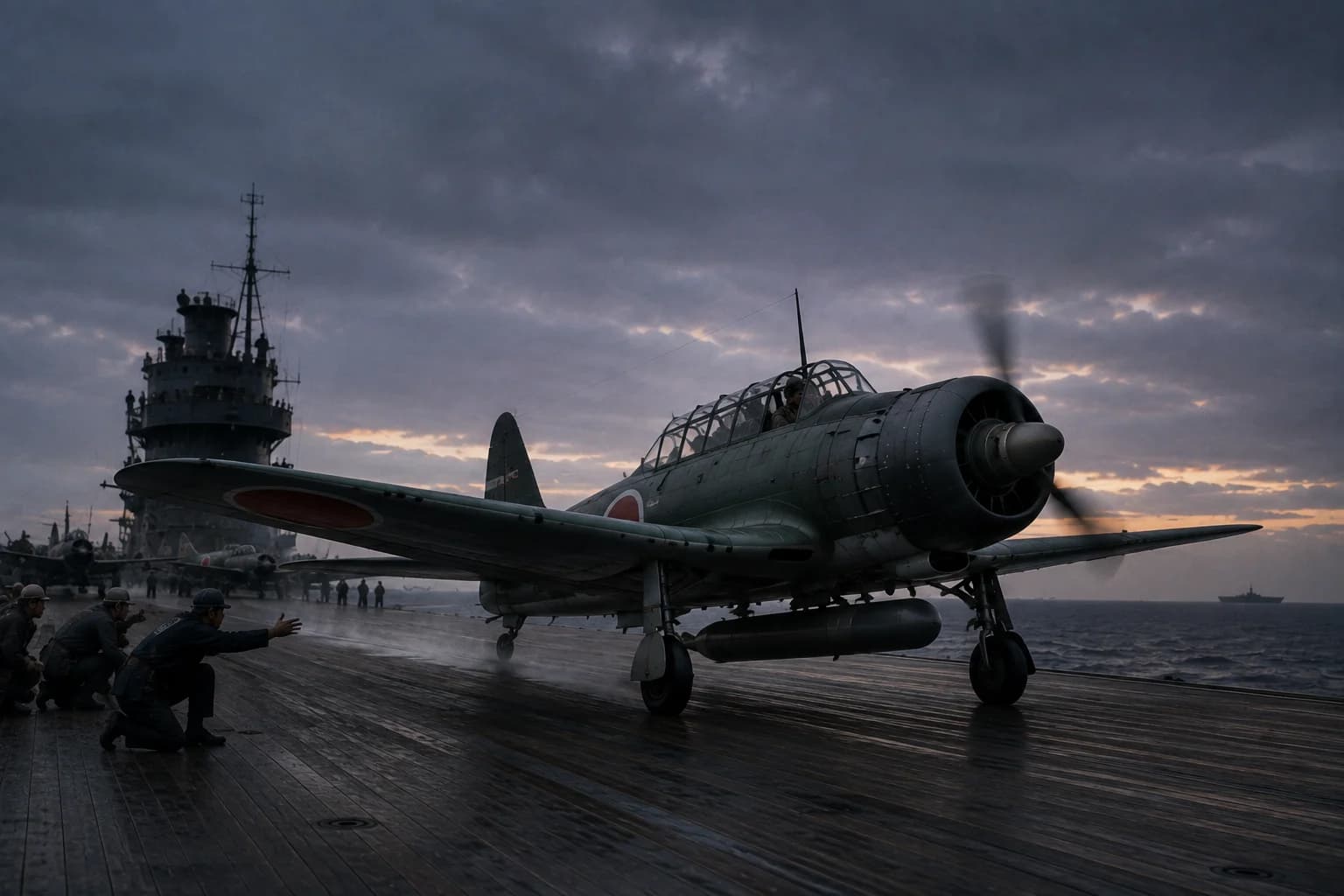
Japanese carrier aircraft on a flight deck at dawn with a warship in the background.
StoryModern
Imperial Japan
1868 CE → 1945 CE
Japan modernised fast and built an empire it lost in total war.
View story →
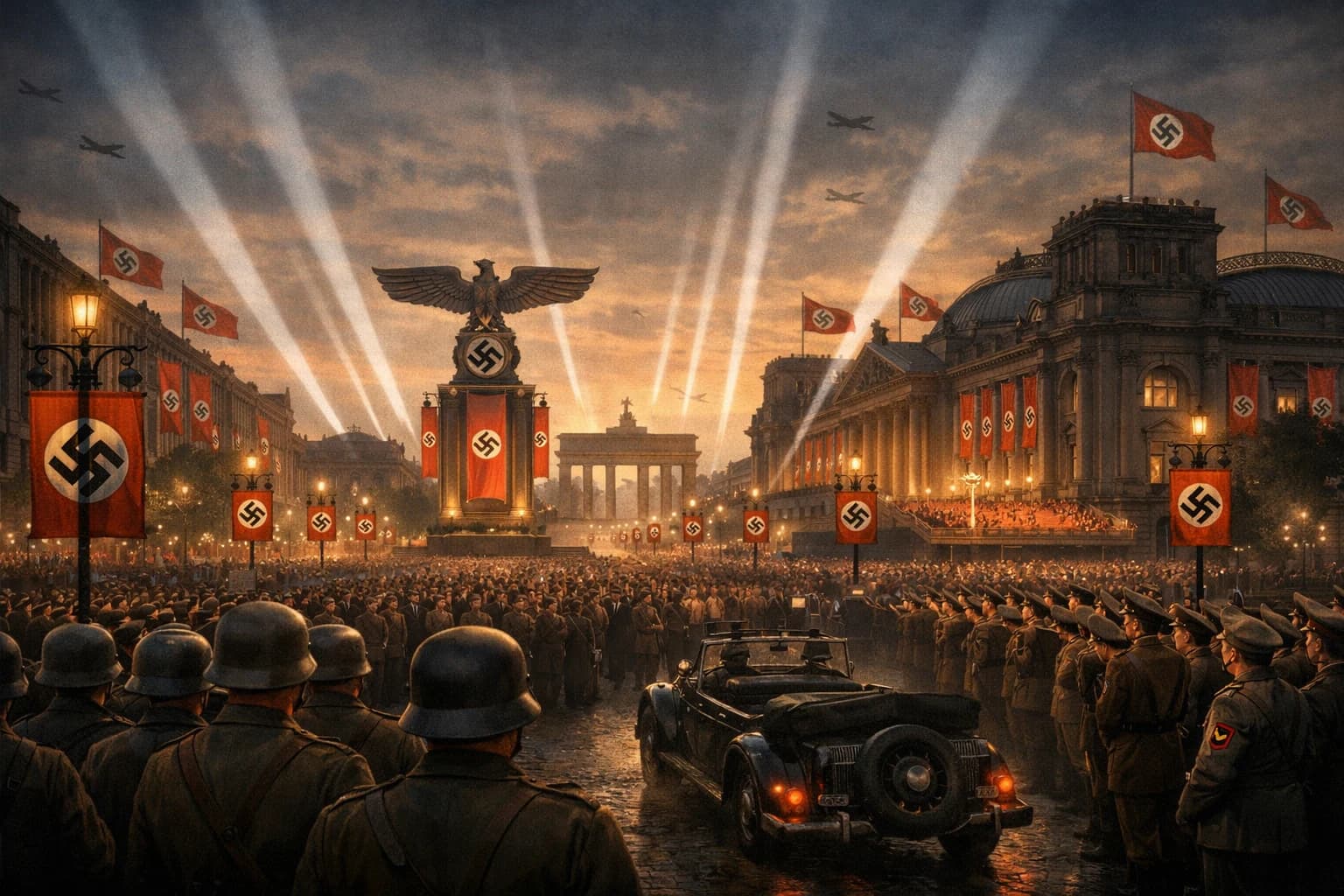
Berlin in the 1930s beneath Nazi banners and mass rallies
StoryModern
Nazi Germany
1933 CE → 1945 CE
Germany's democracy collapsed into dictatorship, war and genocide.
View story →
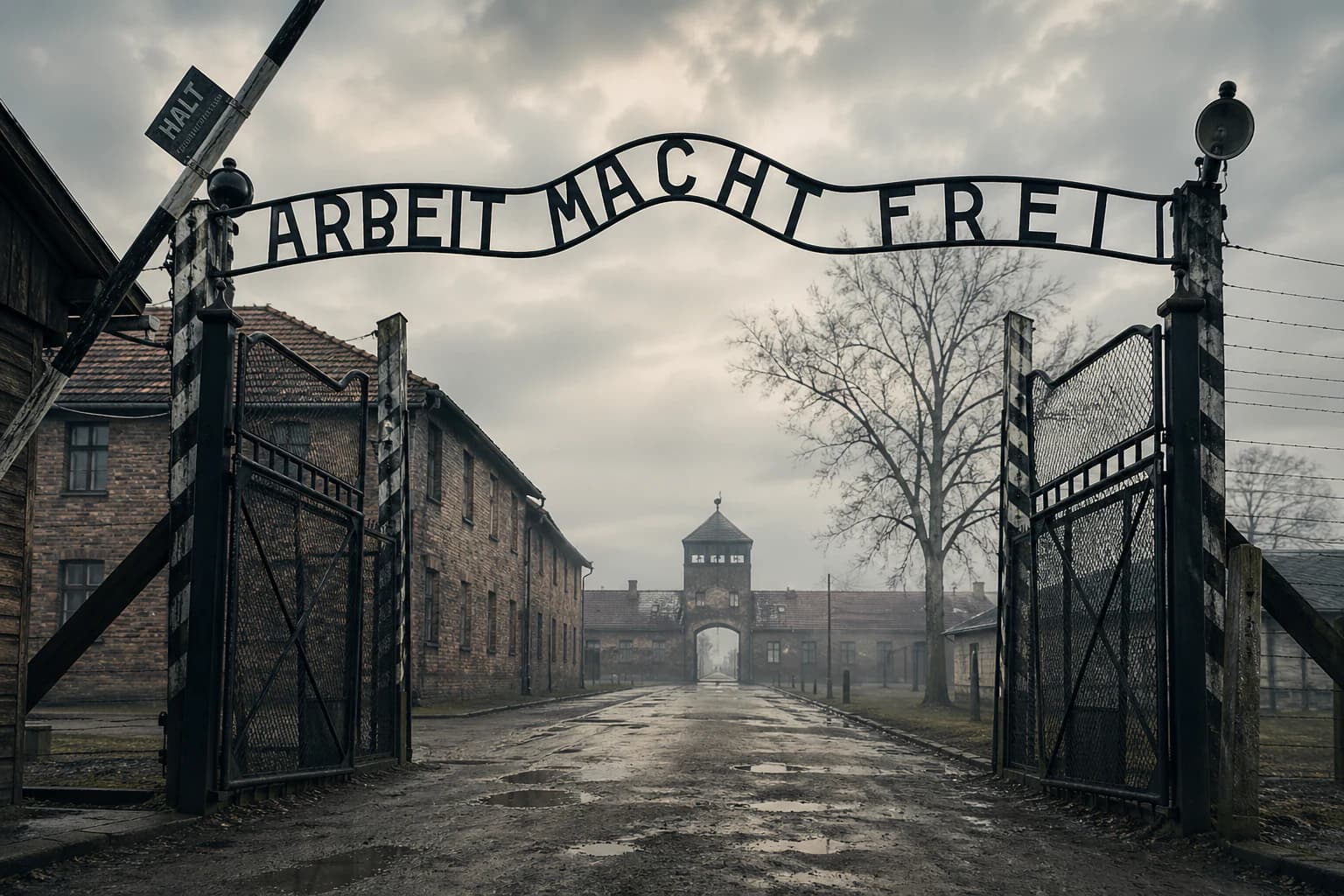
The gatehouse of Auschwitz-Birkenau, the largest Nazi killing centre, photographed after liberation in 1945
StoryModern
The Holocaust
1933 CE → 1945 CE
Nazi persecution became genocide, and memory became a duty.
View story →
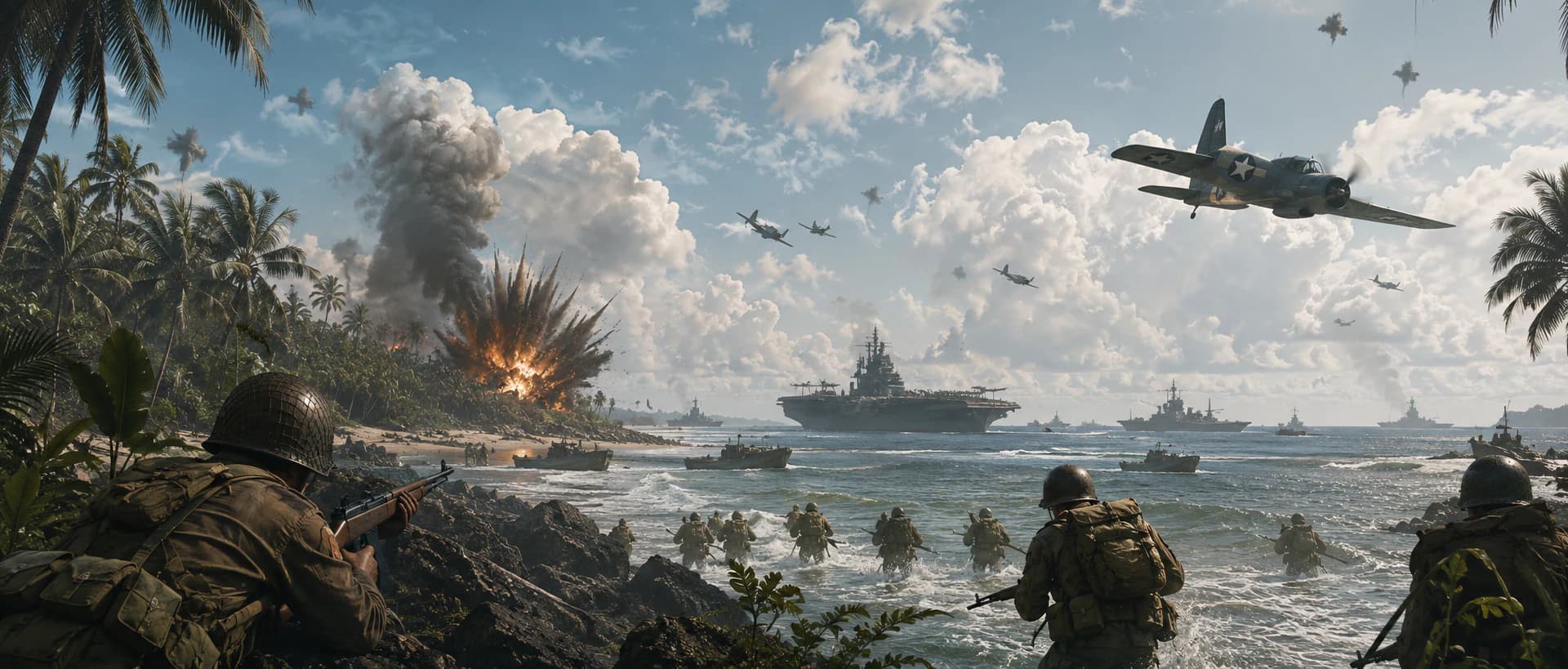
Carrier aircraft, burning ships, occupied cities, and island fighting across the vast Pacific war.
StoryModern
The Pacific War
1931 CE → 1945 CE
Japan's empire spread across the Pacific before defeat.
View story →
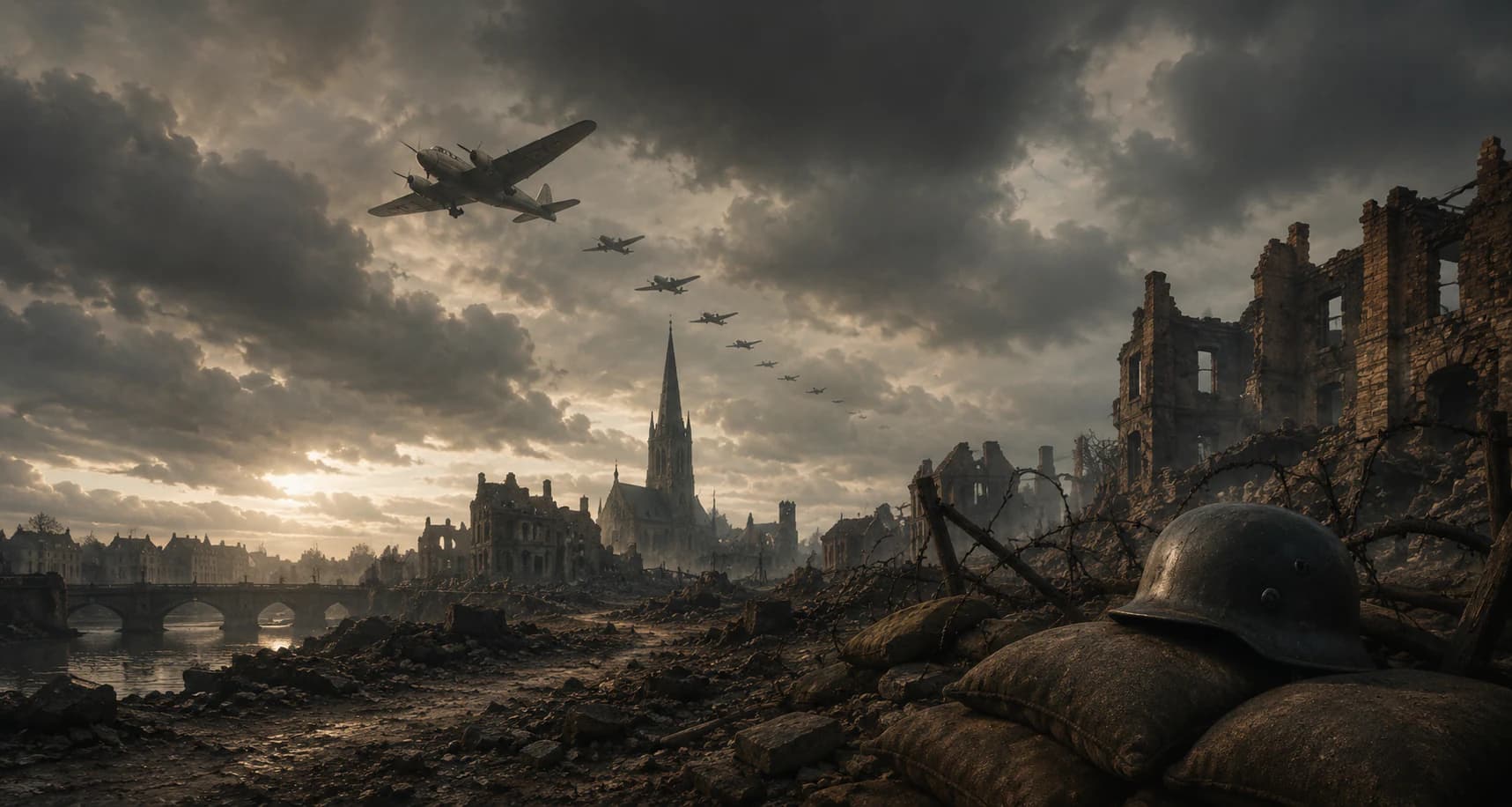
Second World War battlefield at dusk with soldiers, aircraft, smoke and ruined cities.
StoryModern
The Second World War
1939 CE → 1945 CE
World War II became a global fight against dictatorship and genocide.
Read story →
Churchill, Roosevelt, and Stalin seated together at Yalta in 1945 — the last photograph of the Grand Alliance before the Cold War began to divide the world they had won
StoryModern
Origins of the Cold War
1941 CE → 1947 CE
Allies became rivals and divided the postwar world.
View story →
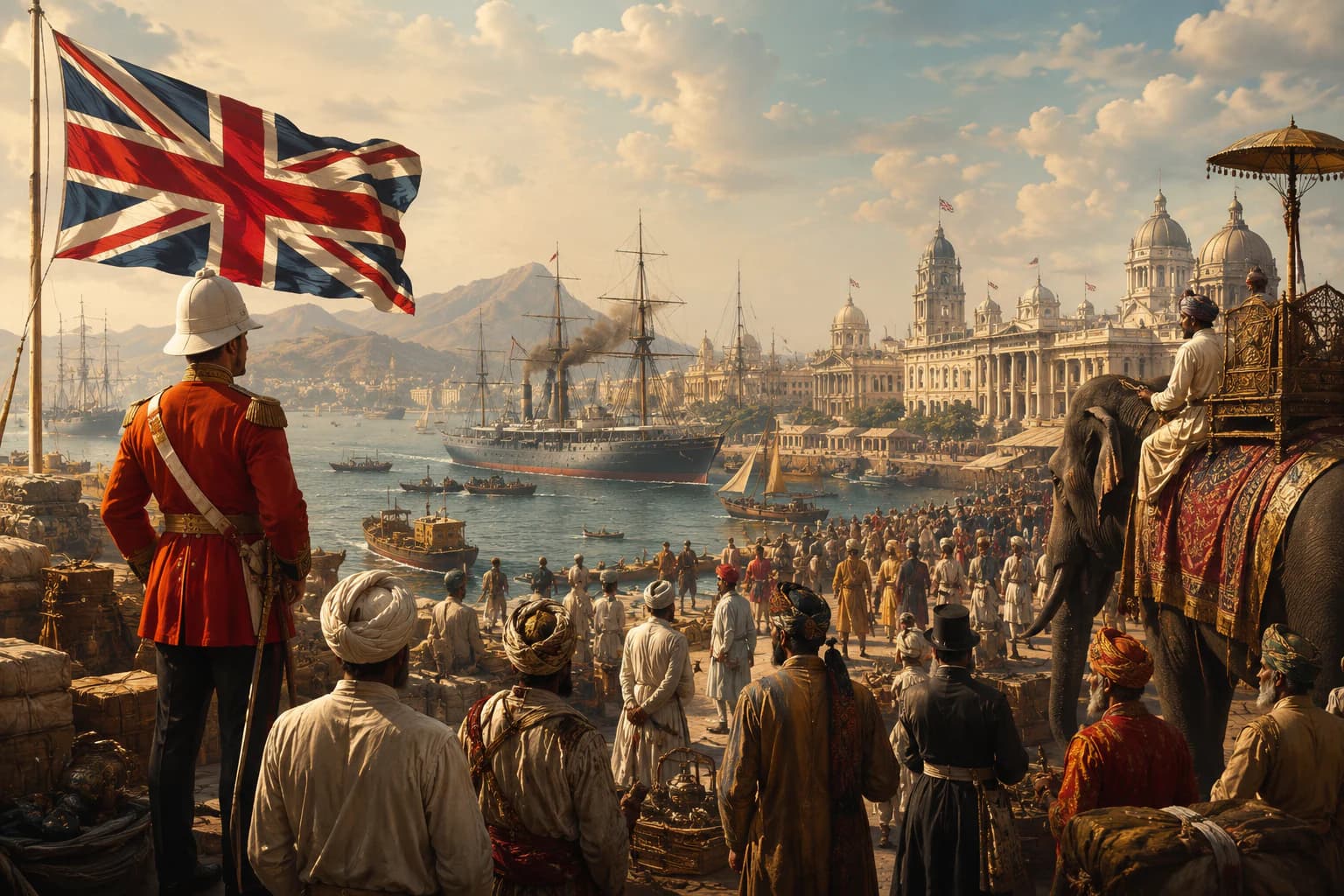
A sweeping view of ships, ports, colonies, and anti-colonial protests across centuries of British imperial history.
StoryEarly Modern
The British Empire
1588 CE → 1947 CE
Britain built a vast empire that resistance later helped undo.
View story →
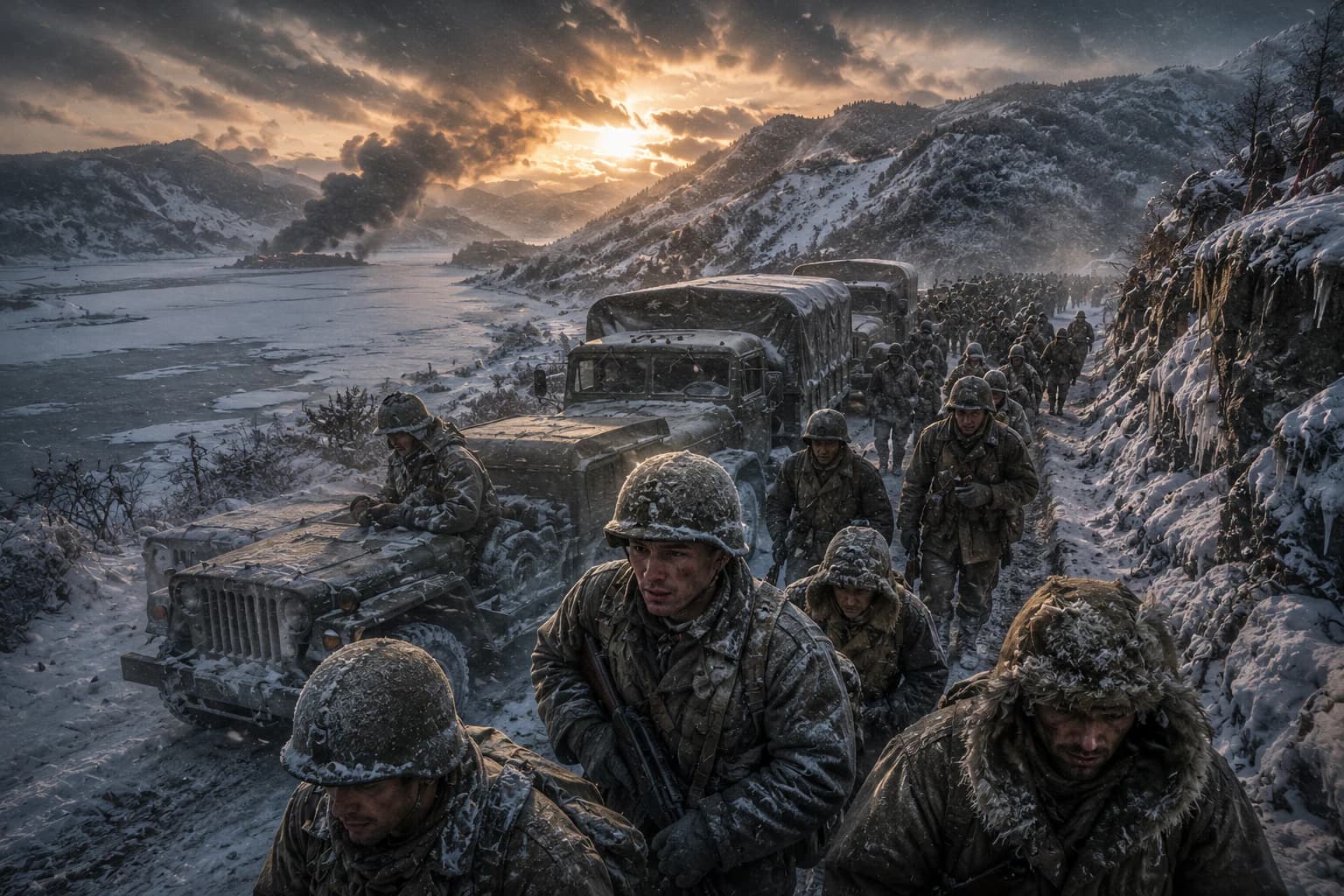
Korean War battlefield with soldiers advancing through smoke across a divided peninsula.
StoryModern
The Korean War
1950 CE → 1953 CE
War and outside intervention left Korea divided.
View story →
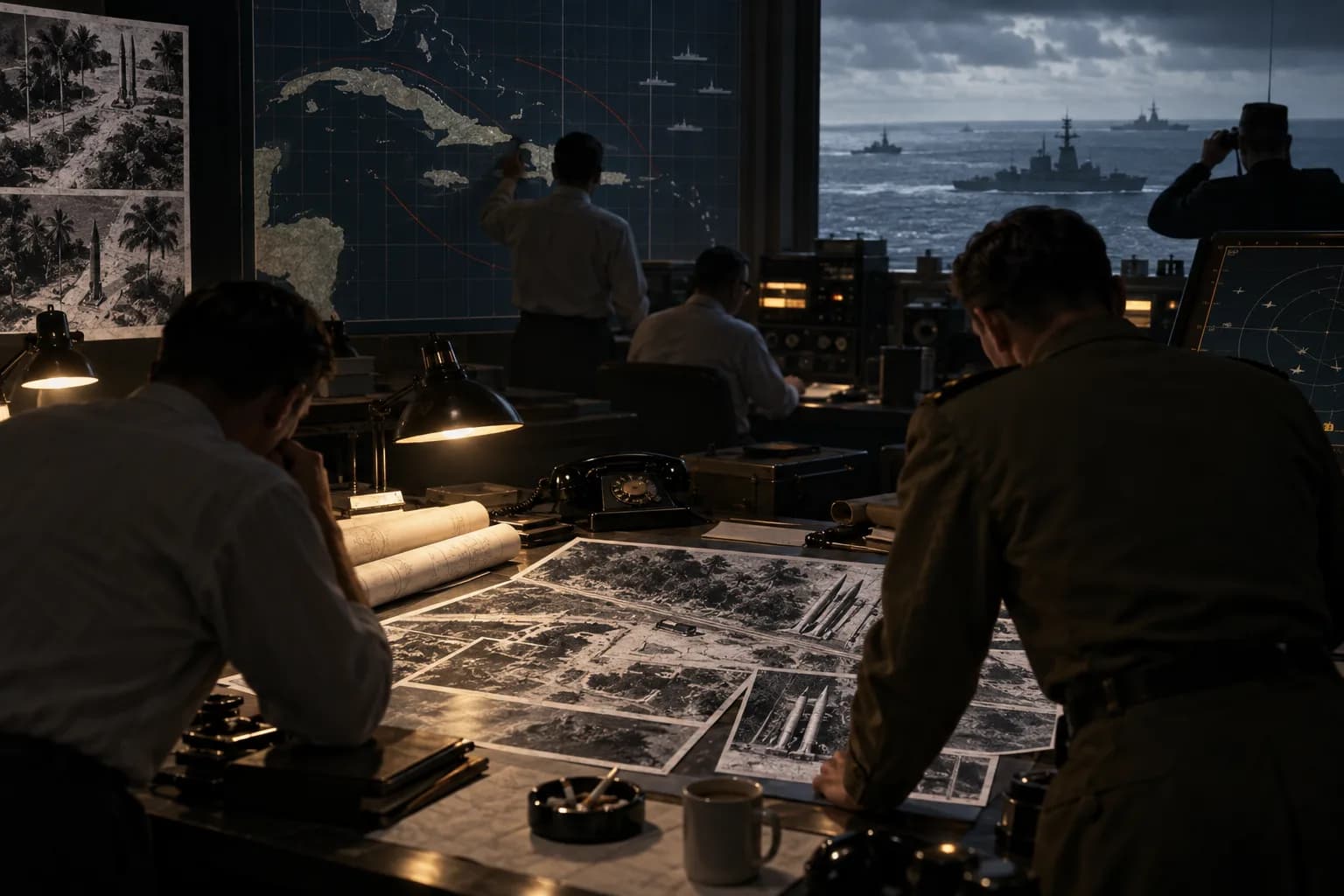
Anonymous analysts and officers study aerial photographs, radio equipment, and naval plotting boards during the Cuban Missile Crisis.
StoryModern
The Cuban Missile Crisis
1962 CE
For thirteen days, the world stood close to nuclear war.
View story →
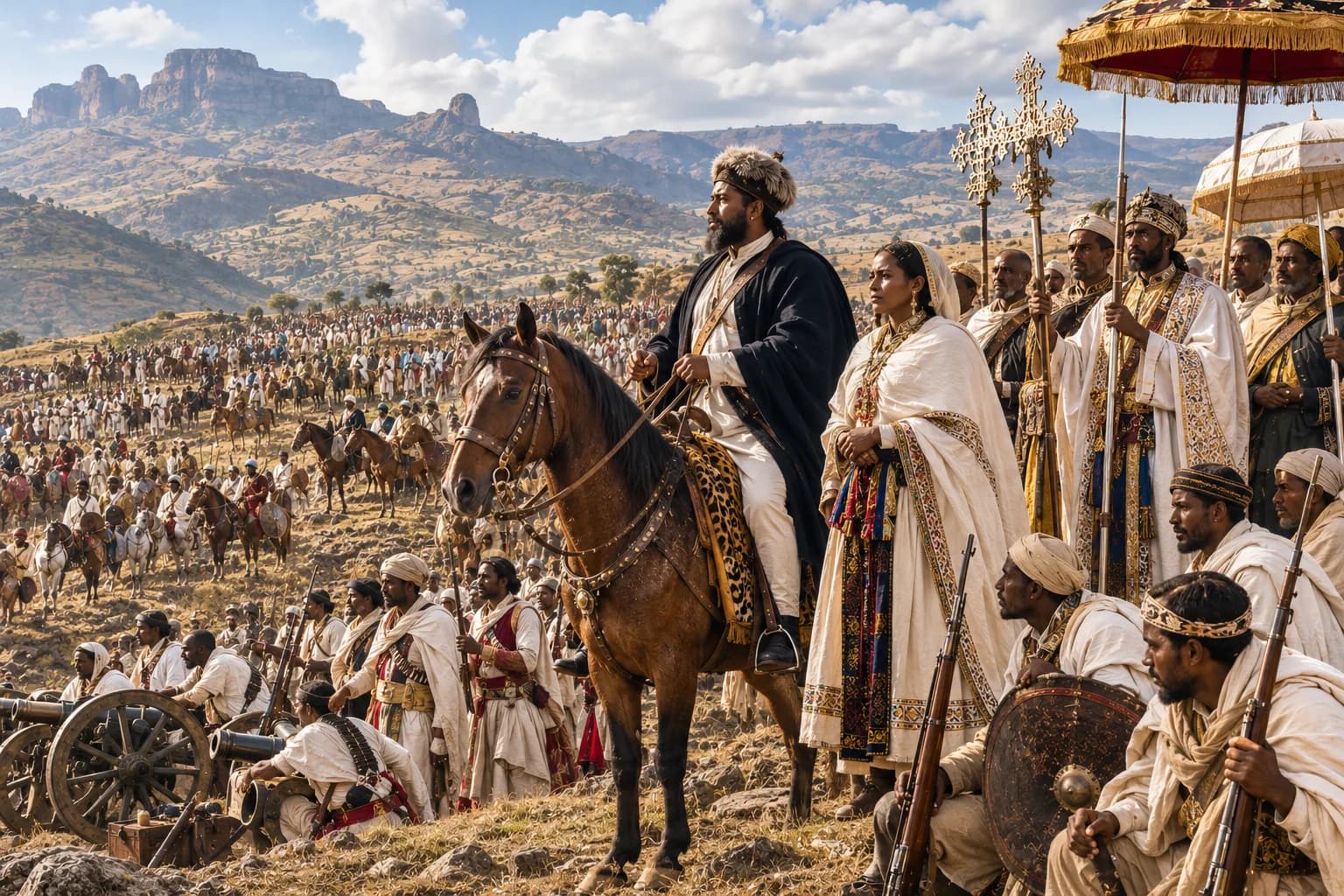
An Ethiopian emperor on horseback with clergy, soldiers and imperial attendants in the Ethiopian highlands.
StoryModern
The Ethiopian Empire
1855 CE → 1974 CE
Ethiopia fought to stay independent before revolution ended its empire.
Read story →
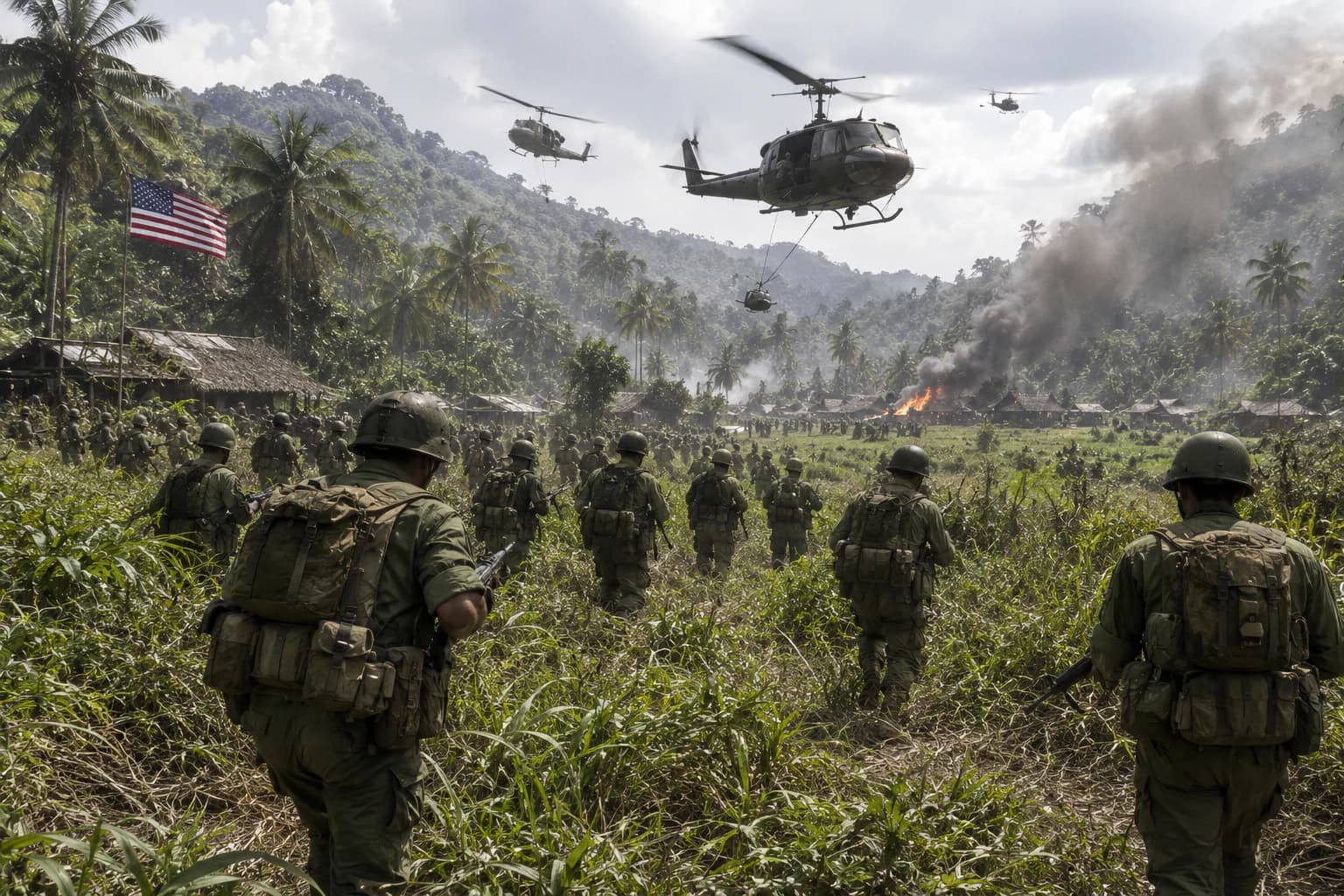
American soldiers arriving in Vietnam as helicopters and jungle warfare define the conflict.
StoryModern
The Vietnam War
1955 CE → 1975 CE
Vietnam's war changed Southeast Asia and Cold War politics.
View story →
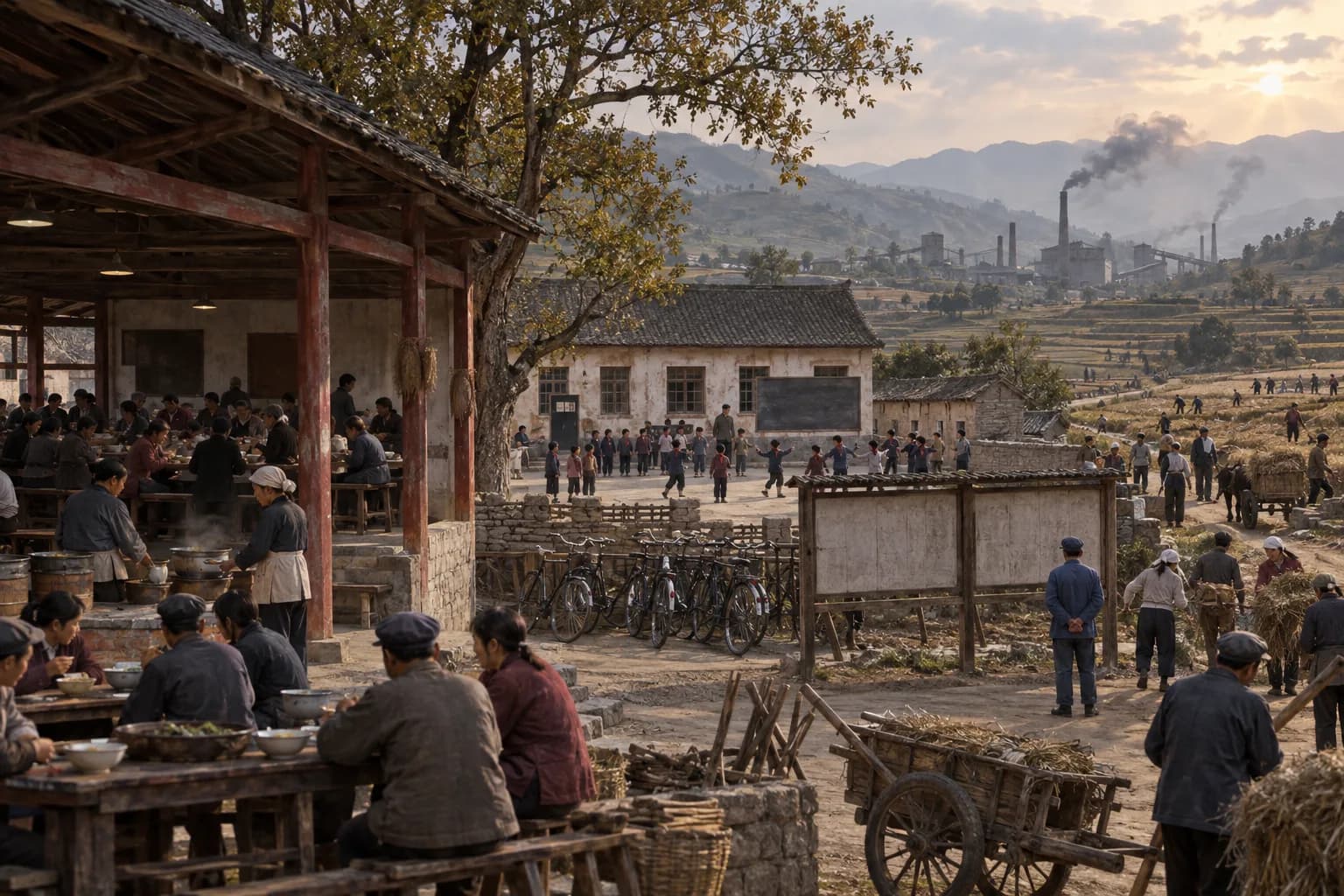
A Mao-era rural commune shows a communal dining hall, schoolyard, bicycles, field labor, and distant industrial chimneys.
StoryModern
Mao's China
1949 CE → 1976 CE
Mao transformed China through revolution, control and upheaval.
View story →
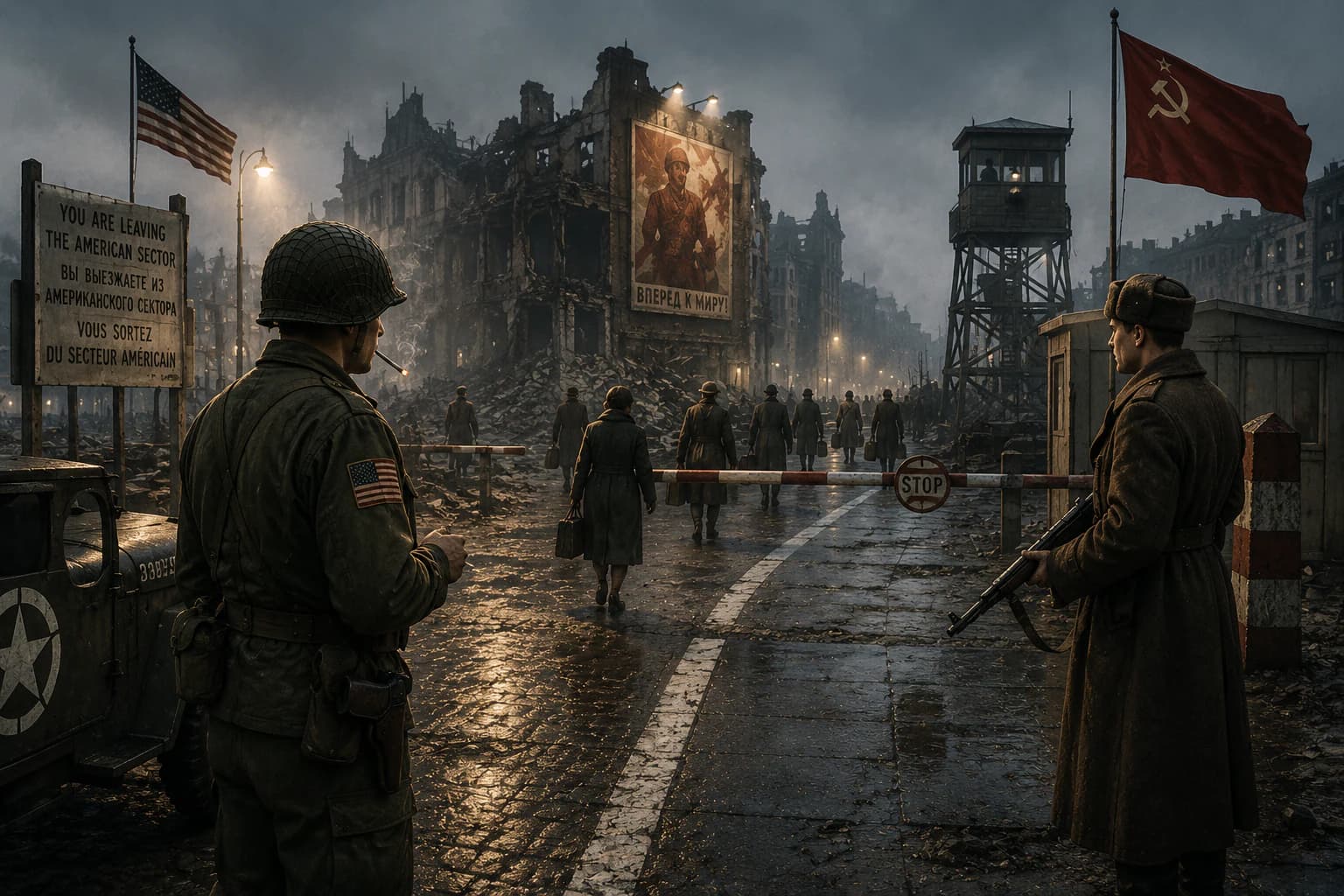
A brooding, minimalist Cold War skyline under a heavy grey sky, suggesting division, surveillance, and nuclear tension
StoryModern
The Cold War
1945 CE → 1991 CE
Two superpowers divided the world under nuclear threat.
Read story →
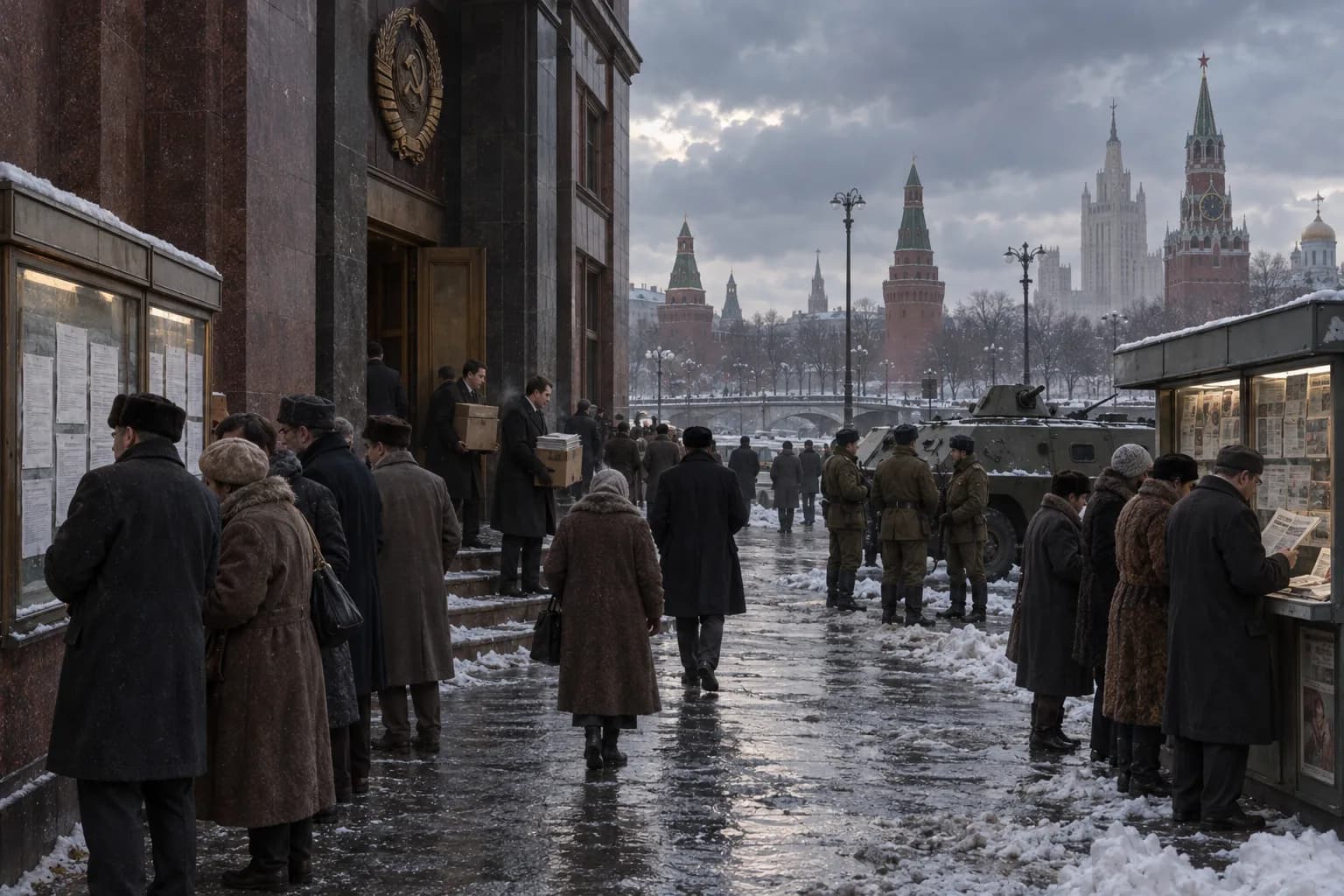
Citizens, clerks, soldiers, noticeboards, and a plain armored vehicle fill a winter Moscow street as Soviet authority unravels in 1991.
StoryModern
The Collapse of the Soviet Union
1985 CE → 1991 CE
Reform and nationalism brought down the Soviet Union.
View story →
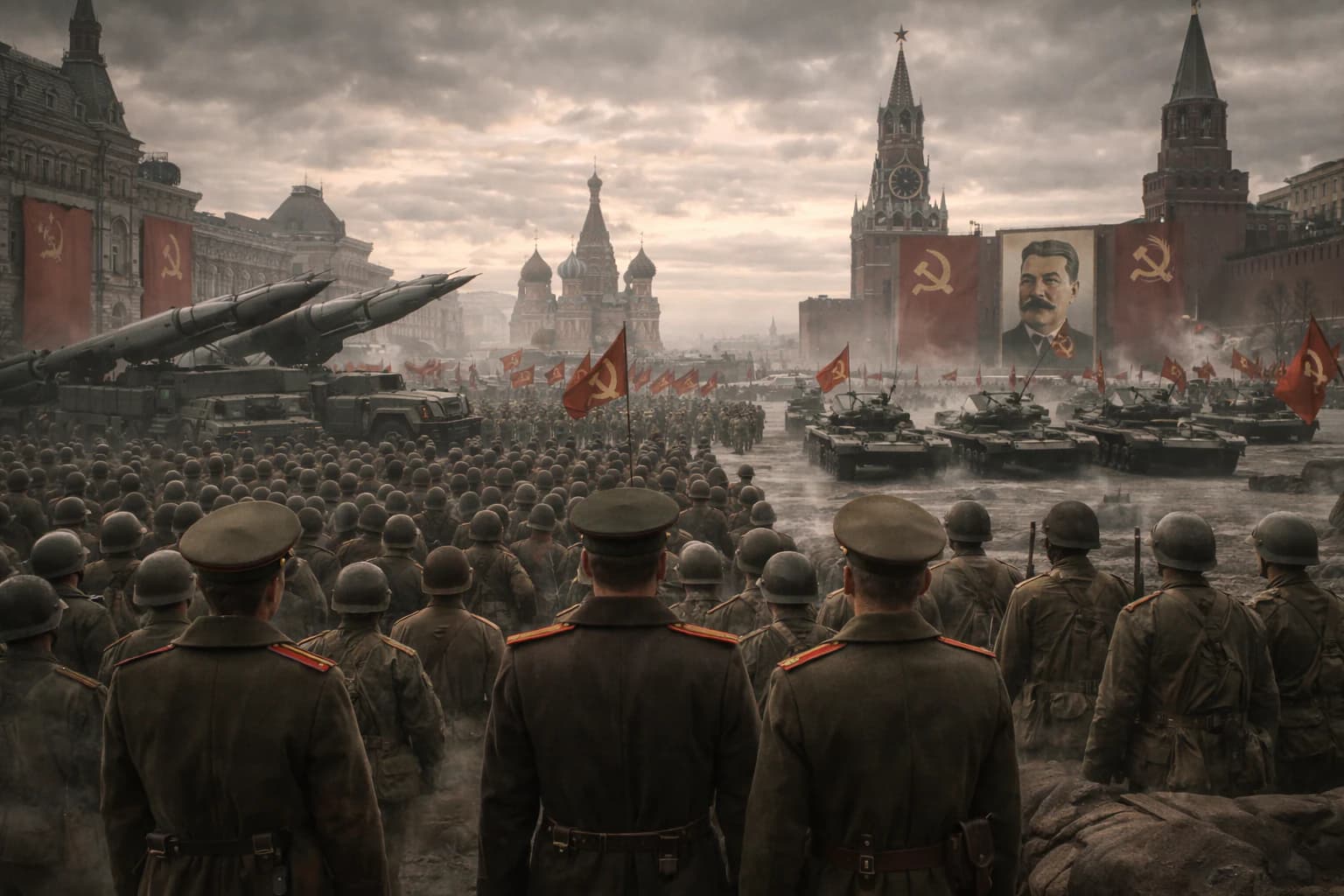
Soviet military parade in Moscow with red banners, soldiers and armoured vehicles.
StoryModern
The Soviets
1917 CE → 1991 CE
The Soviet Union rose from revolution and fell in 1991.
View story →
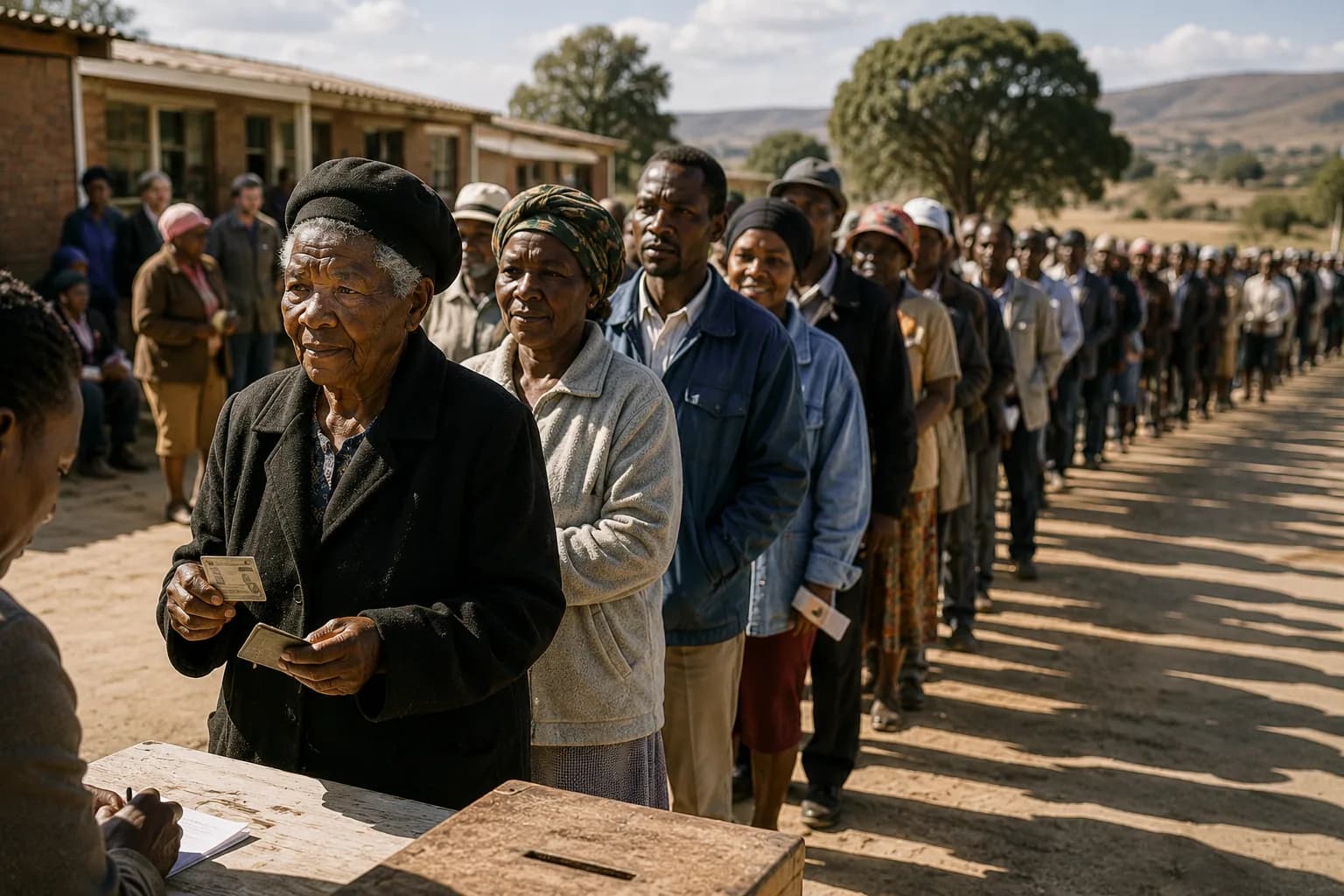
South Africans queueing with identity documents in a rural setting during the transition from apartheid rule.
StoryModern
Apartheid South Africa
1910 CE → 1994 CE
South Africans resisted apartheid and won the right to vote.
View story →
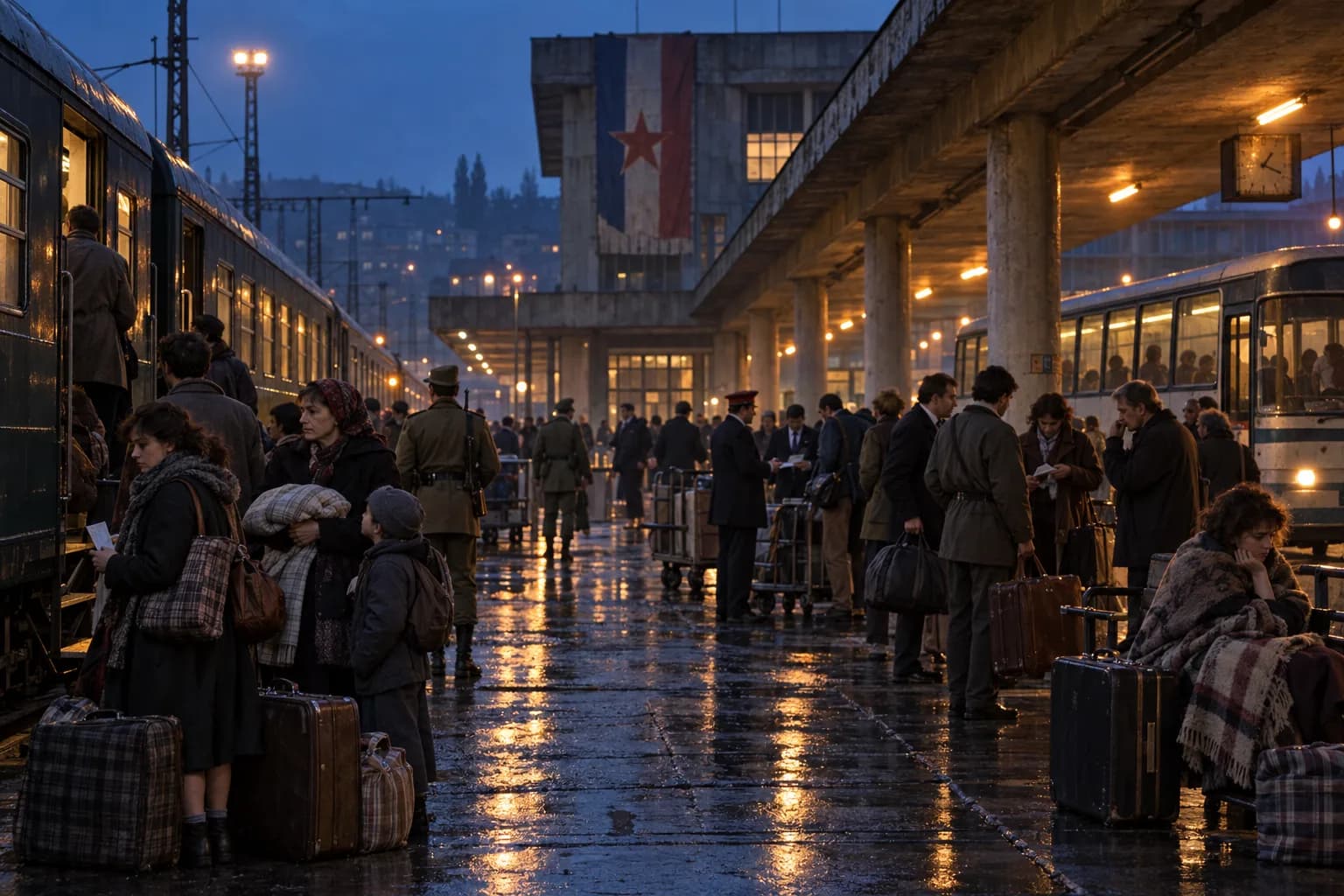
Passengers with suitcases wait under station lights at an early-1990s Yugoslav rail and bus terminal as the shared country begins to fracture.
StoryModern
The Rise and Fall of Yugoslavia
1945 CE → 1999 CE
Yugoslavia's fragile union collapsed into nationalism and war.
View story →
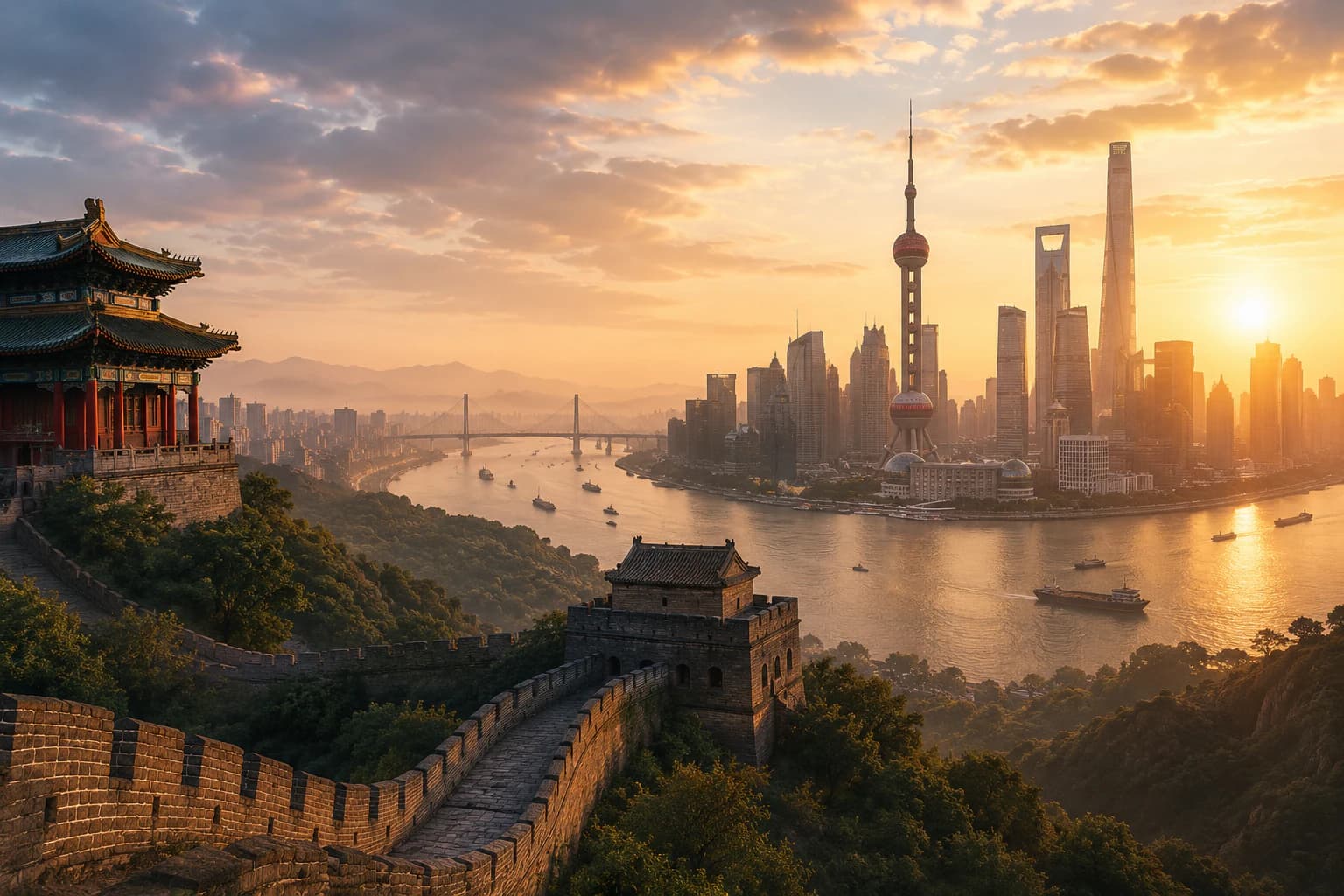
Skylines, cranes, container ports, and party symbolism representing China's rise from post-Mao recovery to global power.
StoryModern
The Rise of China
1976 CE → 2020 CE
China used reform and party control to become a global power.
View story →
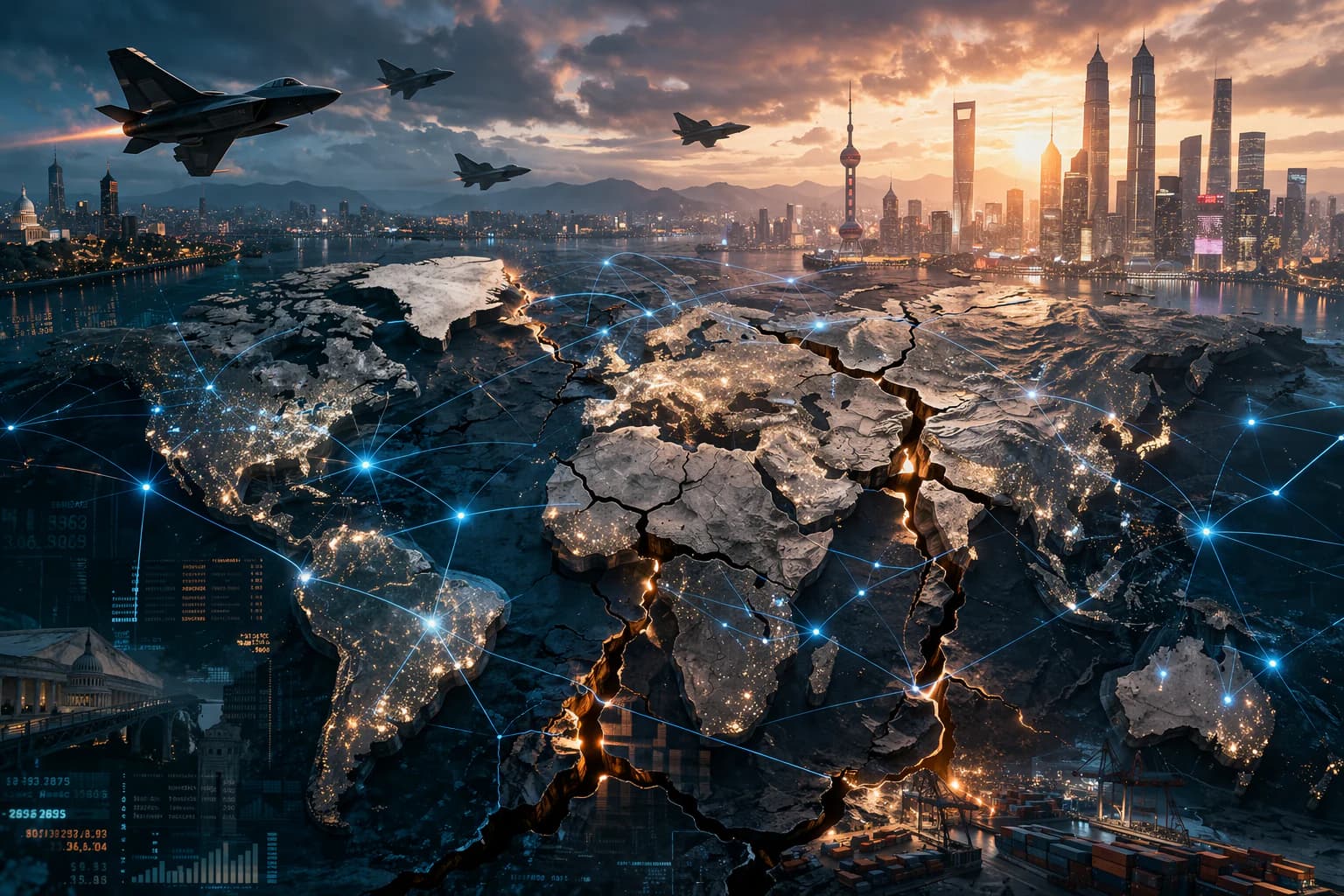
A fractured world map lit by digital networks, military aircraft overhead and rising skylines in Asia
StoryModern
The World After The Cold War
1991 CE → 2020 CE
After the Cold War, globalisation met new conflict and rivalry.
Read story →
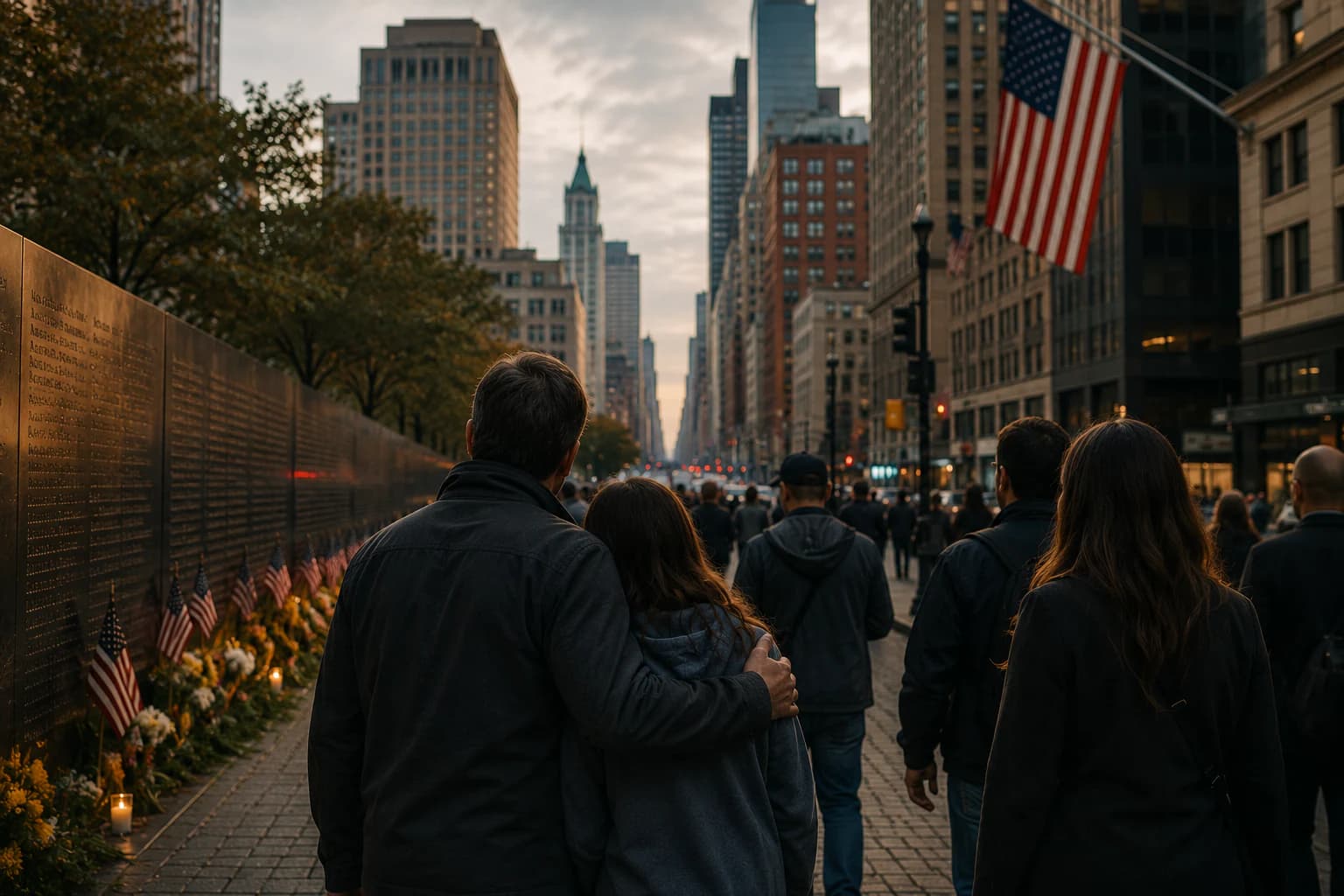
Lower Manhattan in smoke, the Pentagon under guard, and American soldiers framed against the long post-9/11 wars.
StoryModern
The United States After 9/11
2001 CE → 2021 CE
After 9/11, America changed how it fought and watched the world.
View story →
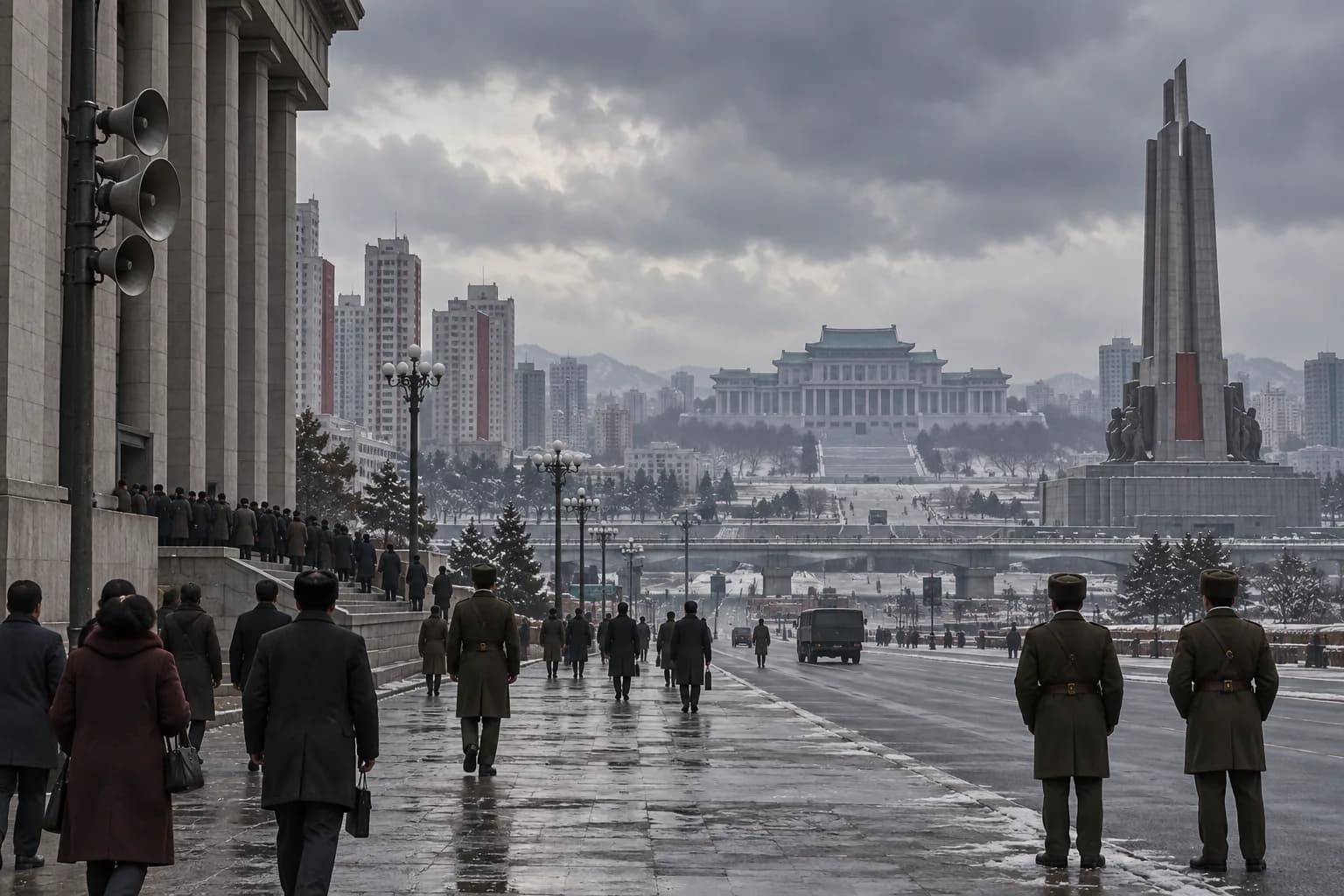
A winter view across Pyongyang civic space shows distant monuments, apartment blocks, loudspeakers, guards, and civilians moving under an overcast sky.
StoryModern
The Kim Dynasty
1945 CE → 2026 CE
North Korea's ruling family built a state around survival.
View story →

About this collection

Connected world history stories, built for curiosity

Stories of History brings the ancient, medieval and modern worlds into one connected library. Each story is written to be clear on its own, but stronger in sequence, so readers can see how people, empires, revolutions, wars and ideas shaped one another over time.

Start with Ancient Egypt, the Roman Republic, the Viking Age, the Cold War or the modern world, then follow the links outward. The collection is built for curiosity: read a single chapter, trace a wider journey, or move between eras when one story opens the door to another.
A weekly route through history

Find out first about the latest published stories, feature notes and occasional Premium offers in one weekly email.