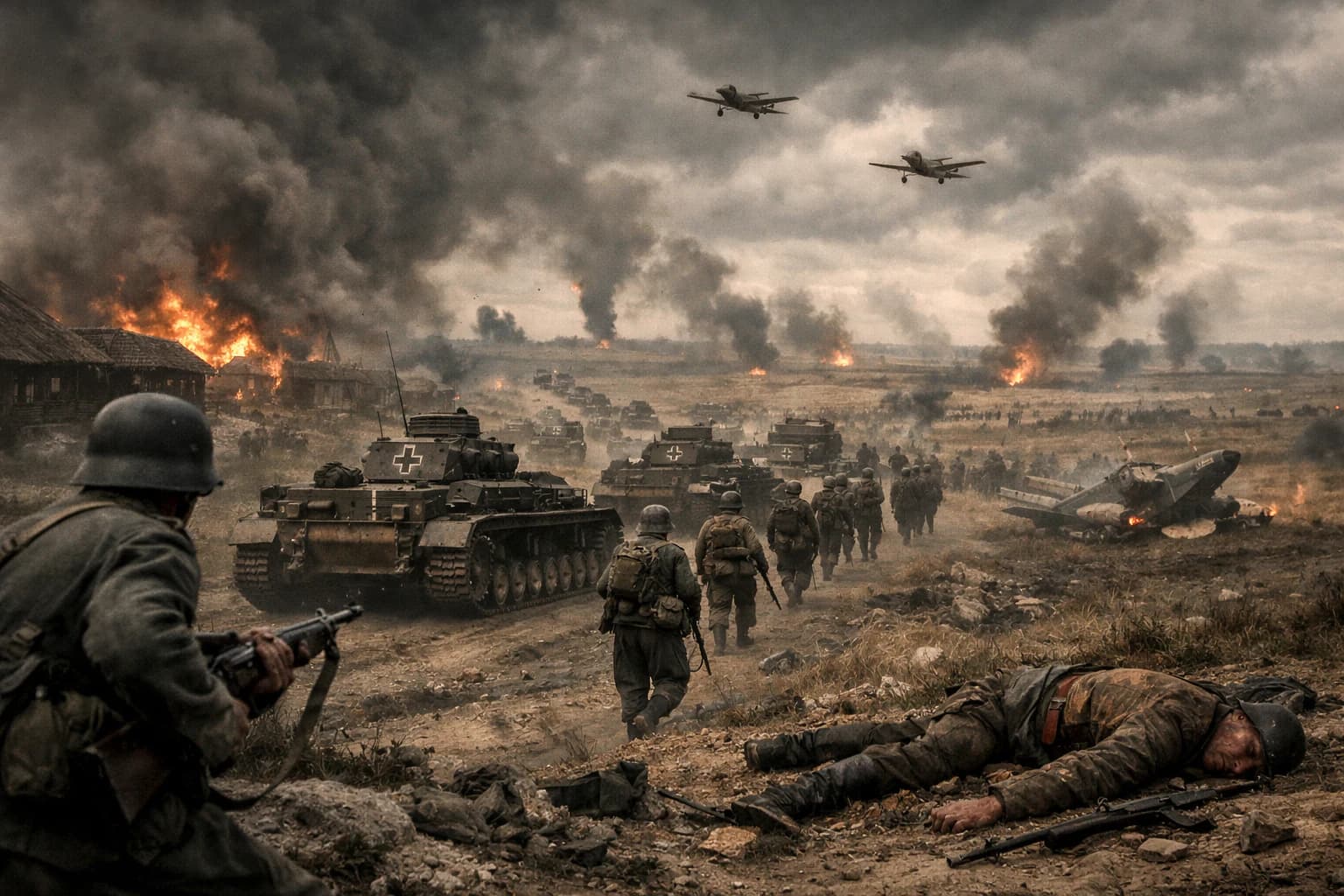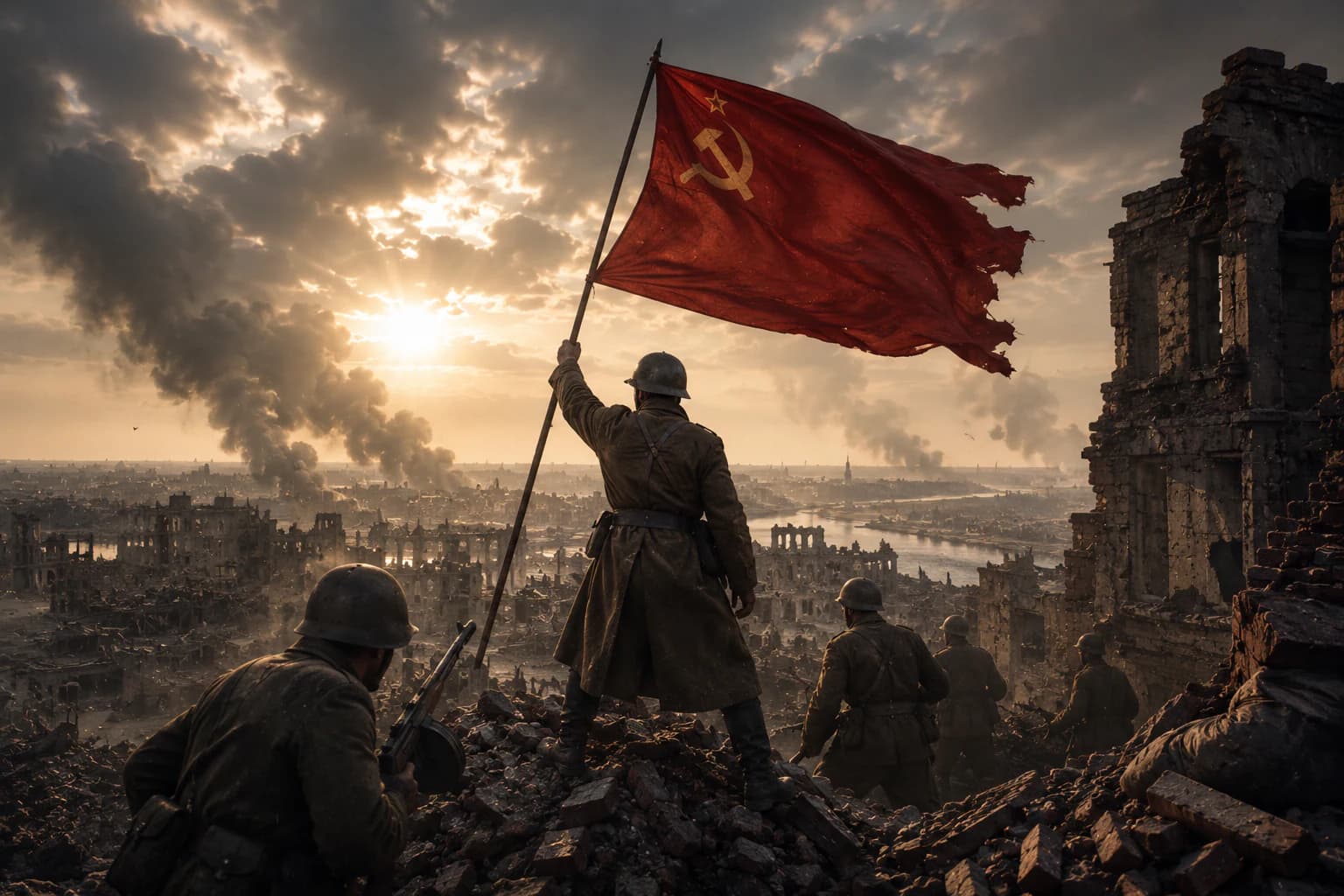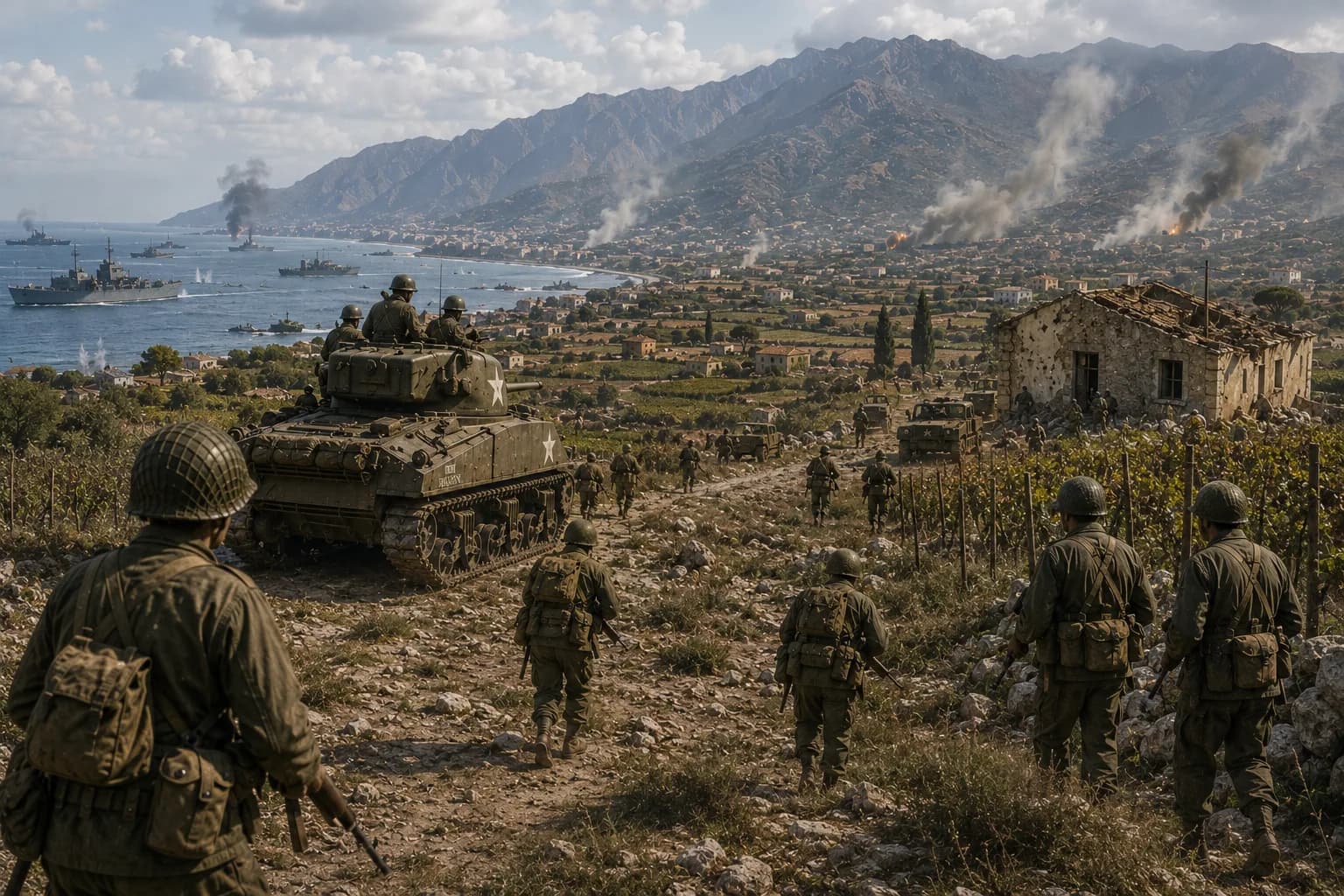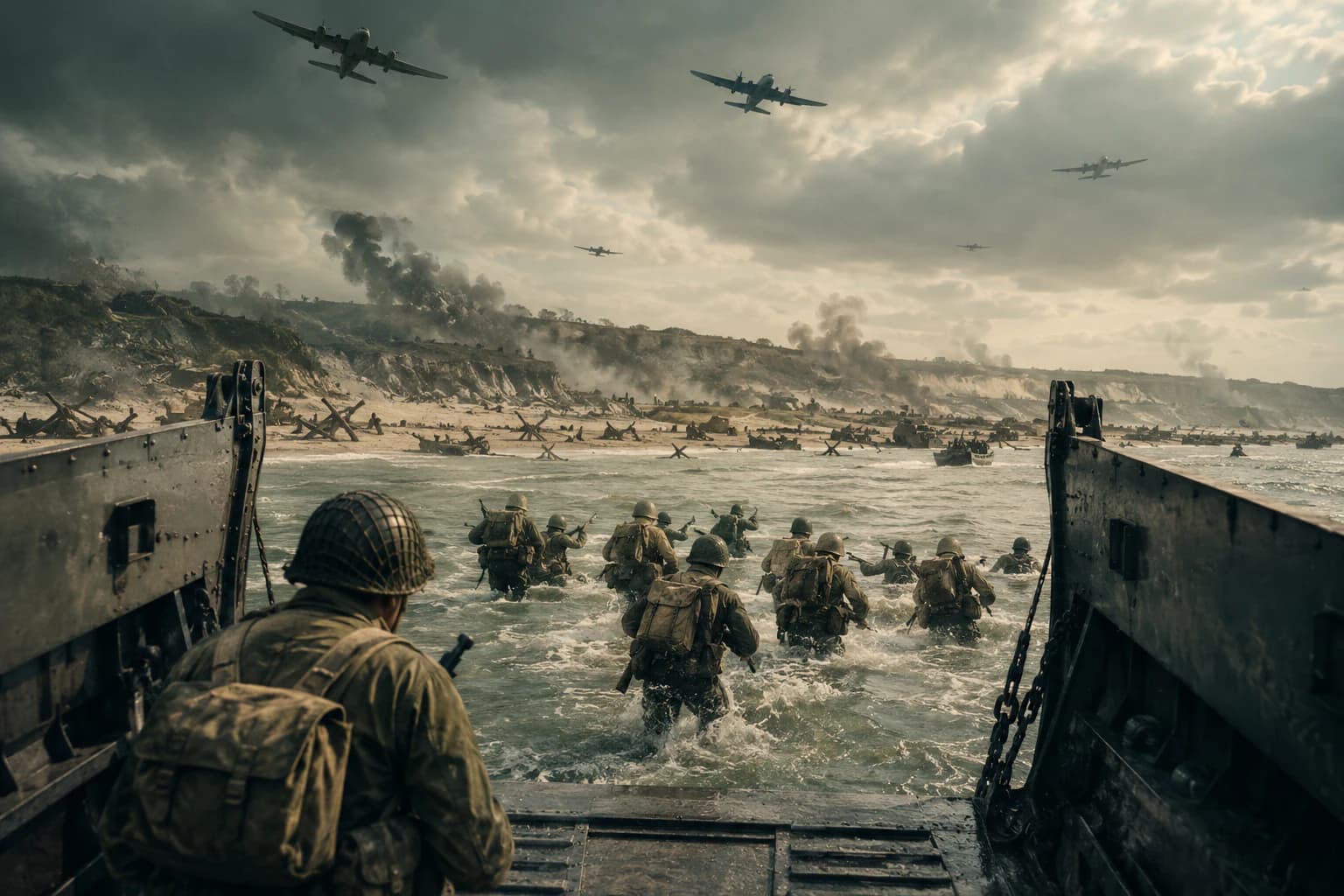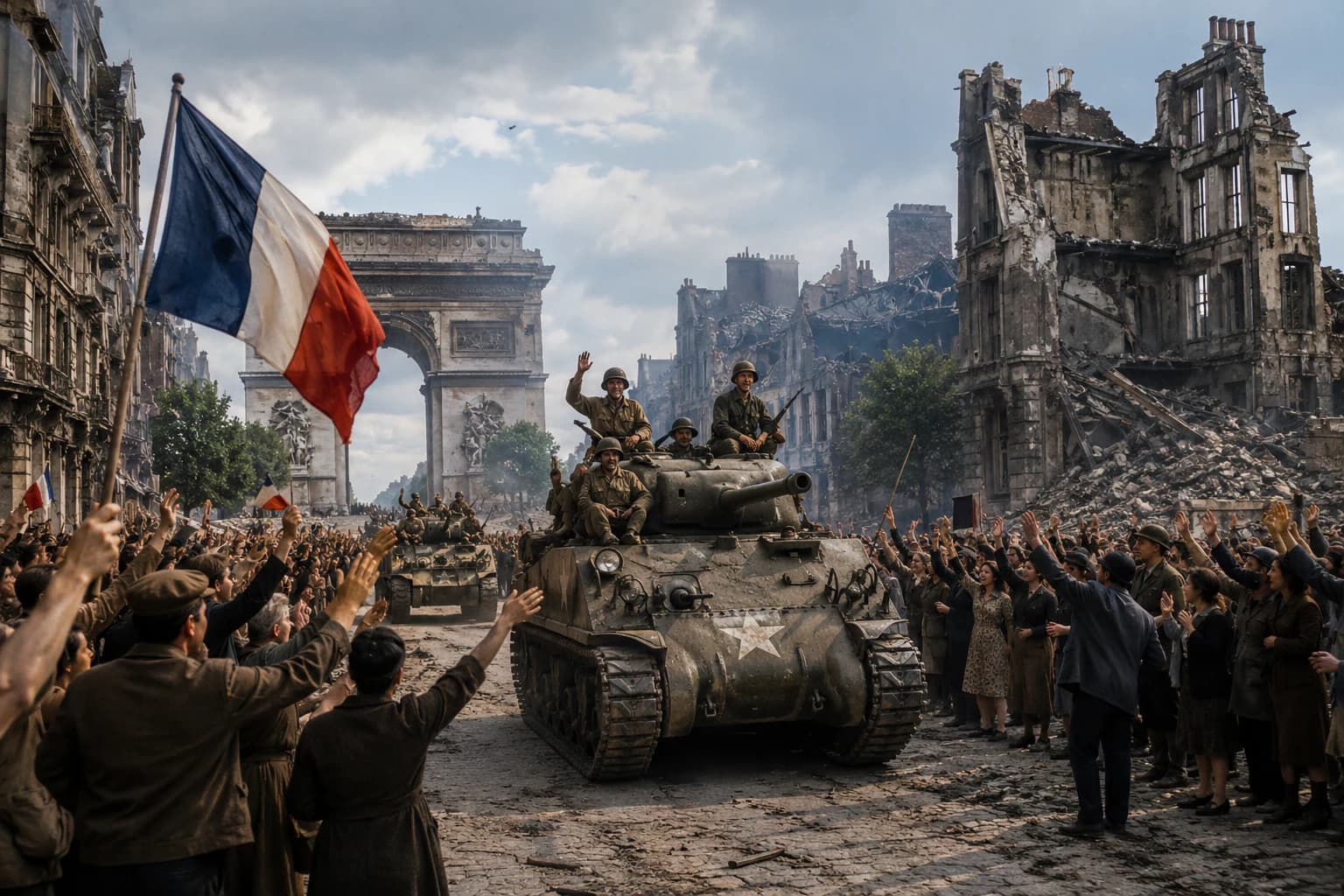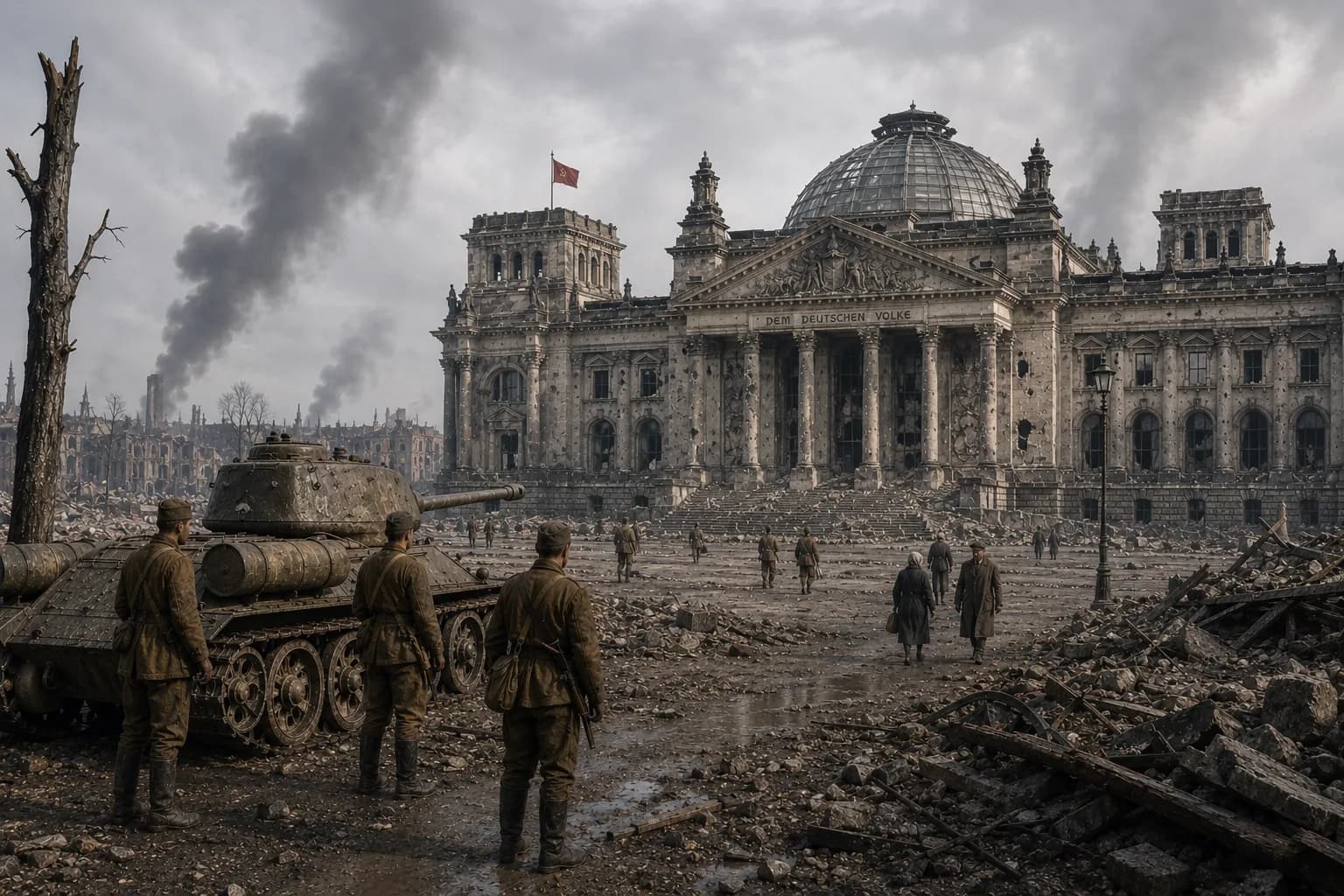
World War 2 battlefield scene showing ruined cities, soldiers, aircraft, civilians, and the global destruction of the Second World War.
Free Story

The Second World War

A fragile peace collapsed into a global war that redrew borders, exposed genocide, and created the world of superpowers.

15 chapters · 30 min read

Next

Content note

This story discusses war, persecution, genocide, violence, and mass death in an educational historical context. Some readers may find parts distressing.

Context

Introduction

Overview

World War 2, also known as the Second World War, was fought from 1939 to 1945. This story traces how Germany's invasion of Poland widened into a global struggle, how war transformed societies, and how Allied victory left a new world order in its wake.

What you’ll learn: This story will help you understand how World War 2 began, why it spread so widely, how genocide and total war changed human history, and why its aftermath still shapes the world today.

Key forces

The Invasion of Poland
1939 CE
Step 1 of 151939 CEAccessible mode

The Invasion of Poland

In 1939, one bold attack turned rising tension into global war. Germany’s move into Poland changed everything.

Before this, European leaders hoped to avoid another major war. Countries like Britain and France tried to keep peace by giving in to some of Germany’s demands.

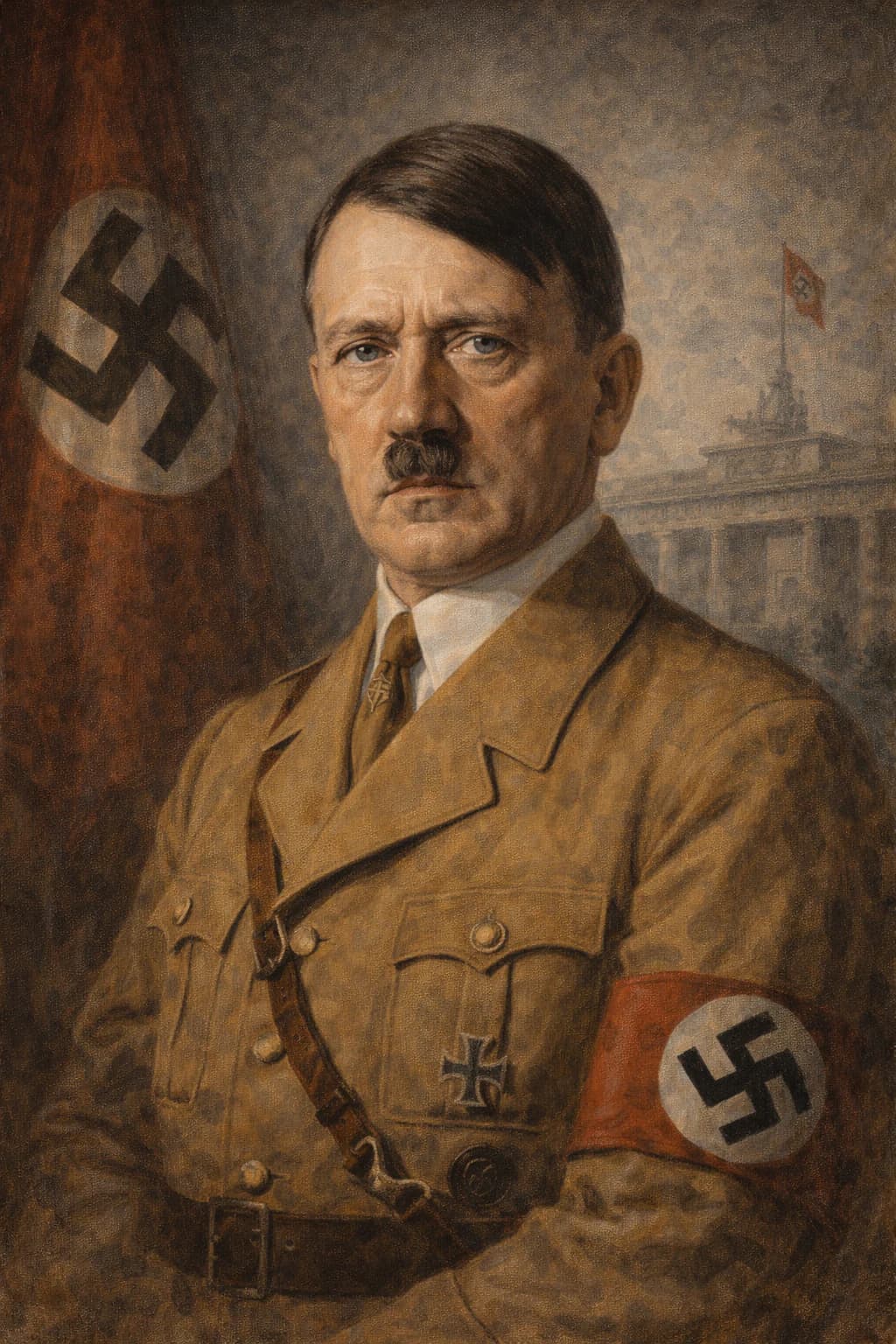
But Germany kept pushing further. Adolf Hitler wanted more land and power, and he believed other countries would not stop him.

When one country invaded, the world could no longer look away.

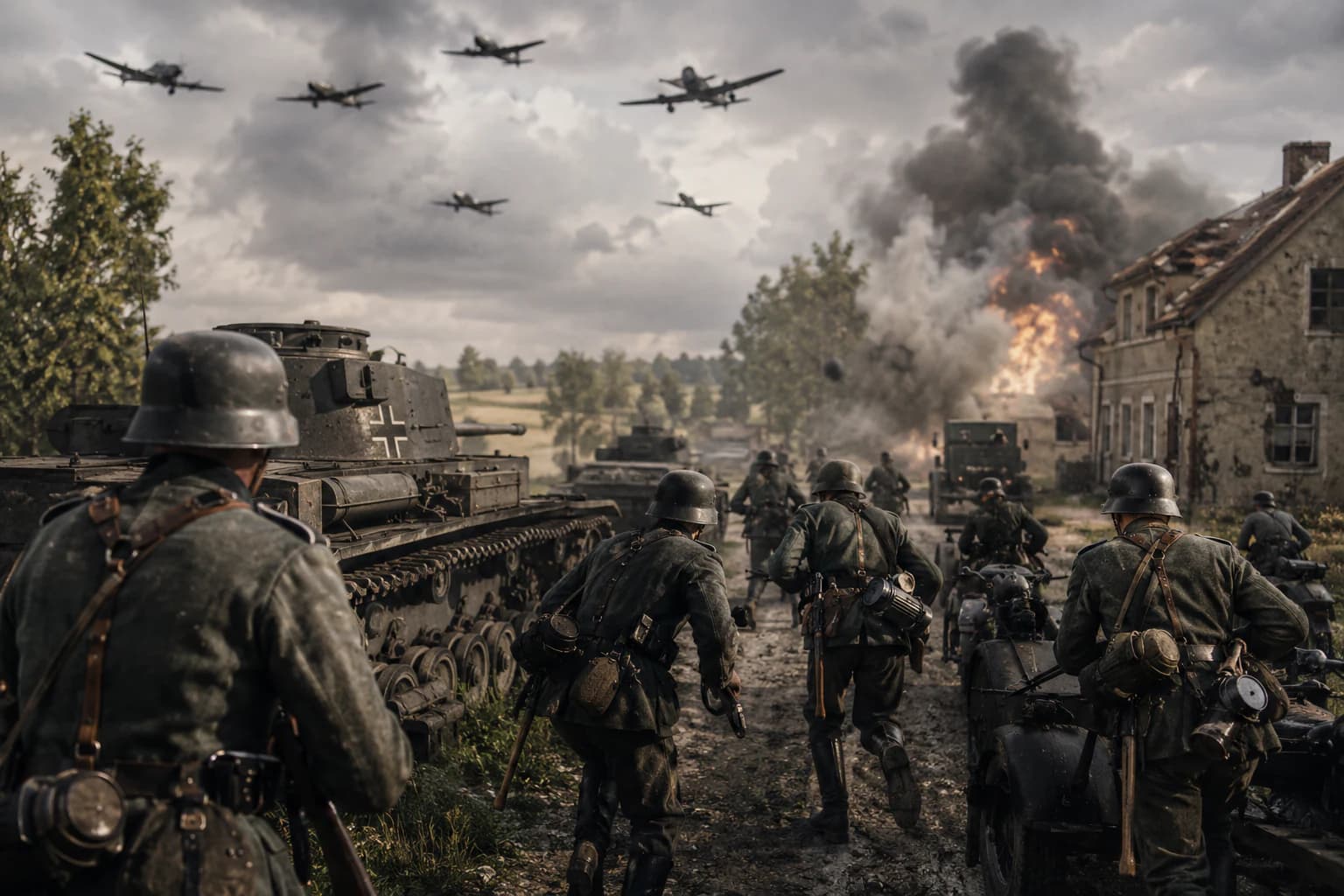
On September 1, 1939, German forces invaded Poland using fast and powerful attacks. Just days later, Britain and France declared war on Germany.

People across Europe were suddenly pulled into conflict. Soldiers mobilized, cities prepared for attack, and daily life began to change.

This moment marks the true beginning of World War 2, a conflict that would reshape borders, governments, and lives across the world.

The Fall of Western Europe
1940 CE
Step 2 of 151940 CEAccessible mode

The Fall of Western Europe

In 1940, Germany moved fast and shocked Europe. Countries fell in weeks, not months or years.

Before this, many believed World War I-style trench fighting would return. France built strong defenses and expected a slow war. Britain prepared for a long struggle.

Germany used a new approach called blitzkrieg, or lightning war. Tanks, planes, and troops attacked quickly and together, breaking through defenses before enemies could react.

Speed and surprise changed everything.

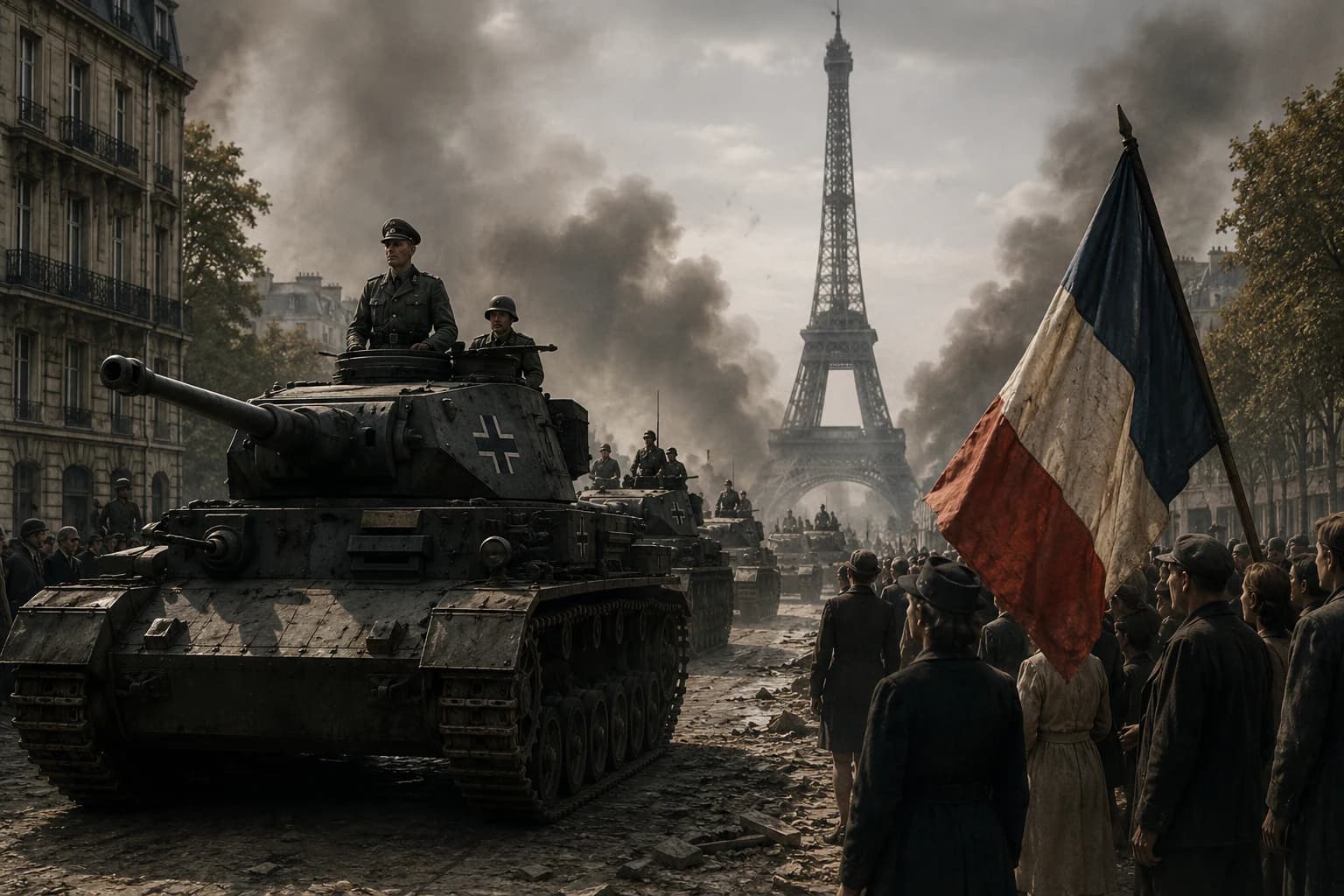
Germany quickly took Denmark and Norway, then swept through Belgium and the Netherlands. In May 1940, they invaded France, bypassing its main defenses and reaching Paris in weeks.

France collapsed faster than anyone expected. Many soldiers were trapped or forced to retreat, and the government surrendered. Millions of civilians fled their homes.

Britain was left alone to face Germany in Europe. This moment shaped the rest of the war and showed how modern, fast warfare could overpower old strategies.

The Battle of Britain
1940 CE
Step 3 of 151940 CEAccessible mode

The Battle of Britain

After France fell, Britain faced the threat of invasion. First, Germany had to win control of the skies.

In 1940, Hitler planned for an invasion of Britain, but a crossing of the Channel would be too dangerous while British aircraft could attack German ships and troops.

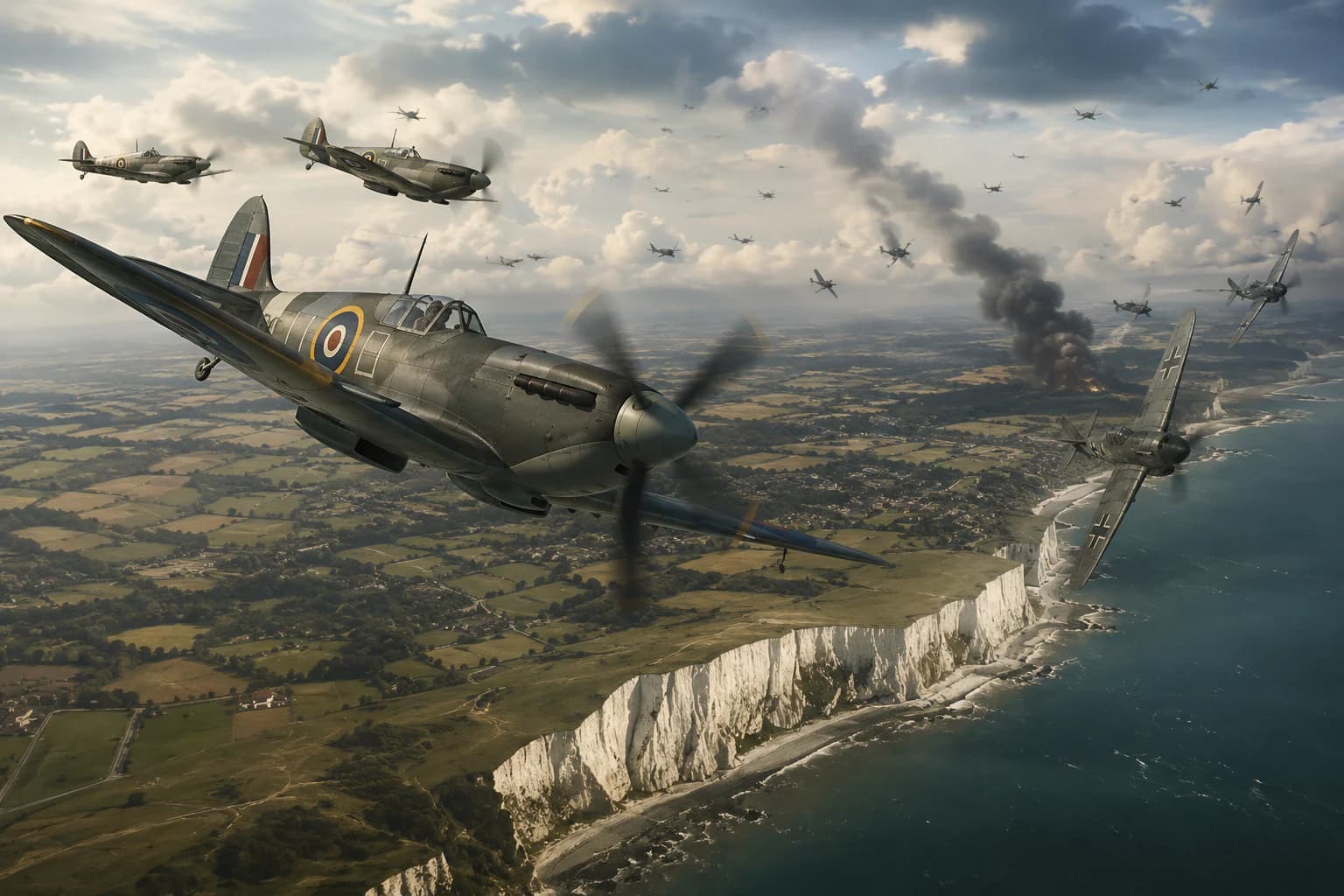
The Luftwaffe attacked RAF airfields, radar stations, ports, and cities. Britain relied on fighter pilots, ground crews, radar warnings, and a command system that helped send aircraft where they were needed most.

Britain survived because air power met preparation, endurance, and luck.

The battle soon reached civilians. During the Blitz, London and other cities were bombed night after night, but bombing did not force Britain to surrender.

By autumn, Germany had failed to destroy RAF Fighter Command. The invasion was postponed, and Britain remained in the war.

This was Hitler's first major strategic failure. Britain became a base for resistance, bombing campaigns, and the future Allied return to Western Europe.

The North Africa Campaign
1940 CE
Step 4 of 151940 CEAccessible mode

The North Africa Campaign

While Britain resisted from the air, another war spread across the deserts of North Africa.

North Africa mattered because it sat near the Suez Canal and the sea routes that linked Britain to the Mediterranean, the Middle East, and India. Control of this region could decide how supplies, troops, and oil moved.

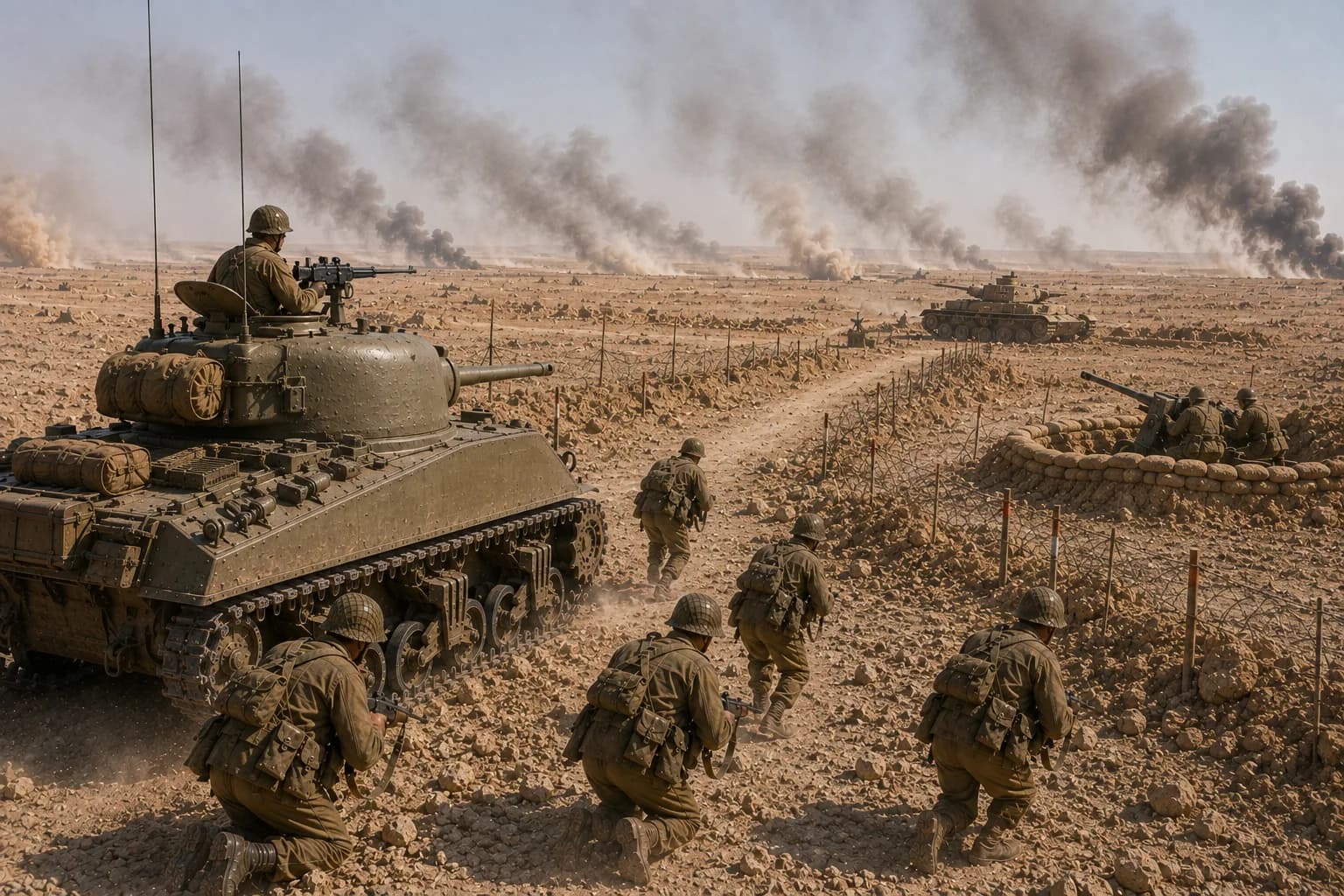
Fighting began after Italy entered the war in 1940. British and Commonwealth forces battled Italian armies in Egypt and Libya, and Germany sent Erwin Rommel and the Afrika Korps to rescue the Axis position.

The desert war was a fight for distance, fuel, ports, and time.

The front moved back and forth across Libya and Egypt. Tobruk endured siege, Rommel pushed toward Egypt, and the Allies finally stopped the Axis advance at .

Operation Torch brought American and British forces into Morocco and Algeria in late 1942. Axis armies were squeezed from east and west until they surrendered in Tunisia in 1943.

The Allied victory secured the Suez route, removed the Axis from North Africa, and opened the way for an attack on Italy.

Operation Barbarossa
1941 CE
Step 5 of 151941 CEAccessible mode

Operation Barbarossa

In 1941, Nazi Germany launched a massive invasion of the Soviet Union. It turned the war into something far bigger and far more brutal.

Before this, Germany had already conquered much of Europe. The war in the west had been fast and decisive. The Soviet Union and Germany were not fighting each other yet.

Hitler wanted land, resources, and control. He also saw the Soviet Union as an enemy because of its people and its political system. Plans were made for a huge attack.

This was not just a war for land. It was a war to destroy entire peoples.

In June 1941, German forces invaded across a massive front. Millions of soldiers fought. Cities were surrounded, and entire regions were destroyed. Civilians were targeted on a huge scale.

Life became deadly for soldiers and ordinary people. Hunger, violence, and mass killings spread across the region. The fighting lasted years and caused enormous loss of life.

This invasion opened the deadliest part of World War 2. It shaped the outcome of the war and still influences how we understand conflict and human suffering today.

Pearl Harbor
1941 CE
Step 6 of 151941 CEAccessible mode

Pearl Harbor

A surprise attack in Hawaii pulled the United States into World War 2 overnight.

Before 1941, the United States was not officially in the war. Fighting was mostly in Europe and parts of Asia, while many Americans hoped to stay out of it.

Japan wanted more land and resources in Asia. Tensions grew with the United States, especially after trade limits were placed on Japan’s oil supply.

One sudden strike turned a distant war into a global one.

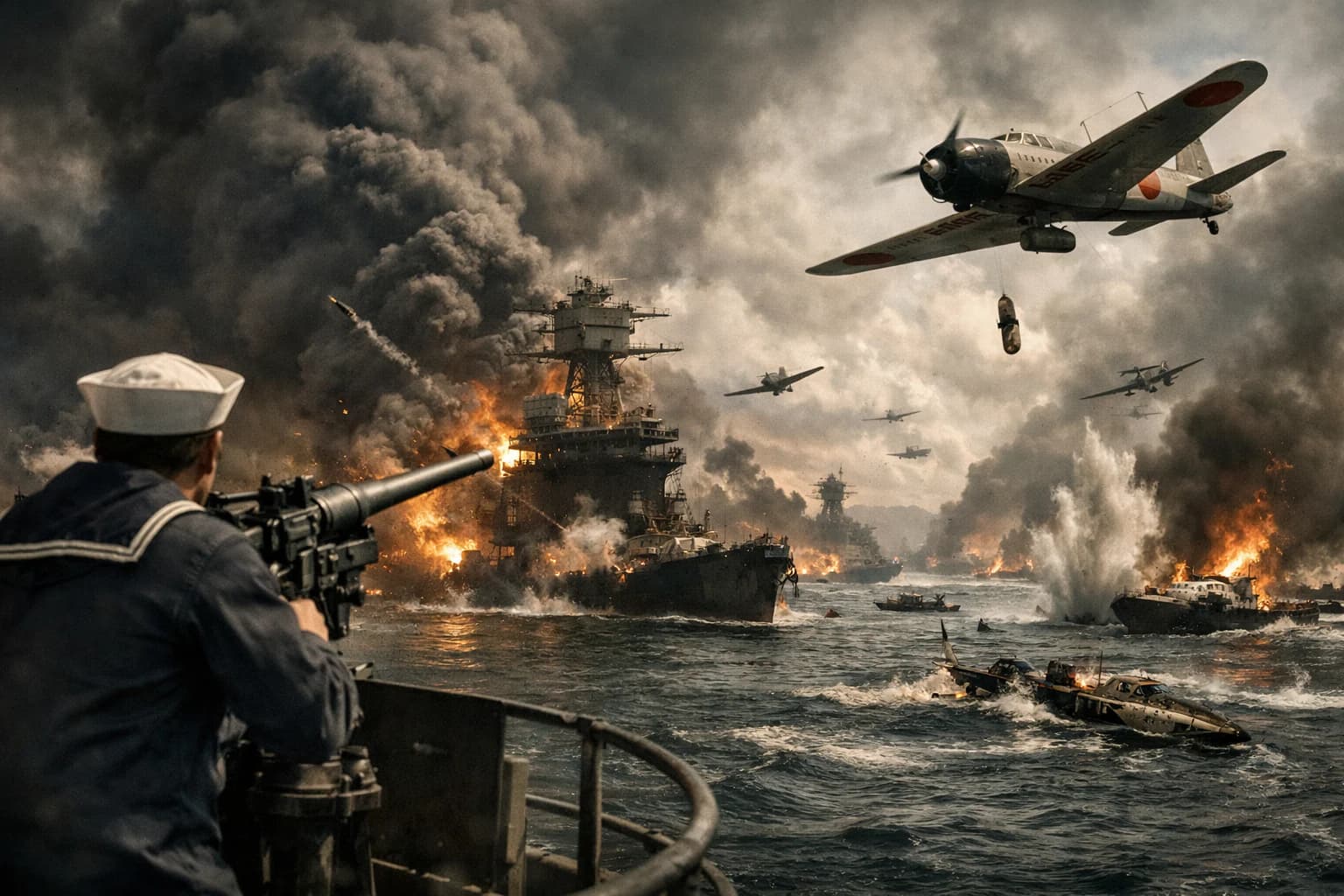
On December 7, 1941, Japan launched a surprise attack on the US naval base at in Hawaii. Battleships were sunk, planes destroyed, and over 2,000 people were killed.

The next day, the United States declared war on Japan. Soon after, Germany and Italy declared war on the US, bringing America fully into World War 2.

This moment changed everything. The war became truly global, and the United States became a key force that would help shape the outcome of the conflict.

The Holocaust Unfolds
1942 CE
Step 7 of 151942 CEAccessible mode

The Holocaust Unfolds

In 1942, Nazi Germany turned mass hatred into an organized system of murder.

Before this, Jewish people in Europe had already faced years of discrimination, violence, and forced relocation into crowded ghettos. They were cut off from normal life and stripped of rights.

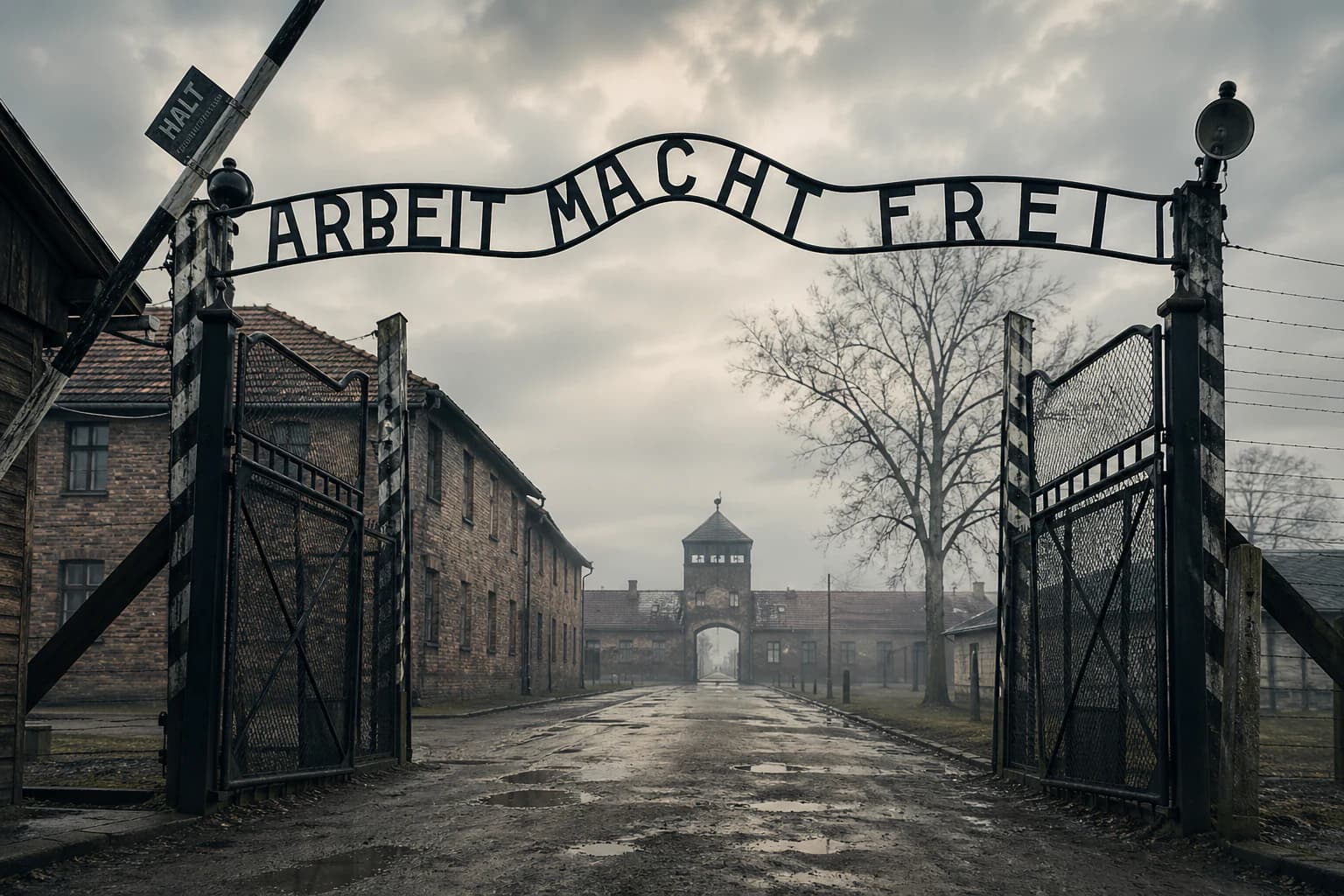
By 1942, Nazi leaders decided to go further. They planned the “Final Solution,” a coordinated effort to kill all Jews in Europe. This marked a shift from persecution to planned extermination.

This was not random violence. It was organized, deliberate, and systematic.

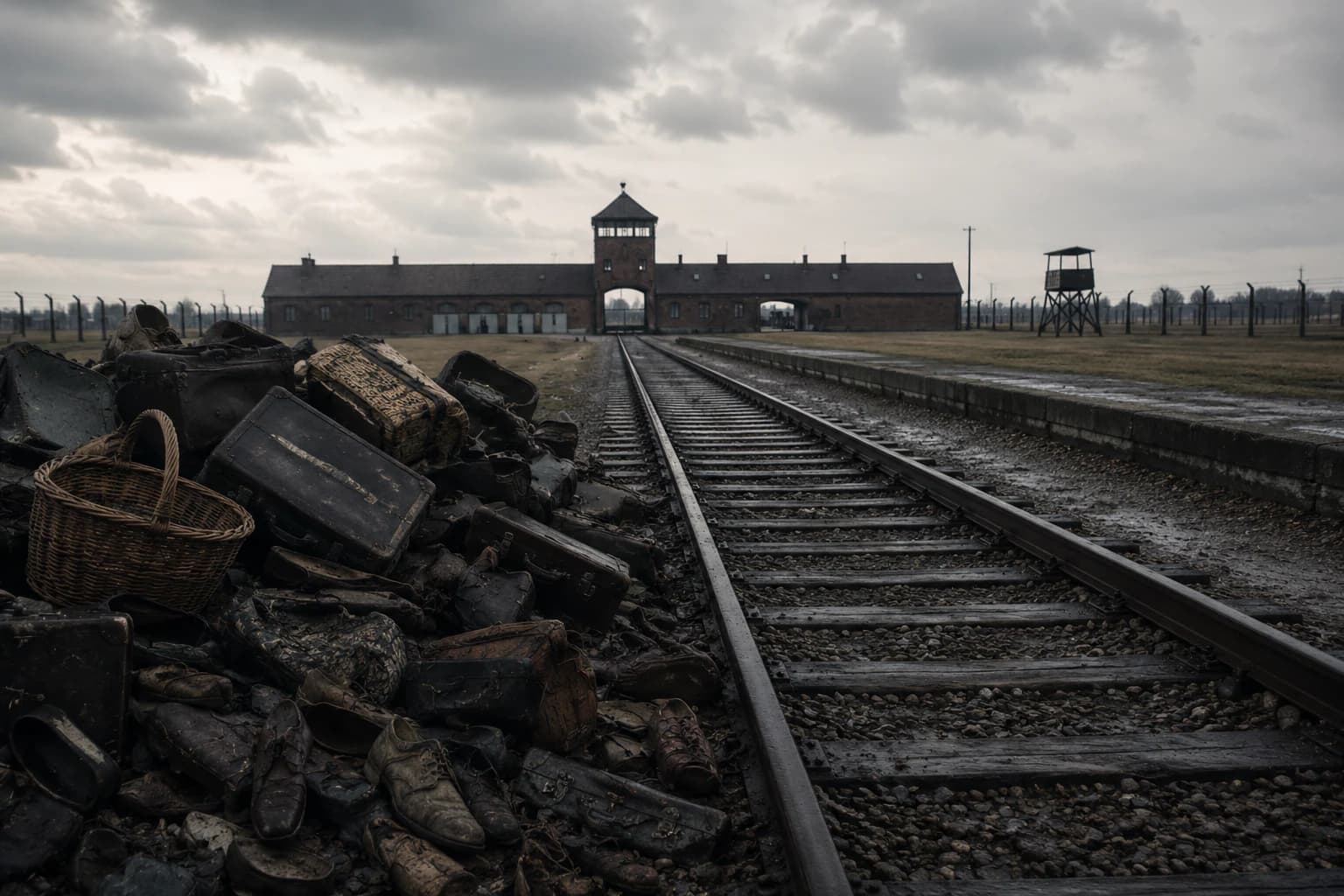
Killing centers like were built for mass murder using gas chambers. Mobile killing units shot entire communities in Eastern Europe. Trains transported millions to their deaths.

Families were separated, cultures destroyed, and millions of lives ended. The scale and method of the killings shocked the world when the truth emerged.

The Holocaust remains a central part of World War 2. It reminds us where hatred and unchecked power can lead, and why protecting human rights is still essential today.

Total War on Every Front
1942 CE
Step 8 of 151942 CEAccessible mode

Total War on Every Front

By 1942, the war was no longer just about soldiers. Entire countries were pulled into the fight.

Before this, wars mostly involved armies on battlefields. Civilians stayed at home, with daily life only partly affected.

As World War 2 grew, governments needed more resources. They controlled food, fuel, and factories, and asked people to sacrifice for victory.

In total war, everyone becomes part of the battlefield.

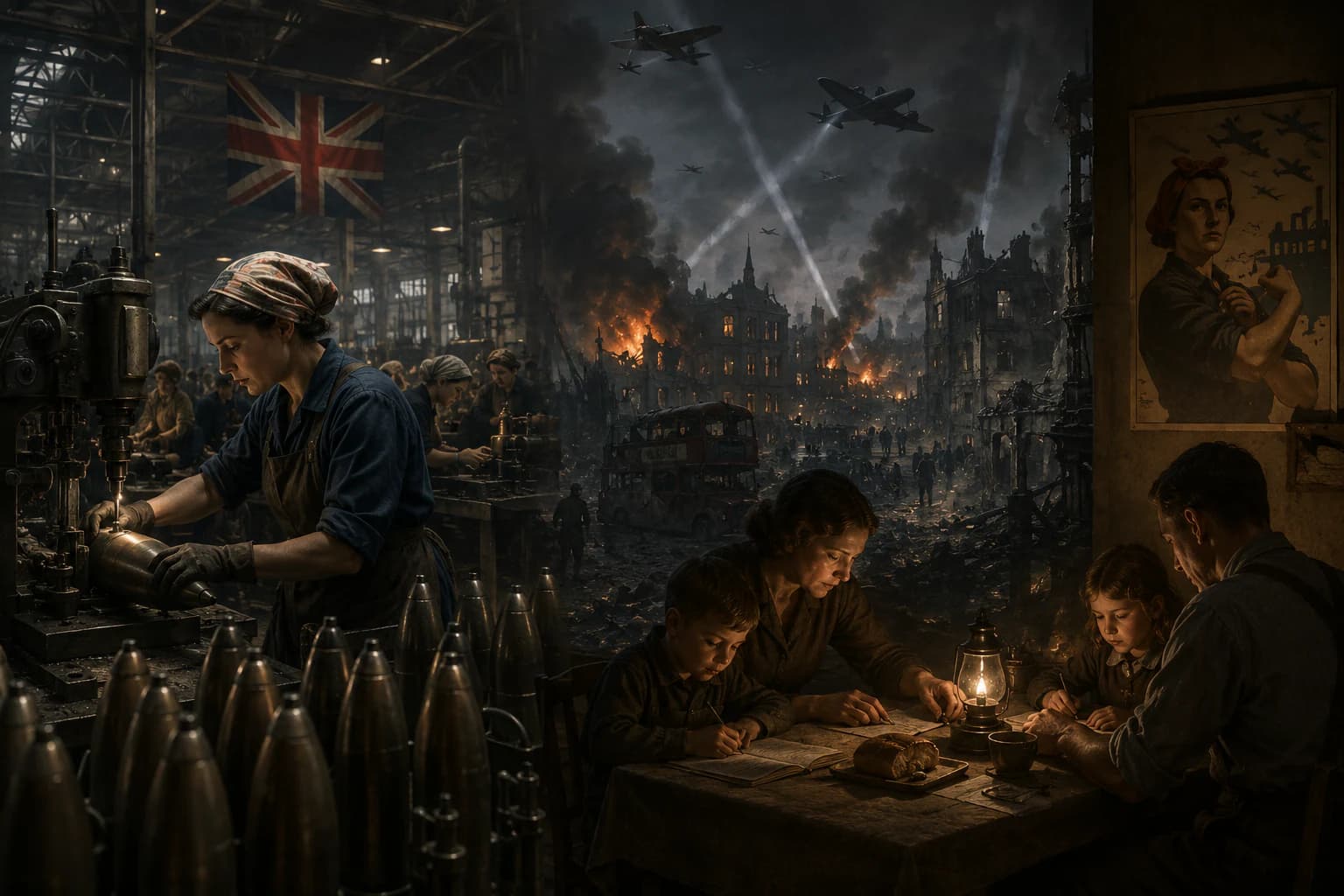
Food was rationed. Posters encouraged people to work harder and trust their leaders. Cities were bombed from the air, bringing war directly to civilians.

Women took factory jobs to build weapons. People from colonies were recruited to fight and work. The line between soldier and civilian began to fade.

Today, this idea of total war helps explain why modern conflicts can affect entire societies, not just armies.

The Allied Turn
1942 CE
Step 9 of 151942 CEAccessible mode

The Allied Turn

In 1942, the war stopped looking unstoppable for the Axis powers. A series of key battles began to turn everything around.

Before this, Germany and Japan seemed to be winning everywhere. Germany dominated much of Europe, while Japan controlled huge areas of Asia and the Pacific. Many people feared they could not be stopped.

Then things started to shift. The Allies fought back hard in several places at once, refusing to give up ground and planning smarter attacks.

1942 was the year the tide began to turn.

In the Soviet Union, German forces were stopped at . In the Pacific, the US navy defeated Japan at . These battles showed that Axis expansion had limits.

These victories weakened the Axis and boosted Allied confidence. For the first time, it felt like winning was possible.

From this point on, the Allies kept moving forward. These turning points set the stage for the long push that would eventually end the war.

The Italian Campaign and Fall of Fascism
1943 CE
Step 10 of 151943 CEAccessible mode

The Italian Campaign and Fall of Fascism

After victory in North Africa, the Allies crossed into Italy. The attack brought down Mussolini, but it did not bring a quick end to fighting.

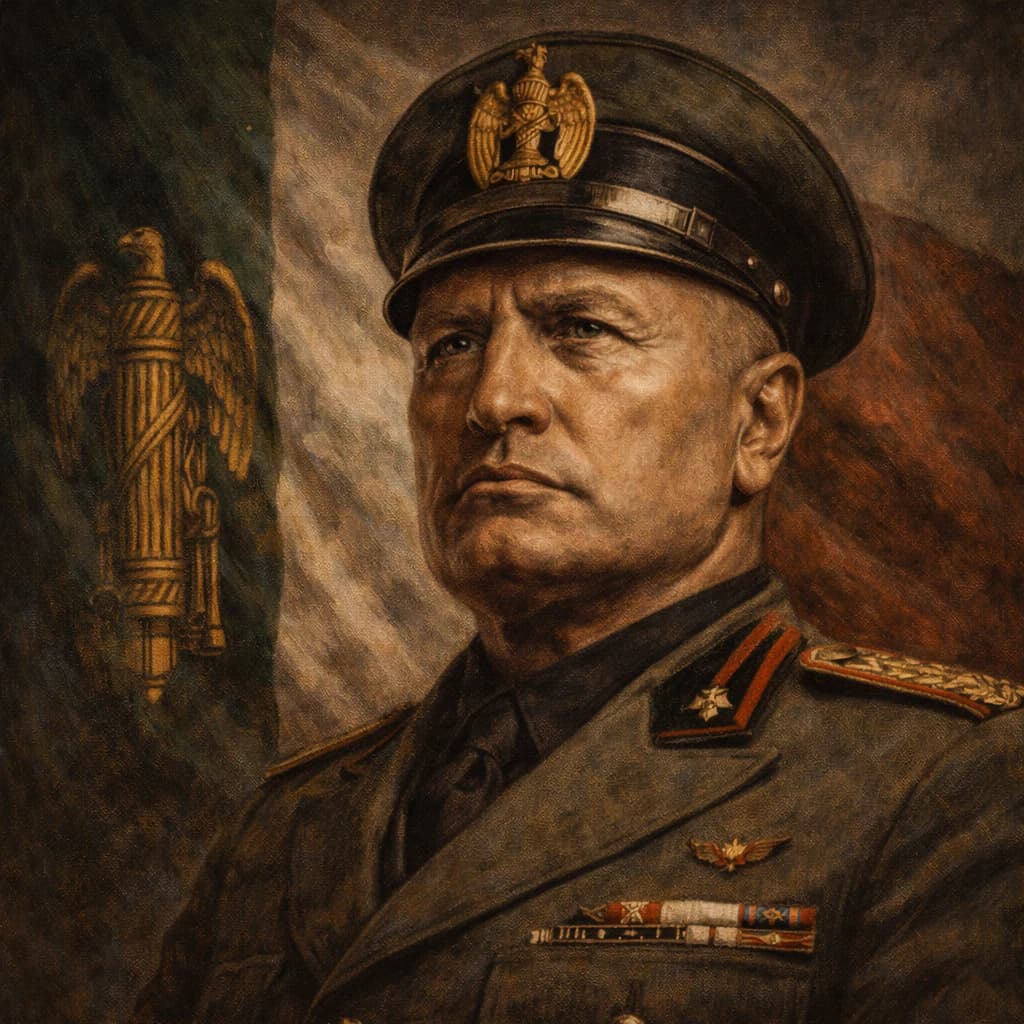
In July 1943, Allied forces invaded Sicily. The campaign exposed how weak Mussolini's regime had become and convinced many Italians that the war was lost.

Mussolini was removed from power, and Italy signed an armistice with the Allies. Germany responded by occupying much of the country and rescuing Mussolini to lead a puppet Fascist state in the north.

Italy left the Axis, but it did not leave the war behind.

Allied troops landed at Salerno and fought slowly up the peninsula. Mountains, rivers, fortified towns, and German defenses made every advance costly.

Battles at Monte Cassino and Anzio showed how difficult the campaign had become. At the same time, Italians fought each other as Fascist forces, royalist troops, and Resistance groups struggled over the country's future.

The Italian Campaign tied down German forces and weakened Fascism, but it also turned Italy into a long battlefield and a civil war.

D-Day
1944 CE
Step 11 of 151944 CEAccessible mode

D-Day

On June 6, 1944, Allied troops crossed the Channel and landed in . The return to Western Europe had begun.

Operation Overlord took years of planning. The Allies gathered troops, ships, aircraft, landing craft, supplies, and equipment in Britain while preparing for one of the most difficult assaults in history.

A deception campaign helped mislead Germany about where the invasion would come. Fake armies, false radio traffic, and double agents encouraged German commanders to expect the main attack near Calais rather than .

D-Day was a gamble built from planning, secrecy, courage, and overwhelming logistics.

Before dawn, airborne troops landed behind German lines. Then amphibious forces came ashore on five beaches: Utah, Omaha, Gold, Juno, and Sword.

German resistance was fierce, especially at Omaha Beach, where American troops suffered heavy losses. Even so, Allied forces secured a foothold by the end of the day.

The beachhead allowed the Allies to build up men and supplies in France. From there, they could begin the liberation of Western Europe.

Liberation and Collapse
1944 CE
Step 12 of 151944 CEAccessible mode

Liberation and Collapse

By 1944, the war began to turn fast. Axis control started to fall apart as Allied forces pushed in from all sides.

For years, much of Europe and parts of Asia were under strict Axis rule. People lived with fear, shortages, and harsh control.

After the Normandy landings gave the Allies a foothold in France, the war in Europe entered a new phase. Western Allied armies pushed inland while the Soviet army drove west from the east.

The walls of occupation did not fall slowly. They broke all at once.

Allied forces moved through France, Belgium, and beyond. At the same time, Soviet troops forced German armies back across Eastern Europe. In the Pacific, Japan also kept losing ground.

As areas were freed, people saw the damage left behind. Cities were destroyed, and millions had suffered under occupation.

These events shaped the modern world. They showed both the power of cooperation and the deep cost of war, lessons still remembered today.

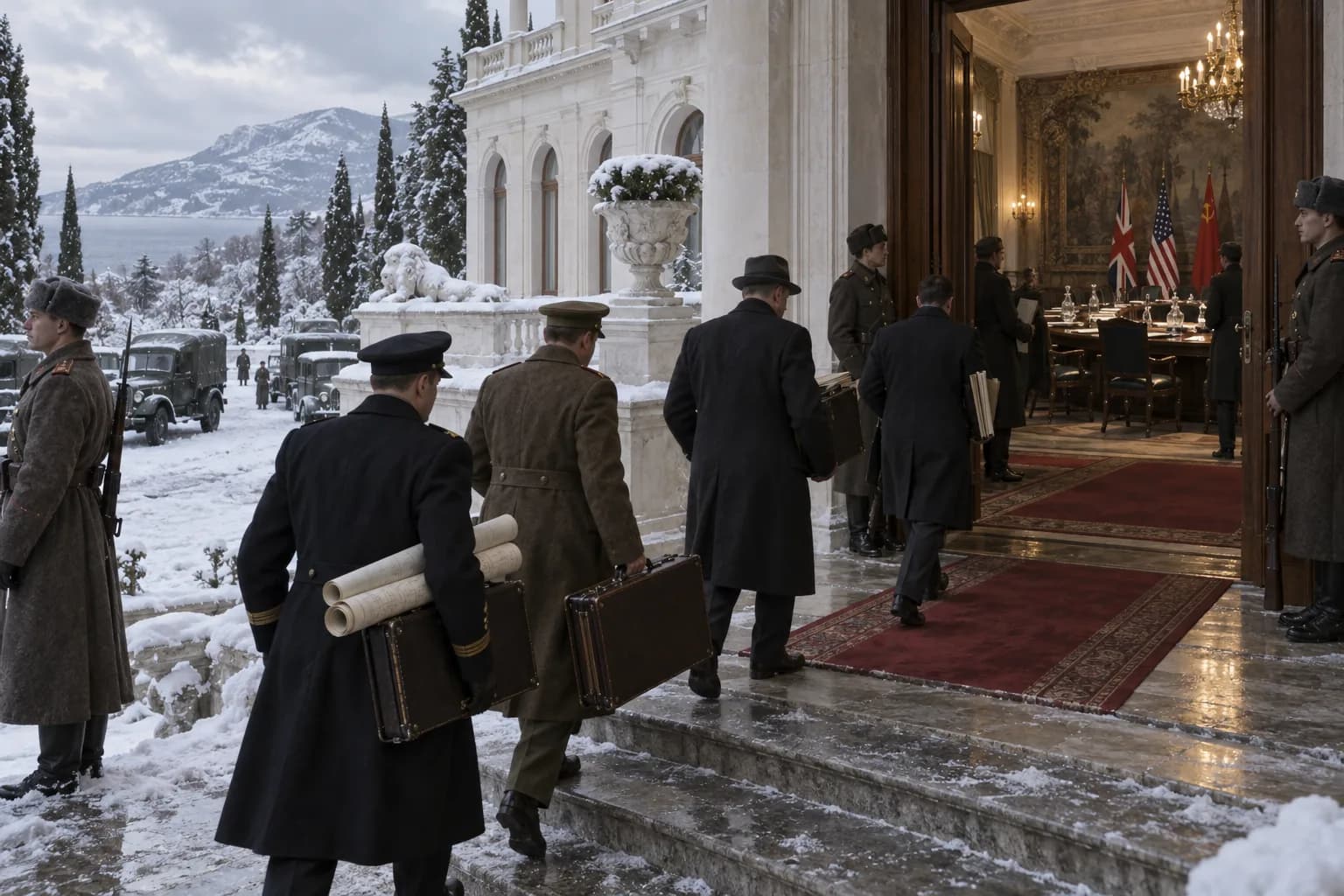
Aides and guards carry maps and document cases into Livadia Palace during the snowy Yalta Conference.
1945 CE
Step 13 of 151945 CEAccessible mode

The Yalta Conference

As victory in Europe came closer, Allied leaders met at Yalta to decide what would happen after the fighting stopped.

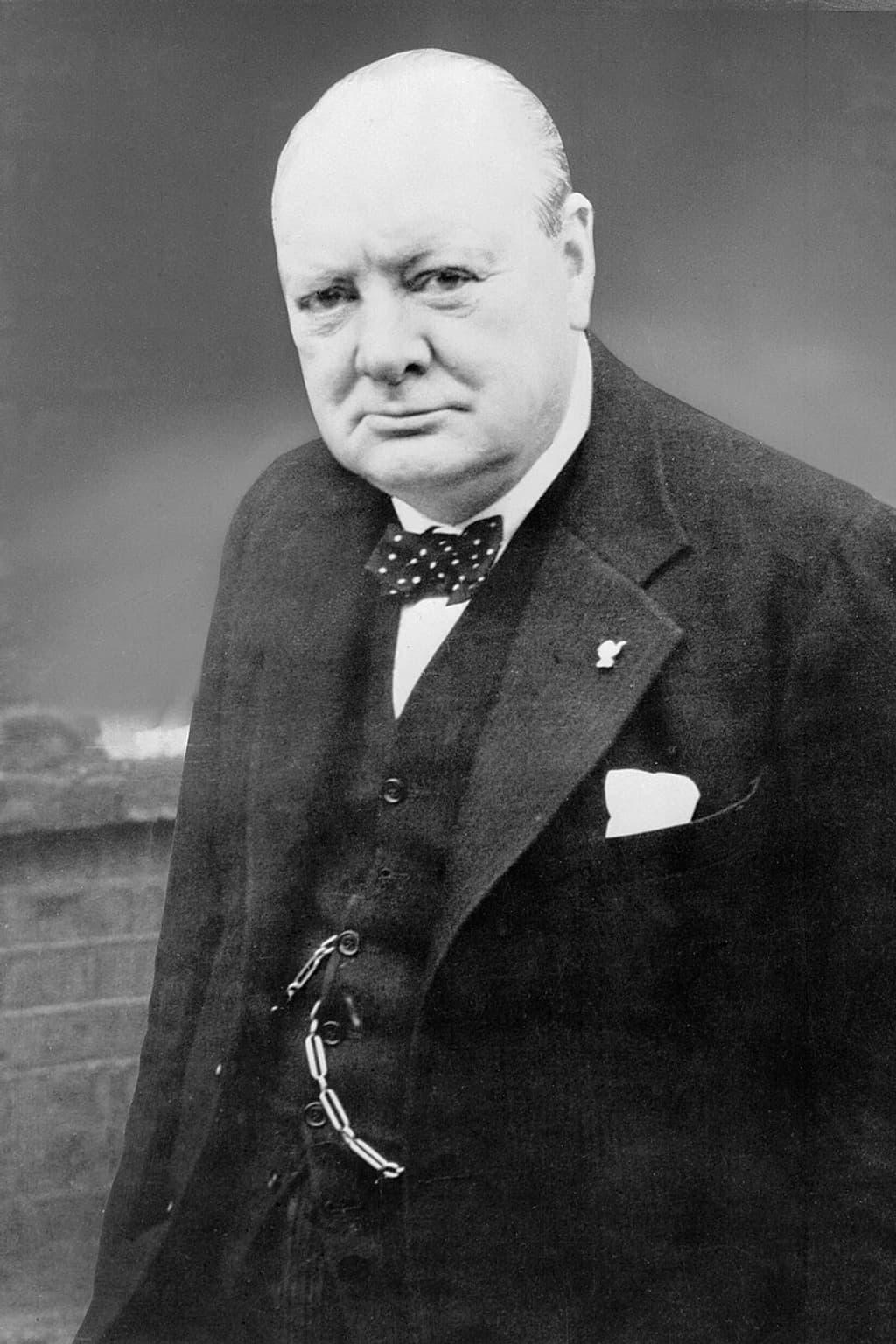
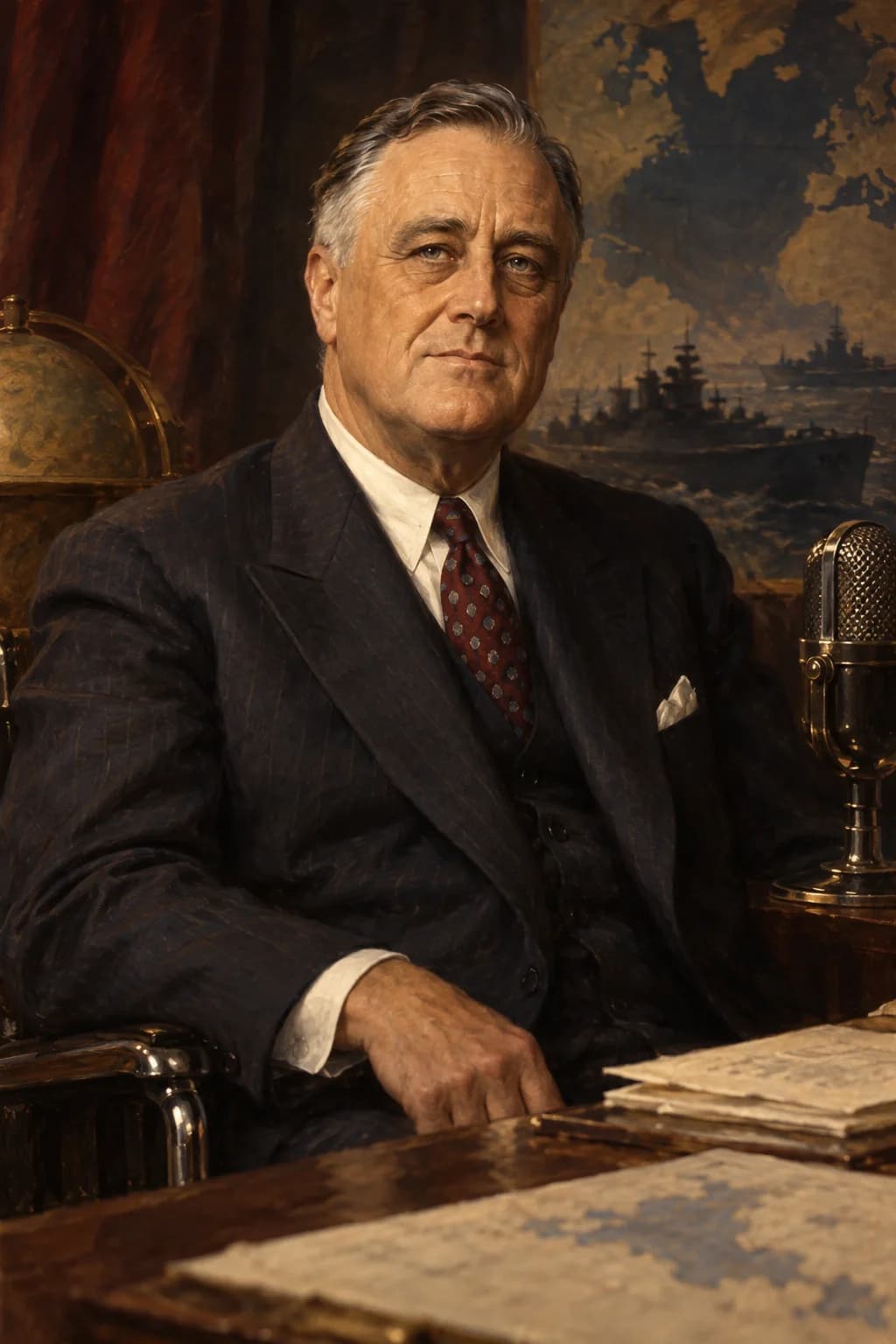
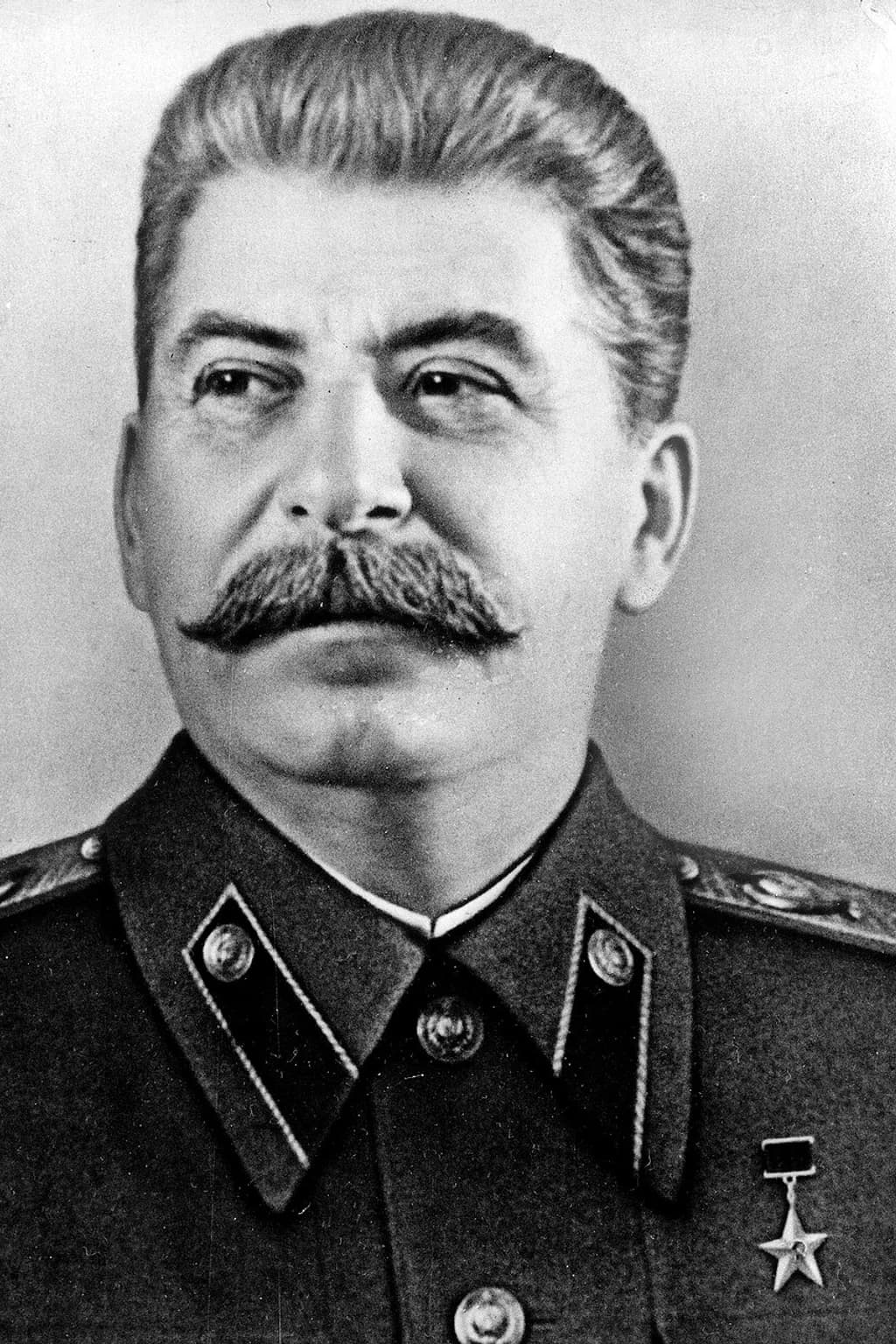
In February 1945, Franklin D. Roosevelt, Winston Churchill, and Joseph Stalin met in Crimea. Their armies were winning, but they did not all want the same postwar world.

They discussed how defeated Germany would be occupied and controlled. They also supported plans for the United Nations, a new organization meant to help prevent another world war.

Yalta was a meeting of allies, but also a warning of tensions to come.

Poland and Eastern Europe caused the hardest arguments. Stalin wanted friendly governments near the Soviet Union, while Britain and the United States spoke about elections and national independence.

The leaders also discussed Soviet entry into the war against Japan once Germany was defeated. That promise mattered for the final stage of the Pacific war.

Yalta helped shape the end of World War 2, but it also revealed the distrust that would soon harden into the Cold War.

Victory Through Ruin
1945 CE
Step 14 of 151945 CEAccessible mode

Victory Through Ruin

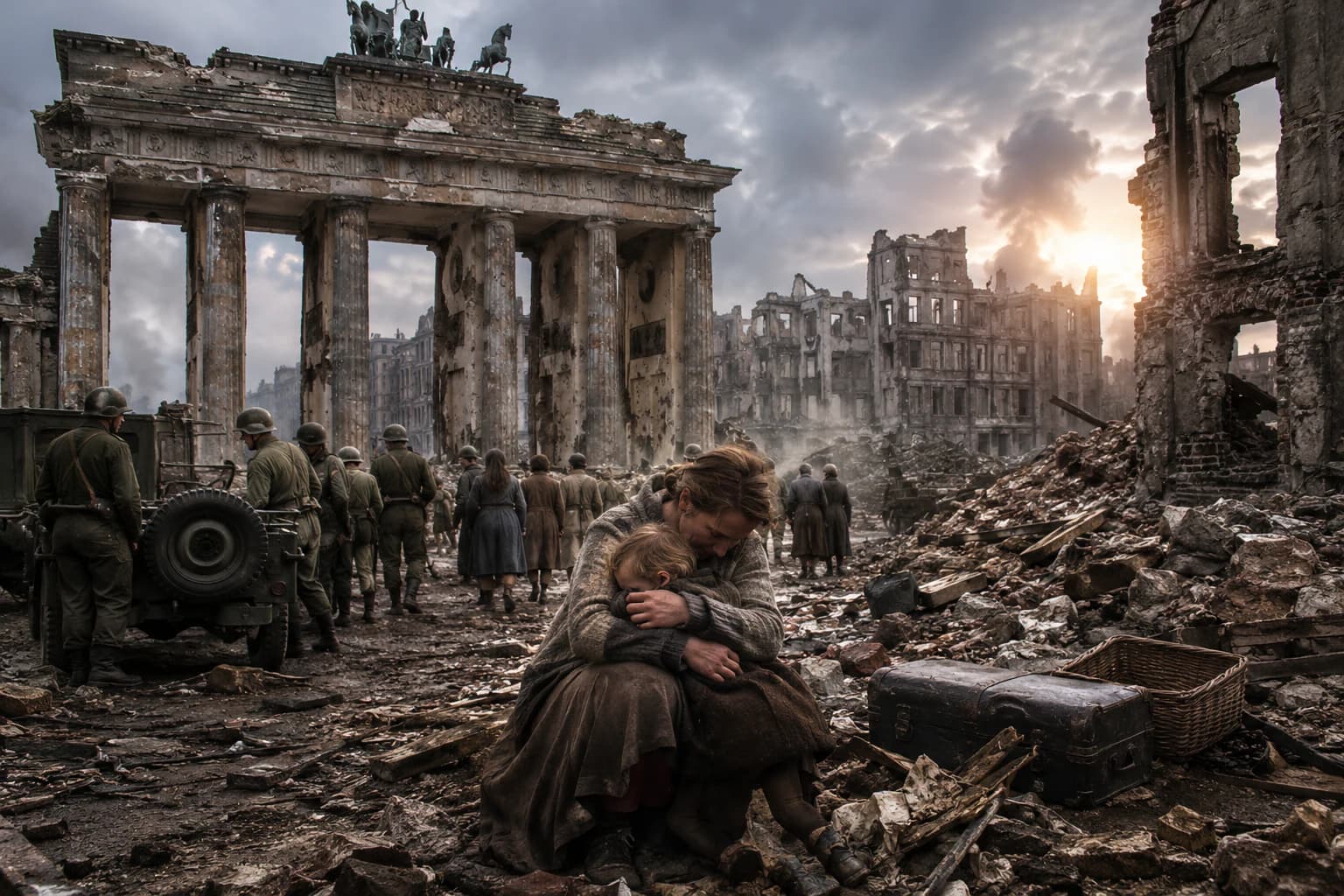
By 1945, the war was ending, but the destruction was overwhelming. Victory came at a terrible cost.

For years, fighting had spread across Europe and Asia. Cities were bombed, millions had died, and entire countries were exhausted. People were desperate for the war to end.

In Europe, Allied forces pushed into Germany from the west while Soviet forces advanced from the east. became the final battleground.

The war ended, but the scars were everywhere.

In April 1945, fell and Adolf Hitler died. Germany surrendered soon after. In Asia, Japan kept fighting until the United States dropped atomic bombs on and , and the Soviet Union entered the war against Japan.

Japan surrendered in August 1945. The war was finally over, but tens of millions were dead, cities were destroyed, and survivors faced hunger and loss.

Today, the end of World War 2 reminds us that even victory can come with deep suffering, and rebuilding peace can take generations.

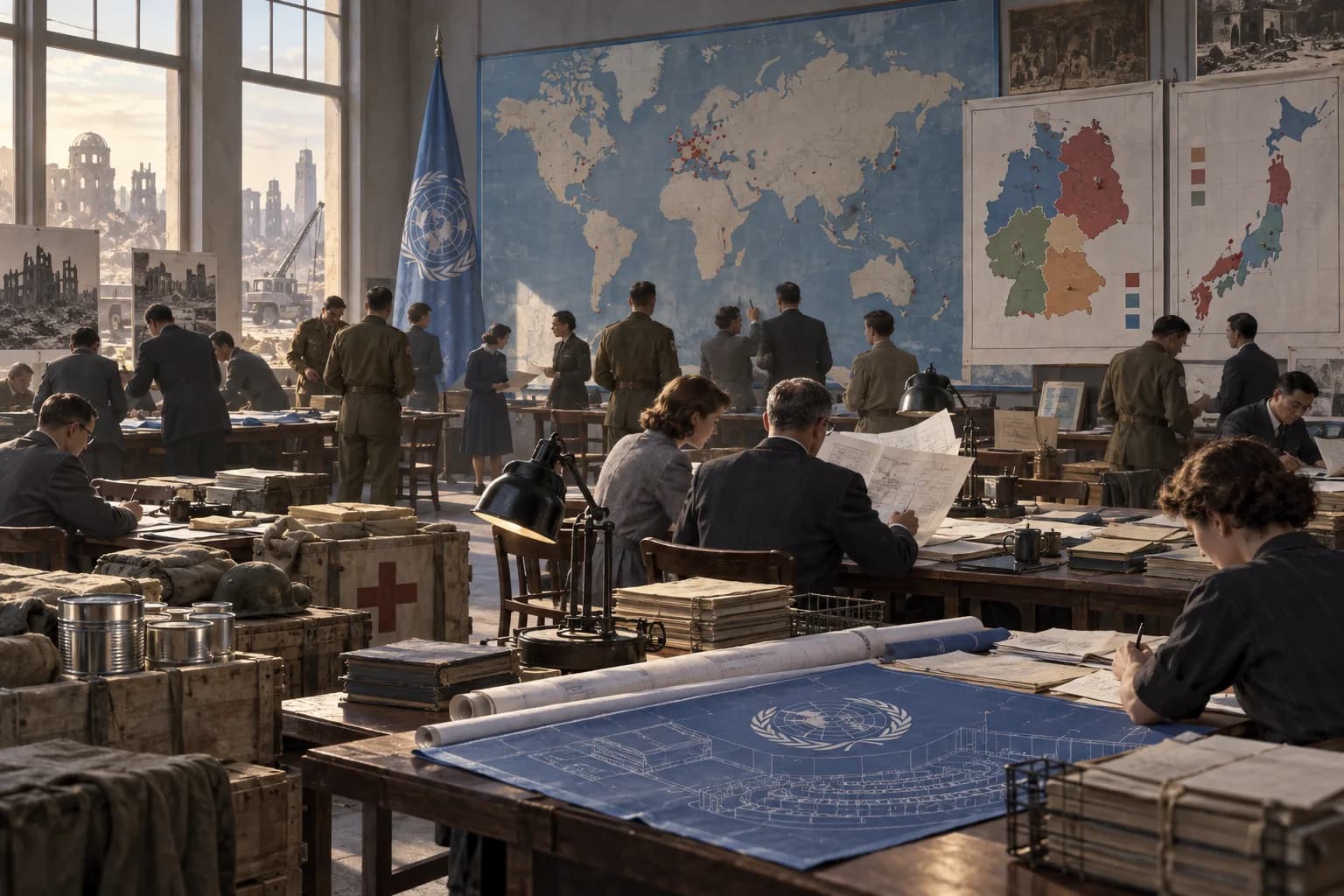
Postwar planners study world maps, occupation-zone charts, and United Nations-style blueprints in a reconstruction office.
1945 CE
Step 15 of 151945 CEAccessible mode

A New World Order

World War 2 ended, but it did not bring a simple return to normal. The world was reshaped in lasting ways.

Before the war, powerful European empires controlled much of the world, and countries often acted alone. There was no strong global system to prevent conflict.

After the war, leaders wanted to avoid another disaster. They created the United Nations to help countries talk, cooperate, and solve problems together.

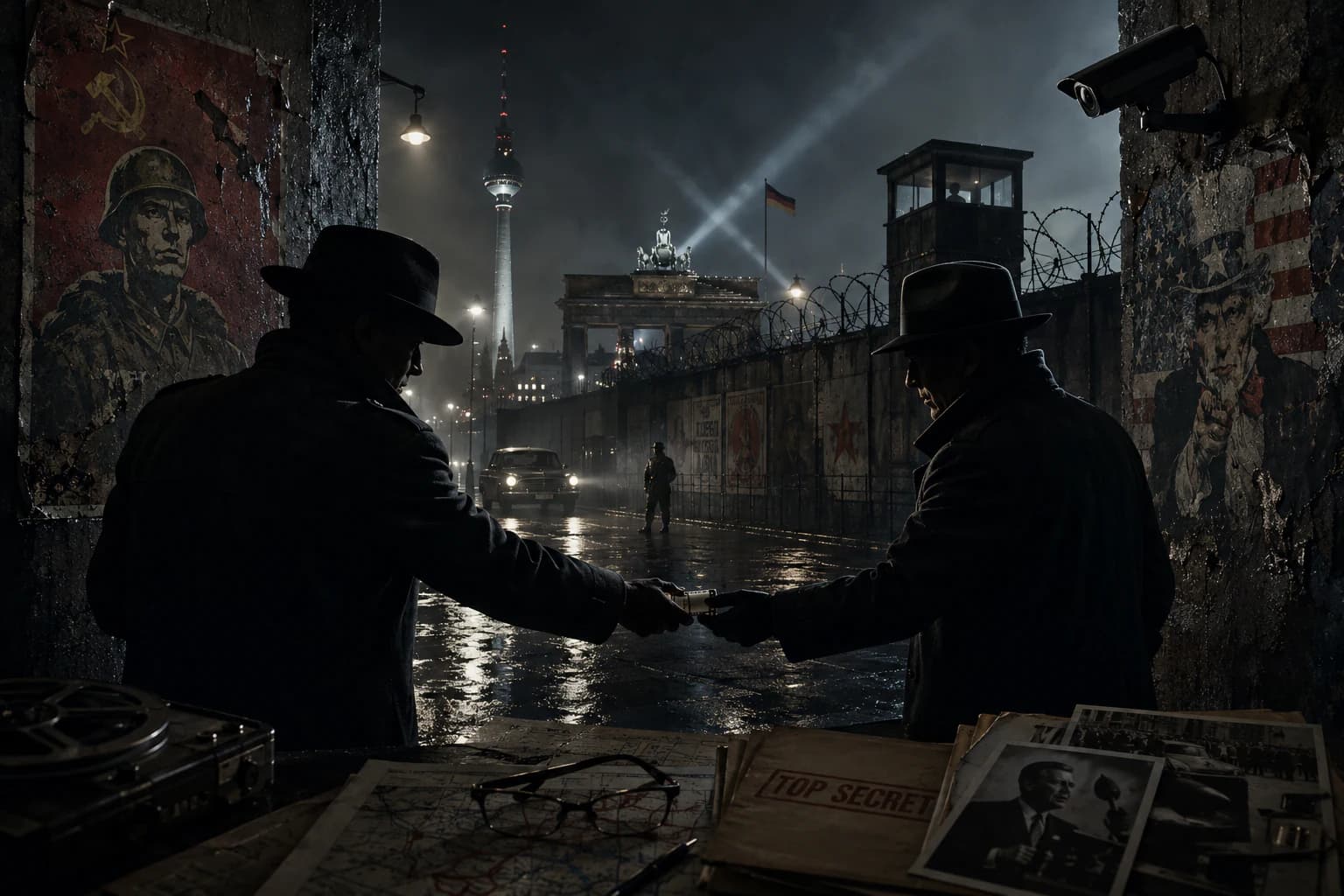
The war ended, but a new kind of global struggle began.

Europe was divided into two sides. The west was led by the United States, and the east by the Soviet Union. Germany itself was split in two.

Old empires weakened, and many colonies began pushing for independence. At the same time, leaders of Nazi Germany were put on trial for war crimes.

These changes shaped today’s world. International cooperation, human rights laws, and global tensions all grew from this moment.

Continue reading

Finished The Second World War?

Continue into the Cold War, confront the Holocaust as a central part of the conflict, or follow the war across Asia and the Pacific.

Browse stories

References

Sources & Further Reading

Reliable sources, primary-source collections and reading paths connected to this page.

Sources used

  1. The National WWII Museum, World War II,” Open source
  2. Imperial War Museums, Second World War Galleries,” Open source

Further reading

  1. Antony Beevor, The Second World War, Weidenfeld & Nicolson.

Primary sources

  1. Yale Law School, Avalon Project: World War II Documents,” Open source

Reviewed claim sources

Loading reviewed claim sources...

A weekly route through history

Find out first about the latest published stories, feature notes and occasional Premium offers in one weekly email.