People

Franklin D. Roosevelt

Franklin D. Roosevelt was the 32nd U.S. President, elected four times. He led the New Deal during the Great Depression and commanded the United States through most of World War II.

Born
1882 CE
Died
1945 CE
Role
32nd President of the United States

32nd President of the United States (1882–1945)

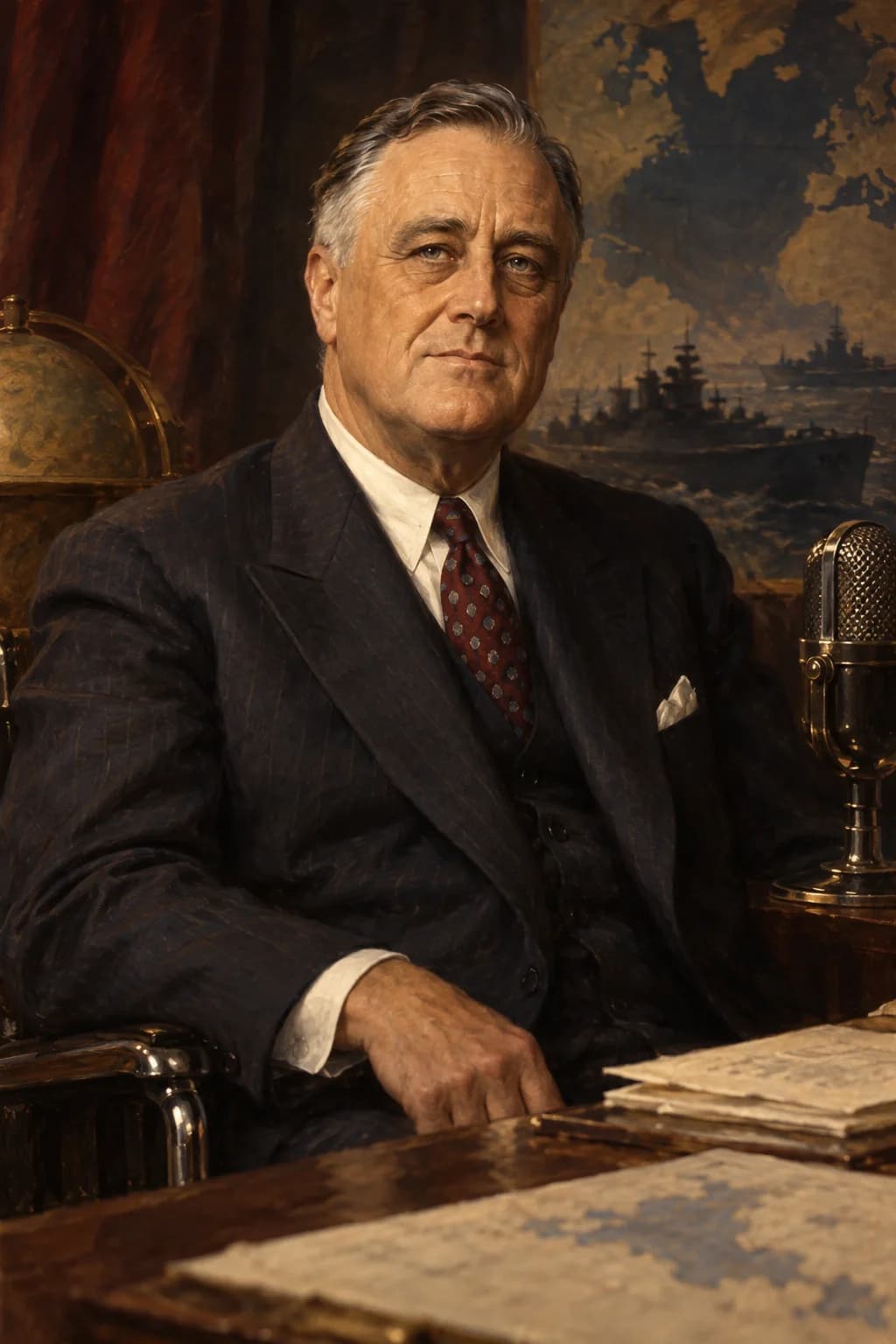
AI-generated portrait of Franklin D. Roosevelt in formal presidential attire
AI-assisted historical reconstruction

An illustrative reconstruction based on historical context. It is not a photograph or documentary likeness. Image policy Attribution

Quick answer

Franklin D. Roosevelt was the 32nd U.S. President, elected four times. He led the New Deal during the Great Depression and commanded the United States through most of World War II.

Born
1882 CE
Died
1945 CE
Role
32nd President of the United States
Years
1882-1945 CE
Facts

Franklin D. Roosevelt timeline facts

Selected specifics from this profile's life story.

1882–1904
Hyde Park Roots

Franklin D. Roosevelt was raised in privilege at Hyde Park, where family wealth, elite education, and public expectation shaped his confidence before crisis tested it.

1921
Struck by Polio

A paralytic illness in 1921 left Roosevelt unable to walk unaided, forcing him to rebuild his body, public image, and political future.

1935–1938
Remaking the State

The later New Deal created Social Security, strengthened labor rights, and expanded the federal government's role in protecting citizens from economic insecurity.

1944–1945
Final Months and Legacy

Roosevelt won an unprecedented fourth term but died in April 1945, leaving Harry Truman to finish the war and inherit a transformed presidency.

Life Journey

A timeline of endurance, reform and wartime command

Follow the story in a more continuous narrative, with a reading mode that matches how much depth you want.

Complete chronology

1882–1904

Hyde Park Roots

Franklin Delano Roosevelt was born in 1882 into the comfortable world of the Hudson Valley gentry. Hyde Park gave him security, manners, travel, private tutoring, and an instinctive ease around authority. He was not a self-made outsider and never pretended to be. Yet privilege alone does not explain his later power. Roosevelt learned early how leadership could be performed: the calm voice, the polished room, the public smile, the sense that uncertainty could be managed by someone who seemed unafraid. His marriage to Eleanor Roosevelt connected him more closely to the wider Roosevelt political name, including Theodore Roosevelt, but it also created a partnership full of strain, ambition, and public consequence. The young Franklin had assurance before he had depth. History would supply the depth.
1910–1913

Entering Politics

Roosevelt's election to the New York State Senate in 1910 was his first real test outside inherited comfort. He entered as a Democrat from a family name associated in many minds with Republican Theodore Roosevelt, and he had to prove that charm could become organization. Albany exposed him to party machines, legislative bargaining, local loyalties, and the limits of reformist posture. He discovered that politics was not only speeches and ideals; it was timing, patronage, press attention, and the ability to remain useful to people who did not fully trust you. These years helped him build a public identity as energetic and independent without cutting himself loose from party structures. The lesson stayed with him. Roosevelt would later govern as an experimenter, but he was never naive about power.

1913–1920

Navy Department Years

Woodrow Wilson appointed Roosevelt Assistant Secretary of the Navy in 1913, giving him a national platform and a department whose practical demands suited him. He dealt with budgets, shipbuilding, personnel, and the politics of preparedness before and during the First World War. The post taught him that modern government could coordinate enormous systems if leadership supplied urgency and direction. It also gave him contacts across the military, industry, and Democratic politics. Roosevelt loved the Navy, but the deeper education was administrative. He saw that policy was not real until translated into contracts, schedules, command chains, and public confidence. His 1920 vice-presidential run ended in defeat, but it made him a national figure. By then he had learned that executive energy could be a political argument in itself.

1921

Struck by Polio

In 1921, Roosevelt was struck by a paralytic illness, long identified as polio, that permanently changed his body. He lost the ability to walk unaided and faced the possibility that public life, built on movement and display, might be closed to him. His response was not simple triumph over adversity. It involved pain, dependence, carefully staged appearances, relentless therapy, and the help of family, aides, and especially Eleanor, whose own public role expanded as his mobility narrowed. Warm Springs, Georgia, became both a place of rehabilitation and a political education in ordinary suffering far from Hyde Park. Roosevelt learned how to project confidence without revealing the full difficulty of his condition. The illness did not make him saintly, but it deepened his emotional range. When he later spoke to frightened Americans, the voice of reassurance came from someone who had practiced control in private crisis.

1928–1932

Return as Governor

Roosevelt's election as governor of New York in 1928 returned him fully to executive politics. When the Great Depression began, the state became a laboratory for the questions that would define the 1930s. How much responsibility did government have for unemployment, poverty, failed farms, closed banks, and shattered confidence? Roosevelt did not arrive with a finished ideological blueprint. He was pragmatic, politically alert, and willing to try measures that suggested government had obligations beyond balancing books. Relief programs in New York helped him present himself as a leader who would act while others explained constraints. His style mattered as much as his policy: hopeful without seeming detached, experimental without seeming reckless. By 1932, he could offer the country not a doctrine but a promise of movement.

1933–1934

New Deal Beginning

Roosevelt became president when the banking system was collapsing, unemployment was vast, and democratic confidence itself felt fragile. His First Hundred Days moved with startling speed. The emergency banking measures aimed to restore trust; the Civilian Conservation Corps, agricultural programs, public works, and relief agencies aimed to put federal power into direct contact with hardship. The New Deal was not one tidy plan. It was a burst of experiments, compromises, contradictions, and improvisations held together by Roosevelt's conviction that inaction was more dangerous than error. His fireside chats turned radio into a tool of intimacy, explaining policy in a tone that made the presidency feel present in people's homes. Critics saw overreach and confusion. Supporters saw government finally awake. Either way, the relationship between American citizens and Washington changed.

1935–1938

Remaking the State

By 1935, Roosevelt's reform moved from emergency rescue toward structural change. Social Security established old-age pensions and unemployment insurance, creating one of the most durable pillars of American public life. The Wagner Act strengthened labor's right to organize. New public works continued to reshape landscapes, infrastructure, and employment. These measures did not end the Depression by themselves, and they often excluded or disadvantaged many Black workers, agricultural laborers, domestic workers, and other vulnerable groups because of political compromises. Roosevelt's record therefore includes both transformation and limitation. He expanded the meaning of federal responsibility while navigating a Congress in which southern segregationists held major power. His failed court-packing plan in 1937 showed the risks of his appetite for executive leverage. Even so, the New Deal permanently altered what Americans expected the national state to do in times of insecurity.

1939–1945

Commander in Global War

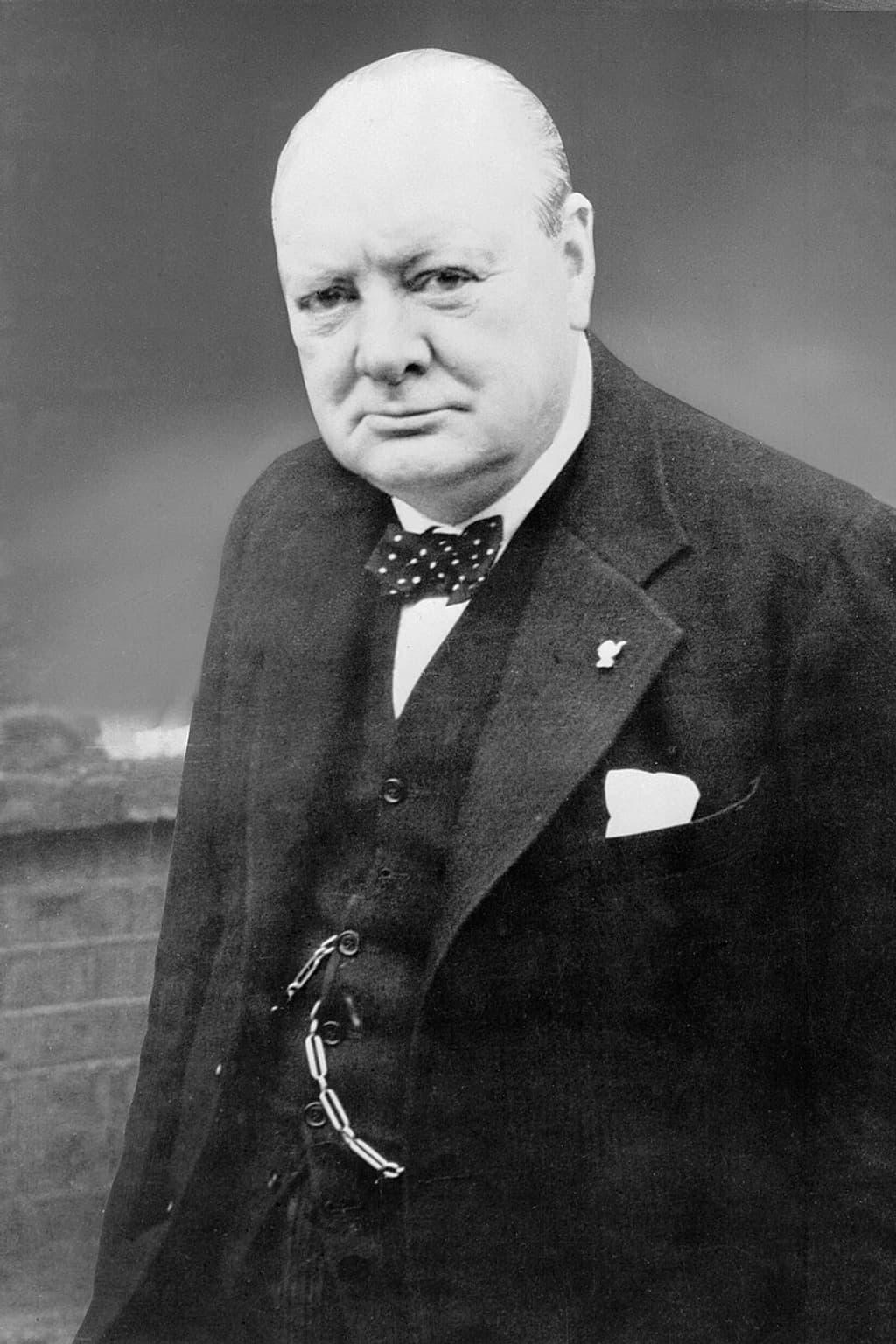
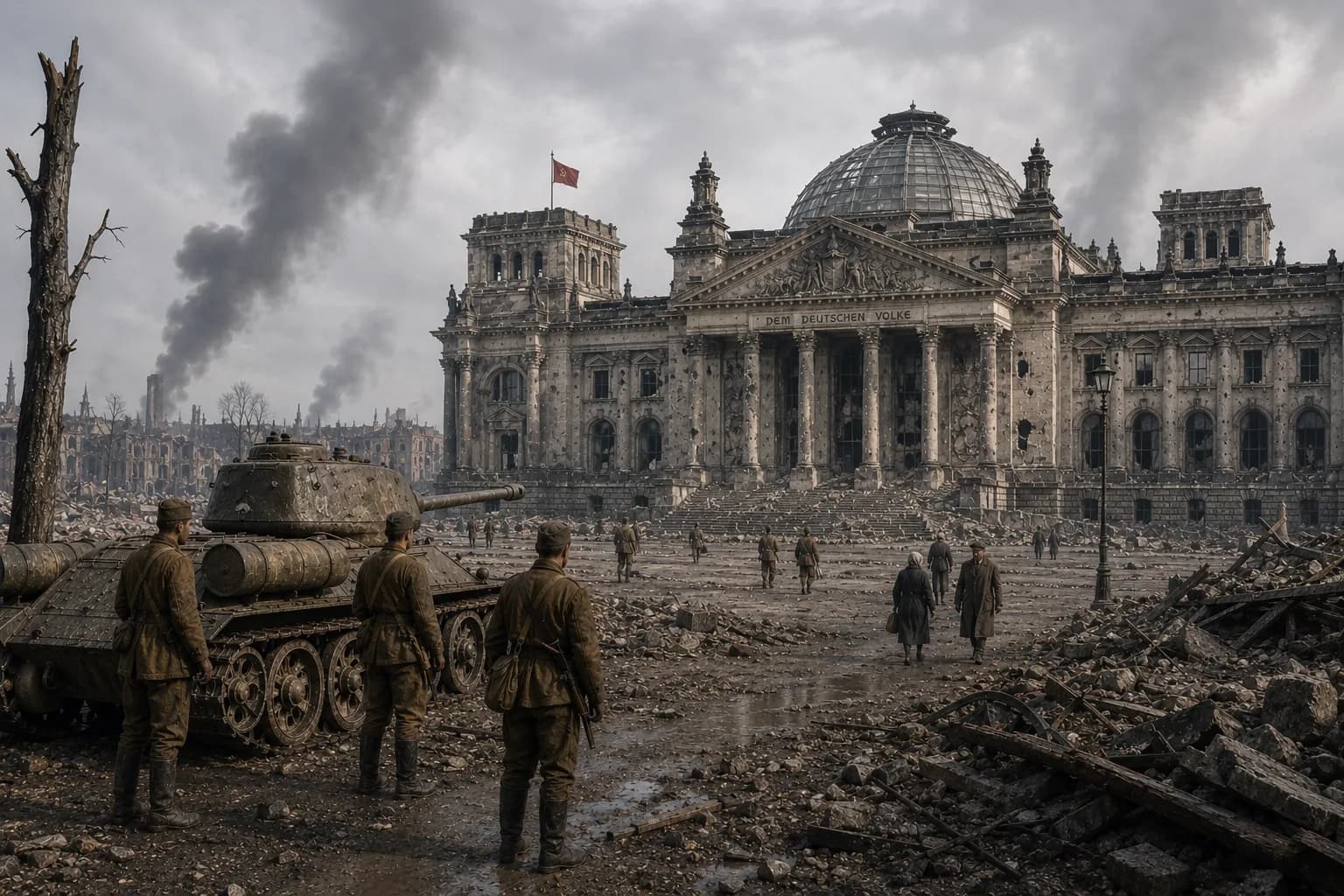
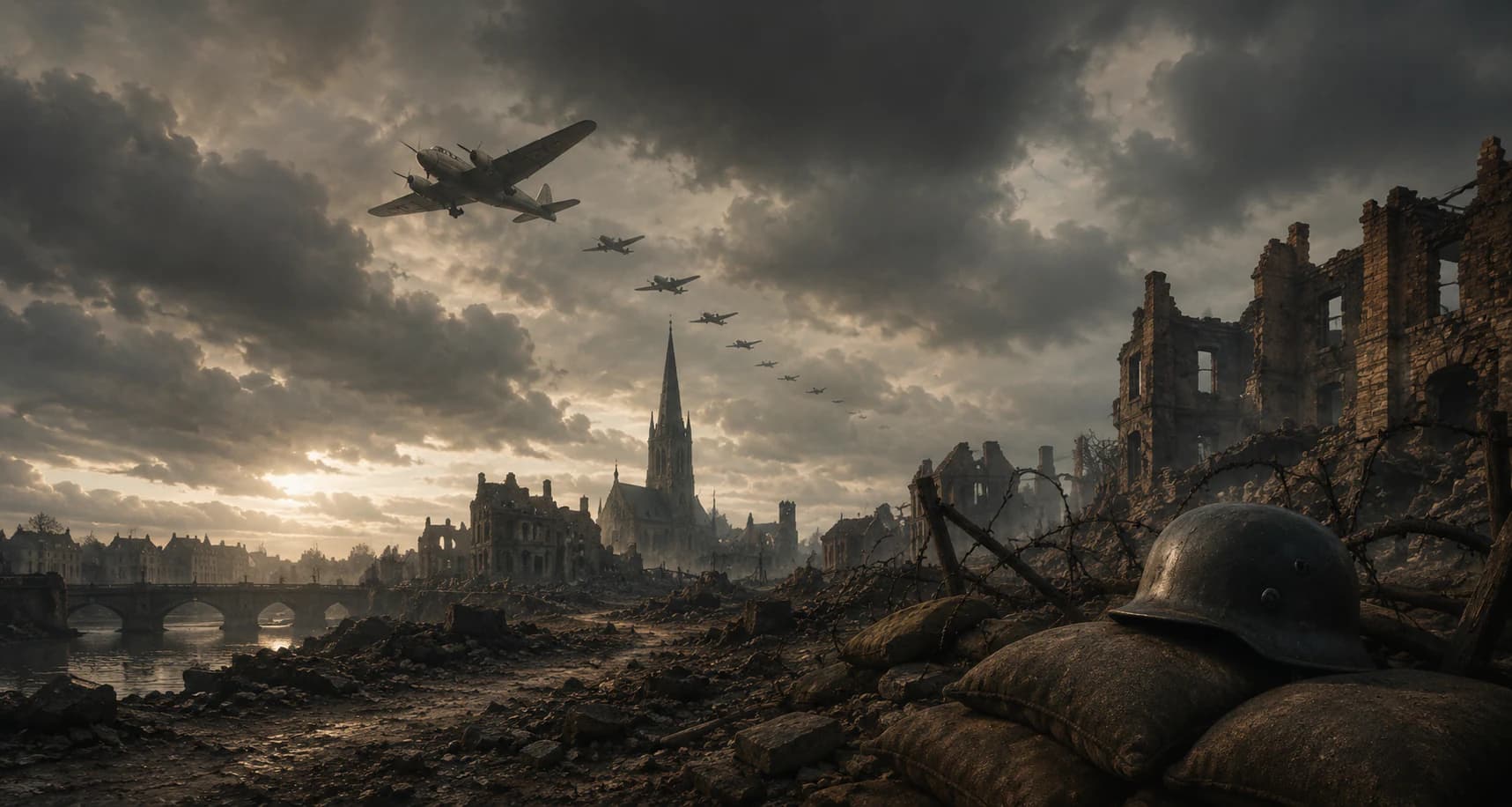
Roosevelt's wartime leadership began before Pearl Harbor. He recognized Nazi Germany as a profound threat, but he had to move a divided country step by step through neutrality, aid to Britain, Lend-Lease, and undeclared naval conflict in the Atlantic. Japan's attack on Pearl Harbor on 7 December 1941 transformed the political landscape. Roosevelt then presided over an astonishing mobilization of factories, science, manpower, finance, and military command. He worked closely with Winston Churchill, negotiated uneasily with Joseph Stalin, and placed American power inside a coalition whose members had different aims and deep suspicions. His leadership also had grave failures and moral compromises: the internment of Japanese Americans, limits on refugee rescue, and difficult choices about alliance with Stalin. Roosevelt saw victory as more than battlefield success. He pushed toward the United Nations, postwar economic planning, and a world in which the United States would no longer retreat from global responsibility.

1944–1945

Final Months and Legacy

By 1944, Roosevelt's health was clearly failing, though the full extent was carefully managed in public. Voters nevertheless returned him for a fourth term, an unprecedented mandate born from wartime trust and political habit. He went to Yalta in early 1945 carrying immense burdens: defeating Germany and Japan, managing Soviet ambitions, shaping the United Nations, and imagining a peace that might avoid the mistakes after World War I. He died at Warm Springs on 12 April 1945, weeks before Germany's surrender and months before the atomic end of the Pacific War. His legacy is enormous and contested. He made the presidency more central, the federal state more active, the Democratic coalition more durable, and the United States more internationalist. He did not solve American inequality or prevent every injustice committed under his watch. But Franklin D. Roosevelt remains important because he redefined national leadership in crisis: intimate in voice, experimental in policy, and global in consequence.

Continue in context

Connected stories

Move from the profile into the wider events and settings this figure belongs to.

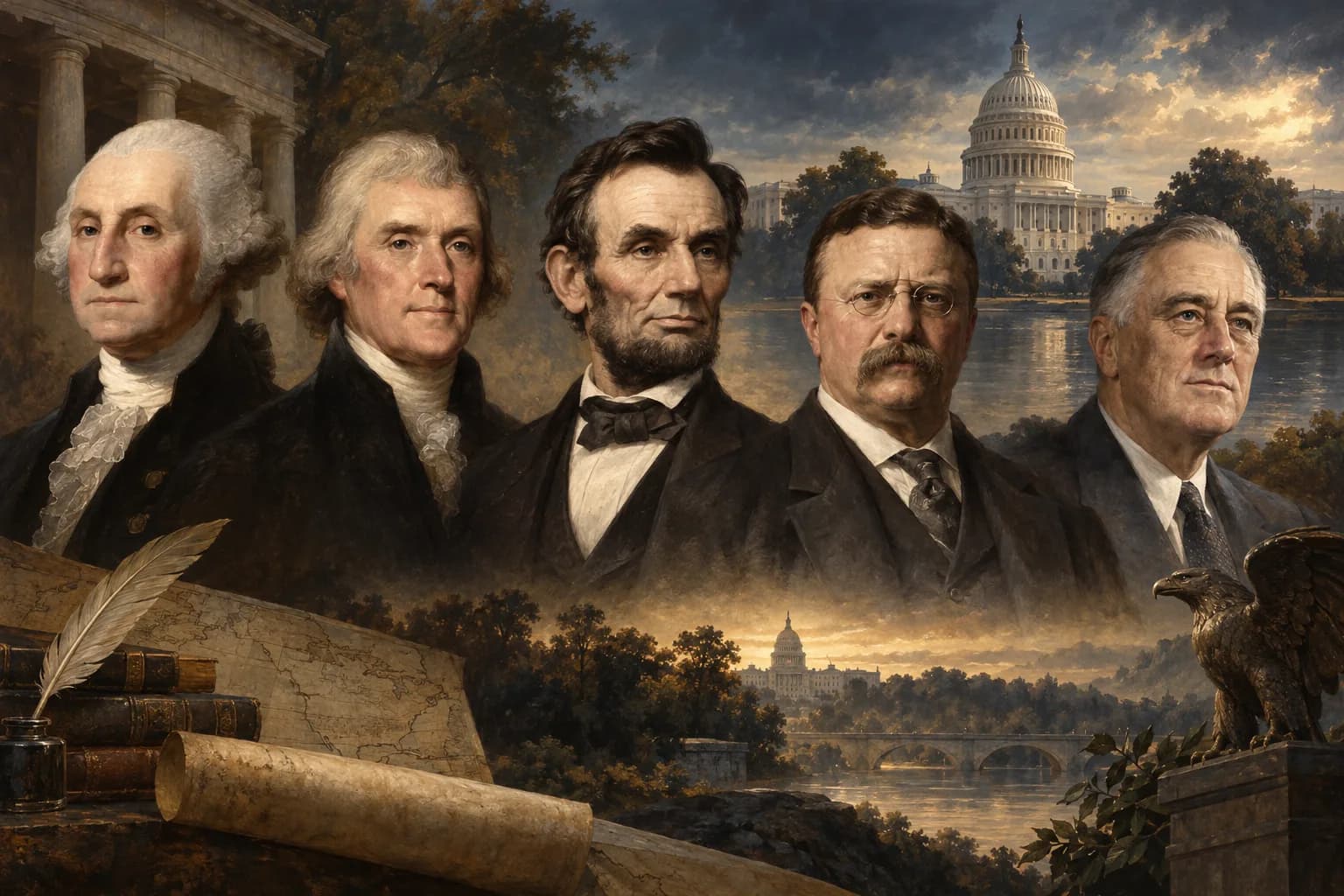
American Presidents lineage
Lineage47 presidents
American Presidents
1789 CE–present

The succession of American presidents from George Washington to today.

View lineage
Tertiary paths

Content note

This profile is written for educational use and connects to related Stories of History pages. The main portrait is an AI-assisted historical reconstruction, included as an illustrative aid rather than documentary evidence. Image policy Image attribution

References

Sources & Further Reading

Reliable reference works, archives and reading paths connected to this profile.

Further reading

  1. Encyclopaedia Britannica, Search results for Franklin D. Roosevelt,” accessed June 2026.Open source
  2. WorldCat, Books and library holdings for Franklin D. Roosevelt,” accessed June 2026.Open source

Primary sources

  1. Library of Congress, Search results for Franklin D. Roosevelt,” accessed June 2026.Open source

Reviewed claim sources

Loading reviewed claim sources...

A weekly route through history

Find out first about the latest published stories, feature notes and occasional Premium offers in one weekly email.