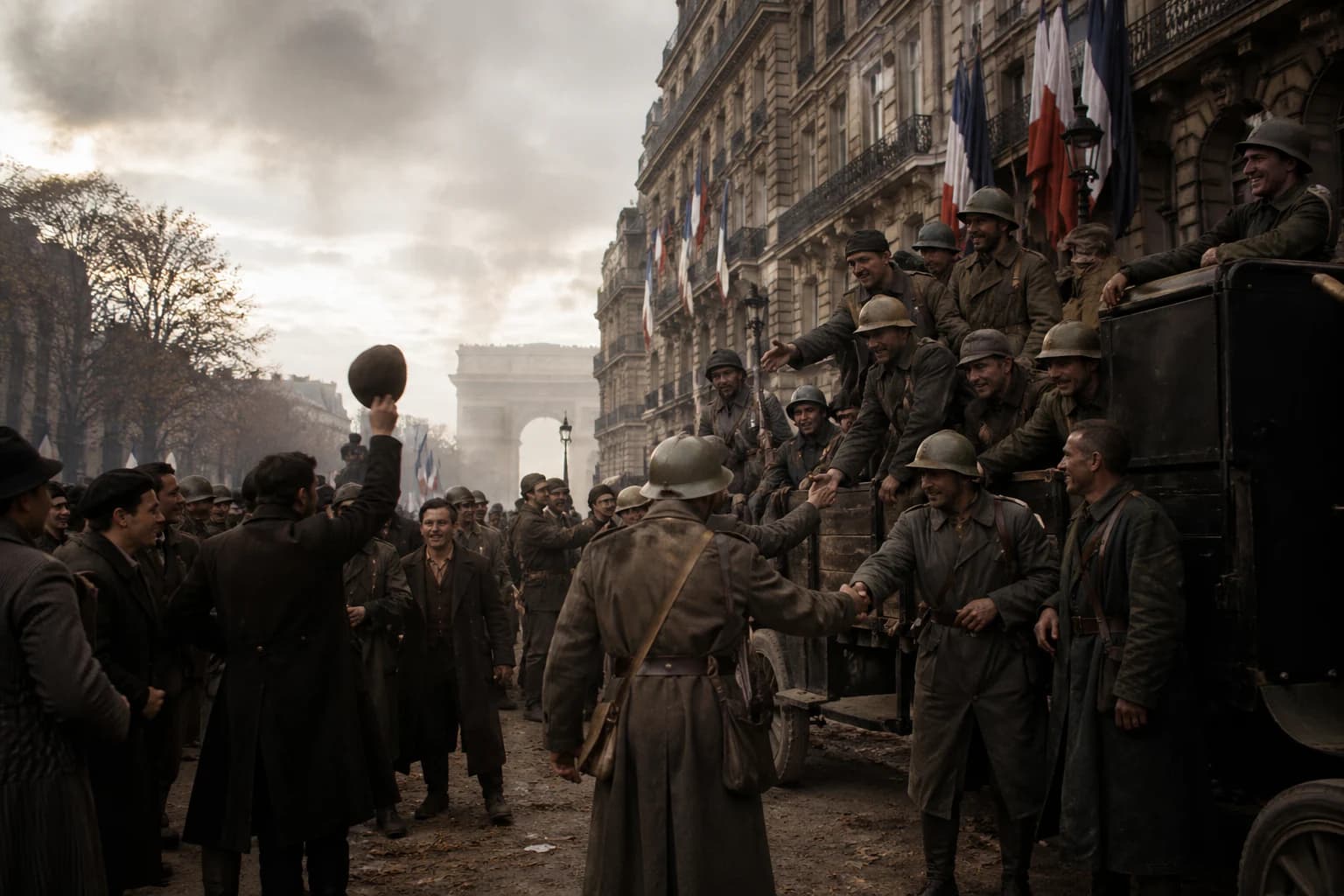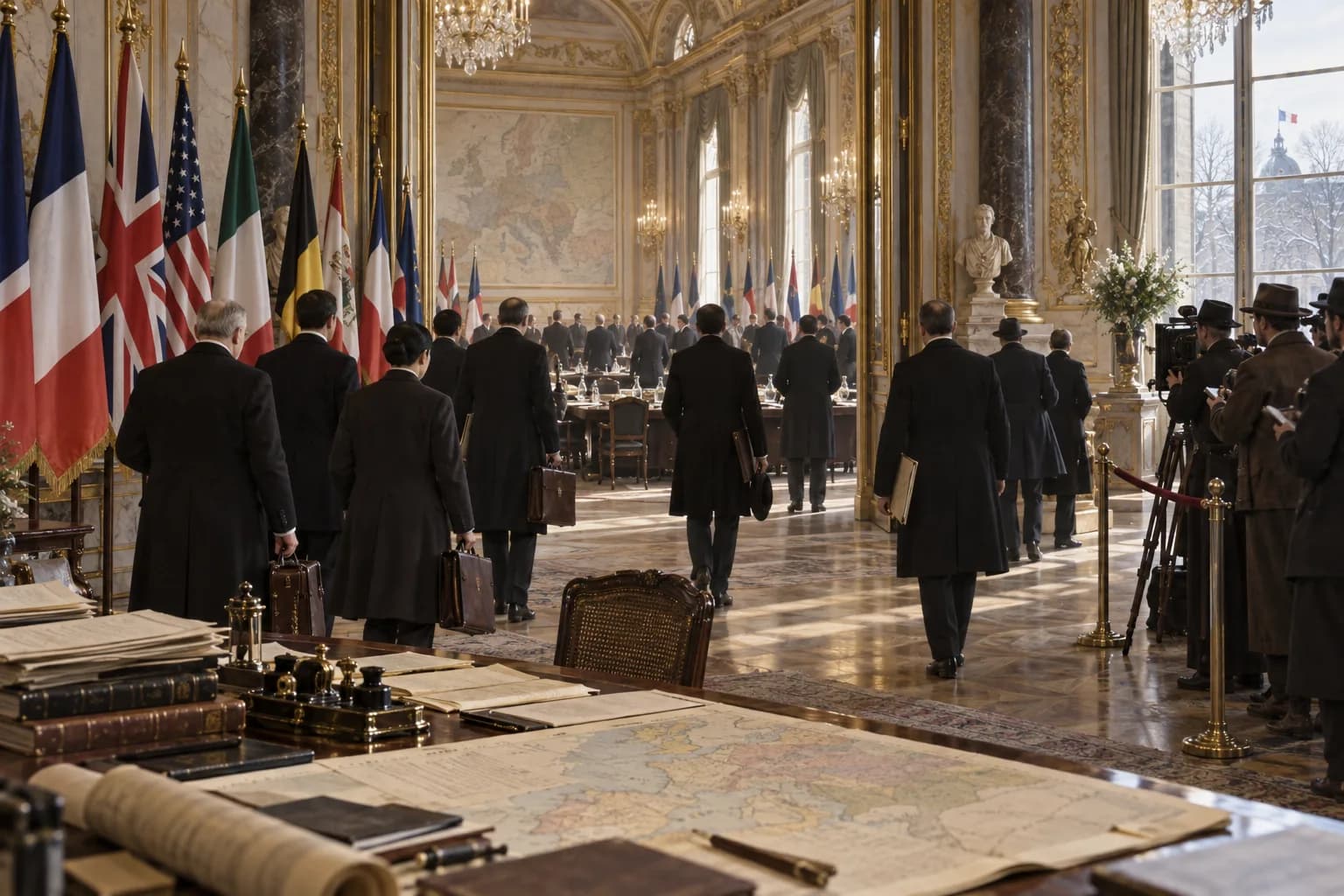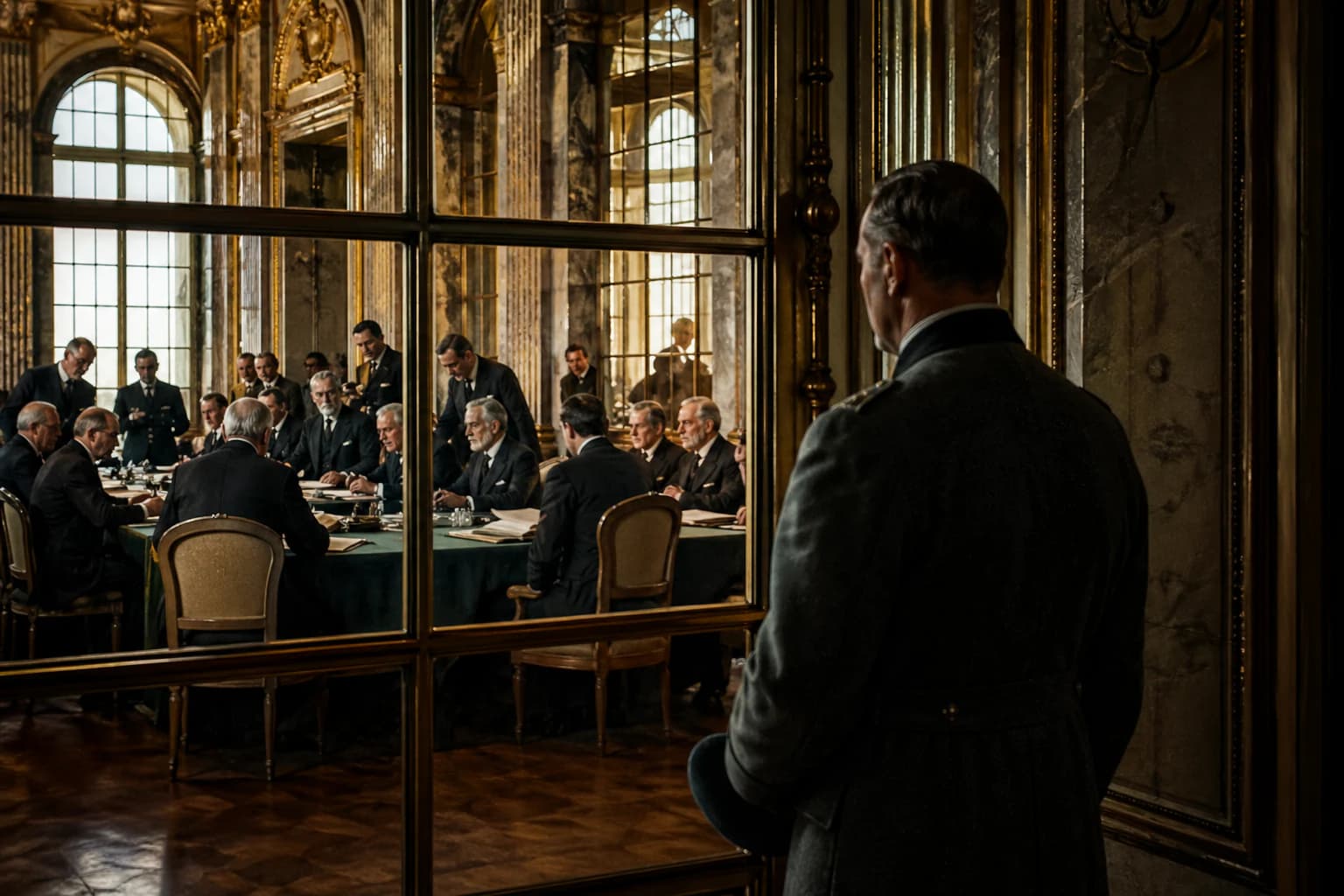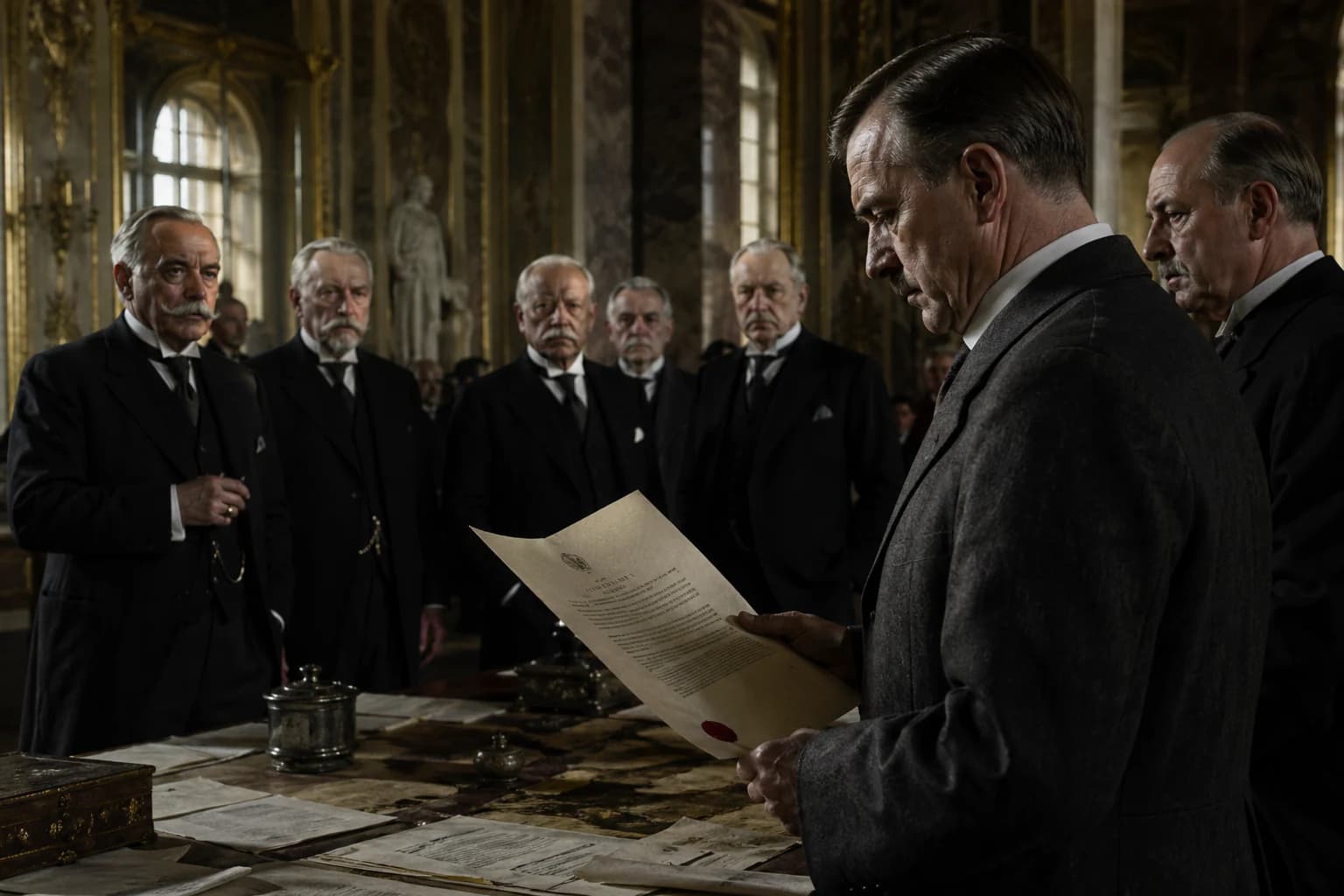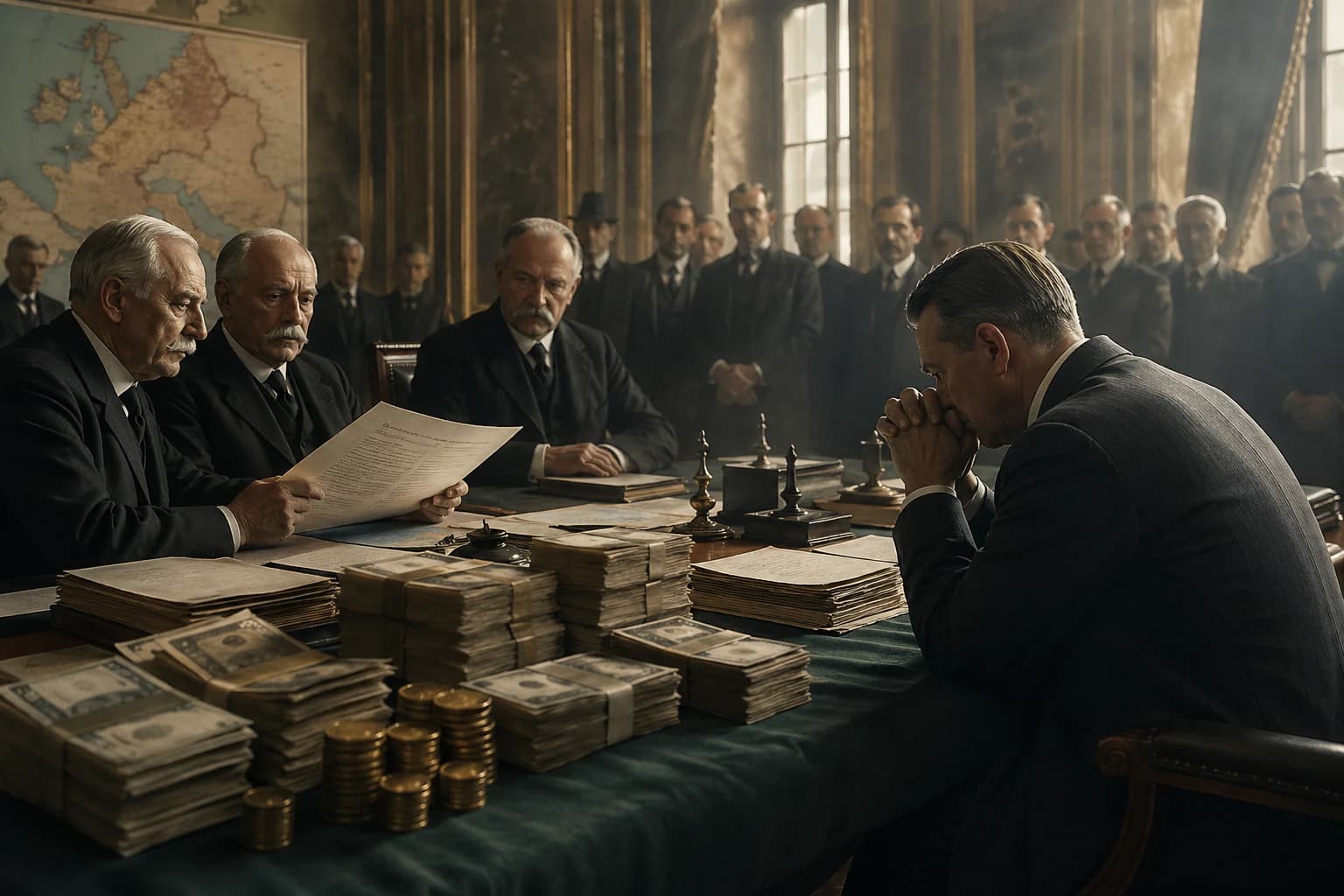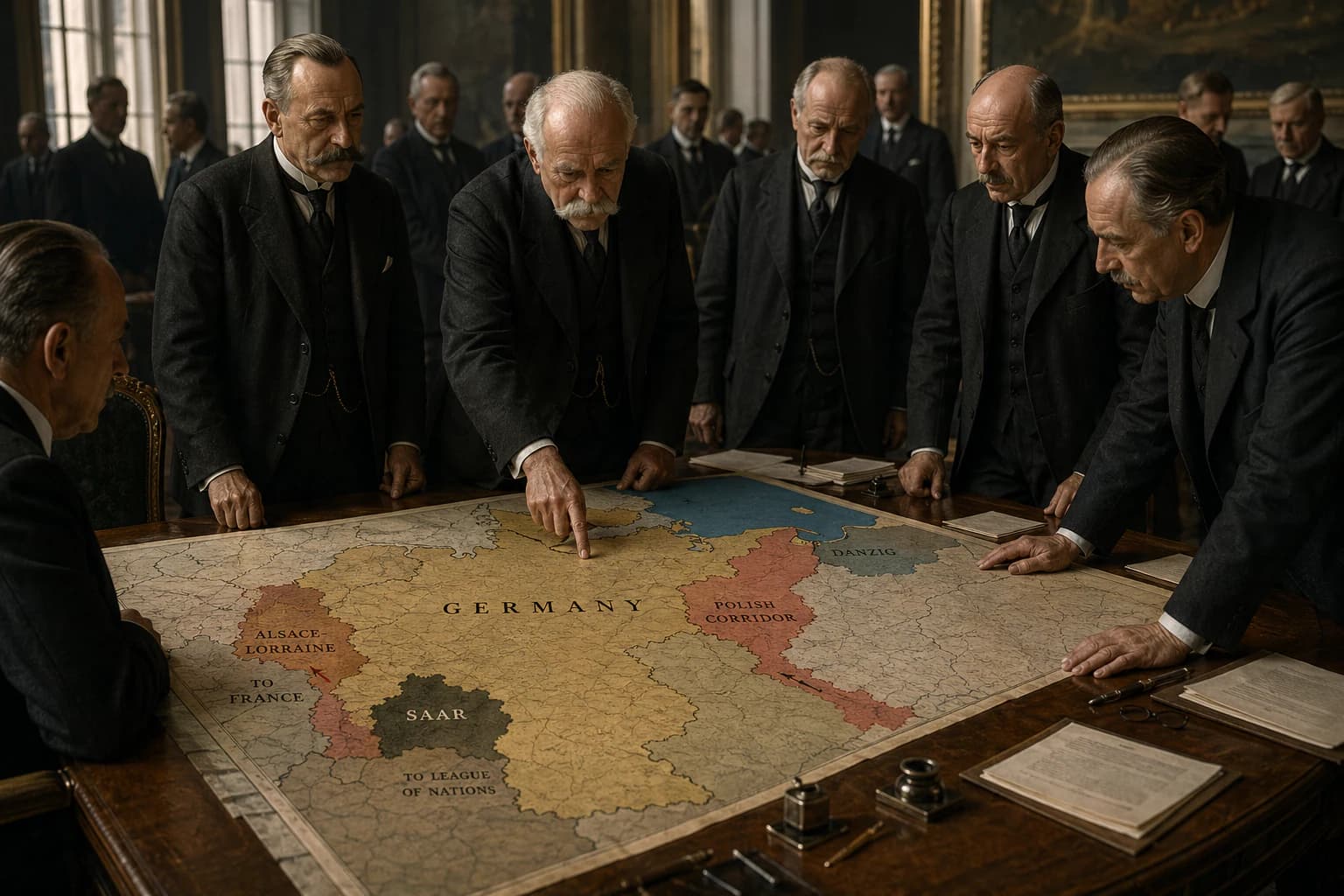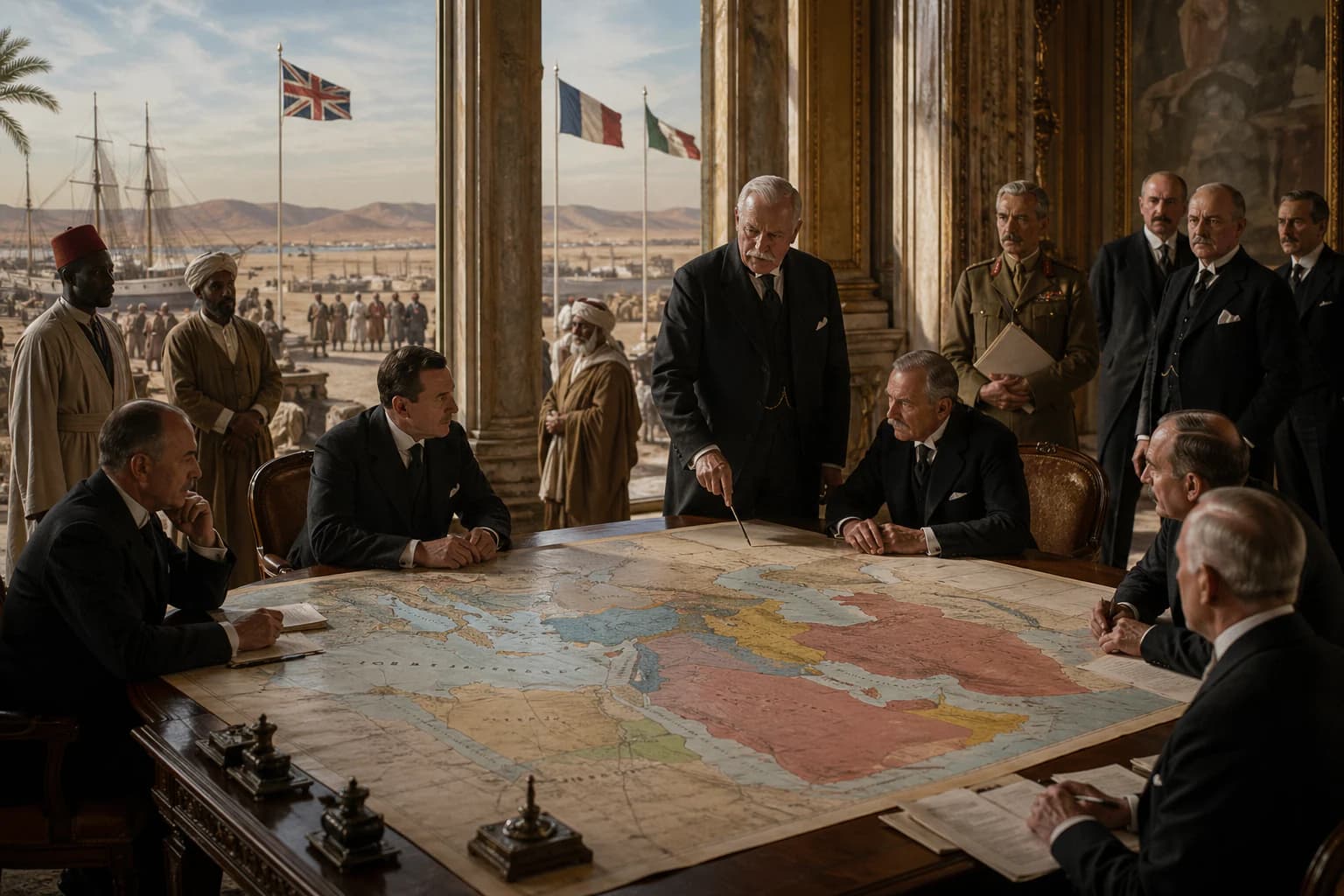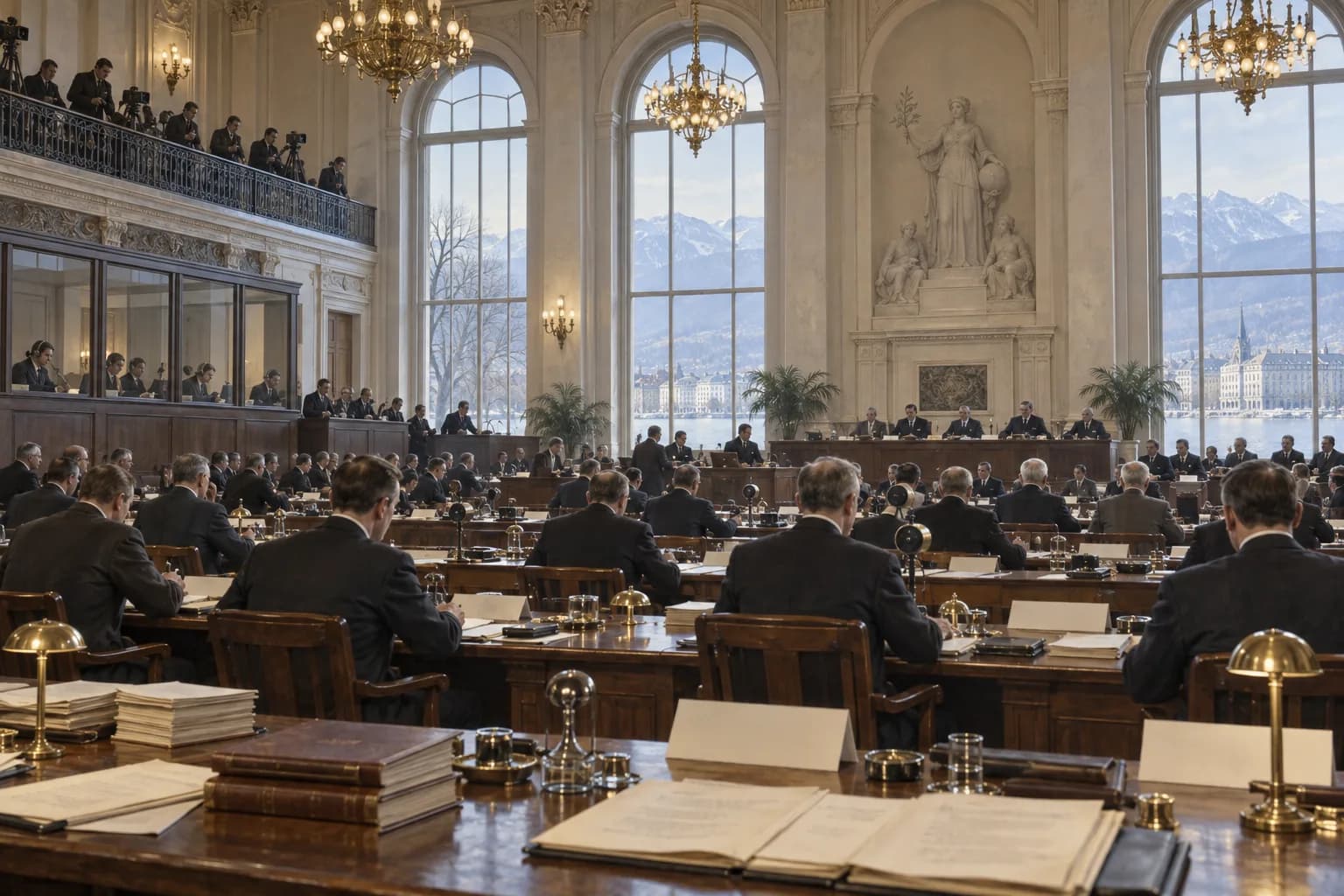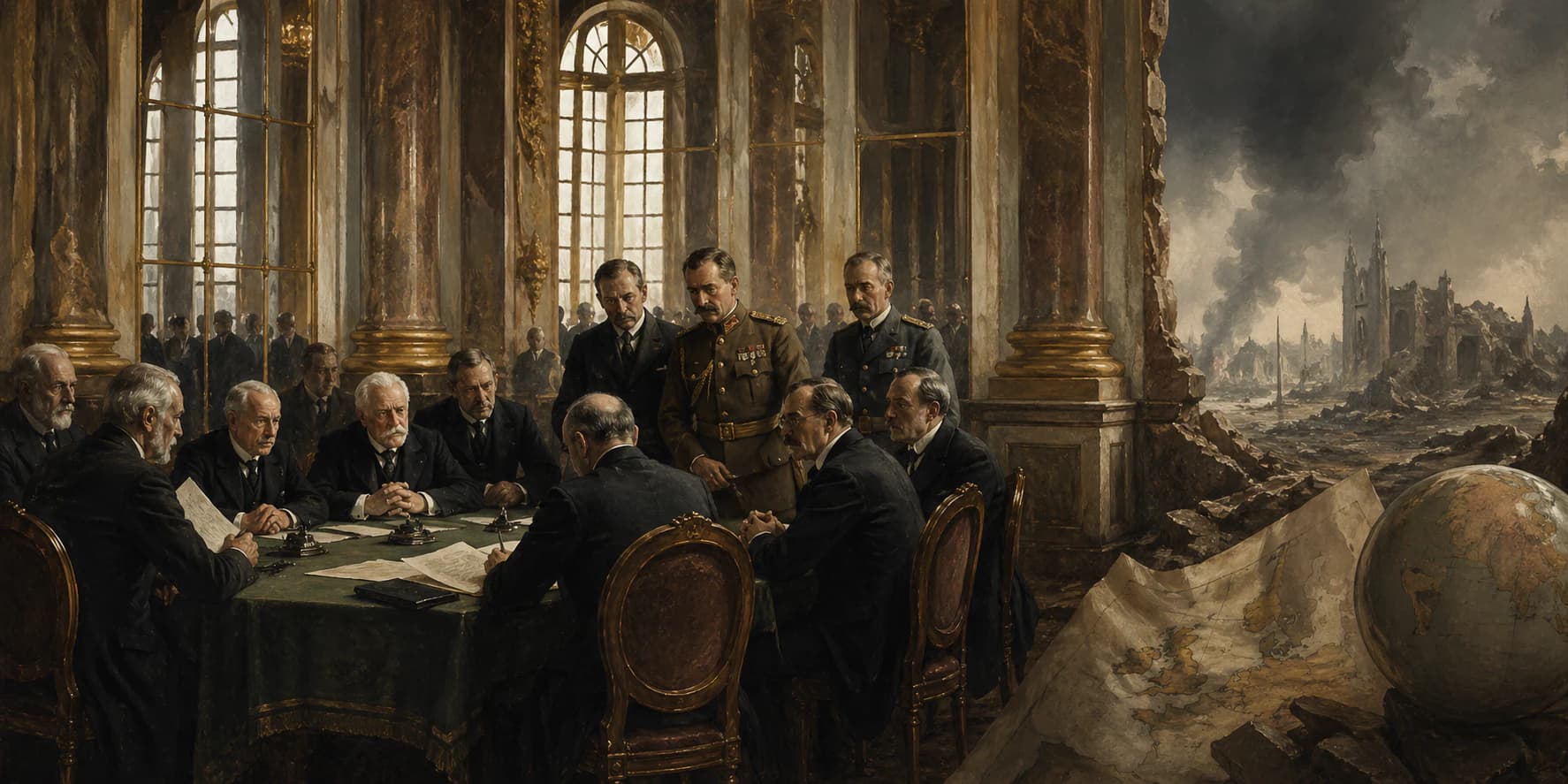
Delegates signing the Treaty of Versailles in the Hall of Mirrors in June 1919, watched by silent Allied officials as Germany's representatives took their seats
Premium Story

The Treaty of Versailles and Its Consequences

Examine the Treaty of Versailles as punishment, reparations, resentment, and fragile peace lead toward another war.

11 chapters

Next
Context

Introduction

What you'll learn: You'll follow the peace settlement from the guns falling silent in 1918, through the competing ambitions of the conference, the punishment clauses imposed on Germany, the collapse of reparations, and the way resentment helped shape the path to a second world war.

Key forces

The Armistice Leaves an Unfinished Peace
1918 CE
Step 1 of 101918 CEAccessible mode

The Armistice Leaves an Unfinished Peace

The guns went silent on 11 November 1918. But ending the fighting was not the same as making peace.

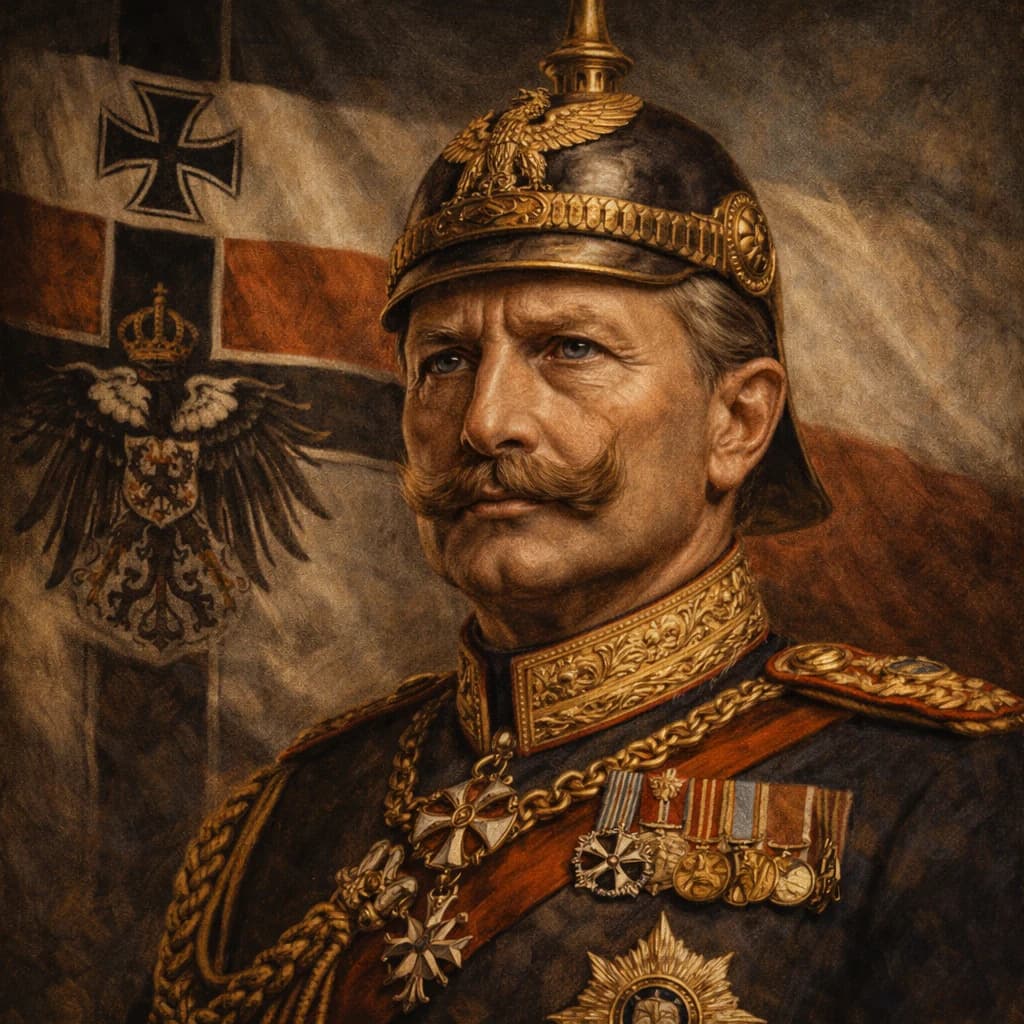
Germany's war effort had collapsed in autumn 1918. Allied forces pushed German armies back continuously. Revolution swept through German cities. The Kaiser abdicated on 9 November. Two days later, Germany's new government signed the Armistice in a railway carriage in France. The fighting stopped at 11am.

But the Armistice was only a ceasefire. The actual peace terms still had to be decided. Germany had sought the Armistice partly on the basis of President Wilson's Fourteen Points — a programme promising a fair settlement. Many Germans expected they would be treated reasonably.

The war ended — but what it had started was far from over.

The months ahead produced one of the most contested treaties in modern history. The gap between Germany's expectations and what it actually received would shape European politics for a generation.

The Paris Peace Conference Opens
1919 CE
Step 2 of 101919 CEAccessible mode

The Paris Peace Conference Opens

The Peace Conference opened in January 1919. Three men held most of the power — and they wanted very different things.

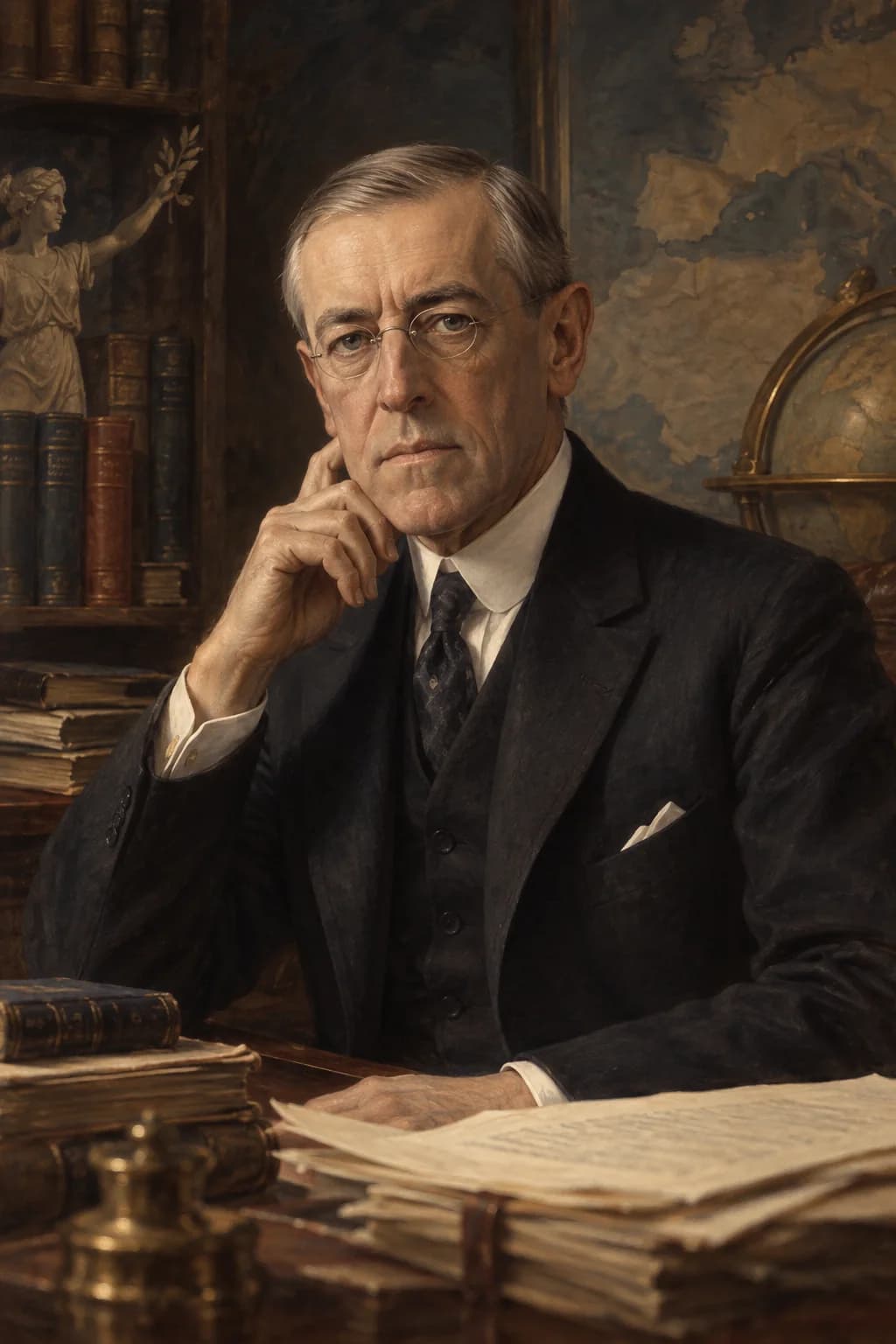
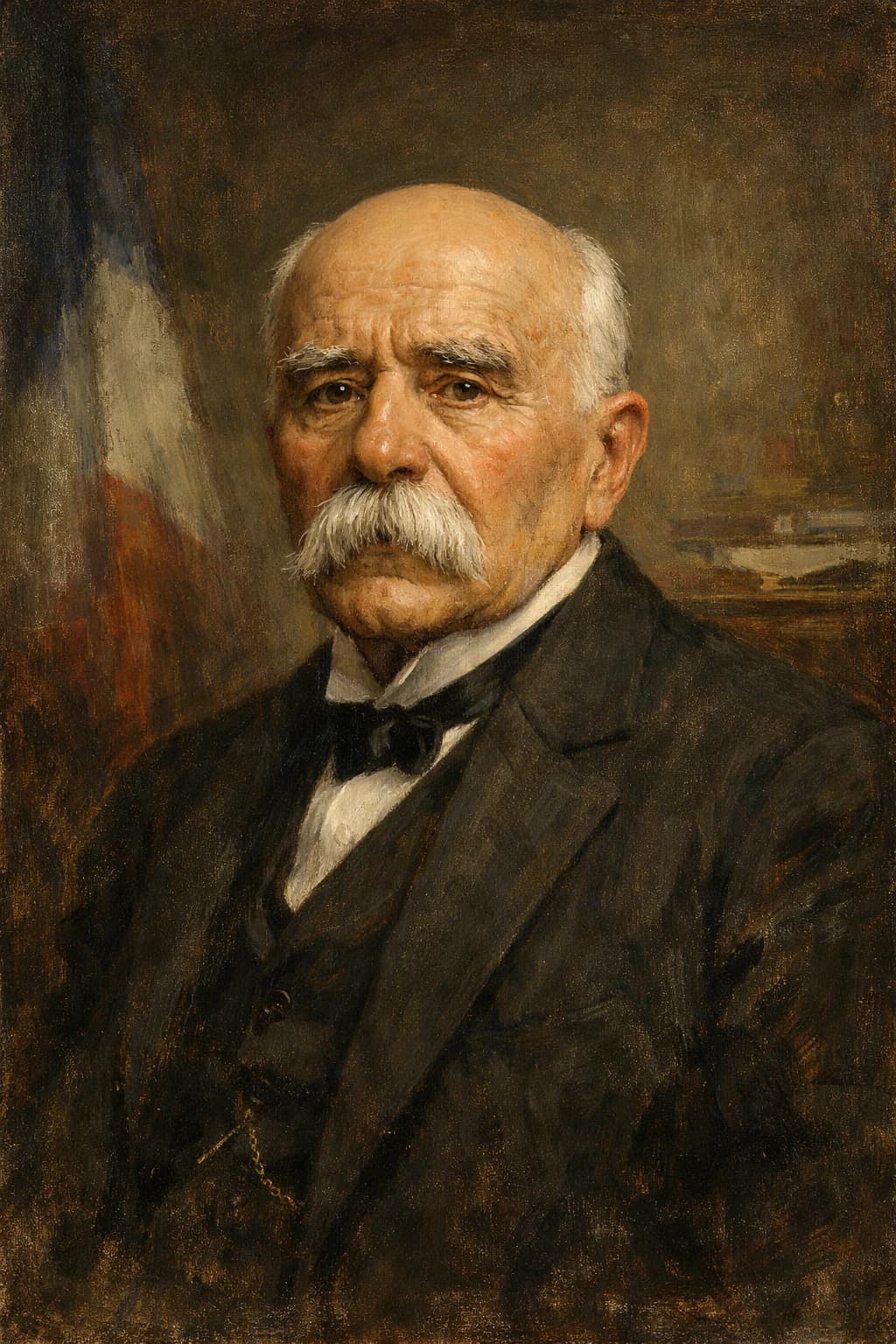
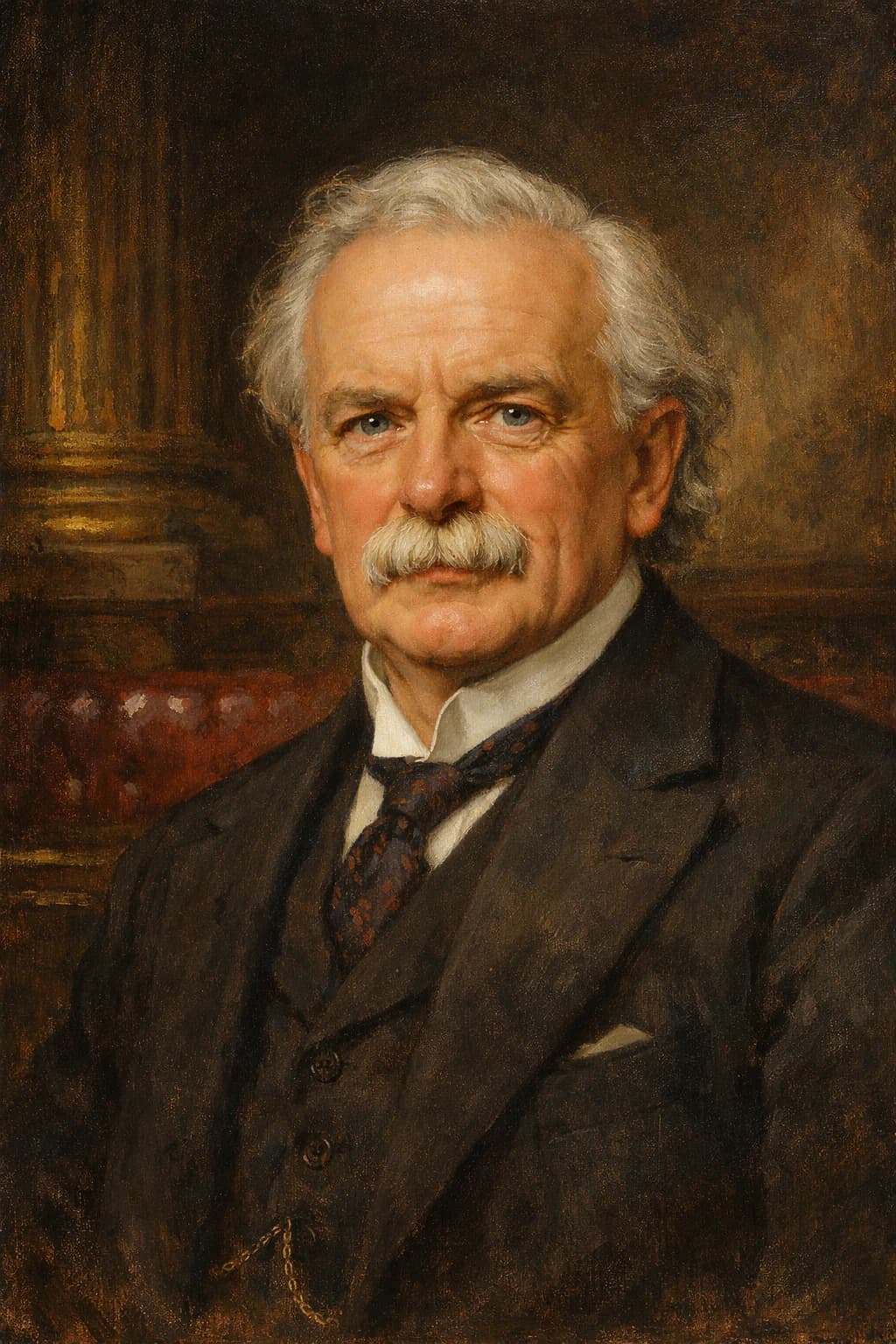
Twenty-seven nations attended, but real decisions were made by a small group of leaders. Woodrow Wilson of the United States, Georges Clemenceau of France, and David Lloyd George of Britain held the most power.

Their aims clashed sharply. Wilson wanted a fair peace and a League of Nations. Clemenceau wanted Germany permanently weakened — he had lived through two German invasions of France. Lloyd George wanted Germany punished, but not so harshly that it would seek revenge.

Three leaders, three visions of peace — and almost nothing in common.

The tension between idealism, security, and political pressure shaped every clause that followed. The treaty that resulted was a compromise — and one that left most parties dissatisfied.

Germany Is Excluded from the Negotiations
1919 CE
Step 3 of 101919 CEAccessible mode

Germany Is Excluded from the Negotiations

Germany expected to negotiate the peace. Instead, it was shut out and handed a treaty it had no part in creating.

At earlier peace conferences — like Vienna in 1815 — defeated powers had been included in the negotiations. The Allied leaders chose differently in 1919. Germany and its allies were excluded entirely.

German diplomats arrived at in May 1919 only to receive the completed treaty text. They were given three weeks to respond. A lengthy German counter-proposal was largely rejected. Germany had no real choice but to sign.

Germany was not asked to make peace. It was told what peace would look like.

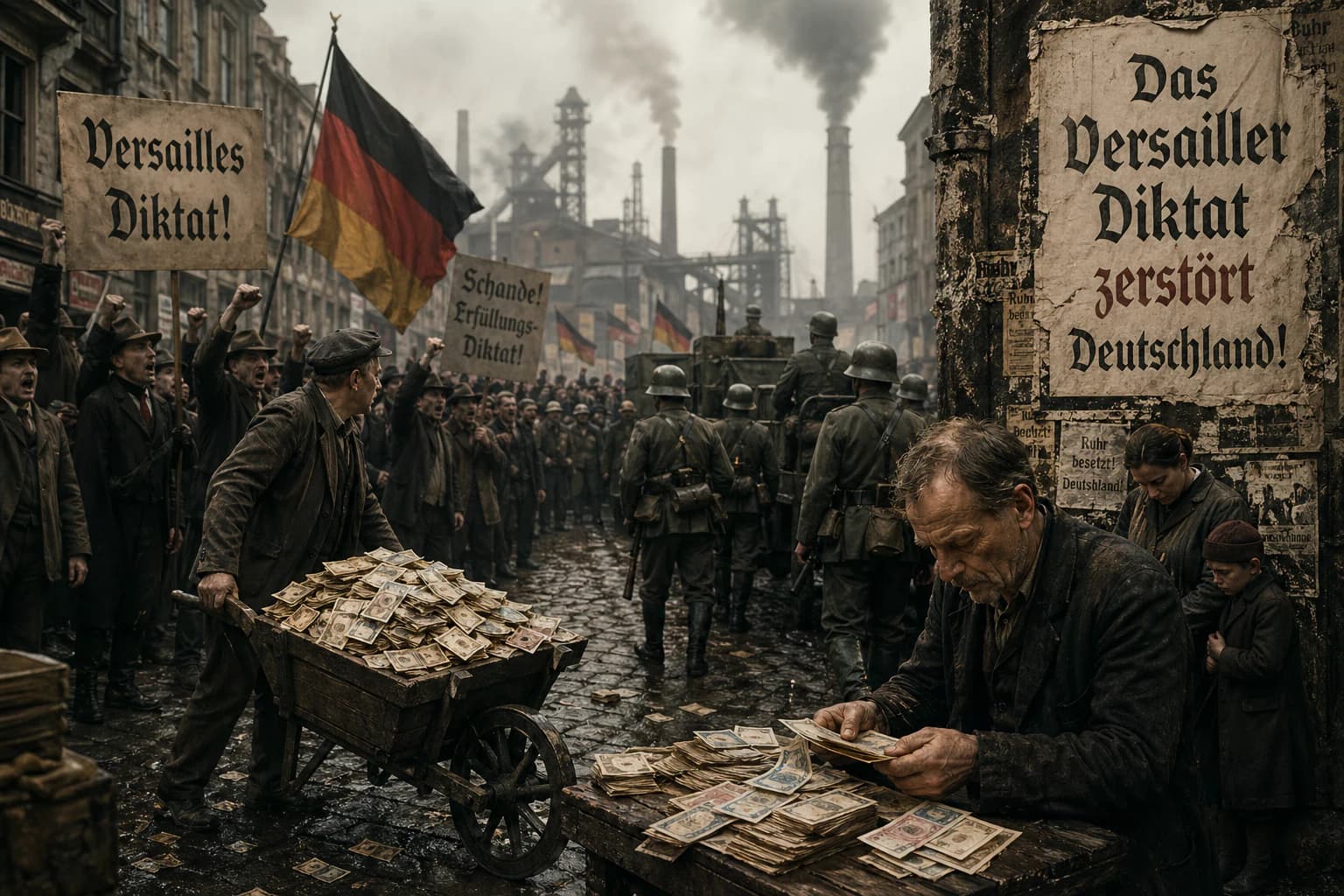
This sense of an imposed settlement — a Diktat — became central to how Germans experienced the treaty. They had not agreed to it; they had been compelled to accept it under threat of resumed war. That grievance proved lasting.

Premium

You've reached the turning point

The opening chapters show the First World War ending without a simple peace. Premium follows the treaty's afterlife: guilt, reparations, lost territory and resentment weigh on Germany while a fragile international order struggles to prevent another catastrophe.

Continue into the reversals, crises and human stakes that make the story matter.

Unlock full story

What Premium unlocks next

  1. 4The War Guilt Clause
  2. 5Reparations and Economic Pressure
  3. 6Germany Loses Territory
  4. 7Empires Become Mandates
  5. 8The League of Nations Begins
  6. 9Weimar Germany Faces Treaty Resentment
  7. 10Versailles Becomes a Road to War

Browse stories

Browse stories for free

Explore the people connected to this turning point or enjoy one of our free stories.

Unlock full storyBrowse stories

References

Sources & Further Reading

Reliable sources, primary-source collections and reading paths connected to this page.

Sources used

  1. The National Archives, Treaty of Versailles,” Open source
  2. Yale Law School, The Versailles Treaty, June 28, 1919,” Open source

Further reading

  1. Margaret MacMillan, Paris 1919: Six Months That Changed the World, Random House.

Primary sources

  1. Yale Law School, The Versailles Treaty, June 28, 1919,” Open source

A weekly route through history

Find out first about the latest published stories, feature notes and occasional Premium offers in one weekly email.