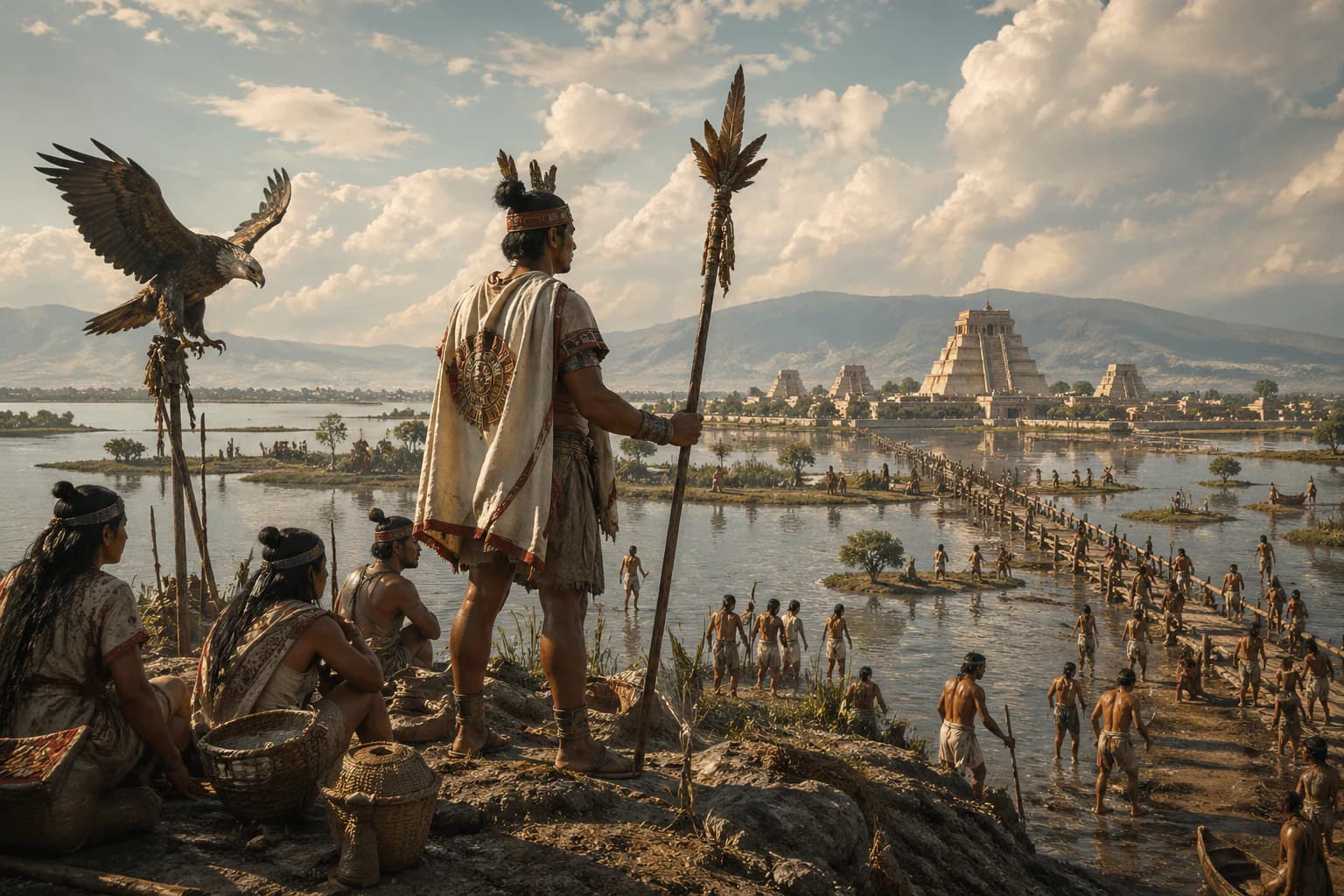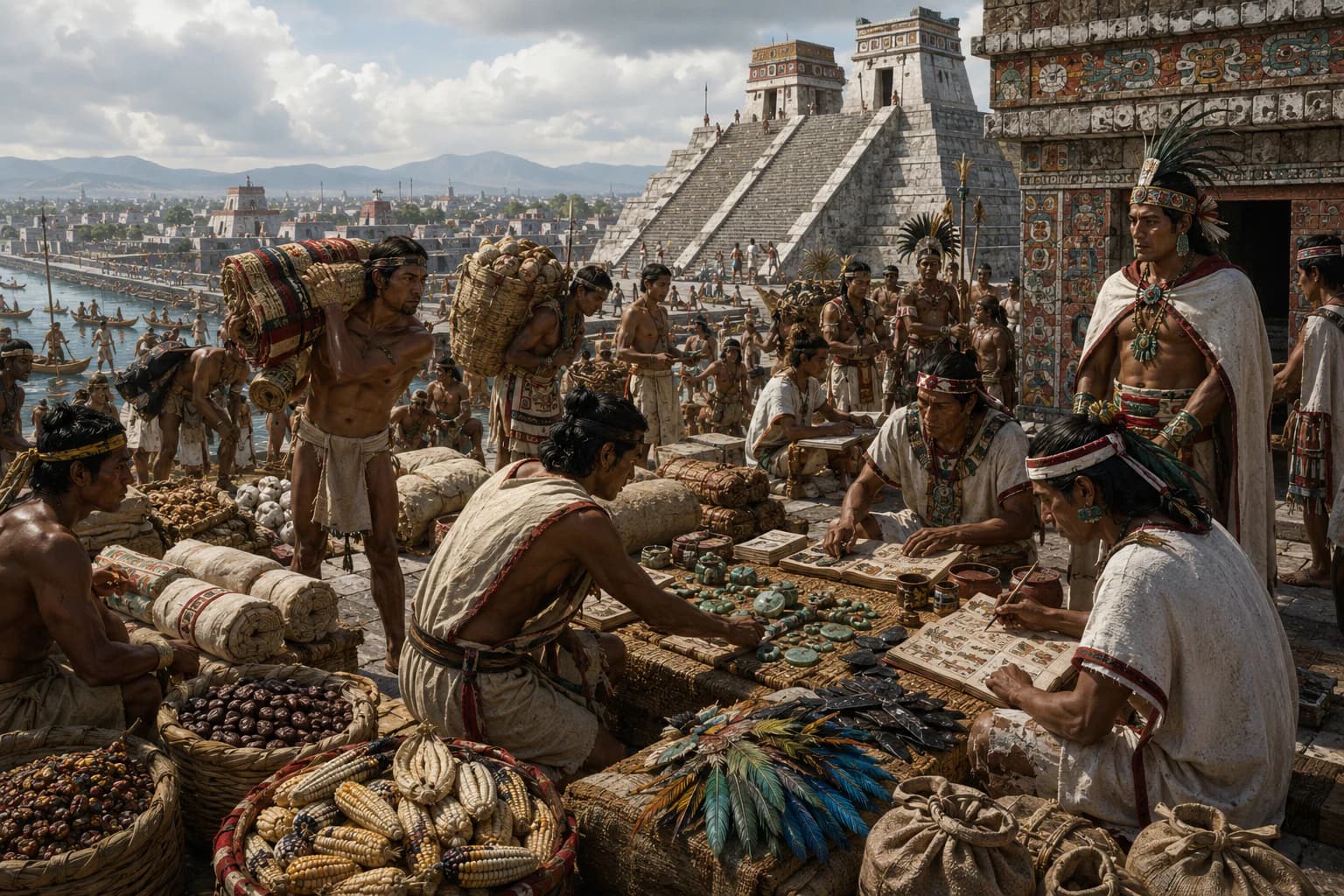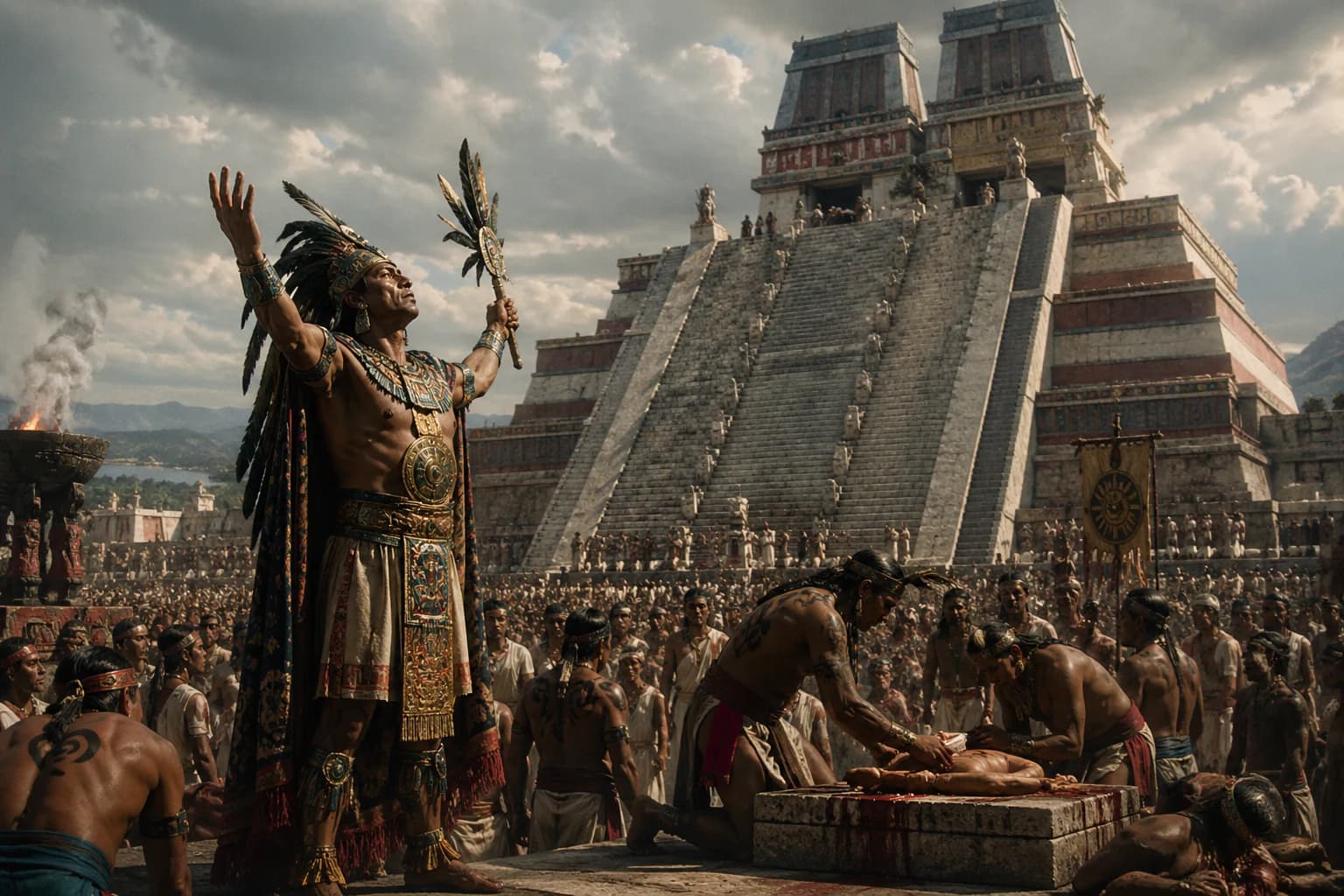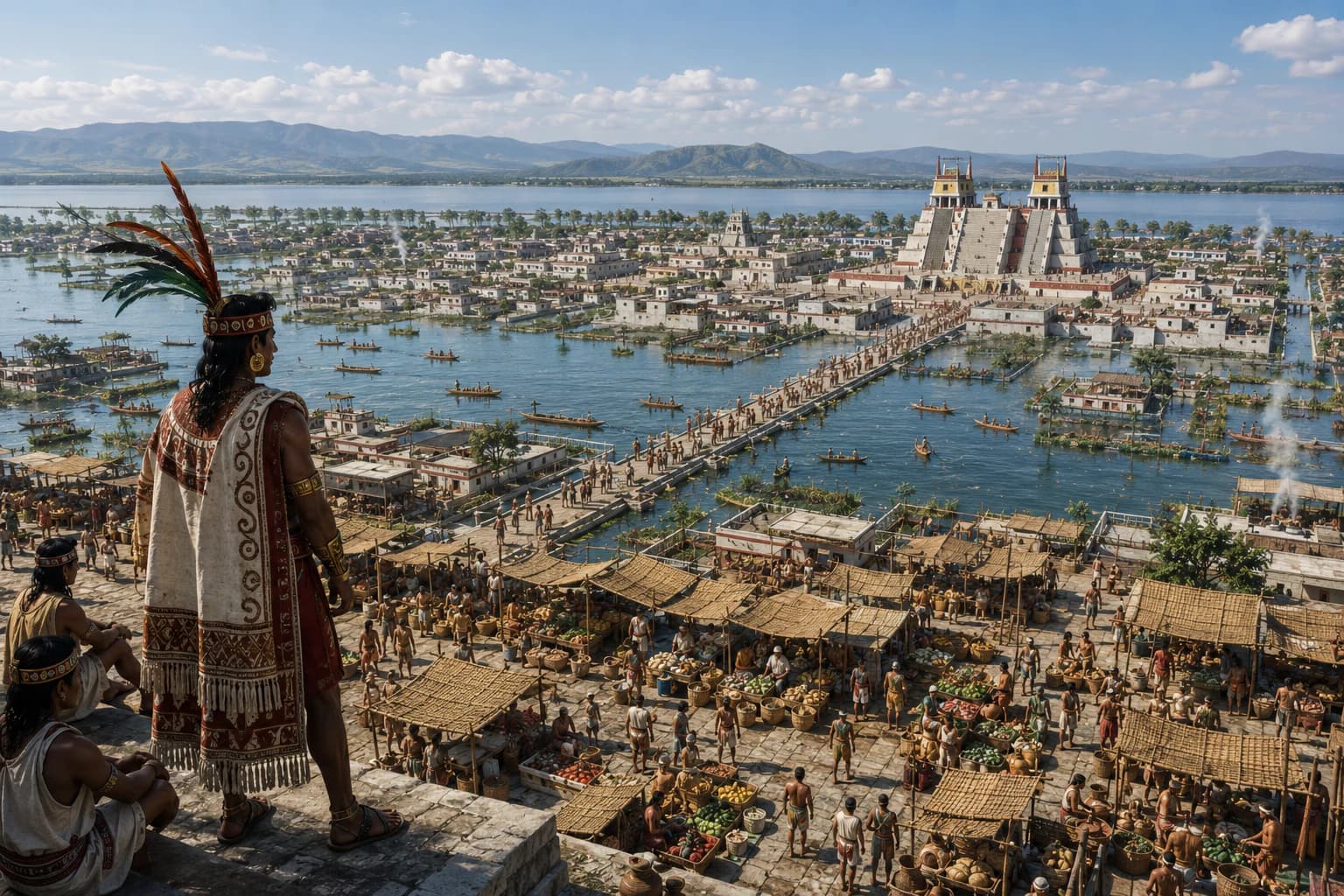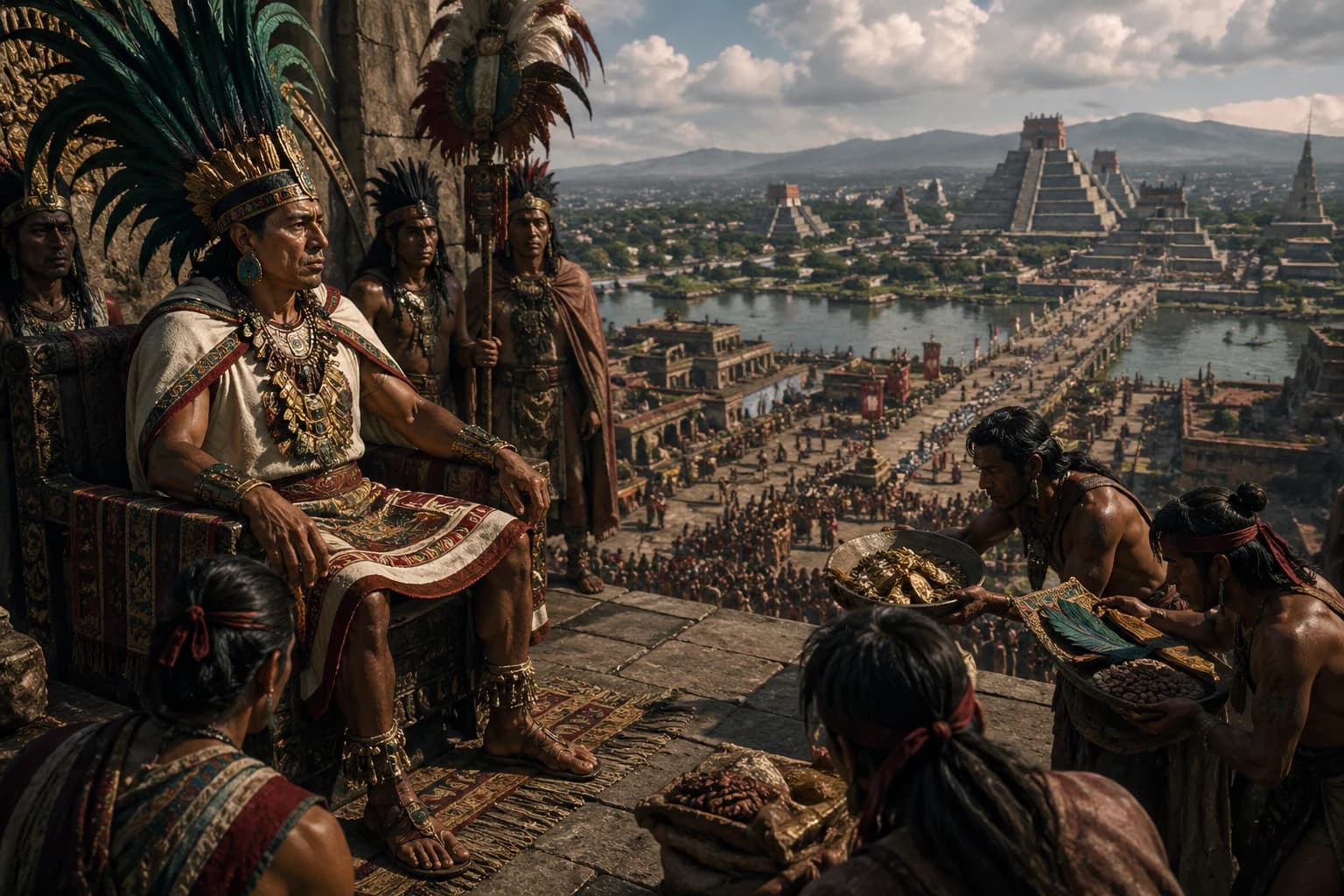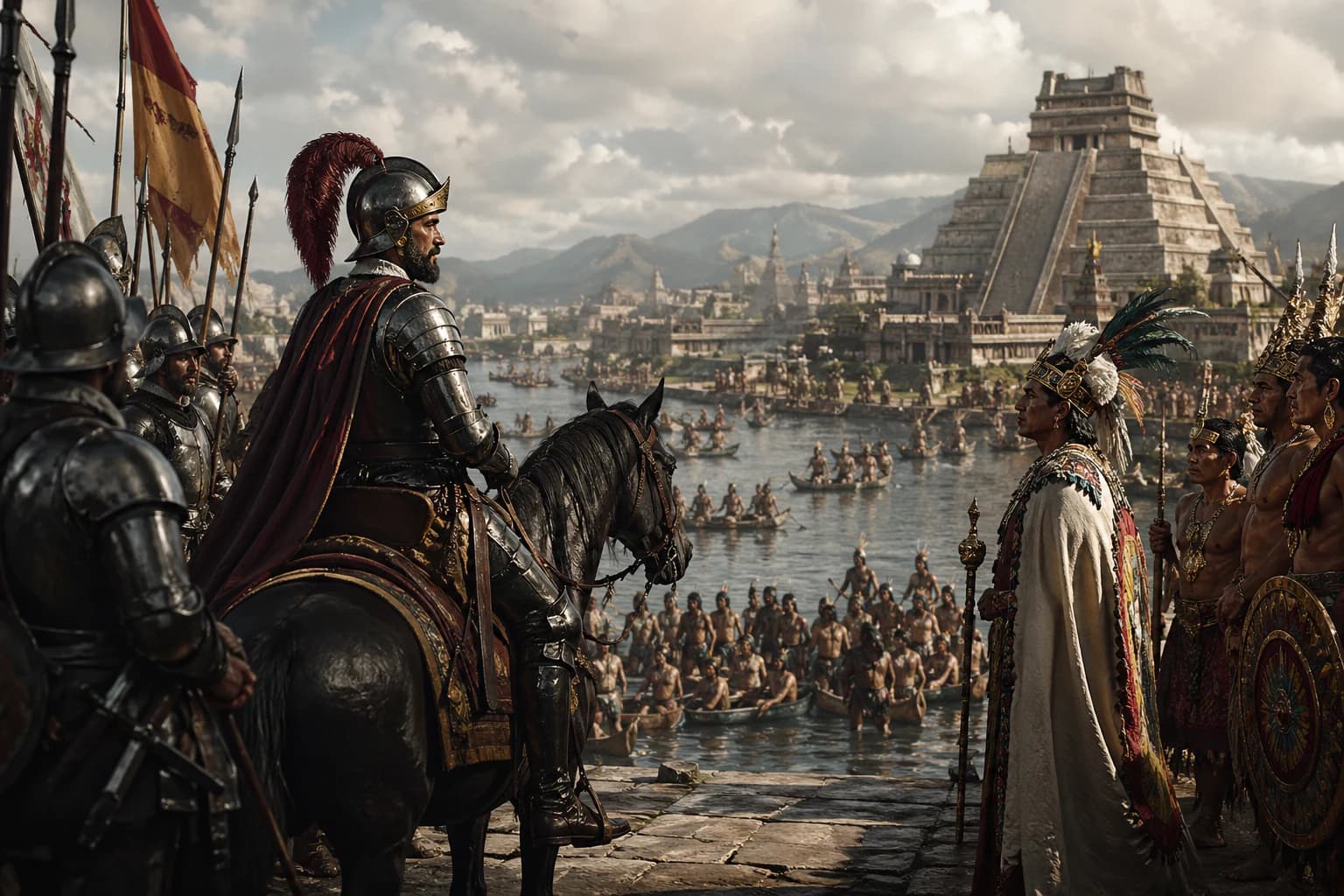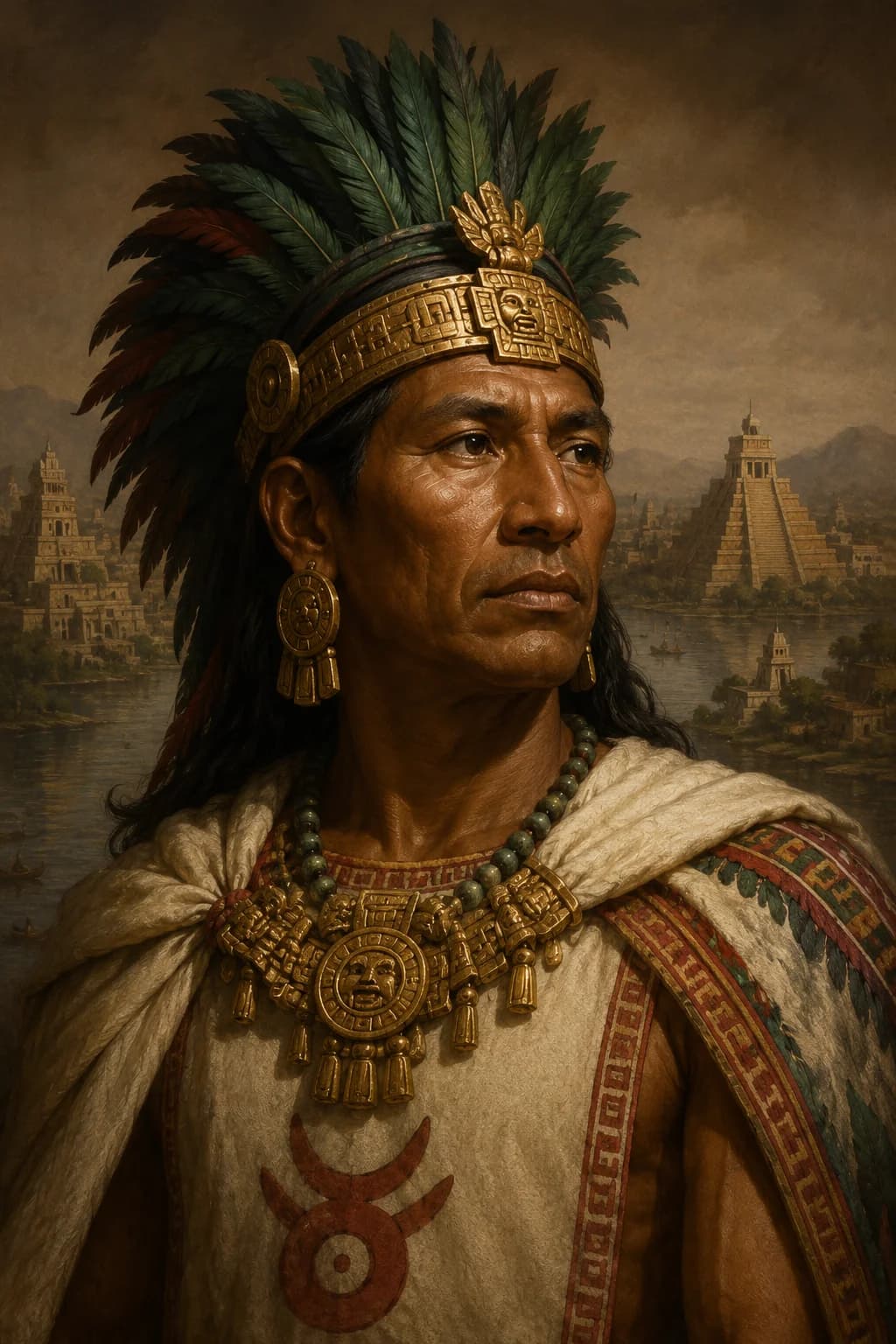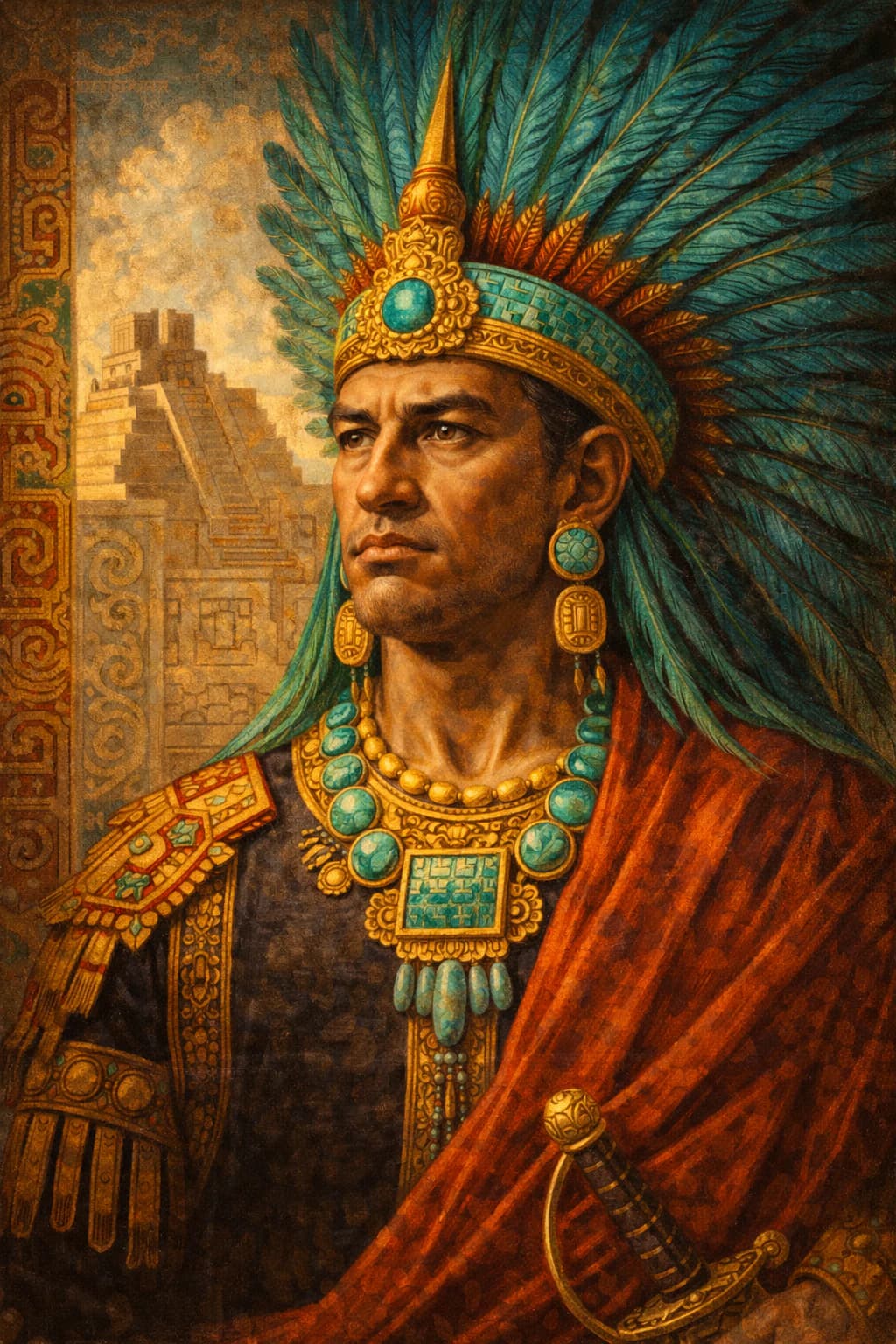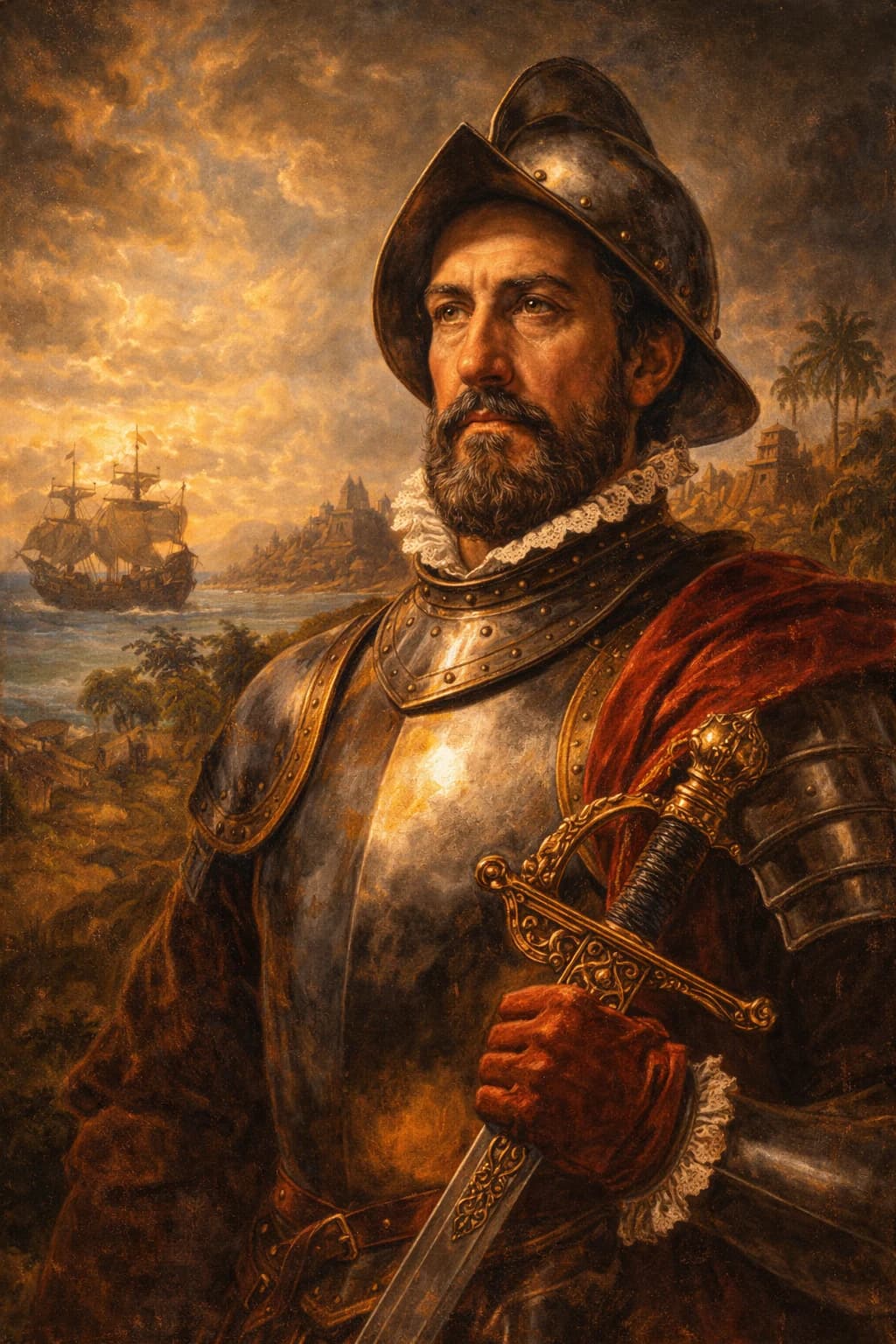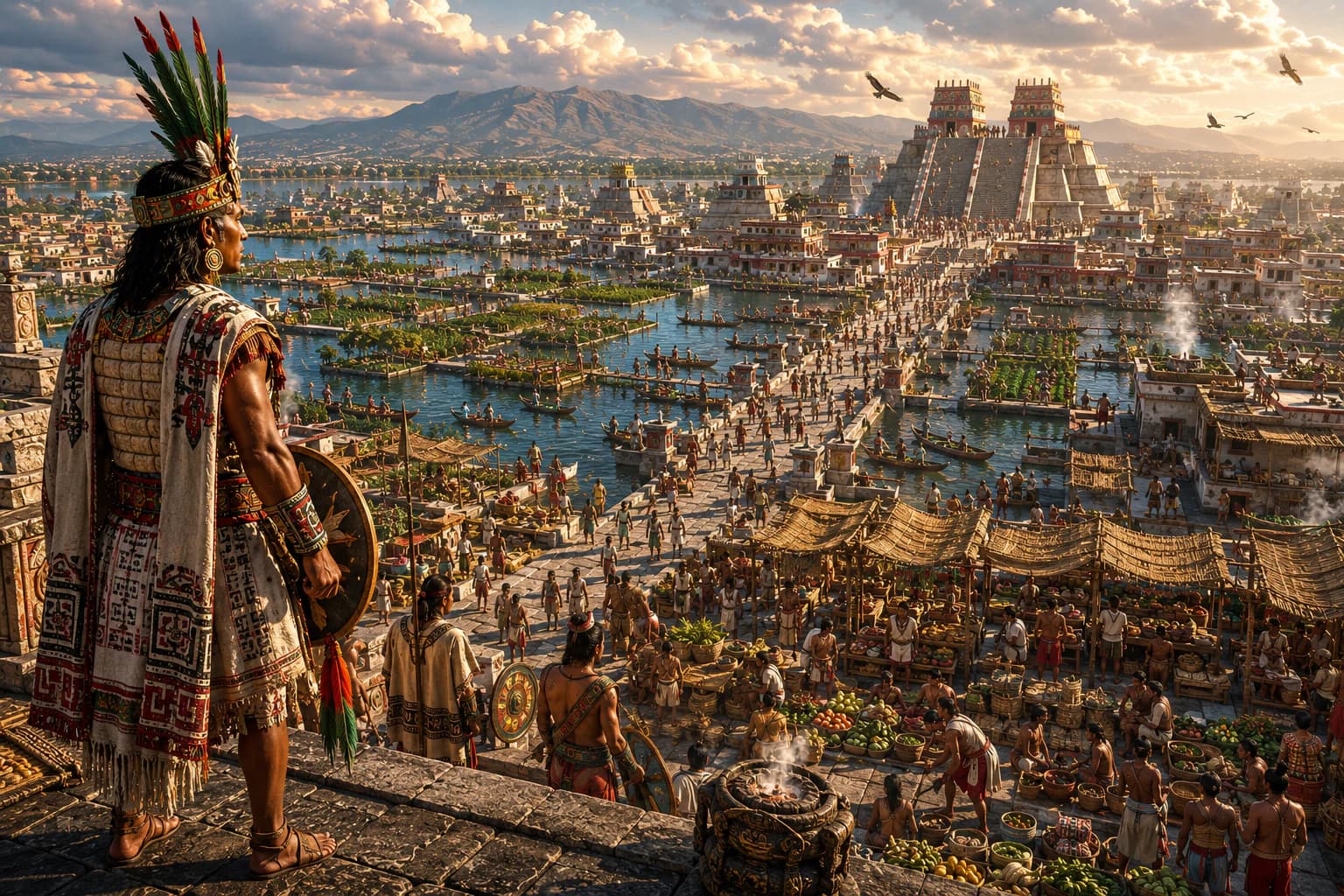
Tenochtitlan rising from Lake Texcoco with temples, causeways and Aztec warriors.
Premium Story

The Aztec Empire

Rise with the Aztec Empire from Tenochtitlan’s island foundations to conquest, tribute, and Spanish invasion.

11 chapters

Next
Context

Introduction

Overview

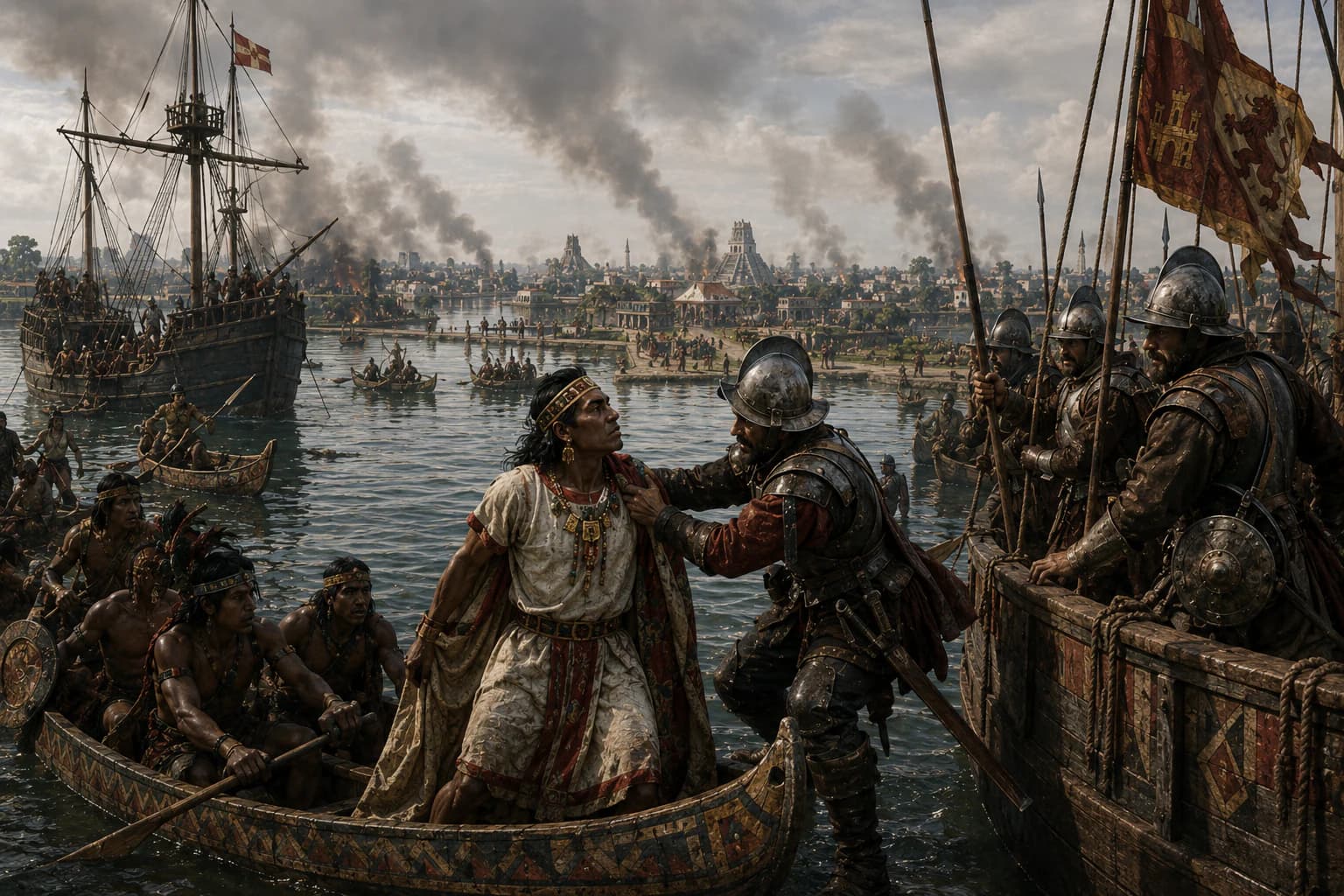
The Aztec Empire was a powerful Mesoamerican state centred on , the great island city founded by the Mexica in the Valley of Mexico. Through warfare, tribute, alliance, and religious authority, the Aztecs built one of the most sophisticated and formidable empires in the Americas. Its fall after the arrival of Hernan Cortes in 1519 was shaped by Spanish violence, Indigenous alliances, disease, and internal imperial tensions.

What you'll learn: You will follow how rose, how tribute empire worked, why Aztec power generated resistance, and how conquest became possible.

Key forces

The Founding of Tenochtitlan
1325 CE
Step 1 of 101325 CEAccessible mode

The Founding of Tenochtitlan

The Mexica people found their promised home on an island in a lake — and it would become one of the greatest cities in the world.

Around 1325, a wandering people called the Mexica settled on a small swampy island in Lake Texcoco, in the heart of central Mexico. They had been moving for generations, pushed aside by stronger neighbours.

According to their traditions, a god had promised them a sign: an eagle sitting on a cactus, eating a serpent. When they saw it on that island, they knew they had arrived.

The location looked unpromising. It was marshy, isolated, and hard to farm. But that same isolation made it easy to defend. The lake was a natural barrier against enemies.

What looked like a swamp became the foundation of a civilisation.

Over time, the Mexica turned this difficult environment into an advantage. They built causeways, drained marshes, and created floating gardens. The island became a city. That city became an empire.

The Rise Under Tepanec Rule
1372 CE
Step 2 of 101372 CEAccessible mode

The Rise Under Tepanec Rule

For most of the fourteenth century, the Mexica served a more powerful neighbour — and used that service to learn everything they needed.

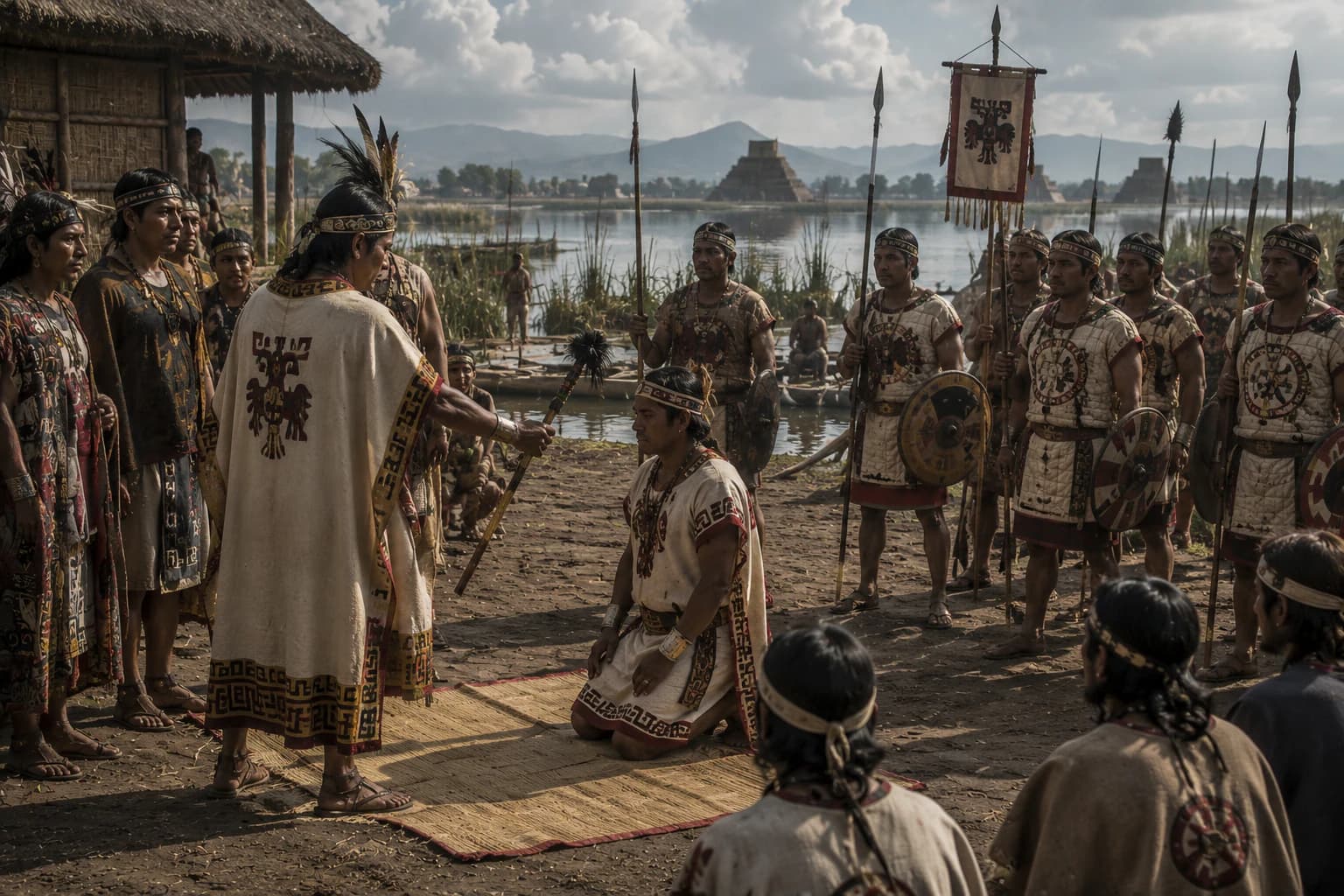
After founding , the Mexica were not free. They owed loyalty and military service to Azcapotzalco, the Tepanec city that dominated the region.

In 1372, the Mexica accepted their first official ruler, Acamapichtli. He had noble ancestry and helped give political legitimacy in the eyes of their neighbours.

The Mexica sent their warriors to fight in Tepanec armies. They were valued for their courage and skill, but always treated as subordinates.

Serving under others taught them exactly what they would need to rule.

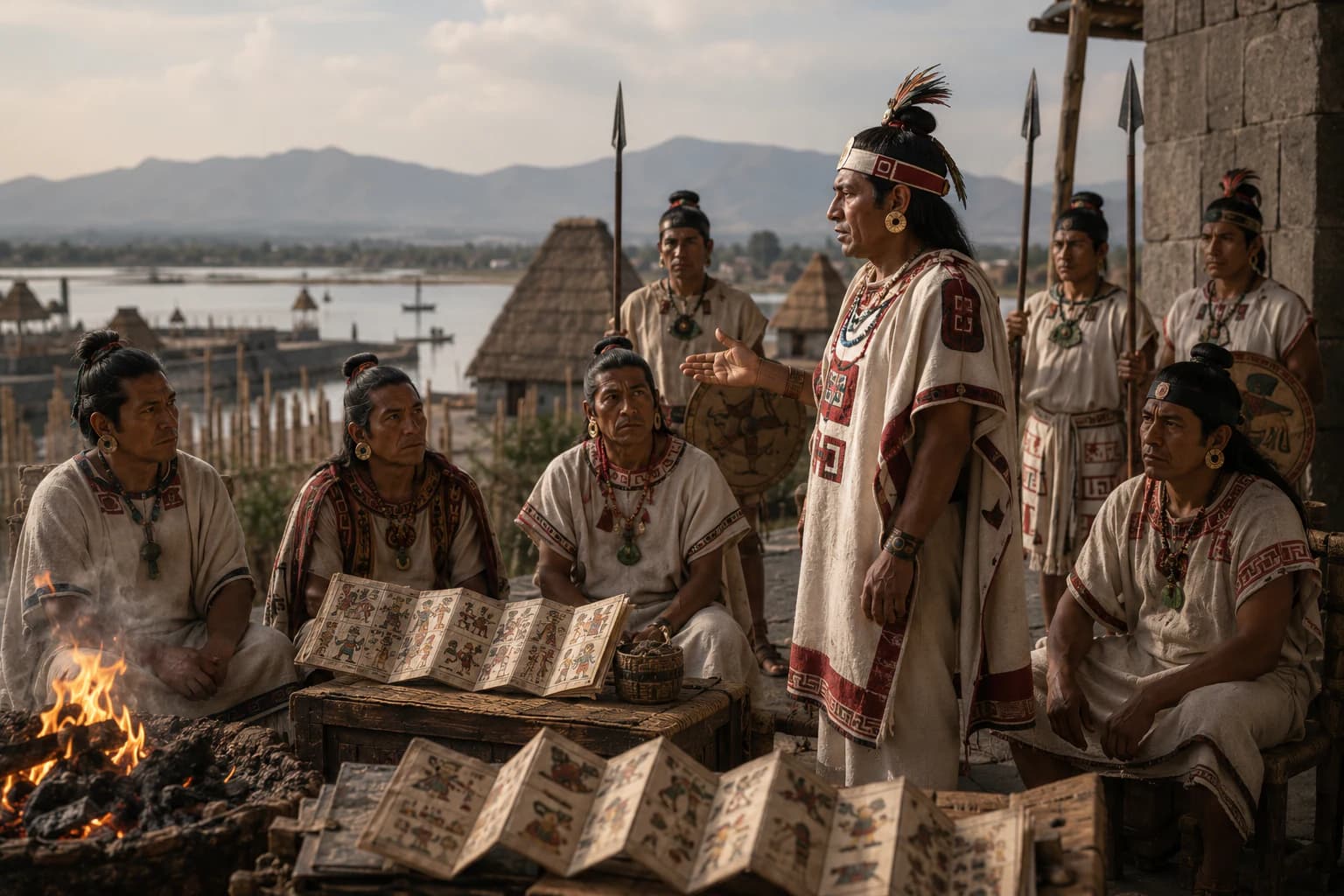
This arrangement was frustrating — but it was also a school. The Mexica learned how large armies were organised, how tribute systems worked, and how dominant powers maintained their grip.

By the early fifteenth century, the Mexica were stronger, more experienced, and increasingly aware of their own potential.

The War Against Azcapotzalco
1428 CE
Step 3 of 101428 CEAccessible mode

The War Against Azcapotzalco

In 1428, the Mexica rose against their former masters and transformed themselves into the rulers of a new empire.

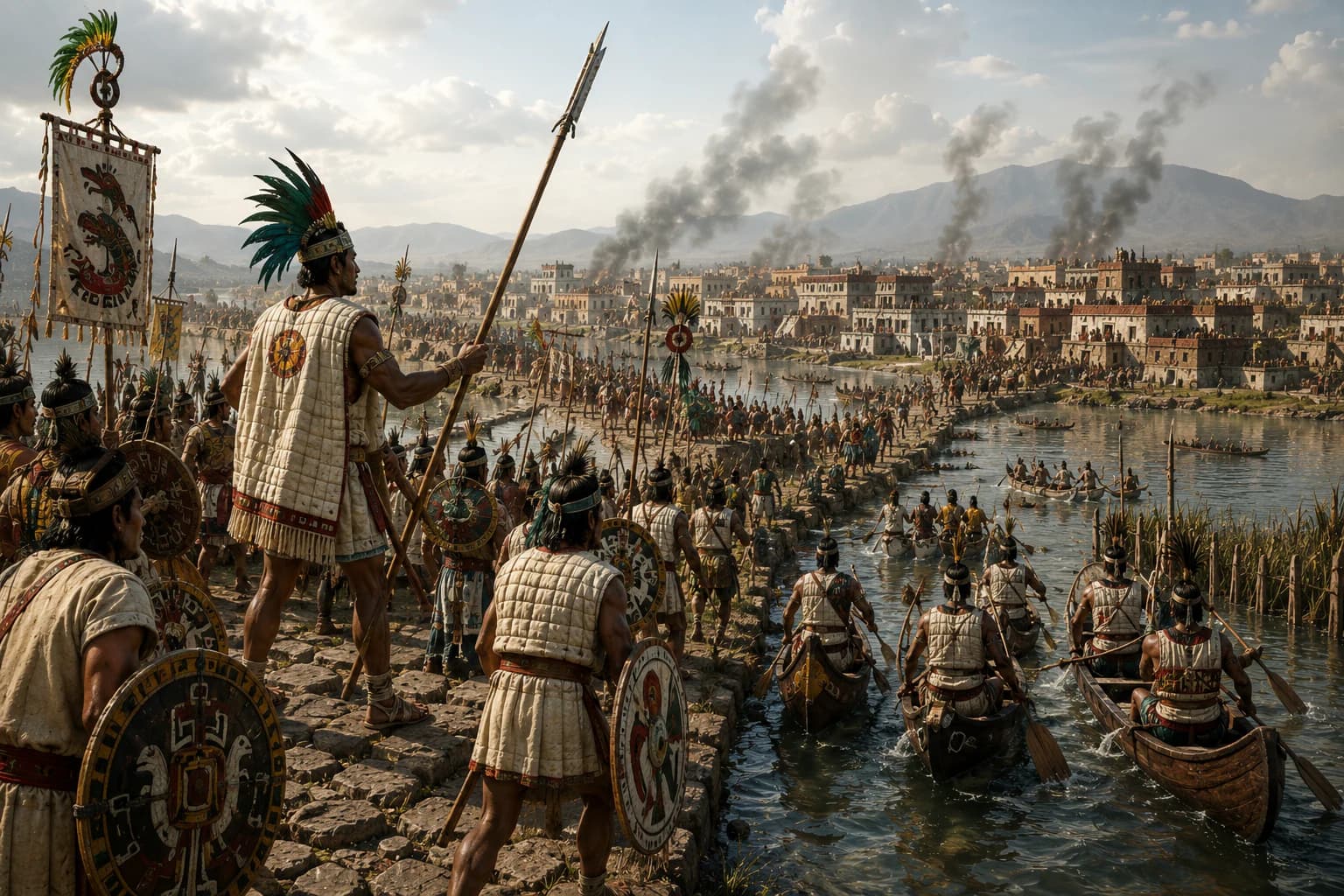
After decades of service, the Mexica had grown strong enough to fight for independence. Their chance came when Azcapotzalco's ruler died and a succession dispute weakened Tepanec power.

allied with Texcoco, another major city-state, and with Tlacopan. Together, they formed the Triple Alliance. Their combined armies overwhelmed Azcapotzalco.

They had served the empire of others. Now they built their own.

This was a turning point in Mesoamerican history. The Mexica went from clients to rulers almost overnight.

The alliance divided the spoils of conquest. In theory, all three cities shared power. In practice, quickly emerged as the dominant partner.

The war against Azcapotzalco did not just end Tepanec dominance. It created the framework for everything the Aztec Empire would become.

Premium

You've reached the turning point

The opening chapters show the Mexica rising from insecurity into imperial power. Premium follows the strain beneath that power: tribute, sacred violence and political fear hold the empire together just as strangers arrive on the coast and Tenochtitlan's world begins to fracture.

Continue into the reversals, crises and human stakes that make the story matter.

Unlock full story

What Premium unlocks next

  1. 4The Imperial Reforms of Itzcoatl
  2. 5The Expansion of Tribute Empire
  3. 6Religion at the Center of Power
  4. 7The Great City of Tenochtitlan
  5. 8Moctezuma II and Imperial Strain
  6. 9The Arrival of Cortés
  7. 10The Fall of Tenochtitlan

Browse stories

Browse stories for free

Explore the people connected to this turning point or enjoy one of our free stories.

Unlock full storyBrowse stories

References

Sources & Further Reading

Reliable sources, primary-source collections and reading paths connected to this page.

Sources used

  1. Encyclopaedia Britannica, Aztec,” Open source
  2. The Metropolitan Museum of Art, Aztec Art,” Open source

Further reading

  1. Camilla Townsend, Fifth Sun: A New History of the Aztecs, Oxford University Press.

Primary sources

  1. Fordham University, Aztec Account of the Conquest of Mexico,” Open source

Image references

  1. The British Museum, Mexico,” Open source

A weekly route through history

Find out first about the latest published stories, feature notes and occasional Premium offers in one weekly email.