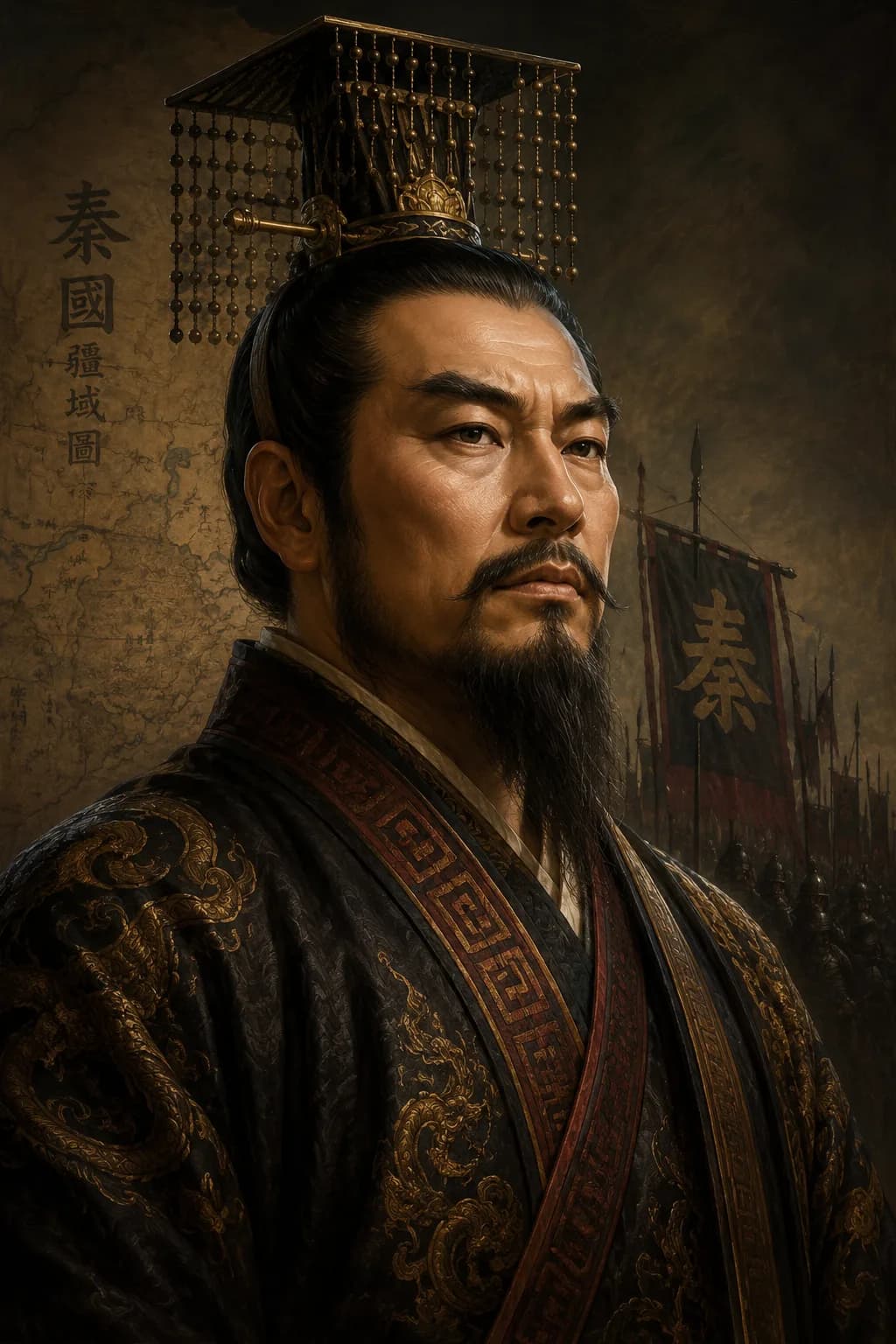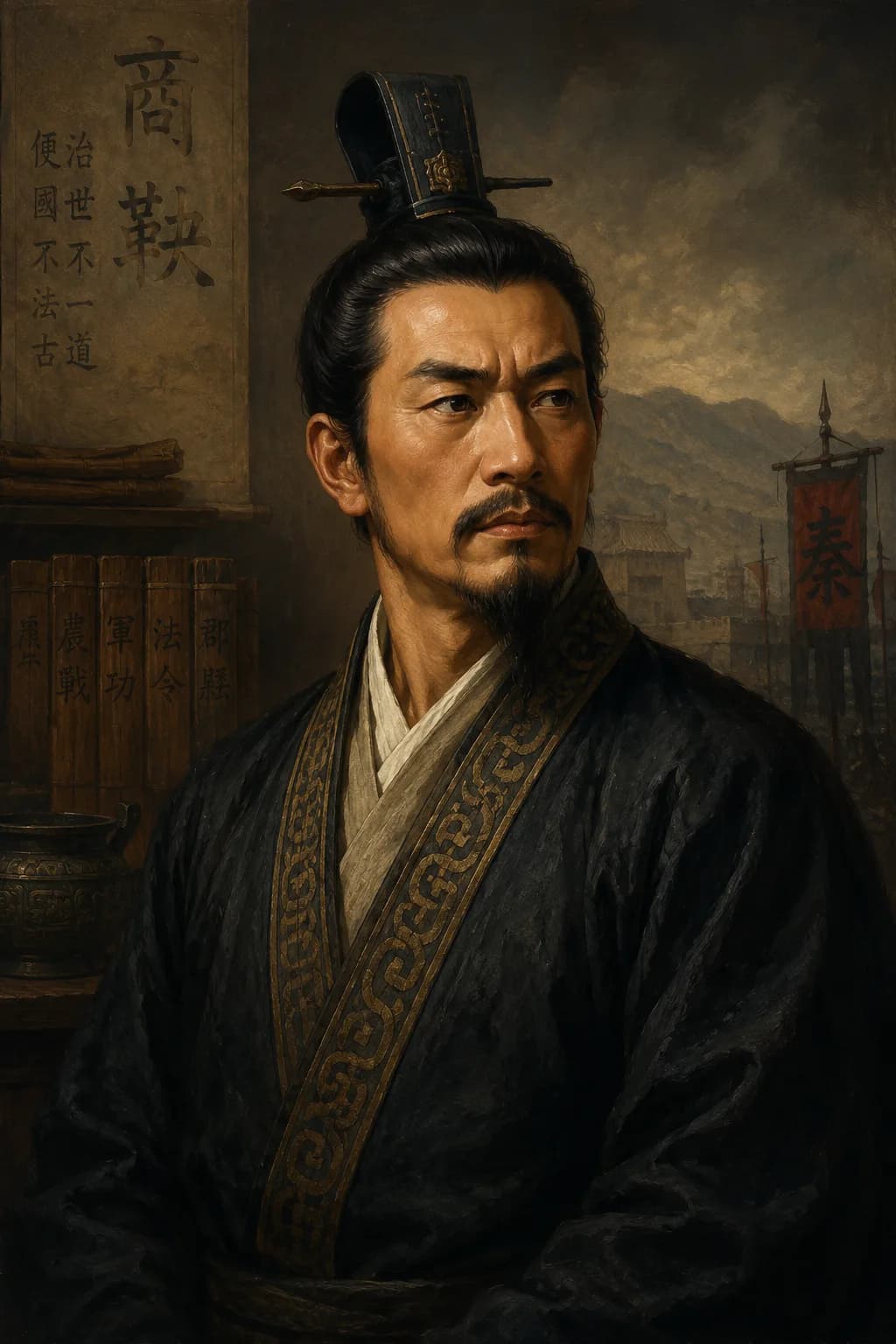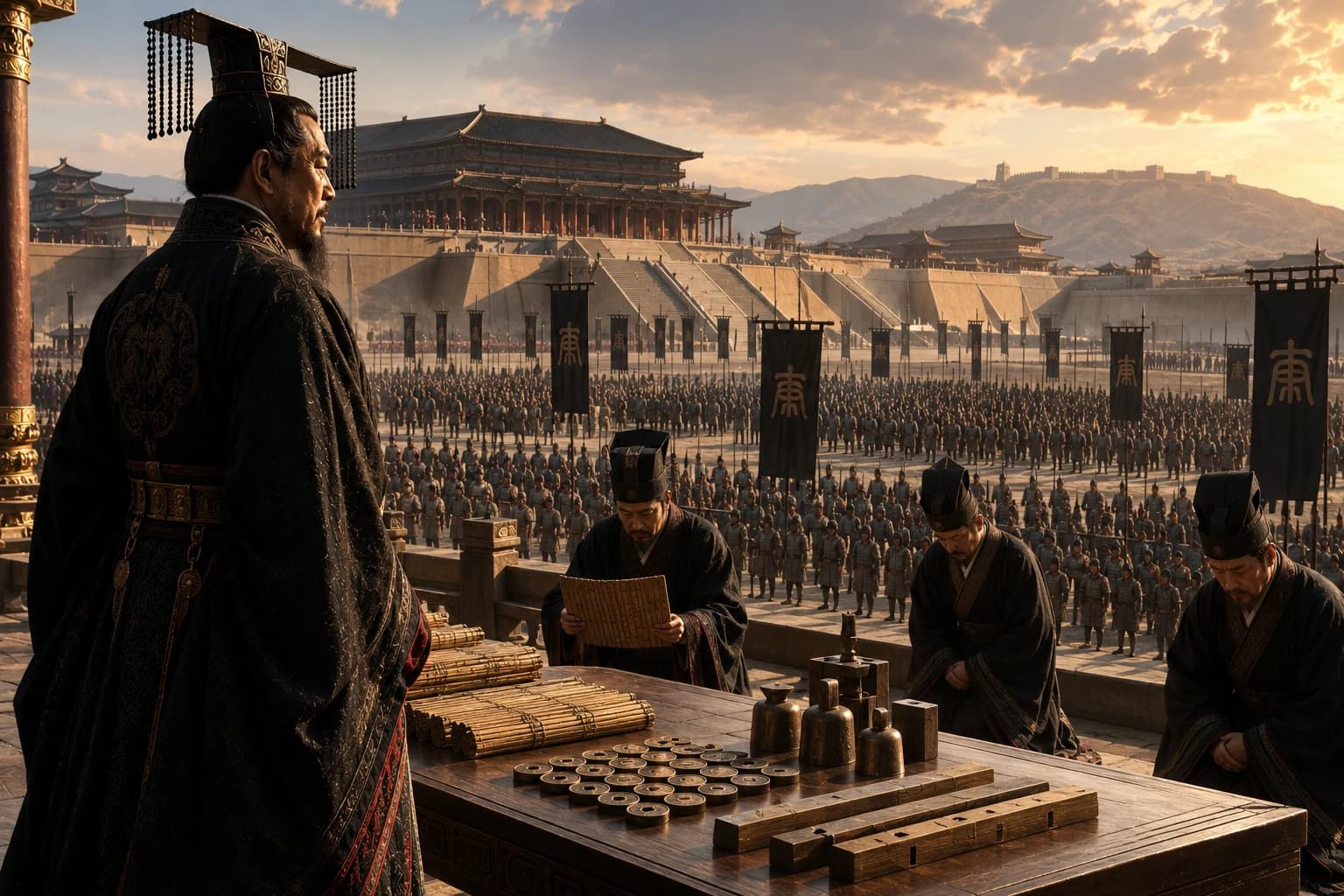
Qin Shi Huang overlooking officials, soldiers, standard weights, coins, and bamboo records after the unification of China.
Free Story

Qin China and Unification

Follow Qin from Warring States rivalry to Legalist reform, conquest, imperial unification, harsh rule, rapid collapse and enduring legacy.

10 chapters

Next
Context

Introduction

Overview

This Qin China and Unification timeline follows the rise of Qin from one of several rival Warring States into the power that created China's first unified empire. It traces the decline of Zhou authority, Shang Yang's Legalist reforms, King Zheng's ascent, the conquest of the six states, Qin Shi Huang's imperial government, standardisation, infrastructure, coercive rule, collapse, and the institutions later adapted by the Han dynasty.

What you'll learn: You will follow how Qin turned warfare and reform into conquest, why Qin Shi Huang's empire was both astonishingly powerful and dangerously brittle, and how Qin's brief rule shaped the long history of imperial China.

Key forces

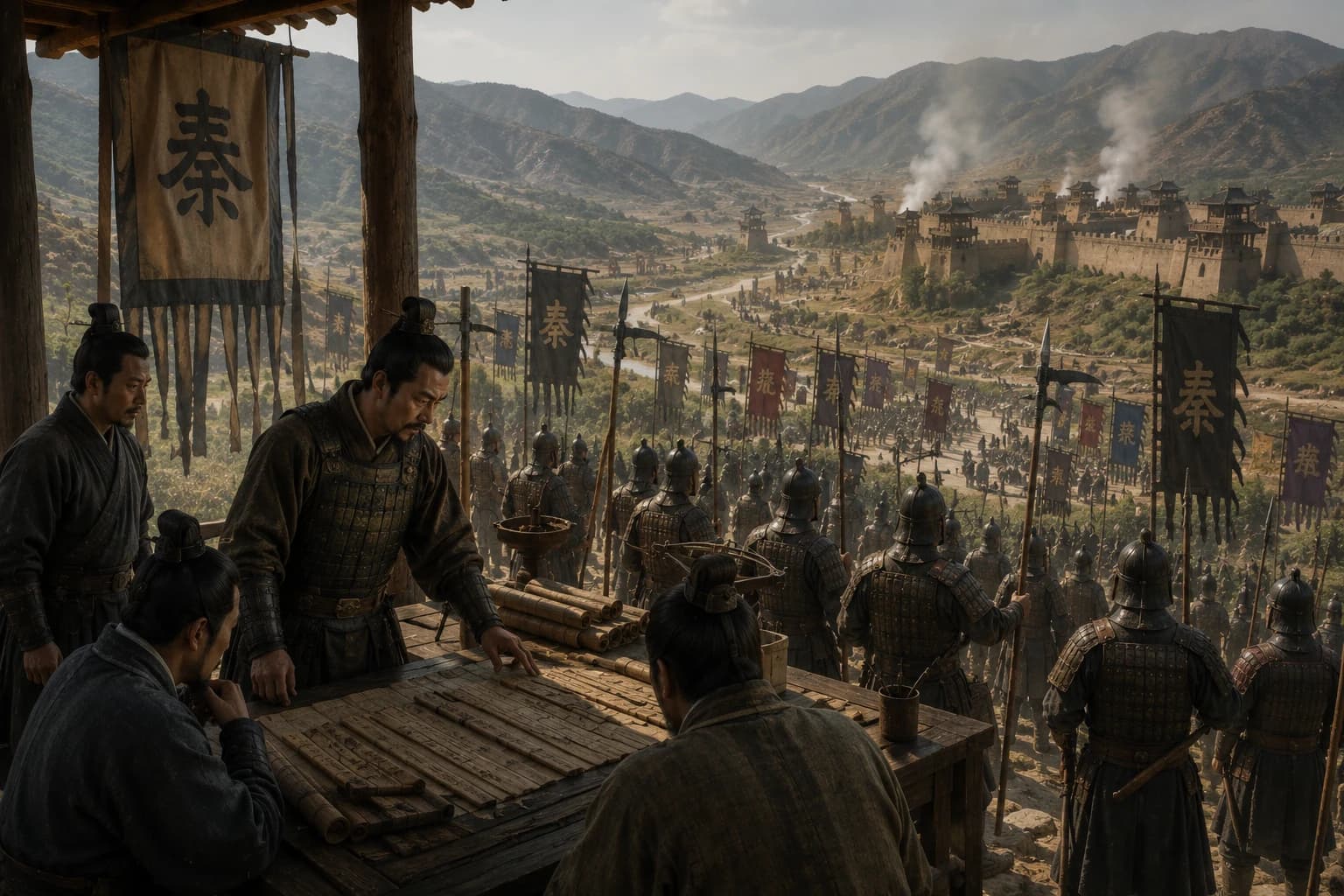
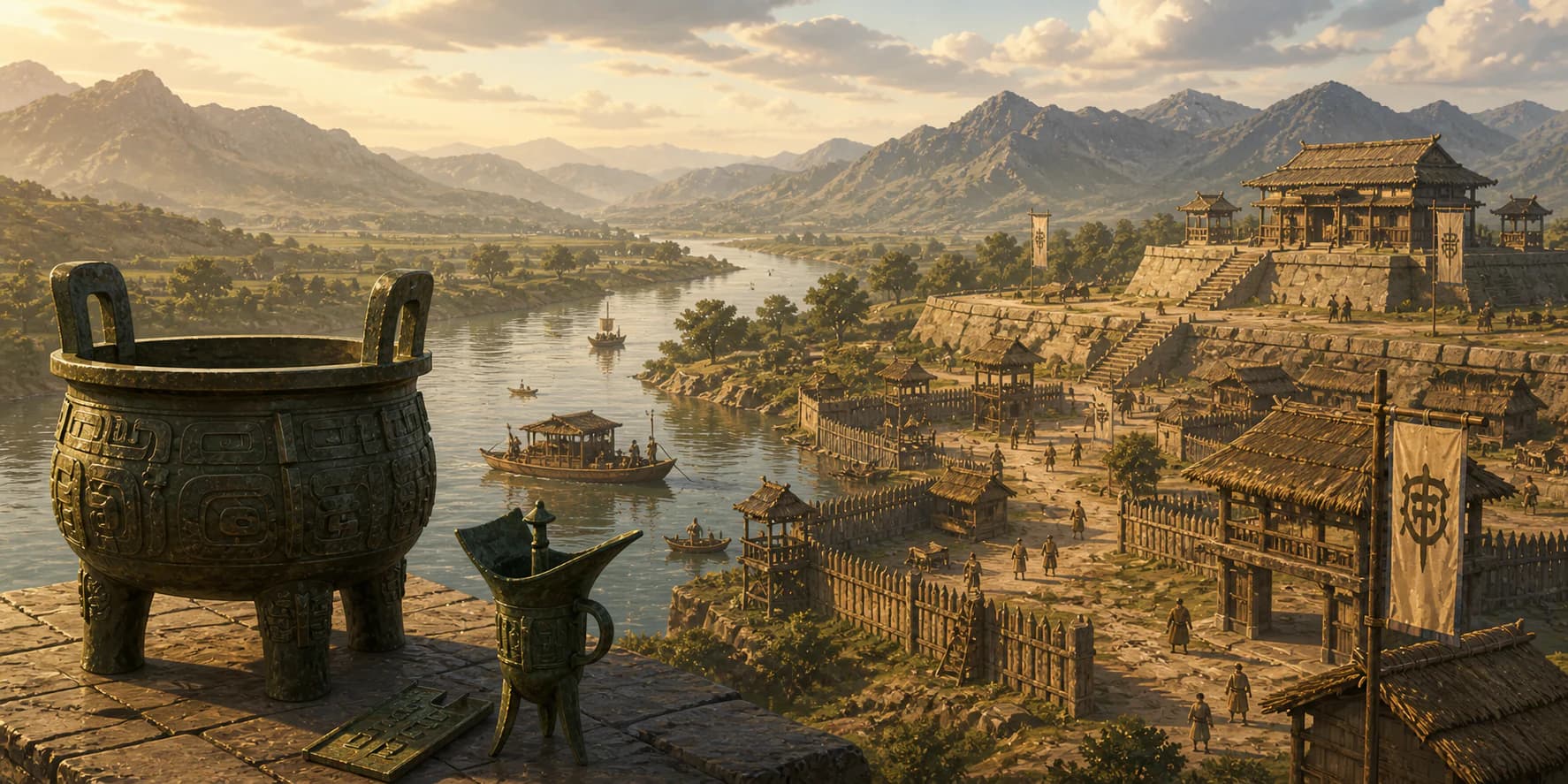
Qin officers looking across a fortified Warring States landscape filled with armies, banners, and rival strongholds.
403 BCE
Step 1 of 10403 BCEAccessible mode

The Warring States Rivalry

By 403 BCE, the old Zhou world had fractured into a hard age of rivalry.

The Zhou kings still mattered as symbols. Their dynasty had once given order to a network of regional lords, rituals, and inherited duties. But symbolism could no longer command armies.

Real power had moved to states such as Qin, Chu, Qi, Yan, Han, Zhao, and Wei. These rulers made alliances, broke them, absorbed weaker neighbours, and treated war as a permanent condition of politics.

Constant conflict changed how states worked. Chariot warfare gave way to larger infantry armies, cavalry became more important, crossbows and iron weapons spread, and rulers needed systems that could supply soldiers year after year.

The Warring States did not only produce destruction. They produced stronger states.

To survive, rulers counted households, taxed land, rewarded military service, appointed officials, and tried to weaken aristocrats who stood between the throne and the population.

Qin, on the western frontier, was not always the most admired state. But its position, discipline, and willingness to reform gave ambitious rulers a chance to turn war into a ladder toward supremacy.

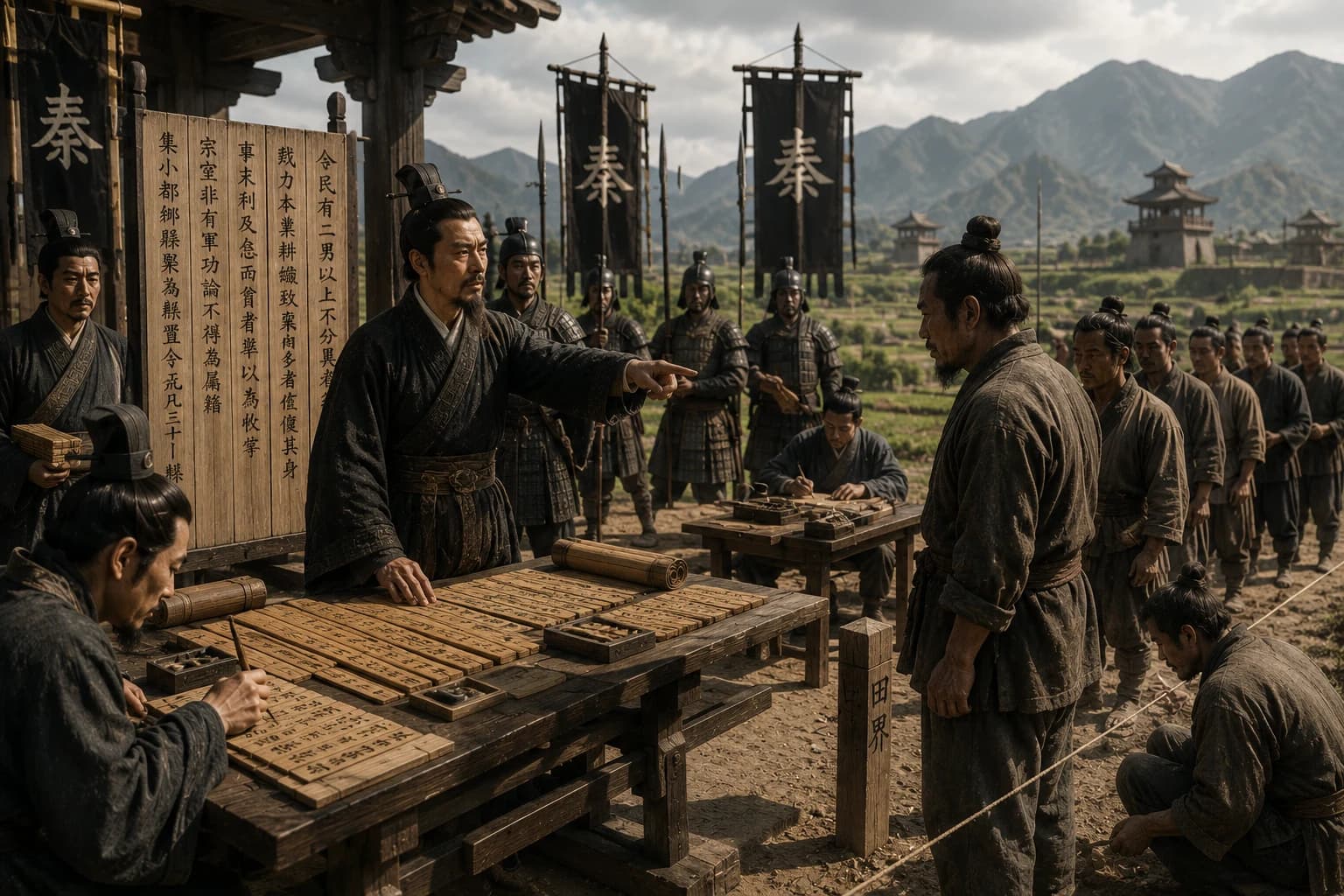
Shang Yang announcing Legalist reforms as officials record land boundaries and Qin soldiers supervise registration.
356 BCE
Step 2 of 10356 BCEAccessible mode

Shang Yang's Legalist Reforms

In 356 BCE, Shang Yang began reforms that transformed Qin from a powerful frontier state into a disciplined engine of conquest.

Shang Yang served Duke Xiao of Qin and brought ideas later associated with Legalism. The aim was not gentle persuasion. It was to make the state stronger through clear laws, strict enforcement, rewards, and punishments.

Land and farming became central. Qin encouraged agricultural production, weakened old aristocratic privilege, and allowed landholding to be tied more directly to tax and service obligations.

Military service became a ladder. Soldiers could gain rank through battlefield achievement, while hereditary status mattered less than what a man delivered for the state.

Shang Yang's reforms made Qin dangerous because they turned ordinary service into state power.

Administration also changed. Counties, officials, household registration, mutual responsibility, and taxation gave Qin rulers a clearer view of the population they governed.

Shang Yang himself fell victim to court politics after Duke Xiao's death, but his reforms endured. Qin had learned how to mobilise land, people, law, and war more effectively than its rivals.

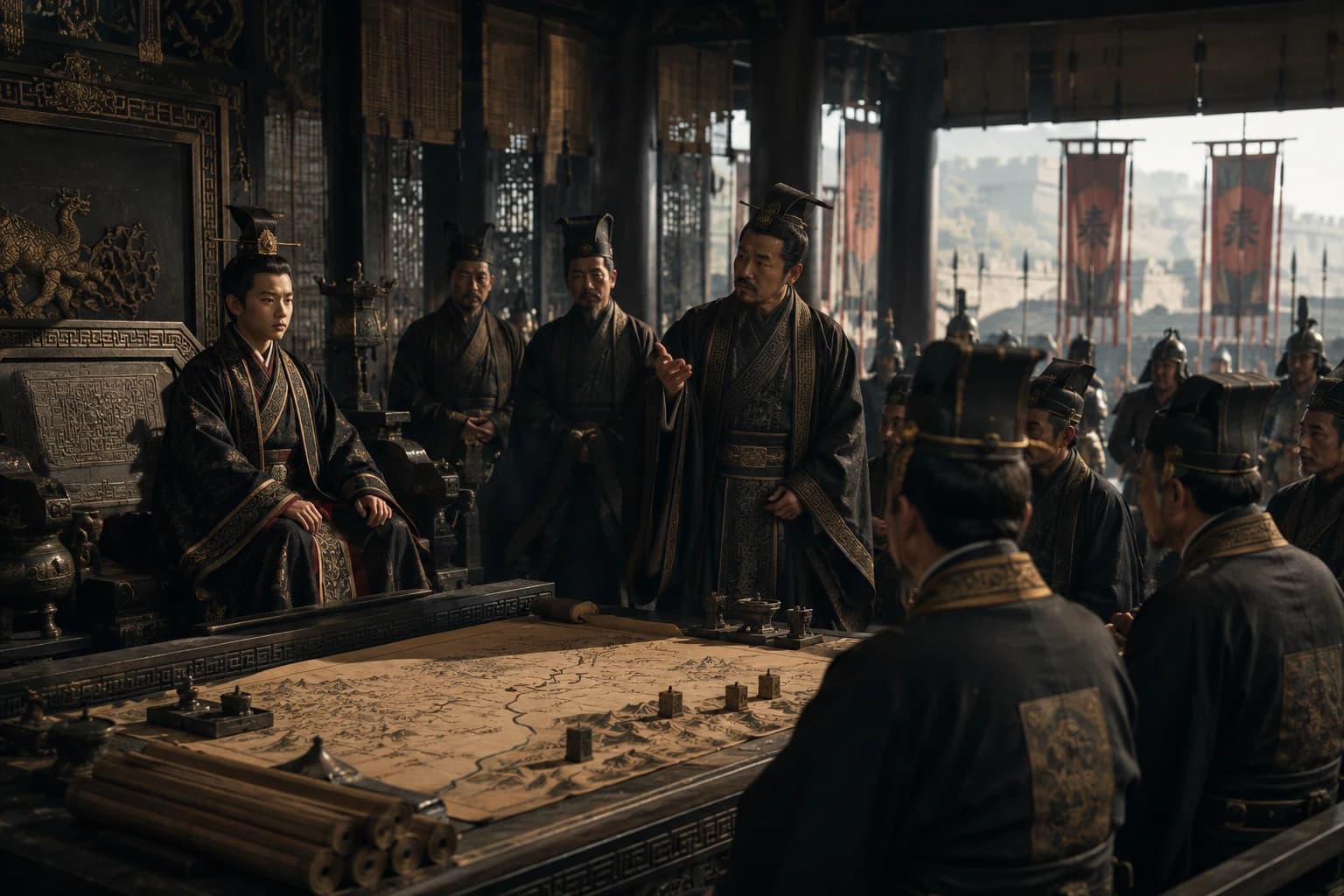
The young King Zheng seated in the Qin court as senior officials discuss maps and policy around him.
246 BCE
Step 3 of 10246 BCEAccessible mode

Zheng Becomes King of Qin

In 246 BCE, Zheng became king of Qin while still a boy.

He inherited a state that was already the strongest in the Warring States world. Qin had disciplined armies, productive farmland, a harsh legal system, and officials trained to serve central authority.

But a young king did not automatically control that power. Senior figures, including Lu Buwei, shaped government during Zheng's minority. Court politics could be as dangerous as enemy armies.

Outside Qin, the rival states understood the danger. They still had armies, fortresses, diplomatic networks, and deep regional identities. Qin was powerful, but victory was not inevitable.

Before Zheng could conquer the rival states, he had to become master of Qin itself.

As he grew older, Zheng removed internal threats and drew on capable ministers and generals. Qin's political machine became increasingly focused on one goal: ending the rivalry permanently.

His reign began in uncertainty, but the state he inherited gave him the tools to attempt what no previous ruler had achieved.

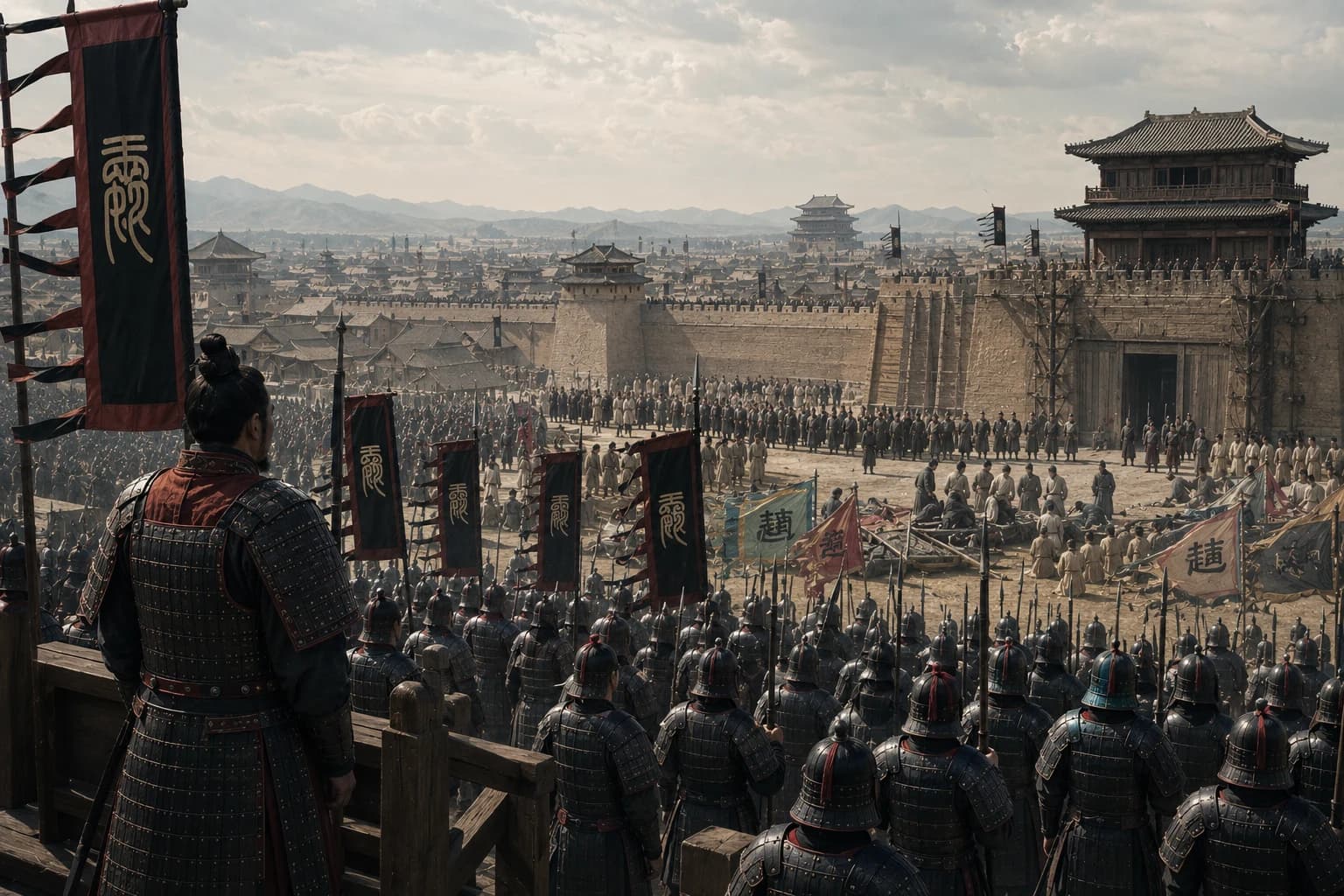
Qin soldiers overseeing the surrender of a rival walled city during the final conquest of the Warring States.
221 BCE
Step 4 of 10221 BCEAccessible mode

The Conquest of the Six States

Between 230 and 221 BCE, Qin defeated the six remaining rival states one after another.

Han fell first in 230 BCE. Zhao, long one of Qin's strongest military opponents, was conquered soon after. Wei followed in 225 BCE after Qin forces used engineering and siege pressure against its capital.

Chu was the hardest challenge. It was large, rich, and deeply rooted in the south. Qin's first efforts struggled, but a massive later campaign broke Chu resistance in 223 BCE.

Yan fell in 222 BCE. Qi, isolated in the east and unable to stop Qin's momentum, surrendered in 221 BCE. The Warring States period was over.

Qin victory turned a world of rival kings into one political realm.

Earlier dynasties such as Shang and Zhou had ruled important centres and networks, but Qin created something different: a single state claiming direct authority over all the former rival kingdoms.

The conquest did not instantly make people loyal, and it did not erase regional memories. But it changed the political imagination of China. Unity under one ruler had become real.

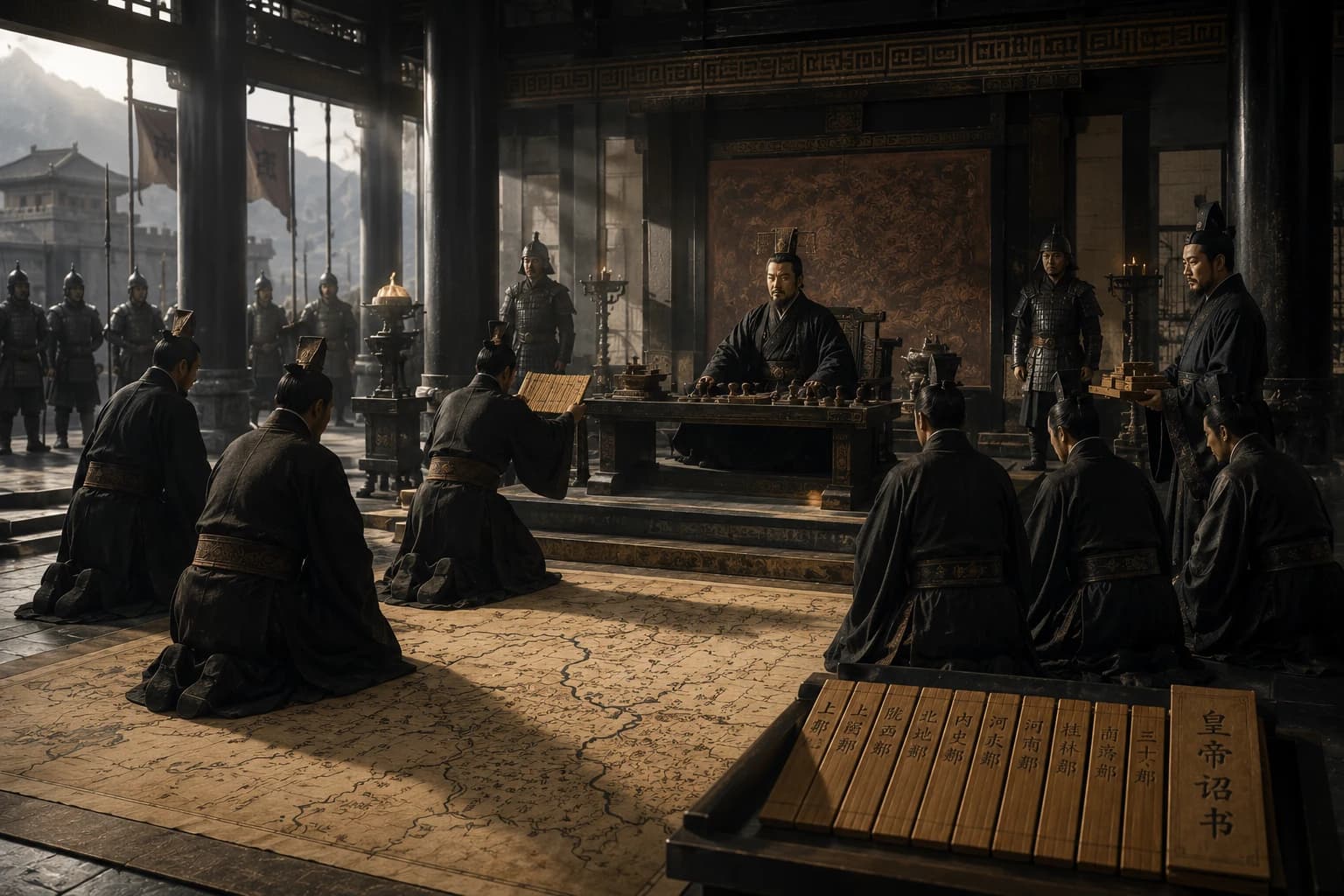
Qin Shi Huang receiving officials in a dark imperial hall with maps and administrative records laid before him.
221 BCE
Step 5 of 10221 BCEAccessible mode

Qin Shi Huang Creates an Empire

After victory in 221 BCE, King Zheng decided that the old title of king was no longer enough.

He adopted the title Qin Shi Huang, often translated as the First Emperor. The new title claimed a new kind of authority, higher than the rival kings of the past.

Qin Shi Huang did not restore the old feudal pattern of hereditary kingdoms. Instead, he divided the empire into commanderies and counties governed by officials appointed from the centre.

This mattered because appointed officials could be moved, watched, rewarded, or punished. They owed their position to the emperor, not to local family power.

Qin transformed conquest into empire by making government flow from the centre.

The capital at became the heart of a new imperial system. Laws, records, taxes, roads, military commands, and officials connected distant regions back to the ruler.

The imperial model was severe, but it was also lasting. Later dynasties criticised Qin's cruelty while preserving the central idea that China should be governed as a unified realm.

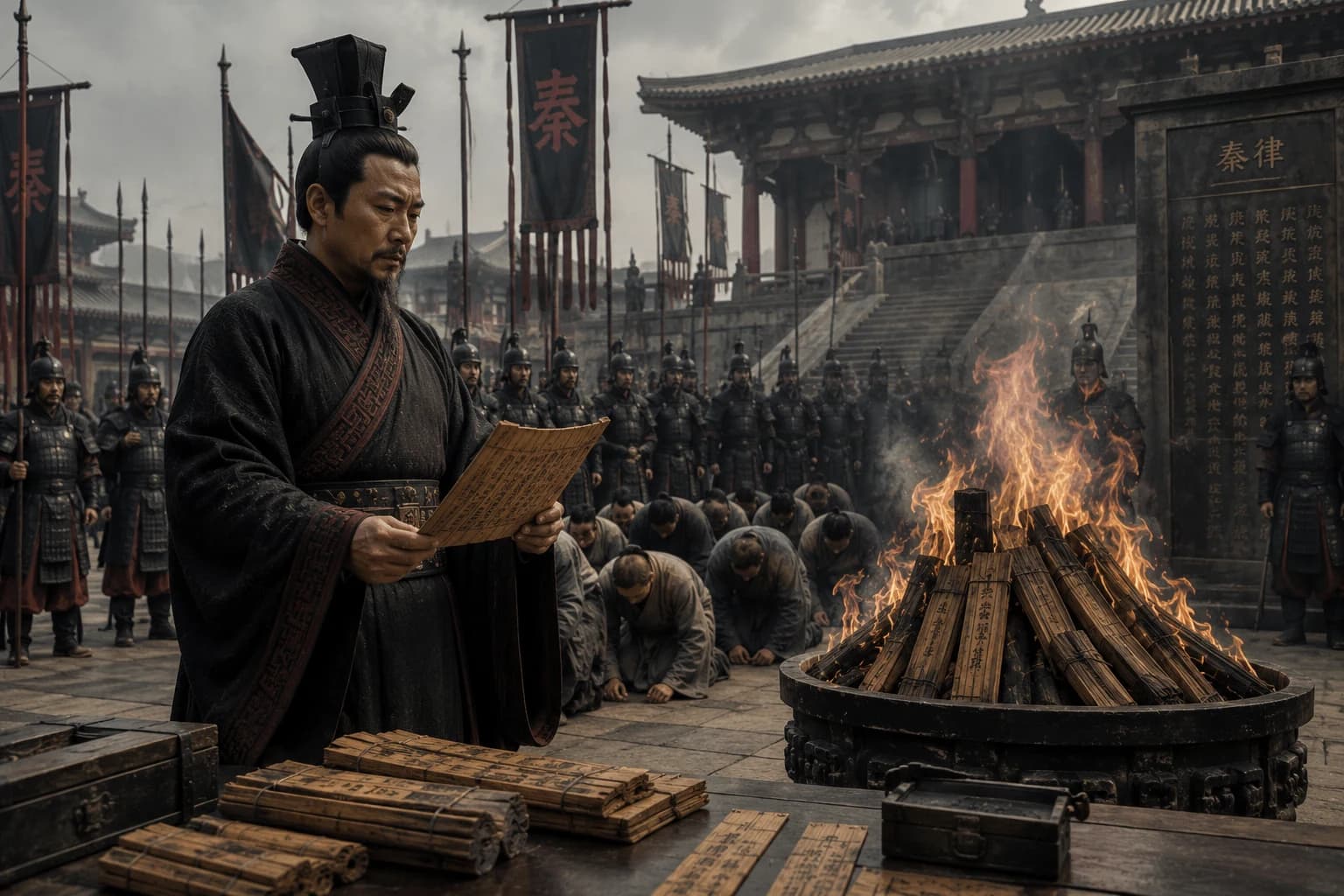
A Qin official reading an imperial order beside burning bamboo books, soldiers, and kneeling subjects.
213 BCE
Step 6 of 10213 BCEAccessible mode

Rule Through Legalism

Qin government was guided by a hard Legalist view of power.

Legalist thinkers argued that order depended on clear laws, firm rewards, and certain punishments. The ruler did not need to persuade everyone morally. He needed institutions that made obedience rational and disobedience costly.

In Qin hands, that philosophy became severe. Laws were strict, punishments harsh, and responsibility could extend beyond the individual to families or communities.

The regime also feared rival ways of thinking. In 213 BCE, Qin ordered the burning of many privately held texts, especially works that could be used to criticise the present by appealing to the past.

Qin tried to protect unity by controlling not only territory, but memory.

Traditional accounts also describe the brutal suppression of scholars who opposed the regime. The details are debated, but the wider pattern is clear: dissent was treated as a threat to imperial order.

Legalism helped Qin build a powerful state. But when rule relies so heavily on fear, it can produce obedience without trust. That weakness would matter after the First Emperor died.

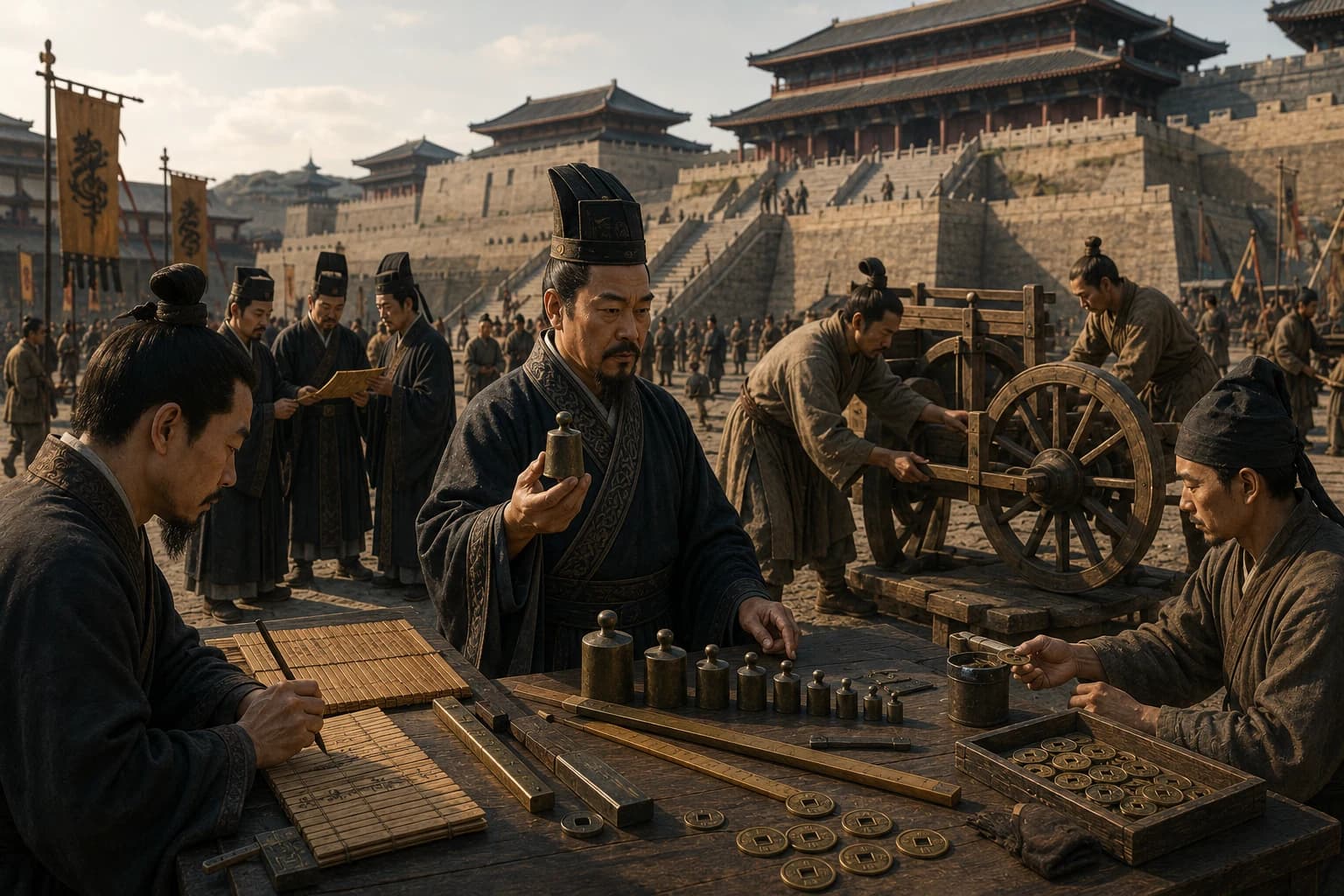
Qin officials standardising weights, measures, coins, writing tablets, and cart axle widths in an imperial courtyard.
221 BCE
Step 7 of 10221 BCEAccessible mode

Standardising the Empire

Conquest gave Qin territory. Standardisation helped make that territory governable.

The new empire contained regions with different customs, records, measures, coins, and scripts. Such variety made taxation, law, trade, and communication harder for a central state.

Qin standardised writing, promoting a unified script for official use. This helped officials communicate across regions even where spoken languages and local habits differed.

Weights and measures were standardised so grain, tax, labour, and goods could be counted in the same way. Coinage was regularised around Qin forms, making exchange easier to supervise.

Standardisation made imperial unity visible in everyday objects.

Even axle widths were standardised, helping vehicles use roads and ruts more predictably. This mattered for military movement, official travel, trade, and communication.

These reforms did not erase local identities. But they made the empire easier to administer and gave later Chinese governments a powerful model: unity required shared systems as well as shared rule.

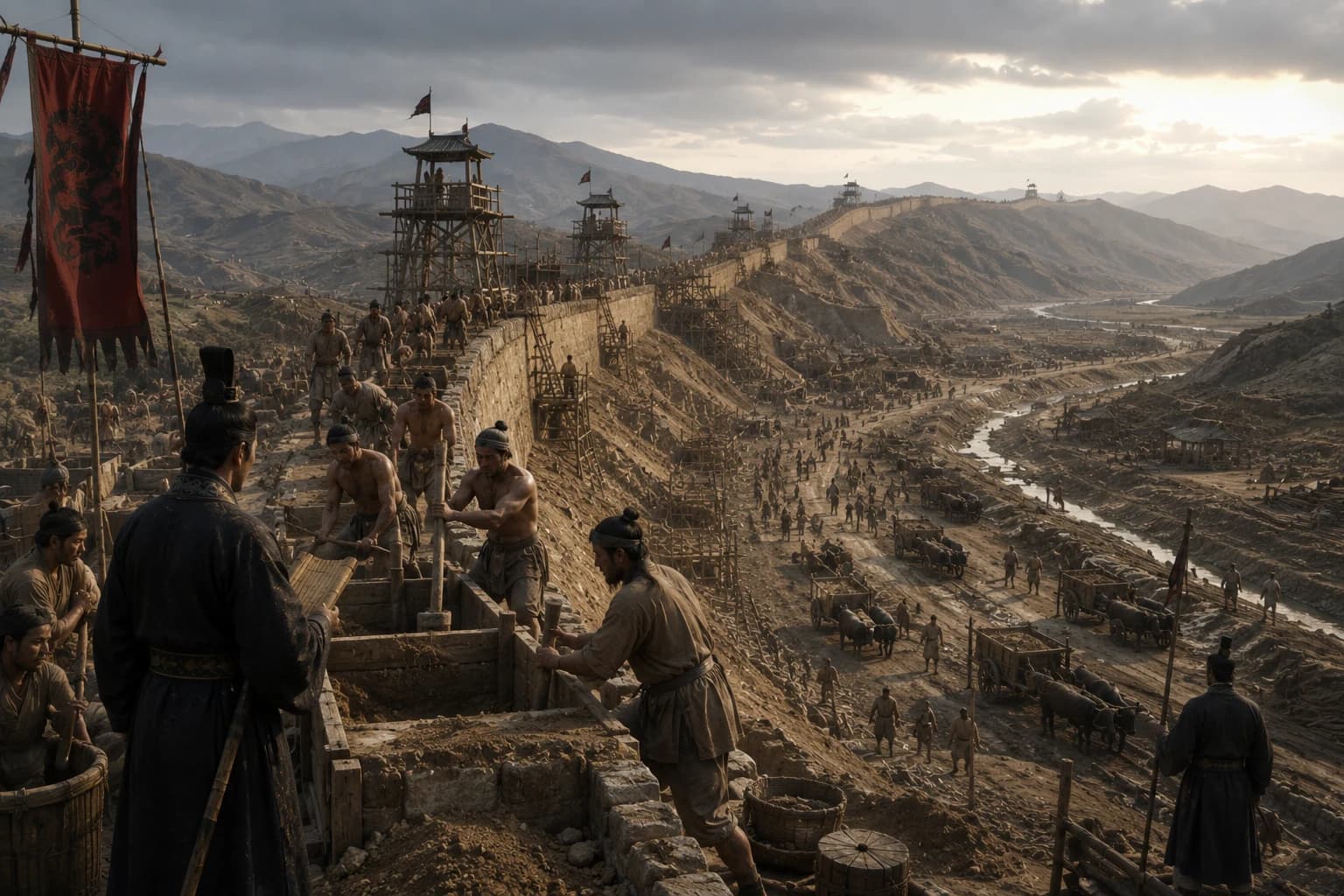
Labourers and officials building Qin frontier fortifications across a mountainous landscape.
214 BCE
Step 8 of 10214 BCEAccessible mode

Building Imperial Infrastructure

Qin Shi Huang's empire was built not only through law and conquest, but through roads, canals, walls, and labour.

Imperial roads connected the capital region to distant commanderies. They helped officials travel, armies move, messages circulate, and taxes reach the centre.

Canals also mattered. Projects such as helped connect river systems and support Qin expansion and administration in the south.

On the , Qin forces pushed against nomadic powers and linked earlier state walls into longer fortifications. These were not the later Ming Great Wall, but they were important precursors.

Qin infrastructure made imperial power physical.

The human cost was enormous. Conscripts, convicts, soldiers, and labourers were sent to roads, canals, walls, palaces, and the emperor's tomb complex.

These projects strengthened the empire, but they also deepened resentment. Qin could command labour on a vast scale. That was a sign of power, and also one of the reasons people came to hate it.

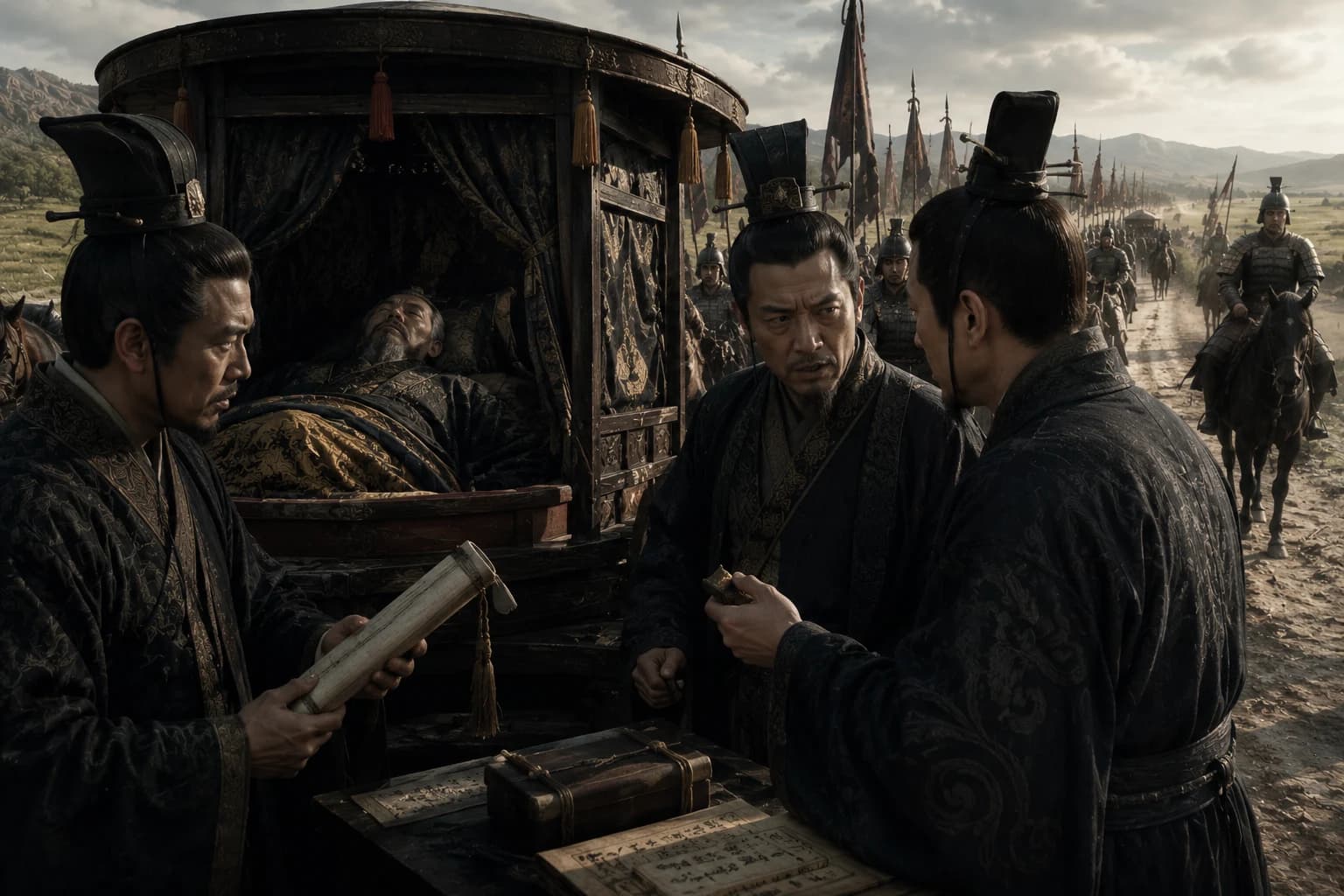
Court officials conferring beside Qin Shi Huang's carriage after the emperor's death during an imperial journey.
210 BCE
Step 9 of 10210 BCEAccessible mode

The Emperor's Death and Qin Collapse

Qin Shi Huang died in 210 BCE while travelling through his empire.

His death exposed a danger he had not solved: succession. Powerful court figures, especially Zhao Gao and Li Si, helped shape the transfer of power to the younger son Huhai, remembered as the Second Emperor.

The new ruler lacked his father's authority. Court intrigue deepened, capable figures were removed, and the government became more unstable at the centre.

Rebellion soon erupted. In 209 BCE, Chen Sheng and Wu Guang led an uprising after conscripts faced punishment for delays. Their revolt failed, but it showed that fear of Qin could break.

The Qin empire was strong enough to conquer China, but not trusted enough to survive a crisis.

Regional leaders and rebels rose across the former Warring States. Old identities returned, armies formed, and Qin authority collapsed with astonishing speed.

By 206 BCE the Qin dynasty was gone. Its institutions had been powerful, but the dynasty had created too much resentment and too little loyalty to hold the empire together after the First Emperor's death.

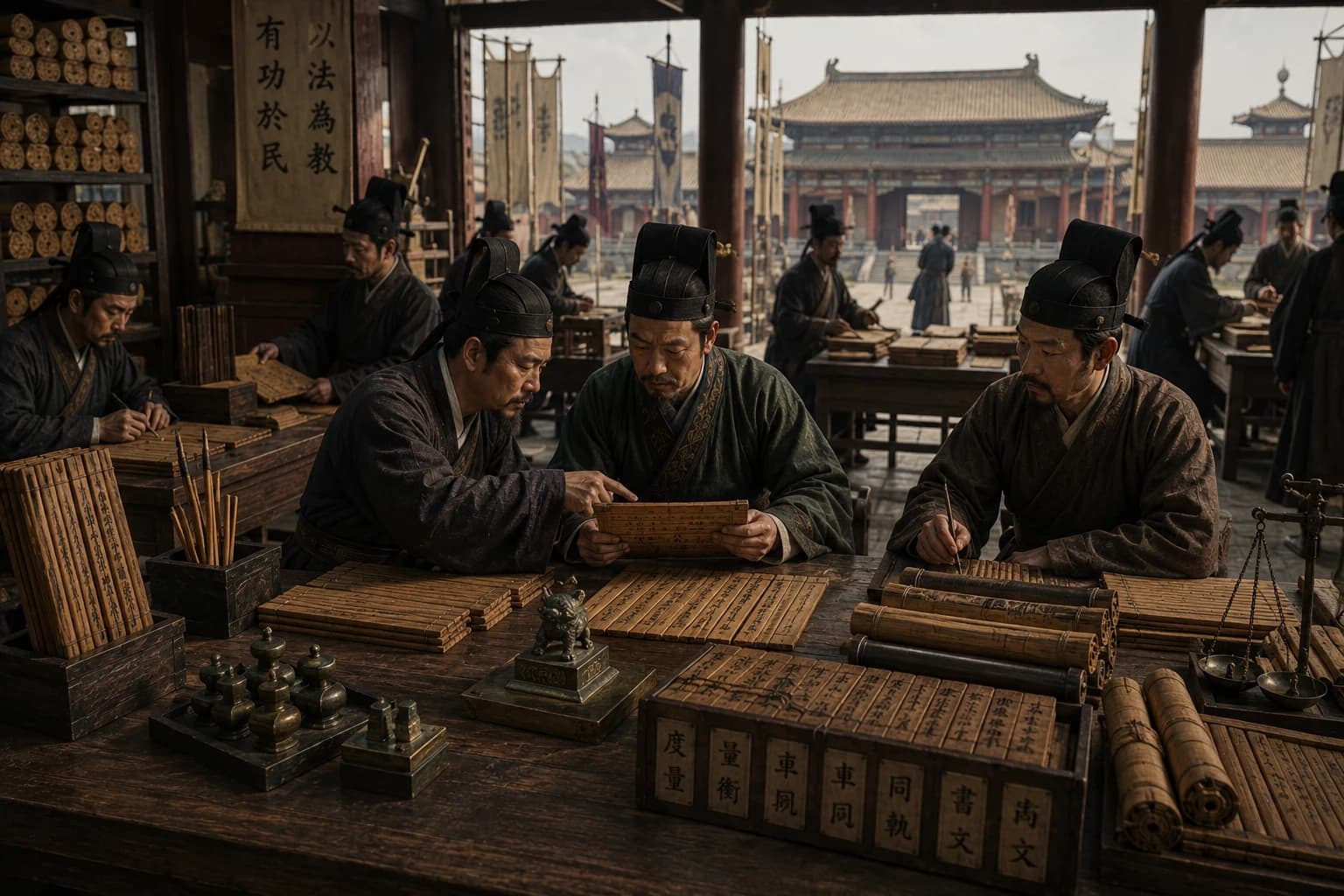
Han-era officials studying bamboo records, weights, writing standards, and administrative tools inherited from Qin unification.
202 BCE
Step 10 of 10202 BCEAccessible mode

The Legacy of Unification

In 202 BCE, Liu Bang founded the Han dynasty after defeating his rivals in the wars that followed Qin collapse.

The Han did not simply copy Qin. Early Han rulers reduced some burdens, presented themselves as less severe, and allowed society space to recover after years of war and forced labour.

Yet the Han also kept much of Qin's inheritance. The idea of one empire, commanderies and counties, appointed officials, records, taxation, roads, and standardised administration remained essential.

Over time, the Han gave imperial rule a different public language, especially through Confucian learning. But the administrative foundations owed a great deal to Qin.

Qin fell quickly, but the empire Qin created became the framework later dynasties inherited.

This is why Qin's legacy is so unusual. Its dynasty was short, harsh, and hated. Its institutions were strong enough to outlive the regime that built them.

The unification of 221 BCE changed Chinese history permanently. After Qin, division could return, but unity remained the ideal that rulers, officials, and historians measured against.

Continue reading

Finished Qin China and Unification?

Trace the early foundations of Chinese statecraft, then follow Qin institutions into the Han dynasty that made imperial rule more durable.

Browse stories

References

Sources & Further Reading

Reliable sources, primary-source collections and reading paths connected to this page.

Sources used

  1. Encyclopaedia Britannica, Qin Dynasty,” Open source

Further reading

  1. Mark Edward Lewis, The Early Chinese Empires: Qin and Han, Harvard University Press.
  2. Yuri Pines, The Book of Lord Shang: Apologetics of State Power in Early China, Columbia University Press.

Primary sources

  1. Chinese Text Project, Records of the Grand Historian,” Open source

A weekly route through history

Find out first about the latest published stories, feature notes and occasional Premium offers in one weekly email.