Complete chronology
Full overview and deeper context for every journey step.
c. -280
Learning Statecraft
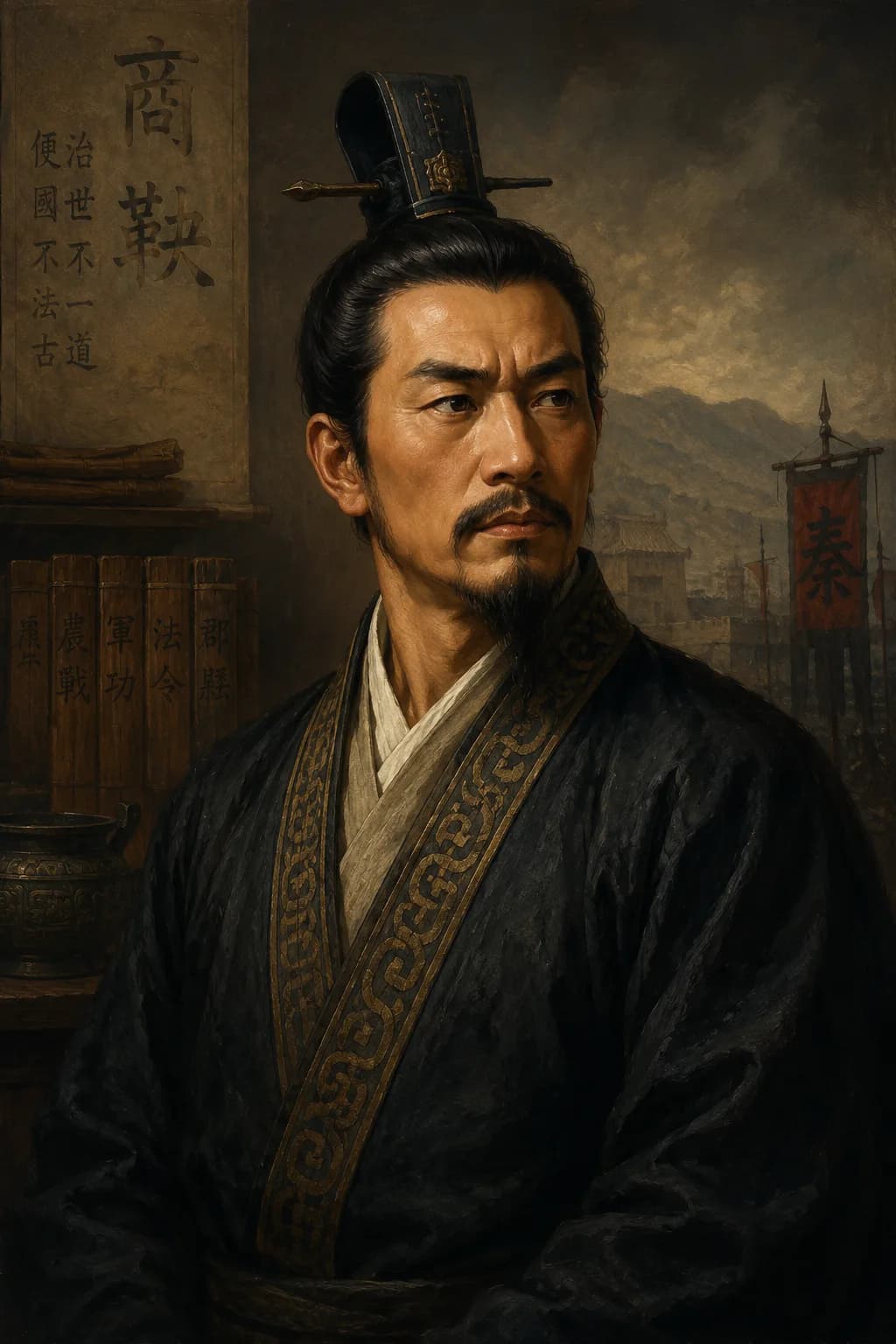
Li Si was born in the state of Chu, far from the Qin court where he would later rise. Later tradition connects him with the philosopher Xunzi, whose students included thinkers drawn in very different directions. Li Si absorbed a world of argument about order, hierarchy, law and the failures of inherited custom. The Warring States period rewarded officials who could make rulers stronger in practical terms. Qin was the clearest opportunity. It had the appetite, discipline and institutional momentum to absorb talent from outside its borders. Li Si's move to Qin placed him inside the most powerful political experiment of the age.
For ambitious advisers, Qin offered the dangerous attraction of a state willing to act on big ideas.
-240s
Serving King Zheng
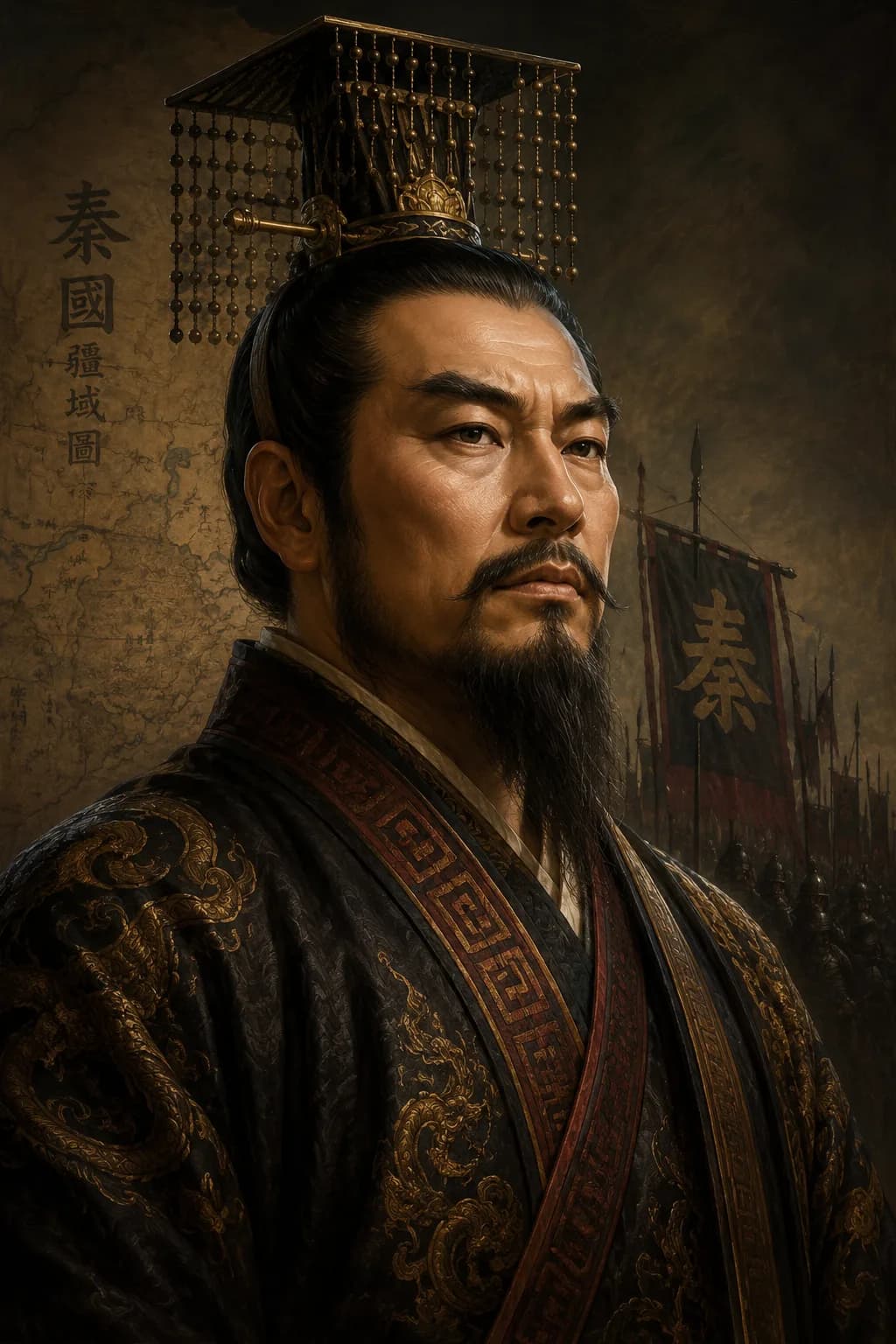
By the time Li Si became important at Qin, the state already possessed the foundations created by earlier reform: strong law, registration, agricultural mobilisation and military reward. His task was not to invent Qin strength from nothing, but to help direct it. King Zheng faced court rivalries, old aristocratic interests and enemies beyond Qin's borders. Li Si's value lay in administrative clarity and ideological confidence. He believed a ruler should not revive the old feudal order after victory. Power should be centralised, appointments should be controlled from the top, and local elites should not be allowed to rebuild independent bases of authority.
Li Si's importance came from seeing conquest as a problem of government, not only battle.
-221
Designing Imperial Rule
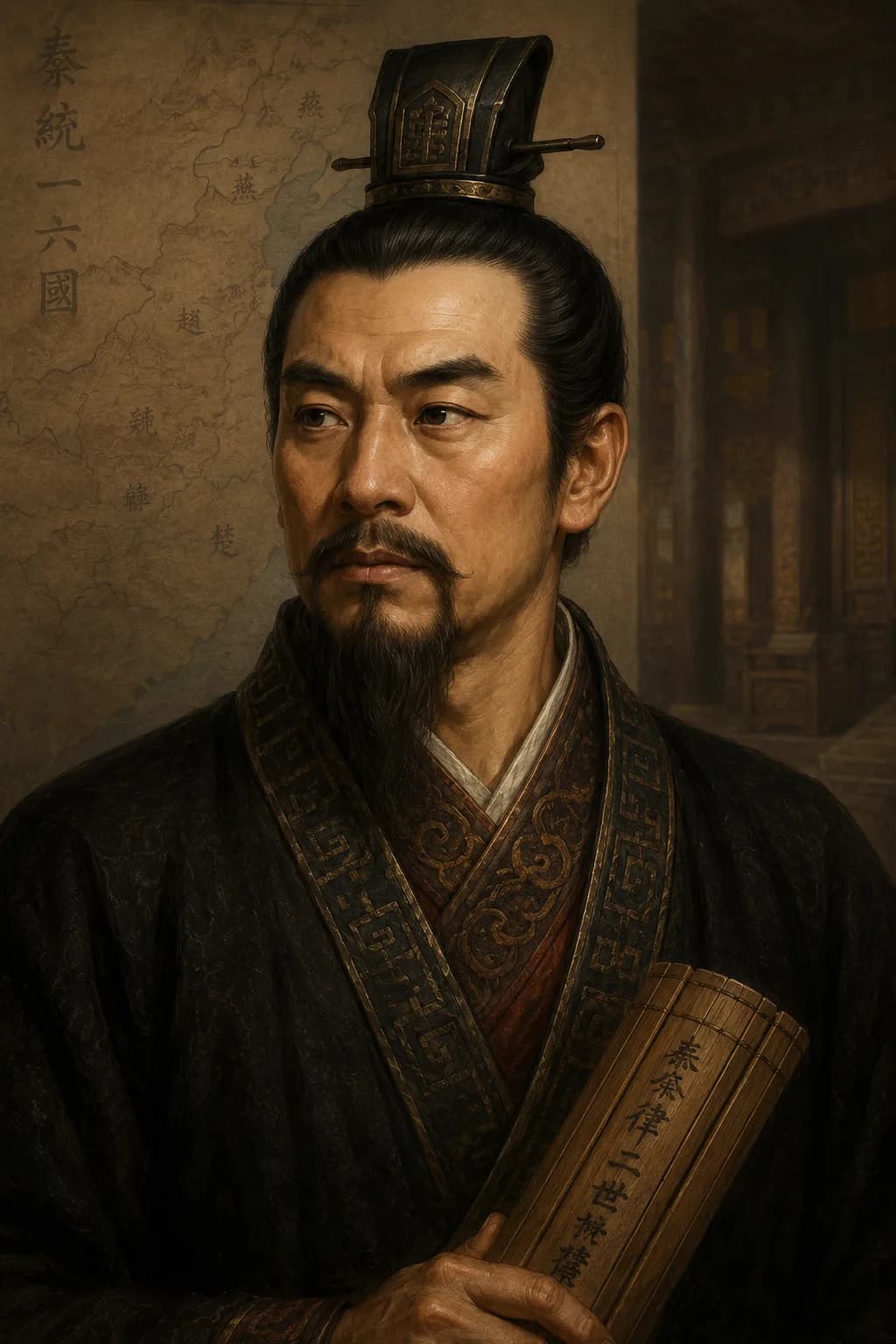
In 221 BC, Qin's victory created a constitutional question: should the new ruler divide the realm among royal relatives and hereditary lords, or govern through appointed officials? Li Si argued for centralisation. The empire was divided into commanderies and counties under officials responsible to the throne. This decision shaped Chinese government for centuries. It did not eliminate local power or later debates about decentralisation, but it made the imperial state the normal frame of political order. Li Si's administrative vision helped Qin Shi Huang turn the title of First Emperor into a practical system of officials, records, punishments and commands.
The map of empire mattered less than the machinery that made the map governable.
-221
Standardising the Realm
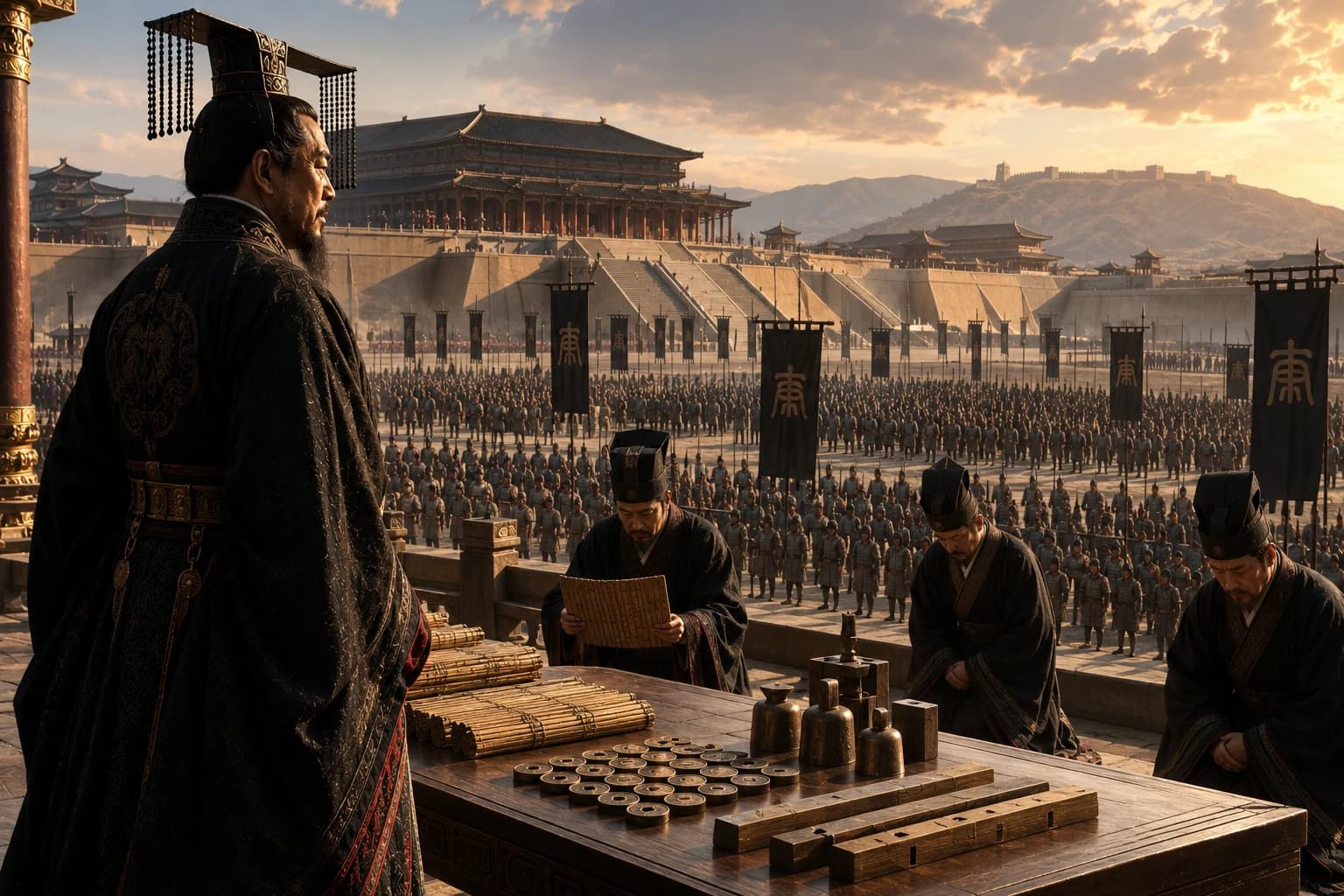
The newly unified empire contained different scripts, currencies, weights, measures and administrative habits. Standardisation gave Qin a way to make conquest legible. A shared official script helped written orders travel across regions where speech and local custom differed. Common weights, measures and money helped taxation, trade and record-keeping. Road and axle standards made movement more predictable. These reforms were not simply conveniences. They were instruments of imperial control. Li Si's role in standardising writing made him one of the central figures in Qin's attempt to turn many former states into one administrative world.
Standardisation turns political unity into a daily habit of writing, measuring and counting.
-213
Control and Censorship
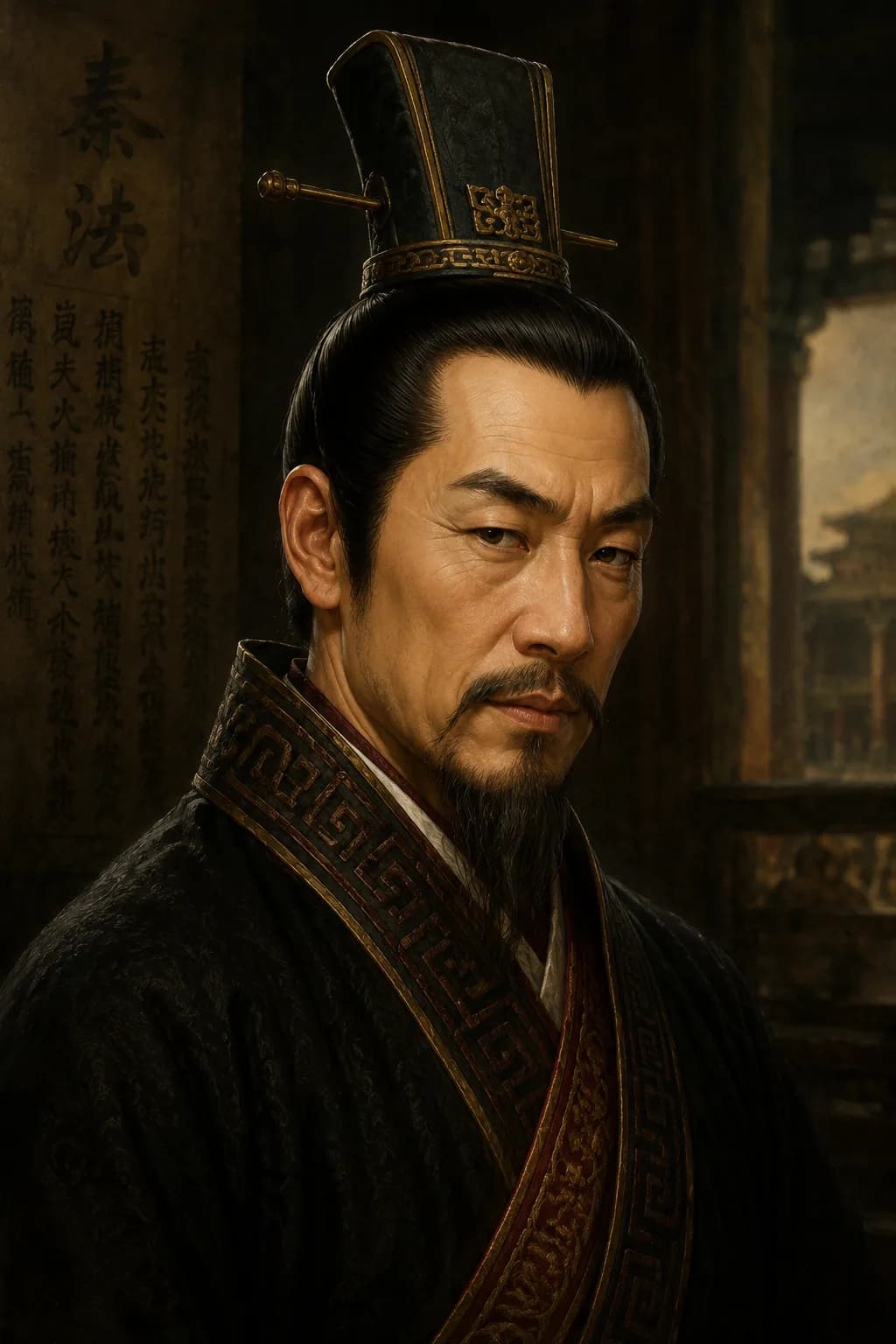
Qin's unity was not only administrative. It was also ideological. In 213 BC, Li Si proposed restrictions on private possession of texts that could be used to criticise the present by appealing to earlier ages. Traditional accounts remember this as the burning of books, one of the most infamous acts of Qin rule. Modern historians debate details and later exaggerations, but Li Si's political logic is clear: rival teachings and regional memories could undermine a new empire that demanded one standard of authority. His brilliance and severity met here. He helped create a unified state, but he also helped narrow the space for disagreement inside it.
The desire for order can become fear of memory when rulers treat alternative traditions as threats.
-210
The Sand Hill Plot
Qin Shi Huang died while travelling in 210 BC. The succession should have been the moment when institutions proved stronger than personal rule. Instead, secrecy and manipulation took over. Traditional sources say Zhao Gao persuaded Li Si to help suppress the emperor's intended order for Fusu and install the younger Huhai, later Qin Er Shi. Li Si may have feared political exclusion or chaos if he resisted. Whatever his motive, the decision helped place the empire in the hands of a weak emperor dominated by Zhao Gao. The same minister who had designed centralised rule now helped break the trust on which succession depended.
Institutions can be strong on paper and still vulnerable at the point of succession.
-208
Destroyed by Zhao Gao
Li Si's alliance with Zhao Gao did not protect him. As rebellions spread and Qin Er Shi retreated from active government, Zhao Gao tightened his control over the court. Li Si became an obstacle and was accused of treason. In 208 BC he was executed, along with members of his family. His death captures the tragedy of Qin statecraft. Li Si had helped build a centralised system powerful enough to unify China, yet that same system offered few protections when court politics turned murderous. His legacy remained enormous, but his own career ended inside the ruthless world he had served.
A centralised system can empower brilliant administrators, then leave them exposed when the ruler's trust is captured by someone else.