People

Shang Yang

Shang Yang transformed Qin through Legalist reforms in the fourth century BC, strengthening agriculture, military service, administration and state power before his execution in 338 BC.

Born
c. 390 BCE
Died
338 BCE
Role
Legalist reformer

Legalist Reformer (c. 390 BC-338 BC)

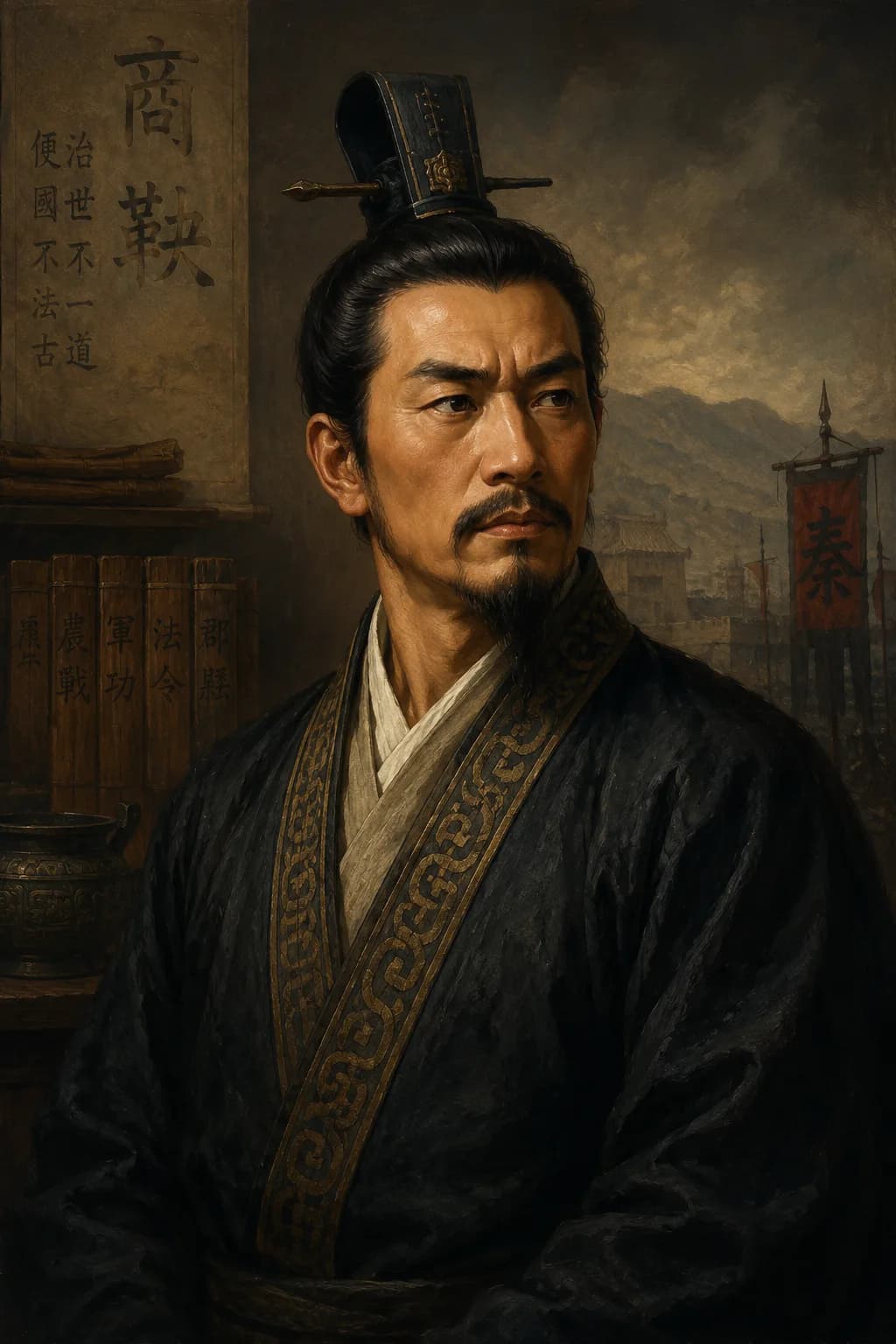
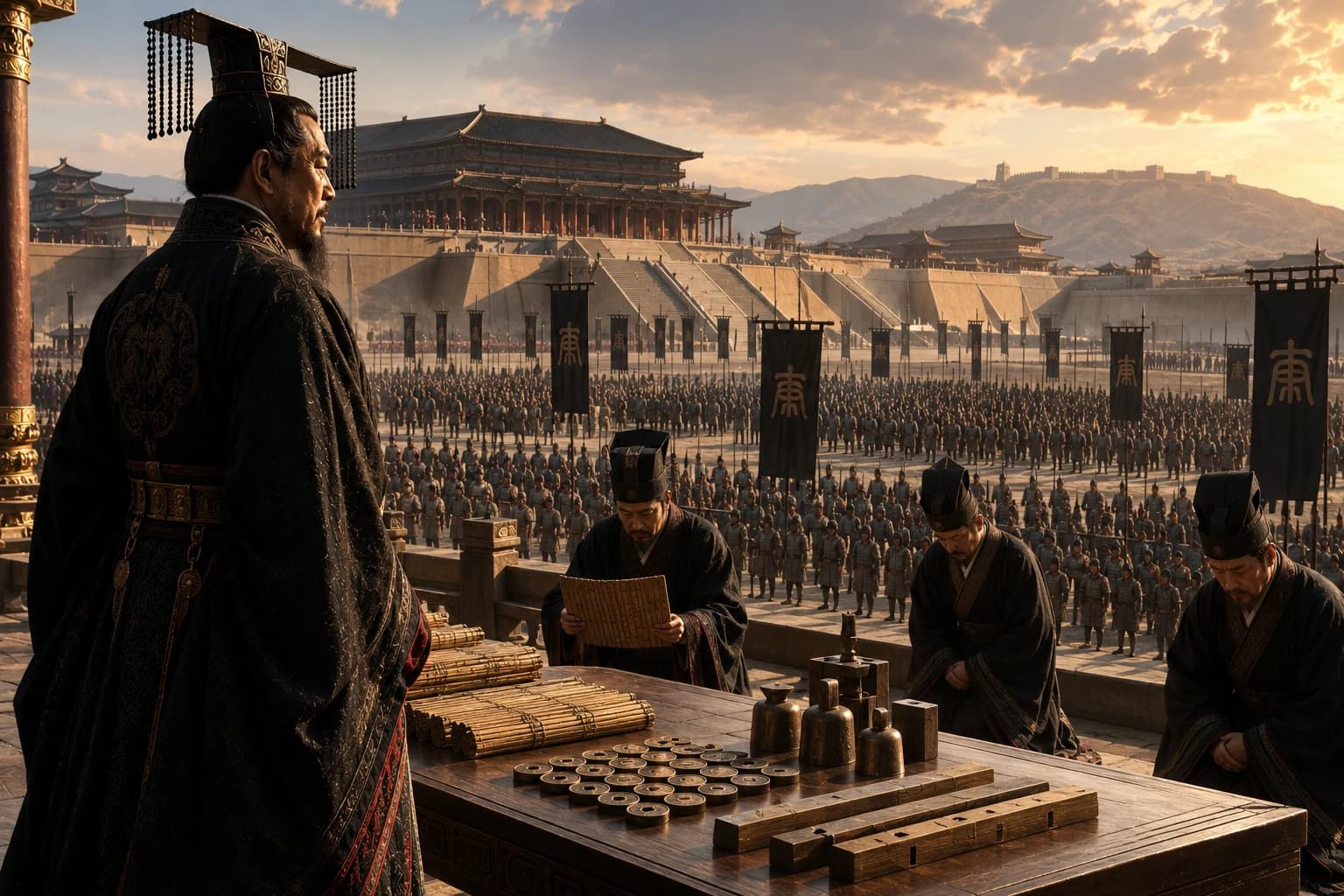
AI-generated portrait of Shang Yang in Qin-era official robes with legal texts and Qin banners
AI-assisted historical reconstruction

An illustrative reconstruction based on historical context. It is not a photograph or documentary likeness. Image policy

Quick answer

Shang Yang transformed Qin through Legalist reforms in the fourth century BC, strengthening agriculture, military service, administration and state power before his execution in 338 BC.

Born
c. 390 BCE
Died
338 BCE
Role
Legalist reformer
Years
c. 390-338 BCE
Quick facts

Profile details

Additional identity and tagging details that are not already covered in the introduction.

Also known as
Lord Shang, Gongsun Yang, Wei Yang
Facts

Shang Yang timeline facts

Selected specifics from this profile's life story.

c. -390
An Outsider From Wei

Shang Yang came from the state of Wei and entered a world where rival states competed for survival through law, agriculture, administration and war.

-356
Duke Xiao's Opportunity

Under Duke Xiao of Qin, Shang Yang began reforms that made the state more centralised, disciplined and focused on measurable service.

-338
A Violent Fall

After Duke Xiao died, Shang Yang lost protection at court and was executed, but Qin kept much of the system he had built.

-221
Legacy in Qin Unification

By the time King Zheng unified China, Qin's ability to mobilise soldiers, labour, grain and law owed much to Shang Yang's reforms.

Life Journey

From outsider reformer to architect of Qin power

Follow the story in a more continuous narrative, with a reading mode that matches how much depth you want.

Complete chronology

c. -390

An Outsider From Wei

Shang Yang was born into the fractured Warring States world, where old Zhou authority had faded and ambitious rulers searched for ways to make their states stronger. He first served in Wei, one of the leading powers of the age. That background mattered because reform ideas moved across borders with advisers, hostages, generals and defectors. Qin, on the western frontier, had long been treated by some rivals as rough and marginal, but it had land, military potential and rulers willing to experiment. Shang Yang's career began in that larger contest: not as an isolated thinker, but as a political technician in an age that rewarded states able to mobilise people and punish failure.

-356

Duke Xiao's Opportunity

Duke Xiao of Qin wanted rapid strengthening, not elegant theories. Shang Yang offered policies that put the ruler, the law and the state above hereditary privilege. His reforms are traditionally dated in major phases beginning in 356 BC and continuing in 350 BC. They tightened household registration, grouped families into systems of mutual responsibility, encouraged agriculture, and made rank depend heavily on military achievement. This was severe government by design. The aim was not personal freedom or gentle persuasion. It was to make Qin capable of counting land, taxing production, recruiting soldiers, rewarding success and punishing evasion with unusual consistency.

-350s

Law Over Noble Birth

One of Shang Yang's most important changes was to reduce the political value of inherited status. Nobles who failed to serve the state could lose privilege, while commoners who produced grain or won military merit could rise. The reforms also encouraged the breakup of large extended households into smaller registered units, making taxation and labour obligations easier to administer. In military life, rank and reward became tied to measurable achievement, especially the taking of enemy heads. These policies were harsh, but they made Qin more responsive to the needs of war. Over time, Qin became less like an aristocratic league of powerful families and more like a bureaucratic machine pointed toward conquest.

-338

A Violent Fall

Reform made Shang Yang powerful, but it also made him enemies. Aristocratic families hurt by his policies remembered the cost. When Duke Xiao died in 338 BC, Shang Yang's political shelter disappeared. Later traditions describe his attempted flight and brutal execution, turning his death into one of the great ironies of Legalist memory: the lawgiver destroyed by the political world his laws had helped reshape. Yet Qin did not simply reverse course. The reforms had worked too well. They had increased the state's capacity, strengthened its army and made central authority more effective. Shang Yang died, but the Qin state he helped design survived him.

-221

Legacy in Qin Unification

More than a century after Shang Yang's death, Qin conquered the six rival states and King Zheng became Qin Shi Huang, the First Emperor. Shang Yang did not plan that final campaign, but his reforms helped make it imaginable. Qin's strength rested on disciplined administration, legal uniformity, agricultural mobilisation, military rewards and a willingness to break older aristocratic structures. Those habits shaped both Qin's success and its danger. The same severity that helped Qin win wars also made imperial rule brittle after unification. Shang Yang's legacy is therefore double-edged: he helped create one of the most effective states in ancient history, but also one whose power depended on pressure that many people came to fear.

Continue in context

Connected stories

Move from the profile into the wider events and settings this figure belongs to.

Tertiary paths

Content note

This profile is written for educational use and connects to related Stories of History pages. The main portrait is an AI-assisted historical reconstruction, included as an illustrative aid rather than documentary evidence. Image policy

References

Sources & Further Reading

Reliable reference works, archives and reading paths connected to this profile.

Further reading

  1. Encyclopaedia Britannica, Search results for Shang Yang,” accessed June 2026.Open source
  2. WorldCat, Books and library holdings for Shang Yang,” accessed June 2026.Open source

Primary sources

  1. Library of Congress, Search results for Shang Yang,” accessed June 2026.Open source

Reviewed claim sources

Loading reviewed claim sources...

A weekly route through history

Find out first about the latest published stories, feature notes and occasional Premium offers in one weekly email.