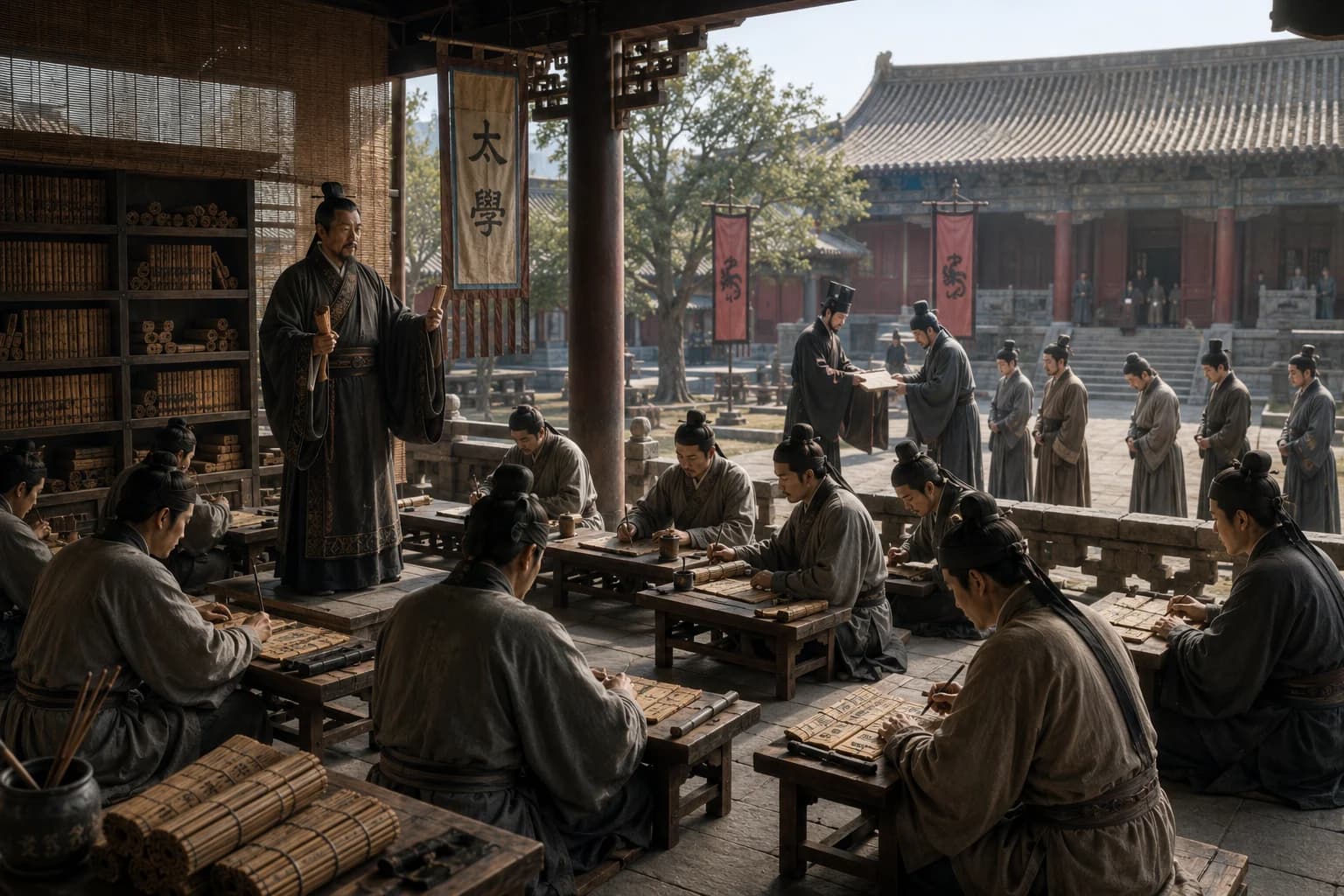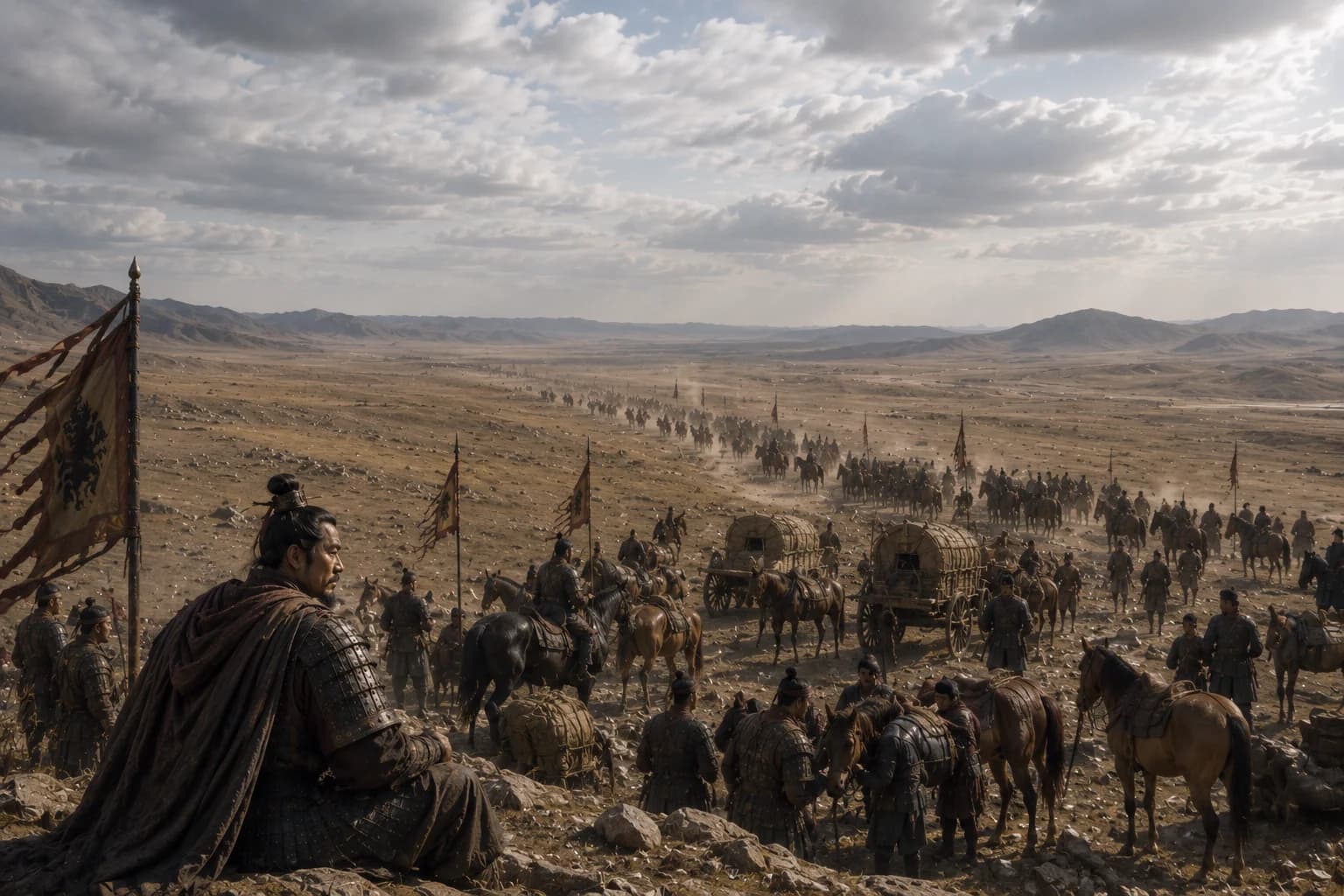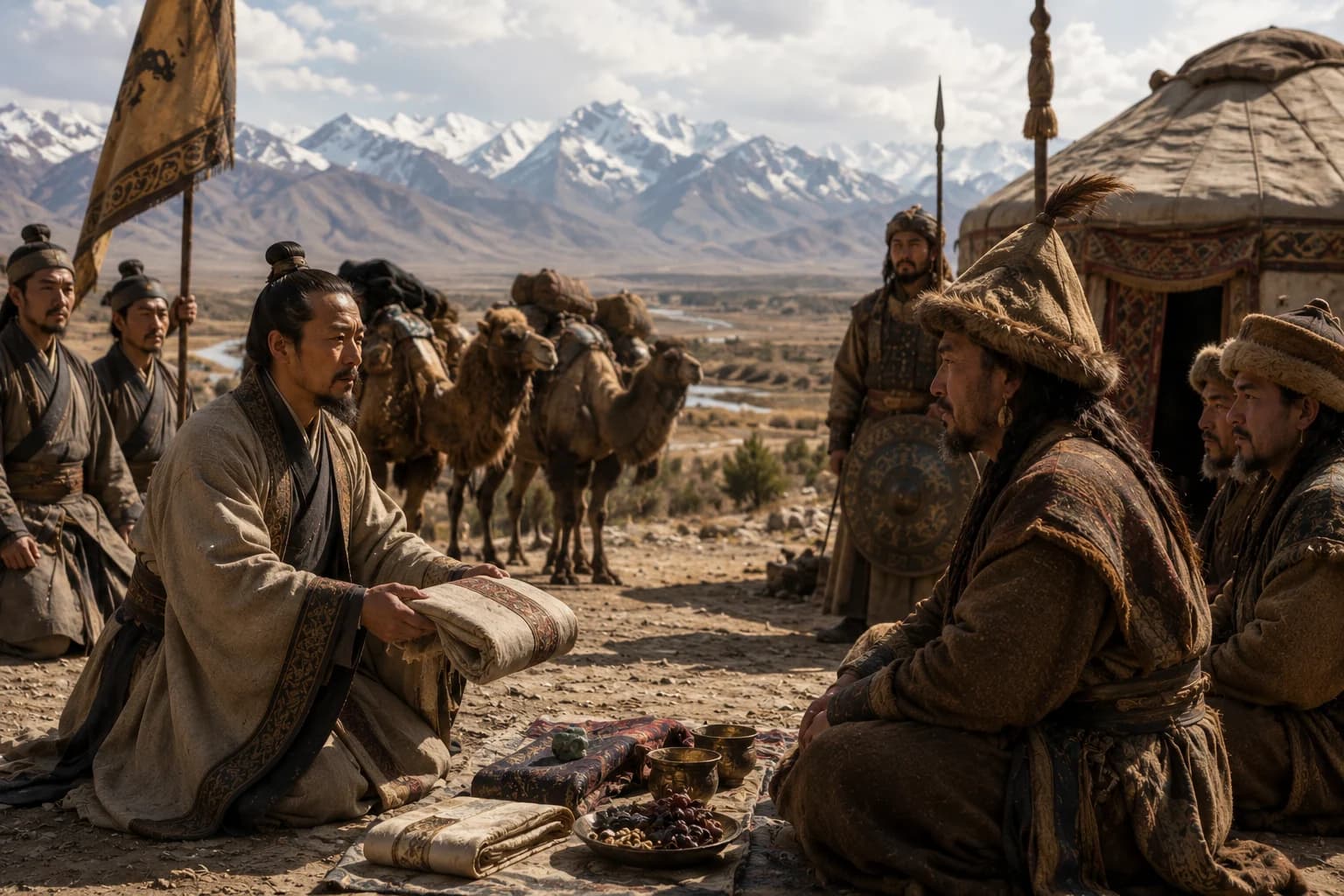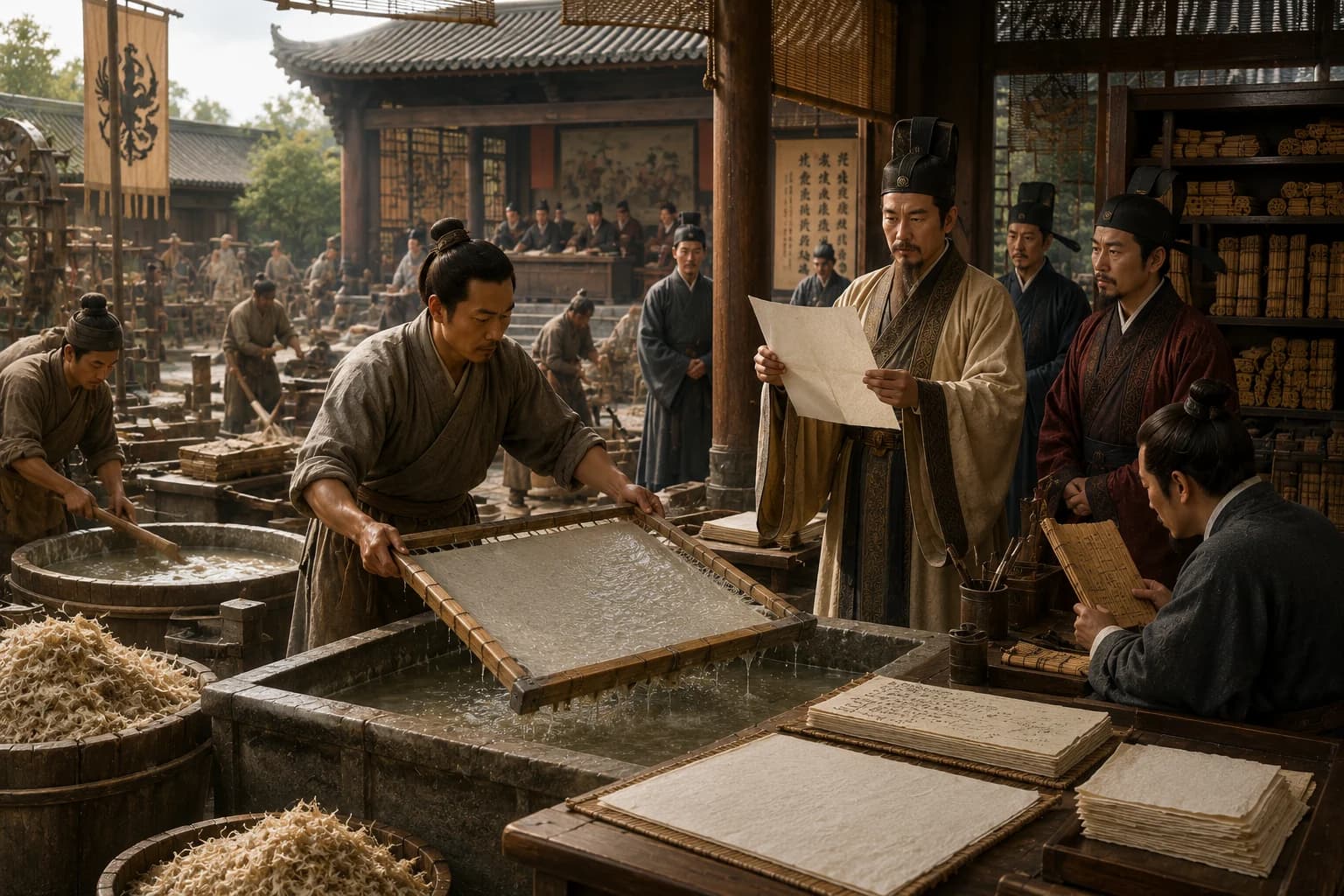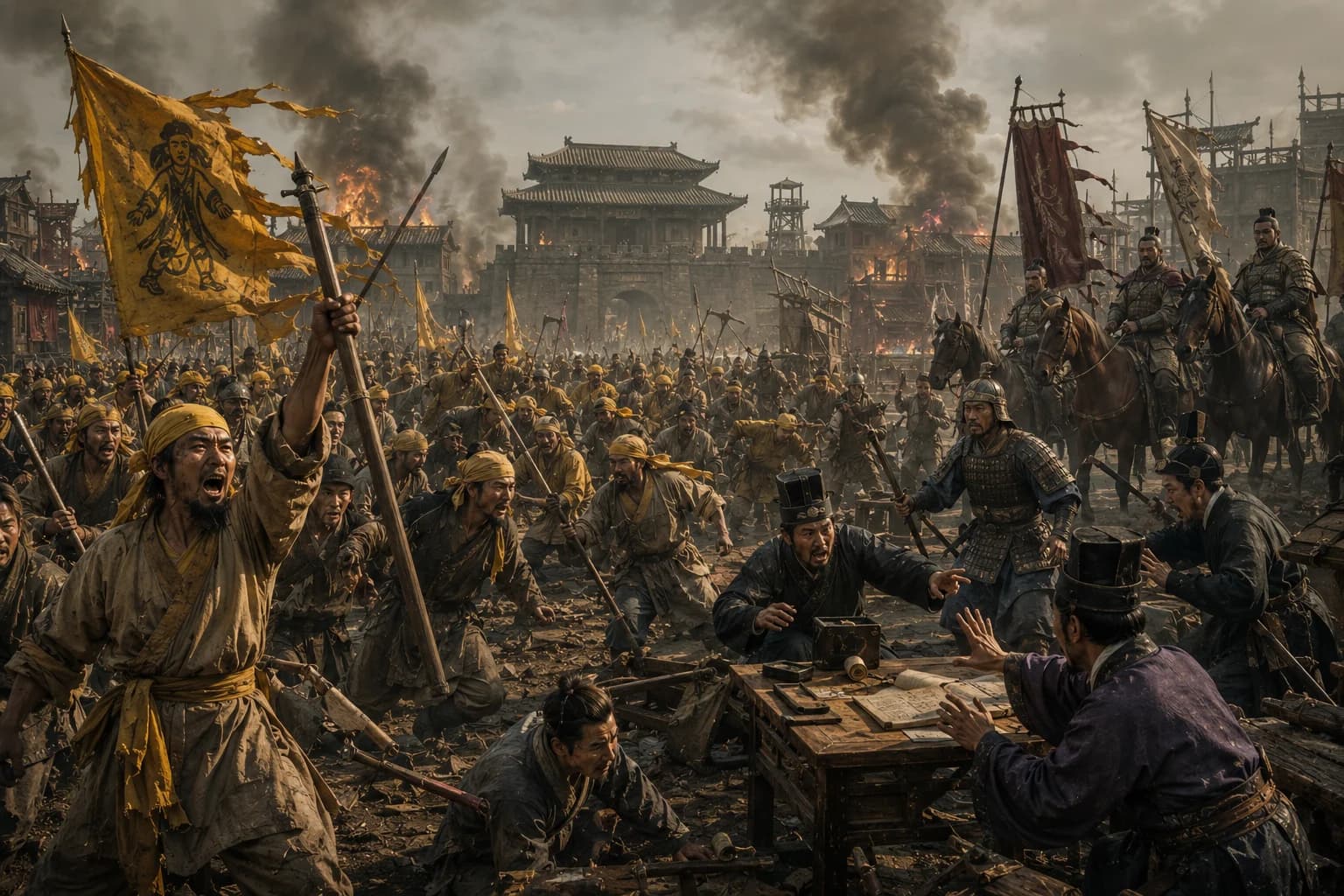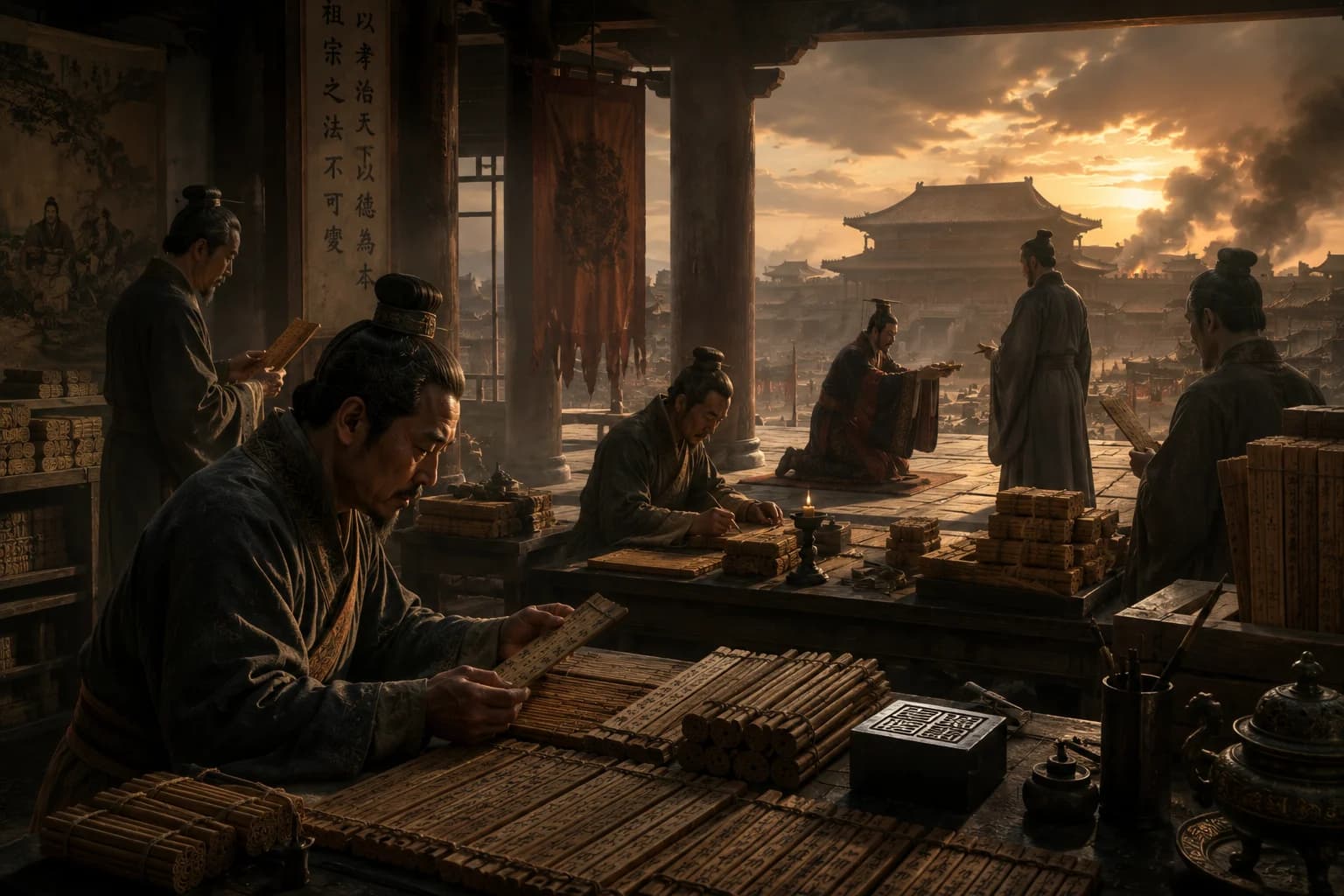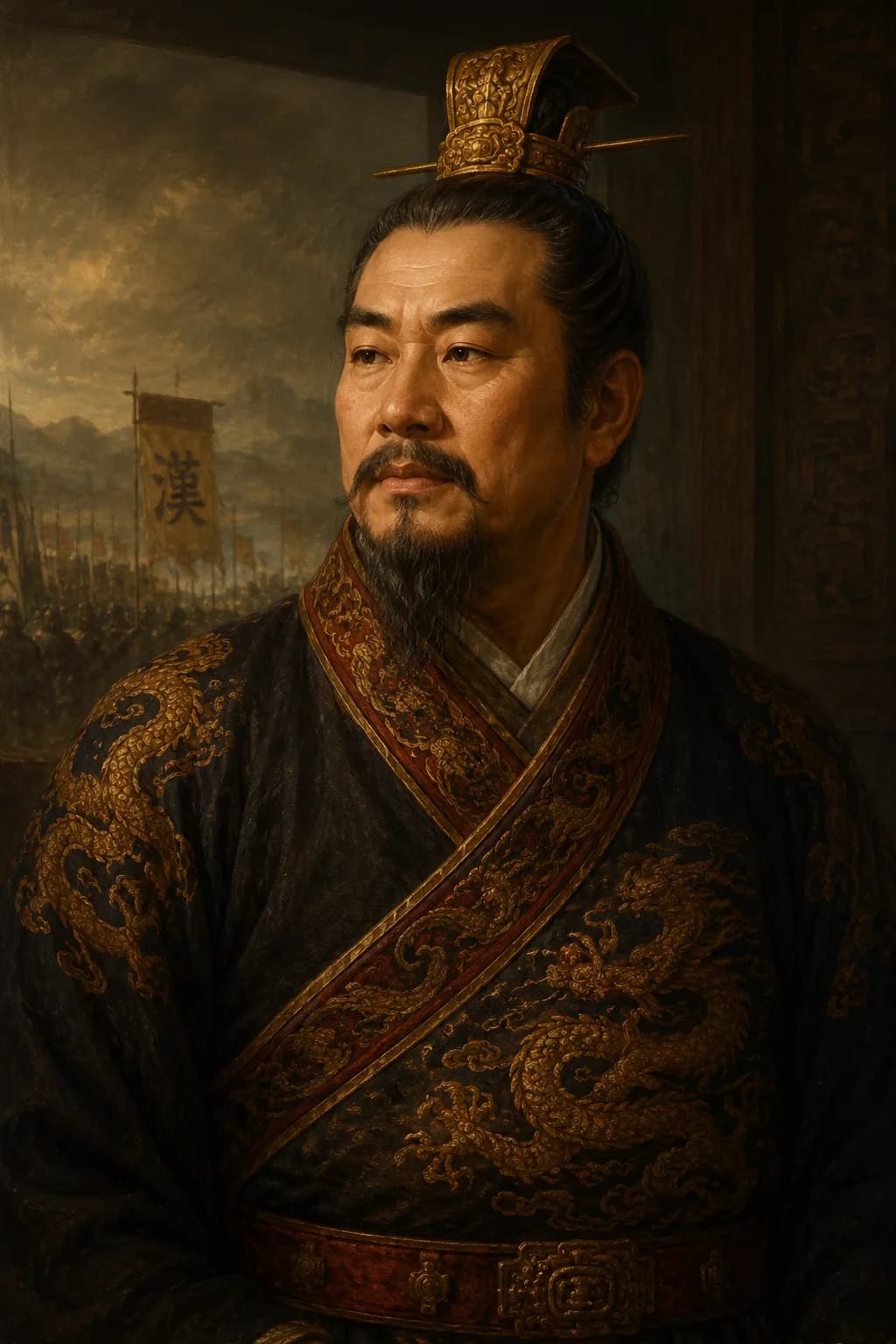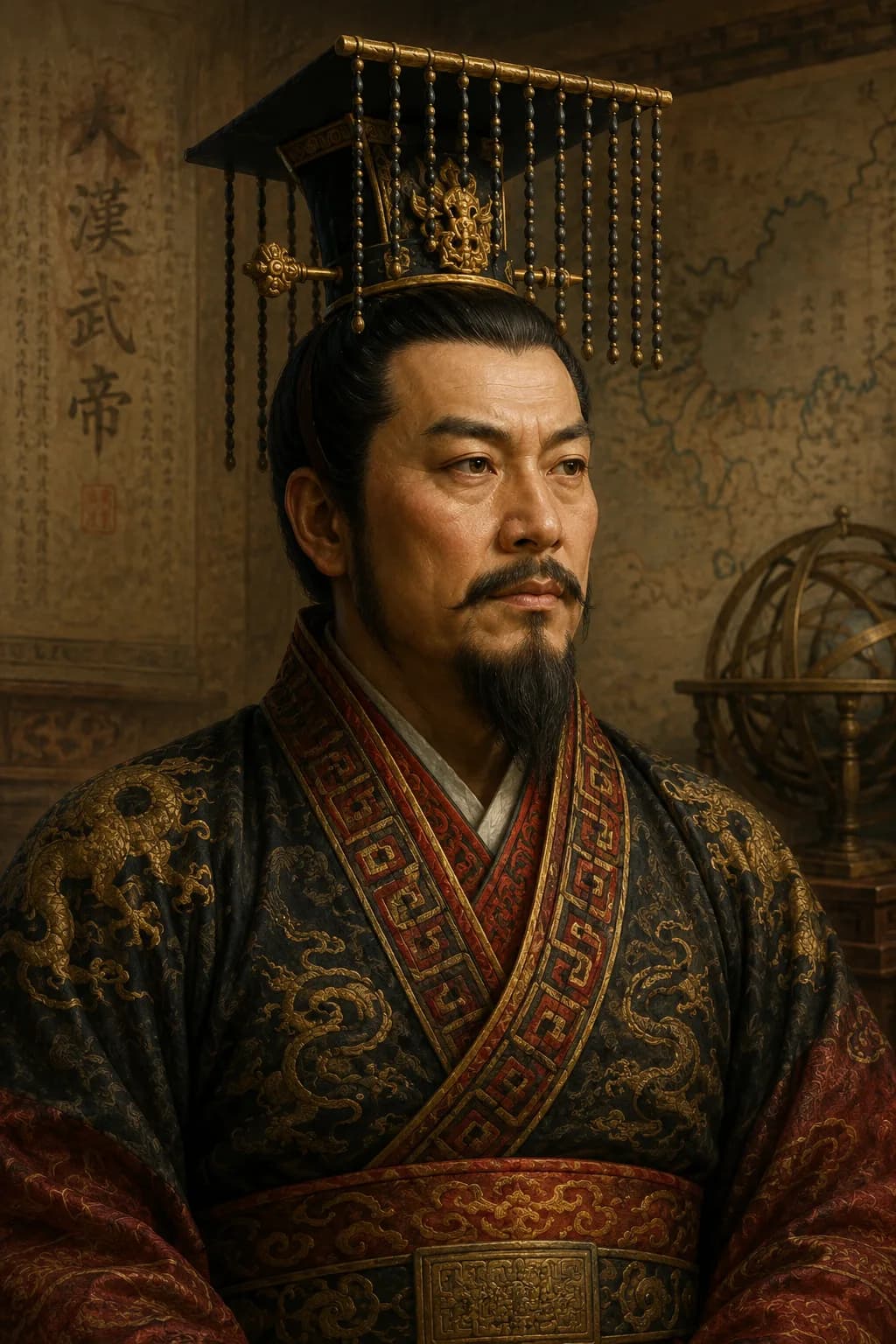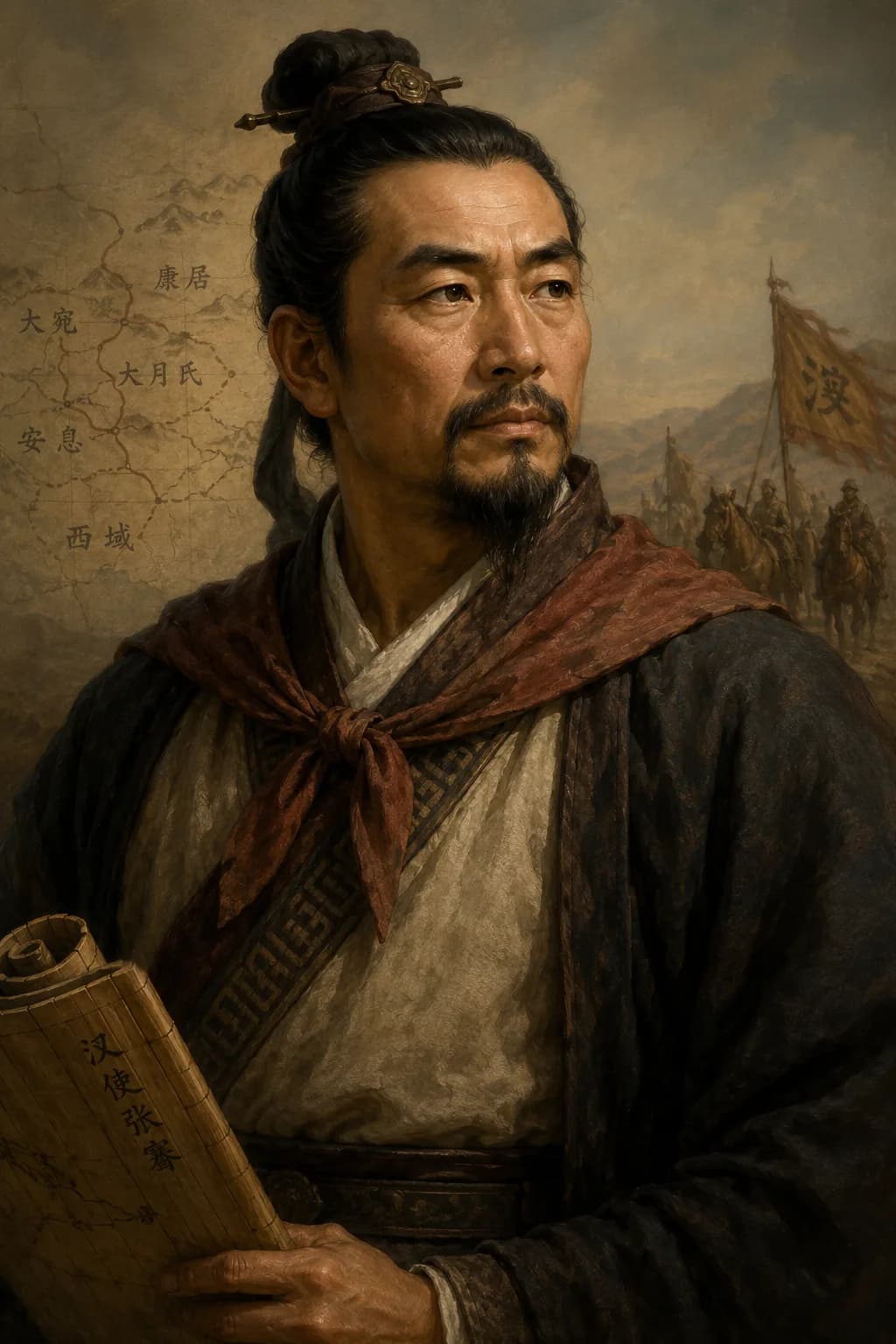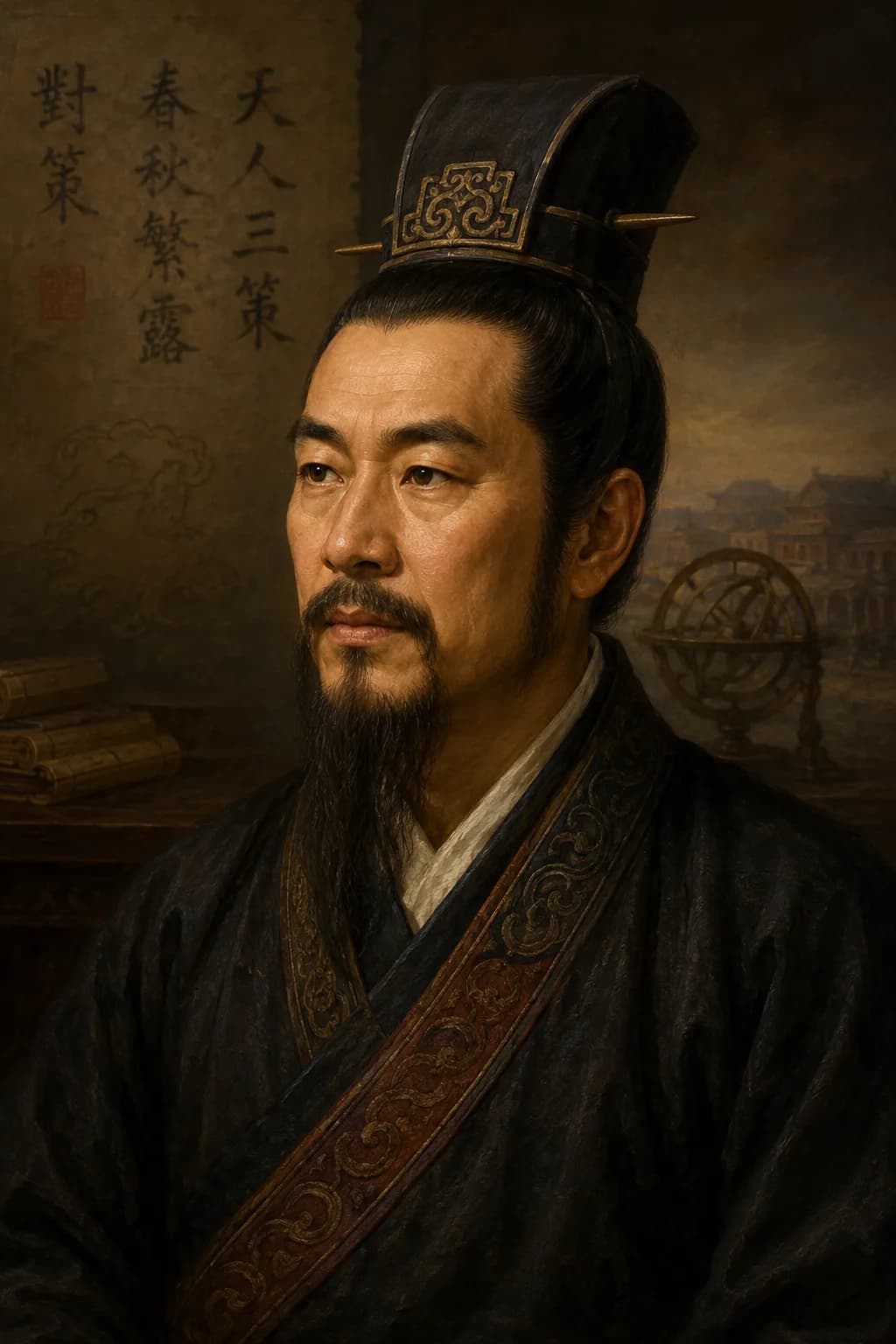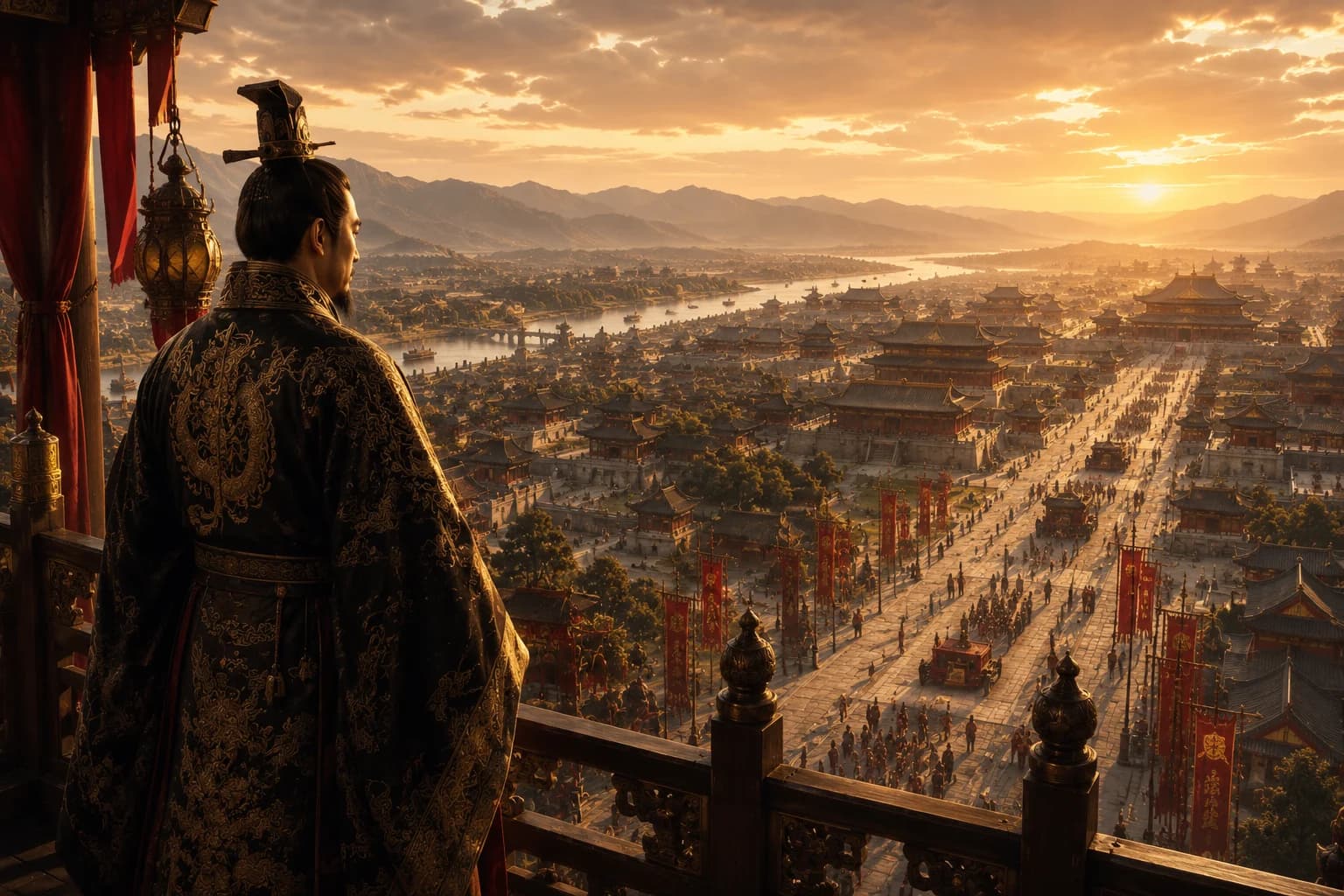
The Han dynasty at its height, with Chang'an, imperial officials, frontier soldiers, and Silk Road routes extending west.
Free Story

The Han Dynasty

Follow the Han from Liu Bang's victory to Confucian government, imperial expansion, Silk Road exchange, innovation, crisis, and lasting legacy.

10 chapters

Next
Context

Introduction

Overview

This Han Dynasty timeline follows one of the most influential periods in Chinese history, from Liu Bang's foundation of the dynasty in 202 BCE to its formal end in 220 CE. The Han built a durable imperial order by softening Qin rule, restoring agriculture, expanding bureaucracy, adopting Confucian learning, pushing beyond the frontier, and opening routes that connected China to Central Asia and the wider Eurasian world.

What you'll learn: You will see how the Han made empire survivable after Qin collapse, how Confucian bureaucracy became central to Chinese rule, and why Han achievements outlasted the dynasty itself.

Key forces

The Rise of the Han
202 BCE
Step 1 of 10202 BCEAccessible mode

The Rise of the Han

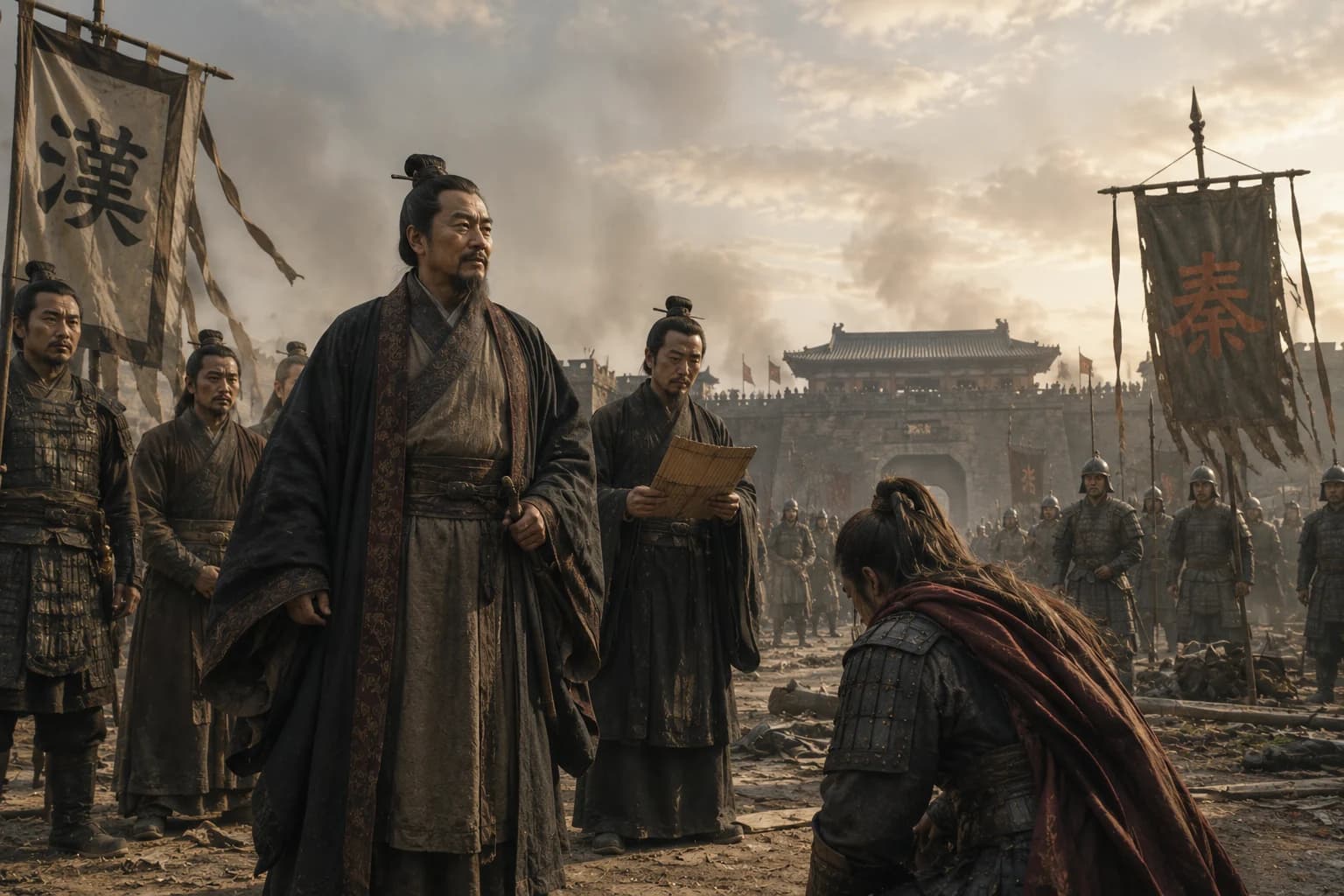
In 202 BCE, Liu Bang defeated his great rival Xiang Yu and founded the Han dynasty.

China had recently been unified by the Qin, but Qin rule collapsed quickly. Heavy labour demands, strict laws, military pressure, and resentment against harsh government helped turn rebellion into civil war.

Liu Bang was not the most aristocratic or dazzling commander in the struggle. His strength was political. He built alliances, used capable advisers, and made himself appear less frightening than the rulers people had just overthrown.

The Han rose by keeping the idea of empire while softening the memory of Qin rule.

His victory gave China a new imperial house, but not a blank slate. The Han inherited Qin roads, commanderies, laws, and the expectation that one ruler should govern all under heaven.

The first priority was survival. The new regime needed to restore order, reward allies, reduce unrest, and prove that unified rule could bring stability rather than exhaustion.

The Han began as a settlement after catastrophe: imperial in ambition, practical in method, and careful to present itself as relief after years of upheaval.

Rebuilding Imperial Rule
195 BCE
Step 2 of 10195 BCEAccessible mode

Rebuilding Imperial Rule

After years of rebellion and civil war, the early Han had to rebuild an exhausted empire.

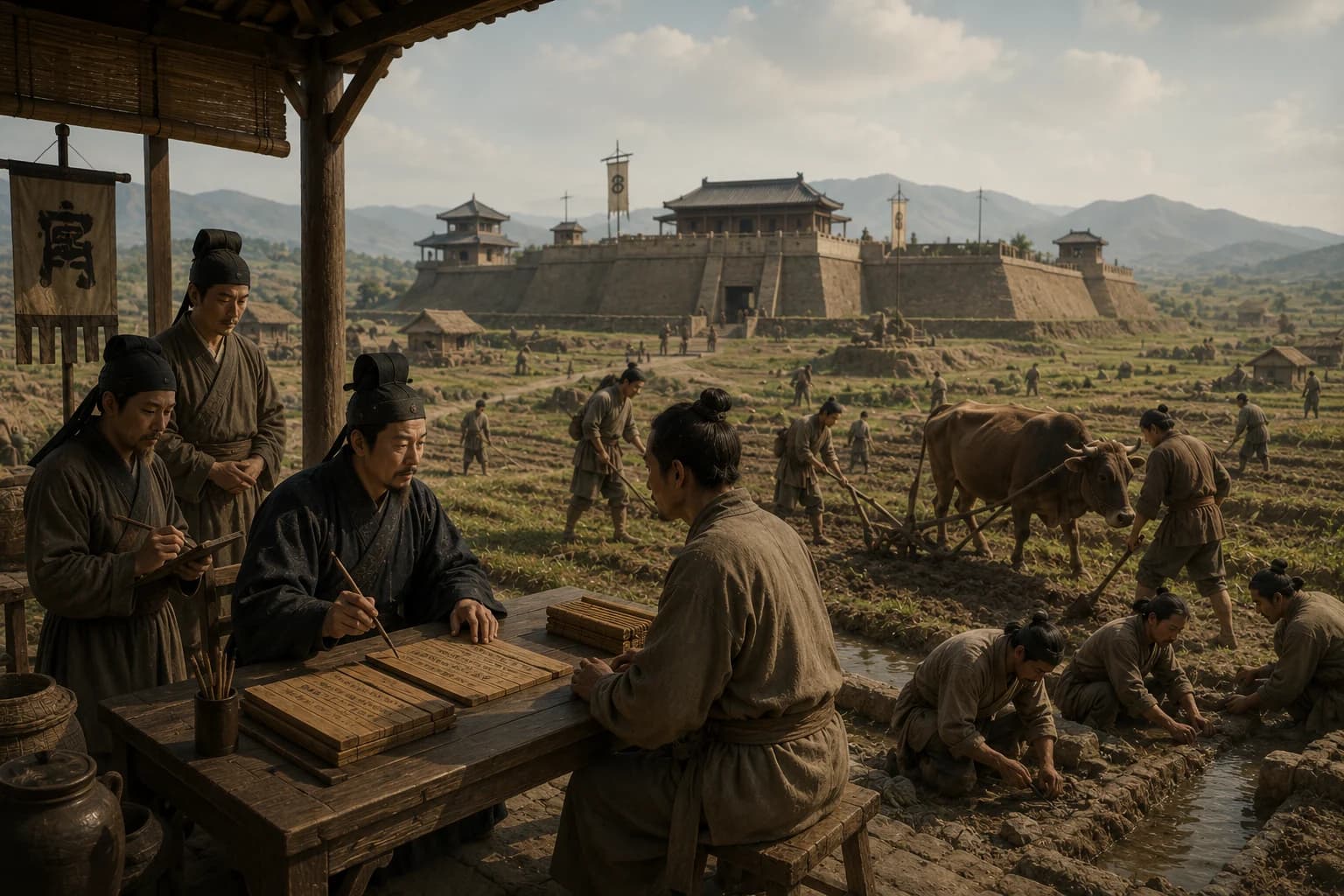
The new dynasty lowered taxes and reduced some labour demands. Farmers needed time to return to fields, restore households, and make the empire productive again.

Han rulers also avoided ruling every region in exactly the same way. Some areas remained under commanderies controlled by officials, while others were granted as kingdoms to imperial relatives or trusted allies.

This balance was risky. Regional kings could become dangerous, but the system helped the dynasty reward loyalty and govern a vast realm before central control was fully secure.

The early Han survived because it gave the empire room to recover.

By the time Liu Bang (Emperor Gaozu) died in 195 BCE, the dynasty was not free from danger. Court politics and regional power still mattered. But the worst instability had been contained.

Rebuilding imperial rule meant making ordinary life less unbearable. Agriculture, tax relief, and political compromise gave the Han the breathing space it needed.

The Reforms of Emperor Wu
141 BCE
Step 3 of 10141 BCEAccessible mode

The Reforms of Emperor Wu

When Emperor Wu came to the throne in 141 BCE, the Han entered a more ambitious phase.

Earlier rulers had focused on recovery and restraint. Emperor Wu wanted a stronger state: one that could command resources, control powerful families, fight frontier enemies, and shape society more directly.

His reign strengthened central authority. Regional kingdoms lost power, imperial officials became more important, and the court intervened more deeply in finance, military policy, and administration.

Under Emperor Wu, the Han stopped merely preserving empire and began actively remaking it.

This shift brought energy and danger. A stronger state could defend frontiers and organise a vast realm, but it also required more taxes, more officials, and more pressure on society.

Emperor Wu's reforms changed the character of Han rule. The dynasty became more centralised, more ideological, and more willing to use imperial power on a grand scale.

Confucianism Becomes State Doctrine
136 BCE
Step 4 of 10136 BCEAccessible mode

Confucianism Becomes State Doctrine

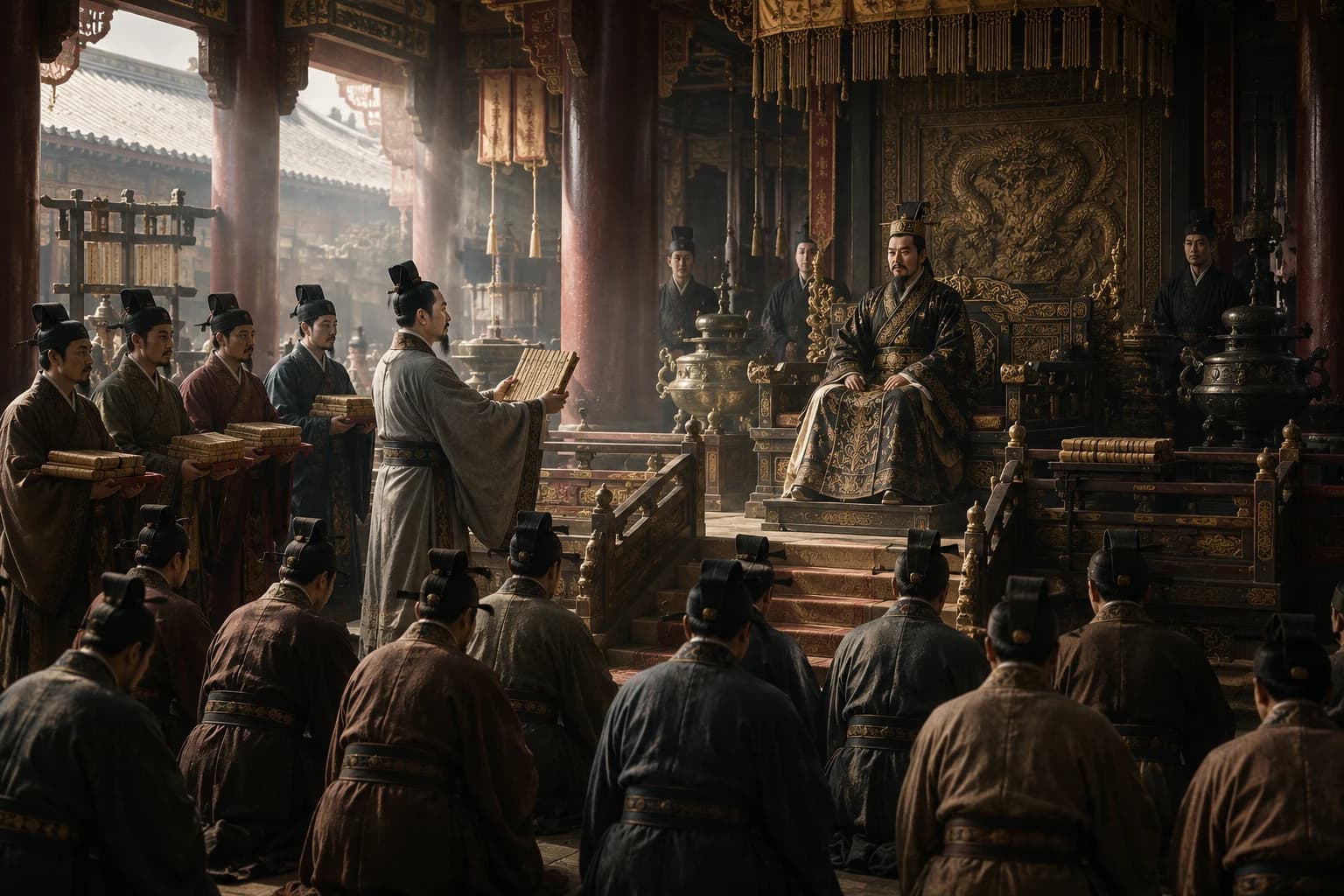
In the reign of Emperor Wu, Confucianism became the main language of Han government.

Confucian teaching emphasised moral rule, hierarchy, ritual, education, and the duties between ruler and subject. This gave the empire a way to present authority as more than force.

The court supported official learning and encouraged the study of classical texts. Scholar-officials became increasingly important as interpreters of proper government.

Confucianism helped turn imperial administration into a moral project.

This did not mean the Han abandoned law, punishment, or practical statecraft. The empire still used strong authority. But Confucian ideas gave that authority a lasting public vocabulary.

The result shaped Chinese bureaucracy for centuries. Education, office, moral conduct, and imperial service became linked in ways that later dynasties would develop even further.

Building the Imperial Bureaucracy
124 BCE
Step 5 of 10124 BCEAccessible mode

Building the Imperial Bureaucracy

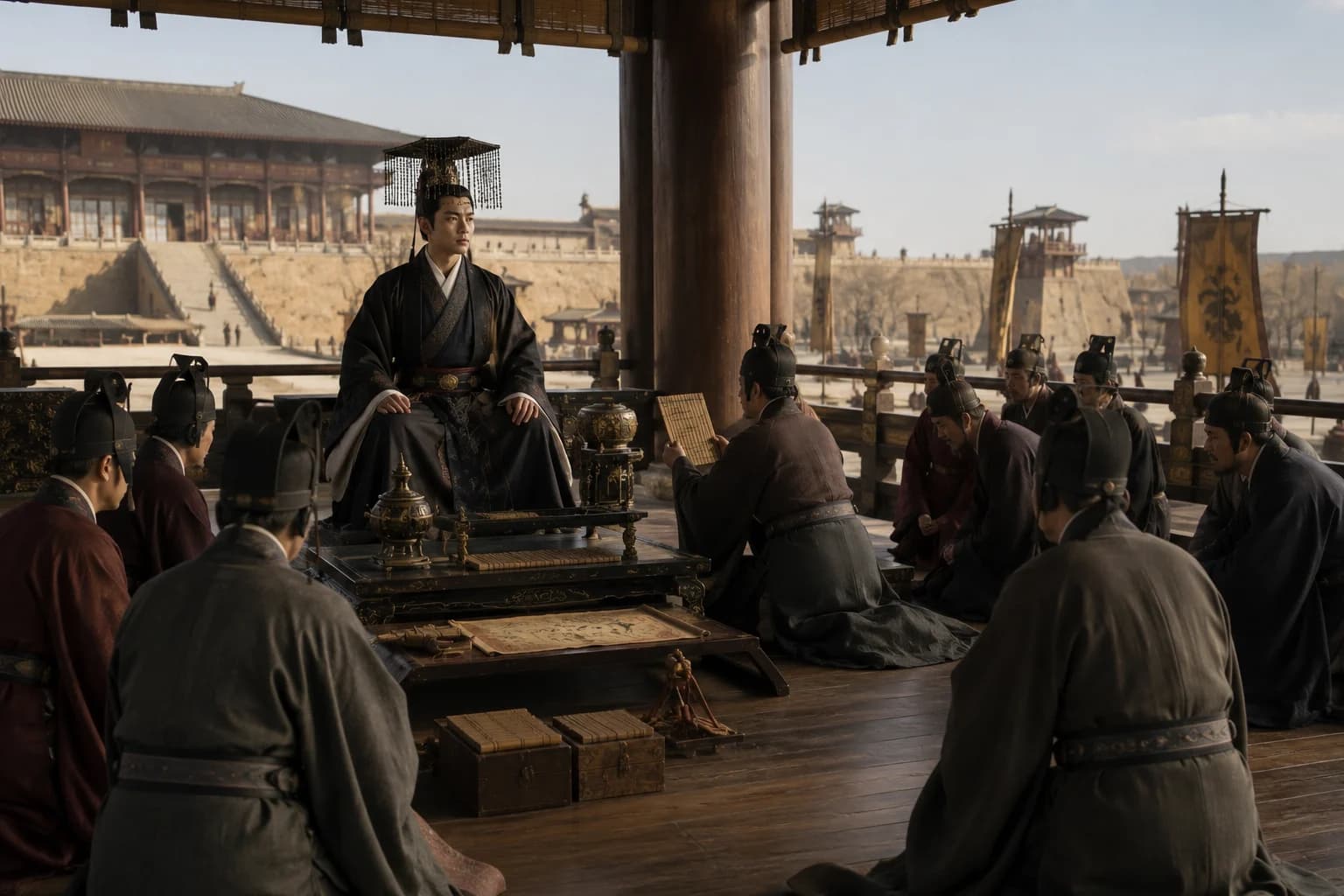
In 124 BCE, the Han strengthened official education by expanding the Imperial Academy.

The empire needed more than soldiers and royal relatives. It needed administrators who could keep records, collect taxes, judge disputes, manage grain, and report to the centre.

Education became a path into service. Students trained in classical learning could be recommended for office, linking merit, study, and imperial administration.

The Han bureaucracy made imperial rule less personal and more institutional.

Standardised administration helped the court govern distant provinces. Officials carried the emperor's authority into local communities while using shared procedures and written records.

This system was never perfectly fair or open. Wealth and family connections still mattered. But the idea that learning could qualify a person for office became central to Chinese political culture.

Campaigns Beyond the Frontier
119 BCE
Step 6 of 10119 BCEAccessible mode

Campaigns Beyond the Frontier

By 119 BCE, Han armies were fighting major campaigns beyond the northern frontier.

The greatest frontier challenge came from the Xiongnu, a powerful nomadic confederation to the north. Earlier Han rulers had often used diplomacy, gifts, and marriage alliances to manage the threat.

Emperor Wu chose a more aggressive strategy. Generals such as Wei Qing and Huo Qubing led large campaigns that pushed deep into Xiongnu territory and changed the balance of power.

The same expansionary age drew Han influence westward into Central Asia, south into former lands, and northeast into the .

Frontier victory made the empire safer, but it also made the empire more expensive.

New territories needed garrisons, officials, roads, supplies, and constant attention. Security came with a heavy fiscal and human cost.

Han expansion showed the strength of the imperial state. It also revealed a permanent tension: the wider the empire reached, the more it had to spend to hold its frontiers.

Opening the Silk Road
138 BCE
Step 7 of 10138 BCEAccessible mode

Opening the Silk Road

In 138 BCE, Emperor Wu sent Zhang Qian west in search of allies against the Xiongnu.

The mission was dangerous and did not achieve its original goal in a simple way. Zhang Qian was captured by the Xiongnu, escaped, travelled through Central Asia, and eventually returned with valuable information.

His reports changed how the Han court understood the western regions. They revealed powerful kingdoms, valuable horses, trade routes, and a wider world beyond the frontier.

Zhang Qian did not build the Silk Road alone, but he helped the Han see where it could lead.

Over time, diplomacy, military posts, merchants, and oasis communities connected China with Central Asia and lands farther west.

Silk, horses, metals, glass, technologies, crops, stories, and ideas moved across these routes. The Han Empire became part of a wider Eurasian network.

Innovation Shapes the Empire
105 CE
Step 8 of 10105 CEAccessible mode

Innovation Shapes the Empire

By the early second century CE, Han innovation was reshaping how the empire recorded, governed, and understood itself.

Paper existed before the famous report associated with Cai Lun in 105 CE, but improvements in papermaking made writing materials more useful and eventually more widespread.

Better writing materials mattered for government. An empire built on records, reports, laws, taxes, and appointments needed reliable ways to store and move information.

Han thinkers and craftsmen also advanced astronomy, mathematics, medicine, engineering, metallurgy, and water management.

Innovation made the Han state easier to administer and easier to remember.

Historical writing became one of the dynasty's great achievements. Sima Qian's Records of the Grand Historian set a powerful model for writing China's past.

These achievements strengthened culture as well as government. The Han became a dynasty remembered not only for conquest, but for knowledge, craft, and written memory.

Crisis and the Fall of the Han
184 CE
Step 9 of 10184 CEAccessible mode

Crisis and the Fall of the Han

In 184 CE, the Yellow Turban Rebellion revealed how badly Han authority had weakened.

The rebellion grew from social strain, local suffering, religious hope, and anger at corruption. Many people no longer believed the dynasty could protect them.

The court itself was divided. Eunuch factions, scholar-officials, imperial relatives, and powerful families struggled for influence while the government lost control in the provinces.

To suppress rebellion, the state relied on regional commanders and local military forces. That solved one problem while creating another.

The Han survived the rebellion, but it did not recover the authority it had lost.

Warlords gained armies, territory, and independent power. The emperor remained a symbol, but real authority increasingly belonged to regional strongmen.

The crisis did not end the Han immediately. It hollowed the dynasty out, making collapse a process rather than a single event.

The Han Legacy
220 CE
Step 10 of 10220 CEAccessible mode

The Han Legacy

In 220 CE, the last Han emperor abdicated, and the dynasty formally came to an end.

By then, real power had already shifted to warlords. Cao Pi, son of Cao Cao, forced Emperor Xian to give up the throne and founded the state of Wei.

The end of the Han opened the Three Kingdoms era, a time of division, warfare, and competing claims to legitimacy.

The dynasty fell, but the Han model survived.

Its legacy was enormous. The Han strengthened imperial bureaucracy, tied government to Confucian learning, expanded the known world of Chinese diplomacy, and shaped ideas of lawful rule.

Later dynasties looked back to the Han as a model of unity and statecraft. The name Han also became central to the identity of China's majority population.

For that reason, the Han was more than a dynasty in the past. It became one of the enduring foundations of Chinese political memory.

Continue reading

Finished The Han Dynasty?

Choose the next story, explore the people behind this one, or trace the line of power that shaped this world.

Browse stories

References

Sources & Further Reading

Reliable sources, primary-source collections and reading paths connected to this page.

A weekly route through history

Find out first about the latest published stories, feature notes and occasional Premium offers in one weekly email.