People

Emperor Gaozu of Han

Emperor Gaozu of Han, born Liu Bang, founded the Han dynasty after defeating Xiang Yu in the Chu-Han War. His reign softened Qin harshness, restored order after civil war, and began an imperial tradition that shaped Chinese government and identity for centuries.

Born
256 BCE
Died
195 BCE
Role
Founder of the Han Dynasty

Founder of the Han Dynasty (256 BC–195 BC)

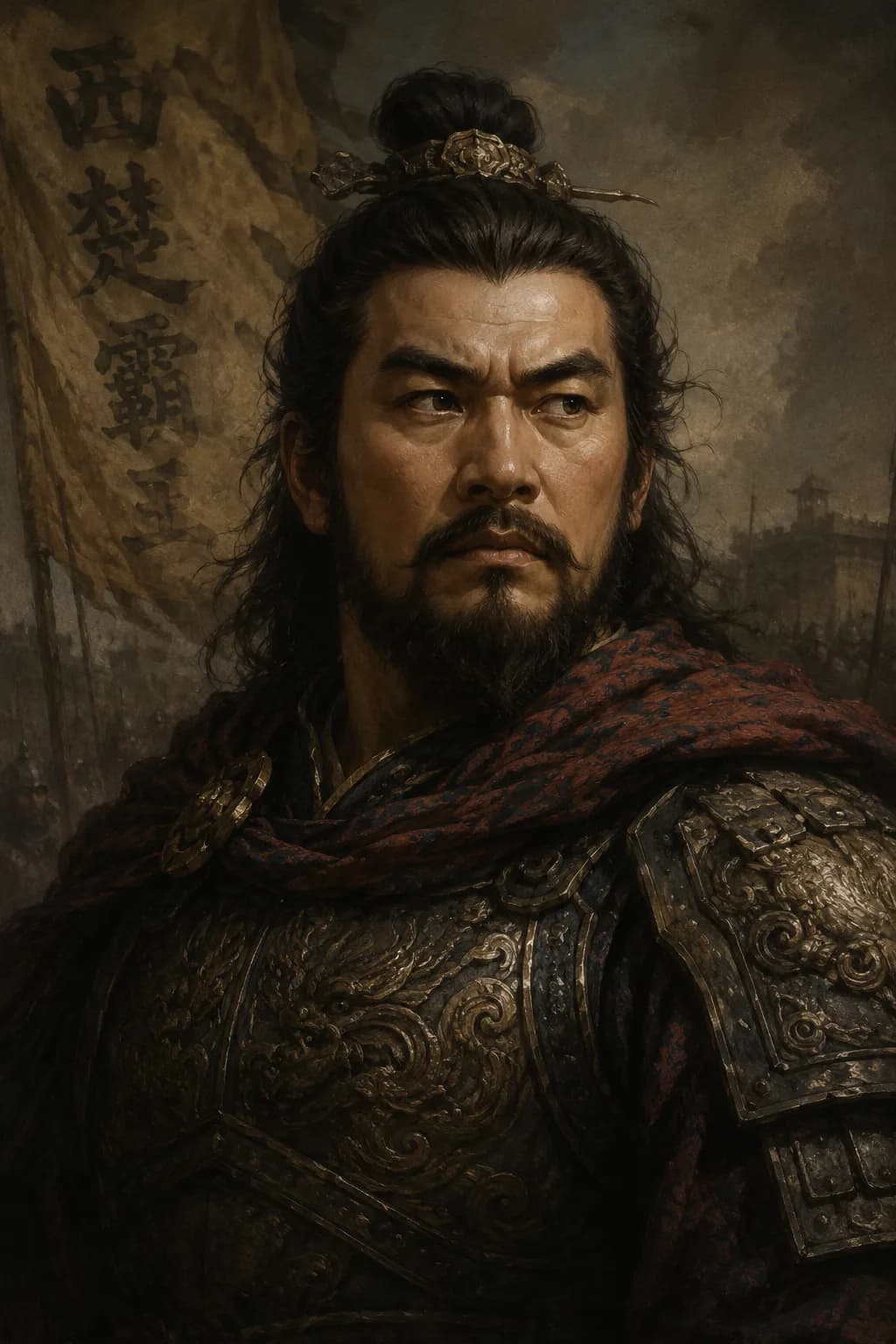
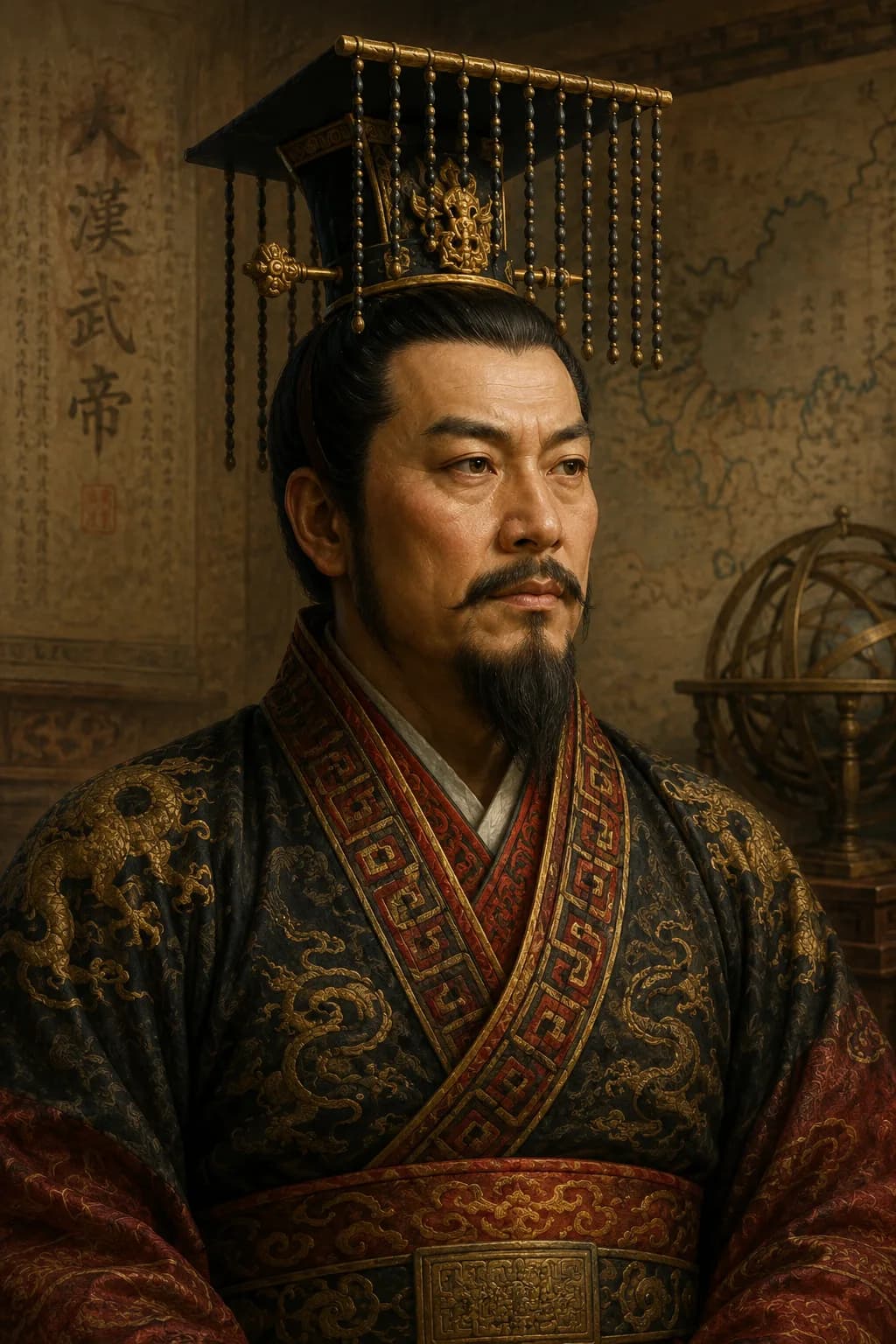
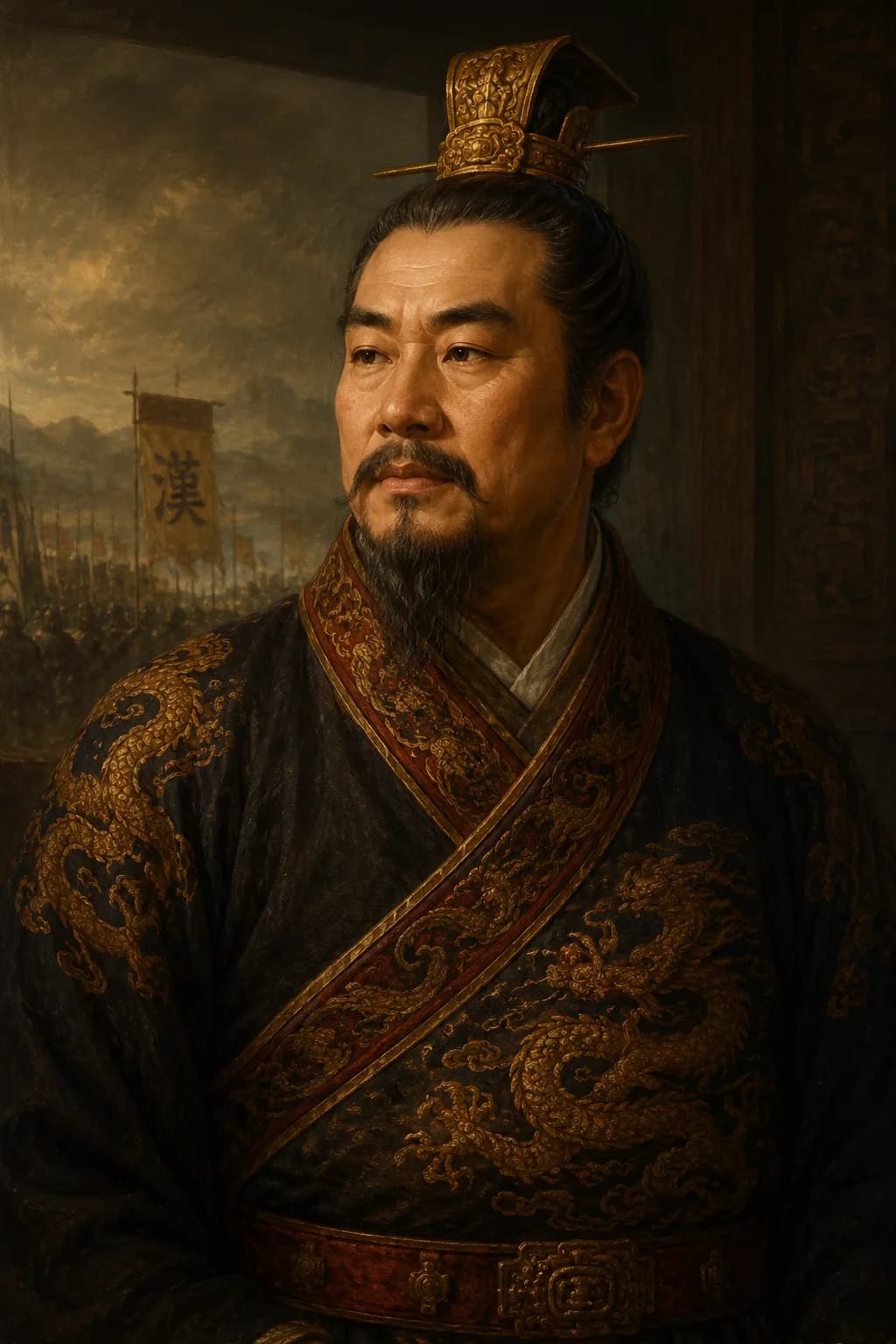
AI-generated portrait of Emperor Gaozu in ancient Chinese imperial robes
AI-assisted historical reconstruction

An illustrative reconstruction based on historical context. It is not a photograph or documentary likeness. Image policy

Quick answer

Emperor Gaozu of Han, born Liu Bang, founded the Han dynasty after defeating Xiang Yu in the Chu-Han War. His reign softened Qin harshness, restored order after civil war, and began an imperial tradition that shaped Chinese government and identity for centuries.

Born
256 BCE
Died
195 BCE
Role
Founder of the Han Dynasty
Years
256-195 BCE
Facts

Emperor Gaozu of Han timeline facts

Selected specifics from this profile's life story.

-256
Humble Beginnings

Liu Bang, later Emperor Gaozu of Han, came from Pei County rather than the hereditary elite, making his rise to imperial power extraordinary in early Chinese history.

-207
Entering Qin Heartland

Liu Bang reached the Qin capital region before Xiang Yu, accepted the dynasty's surrender, and won credit by restraining his troops.

-200s
Balancing Authority

Gaozu balanced commanderies with semi-autonomous kingdoms, rewarding allies while gradually confronting the danger that powerful regional rulers might fracture the empire.

-195
Enduring Impact

Gaozu's legacy rests on founding the Han dynasty, the imperial house whose name became one of the enduring markers of Chinese civilization.

Life Journey

From peasant rebel to imperial founder

Follow the story in a more continuous narrative, with a reading mode that matches how much depth you want.

Complete chronology

-256

Humble Beginnings

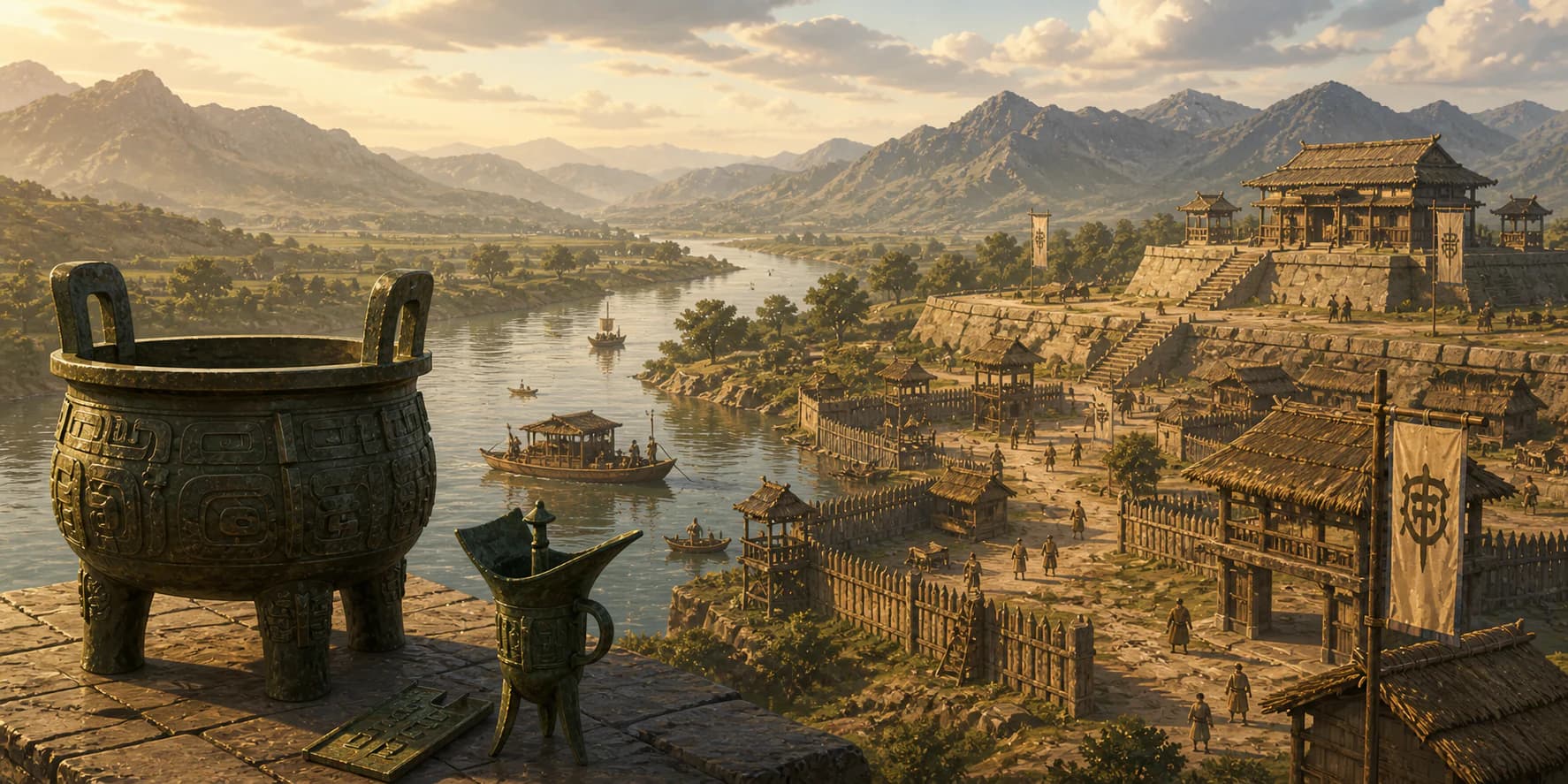
Liu Bang was born in Pei County in the late Warring States world, before Qin unification and long before anyone could imagine him as an emperor. Later tradition remembered him as rough-edged, sociable, fond of drink and not especially deferential to formal learning. Those details should be read cautiously, because Han historians had reasons to make the founder look close to ordinary people, but the broad point stands: Liu Bang was not a prince raised for universal rule. His importance begins there. He entered politics from below, among village networks, local obligations and the daily pressures of Qin administration. That background gave him a different political instinct from aristocratic rivals. He understood the value of personal loyalty, practical compromise and mercy shown at the right moment.

-240s

Minor Official

Before rebellion made him famous, Liu Bang served as a low-ranking Qin official, traditionally described as a pavilion chief. The post was modest, but it mattered. It placed him inside the machinery of an empire that demanded obedience, labor and punishment with extraordinary severity. The famous story of Liu Bang releasing prisoners after some escaped may contain legend, but it captures a real historical tension: Qin rule left little room for failure, and men at the lower edges of authority could be crushed by the same system they served. Whether the episode unfolded exactly as later sources describe, Liu Bang's break with Qin authority turned administrative experience into rebellion. He knew the system from the ground level, and he knew why many people had come to fear it.

-209

Joining Revolt

The Qin empire collapsed quickly because its unity had been imposed faster than political trust could develop. After the Chen Sheng and Wu Guang uprising in 209 BCE, rebellion spread through old regional identities, local grievances and opportunistic leadership. Liu Bang emerged in this unstable world as a leader who could attract men more polished commanders might overlook. His strength was not battlefield brilliance alone. It was coalition building. He accepted advice, rewarded useful service and presented himself as less terrifying than the regime he opposed. In a landscape crowded with rebel kings, restored nobles and ambitious generals, that flexibility helped him survive. His rise was not inevitable; it depended on reading instability better than men with stronger pedigrees.

-207

Entering Qin Heartland

In 207 BCE Liu Bang entered the Qin heartland and accepted the surrender of Ziying, the last Qin ruler. The moment was politically delicate. A conqueror who allowed plunder could terrify the population and lose legitimacy before power had even been secured. Liu Bang instead became associated with restraint, including the traditional account that he simplified harsh Qin laws into a few basic prohibitions. The detail may have been polished by later Han memory, but it expresses a genuine strategy. Liu Bang offered relief from Qin severity. That contrasted sharply with Xiang Yu, whose military charisma was matched by destructive violence. The race into Qin territory did not end the struggle, but it gave Liu Bang a claim to rule that was moral as well as military.

-206–-202

Struggle with Xiang Yu

After Qin fell, the rebel alliance fractured into the Chu-Han War. Xiang Yu looked like the greater warrior: aristocratic, charismatic and capable of terrifying victories. Liu Bang was repeatedly beaten, humiliated and forced to retreat. Yet his deeper advantage lay in endurance. He relied on advisers and commanders such as Zhang Liang, Xiao He and Han Xin, delegated when others clung to glory, and used the resources of the Guanzhong region to keep armies supplied. Xiang Yu won battles but alienated allies; Liu Bang lost battles but kept rebuilding coalitions. The contest was decided at Gaixia in 202 BCE, where Xiang Yu was defeated and died. Liu Bang's victory showed that founding an empire required more than heroic force. It required administration, persuasion and the ability to survive disgrace.

-202

Founding the Han

When Liu Bang took the imperial title in 202 BCE, he did not create China from nothing. The Qin had already built the idea and machinery of empire: commanderies, standardized administration, roads, laws and central authority. Gaozu's achievement was to make that imperial order more survivable. He preserved much of the Qin administrative skeleton while easing its harshest burdens, lowering taxes and labor demands where possible, and presenting Han rule as restoration after overreach. This was not gentle government in a modern sense; the new dynasty still depended on hierarchy, punishment and military force. But Gaozu understood that an empire exhausted by war needed legitimacy as much as control. Han success began with that adjustment.

-200s

Balancing Authority

The early Han settlement was a compromise between central empire and regional kingship. Gaozu rewarded relatives and former allies with kingdoms, partly because he needed loyalty after years of war and partly because direct central control everywhere was not yet realistic. The danger soon became obvious. Independent-minded kings could become rivals, and the emperor spent much of his reign suppressing or replacing those whose power threatened the throne. This gave early Han politics a hard edge: mercy toward the population could coexist with ruthlessness toward political competitors. Gaozu's rule therefore built stability through a mixture of moderation and elimination. The dynasty he founded was durable, but its first foundations were laid in suspicion as well as reconciliation.

-190s

Securing the Dynasty

Gaozu's later reign was not a calm victory lap. The Xiongnu on the northern frontier exposed the limits of Han power, especially after Gaozu's difficult campaign near Baideng in 200 BCE. At court, succession politics were shaped by Empress Lu, by rival consorts and by the emperor's own changing preferences. Gaozu considered replacing the heir, Liu Ying, but the succession held. These tensions mattered because dynasties often fail at precisely the moment a founder dies. Gaozu left behind institutions strong enough to continue, but not a perfectly settled court. After his death in 195 BCE, Empress Lu became the dominant political figure, proving that the Han state was already more complex than the founder's personal authority.

-195

Enduring Impact

Emperor Gaozu died in 195 BCE, but the dynasty he founded became one of the central reference points of Chinese history. Later Han rulers expanded, institutionalized and ideologically refined what he began, especially under Emperor Wu. Gaozu's personal reputation remained unusual: a founder remembered as earthy, pragmatic and sometimes coarse, but also politically gifted enough to defeat men who looked more impressive. His importance lies in converting rebellion into government. He inherited Qin unification, corrected enough of Qin's severity to make empire acceptable, and created a ruling house that endured, with interruption, for roughly four centuries. The word Han would outlive the dynasty itself as a cultural identity. That is the scale of his achievement.

Continue in context

Connected stories

Move from the profile into the wider events and settings this figure belongs to.

Tertiary paths

Content note

This profile is written for educational use and connects to related Stories of History pages. The main portrait is an AI-assisted historical reconstruction, included as an illustrative aid rather than documentary evidence. Image policy

References

Sources & Further Reading

Reliable reference works, archives and reading paths connected to this profile.

Further reading

  1. Encyclopaedia Britannica, Search results for Emperor Gaozu of Han,” accessed June 2026.Open source
  2. WorldCat, Books and library holdings for Emperor Gaozu of Han,” accessed June 2026.Open source

Primary sources

  1. Library of Congress, Search results for Emperor Gaozu of Han,” accessed June 2026.Open source

Reviewed claim sources

Loading reviewed claim sources...

A weekly route through history

Find out first about the latest published stories, feature notes and occasional Premium offers in one weekly email.