People

Lu Buwei

Lu Buwei was a merchant-politician and Qin chancellor who helped King Zhuangxiang gain the throne, served as regent for young King Zheng, sponsored the Lushi Chunqiu and died in 235 BC.

Born
291 BCE
Died
235 BCE
Role
Chancellor of Qin

Qin Chancellor (291 BC-235 BC)

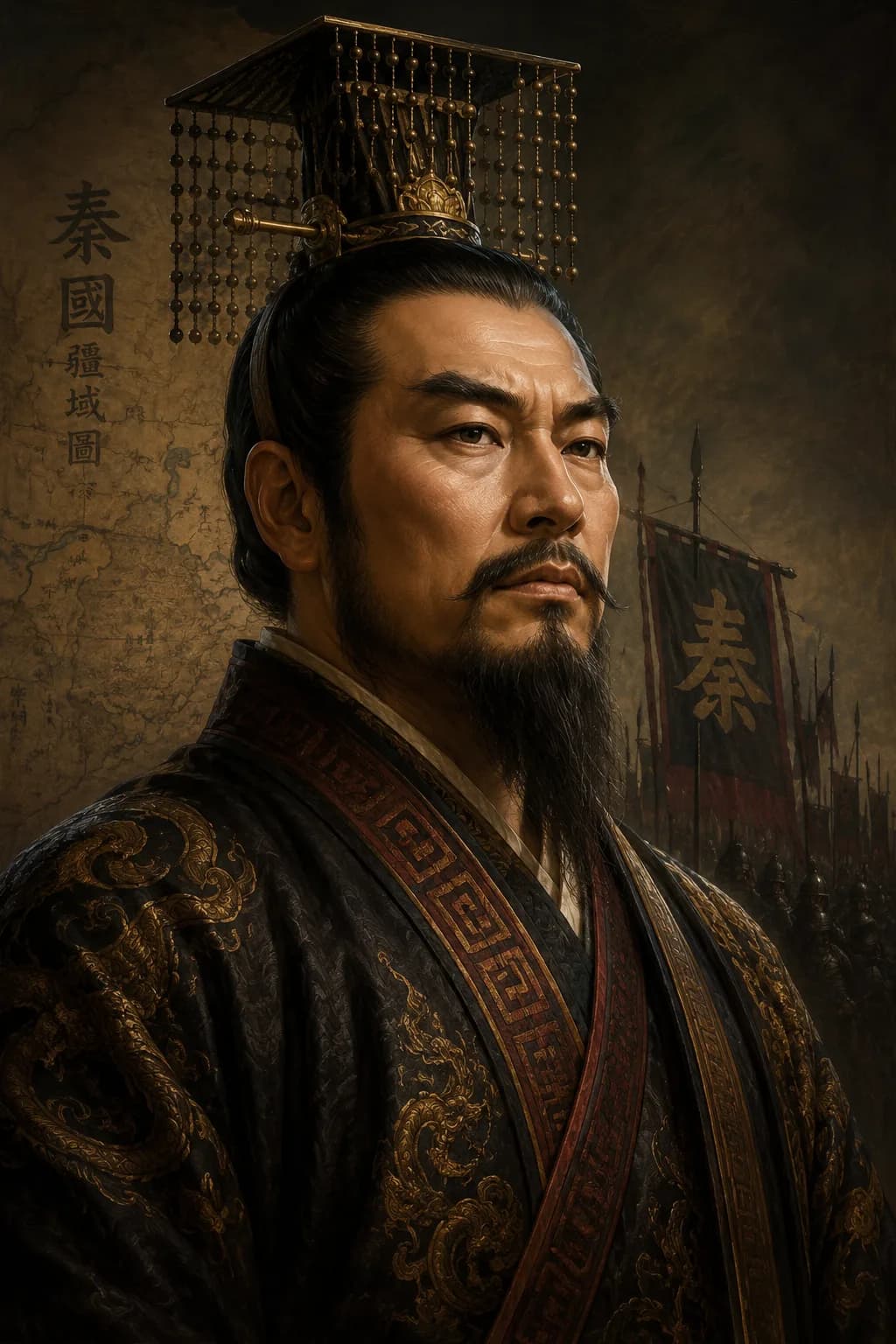
AI-generated portrait of Lu Buwei in Qin court robes with maps and bamboo records
AI-assisted historical reconstruction

An illustrative reconstruction based on historical context. It is not a photograph or documentary likeness. Image policy

Quick answer

Lu Buwei was a merchant-politician and Qin chancellor who helped King Zhuangxiang gain the throne, served as regent for young King Zheng, sponsored the Lushi Chunqiu and died in 235 BC.

Born
291 BCE
Died
235 BCE
Role
Chancellor of Qin
Years
291-235 BCE
Quick facts

Profile details

Additional identity and tagging details that are not already covered in the introduction.

Also known as
Marquis Wenxin
Facts

Lu Buwei timeline facts

Selected specifics from this profile's life story.

-291
Merchant in a Warring World

Lu Buwei began as a wealthy merchant in a period when money, diplomacy and hostage politics could open paths into royal power.

-260s
Backing Yiren

Lu Buwei helped the Qin prince Yiren, later King Zhuangxiang, move from hostage politics toward succession.

-239
The Annals of Lu Buwei

Lu Buwei sponsored the Lushi Chunqiu, a major compendium of Warring States thought associated with his court circle.

-238 to -235
Fall From Power

A court scandal and rebellion connected with Lao Ai helped bring Lu Buwei down; he died in exile in 235 BC.

Life Journey

From merchant investor to Qin kingmaker

Follow the story in a more continuous narrative, with a reading mode that matches how much depth you want.

Complete chronology

-291

Merchant in a Warring World

Lu Buwei's rise was unusual because he did not begin as a hereditary prince or battlefield commander. He was remembered as a wealthy merchant who understood value in political as well as commercial terms. The Warring States world created opportunities for men who could move between courts, use wealth strategically and read the ambitions of rulers. Qin's royal politics offered one such opening. Hostage arrangements between states placed princes in vulnerable positions far from home. Lu Buwei saw that a neglected Qin prince in Zhao could become far more than a stranded royal: he could become an investment in the future of the strongest state in China.


-260s

Backing Yiren

Yiren, a Qin prince held in Zhao, did not initially look like the obvious heir to Qin. Lu Buwei used wealth, persuasion and court connections to improve Yiren's prospects, especially through relationships inside the Qin royal household. The later story is layered with gossip and political suspicion, including rumours about King Zheng's parentage that should be handled cautiously. The secure political point is dramatic enough: Lu Buwei helped transform Yiren's position and was rewarded when Yiren eventually became King Zhuangxiang of Qin. A merchant had entered the highest level of Warring States politics by turning dynastic vulnerability into opportunity.

-249

Chancellor of Qin

King Zhuangxiang's reign was brief, but Lu Buwei's influence remained. When Zheng became king as a young teenager in 247 BC, Lu Buwei stood near the centre of government. Qin was already the strongest Warring State, with institutions hardened by generations of reform and war. The regency years demanded continuity. Armies still campaigned, administration continued and rivals watched for weakness. Lu Buwei's authority helped steady the court, but it also made him a potential obstacle once Zheng matured. A young king who intended to rule directly could not forever tolerate a minister whose networks, reputation and past favours made him almost a second centre of gravity.

-239

The Annals of Lu Buwei

Lu Buwei was not only a court manager. He also sponsored intellectual production, most famously the Lushi Chunqiu, or Annals of Lu Buwei. The work gathered ideas from the rich argumentative world of the late Warring States period, when thinkers debated rulership, seasons, ritual, law, diplomacy and cosmic order. That patronage shows a different side of Qin politics. The state is often remembered only for Legalist severity, but its court also attracted advisers and texts. Lu Buwei's project suggested that government required broad knowledge as well as command. In hindsight, it also marks a road Qin did not fully take after Zheng's personal rule hardened.

-238 to -235

Fall From Power

In 238 BC, a rebellion connected with Lao Ai and the queen dowager gave King Zheng the chance to crush rival court factions. Lu Buwei was implicated by association and lost the trust that had protected him. He was removed from power, later ordered away from the capital region and died by suicide in 235 BC. His fall cleared the path for Zheng's full personal authority and the final campaigns of conquest. Lu Buwei's life therefore sits just before the empire begins: he was crucial to the political world that produced King Zheng, yet he did not survive to shape the imperial order that Zheng created.

Continue in context

Connected stories

Move from the profile into the wider events and settings this figure belongs to.

Tertiary paths

Content note

This profile is written for educational use and connects to related Stories of History pages. The main portrait is an AI-assisted historical reconstruction, included as an illustrative aid rather than documentary evidence. Image policy

References

Sources & Further Reading

Reliable reference works, archives and reading paths connected to this profile.

Further reading

  1. Encyclopaedia Britannica, Search results for Lu Buwei,” accessed June 2026.Open source
  2. WorldCat, Books and library holdings for Lu Buwei,” accessed June 2026.Open source

Primary sources

  1. Library of Congress, Search results for Lu Buwei,” accessed June 2026.Open source

Reviewed claim sources

Loading reviewed claim sources...

A weekly route through history

Find out first about the latest published stories, feature notes and occasional Premium offers in one weekly email.