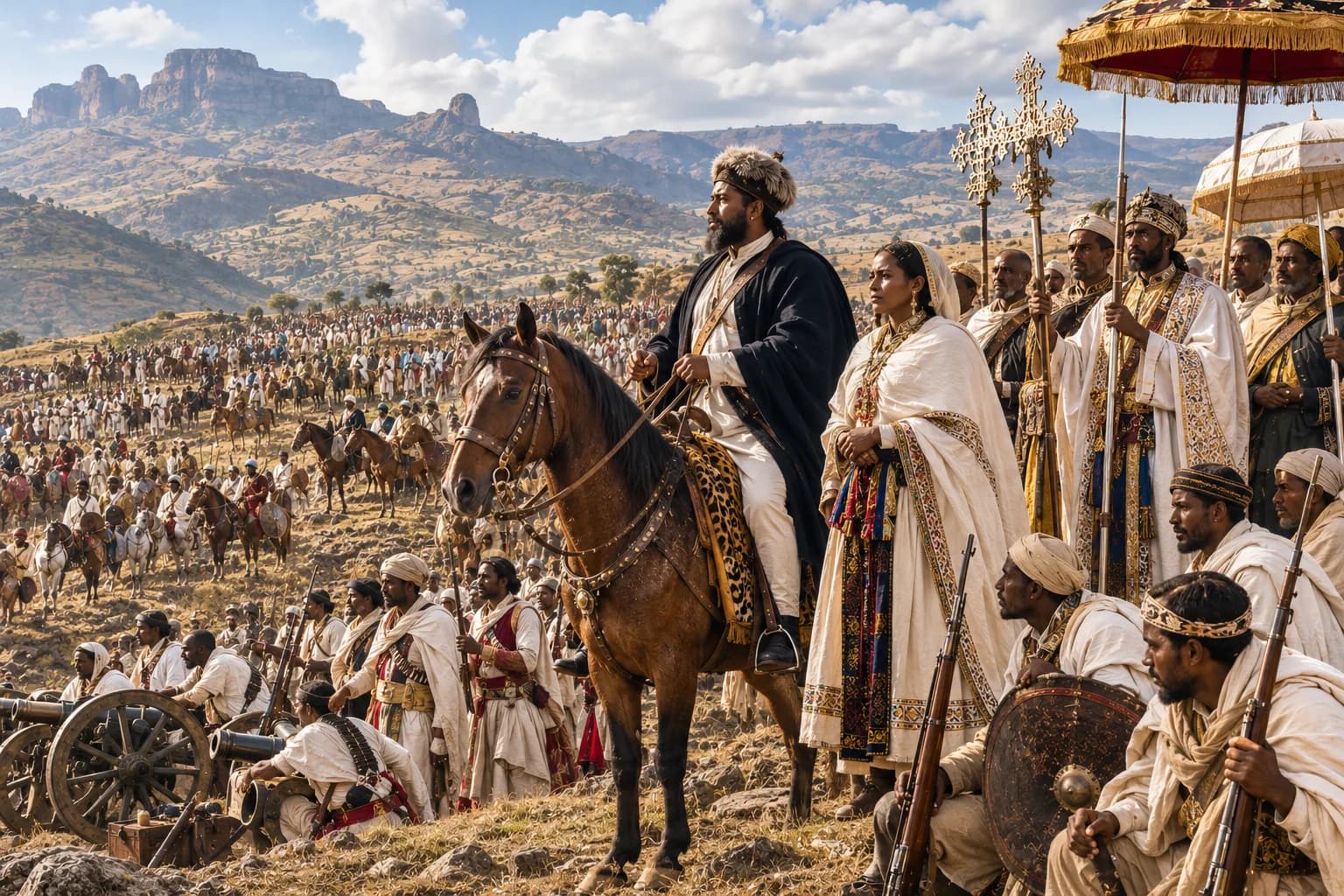
An Ethiopian emperor on horseback with clergy, soldiers and imperial attendants in the Ethiopian highlands.
Free Story

The Ethiopian Empire

Ethiopia survived the age of empire by remaking empire on its own terms, until the monarchy could no longer contain the pressures it had helped create.

10 chapters · 20 min read

Next
Context

Introduction

Overview

The modern Ethiopian Empire was rebuilt in the nineteenth century through centralisation, war, Orthodox imperial legitimacy, territorial expansion and resistance to colonial conquest. This story follows Tewodros II, Yohannes IV, Menelik II, the victory at Adwa, Haile Selassie's monarchy, Fascist Italy's invasion, liberation in 1941 and the 1974 revolution that ended imperial rule.

What you'll learn: You will trace how Ethiopia rebuilt imperial power, defended independence, modernised unevenly and finally saw monarchy give way to revolution.

Key forces

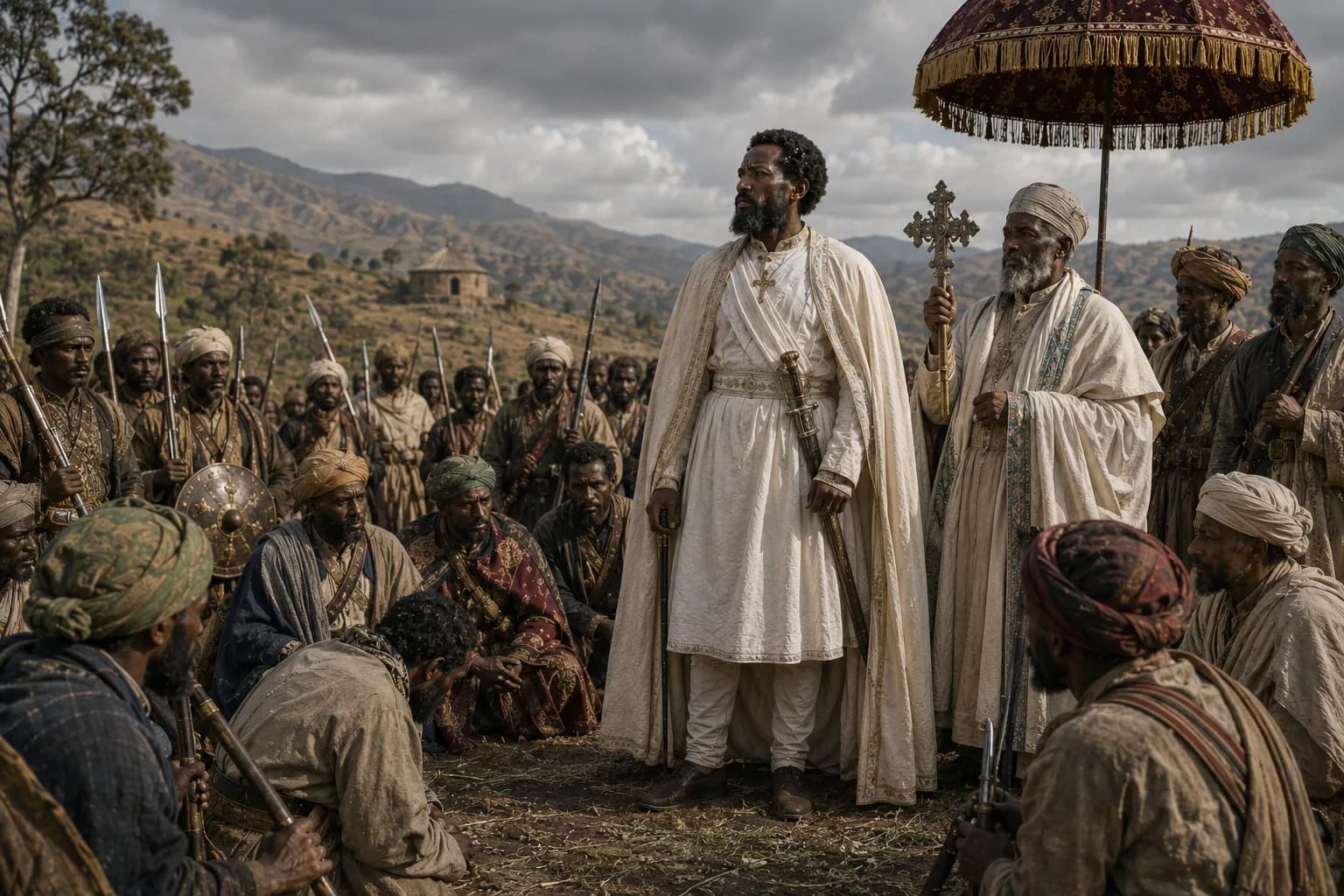
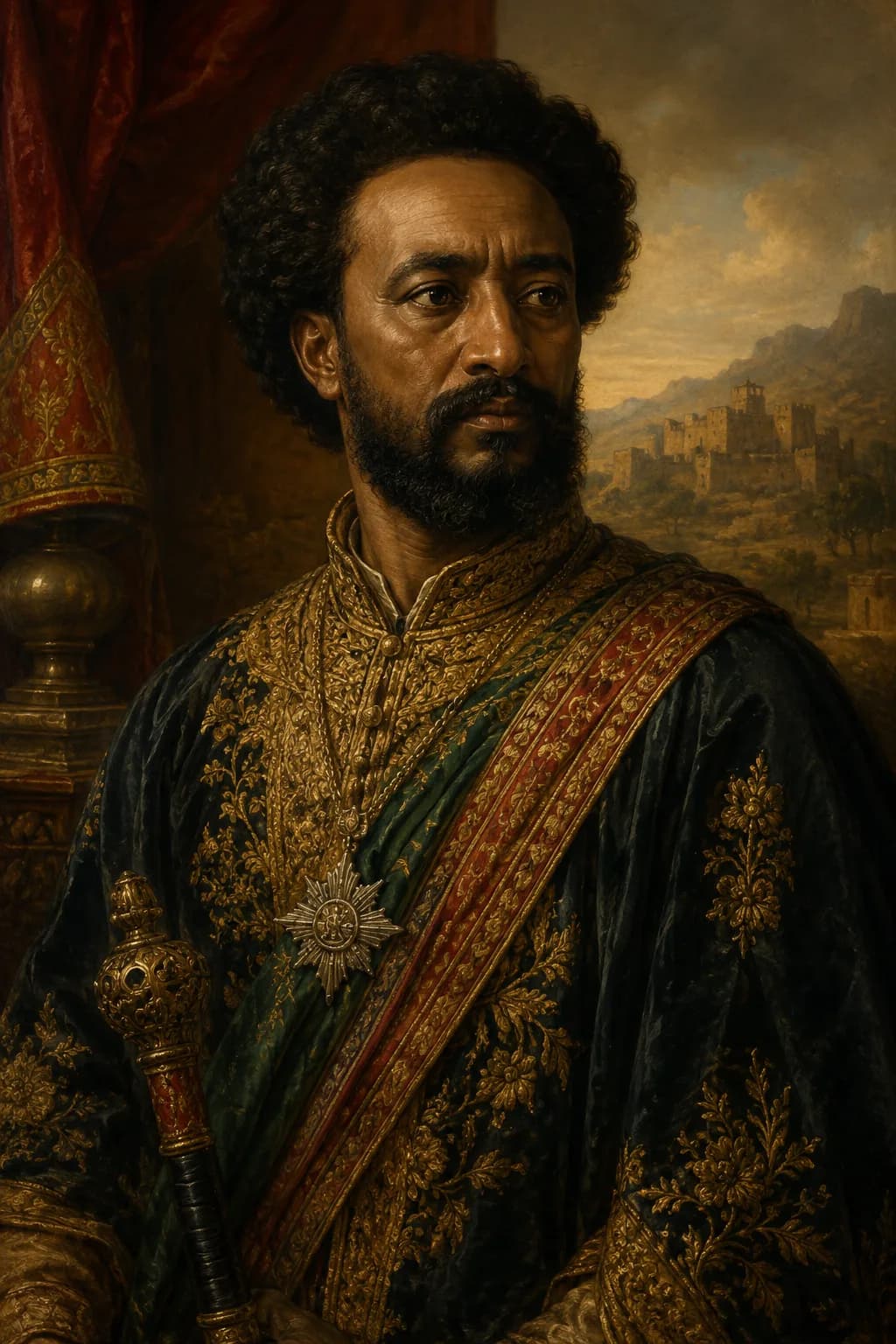
Tewodros II stands with Ethiopian clergy, soldiers and regional followers in the highlands as he tries to reunify the empire.
1855 CE
Step 1 of 101855 CEAccessible mode

Tewodros Reunifies Ethiopia

In 1855, Tewodros II became emperor and tried to turn a divided Ethiopia back into a unified state.

For decades, the empire had been weakened by the Era of the Princes. Regional nobles, military chiefs and local rulers held much of the real power, while emperors often struggled to command beyond their immediate supporters.

Tewodros wanted to break that pattern. He defeated rivals, challenged the authority of powerful nobles and tried to make imperial rule mean something practical again.

Military reform stood at the centre of his project. He sought a more disciplined army, better weapons and artillery, and a state that could command soldiers without depending entirely on regional magnates.

Tewodros imagined an empire where the emperor was more than a sacred name.

His ambition also produced resistance. Nobles, clergy and regional leaders had reasons to fear a stronger centre. Tewodros reopened the possibility of a unified Ethiopia, but the struggle to make that unity durable would outlive him.

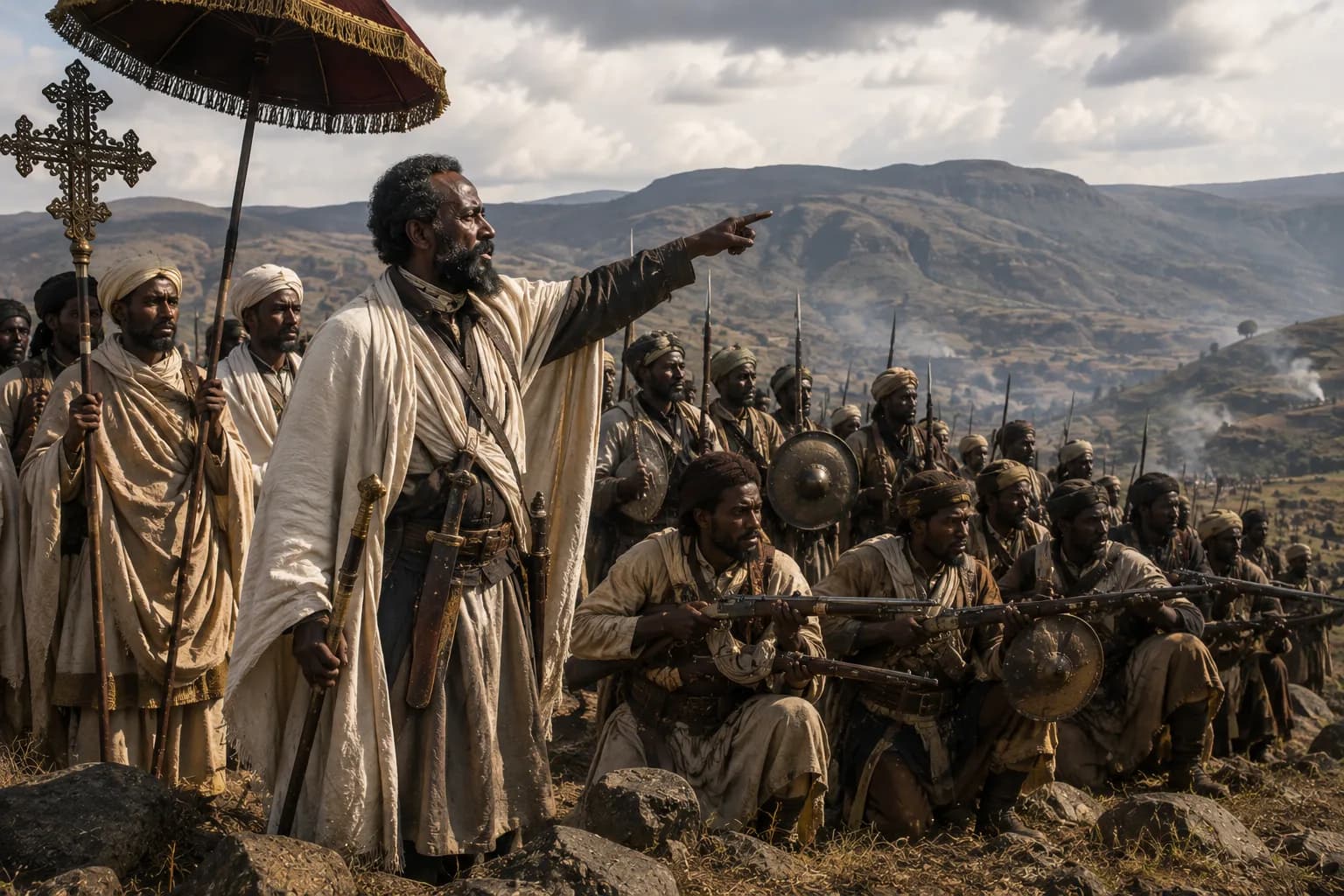
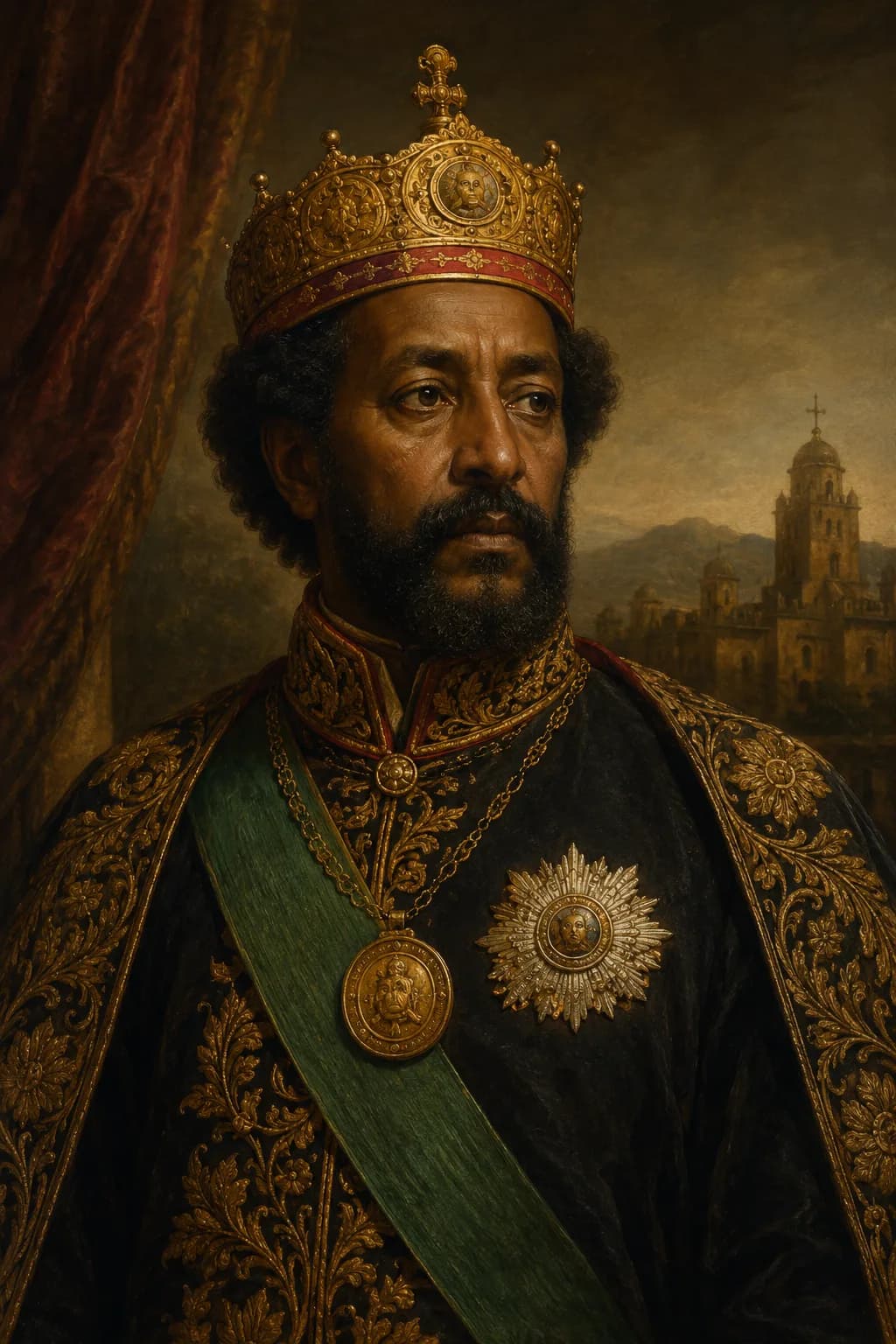
Yohannes IV directs Ethiopian soldiers in the highlands as the empire prepares to defend its frontiers.
1872 CE
Step 2 of 101872 CEAccessible mode

Yohannes Defends the Empire

In 1872, Yohannes IV became emperor and made defence of the empire the centre of his reign.

Yohannes ruled from a northern power base and worked to restore imperial authority after the fall of Tewodros. He had to manage ambitious regional rulers while presenting himself as the legitimate guardian of the empire.

External pressure made that task urgent. Egypt pushed south from the Red Sea and Sudanese frontiers, hoping to extend influence into Ethiopian territory.

Yohannes defeated Egyptian forces in the 1870s, proving that Ethiopia could still defend itself against better-equipped invaders. Later, the Mahdist state in Sudan became another serious threat on the western frontier.

For Yohannes, imperial legitimacy was tied to defence, faith and command.

Orthodox Christianity remained central to his authority. Yohannes used the church as a source of unity and legitimacy, even as the empire's regions and peoples remained politically complex.

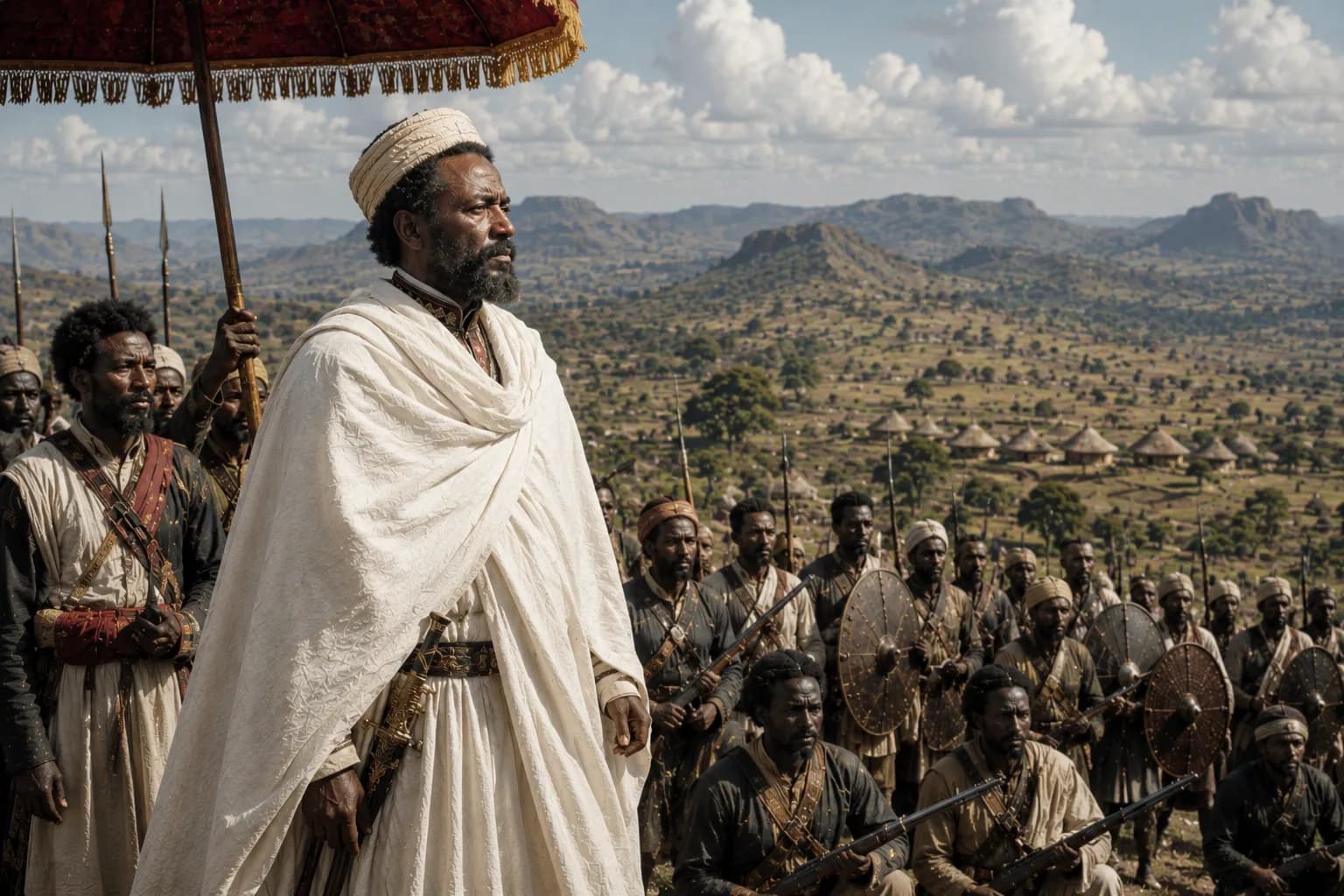
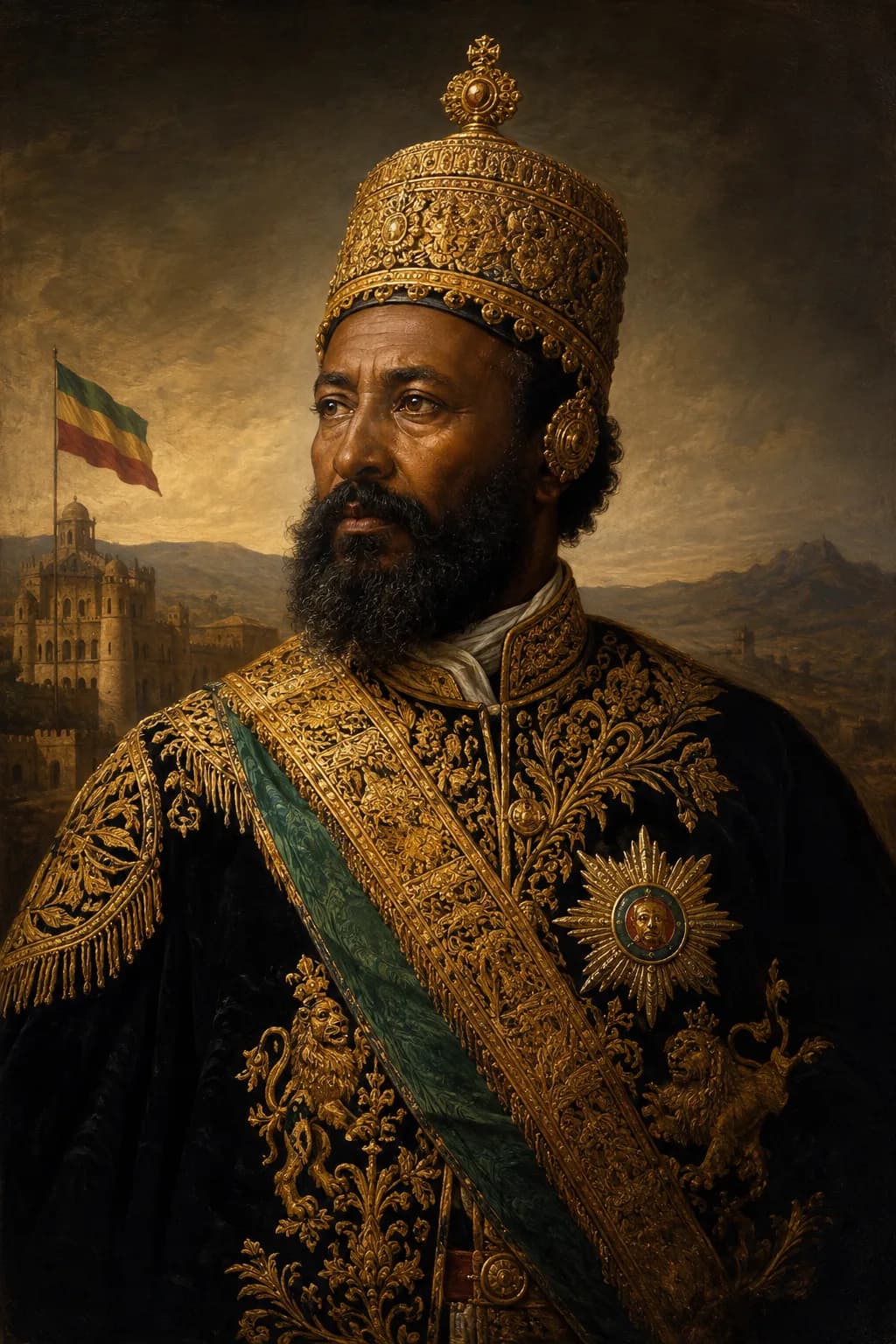
Menelik II looks over southern highland territories with armed followers during Ethiopia's imperial expansion.
1889 CE
Step 3 of 101889 CEAccessible mode

Menelik Creates Modern Ethiopia

In 1889, Menelik II became emperor and reshaped Ethiopia through expansion, diplomacy and state-building.

Menelik's strength came from Shewa, a southern highland kingdom that had grown in wealth and military importance. From that base, he became the most powerful rival to Yohannes IV and then claimed the imperial throne.

Under Menelik, imperial expansion incorporated large southern and eastern territories. This helped establish much of Ethiopia's modern territorial shape.

Expansion created opportunity. It gave the empire land, tribute, soldiers, trade routes and a stronger position in the Horn of Africa.

Menelik's Ethiopia was both an old empire restored and a new empire expanding.

But incorporation also created tensions. Different peoples were brought under imperial rule in unequal ways, and the growing power of the centre could feel like domination from Addis Ababa and Shewa.

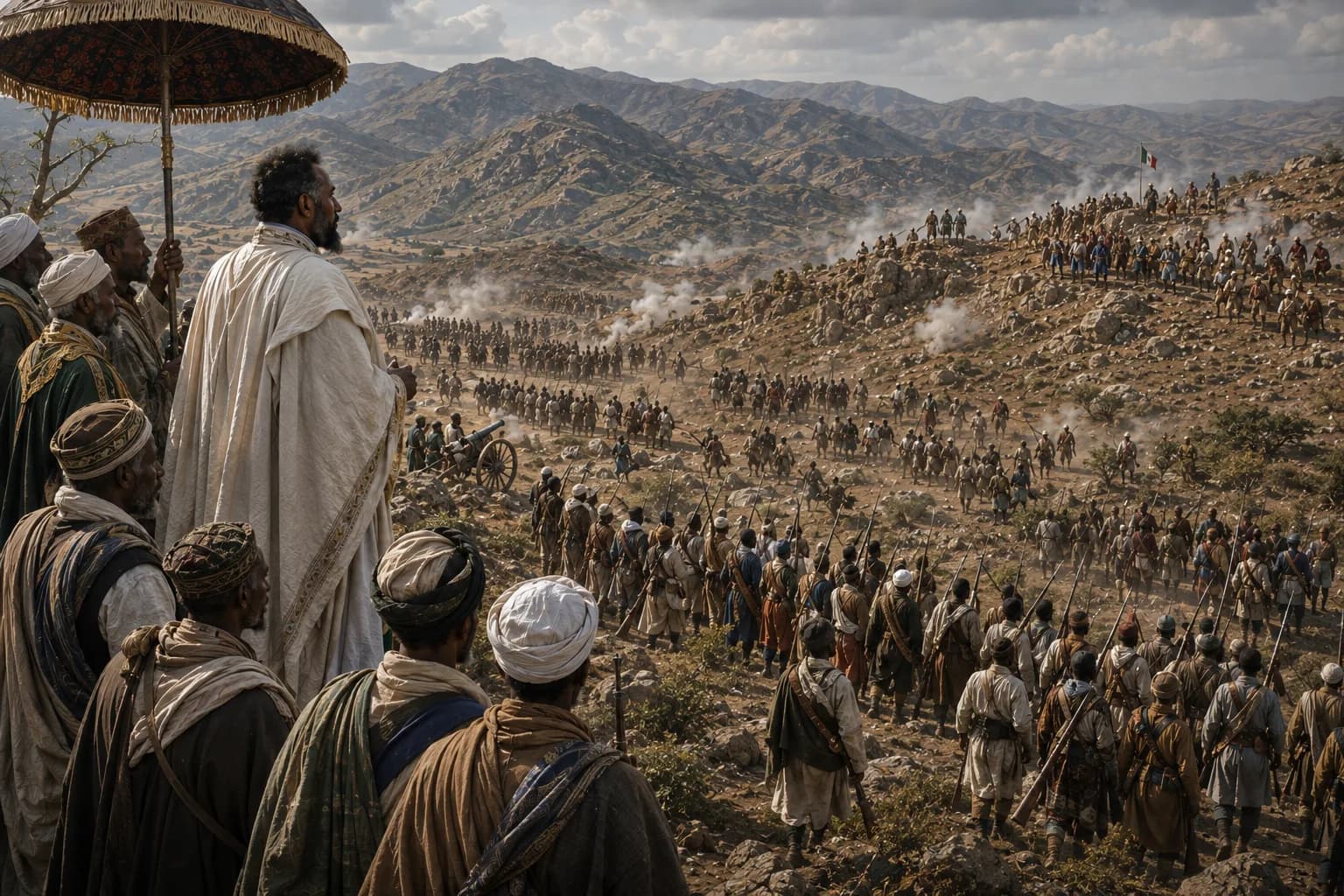
Ethiopian forces under Menelik II face Italian troops in the mountainous battlefield at Adwa.
1896 CE
Step 4 of 101896 CEAccessible mode

Victory at Adwa

In 1896, Ethiopia defeated Italy at the Battle of Adwa and preserved its independence.

Italy had tried to turn treaties, diplomacy and military pressure into control over Ethiopia. Menelik refused to accept a relationship that reduced his empire's sovereignty.

When Italian forces invaded from Eritrea, Menelik and Empress Taytu mobilised a large Ethiopian army. Regional commanders, nobles and soldiers gathered around the defence of the empire.

At Adwa, Ethiopian forces defeated the Italian army decisively. The result forced Italy to recognise Ethiopia's independence and shocked a world used to European colonial victories.

Adwa made Ethiopian sovereignty visible to the world.

The victory became an extraordinary symbol of African resistance. At the height of European colonial expansion, Ethiopia had defended itself and remained independent.

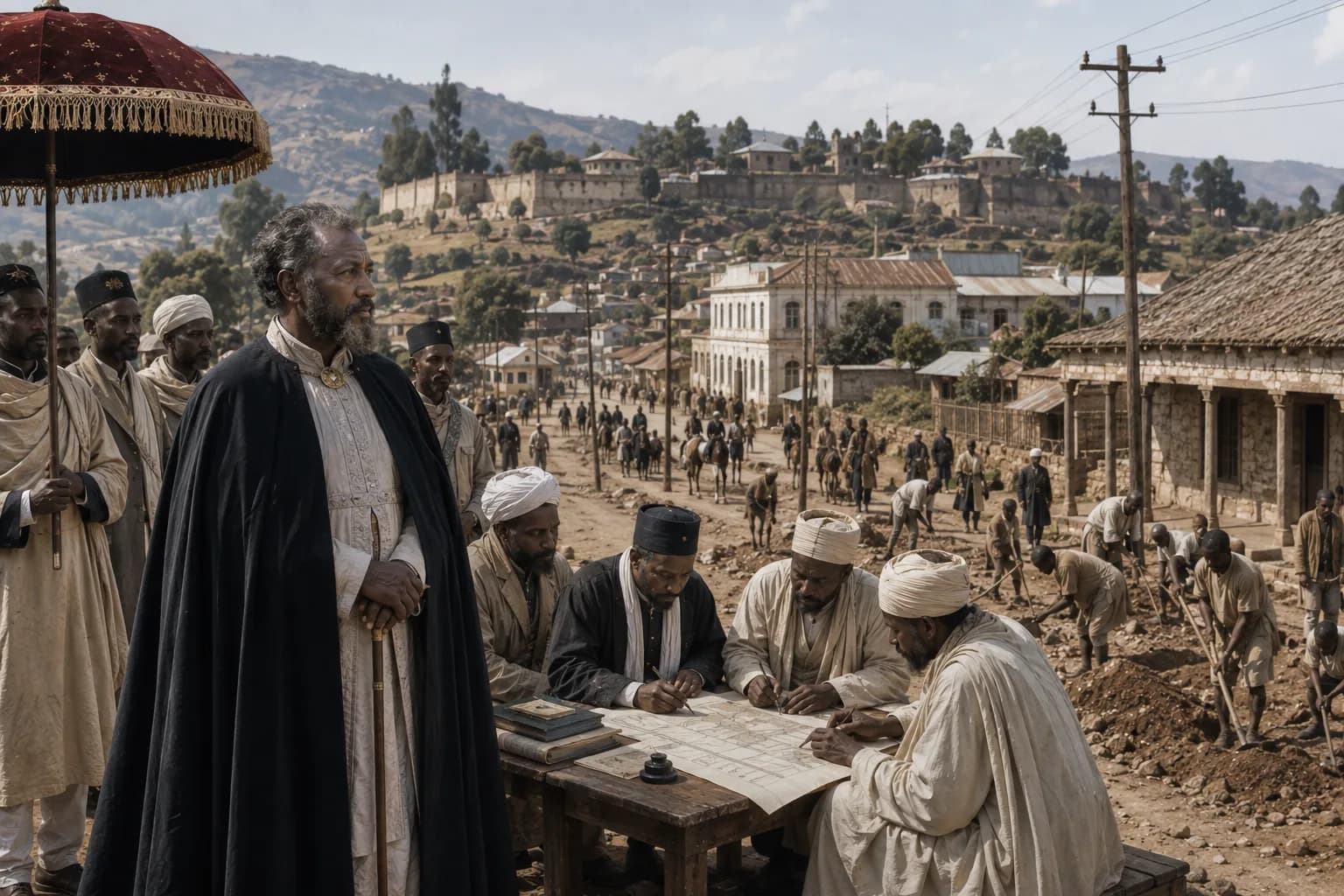
Menelik II observes plans, road work and telegraph lines as Addis Ababa and the imperial state modernise.
1908 CE
Step 5 of 101908 CEAccessible mode

Building a Modern Imperial State

After Adwa, Menelik II used modernisation to strengthen the imperial centre.

Addis Ababa became the heart of the empire. From the capital, the court could organise diplomacy, administration and reform more effectively than older patterns of mobile or regional rule allowed.

Roads, telegraph lines, postal services, schools, banking and new ministries helped the state reach farther. The railway toward Djibouti connected Ethiopia more closely to the Red Sea and global trade.

Modernisation was practical. It helped move information, soldiers, officials and goods. It also showed foreign powers that Ethiopia intended to act as a modern sovereign state.

The empire modernised from the centre outward.

Yet Ethiopia remained politically and socially diverse. New institutions strengthened the emperor and capital, but they did not make every region experience imperial rule in the same way.

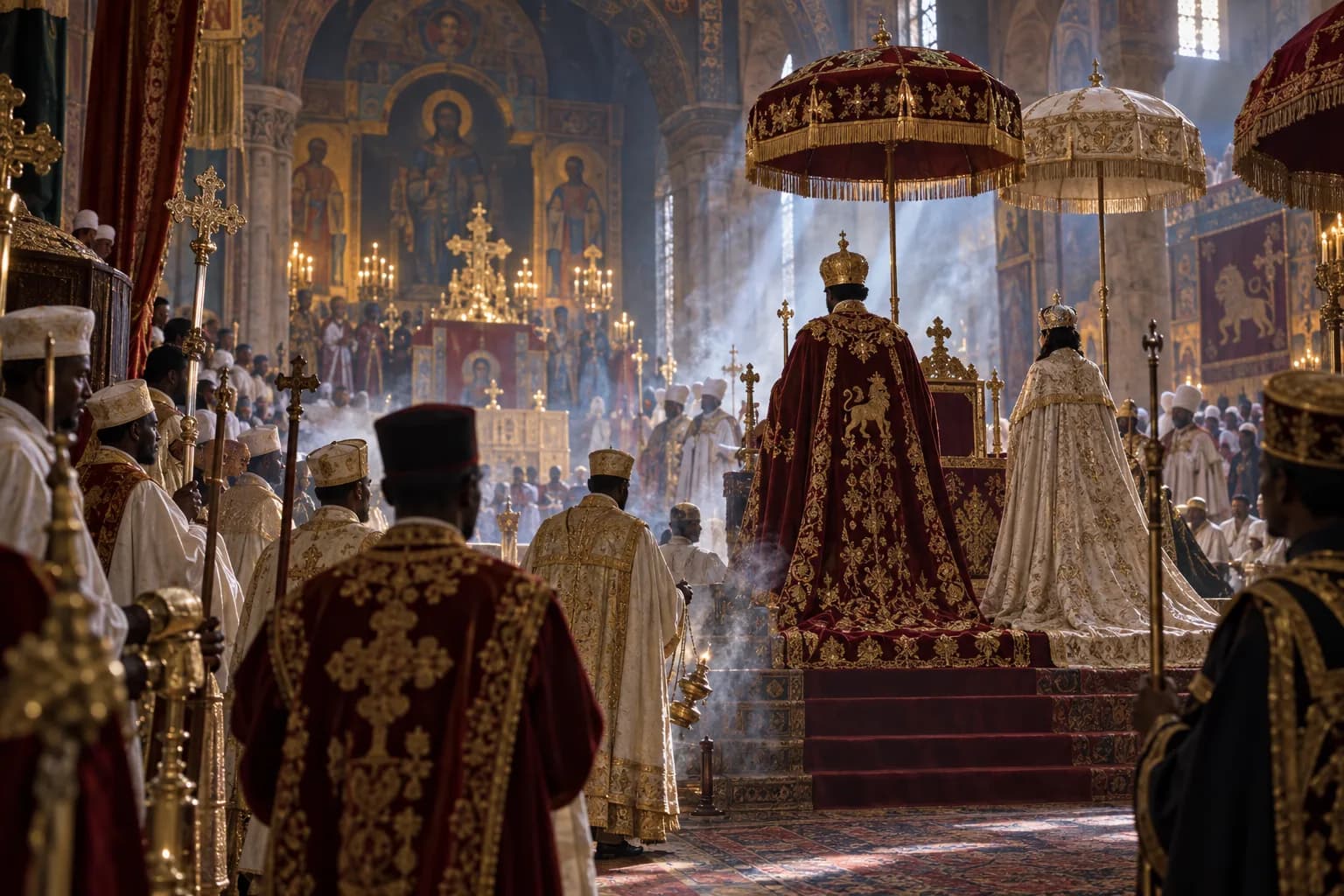
Distant imperial figures stand beneath ceremonial umbrellas during the 1930 coronation inside an Ethiopian Orthodox cathedral.
1930 CE
Step 6 of 101930 CEAccessible mode

Haile Selassie Takes the Throne

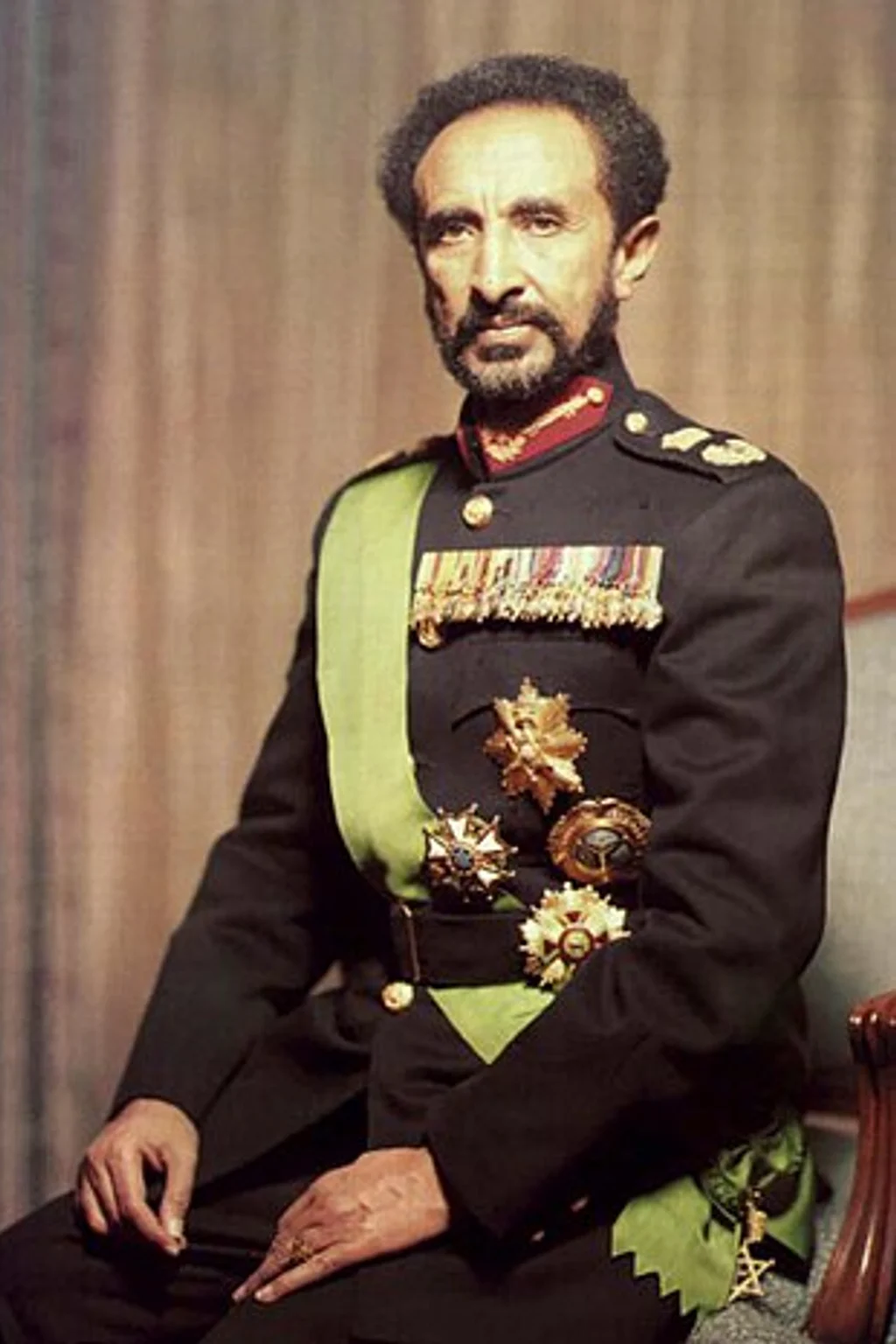
In 1930, Haile Selassie was crowned emperor and promised a more centralised, internationally connected monarchy.

His coronation was rich in imperial ceremony. It presented Ethiopia as an ancient monarchy with sacred legitimacy, but also as a state ready to take part in modern international life.

Haile Selassie had already pushed reform as regent. As emperor, he continued to build ministries, expand education, strengthen central administration and reduce the independence of regional rulers.

The 1931 constitution gave Ethiopia formal constitutional structures, including a parliament, while leaving real power firmly in imperial hands.

Haile Selassie modernised the monarchy without surrendering the monarchy's authority.

That tension shaped his reign. Reform could make the state stronger and more connected, but it also raised questions about participation, regional autonomy and the limits of imperial power.

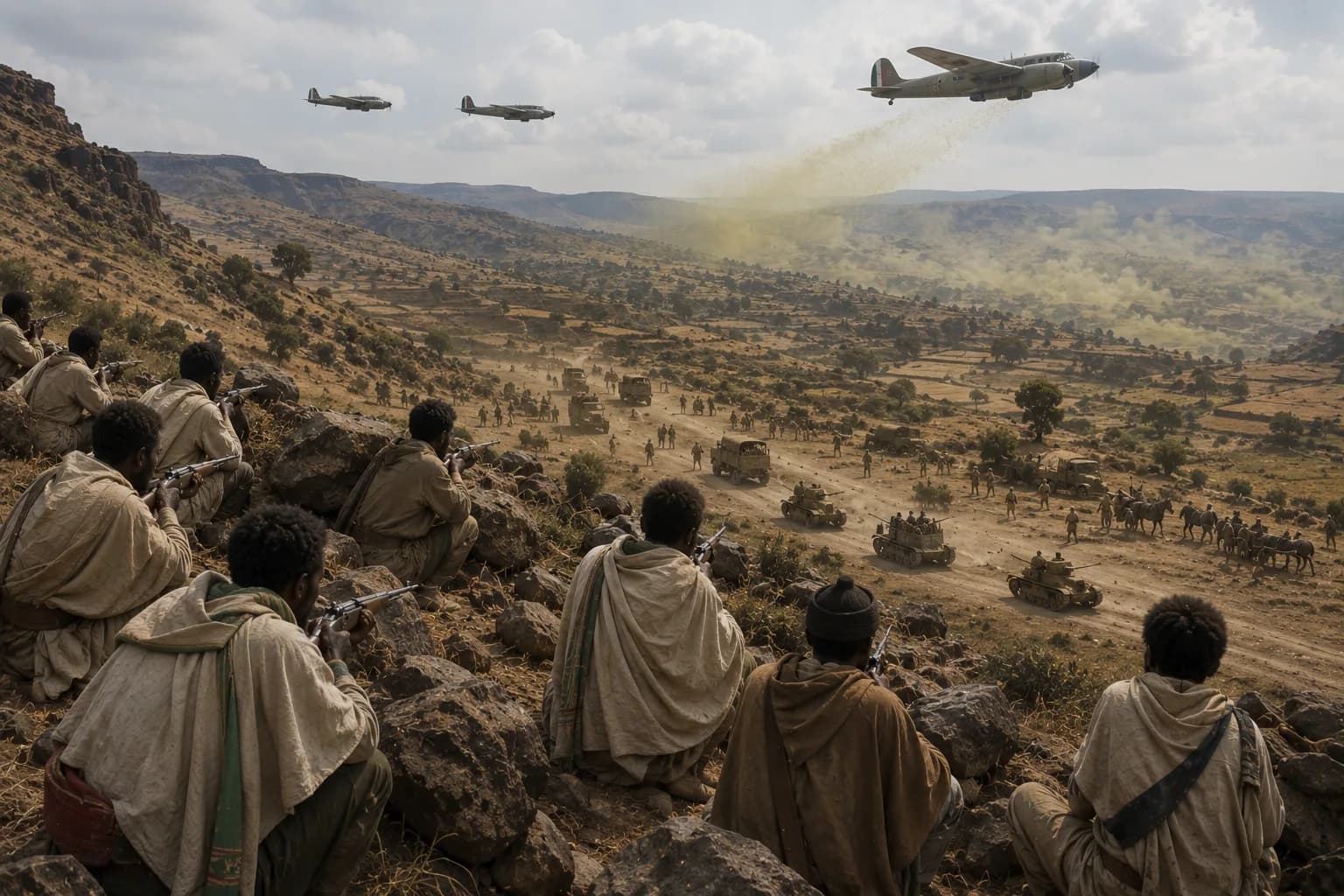
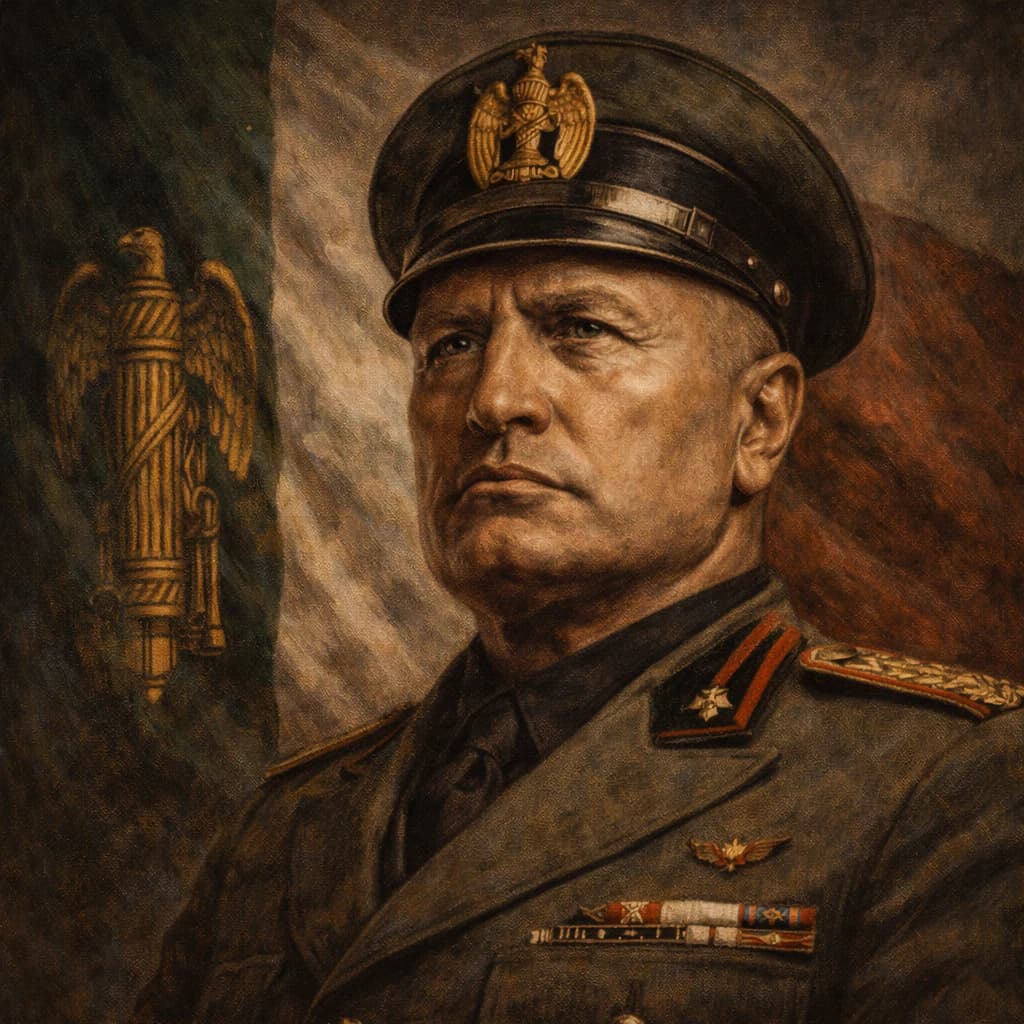
Italian aircraft and armoured vehicles advance through the Ethiopian highlands during Mussolini's invasion.
1935 CE
Step 7 of 101935 CEAccessible mode

Mussolini Invades Ethiopia

In 1935, Mussolini's Italy invaded Ethiopia and turned the empire's independence into a test of the international order.

Fascist Italy wanted revenge for Adwa, colonial prestige and a larger East African empire. Italian armies attacked from Eritrea in the north and Italian Somaliland in the southeast.

The imbalance was severe. Italy used aircraft, artillery, tanks and modern logistics against Ethiopian forces that fought bravely but were often poorly equipped.

Italian forces also used chemical weapons, including mustard gas. The invasion was therefore not just a colonial war, but a brutal demonstration of modern violence.

Ethiopia asked the League of Nations for protection. The League failed.

Haile Selassie's appeal in Geneva made him an international symbol. But sanctions and speeches did not stop Italy, and the failure exposed the weakness of collective security before the Second World War.

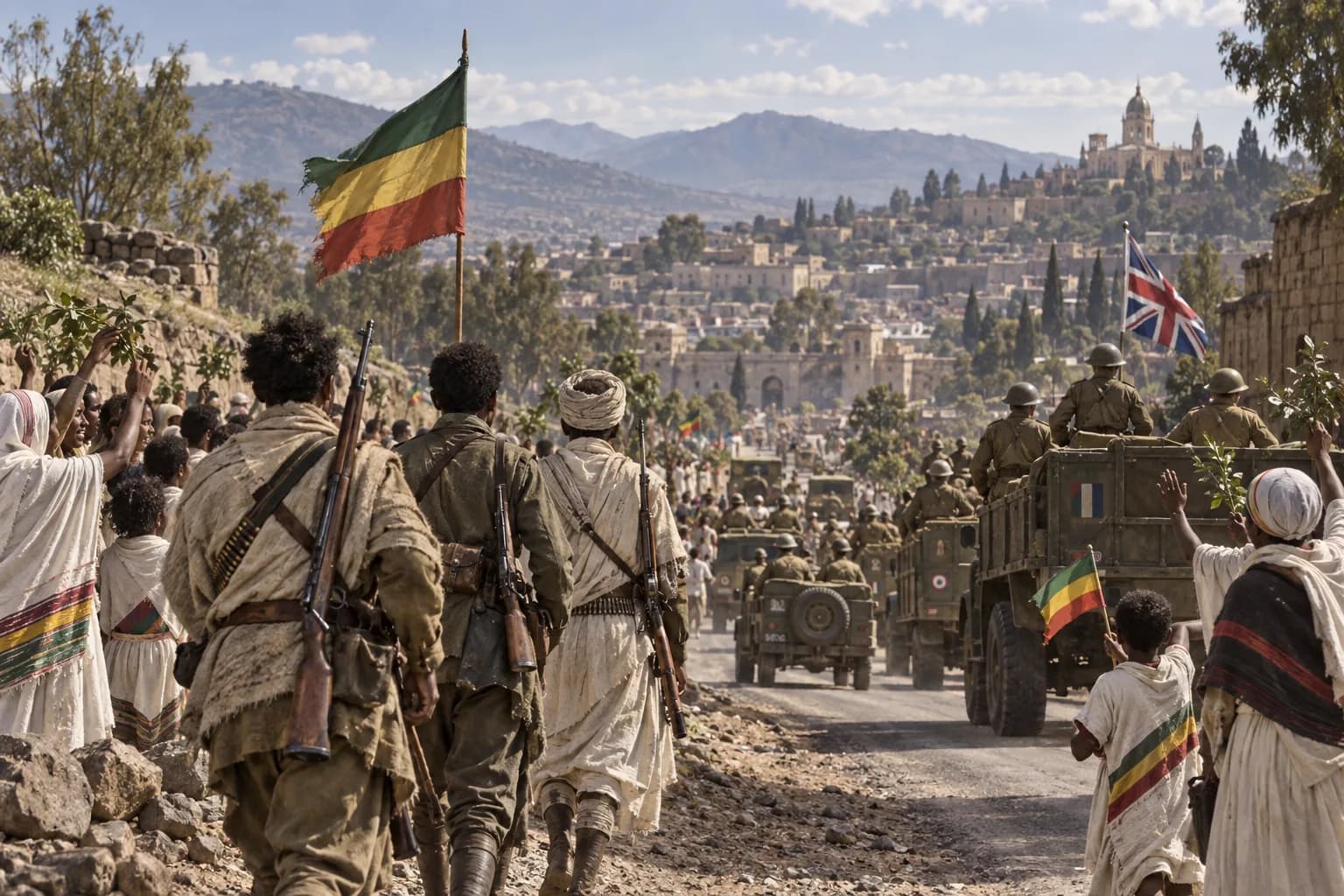
Ethiopian resistance fighters and Allied vehicles enter a liberated town while civilians wave flags from the roadside.
1941 CE
Step 8 of 101941 CEAccessible mode

Resistance and Liberation

In 1941, Ethiopian resistance and Allied military campaigns ended Italian rule and restored Haile Selassie to Addis Ababa.

Italian occupation did not erase Ethiopian sovereignty from memory. Patriots continued armed resistance in the countryside, keeping the idea of an independent Ethiopia alive.

Occupation was harsh. Italian rule used repression, racial hierarchy and violence to secure control, especially after attacks on colonial officials.

During the Second World War, British and Commonwealth forces advanced in East Africa. Ethiopian fighters joined the campaign and helped make liberation a national as well as military event.

Liberation restored more than a ruler. It restored the claim that Ethiopia had never accepted conquest.

Haile Selassie's return to the capital became a defining moment in Ethiopian historical memory. The empire had been occupied, but its sovereignty had survived.

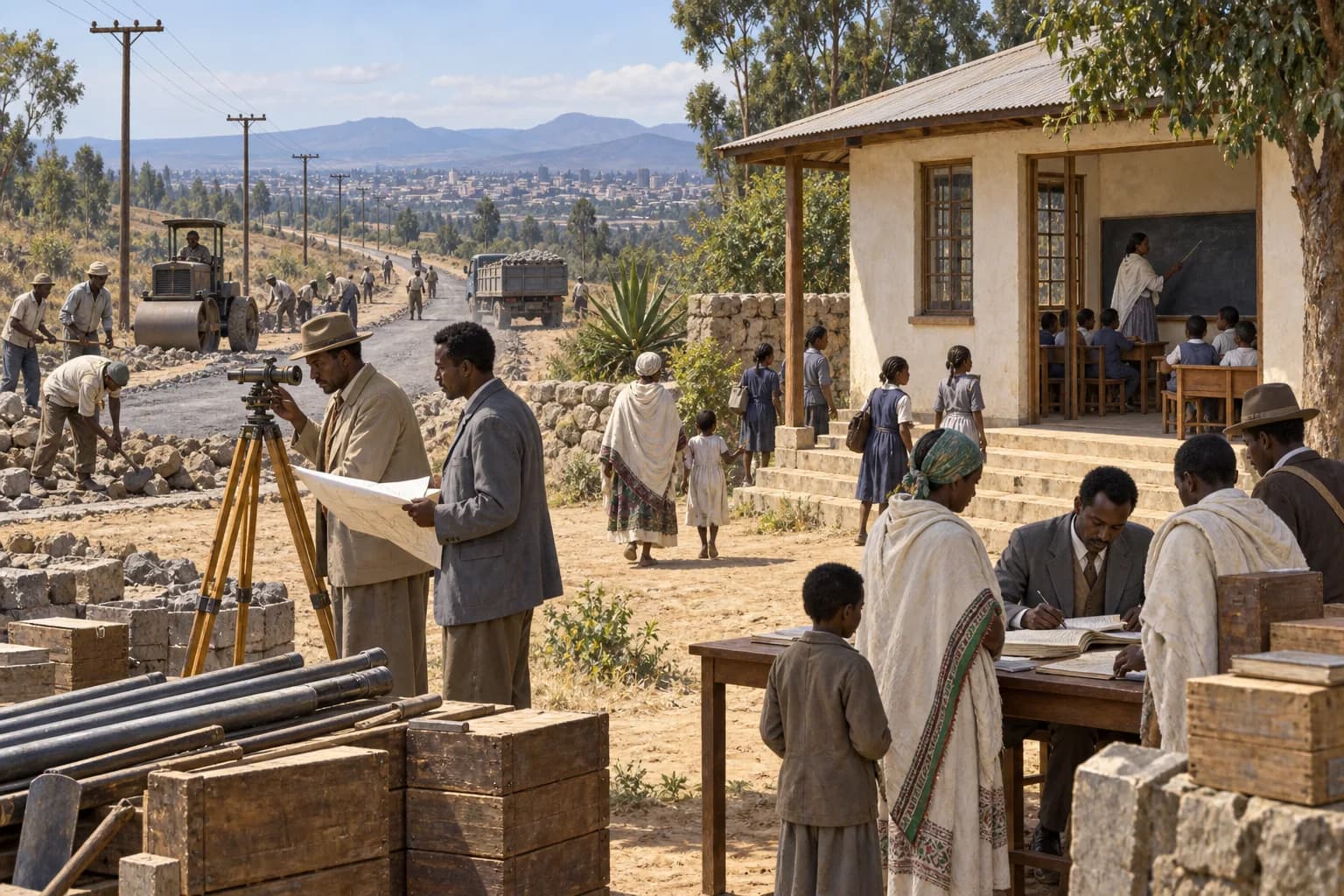
Teachers, engineers, clerks, and families gather near a mid-century Ethiopian school and roadworks site outside Addis Ababa.
1955 CE
Step 9 of 101955 CEAccessible mode

Haile Selassie Reshapes Ethiopia

In the postwar years, Haile Selassie tried to reshape Ethiopia through central government, education and international influence.

The restored emperor worked to reduce regional autonomy and strengthen ministries, courts, taxation and the army. More authority flowed toward Addis Ababa.

Education expanded, modern institutions grew and Ethiopia became more visible in world affairs. The 1955 revised constitution widened formal political language while preserving the emperor's central power.

Ethiopia also gained prominence in African diplomacy. Addis Ababa became a gathering place for leaders of newly independent African states.

Haile Selassie made Ethiopia a symbol of African independence and a centre of African diplomacy.

In 1963, the Organisation of African Unity was established in Addis Ababa. Yet at home, inequality, land hunger and limited political participation continued to challenge imperial rule.

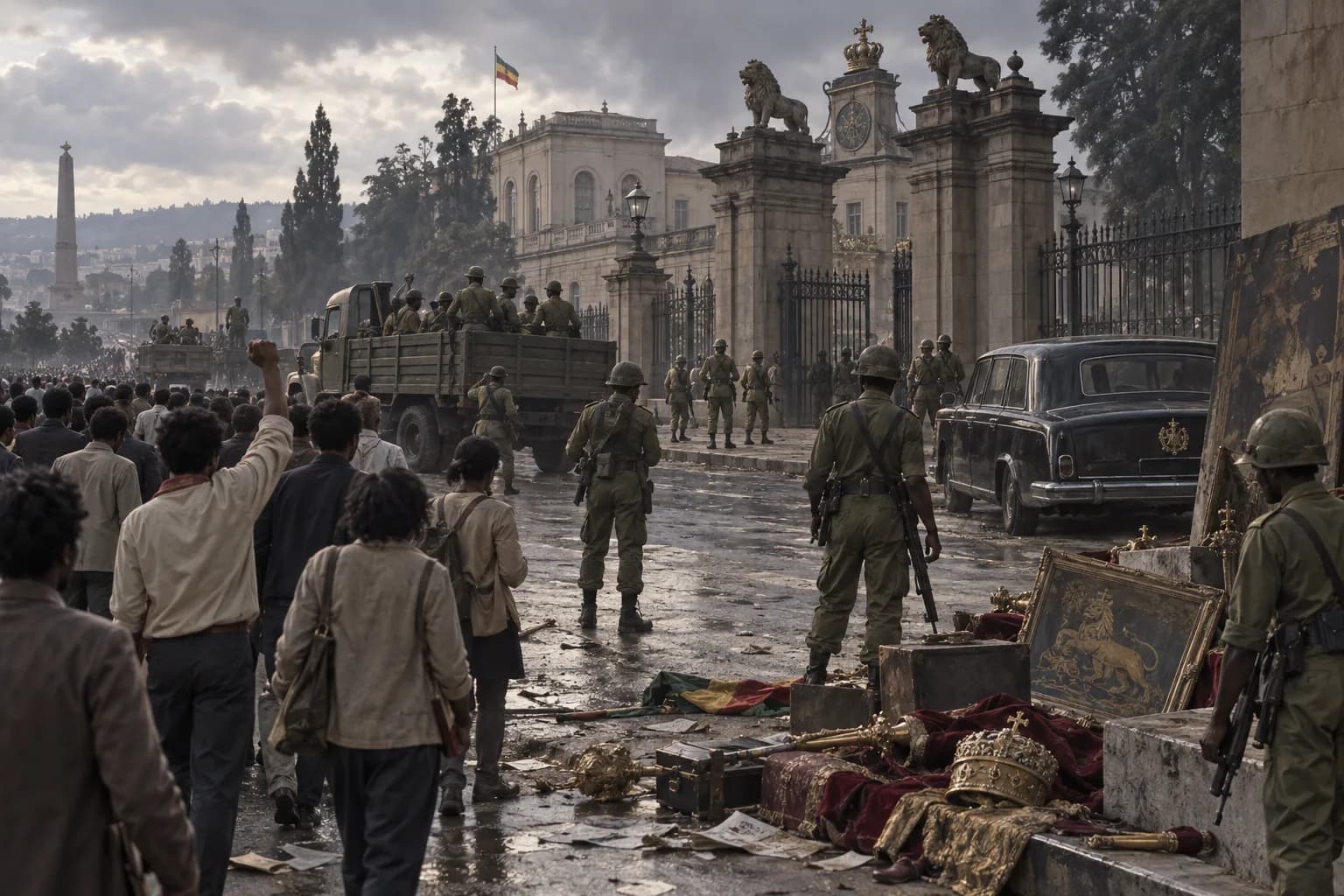
Soldiers and civilians gather outside imperial gates in Addis Ababa during the 1974 revolution as ceremonial objects lie nearby.
1974 CE
Step 10 of 101974 CEAccessible mode

The Fall of the Ethiopian Empire

In 1974, revolution removed Haile Selassie and ended the Ethiopian Empire.

The monarchy had survived invasion, occupation and global war, but by the 1970s its authority was badly weakened. Famine exposed poverty and government failure, especially in regions far from the imperial centre.

Economic pressures added to the crisis. Inflation, unemployment, land inequality and frustration among students, workers and soldiers created a widening opposition to imperial rule.

Military unrest became decisive. Mutinies and protests grew into a revolutionary movement, and a committee of officers known as the Derg took control.

The empire fell when the old sources of legitimacy could no longer answer modern crisis.

Haile Selassie was removed in September 1974. The monarchy's fall ended a state whose independence, longevity and symbolic power had given Ethiopia a unique place in modern African history.

Continue reading

Finished The Ethiopian Empire?

Choose the next story, follow a connected moment, or explore the people behind this story.

Browse stories

References

Sources & Further Reading

Reliable sources, primary-source collections and reading paths connected to this page.

Further reading

  1. Encyclopaedia Britannica, Search results for The Ethiopian Empire,” Open source
  2. WorldCat, Library holdings for The Ethiopian Empire,” Open source

Primary sources

  1. Library of Congress, Search results for The Ethiopian Empire,” Open source

Reviewed claim sources

Loading reviewed claim sources...

A weekly route through history

Find out first about the latest published stories, feature notes and occasional Premium offers in one weekly email.