People

Yohannes IV

Yohannes IV, born Kassa Mercha, was emperor of Ethiopia from 1872 to 1889. He consolidated imperial authority, defeated Egyptian invasions and fought the Mahdist state while presenting Orthodox Christianity as central to imperial legitimacy.

Born
1837 CE
Died
1889 CE
Role
Emperor of Ethiopia

Emperor of Ethiopia (1837-1889)

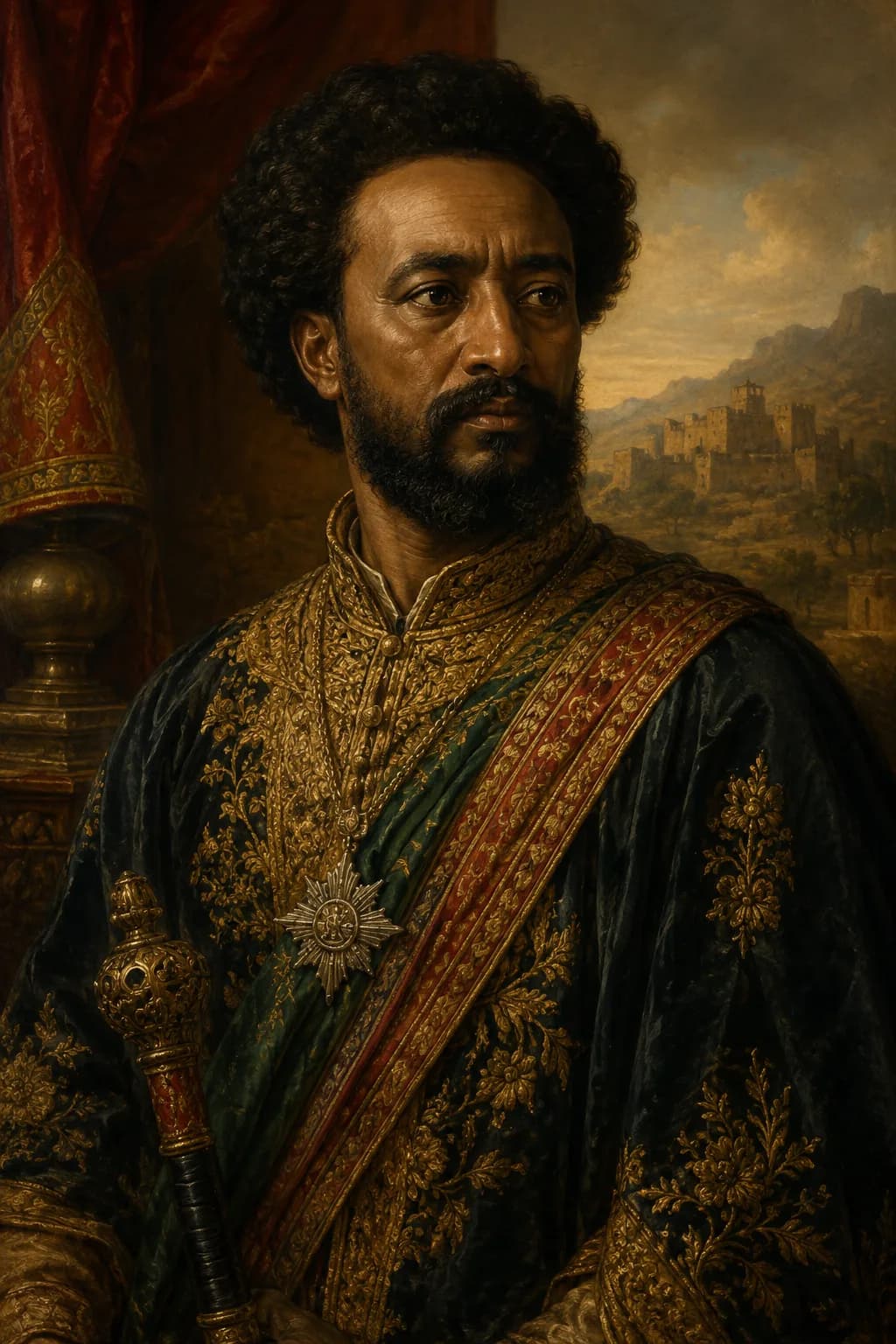
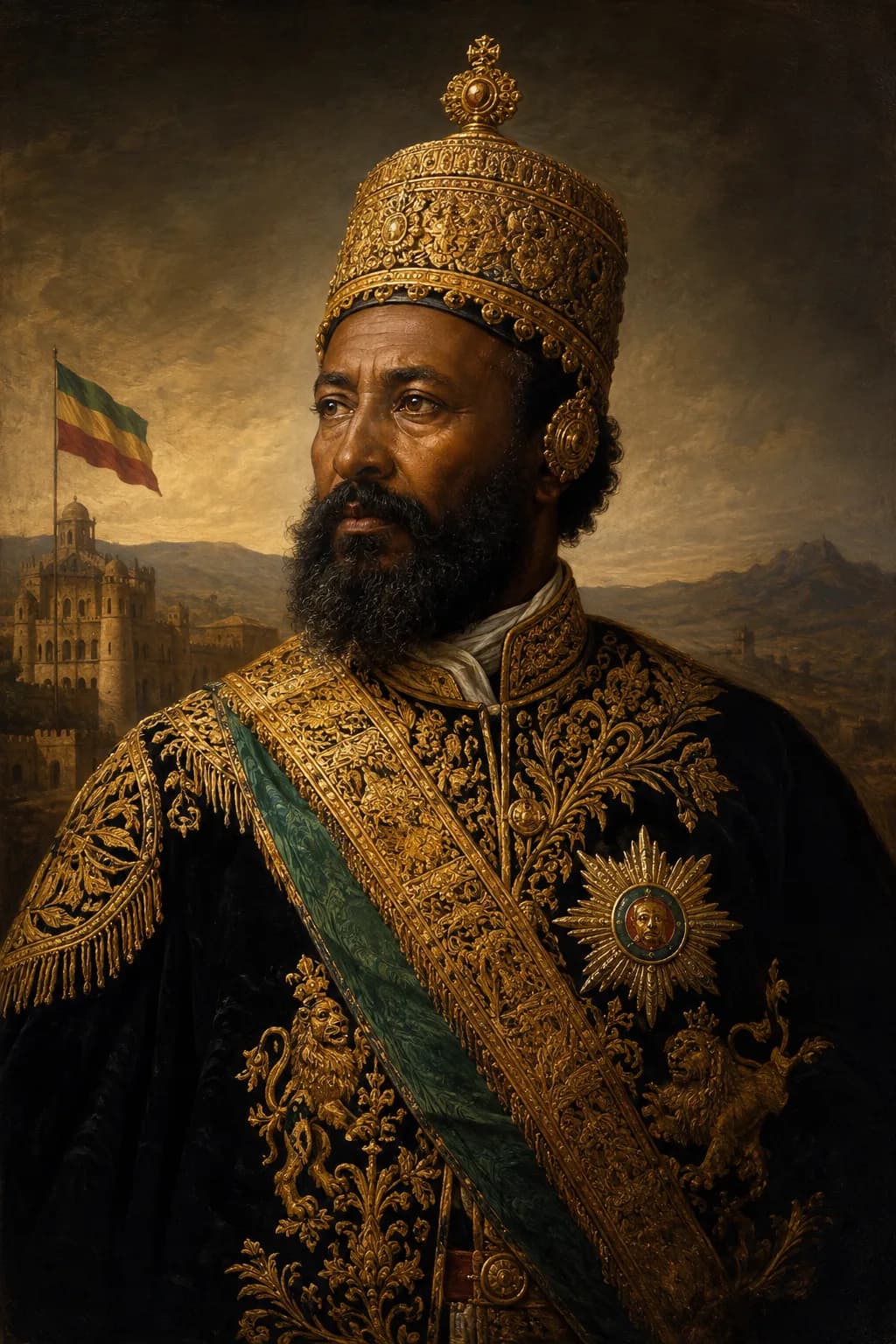
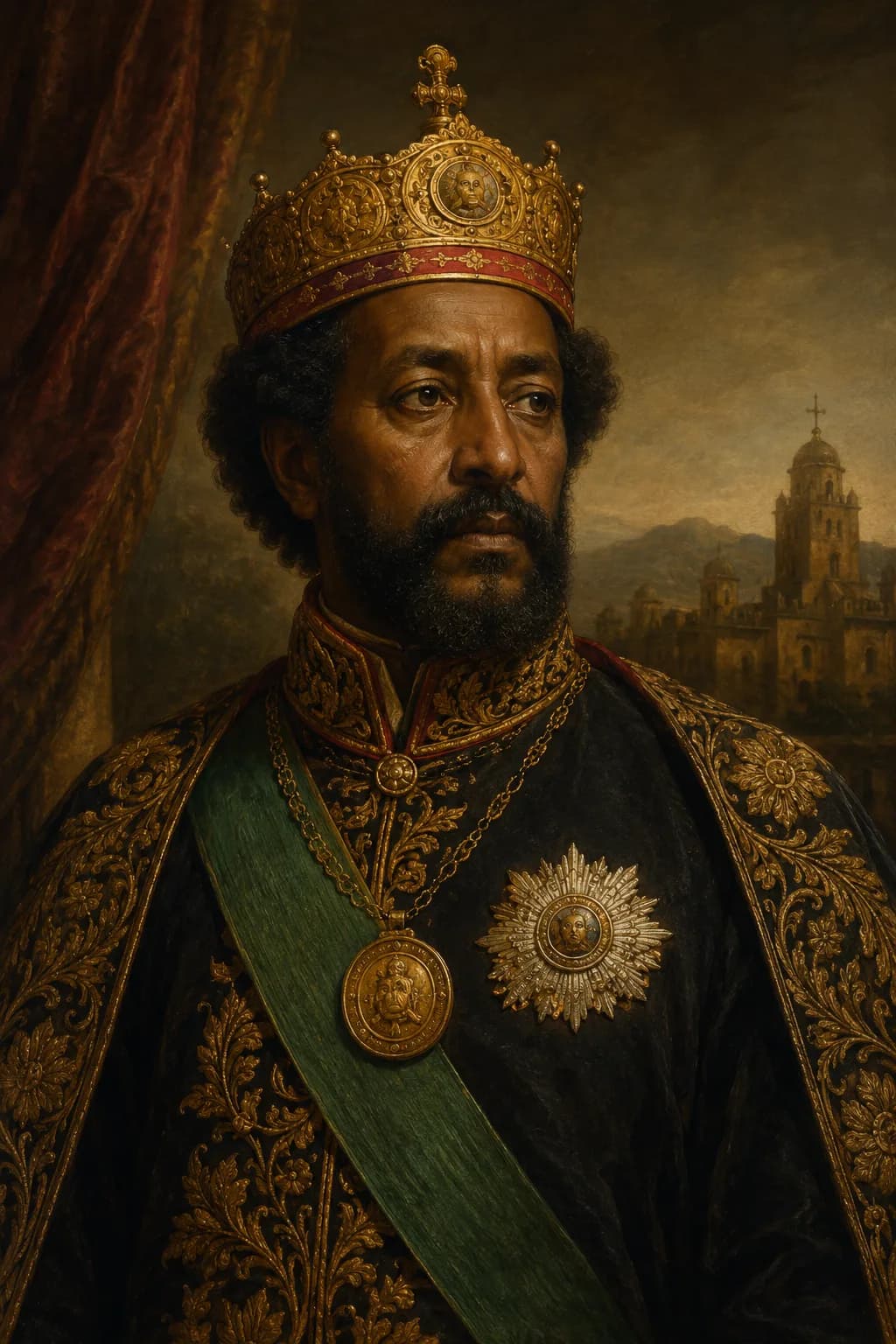
AI-generated portrait of Yohannes IV in Ethiopian imperial dress
AI-assisted historical reconstruction

An illustrative reconstruction based on historical context. It is not a photograph or documentary likeness. Image policy

Quick answer

Yohannes IV, born Kassa Mercha, was emperor of Ethiopia from 1872 to 1889. He consolidated imperial authority, defeated Egyptian invasions and fought the Mahdist state while presenting Orthodox Christianity as central to imperial legitimacy.

Born
1837 CE
Died
1889 CE
Role
Emperor of Ethiopia
Years
1837-1889 CE
Quick facts

Profile details

Additional identity and tagging details that are not already covered in the introduction.

Also known as
Kassa Mercha, Kasa Mercha, Emperor Yohannes IV
Region
Ethiopia, Horn of Africa, Ethiopia
Facts

Yohannes IV timeline facts

Selected specifics from this profile's life story.

1837-1872
Northern power base

Born Kassa Mercha, Yohannes rose from Tigray and built the military authority that carried him to the imperial throne.

1872
Becoming emperor

Yohannes became emperor in 1872 and worked to consolidate authority across a still-fractured empire.

1875-1876
War with Egypt

Yohannes defeated Egyptian forces in the 1870s, proving that Ethiopia could resist external expansion.

1880s-1889
Mahdist frontier

Conflict with the Mahdist state in Sudan placed new pressure on Ethiopia's western frontier and ended with Yohannes's death in 1889.

Life Journey

The emperor who defended Ethiopia

Follow Yohannes from Tigrayan ruler to emperor, defender of the frontiers and guardian of Orthodox imperial authority.

Complete chronology

1837-1872

Northern power base

Yohannes IV was born Kassa Mercha in Tigray, a northern region central to Ethiopian politics and frontier defence. After Tewodros II's death, Ethiopia did not automatically settle into unity. Regional rulers competed for influence, and Kassa's strength lay in turning Tigrayan military power into a credible imperial claim. His rise shows that Ethiopian reunification was not a single event achieved by one ruler. It was a continuing struggle among powerful regional bases, each trying to define the empire's future.


1872

Becoming emperor

When Yohannes became emperor in 1872, he inherited both Tewodros's ambition and his warning. Central authority had to be strengthened, but too harsh a centralising project could provoke resistance. Yohannes relied on negotiation, military pressure and religious legitimacy to hold together a difficult political order. He accepted that regional nobles remained powerful, yet insisted that imperial authority stood above them. His reign therefore balanced command with compromise in a way Tewodros had struggled to sustain.

1875-1876

War with Egypt

External threats made Yohannes's authority more urgent. Egyptian forces advanced from the Red Sea and Sudanese frontiers, backed by a state with modernising ambitions and wider regional reach. Ethiopian victories at Gundet in 1875 and Gura in 1876 were therefore major political events as well as military successes. They protected territory, captured weapons and showed that the empire could defend itself against a better-equipped invader. Defence became one of Yohannes's strongest claims to legitimacy.

1880s-1889

Mahdist frontier

The Mahdist state in Sudan created a different kind of danger from Egypt. It was a militant religious-political movement as well as a military power, and conflict on the western frontier pulled Yohannes into a brutal regional struggle. Orthodox Christianity remained central to how he framed imperial legitimacy, but Ethiopia's borderlands were more religiously and politically diverse than a simple Christian empire narrative could contain. Yohannes died in 1889 after fighting Mahdist forces, leaving the throne open to Menelik of Shewa.

Continue in context

Connected stories

Move from the profile into the wider events and settings this figure belongs to.

Tertiary paths

Content note

This profile is written for educational use and connects to related Stories of History pages. The main portrait is an AI-assisted historical reconstruction, included as an illustrative aid rather than documentary evidence. Image policy

References

Sources & Further Reading

Reliable reference works, archives and reading paths connected to this profile.

Further reading

  1. Encyclopaedia Britannica, Search results for Yohannes IV,” accessed June 2026.Open source
  2. WorldCat, Books and library holdings for Yohannes IV,” accessed June 2026.Open source

Primary sources

  1. Library of Congress, Search results for Yohannes IV,” accessed June 2026.Open source

Reviewed claim sources

Loading reviewed claim sources...

A weekly route through history

Find out first about the latest published stories, feature notes and occasional Premium offers in one weekly email.