People

Menelik II

Menelik II, born Sahle Maryam, was emperor of Ethiopia from 1889 to 1913. He expanded imperial rule, founded Addis Ababa as a modern capital, defeated Italy at the Battle of Adwa and preserved Ethiopian sovereignty.

Born
1844 CE
Died
1913 CE
Role
Emperor of Ethiopia

Emperor of Ethiopia (1844-1913)

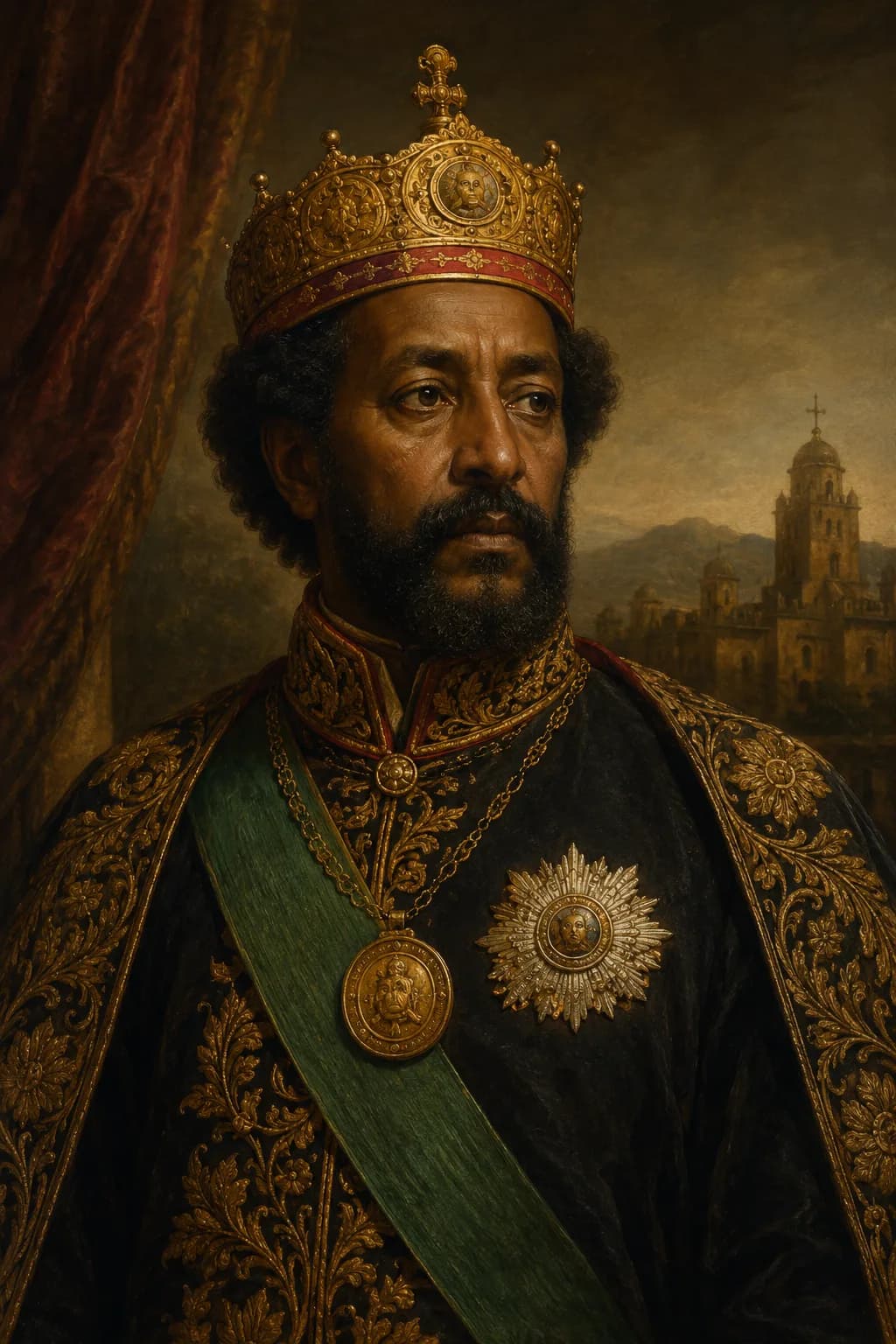
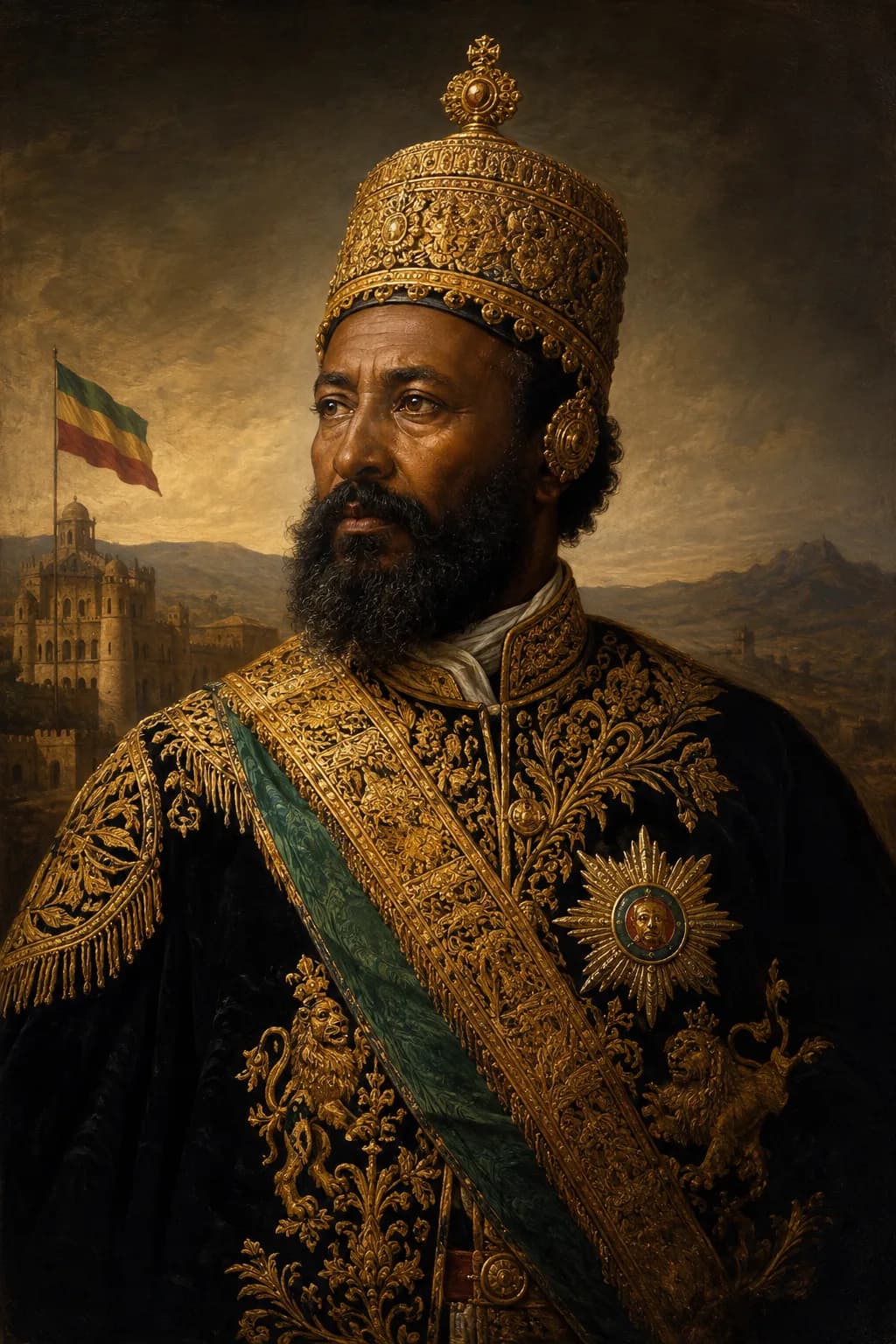
AI-generated portrait of Menelik II in Ethiopian imperial regalia
AI-assisted historical reconstruction

An illustrative reconstruction based on historical context. It is not a photograph or documentary likeness. Image policy

Quick answer

Menelik II, born Sahle Maryam, was emperor of Ethiopia from 1889 to 1913. He expanded imperial rule, founded Addis Ababa as a modern capital, defeated Italy at the Battle of Adwa and preserved Ethiopian sovereignty.

Born
1844 CE
Died
1913 CE
Role
Emperor of Ethiopia
Years
1844-1913 CE
Quick facts

Profile details

Additional identity and tagging details that are not already covered in the introduction.

Also known as
Sahle Maryam, Sahle Miriam, Emperor Menelik II
Region
Ethiopia, Horn of Africa, Ethiopia
Facts

Menelik II timeline facts

Selected specifics from this profile's life story.

1844-1889
Power in Shewa

Born Sahle Maryam, Menelik built his strength in Shewa before becoming emperor of Ethiopia.

1889-1890s
Imperial expansion

Menelik expanded imperial rule into southern and eastern territories, establishing much of Ethiopia's modern territorial shape.

1896
Victory at Adwa

Menelik defeated Italy at the Battle of Adwa in 1896, preserving Ethiopia's independence during the height of European colonial expansion.

1896-1913
Capital and reform

After Adwa, Menelik strengthened Addis Ababa, encouraged roads, communications, banking, education and the railway toward Djibouti.

Life Journey

The emperor who made modern Ethiopia

Follow Menelik from Shewan king to emperor, conqueror, diplomat and victor of Adwa.

Complete chronology

1844-1889

Power in Shewa

Menelik II was born Sahle Maryam and rose through the kingdom of Shewa, a southern highland power whose wealth, trade links and military strength made it increasingly important. Shewa gave Menelik a base from which to negotiate with, rival and eventually succeed northern imperial power. His career shows how modern Ethiopia was shaped not only by older northern centres, but also by the growing authority of Shewa. By the time Yohannes IV died, Menelik was prepared to turn regional strength into imperial rule.
1889-1890s

Imperial expansion

Menelik's reign transformed the map. Ethiopian armies and allied commanders incorporated large southern, eastern and western territories inhabited by Oromo, Sidama, Somali, Wolayta and many other peoples. The expansion strengthened the empire with land, tribute, soldiers and trade routes, but it also created deep tensions. Some local elites entered the new order, while other communities experienced conquest, taxation, land pressure and cultural marginalisation. Menelik's Ethiopia was therefore both a sovereign African state resisting European empire and an expanding empire in its own region.

1896

Victory at Adwa

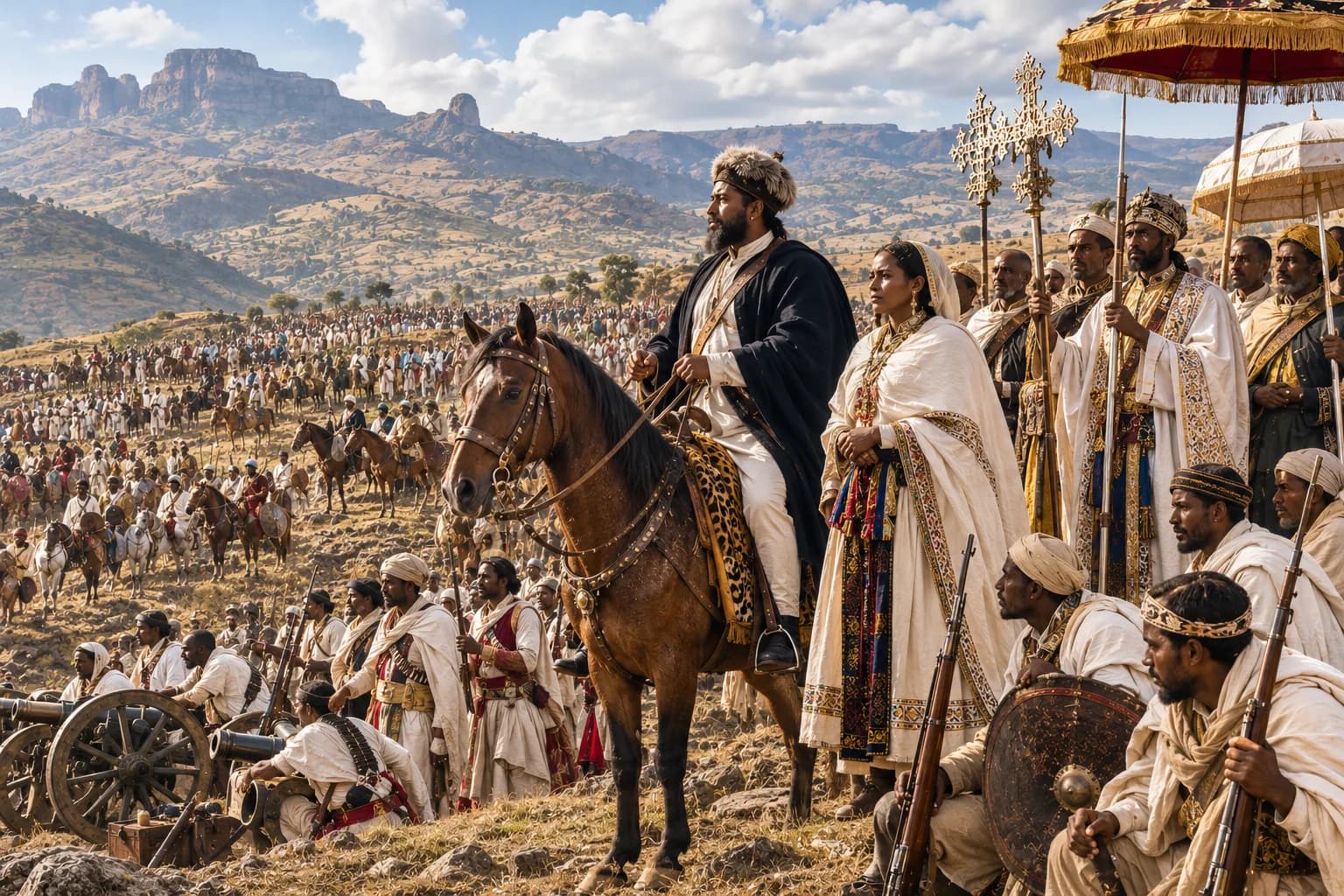
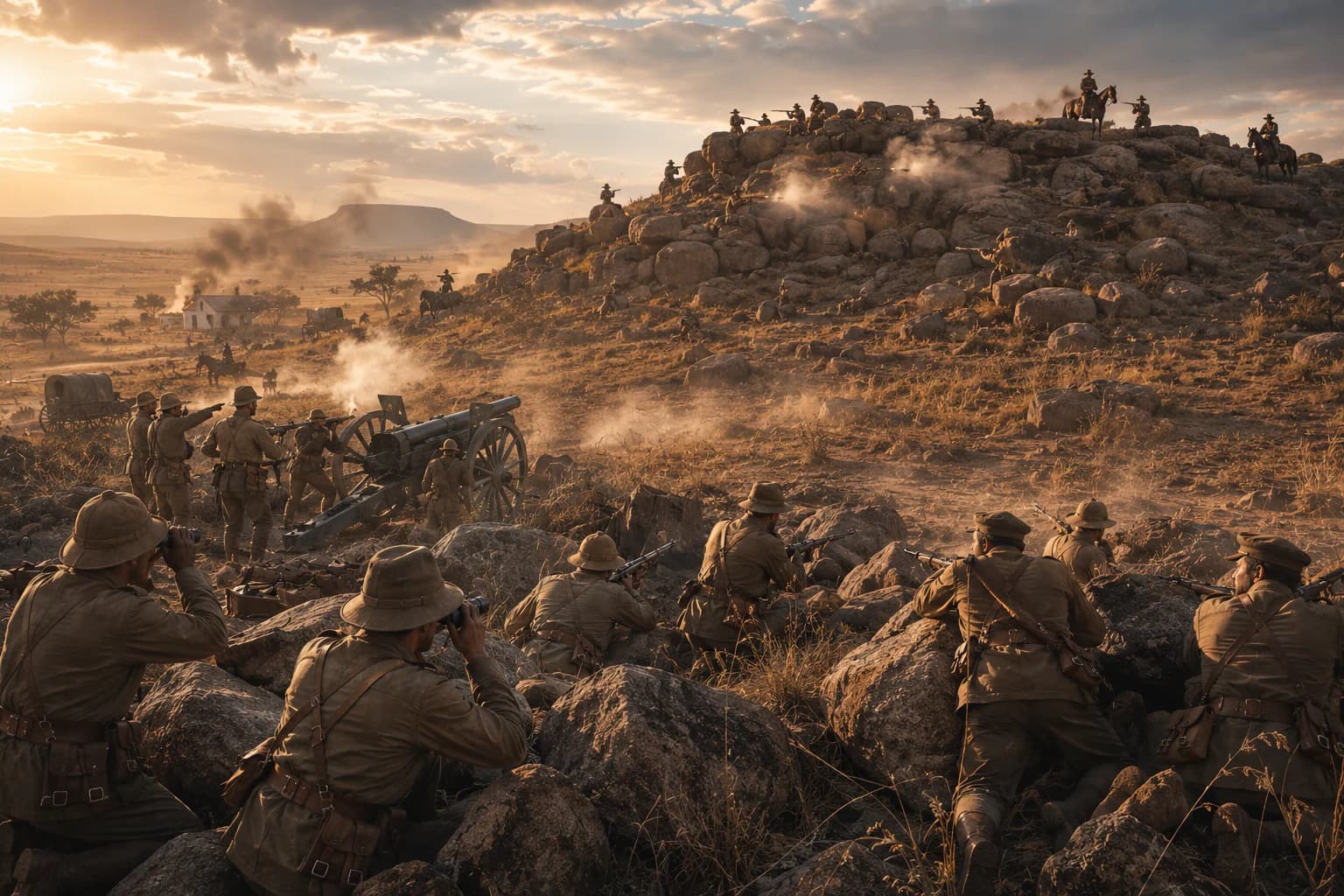
The Battle of Adwa made Menelik a world-historical figure. Italy tried to use diplomacy and military force to reduce Ethiopia's sovereignty, but Menelik rejected protectorate status and mobilised a large imperial army. On 1 March 1896, Ethiopian forces defeated the Italian invasion decisively. The victory forced Italy to recognise Ethiopian independence and shocked observers used to European colonial victories. Adwa became a symbol not only of Menelik's rule, but of African resistance at a moment when much of the continent was being partitioned.

1896-1913

Capital and reform

Menelik understood that independence required infrastructure as well as victory. Addis Ababa became the permanent centre of imperial government, foreign diplomacy and administrative reform. Roads, telegraph lines, postal services, schools, banking and the railway toward Djibouti connected Ethiopia more firmly to global trade and state control. These changes strengthened the imperial centre, though they did not make the empire equal or uniformly governed. Menelik left Ethiopia larger, more connected and more visible, but also full of unresolved questions about power and inclusion.

Continue in context

Connected stories

Move from the profile into the wider events and settings this figure belongs to.

Tertiary paths

Content note

This profile is written for educational use and connects to related Stories of History pages. The main portrait is an AI-assisted historical reconstruction, included as an illustrative aid rather than documentary evidence. Image policy

References

Sources & Further Reading

Reliable reference works, archives and reading paths connected to this profile.

Further reading

  1. Encyclopaedia Britannica, Search results for Menelik II,” accessed June 2026.Open source
  2. WorldCat, Books and library holdings for Menelik II,” accessed June 2026.Open source

Primary sources

  1. Library of Congress, Search results for Menelik II,” accessed June 2026.Open source

Reviewed claim sources

Loading reviewed claim sources...

A weekly route through history

Find out first about the latest published stories, feature notes and occasional Premium offers in one weekly email.