People

Haile Selassie

Haile Selassie I, born Tafari Makonnen, was emperor of Ethiopia from 1930 to 1974. He pursued centralisation and reform, appealed to the League of Nations after Italy's invasion, returned after liberation in 1941 and was overthrown during the Ethiopian Revolution.

Born
1892 CE
Died
1975 CE
Role
Emperor of Ethiopia

Emperor of Ethiopia (1892-1975)

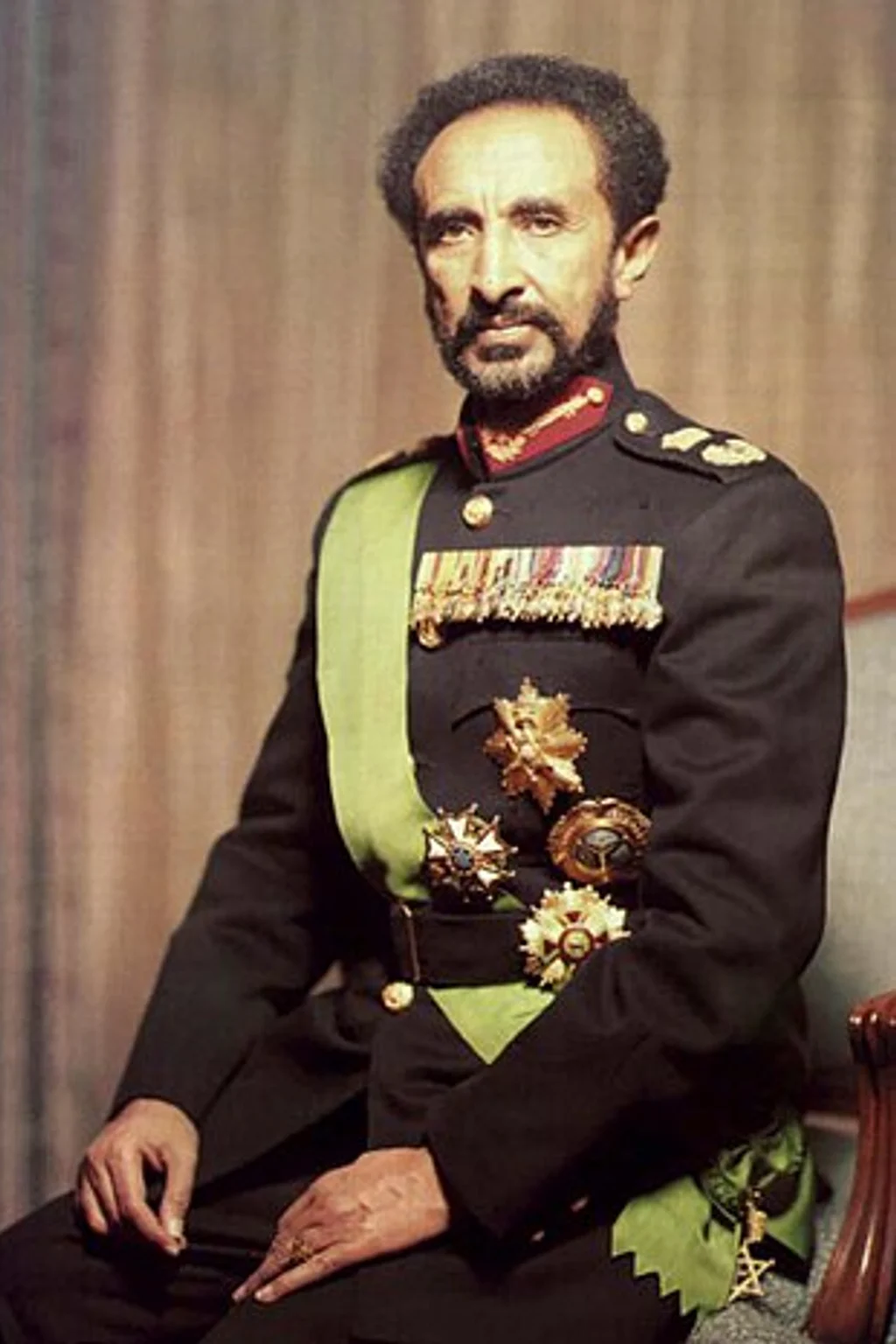
Portrait photograph of Haile Selassie
Historical photograph

A real historical or editorial image is used here. Source, licence and transformation details are publicly recorded. Image policy Attribution

Quick answer

Haile Selassie I, born Tafari Makonnen, was emperor of Ethiopia from 1930 to 1974. He pursued centralisation and reform, appealed to the League of Nations after Italy's invasion, returned after liberation in 1941 and was overthrown during the Ethiopian Revolution.

Born
1892 CE
Died
1975 CE
Role
Emperor of Ethiopia
Years
1892-1975 CE
Quick facts

Profile details

Additional identity and tagging details that are not already covered in the introduction.

Full name
Haile Selassie I
Also known as
Ras Tafari, Tafari Makonnen, Emperor Haile Selassie
Region
Ethiopia, Horn of Africa, Ethiopia
Facts

Haile Selassie timeline facts

Selected specifics from this profile's life story.

1892-1930
Ras Tafari

Born Tafari Makonnen, Haile Selassie rose through Ethiopia's imperial politics before taking the throne in 1930.

1935-1941
Invasion and exile

Italy invaded Ethiopia in 1935, and Haile Selassie's appeal to the League of Nations made him a global symbol of resistance to aggression.

1941-1974
Postwar state

After the war, Haile Selassie expanded education, centralised government and made Addis Ababa a centre of African diplomacy.

1974-1975
Overthrown

Famine, inequality, protest and military unrest led to Haile Selassie's overthrow in 1974. He died the following year.

Life Journey

The emperor between modernisation and revolution

Follow Haile Selassie from Ras Tafari to emperor, exile, liberation, pan-African diplomacy and overthrow.

Complete chronology

1892-1930

Ras Tafari

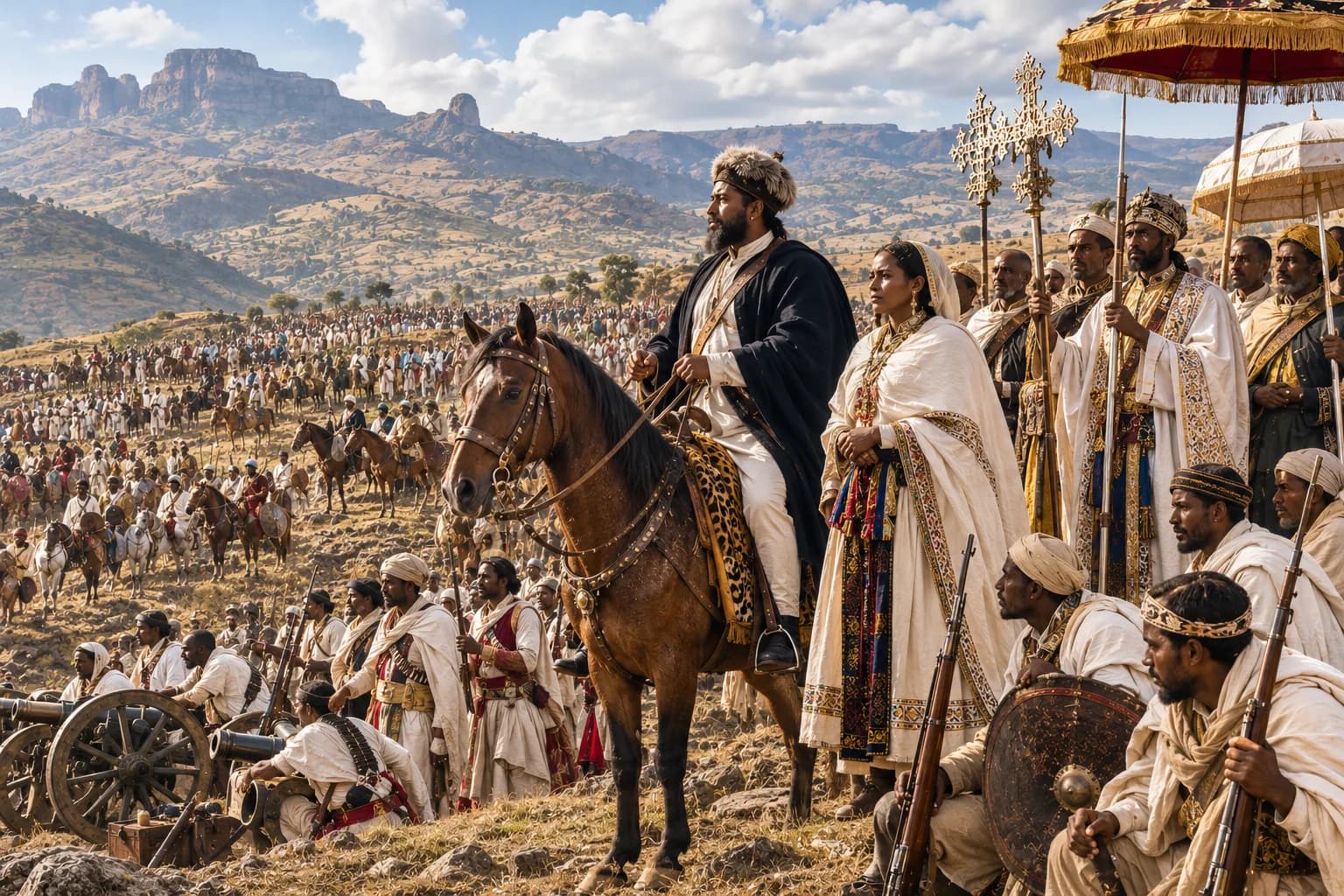
Haile Selassie was born Tafari Makonnen into Ethiopia's aristocratic and imperial world. As Ras Tafari, he became regent and a leading reformer before he became emperor. His rise depended on court politics, noble alliances and the ability to present modernisation as compatible with monarchy. Ethiopia had already been transformed by Menelik's expansion and diplomacy, but its institutions remained uneven. Tafari's ambition was to make the state more centralised, internationally recognised and administratively modern without breaking the imperial order that gave him authority.
1930-1935

Imperial moderniser

Haile Selassie's coronation in 1930 joined ancient imperial ceremony to modern international display. The 1931 constitution gave Ethiopia formal constitutional structures, including a parliament, but power remained concentrated in the emperor. Ministries, education, legal reform and military change all served centralisation. Haile Selassie wanted Ethiopia to be seen as a modern sovereign state, but he did not intend to turn sovereignty over to popular politics. That tension between reform and imperial control shaped the rest of his reign.

1935-1941

Invasion and exile

Mussolini's invasion of Ethiopia placed Haile Selassie at the centre of world politics. Italian forces used aircraft, armour and chemical weapons against Ethiopian resistance, and Addis Ababa fell in 1936. Haile Selassie went into exile and addressed the League of Nations, warning that aggression against Ethiopia threatened every small state. The League's failure exposed the weakness of collective security before the Second World War. His exile was humiliating, but it also preserved Ethiopia's sovereign claim in international memory.

1941

Liberation and return

In 1941, Ethiopian patriots, British and Commonwealth forces and wider Allied campaigns ended Italian occupation in Ethiopia. Haile Selassie's return to Addis Ababa carried enormous symbolic power. It suggested that Ethiopia had been occupied but not erased, conquered in practice but not in legitimate sovereignty. Liberation strengthened the emperor's postwar authority and made resistance to Fascist invasion central to national memory. Yet the restored monarchy still faced the older question of how far central power could reform Ethiopian society.

1941-1974

Postwar state

After liberation, Haile Selassie pushed centralisation further. Ministries, courts, education and the army expanded, and the revised constitution of 1955 gave Ethiopia a more formal institutional language while leaving imperial authority intact. Internationally, Ethiopia carried unusual prestige because of Adwa, anti-fascist resistance and long independence. Addis Ababa became the headquarters of the Organisation of African Unity in 1963. But education and global politics also produced sharper criticism. Students, workers, regional movements and soldiers increasingly questioned land inequality, poverty and the concentration of power around the emperor.

1974-1975

Overthrown

The monarchy collapsed when symbolic legitimacy could no longer answer economic and political crisis. Famine in 1973-1974 exposed poverty and government failure. Inflation, unemployment, land hunger, student activism and military unrest widened opposition. The Derg, a military committee, gradually stripped power from the old order and deposed Haile Selassie on 12 September 1974. He died in custody in 1975. His legacy remains deeply layered: moderniser, international symbol, pan-African host, autocrat and last emperor of a monarchy whose endurance had made Ethiopia exceptional.

Continue in context

Connected stories

Move from the profile into the wider events and settings this figure belongs to.

Tertiary paths

Content note

This profile is written for educational use and connects to related Stories of History pages. The main portrait uses a real historical or editorial image, with source and licence details recorded for attribution review. Image policy Image attribution

References

Sources & Further Reading

Reliable reference works, archives and reading paths connected to this profile.

Further reading

  1. Encyclopaedia Britannica, Search results for Haile Selassie,” accessed June 2026.Open source
  2. WorldCat, Books and library holdings for Haile Selassie,” accessed June 2026.Open source

Primary sources

  1. Library of Congress, Search results for Haile Selassie,” accessed June 2026.Open source

Reviewed claim sources

Loading reviewed claim sources...

A weekly route through history

Find out first about the latest published stories, feature notes and occasional Premium offers in one weekly email.