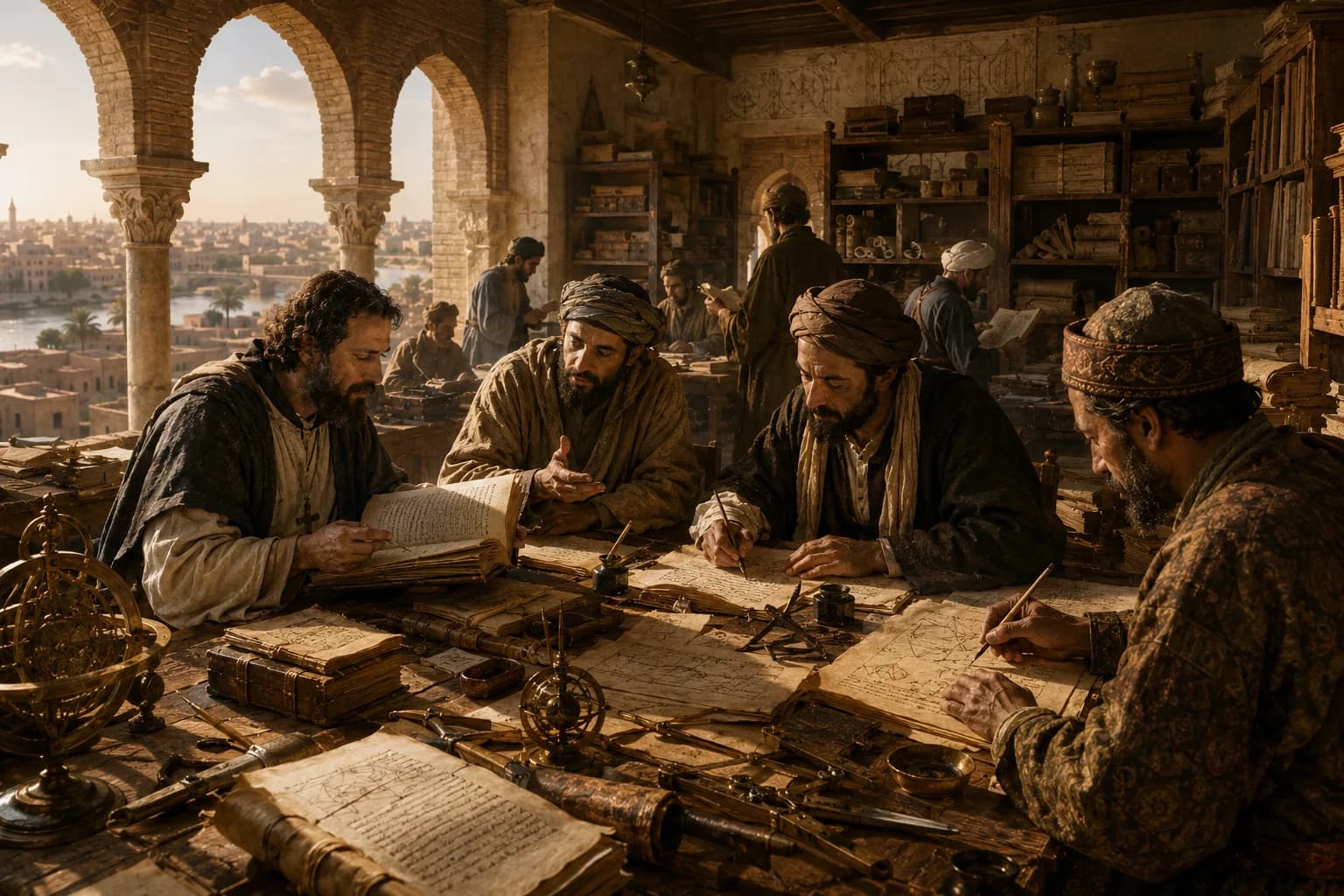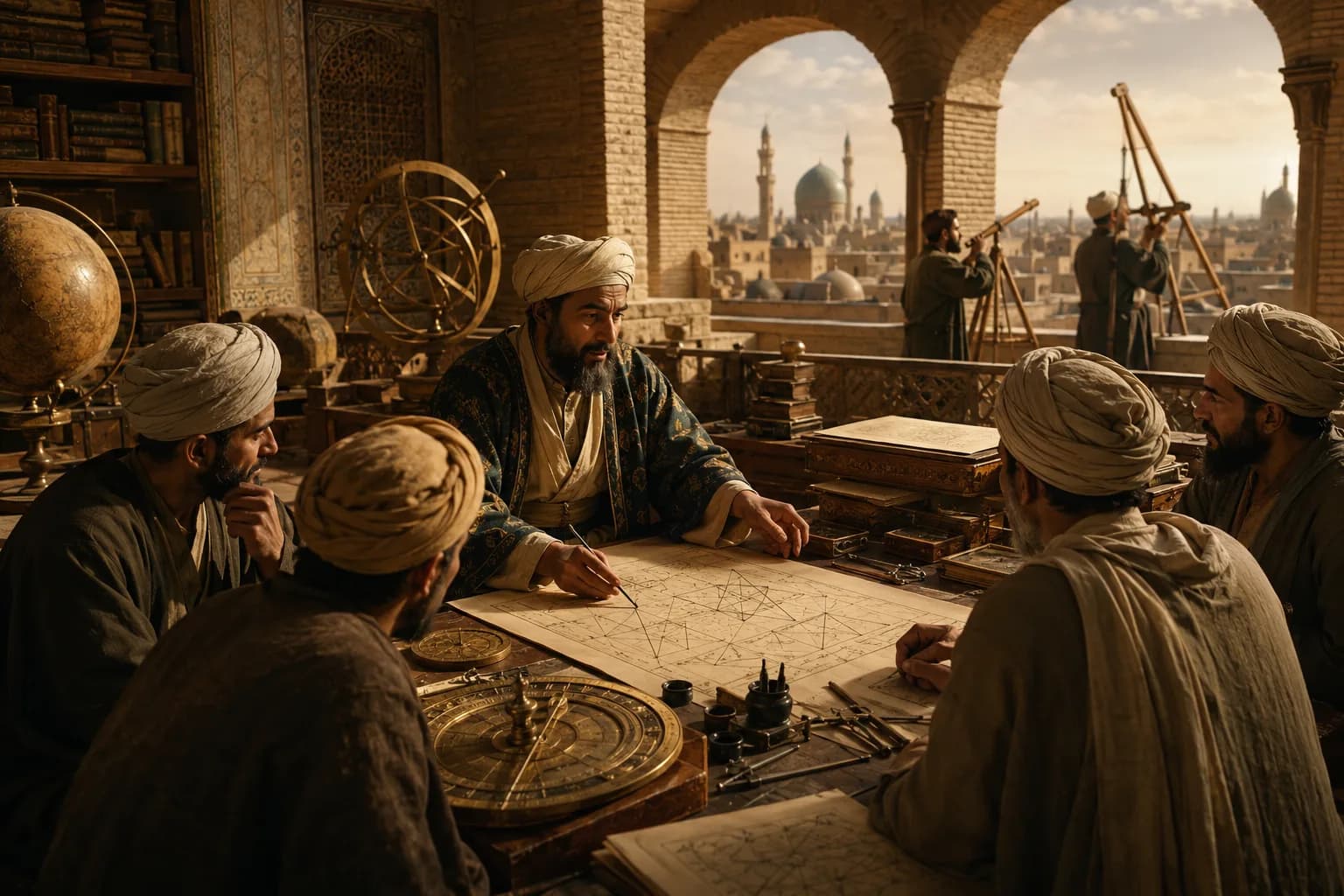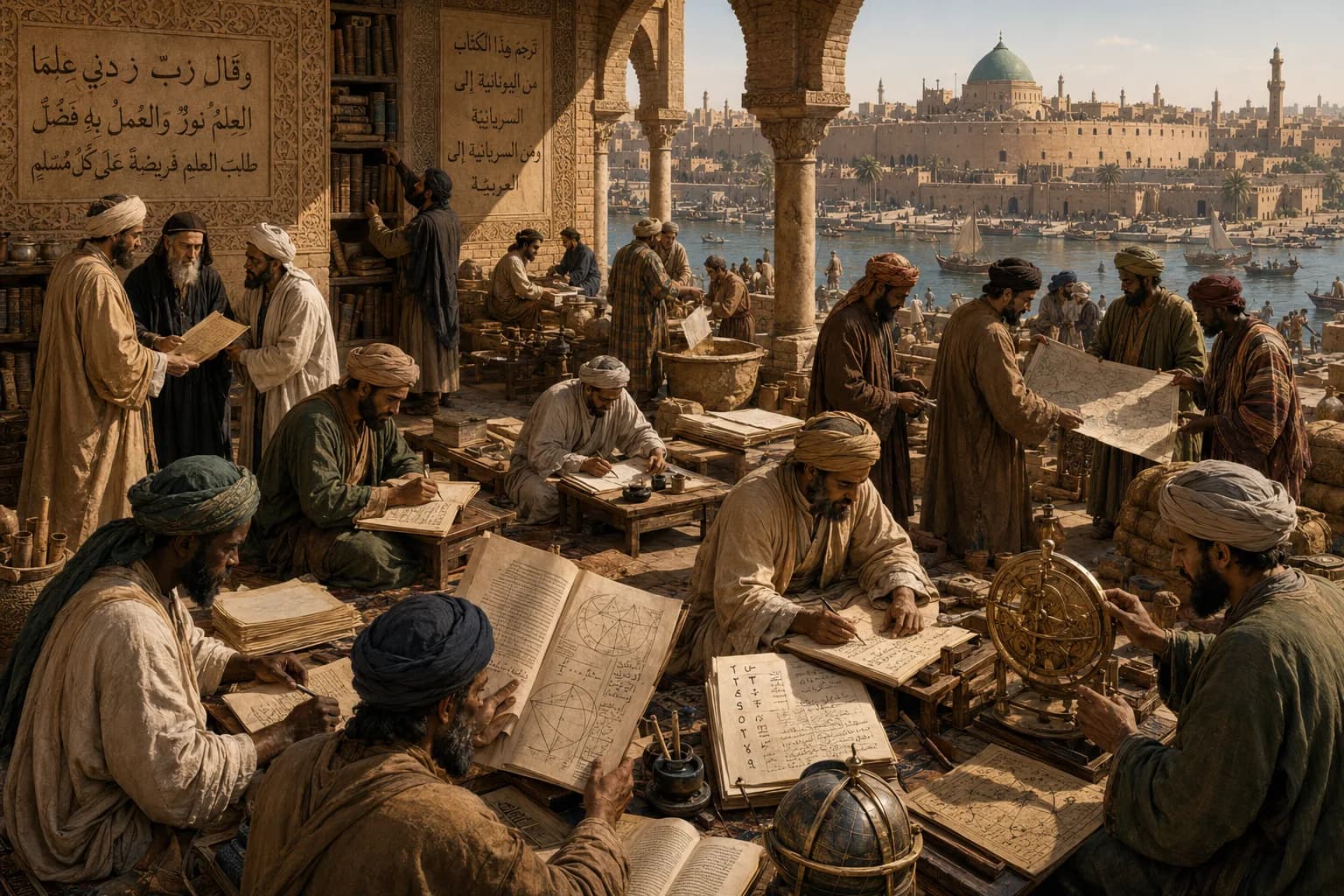
Scholars, translators, merchants and astronomers working beside books, maps and instruments in Abbasid Baghdad.
Premium Story

The Abbasid Golden Age

Follow the Abbasid world from revolution and Baghdad to translation, science, trade, fragmentation and the fall of the caliphate.

11 chapters

Next
Context

Introduction

Overview

The Abbasid Golden Age follows the rise of the Abbasid Caliphate after 750, the founding of , the translation movement, scientific and medical scholarship, long-distance trade, political fragmentation, and the Mongol conquest of in 1258.

What you'll learn: You will see how a revolution created new imperial conditions, why became a world city, how translation became original scholarship, and why Abbasid knowledge survived even when Abbasid political power fractured.

Key forces

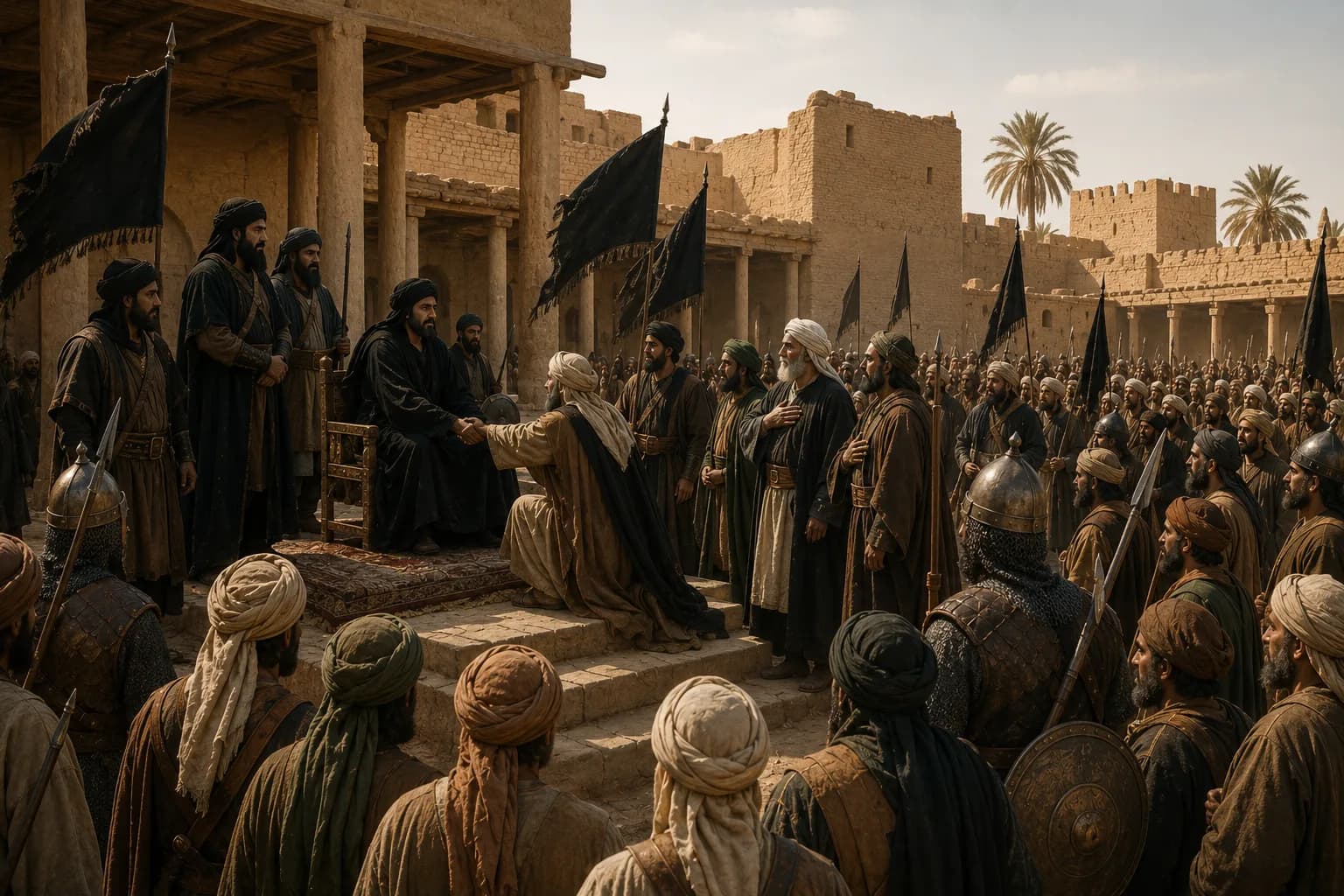
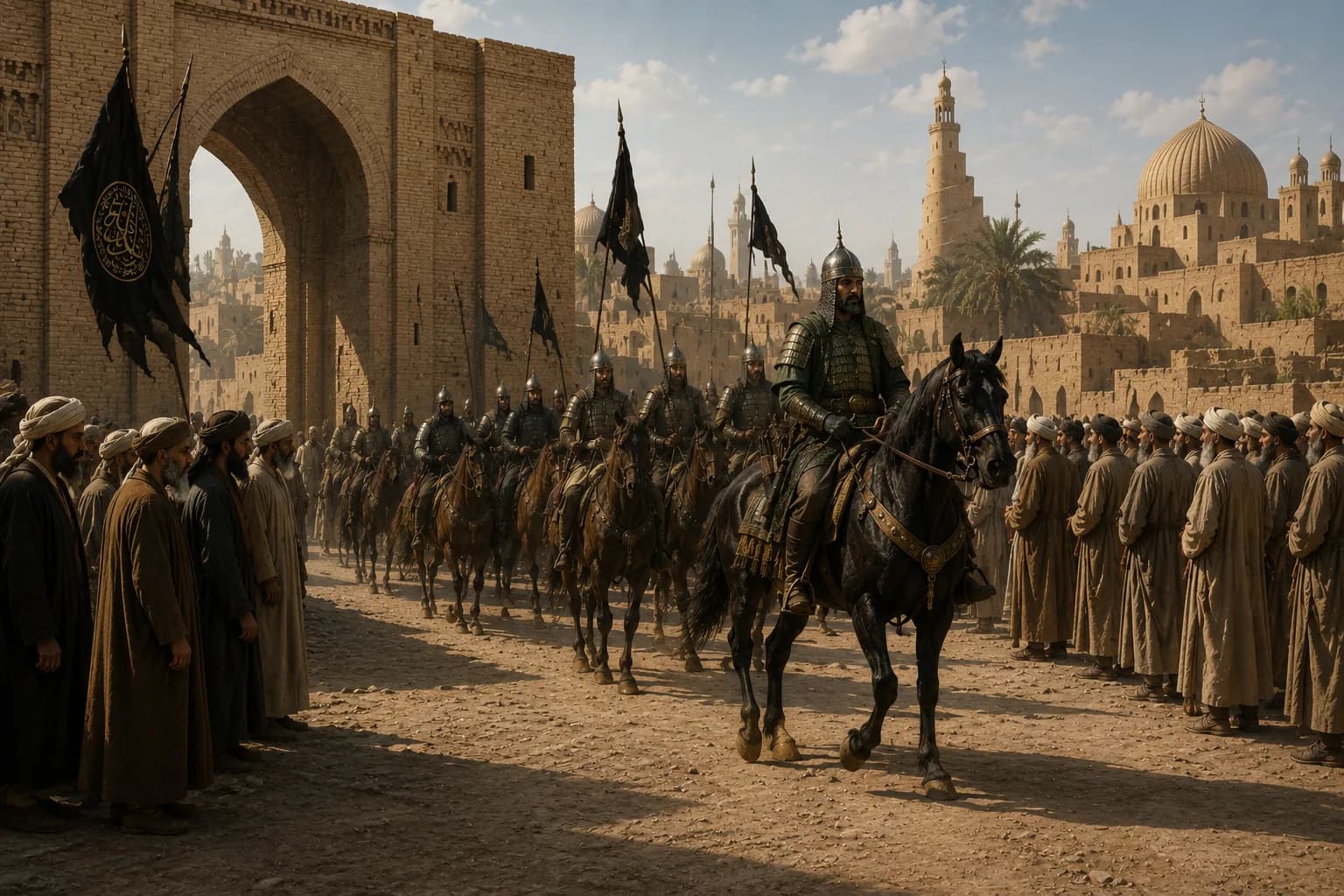
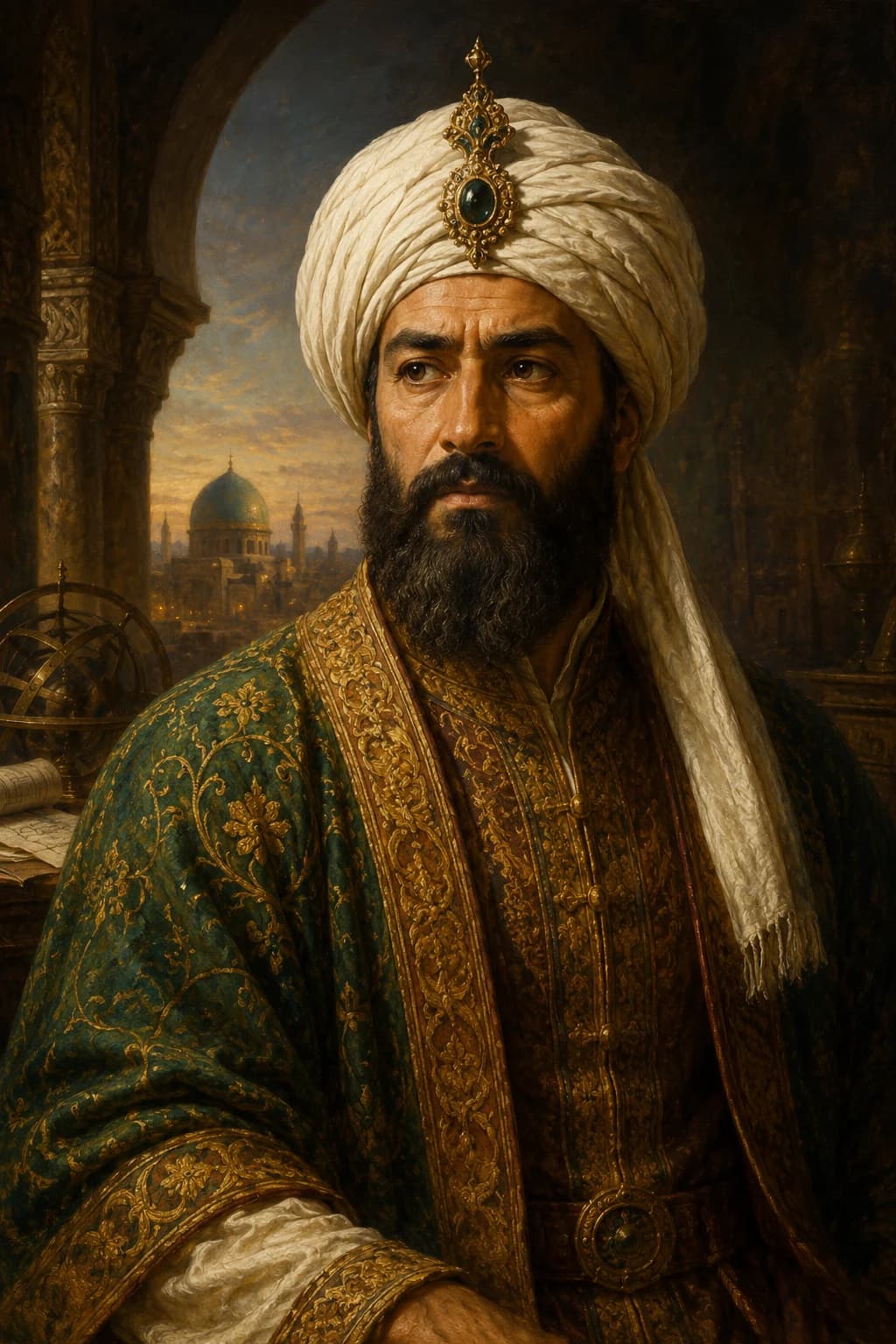
Abbasid supporters carrying black banners as a new ruler receives allegiance after the overthrow of Umayyad power.
750 CE
Step 1 of 10750 CEAccessible mode

The Abbasid Revolution

In 750, the Abbasids overthrew the Umayyad Caliphate and opened a new phase in Islamic history.

The Umayyads had ruled from Damascus since the seventh century. Their empire was vast, but not everyone accepted the way power was held.

Many non-Arab Muslims felt excluded from privilege. Some opponents wanted leadership tied more closely to the family of Muhammad. Others resented taxes, local governors and the distance between imperial rule and provincial society.

The Abbasids built support in the east, especially in Khurasan. Their movement joined religious hope, political grievance and military organisation.

The Abbasid Revolution was not only a change of rulers. It changed where power looked for support.

After victory, the Abbasids claimed legitimacy through descent from al-Abbas, Muhammad's uncle. They kept the caliphate, but gave it a new centre of gravity.

That shift mattered. By drawing more heavily on Iraq, Iran, Persian administrative habits and a wider Muslim elite, the Abbasids created conditions for a richer imperial culture. Wealth, bureaucracy and patronage could now serve books, scholars, trade and cities on a remarkable scale.

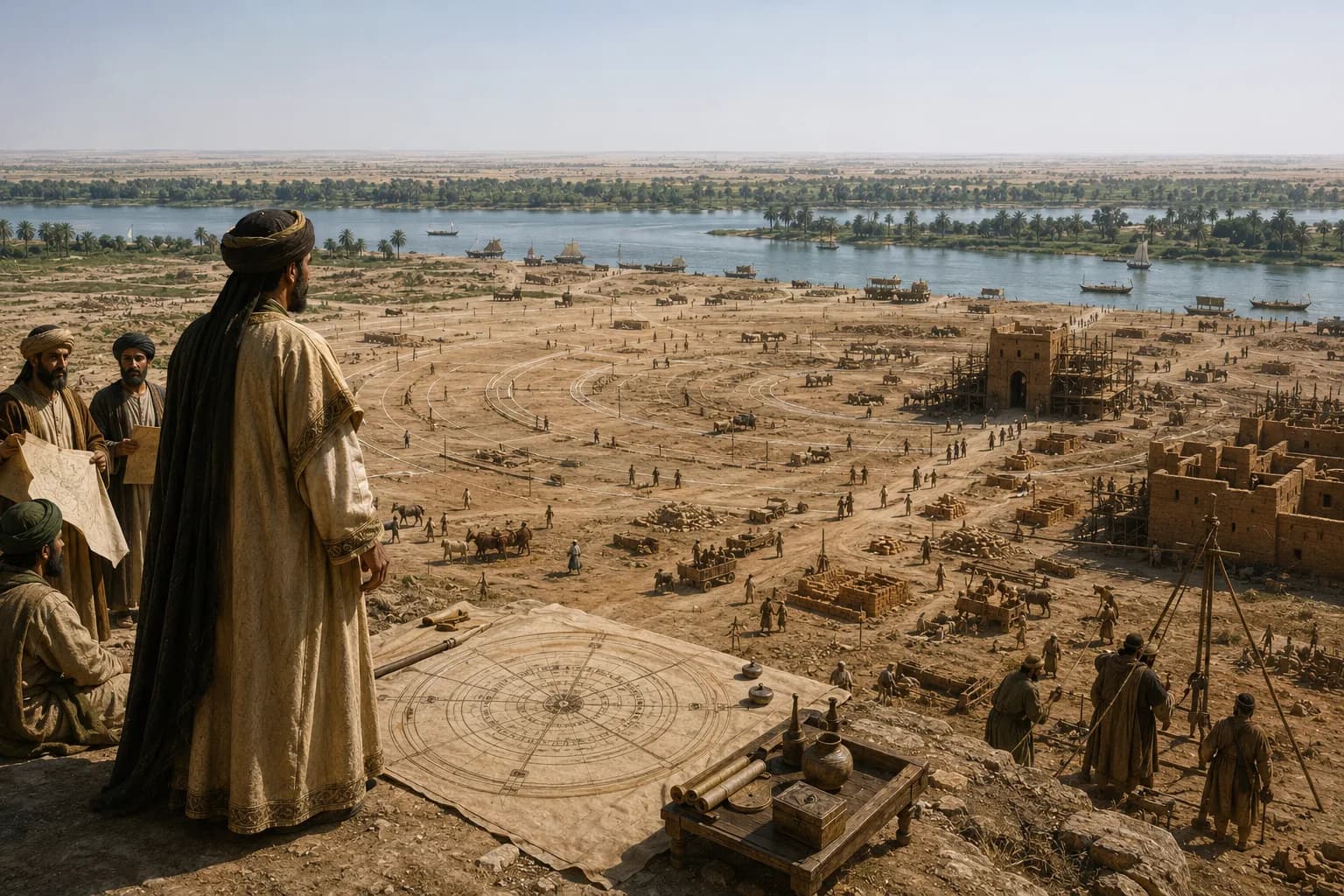
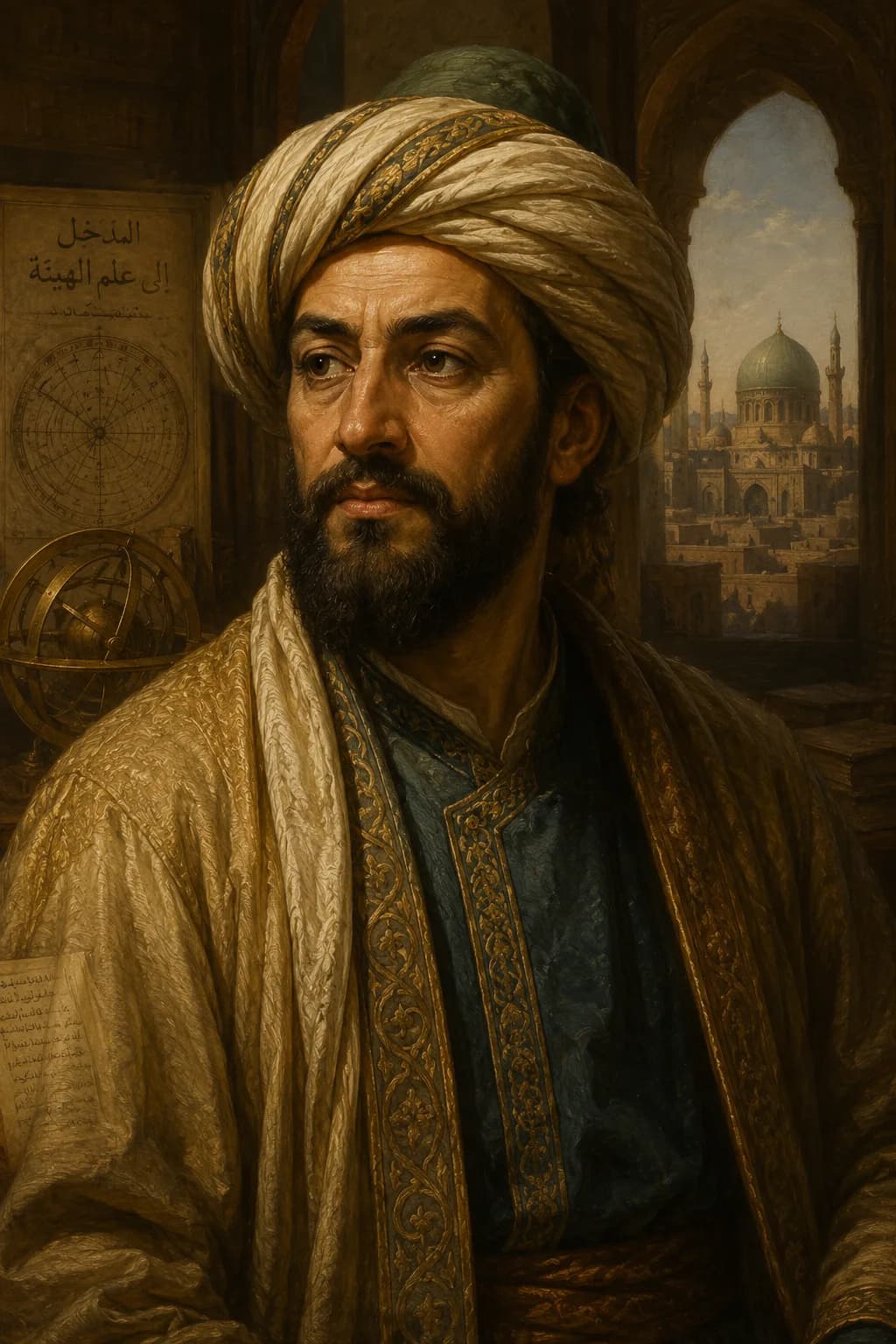
Al-Mansur and planners overlooking the circular foundations of Baghdad beside the Tigris.
762 CE
Step 2 of 10762 CEAccessible mode

The Founding of Baghdad

In 762, Caliph al-Mansur founded as the new capital of the Abbasid world.

The choice was strategic. stood on the Tigris, close to canals, farmland, river transport and overland routes that linked Iraq with Iran, Syria, Arabia and Central Asia.

It was also near older centres of power. The region had long experience of empire, administration and urban life, including the Sasanian world that had once ruled from nearby Ctesiphon.

Al-Mansur's city was planned. Its famous round design placed caliphal authority at the centre, with gates, walls and districts arranged to make rule visible and controlled.

was built to show that Abbasid power had a new centre.

The city quickly became more than a palace. Officials, soldiers, artisans, merchants, scholars and travellers gathered there.

As goods and people moved through , the capital became the political and commercial heart of the Abbasid world. Its prosperity helped support the libraries, courts and schools that made the Golden Age possible.

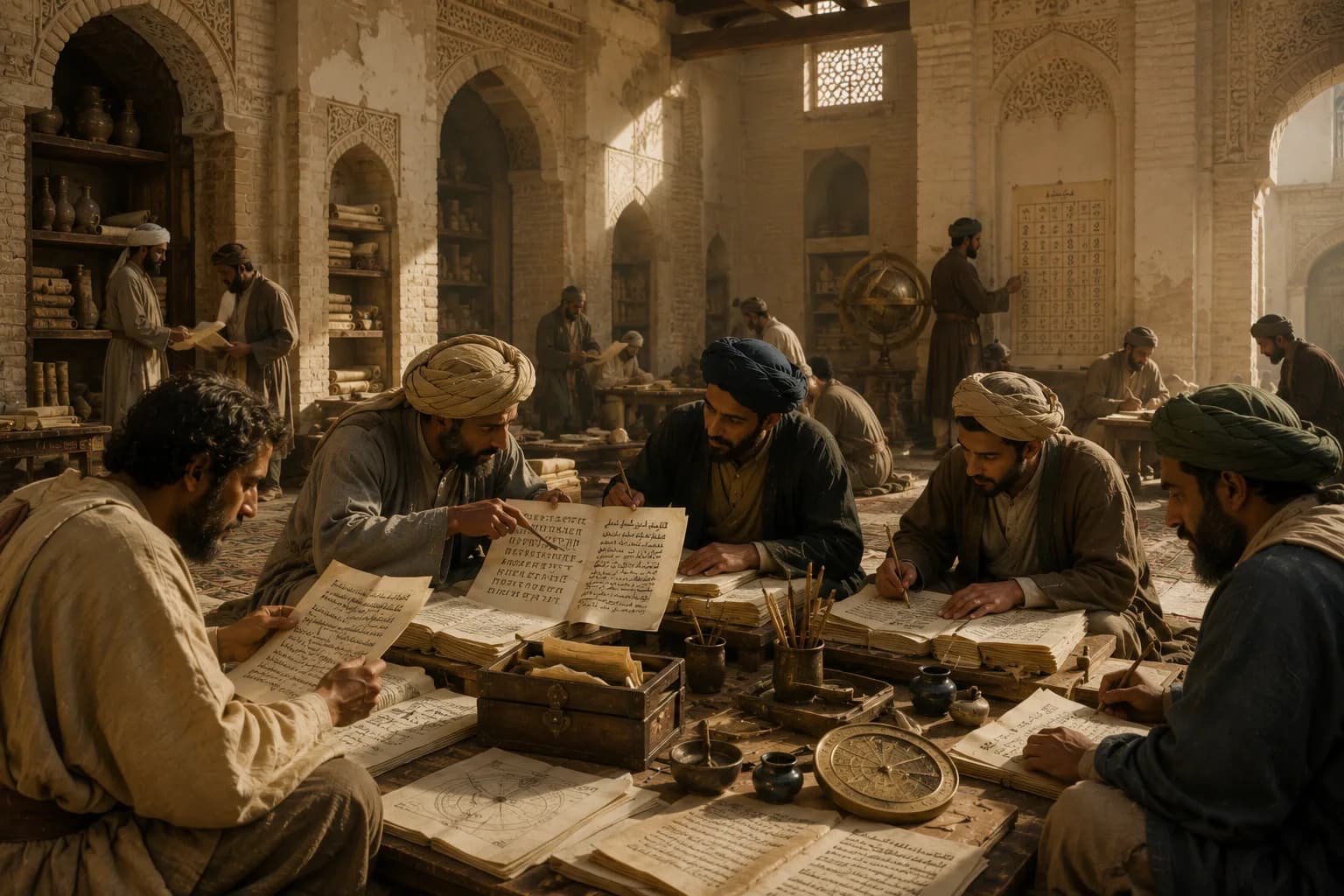
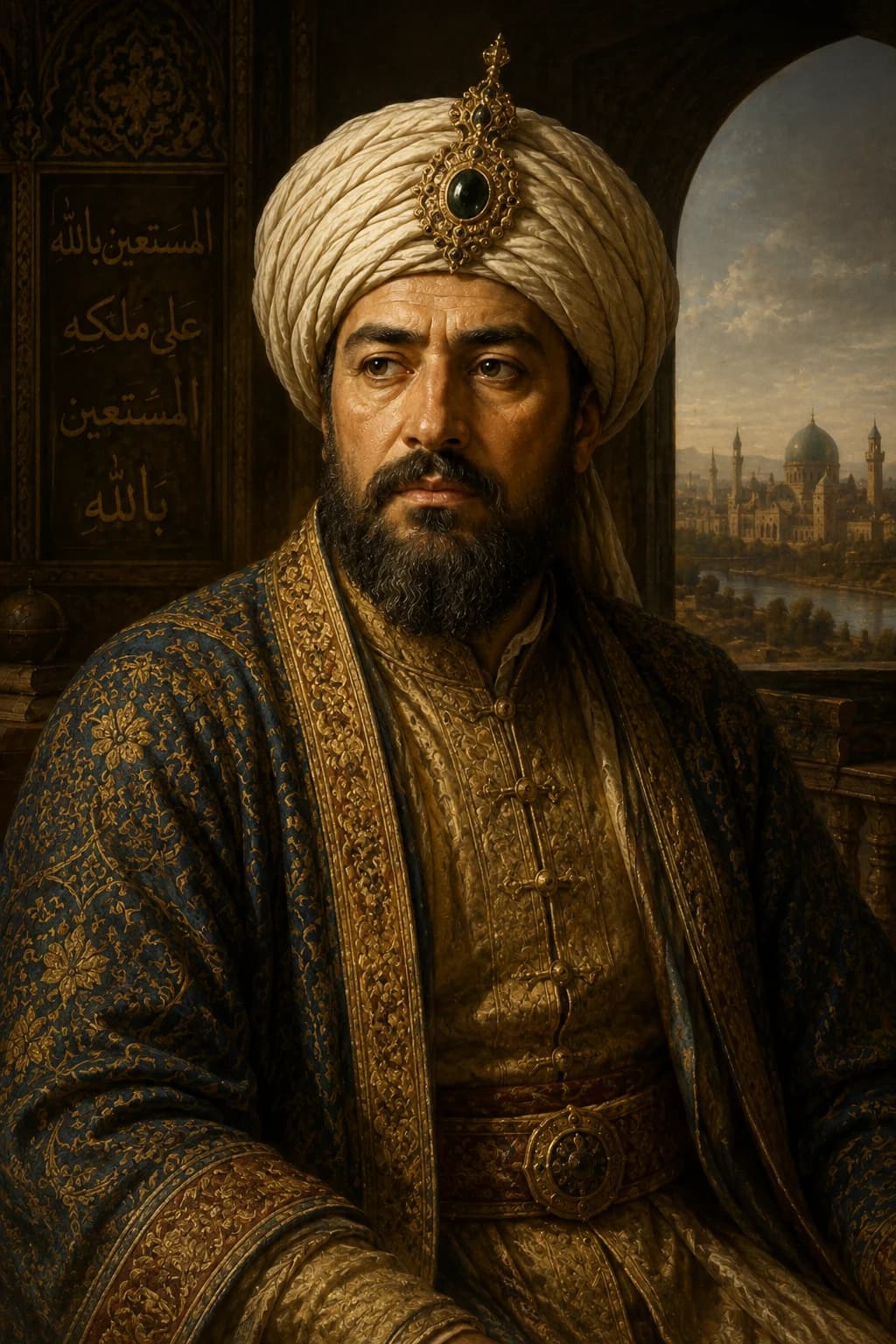
Scholars in the House of Wisdom comparing manuscripts, charts and instruments in Abbasid Baghdad.
830 CE
Step 3 of 10830 CEAccessible mode

The Rise of the House of Wisdom

By the early ninth century, had become closely linked with Abbasid scholarship.

The Arabic name was . It is remembered as a place of books, translation, study and learned patronage in .

Its strongest association is with Caliph al-Ma'mun, who ruled from 813 to 833. He supported scholars and encouraged the collection and translation of important works.

Knowledge came from many directions. Greek philosophy and science, Persian literature and statecraft, Indian mathematics and astronomy, and Syriac Christian scholarship all helped shape Abbasid learning.

stood for a wider Abbasid belief that knowledge could strengthen rule and enlarge the mind.

The institution was not the only centre of learning. Mosques, private libraries, hospitals, courts and scholars' homes also mattered.

Even so, became a lasting symbol of the age: a reminder that preserving older knowledge could become the beginning of new thought.

Premium

You've reached the turning point

The opening chapters show the Abbasids remaking power and founding Baghdad. Premium follows the deeper world that grew around the city: translation, science, medicine, trade, political fragmentation and the fall of Baghdad.

Continue into the reversals, crises and human stakes that make the story matter.

Unlock full story

What Premium unlocks next

  1. 4The Translation Movement
  2. 5Advances in Science and Mathematics
  3. 6Medicine and Philosophy Flourish
  4. 7Trade Connects the Known World
  5. 8Knowledge Spreads Beyond Baghdad
  6. 9Political Fragmentation Challenges the Caliphate
  7. 10The Fall of Baghdad

Browse stories

Browse stories for free

Explore the people connected to this turning point or enjoy one of our free stories.

Unlock full storyBrowse stories

References

Sources & Further Reading

Reliable sources, primary-source collections and reading paths connected to this page.

A weekly route through history

Find out first about the latest published stories, feature notes and occasional Premium offers in one weekly email.