People

Al-Mansur

Al-Mansur was the second Abbasid caliph. He ruled from 754 to 775, strengthened Abbasid government, and founded Baghdad as the new capital of the caliphate.

Born
c. 714 CE
Died
775 CE
Role
Abbasid caliph

Abbasid caliph (c. 714-775)

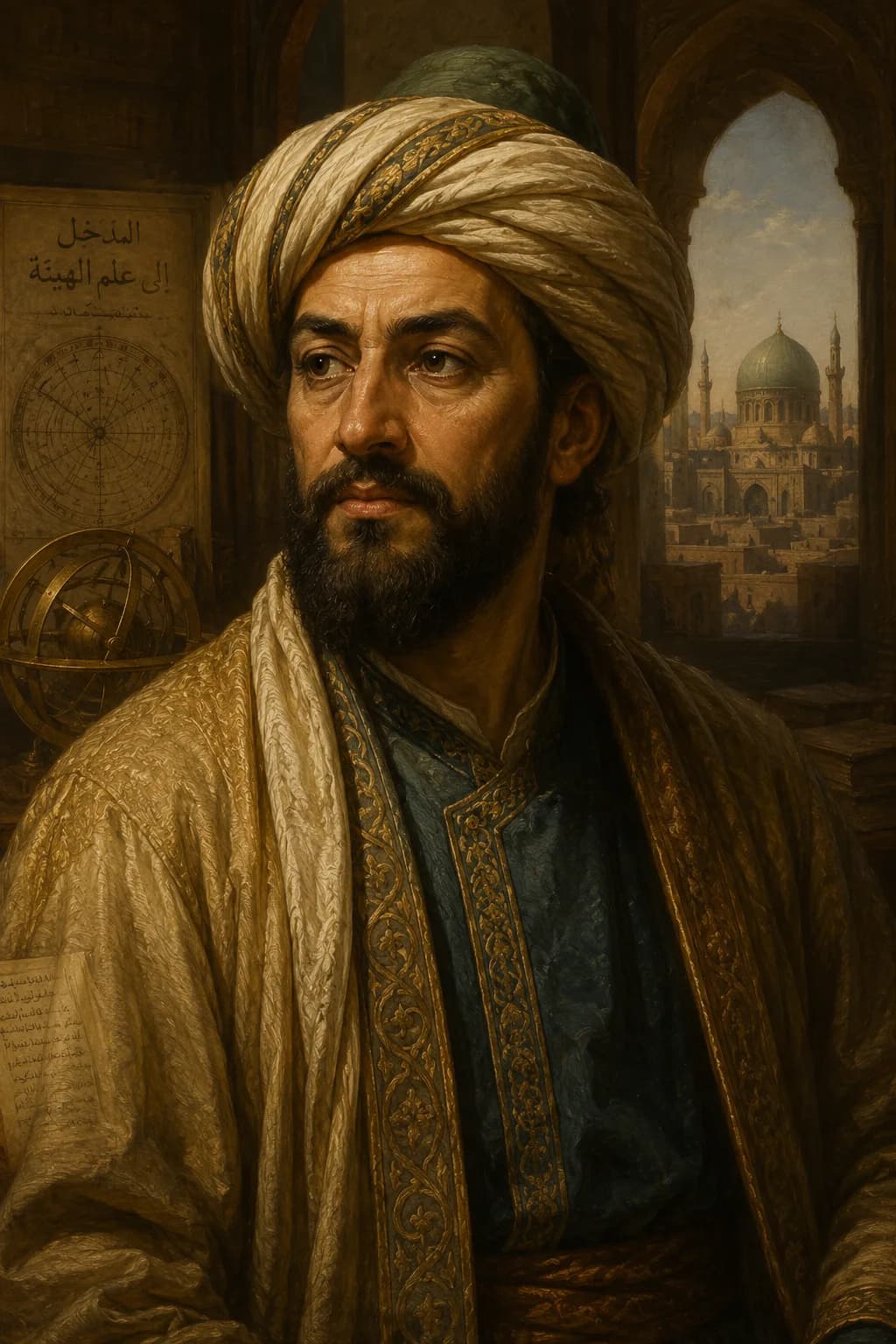
AI-generated portrait of al-Mansur in Abbasid court dress with Baghdad in the background
AI-assisted historical reconstruction

An illustrative reconstruction based on historical context. It is not a photograph or documentary likeness. Image policy

Quick answer

Al-Mansur was the second Abbasid caliph. He ruled from 754 to 775, strengthened Abbasid government, and founded Baghdad as the new capital of the caliphate.

Born
c. 714 CE
Died
775 CE
Role
Abbasid caliph
Years
c. 714-775 CE
Quick facts

Profile details

Additional identity and tagging details that are not already covered in the introduction.

Full name
Abu Ja'far Abdallah ibn Muhammad al-Mansur
Also known as
al-Mansur, Abu Ja'far al-Mansur, Abu Jafar al-Mansur
Region
Iraq, Islamic world, Abbasid Caliphate
Facts

Al-Mansur timeline facts

Selected specifics from this profile's life story.

c. 714
Abbasid prince

Al-Mansur was born into the family that would overthrow the Umayyads and claim the caliphate through Abbasid descent.

754
Second Abbasid caliph

Al-Mansur became caliph in 754 and worked to strengthen Abbasid authority after the dynasty's fragile beginning.

762-775
A durable imperial centre

Al-Mansur's Baghdad quickly became a political and commercial centre whose wealth later supported Abbasid scholarship.

775
Death and legacy

Al-Mansur died in 775, leaving behind a stronger Abbasid state and a capital that would become famous across the medieval world.

Life Journey

The caliph who made Baghdad a capital

Follow al-Mansur from Abbasid consolidation to the founding of Baghdad and the political order that supported the Golden Age.

Complete chronology

c. 714

Abbasid prince

Abu Ja'far Abdallah ibn Muhammad al-Mansur was born around 714, before the Abbasids held power. His family belonged to the wider Hashemite world and later claimed legitimacy through descent from al-Abbas, Muhammad's uncle. That claim mattered because the Abbasid Revolution was not only a military revolt. It was also a contest over who could speak for the Muslim community after decades of Umayyad rule. Al-Mansur came of age inside a movement that turned family memory, eastern support and dissatisfaction with the Umayyads into a bid for empire.
750-754

Power after revolution

The Abbasid victory in 750 did not automatically create a stable state. Armies, provincial elites, family rivals and supporters who had helped overthrow the Umayyads all had to be managed. Al-Mansur's importance grew during these unsettled years. When his brother al-Saffah became the first Abbasid caliph, al-Mansur gained experience in the hard work of consolidation: rewarding allies, controlling commanders, drawing on Iraq and Iran, and making Abbasid rule look durable rather than temporary.

754

Second Abbasid caliph

When al-Mansur became caliph in 754, the Abbasid state still faced rival claims, regional pressures and dangerous expectations from those who had supported the revolution. His rule was marked by discipline, suspicion and administrative focus. He tightened central control, relied on capable officials, and made clear that Abbasid rule would not simply be a loose coalition of revolutionary allies. The severity of his politics could be brutal, but it helped give the new dynasty the institutional weight it needed to survive.

762

Founding Baghdad

Al-Mansur's most famous act was the founding of Baghdad in 762. The city, known as Madinat al-Salam, was placed near the Tigris, canals, farmland and routes linking Iraq with Iran, Syria, Arabia and Central Asia. Its planned round design placed caliphal power at the centre. Baghdad was not merely a convenient residence. It was a statement that Abbasid authority had shifted the centre of the Islamic world eastward, closer to older Persian and Mesopotamian traditions of government.

762-775

A durable imperial centre

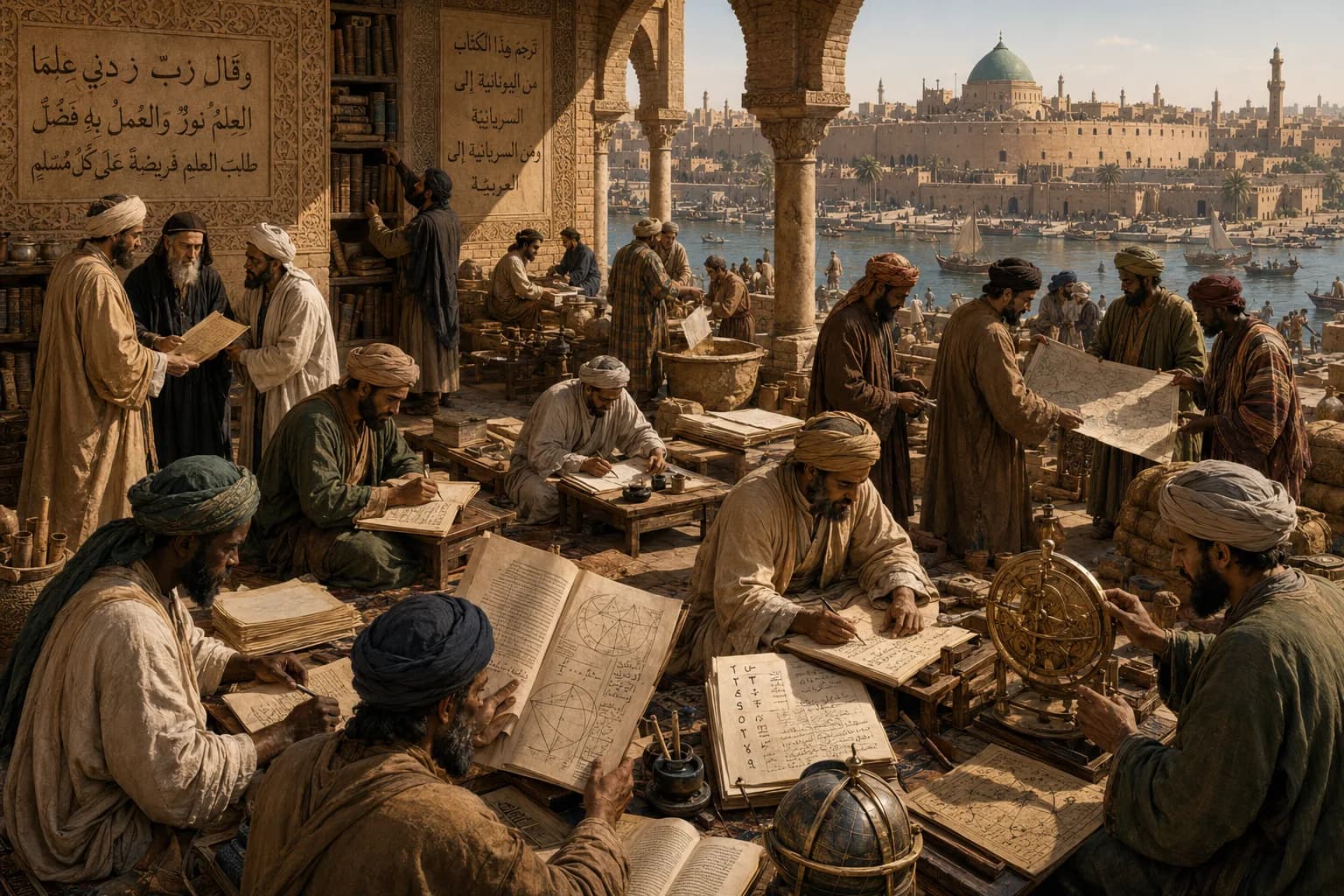
Al-Mansur did not create the Abbasid Golden Age by himself, but he created conditions that made it possible. Baghdad gathered officials, soldiers, merchants, artisans, scribes and scholars into one imperial centre. Taxation, trade and administration moved through the capital, while the court drew on Arabic, Persian, Iraqi and wider Islamic traditions. Later Abbasid patrons would turn that wealth and urban energy toward translation, medicine, astronomy and mathematics. Al-Mansur's achievement was therefore architectural, administrative and symbolic at once.

775

Death and legacy

Al-Mansur died in 775 while travelling for the pilgrimage. His legacy was not a peaceful utopia. Abbasid politics remained dangerous, and later rulers would face revolts, factional struggles and military pressure. Yet the shape of the caliphate had changed. Baghdad gave the Abbasids a centre with immense political and cultural gravity. Long after al-Mansur's death, the city he founded became the emblem of Abbasid prosperity, scholarship and urban life.

Continue in context

Connected stories

Move from the profile into the wider events and settings this figure belongs to.

Tertiary paths

Content note

This profile is written for educational use and connects to related Stories of History pages. The main portrait is an AI-assisted historical reconstruction, included as an illustrative aid rather than documentary evidence. Image policy

References

Sources & Further Reading

Reliable reference works, archives and reading paths connected to this profile.

Further reading

  1. Encyclopaedia Britannica, Search results for Al-Mansur,” accessed June 2026.Open source
  2. WorldCat, Books and library holdings for Al-Mansur,” accessed June 2026.Open source

Primary sources

  1. Library of Congress, Search results for Al-Mansur,” accessed June 2026.Open source

Reviewed claim sources

Loading reviewed claim sources...

A weekly route through history

Find out first about the latest published stories, feature notes and occasional Premium offers in one weekly email.