People

Al-Khwarizmi

Al-Khwarizmi was a ninth-century scholar in Abbasid Baghdad. His works on algebra, Hindu-Arabic numerals, astronomy and geography helped shape global mathematics and scientific calculation.

Born
c. 780 CE
Died
c. 850 CE
Role
Mathematician

Mathematician and astronomer (c. 780-c. 850)

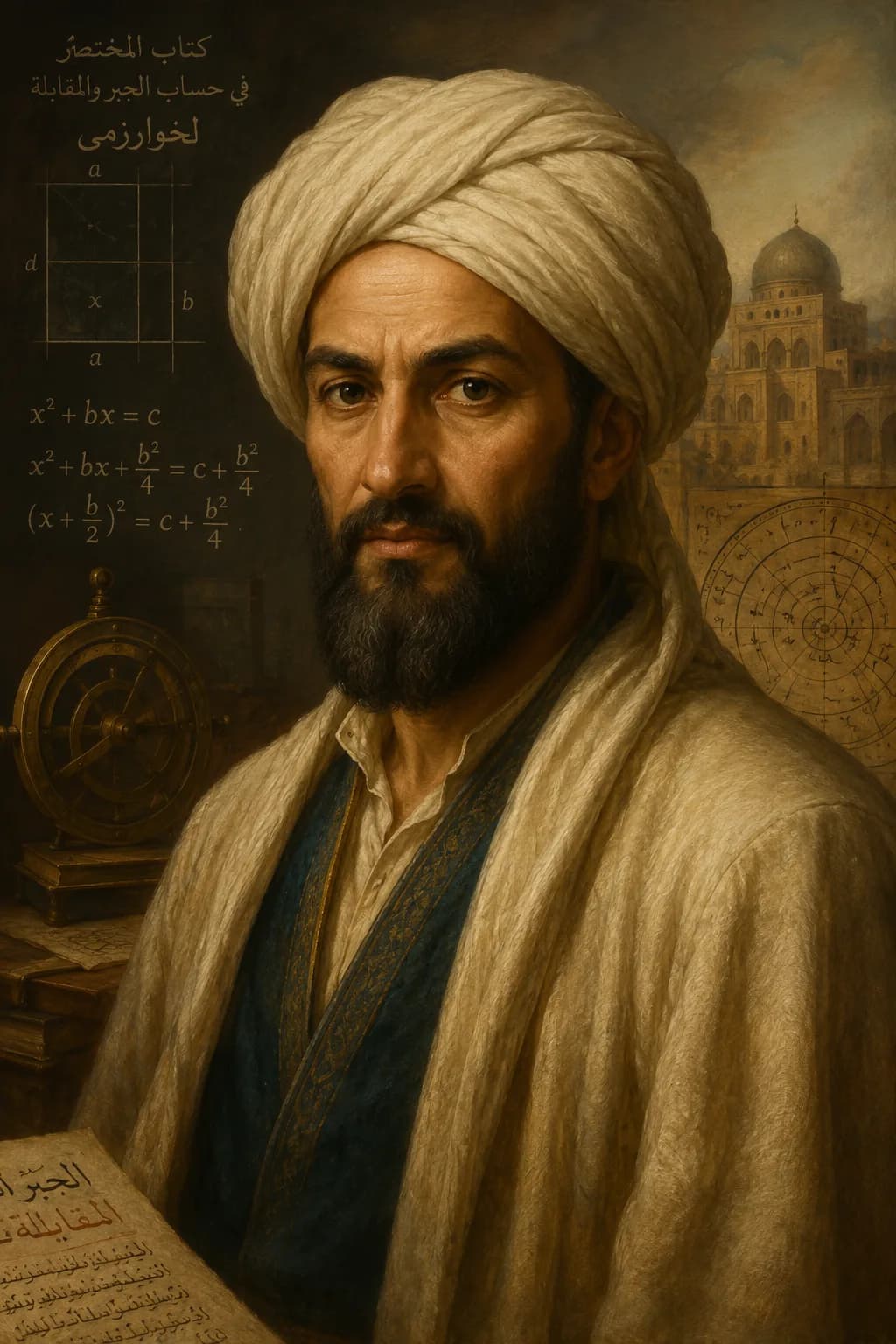
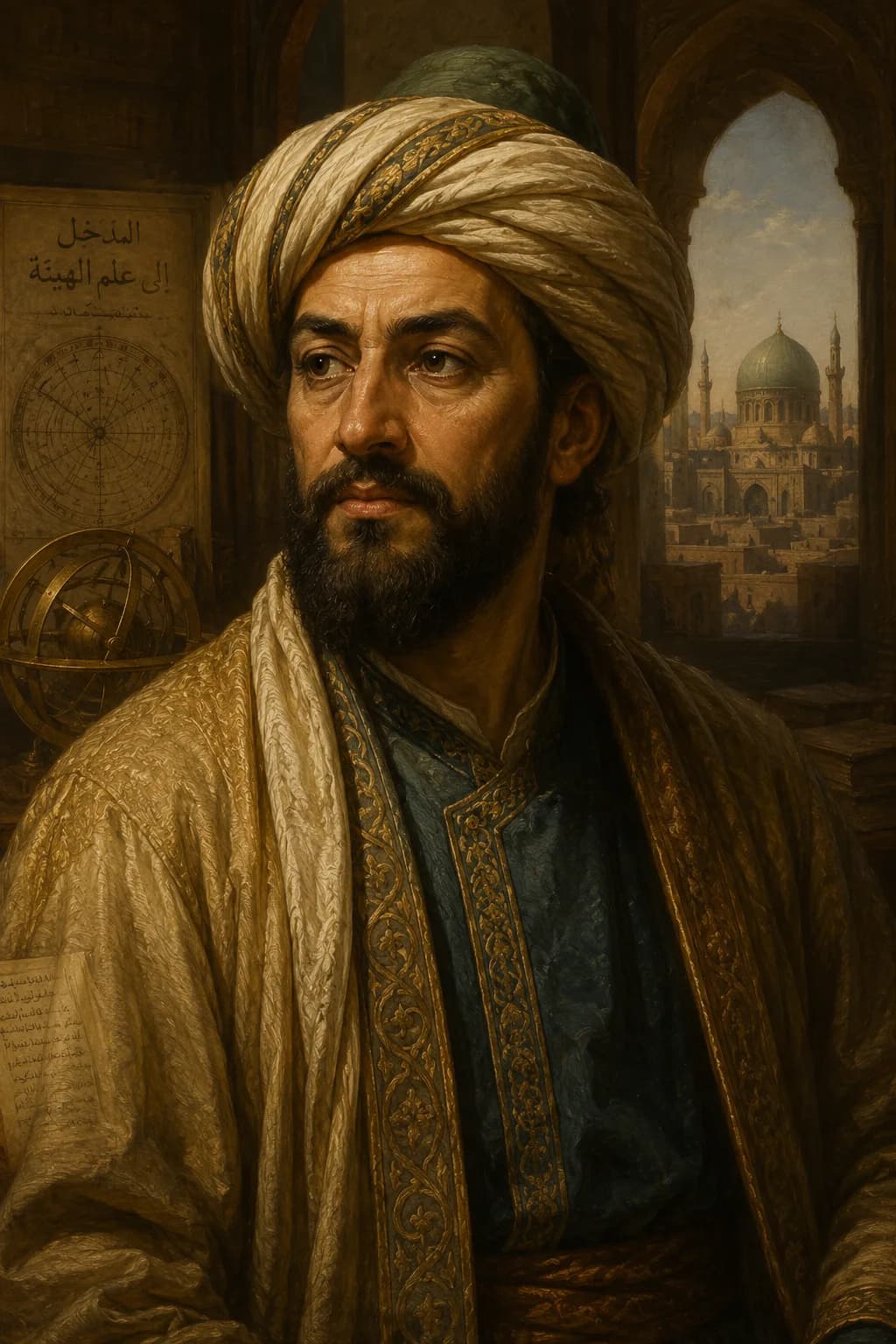
AI-generated portrait of al-Khwarizmi with algebraic diagrams, astronomical instruments and manuscripts
AI-assisted historical reconstruction

An illustrative reconstruction based on historical context. It is not a photograph or documentary likeness. Image policy

Quick answer

Al-Khwarizmi was a ninth-century scholar in Abbasid Baghdad. His works on algebra, Hindu-Arabic numerals, astronomy and geography helped shape global mathematics and scientific calculation.

Born
c. 780 CE
Died
c. 850 CE
Role
Mathematician
Years
c. 780-c. 850 CE
Quick facts

Profile details

Additional identity and tagging details that are not already covered in the introduction.

Full name
Muhammad ibn Musa al-Khwarizmi
Also known as
al-Khwarizmi, Muhammad ibn Musa, Algoritmi
Region
Baghdad, Khwarazm, Islamic world, Abbasid Caliphate
Facts

Al-Khwarizmi timeline facts

Selected specifics from this profile's life story.

c. 780
From Khwarazm to Baghdad

Al-Khwarizmi was probably connected with Khwarazm, but his major scholarly work belongs to Abbasid Baghdad.

c. 820
Algebra organised

Al-Khwarizmi's book on al-jabr helped give algebra its name and presented systematic methods for solving equations.

Ninth century
Astronomy and geography

Al-Khwarizmi also worked on astronomical tables and geography, linking mathematics to observation, mapping and calendars.

After c. 850
Long mathematical afterlife

Al-Khwarizmi died around 850, but his algebra and calculation methods continued to influence mathematics for centuries.

Life Journey

The scholar who made calculation travel

Follow al-Khwarizmi through Abbasid Baghdad, algebra, astronomical tables and the long global life of his methods.

Complete chronology

c. 780

From Khwarazm to Baghdad

Muhammad ibn Musa al-Khwarizmi was born around 780, and his name links him with Khwarazm, a region south of the Aral Sea. The details of his early life are uncertain, which is common for many medieval scholars. What matters historically is his work in Abbasid Baghdad, where scholars, translators, scribes and patrons created one of the most important intellectual environments of the medieval world. Al-Khwarizmi's career shows how a connected capital could gather knowledge from many regions and make it usable in new forms.
Early 800s

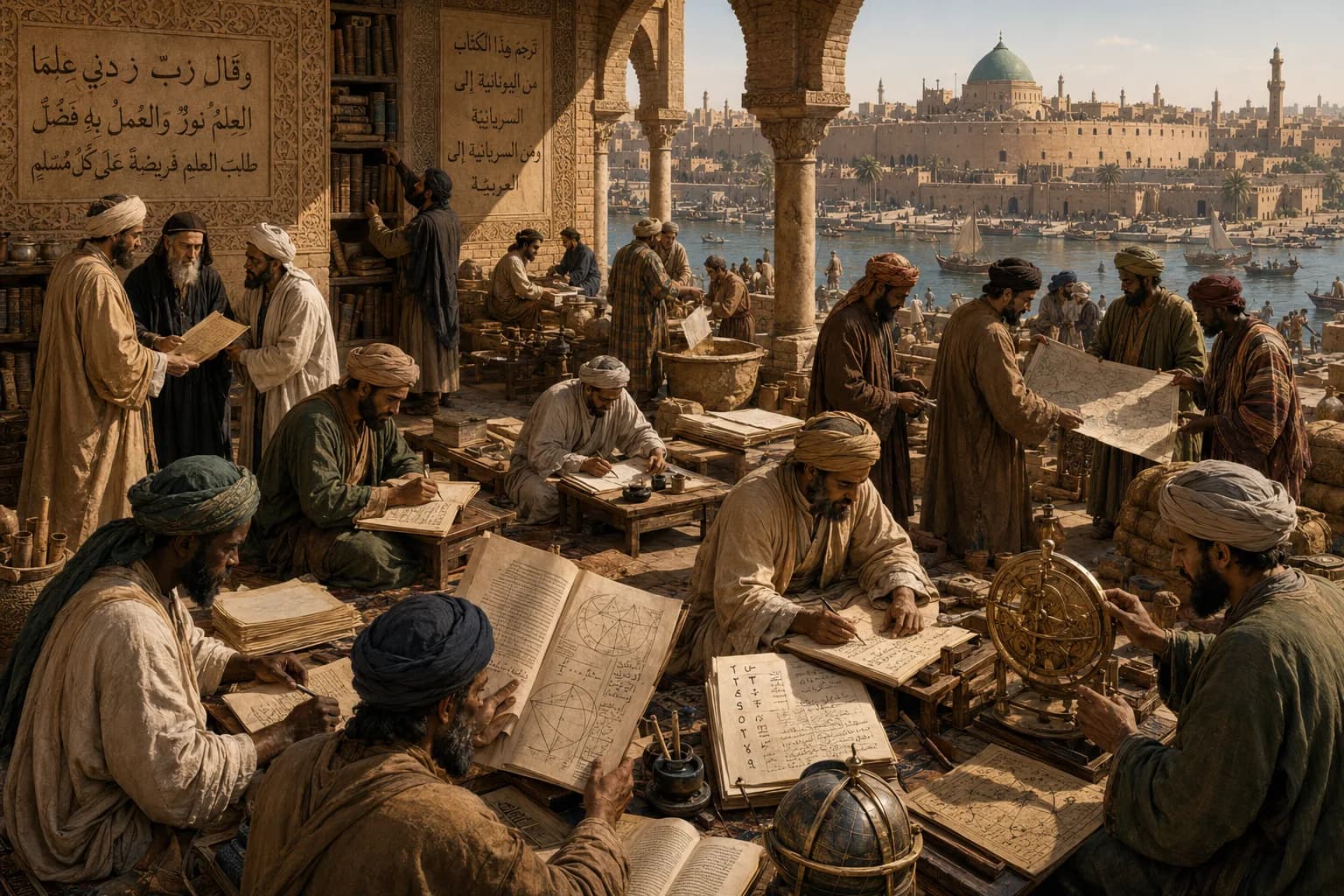
House of Wisdom world

Al-Khwarizmi is closely associated with the scholarly circles of Baghdad under al-Ma'mun. The Bayt al-Hikma, or House of Wisdom, symbolises this world of books, translation and inquiry. Scholars worked with Greek, Persian, Indian and Arabic materials, but they did more than copy older texts. They compared, corrected, organised and extended them. Al-Khwarizmi belonged to this practical intellectual culture, where mathematics could serve law, trade, surveying, astronomy and administration.

c. 820

Algebra organised

Al-Khwarizmi's most famous work is usually known through the Arabic phrase al-jabr, from which the word algebra comes. The book did not treat algebra as a modern symbolic system, but it offered systematic procedures for solving types of equations using words, examples and geometric reasoning. Its problems were practical as well as abstract: inheritance, trade, measurement and legal calculation all required reliable methods. Al-Khwarizmi's achievement was clarity. He made calculation teachable and repeatable.

Ninth century

Numbers and algorithms

Al-Khwarizmi also wrote on calculation with numerals derived from Indian traditions. Later Latin versions of works associated with his name helped carry these methods into Europe. The word algorithm ultimately comes from forms of his name used in Latin. That legacy can sound like a modern accident, but it points to something real: al-Khwarizmi helped make step-by-step calculation portable. Numbers, procedures and notation could move across languages because scholars made them teachable.

Ninth century

Astronomy and geography

Al-Khwarizmi's scholarship was not limited to algebra. He produced astronomical tables and worked with geographical knowledge, including revisions of inherited Greek material. In Abbasid society, astronomy mattered for calendars, timekeeping, astrology, navigation, geography and religious practice. Geography mattered for empire, trade and scholarly curiosity about the shape of the known world. His work shows the Abbasid habit of joining inherited learning to practical systems of calculation.

After c. 850

Long mathematical afterlife

Al-Khwarizmi probably died around 850. His later fame grew because his works entered wider teaching traditions in Arabic and then, through translation, Latin Europe. Algebra, algorithms and Hindu-Arabic numerals did not spread through one person alone, but his name became attached to decisive ways of organising calculation. That is why al-Khwarizmi belongs near the centre of the Abbasid Golden Age. He turned inherited knowledge into procedures that could travel.

Continue in context

Connected stories

Move from the profile into the wider events and settings this figure belongs to.

Tertiary paths

Content note

This profile is written for educational use and connects to related Stories of History pages. The main portrait is an AI-assisted historical reconstruction, included as an illustrative aid rather than documentary evidence. Image policy

References

Sources & Further Reading

Reliable reference works, archives and reading paths connected to this profile.

Further reading

  1. Encyclopaedia Britannica, Search results for Al-Khwarizmi,” accessed June 2026.Open source
  2. WorldCat, Books and library holdings for Al-Khwarizmi,” accessed June 2026.Open source

Primary sources

  1. Library of Congress, Search results for Al-Khwarizmi,” accessed June 2026.Open source

Reviewed claim sources

Loading reviewed claim sources...

A weekly route through history

Find out first about the latest published stories, feature notes and occasional Premium offers in one weekly email.