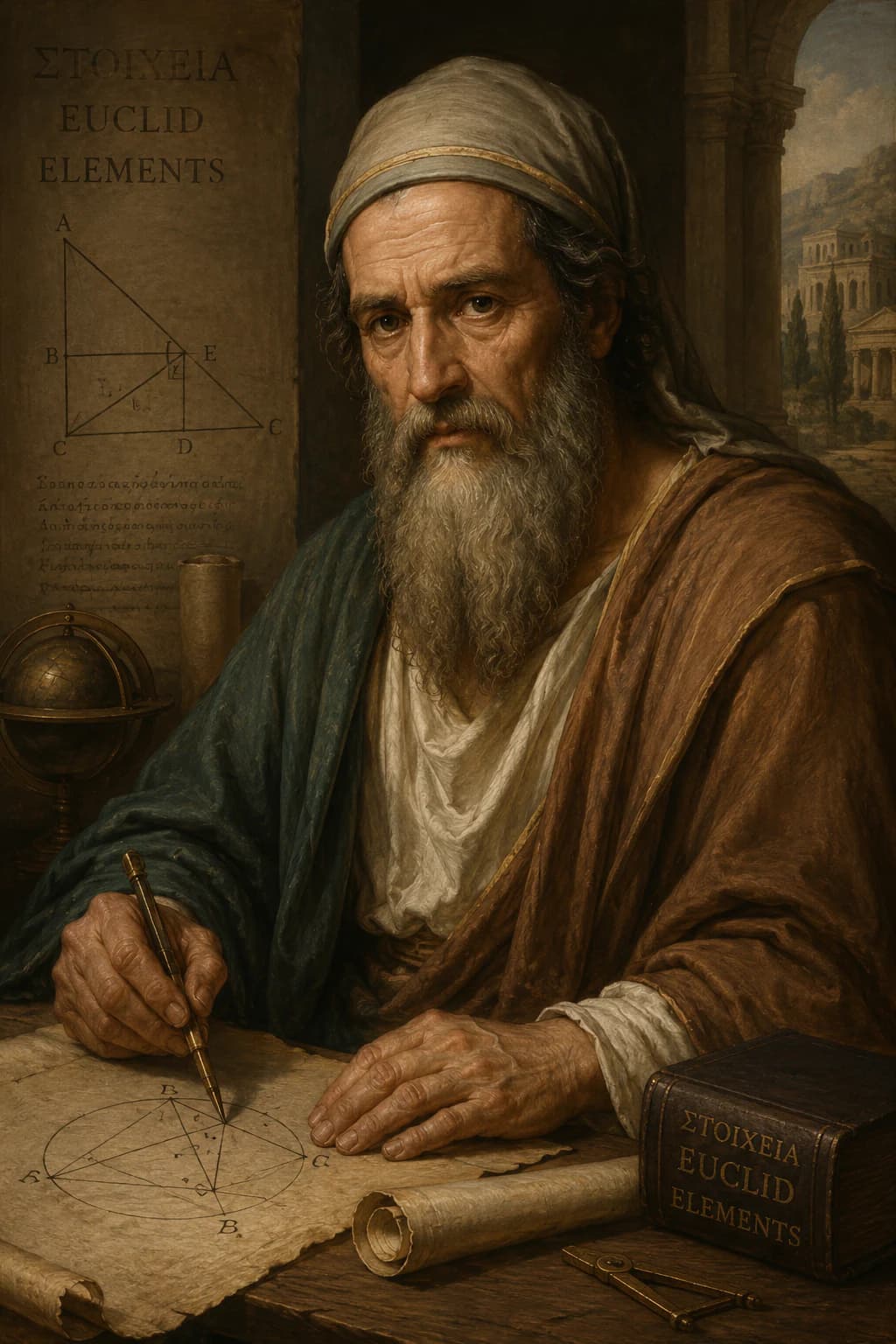
Alexandrian scholar
Euclid worked in Alexandria during the early Hellenistic age, when the city was becoming a major center of learning.
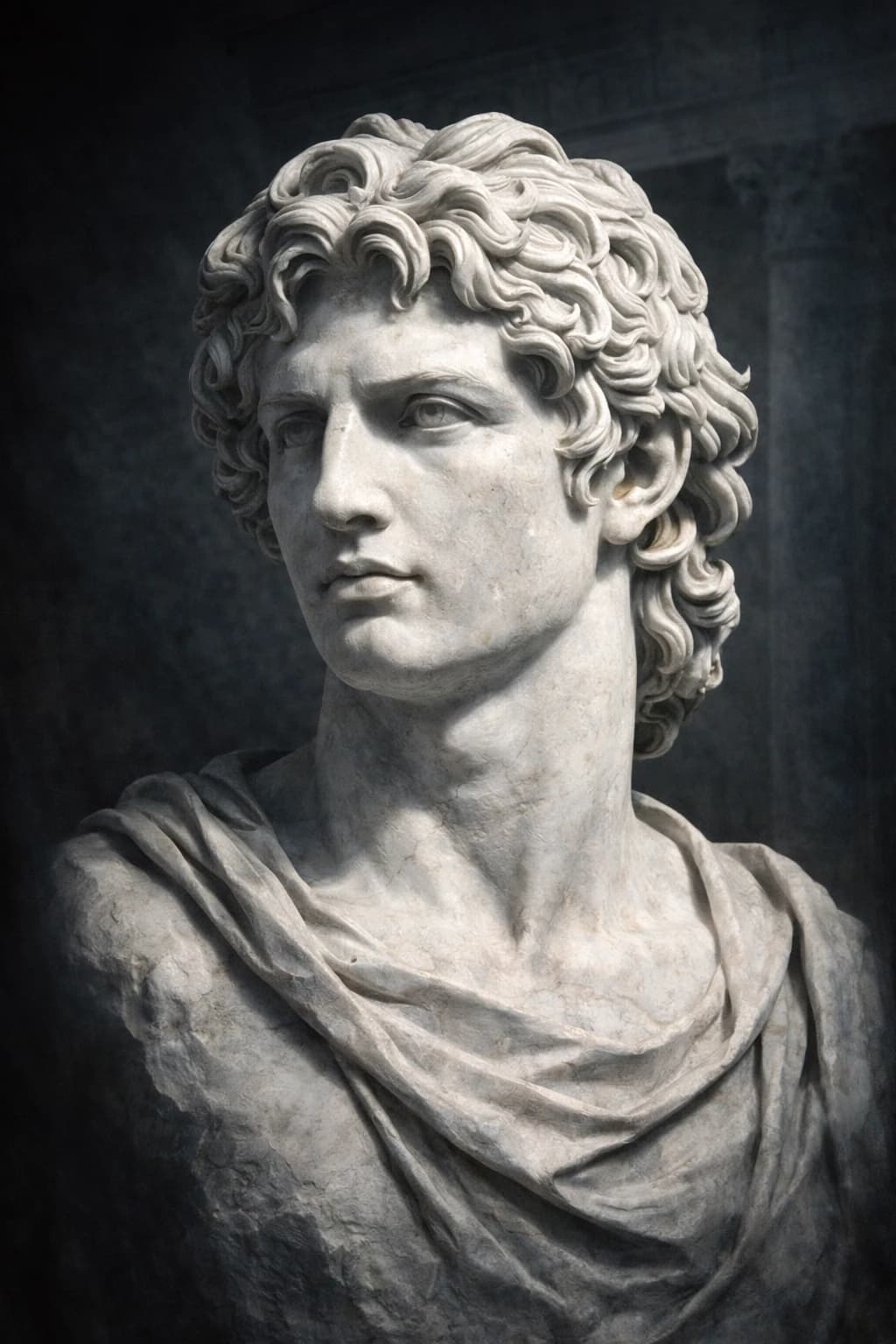
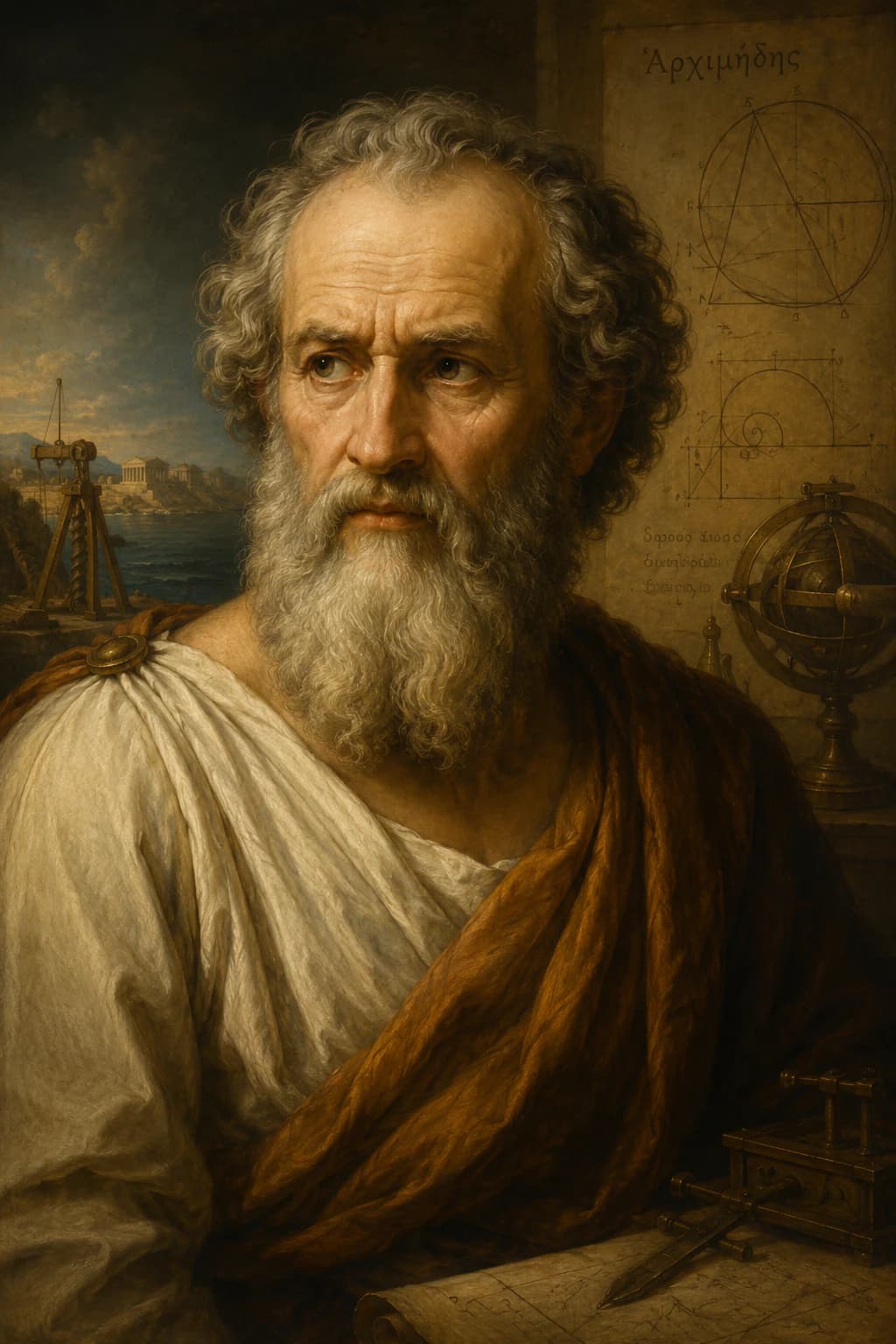
Euclid was a Greek mathematician active in Alexandria around 300 BC. His Elements organized geometry and number theory into an axiomatic system that became one of the most influential textbooks in world history.
Greek mathematician (fl. c. 300 BC)

Additional identity and tagging details that are not already covered in the introduction.
Selected specifics from this profile's life story.
Euclid worked in Alexandria during the early Hellenistic age, when the city was becoming a major center of learning.
Euclid's Elements organized geometry from basic definitions and assumptions into a chain of logical proofs.
Euclid's approach made proof central to mathematical education across the Greek and later Roman worlds.
For centuries, learning geometry meant learning Euclid, making him one of the most influential teachers in history.
Follow Euclid through the Alexandrian world of proof, teaching, and mathematical order.
Euclid worked in Alexandria during the early Hellenistic age, when the city was becoming a major center of learning.
Euclid's Elements organized geometry from basic definitions and assumptions into a chain of logical proofs.
Euclid's approach made proof central to mathematical education across the Greek and later Roman worlds.
For centuries, learning geometry meant learning Euclid, making him one of the most influential teachers in history.
Move from the profile into the wider events and settings this figure belongs to.


This profile is written for educational use and connects to related Stories of History pages. Illustrations are original artistic interpretations.
Find out first about the latest published stories, feature notes and occasional Premium offers in one weekly email.