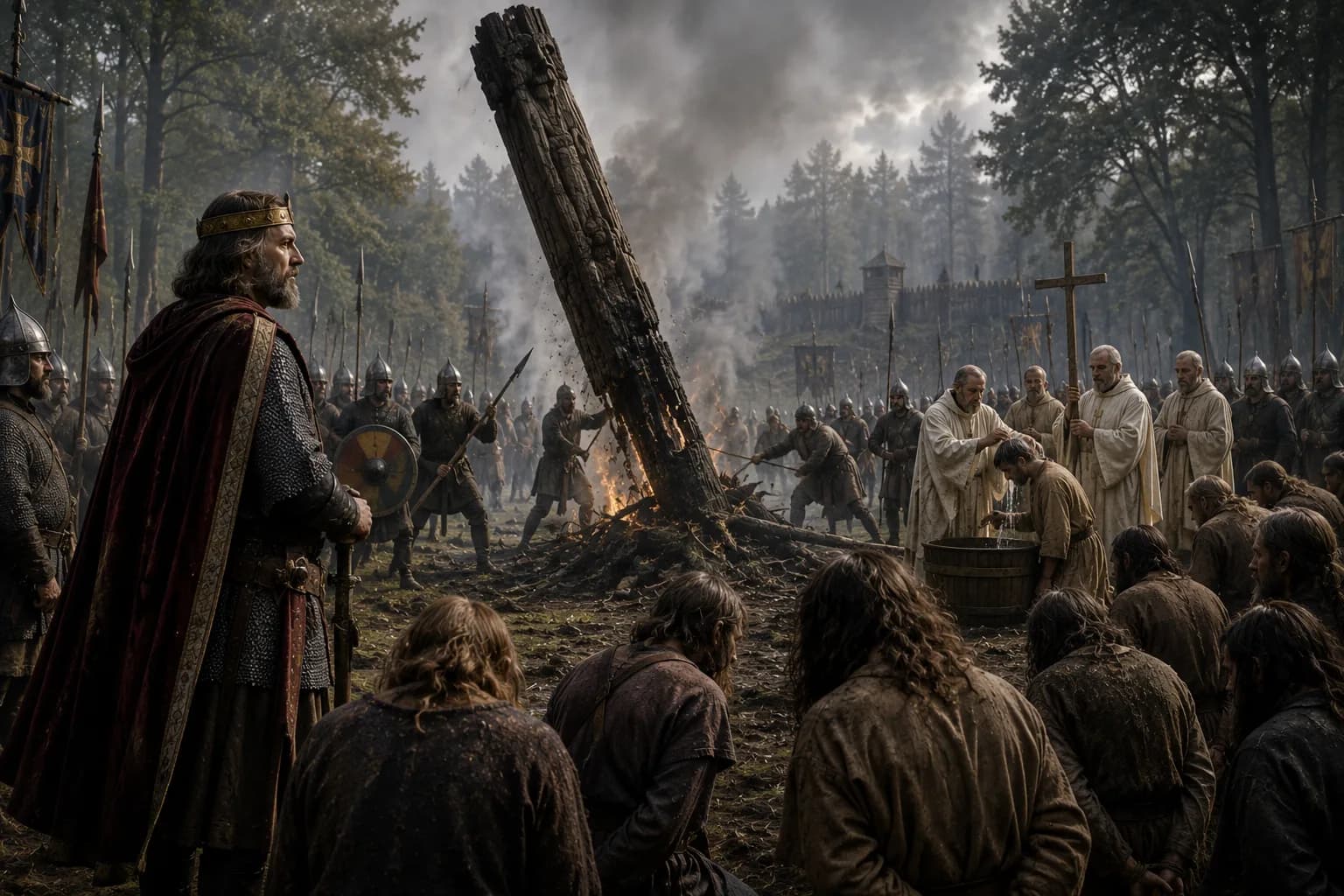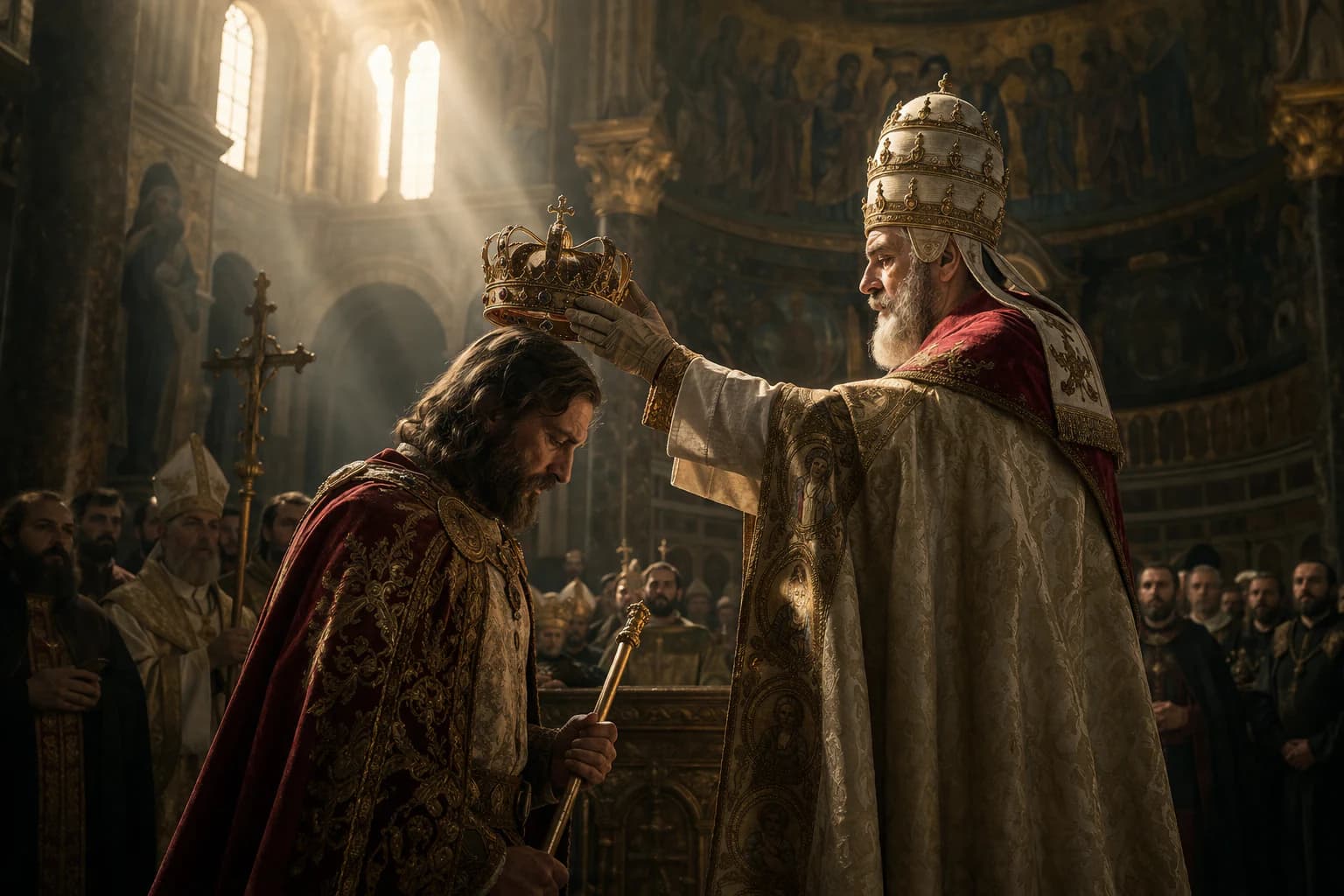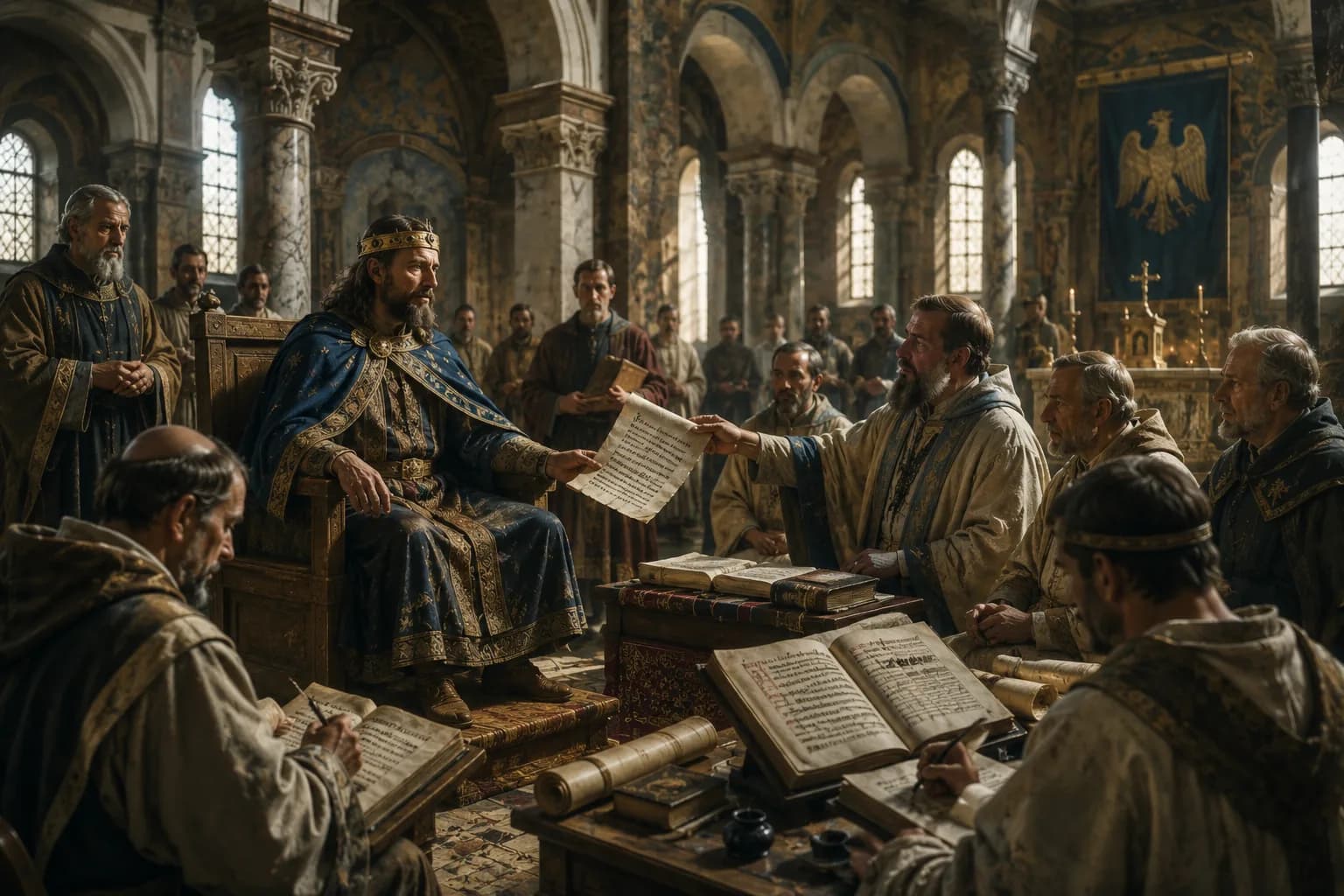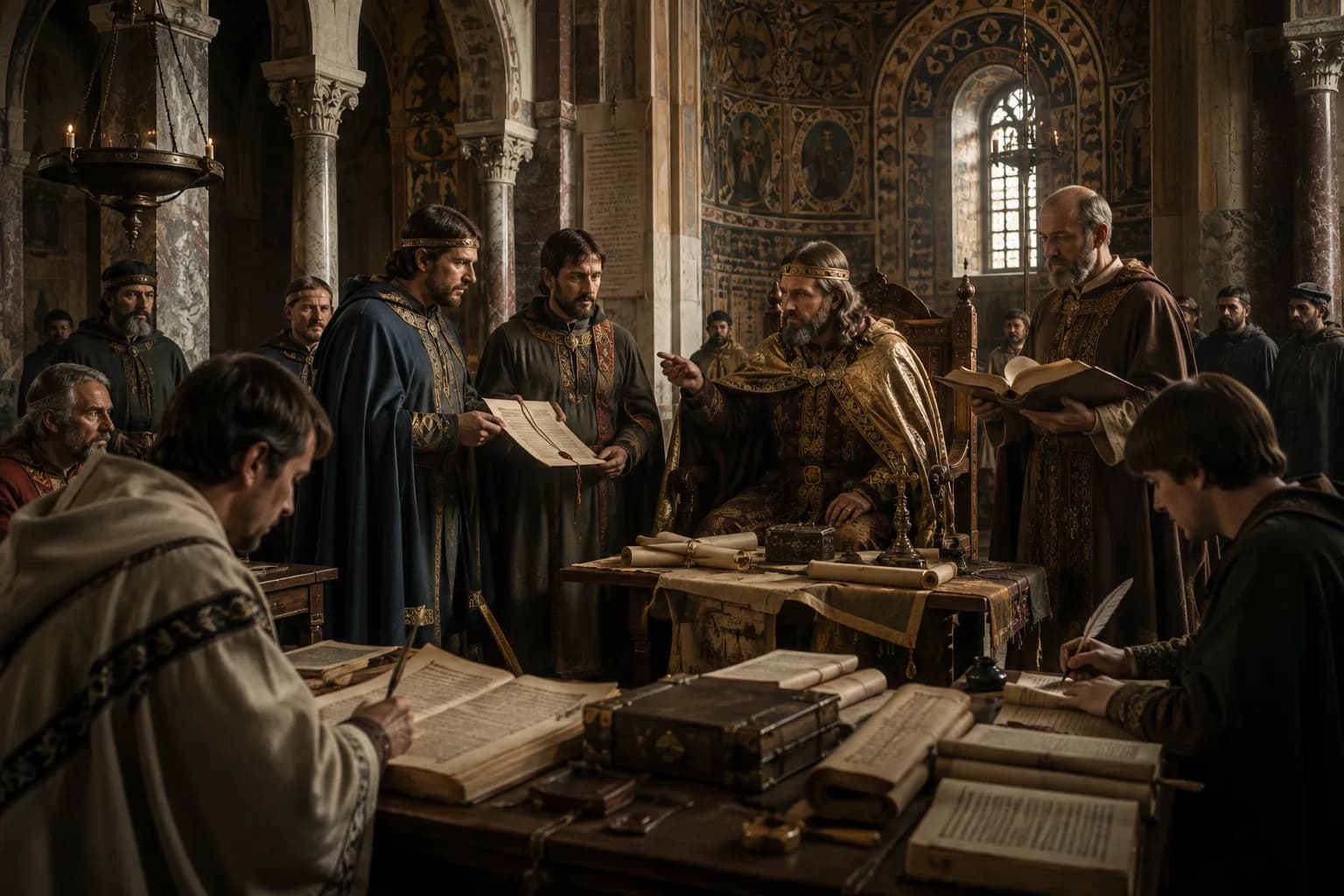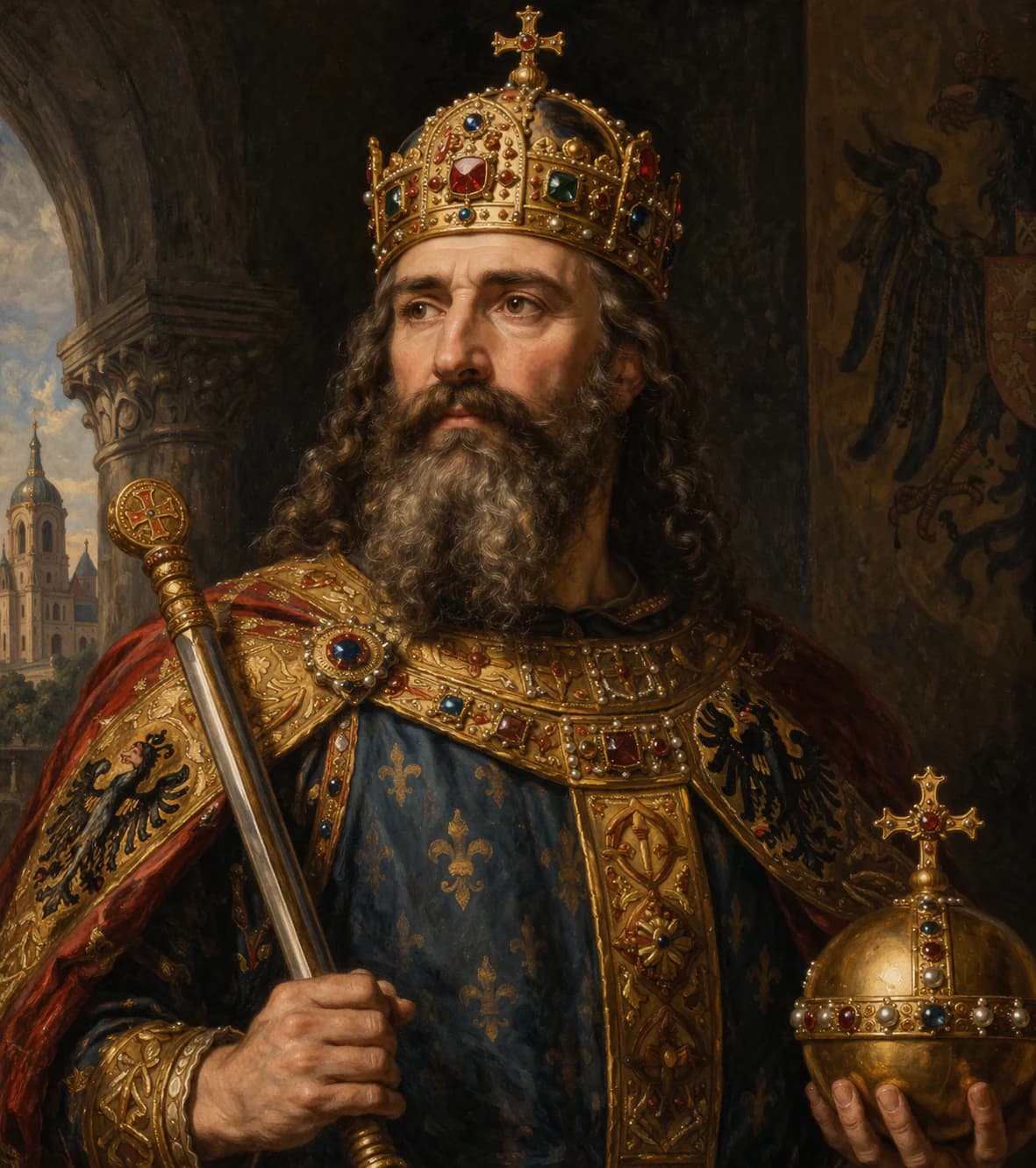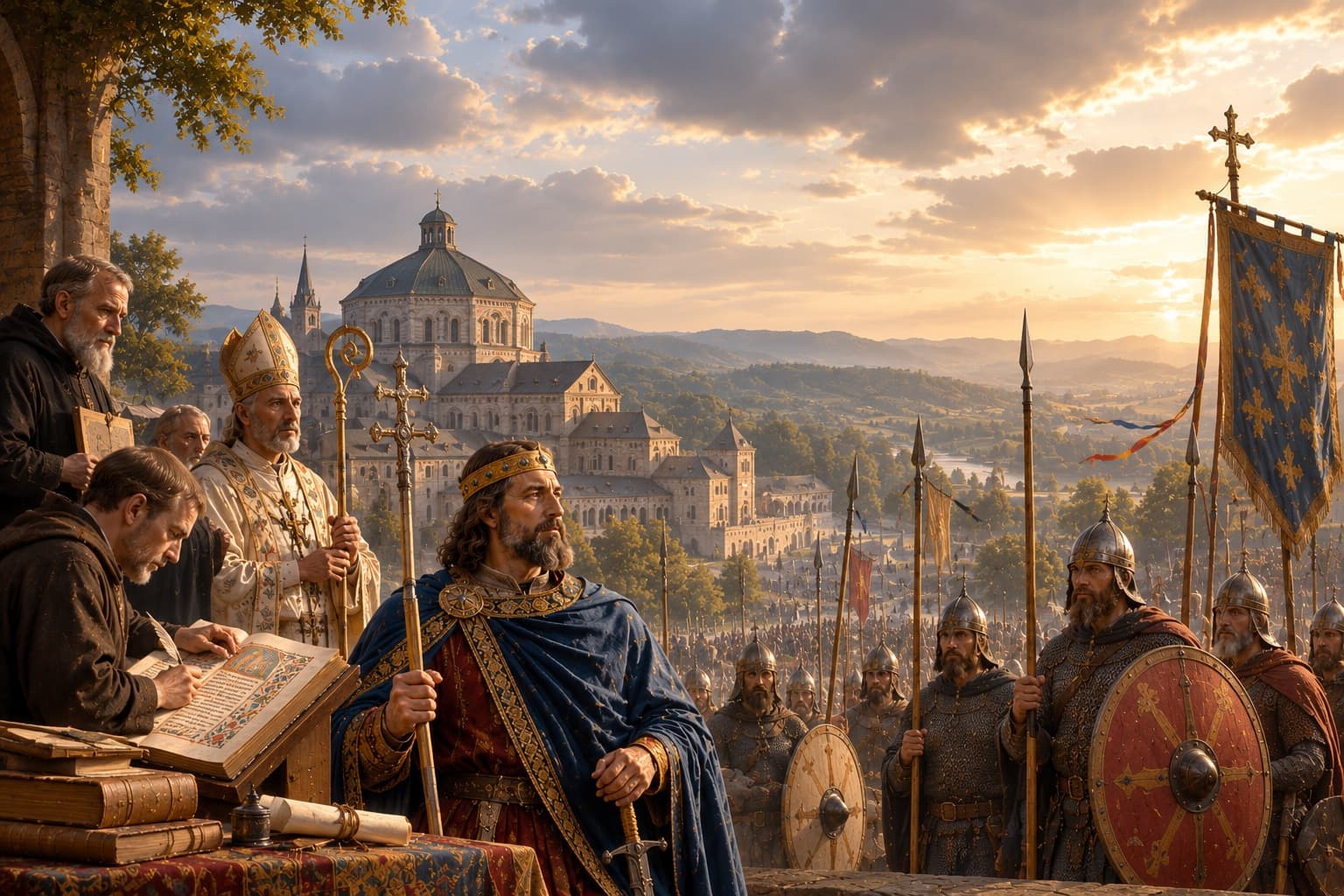
Charlemagne with bishops, scholars and Frankish soldiers overlooking a Carolingian city at sunset.
Premium Story

Charlemagne and the Carolingian Empire

Charlemagne turned Frankish kingship into an imperial project that medieval Europe never forgot.

11 chapters · 20 min read

Next
Context

Introduction

Overview

Charlemagne and the Carolingian Empire reshaped early medieval Europe through conquest, Christian kingship, administrative reform, learning and the revival of the imperial title in the west.

What you'll learn: You'll see how Charlemagne inherited a new dynasty, expanded it into an empire, used reform to hold it together, and left a political memory powerful enough to shape medieval Europe long after the empire divided.

Key forces

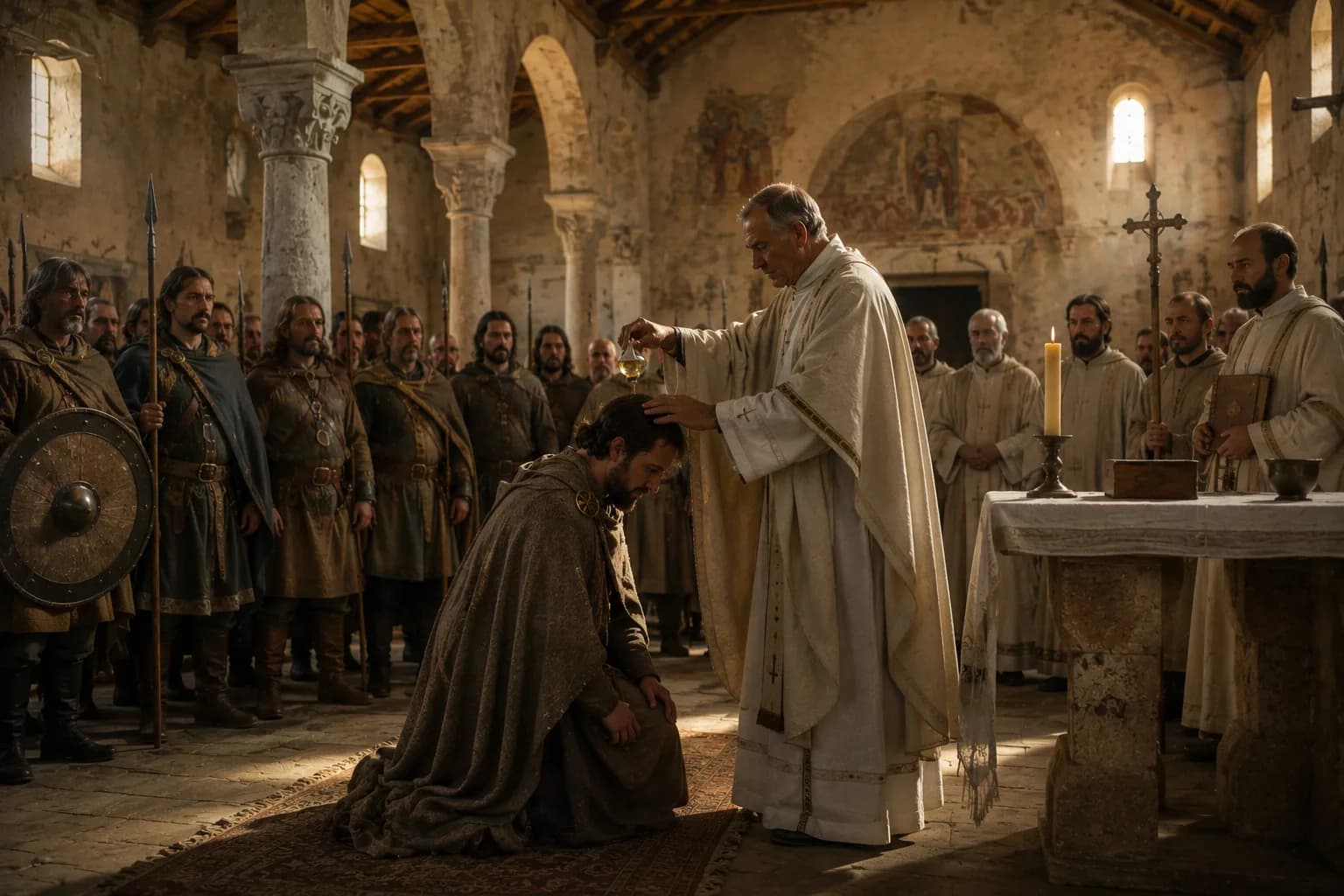
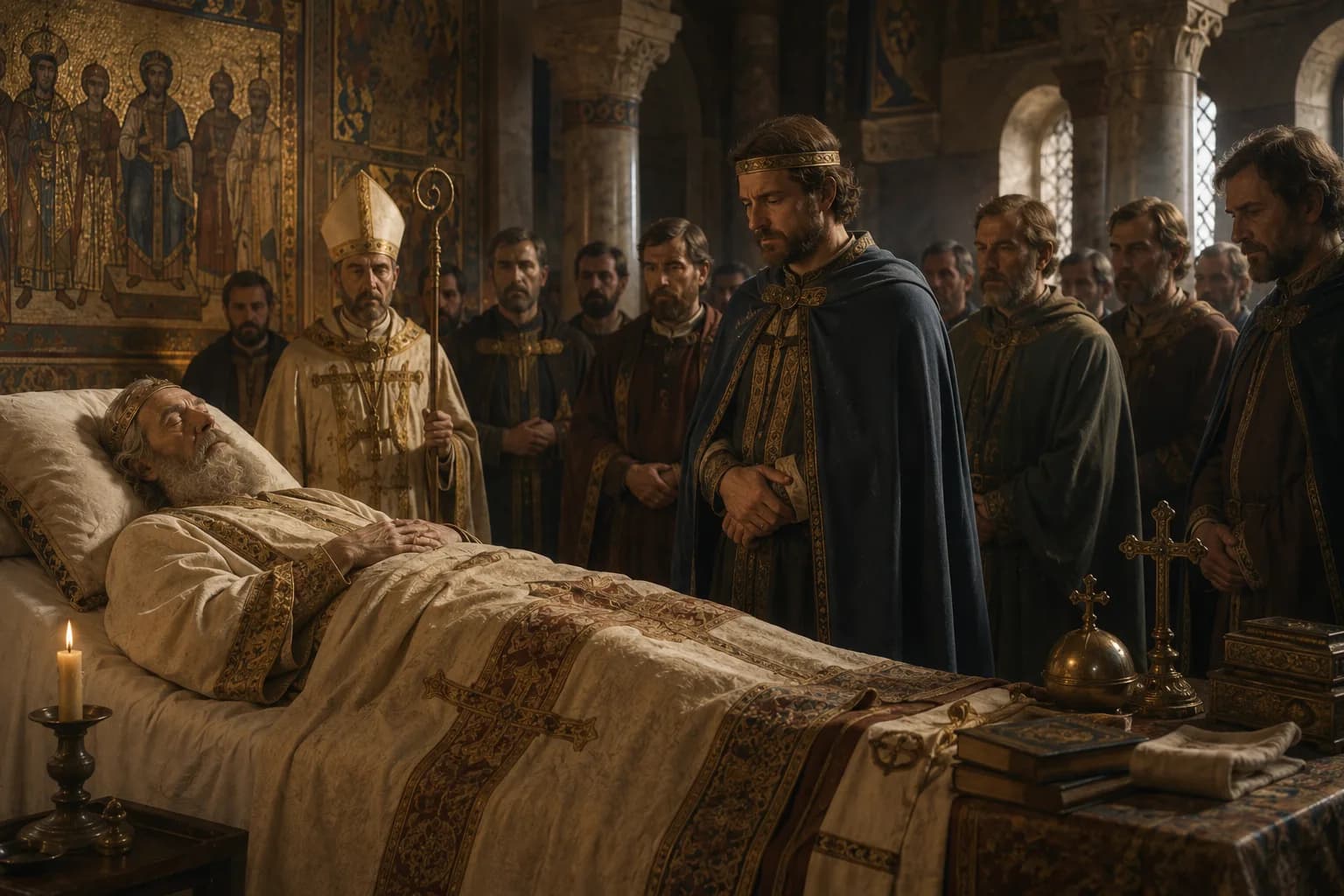
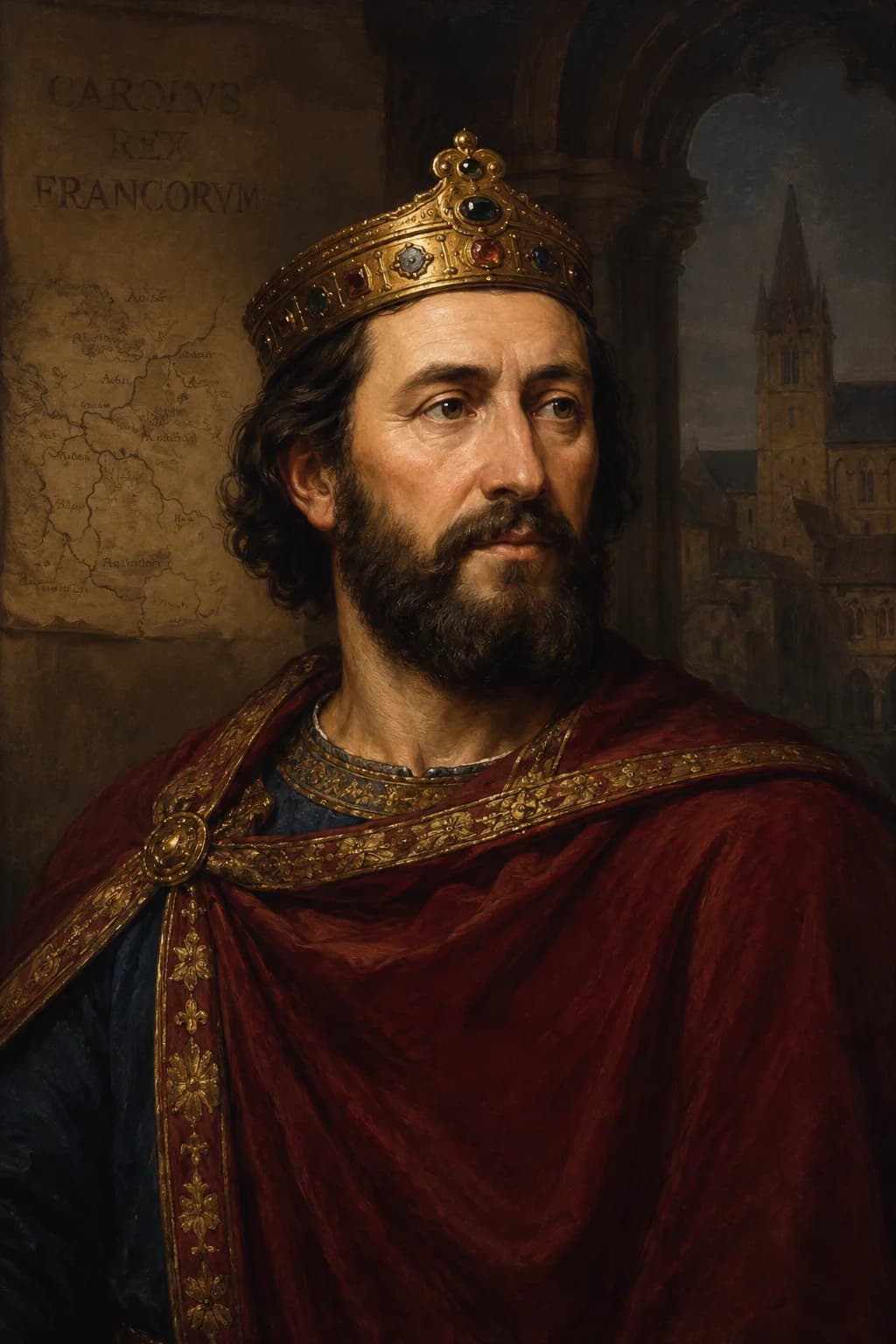
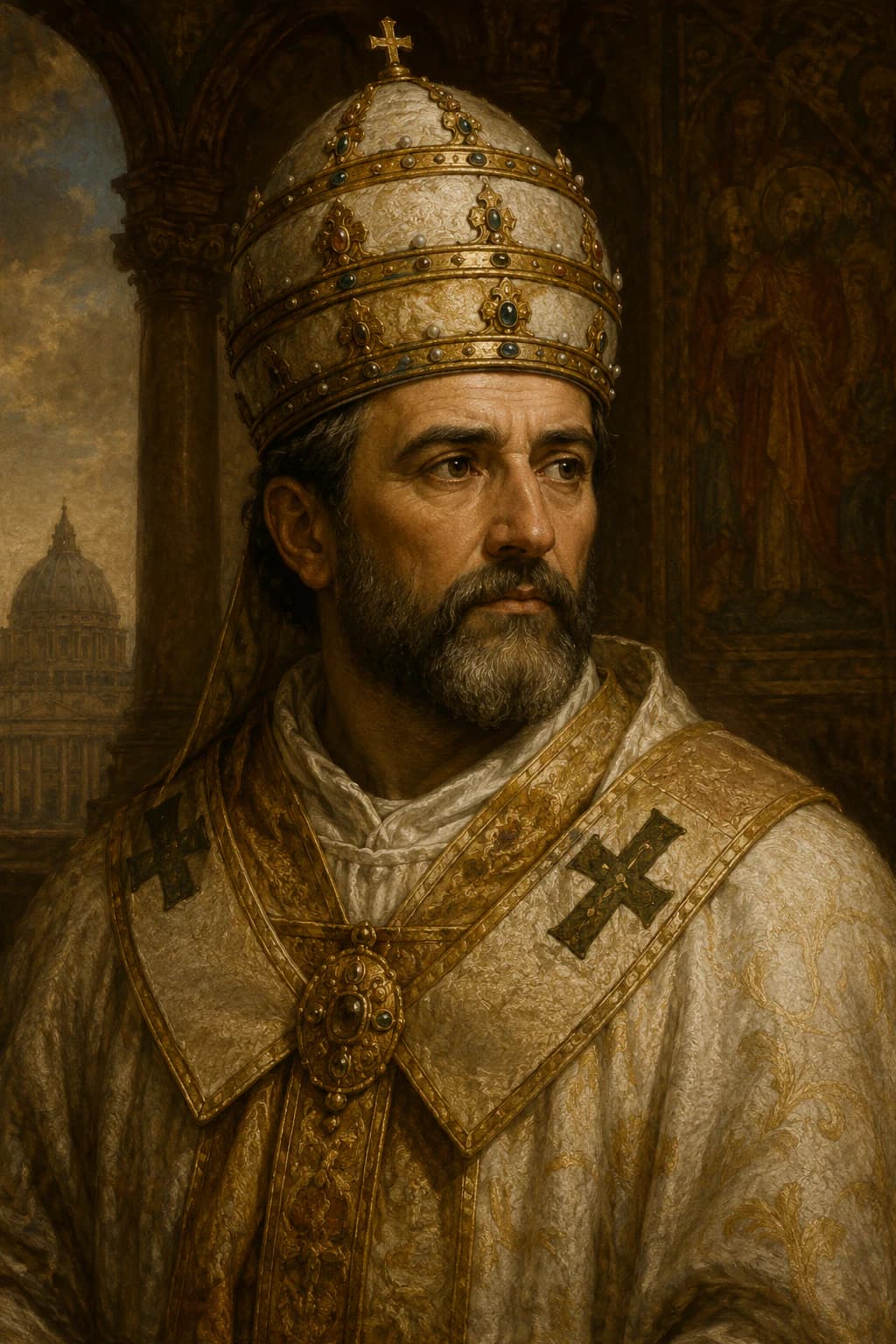
Pepin the Short receiving sacred approval for the Carolingian monarchy.
751 CE
Step 1 of 10751 CEAccessible mode

The Rise of the Carolingians

The Carolingian Empire began before Charlemagne. It began when his father, Pepin the Short, turned real power into royal power.

For generations, the Merovingian kings had held the Frankish throne, but much of the practical authority had passed to powerful officials known as mayors of the palace. Pepin belonged to the family that controlled that office.

In 751, Pepin removed the last Merovingian king and had himself chosen as king of the Franks. He did not rely on force alone. He sought approval from the pope, who supported the idea that the man exercising power should also hold the royal title.

Pepin's coup made a new dynasty look like a lawful Christian monarchy.

The alliance mattered. The pope gained a powerful protector in the west. Pepin gained sacred approval for a throne his family had only recently taken.

Charlemagne inherited that arrangement. His kingship would rest on armies and land, but also on the belief that Frankish power served the Christian Church.

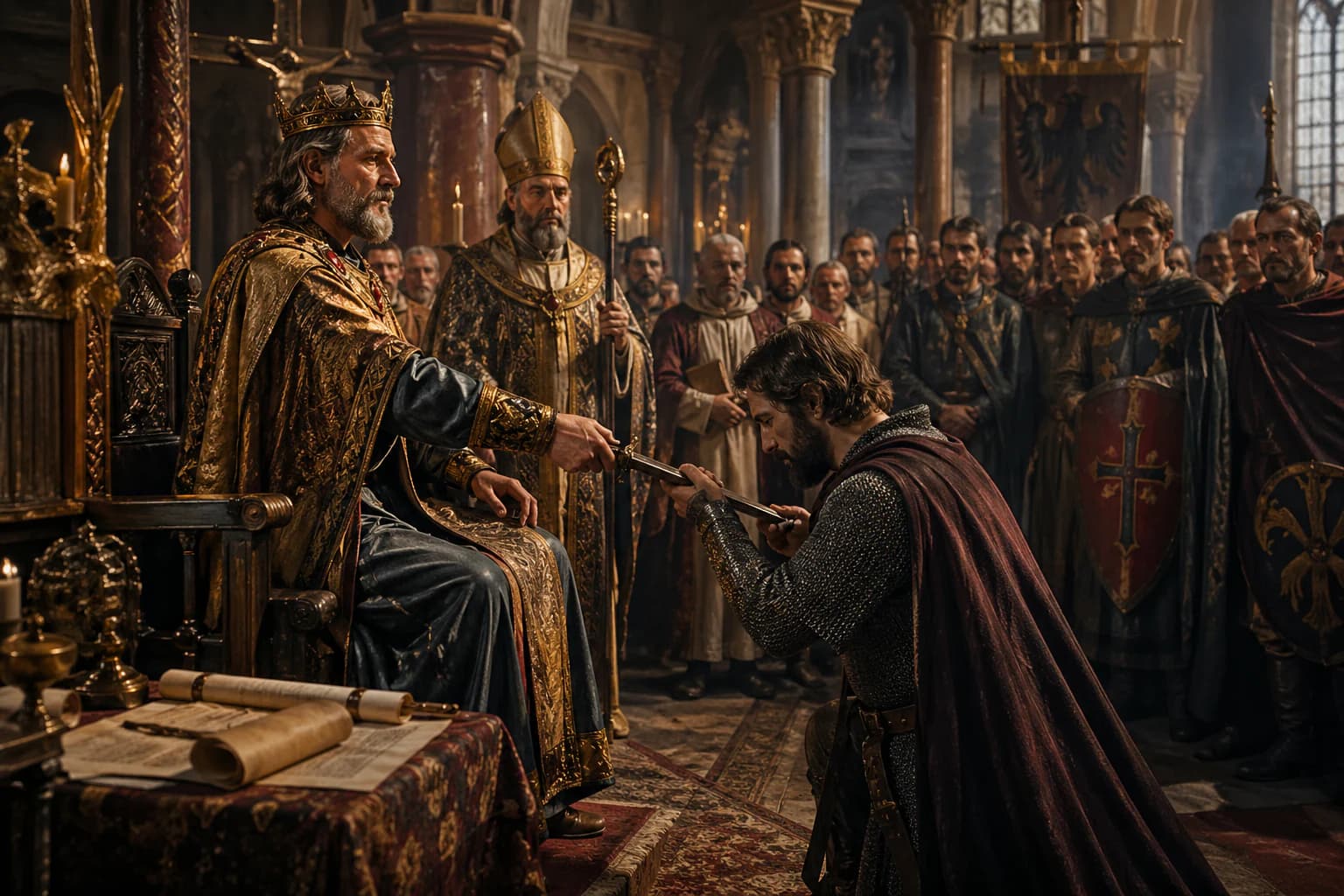
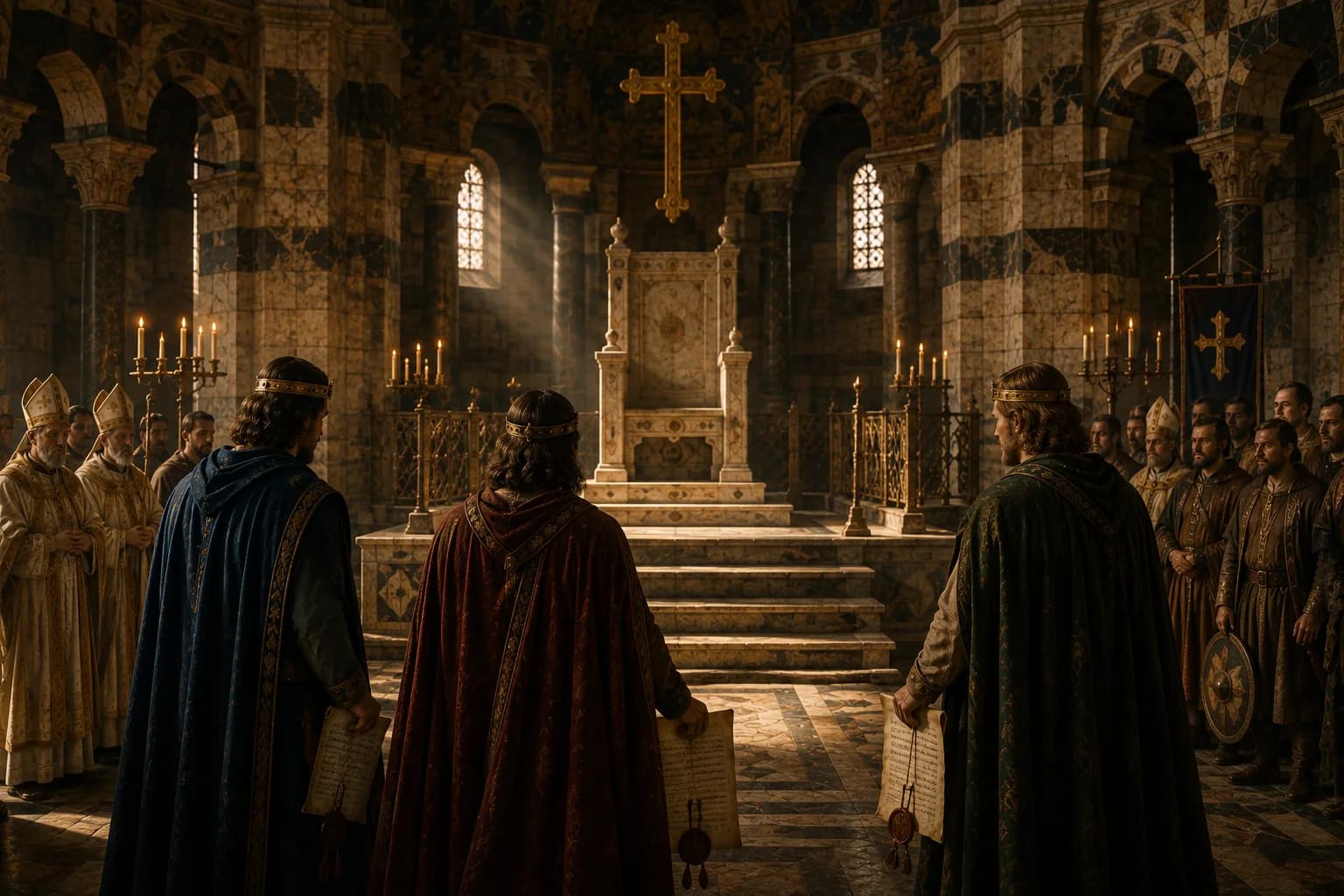
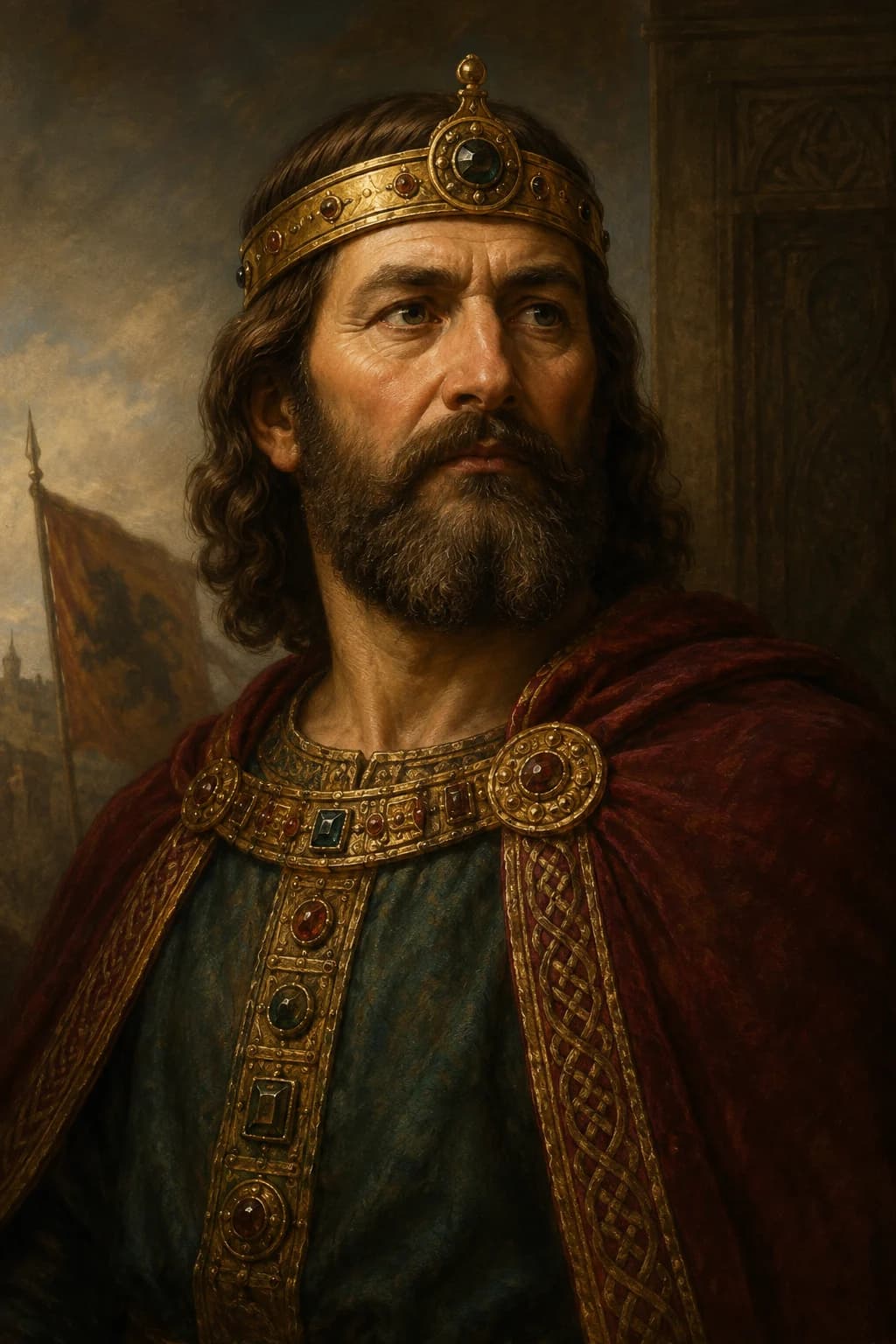
Charlemagne receiving homage from Frankish nobles after becoming sole king.
768 CE
Step 2 of 10768 CEAccessible mode

Charlemagne Becomes King

When Pepin died in 768, his kingdom did not pass to one son. It was divided between Charlemagne and his younger brother Carloman.

This was normal in Frankish politics. Kingdoms were family property as well as public power, and inheritance could split a realm between sons. But division also created danger.

Charlemagne and Carloman did not work easily together. Rival courts, noble factions and overlapping interests made the settlement unstable almost from the start.

Charlemagne's first challenge was not conquest abroad. It was surviving a divided inheritance at home.

In 771, Carloman died suddenly. Charlemagne moved quickly to secure the whole Frankish kingdom, while Carloman's widow and children fled to the Lombard court.

By becoming sole ruler, Charlemagne gained the freedom to act on a much larger scale. The campaigns that followed would turn a Frankish kingdom into a continental empire.

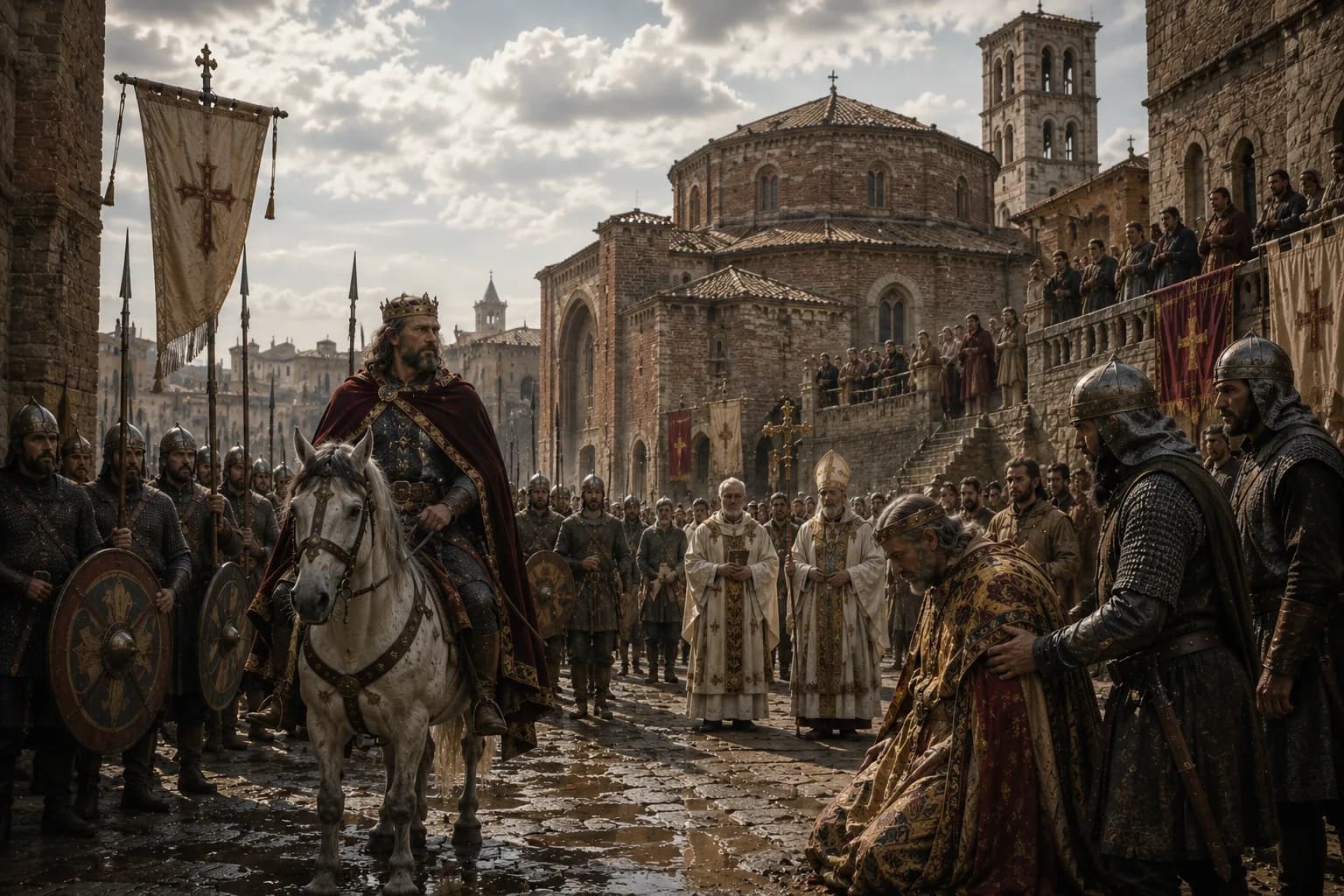
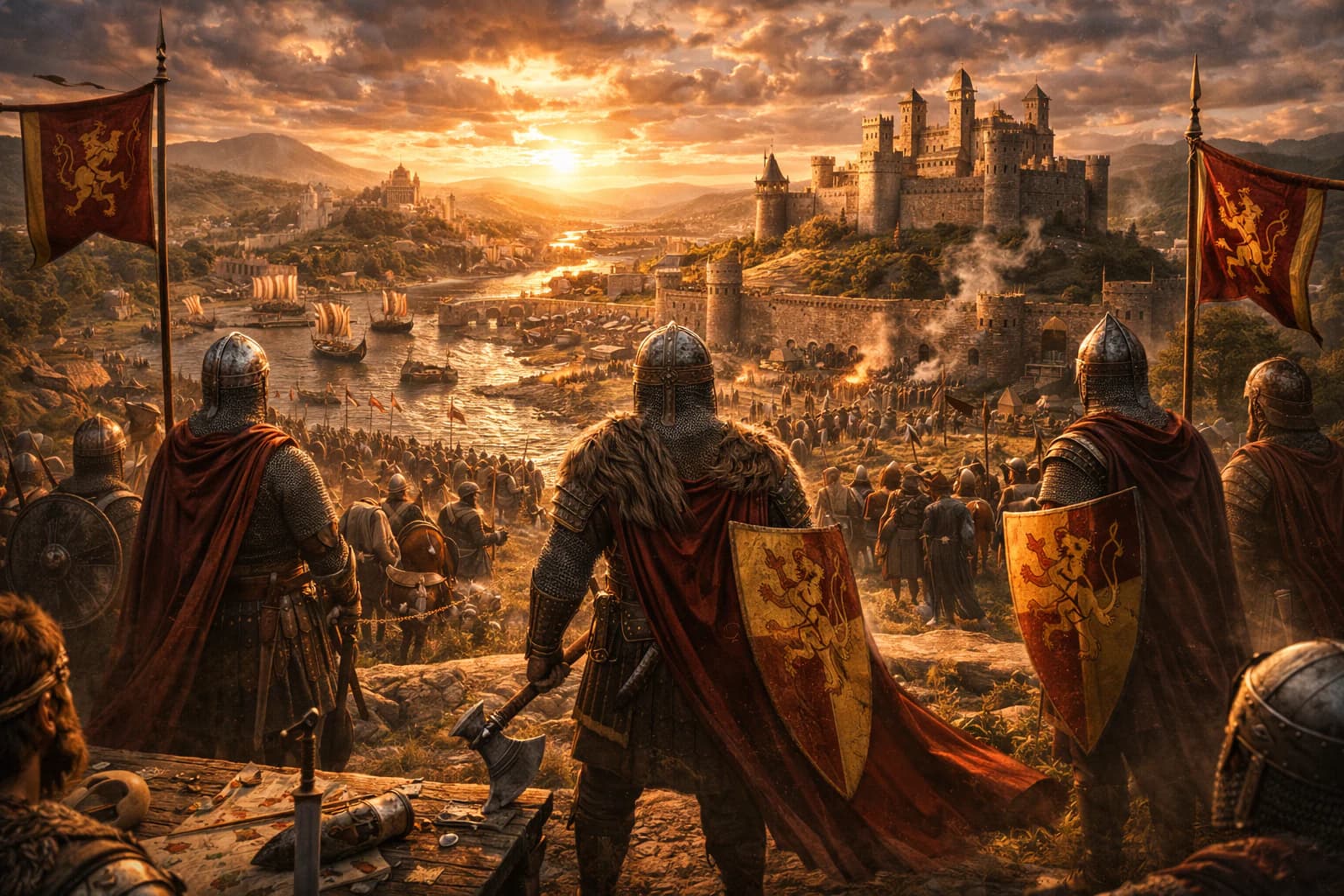
Frankish forces before Pavia as Charlemagne takes the Lombard crown.
774 CE
Step 3 of 10774 CEAccessible mode

The Conquest of the Lombards

In 774, Charlemagne crossed the Alps and ended the independent Lombard kingdom in northern Italy.

The Lombards had long been a threat to the papacy. Their king, Desiderius, also offered shelter to the family of Charlemagne's dead brother, keeping alive a possible challenge to Charlemagne's rule.

Charlemagne besieged , the Lombard capital, and forced its surrender. He then took the title King of the Lombards, adding their crown to his Frankish one.

Charlemagne did not simply defeat the Lombards. He absorbed their kingship.

The victory strengthened his relationship with the pope and made Frankish power central to Italian politics. It also showed that Charlemagne's authority could reach beyond .

From this point onward, Charlemagne was not only a Frankish king expanding at the edges. He was becoming the leading ruler of the Latin Christian west.

Premium

You've reached the turning point

You're at step 3 of 10. The opening chapters set up Charlemagne and the Carolingian Empire. Premium unlocks what happens when pressure builds, choices harden and consequences spread far beyond the moment.

Continue into the reversals, crises and human stakes that make the story matter.

Unlock full story

What Premium unlocks next

  1. 4The Saxon Wars
  2. 5Emperor of the Romans
  3. 6Reforming the Christian Realm
  4. 7The Carolingian Renaissance
  5. 8Governing a Continental Empire
  6. 9Succession After Charlemagne
  7. 10The Legacy of the Carolingian Empire

Browse stories

Browse stories for free

Explore the people connected to this turning point or enjoy one of our free stories.

Unlock full storyBrowse stories

References

Sources & Further Reading

Reliable sources, primary-source collections and reading paths connected to this page.

A weekly route through history

Find out first about the latest published stories, feature notes and occasional Premium offers in one weekly email.