People

Leo III

Pope Leo III served as pope from 795 to 816. After surviving a violent attack by Roman opponents, he appealed to Charlemagne for protection and crowned him emperor in Rome on Christmas Day 800, helping revive imperial authority in the Latin West.

Born
c. 750 CE
Died
816 CE
Role
Pope

Pope (r. 795-816)

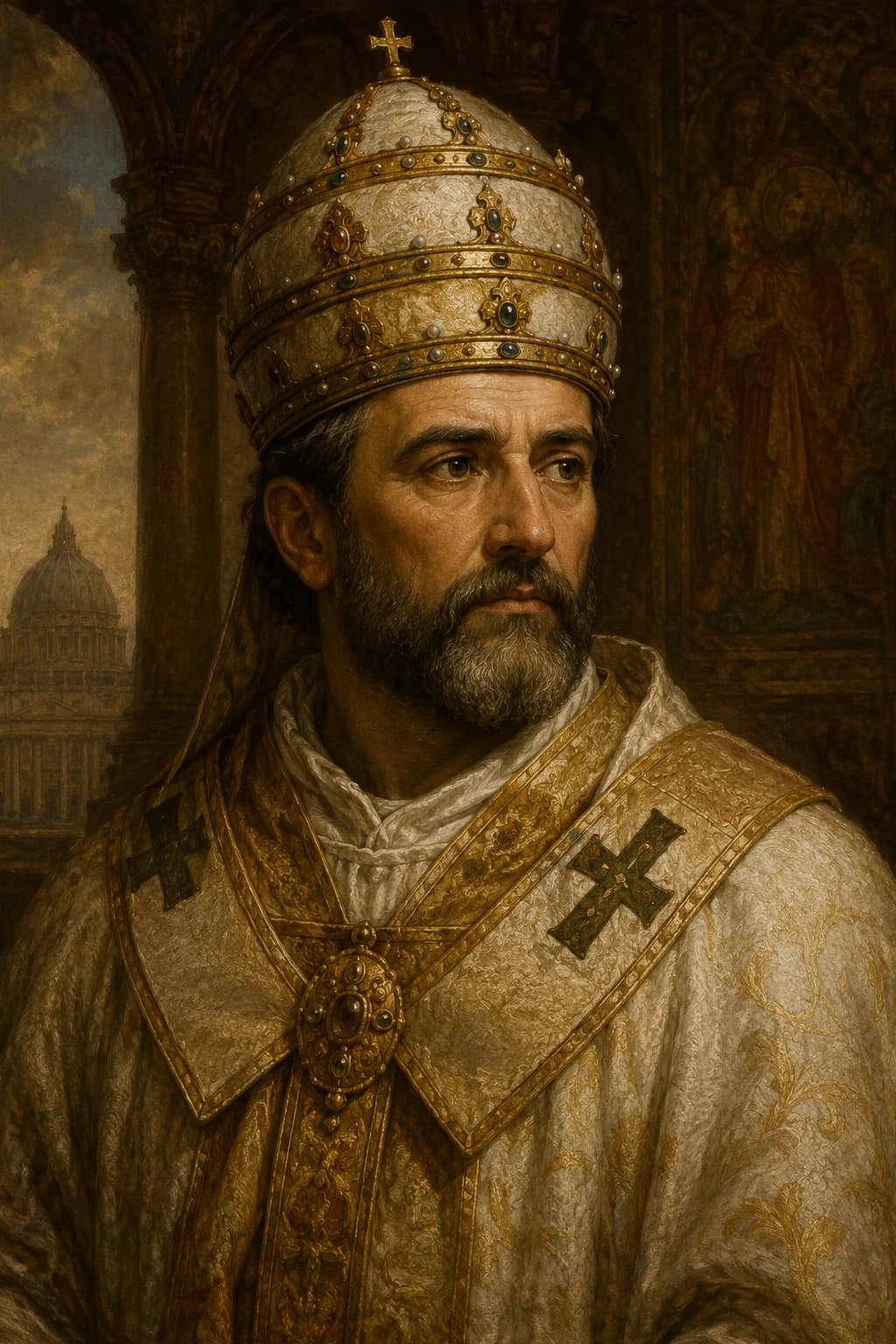
AI-generated portrait of Pope Leo III in papal vestments
AI-assisted historical reconstruction

An illustrative reconstruction based on historical context. It is not a photograph or documentary likeness. Image policy

Quick answer

Pope Leo III served as pope from 795 to 816. After surviving a violent attack by Roman opponents, he appealed to Charlemagne for protection and crowned him emperor in Rome on Christmas Day 800, helping revive imperial authority in the Latin West.

Born
c. 750 CE
Died
816 CE
Role
Pope
Years
c. 750-816 CE
Quick facts

Profile details

Additional identity and tagging details that are not already covered in the introduction.

Full name
Pope Leo III
Facts

Leo III timeline facts

Selected specifics from this profile's life story.

c. 750-795
A Roman churchman

Leo was born in Rome around the middle of the eighth century and rose through the Roman church before becoming pope in 795.

799
Attack in Rome

In 799, Roman opponents attacked Leo during a procession and tried to remove him from power.

800
Crowning Charlemagne

On Christmas Day 800, Leo crowned Charlemagne emperor in Saint Peter's Basilica in Rome.

801-816
Later papacy

Leo remained pope until 816, governing Rome after the coronation while the new imperial order took shape.

Life Journey

The pope who crowned a western emperor

Follow Leo III from Roman church politics to the Christmas Day ceremony that joined papal authority to Carolingian power.

Complete chronology

c. 750-795

A Roman churchman

Leo III came from Rome rather than from one of the great aristocratic families that often dominated local politics. His early life is not well documented, but he served within the papal administration and was elected pope in 795 after the death of Hadrian I. By then, the papacy was no longer only a spiritual office. It had lands to defend, Roman factions to manage, and a crucial alliance with the Carolingian rulers north of the Alps.
795-798

Alliance with the Franks

The papacy's relationship with the Franks had been built over decades. Earlier popes had turned to Pepin the Short and then Charlemagne as protectors against Lombard pressure in Italy. Leo continued that strategy. He sent Charlemagne the symbols of papal approval and treated him as the strongest defender available to the Roman church. This did not make Leo powerless, but it did mean his authority in Rome depended partly on a ruler whose armies and prestige reached far beyond Italy.

799

Attack in Rome

Leo's enemies in Rome accused him of misconduct and launched a violent attack during a procession in 799. Medieval accounts describe an attempt to blind him and cut out his tongue, though the details are shaped by hostile politics and later storytelling. What matters historically is clear: Leo's position in Rome became dangerous enough that he left the city and sought Charlemagne's help. A papal crisis had become a Frankish matter.

799-800

Appeal to Charlemagne

Leo met Charlemagne at Paderborn in 799 and returned to Rome under Frankish protection. Charlemagne then came to Rome in late 800 to judge the crisis and restore order. The arrangement was delicate. A pope was not supposed to be casually judged by lay enemies, yet the Frankish king's authority was needed to end the dispute. Leo cleared himself by oath, and the stage was set for a ceremony that transformed a local Roman crisis into a western imperial event.

800

Crowning Charlemagne

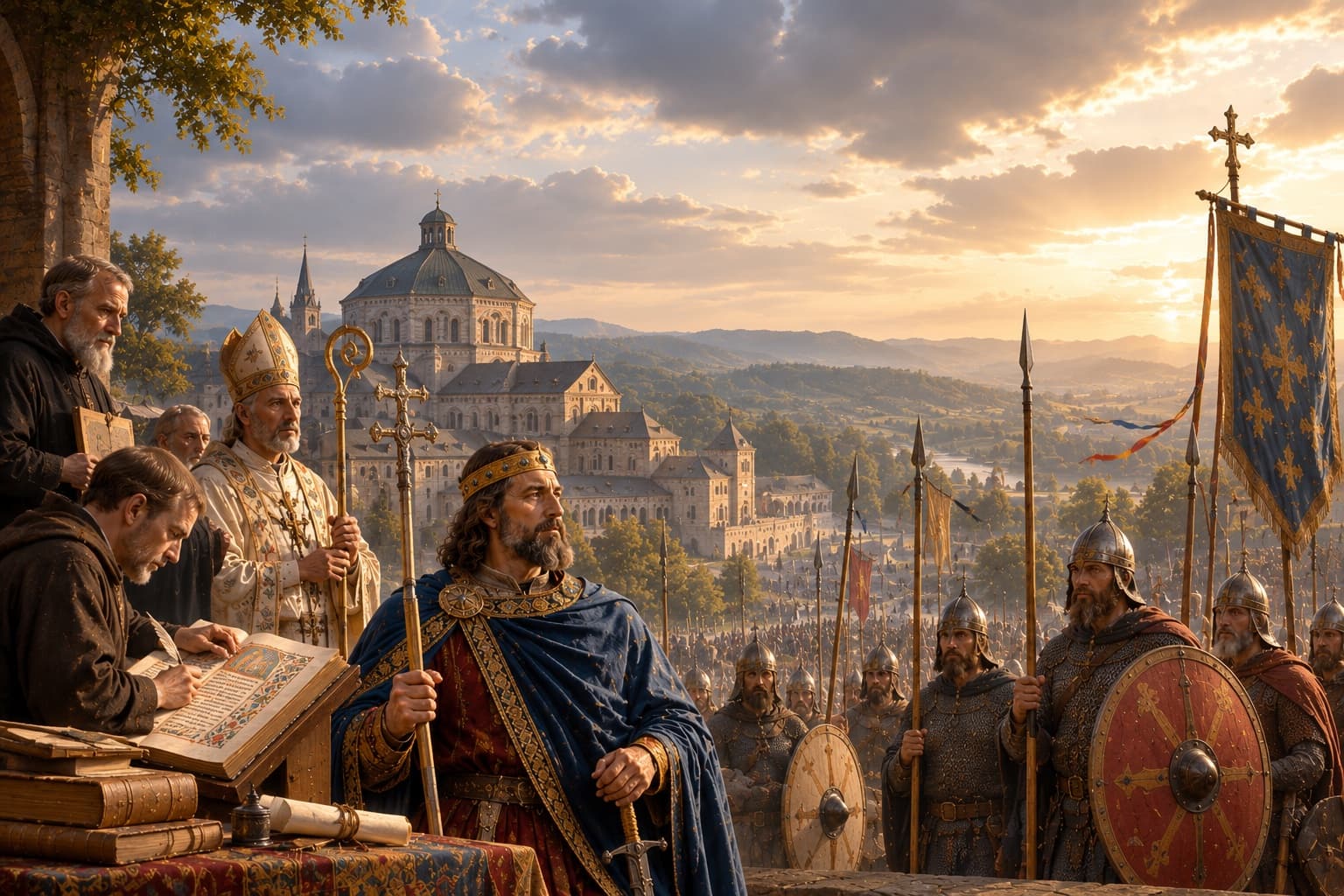
During Christmas Mass in Saint Peter's Basilica, Leo placed a crown on Charlemagne's head and the assembly acclaimed him emperor of the Romans. The act revived the imperial title in the Latin West more than three centuries after the last western Roman emperor had been deposed. It also created a lasting ambiguity. Did Leo grant the title, recognise Charlemagne's existing power, or bind the new emperor to protect the Church? The answer was never simple, and that uncertainty shaped later medieval conflicts between popes and emperors.

801-816

Later papacy

After 800, Leo continued to govern as pope while Charlemagne's imperial title settled into western politics. The relationship between Rome and the Carolingian court remained important, but it was not free of tension. Leo had gained protection and prestige, while Charlemagne had gained a Roman imperial title with papal blessing. Their bargain showed the new medieval pattern: kings needed sacred legitimacy, and popes often needed armed protectors. Leo died in 816, leaving behind a papacy permanently associated with the revival of western empire.

Continue in context

Connected stories

Move from the profile into the wider events and settings this figure belongs to.

Tertiary paths

Content note

This profile is written for educational use and connects to related Stories of History pages. The main portrait is an AI-assisted historical reconstruction, included as an illustrative aid rather than documentary evidence. Image policy

References

Sources & Further Reading

Reliable reference works, archives and reading paths connected to this profile.

Further reading

  1. Encyclopaedia Britannica, Search results for Leo III,” accessed June 2026.Open source
  2. WorldCat, Books and library holdings for Leo III,” accessed June 2026.Open source

Primary sources

  1. Library of Congress, Search results for Leo III,” accessed June 2026.Open source

Reviewed claim sources

Loading reviewed claim sources...

A weekly route through history

Find out first about the latest published stories, feature notes and occasional Premium offers in one weekly email.
