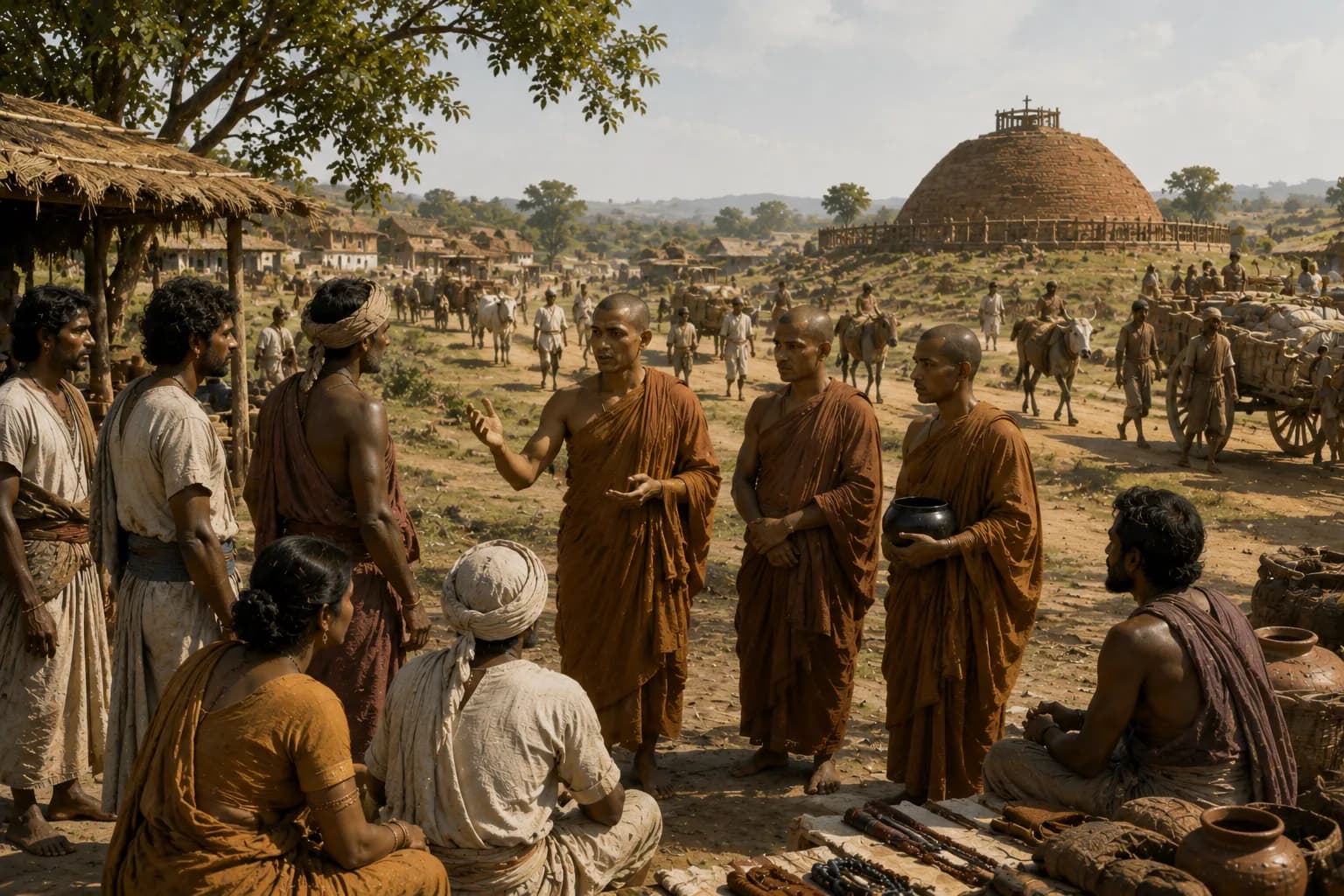
Buddhist monks teaching lay followers near a stupa and trade road in ancient India.
Free Story

The Rise and Spread of Buddhism

Follow Buddhism from Siddhartha Gautama's search for enlightenment to the early sangha, Ashoka's patronage and missions beyond India.

10 chapters

Next
Context

Introduction

Overview

The Rise and Spread of Buddhism follows Siddhartha Gautama's search for enlightenment, the Buddha's first teachings, the growth of the sangha, Buddhism's expansion across India and the decisive patronage of Ashoka. It explains how monastic communities, trade routes, local support, councils and missions helped Buddhism move from a northern Indian movement toward the foundations of an international faith.

What you'll learn: You will see how Buddhism grew from Siddhartha Gautama's search for enlightenment into a transregional religion supported by monks, lay communities, trade routes and Ashoka's imperial patronage.

Key forces

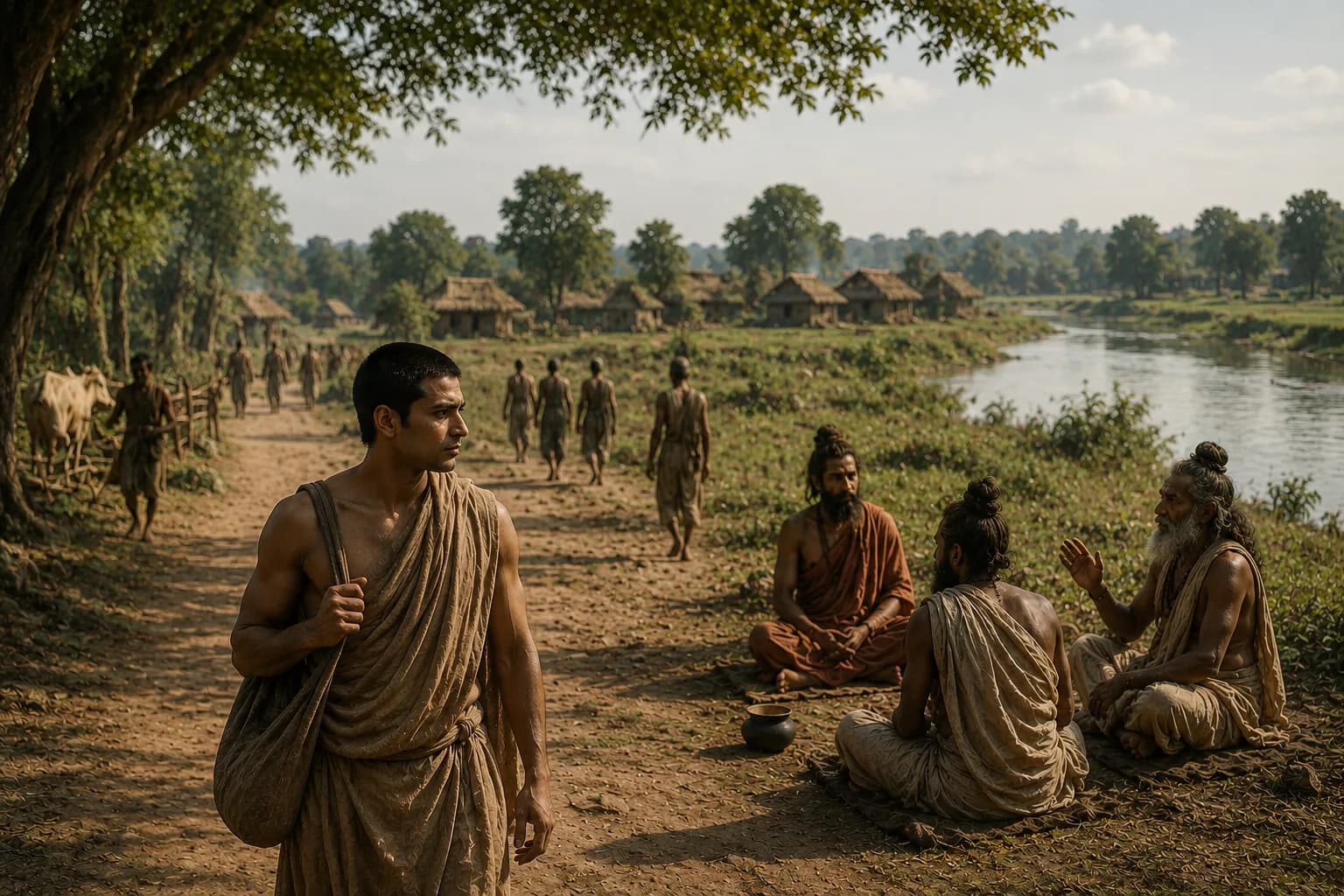
Siddhartha Gautama walking away from village life beside a river while ascetic teachers gather nearby.
534 BCE
Step 1 of 10534 BCEAccessible mode

Siddhartha Gautama Seeks Enlightenment

Siddhartha Gautama was born into the Shakya clan in the borderlands of world, a region alive with religious questioning.

Northern India was changing. Cities were growing, kingdoms competed for power and teachers argued about sacrifice, rebirth, duty, discipline and liberation.

Tradition remembers Siddhartha as a young man protected by privilege. Yet the sight of sickness, ageing, death and wandering renunciation forced him to face suffering directly.

He left palace life behind and joined the world of seekers. He studied with teachers, practised severe austerities and searched for a way beyond ordinary dissatisfaction.

The story begins with a prince who refused to let comfort answer the problem of suffering.

Siddhartha did not yet have a new religion to teach. He had a question that would not leave him alone: why do people suffer, and how can they be free?

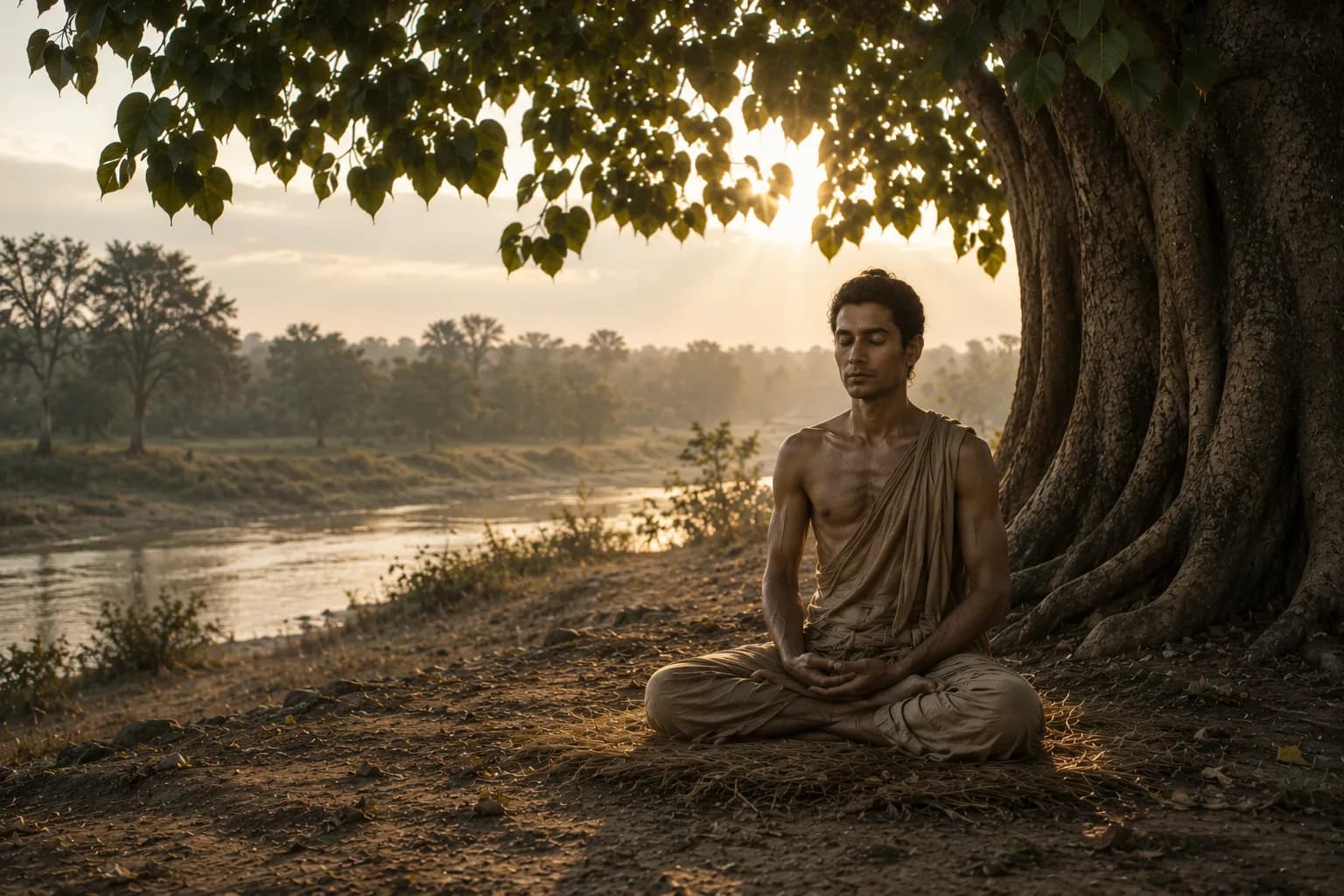
Siddhartha Gautama meditating beneath the Bodhi tree at sunrise beside a quiet river.
528 BCE
Step 2 of 10528 BCEAccessible mode

The Buddha Attains Enlightenment

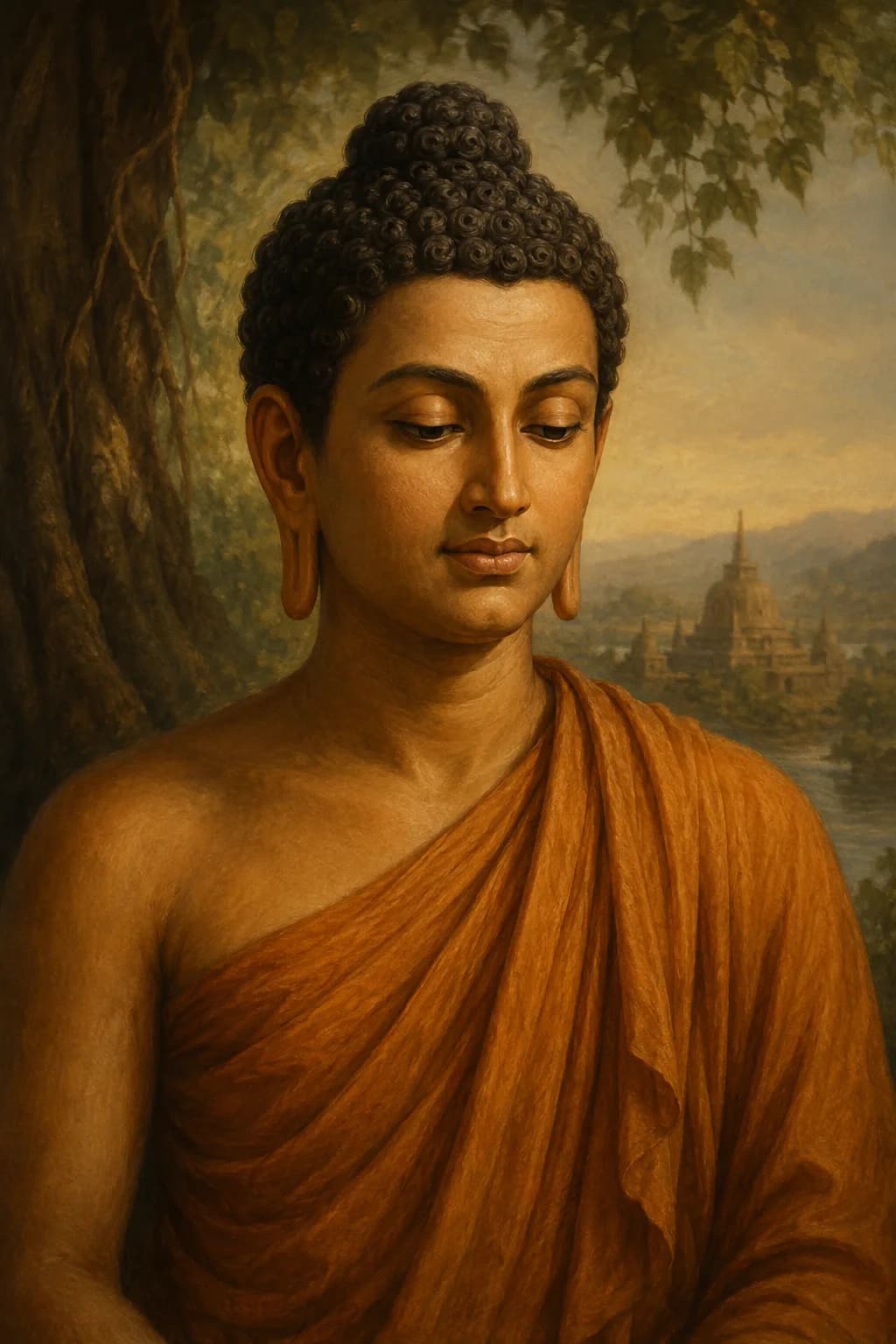
At , Siddhartha sat in meditation beneath the Bodhi tree and reached the awakening that made him the Buddha.

The word Buddha means awakened one. What awakened in him was an insight into suffering, its causes and the possibility of liberation.

He taught that human life is marked by suffering and dissatisfaction. Desire, craving and ignorance keep that suffering turning through action and rebirth.

Liberation was possible. By following a disciplined path of ethical conduct, meditation and wisdom, a person could move toward nirvana, the release from craving and suffering.

The Buddha did not offer escape by birth, wealth or ritual status. He offered a path of practice.

These insights became the foundation of Buddhism. They turned Siddhartha's personal awakening into a teaching others could follow.

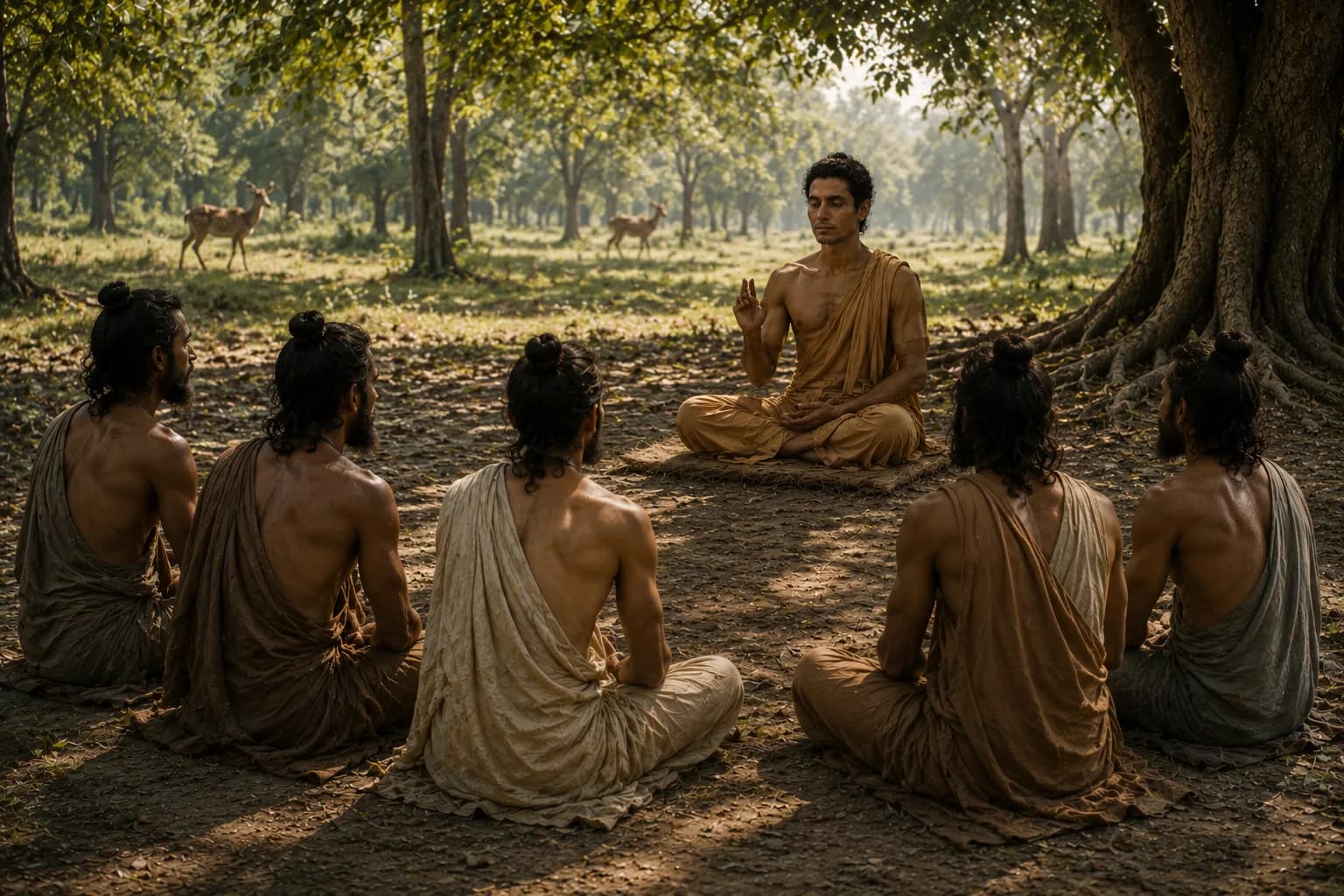
The Buddha teaching his first followers in a wooded deer park at Sarnath.
528 BCE
Step 3 of 10528 BCEAccessible mode

The First Buddhist Community

After enlightenment, the Buddha began to teach. At , he gave the sermon remembered as setting the wheel of dharma in motion.

His first listeners became the beginning of a community. They heard a path of moderation, discipline and insight rather than luxury or extreme self-denial.

The sangha grew as monks joined the Buddha and followed rules of common life. Lay supporters provided food, shelter and gifts, making monastic teaching possible.

Buddhism spread first by voice and example. Teachings were recited, remembered and passed from teacher to student across towns and roads.

The first Buddhist community was small, but it gave the teaching a body in the world.

Without the sangha, the Buddha's insights might have remained a memory of one teacher. With it, Buddhism could travel.

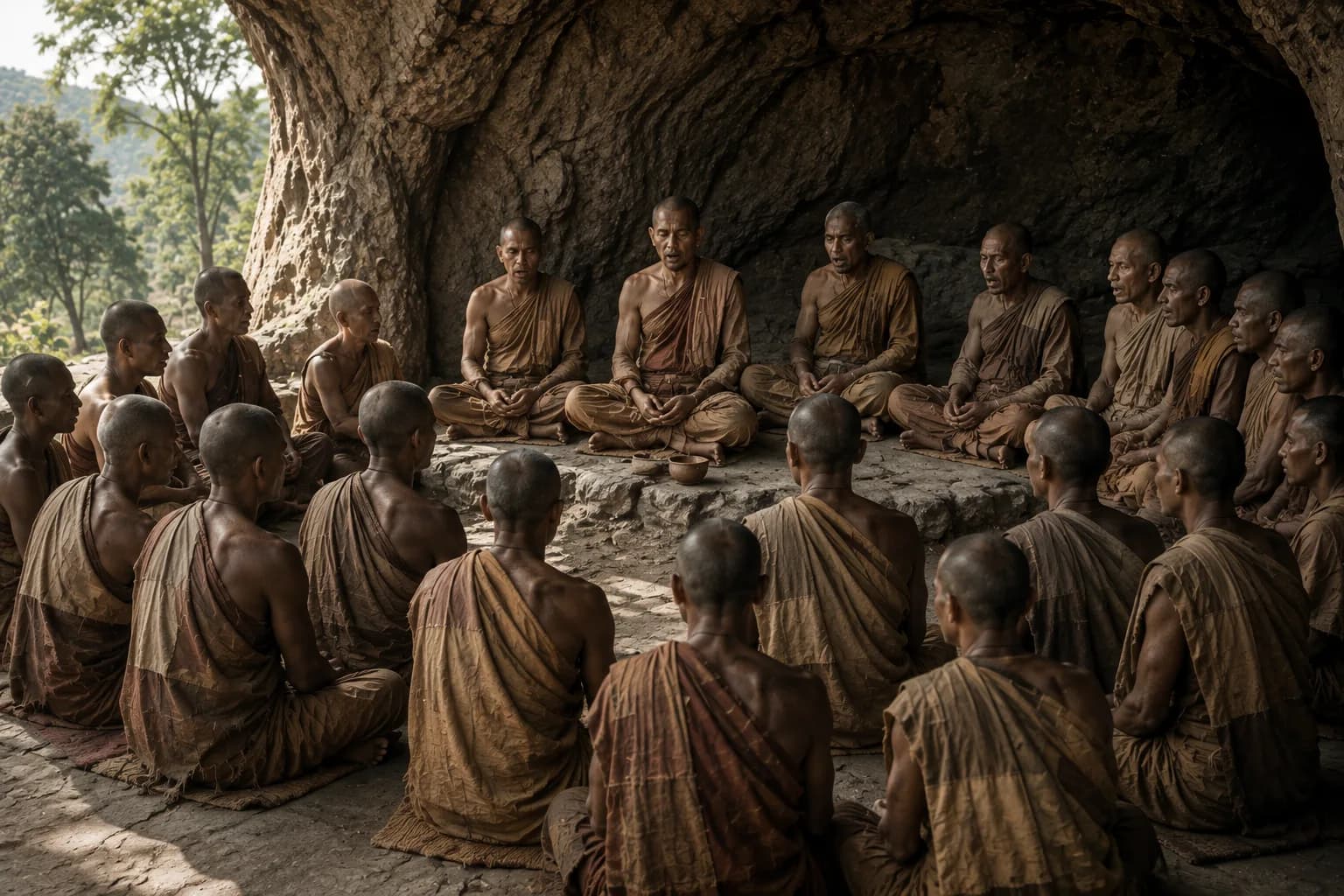
Buddhist monks seated in a cave reciting teachings after the death of the Buddha.
483 BCE
Step 4 of 10483 BCEAccessible mode

Buddhism After the Buddha

The Buddha's death did not end the movement. It forced his followers to preserve his teaching without his living presence.

Buddhist tradition remembers councils where monks gathered to recite, organise and protect the teachings. Oral memory became essential.

Monasteries helped the sangha remain stable. They gave monks and nuns places to study, teach, debate and maintain discipline.

Lay followers also mattered. Their gifts supported monastic life, and their devotion kept Buddhism connected to households, towns and local communities.

After the Buddha, Buddhism survived by becoming organised memory.

This period shaped the religion's future. The teachings could now outlive one teacher and move through networks of communities.

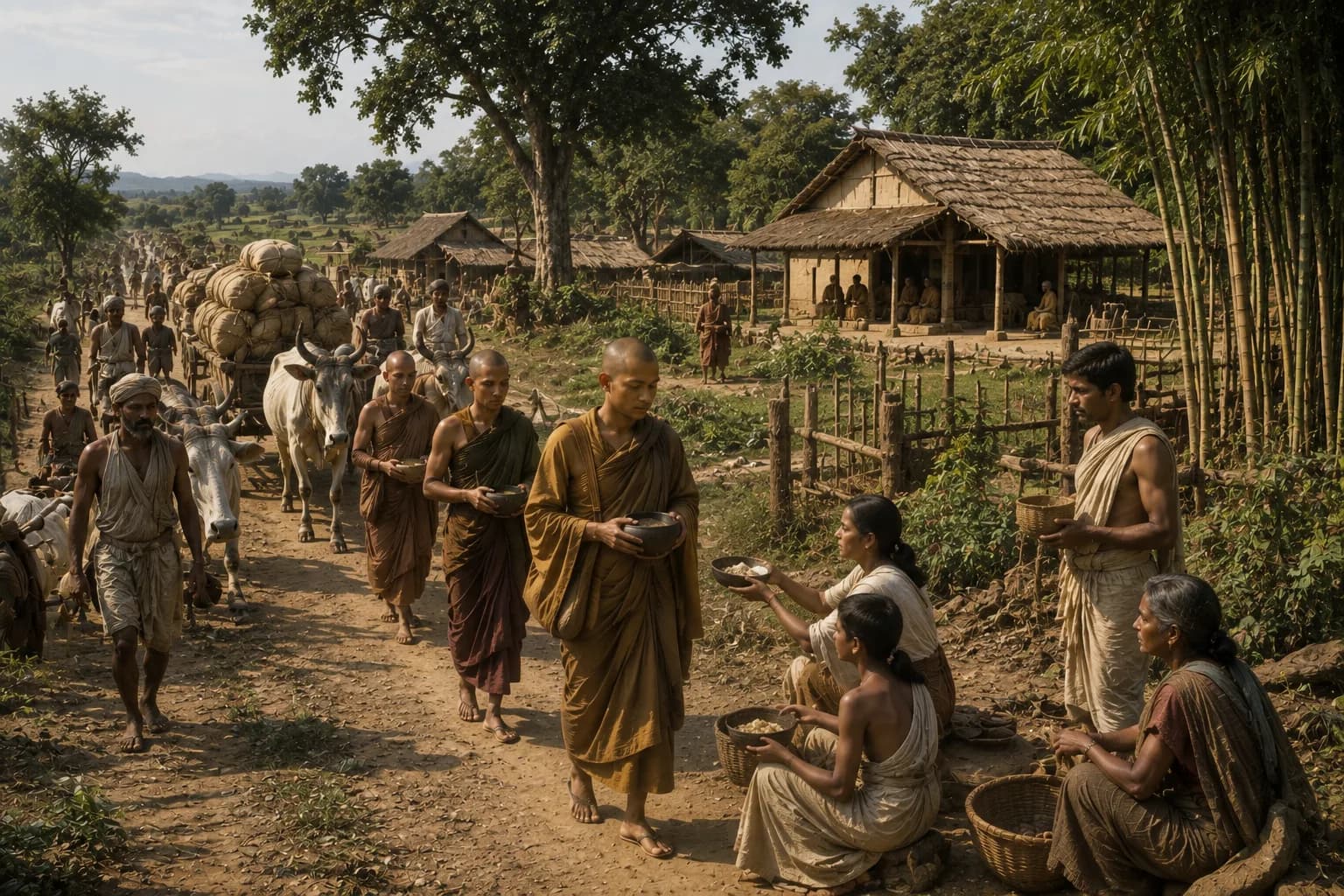
Buddhist monks receiving alms as merchants and villagers move along an Indian trade road.
350 BCE
Step 5 of 10350 BCEAccessible mode

Buddhism Spreads Across India

Buddhism grew beyond its first heartland through movement, teaching and support from ordinary communities.

Travelling monks carried teachings along roads, rivers and trade routes. Merchants and townspeople could support monasteries, hear sermons and help communities form.

Monasteries became centres of learning and hospitality. They connected teachers, donors and travellers across wider regions.

Local rulers and wealthy supporters sometimes gave land, shelters or protection. Their gifts helped Buddhism become visible in new places.

Buddhism spread through roads, gifts, memory and the steady work of teaching.

By around 350 BCE, Buddhism was becoming more than a movement of plain. It was taking root through connected communities that could preserve teachings and welcome new followers.

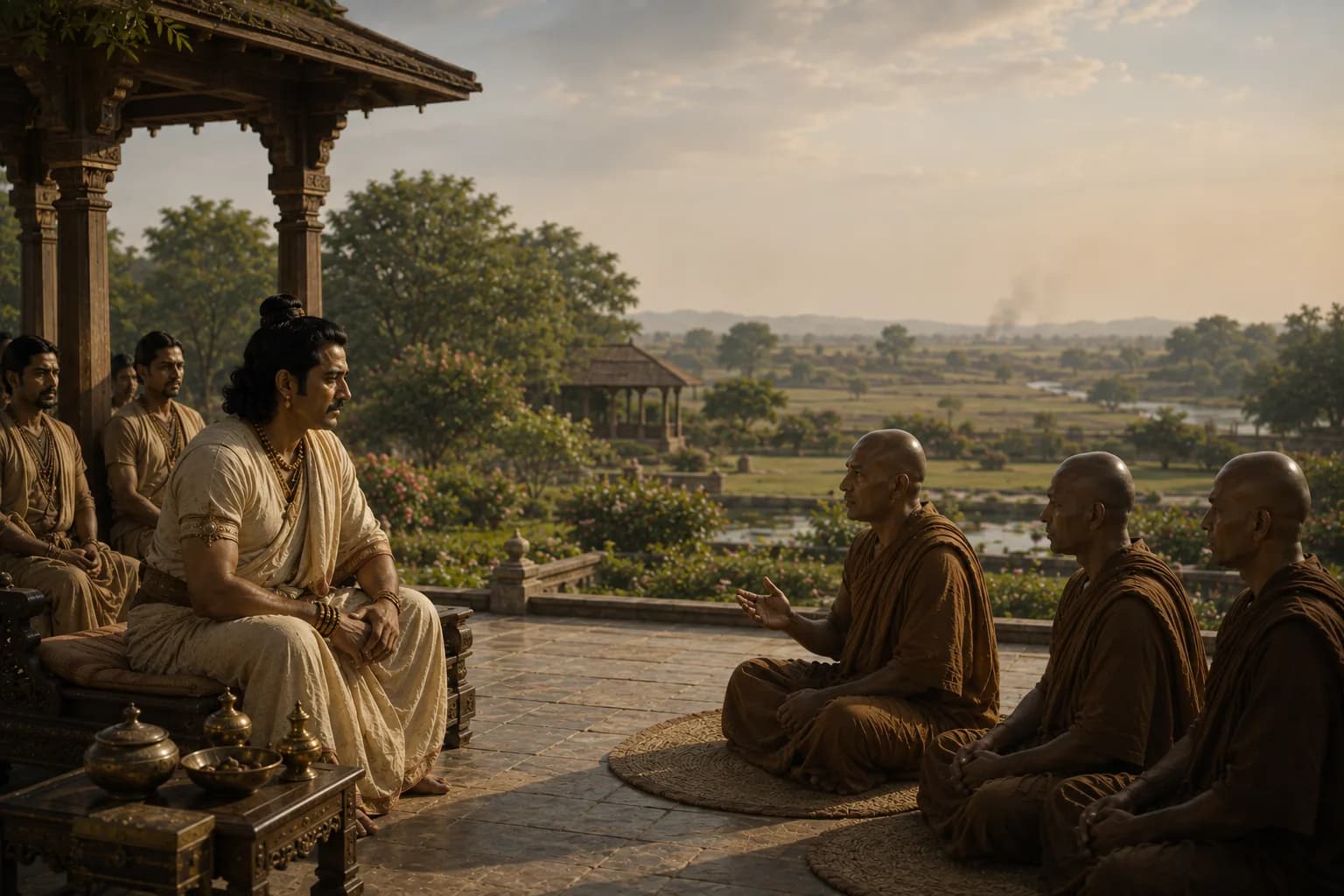
Ashoka seated with Buddhist monks in a palace garden after the suffering of Kalinga.
260 BCE
Step 6 of 10260 BCEAccessible mode

Ashoka Embraces Buddhism

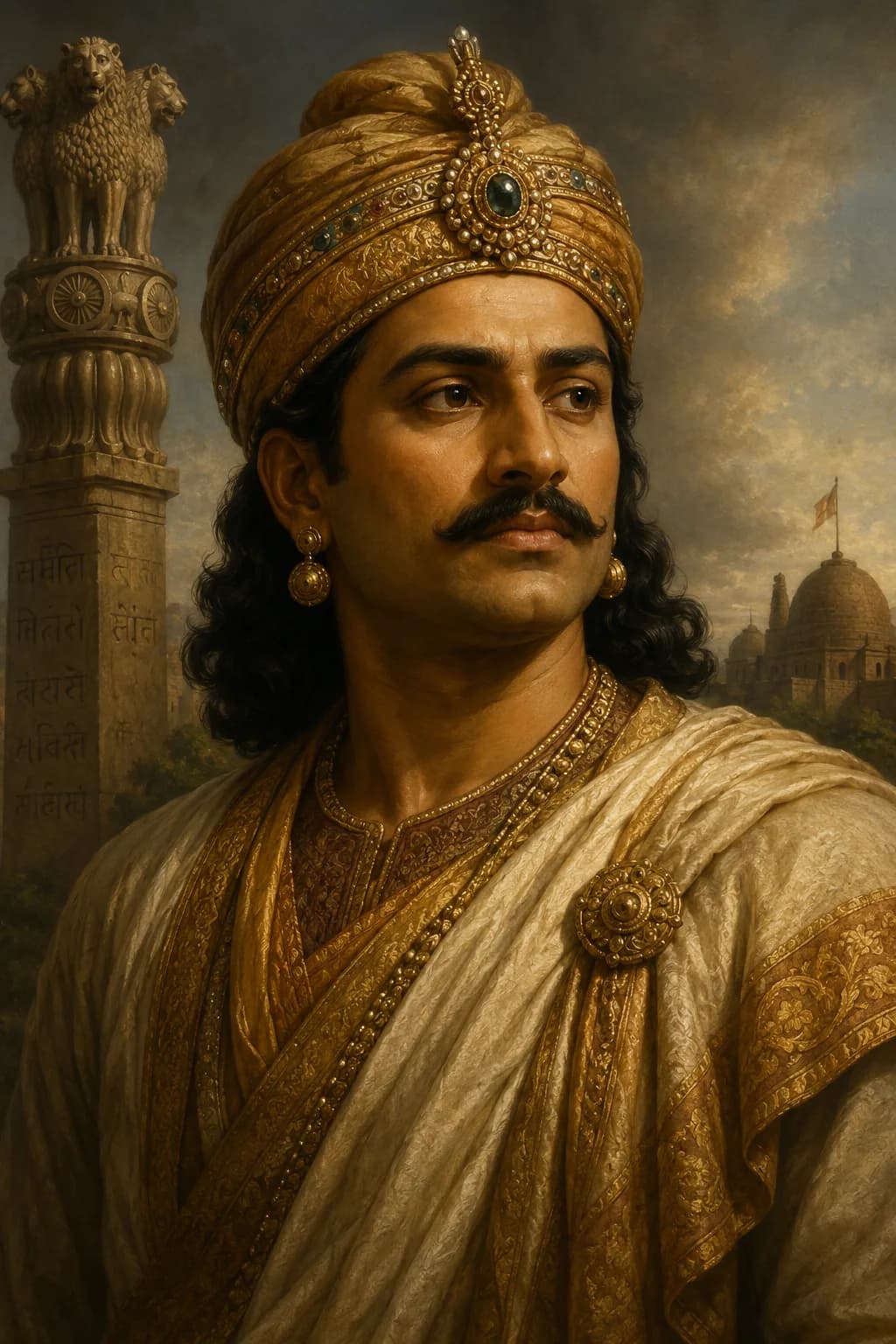
Ashoka's adoption of Buddhism became a major turning point in the religion's development.

The change followed the Kalinga War, whose human cost left a deep mark on Ashoka's memory and public language of rule.

Buddhist principles offered a way to turn remorse into moral responsibility: compassion, restraint, non-violence and concern for the consequences of action.

For Buddhism, Ashoka mattered because he was not a local donor. He ruled a vast empire with roads, officials, resources and public authority.

When Ashoka embraced Buddhism, the sangha gained the attention of an emperor.

Buddhism remained a religious community, not merely a state department. But Ashoka's support gave it opportunities no earlier patron could match.

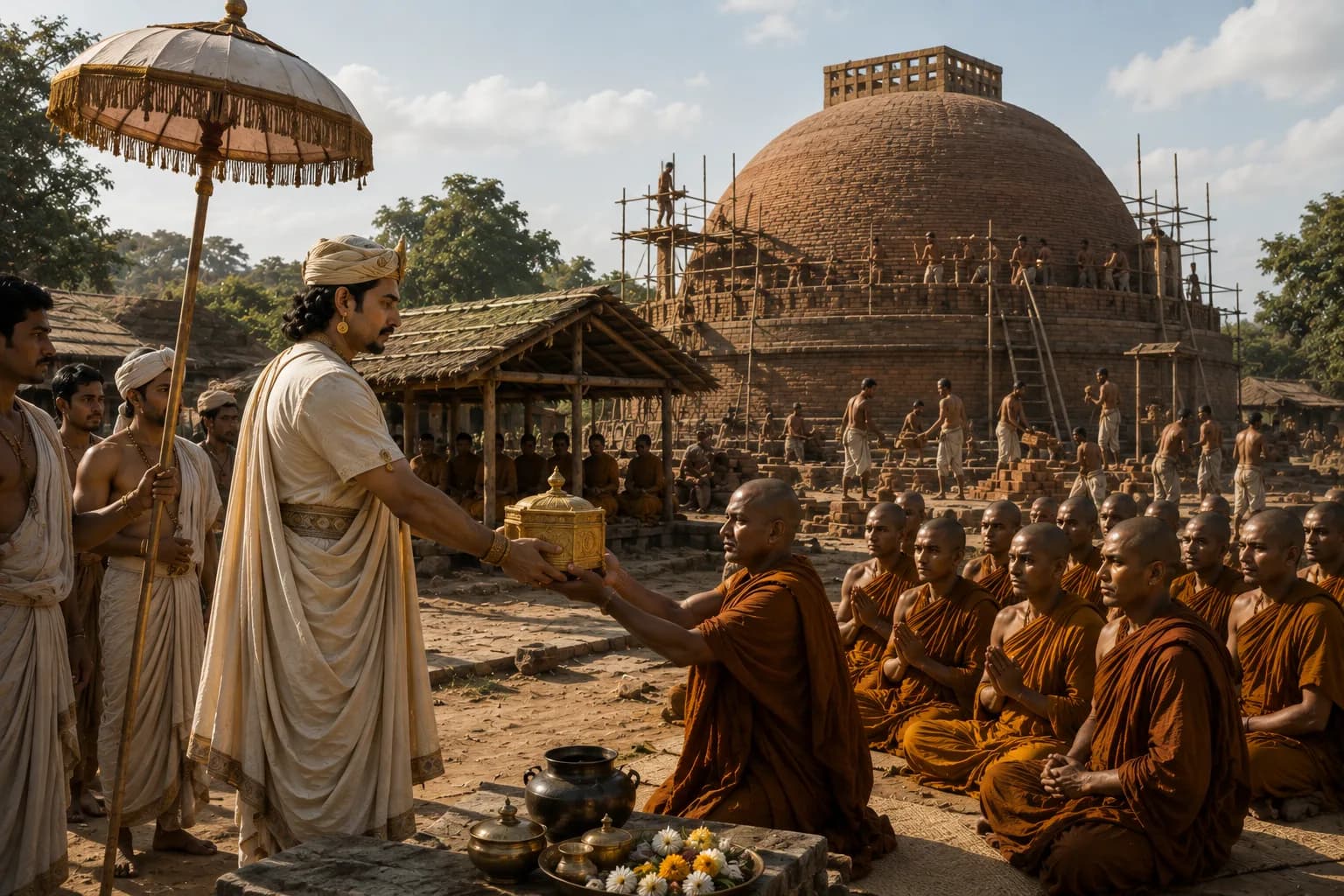
Ashoka offering a relic casket to Buddhist monks while workers build a great stupa.
258 BCE
Step 7 of 10258 BCEAccessible mode

Buddhism Gains Imperial Patronage

Ashoka's support gave Buddhism places, monuments and public visibility across India.

Buddhist tradition associates him with the building or enlargement of stupas, monuments that honoured relics and made sacred memory visible.

He supported monasteries and pilgrimage sites, helping monks gather, teach and preserve discipline while lay people had places to visit and support.

Relics and sacred landscapes mattered. They connected local communities to the Buddha's memory and made devotion part of public life.

Imperial patronage turned Buddhist memory into a landscape people could see.

This strengthened the sangha. Buddhism became more durable when its teachings were anchored in institutions, monuments and regular patterns of support.

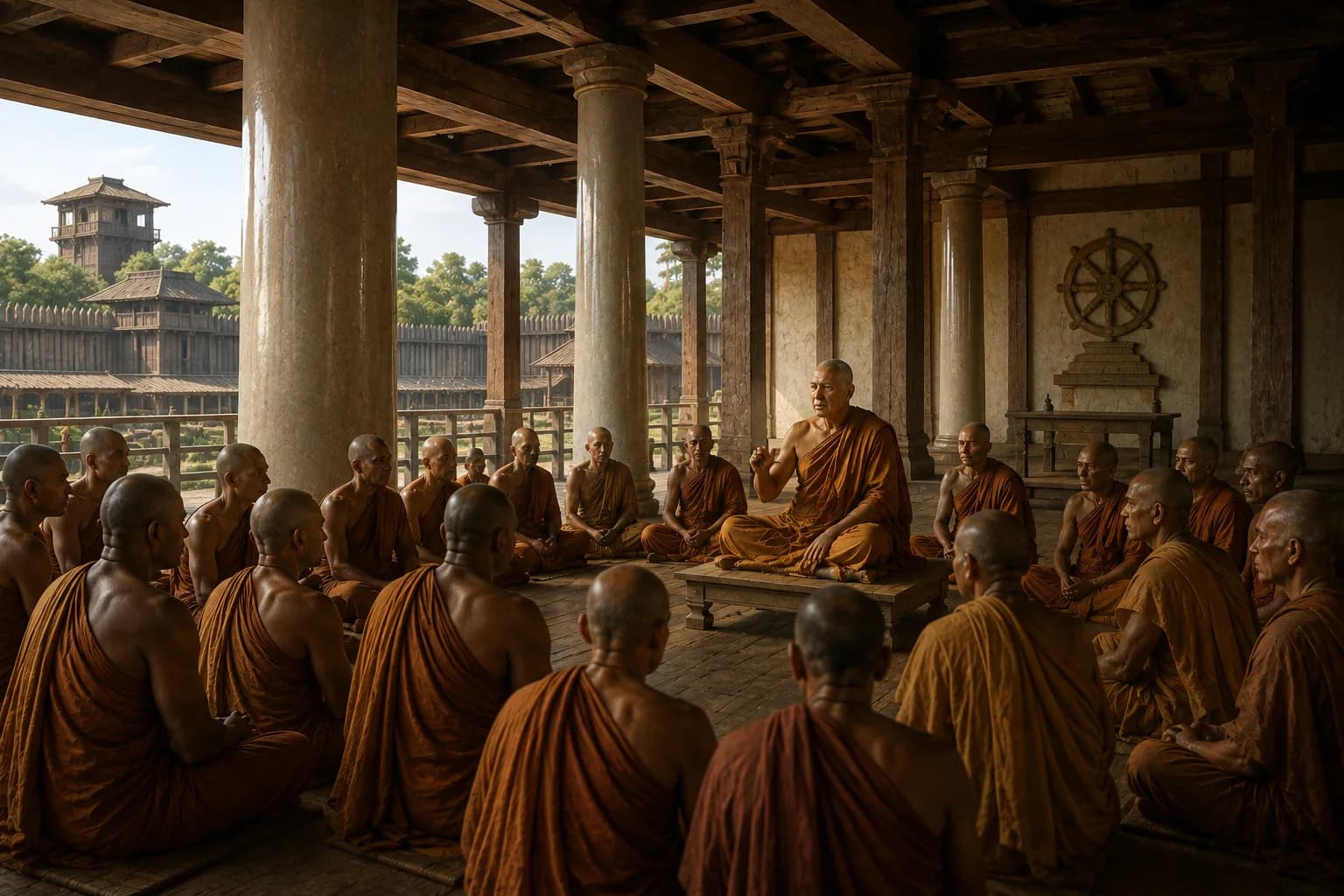
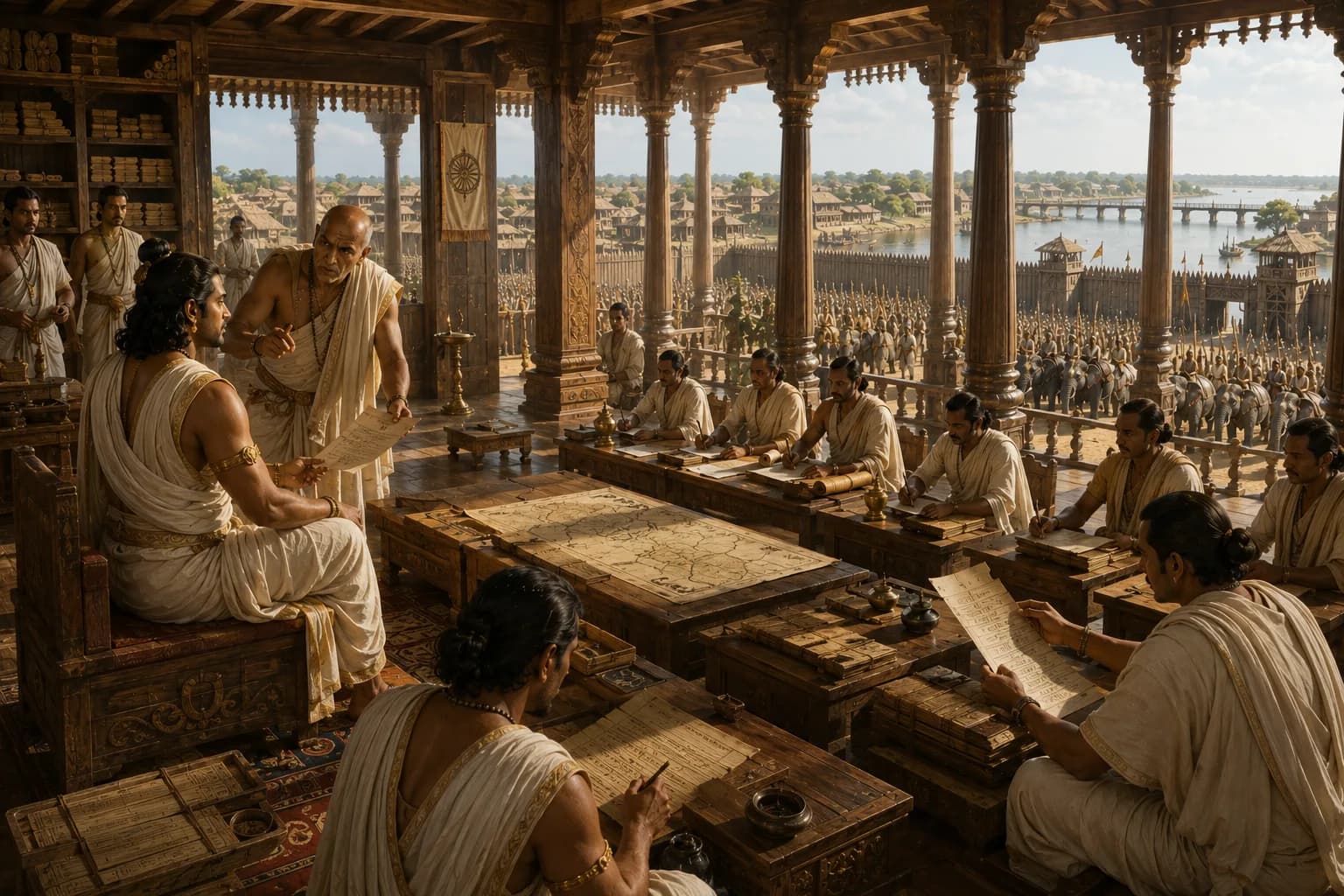
Buddhist monks gathered in council at Pataliputra beneath wooden pillars and a dharma wheel.
250 BCE
Step 8 of 10250 BCEAccessible mode

The Third Buddhist Council

Buddhist tradition links Ashoka with the Third Buddhist Council at .

The council is remembered as a gathering that strengthened the sangha, clarified teaching and addressed disputes inside the monastic community.

A growing religion needed organisation as well as enthusiasm. Monks had to preserve doctrine, maintain discipline and agree on what they were carrying forward.

The council is also linked with the missionary movement that followed, when Buddhist teachers were sent toward new regions.

Patronage gave Buddhism power; the sangha needed discipline to give that power direction.

Historians treat the details carefully, but the council's memory shows how closely Ashoka's patronage became linked with Buddhist organisation and expansion.

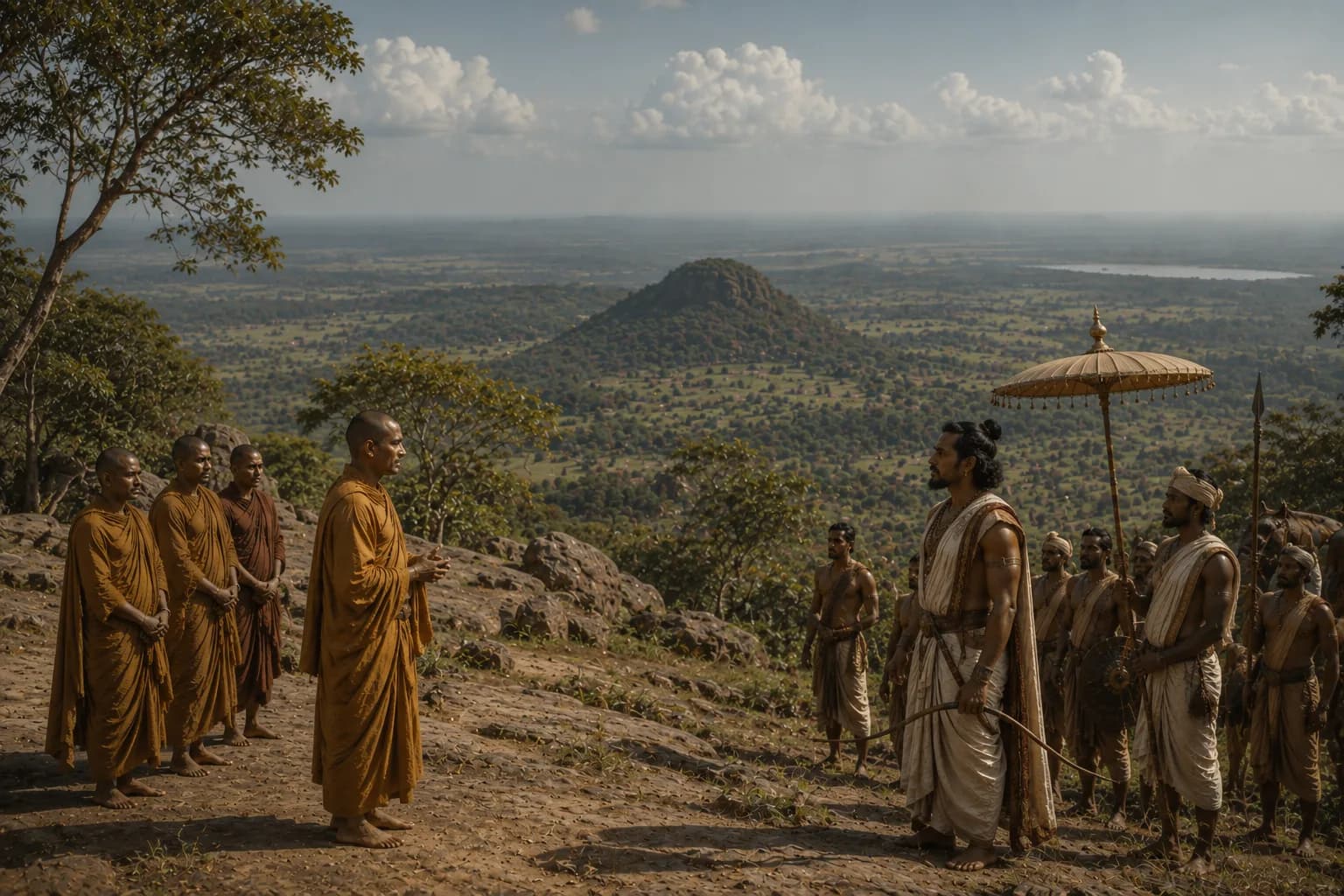
Buddhist monks meeting a Sri Lankan ruler on a hilltop during missions beyond India.
249 BCE
Step 9 of 10249 BCEAccessible mode

Buddhist Missions Beyond India

Ashoka's patronage is traditionally connected with Buddhist missions beyond India.

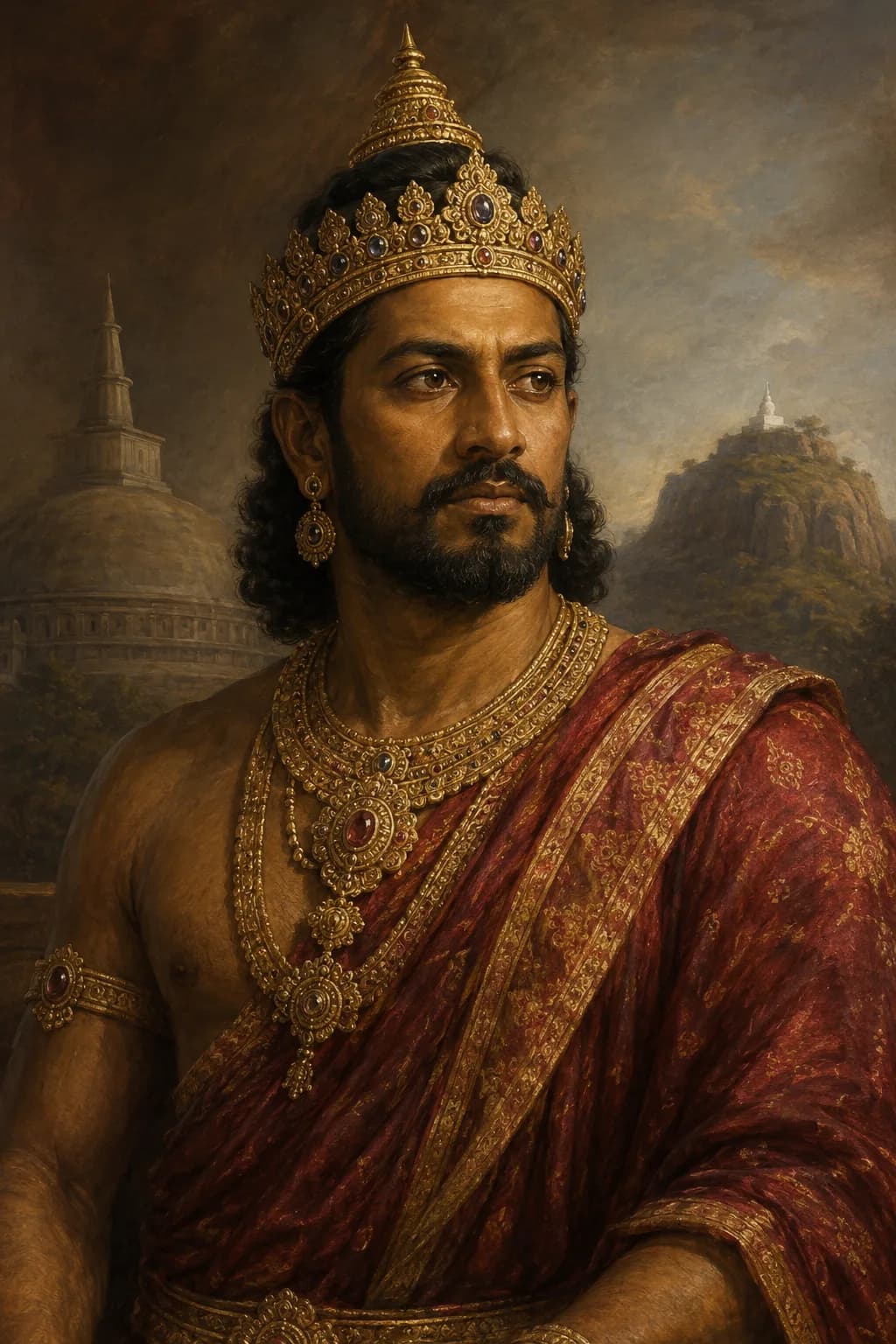
The most famous mission is associated with Mahinda, remembered in Sri Lankan tradition as bringing Buddhism to the island during the reign of King Devanampiya Tissa.

Missions depended on more than monks alone. Rulers, merchants, donors and local communities helped teachings cross boundaries and become rooted in new places.

Buddhism spread by persuasion, relationship and institution. Monasteries, relics and teaching communities made conversion durable.

A mission succeeded only when a teaching became local.

Sri Lanka became one of Buddhism's most important early centres beyond India, showing how Ashoka-era networks could create lasting religious communities.

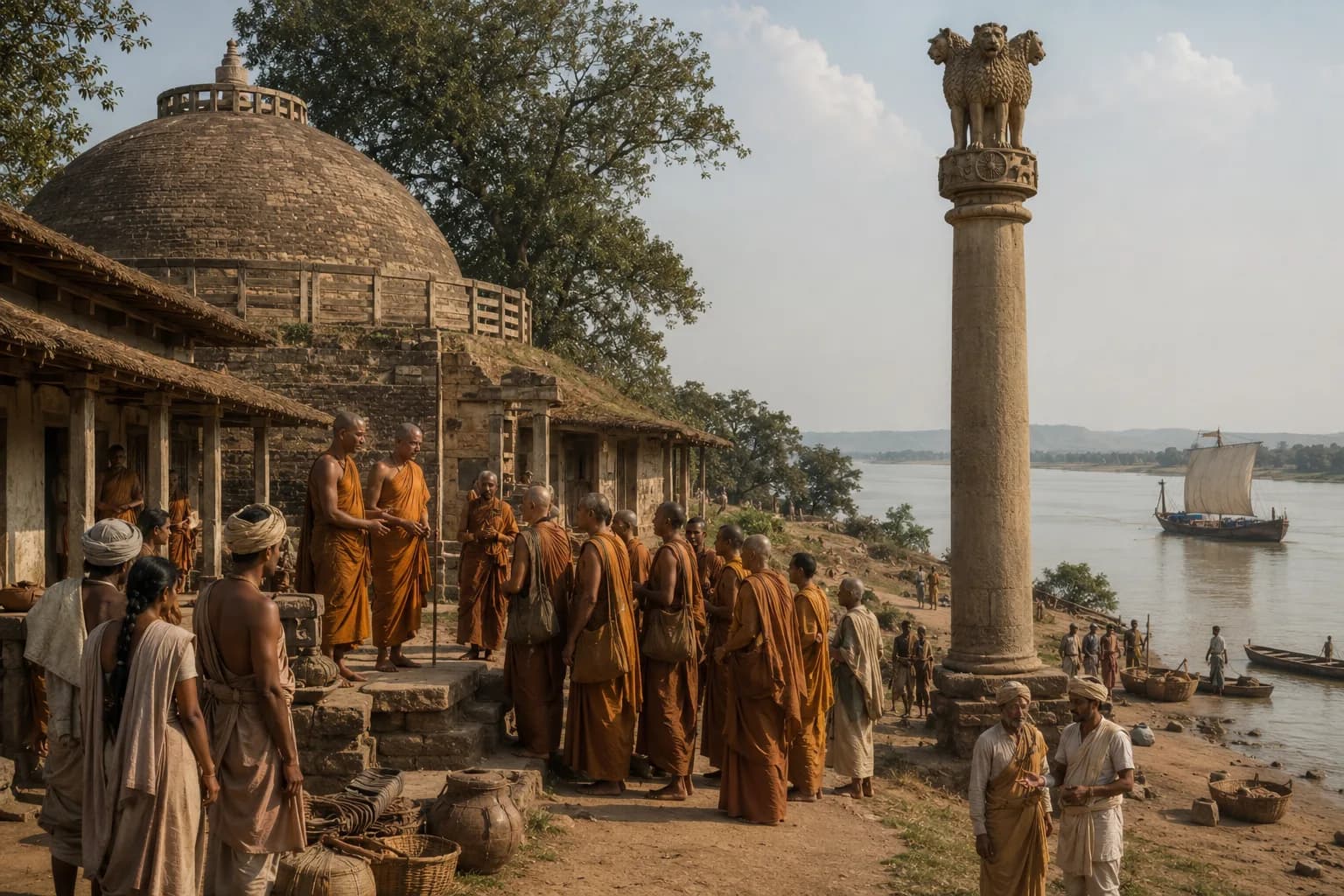
Buddhist monks near a stupa and Ashokan pillar as boats travel along a river route.
232 BCE
Step 10 of 10232 BCEAccessible mode

Buddhism Becomes an International Faith

By the end of Ashoka's reign, Buddhism had changed in scale and possibility.

It had monasteries and sacred sites across parts of India. It had royal patronage, public visibility and stronger connections between communities.

It also had missions and memories beyond India, especially in Sri Lanka, where Buddhism became rooted in royal and monastic life.

Ashoka died in 232 BCE, and Mauryan power would later weaken. But Buddhism no longer depended on one ruler alone.

Ashoka's empire faded; Buddhism's horizon widened.

The religion would continue to spread across Central, East and Southeast Asia in later centuries. Ashoka's age helped give that future its foundation.

Continue reading

Finished The Rise and Spread of Buddhism?

Continue into the Mauryan setting behind Ashoka, follow Devanampiya Tissa's Sri Lankan connection, then compare how other religious traditions spread through preaching, institutions, patronage and long-distance networks.

Browse stories

References

Sources & Further Reading

Reliable sources, primary-source collections and reading paths connected to this page.

Further reading

  1. Encyclopaedia Britannica, Search results for The Rise and Spread of Buddhism,” Open source
  2. WorldCat, Library holdings for The Rise and Spread of Buddhism,” Open source

Primary sources

  1. Library of Congress, Search results for The Rise and Spread of Buddhism,” Open source

Reviewed claim sources

Loading reviewed claim sources...

A weekly route through history

Find out first about the latest published stories, feature notes and occasional Premium offers in one weekly email.