People

Ashoka

Ashoka was the Mauryan emperor of India who conquered Kalinga, embraced dhamma, promoted Buddhist communities, and left major rock and pillar edicts across his empire.

Born
304 BCE
Died
232 BCE
Role
Mauryan emperor

Mauryan emperor (304 BC–232 BC)

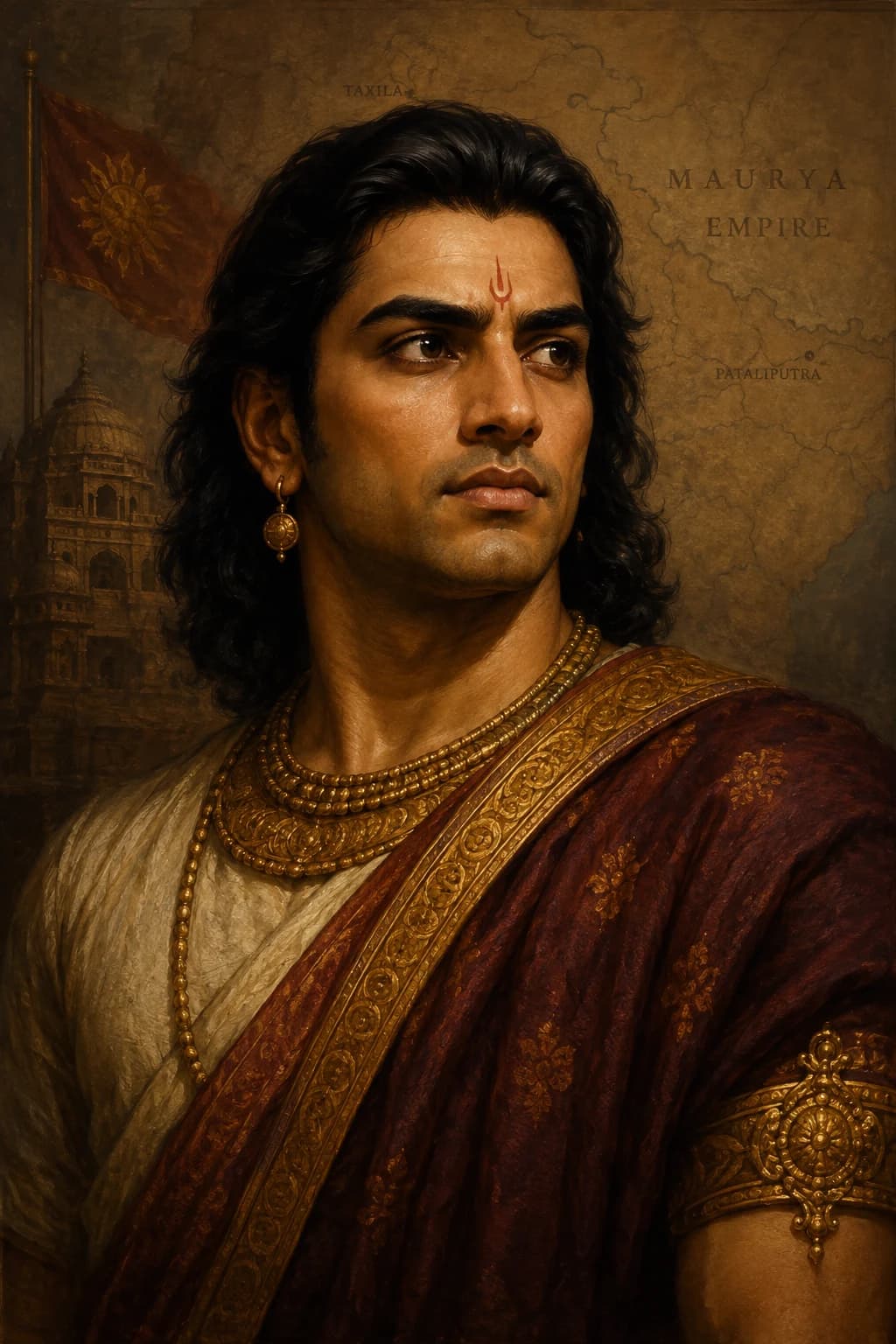
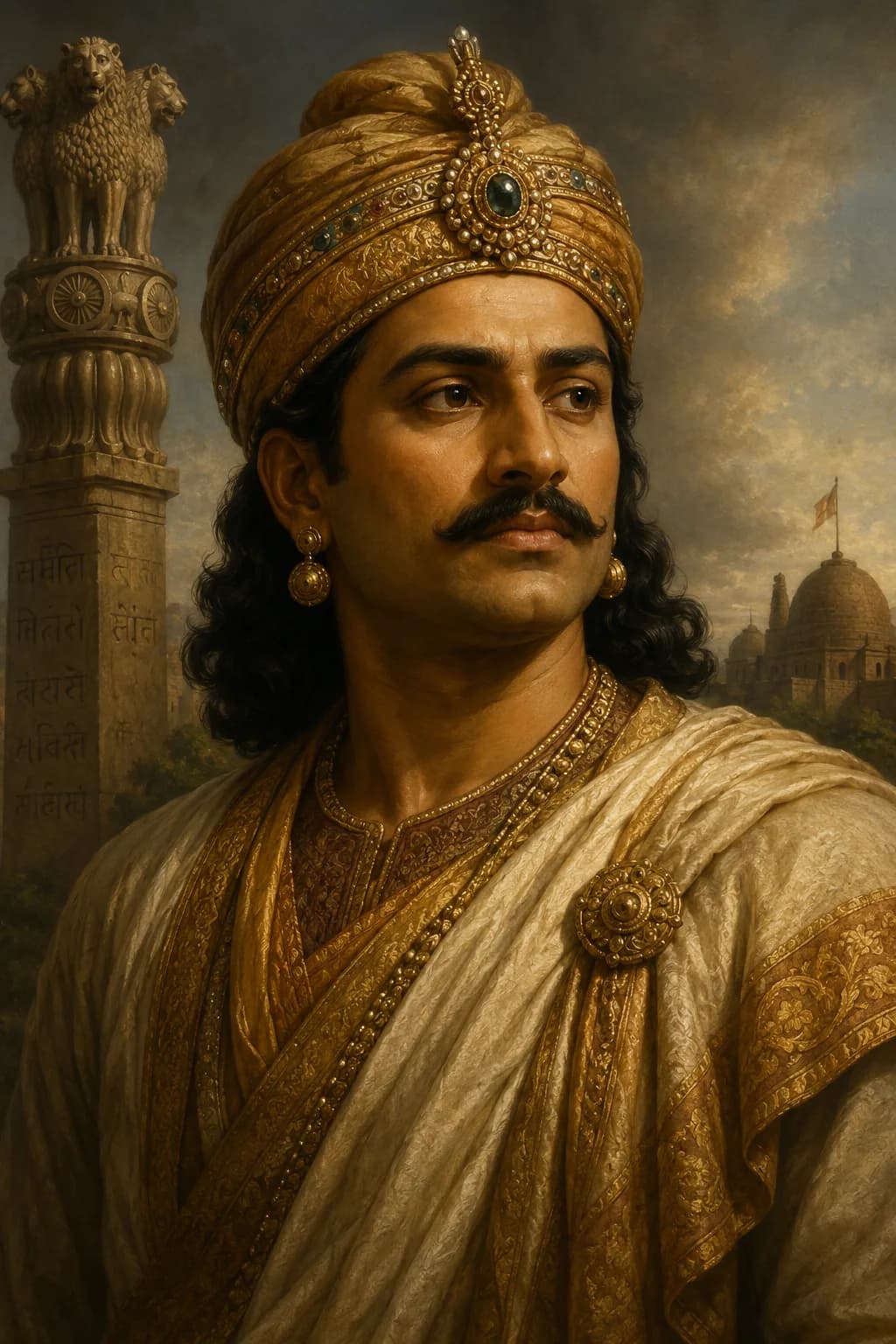
AI-generated portrait of Emperor Ashoka in ancient Indian royal attire
AI-assisted historical reconstruction

An illustrative reconstruction based on historical context. It is not a photograph or documentary likeness. Image policy

Quick answer

Ashoka was the Mauryan emperor of India who conquered Kalinga, embraced dhamma, promoted Buddhist communities, and left major rock and pillar edicts across his empire.

Born
304 BCE
Died
232 BCE
Role
Mauryan emperor
Years
304-232 BCE
Facts

Ashoka timeline facts

Selected specifics from this profile's life story.

-304
Royal Beginnings

Ashoka was born into the Mauryan royal family, growing up in a powerful empire shaped by ambition, expansion, and political competition.

-261
Kalinga War

The brutal conquest of Kalinga caused immense suffering, marking a turning point that deeply affected Ashoka’s outlook on war and rule.

-250s
Spreading the Dharma

Ashoka supported the spread of Buddhist ideas beyond his empire, sending envoys and encouraging cultural exchange.

After -232
Lasting Legacy

Ashoka is remembered as a ruler who transformed governance through ethical principles, leaving a lasting imprint on history and culture.

Life Journey

From conquest to conscience and moral rule

Follow the story in a more continuous narrative, with a reading mode that matches how much depth you want.

Complete chronology

-304

Royal Beginnings

Ashoka was born into the Mauryan dynasty, the first great imperial power to rule much of the Indian subcontinent. His grandfather Chandragupta Maurya had built the empire after the age of Alexander's successors, and his father Bindusara inherited a state of remarkable scale. Ashoka's early life is difficult to reconstruct with certainty because later Buddhist traditions mix memory, moral teaching, and legend. What is clear is that he grew up inside a court where succession, provincial command, military power, and administrative discipline mattered intensely. The Mauryan state relied on roads, officials, taxation, garrisons, and royal authority stretching across diverse peoples and languages. Ashoka's later transformation is often told as if a cruel prince simply became a saint. The reality was more complex: he was formed first as an imperial ruler, trained to secure power before he began asking what power was for.
-273

Struggle for Power

Ashoka's path to the throne was probably contested, though the exact details are obscured by later stories that may exaggerate the violence to heighten the drama of his conversion. After Bindusara's death, Ashoka emerged as ruler around 273 BC and was formally consecrated a few years later. In an empire of this size, succession was not merely a family matter. It required support from ministers, soldiers, provincial elites, and the machinery of administration. Traditions describe Ashoka as harsh in his early rule, sometimes under the name Chandashoka, or Ashoka the Fierce, but historians treat such accounts carefully. They tell us as much about how later communities wanted to frame his moral change as about the exact events. Even with caution, his rise shows that Mauryan kingship was rooted in force, legitimacy, and the ability to command obedience across distance.

-273 to -261

Expansionist Rule

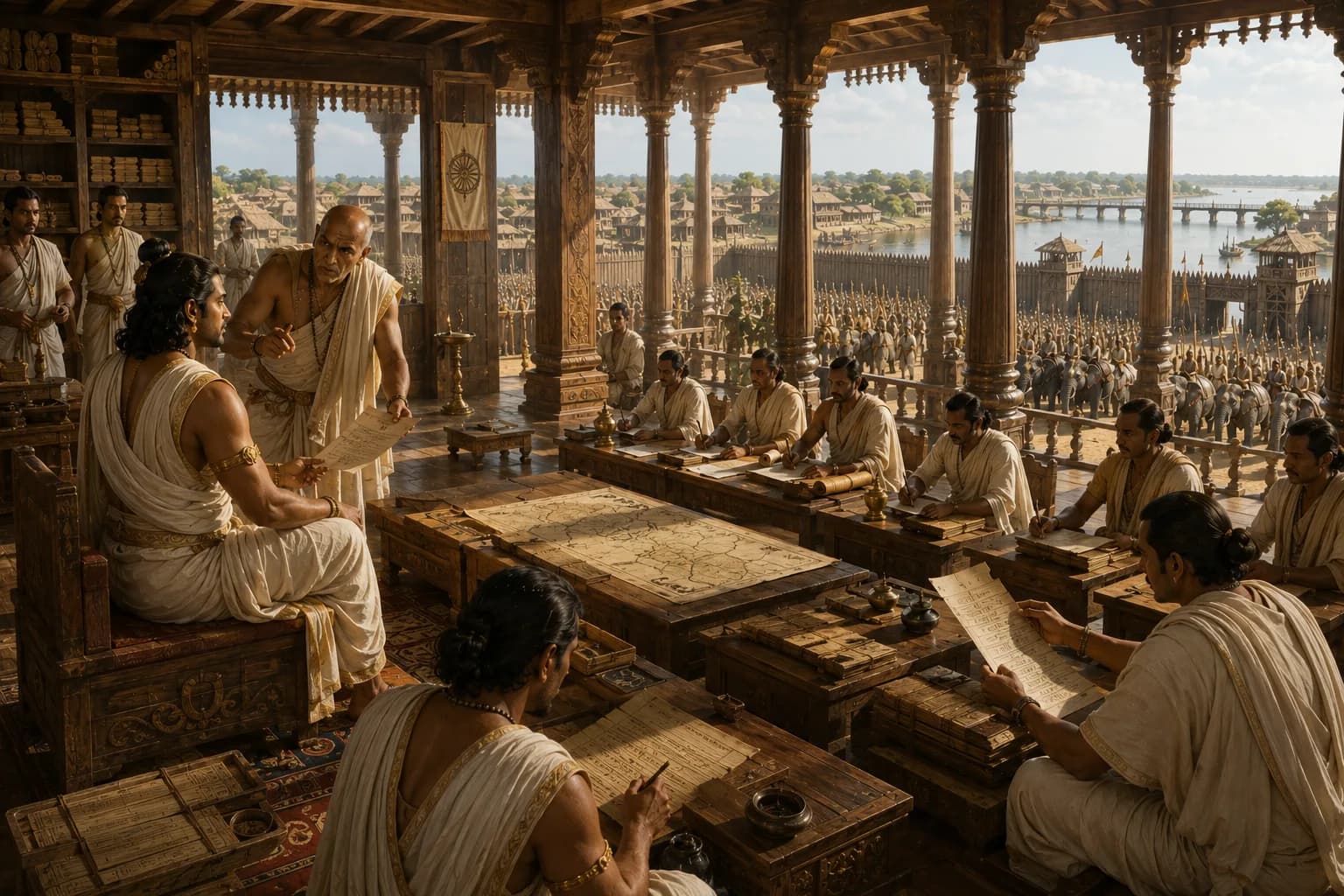
Before Kalinga, Ashoka ruled as an emperor within a tradition of expansion and central control. The Mauryan realm was already vast, but imperial authority had to be maintained constantly through officials, military presence, roads, revenue collection, and communication. Ashoka's early reign likely focused on consolidating what he had inherited and completing what earlier Mauryan expansion had left unfinished. Kalinga, on the eastern coast, remained outside direct Mauryan rule and occupied a strategic position for trade, movement, and prestige. Conquering it was not random aggression; it fit the logic of empire. A ruler who claimed universal authority could hardly ignore a strong independent region within reach. At this stage, Ashoka's biography looks like that of many successful ancient monarchs: ambitious, practical, and willing to use organized violence to make political geography obey royal will.

-261

Kalinga War

The Kalinga War, usually dated to around 261 BC, is the turning point because Ashoka himself made it one. In his Rock Edict XIII, he records the conquest in unusually stark terms: vast numbers killed, deported, or made to suffer through the consequences of war. Ancient royal inscriptions normally boast of victory; Ashoka's edict instead turns victory into moral evidence against conquest. That does not mean he dismantled the empire or became a pacifist in a modern sense. He remained a king, kept armies, punished crime, and expected obedience. But Kalinga changed the language of his rule. He presented remorse as a royal virtue and claimed that the best conquest was conquest by dhamma, a moral order built on restraint, compassion, respect, and self-control. The importance of Ashoka lies in that astonishing political move: an emperor publicly judged his own victory by the suffering it caused.

-260s

Embracing Buddhism

Ashoka's relationship with Buddhism developed after Kalinga, though his edicts usually speak more broadly of dhamma than of technical Buddhist doctrine. Later Buddhist sources celebrate him as a great patron, and his support for the sangha was real, but his public moral program was designed for a mixed empire. It emphasized respect for parents, generosity to religious communities, humane treatment of servants, restraint in slaughter, truthfulness, and tolerance among sects. This makes his conversion historically interesting. He did not simply withdraw into private piety. He translated moral anxiety into imperial policy, using inscriptions, officials, pilgrimages, and patronage to teach conduct across the realm. Ashoka's Buddhism was therefore both sincere and political. It gave him a language for remorse and reform, while dhamma gave his empire a unifying ethic that could speak beyond one community.

-260s to -240s

Moral Governance

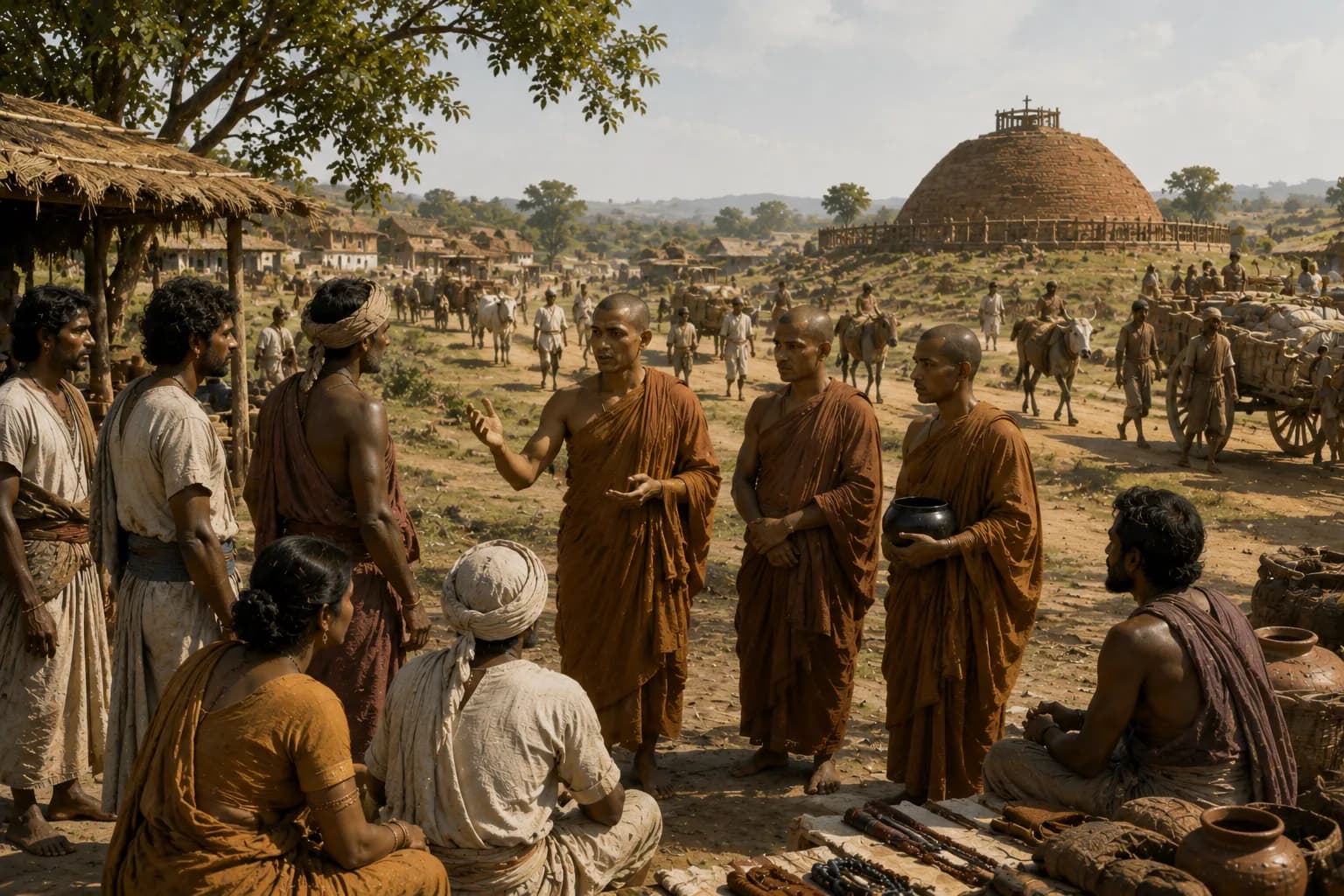
Ashoka's edicts are among the most remarkable political documents of the ancient world because they show a ruler trying to communicate directly across a vast and diverse population. Carved on rocks and pillars in Prakrit and other languages and scripts, they announced a program of dhamma that joined welfare, moral instruction, and royal oversight. Ashoka appointed dhamma-mahamattas, officials concerned with moral and social welfare, and presented himself as a fatherly ruler responsible for all his subjects. He supported medical treatment for humans and animals, wells, shade trees, and more careful administration of justice. These measures should not be romanticized as modern democracy or universal equality. They were still top-down imperial commands. Yet they widened the imagined duties of kingship. Ashoka did not only ask how to win obedience; he asked how a ruler should reduce suffering within the limits of ancient power.

-250s

Spreading the Dharma

Ashoka's support helped Buddhism move from a regional religious movement into a tradition with wider Asian horizons. Later sources connect his reign with missions to Sri Lanka and other regions, including the famous association of Mahinda and Sanghamitta with the establishment of Buddhism in Sri Lanka. Some details belong to later religious memory, but the broader pattern is credible: Ashoka used imperial networks to support monks, shrines, pilgrimage sites, and the circulation of teachings. His inscriptions also refer to contacts with Hellenistic rulers beyond India, showing the international imagination of his court. Unlike military conquest, this influence moved through patronage, prestige, travel, and translation across cultures. Ashoka did not single-handedly spread Buddhism across Asia, but his reign gave Buddhist institutions resources and visibility at a crucial stage in their history.

-240s to -232

Later Challenges

Ashoka's later years reveal the tension at the heart of his achievement. A vast empire could not be held together by moral exhortation alone. It needed revenue, officials, garrisons, punishments, and local cooperation. His edicts show concern that people did not always understand or practice dhamma, which suggests that moral rule required repetition and enforcement. He also had to balance respect for different religious groups with support for Buddhism, and compassion with the practical violence still embedded in kingship. The Mauryan Empire did not collapse immediately at his death, but it weakened within decades, perhaps from succession problems, administrative overreach, regional pressures, and the sheer difficulty of maintaining such scale. Ashoka's final phase therefore invites nuance. His moral turn was real and historically extraordinary, but it did not solve every structural problem of empire.

After -232

Lasting Legacy

Ashoka died around 232 BC, and the Mauryan Empire gradually fragmented after him. For many centuries his historical profile dimmed, surviving in inscriptions, Buddhist traditions, and scattered memory before modern scholarship reconnected the edicts with the ruler behind them. His legacy now works on several levels. For Buddhists, he became the model of the righteous patron who turned remorse into support for the dhamma. For political history, he is one of the rare ancient conquerors whose own public words condemn the human cost of conquest. For modern India, Ashokan symbols, including the lion capital and the wheel of dhamma, became part of national identity. The most interesting question is not whether Ashoka was a perfect ruler. He was not. It is why an emperor at the height of power chose to advertise conscience as a principle of rule. That choice remains his lasting achievement.

Continue in context

Connected stories

Move from the profile into the wider events and settings this figure belongs to.

Tertiary paths

Content note

This profile is written for educational use and connects to related Stories of History pages. The main portrait is an AI-assisted historical reconstruction, included as an illustrative aid rather than documentary evidence. Image policy

References

Sources & Further Reading

Reliable reference works, archives and reading paths connected to this profile.

Further reading

  1. Encyclopaedia Britannica, Search results for Ashoka,” accessed June 2026.Open source
  2. WorldCat, Books and library holdings for Ashoka,” accessed June 2026.Open source

Primary sources

  1. Library of Congress, Search results for Ashoka,” accessed June 2026.Open source

Reviewed claim sources

Loading reviewed claim sources...

A weekly route through history

Find out first about the latest published stories, feature notes and occasional Premium offers in one weekly email.