People

Chanakya

Chanakya, also known as Kautilya or Vishnugupta, is remembered in Indian tradition as Chandragupta Maurya's adviser and as the figure associated with the Arthashastra tradition of statecraft.

Born
c. 375 BCE
Died
c. 283 BCE
Role
Political strategist

Strategist and statecraft thinker (traditionally 4th-3rd century BC)

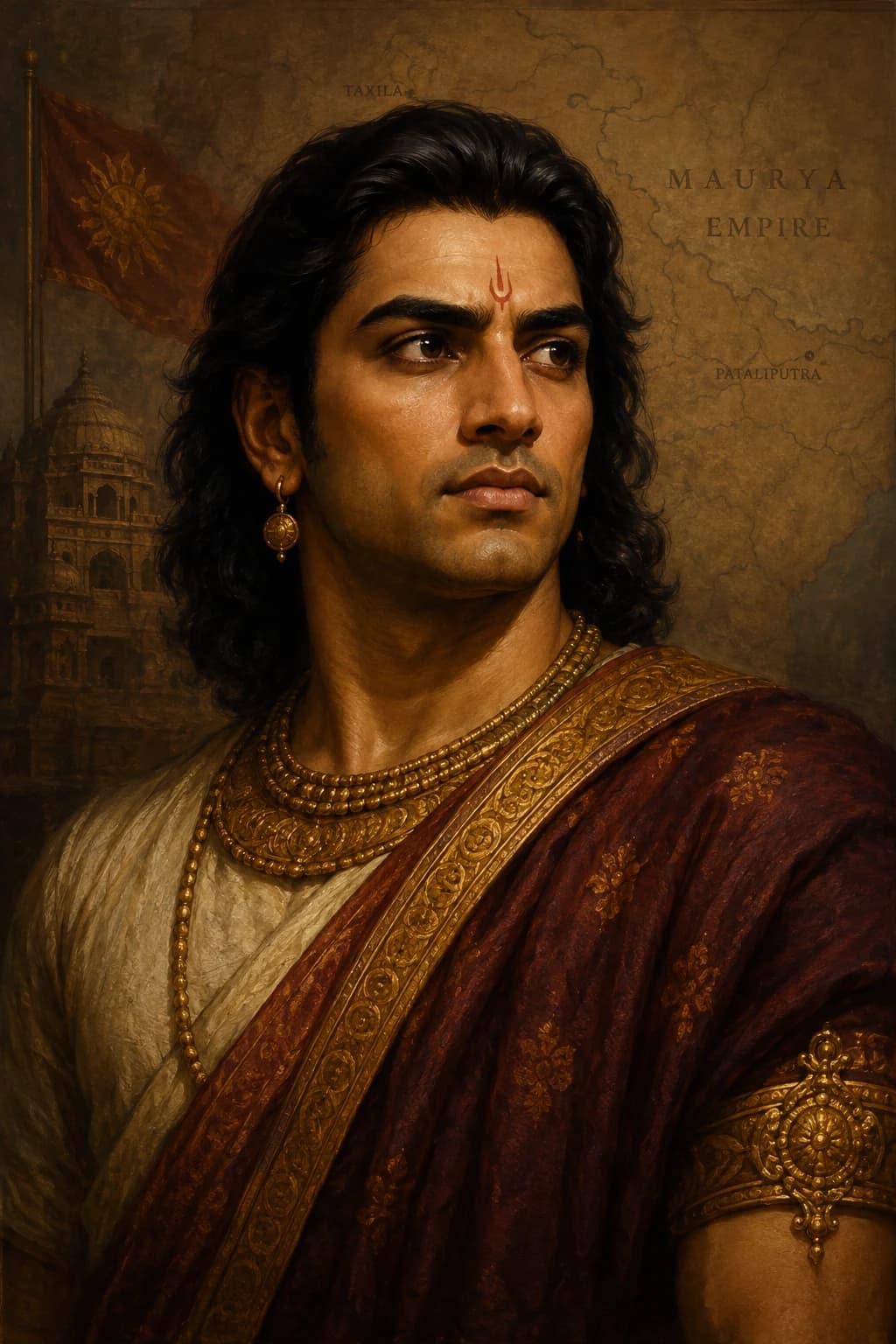
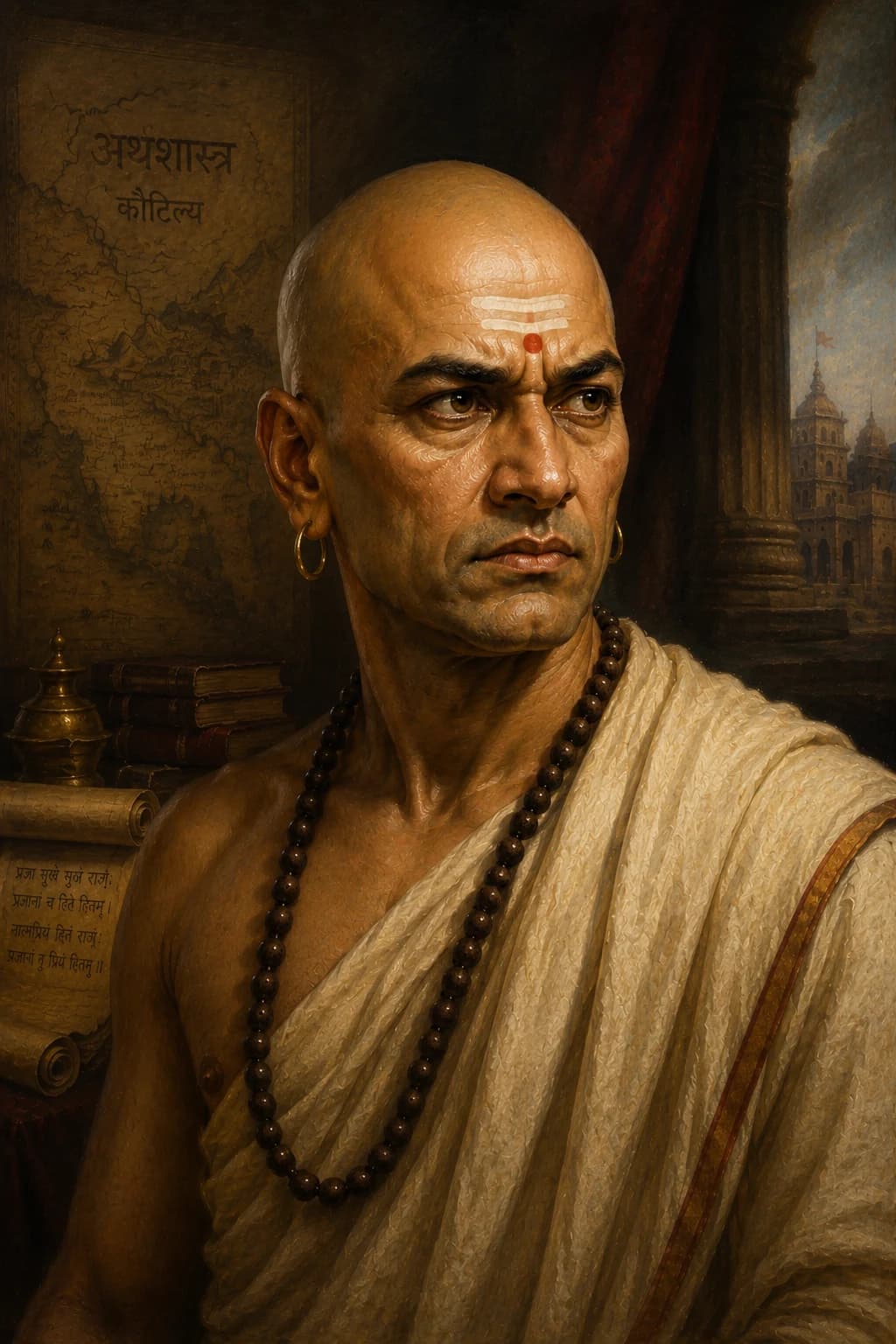
AI-generated portrait of Chanakya in ancient Indian scholarly robes
AI-assisted historical reconstruction

An illustrative reconstruction based on historical context. It is not a photograph or documentary likeness. Image policy

Quick answer

Chanakya, also known as Kautilya or Vishnugupta, is remembered in Indian tradition as Chandragupta Maurya's adviser and as the figure associated with the Arthashastra tradition of statecraft.

Born
c. 375 BCE
Died
c. 283 BCE
Role
Political strategist
Years
c. 375-c. 283 BCE
Quick facts

Profile details

Additional identity and tagging details that are not already covered in the introduction.

Also known as
Kautilya, Vishnugupta, Chanakya Kautilya
Region
Magadha, Northern India, South Asia, Magadha and northern India
Facts

Chanakya timeline facts

Selected specifics from this profile's life story.

4th century BC
A Figure of Tradition

Chanakya's biography is difficult to pin down, but later traditions make him central to Chandragupta's rise.

c. 322 BC
Against the Nandas

Tradition presents Chanakya as the strategist who helped Chandragupta turn opposition to Nanda rule into a successful revolution.

Ancient and later layers
The Arthashastra Tradition

Chanakya is associated with the Arthashastra, a text of statecraft concerned with taxation, espionage, punishment, administration, and survival.

After the Mauryas
A Lasting Political Symbol

Chanakya became a lasting symbol of political intelligence, practical strategy, and disciplined rule.

Life Journey

The strategist behind Mauryan memory

Follow Chanakya through tradition, statecraft, and the rise of Chandragupta Maurya.

Complete chronology

4th century BC

A Figure of Tradition

Chanakya belongs to the borderland between history, political memory, and legend. Later traditions call him Kautilya and Vishnugupta, and connect him with the overthrow of the Nanda dynasty and the rise of Chandragupta Maurya. The surviving stories are not simple records, but they preserve a powerful idea: Mauryan success was not accidental. It was remembered as planned, disciplined, and intellectually guided.
c. 322 BC

Against the Nandas

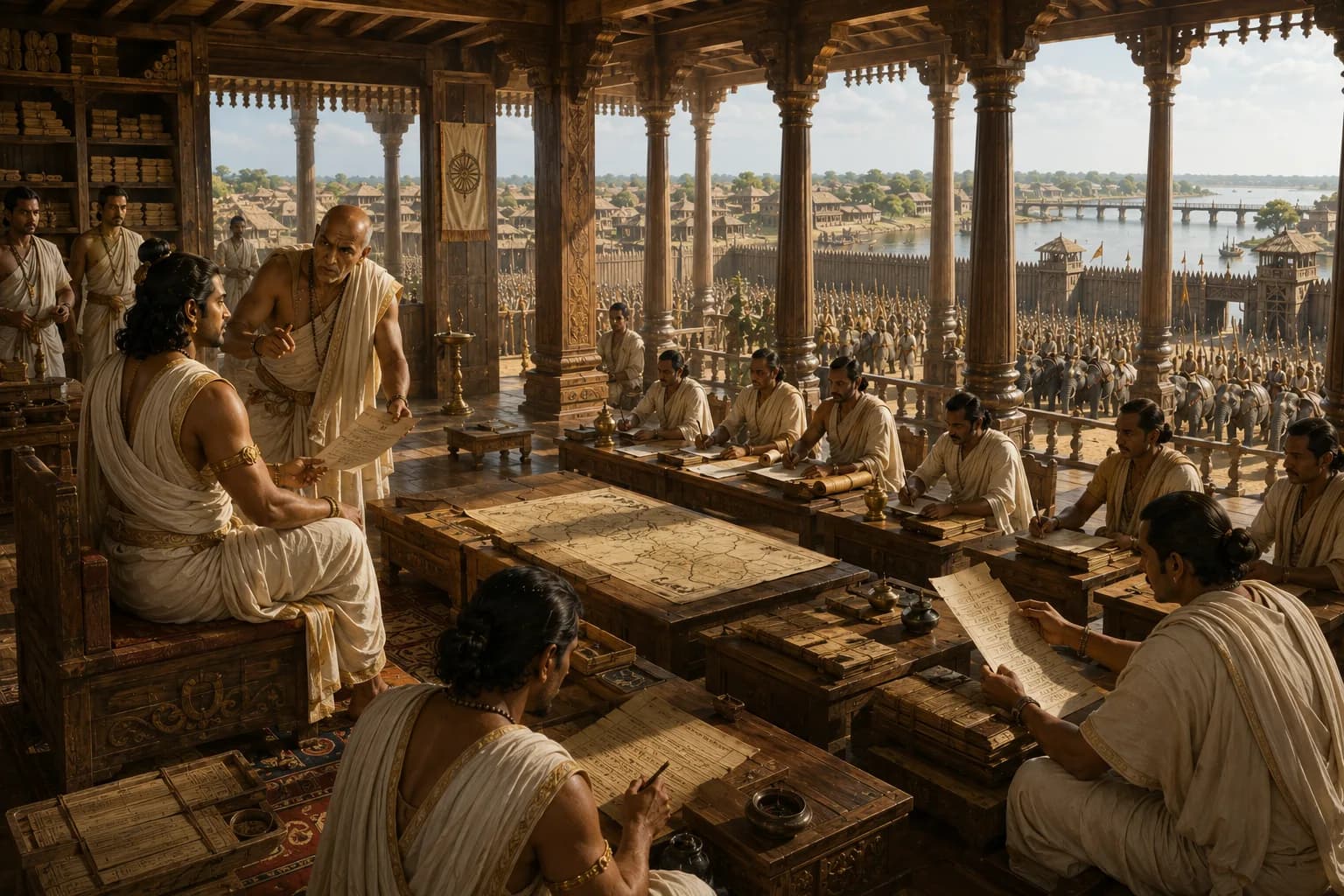
The Nandas ruled a wealthy Magadhan kingdom, but later accounts remember their rule as vulnerable and unpopular. Chanakya appears as the figure who saw how grievance, resources, alliances, and timing could be turned into power. Whether every episode in the stories is reliable is less important than the political meaning. The Mauryan takeover was remembered not as a lucky revolt, but as a carefully organized seizure of a major state.

Ancient and later layers

The Arthashastra Tradition

The Arthashastra should be used carefully. Its exact date, layers, and relationship to Chandragupta's government remain debated. Yet its association with Kautilya matters because it captures a political world that fits the memory of Mauryan power: revenue, officials, spies, roads, punishment, economic regulation, diplomacy, and military readiness. It is a hard-minded text because ancient states could be fragile. For rulers, moral wishes did not remove the need for information, money, discipline, and force.

After the Mauryas

A Lasting Political Symbol

Chanakya's later reputation outgrew the narrow evidence for his life. He became the classic image of the adviser who understands power without illusion. That memory can be simplified too easily into ruthlessness, but the more interesting point is discipline. In the Mauryan story, Chanakya represents the idea that empire required more than charisma or battlefield success. It required planning, institutions, intelligence, and the will to govern after victory.

Continue in context

Connected stories

Move from the profile into the wider events and settings this figure belongs to.

Tertiary paths

Content note

This profile is written for educational use and connects to related Stories of History pages. The main portrait is an AI-assisted historical reconstruction, included as an illustrative aid rather than documentary evidence. Image policy

References

Sources & Further Reading

Reliable reference works, archives and reading paths connected to this profile.

Further reading

  1. Encyclopaedia Britannica, Search results for Chanakya,” accessed June 2026.Open source
  2. WorldCat, Books and library holdings for Chanakya,” accessed June 2026.Open source

Primary sources

  1. Library of Congress, Search results for Chanakya,” accessed June 2026.Open source

Reviewed claim sources

Loading reviewed claim sources...

A weekly route through history

Find out first about the latest published stories, feature notes and occasional Premium offers in one weekly email.