People

Siddhartha Gautama

Siddhartha Gautama, the Buddha, was the founder of Buddhism. His search for liberation, enlightenment at Bodh Gaya, first sermon at Sarnath, and teaching of the Middle Way shaped one of the world's major religious traditions.

Born
c. 563 BCE
Died
c. 483 BCE
Role
Founder of Buddhism

Founder of Buddhism (c. 563 BC-c. 483 BC)

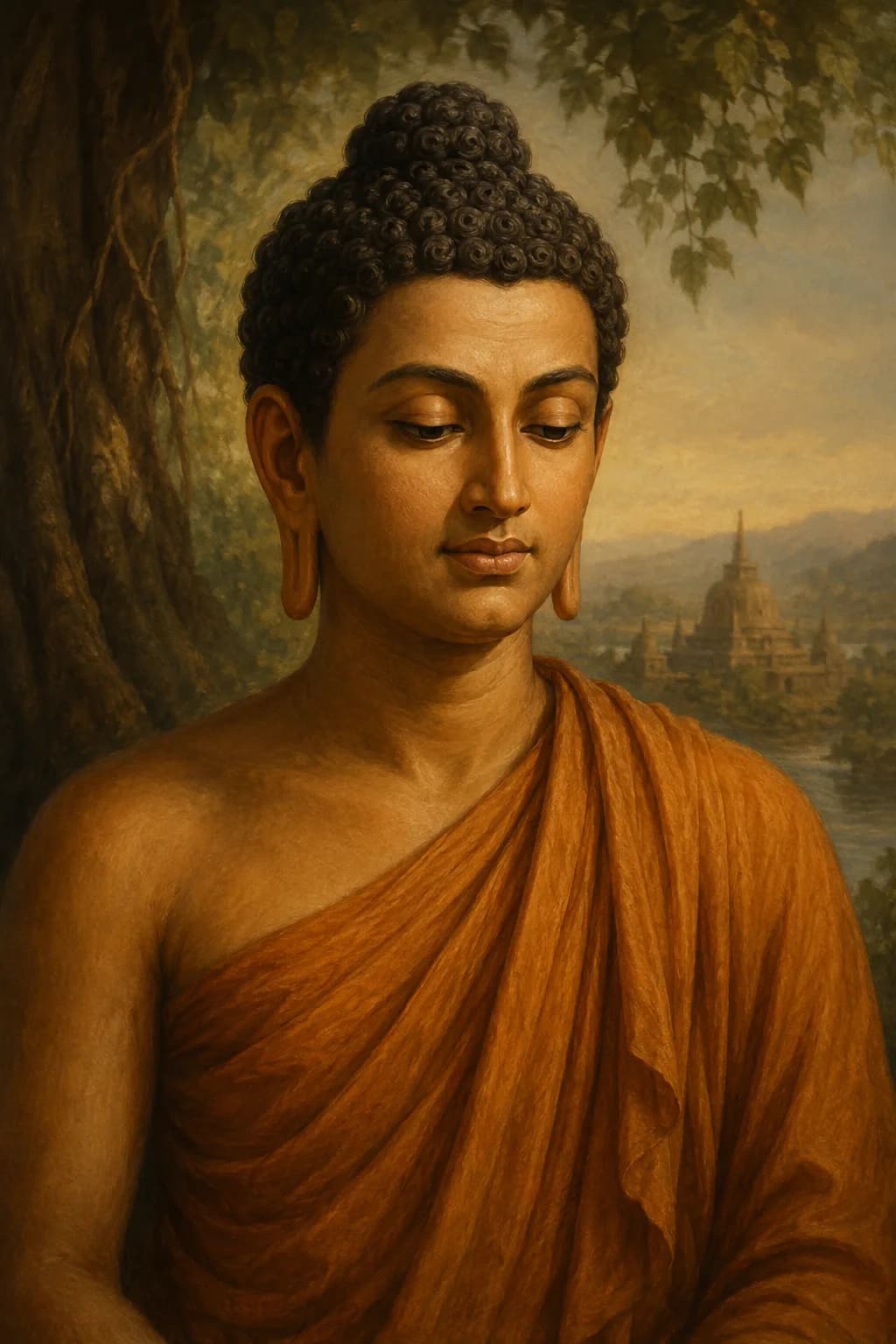
AI-generated portrait of Siddhartha Gautama, the Buddha, in saffron robes beneath the Bodhi tree
AI-assisted historical reconstruction

An illustrative reconstruction based on historical context. It is not a photograph or documentary likeness. Image policy

Quick answer

Siddhartha Gautama, the Buddha, was the founder of Buddhism. His search for liberation, enlightenment at Bodh Gaya, first sermon at Sarnath, and teaching of the Middle Way shaped one of the world's major religious traditions.

Born
c. 563 BCE
Died
c. 483 BCE
Role
Founder of Buddhism
Years
c. 563-c. 483 BCE
Quick facts

Profile details

Additional identity and tagging details that are not already covered in the introduction.

Also known as
Gautama Buddha, The Buddha, Shakyamuni
Region
South Asia, Northern India, Himalayan foothills, Northern India and the Himalayan foothills
Facts

Siddhartha Gautama timeline facts

Selected specifics from this profile's life story.

c. -563
A Restless World

Siddhartha Gautama was born into the Shakya clan in a northern Indian world alive with ritual, debate, kingdoms and wandering teachers.

c. -528
Awakening at Bodh Gaya

At Bodh Gaya, Siddhartha meditated beneath the Bodhi tree and became the Buddha, the awakened one.

c. -520s to -480s
Teaching the Middle Way

The Buddha taught a practical path focused on ethical conduct, meditation, wisdom and release from craving.

After -483
A World Religion Begins

The Buddha's teachings spread through monastic networks, lay communities and later royal patrons, becoming one of the major religions of Asia and the world.

Life Journey

From royal privilege to awakening and a new path

Follow the story in a more continuous narrative, with a reading mode that matches how much depth you want.

Complete chronology

c. -563

A Restless World

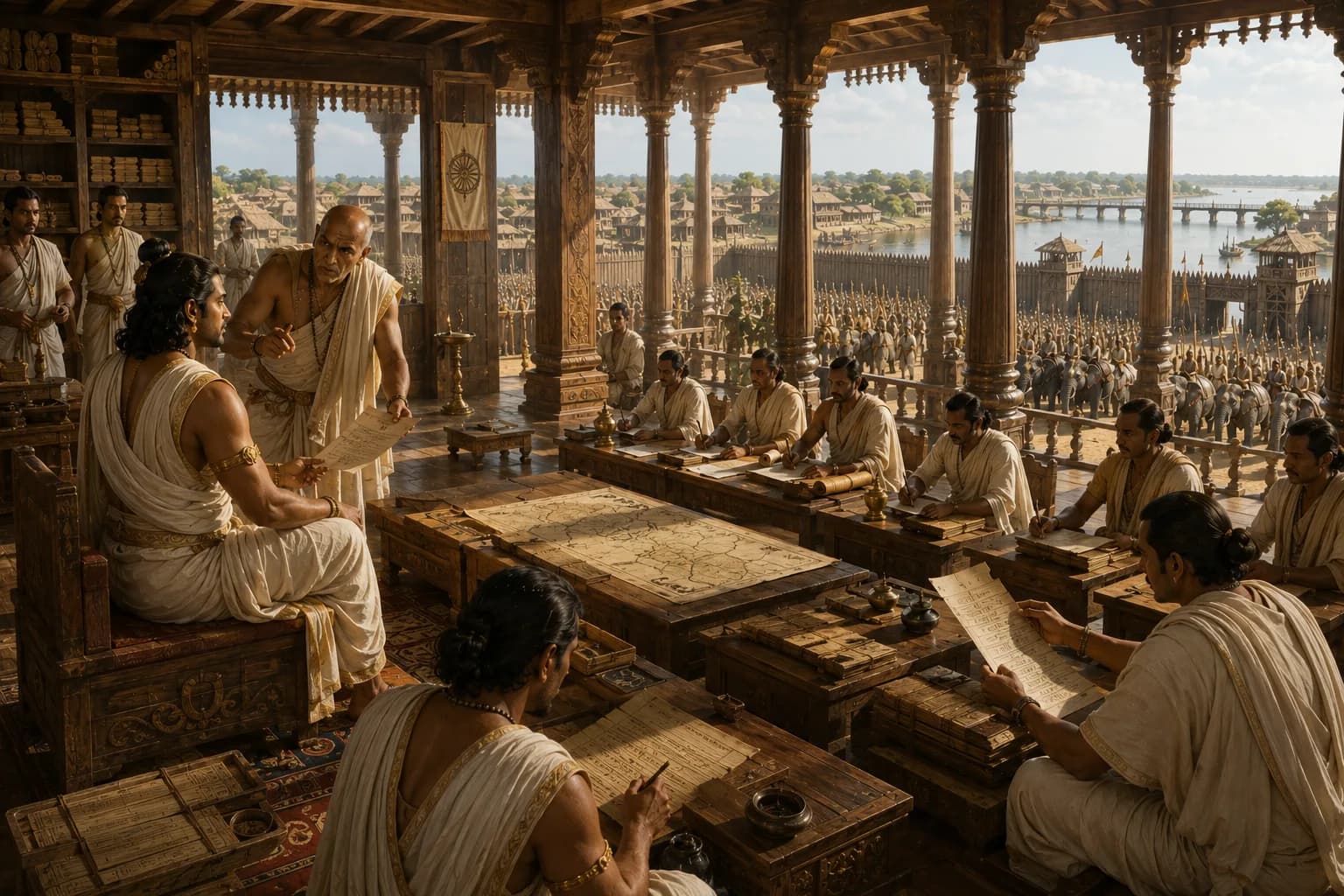
Siddhartha Gautama was born into the Shakya clan, probably in the Himalayan foothills near the borderlands of present-day Nepal and northern India. Later Buddhist tradition presents him as a prince raised in comfort, shielded from the harsher realities of life. Historians treat the details carefully, but the setting matters. Northern India in the sixth and fifth centuries BC was a place of growing cities, expanding kingdoms, old Vedic ritual traditions, new ascetic movements, and intense debate about rebirth, karma, liberation and the meaning of suffering. Siddhartha's later teaching did not appear in a vacuum. It emerged from a crowded spiritual landscape where Brahmins, renunciants, philosophers and seekers argued over how human beings might escape the cycle of dissatisfaction and death.
c. -534

Leaving Privilege

The famous story of the Four Sights describes Siddhartha encountering an old person, a sick person, a corpse and a wandering holy man. Whether read as literal biography or symbolic memory, the story captures the crisis at the heart of his life: comfort could not protect anyone from ageing, illness, death or grief. Siddhartha's renunciation was therefore not simply a rejection of luxury. It was a decision to test whether a deeper freedom was possible. He left home, family and status to join the wider world of seekers who wandered, fasted, meditated and studied with teachers. In doing so, he stepped outside the identity that had been prepared for him and made suffering, rather than rank, the central problem of his life.

c. -533 to -529

Teachers and Austerity

Siddhartha's search took him through disciplines already respected in his world. Buddhist sources say he learned from meditation teachers and then joined ascetics who pursued liberation through extreme self-denial. He fasted, endured hardship and pushed the body toward collapse. These practices gave him experience, discipline and insight, but they did not provide the final answer he sought. The turning point came when he rejected both indulgence and extreme austerity. This was not a retreat into ease. It was a discovery that liberation required a middle way: demanding enough to transform desire and perception, but not so harsh that the body and mind were broken before wisdom could arise. That insight prepared the ground for Buddhism's distinctive path.

c. -528

Awakening at Bodh Gaya

Buddhist tradition places Siddhartha's enlightenment at Bodh Gaya, where he sat beneath the Bodhi tree determined not to rise until he understood the truth of suffering and freedom. The awakening made him the Buddha, the awakened one. Later traditions describe this night in cosmic language, but the core insight became the foundation of Buddhist teaching: ordinary life is marked by suffering or dissatisfaction; suffering is bound up with craving, ignorance and attachment; liberation is possible; and there is a disciplined path toward that liberation. The goal was nirvana, the extinguishing of craving and release from the cycle of rebirth. This was not merely a doctrine to believe. It was a way to see, practice and change.

c. -528

First Teaching

After enlightenment, the Buddha chose to teach. At Sarnath, near Varanasi, he addressed former companions in what later tradition remembered as the turning of the wheel of dharma. There he explained the Four Noble Truths and the path that would become central to Buddhism: right understanding, intention, speech, action, livelihood, effort, mindfulness and concentration. The sermon mattered not only because of its ideas, but because it formed a community. The first disciples became the beginning of the sangha, the monastic community that would carry the teaching through memory, practice and example. Buddhism began to spread not as a state religion or a written canon, but as a disciplined community of people learning, reciting, debating and living the path.

c. -520s to -490s

The Sangha Grows

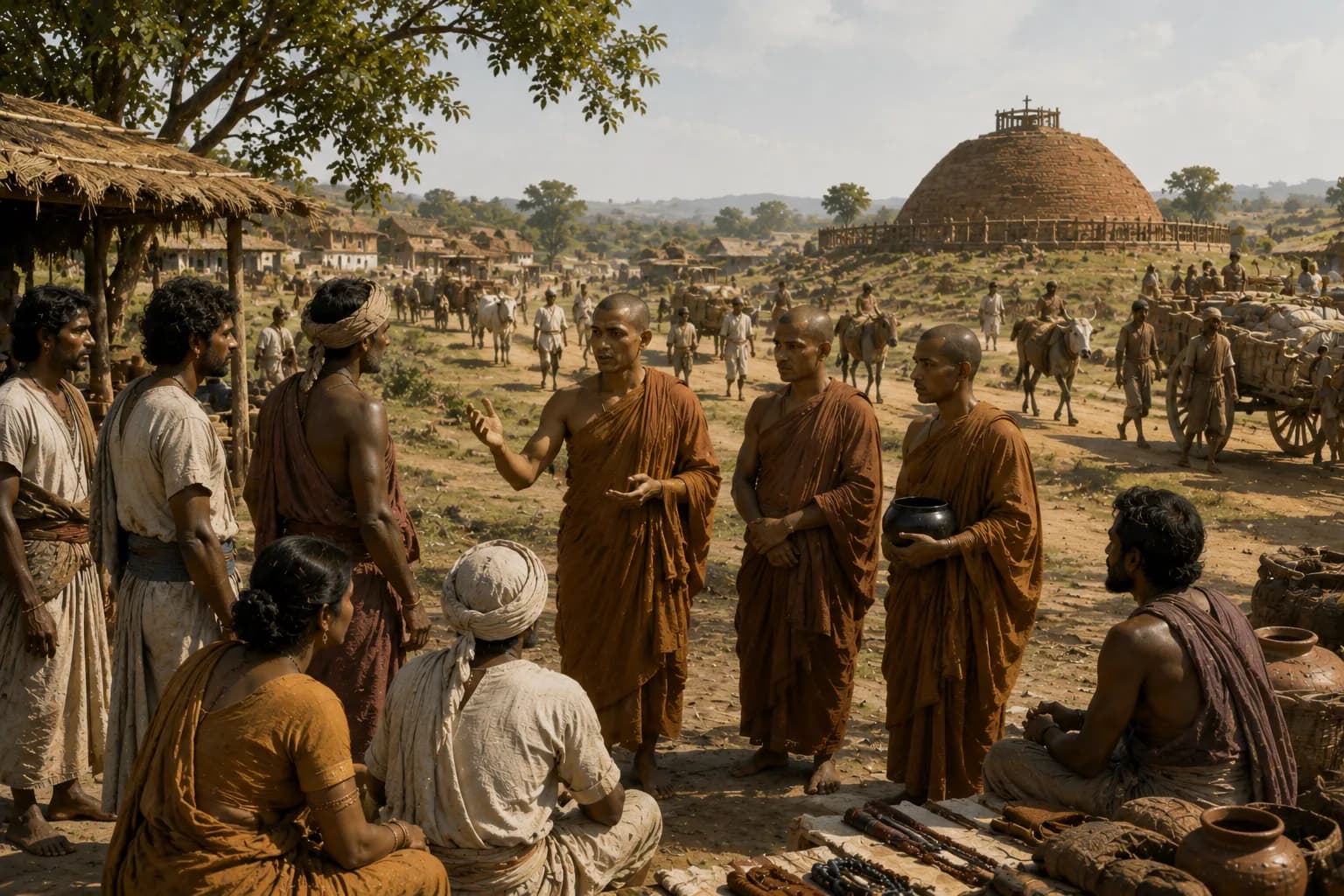
The Buddha spent decades travelling through the Ganges plain, teaching rulers, merchants, villagers, householders and renunciants. The sangha grew through monks and eventually nuns, while lay supporters offered food, shelter and patronage. This balance between monastic discipline and lay generosity became one of Buddhism's great strengths. Monasteries gave the movement continuity; travelling teachers gave it reach; householders gave it roots in everyday society. The Buddha's teaching also crossed social boundaries. It did not erase hierarchy in every practical sense, but it insisted that liberation depended on conduct, insight and discipline rather than birth alone. In a world of ritual privilege and competing philosophies, that message had unusual force.

c. -520s to -480s

Teaching the Middle Way

The Buddha's teaching was practical without being simple. He discouraged empty speculation when it did not help liberation, yet he offered a deep diagnosis of human experience. The Middle Way asked followers to cultivate ethical conduct, mental discipline and wisdom. It challenged attachment to self, status and desire, while also avoiding the belief that suffering could be ended by punishing the body. Because the Buddha taught orally, his words were preserved by communities of recitation before being written down much later. This makes the historical Buddha partly difficult to reconstruct and partly unmistakable in influence. The tradition that remembered him preserved not just a biography, but a method: look closely at suffering, see its causes, and train the mind toward freedom.

c. -483

Parinirvana

The Buddha's death, remembered as his parinirvana, took place at Kushinagar according to Buddhist tradition. For his followers, this was both a loss and a test. The teacher was gone, but the dharma and the sangha remained. Early Buddhist communities preserved his teachings through councils, recitation, rules of monastic discipline and shared memory. Relics associated with the Buddha also became objects of devotion, enshrined in stupas that linked memory, pilgrimage and community. The movement did not become one fixed thing immediately. It developed, debated and spread across regions. Yet the basic foundations were strong enough to survive the death of the founder: teaching, practice, community and a compelling answer to suffering.

After -483

A World Religion Begins

Siddhartha Gautama did not command an empire, write a scripture by hand or build a church-like institution in the modern sense. His power came from a path that others could learn and carry. In the centuries after his death, Buddhist communities expanded across India through monasteries, pilgrimage, trade routes and support from lay donors. Ashoka's later patronage gave Buddhism unprecedented imperial visibility and helped connect it to missions beyond India, but the religion's foundations were already rooted in the Buddha's teaching and the sangha's discipline. Over time, Buddhism adapted to Sri Lanka, Central Asia, China, Southeast Asia, Korea, Japan, Tibet and beyond. Its forms changed, but the central memory endured: a human being confronted suffering, awakened, and taught that liberation was possible.

Continue in context

Connected stories

Move from the profile into the wider events and settings this figure belongs to.

Tertiary paths

Content note

This profile is written for educational use and connects to related Stories of History pages. The main portrait is an AI-assisted historical reconstruction, included as an illustrative aid rather than documentary evidence. Image policy

References

Sources & Further Reading

Reliable reference works, archives and reading paths connected to this profile.

Further reading

  1. Encyclopaedia Britannica, Search results for Siddhartha Gautama,” accessed June 2026.Open source
  2. WorldCat, Books and library holdings for Siddhartha Gautama,” accessed June 2026.Open source

Primary sources

  1. Library of Congress, Search results for Siddhartha Gautama,” accessed June 2026.Open source

Reviewed claim sources

Loading reviewed claim sources...

A weekly route through history

Find out first about the latest published stories, feature notes and occasional Premium offers in one weekly email.