People

Confucius

Confucius was a Chinese teacher and philosopher of the late Spring and Autumn period. His teachings on virtue, ritual, family duty, humane government, education, and moral self-cultivation became foundational to Chinese and East Asian civilisation.

Born
551 BCE
Died
479 BCE
Role
Chinese philosopher of the 5th century BC

Chinese philosopher of the 5th century BC (551 BC–479 BC)

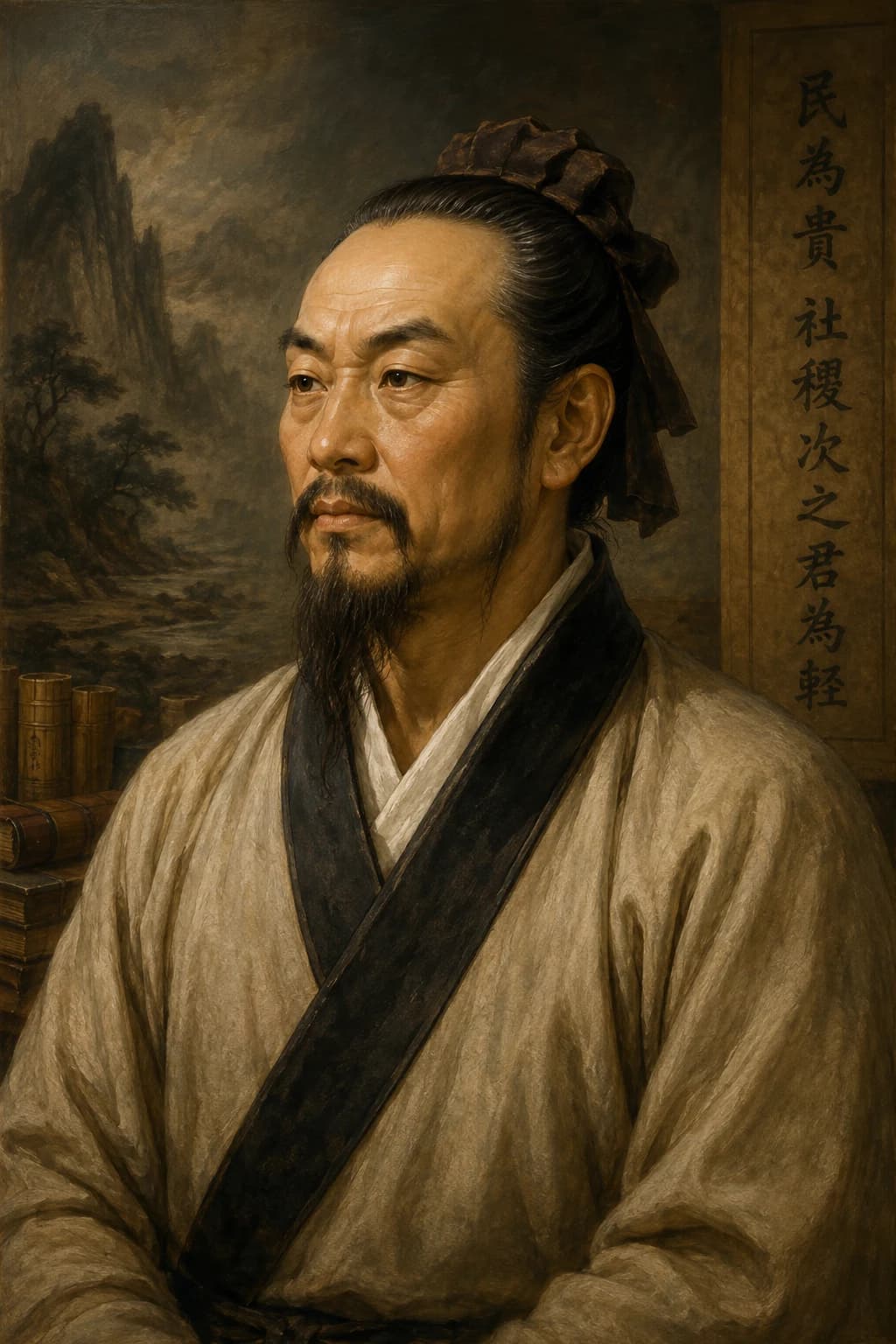
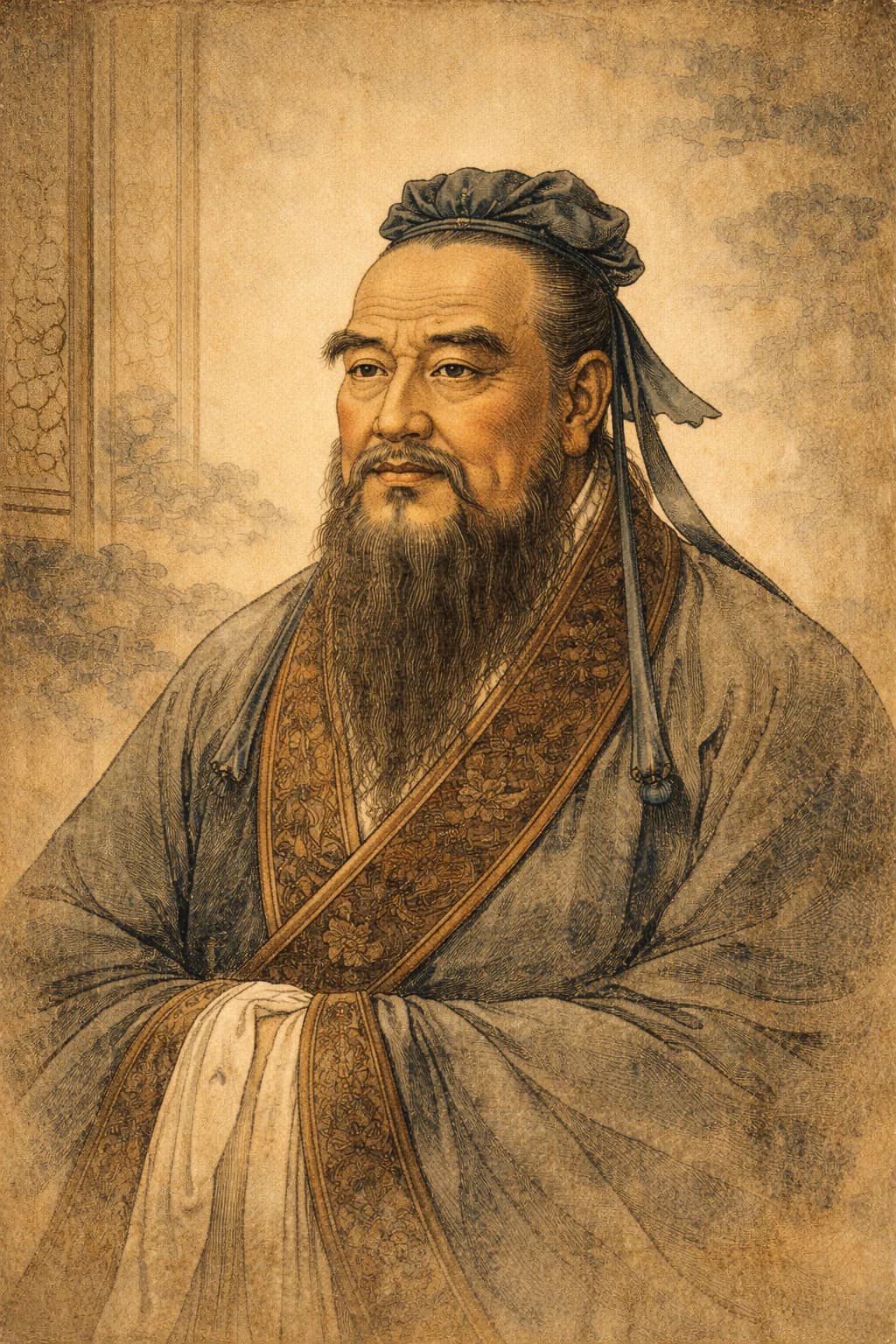
AI-generated portrait of Confucius in ancient Chinese scholar robes
AI-assisted historical reconstruction

An illustrative reconstruction based on historical context. It is not a photograph or documentary likeness. Image policy

Quick answer

Confucius was a Chinese teacher and philosopher of the late Spring and Autumn period. His teachings on virtue, ritual, family duty, humane government, education, and moral self-cultivation became foundational to Chinese and East Asian civilisation.

Born
551 BCE
Died
479 BCE
Role
Chinese philosopher of the 5th century BC
Years
551-479 BCE
Facts

Confucius timeline facts

Selected specifics from this profile's life story.

-551
Humble Beginnings

Confucius was born in 551 BC in the state of Lu during the late Spring and Autumn period, an age when Zhou authority was weakening and rival states competed for power.

-500s
Government Service

He sought to apply his ideas in government, serving in official roles where he promoted ethical leadership and order.

-480s
Core Philosophy

He articulated ideas about virtue, respect, and social harmony that would become central to later traditions.

After -479
Enduring Influence

Confucius’s teachings shaped education, governance, and culture across East Asia, influencing generations long after his death.

Life Journey

Teaching order, virtue and human connection

Follow the story in a more continuous narrative, with a reading mode that matches how much depth you want.

Complete chronology

-551

Humble Beginnings

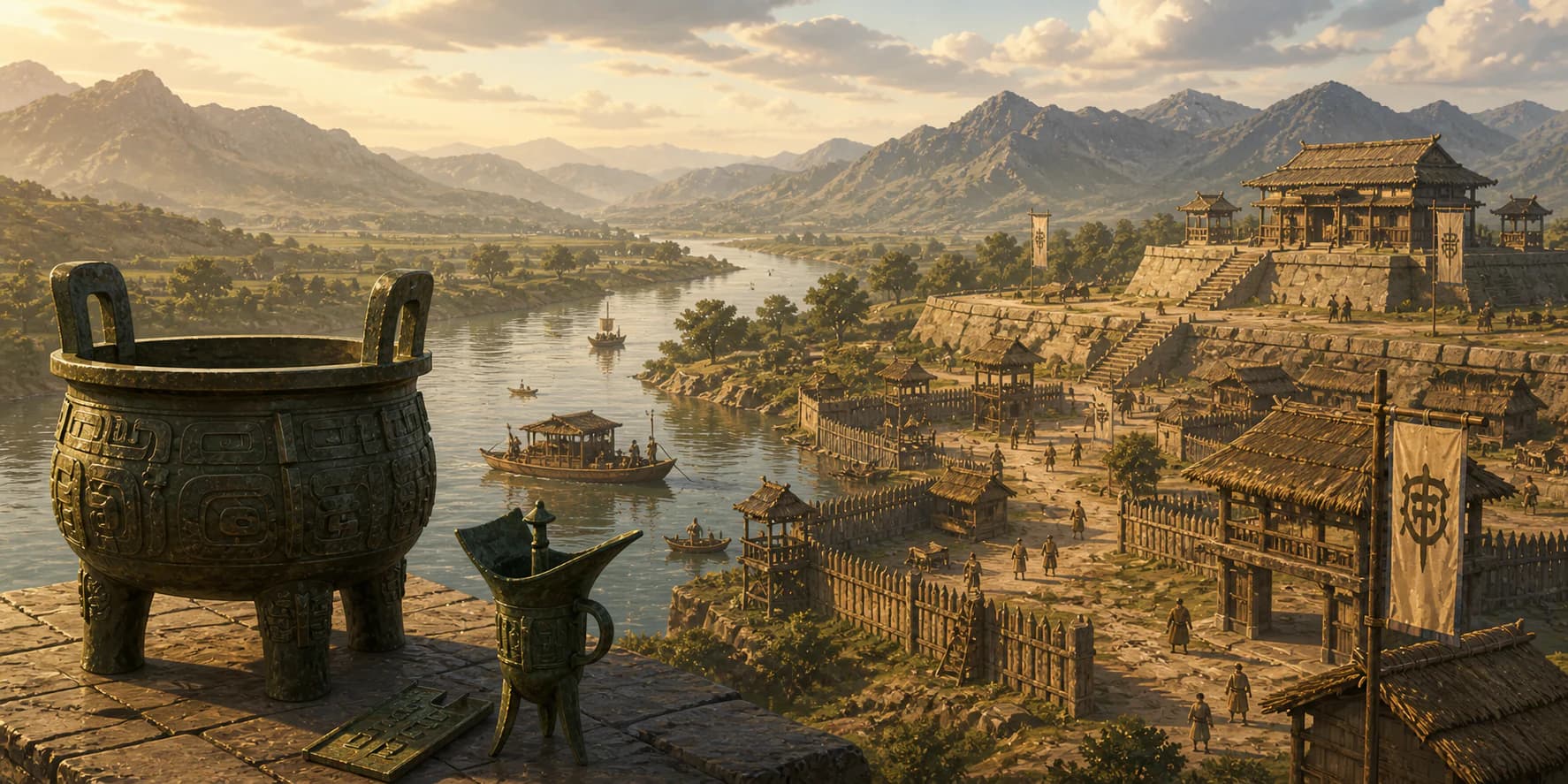
Confucius, known in Chinese as Kong Qiu or Kongzi, was born in 551 BC in the state of Lu, in what is now Shandong. Later traditions filled his early life with detail, but the secure outline is modest: he came from a family with claims to old status but limited wealth, and he grew up in a society where inherited hierarchy no longer guaranteed order. The Zhou royal house still carried ritual prestige, yet real power had shifted toward competing states, ambitious ministers, and military strongmen. That breakdown shaped his central question: how could humane and stable government be restored? Confucius did not imagine himself as inventing a new doctrine. He looked backward to the early Zhou as a moral and ritual model, then turned that memory into a demanding programme of education, character, and public duty.

-530s

Pursuit of Learning

Confucius treated learning as moral formation, not decoration. The traditions later associated with him included poetry, music, history, ritual practice, archery, charioteering, calligraphy, and numbers: disciplines meant to form a complete person capable of serving family and state. Whether he personally edited the classic texts later linked to his name is debated, and later Confucian tradition almost certainly enlarged his role. What matters historically is the intellectual posture. Confucius believed the present crisis came from failures of conduct: rulers did not rule as rulers, fathers did not act as fathers, sons did not act as sons, ministers did not serve rightly. Ritual, or li, was not empty ceremony. It trained people to inhabit relationships with respect, restraint, and awareness of others. Education made ethical order visible in daily behavior.

-520s

Becoming a Teacher

Confucius became famous above all as a teacher. Later tradition credited him with thousands of students, though the numbers are symbolic; the important fact is that he gathered disciples who preserved and developed his conversations. He accepted students beyond the highest aristocracy, insisting that eagerness to learn mattered more than pedigree. His teaching was dialogic, sharp, and personal. He did not offer a single abstract system in the style of a later textbook. Instead, the Analects presents him answering particular people in particular situations: sometimes gently, sometimes sternly, often with compressed force. He asked students to cultivate ren, usually translated as humaneness or benevolence, through loyalty, reciprocity, filial devotion, ritual seriousness, and self-command. The superior person, the junzi, was not merely well born. He was morally trained.

-500s

Government Service

Confucius wanted office because he believed ideas should govern. In Lu he held administrative posts, and later tradition describes him rising to significant responsibility, though the exact offices and chronology are difficult to verify. His political teaching was clear: law and punishment might restrain people, but moral example could transform them. A ruler who governed through virtue would attract loyalty as the north star attracts orientation. This was not naive softness. Confucius valued hierarchy, discipline, names, duties, and proper conduct. He thought disorder began when words lost connection to realities, a concern later summarized as the rectification of names. Yet the rulers of his age wanted military advantage, revenue, and survival. Confucius offered moral authority as strategy; many courts heard admirable language but saw limited immediate use.

-490s

Years of Travel

After leaving Lu, Confucius spent years traveling among states with a circle of disciples, searching for a ruler willing to put his principles into practice. These journeys are remembered as noble persistence, but they were also frustrating and sometimes dangerous. He encountered suspicion, hunger, political indifference, and the blunt fact that moral counsel rarely outweighed ambition. The late Spring and Autumn world was moving toward the harsher competition of the Warring States period. States that survived needed armies, administration, taxation, and discipline; Confucius insisted that legitimacy began with virtue and right relationship. His failures are part of his importance. He was not a successful minister whose policies remade a kingdom. He was a teacher whose lack of political success sharpened the contrast between how power behaved and how he believed it ought to behave.

-484

Return to Lu

Confucius returned to Lu in 484 BC and spent his final years teaching, studying, and transmitting tradition. Later accounts associate him with editing or preserving the Book of Songs, Book of Documents, rites, music, and the Spring and Autumn Annals. Modern scholars treat those claims carefully, because the formation of the classics was a long process and later schools had strong reasons to place Confucius at the center of it. Still, his followers clearly saw him as a guardian of cultural memory. He taught that the past was not a museum but a discipline: by studying exemplary rulers, poems, rites, and historical judgments, people could learn how to act in the present. His final years therefore turned disappointment into transmission. What courts had refused, students could carry forward.

-480s

Core Philosophy

The core of Confucius’s thought is relational. Human beings become fully human through family, ritual, learning, speech, service, and responsibility to others. Filial piety, or xiao, trained respect and gratitude within the family; loyalty and trust extended that discipline into public life. Ren gave the moral heart of humane conduct, while li shaped that heart into visible practice. Confucius did not reject hierarchy, and modern readers sometimes struggle with the obedience his tradition could support. Yet his hierarchy was supposed to be reciprocal: rulers owed care, fathers owed moral example, elders owed responsibility, and authority without virtue was a failure of the role itself. He also made education central to ethical life. To know what is right was not enough. One had to practice until conduct, judgment, and feeling moved together.

-480s

Final Years

Confucius died in 479 BC, apparently aware that his political hopes had not been fulfilled. Later tradition gives his final years a tone of sorrow: beloved disciples died, rulers ignored him, and the world did not return to the order he revered. Yet the shape of his influence was already changing. His students remembered sayings, arguments, gestures, and judgments. Over generations, those memories were compiled into the Analects, a text that is not a biography in the modern sense but a portrait of a mind in conversation. That matters for how he should be read. Confucius did not leave a finished philosophical treatise. He left a model of inquiry, conduct, and teaching that invited later thinkers to interpret, systematize, challenge, and expand him.

After -479

Enduring Influence

Confucius became more powerful after death than he had ever been in life. Mencius developed the tradition in a more optimistic direction, Xunzi in a more disciplined and ritual-centered one, and later imperial states made Confucian learning central to education, bureaucracy, and elite identity. Under the Han dynasty, Confucianism gained official prestige; in later centuries, civil service examinations turned mastery of classical texts into a route to office. The tradition spread across Korea, Japan, Vietnam, and the wider Sinosphere, shaping family ethics, schooling, political language, ancestor reverence, and ideas of cultivated leadership. It was also criticized: Legalists rejected its trust in virtue, Daoists mocked its social busyness, modern revolutionaries attacked its hierarchies, and contemporary readers debate its gender and authority assumptions. Confucius remains important because his question has never gone away: can a society be ordered by moral self-cultivation rather than fear alone?

Continue in context

Connected stories

Move from the profile into the wider events and settings this figure belongs to.

Tertiary paths

Content note

This profile is written for educational use and connects to related Stories of History pages. The main portrait is an AI-assisted historical reconstruction, included as an illustrative aid rather than documentary evidence. Image policy

References

Sources & Further Reading

Reliable reference works, archives and reading paths connected to this profile.

Further reading

  1. Encyclopaedia Britannica, Search results for Confucius,” accessed June 2026.Open source
  2. WorldCat, Books and library holdings for Confucius,” accessed June 2026.Open source

Primary sources

  1. Library of Congress, Search results for Confucius,” accessed June 2026.Open source

Reviewed claim sources

Loading reviewed claim sources...

A weekly route through history

Find out first about the latest published stories, feature notes and occasional Premium offers in one weekly email.