People

King Wu

King Wu of Zhou, born Ji Fa, was the Zhou ruler who overthrew the Shang dynasty around 1046 BC. His victory over Di Xin at the Battle of Muye founded the Zhou dynasty and helped launch the political tradition later expressed through the Mandate of Heaven.

Died
1043 BCE
Role
Founder of the Zhou dynasty

Founder of the Zhou dynasty (died c. 1043 BC)

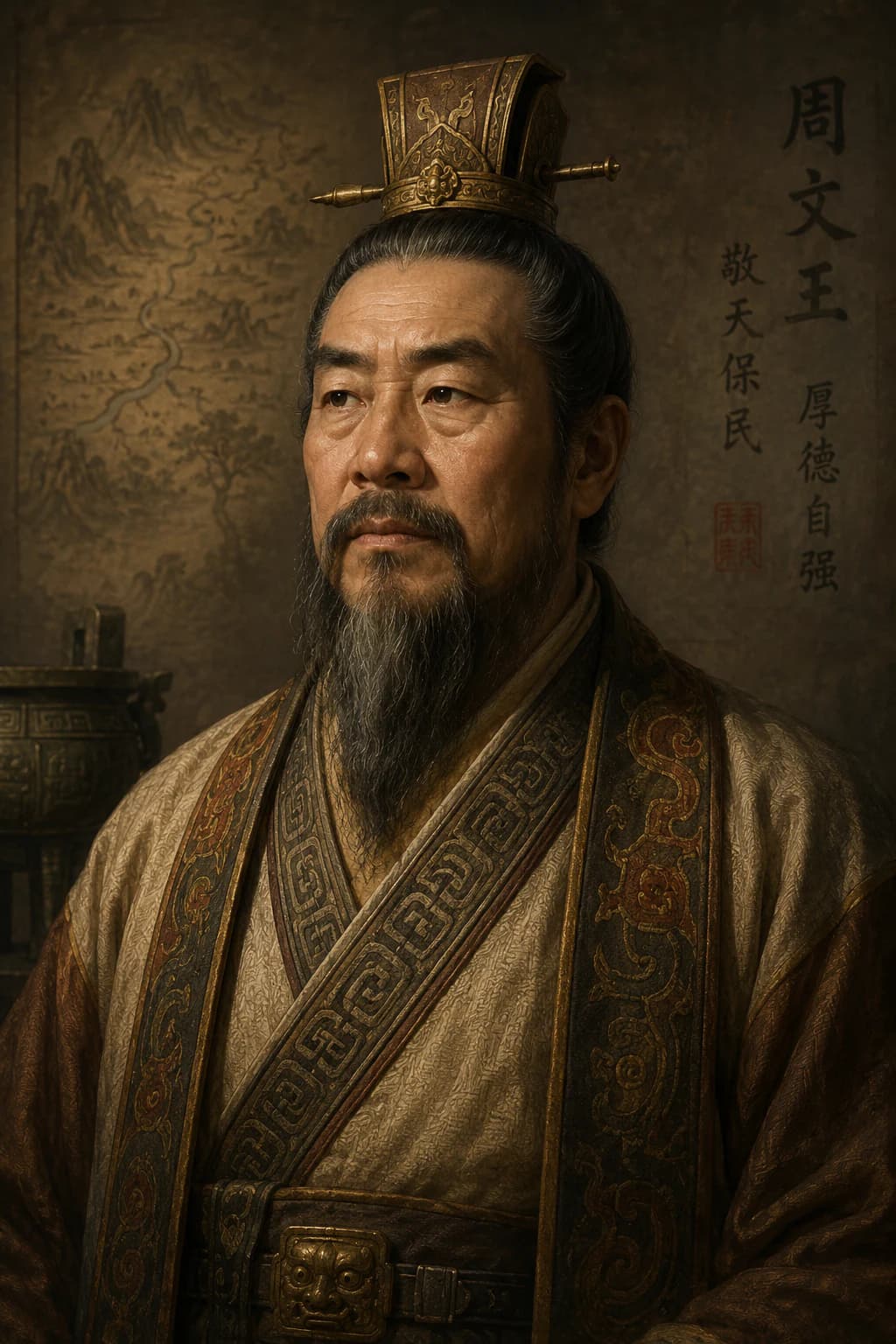
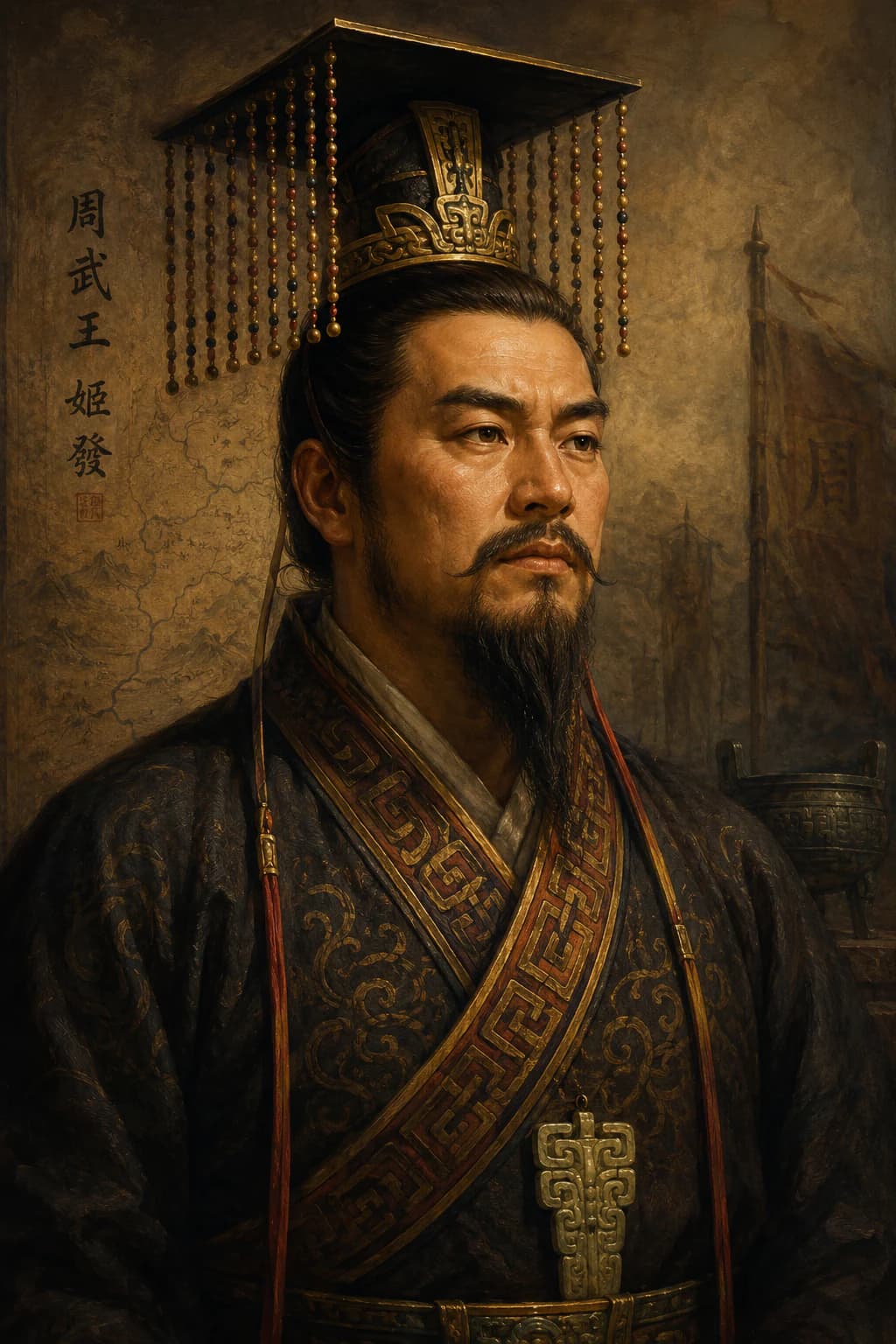
AI-generated portrait of King Wu of Zhou in early Chinese royal attire
AI-assisted historical reconstruction

An illustrative reconstruction based on historical context. It is not a photograph or documentary likeness. Image policy

Quick answer

King Wu of Zhou, born Ji Fa, was the Zhou ruler who overthrew the Shang dynasty around 1046 BC. His victory over Di Xin at the Battle of Muye founded the Zhou dynasty and helped launch the political tradition later expressed through the Mandate of Heaven.

Died
1043 BCE
Role
Founder of the Zhou dynasty
Years
Died 1043 BCE
Quick facts

Profile details

Additional identity and tagging details that are not already covered in the introduction.

Full name
King Wu of Zhou
Also known as
Ji Fa, Wu Wang
Facts

King Wu timeline facts

Selected specifics from this profile's life story.

c. 11th century BC
Heir of Zhou ambition

King Wu was born Ji Fa, son of King Wen of Zhou, into a western power that had grown strong under Shang overlordship.

c. 1046 BC
Battle of Muye

King Wu defeated Di Xin's Shang forces at the Battle of Muye, a victory traditionally dated to 1046 BC.

c. 1043 BC
A short reign

King Wu died only a few years after the conquest, leaving the young King Cheng and the Duke of Zhou to secure the new dynasty.

After c. 1043 BC
Legacy of conquest

King Wu is remembered as the founder of the Zhou dynasty and one of the central figures in China's early political tradition.

Life Journey

The conqueror who turned rebellion into a dynasty

Follow the story in a more continuous narrative, with a reading mode that matches how much depth you want.

Complete chronology

c. 11th century BC

Heir of Zhou ambition

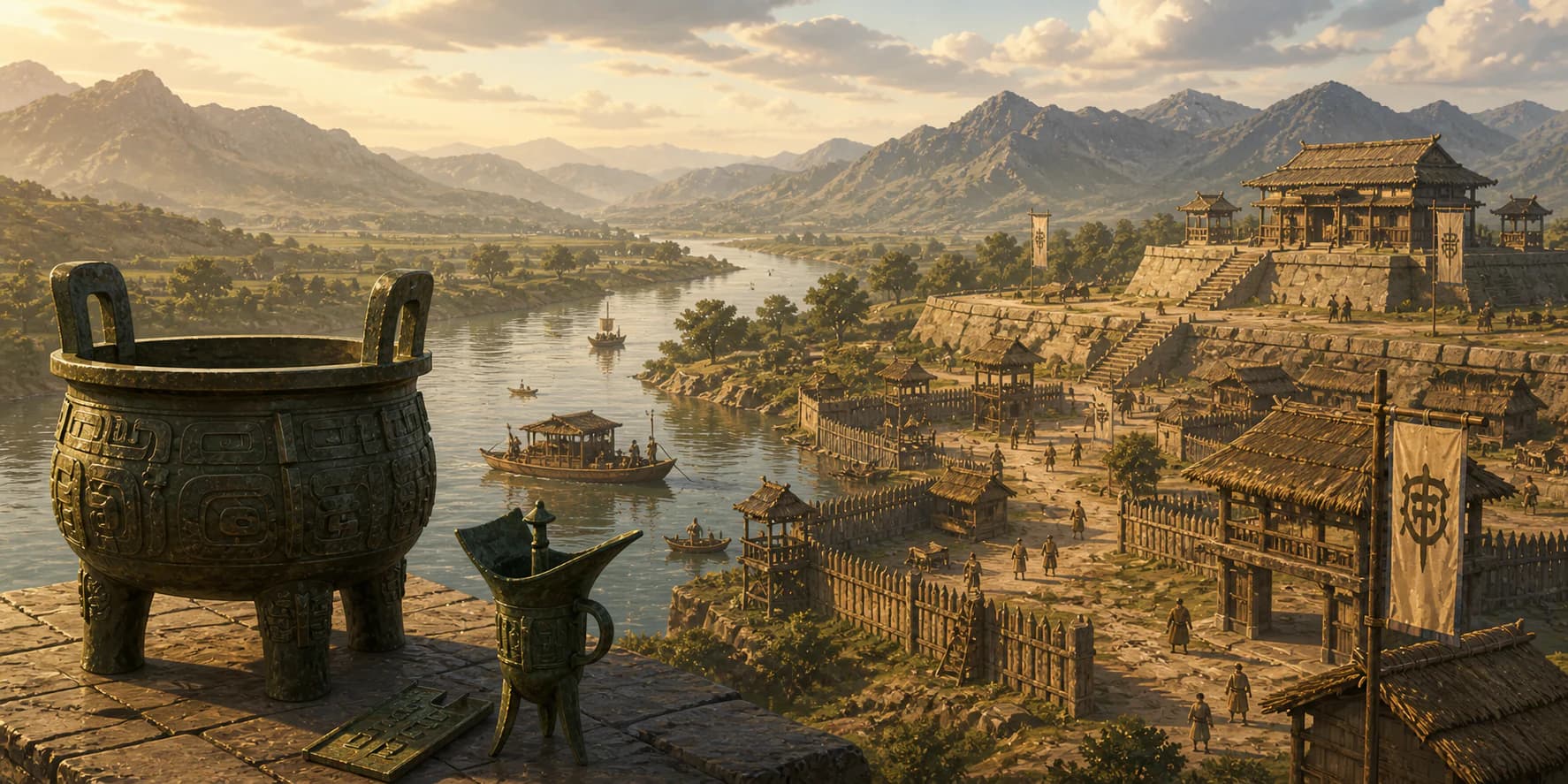
Ji Fa inherited more than a family title. He inherited a political project. The Zhou were a western polity based in the Wei River region, powerful enough to matter to the Shang kings but not yet rulers of the Chinese world. His father, later remembered as King Wen, had expanded Zhou influence, built alliances and cultivated a reputation for moral authority. By the time Ji Fa rose to leadership, Zhou power had become a serious alternative to Shang rule. The traditional sources present this transition in moral language: Zhou virtue rising against Shang corruption. Historians treat that language carefully, because it was shaped by later Zhou and Confucian memory. Even so, the underlying political fact is clear. Ji Fa came to power at the moment when Zhou strength could be converted from regional authority into dynastic challenge.
c. 1046 BC

Battle of Muye

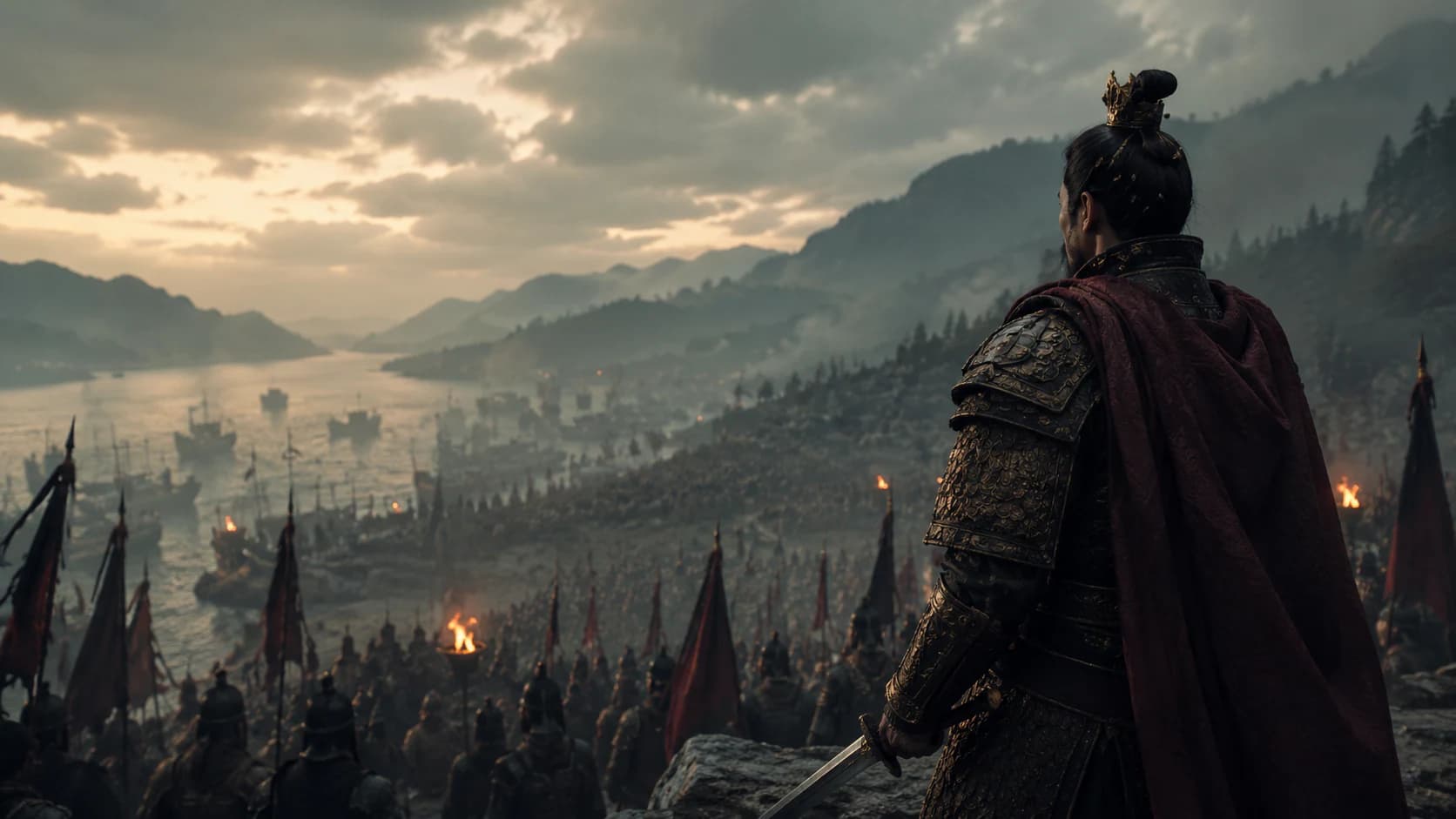
The Battle of Muye became one of the defining turning points of early Chinese history. Traditional accounts describe Shang morale collapsing and troops turning against Di Xin, while Zhou forces under King Wu pressed the attack. Exact details are difficult to recover, and later writers shaped the story to dramatise moral judgement. The result, however, is not in doubt: the Zhou defeated the Shang, Di Xin died, and the political centre of gravity shifted from the late Shang royal house to the Zhou victors. The battle mattered because it was not simply a change of rulers. It allowed the Zhou to present dynastic replacement as a legitimate response to failed kingship. That idea would echo through every later Chinese dynasty that explained conquest as restoration.

c. 1046 BC

Founding Zhou rule

Conquest created a harder problem than battle: government. King Wu could not simply erase the Shang world. The defeated dynasty still possessed ritual traditions, skilled lineages, local loyalties and a powerful ancestral identity. Early Zhou settlement therefore combined punishment, accommodation and supervision. Traditional accounts describe arrangements made for Shang survivors, including the use of royal relatives and trusted Zhou kin to watch over former Shang lands. The immediate post-conquest order was fragile, as later rebellion among Shang-linked groups would show. King Wu's reign was short, so much of the institutional consolidation fell to his successors and the Duke of Zhou. Yet the founding moment was his. He transformed Zhou from a rising western power into the ruling dynasty of the central plains.

c. 1043 BC

A short reign

The founder of Zhou rule did not live long enough to complete the state he created. King Wu died within a few years of the conquest, traditionally around 1043 BC. His son, King Cheng, was young, and the Duke of Zhou emerged as regent and defender of the new order. This made King Wu's legacy vulnerable. A short reign can leave a conquest exposed to succession conflict, regional resistance and doubts about legitimacy. The Zhou survived because its leadership managed the transition, suppressed rebellion and built institutions capable of outlasting the founder's personal authority. King Wu therefore stands at the dramatic centre of the story, but not alone. His achievement depended on King Wen before him and the Duke of Zhou after him.

After c. 1043 BC

Legacy of conquest

King Wu's legacy is immense because the Zhou dynasty lasted, in changing form, for centuries after his death. Western Zhou kings built a ritual and political order based on kinship grants, bronze inscriptions, regional lords and royal ceremony. Eastern Zhou weakness later gave way to interstate competition and classical philosophy, but the memory of the early Zhou remained a moral standard. Confucius and later thinkers looked back to King Wen, King Wu and the Duke of Zhou as models of humane and legitimate rule. Modern historians are more cautious than the tradition. They see propaganda, conquest and power politics alongside moral language. Yet that combination is precisely why King Wu is important. He stands where warfare, legitimacy, dynastic memory and political philosophy meet.

Continue in context

Connected stories

Move from the profile into the wider events and settings this figure belongs to.

Tertiary paths

Content note

This profile is written for educational use and connects to related Stories of History pages. The main portrait is an AI-assisted historical reconstruction, included as an illustrative aid rather than documentary evidence. Image policy

References

Sources & Further Reading

Reliable reference works, archives and reading paths connected to this profile.

Further reading

  1. Encyclopaedia Britannica, Search results for King Wu,” accessed June 2026.Open source
  2. WorldCat, Books and library holdings for King Wu,” accessed June 2026.Open source

Primary sources

  1. Library of Congress, Search results for King Wu,” accessed June 2026.Open source

Reviewed claim sources

Loading reviewed claim sources...

A weekly route through history

Find out first about the latest published stories, feature notes and occasional Premium offers in one weekly email.