Early Christians gathering across the Roman world as imperial cities, churches and manuscripts mark the spread of the faith.
Free Story

The Rise of Christianity

Follow Christianity from Jesus, Paul and persecution to Constantine, Nicaea, medieval Europe and the Great Schism.

10 chapters

Next
Context

Introduction

What you'll learn: You will follow how Christianity moved from preaching and persecution into imperial recognition, doctrinal councils, medieval missions and a legacy that shaped Western civilisation long before the modern world emerged.

Key forces

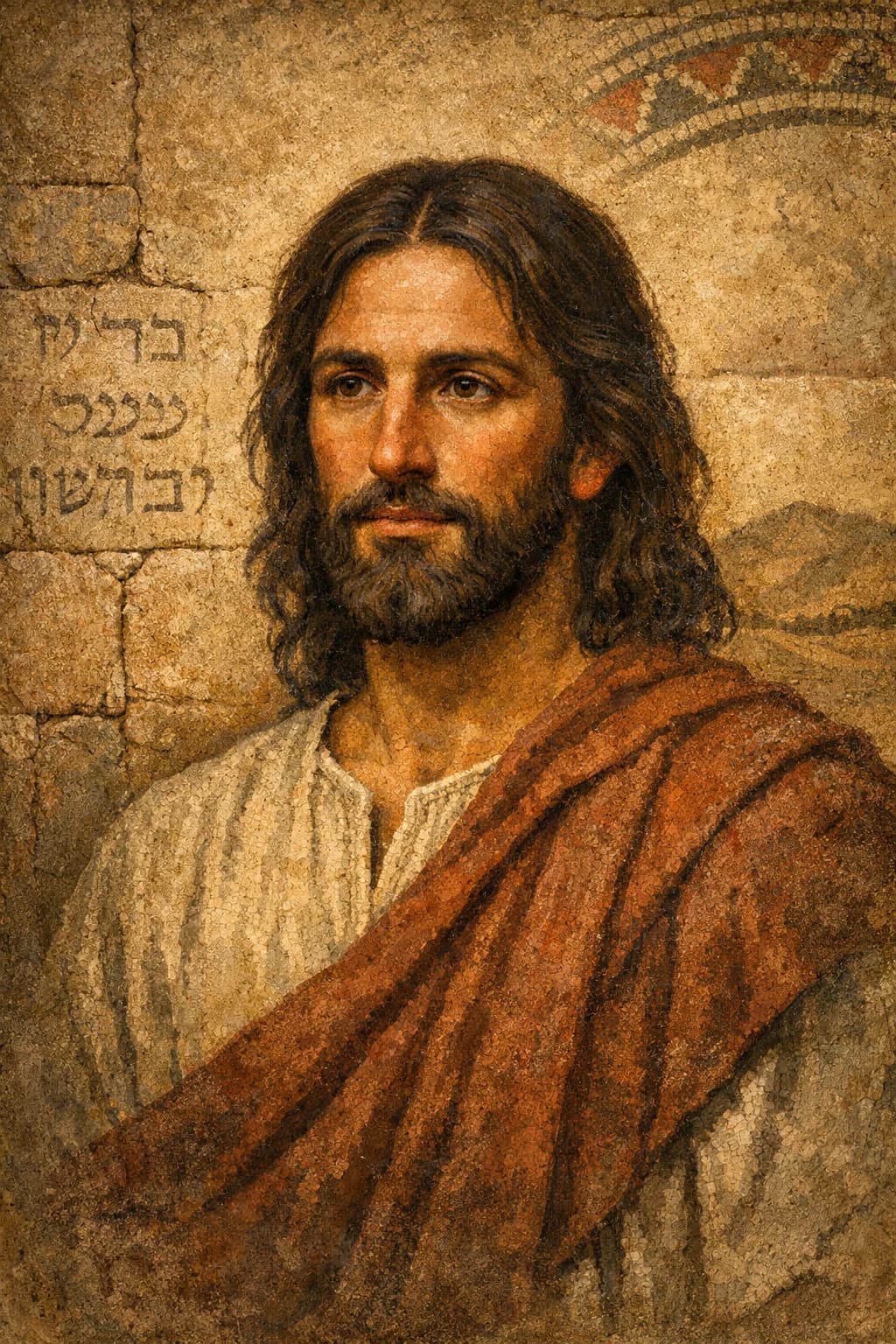
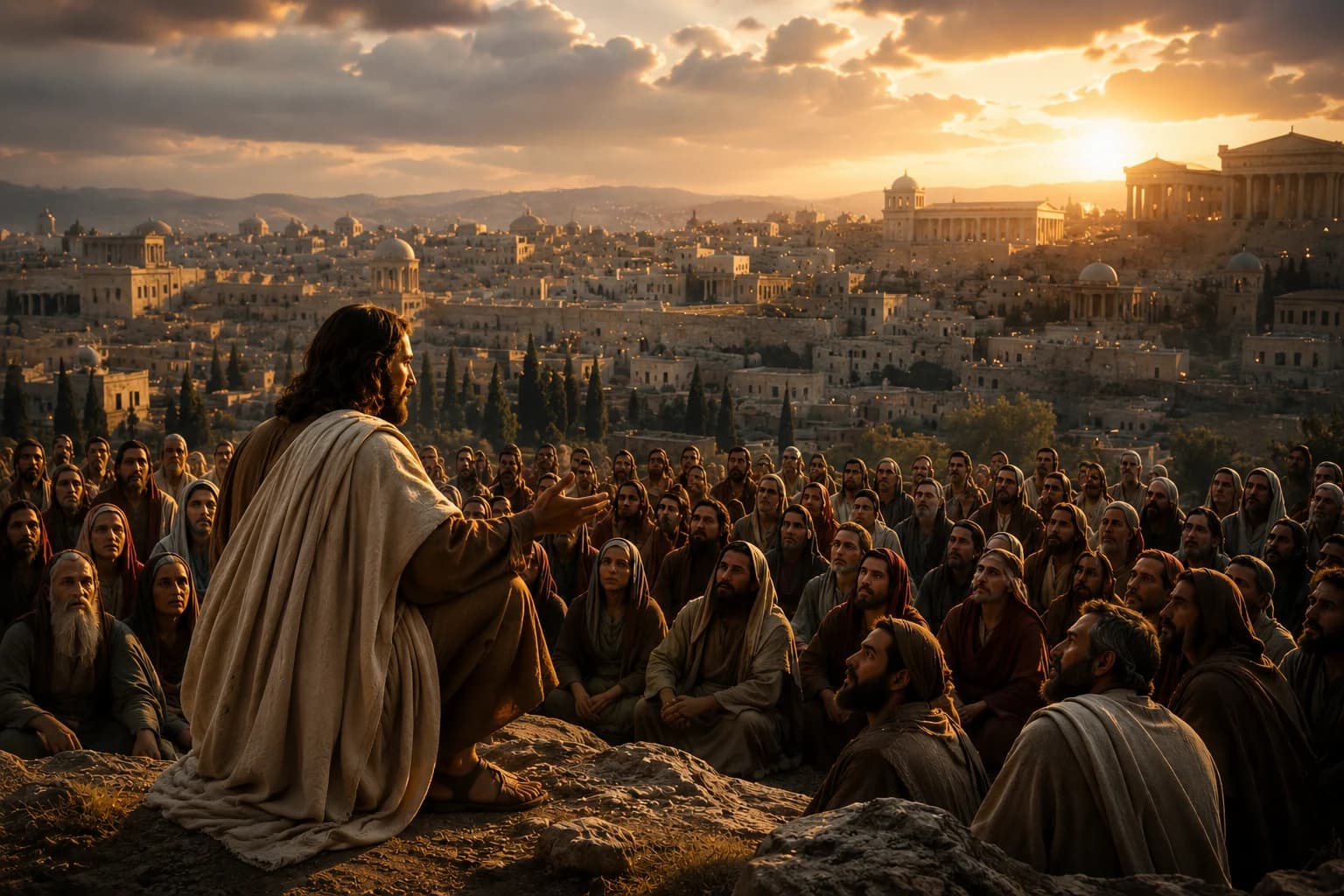
Jesus teaching followers in Roman Judea during his public ministry.
30 CE
Step 1 of 1030 CEAccessible mode

The Ministry of Jesus

Around 30 CE, Jesus of Nazareth preached across and , calling people to repentance, mercy and trust in the coming kingdom of God.

Jesus lived in a Jewish world under Roman rule. His message drew on Israel's scriptures, prophetic expectation and the hope that God would act decisively in history.

He taught through parables, healed the sick according to the Gospel traditions, gathered disciples and welcomed people who were often pushed to the edges of respectable society.

Jesus' message was simple enough to be heard in villages and radical enough to unsettle the powerful.

The core themes that attracted followers were forgiveness, a new kind of righteousness, care for the poor, love of neighbour and the claim that God's reign was near.

Jesus did not build an empire or write a book. He formed a community of followers around a message. That community became the seed of the Christian movement.

The crucifixion of Jesus and the early Christian belief in his resurrection.
33 CE
Step 2 of 1033 CEAccessible mode

The Crucifixion and Resurrection Faith

Jesus was crucified in under the Roman governor Pontius Pilate. For his followers, that execution became the beginning of a new proclamation.

Crucifixion was a Roman punishment designed to shame and terrify. It marked Jesus as defeated in the eyes of imperial power.

But the first Christians came to believe that God had raised Jesus from the dead. That belief transformed grief into mission.

The earliest Christian message was not simply that Jesus had taught. It was that the crucified Jesus had been raised.

The resurrection faith gave meaning to the cross. Jesus' death was understood as sacrifice, victory and the fulfilment of God's plan.

This message united the earliest Christian communities. They gathered to pray, break bread, baptise new believers and proclaim Jesus as Messiah and Lord.

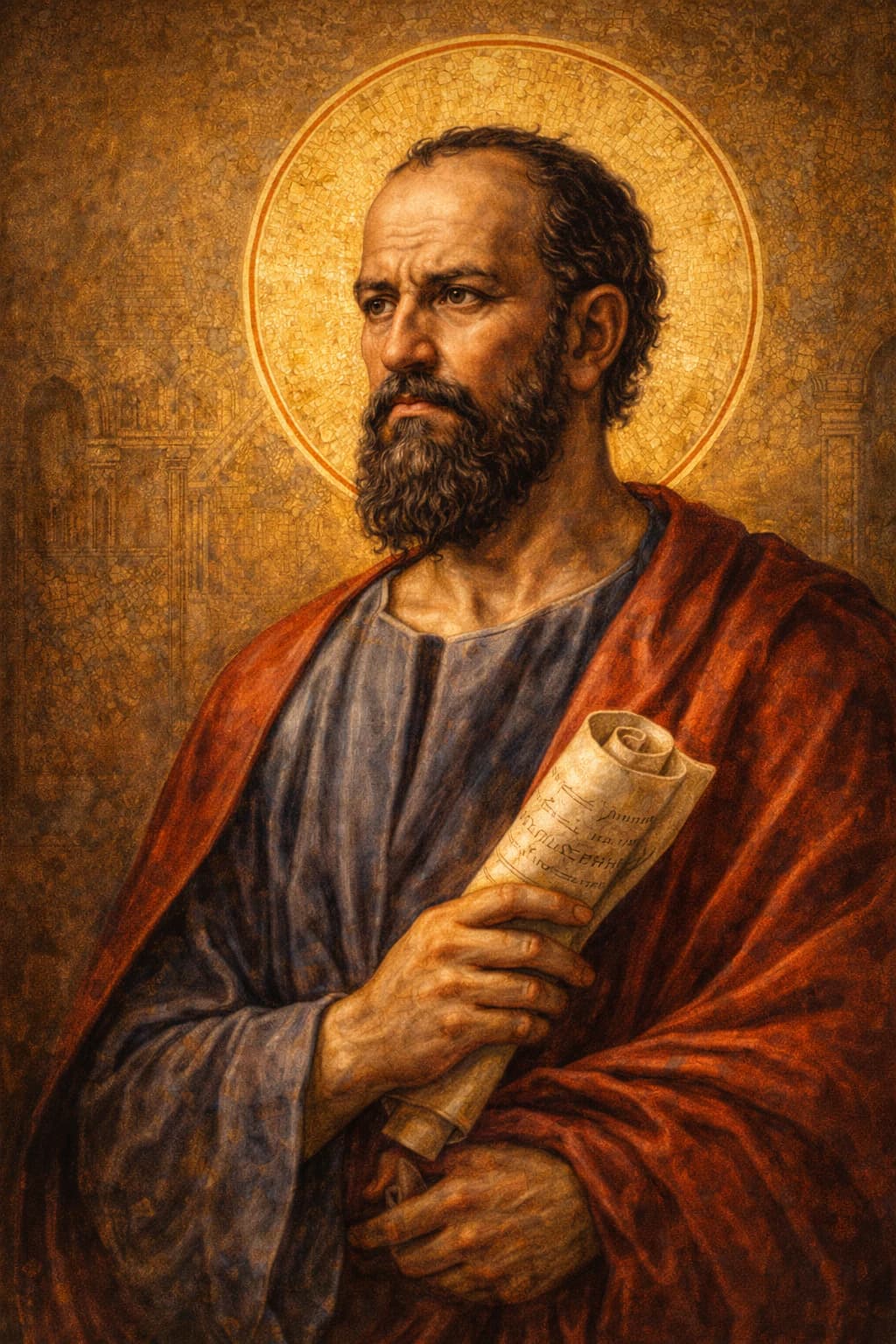
Paul carrying the Christian message through the cities and routes of the Roman world.
49 CE
Step 3 of 1049 CEAccessible mode

Paul's Mission to the Gentiles

By the middle of the first century, Paul was carrying the Christian message beyond Jewish communities and into the wider Roman world.

Paul believed that Jesus' death and resurrection opened God's promise to Gentiles as well as Jews. This raised a difficult question: did Gentile believers need to follow the full Jewish law?

Around 49 CE, Christian leaders in agreed that Gentile converts did not need circumcision. That decision changed the movement's future.

Paul did not make Christianity less Jewish by accident. He argued that the God of Israel was now calling the nations in.

Paul travelled through cities such as , , and . He founded communities, wrote letters and taught believers how to live together.

Christianity became portable across language, city networks and social boundaries. It was no longer only a movement within . It was becoming a Roman-world religion.

Early Christians facing persecution and public hostility under Roman authority.
64 CE
Step 4 of 1064 CEAccessible mode

Persecution Under Rome

In 64 CE, after a great fire devastated , Emperor Nero blamed Christians and launched the first major imperial persecution.

Christians were still a small and unusual movement. They refused to worship the traditional gods and gathered in communities that outsiders often misunderstood.

Nero's persecution was local to , but it set a pattern. Christians could be treated as suspicious because their loyalty to Christ seemed to challenge the religious life of the empire.

Persecution did not erase Christian identity. It sharpened it.

Martyrs became examples of courage. Their deaths were remembered as witness, a testimony stronger than fear.

Hostility forced Christian communities to organise, support one another and explain why they refused the rituals that held Roman public life together.

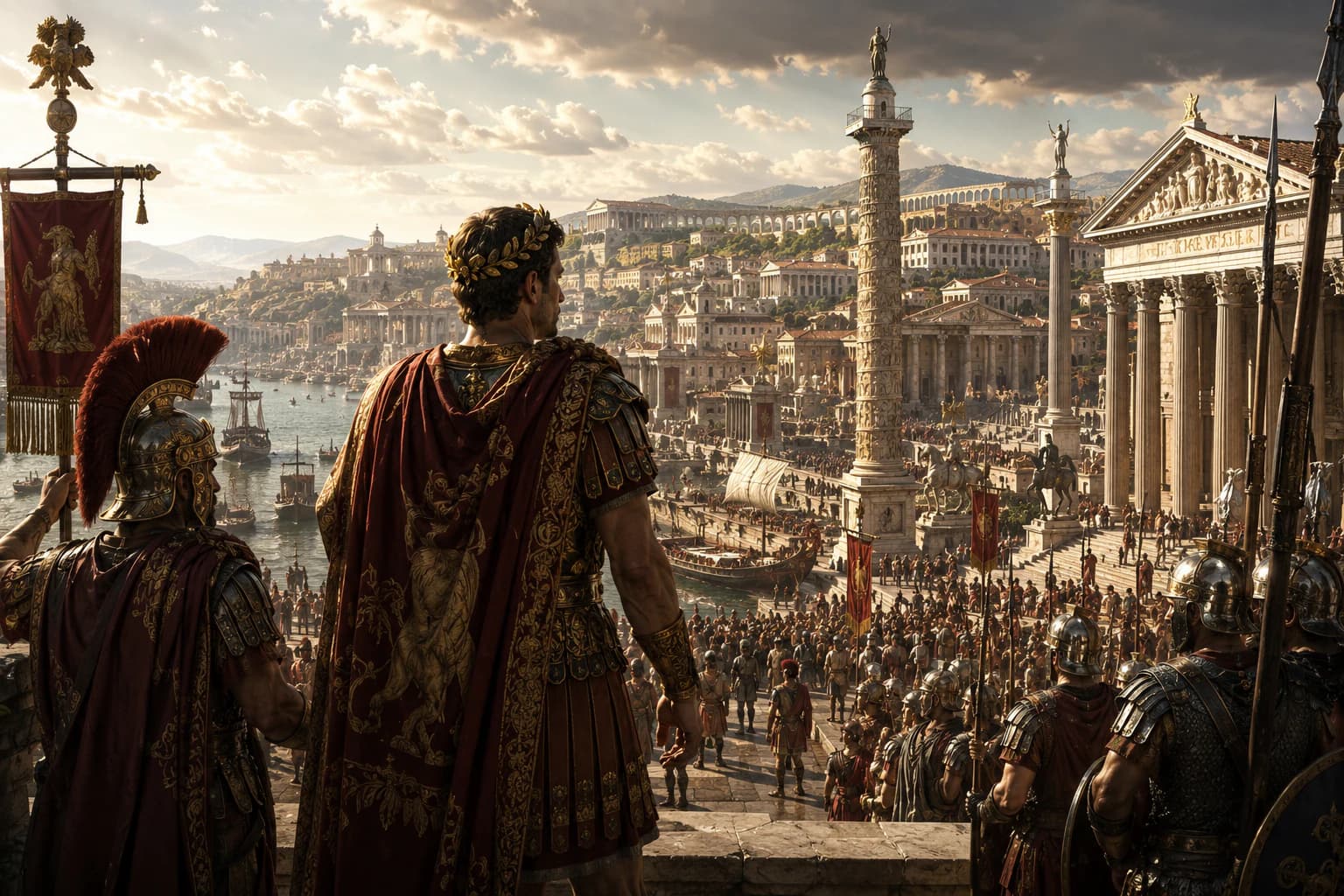
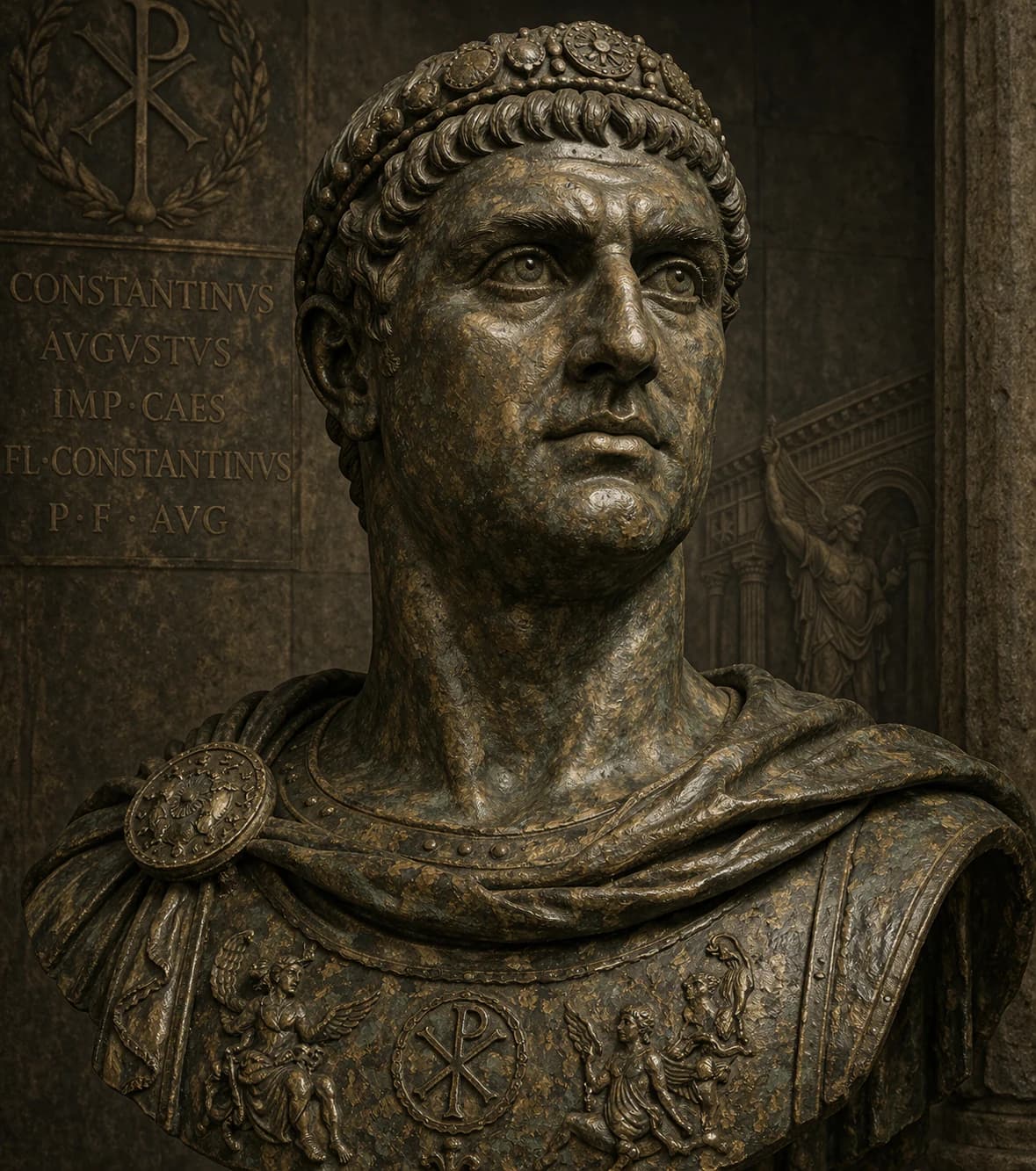
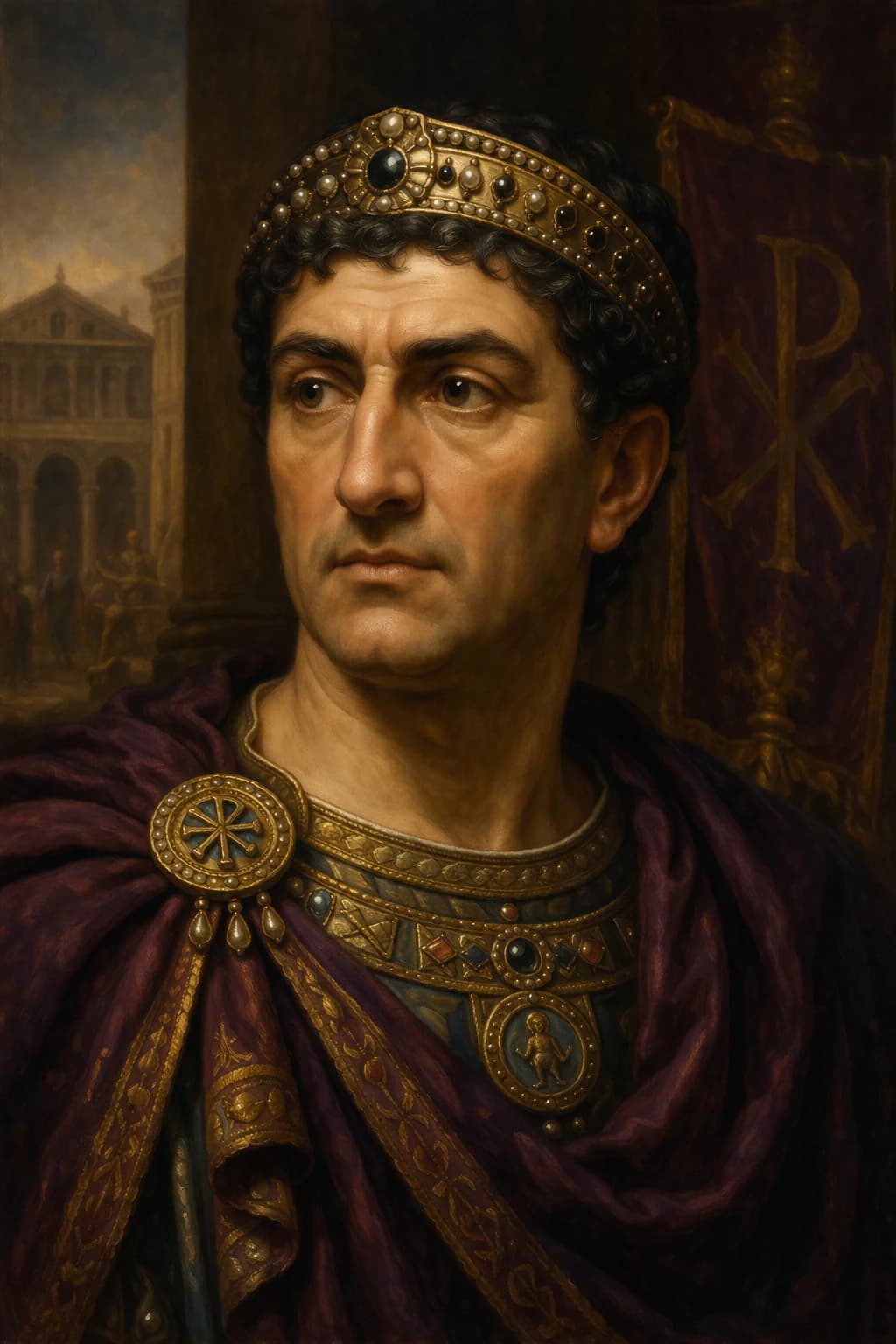
Constantine granting legal recognition and patronage to Christianity in the Roman Empire.
313 CE
Step 5 of 10313 CEAccessible mode

Constantine Embraces Christianity

In 313, Constantine and Licinius issued the Edict of Milan, granting legal toleration to Christianity across the Roman Empire.

This did not make Christianity the official religion at once. But it ended the legal insecurity that had shaped Christian life for generations.

Confiscated church property was restored. Christians gained new freedom to worship, organise and build public churches.

Constantine did not invent the church. He changed its public position.

The emperor supported bishops, funded churches and treated Christian unity as a matter of imperial concern.

Christianity moved from the margins of Roman law toward the centre of imperial life. The church became an institution rulers could not ignore.

Bishops gathered at the Council of Nicaea to define orthodox Christian belief.
325 CE
Step 6 of 10325 CEAccessible mode

The Council of Nicaea

In 325, Constantine called bishops to to resolve a major dispute about the identity of Christ.

The controversy centred on Arius, a priest from Alexandria, who taught that the Son was not eternal in the same way as God the Father.

The council rejected that view and affirmed that the Son was of the same divine substance as the Father.

showed that Christian doctrine had become a public matter for empire.

The Nicene Creed gave the church a shared language for orthodox belief, even though later councils would refine and expand it.

The council also revealed the growing relationship between church and empire. Emperors now cared about theology because religious unity seemed tied to political unity.

Christianity becoming the official religion of the Roman Empire under Theodosius I.
380 CE
Step 7 of 10380 CEAccessible mode

Christianity Becomes the Imperial Faith

In 380, Emperor Theodosius I made Nicene Christianity the official religion of the Roman Empire.

The Edict of required imperial subjects to follow the faith associated with the bishops of and Alexandria.

This marked a major shift. Christianity was no longer simply tolerated or favoured. It was becoming the empire's authorised religion.

The persecuted church had become the religion of imperial power.

State support for traditional pagan worship declined. Temples lost protection, sacrifices were restricted and Christian bishops gained public influence.

The result was a new social order in which Christian belief, imperial law and public identity became increasingly linked.

Missionaries, kings and monasteries spreading Christianity across medieval Europe.
597 CE
Step 8 of 10597 CEAccessible mode

Converting Medieval Europe

In 597, Augustine arrived in Kent on a mission from Pope Gregory I. His task was to convert the Anglo-Saxons.

Augustine's mission showed how Christianity expanded in medieval Europe: through kings, monasteries, bishops and patient adaptation.

When King Ethelbert of Kent converted, Christianity gained a political foothold. became a centre of English Christianity linked to .

Conversion changed more than belief. It changed law, kingship, learning and culture.

Similar processes unfolded across Europe. Missionaries worked among Germanic, Slavic and Scandinavian peoples, often with the support of rulers.

Christian conversion helped kingdoms connect to Latin learning, church administration and wider diplomatic networks. Faith became part of political authority.

Rome and Constantinople divided by the Great Schism between Catholic and Orthodox Christianity.
1054 CE
Step 9 of 101054 CEAccessible mode

The Great Schism

In 1054, the Western Catholic and Eastern Orthodox churches formally split, creating one of the most important divisions in Christian history.

The split had been building for centuries. East and west used different languages, followed different customs and lived under different political worlds.

Disputes over papal authority and the wording of the creed deepened mistrust between and .

The Great Schism formalised a division that had been growing long before 1054.

The mutual excommunications of 1054 did not instantly change every Christian's life, but they became the symbol of permanent separation.

The Christian world was now divided between Latin Catholic west and Greek Orthodox east, shaping politics, culture and identity for centuries.

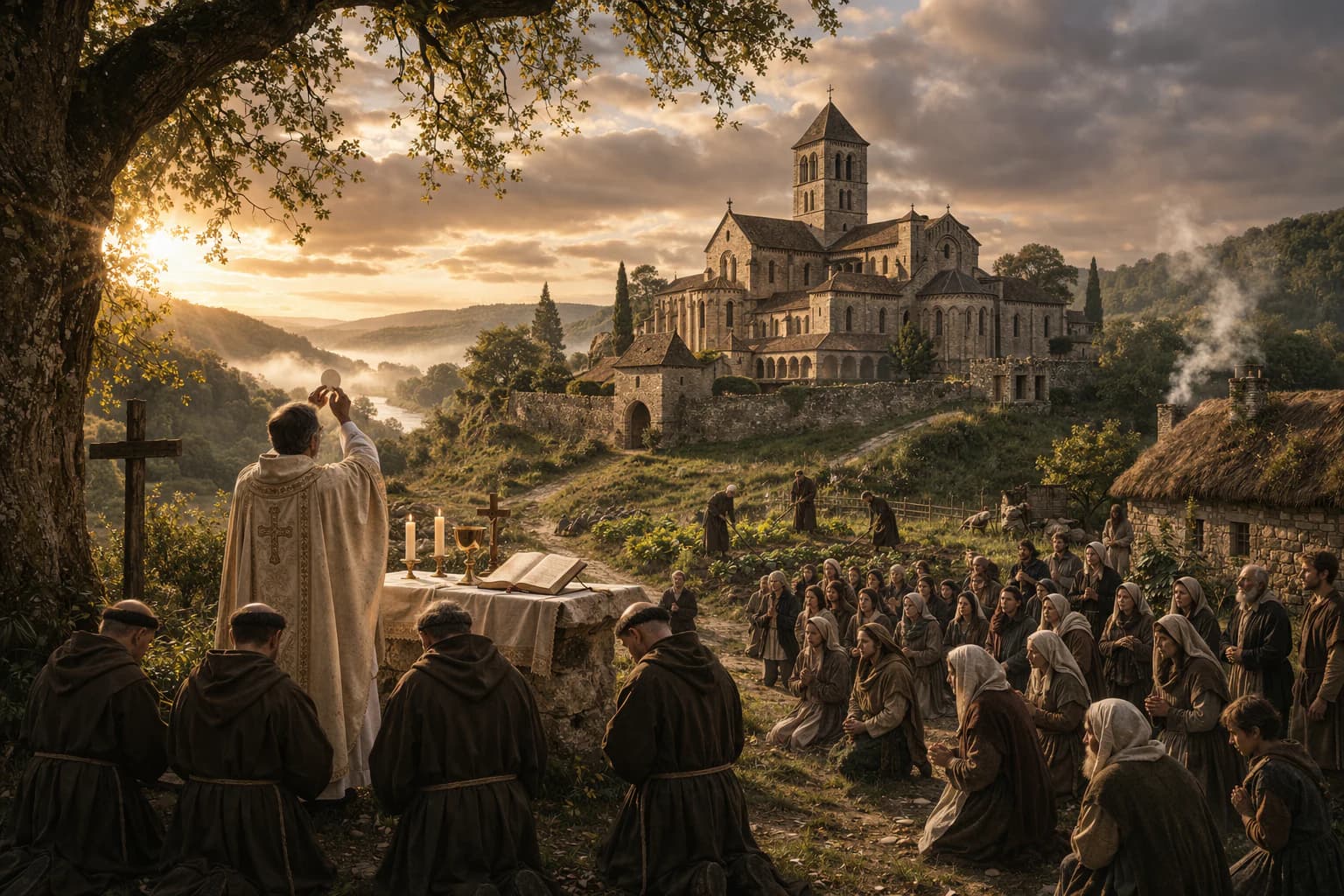
Christianity shaping medieval Western law, learning, art, philosophy and social institutions.
1500 CE
Step 10 of 101500 CEAccessible mode

Christianity Shapes Western Civilisation

By 1500, Christianity had shaped Western civilisation at almost every level: law, learning, art, politics and social life.

The church preserved texts, ran schools, founded universities and gave medieval Europe a shared intellectual language.

Christian ideas influenced law, marriage, charity, hospitals, poor relief and the moral duties of rulers.

Christianity became more than a faith people practised. It became part of the structure through which Europe understood itself.

Its influence was not always gentle. Church power could be coercive, exclusionary and deeply entangled with politics.

Even so, Christianity's legacy became foundational to Western civilisation. It shaped institutions, values and arguments that continued long after the medieval period ended.

Continue reading

Finished The Rise of Christianity?

Choose the next story, explore the people behind this one, or trace the line of power that shaped this world.

Browse stories

References

Sources & Further Reading

Reliable sources, primary-source collections and reading paths connected to this page.

A weekly route through history

Find out first about the latest published stories, feature notes and occasional Premium offers in one weekly email.