Complete chronology
Full overview and deeper context for every journey step.
c. 5 CE
Origins in Tarsus
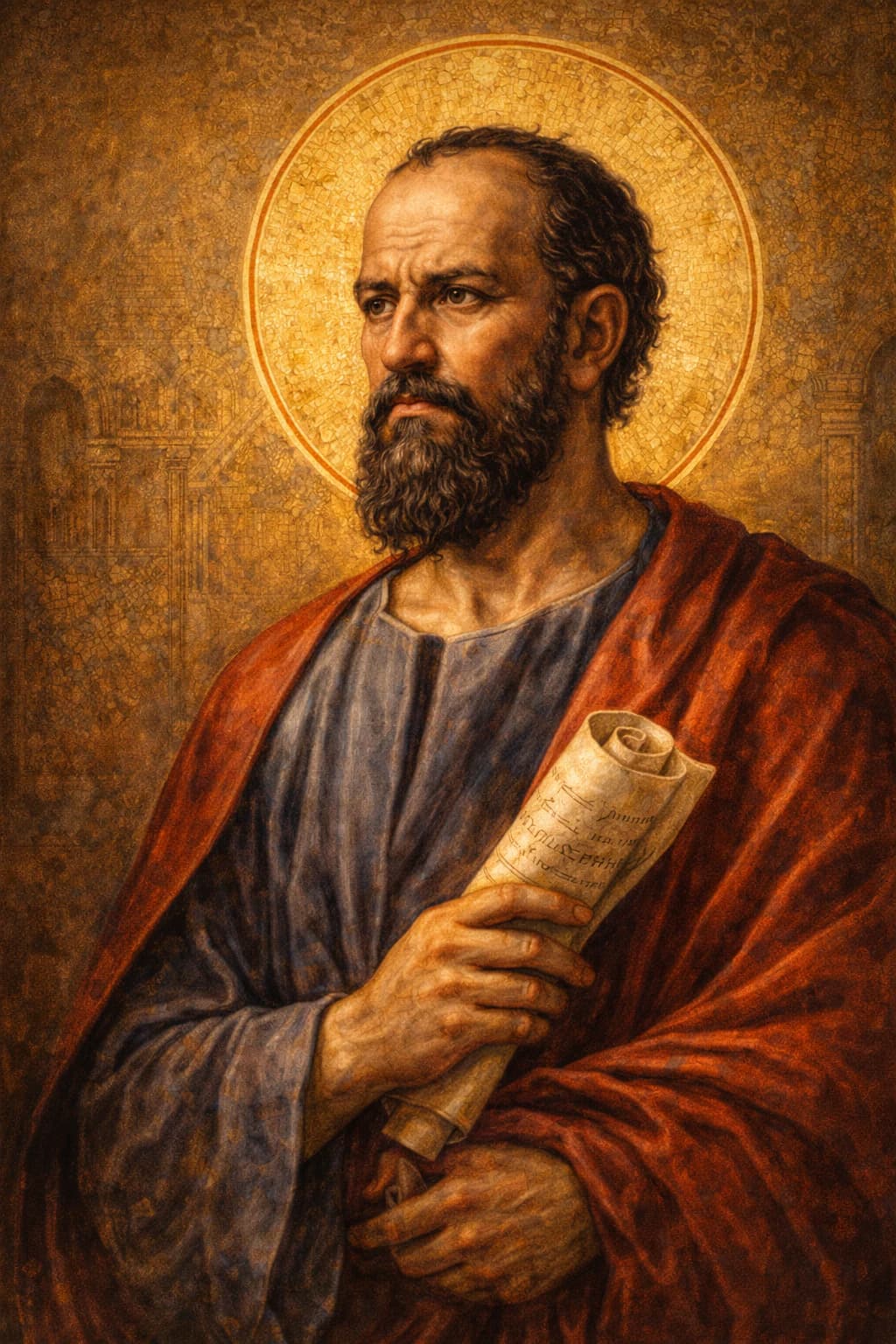
Paul's origins placed him at several crossroads at once. He was born in Tarsus in Cilicia, a city known for learning and commerce, and he belonged to the Jewish diaspora rather than to rural Galilee or Jerusalem alone. According to Acts, he also possessed Roman citizenship, a legal status that later protected him during arrests and appeals. Paul could think in Jewish scripture, argue in Greek and travel through Roman urban networks. This background helps explain his later effectiveness. He did not invent Christianity, but he became the person most able to translate the meaning of Jesus' death and resurrection across cultural boundaries, especially for non-Jews drawn to the movement.
A background that bridges cultures can become a powerful tool for spreading new ideas.
early 20s CE
Strict Religious Training
Paul described himself as a Pharisee and as zealous for the traditions of his ancestors. Acts places him at the feet of Gamaliel in Jerusalem, though historians debate how much detail can be reconstructed. What is clear from Paul's own letters is that he knew Jewish scripture deeply and argued from it constantly. His later theology did not abandon Israel's scriptures; it reread them through the claim that Jesus was Messiah and Lord. Before that transformation, however, Paul saw the Jesus movement as a dangerous distortion. A crucified Messiah seemed scandalous, and a movement gathering followers around him threatened the boundaries of covenant identity. Paul's opposition came from conviction, not casual hostility.
Deep conviction can drive both resistance to change and openness to transformation.
early 30s CE
Persecution of Christians
Paul's own letters are blunt about his past: he persecuted the church of God and tried to destroy it. Acts connects him with the death of Stephen and with authority to pursue believers toward Damascus. The details of jurisdiction are debated, but the basic fact of persecution is secure because Paul himself had no reason to invent a shameful past. This matters for understanding his later message of grace. Paul did not present himself as a naturally wise founder. He saw himself as someone interrupted by mercy while in the wrong. The energy he once used to suppress the movement became, after conversion, the same relentless force he used to spread it.
The strongest opponents of an idea sometimes understand it more deeply than its casual supporters.
c. 34 CE
Transforming Vision
Paul's conversion, usually dated to the 30s CE, is one of the most consequential turning points in religious history. Acts tells it dramatically as a vision on the road to Damascus; Paul's letters speak more sparely of God revealing his Son to him and appointing him to proclaim Christ among the Gentiles. The experience did not simply make Paul nicer to Christians. It rearranged his entire reading of scripture, law, election and history. If the crucified Jesus had been raised, then God had vindicated the one Paul thought cursed. If Gentiles were receiving the Spirit, then the promises to Abraham were unfolding beyond ethnic Israel. Paul did not experience conversion as a new hobby. He experienced it as apocalypse: the old age had been invaded by the new.
Moments of sudden clarity can overturn even the most deeply held convictions.
mid 30s CE
Early Preaching
After his conversion, Paul did not immediately become universally trusted. The communities he had threatened had reason to fear him, while former allies saw betrayal. Paul spent time in Arabia and Damascus, later visited Jerusalem, and gradually entered the missionary network associated with Antioch. From the beginning, his preaching centred on Jesus as crucified and risen Messiah, and on the astonishing claim that Gentiles could belong to God's people without becoming Jews through circumcision and full Torah observance. That claim produced conflict. Paul was never merely a travelling inspirational speaker. He was a controversial interpreter of Israel's hope, arguing that Christ had opened the covenant family in a way many other Jewish believers found alarming.
A transformed identity often requires proving credibility to both old and new communities.
40s–50s CE
Missionary Journeys
Paul's missionary work followed the arteries of the Roman world. He moved through cities such as Antioch, Philippi, Thessalonica, Corinth and Ephesus, often beginning in synagogues and then gathering mixed communities of Jews and Gentiles. His strategy was urban and networked. A church planted in a port or commercial centre could influence households, workshops, travellers and neighbouring towns. The journeys were costly: Paul mentions beatings, imprisonment, shipwrecks, hunger, danger and conflict with rivals. Yet his mobility changed Christianity's scale. The movement that began around Jewish followers of Jesus in Roman Judaea became a translocal network of communities across the Greek-speaking empire, connected by messengers, money, letters and shared worship.
Mobility and adaptability can turn a local belief into a widespread movement.
50s–60s CE
Letters to Communities
Paul wrote because his communities were alive with problems. The Corinthian church quarrelled over status, sex, worship and resurrection. The Galatians faced pressure over circumcision and law. The Thessalonians worried about death and the return of Christ. Romans set out a sweeping account of sin, grace, Israel, Gentiles and life in the Spirit. These letters were occasional documents, written into disputes, not abstract textbooks. That is part of their power. Paul developed theology while solving pastoral emergencies. Seven letters are widely accepted as authentically Pauline; others in the New Testament are debated or attributed to his school. However counted, the Pauline voice became central to Christian arguments about justification, freedom, authority, gender, mission and the meaning of the cross.
Written communication can extend influence far beyond physical presence.
early 60s CE
Arrest and Trials
Paul's final years are partly clear and partly uncertain. Acts describes his arrest in Jerusalem after accusations connected to the temple and his Gentile mission. His Roman citizenship allowed him to appeal to Caesar, carrying him through hearings, imprisonment and a hazardous journey to Rome. Acts ends with Paul under house arrest, still preaching. Later Christian tradition says he was executed in Rome under Nero, probably in the 60s CE, though the exact date and circumstances are not recoverable with certainty. The shape of the story is fitting. Paul wanted to bring the gospel to the heart of the Gentile world. Whether free or chained, he turned imperial routes, courts and prisons into extensions of mission.
Constraints can sometimes expand a message by placing it in new and unexpected arenas.
after 67 CE
Legacy of Influence
Paul's importance is difficult to overstate, though it should not be misunderstood. He did not replace Jesus, invent Christianity from nothing or act alone. He worked inside a wider apostolic movement, argued with other leaders and depended on co-workers including Barnabas, Silas, Timothy, Priscilla, Aquila, Phoebe and many others. Yet his impact was singular. He gave the expanding movement a language for Gentile inclusion, suffering, grace, resurrection and life in Christ. His letters became scripture, shaping Augustine, Luther, Wesley, modern biblical scholarship and countless ordinary believers. Paul remains contested because his words have been used to liberate and to constrain, to defend equality in Christ and to reinforce hierarchy. That contested afterlife proves his reach. Few writers have changed more human lives from fewer pages.
Enduring impact often comes from building connections that continue to grow without direct leadership.