Complete chronology
Full overview and deeper context for every journey step.
37 CE
Imperial Birth
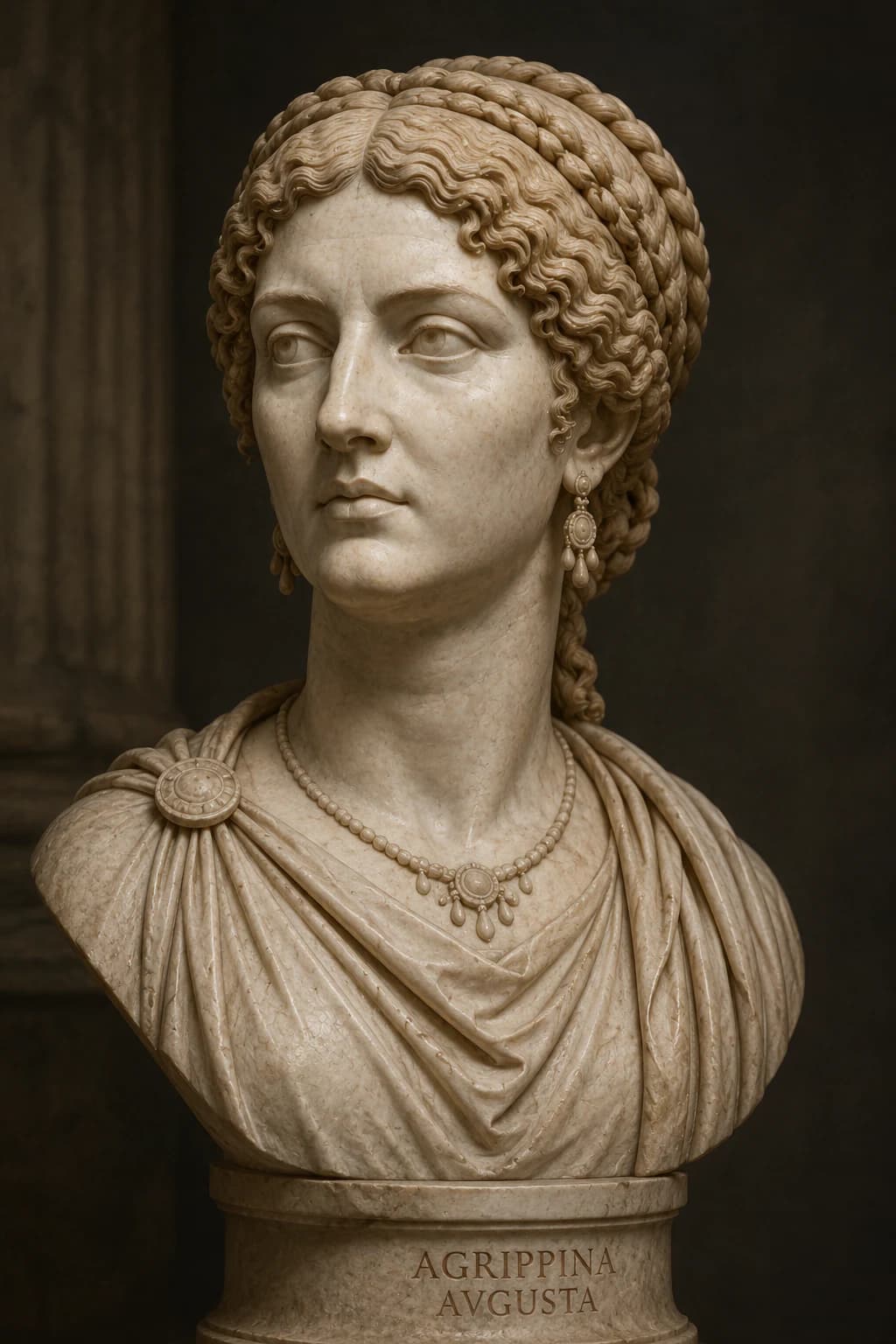
Nero entered Roman history as Lucius Domitius Ahenobarbus, son of Gnaeus Domitius Ahenobarbus and Agrippina the Younger. His bloodline placed him close to imperial power, but closeness in the Julio-Claudian house was never safe. Caligula was his maternal uncle; Claudius was another link in the dynasty; Augustus' legacy still shaped every claim to rule. Nero's mother, Agrippina, was intelligent, ambitious and politically relentless. Ancient historians hostile to Nero and Agrippina sharpened their portraits, but the broad truth is clear: Nero's childhood was not private. It was dynastic material. His family connections, marriages, adoptions and tutors all became instruments in a struggle over succession.
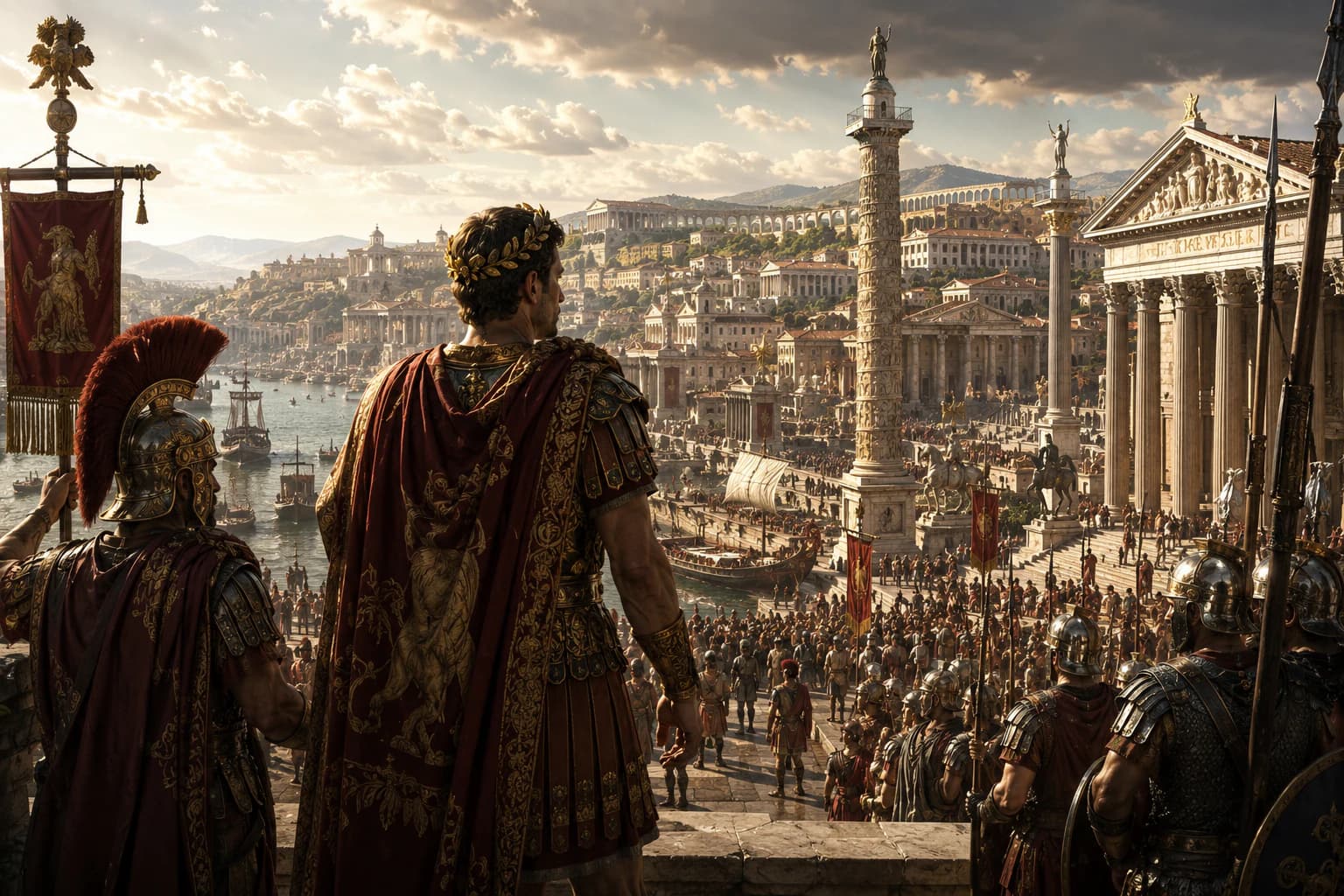
In systems built on family power, childhood can become preparation for authority rather than a time of innocence.
50 CE
Adopted Heir
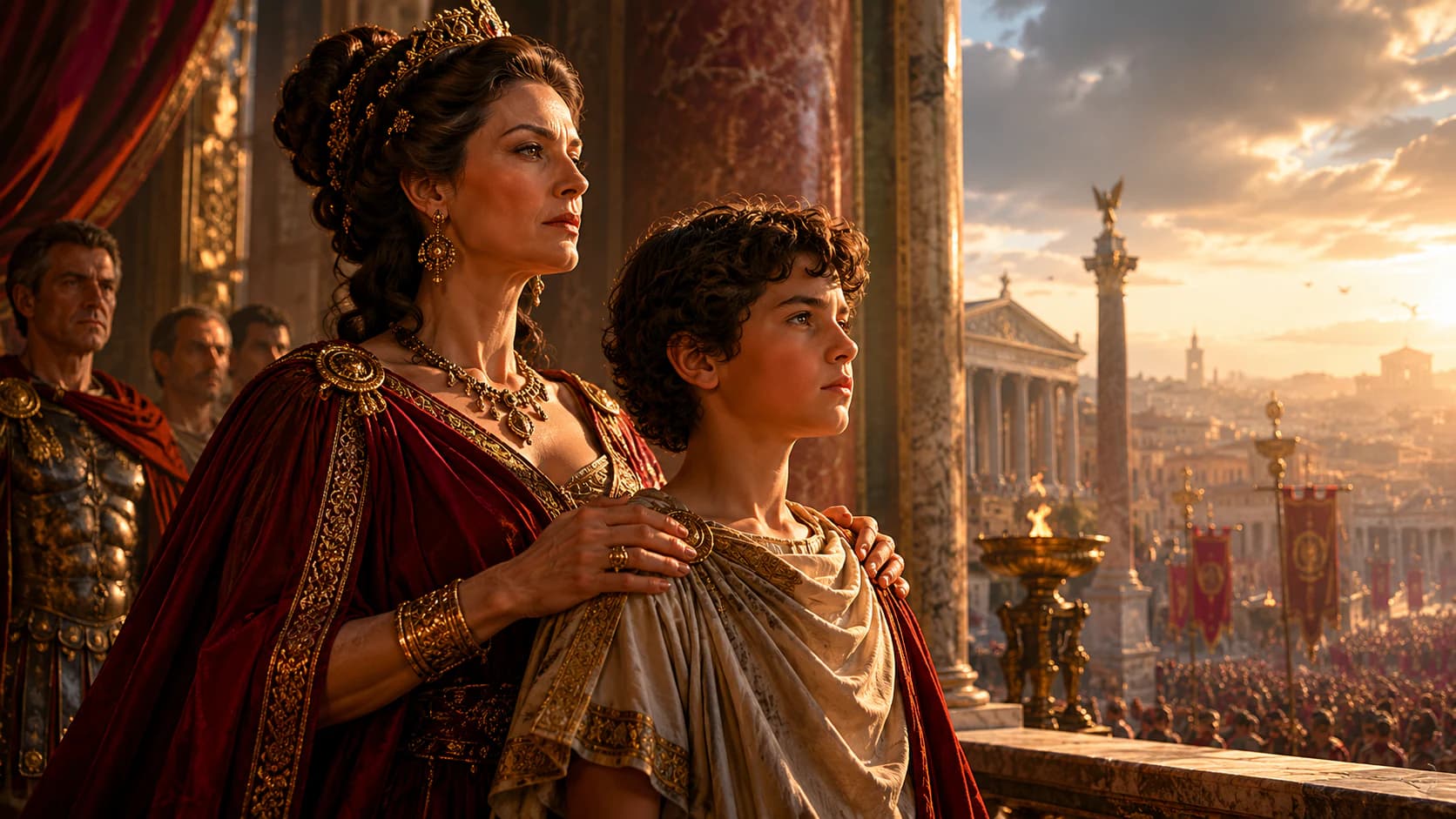
Agrippina's marriage to Emperor Claudius in 49 CE transformed Nero's prospects. In 50, Claudius adopted him, giving him the name Nero Claudius Caesar Drusus Germanicus and placing him in the succession ahead of Britannicus, Claudius' biological son. Adoption in Roman elite politics was not sentimental; it was a tool for transferring name, status and legitimacy. Nero was married to Claudius' daughter Octavia and surrounded by distinguished guidance, including the philosopher Seneca and the praetorian prefect Burrus. The arrangement looked stable because it was carefully staged. Beneath it lay the brutal logic of imperial succession: only one young man could inherit safely, and everyone around him knew it.
Political advancement often depends as much on positioning as on personal ability.
54 CE
Becomes Emperor
Claudius died in 54 CE, amid ancient suspicions of poisoning by Agrippina, though certainty is impossible. Nero was only sixteen. His first years were later remembered as surprisingly good government, largely because experienced figures managed the regime. Seneca provided rhetorical and political polish, Burrus controlled the Praetorian Guard, and Agrippina expected to wield influence through her son. Taxes and legal abuses were moderated, the Senate was treated with outward respect, and the empire remained stable. Yet this stability depended on a balance of adults around a young ruler who increasingly disliked being controlled. The question was never whether Nero had power. It was when he would decide that guidance had become humiliation.
Early stability can sometimes reflect the influence of others more than the ruler themselves.
59 CE
Breaking Free
Nero's relationship with Agrippina deteriorated as he asserted himself. She had made him emperor, but that achievement became a threat once he no longer wanted to be treated as her creation. In 55 Britannicus died suddenly, removing a possible rival. In 59 Nero arranged Agrippina's murder after a bizarre failed attempt involving a collapsible boat, according to ancient accounts. The details may be coloured by hostile storytelling, but her killing is not seriously doubted. Matricide shattered the moral boundaries of the principate. Afterward Nero became more dependent on favourites and personal desires. Burrus died in 62, Seneca withdrew, Octavia was divorced and executed, and Poppaea Sabina became empress. The restraints around Nero were thinning.
When oversight disappears, leadership can quickly shift from guided to unpredictable.
early 60s CE
Artistic Obsession
Nero's artistic ambition was not a side note. He wanted recognition as singer, poet, actor and charioteer, and he pushed Roman elite culture into forms many aristocrats considered disgraceful. Roman nobles admired Greek culture in private but often despised public performance as socially degrading. Nero ignored that boundary. He created festivals, appeared on stage and expected audiences to admire him not only as ruler but as artist. This has made him easy to caricature. Yet his popularity among parts of the urban crowd may have been real, helped by games, spectacles and generosity. The problem was political. By performing publicly, Nero challenged the dignity expected of the princeps and made senatorial contempt more intense.
Leaders who redefine their role risk alienating those who expect tradition to be preserved.
64 CE
Great Fire of Rome
The Great Fire of Rome burned for days in 64 CE, destroying large parts of the city. The famous image of Nero fiddling while Rome burned is anachronistic and hostile; he was probably at Antium when the fire began. Evidence suggests he organised relief, opened spaces for refugees and introduced rebuilding regulations to widen streets and reduce future risk. Yet reputation is rarely governed by facts alone. Nero used cleared land for the Domus Aurea, his vast Golden House, making it easy for enemies to claim he had profited from disaster. To redirect suspicion, he punished Christians, a small and unpopular religious group in Rome. This persecution became one of the earliest major imperial attacks on Christians and permanently stained his memory.
Crisis can define a ruler’s reputation more strongly than years of stability.
mid 60s CE
Growing Opposition
Opposition to Nero grew from several sources at once. The Pisonian conspiracy of 65 CE revealed senatorial and equestrian willingness to remove him; its suppression killed or ruined many prominent figures, including Seneca. Financial pressure increased after the fire, wars and building projects. In the provinces, commanders watched the centre with concern. Nero's tour of Greece in 66-67, where he competed in festivals and proclaimed Greek freedom, delighted some audiences but looked grotesque to critics while the empire needed sober government. Ancient sources exaggerate his monstrosity, but they preserve a real political breakdown. Nero still had title, palace and memory of dynasty. What he was losing was the confidence of the men with armies.
Authority weakens when fear replaces trust as the primary bond between ruler and supporters.
68 CE
Revolt and Flight
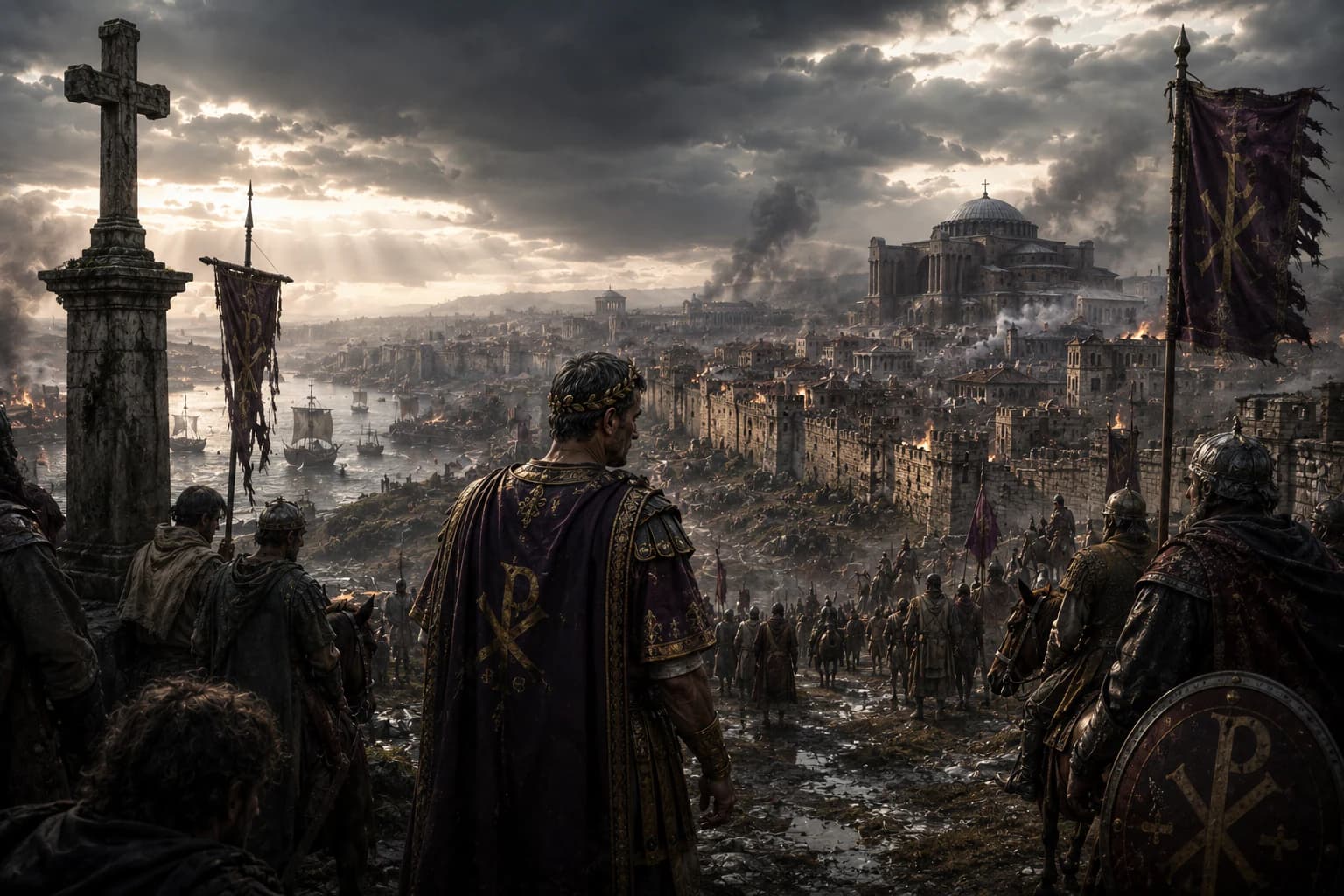
The end came when provincial revolt turned private hatred into public danger. Gaius Julius Vindex rebelled in Gaul and appealed to Servius Sulpicius Galba, governor of Hispania Tarraconensis. Vindex was defeated, but Galba's challenge survived because Nero's legitimacy had hollowed out. The Praetorian Guard abandoned him after its prefect shifted allegiance, the Senate declared him a public enemy, and the machinery of imperial loyalty stopped working. Nero fled Rome with a few companions. The last Julio-Claudian emperor discovered that dynastic memory could not protect a ruler once soldiers, Senate and palace networks calculated that his removal was safer than his survival.
Power can collapse rapidly once the structures that support it begin to withdraw.
68 CE
Death and Aftermath
Nero killed himself on 9 June 68 CE, reportedly lamenting the artist dying with him. The line may be theatrical invention, but it captures how later memory fused his politics with performance. His death ended the dynasty founded by Augustus and threw Rome into the Year of the Four Emperors, when Galba, Otho, Vitellius and Vespasian fought for control. Nero's legacy is difficult because our main sources came from elite circles that despised him and wrote after his fall. He was not innocent of murder, repression or extravagance, but neither was every lurid story neutral evidence. To ask who Nero was is to study both a destructive emperor and the way Roman aristocrats wrote about rulers who violated their sense of order, dignity and power.
A dramatic downfall can shape how a leader is remembered as much as their time in power.