Complete chronology
Full overview and deeper context for every journey step.
Unknown
Tribal Beginnings
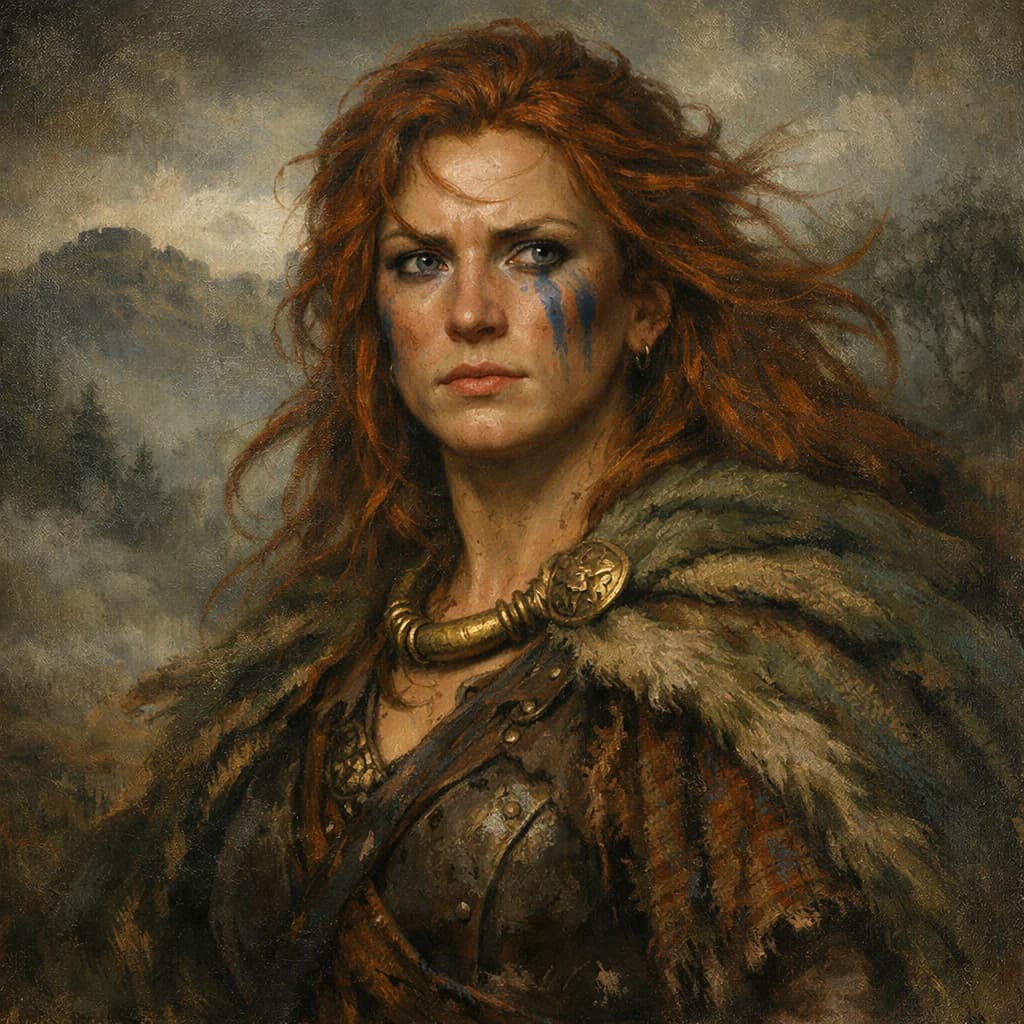
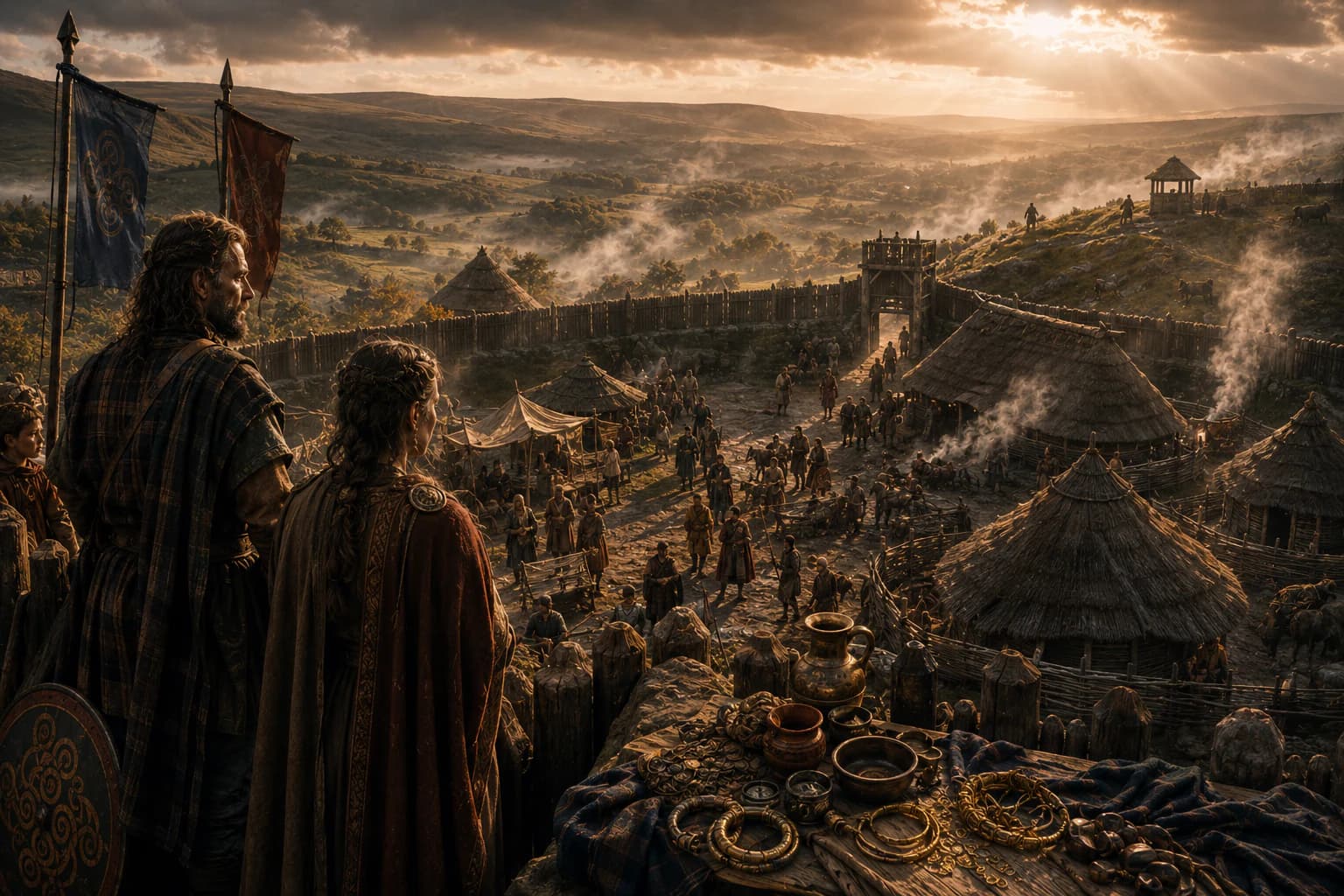
Boudica is one of the most famous figures in ancient Britain, yet almost everything known about her comes from hostile Roman writers, especially Tacitus and Cassius Dio. That means her biography begins in shadow. She was probably born into the elite world of the Iceni, an Iron Age people in eastern Britain whose power rested on land, cattle, alliances and martial prestige. Roman authors were struck by women who exercised public authority in Britain, but female status among some British elites could be politically significant, especially through marriage and kinship. Boudica's early life would have unfolded in a society adapting to Roman arrival after Claudius's invasion of AD 43. The Iceni were not simply conquered at once; they were drawn into a client relationship that promised local autonomy while slowly tightening imperial control.
Her story survives through Roman eyes, so every detail has to be read through power and prejudice.
Mid 1st century
Queen of Iceni
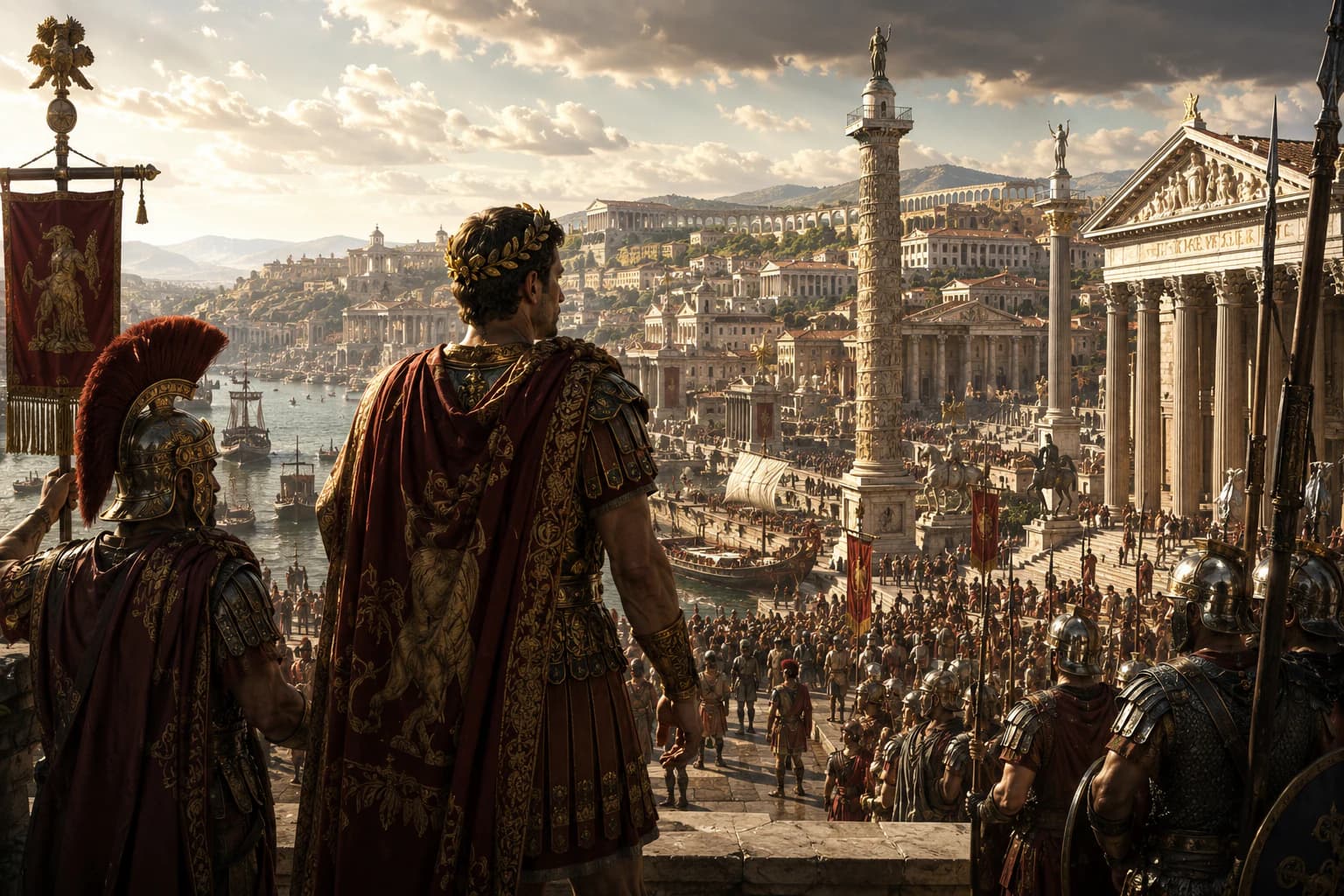
Prasutagus's rule shows how Rome often governed newly conquered regions: not by replacing every local elite immediately, but by binding useful rulers into client relationships. The Iceni kept a measure of independence, minted coins and retained native leadership while acknowledging Roman supremacy. For Rome, this reduced the cost of occupation. For Prasutagus and Boudica's household, it offered status and survival in a changed political landscape. But client kingship was fragile. It worked only while both sides found it useful, and Rome's appetite for tax, land, loans and legal control rarely remained modest. Boudica's authority as queen existed inside that tension. She was not ruling a free kingdom untouched by empire; she was part of a political compromise that became more dangerous as Roman administrators, financiers and veterans pressed deeper into local life.
Client rule bought time, but it did not guarantee dignity or security.
50s CE
Rising Tensions
The rebellion cannot be explained only as personal revenge. Roman Britain in the years before AD 60 contained deep structural tensions. The colony at Camulodunum, modern Colchester, had been settled by veterans and dominated by a temple to the deified Claudius, a costly symbol of conquest to local people. Roman moneylenders and officials pressed debts, while land was redistributed and traditional authority weakened. The governor, Suetonius Paulinus, was campaigning far away in Mona, modern Anglesey, against druidic and anti-Roman resistance when the crisis broke. This mattered because Boudica's revolt erupted not against a fully secure province, but against an occupation still thinly held, resented and overstretched. The Iceni had allies because many Britons had reasons to hate Rome.
A revolt becomes dangerous when private outrage meets public grievance.
c. 60 CE
Spark of Revolt
The trigger of the revolt was a catastrophic Roman misreading of power and honour. Prasutagus tried to protect his family by naming both his daughters and Nero as heirs, apparently hoping that deference to the emperor would preserve the dynasty. Roman officials instead moved as if the Iceni kingdom were now open for seizure. Tacitus says Boudica was whipped and her daughters raped; aristocratic lands were confiscated, and Roman creditors demanded repayment. Whether every detail was reported with perfect accuracy cannot be proved, but Roman sources themselves recognised the outrage as decisive. The violence was political as well as personal. It announced that Rome would not respect Iceni rank, female succession or royal dignity. Boudica's call to revolt therefore carried the force of violated family, violated law and violated people.
Rome turned a client queen into a rebel leader by making submission look dishonourable.
c. 60–61 CE
Raising an Army
Boudica's achievement was not merely emotional defiance; it was coalition-building under extreme pressure. The Iceni alone could hurt Rome, but they could not threaten the province without allies. The Trinovantes, dispossessed and humiliated around Camulodunum, became crucial partners. Others joined as news spread and Roman weakness became visible. Ancient figures for Boudica's army are almost certainly inflated, but the force was large enough to overwhelm settlements, terrify Roman officials and force Suetonius Paulinus to abandon normal provincial control. The rebellion's momentum came from speed. It attacked symbols of Roman power before the legions could concentrate. It also carried the danger common to insurgent coalitions: fury could destroy quickly, but sustaining strategy against a professional army was much harder.
She understood the moment: Rome was vulnerable before it had time to gather itself.
c. 60–61 CE
Initial Successes
The destruction of Camulodunum was the rebellion's first great shock. The town, with its veterans and imperial temple, represented conquest in stone, and its defenders were unprepared. A Roman force sent to relieve it was destroyed. Suetonius then faced a brutal calculation at Londinium, a growing commercial settlement but not yet defensible enough to hold. He evacuated those he could and abandoned the town; Boudica's army burned it. Verulamium, near modern St Albans, followed. Archaeology preserves burn layers that give material weight to the literary accounts. Roman writers emphasised atrocity, partly to underline the horror of barbarian revolt, but there is no doubt the destruction was severe. For a brief moment, Roman Britain looked breakable.
The uprising attacked not only soldiers, but the whole visible infrastructure of occupation.
61 CE
Roman Response
The Roman response depended on discipline, not numbers. Suetonius Paulinus could not defend every town, so he concentrated the troops he trusted and chose his battlefield carefully. The exact site remains debated, but Roman accounts describe a position with woodland behind and a narrow approach in front, preventing Boudica's army from surrounding the legionaries. This was a commander's answer to a mass uprising: reduce its advantage, force it into a killing zone, and rely on drill, armour and formation. Boudica's followers came with families and wagons, perhaps expecting victory or wanting to witness revenge. That confidence became disastrous when retreat was needed. The battle turned the rebellion's scale from strength into vulnerability.
Suetonius won before the charge by choosing ground that made Roman discipline decisive.
61 CE
Final Defeat
The final battle was a catastrophe for the rebels. Roman pila disrupted the advance, then the legionaries moved forward in disciplined wedges, with cavalry pressing the flanks. Trapped by their own wagons and non-combatants, Boudica's followers could not retreat effectively. Roman casualty figures in ancient sources are shaped by literary convention and should be treated cautiously, but the result was decisive: the uprising collapsed. Boudica's death is uncertain. Tacitus gives the dramatic version, suicide by poison; Cassius Dio reports illness. Both accounts serve Roman narrative needs, one turning her into a tragic enemy, the other closing the story more plainly. What mattered politically was that she did not survive as an alternative centre of power. Rome had come close to disaster, but the province remained Roman.
Her defeat ended the revolt, but it did not erase the fear she had exposed.
After 61 CE
Symbol of Resistance
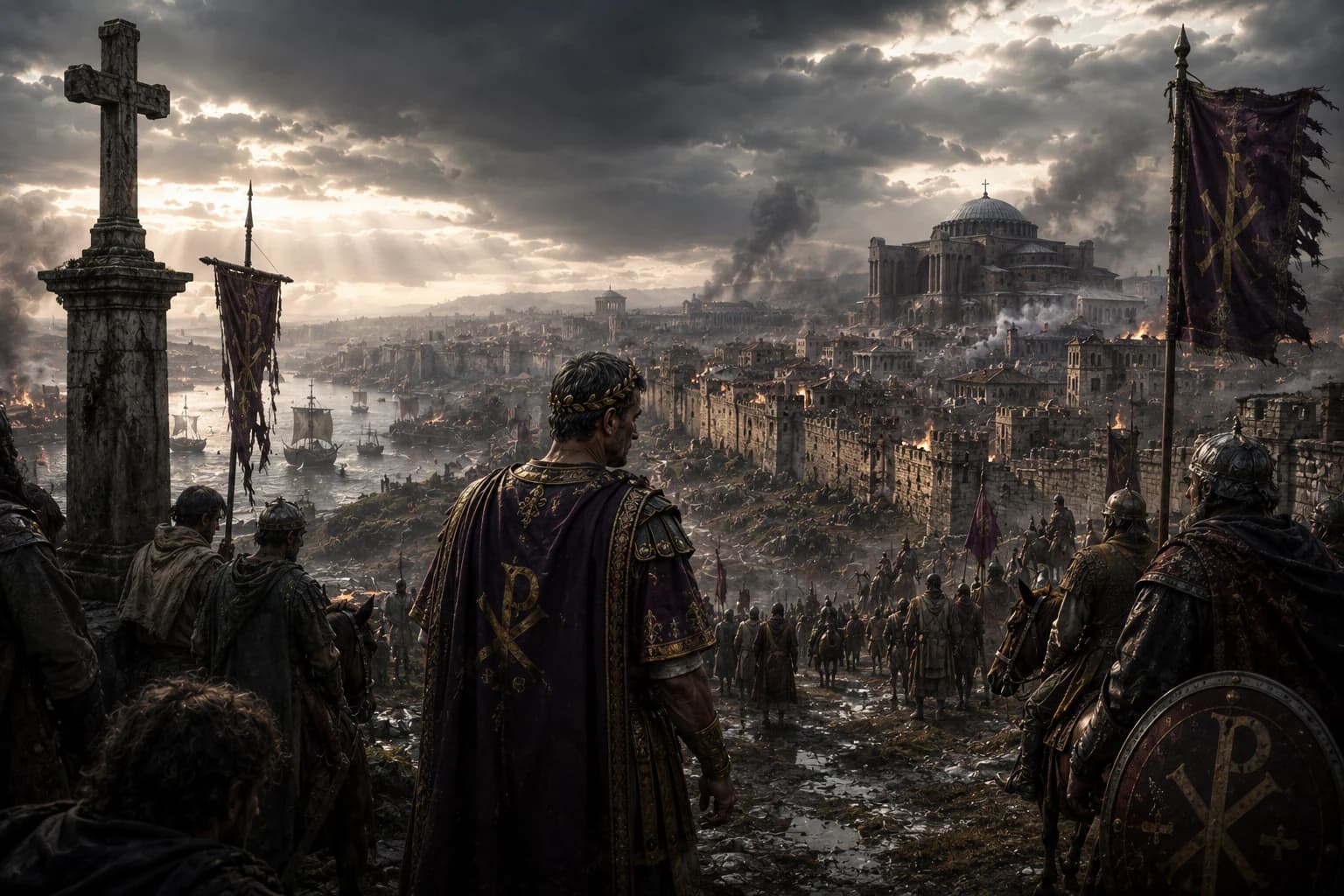
Boudica's legacy is a lesson in how history becomes memory. Roman writers used her to explore the dangers of misrule, female power and barbarian fury, but later Britain remade her repeatedly. Renaissance scholars rediscovered her through classical texts. In the nineteenth century she was recast as a patriotic warrior queen, awkwardly celebrated by an empire that ignored how fiercely she had resisted one. Her statue near Westminster, created by Thomas Thornycroft, made her part of national symbolism. Modern interpretations are more cautious and more interesting. She can represent resistance to occupation, the violence of empire, the political use of sexual violence, or the power and limits of charismatic revolt. The evidence is thin and Roman-filtered, so the real Boudica cannot be recovered whole. Yet her importance is secure: in AD 60-61 she forced Rome to confront the possibility that Britain might be lost.
She lost the war, but won a place in the argument about power, memory and resistance.