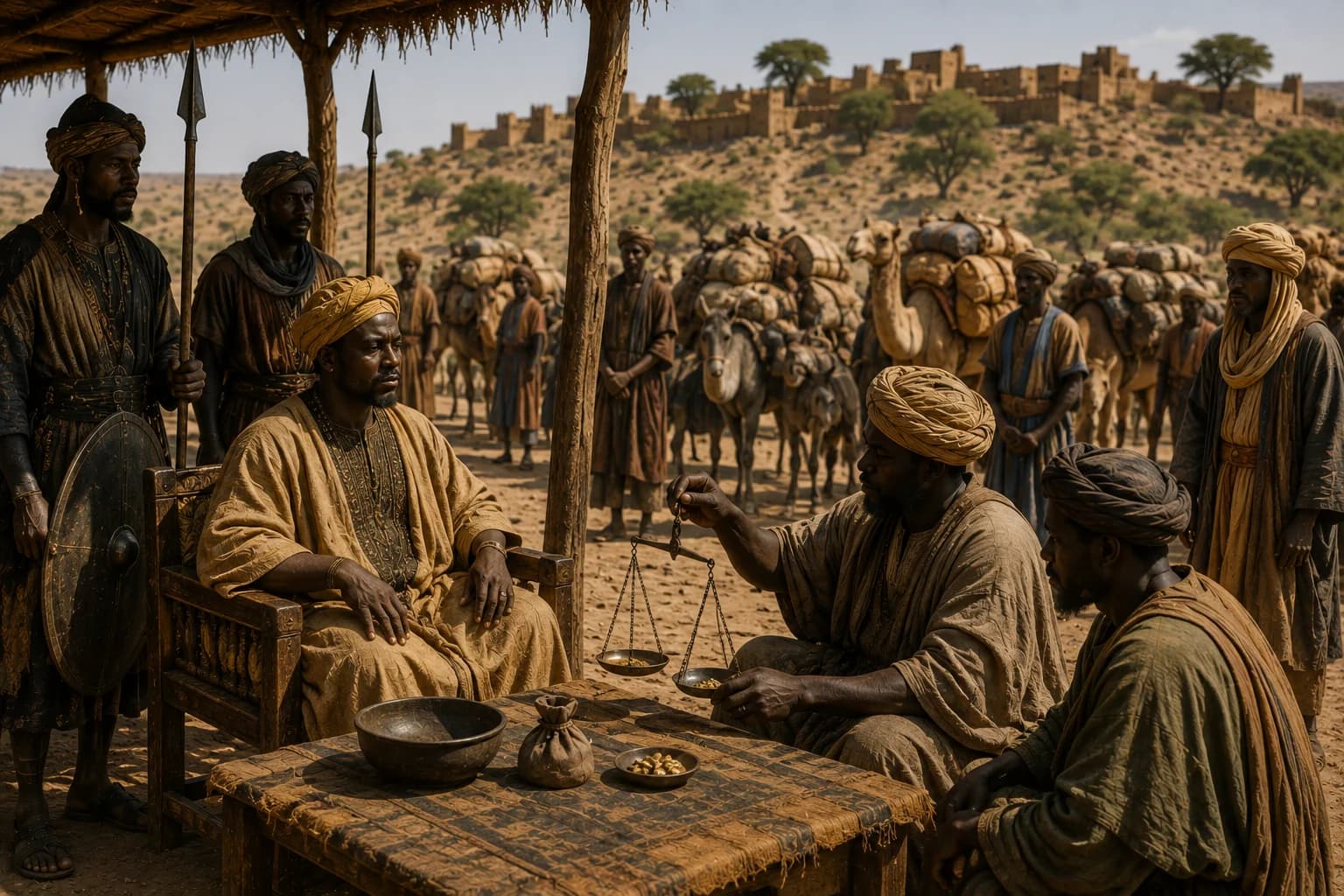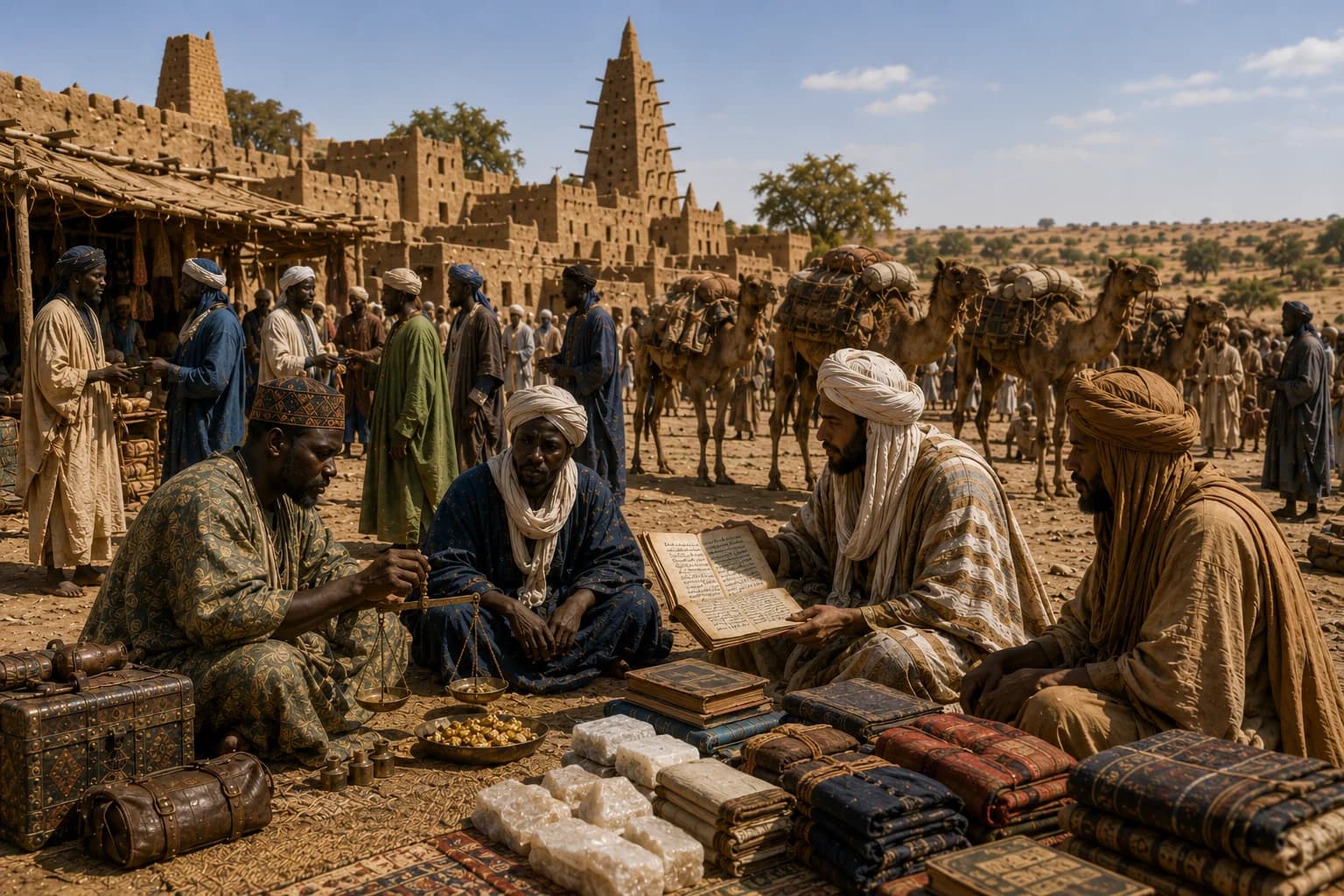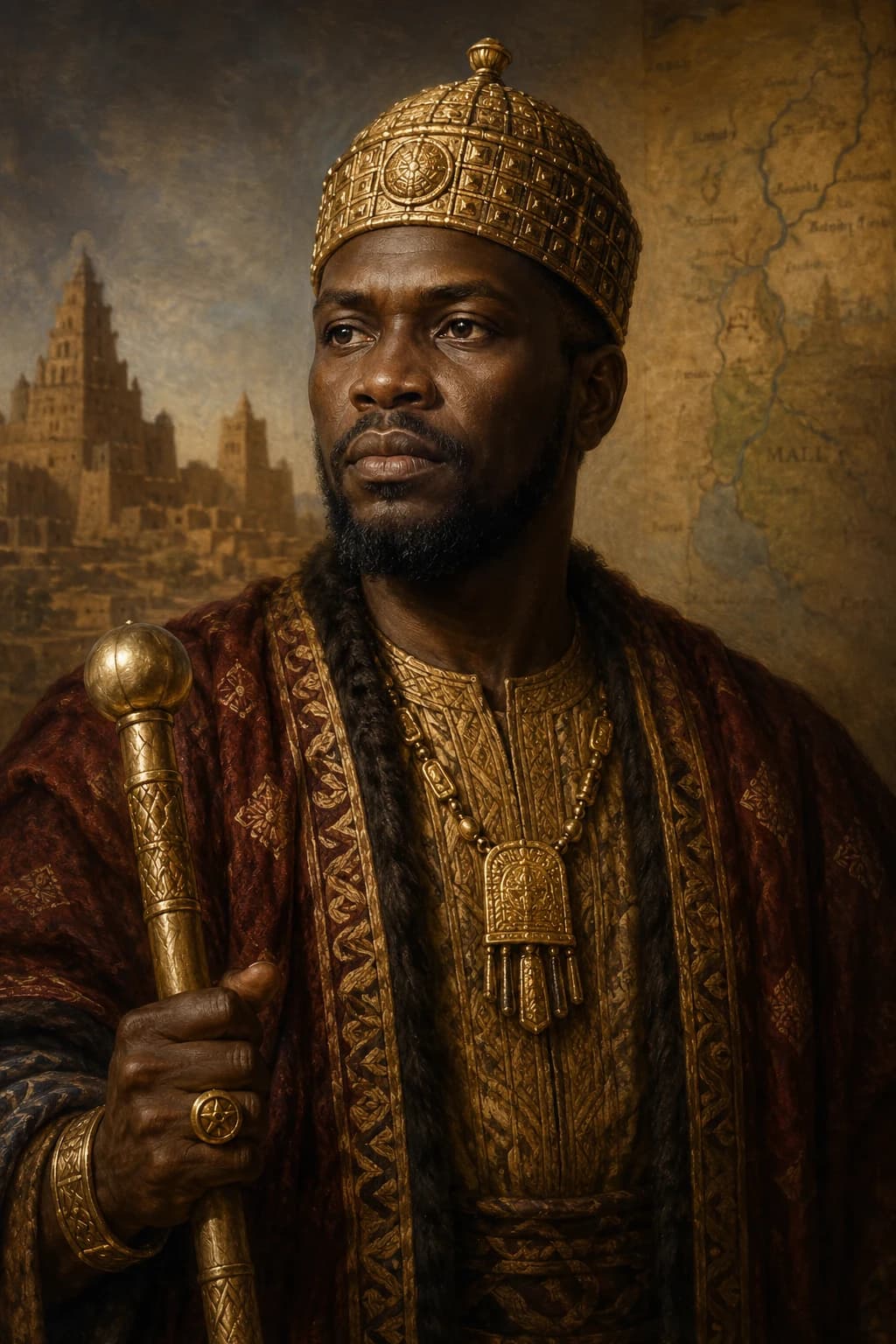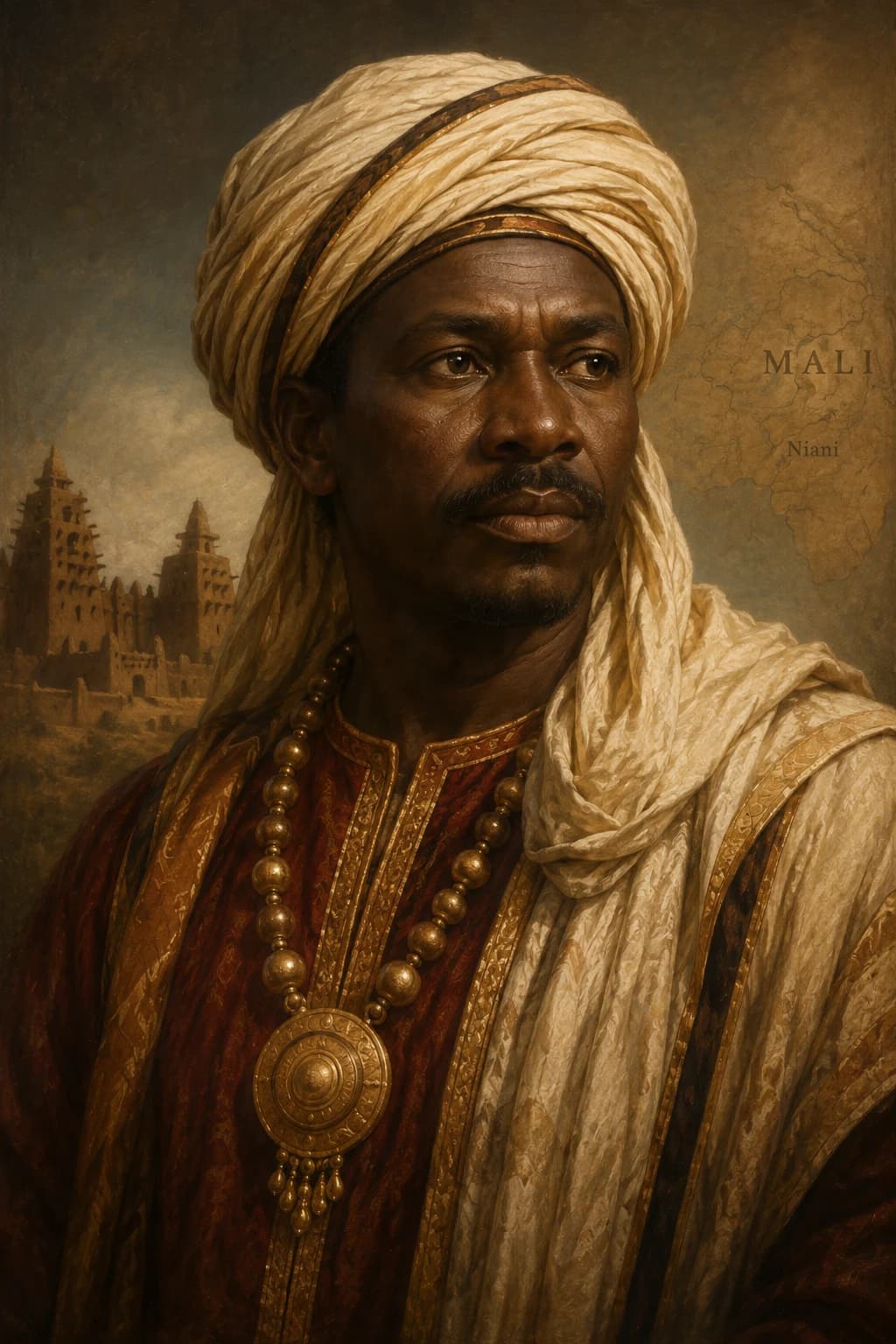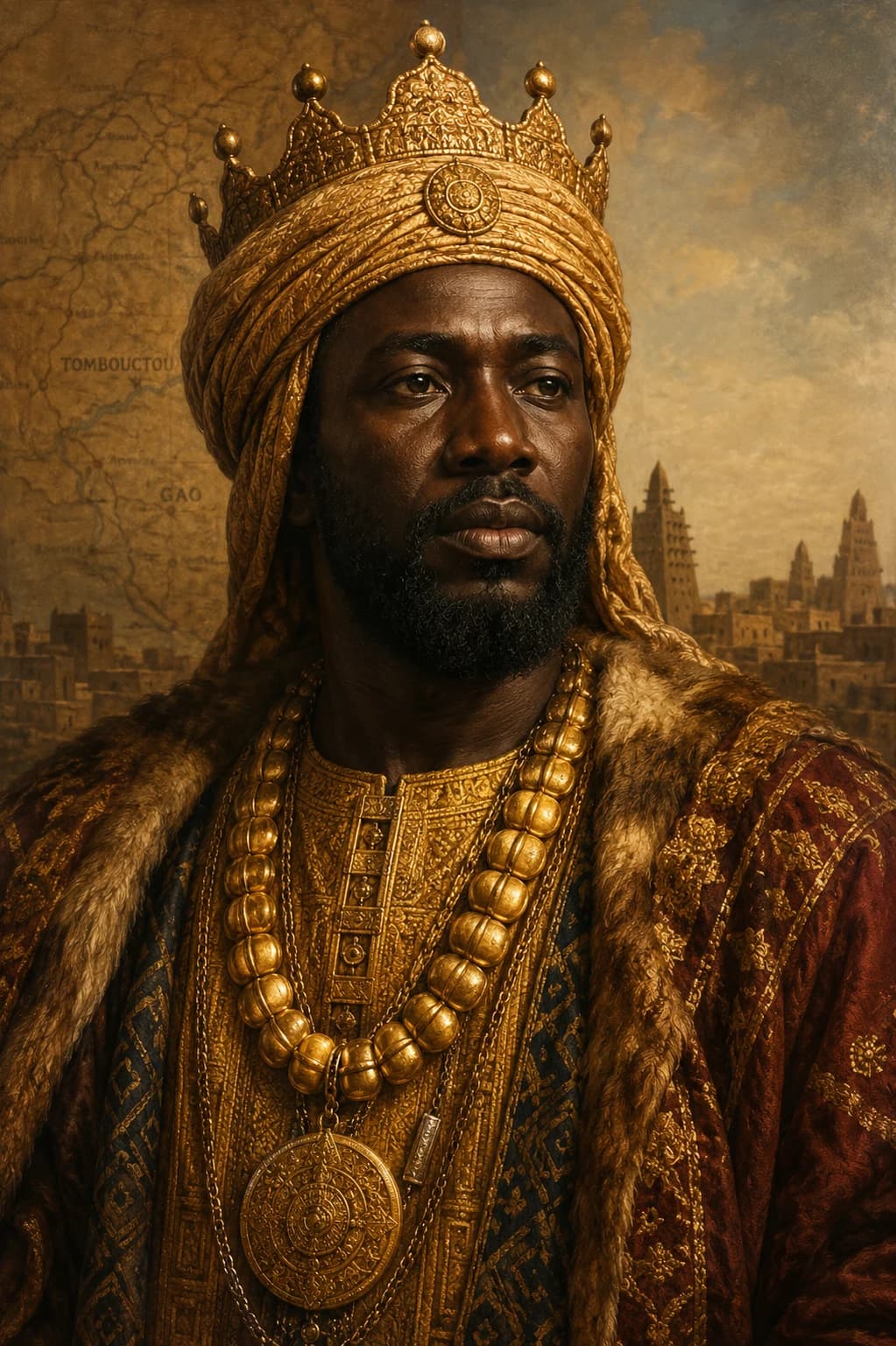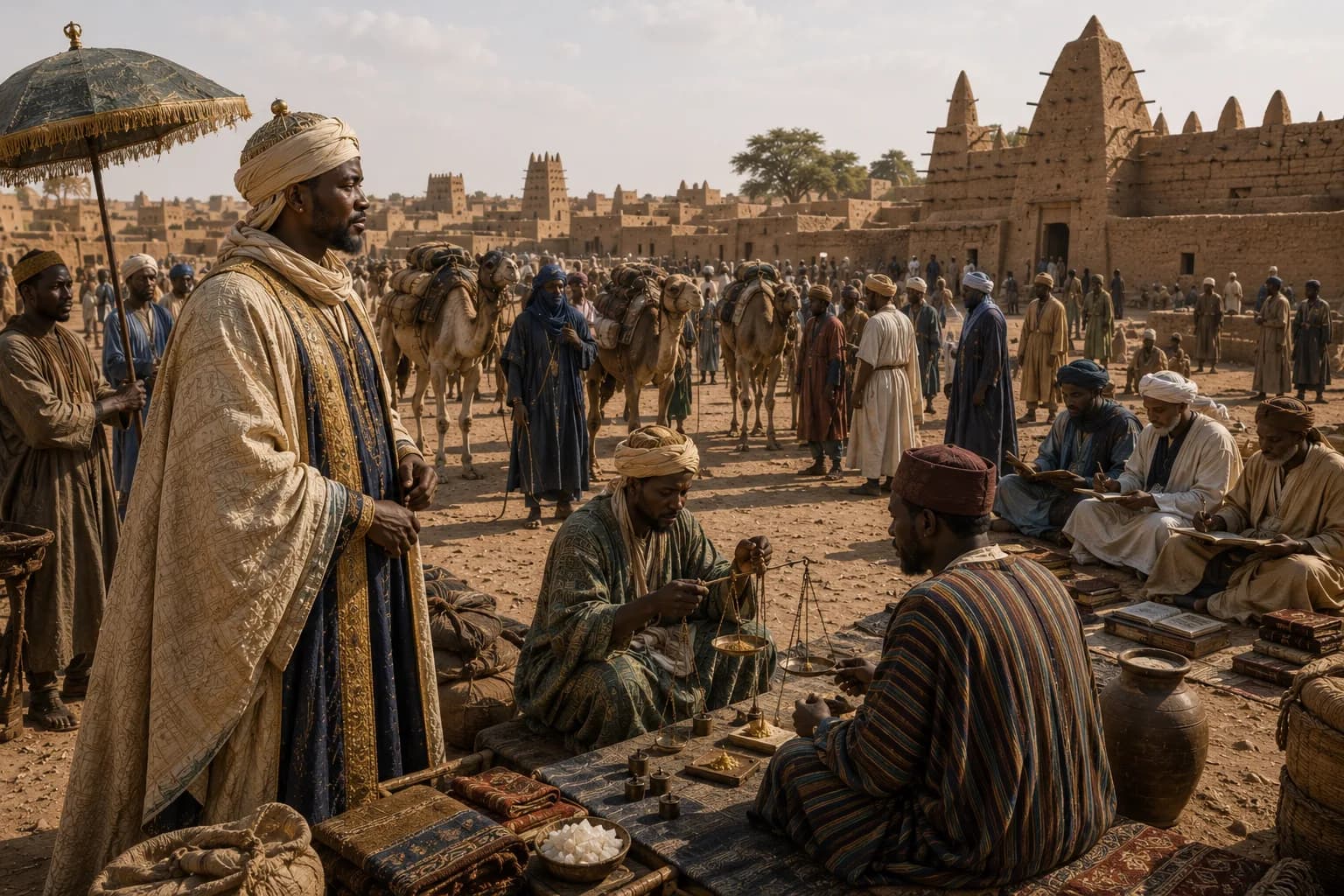
A wealthy Malian ruler watches merchants weighing gold in a busy Sahelian city with mud-brick architecture, camels, scholars and traders.
Free Story

The Mali Empire

Mali did not rise from isolation. It rose where farms, goldfields, trade routes, warriors, scholars and royal ambition met.

10 chapters · 20 min read

Next
Context

Introduction

Overview

The Mali Empire rose in the thirteenth century from the of West Africa. Built on agriculture, gold, trade routes, military alliances and royal authority, it became one of the great powers of the medieval world. This story follows Sundiata Keita, the , control of the gold trade, imperial expansion, Mansa Musa's pilgrimage, , and Mali's wider connections across Africa, the Islamic world and the Mediterranean.

What you'll learn: You will see how a West African empire grew from local farming, regional conflict, gold, trade and Islamic connections into a power known across the medieval world.

Key forces

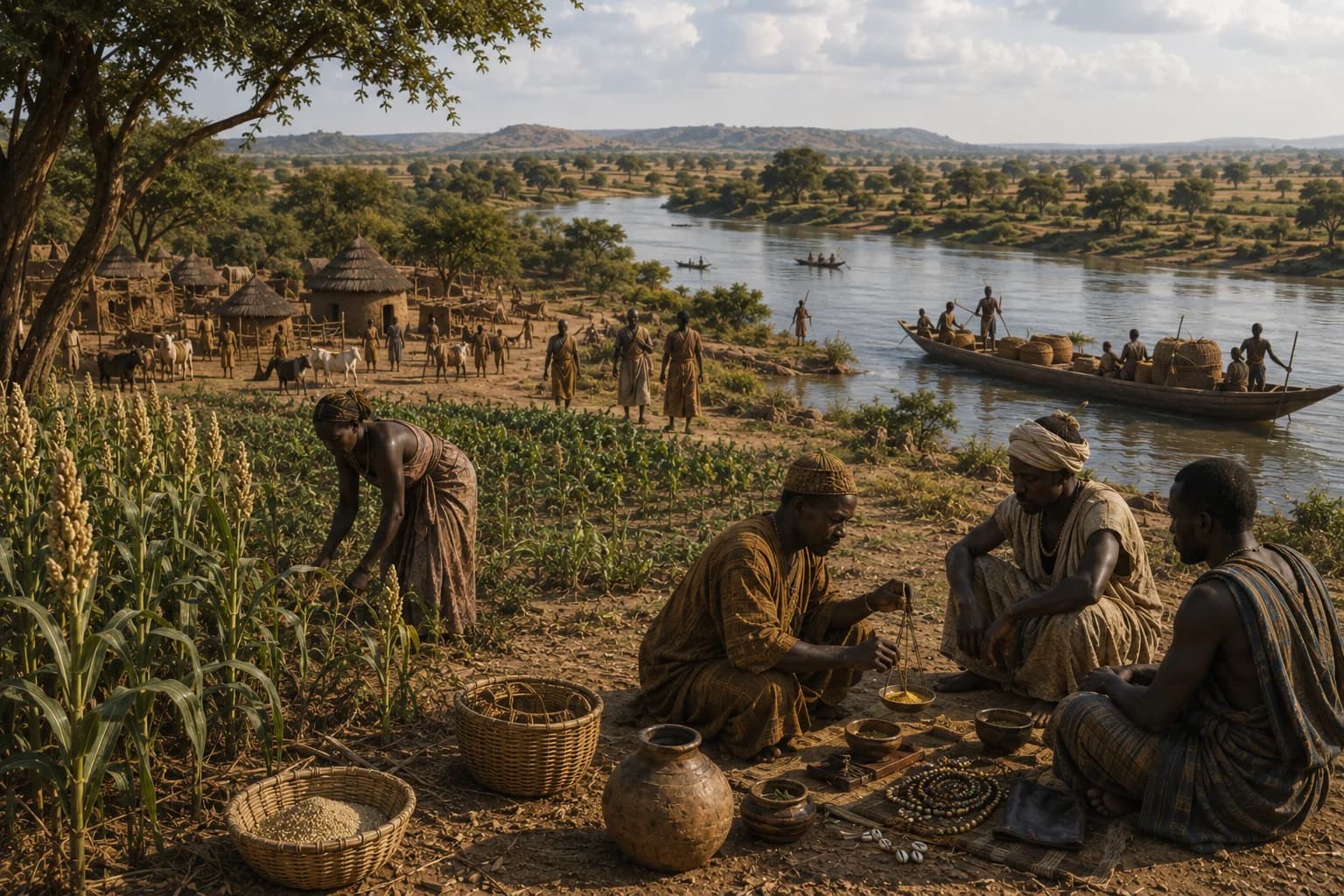
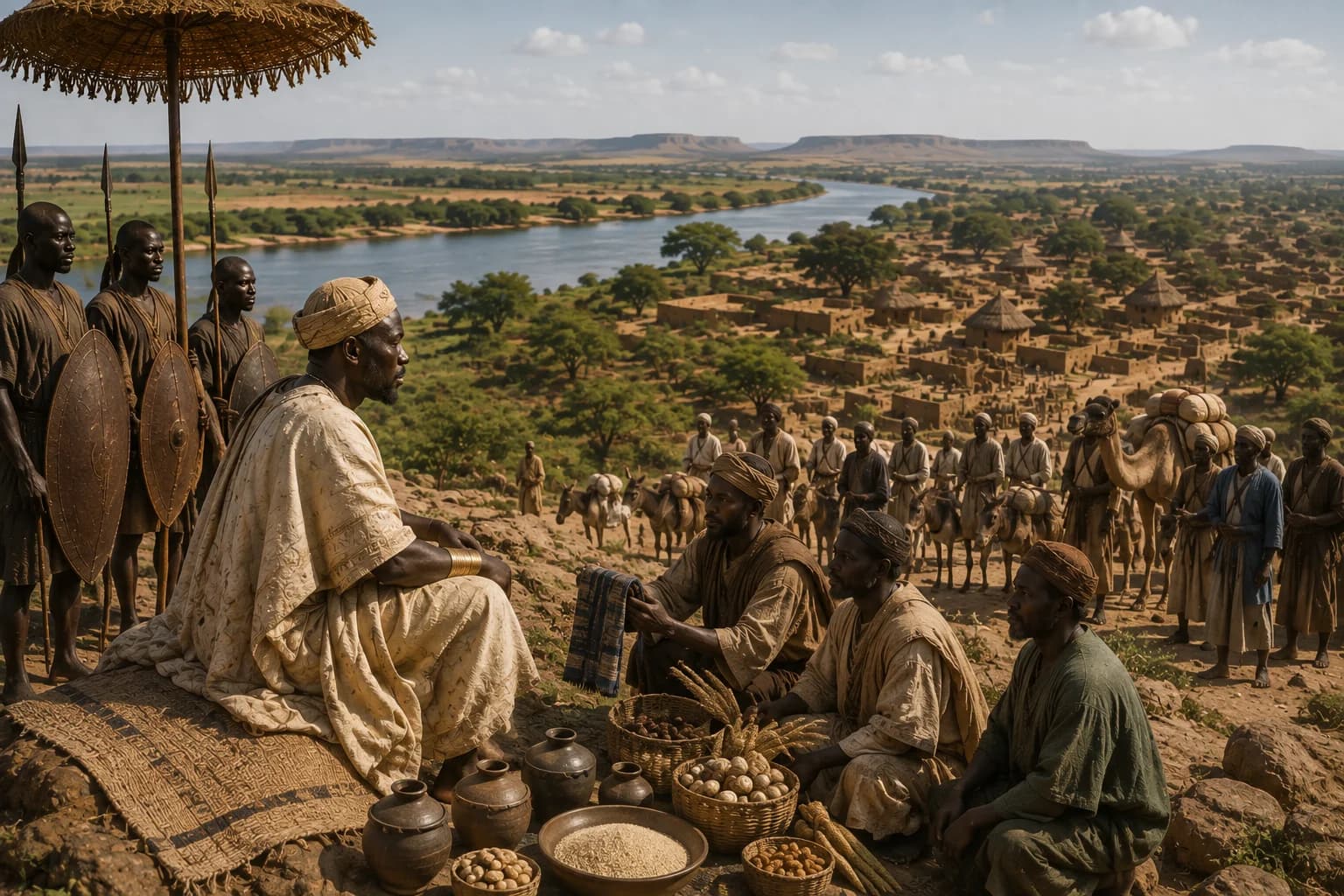
Mande communities farm and trade beside the Upper Niger before the rise of the Mali Empire.
1200 CE
Step 1 of 101200 CEAccessible mode

The Mande Heartland

Around 1200, the future Mali Empire began in a region where power had been gathering for generations.

The lay around the and nearby savanna zones. Farming mattered deeply here. Millet, sorghum, rice, livestock and local markets supported communities that could feed rulers, warriors and traders.

The region also stood near gold-producing areas such as Bambuk and Bure. Gold did not move by itself. It needed miners, carriers, merchants, rulers, taxes, guards and routes linking forest, savanna, river and desert.

Older powers, especially the Ghana Empire, had shown how control of trade could support royal authority. As Ghana declined, its routes and habits of rule did not disappear. They became prizes for new competitors.

Mali's foundations were laid before Mali had an emperor.

By the early thirteenth century, Mande communities were part of a tense political world. Local chiefs, lineages and neighbouring kingdoms competed for influence. That competition created danger, but it also created the opening from which Mali would rise.

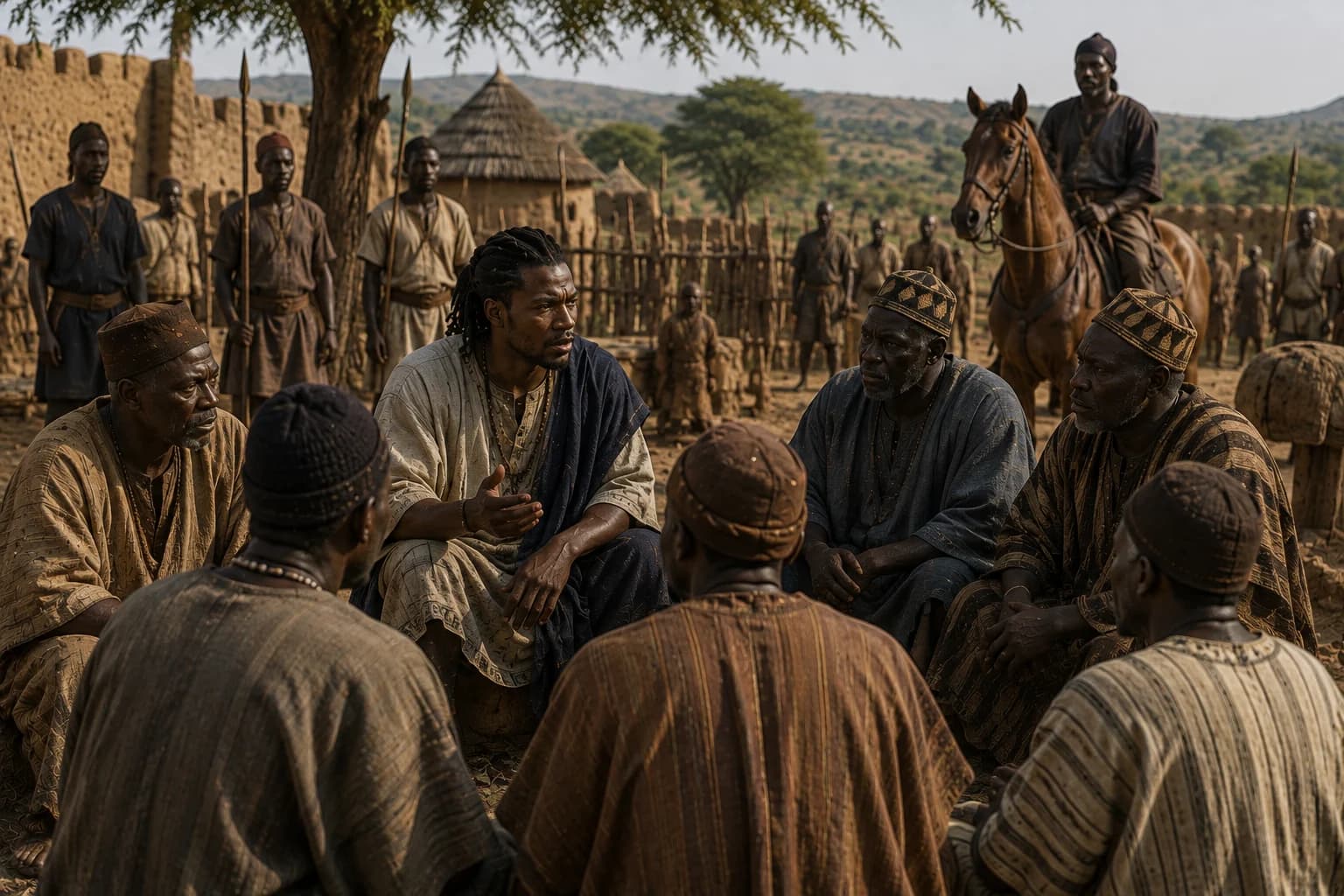
Sundiata Keita speaks with Mande elders and allies during Mali's rise.
1230 CE
Step 2 of 101230 CEAccessible mode

The Rise of Sundiata

In Mande tradition, Mali's rise begins with Sundiata Keita and a world under pressure.

The stories surrounding Sundiata mix memory, politics and heroic tradition. They should not be read like a modern biography, but they preserve something important: Mali was born from conflict.

The Sosso kingdom, led in tradition by Sumanguru Kante, expanded its influence over parts of the western Sudan. Mande rulers faced the danger of domination and the chance to unite against a common threat.

Sundiata's role was to turn scattered resistance into coalition. He drew support from Mande allies and built a claim to leadership strong enough to challenge Sosso power.

Political crisis gave Sundiata the chance to become more than a local ruler.

By the 1230s, the struggle was no longer only about one ruler defeating another. It was about whether the would be controlled by Sosso authority or reorganised around a new Malian centre.

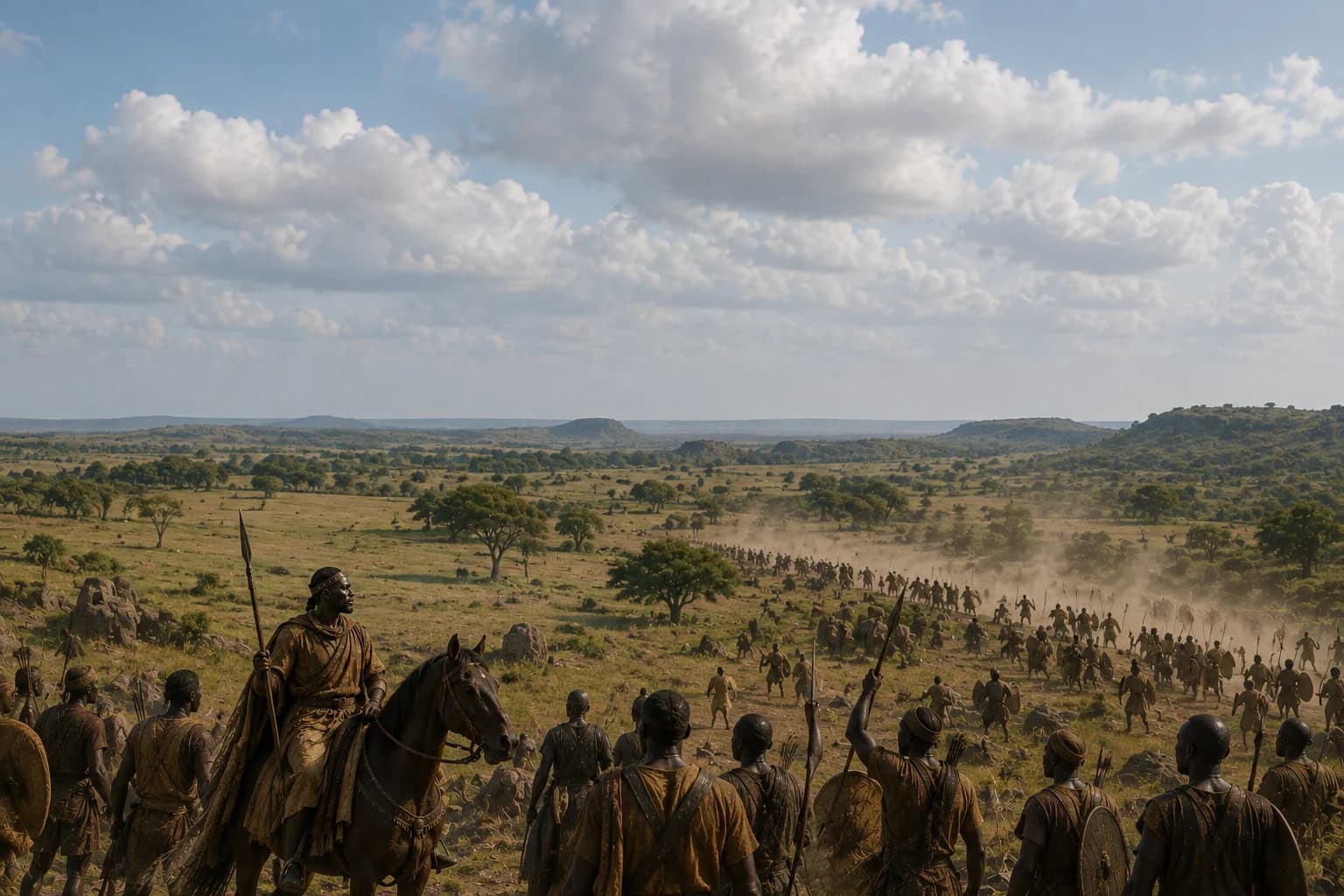
Sundiata Keita watches warriors advance across the battlefield at Kirina.
1235 CE
Step 3 of 101235 CEAccessible mode

The Battle of Kirina

Around 1235, Sundiata's coalition defeated Sumanguru Kante at .

is remembered as the decisive battle in Mali's foundation. It marked the defeat of Sosso power and the rise of a new Mande-led state.

The victory mattered because it changed what Sundiata could claim. He was no longer only a successful rebel or local ruler. He had proved that his coalition could defeat the strongest rival in the region.

After , Sundiata and his allies could consolidate authority across the . Local rulers who had backed him expected reward, recognition and a place in the new order.

turned resistance into empire.

The battle did not instantly create a finished state. But it gave Mali a founding victory, a ruling dynasty and the political momentum needed to absorb territory, routes and tribute.

Malian officials weigh gold as merchants and camel caravans wait on a Sahel trade route.
1240 CE
Step 4 of 101240 CEAccessible mode

Mali Takes Control of the Gold Trade

After Sundiata's victory, Mali's power grew through gold and the routes that carried it.

West African gold was valuable across North Africa, the Mediterranean and the Islamic world. Mali rose near regions where that gold could be mined, gathered and moved.

Control did not mean the king personally owned every mine. It meant that Mali could influence access to gold-producing zones, protect merchants, tax exchange and command the roads and river routes that made trade possible.

Taxes and tribute gave rulers resources. They could reward allies, support armies, maintain officials and display wealth in ways that made royal authority harder to ignore.

Gold made Mali famous, but control of movement made Mali powerful.

By expanding toward commercial networks associated with major goldfields, Mali turned local victory into imperial strength. Wealth and government began to reinforce each other.

Mali expands across river towns and trade routes in the western Sudan.
1285 CE
Step 5 of 101285 CEAccessible mode

The Empire Expands

By the late thirteenth century, Mali had become a much larger empire.

Its rulers extended influence across parts of the western Sudan, linking the Niger region to routes that crossed the Sahara. Towns, peoples and commercial zones came under Malian pressure or protection.

Holding such a large empire together required more than conquest. Mali depended on provincial rulers, tribute relationships, military force and the cooperation of local elites.

Commerce helped bind the empire. Traders moved salt, gold, cloth, copper and other goods through towns where royal power could tax and supervise exchange.

Mali's size came from conquest, but its endurance depended on connection.

The empire was not equally controlled everywhere. Some regions were tightly held, others looser. But by 1285, Mali had become a regional system rather than only a kingdom.

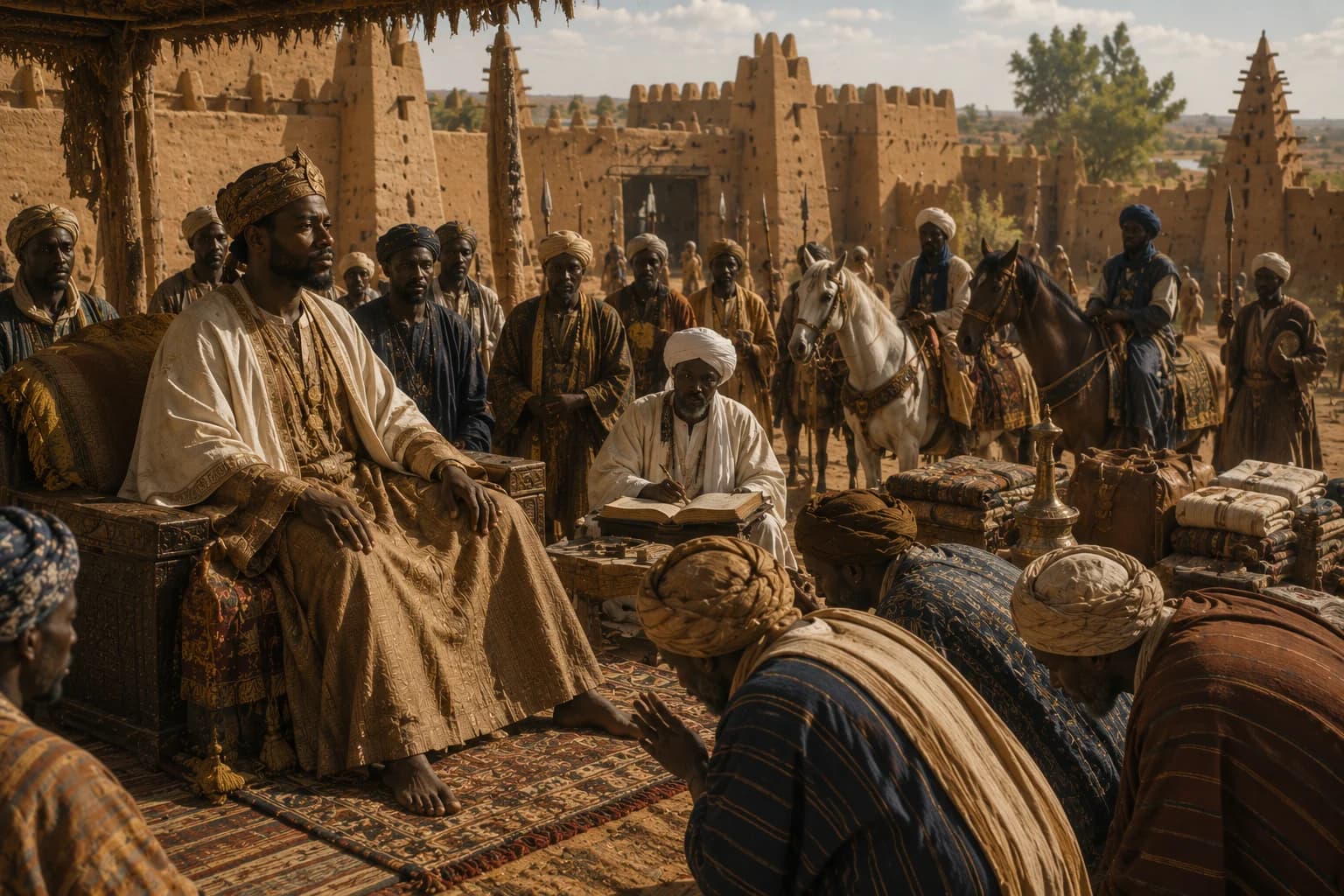
Mansa Musa takes the throne before courtiers, officials and horsemen.
1312 CE
Step 6 of 101312 CEAccessible mode

Mansa Musa Takes the Throne

In 1312, Mansa Musa came to power at the beginning of Mali's most famous period.

He inherited an empire already enriched by gold and trans-Saharan commerce. Mali was not new, but under Musa it became more visible to people far beyond West Africa.

Mansa Musa ruled as a Muslim king in a region where Islam had long travelled with merchants, scholars and rulers. Islam did not replace all older beliefs and practices, but it gave Mali powerful links to North Africa and the wider Islamic world.

His reign strengthened royal prestige. Wealth, patronage, public piety and political order worked together to present Mali as a serious imperial power.

Mansa Musa inherited power, then made the world look at it.

The throne he took in 1312 was therefore more than a local kingship. It was the command centre of a rich West African empire connected to routes that reached across the Sahara.

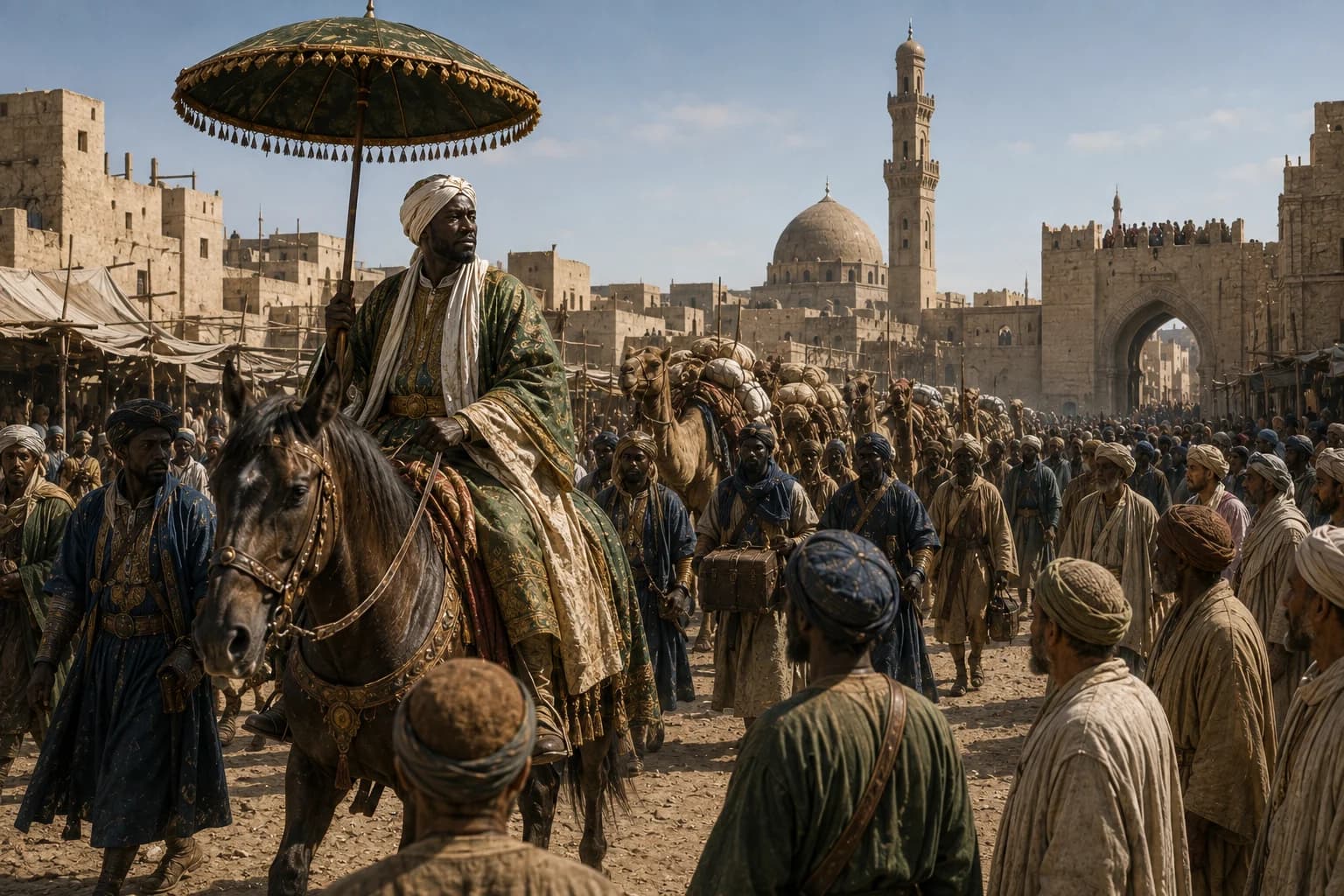
Mansa Musa rides through Cairo with a large pilgrimage caravan.
1324 CE
Step 7 of 101324 CEAccessible mode

Mansa Musa's Pilgrimage

In 1324, Mansa Musa set out on the pilgrimage to Mecca that made Mali famous.

His journey passed through Cairo, one of the great cities of the Islamic world. There, observers were astonished by the scale of his entourage and the gold associated with his court.

Accounts describe extraordinary generosity. Musa gave away and spent so much gold that later writers connected his visit with disruption in Cairo's gold market.

The pilgrimage was an act of faith, but it was also a diplomatic performance. It showed that Mali was wealthy, Muslim, organised and powerful enough to send its ruler across thousands of kilometres.

Musa's caravan turned Mali's wealth into international news.

After the pilgrimage, Mali attracted unprecedented attention. Its ruler, gold and cities entered the imagination of writers, merchants and mapmakers far from the Niger.

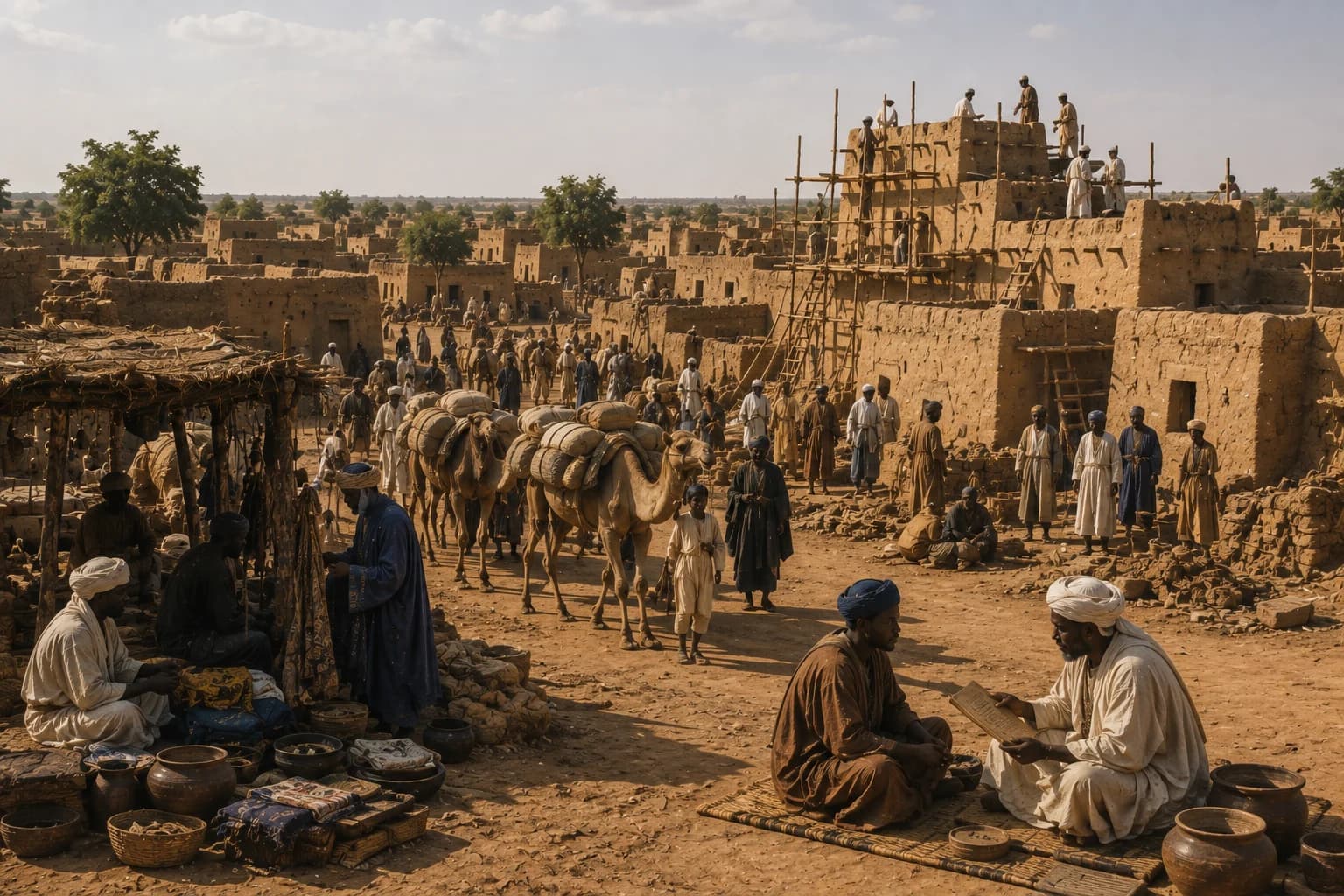
Timbuktu grows as a centre of trade, books and Islamic learning under Mali.
1325 CE
Step 8 of 101325 CEAccessible mode

Timbuktu Joins Mali's Golden Age

During Mansa Musa's reign, and became key centres of Mali's influence.

Both towns mattered because they sat within the trading world of the Niger and the Sahara. Goods, people and information could move between river routes and desert caravans.

became especially associated with commerce, Islam and learning. Mosques, teachers, books and visiting scholars helped give the city a reputation that outlasted Mali's strongest period.

Mansa Musa is linked in tradition and later accounts with building and patronage, including work associated with mosques. Architecture helped make royal piety visible in mud brick, timber and public space.

made Mali's connections feel permanent.

also mattered as a Niger River centre tied to eastern routes. Together, these cities showed how Mali's golden age was urban, commercial, Islamic and deeply West African at the same time.

Merchants, scholars and caravans connect Mali to wider medieval trade networks.
1337 CE
Step 9 of 101337 CEAccessible mode

Mali's Global Connections

By the time Mansa Musa's reign ended, Mali was known far beyond West Africa.

Merchants carried gold, salt, textiles and other goods across routes that linked the Niger region with North Africa. Those same routes carried information.

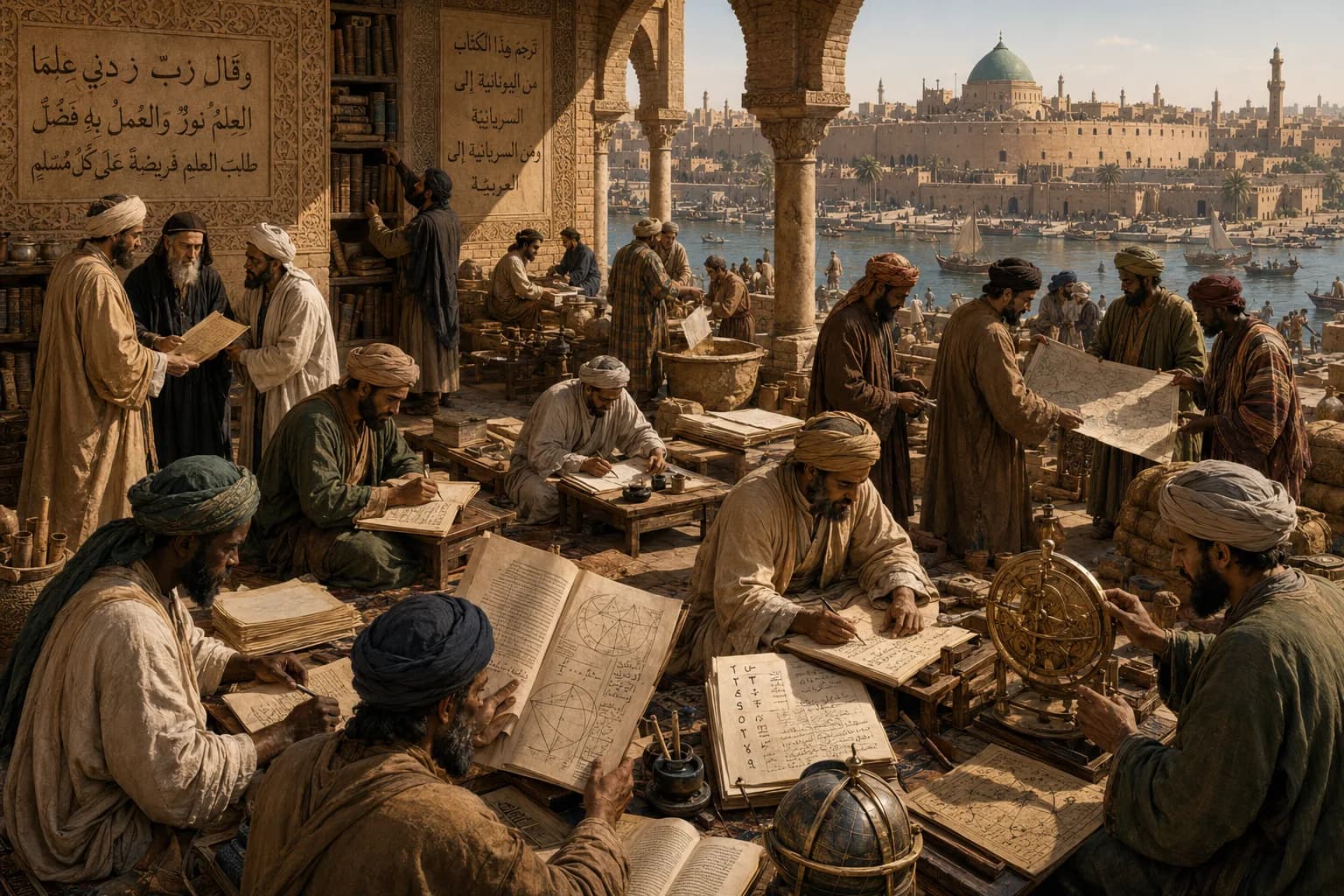
Scholars and books moved too. Islamic learning connected Mali's cities to wider conversations about law, religion, language, mathematics, astronomy and history.

Mali's fame reached the Mediterranean. Mapmakers and writers began to represent Mansa Musa and his empire as symbols of African wealth and royal power.

Mali was not outside the medieval world. It helped make that world.

These connections did not make Mali dependent on outsiders. They show something richer: a West African empire using its own resources and institutions while participating in global networks.

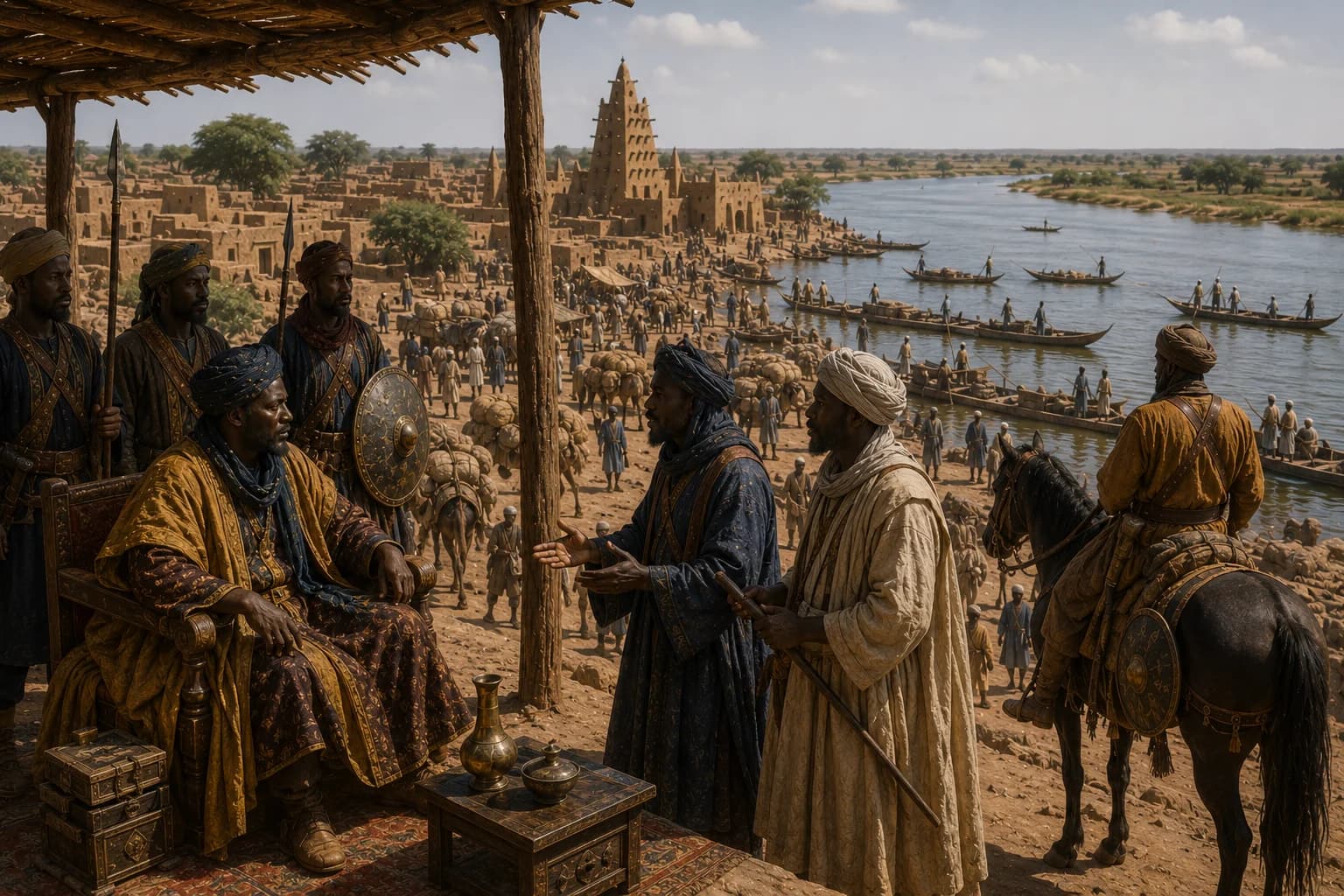
Malian rulers and officials look over Timbuktu and Niger River commerce after Mansa Musa.
1400 CE
Step 10 of 101400 CEAccessible mode

The Empire After Mansa Musa

After Mansa Musa, Mali remained a great empire, but its central power became harder to hold together.

Succession struggles weakened royal authority. When rulers competed for the throne, provincial leaders and neighbouring powers gained opportunities to act more independently.

Pressure also came from outside. Rival states and peoples challenged Mali's control over towns, routes and tribute. The empire's great size became a source of strain as well as strength.

Even so, Mali's achievement by 1400 was extraordinary. It had linked the , gold-producing regions, Niger cities and Saharan commerce into a powerful imperial system.

Mali weakened, but it had already changed the map of the medieval world.

Its gold, trade, Islamic centres and international reputation made Mali one of the great powers of medieval history. Later West African states would rise, but they inherited a world Mali had helped define.

Continue reading

Finished The Mali Empire?

Choose the next story, follow a connected moment, or explore the people behind this story.

Browse stories

References

Sources & Further Reading

Reliable sources, primary-source collections and reading paths connected to this page.

Sources used

  1. The Metropolitan Museum of Art, The Empires of the Western Sudan,” Open source
  2. Encyclopaedia Britannica, Mali: Historical Empire, Africa,” Open source
  3. Encyclopaedia Britannica, Musa I of Mali,” Open source

Further reading

  1. World History Encyclopedia, Mali Empire,” Open source
  2. D. T. Niane, Sundiata: An Epic of Old Mali, Longman.
  3. Encyclopaedia Britannica, Search results for The Mali Empire,” Open source
  4. WorldCat, Library holdings for The Mali Empire,” Open source

Primary sources

  1. Nehemia Levtzion and J. F. P. Hopkins, eds., Corpus of Early Arabic Sources for West African History, Cambridge University Press.
  2. Library of Congress, Search results for The Mali Empire,” Open source

Reviewed claim sources

Loading reviewed claim sources...

A weekly route through history

Find out first about the latest published stories, feature notes and occasional Premium offers in one weekly email.