People

Sumanguru Kante

Sumanguru Kante was the Sosso ruler remembered in Mande tradition as the powerful opponent defeated by Sundiata Keita at the Battle of Kirina around 1235.

Died
c. 1235 CE
Role
Ruler of Sosso

Sosso ruler (active early 1200s)

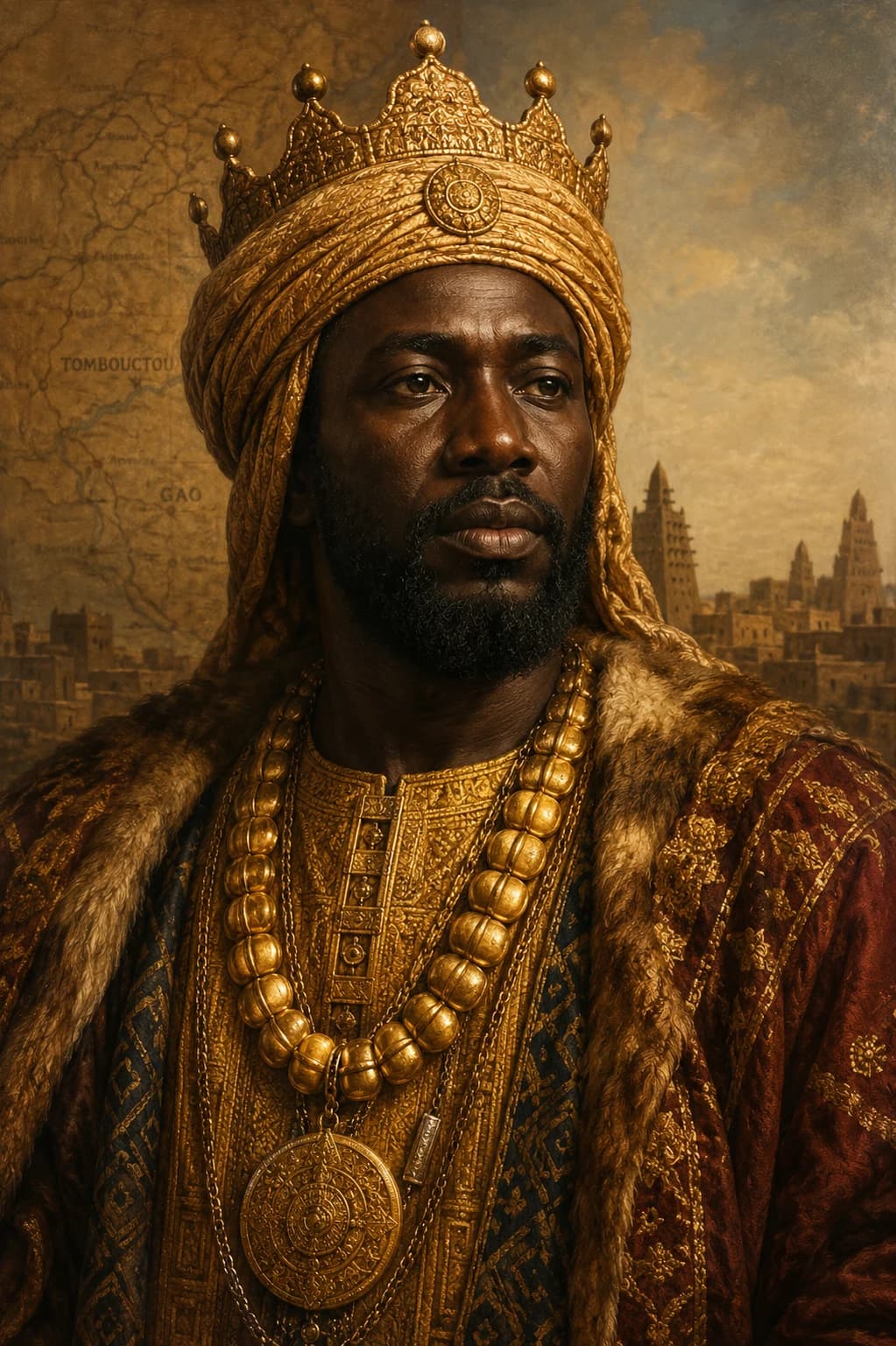
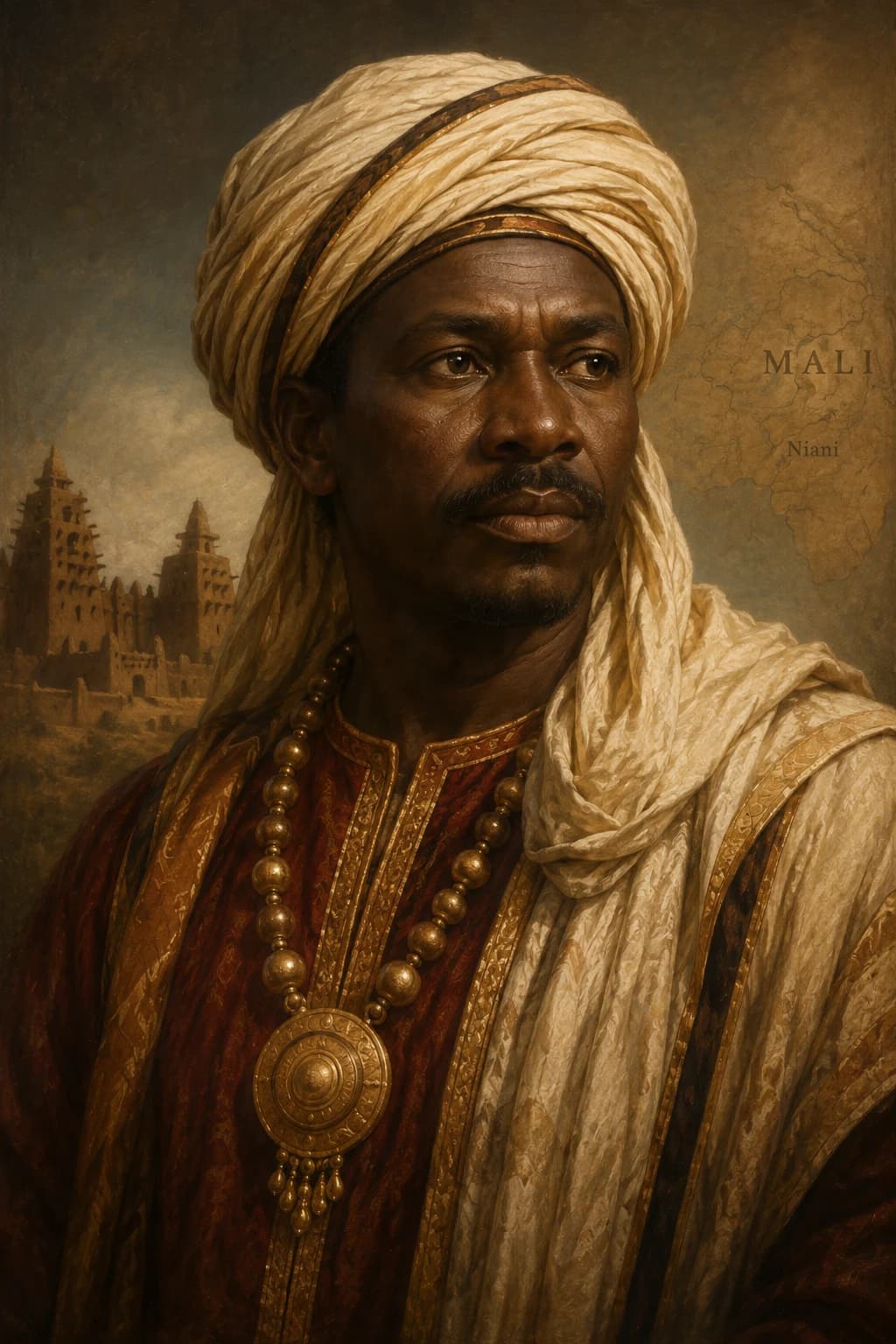
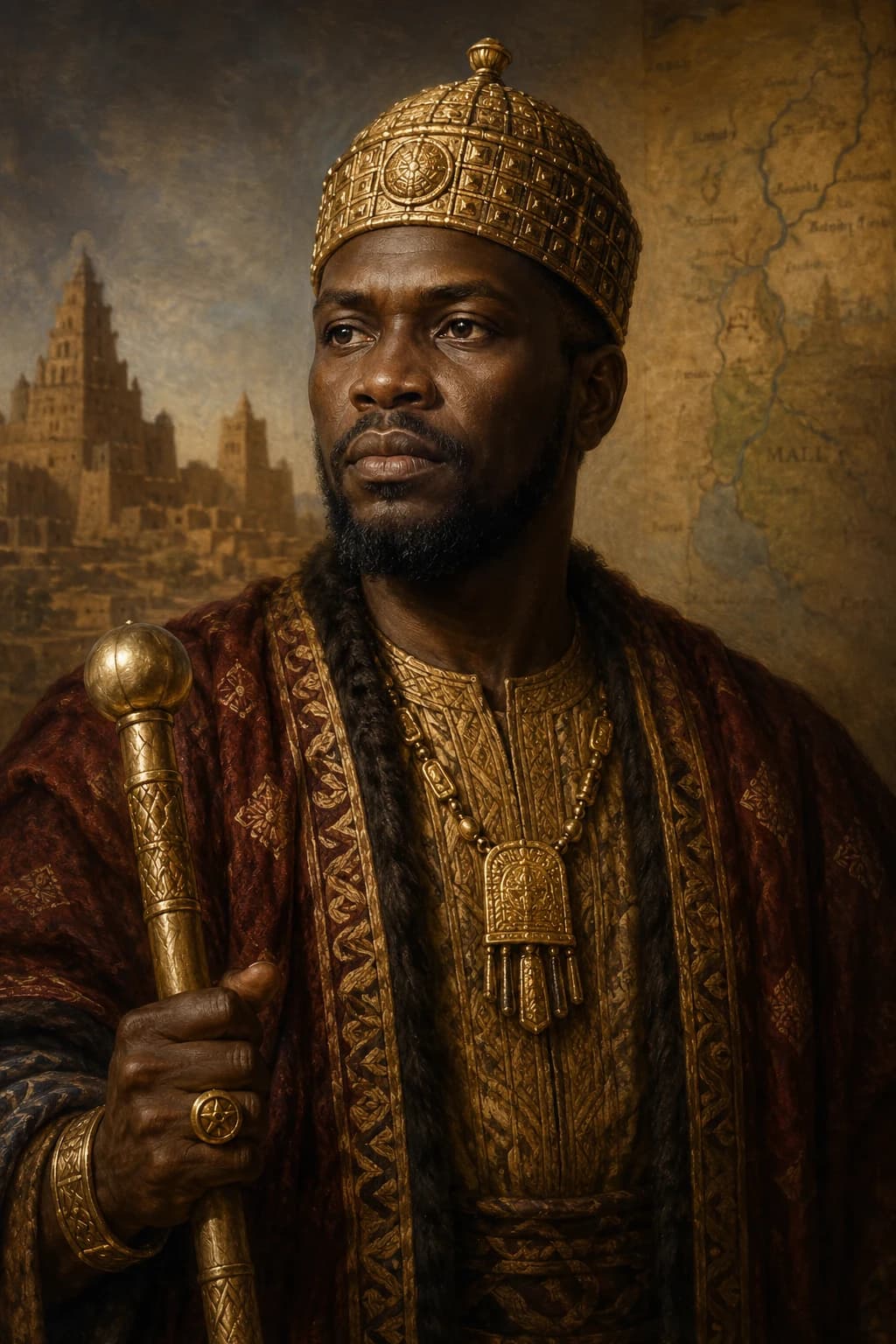
Portrait-style illustration of Sumanguru Kante in West African royal dress before a map and mud-brick architecture

Quick answer

Sumanguru Kante was the Sosso ruler remembered in Mande tradition as the powerful opponent defeated by Sundiata Keita at the Battle of Kirina around 1235.

Died
c. 1235 CE
Role
Ruler of Sosso
Years
Died c. 1235 CE
Quick facts

Profile details

Additional identity and tagging details that are not already covered in the introduction.

Also known as
Soumaoro Kante, Sumanguru
Region
West Africa, Sosso kingdom, Mande heartland, West Africa
Facts

Sumanguru Kante timeline facts

Selected specifics from this profile's life story.

early 1200s
Sosso authority

Sumanguru Kante is remembered as the ruler of Sosso, a power that expanded into the wider western Sudan after Ghana's decline.

early 1200s
Pressure on Mande rulers

Sosso expansion under Sumanguru created danger for Mande rulers and helped make coalition against him possible.

c. 1235
Defeat at Kirina

Around 1235, Sumanguru was defeated by Sundiata Keita's coalition at Kirina.

long-term
A necessary antagonist

Sumanguru remained important in memory because Mali's foundation story needed to explain the crisis Sundiata overcame.

Life Journey

The rival power before Mali

Follow Sumanguru's role as the Sosso ruler whose defeat became central to Mali's foundation story.

Complete chronology

early 1200s

Sosso authority

The historical Sumanguru is known largely through Mande traditions that were shaped by the memory of Mali's founding. Those traditions present him as the strong Sosso ruler whose expansion pressed into the Mande world. Behind the epic language is a real political setting: older power was weakening, routes and tribute were contested, and regional rulers were competing for authority.

early 1200s

Pressure on Mande rulers

Sumanguru matters because he explains why Sundiata's coalition could form. Mande communities and rulers did not unite in a vacuum. The threat of domination by a rival power gave scattered groups a reason to coordinate. In that sense, Sumanguru's strength helped create the political conditions for his own defeat.

c. 1235

Defeat at Kirina

Kirina is remembered as the moment Sosso authority broke and Sundiata's claim to leadership became politically convincing. The exact military details are difficult to recover, but the remembered outcome is clear. Sumanguru's defeat redistributed prestige across the region and opened the way for a Mande-led imperial order.

long-term

A necessary antagonist

Later memory often casts defeated rivals in sharp moral colours. Sumanguru's image should therefore be handled carefully. He was not simply a storybook villain; he represents the Sosso power that made the Mande crisis urgent. His importance lies in the historical function of rivalry: Mali's rise becomes understandable only when the power it overcame is also visible.

Continue in context

Connected stories

Move from the profile into the wider events and settings this figure belongs to.

Tertiary paths

Content note

This profile is written for educational use and connects to related Stories of History pages. Visuals are reviewed for educational context and may include historical images, archival material, or interpretive reconstructions. Image policy

References

Sources & Further Reading

Reliable reference works, archives and reading paths connected to this profile.

Further reading

  1. Encyclopaedia Britannica, Search results for Sumanguru Kante,” accessed June 2026.Open source
  2. WorldCat, Books and library holdings for Sumanguru Kante,” accessed June 2026.Open source

Primary sources

  1. Library of Congress, Search results for Sumanguru Kante,” accessed June 2026.Open source

Reviewed claim sources

Loading reviewed claim sources...

A weekly route through history

Find out first about the latest published stories, feature notes and occasional Premium offers in one weekly email.