People

Mansa Musa

Mansa Musa was the fourteenth-century ruler of the Mali Empire whose 1324 pilgrimage to Mecca displayed Mali's wealth and helped make the empire famous across the Islamic world and Mediterranean.

Born
c. 1280 CE
Died
c. 1337 CE
Role
Mansa of Mali

Mansa of Mali (c. 1280-c. 1337)

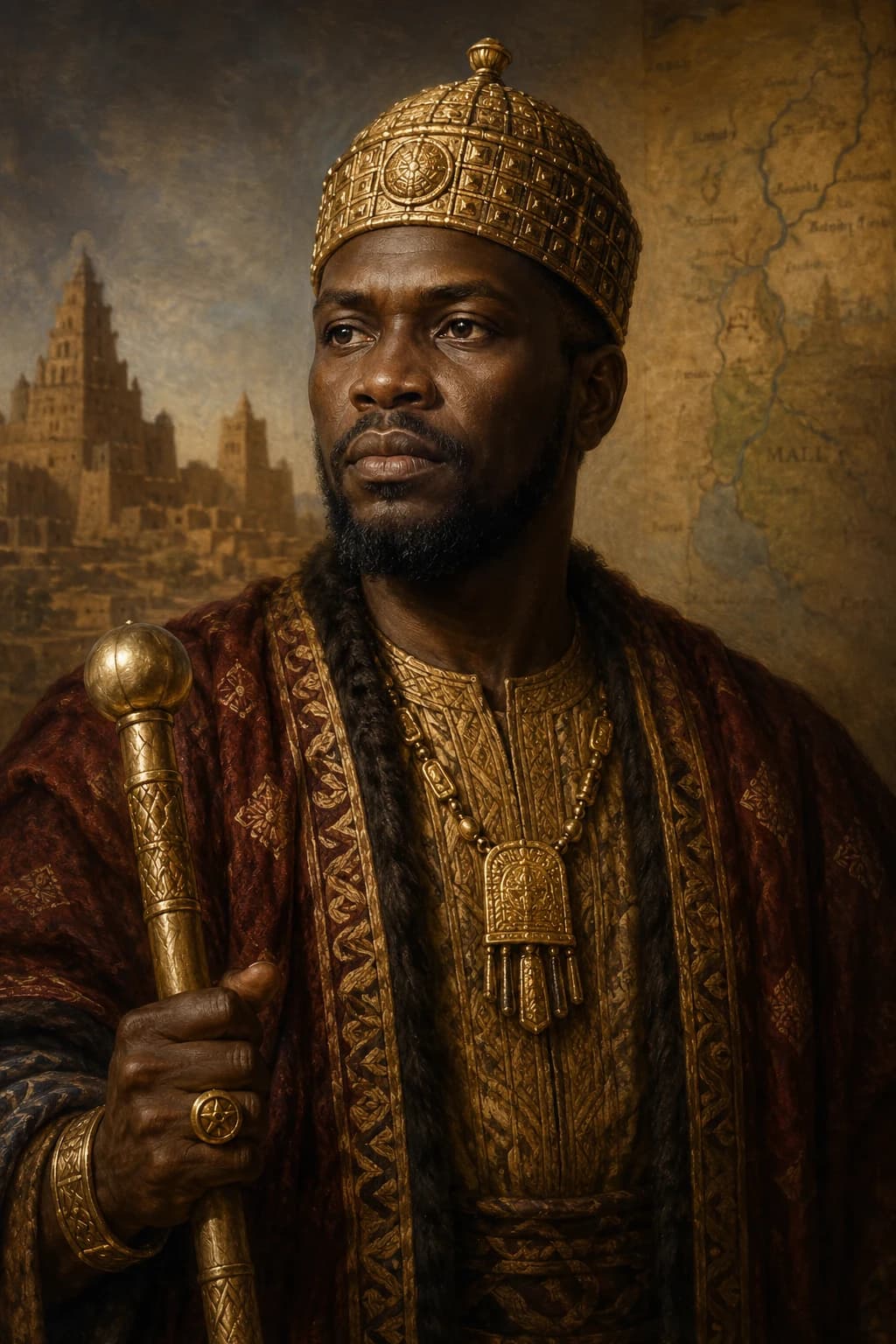
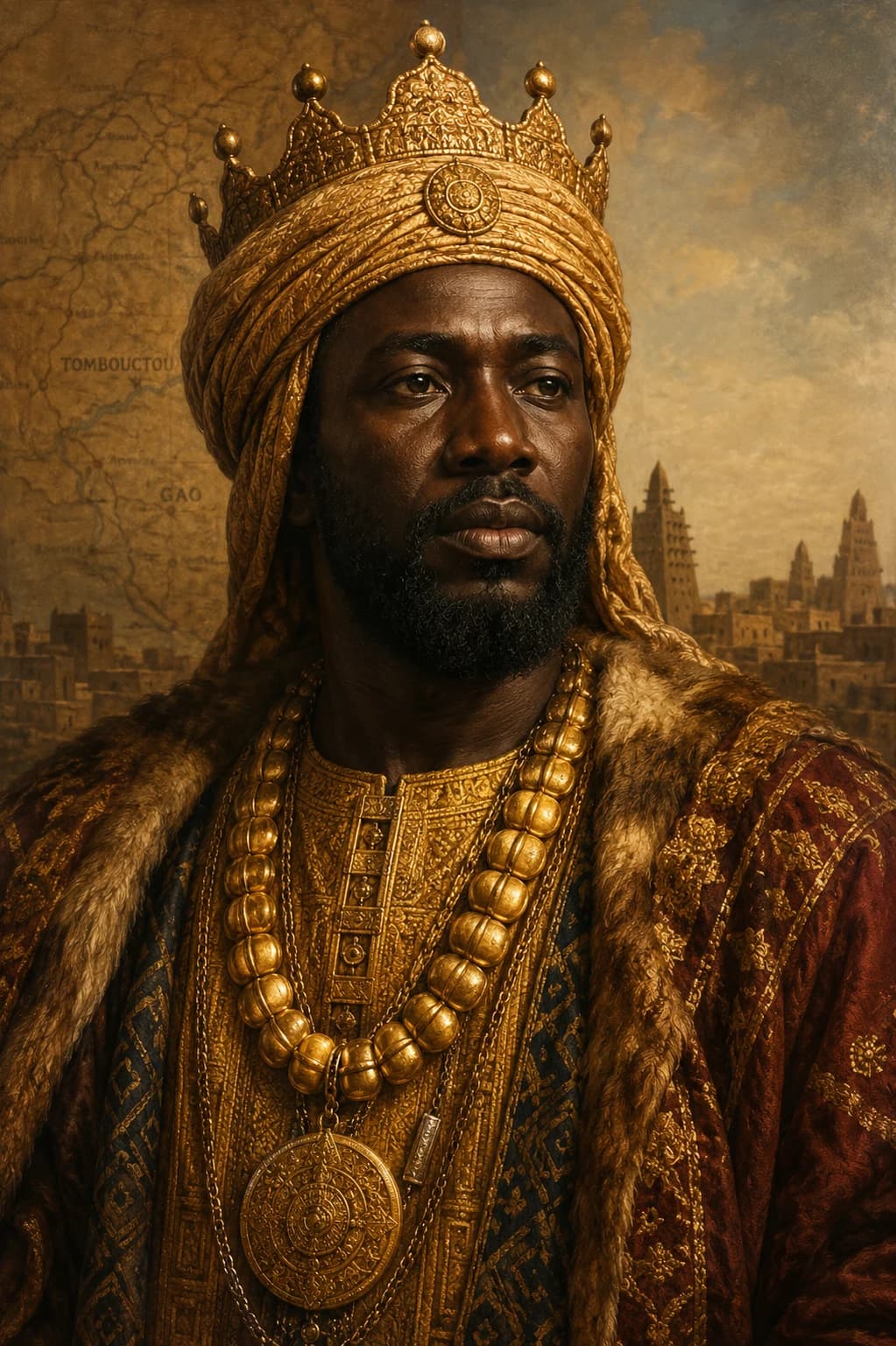
Portrait-style illustration of Mansa Musa in Malian royal dress with gold ornaments before a map of Mali and Timbuktu

Quick answer

Mansa Musa was the fourteenth-century ruler of the Mali Empire whose 1324 pilgrimage to Mecca displayed Mali's wealth and helped make the empire famous across the Islamic world and Mediterranean.

Born
c. 1280 CE
Died
c. 1337 CE
Role
Mansa of Mali
Years
c. 1280-c. 1337 CE
Quick facts

Profile details

Additional identity and tagging details that are not already covered in the introduction.

Full name
Musa I of Mali
Also known as
Kanku Musa
Region
West Africa, Mali Empire, Islamic world, West Africa
Facts

Mansa Musa timeline facts

Selected specifics from this profile's life story.

1312
Inheritance of empire

Mansa Musa came to power in 1312, inheriting an empire already strengthened by gold, tribute and trade routes.

1310s-1320s
Muslim rulership

Musa ruled as a Muslim king in a religiously diverse empire connected to merchants, scholars and North African networks.

1320s-1330s
Timbuktu and Gao

Musa's reign strengthened Mali's links to Timbuktu, Gao, scholarship, books and Niger-Sahara commerce.

after 1337
A ruler on the map

After Musa, writers and mapmakers remembered Mali as a symbol of African wealth and royal power.

Life Journey

Gold, pilgrimage and global reputation

Follow Musa from his accession in Mali to the pilgrimage that made his empire visible across the medieval world.

Complete chronology

1312

Inheritance of empire

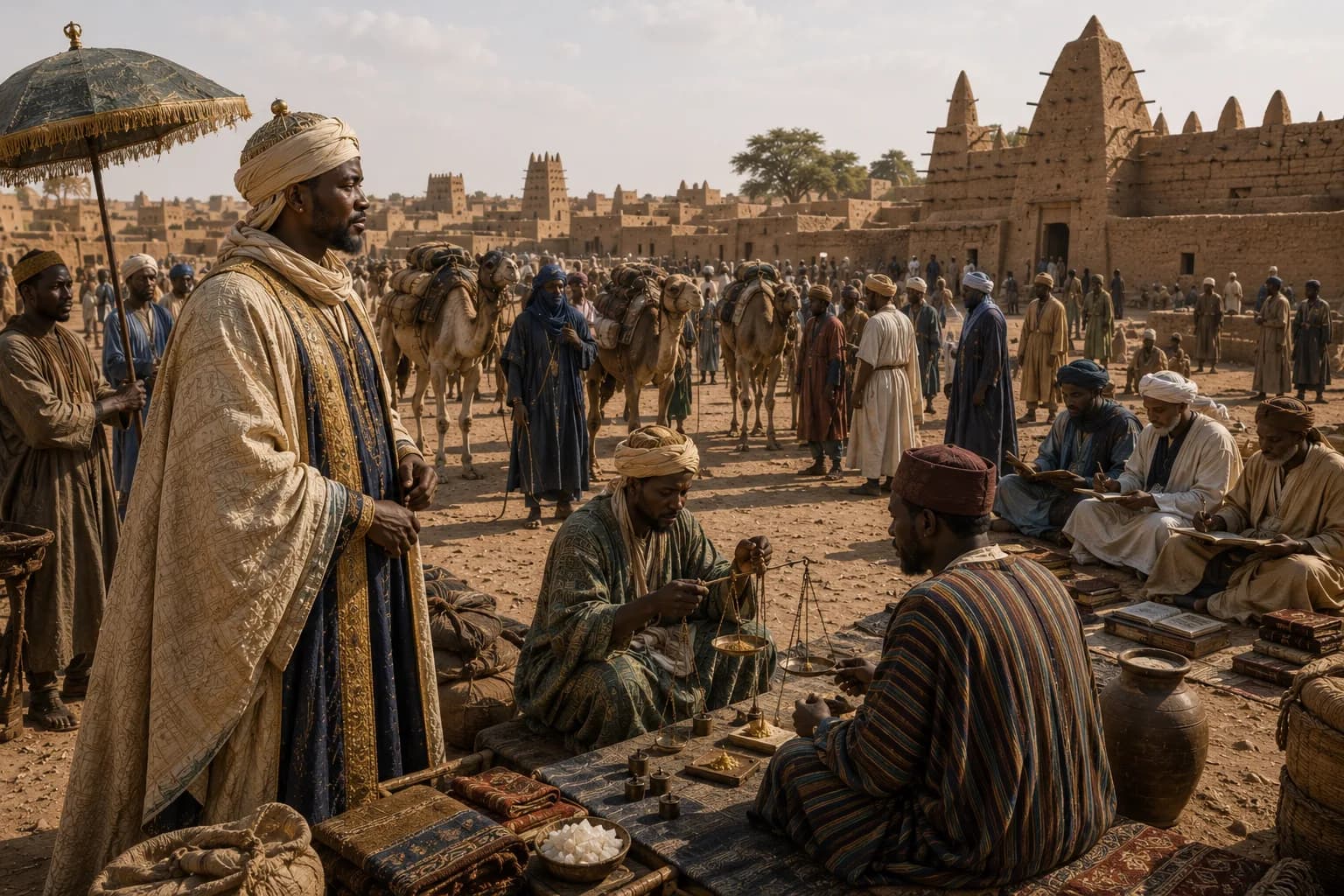
Mansa Musa did not create Mali's wealth from nothing. He inherited a state whose authority rested on the Mande heartland, gold-producing regions, tribute relationships and routes linking the Niger world to the Sahara. His importance lies in how effectively he turned those foundations into visible royal prestige.
1310s-1320s

Muslim rulership

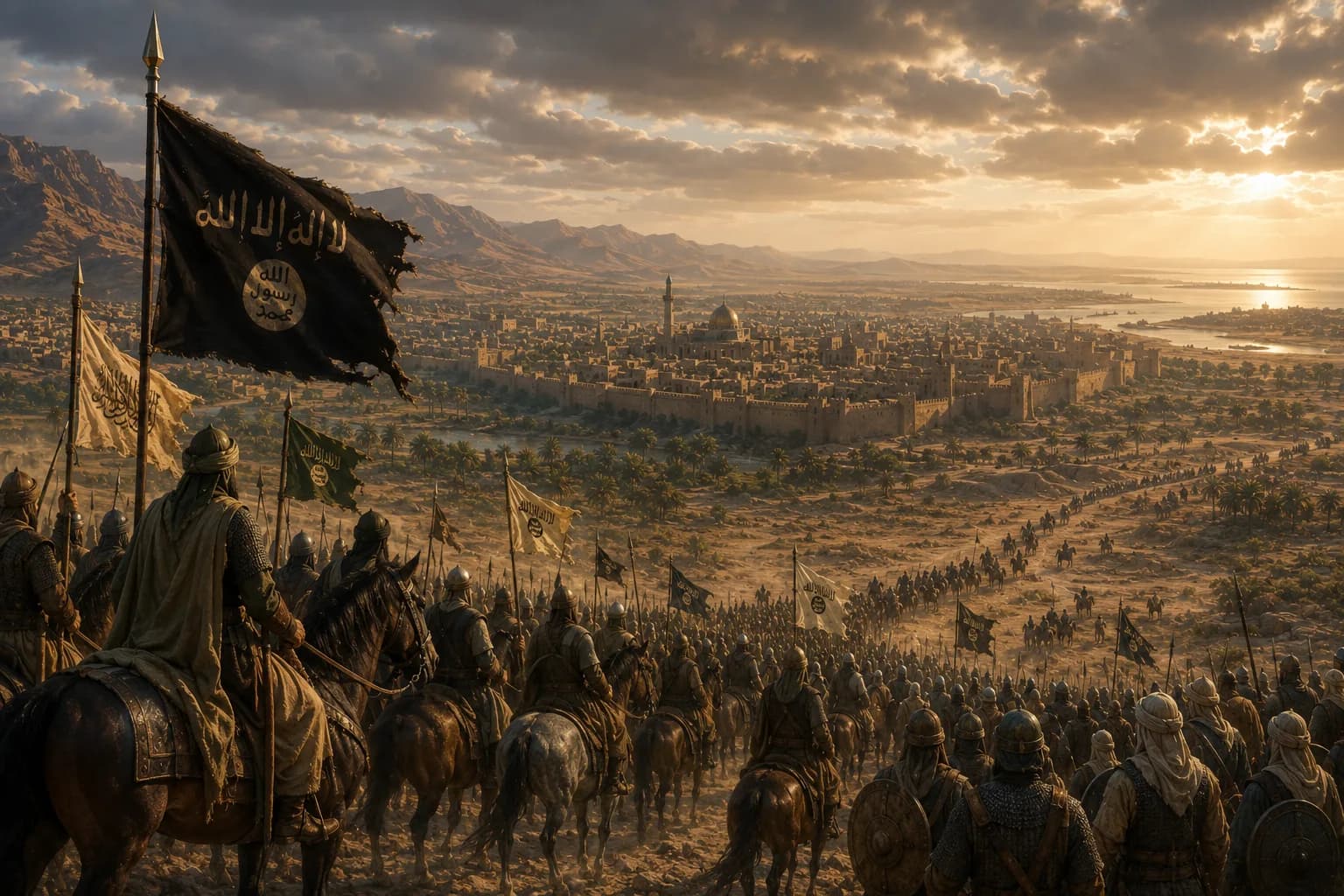
Islam had long travelled through West Africa with merchants, scholars and rulers. Under Musa, Muslim kingship became a language of legitimacy that could travel beyond Mali. Arabic literacy, pilgrimage, legal learning and patronage linked the court to North Africa and the wider Islamic world without erasing the empire's deeper West African foundations.

1324

The hajj

Musa's pilgrimage was an act of faith and a diplomatic performance. Accounts of his caravan, generosity and gold circulated through Cairo and beyond. Medieval writers sometimes used numbers that should be treated cautiously, but the shared impression is clear: Mali possessed extraordinary wealth and a ruler able to display it on one of the great routes of the Islamic world.

1320s-1330s

Timbuktu and Gao

Timbuktu and Gao mattered because they joined commerce to learning and river routes to Saharan exchange. Musa is associated with patronage of mosques, scholars and urban religious life. The details of individual building campaigns are complex, but the larger pattern is clear: royal wealth supported Islamic urban culture and made Mali's influence feel more permanent.

after 1337

A ruler on the map

Musa's reputation outlived his reign. Later maps and texts placed Mali inside a wider medieval imagination, with the gold-holding ruler becoming one of the most recognisable images of West African power. The image is not a neutral record, but it shows the scale of his fame. Through Musa, Mali became part of how outsiders pictured wealth, kingship and Africa.

Continue in context

Connected stories

Move from the profile into the wider events and settings this figure belongs to.

Tertiary paths

Content note

This profile is written for educational use and connects to related Stories of History pages. Visuals are reviewed for educational context and may include historical images, archival material, or interpretive reconstructions. Image policy

References

Sources & Further Reading

Reliable reference works, archives and reading paths connected to this profile.

Further reading

  1. Encyclopaedia Britannica, Search results for Mansa Musa,” accessed June 2026.Open source
  2. WorldCat, Books and library holdings for Mansa Musa,” accessed June 2026.Open source

Primary sources

  1. Library of Congress, Search results for Mansa Musa,” accessed June 2026.Open source

Reviewed claim sources

Loading reviewed claim sources...

A weekly route through history

Find out first about the latest published stories, feature notes and occasional Premium offers in one weekly email.