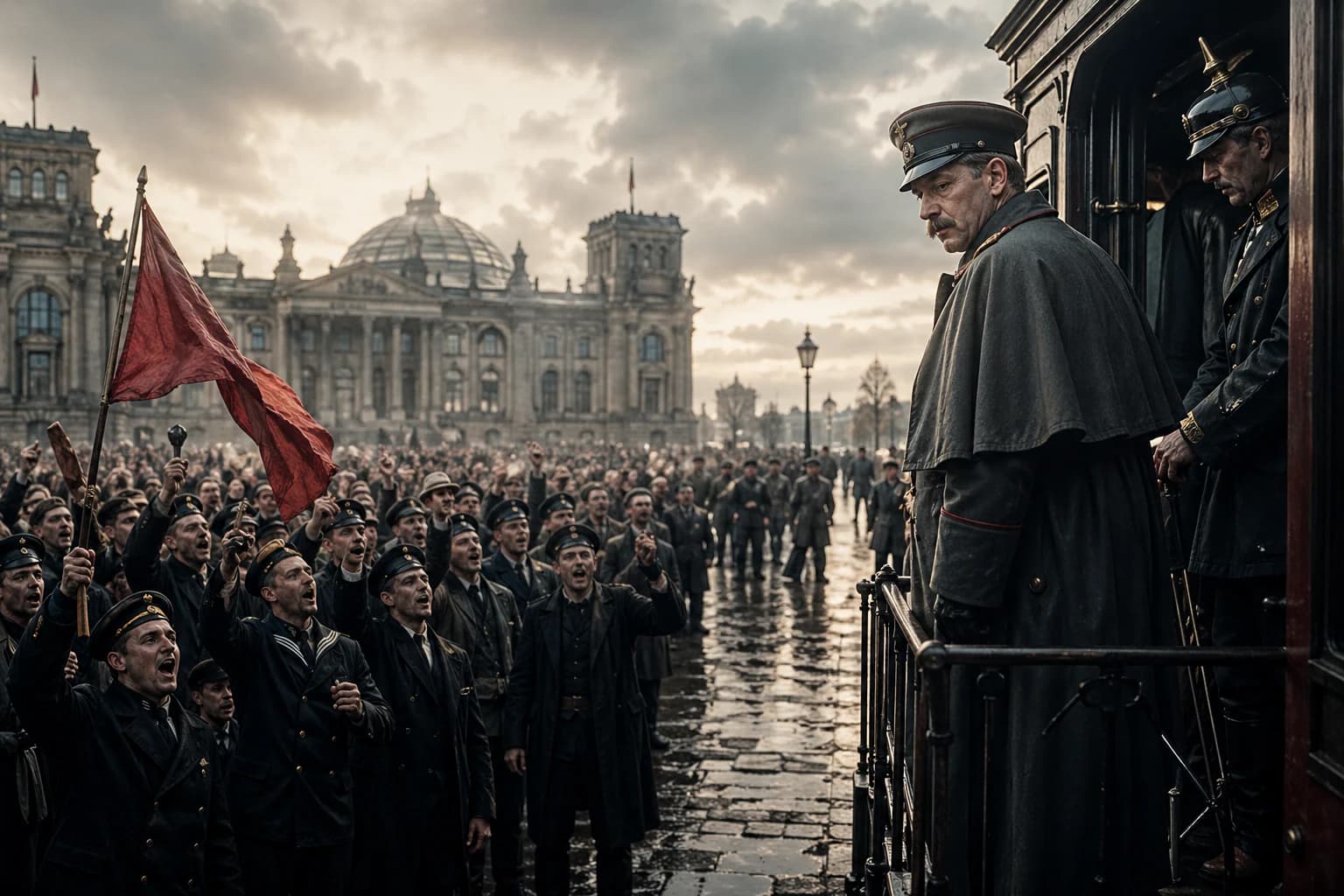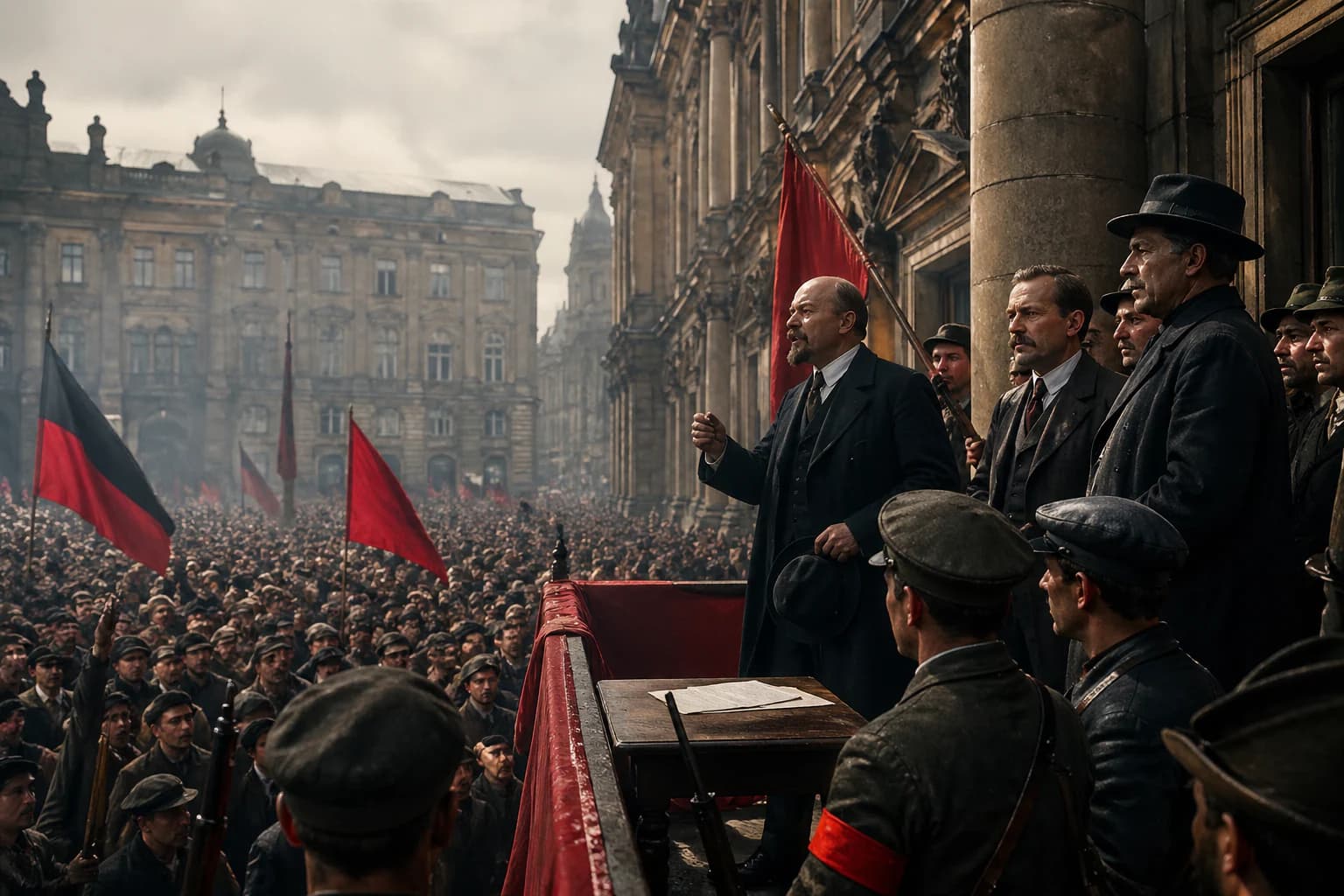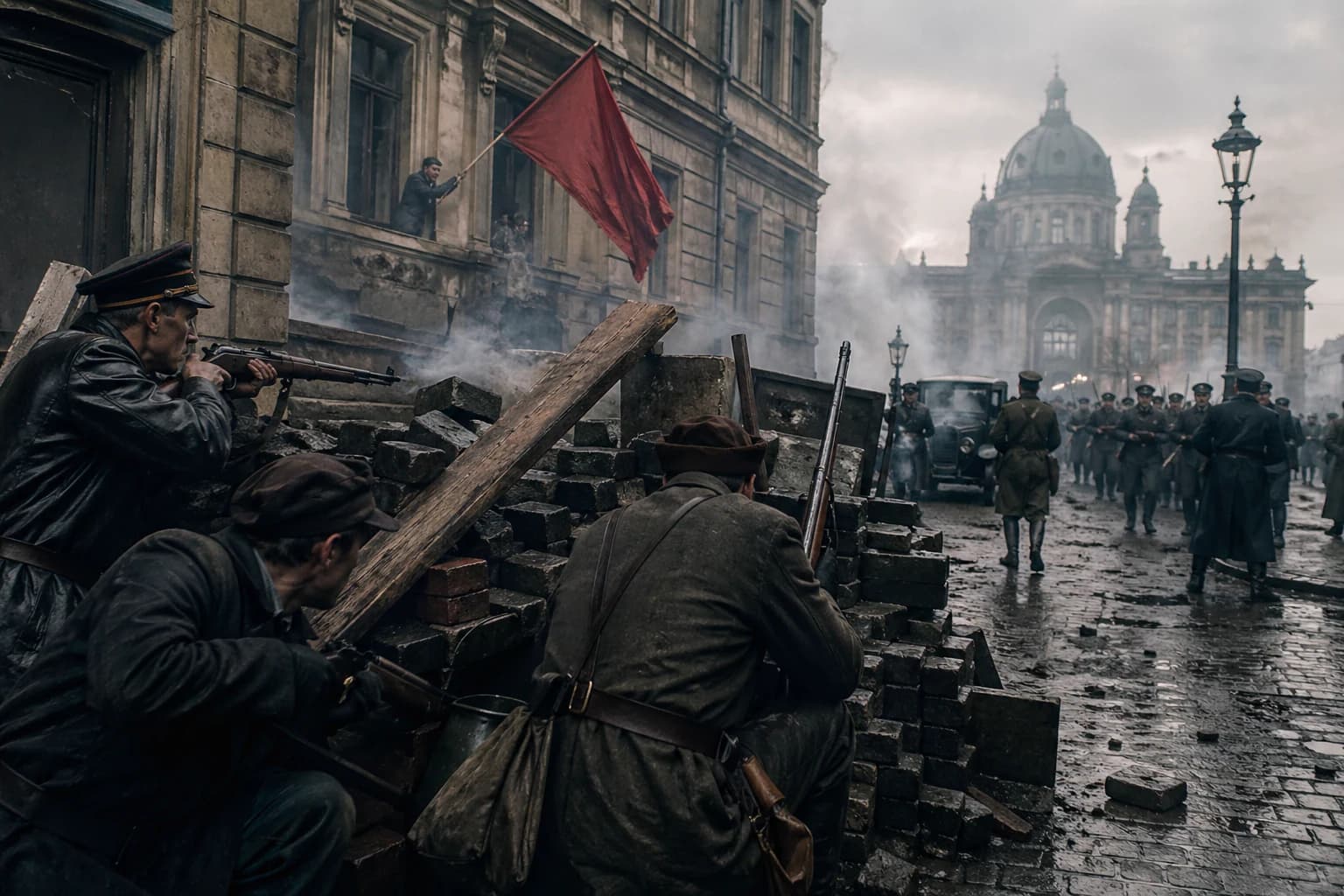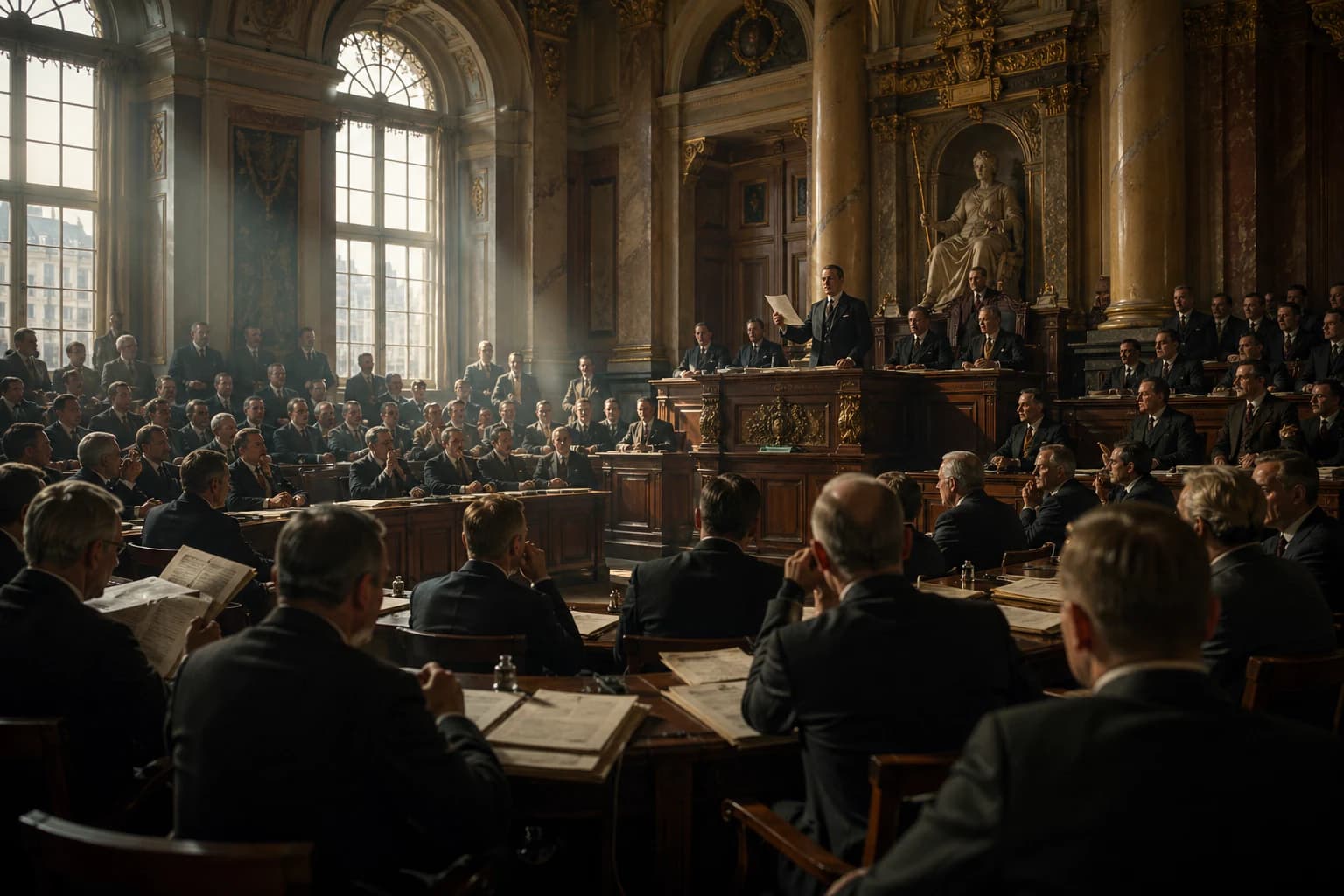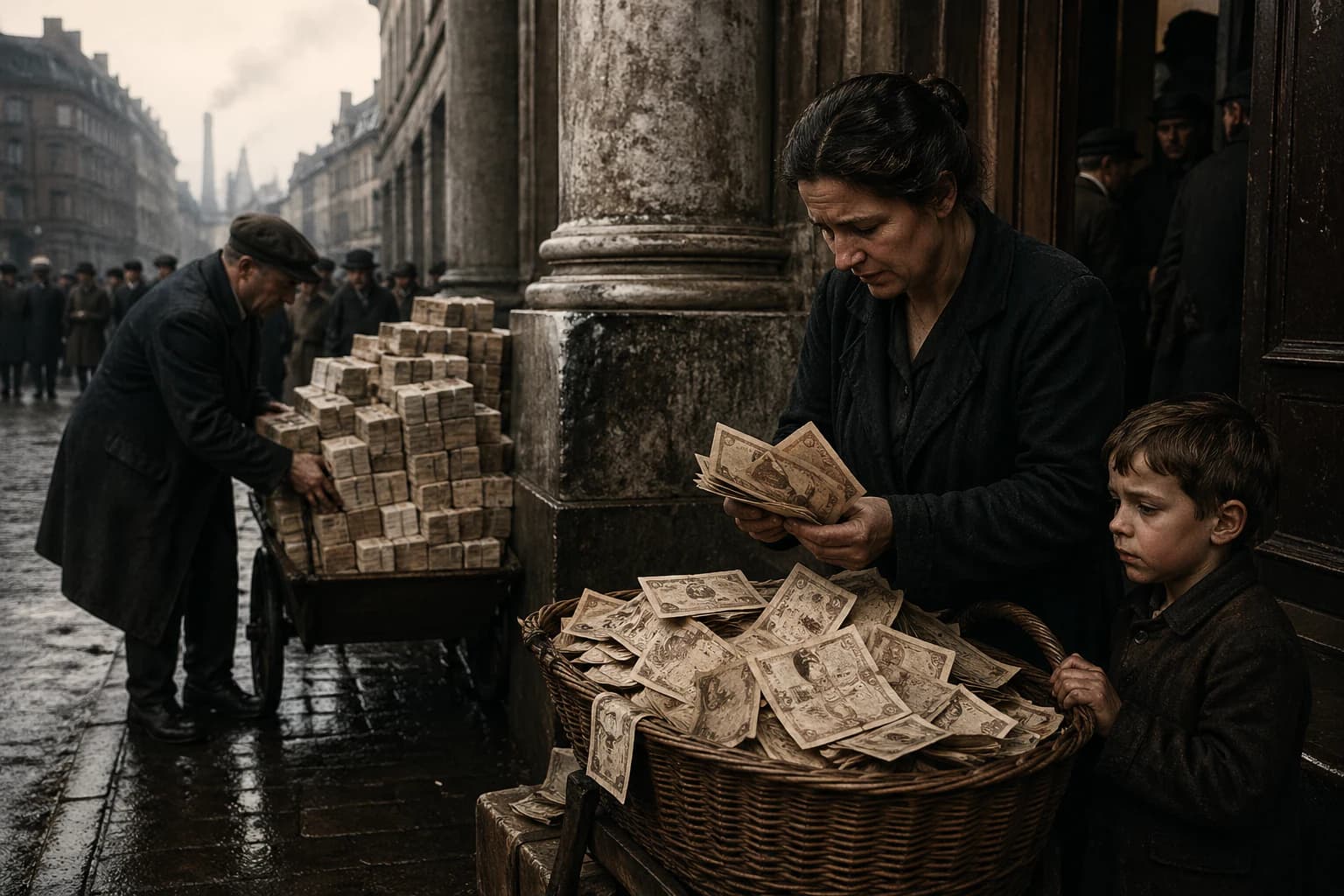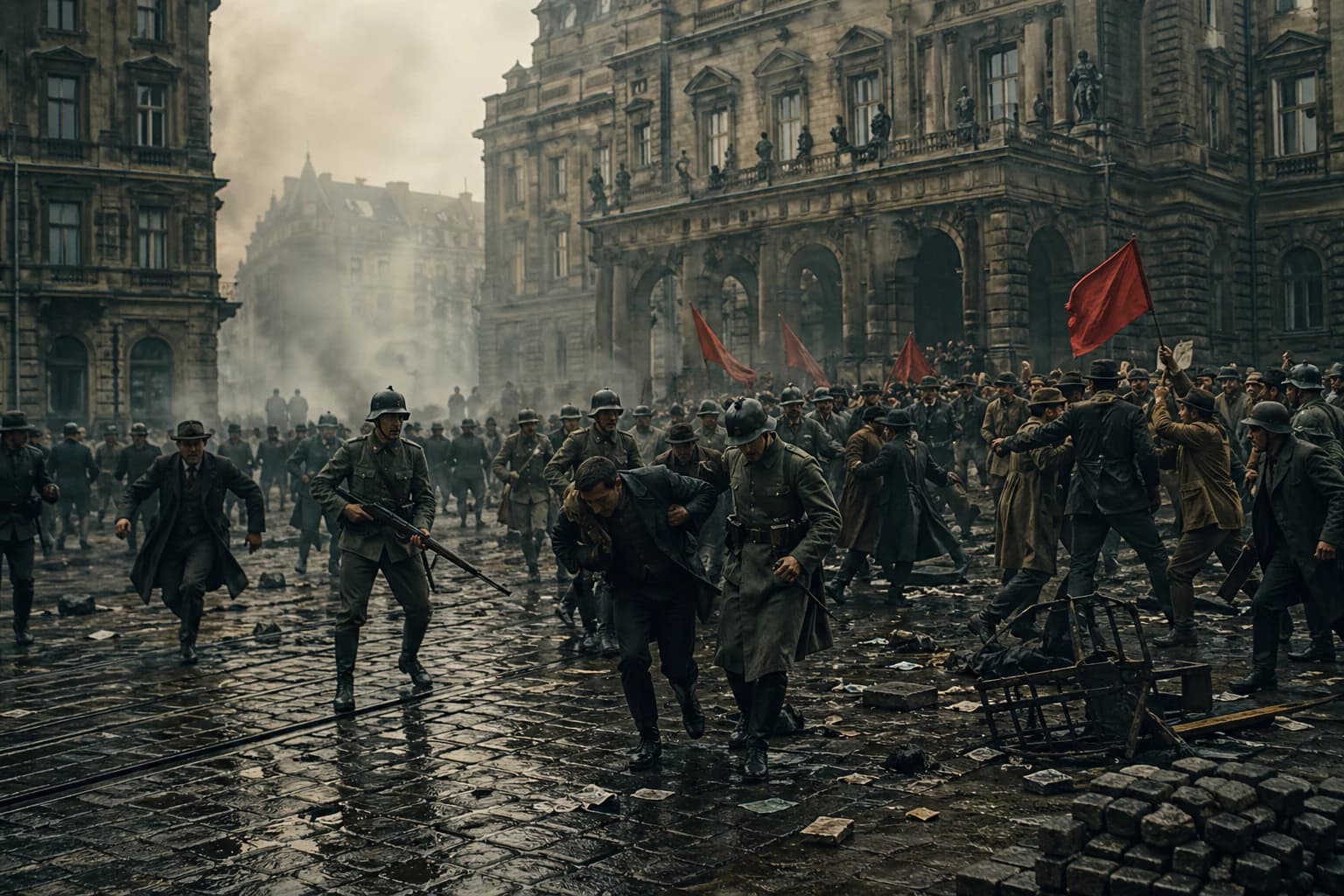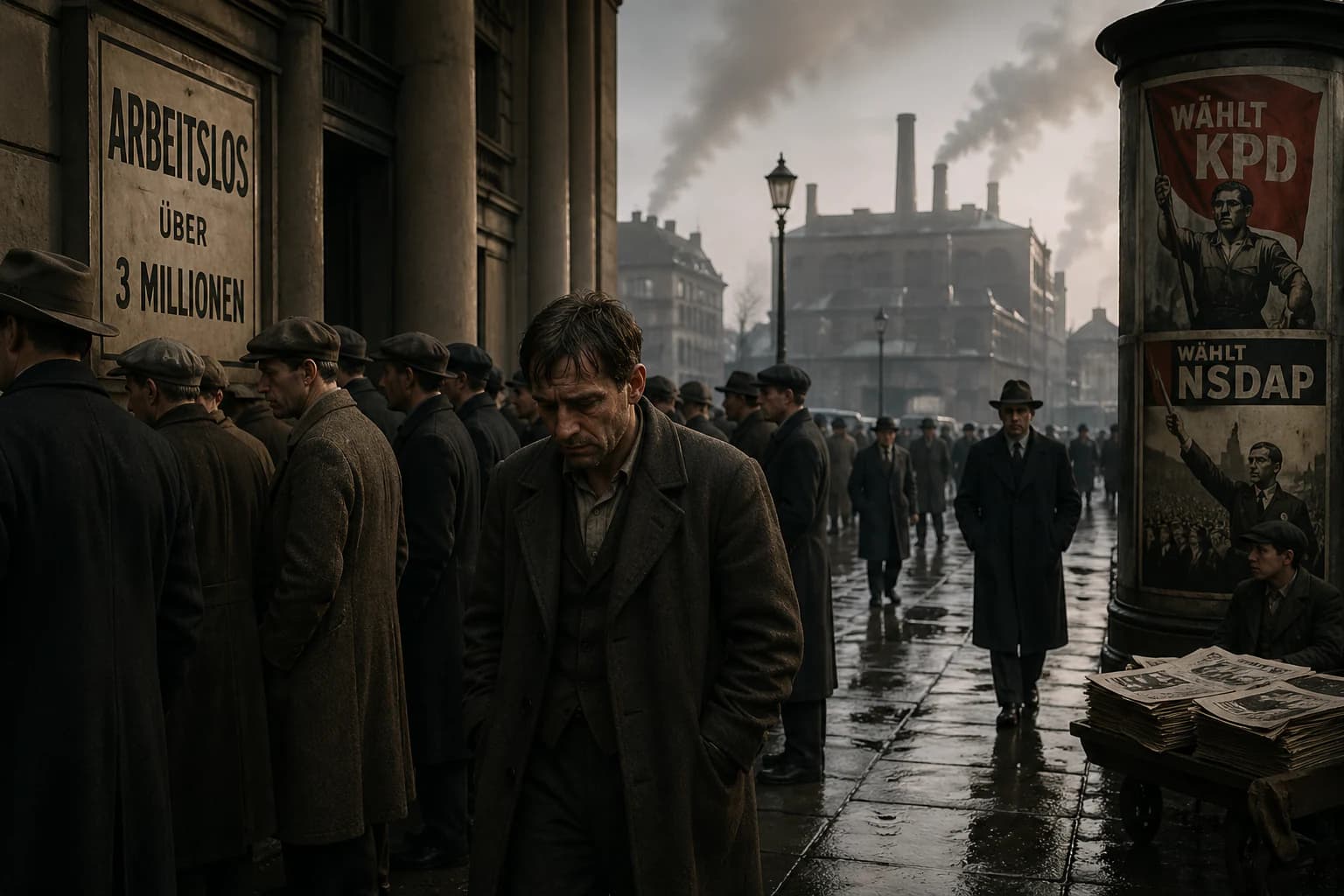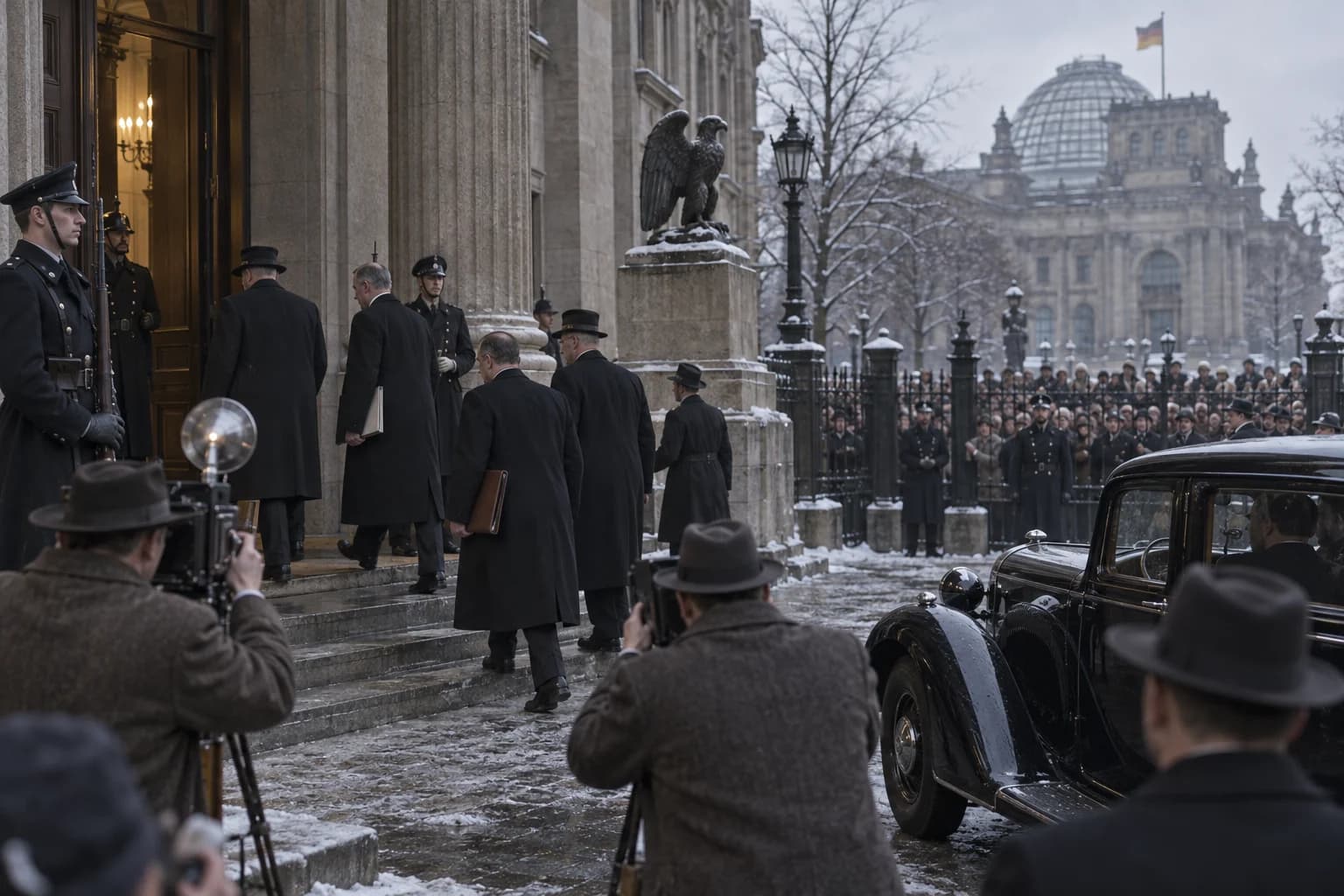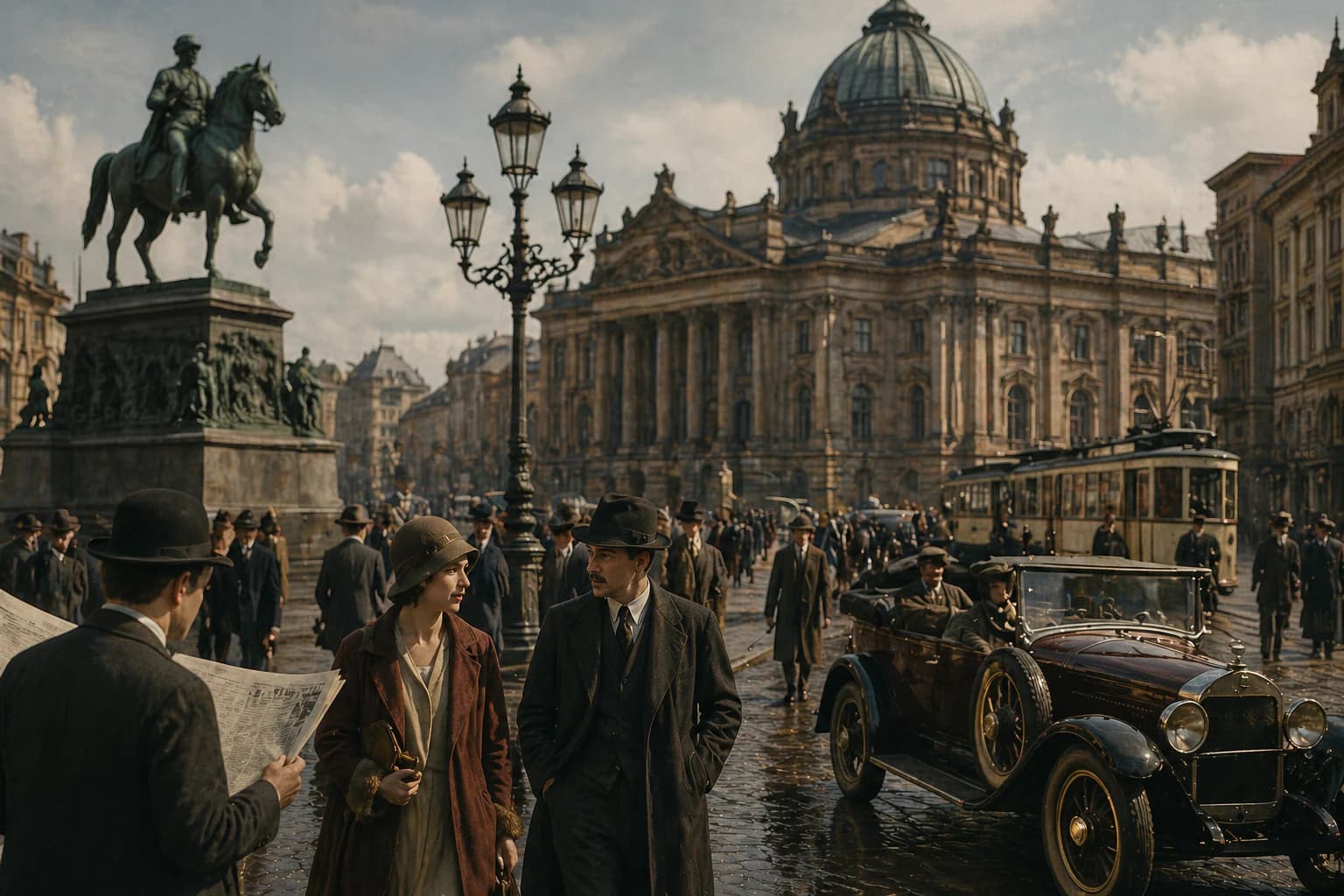
Berlin in the 1920s, with crowds, political tension and the Reichstag in the background
Premium Story

Weimar Republic

Enter Weimar Germany, where democracy, hyperinflation, cultural brilliance, and extremism collide.

11 chapters

Next
Context

Introduction

What you'll learn: You'll follow Germany's first democracy from its birth amid revolution and defeat, through economic catastrophe and cultural energy, to its final collapse under Nazi pressure — and understand why it failed.

Key forces

Defeat and Abdication
1918 CE
Step 1 of 101918 CEAccessible mode

Defeat and Abdication

By autumn 1918, Germany had lost the war — and the empire that fought it was about to collapse.

By late 1918, the German army was exhausted and in retreat. Four years of war had left the country short of food and hope. Military leaders knew defeat was coming, but the German public had not been told.

In October 1918, sailors at refused orders to sail on a suicidal final mission. Their mutiny spread across Germany. Workers and soldiers formed revolutionary councils, inspired by what had happened in Russia.

The empire did not fall in battle. It collapsed from within.

Kaiser Wilhelm II abdicated on 9 November 1918. That same day, a republican government was declared from a window in — partly to stop radical revolutionaries claiming power first.

The new republic inherited the blame for a war it had not started. Civilian politicians signed the armistice and were immediately branded as traitors by those who refused to accept defeat.

The Republic Is Declared
1918 CE
Step 2 of 101918 CEAccessible mode

The Republic Is Declared

Germany's new republic arrived not out of democratic conviction but revolutionary necessity — and immediately faced a struggle over what kind of republic it would be.

On 9 November 1918, two competing visions of Germany's future fought for control. Social Democrats led by Friedrich Ebert wanted a stable parliamentary democracy. Radical revolutionaries, inspired by Russia, wanted something far more sweeping.

Ebert became head of the new government but had to make compromises immediately. To keep order, he struck a deal with the old military — men who had just lost the war and were deeply suspicious of democracy.

The republic was built on compromises that would haunt it for years.

Workers' and soldiers' councils spread across Germany demanding radical change. The government called in right-wing paramilitary units — the Freikorps — to restore order. It worked in the short term, but it meant the new republic was relying on forces hostile to it.

Germany had a republic. But its foundations were uncertain from the very start.

The Spartacist Rising
1919 CE
Step 3 of 101919 CEAccessible mode

The Spartacist Rising

In January 1919, a communist uprising in put the survival of the new republic to its first violent test.

Just weeks after Germany's new government took shape, radical revolutionaries tried to seize power. The Spartacist League, led by Rosa Luxemburg and Karl Liebknecht, called on workers to rise up. They wanted to overthrow the Social Democratic government and create a communist state.

The government had no reliable army. Instead it called on the Freikorps — right-wing paramilitary units made up of former soldiers. They crushed the uprising with brutal force.

The republic survived by using its enemies to defeat its rivals.

Rosa Luxemburg and Karl Liebknecht were captured and murdered by Freikorps soldiers in January 1919. Their deaths caused a lasting split between the Social Democrats and the communist left — a division that would weaken opposition to the Nazis fourteen years later.

The uprising failed, but the damage it did to German democracy lasted far longer than the fighting.

Premium

You've reached the turning point

The opening chapters show Germany trying to build democracy out of defeat. Premium follows the danger inside that experiment: inflation destroys trust, extremists test the republic, a brief recovery masks deep weakness, and depression opens the road to Hitler.

Continue into the reversals, crises and human stakes that make the story matter.

Unlock full story

What Premium unlocks next

  1. 4The Treaty of Versailles
  2. 5The Weimar Constitution
  3. 6Hyperinflation Crisis
  4. 7Extremists Test the Republic
  5. 8The Golden Years
  6. 9Depression Breaks the Center
  7. 10Hitler Takes Power

Browse stories

Browse stories for free

Explore the people connected to this turning point or enjoy one of our free stories.

Unlock full storyBrowse stories

References

Sources & Further Reading

Reliable sources, primary-source collections and reading paths connected to this page.

Sources used

  1. German History in Documents and Images, Weimar Germany, 1918-1933,” Open source
  2. United States Holocaust Memorial Museum, The Weimar Republic,” Open source

Further reading

  1. Eric D. Weitz, Weimar Germany: Promise and Tragedy, Princeton University Press.

Primary sources

  1. Yale Law School, Avalon Project: 20th Century Documents,” Open source

A weekly route through history

Find out first about the latest published stories, feature notes and occasional Premium offers in one weekly email.