Complete chronology
Full overview and deeper context for every journey step.
1878
Berlin beginnings
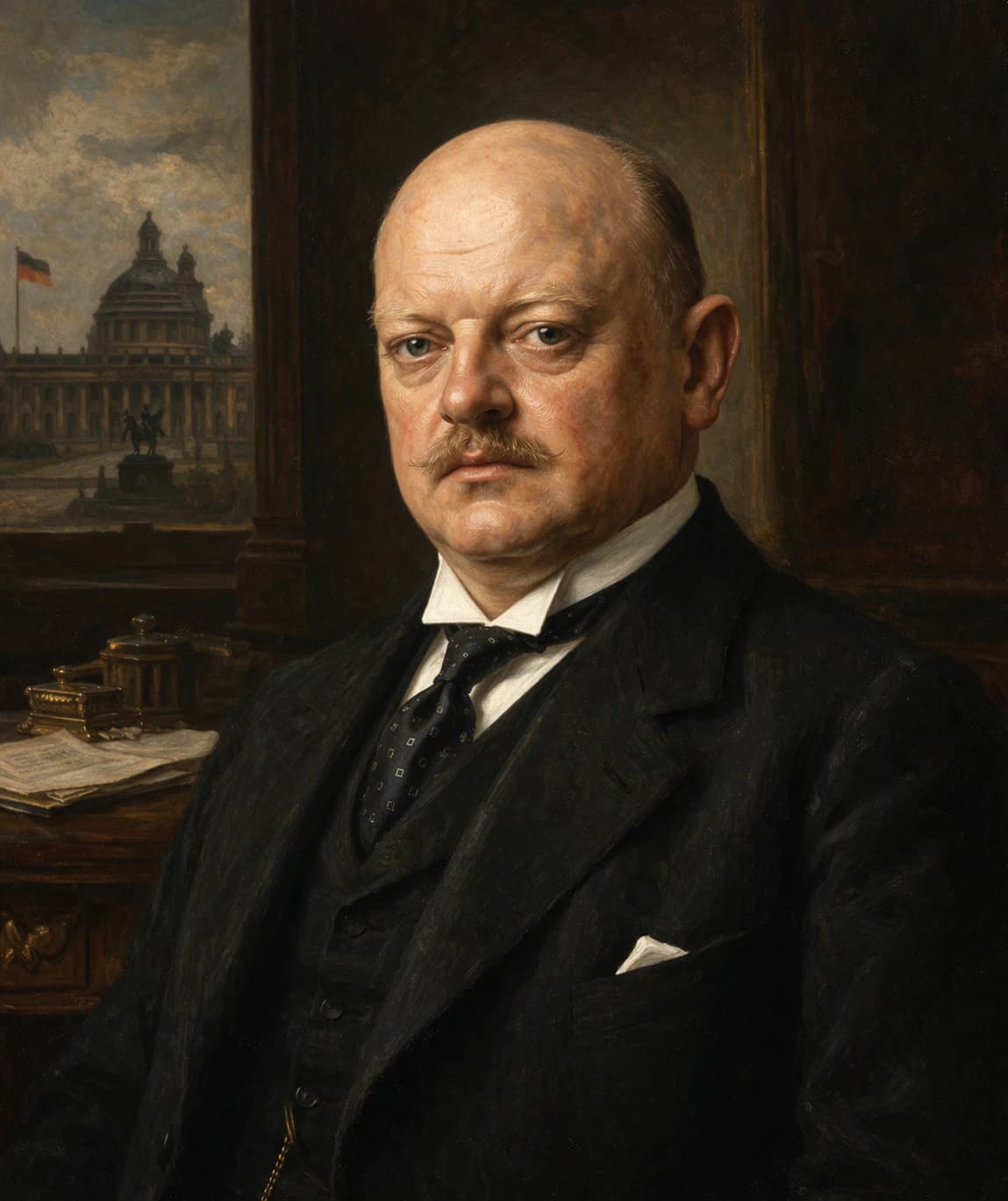
Gustav Stresemann grew up in Berlin during the confident decades after German unification. His father ran a modest beer distribution business, placing the family outside the old aristocratic elite but within the striving commercial world of the new empire. That background mattered. Stresemann understood the ambitions of the educated middle class, the importance of industry, and the connection between economic strength and national power. Berlin itself was a political education: imperial authority, socialism, liberalism, militarism, and modern mass politics all pressed against one another in the capital. Stresemann's later career would carry this imprint. He was never a romantic outsider. He was a practical nationalist shaped by business, education, and the belief that Germany had to be strong enough to be respected.
His early life blended ambition with practicality, shaping a leader who valued both national strength and economic stability.
1897–1901
Academic formation
Stresemann's university studies at Berlin and Leipzig gave intellectual form to instincts drawn from his upbringing. He studied political economy and history, writing on the bottled beer trade, a subject that sounds narrow but reveals his habit of connecting business organisation to larger social change. He joined student associations, debated fiercely, and developed as a speaker capable of turning technical questions into political arguments. Unlike ideologues who treated economics as secondary to national destiny, Stresemann saw economic capacity as the foundation of power. Germany's future, in his view, depended on productive industry, access to markets, and a state able to defend national interests. That outlook could feed expansionist nationalism before 1918, but it also equipped him for pragmatic reconstruction after defeat.
His education grounded his politics in economic logic rather than abstract ideology.
1907
Entering politics
Stresemann first entered the Reichstag in 1907 as one of its youngest members. He belonged to the National Liberal tradition, which joined constitutional and economic liberalism to support for empire, navy, and national prestige. This was not the Stresemann later celebrated as a European conciliator. Before the First World War, he wanted Germany to be commercially and politically powerful, and he believed world politics rewarded strength. He represented industrial and middle-class interests with skill, arguing for policies that would help German business compete. His early career matters because his later moderation was not born from pacifist innocence. It grew from the wreckage of a nationalism he had once shared.
His early politics combined liberal economics with assertive national ambition.
1914–1918
War stance
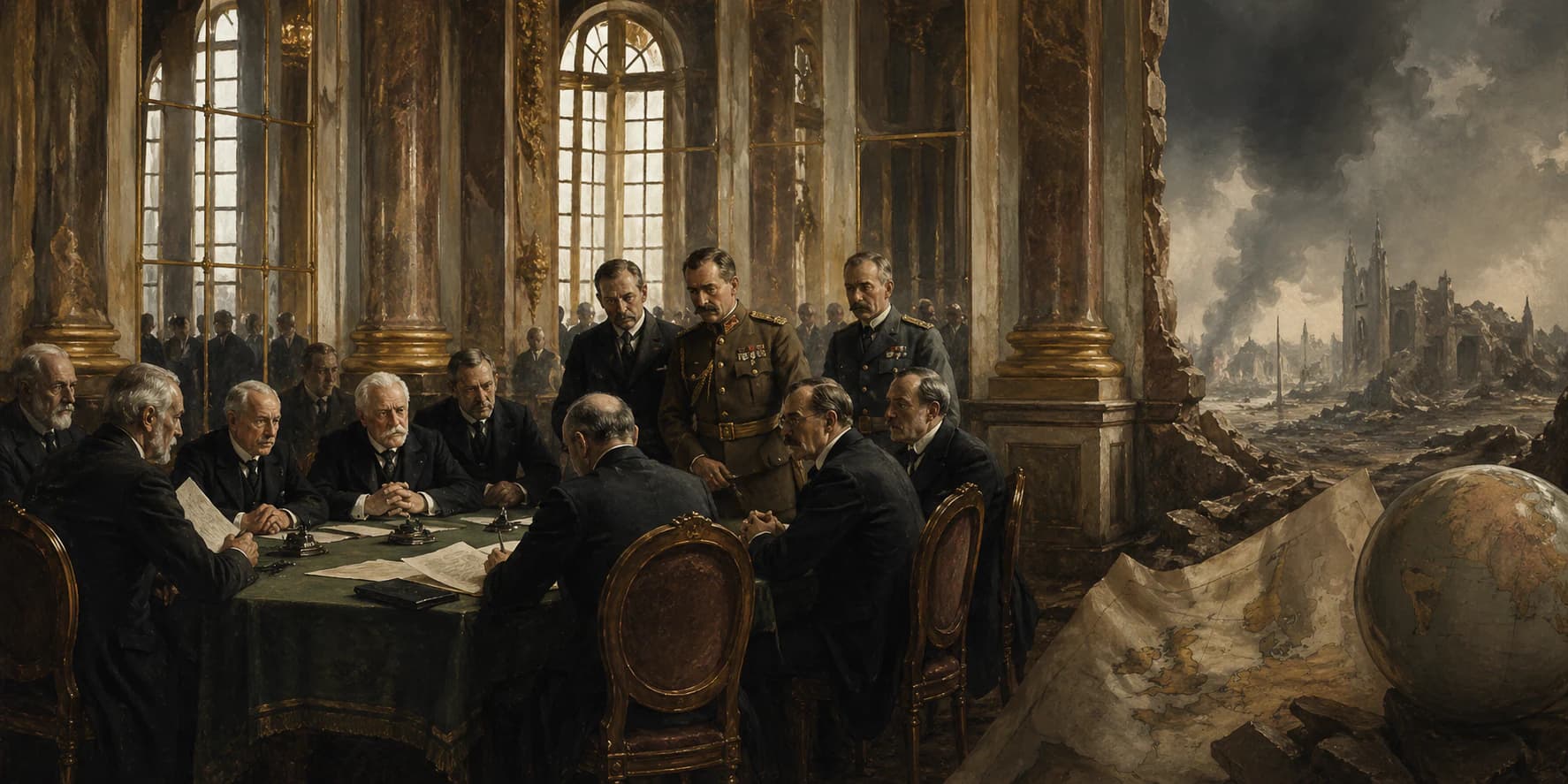
The war exposed the harsher side of Stresemann's nationalism. He supported a hard line, favoured far-reaching war aims, and did not begin as a prophet of reconciliation. Like many German politicians, he interpreted the conflict through security, markets, and national status, imagining that victory could secure Germany's position in Europe. Defeat in 1918 shattered that framework. The empire collapsed, the republic was born under pressure, and the Treaty of Versailles imposed territorial losses, military restrictions, reparations, and humiliation. Stresemann's importance lies partly in his capacity to learn from disaster without surrendering national purpose. He did not stop wanting revision of Versailles. He changed his method, accepting that Germany could recover only by surviving first.
The failure of wartime ambitions forced him to rethink the meaning of national strength.
1919
Political transformation
Stresemann founded and led the German People's Party, a liberal-national party that contained many voters uneasy with the republic. His own acceptance of Weimar was pragmatic rather than sentimental. He understood that attempts to restore the old order or overthrow the system would deepen Germany's isolation and weakness. This made him a bridge figure, able to speak to conservative and nationalist opinion while working inside parliamentary democracy. His position was difficult. The left distrusted his past; the right distrusted his willingness to compromise; extremists despised the republic altogether. Stresemann's political transformation was therefore not a simple conversion from nationalism to liberal peace. It was a disciplined decision to pursue national recovery through constitutional government.
His flexibility allowed him to become a stabilising force when many others resisted change.
1923
Brief leadership
Stresemann became Chancellor in one of the Weimar Republic's most dangerous years. French and Belgian troops had occupied the Ruhr after Germany fell behind on reparations deliveries. Berlin encouraged passive resistance, paying workers while production stalled, and the result helped push the currency into catastrophic hyperinflation. Savings vanished, salaries became worthless, and political violence intensified from both left and right. Stresemann made the brutal decision to end passive resistance, knowing nationalists would call it surrender. His government also supported the creation of a new currency, the Rentenmark, to restore confidence. He lasted only months as Chancellor, but those months mattered. He chose state survival over applause.
Crisis forced him to prioritise practical solutions over political popularity.
1923–1925
Foreign policy pivot
Stresemann remained Foreign Minister after losing the chancellorship, and that office became the centre of his achievement. His strategy is often described as fulfilment policy, though the phrase can mislead. He did not accept Versailles as just or permanent. He believed Germany should fulfil enough obligations to prove good faith, reduce Allied suspicion, attract loans, and then revise the settlement through diplomacy. This required a delicate balance. He had to reassure France and Britain while convincing Germans that cooperation was not capitulation. The Dawes Plan of 1924 helped restructure reparations and brought American loans into Germany, supporting recovery but also making Weimar dependent on international credit. Stresemann knew the risks; he judged isolation worse.
He showed that rebuilding influence could come through negotiation rather than confrontation.
1925
Locarno success
Locarno was Stresemann's diplomatic masterpiece. Germany, France, Belgium, Britain, and Italy agreed to guarantee Germany's western borders, reducing the immediate fear of renewed war in the west. Stresemann accepted the western settlement while leaving Germany's eastern borders with Poland and Czechoslovakia open to peaceful revision, a distinction that reveals both the promise and the limitation of his diplomacy. France gained reassurance; Germany gained respectability; Britain supported a balance that seemed to stabilise Europe. In 1926 Germany entered the League of Nations, and Stresemann shared the Nobel Peace Prize with Aristide Briand. For a few years, the Weimar Republic appeared not merely to survive but to belong again.
His diplomacy transformed Germany’s image from threat to partner within a few years.
1929
Enduring impact
Stresemann's death on 3 October 1929 removed the republic's most skilled stabiliser at the worst possible moment. Later that month, the Wall Street Crash began a chain of economic shocks that would devastate Germany, dry up American loans, and radicalise politics. It would be too simple to say Stresemann could have saved Weimar had he lived. The republic's weaknesses were structural: proportional fragmentation, extremist enemies, resentment over Versailles, dependence on foreign credit, and social wounds from war and inflation. Yet his absence mattered. He had shown that German nationalism could be channelled through patience rather than revenge, and that diplomacy could achieve more than theatrical defiance. His legacy is therefore poignant: he made Weimar's best years possible, but not durable enough to survive the storm that followed.
His absence revealed how much stability had depended on his personal leadership and vision.