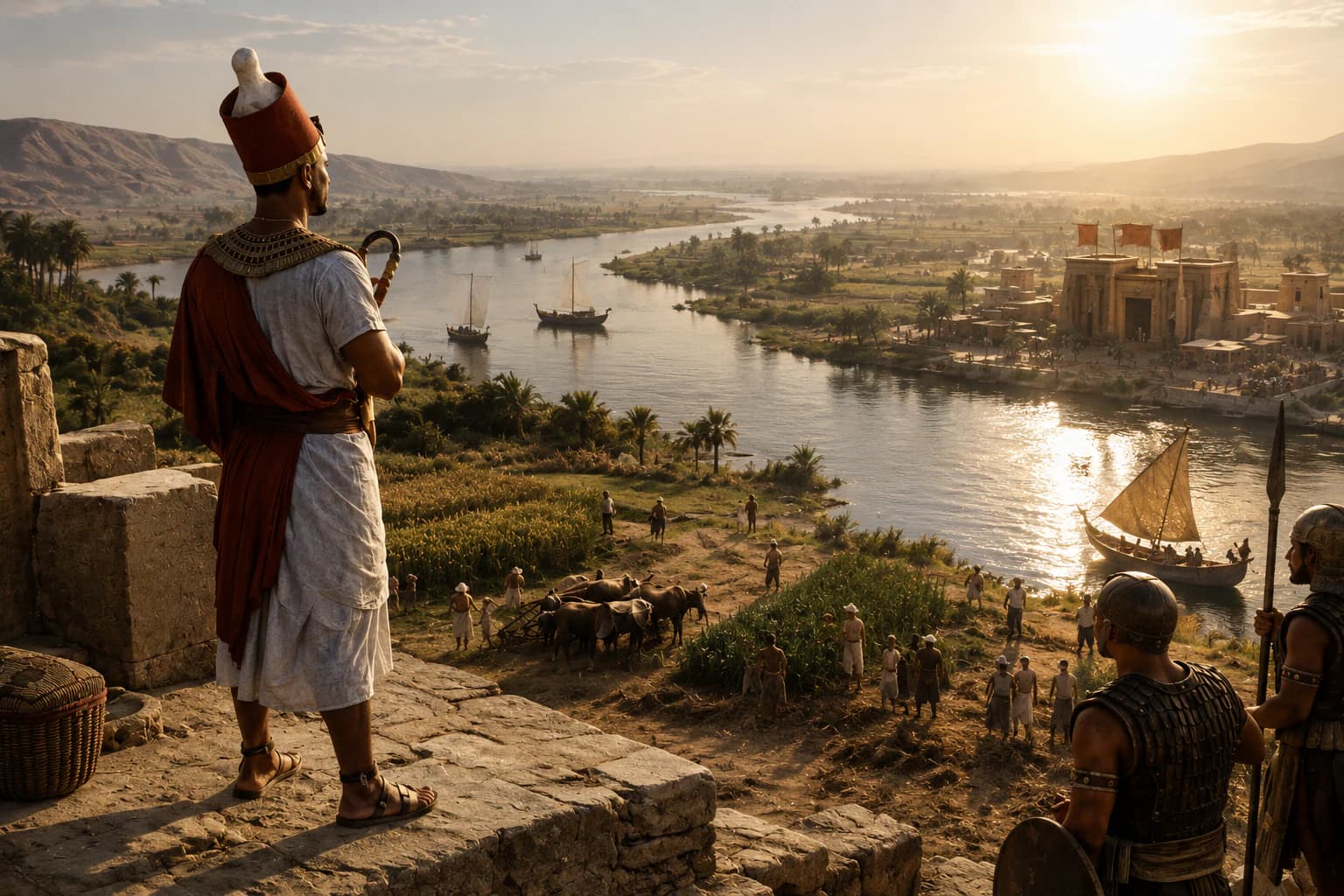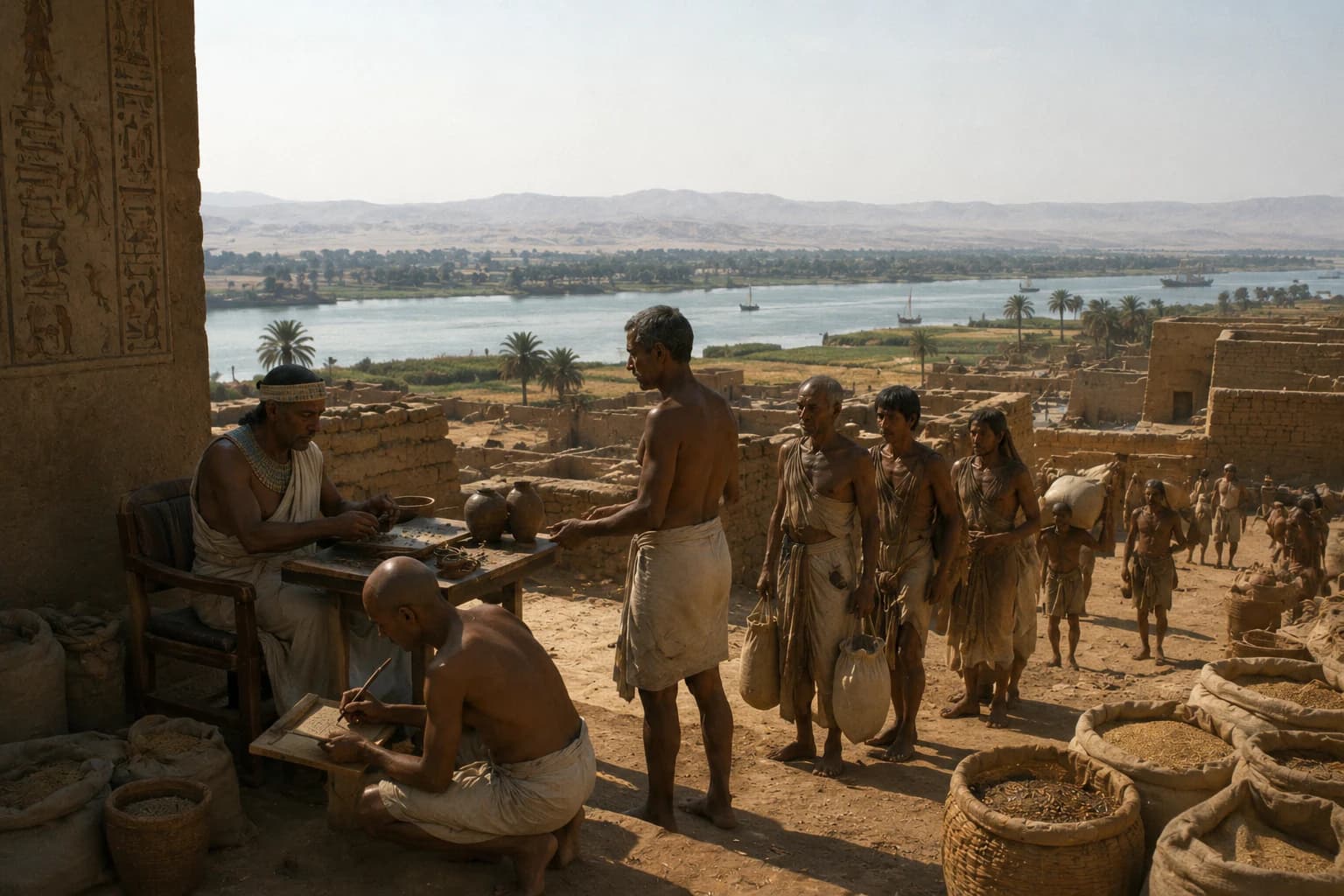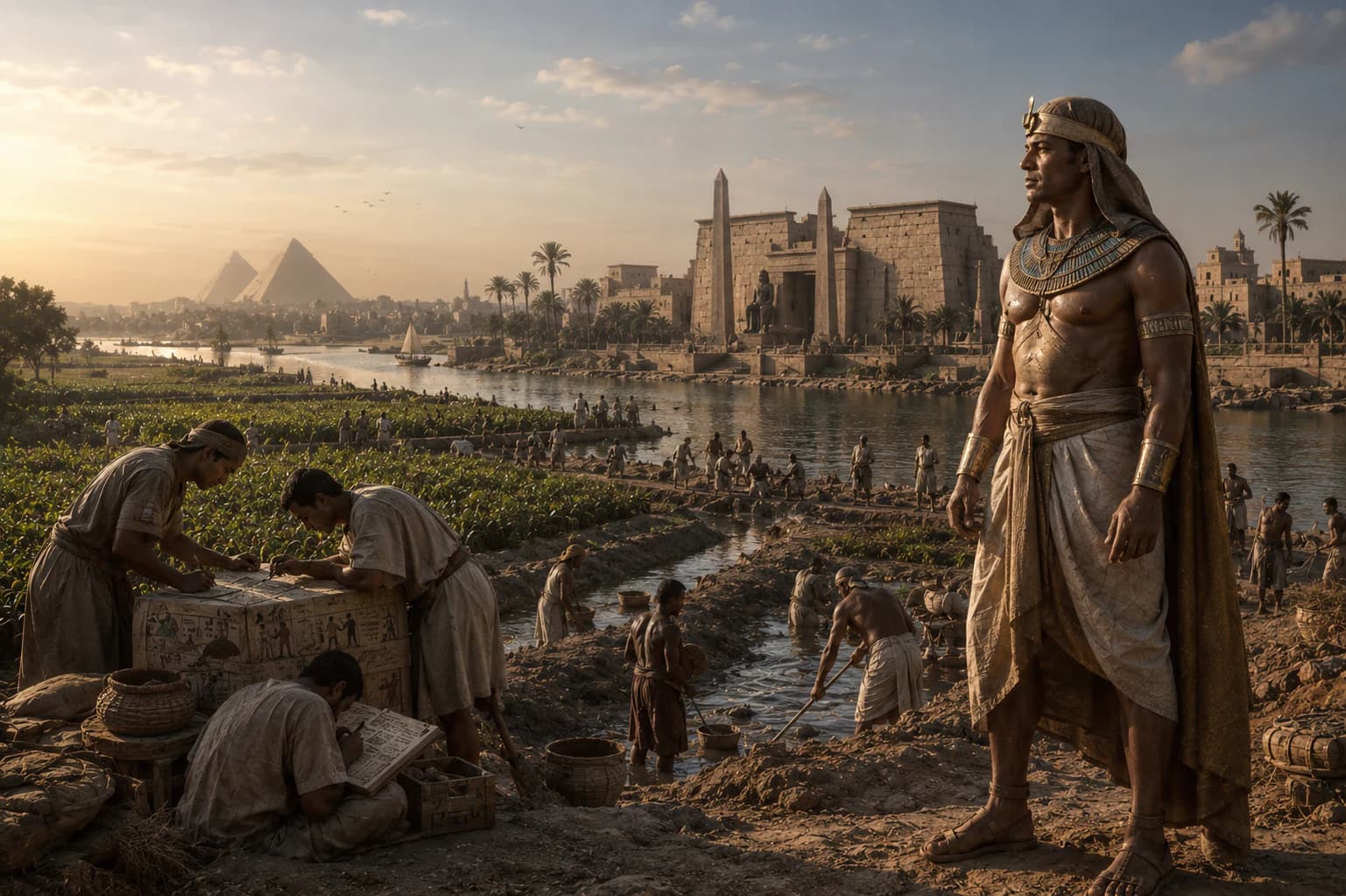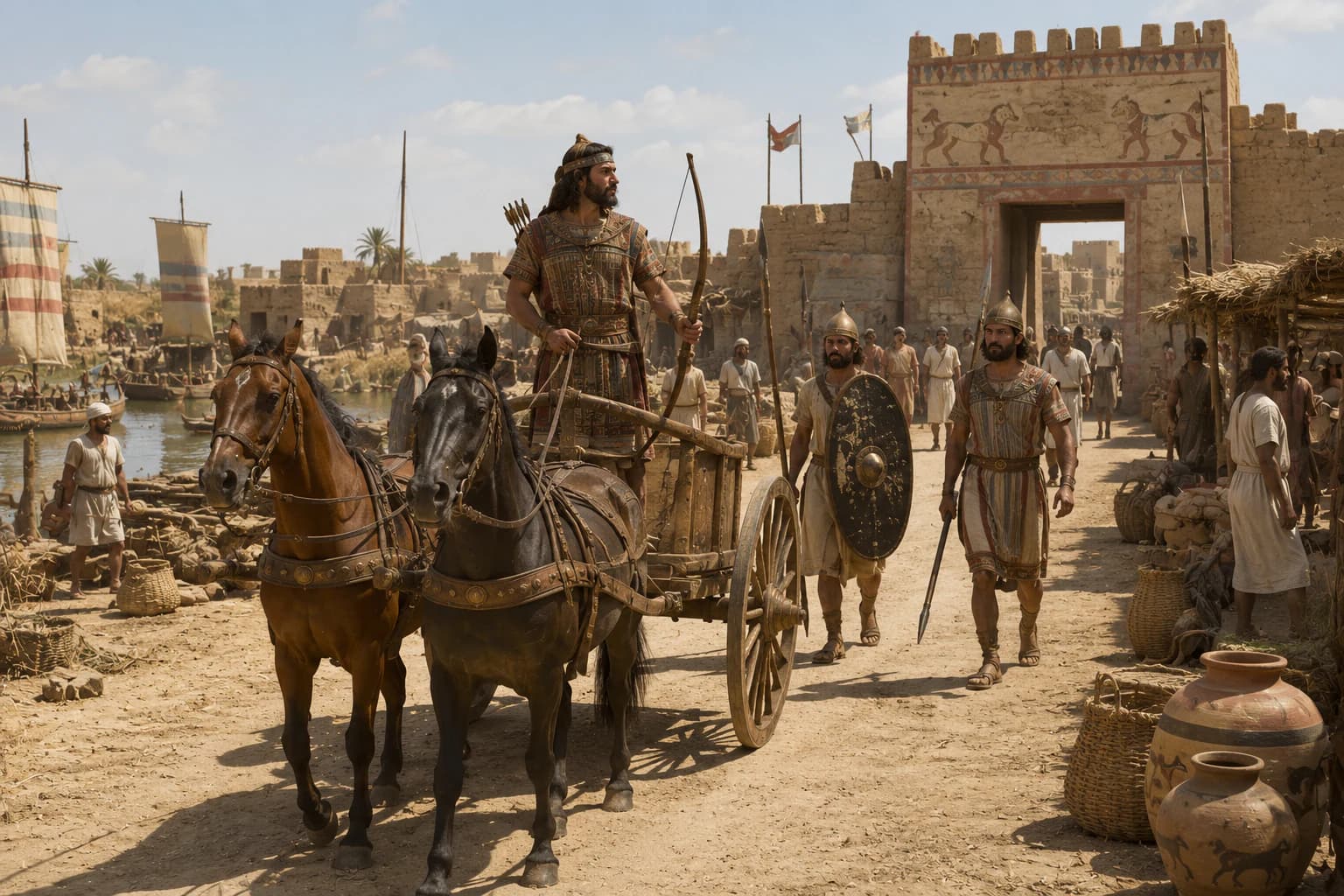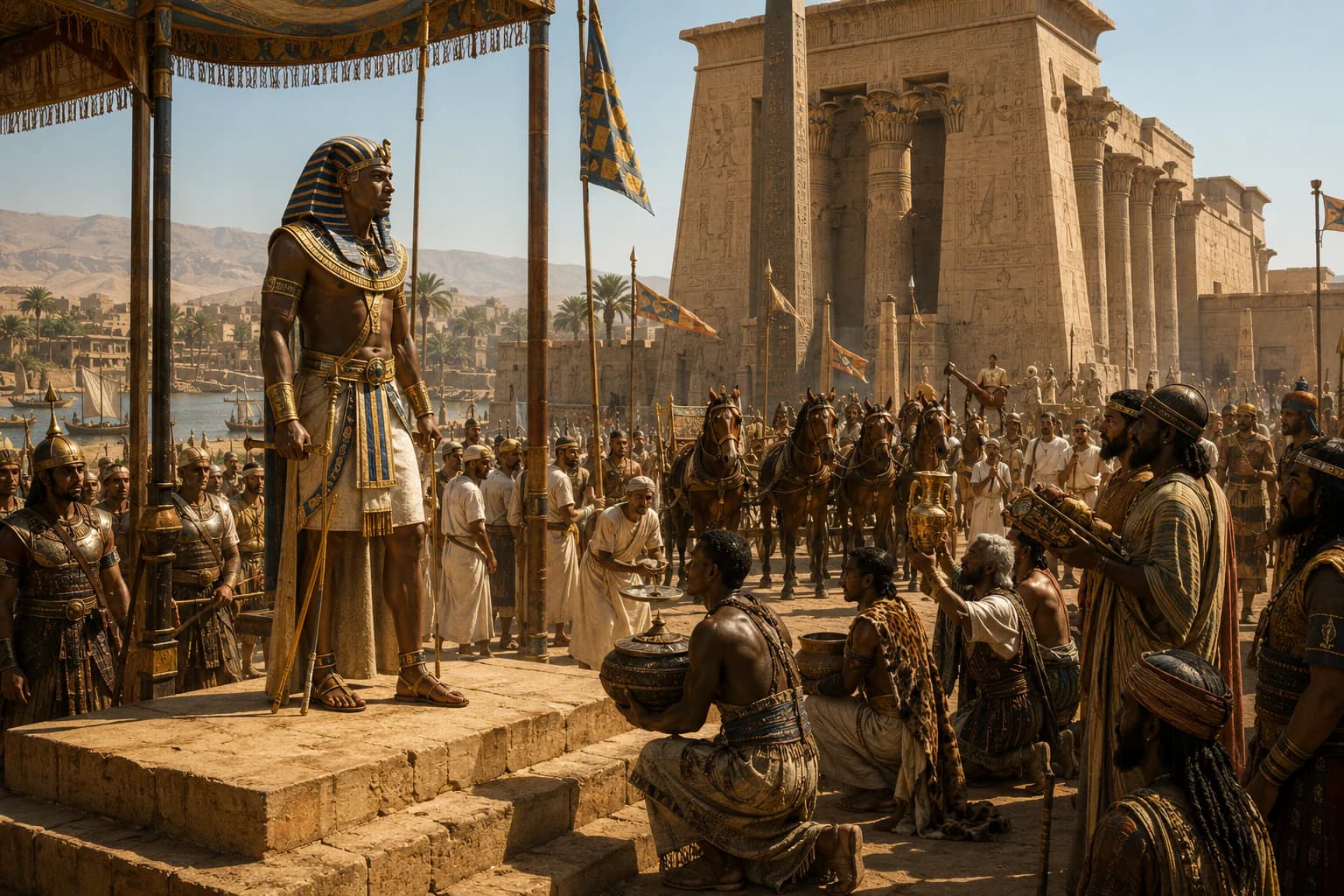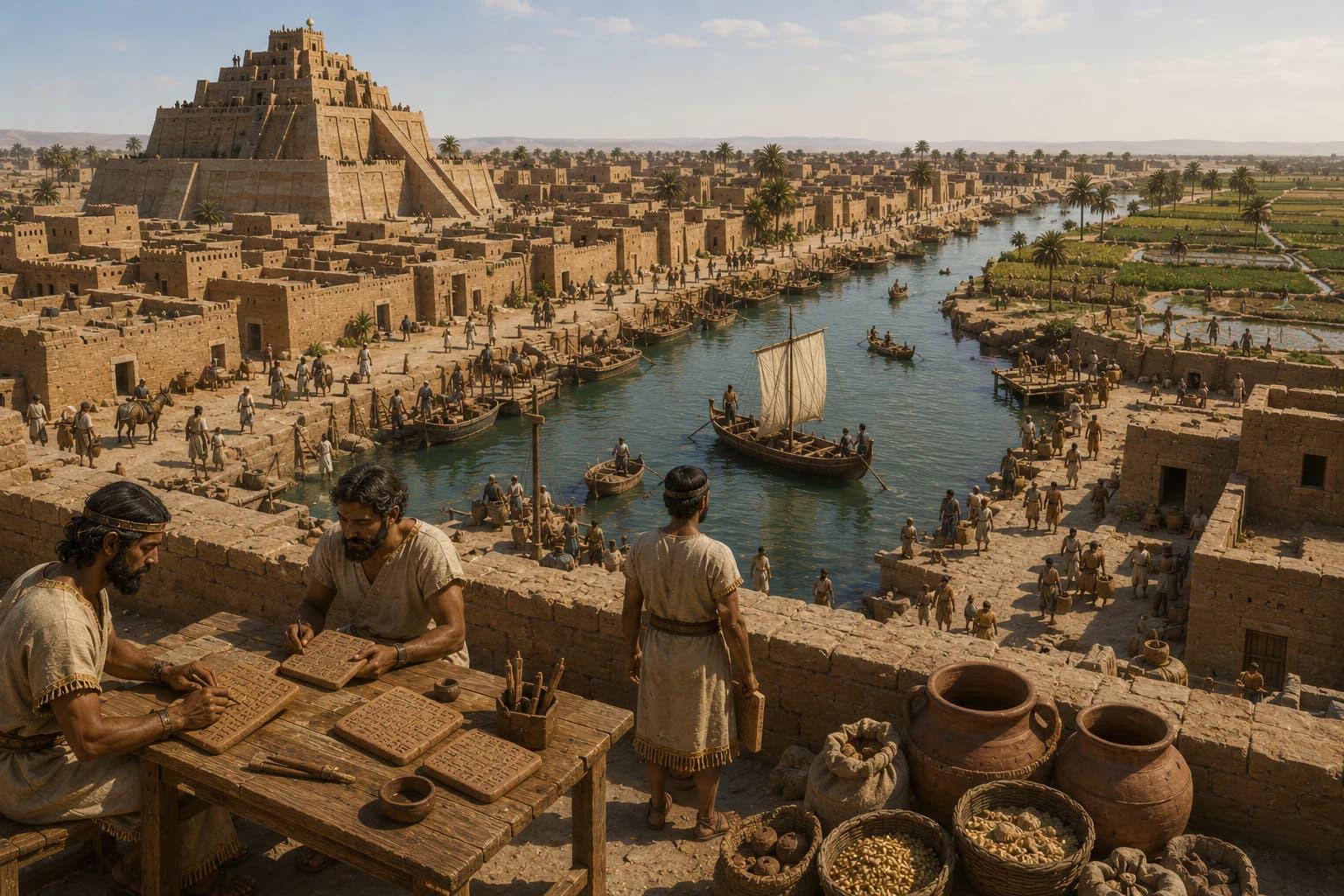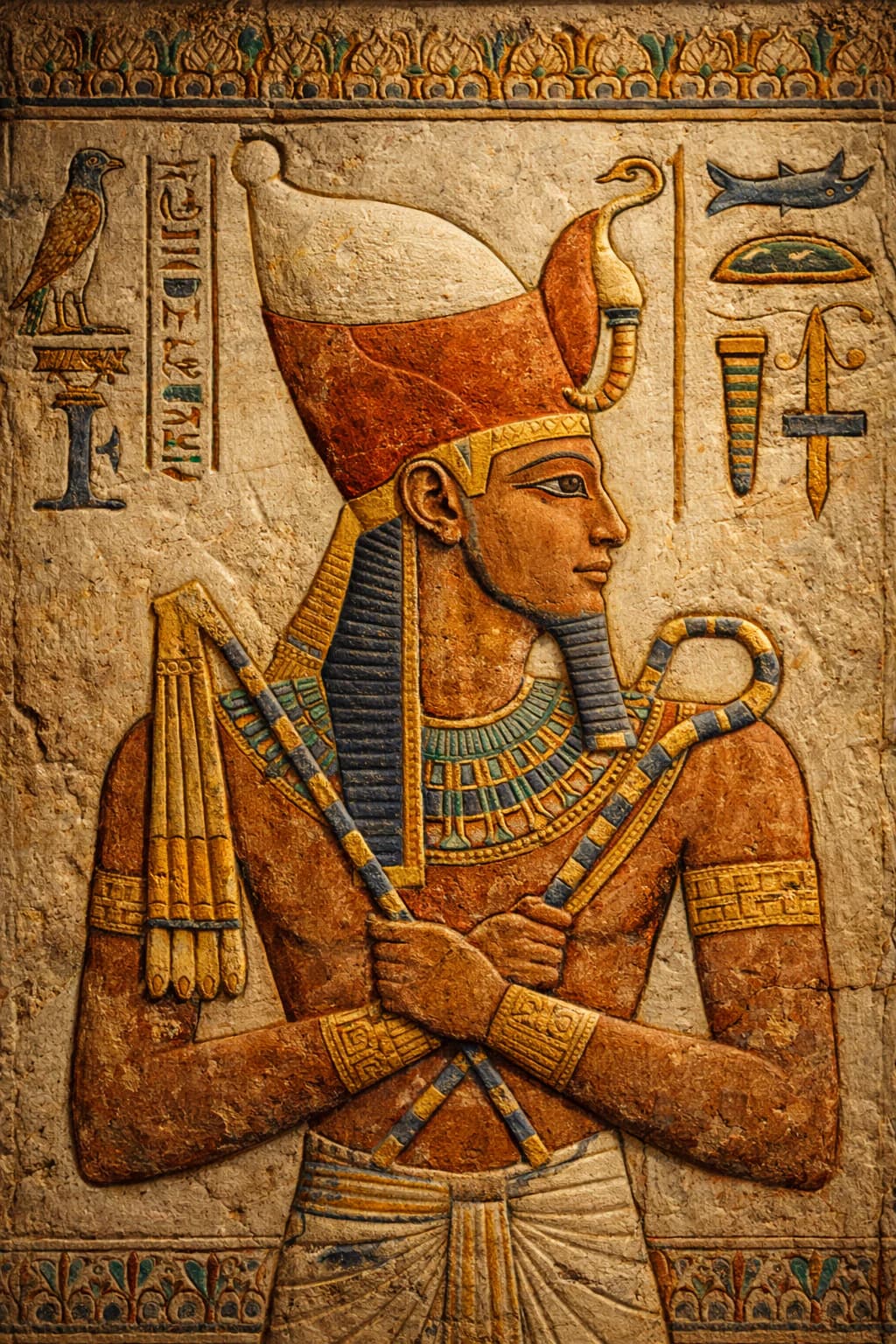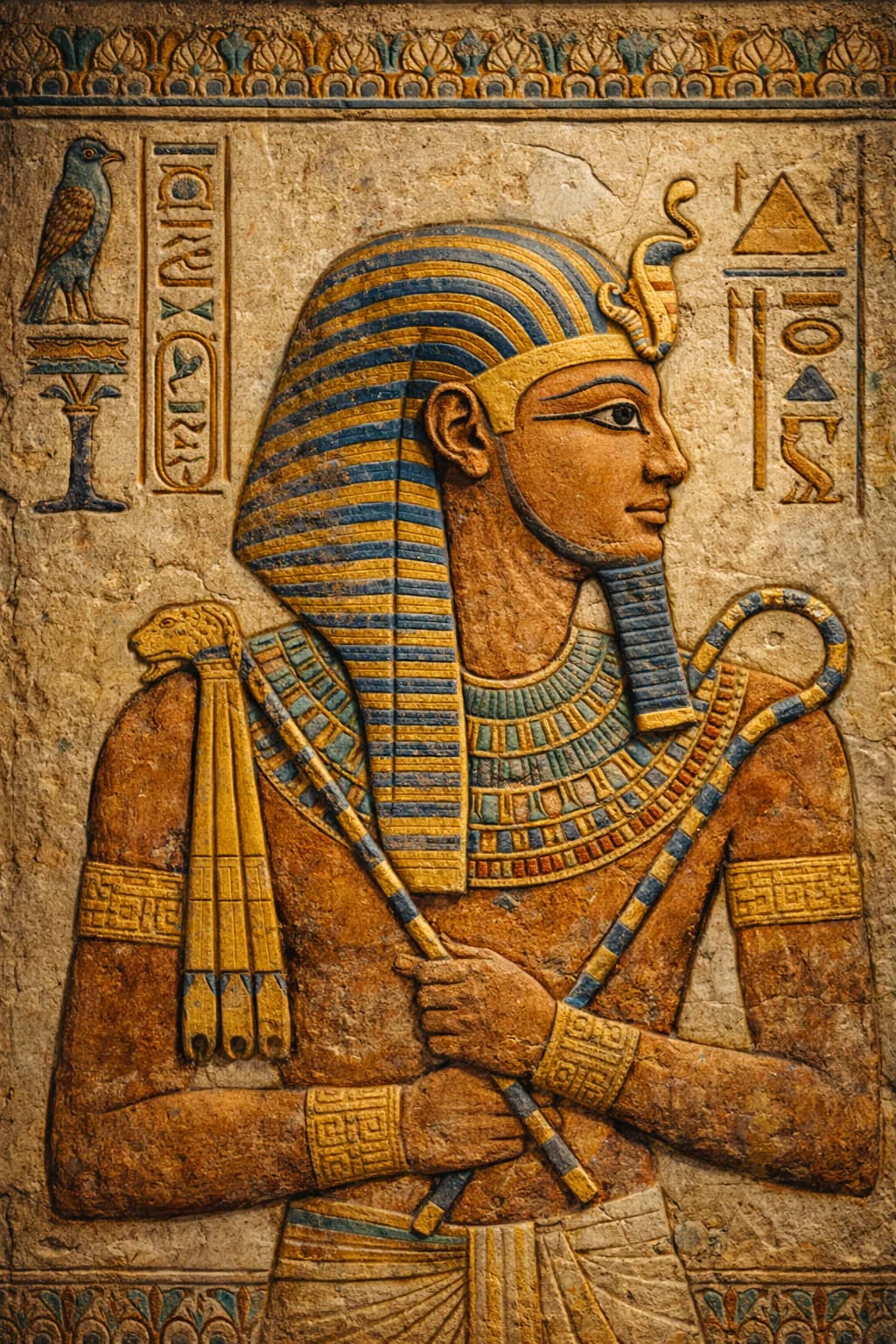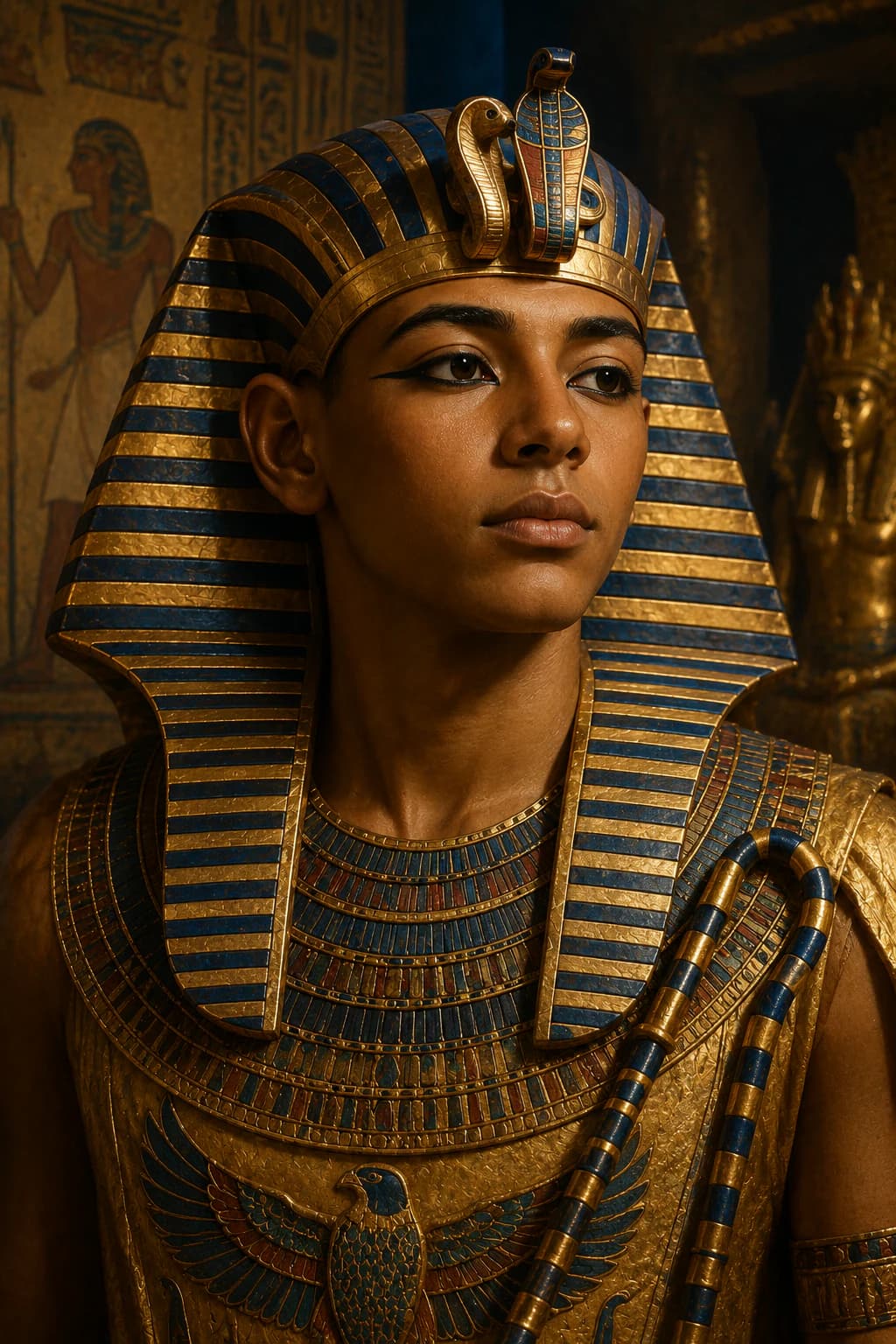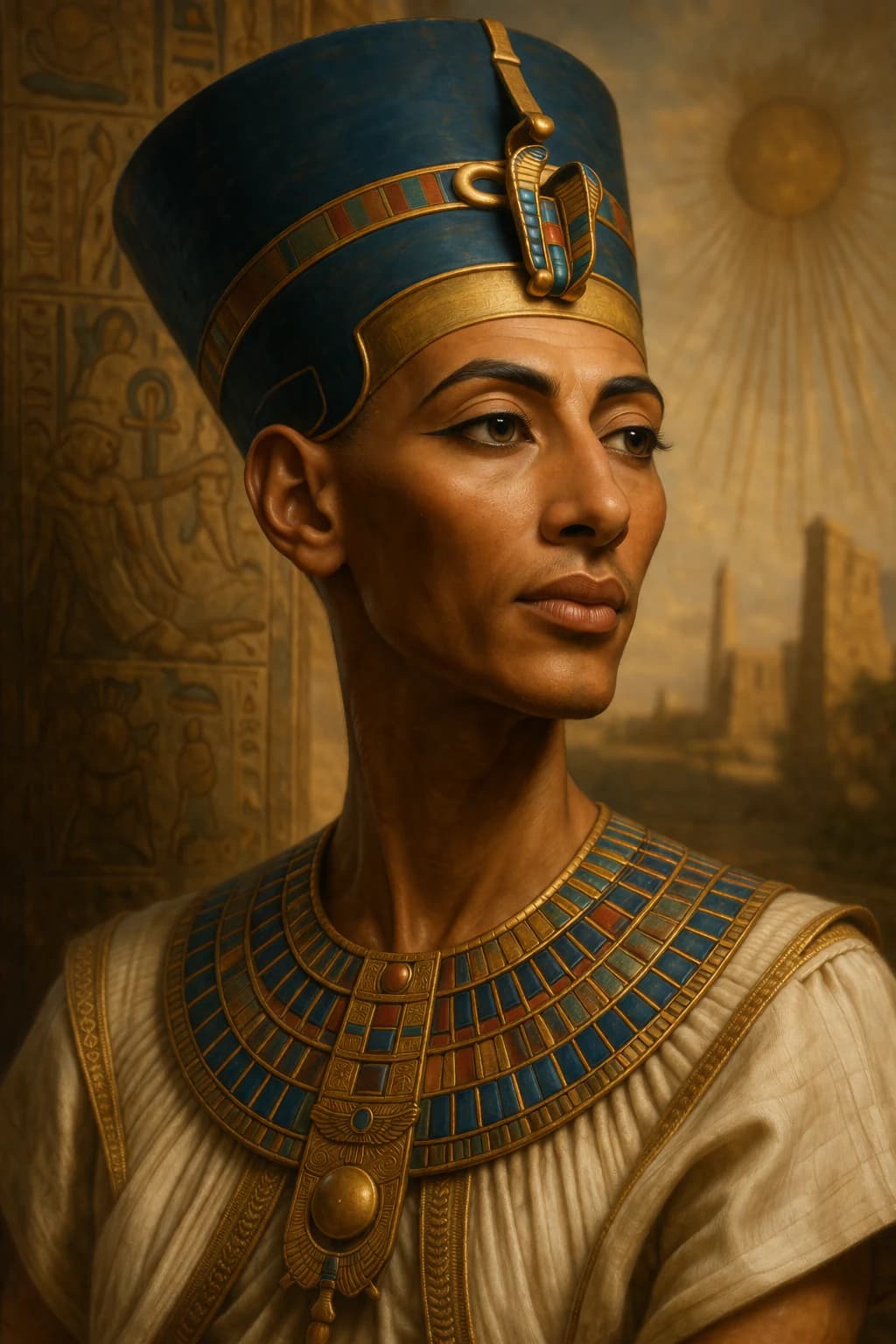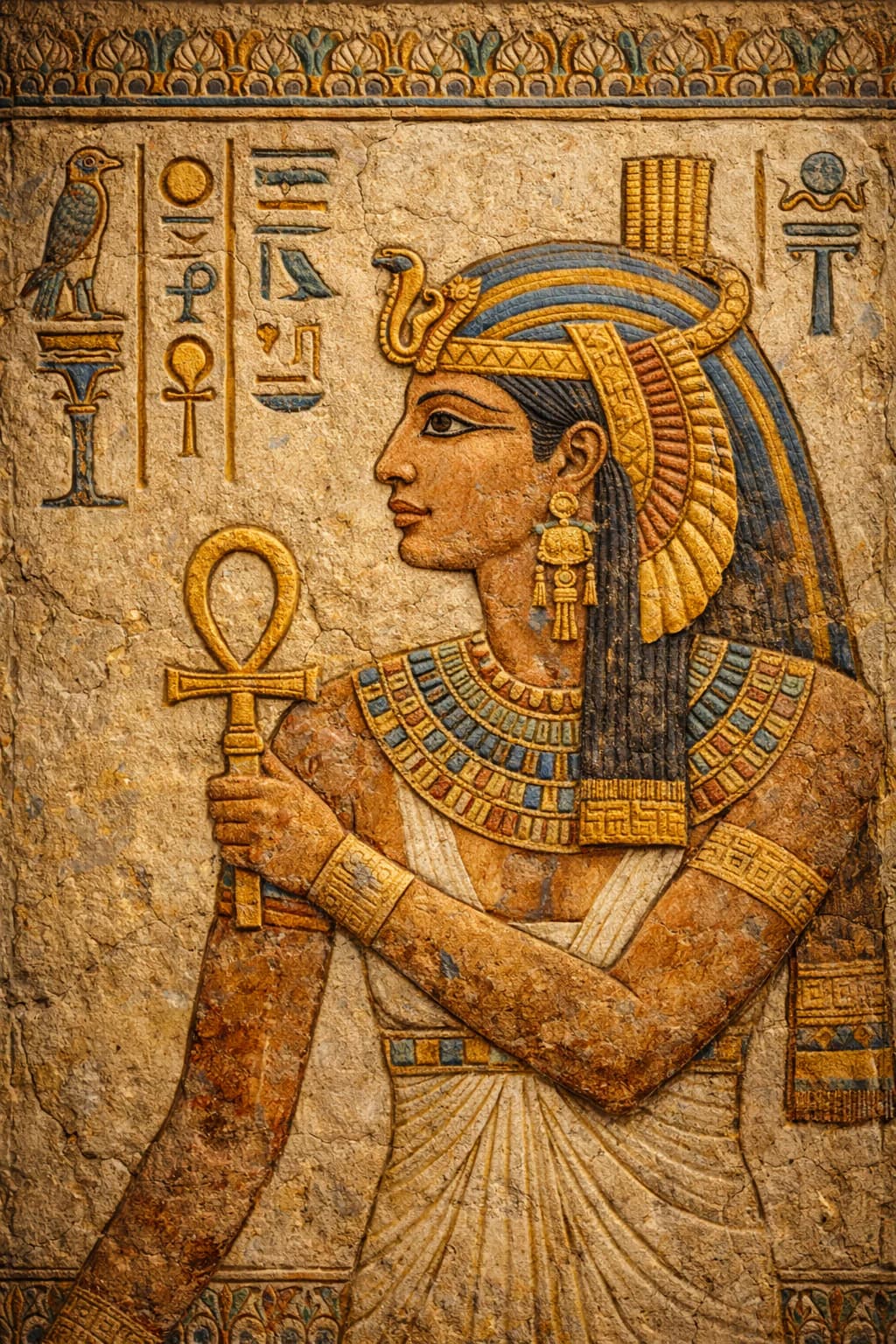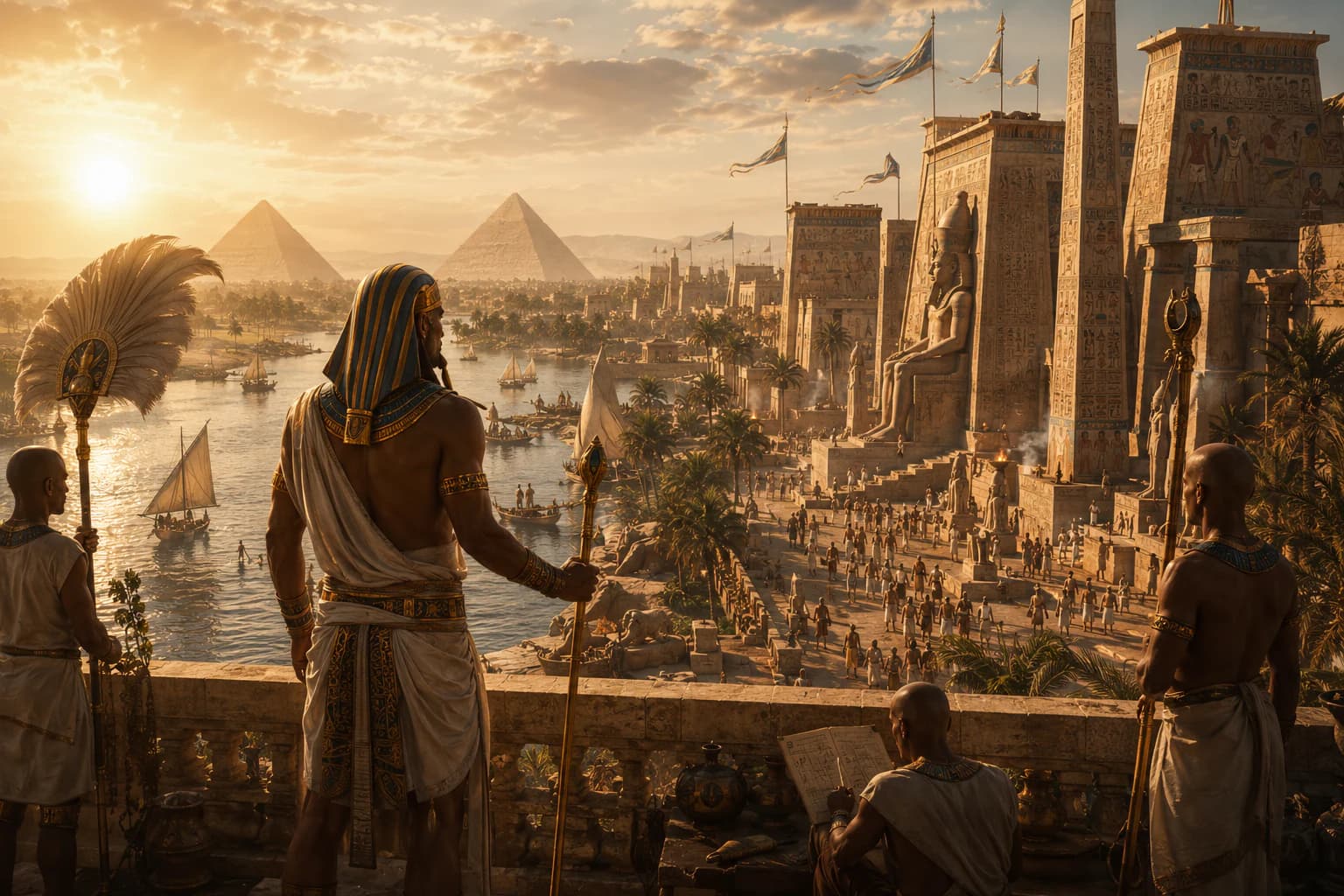
The Nile flowing past temples, pyramids, and royal cities of ancient Egypt.
Free Story

Ancient Egypt

A river, a crown, and a belief in eternity turned Egypt into one of history's longest-lasting civilizations.

11 chapters · 20 min read

Next
Context

Introduction

Overview

Ancient Egypt was one of the longest-lasting civilizations in world history, developing along the from around 3100 BCE and enduring in different forms for more than three thousand years. Its pharaohs, pyramids, temples, gods, hieroglyphics, mummies, and empire created one of the ancient world's most recognisable cultures. From the Old Kingdom to Cleopatra's defeat by Rome, Egypt's history shows how geography, religion, kingship, and writing sustained a civilisation of extraordinary power and memory.

What you'll learn: You will follow how geography, divine kingship, religion, warfare, and institutional resilience allowed Egypt to endure through repeated periods of glory and crisis.

Key forces

The Nile Creates a Kingdom
3100 BCE
Step 1 of 113100 BCEAccessible mode

The Nile Creates a Kingdom

Around 3100 BCE, Egypt became a single kingdom because the made concentrated life possible in a dry region.

The river flooded in a regular pattern and left fertile soil. That allowed farming villages to produce food year after year.

As populations grew along this narrow river corridor, leaders could collect grain, organize labor, and control transport on the same waterway.

Early kings, remembered through Narmer, united Upper and Lower Egypt. Unification was political, but it depended on controlling river routes and harvest cycles.

A single kingship now linked distant communities from to the south. Shared symbols, officials, and rituals made rule feel permanent.

Egypt is an example of how geography can shape state power. Control of water and food became the base of one of history's longest civilizations.

It also explains Egypt's long continuity: the same river system that fed villages made lasting institutions and shared identity possible.

The Pharaoh Becomes Divine
2700 BCE
Step 2 of 112700 BCEAccessible mode

The Pharaoh Becomes Divine

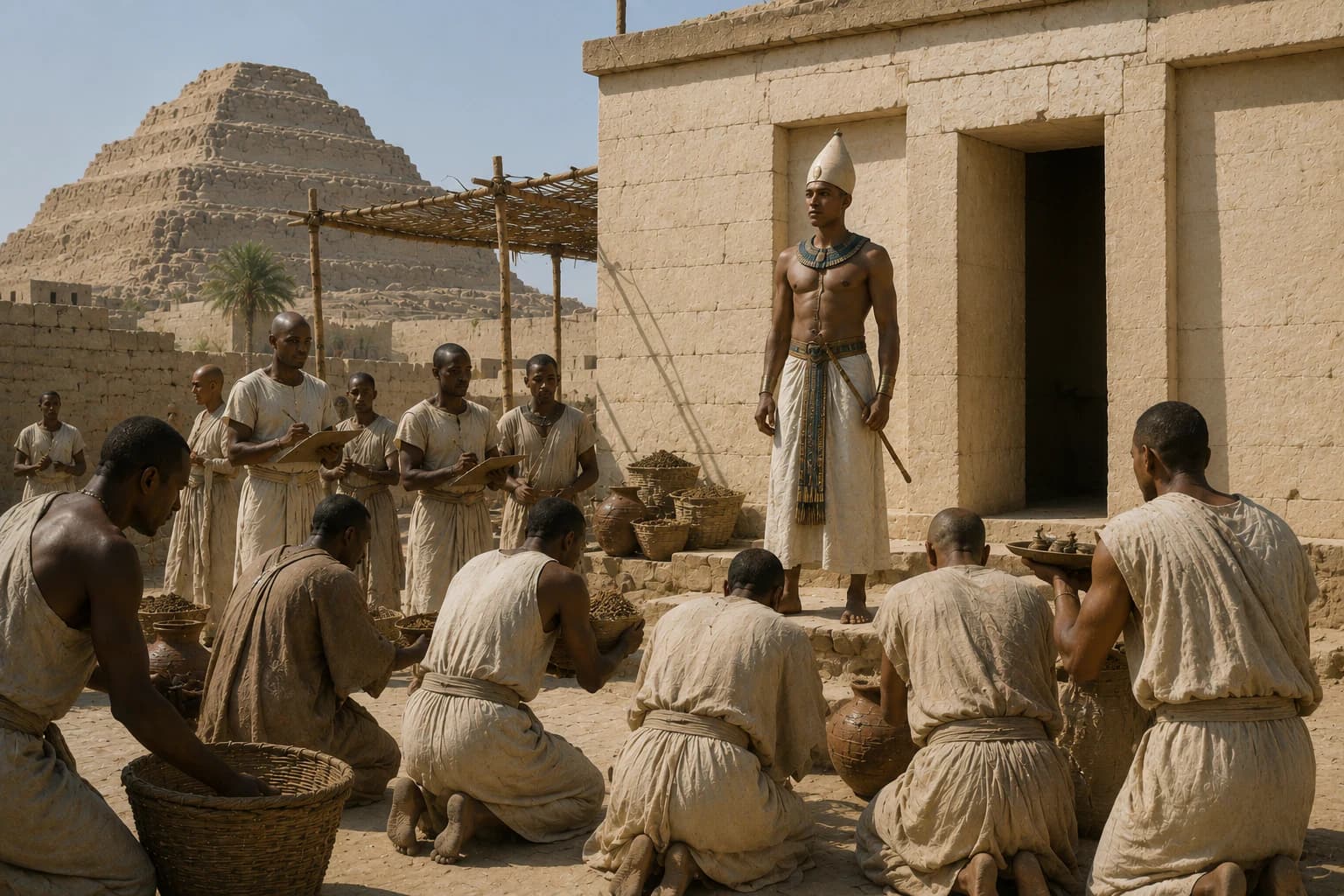
By about 2700 BCE, Egyptian kingship was presented as sacred, not just political.

The pharaoh was shown as the protector of order, justice, and harmony. If the king ruled correctly, the world stayed balanced.

Religion and government were linked at every level. Temples, priests, scribes, and officials all supported royal authority.

Taxes in grain funded both state projects and temple life. Administration and belief worked together, so obedience was both practical and spiritual.

This system helped Egypt stay stable for long periods. It gave people a clear explanation for why kings ruled and why hierarchy mattered.

This is relevant today because Egyptian power was not based on force alone. Ideas and institutions were fused into one durable model of rule.

In simple terms, religion made government feel natural, and government gave religion material power and reach across the .

The Age of the Pyramids
2580 BCE
Step 3 of 112580 BCEAccessible mode

The Age of the Pyramids

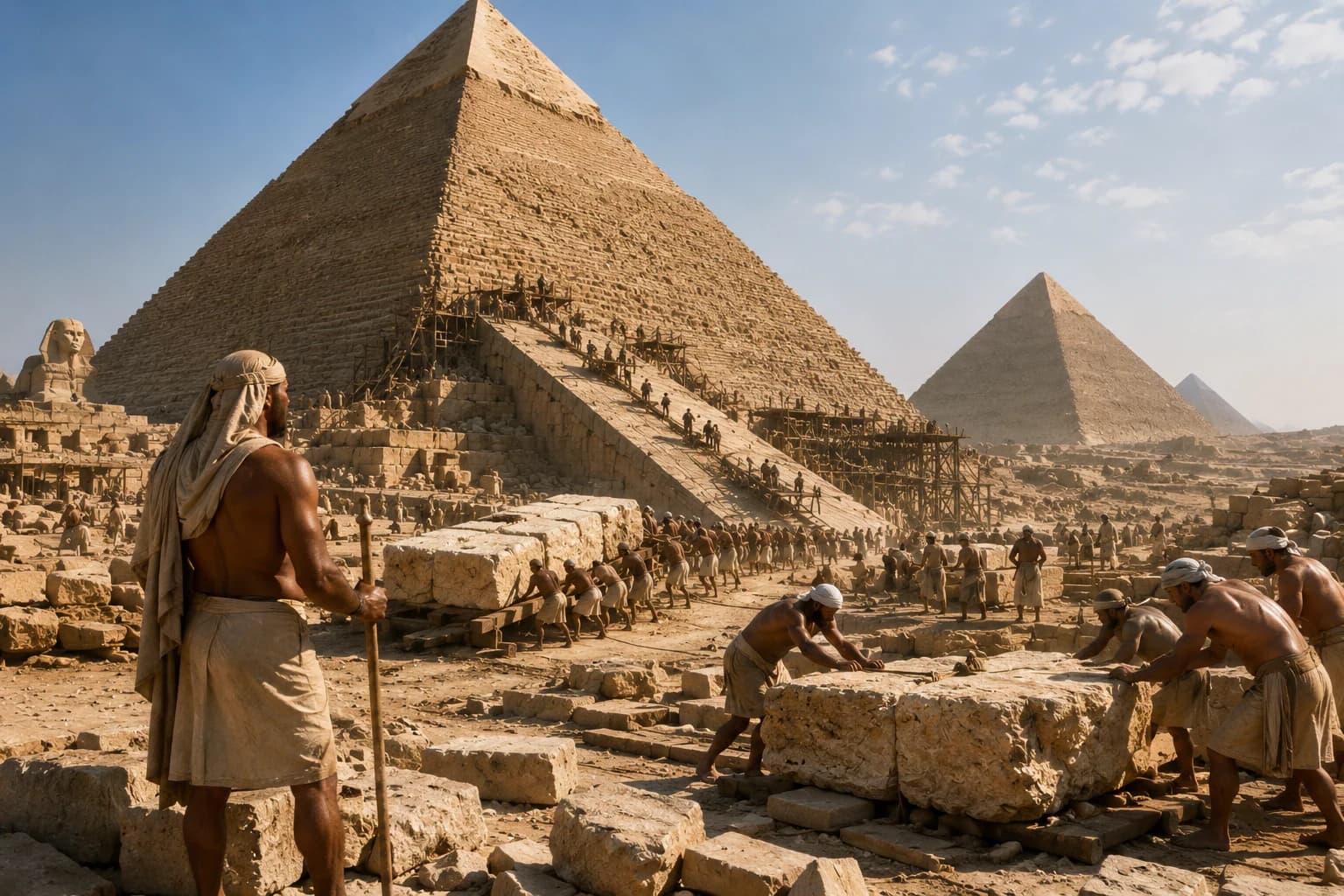
Around 2580 BCE, Egypt's Old Kingdom reached a peak visible in the pyramids.

These monuments were royal tombs, but they were also political statements. They showed that the state could command materials, workers, and planning on a huge scale.

At , Khufu, Khafre, and Menkaure built the best-known pyramid complex. The work required logistics across quarries, river transport, food supplies, and skilled crews.

Labor was organized, not random. Seasonal workers and specialists were fed and housed by the state, showing strong central coordination.

Religion was central. Pyramids reflected beliefs about royal afterlife and the king's continuing role in protecting order after death.

The pyramids are proof that early states could combine engineering, belief, and administration into lasting world-changing projects.

Their survival reminds us that organized states can leave physical evidence of how power, belief, and labor once worked together.

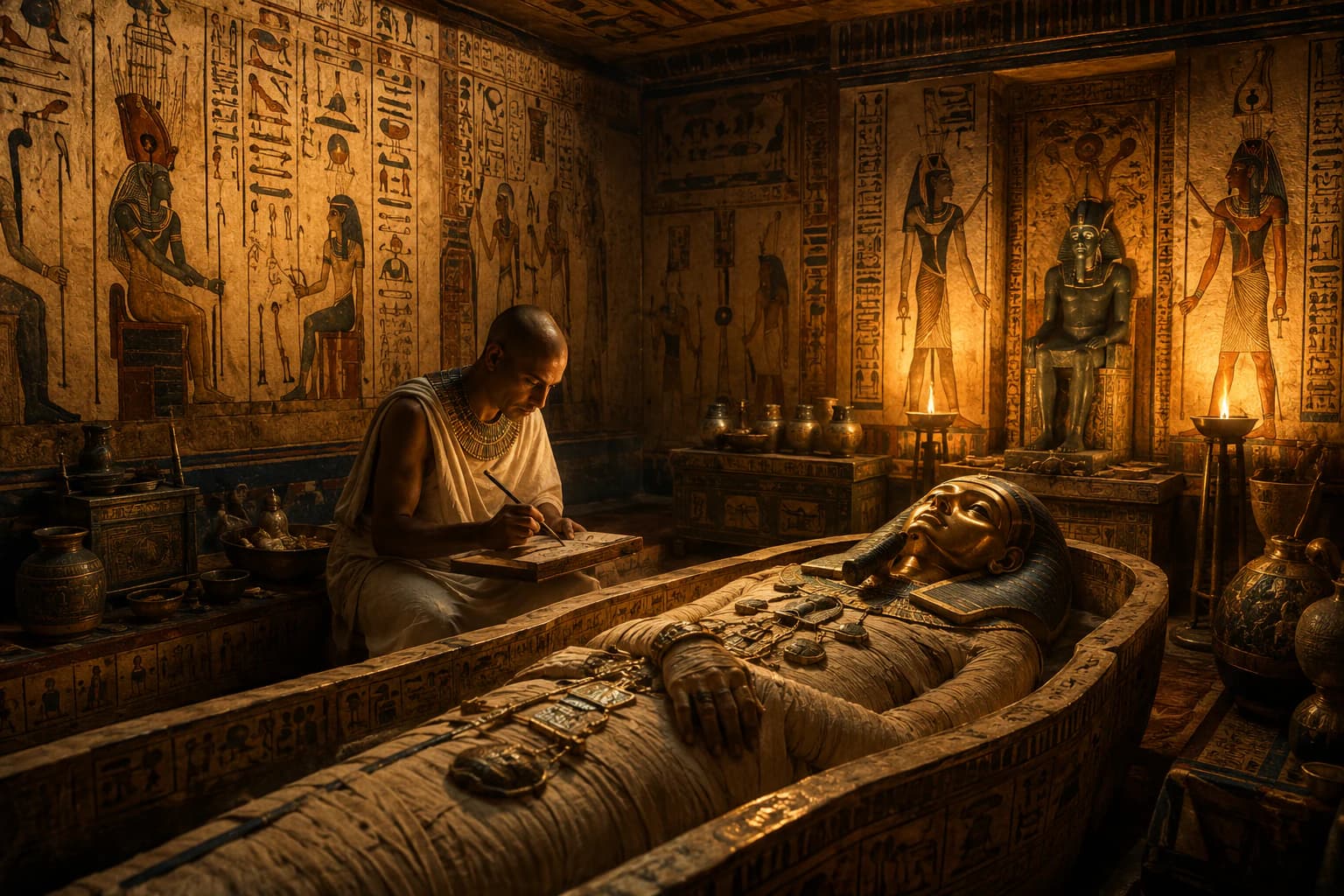
Ancient Egyptian tomb chamber with hieroglyphics, burial goods, and a mummified body prepared for the afterlife.
2400 BCE
Step 4 of 112400 BCEAccessible mode

Writing, Tombs and the Afterlife

By about 2400 BCE, Egyptian tomb culture showed how deeply writing, religion, and the afterlife were connected.

Mummification was not just a strange custom. It reflected the belief that the body, name, and spirit needed protection after death.

Tombs included offerings, images, and sacred texts to help the dead continue into the afterlife. For kings and elites, burial was a religious journey and a public statement of status.

Hieroglyphics helped preserve memory. Names, prayers, rituals, and royal achievements could be carved or painted onto tomb walls and monuments.

This mattered because Egyptian power was built to last. Writing kept names alive, mummification protected the body, and tombs turned belief into something visible.

The afterlife was not separate from politics. It helped explain why kings ruled, why temples mattered, and why Egypt invested so much labor in monuments and burial places.

Together, writing and burial customs show that Ancient Egypt endured through memory as much as through armies, harvests, or kings.

Order Gives Way to Crisis
2180 BCE
Step 5 of 112180 BCEAccessible mode

Order Gives Way to Crisis

Around 2180 BCE, the strong Old Kingdom system began to break down.

Power shifted away from the royal court toward local governors. Provinces that once obeyed the center gained more independence and resources.

At the same time, environmental stress likely reduced flood reliability in some years. Poor harvests made taxation, food supply, and political trust harder to maintain.

Competing regional elites fought for authority. Egypt entered what historians call the First Intermediate Period, a time of divided rule.

This shows Egyptian continuity was real but not unbroken. Long-lived civilizations can still face deep crisis and instability.

Institutions that look permanent can weaken when resources, leadership, and trust all fail at once.

Egypt eventually recovered, but this period proved that even famous civilizations could lose unity when systems stopped working together.

The Kingdom Reunited
2055 BCE
Step 6 of 112055 BCEAccessible mode

The Kingdom Reunited

By about 2055 BCE, rulers from reunited Egypt and rebuilt central authority.

Reunification ended long regional conflict. A stronger kingship returned, but leaders also learned they needed tighter administration than before.

Officials expanded record-keeping, taxation, and regional oversight. Irrigation and land management became priorities, because reliable harvests supported political stability.

The Middle Kingdom also saw renewed cultural confidence. Literature, monuments, and royal projects promoted the idea of a restored and orderly Egypt.

This was not a return to the past. It was a reworked system built after crisis, combining old kingship ideals with practical reforms.

Recovery is possible when states rebuild institutions, manage resources better, and create a shared story of renewal.

This recovery shaped later Egypt: rulers now understood that stable bureaucracy and water management were as important as royal image.

Foreign Rule from the Delta
1650 BCE
Step 7 of 111650 BCEAccessible mode

Foreign Rule from the Delta

Around 1650 BCE, foreign rulers known as the Hyksos controlled northern Egypt from .

This was a major shock to Egyptian identity. For a long time, Egyptians had seen kingship as the protector of the whole land.

The Hyksos brought new military practices, including stronger use of horse-drawn chariots and composite bows in the region's warfare.

Egyptian rulers in the south survived and prepared to fight back. Over time, conflict with the Hyksos pushed them to modernize armies and strategy.

When Egypt finally expelled Hyksos rule, kingship became more openly military and expansionist than before.

Outside pressure often forces states to change. Crisis in the helped create the stronger empire of the New Kingdom.

The memory of this period lasted for centuries and helped justify later campaigns beyond Egypt's borders as defensive necessity.

Empire of the New Kingdom
1450 BCE
Step 8 of 111450 BCEAccessible mode

Empire of the New Kingdom

By about 1450 BCE, Egypt reached one of its strongest moments in the New Kingdom.

Rulers such as Thutmose III led campaigns that expanded Egyptian influence into and reinforced control in .

Conquest brought wealth, tribute, and access to trade routes. That money and material supported temples, palaces, and elite culture at home.

Great temple complexes, especially at , celebrated kings as chosen by the gods and victorious in war. Religion and imperial power strengthened each other.

Egypt became a major international power, not just a river kingdom. Diplomacy, warfare, and monumental building all projected prestige.

Military expansion and religious symbols can work together to build durable state authority and global reputation.

Egypt's fame in later history comes largely from this era, when military success, wealth, and religion were displayed together.

Gods, Kings and Sacred Change
1335 BCE
Step 9 of 111335 BCEAccessible mode

Gods, Kings and Sacred Change

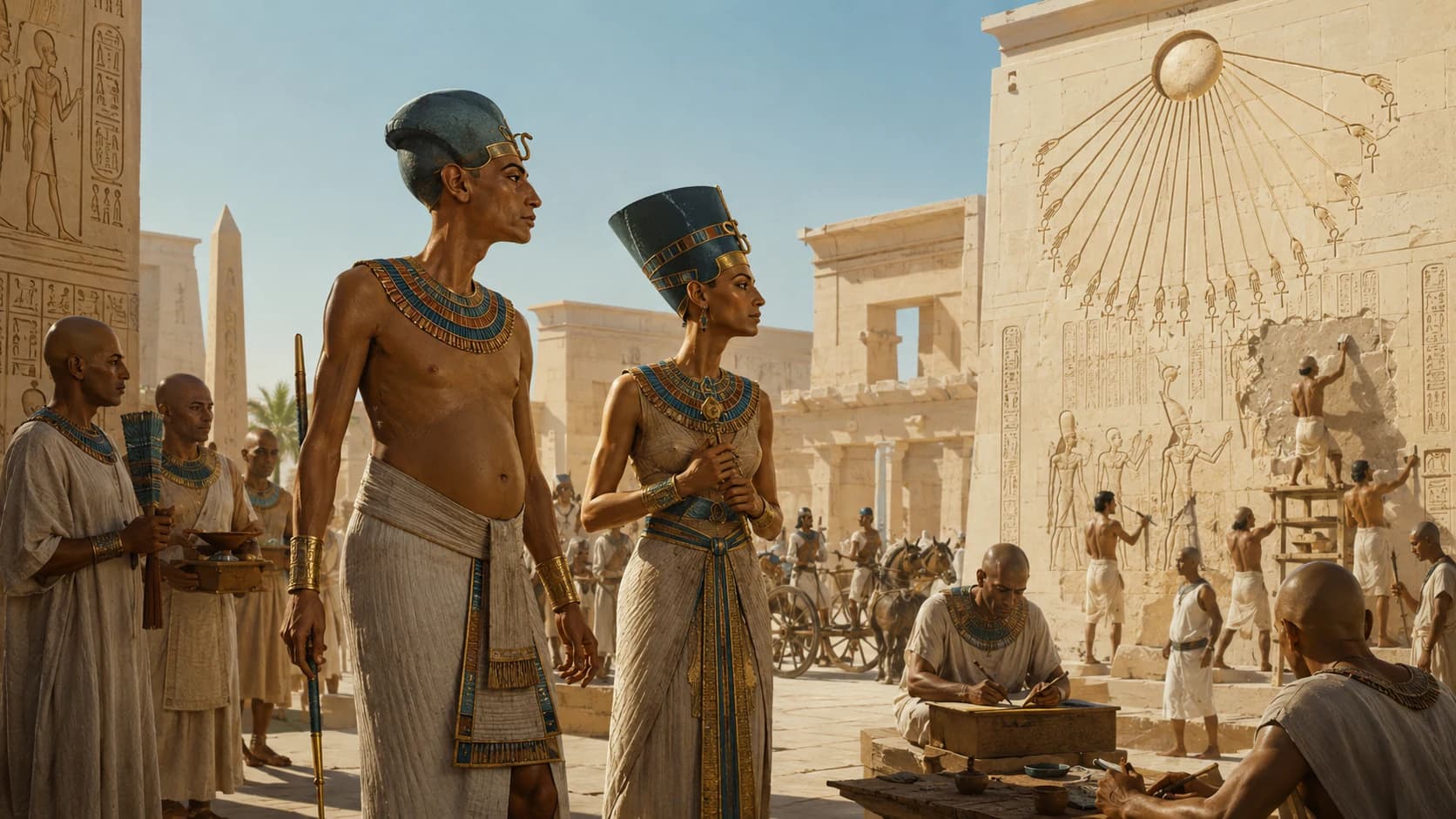
In the later New Kingdom, religion and politics collided dramatically under Akhenaten.

Akhenaten promoted the Aten above traditional gods and shifted court life to a new royal city. This challenged powerful temple systems, especially the cult of Amun.

Because religion shaped identity and government, this was more than a belief change. It disrupted how the state justified authority and managed institutions.

After Akhenaten's death, later rulers, including Tutankhamun, restored older cults and traditions. The experiment was largely reversed.

The episode showed that pharaohs had great power, but not unlimited freedom to remake Egypt's sacred order.

As today, major reforms can fail if they break trusted institutions too quickly, especially when identity and governance are deeply linked.

The reversal after Akhenaten showed that Egyptians valued continuity and that institutions could outlast even dramatic royal experiments.

Survival Through Decline
1070 BCE
Step 10 of 111070 BCEAccessible mode

Survival Through Decline

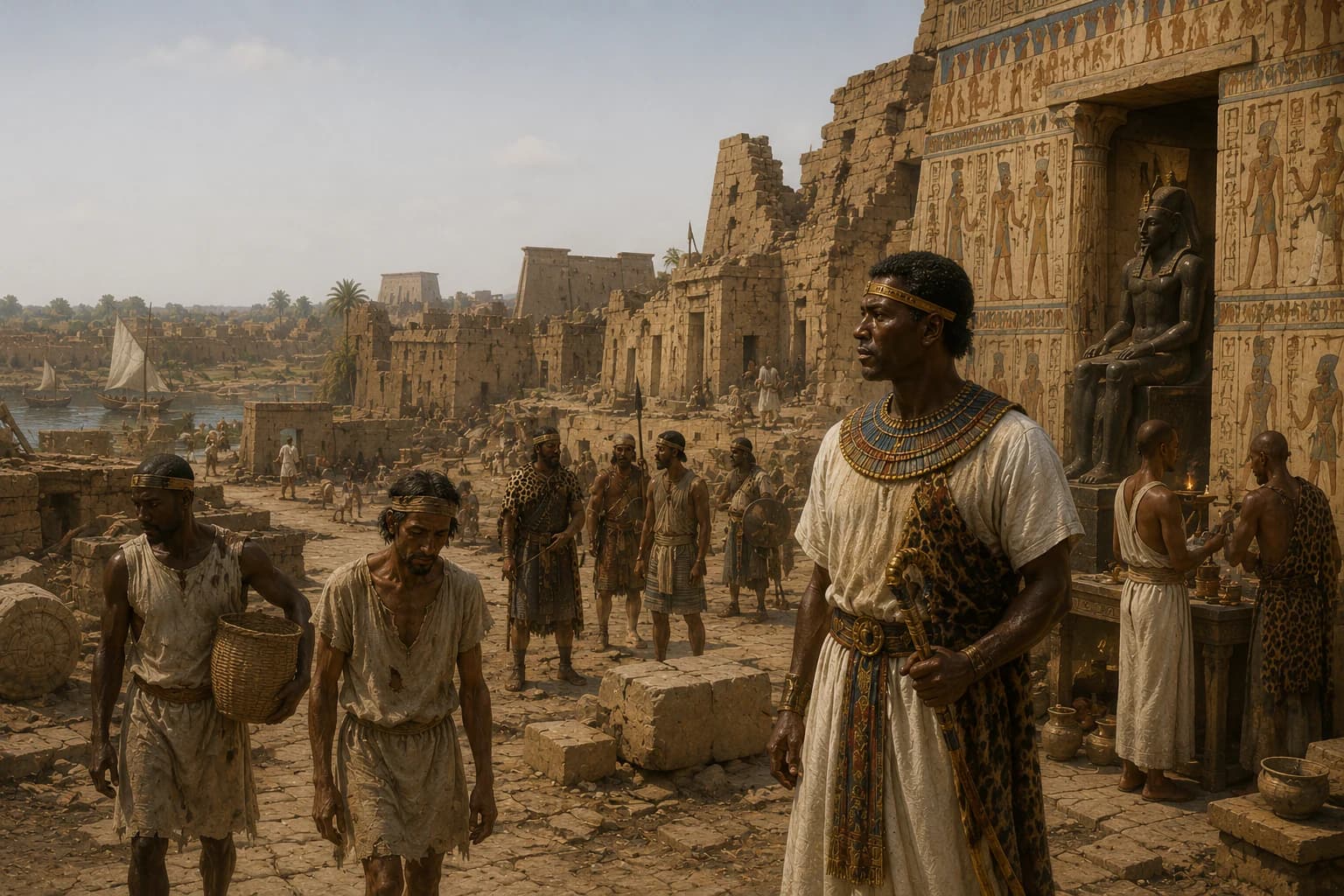
After about 1070 BCE, Egypt entered a long era of weaker central control.

Different rulers controlled different regions, and outside powers became more influential. Political unity was no longer secure.

Libyan dynasties ruled parts of Egypt, and later Nubian kings from also took power. These changes reshaped politics but did not erase Egyptian culture.

Temples, writing, burial customs, and royal imagery continued. New rulers often adopted Egyptian traditions to strengthen their own legitimacy.

So this was decline in imperial strength, not total collapse of civilization. Egypt kept adapting under new political conditions.

Cultures can survive major power losses. Institutions and shared identity often outlast governments and military dominance.

That persistence helps explain why Egypt remained culturally influential long after it stopped dominating the region militarily.

The Civilization That Endured
30 BCE
Step 11 of 1130 BCEAccessible mode

The Civilization That Endured

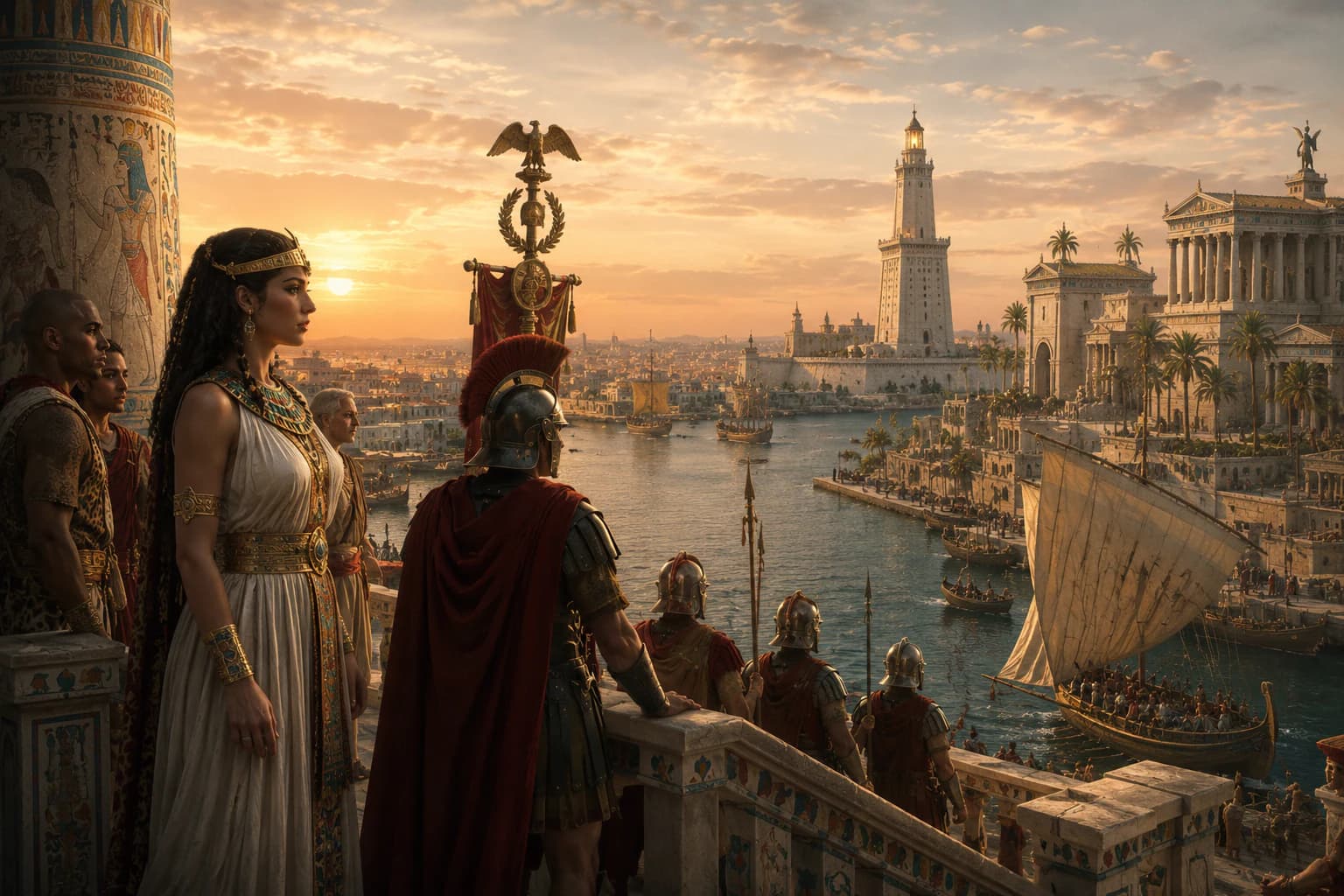
In 30 BCE, Cleopatra's defeat brought Egypt under Roman rule, ending independent pharaonic monarchy.

Politically, this was the end of a long era. Egypt became part of a larger empire and was governed from a new imperial framework.

But Egypt's deeper legacy had already been built over millennia. Kingship, temples, monumental architecture, and farming systems had shaped a distinct civilization.

Even foreign rulers had repeatedly used Egyptian symbols to claim authority. That shows how powerful and persistent its cultural model was.

People still recognize Egypt through pyramids, pharaohs, and gods, but its real achievement was long-term continuity through many crises.

This story still matters today because Egypt proves that geography, institutions, belief, and memory together can sustain civilization across extraordinary stretches of time.

That combination of practical systems and powerful symbols is why Ancient Egypt still feels immediate, even thousands of years later.

Continue reading

Finished Ancient Egypt?

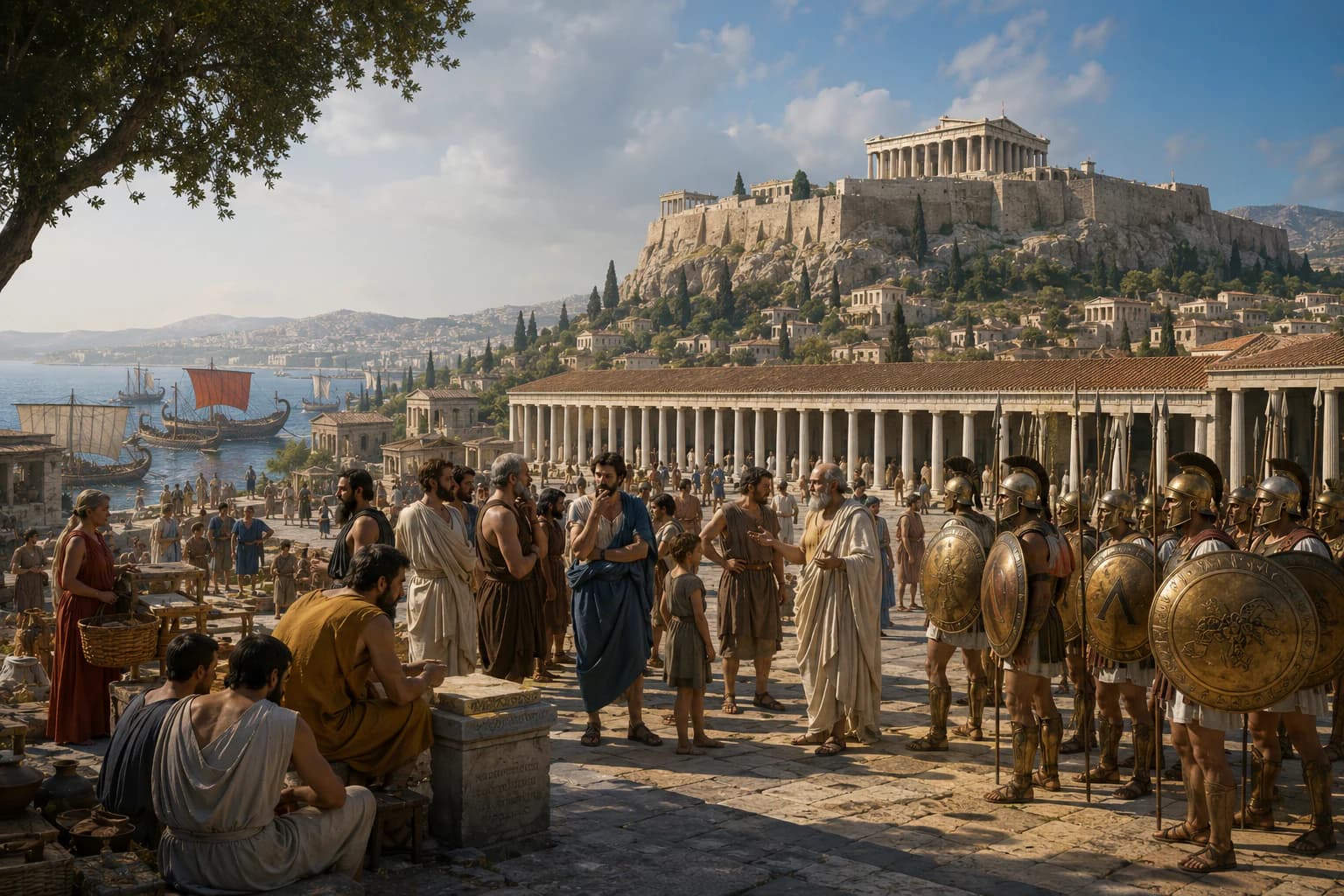
Stay with the ancient world by moving east to Mesopotamia and the Indus Valley, or follow the Mediterranean story into Greece.

Browse stories

References

Sources & Further Reading

Reliable sources, primary-source collections and reading paths connected to this page.

Sources used

  1. The British Museum, Egyptian sculpture,” Open source
  2. The Metropolitan Museum of Art, Egyptian Art,” Open source

Further reading

  1. Toby Wilkinson, The Rise and Fall of Ancient Egypt, Random House.

Primary sources

  1. Fordham University, Internet Ancient History Sourcebook,” Open source

Image references

  1. The British Museum, Collection online: Egypt,” Open source

A weekly route through history

Find out first about the latest published stories, feature notes and occasional Premium offers in one weekly email.