People

Tutankhamun

Tutankhamun was an Eighteenth Dynasty pharaoh of Egypt who ruled after Akhenaten, changed his name from Tutankhaten, restored traditional religion, died around age nineteen, and became famous after the discovery of his tomb in 1922.

Born
1341 BCE
Died
1323 BCE
Role
Ancient Egyptian pharaoh

Ancient Egyptian pharaoh (c. 1341-1323 BC)

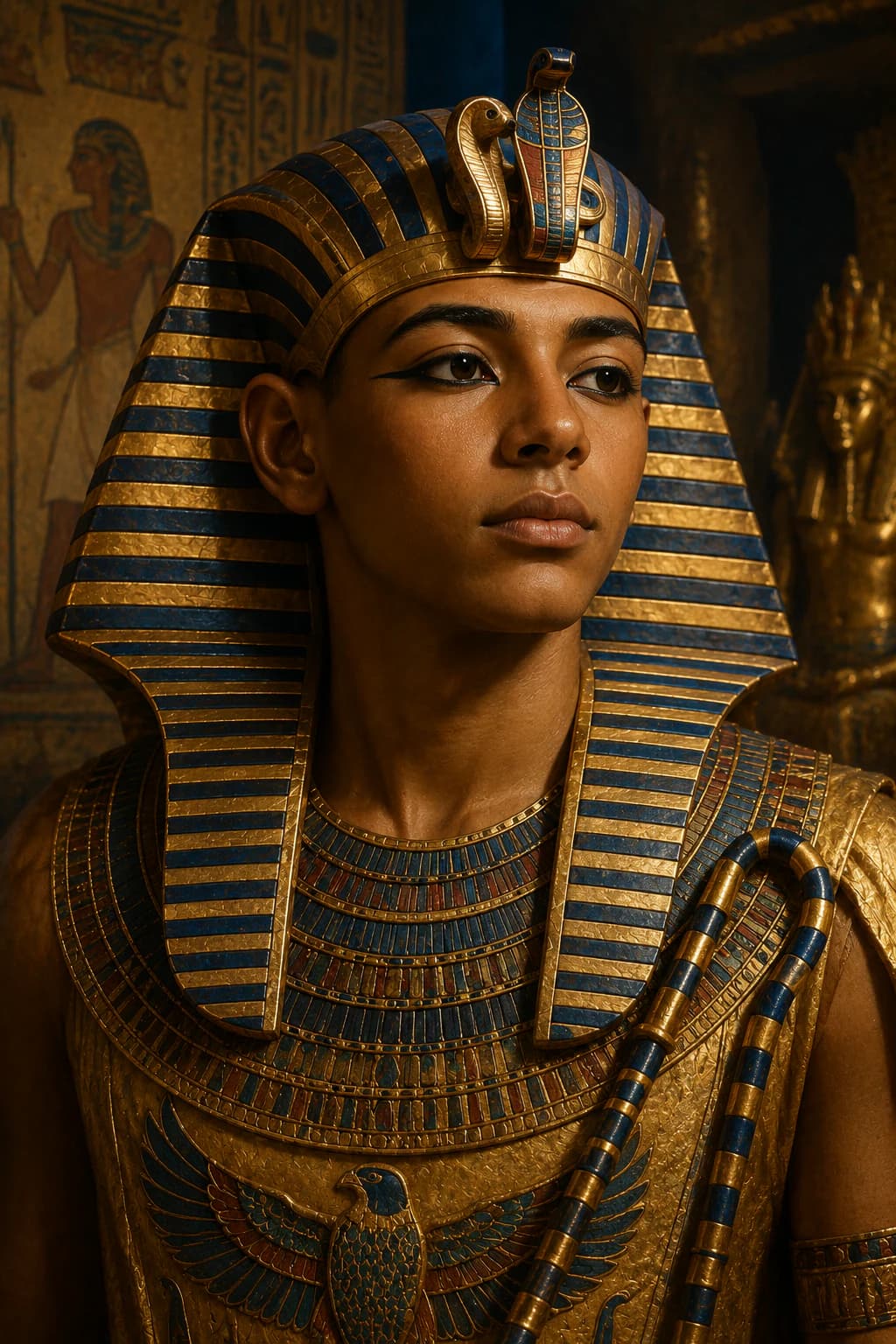
AI-generated portrait of Tutankhamun in ancient Egyptian royal attire
AI-assisted historical reconstruction

An illustrative reconstruction based on historical context. It is not a photograph or documentary likeness. Image policy

Quick answer

Tutankhamun was an Eighteenth Dynasty pharaoh of Egypt who ruled after Akhenaten, changed his name from Tutankhaten, restored traditional religion, died around age nineteen, and became famous after the discovery of his tomb in 1922.

Born
1341 BCE
Died
1323 BCE
Role
Ancient Egyptian pharaoh
Years
1341-1323 BCE
Quick facts

Profile details

Additional identity and tagging details that are not already covered in the introduction.

Also known as
Tutankhamen, King Tut
Facts

Tutankhamun timeline facts

Selected specifics from this profile's life story.

c. 1341 BC
Born into Amarna

Tutankhamun was born near the end of the Amarna period, when Akhenaten had disrupted Egypt's traditional religion by elevating the Aten.

c. 1330s BC
Restoring the old order

Tutankhamun's reign restored temples, priesthoods, festivals, and traditional cults disrupted during Akhenaten's rule.

c. 1323 BC
Death and succession

Tutankhamun died around age nineteen, leaving no living heir and opening the way for Ay and then Horemheb to reshape Egypt after Amarna.

after 1922
Enduring legacy

Tutankhamun's legacy combines two stories: a short reign that helped reverse Amarna, and a tomb that changed how the modern world sees ancient Egypt.

Life Journey

Restoration, early death and modern rediscovery

Follow the story in a more continuous narrative, with a reading mode that matches how much depth you want.

Complete chronology

c. 1341 BC

Born into Amarna

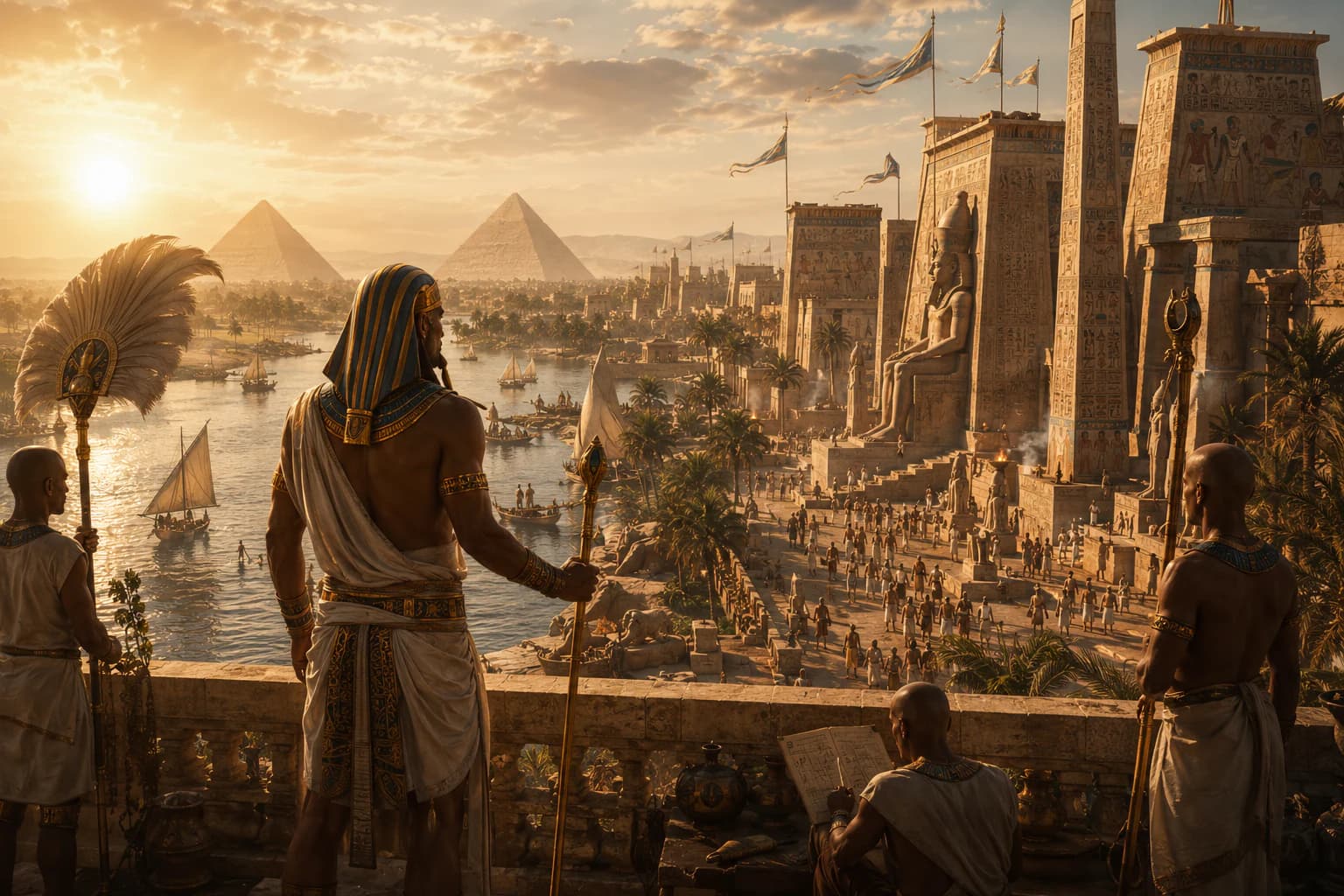
Tutankhamun was born into one of the most unsettled royal worlds in Egyptian history. His original name was Tutankhaten, linking him to the Aten, the solar deity promoted by Akhenaten. Genetic and archaeological evidence strongly connects him to the Amarna royal family, though the exact identities and roles of every parent and predecessor remain debated. He grew up after Akhenaten had moved the court to Akhetaten, modern Amarna, and reorganized royal religion around the Aten and the king's own family. This was not a normal dynastic childhood. The old cults had been damaged, Amun's prominence attacked, temples disrupted, and political legitimacy narrowed around a religious experiment that many institutions had reason to resent.
c. 1332 BC

Child pharaoh

Tutankhamun came to the throne after a succession that remains difficult to reconstruct. Names such as Smenkhkare and Neferneferuaten appear in the evidence, and scholars continue to debate their identities, order, and relationship to the young king. What is clear is that Tutankhamun was very young when he became pharaoh, too young to govern alone in any meaningful sense. Real power must have rested with senior officials, courtiers, priests, military leaders, and royal relatives. Two figures would later matter especially: Ay, an experienced courtier who became pharaoh after Tutankhamun, and Horemheb, a powerful general who later claimed to restore order after the Amarna disruption. Tutankhamun's reign began as a child kingship managed by adults in a state trying to recover its balance.

early reign

Changing the name

The name change from Tutankhaten to Tutankhamun is one of the clearest political acts of the reign. It moved the king's identity from the Aten to Amun, the god whose cult had been attacked under Akhenaten. His queen, Ankhesenpaaten, similarly became Ankhesenamun. Names in Egypt were not light labels. They carried religious allegiance, royal legitimacy, and cosmic meaning. By changing them, the court announced that the Amarna experiment was being reversed. The move did not necessarily mean the young king personally designed the policy. It meant the regime ruling in his name understood what Egypt needed: reconciliation with the old gods, restored temple networks, and a renewed claim that pharaoh upheld maat, the proper order of the world.

c. 1330s BC

Restoring the old order

Tutankhamun's most important historical role was not conquest or architectural spectacle, but restoration. A key inscription, often called the Restoration Stela, presents Egypt as having suffered when temples were neglected and gods ignored. Its language is royal and ideological, so it should not be read as neutral reporting, but it captures the new regime's message. Temples were reopened or repaired, offerings resumed, priesthoods revived, and the capital shifted away from Akhetaten. This was religious policy, but also state policy. Temples owned land, employed workers, stored wealth, hosted festivals, and linked local communities to royal authority. Rebuilding them helped heal the institutional damage caused by Akhenaten's revolution. Tutankhamun mattered because his reign gave legitimacy to the counter-revolution.

c. 1332-1323 BC

Court and family

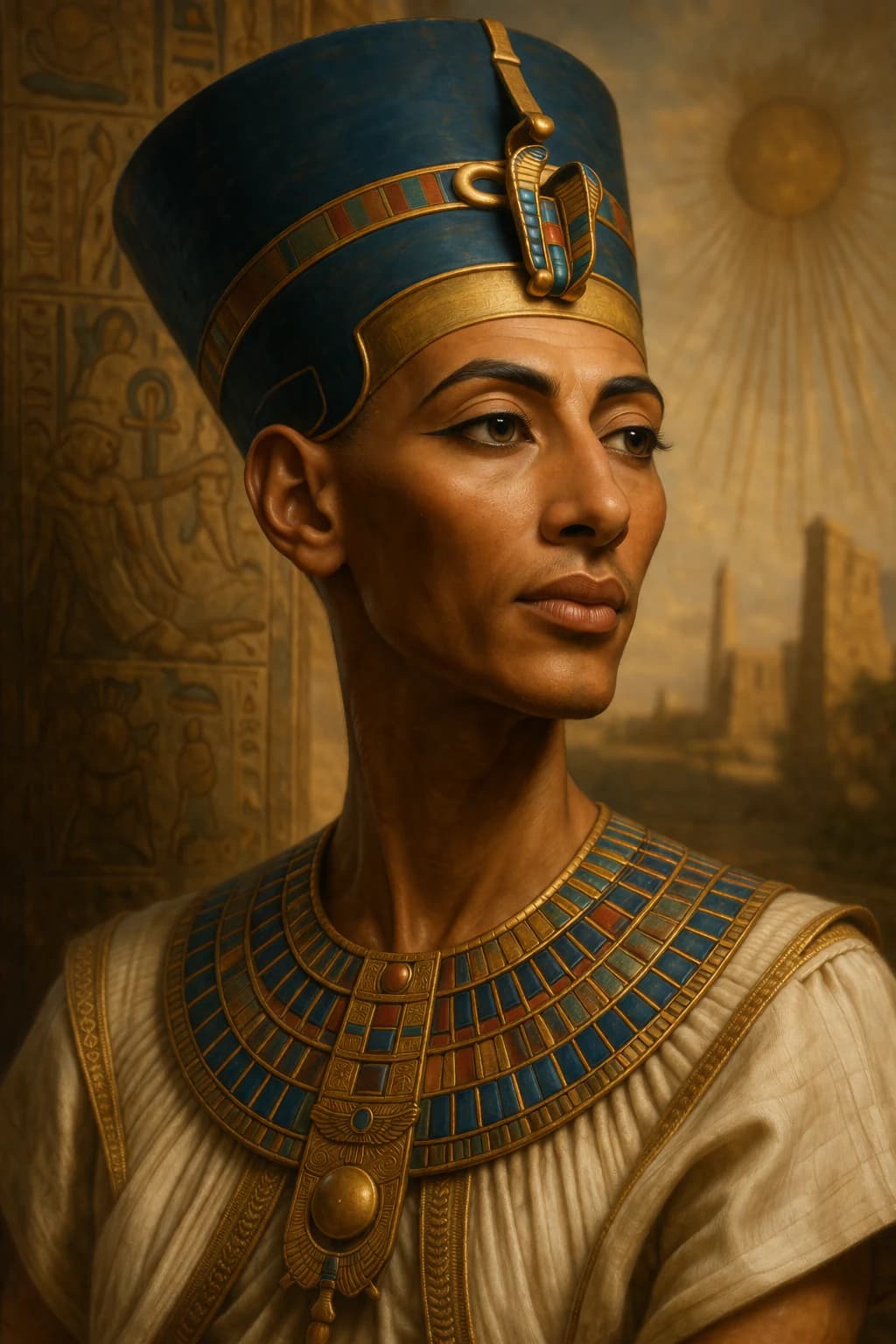
Tutankhamun's marriage to Ankhesenamun helped preserve dynastic continuity after the turmoil of Amarna. She had been born Ankhesenpaaten and was probably one of Akhenaten and Nefertiti's daughters. Their marriage joined two young members of a damaged royal family and allowed the restoration regime to claim legitimacy without completely severing the bloodline. The couple had no surviving children, though two mummified fetuses found in Tutankhamun's tomb are generally understood as likely daughters. Their presence gives the reign a private sadness behind the golden public image. The political problem was severe: if Tutankhamun died without an heir, the Eighteenth Dynasty's Amarna line would be exposed to takeover by older courtiers and military men.

late reign

Health and kingship

Tutankhamun's mummy has invited intense scientific and popular attention. Modern examinations have suggested a young man with a club foot or related walking difficulty, signs of malaria infection, and a fracture in the leg area, though interpretations have changed over time and should be handled cautiously. Earlier dramatic theories of murder are not well supported by current evidence, but no single cause of death can be stated with complete certainty. The medical debate matters because it pushes against the flawless golden mask. Tutankhamun was a real adolescent ruler, not merely a symbol. If he was physically vulnerable, that vulnerability did not prevent the court from presenting him in the full ideal language of pharaoh: youthful, strong, victorious, and divinely legitimate.

c. 1323 BC

Death and succession

Tutankhamun died around 1323 BC, probably still in his late teens. His death created a succession crisis. With no surviving son, the throne passed to Ay, who may have performed funerary rites for him and then ruled briefly. Horemheb followed later and presented himself as the restorer of Egypt's proper order, eventually erasing or bypassing the Amarna kings in official memory. A famous letter from an Egyptian queen to the Hittite king, asking for a prince to marry, may belong to this period, though the identity of the queen is debated. If connected to Ankhesenamun, it would reveal the desperation of the succession. Whether or not that link is correct, Tutankhamun's death marked the end of one fragile attempt to repair the dynasty from within.

after 1323 BC

A hidden tomb

Tutankhamun's tomb, KV62, was small for a pharaoh, perhaps adapted because his death came suddenly or because larger arrangements were unavailable. Its modest size became the accident that preserved his fame. Later building activity and debris helped conceal the entrance, while many grander royal tombs were robbed in antiquity. Tutankhamun's burial was not untouched, but it survived with an extraordinary portion of its contents still present: shrines, chariots, beds, jewelry, weapons, ritual objects, coffins, and the gold mask that became a global icon. These goods were not treasure in the modern adventure-story sense. They were tools for royal rebirth, status, protection, and eternal identity. The tomb preserved the material imagination of Egyptian kingship with unmatched vividness.

1922

Discovery in 1922

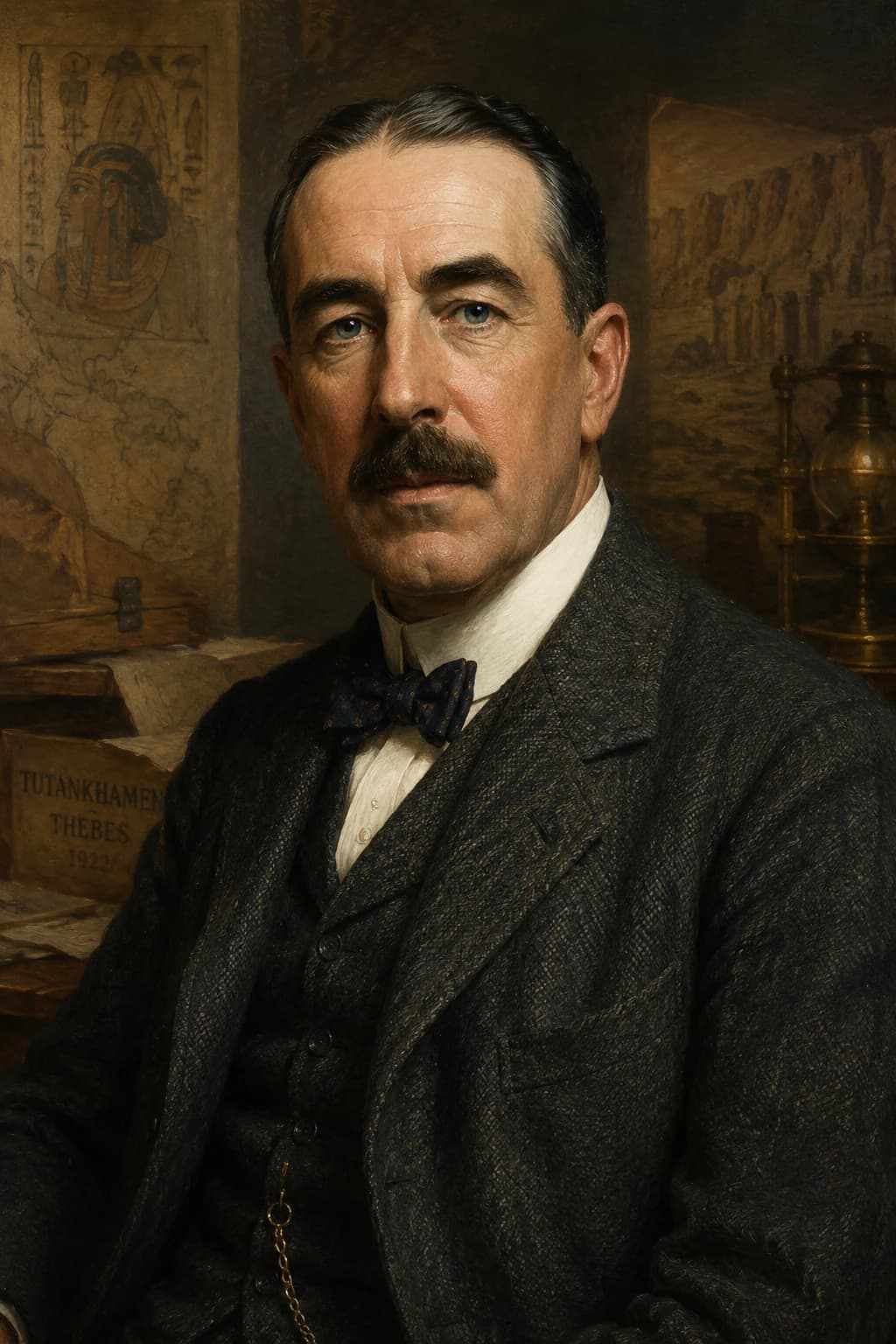
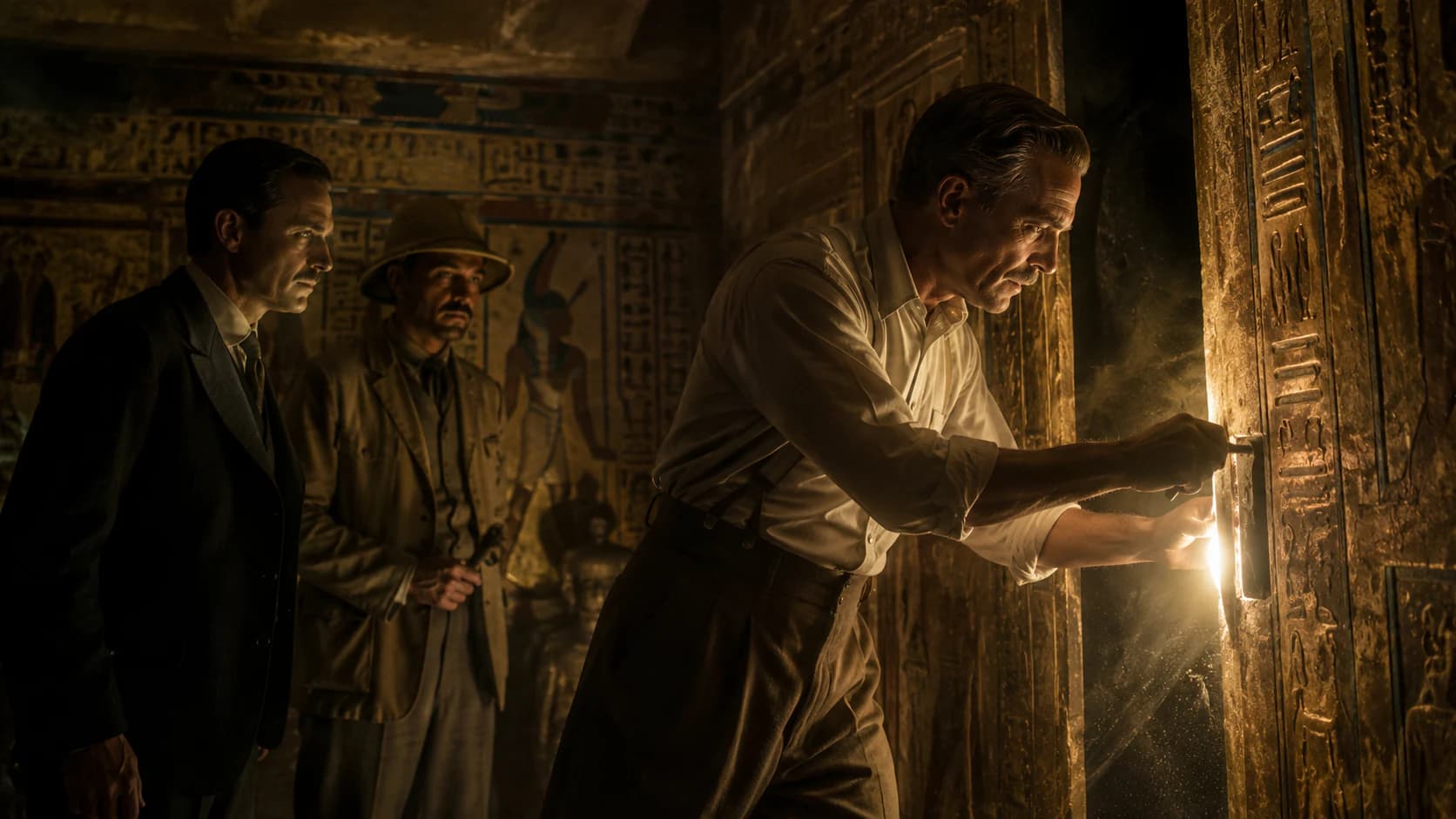
In November 1922, Howard Carter and his team, funded by Lord Carnarvon, found the entrance to Tutankhamun's tomb in the Valley of the Kings. The discovery transformed Egyptology and public imagination. Newspapers, exhibitions, photography, fashion, cinema, and museum culture turned the young king into a modern celebrity. That fame can distort perspective. Tutankhamun was not the most powerful pharaoh, the greatest builder, or the most successful conqueror. He became famous because his burial survived in a way others did not. Yet that does not make his fame empty. The tomb opened an unparalleled window onto royal craft, ritual, wealth, and afterlife belief. Through an obscure young restorer-king, the world encountered ancient Egypt in color, gold, wood, linen, and human intimacy.

after 1922

Enduring legacy

Tutankhamun matters for reasons that work in two directions. In his own time, he was the child pharaoh under whom Egypt moved away from Akhenaten's religious revolution and back toward traditional worship, temple power, and institutional stability. That made his reign politically important even if he did not personally direct every decision. In modern history, he became the face of ancient Egypt because his tomb survived with astonishing richness. The danger is to let the gold swallow the person. Tutankhamun was not merely a mask, a curse story, or a museum blockbuster. He was a young king placed at the hinge of a damaged dynasty, used by powerful adults to restore order, and then overtaken by death before he could define adulthood. His afterlife became larger than his life, but the life still matters.

Continue in context

Connected stories

Move from the profile into the wider events and settings this figure belongs to.

Tertiary paths

Content note

This profile is written for educational use and connects to related Stories of History pages. The main portrait is an AI-assisted historical reconstruction, included as an illustrative aid rather than documentary evidence. Image policy

References

Sources & Further Reading

Reliable reference works, archives and reading paths connected to this profile.

Further reading

  1. Encyclopaedia Britannica, Search results for Tutankhamun,” accessed June 2026.Open source
  2. WorldCat, Books and library holdings for Tutankhamun,” accessed June 2026.Open source

Primary sources

  1. Library of Congress, Search results for Tutankhamun,” accessed June 2026.Open source

Reviewed claim sources

Loading reviewed claim sources...

A weekly route through history

Find out first about the latest published stories, feature notes and occasional Premium offers in one weekly email.