Related Moment
Opening Tutankhamun's Tomb
The first sign was not gold. It was a step.
In November 1922, Howard Carter opened a sealed doorway in the Valley of the Kings and brought a forgotten boy-king back into the modern imagination.
The first sign was not gold. It was a step, cut into the desert floor beneath the . Above it, the sun burned white over the cliffs of western Thebes. Below, sealed behind stone and rubble, lay a name almost forgotten by history: Tutankhamun.
By 1922, the had been searched so often that many believed it was exhausted. Tomb robbers had worked there in antiquity. Archaeologists had followed centuries later. Most royal burials had been found damaged, emptied, or violated.
Howard Carter had spent years digging under the patronage of Lord Carnarvon. His funds were nearly gone. His patience was thinning. Another season might be the last.
Then Carter's workers uncovered the first step of a buried staircase. As the steps were cleared, a sealed doorway appeared. It was not untouched exactly, for there were signs it had been opened and resealed long ago, but it was intact enough to suggest something extraordinary.
Carter sent for Carnarvon. When the patron arrived from England, the team pressed deeper. Behind the first doorway was a corridor filled with rubble. At the end stood another sealed door.
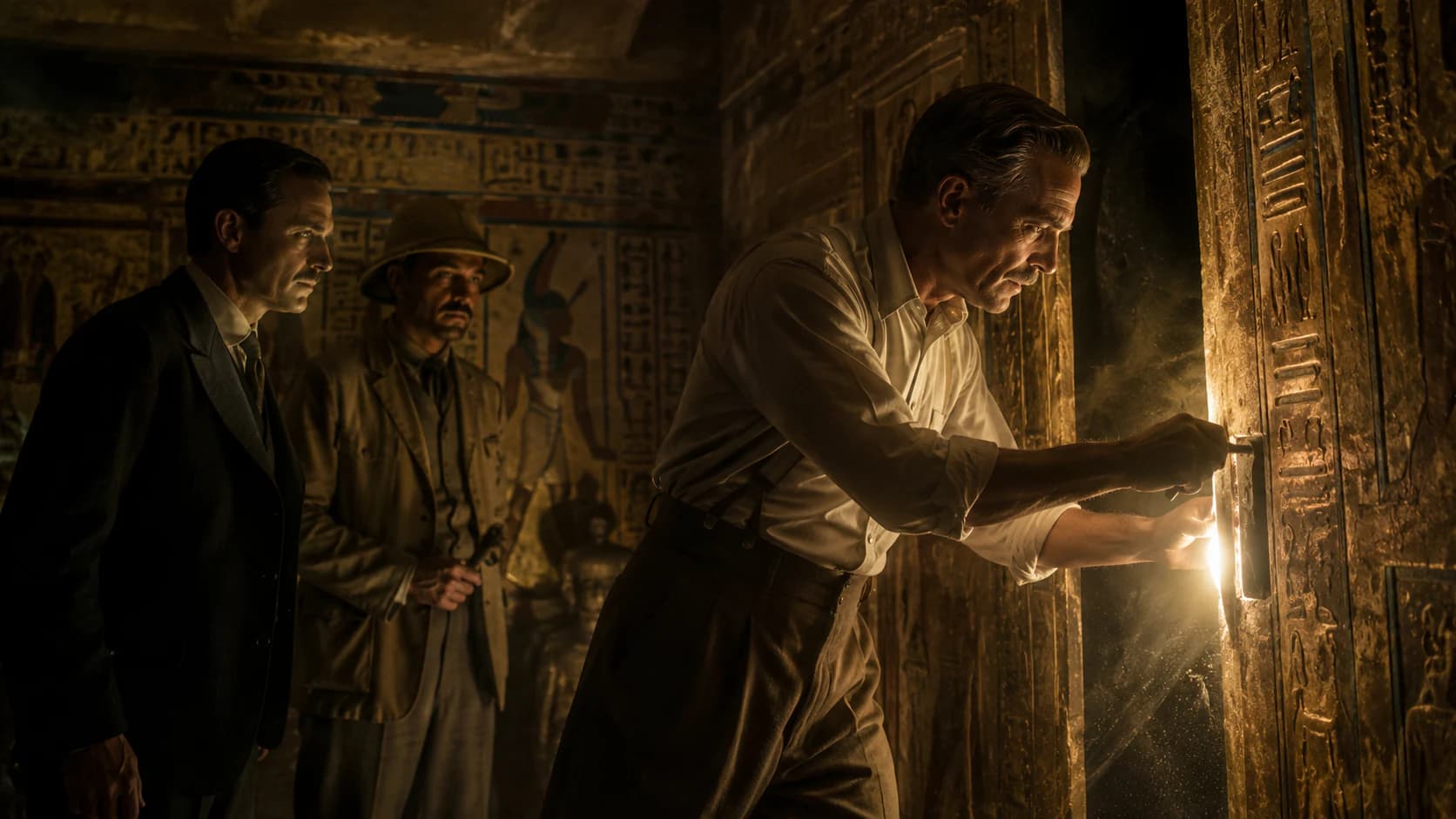
On 26 November 1922, Carter made a small opening. Warm air escaped from the dark chamber. He raised a candle to the hole and looked inside. At first, he saw nothing. Then shapes emerged from the shadows: strange animals, golden couches, chests, statues, wheels, furniture, and objects piled in dazzling confusion.
The chamber was not the burial room itself. It was an antechamber, crowded with treasures meant to serve the dead king in the afterlife. Beyond it lay more rooms, more seals, and eventually the nested shrines and golden coffin of Tutankhamun.
The tomb had been disturbed in ancient times, but not stripped bare. That made it unlike almost anything else found in the . Inside were thousands of objects: sandals, weapons, beds, games, food, jewelry, statues, ritual items, and the golden death mask that would become one of the most famous images from the ancient world.
Tutankhamun himself had not been one of Egypt's most powerful pharaohs. He died young, probably around eighteen or nineteen. His reign was short, and his political importance was limited compared with the giants of Egypt's past.
But his tomb changed everything. The opening of Tutankhamun's tomb gave the modern world its most complete vision of a pharaoh's burial. It transformed Egyptology, fueled global fascination with ancient Egypt, and made a minor king into an immortal symbol.
For one suspended moment, Carter's candle crossed the boundary between the living and the dead. A forgotten boy-king became, in death, the most famous pharaoh of all.