People

Menkaure

Menkaure was an Old Kingdom pharaoh of Egypt's Fourth Dynasty, best known for the third main pyramid at Giza, his pyramid temples, and some of the finest royal sculpture from ancient Egypt's pyramid age.

Died
2500 BCE
Role
Ancient Egyptian pharaoh

Ancient Egyptian pharaoh (died c. 2500 BC)

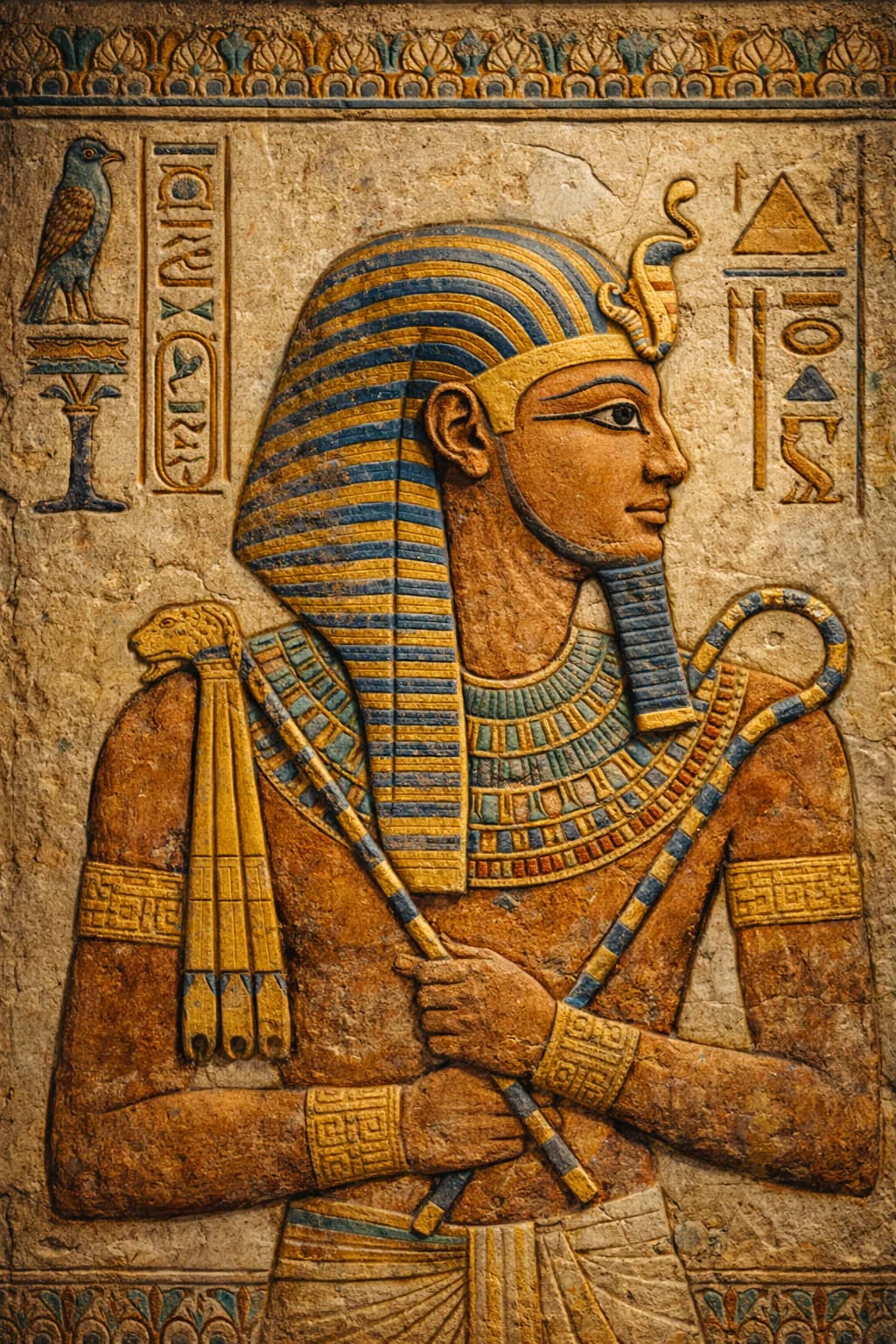
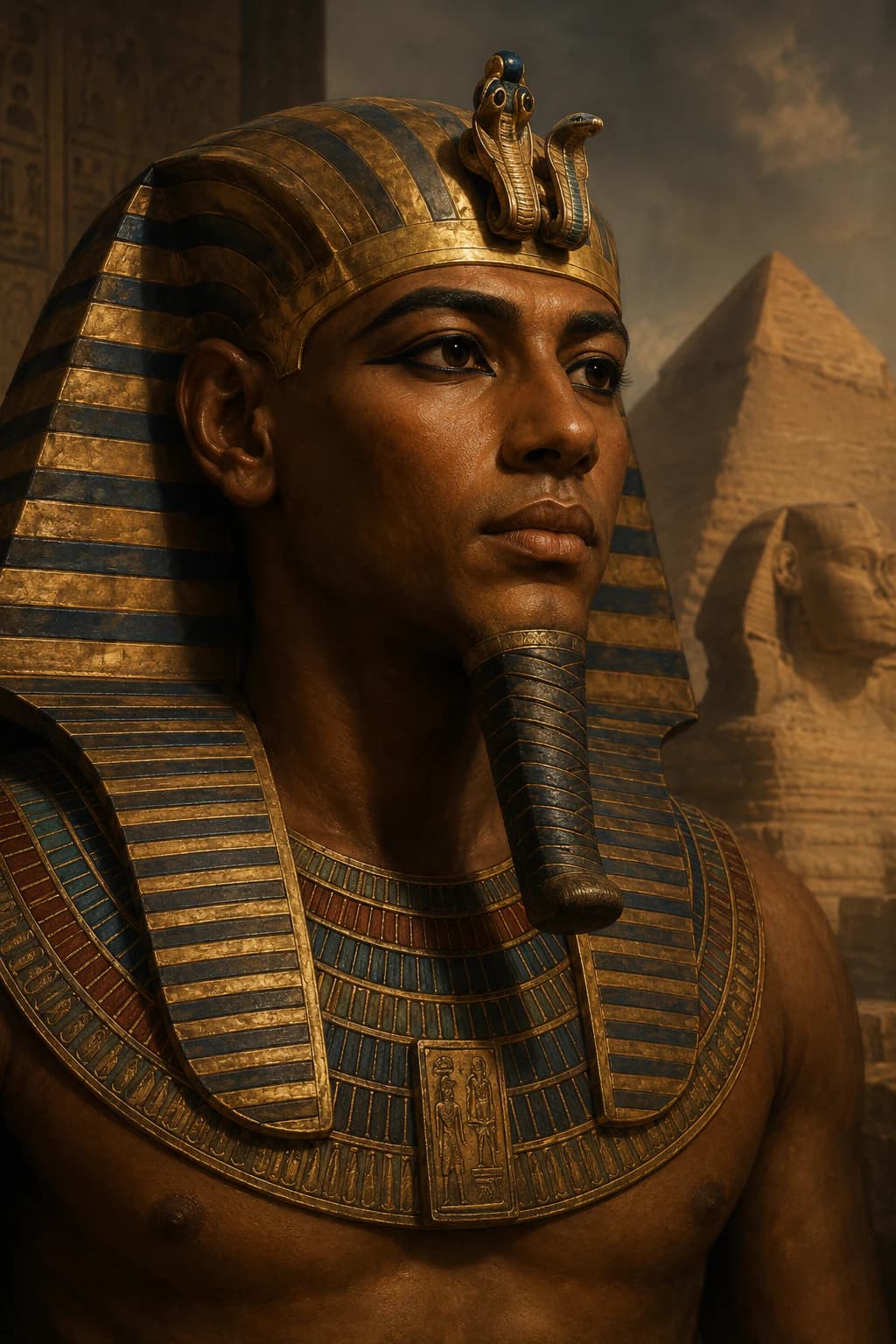
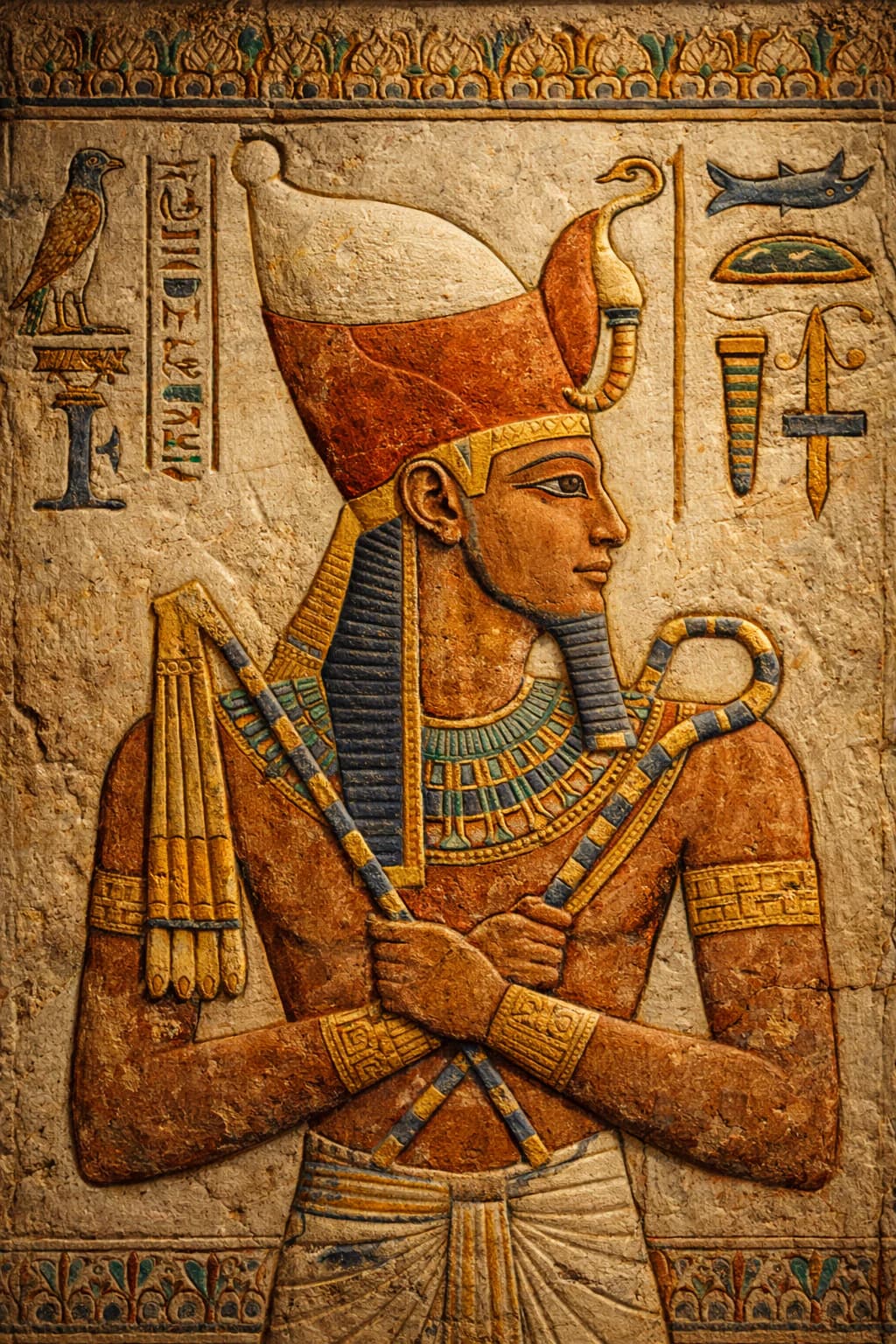
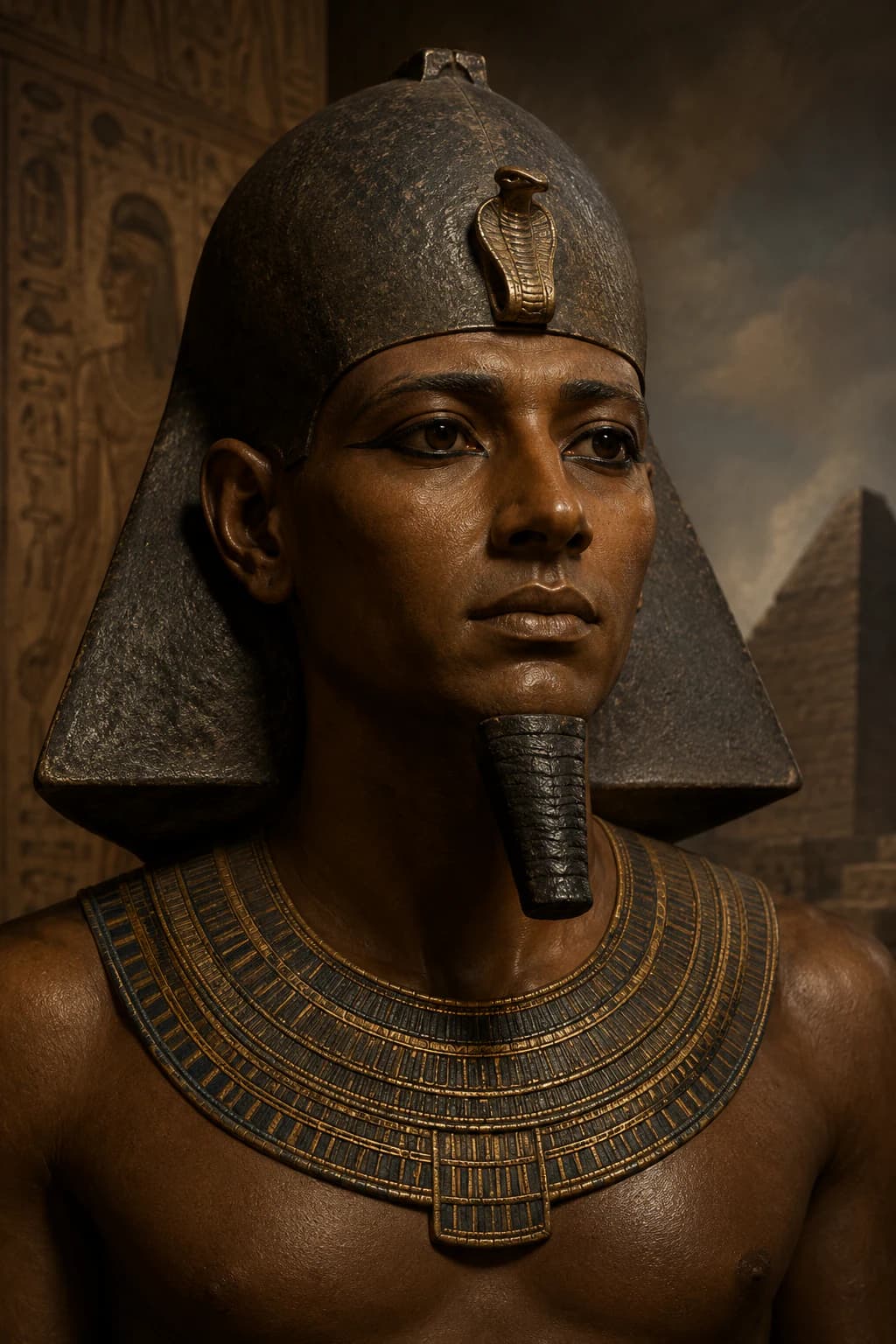
AI-generated portrait of Menkaure in ancient Egyptian royal attire
AI-assisted historical reconstruction

An illustrative reconstruction based on historical context. It is not a photograph or documentary likeness. Image policy

Quick answer

Menkaure was an Old Kingdom pharaoh of Egypt's Fourth Dynasty, best known for the third main pyramid at Giza, his pyramid temples, and some of the finest royal sculpture from ancient Egypt's pyramid age.

Died
2500 BCE
Role
Ancient Egyptian pharaoh
Years
Died 2500 BCE
Quick facts

Profile details

Additional identity and tagging details that are not already covered in the introduction.

Also known as
Mykerinos
Facts

Menkaure timeline facts

Selected specifics from this profile's life story.

c. 26th century BC
Born into the pyramid dynasty

Menkaure belonged to Egypt's Fourth Dynasty, the royal family that had already filled Giza with the monuments of Khufu and Khafre.

c. 2520 BC
The third pyramid

Menkaure built the third main pyramid at Giza, completing the trio that made the plateau one of history's most recognizable sacred landscapes.

long after his reign
A later reputation

Later Greek tradition remembered Menkaure, known as Mykerinos, as more just and humane than other pyramid kings, but those stories are not contemporary evidence.

after 2500 BC
Enduring legacy

Menkaure's legacy endures through the completed Giza triad, the beauty of his statues, and the evidence his reign offers for change within Old Kingdom kingship.

Life Journey

Royal restraint at the end of Giza's great age

Follow the story in a more continuous narrative, with a reading mode that matches how much depth you want.

Complete chronology

c. 26th century BC

Born into the pyramid dynasty

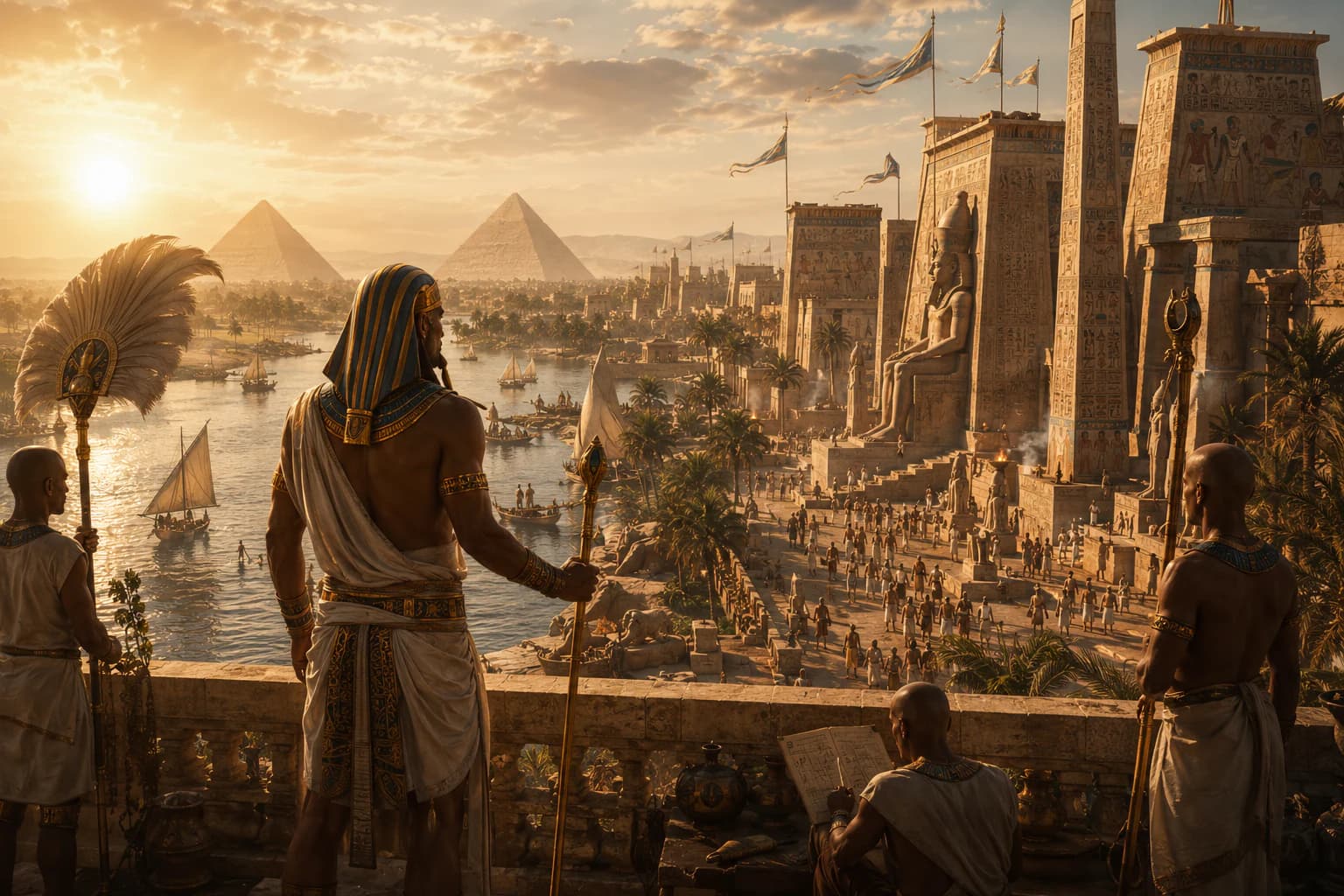
Menkaure was born into a dynasty whose rulers had made kingship visible on a scale that still dominates the Egyptian imagination. Khufu's Great Pyramid and Khafre's complex already stood or were taking shape at Giza, turning the western desert near Memphis into a sacred royal landscape. Menkaure is usually understood as Khafre's successor and probably his son, though the family relationships of the Fourth Dynasty are reconstructed from fragmentary evidence. He inherited not only a throne but a heavy tradition. To rule after Khufu and Khafre was to govern in the shadow of monuments that had already defined what pharaonic ambition could look like.
c. 2530 BC

Accession to the throne

Menkaure's reign sits at a subtle turning point in Old Kingdom history. The Egyptian state remained powerful, literate, hierarchical, and wealthy by ancient standards. It could still command labor, move stone, maintain temple service, and organize royal construction. Yet Menkaure's pyramid was much smaller than those of Khufu and Khafre. That difference should not be flattened into a simple story of decline. Scale could reflect available time, political choice, economic pressure, theological emphasis, or changing priorities within the court. Menkaure's importance lies partly in that restraint. His reign shows that the pyramid age was not a single repeated formula. Each king negotiated memory, resources, ritual needs, and dynastic expectation in his own way.

c. 2520 BC

The third pyramid

Menkaure's pyramid is the smallest of the three main pyramids at Giza, but its position in the group gives it enormous historical weight. It completed the visual rhythm of the plateau: Khufu, Khafre, Menkaure, three Fourth Dynasty kings fixed into one horizon. The pyramid's lower courses included granite casing, a costly material brought from Aswan far to the south, showing that reduced scale did not mean indifference to prestige. The project still required quarrying, transport, surveying, temple building, and the labor of skilled teams. Its achievement is easy to underestimate because it stands beside larger monuments. Seen on its own terms, Menkaure's pyramid remains a major act of royal planning and a crucial final statement in Giza's great dynastic composition.

c. 2520 BC

Temple and ritual complex

Like other Old Kingdom pyramids, Menkaure's monument was not an isolated tomb. It belonged to a ritual system that linked the desert plateau to the living world of fields, priests, offerings, and administration. The valley temple, mortuary temple, causeway, queen's pyramids, and associated burials created a setting in which the king's afterlife could be served continuously. Menkaure's complex also reveals practical realities. Parts of it were finished in mudbrick rather than entirely in stone, suggesting that his death may have interrupted the original plan or that later completion depended on different resources. This does not make the complex a failure. It makes it human: a royal project shaped by time, mortality, and the limits even pharaohs could not fully escape.

c. 2520 BC

Royal sculpture

Menkaure's fame rests not only on architecture but on sculpture of exceptional quality. Greywacke triads show the king standing with the goddess Hathor and personifications of Egyptian nomes, making local territories appear under divine and royal order. Other statues pair Menkaure with a queen, possibly Khamerernebty II, in a poised image of dynastic stability. These works are not casual likenesses. They are political theology in stone. The king's body is idealized, calm, and forward-moving; the gods and royal women confirm his place; the whole composition denies accident, weakness, or disorder. For modern viewers, the statues give Menkaure an immediacy that the larger pyramids sometimes deny. They make the abstract institution of pharaoh feel almost touchable.

long after his reign

A later reputation

Menkaure entered later memory under the Greek name Mykerinos. Herodotus, writing more than two thousand years after the Fourth Dynasty, presented him as a comparatively just ruler, unlike the harsher images attached to Khufu and Khafre in Greek tradition. These stories are valuable, but not as straightforward biography. They tell us how later audiences moralized the pyramid age, turning enormous monuments into lessons about kings, justice, labor, and divine favor. The historical Menkaure remains harder to see. We should not simply accept the old tale of the good king, but neither should we dismiss what his material record suggests: his monuments and sculptures present a ruler concerned with legitimacy, divine association, and careful continuation of dynastic form.

c. 2500 BC

Death and completion

Menkaure's death likely came before every part of his complex had reached its intended final form. Evidence from the temples suggests that some work was completed in less permanent materials, often associated with the reign of his successor Shepseskaf. This moment is quietly revealing. Pharaohs claimed eternity, but their projects depended on ordinary sequences of labor, succession, funding, and political will. A king's death could change the pace and material of construction. Menkaure's unfinished or adapted elements therefore do not diminish him. They show the pressure of mortality on a system designed to overcome it. The pyramid age was not a world of effortless perfection; it was a world where human institutions struggled to make permanence.

after 2500 BC

Enduring legacy

Menkaure is often introduced as the builder of the smallest Giza pyramid, but that description can mislead. His real importance lies in how his reign completes and complicates the story of the Fourth Dynasty. He preserved the Giza tradition, invested in refined royal imagery, and left evidence for a state still capable of impressive coordination even as pyramid scale changed. His monuments remind us that history should not measure significance only by height. Menkaure's pyramid gives Giza its final balance; his statues give Old Kingdom kingship some of its most powerful surviving faces; his later reputation shows how ancient memory turned pyramid rulers into moral examples. He stands at the end of Giza's great sequence, not as an afterthought, but as the ruler who made the landscape whole.

Continue in context

Connected stories

Move from the profile into the wider events and settings this figure belongs to.

Tertiary paths

Content note

This profile is written for educational use and connects to related Stories of History pages. The main portrait is an AI-assisted historical reconstruction, included as an illustrative aid rather than documentary evidence. Image policy

References

Sources & Further Reading

Reliable reference works, archives and reading paths connected to this profile.

Further reading

  1. Encyclopaedia Britannica, Search results for Menkaure,” accessed June 2026.Open source
  2. WorldCat, Books and library holdings for Menkaure,” accessed June 2026.Open source

Primary sources

  1. Library of Congress, Search results for Menkaure,” accessed June 2026.Open source

Reviewed claim sources

Loading reviewed claim sources...

A weekly route through history

Find out first about the latest published stories, feature notes and occasional Premium offers in one weekly email.