Complete chronology
Full overview and deeper context for every journey step.
-69
Royal Birth
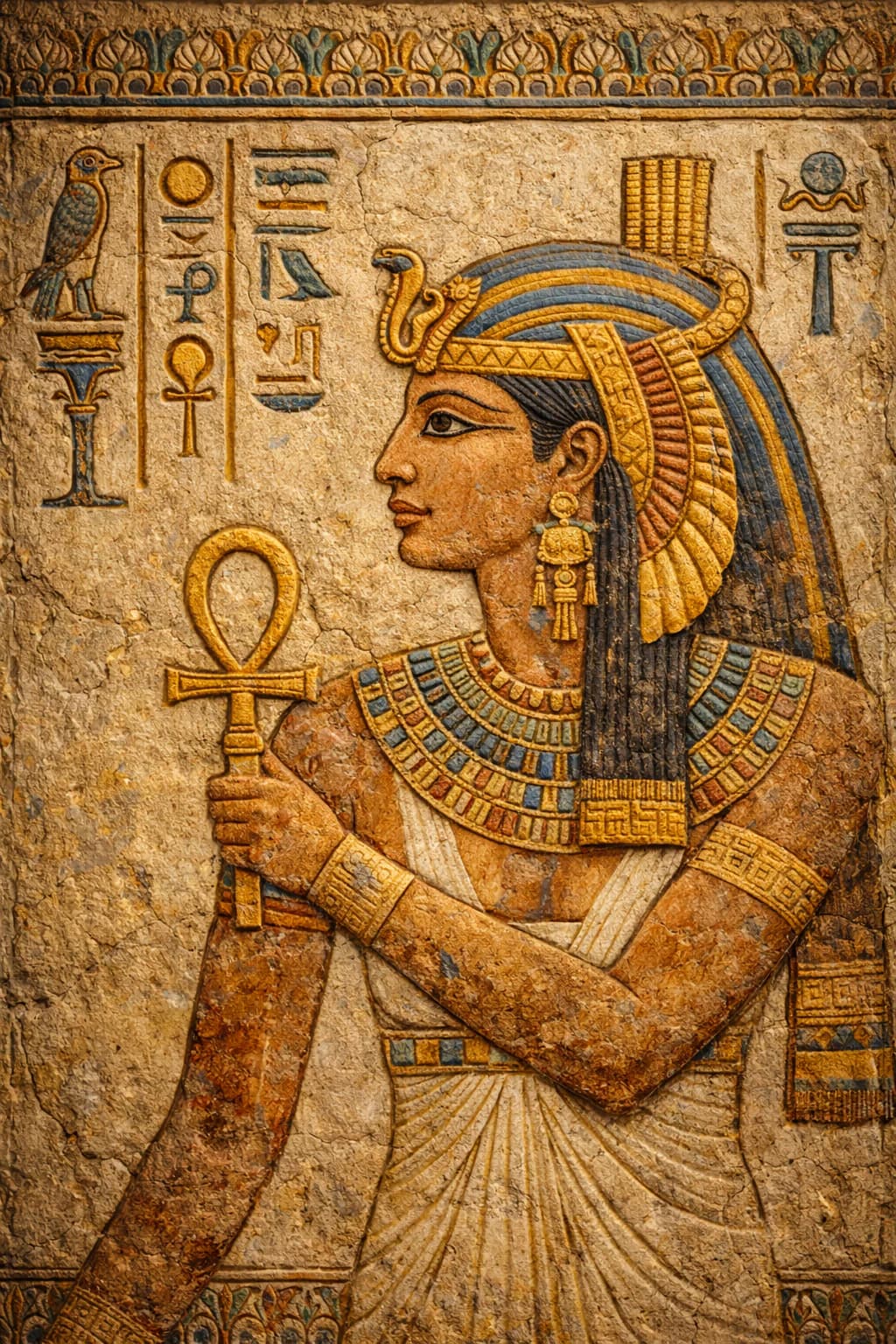
Cleopatra VII was born in 69 BC into the Ptolemaic dynasty, the Macedonian Greek house that had ruled Egypt since the age of Alexander the Great. The court at Alexandria was dazzling, learned, wealthy, and lethal. Siblings married, ruled together, plotted against one another, and sometimes died violently in contests for the throne. Cleopatra inherited that world with unusual gifts. Ancient writers, even hostile Roman ones, emphasized her intelligence, political presence, and command of languages. She appears to have engaged more directly with Egyptian religious and cultural identity than many earlier Ptolemies, presenting herself not only as a Hellenistic queen but as pharaoh. That double identity was not decoration. It helped her speak to Greek elites, Egyptian priests, and foreign powers at once.
Her background positioned her to navigate multiple cultural identities within a single kingdom.
-51
Shared Rule
When Ptolemy XII died in 51 BC, Cleopatra became co-ruler with her younger brother Ptolemy XIII, as dynastic custom required. The arrangement looked orderly on paper and unstable in practice. Egypt was rich but vulnerable: it supplied grain, money, and strategic access to the eastern Mediterranean, making it irresistible to Roman politicians. Inside Alexandria, advisers around the young king tried to push Cleopatra aside. She responded by ruling assertively in her own name, appearing on coinage and documents, and refusing to behave as a ceremonial partner. The court split, and Cleopatra was forced from power. Her early reign therefore began as a struggle for survival, not a romance. The central question was whether Egypt would be ruled by a capable queen, by palace factions, or by Rome through whoever proved most convenient.
Shared rule in a divided court often becomes a contest rather than a partnership.
-49 to -48
Exile and Return
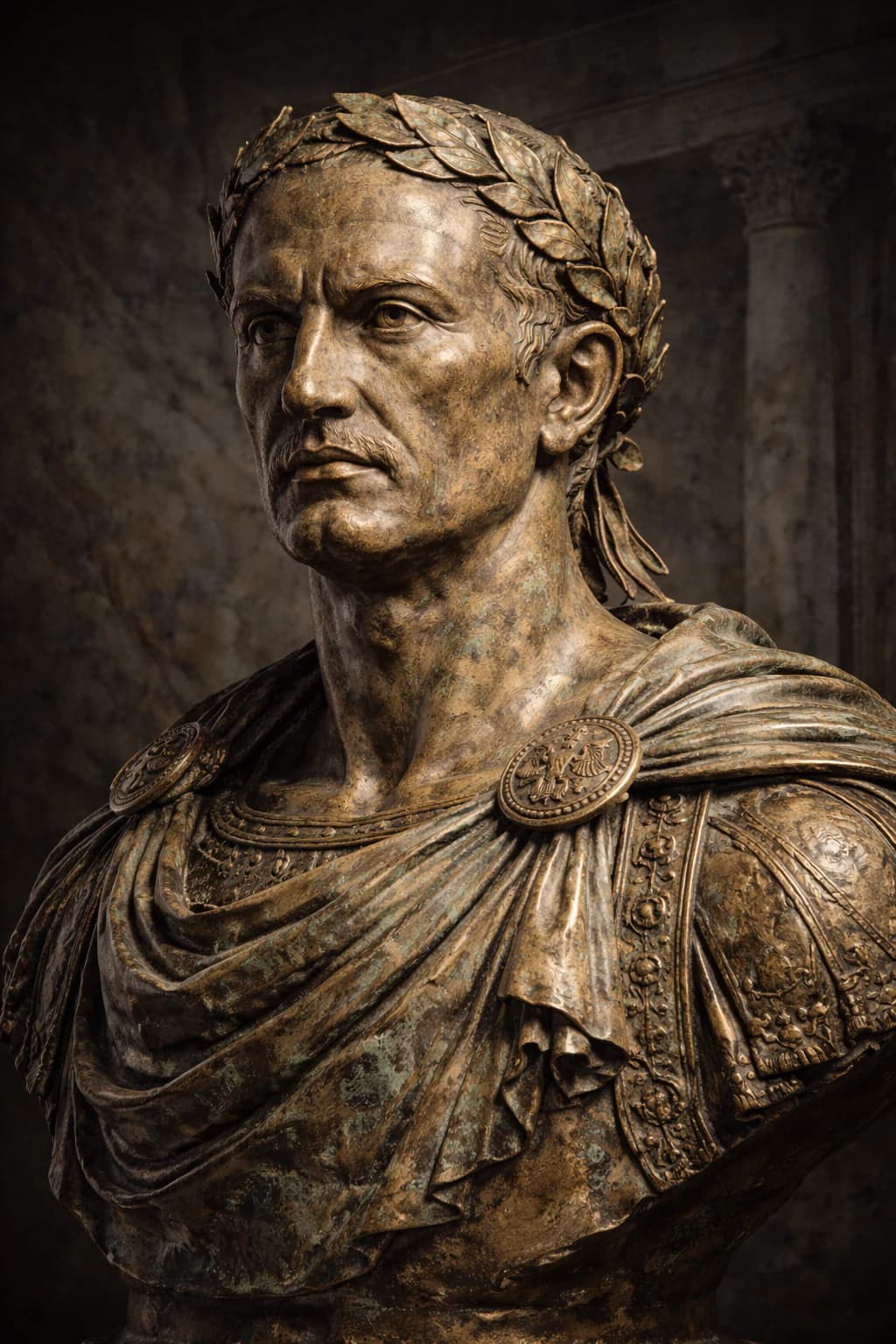
Cleopatra’s exile coincided with the Roman civil war between Julius Caesar and Pompey the Great. That timing changed everything. Pompey fled to Egypt after defeat at Pharsalus in 48 BC, only to be murdered by Ptolemy XIII’s advisers, who hoped to please Caesar. The calculation failed. Caesar arrived in Alexandria and became entangled in Egypt’s succession dispute. Cleopatra’s famous entrance to Caesar, later embroidered into legend as a dramatic arrival hidden in bedding or a sack, should be treated carefully; the exact details are uncertain. The political meaning is clearer. She gained direct access to the most powerful Roman in the Mediterranean and presented herself as the better partner for Roman interests. Exile had taught her that Egyptian politics could no longer be separated from Roman power.
Setbacks can become opportunities when approached with strategic patience.
-48
Alliance with Caesar
Cleopatra’s alliance with Julius Caesar restored her to the throne after the Alexandrian War, in which Ptolemy XIII died. She then ruled with another younger brother, Ptolemy XIV, while her own authority remained dominant. The relationship with Caesar was personal as well as political, and she bore a son, Caesarion, whom she presented as Caesar’s child. For Cleopatra, Caesar’s support secured her position and gave Egypt breathing room. For Caesar, Egypt offered wealth, grain, prestige, and a cooperative ruler in a critical region. Cleopatra later visited Rome, where her presence near Caesar sharpened anxieties about monarchy, eastern luxury, and the future of the Republic. After Caesar’s assassination in 44 BC, her position became dangerous again. The patron who had protected Egypt was gone, and Rome’s next struggle was beginning.
Strategic alliances can reshape power balances in moments of vulnerability.
-40s
Reasserting Authority
Cleopatra’s rule in Egypt was not simply a series of relationships with Roman men. She governed a complex kingdom. Egypt’s wealth rested on Nile agriculture, taxation, ports, temples, bureaucracy, and Alexandria’s role as a commercial and intellectual center. Cleopatra issued coinage, negotiated famine and supply pressures, cultivated priestly support, and used royal ceremony to present stability after years of dynastic conflict. She eliminated rivals when necessary, including likely involvement in the death of Ptolemy XIV and later the removal of her sister Arsinoe IV, who could be used against her. These actions were ruthless, but they belonged to the political culture of Hellenistic monarchy. Her overriding aim was consistent: keep Egypt independent enough to survive while Rome’s leaders fought over the shape of their own state.
Maintaining independence required constant negotiation with more powerful neighbors.
-41
Alliance with Antony
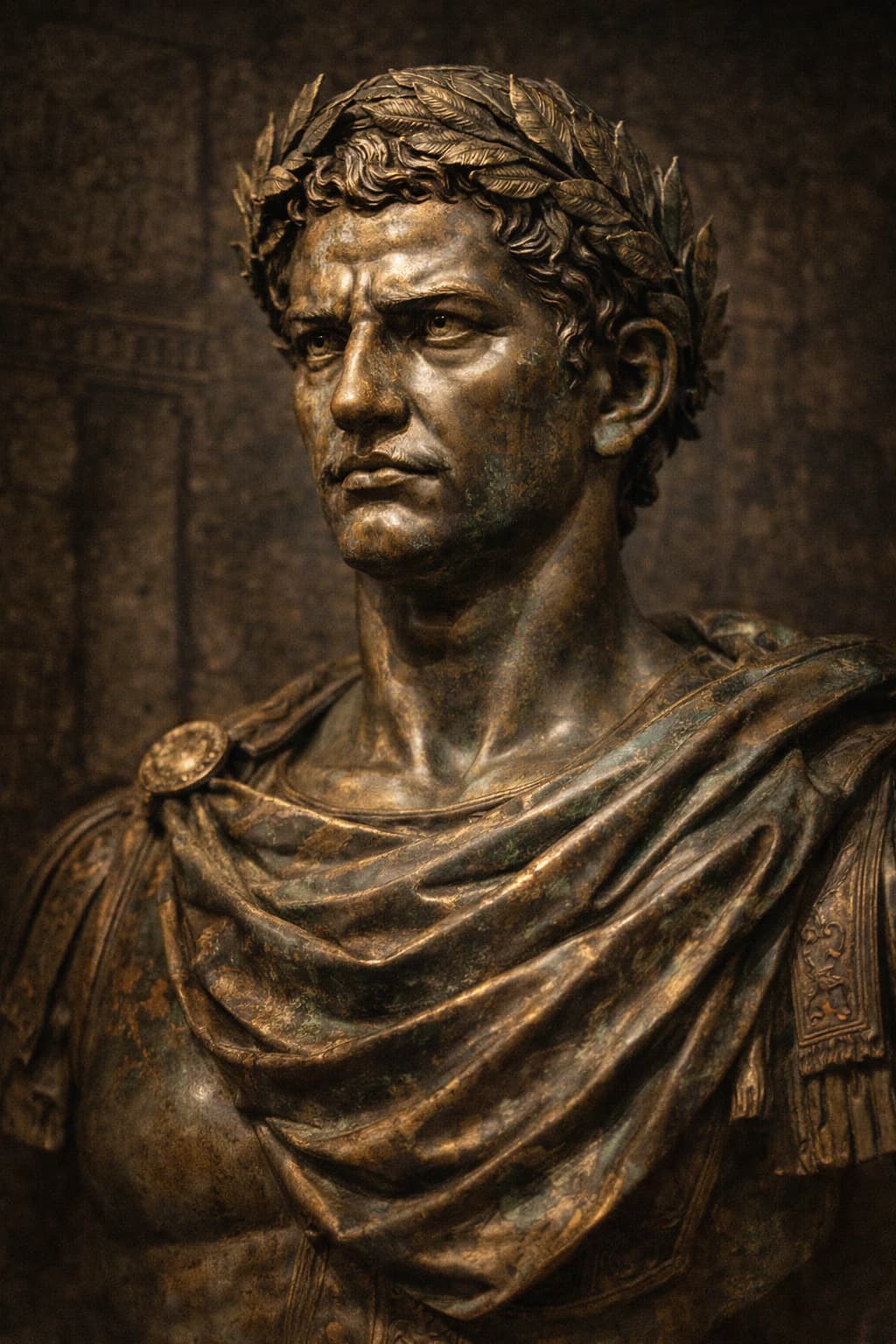
After Caesar’s death, Cleopatra aligned with Mark Antony, one of the triumvirs who ruled the Roman world with Octavian and Lepidus. Antony needed money, ships, and an eastern base for his campaigns; Cleopatra needed Roman protection and the recovery of territories that could strengthen her dynasty. Their meeting at Tarsus in 41 BC became legendary because later writers framed it as seduction, but the alliance was a negotiation between two rulers with overlapping interests. They had children together, and Antony granted territories to Cleopatra and their family in the Donations of Alexandria in 34 BC. To supporters, this looked like a new eastern settlement. To Octavian, it was perfect propaganda: Antony could be portrayed as a Roman commander surrendering himself and Roman lands to a foreign queen.
Aligning with powerful figures can bring strength but also greater risk.
-32 to -30
War with Octavian
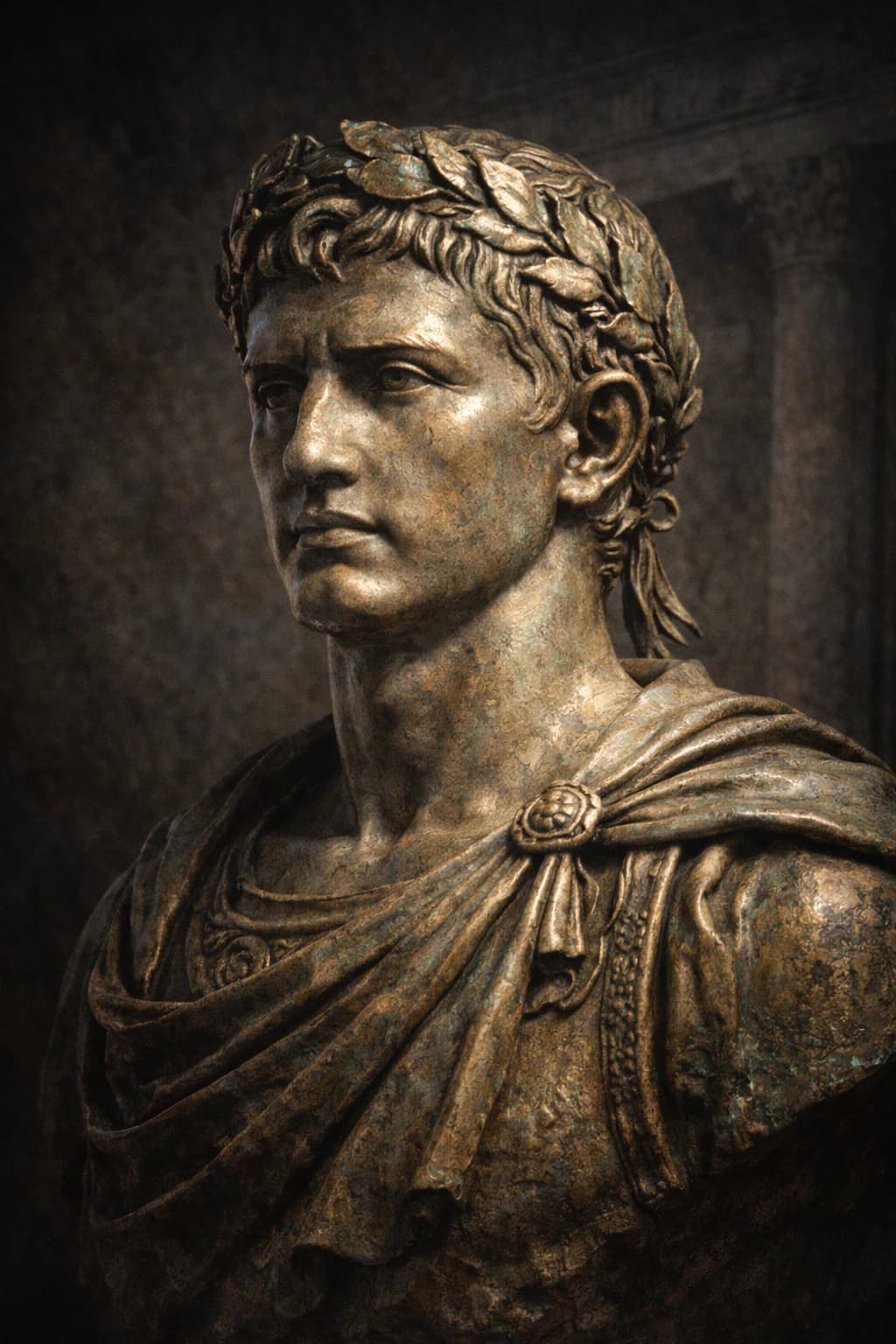
The war against Octavian was fought with fleets, armies, money, and image-making. Octavian avoided presenting the conflict as a simple civil war against Antony. Instead, he declared war on Cleopatra, making the struggle appear as Rome defending itself against eastern corruption and royal ambition. The reality was more complicated. Antony still had Roman allies, Cleopatra was defending a sovereign kingdom, and both were trying to build a power bloc capable of resisting Octavian’s dominance. At Actium in 31 BC, Octavian’s admiral Agrippa outmaneuvered their forces. The battle did not instantly end the war, but it broke confidence, supply, and momentum. Cleopatra and Antony retreated to Egypt, where their options narrowed with brutal speed. The fate of the Ptolemaic kingdom was now tied to one last defense of Alexandria.
Becoming part of larger conflicts can amplify both influence and vulnerability.
-30
Defeat and Death
Octavian entered Egypt in 30 BC. Antony died by suicide after defeat and misinformation about Cleopatra’s fate. Cleopatra tried one final negotiation, perhaps hoping to secure her children’s future or preserve some fragment of royal status. Octavian wanted her alive for his triumph in Rome, where she would have served as the visible symbol of his victory. Cleopatra chose death instead. The famous story of the asp is ancient but not certain; poison is likely, the exact method unknowable. What mattered was the refusal to be displayed. Caesarion was killed soon afterward, removing the most dangerous dynastic claim attached to Caesar’s name. Egypt became a Roman province, not an ordinary senatorial possession but the emperor’s personal domain. Cleopatra’s death ended three centuries of Ptolemaic rule and the last major Hellenistic kingdom.
Her final act symbolized both personal agency and the end of a kingdom’s independence.
After -30
Enduring Image
Cleopatra’s legacy has been distorted by the fact that many surviving narratives were written from the Roman side, often through the moral and political lens of Octavian’s victory. Later art, drama, and film amplified the image of Cleopatra as seductress, reducing a multilingual ruler and strategist to a romance plot. The evidence points to something more interesting: a queen operating with intelligence inside a collapsing balance of power. She could be ruthless, theatrical, pragmatic, and brave. She failed to save Egypt, but failure against Rome does not make her insignificant. Her life marks the end of the Hellenistic age, the rise of Augustan Rome, and the transformation of Egypt into one of the empire’s most valuable provinces. Cleopatra remains important because she forces history to hold power and myth together, then ask who benefited from telling her story one way rather than another.
Her legacy shows how history and storytelling can merge to shape enduring memory.