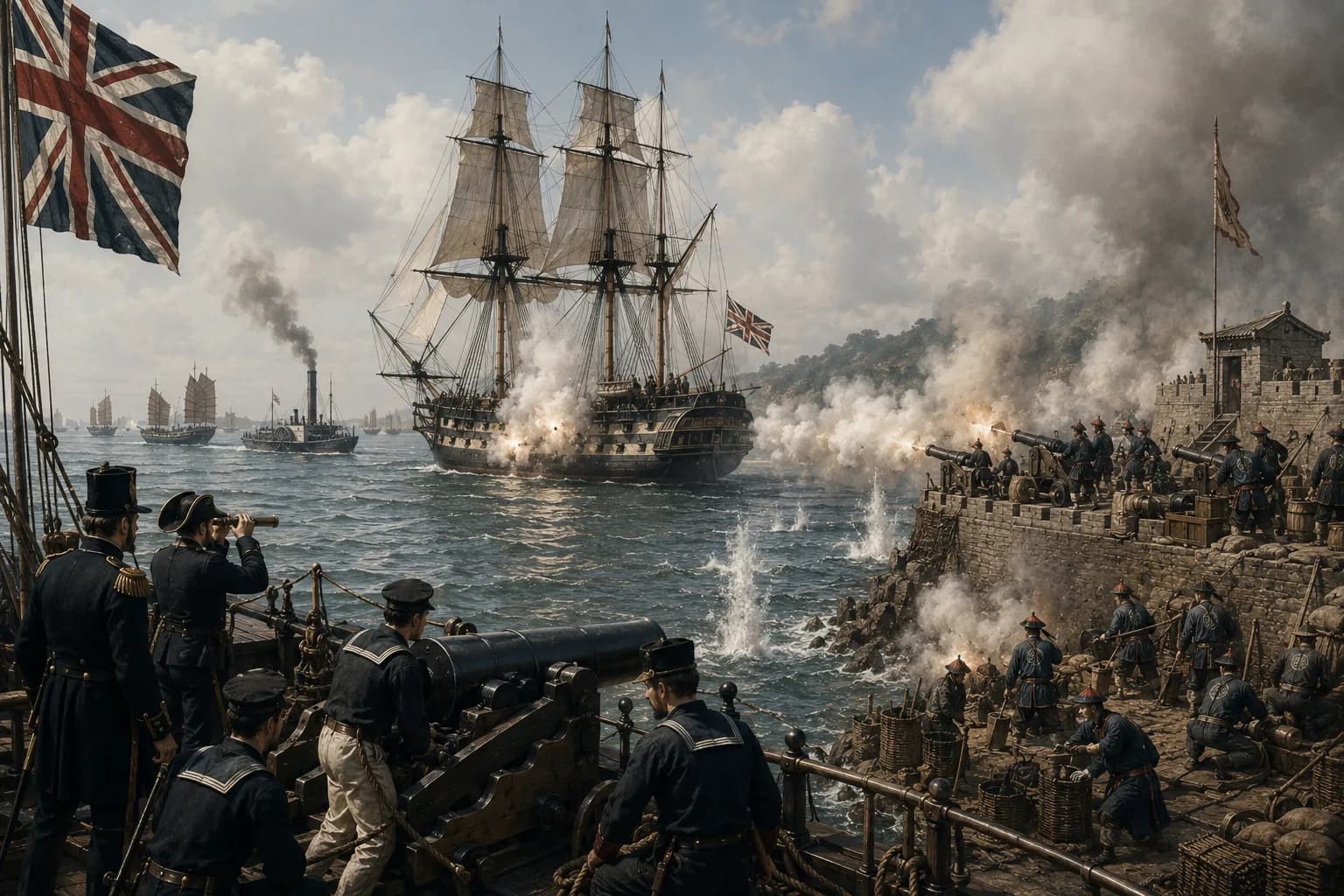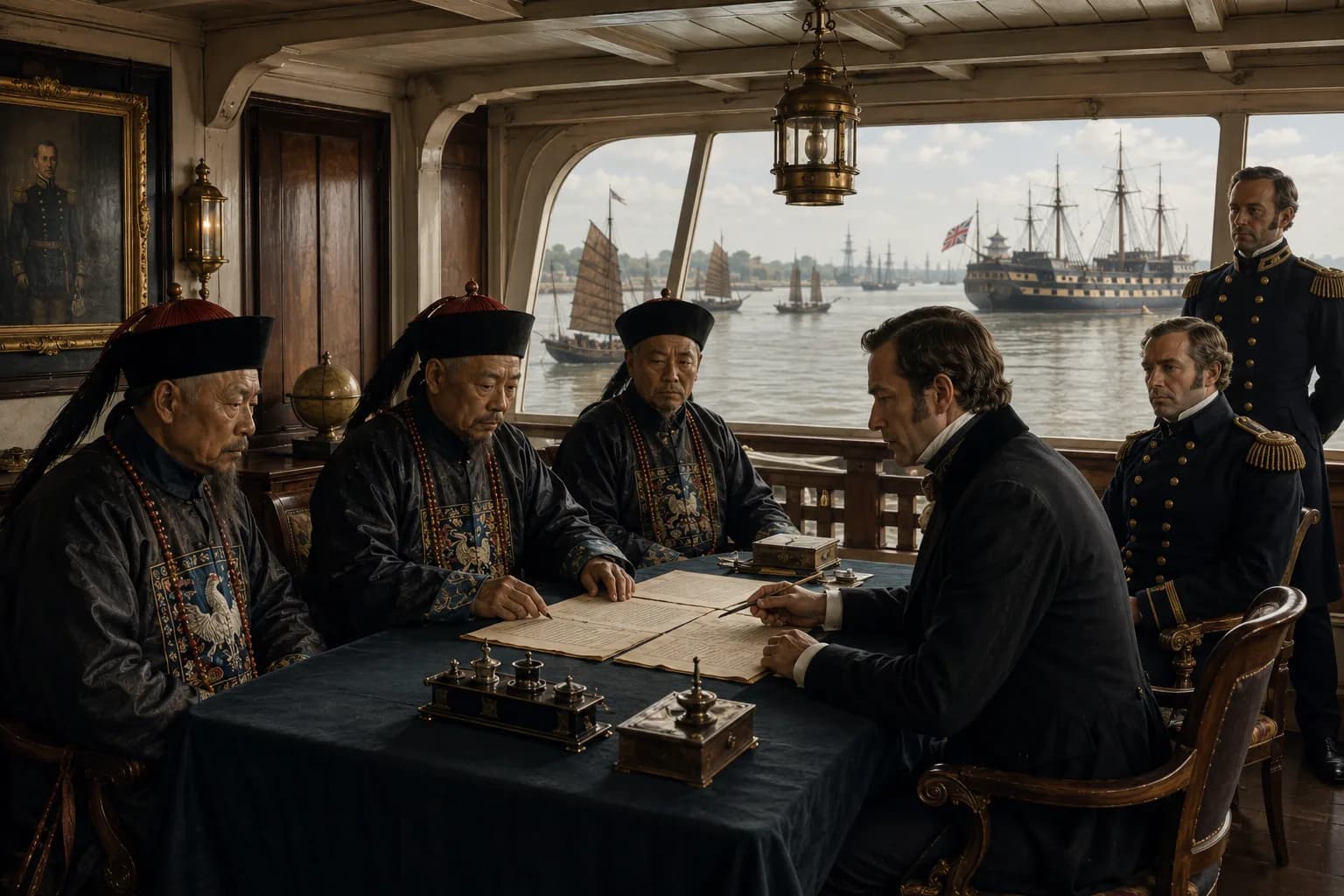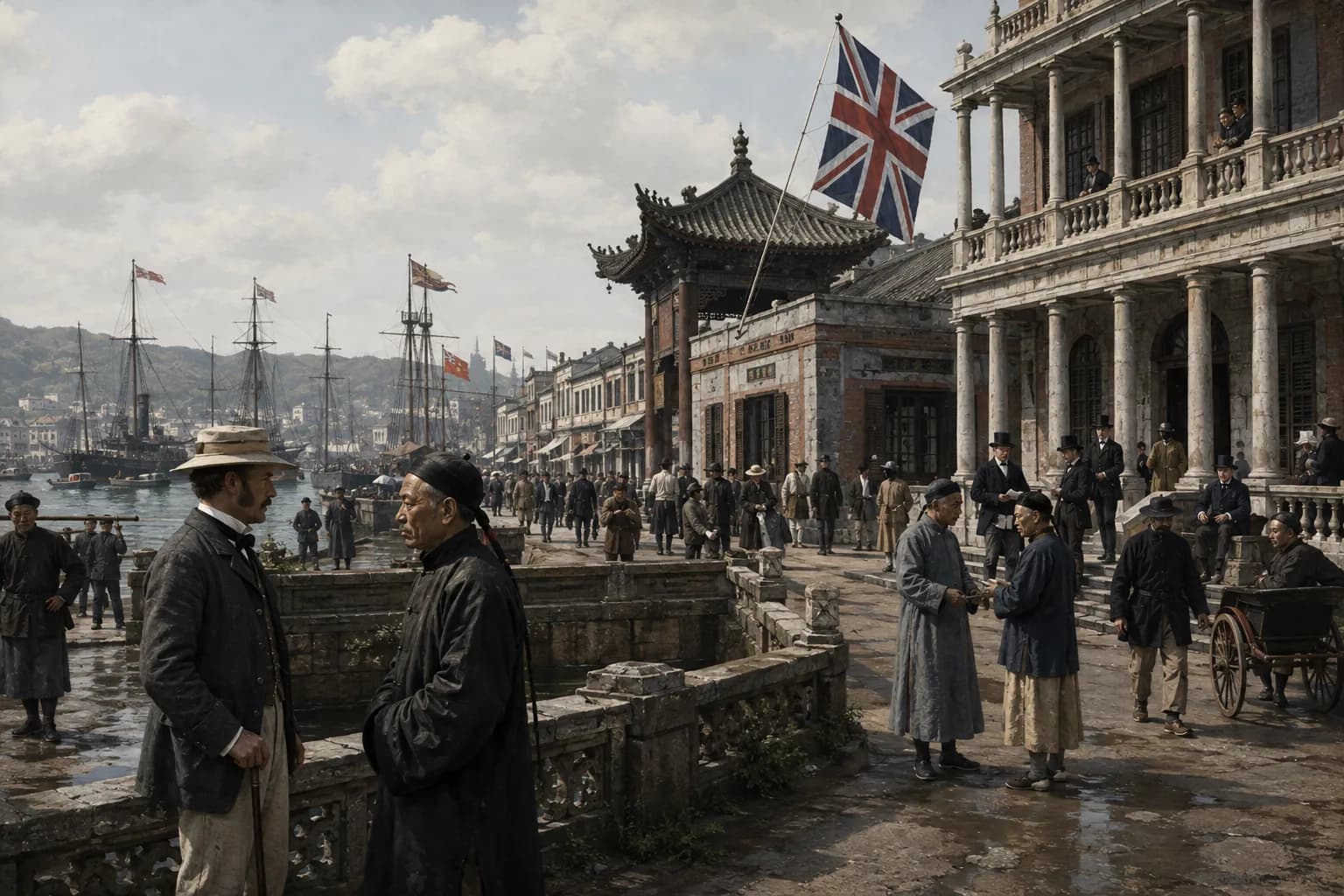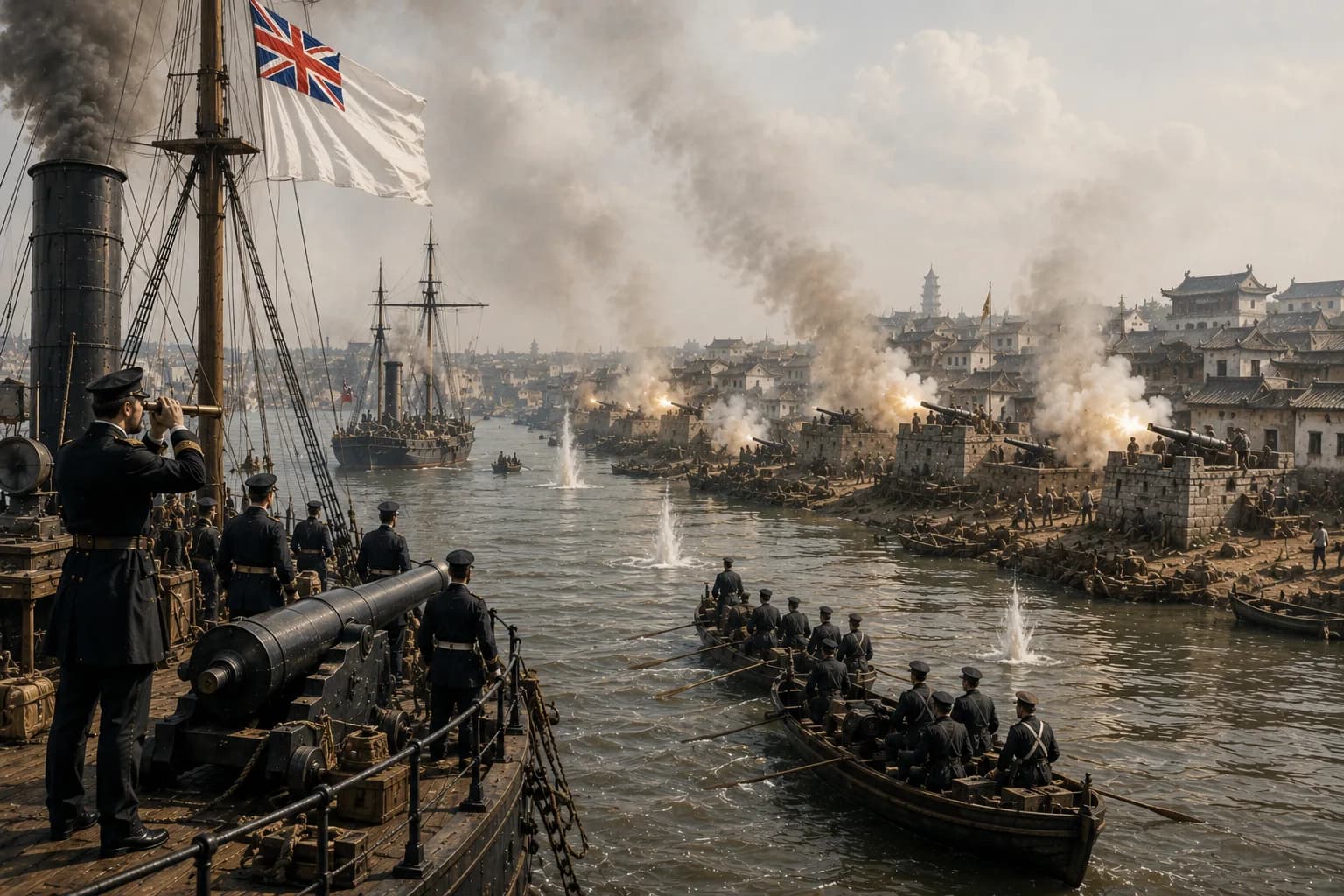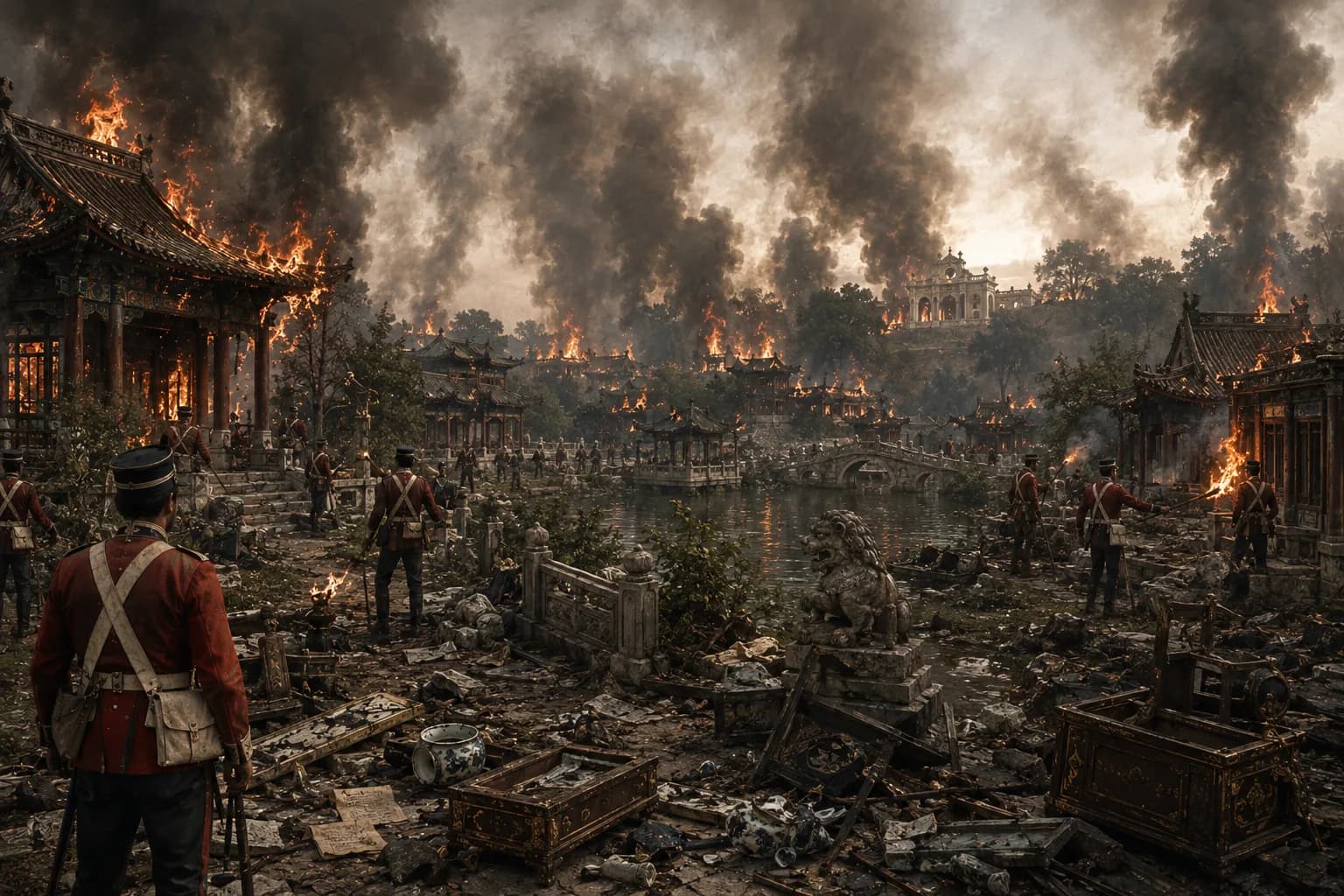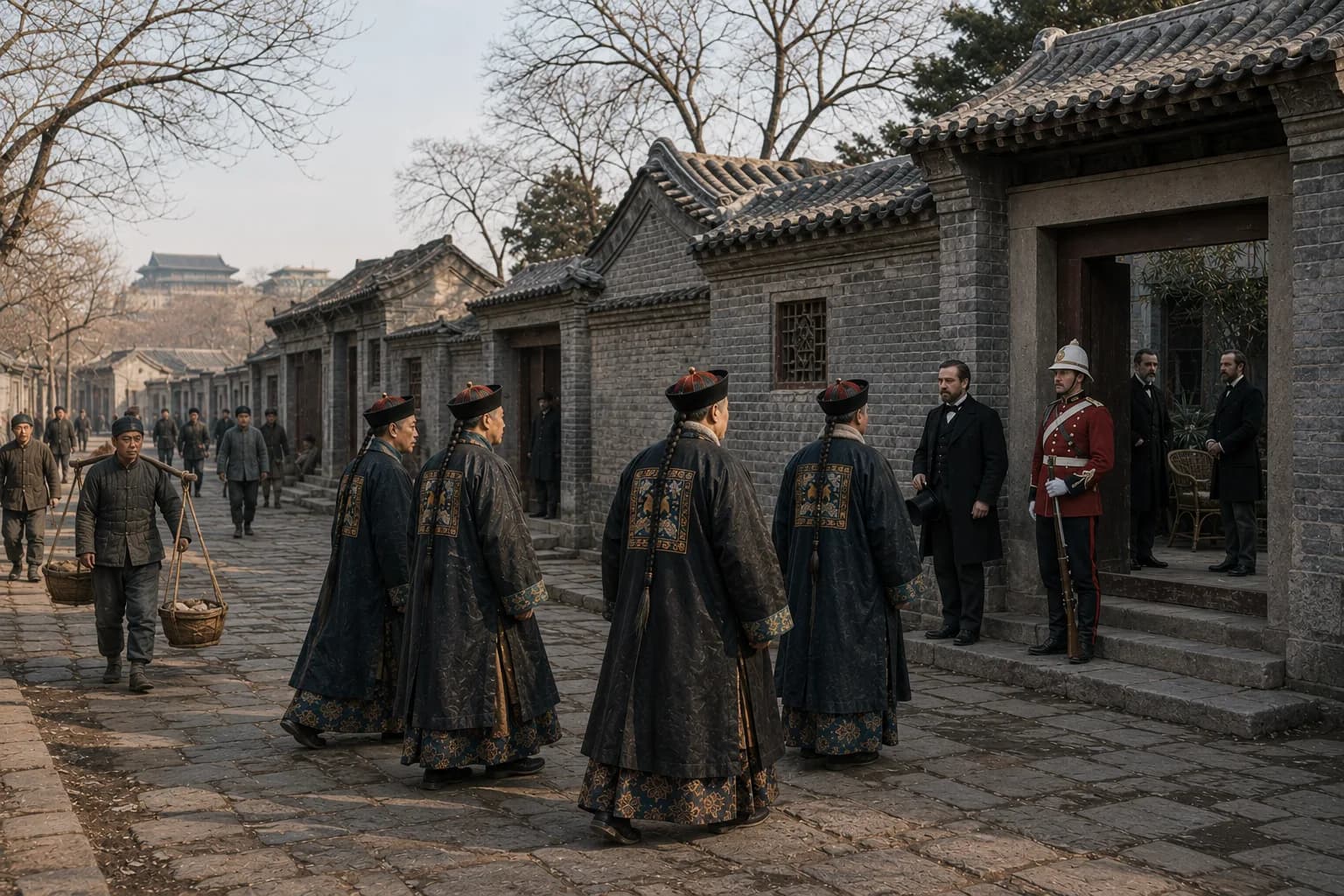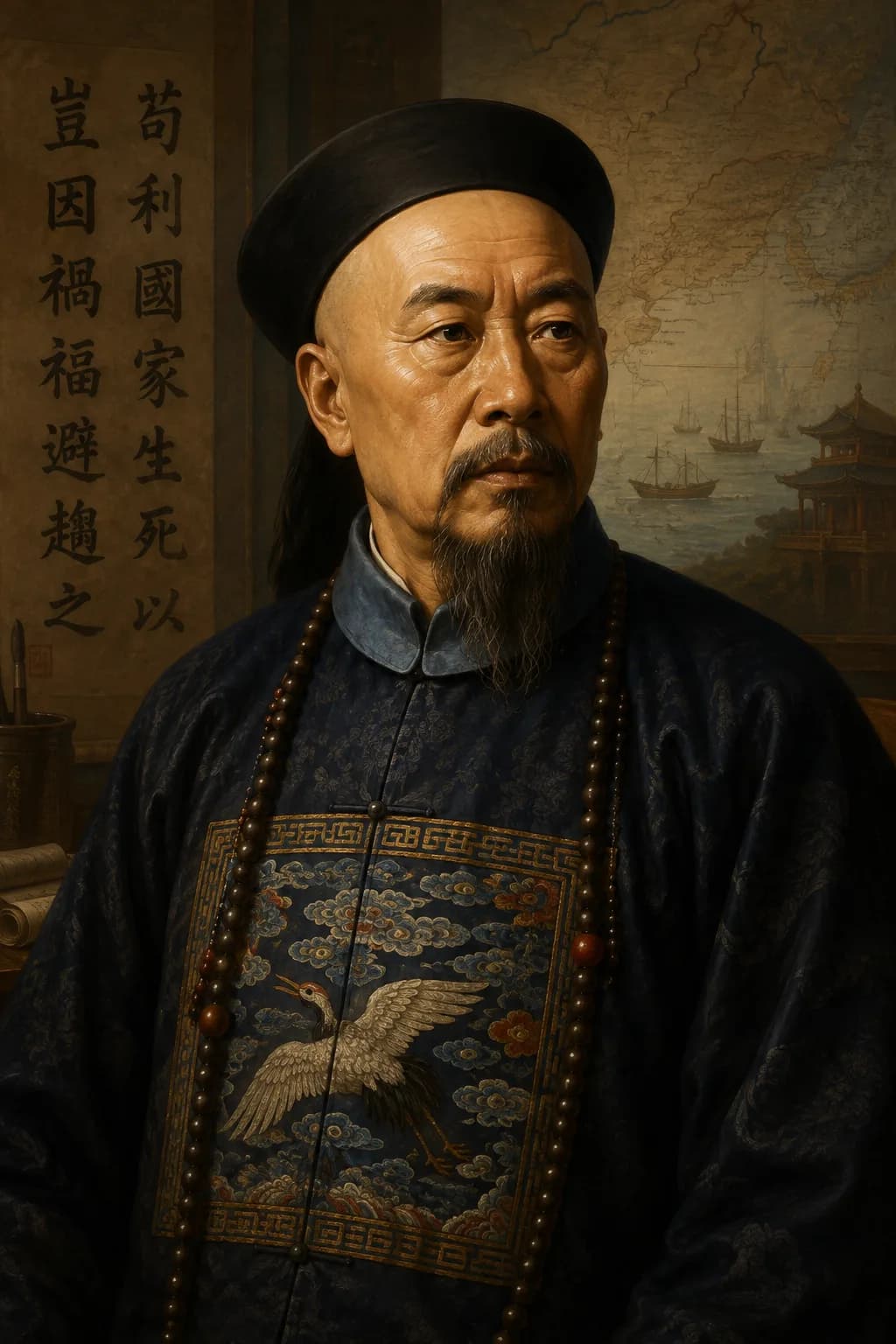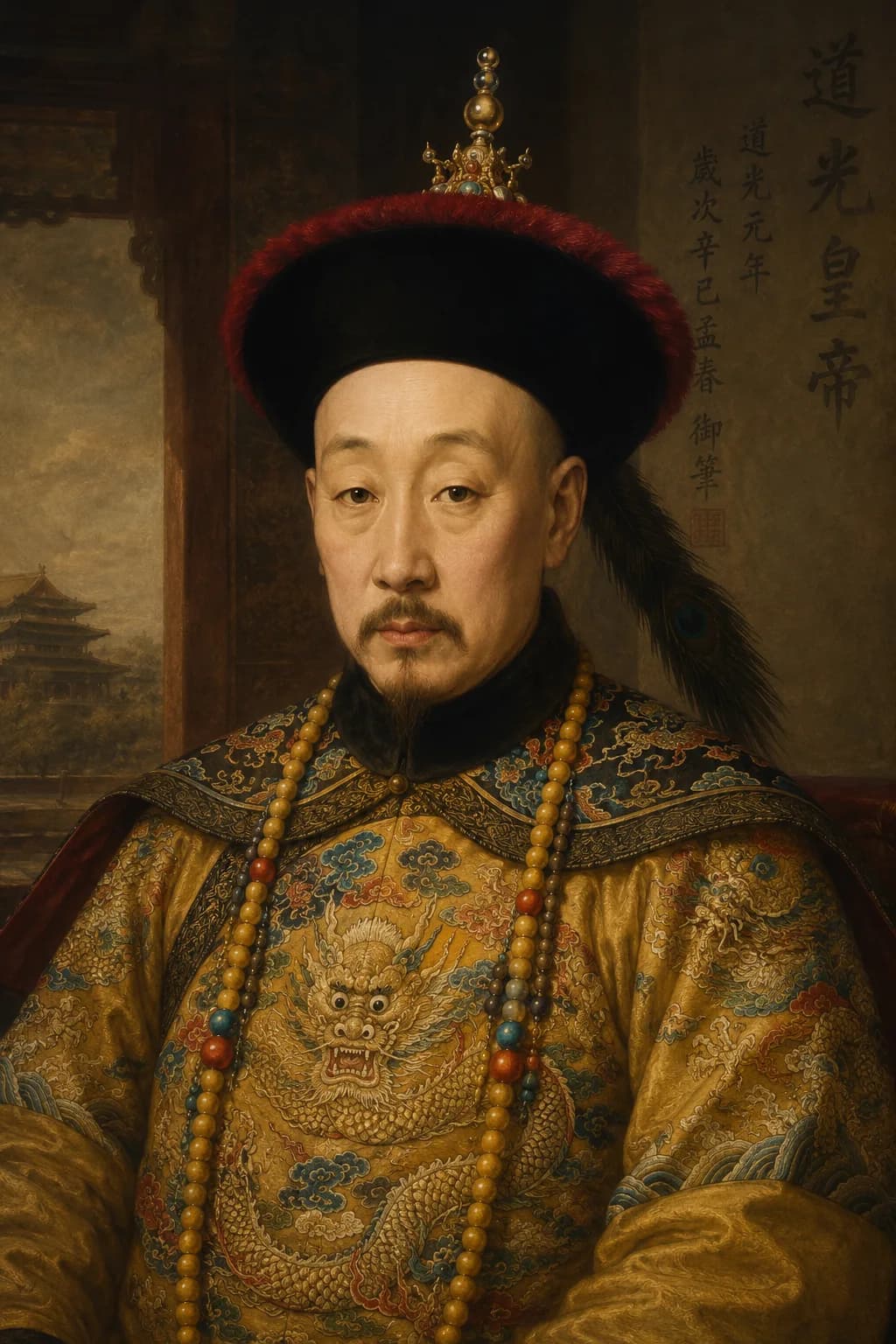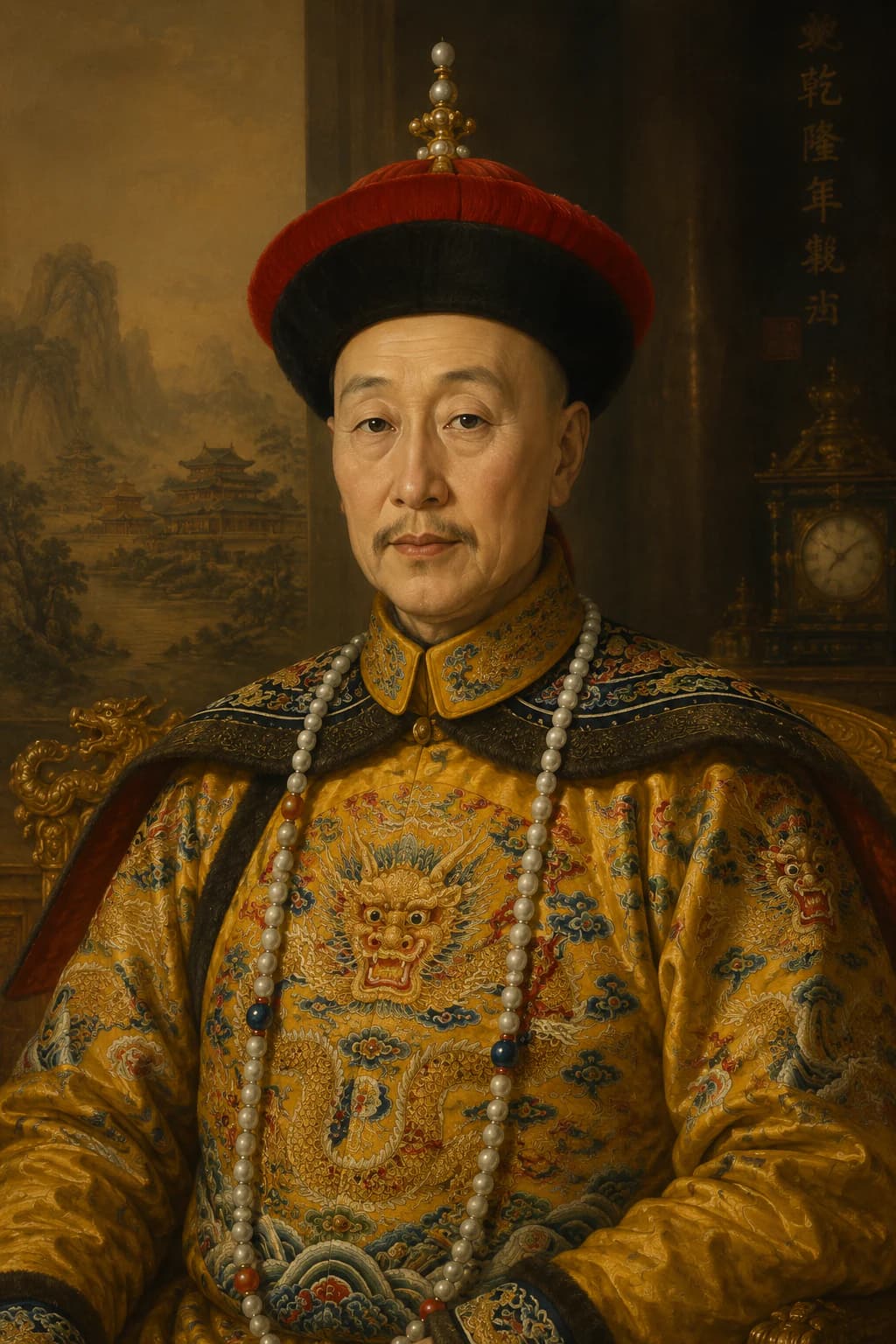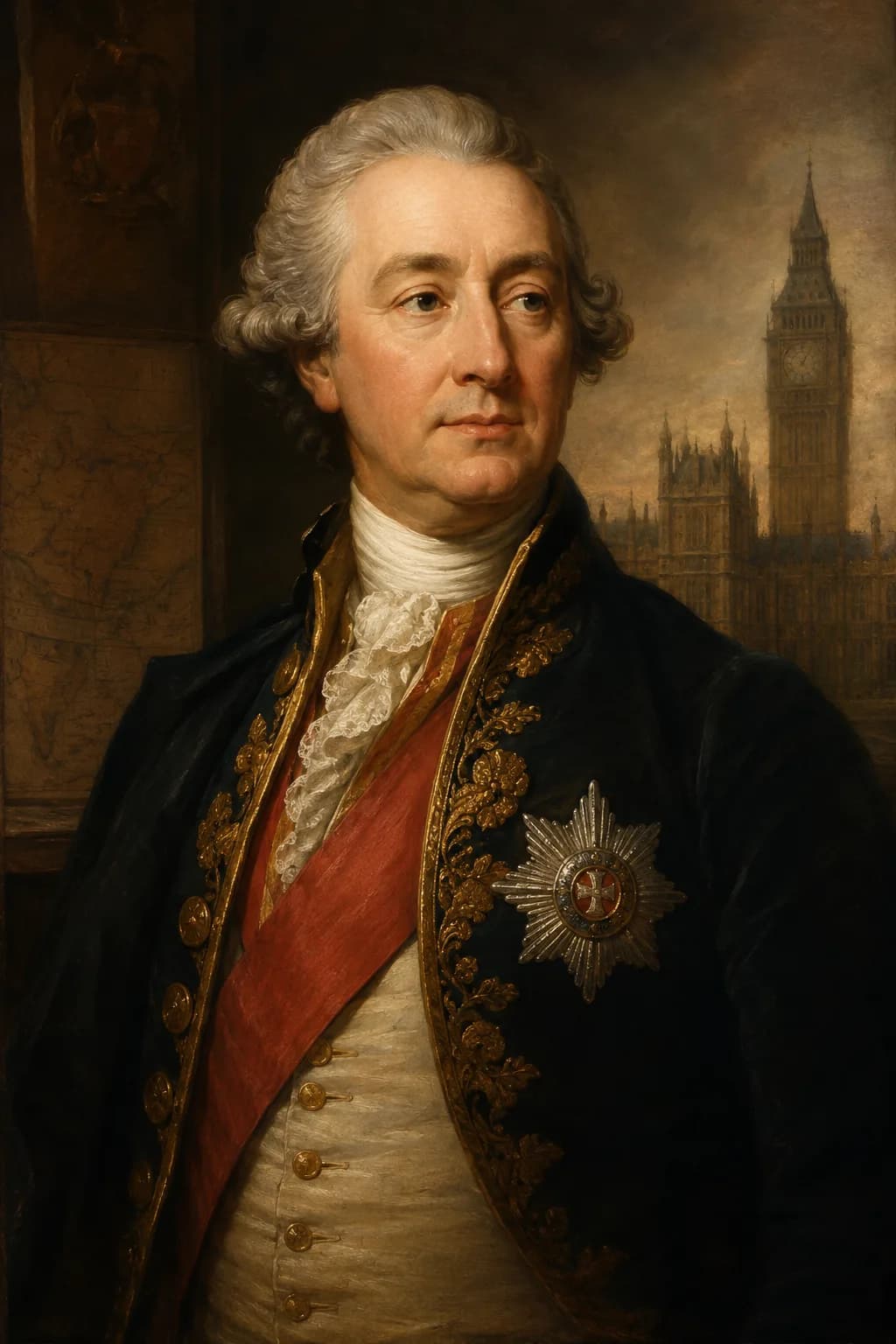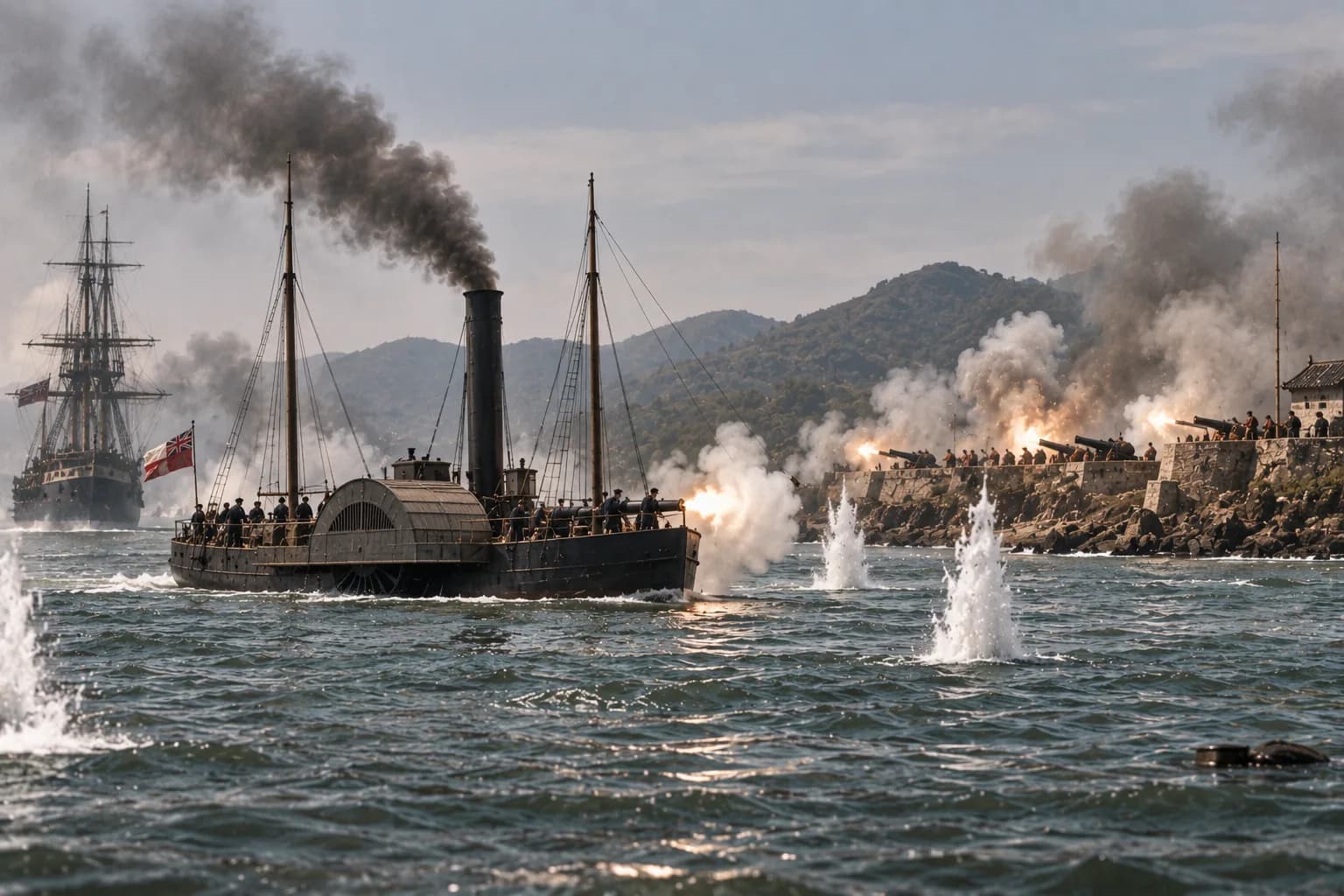
British steamships and sailing vessels bombard Qing coastal defences during the Opium Wars.
Premium Story

The Opium Wars

Follow the Opium Wars from the Canton trade system and British opium smuggling to unequal treaties, the fall of Beijing and the beginning of China's Century of Humiliation.

11 chapters · 20 min read

Next
Context

Introduction

What you'll learn: You will follow how a controlled trading system turned into a crisis of opium smuggling, why Britain used force, how the unequal treaty system limited Qing sovereignty, and why the Opium Wars became central to modern China's historical memory.

Key forces

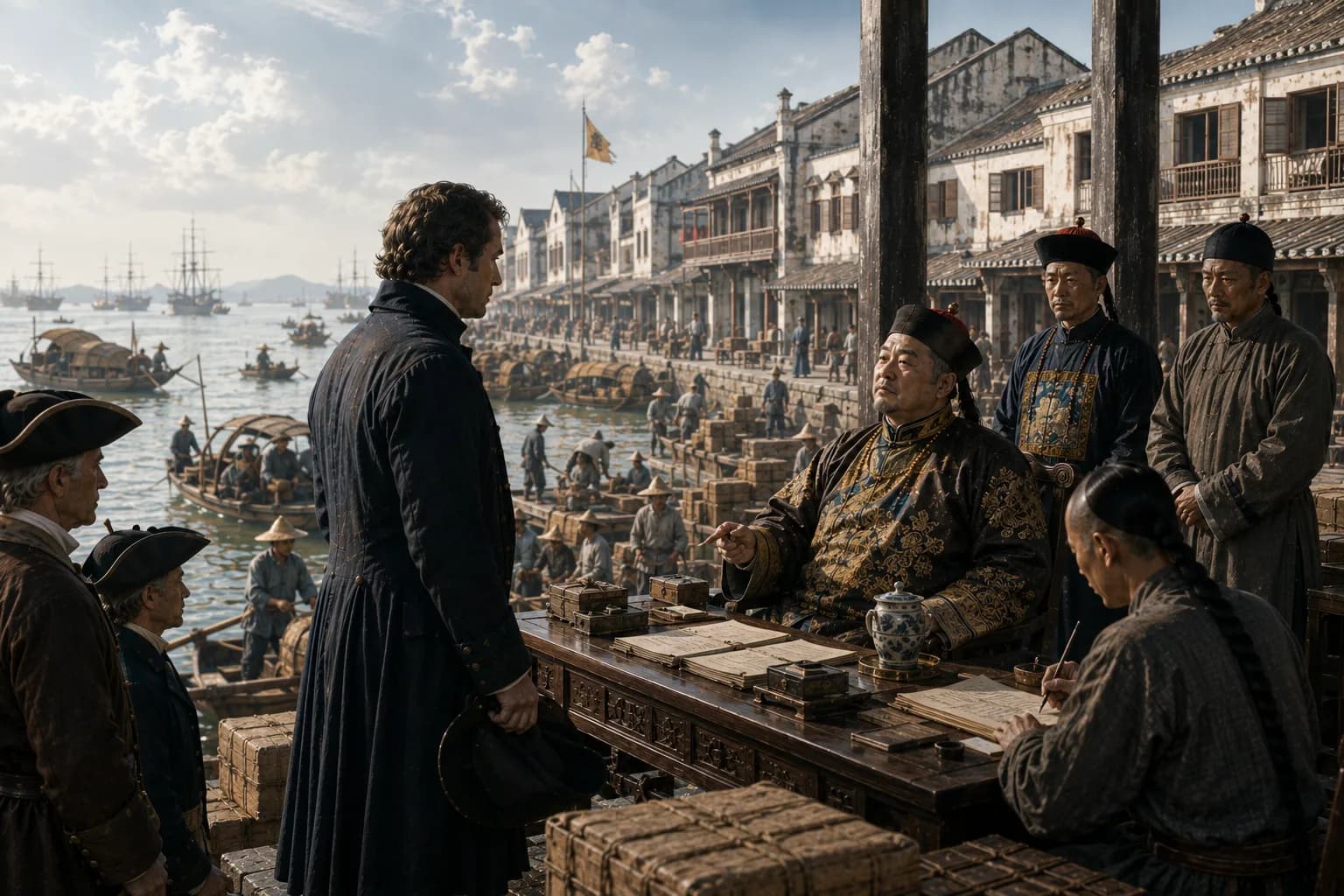
Qing officials supervise British merchants at Canton as ships and cargo move through the restricted trading port.
1757 CE
Step 1 of 101757 CEAccessible mode

The Canton Trade System

In 1757, the Qing court restricted most Western maritime trade to . Foreign merchants could buy Chinese goods, but only under rules designed to keep them controlled.

The system reflected Qing priorities. Foreigners were not allowed to move freely through China, negotiate directly with the imperial court, or trade wherever they wished. They operated through licensed Chinese merchants known as the Cohong and were supervised by officials.

From the Qing point of view, this was order. concentrated foreign trade in one manageable place, protected the interior from outside influence and preserved the hierarchy of an empire that did not treat distant maritime traders as diplomatic equals.

Britain saw the same arrangement as obstruction. British consumers wanted tea, silk and porcelain, but Chinese officials showed little interest in British manufactured goods. Merchants wanted more ports, lower restrictions and direct access to Chinese markets.

The tension was therefore built into the trade system itself. China wanted control at the edge of the empire. Britain wanted expansion. became the narrow channel through which a much larger conflict would eventually pass.

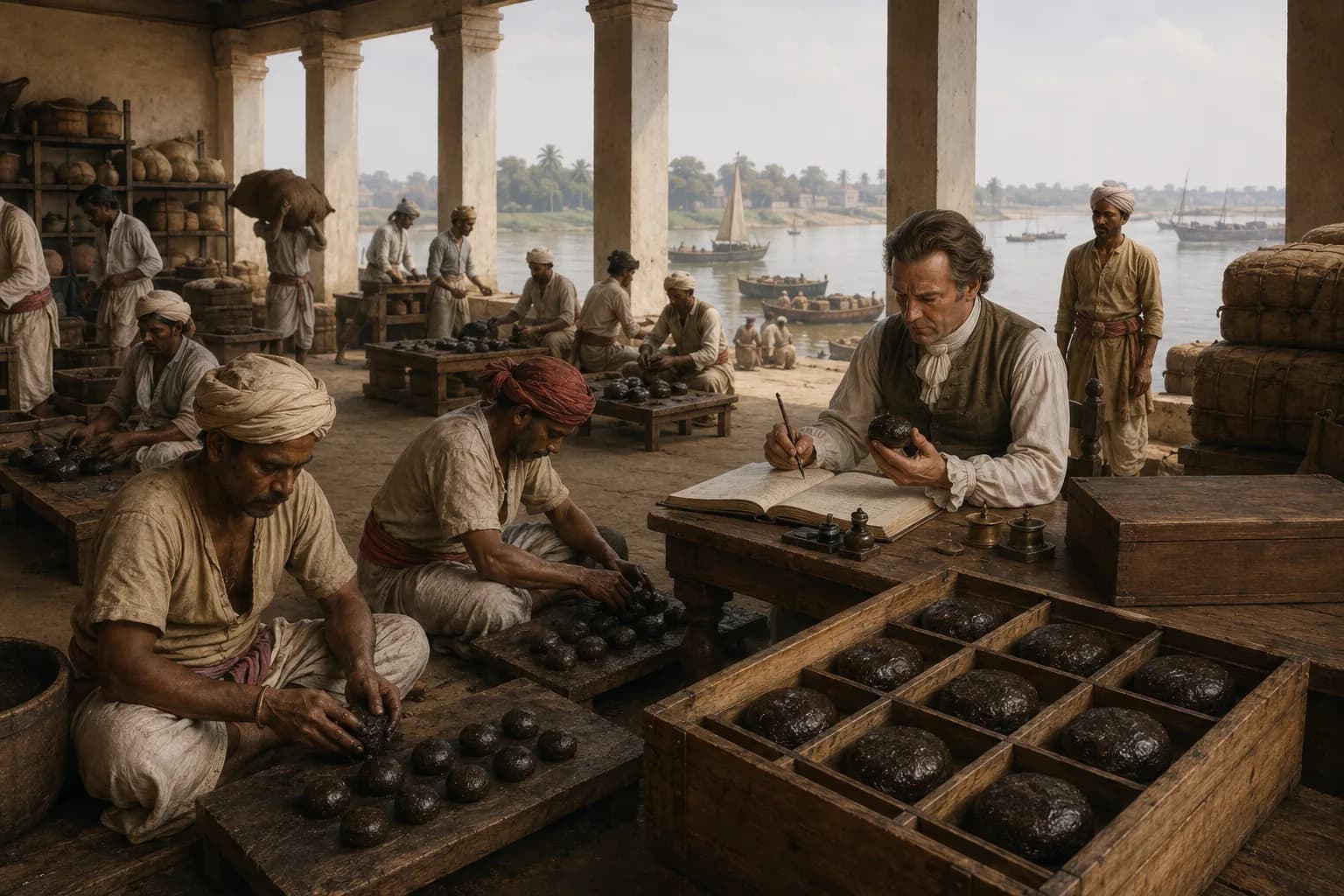
Workers prepare opium in British-controlled India while a European merchant records shipments near a river port.
1773 CE
Step 2 of 101773 CEAccessible mode

Britain Turns to Opium

Opium changed the China trade because it gave British merchants something Chinese buyers wanted in large quantities, even though the trade was illegal.

The drug was grown and processed in British-controlled India. It was then sold through networks that carried it toward China, where smugglers distributed it despite Qing prohibitions.

For Britain, opium helped solve a commercial problem. Silver that had flowed into China to pay for tea began to move back out as Chinese consumers bought the drug.

For China, the consequences were severe. Addiction spread through society, officials were bribed, coastal enforcement weakened and silver outflows placed pressure on the economy.

The issue was no longer ordinary smuggling. Opium linked British imperial power in India to illegal commerce in China. The Qing state faced a crisis that touched health, revenue, law and sovereignty at once.

Premium

You've reached the turning point

You're at step 2 of 10. The opening chapters set up The Opium Wars. Premium unlocks what happens when pressure builds, choices harden and consequences spread far beyond the moment.

Continue into the reversals, crises and human stakes that make the story matter.

Unlock full story

What Premium unlocks next

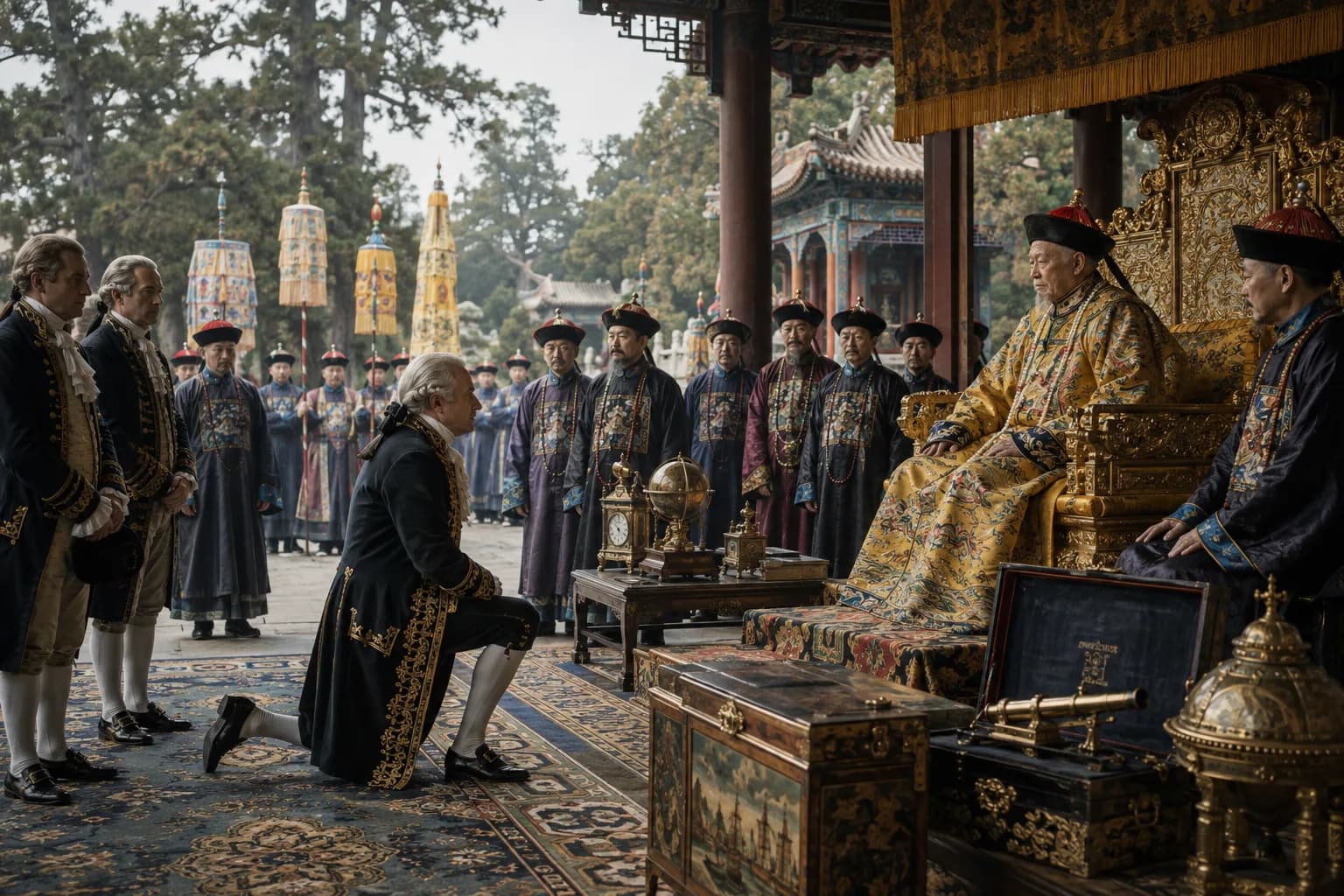
  1. 3The Macartney Embassy
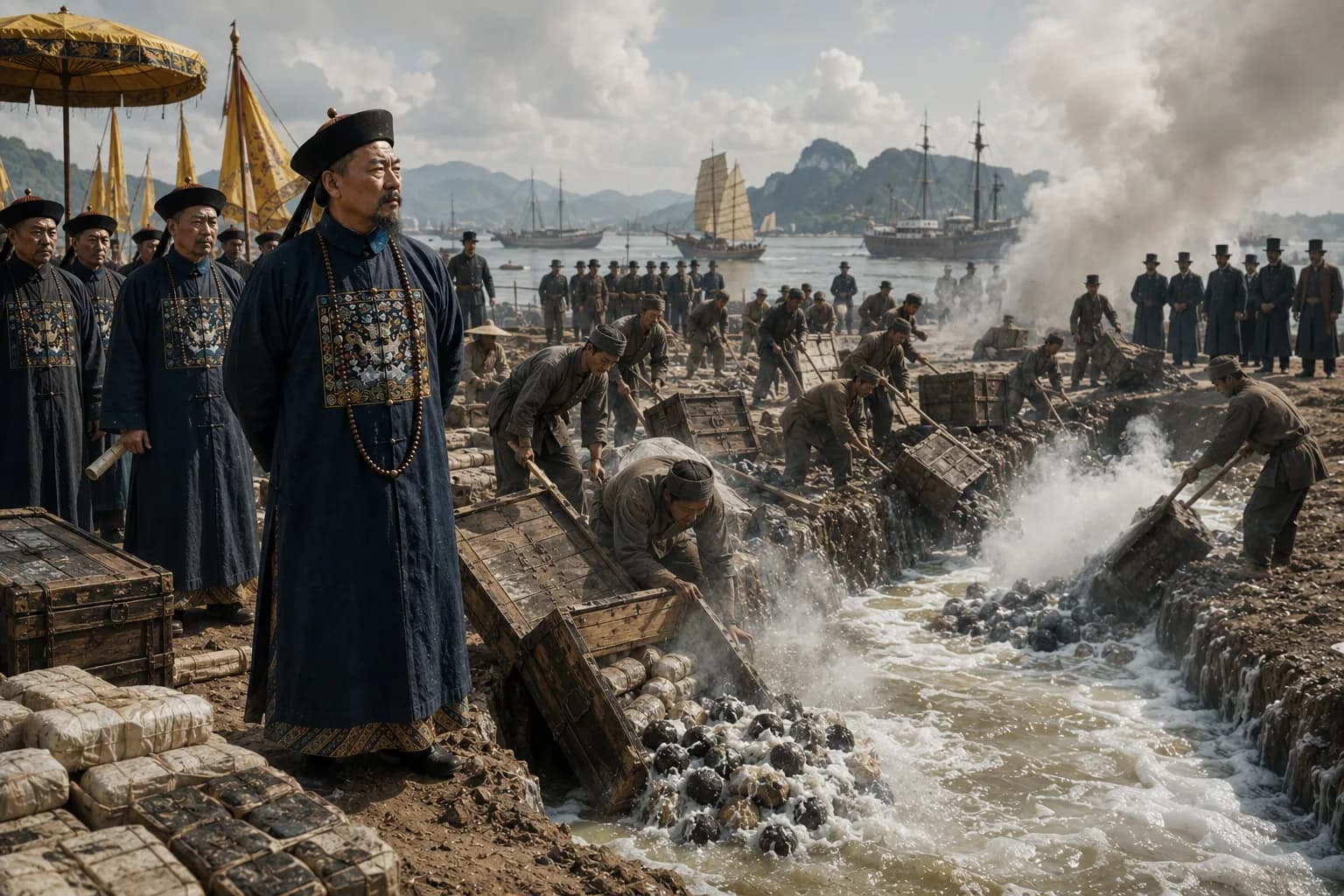
  2. 4Lin Zexu Confronts the Opium Trade
  3. 5The First Opium War
  4. 6The Treaty of Nanking
  5. 7The Treaty Port System Expands
  6. 8The Second Opium War
  7. 9The Fall of Beijing
  8. 10The Century of Humiliation Begins

Browse stories

Browse stories for free

Explore the people connected to this turning point or enjoy one of our free stories.

Unlock full storyBrowse stories

References

Sources & Further Reading

Reliable sources, primary-source collections and reading paths connected to this page.

Further reading

  1. Encyclopaedia Britannica, Search results for The Opium Wars,” Open source
  2. WorldCat, Library holdings for The Opium Wars,” Open source

Primary sources

  1. Library of Congress, Search results for The Opium Wars,” Open source

Reviewed claim sources

Loading reviewed claim sources...

A weekly route through history

Find out first about the latest published stories, feature notes and occasional Premium offers in one weekly email.