People

Qianlong Emperor

The Qianlong Emperor was the Qing ruler of China from 1735 to 1796. His reign expanded the empire, sponsored massive cultural projects, and exposed the costs of late imperial overreach.

Born
1711 CE
Died
1799 CE
Role
Qing emperor

Qing emperor (1711–1799)

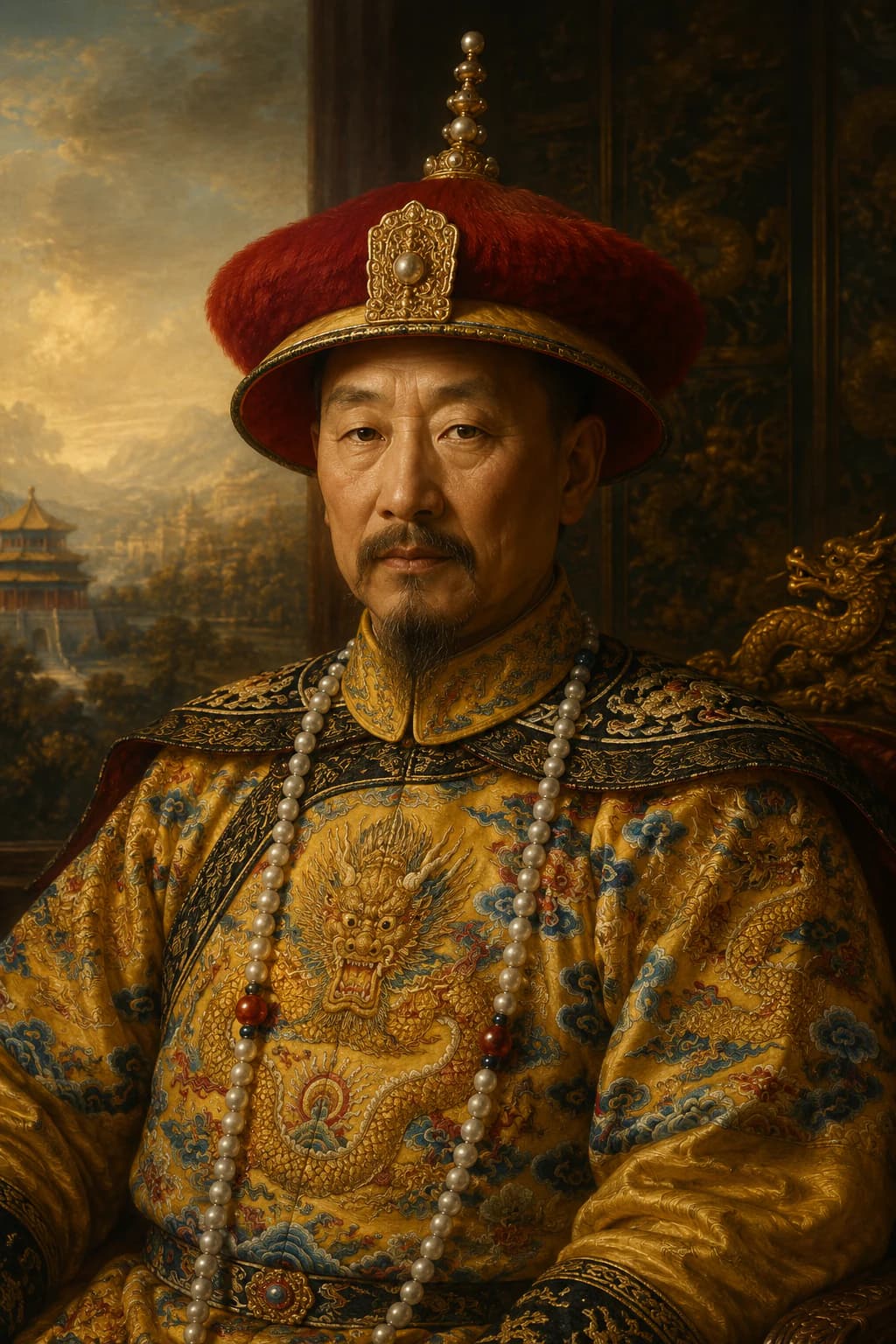
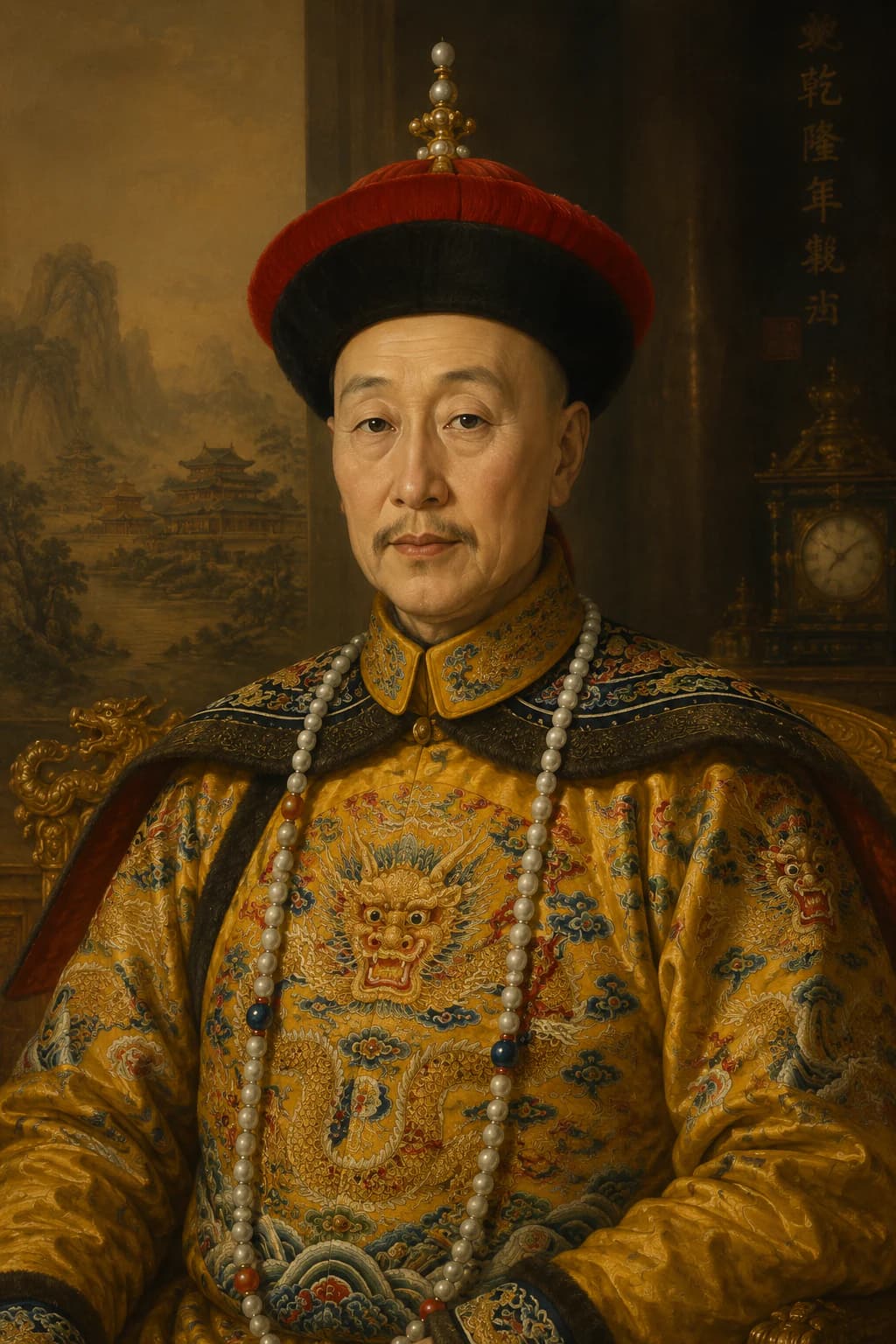
AI-generated portrait of the Qianlong Emperor in Qing imperial robes
AI-assisted historical reconstruction

An illustrative reconstruction based on historical context. It is not a photograph or documentary likeness. Image policy

Quick answer

The Qianlong Emperor was the Qing ruler of China from 1735 to 1796. His reign expanded the empire, sponsored massive cultural projects, and exposed the costs of late imperial overreach.

Born
1711 CE
Died
1799 CE
Role
Qing emperor
Years
1711-1799 CE
Quick facts

Profile details

Additional identity and tagging details that are not already covered in the introduction.

Also known as
Hongli, Emperor Gaozong of Qing
Facts

Qianlong Emperor timeline facts

Selected specifics from this profile's life story.

1711
Born Hongli

The future Qianlong Emperor was born Hongli, a grandson of the Kangxi Emperor and son of the future Yongzheng Emperor.

1740s–1790s
Ten Great Campaigns

Qianlong celebrated major military campaigns that expanded Qing power, especially in Inner Asia.

1793
Macartney Embassy

The British Macartney Embassy reached Qianlong's court in 1793, revealing different assumptions about empire, trade, and diplomacy.

1799 onward
Imperial afterglow

Qianlong died in 1799, leaving a vast empire whose splendour concealed financial, social, and administrative pressures.

Life Journey

Power, splendour, and the limits of imperial confidence

Follow the story in a more continuous narrative, with a reading mode that matches how much depth you want.

Complete chronology

1711

Born Hongli

Hongli was born into the most powerful ruling house in East Asia at a moment when the Qing dynasty had already survived its dangerous first century. He belonged to the Aisin Gioro imperial clan, with a Manchu heritage and a court education designed to prepare princes for command, ritual, literature, and war. Later tradition emphasized his grandfather Kangxi's approval of him, strengthening the idea that Hongli's succession reflected exceptional promise. Whether polished by memory or not, his upbringing placed him inside a dynasty that prized both Inner Asian martial identity and Chinese classical kingship.
1720s–1735

Prepared for rule

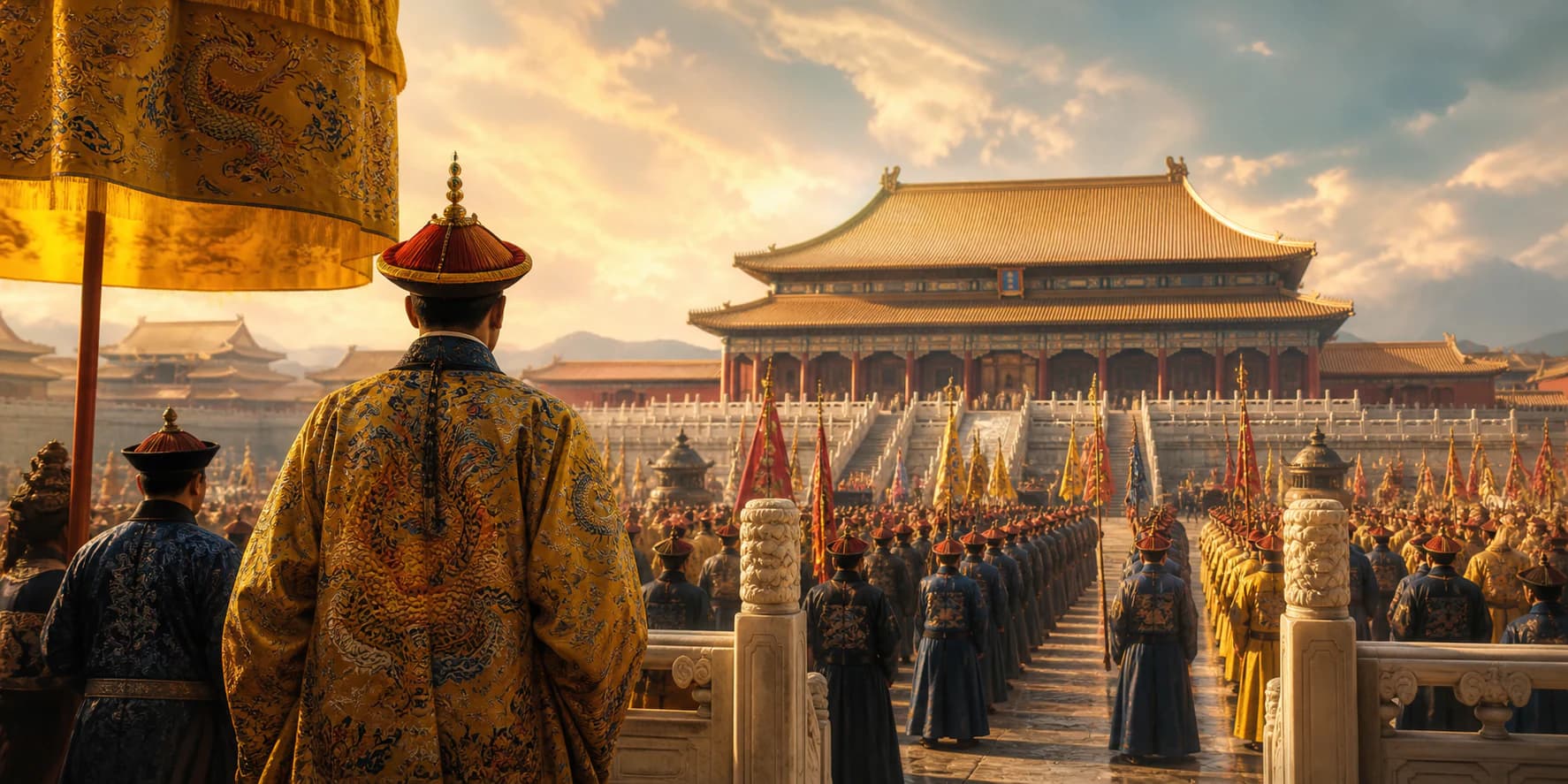
Under the Yongzheng Emperor, Hongli grew within a disciplined court shaped by administrative intensity. Yongzheng strengthened central control and worked to repair state finances, giving his son a formidable inheritance. Hongli's preparation reflected the Qing imperial ideal: he was expected to master Confucian rulership, Manchu traditions, military command, Tibetan Buddhist diplomacy, and the symbolic performance of universal monarchy. This was not ornamental education. The Qing ruled many peoples, and the emperor had to appear legitimate to Chinese officials, Manchu bannermen, Mongol nobles, Tibetan Buddhist leaders, and frontier commanders.

1735

Becoming emperor

Qianlong came to the throne after Yongzheng's death in 1735. Unlike many rulers who began amid civil war or financial collapse, he inherited a functioning imperial machine. This gave him room to project confidence. He presented himself as a cultured sovereign, a military commander, a filial son, and a preserver of dynastic tradition. His early reign benefited from the achievements of Kangxi and Yongzheng, but Qianlong was not merely a caretaker. He wanted glory, order, and historical memory to gather around his own name.

1740s–1790s

Ten Great Campaigns

Qianlong's reign was marked by the campaigns he later grouped as the Ten Great Campaigns. The most consequential were the wars against the Zunghars, which destroyed the Zunghar Khanate and brought Xinjiang under Qing control. Other campaigns reached Tibet, Nepal, Burma, Vietnam, Taiwan, and western China with mixed results. These wars made the Qing empire territorially enormous, but they varied sharply in cost and success. Qianlong's military reputation rested on real victories, yet his hunger for martial prestige also drew the dynasty into expensive and sometimes inconclusive conflicts.

1750s–1780s

Cultural emperor

Qianlong cultivated magnificence with extraordinary energy. He collected paintings, bronzes, jades, ceramics, calligraphy, and books, often marking works with his seals and inscriptions. He wrote vast numbers of poems and commissioned palaces, gardens, albums, catalogues, and historical projects. His cultural patronage projected the image of a ruler who possessed and ordered civilisation itself. Yet this brilliance had a controlling edge. To collect was also to classify; to patronise scholarship was also to supervise memory. Under Qianlong, culture served beauty, prestige, and authority at once.

1770s–1780s

Siku Quanshu

The Siku Quanshu, or Complete Library of the Four Treasuries, was one of the largest scholarly compilations ever undertaken. It gathered and copied thousands of works, preserving enormous bodies of learning. But the project also exposed books to political inspection. Texts judged anti-Manchu, heterodox, or dangerous could be altered, suppressed, or destroyed. This dual legacy is central to Qianlong's reign. He was a patron of scholarship and a censor of scholarship, a ruler who saved texts and narrowed the boundaries of acceptable memory.

1793

Macartney Embassy

In 1793, Lord Macartney led a British embassy seeking expanded trade and diplomatic relations. Qianlong's court received the mission within a tribute-world framework that did not treat Britain as an equal diplomatic partner. The embassy has often been simplified as a clash between modern Britain and stagnant China, but the reality was more complex. The Qing empire was still powerful, wealthy, and confident. Yet the encounter revealed a dangerous gap in expectations. Britain wanted commercial and diplomatic access; Qianlong saw little need to restructure imperial practice around foreign demands.

1796

Abdication and Heshen

Qianlong formally abdicated in 1796 in favor of his son, the Jiaqing Emperor, honoring his pledge not to reign longer than his grandfather Kangxi. The gesture was filial and theatrical, but not a full withdrawal. As retired emperor, he remained the dominant figure at court. His late years were damaged by the rise of Heshen, a favorite whose corruption became notorious. The Jiaqing Emperor moved against Heshen only after Qianlong's death. This final phase revealed how personal favor and aged authority could weaken the administrative discipline that earlier Qing rulers had worked to maintain.

1799 onward

Imperial afterglow

Qianlong died in 1799 after six decades of formal rule and three years as retired emperor. His reign remains one of the grand summits of Qing history: territorial expansion, artistic brilliance, immense scholarship, and imperial confidence on a continental scale. Yet the same reign also carried the seeds of strain. Population growth, corruption, military costs, censorship, and complacency burdened his successors. Qianlong's legacy is therefore double-edged. He ruled over the Qing at its most magnificent, but magnificence made the coming weaknesses harder to see.

Continue in context

Connected stories

Move from the profile into the wider events and settings this figure belongs to.

Tertiary paths

Content note

This profile is written for educational use and connects to related Stories of History pages. The main portrait is an AI-assisted historical reconstruction, included as an illustrative aid rather than documentary evidence. Image policy

References

Sources & Further Reading

Reliable reference works, archives and reading paths connected to this profile.

Further reading

  1. Encyclopaedia Britannica, Search results for Qianlong Emperor,” accessed June 2026.Open source
  2. WorldCat, Books and library holdings for Qianlong Emperor,” accessed June 2026.Open source

Primary sources

  1. Library of Congress, Search results for Qianlong Emperor,” accessed June 2026.Open source

Reviewed claim sources

Loading reviewed claim sources...

A weekly route through history

Find out first about the latest published stories, feature notes and occasional Premium offers in one weekly email.