Switch between a lighter overview and fuller narrative detail.
Quick Answers
What was the Holy Roman Empire?
The Holy Roman Empire was a changing political and legal order in central Europe and parts of Italy, conventionally dated from Otto I’s coronation in 962 to its dissolution in 1806. An elected ruler held the imperialcrown, while princes, bishops and cities governed territories with rights of their own. Common law, assemblies and negotiated obligations connected them.
At a glance
This overview covers 962–1806, with Charlemagne’s coronation in 800 as an earlier foundation.
No. Its western imperial title drew on Roman and Christian traditions, but its territories and institutions developed in a different medieval setting. The eastern Roman Empire continued separately at Constantinople.
Was the imperial crown hereditary?
The monarchy was elective, although dynastic power strongly influenced who could win. Habsburg rulers held the crown for most of the later empire without formally replacing election with hereditary succession.
Did Westphalia end the Holy Roman Empire?
No. The treaties of 1648 changed its constitutional and religious balance, but common institutions continued until 1806.
Why did the empire end in 1806?
French military victories, territorial restructuring and the departure of German rulers into Napoleon’s Confederation of the Rhine broke its framework. Francis II renounced the crown and released the imperial estates from their obligations.
How should the map be read?
The highlighted countries are modern location guides to places connected with the story. They are not the empire’s historical borders or a claim that it ruled all those countries throughout 962–1806.
Context
Introduction
Overview
The Holy Roman Empire began with a crown that promised more than any ruler could easily command. In 962, Otto I received the imperial title in , linking German kingship to the Christian inheritance of the western Roman world. His successors governed through nobles, bishops and travelling courts. They fought popes over church appointments, Italian cities over local rights, and rival candidates over the crown itself. Election, law and assemblies gradually gave this scattered realm a common framework. The Reformation divided its faith; the Thirty Years’ War devastated its communities. Yet peace in 1648 preserved an empire that continued to govern through negotiated rights. Only the upheavals of the Napoleonic age finally broke its bonds. This is the story of a political order that lasted for centuries because power was shared, contested and repeatedly rebuilt.
What you'll learn: You’ll see why an emperor had to bargain with other rulers, how religious conflict changed those bargains, and why a realm with so many centres of power endured for more than eight centuries.
Emperors governed through relationships with princes, bishops and cities.
The Golden Bull regulated royal election; later reforms strengthened common institutions.
The Reformation and Thirty Years’ War tested both religious coexistence and political authority.
962 CE
Step 1 of 10962 CEAccessible mode
Otto Receives the Imperial Crown
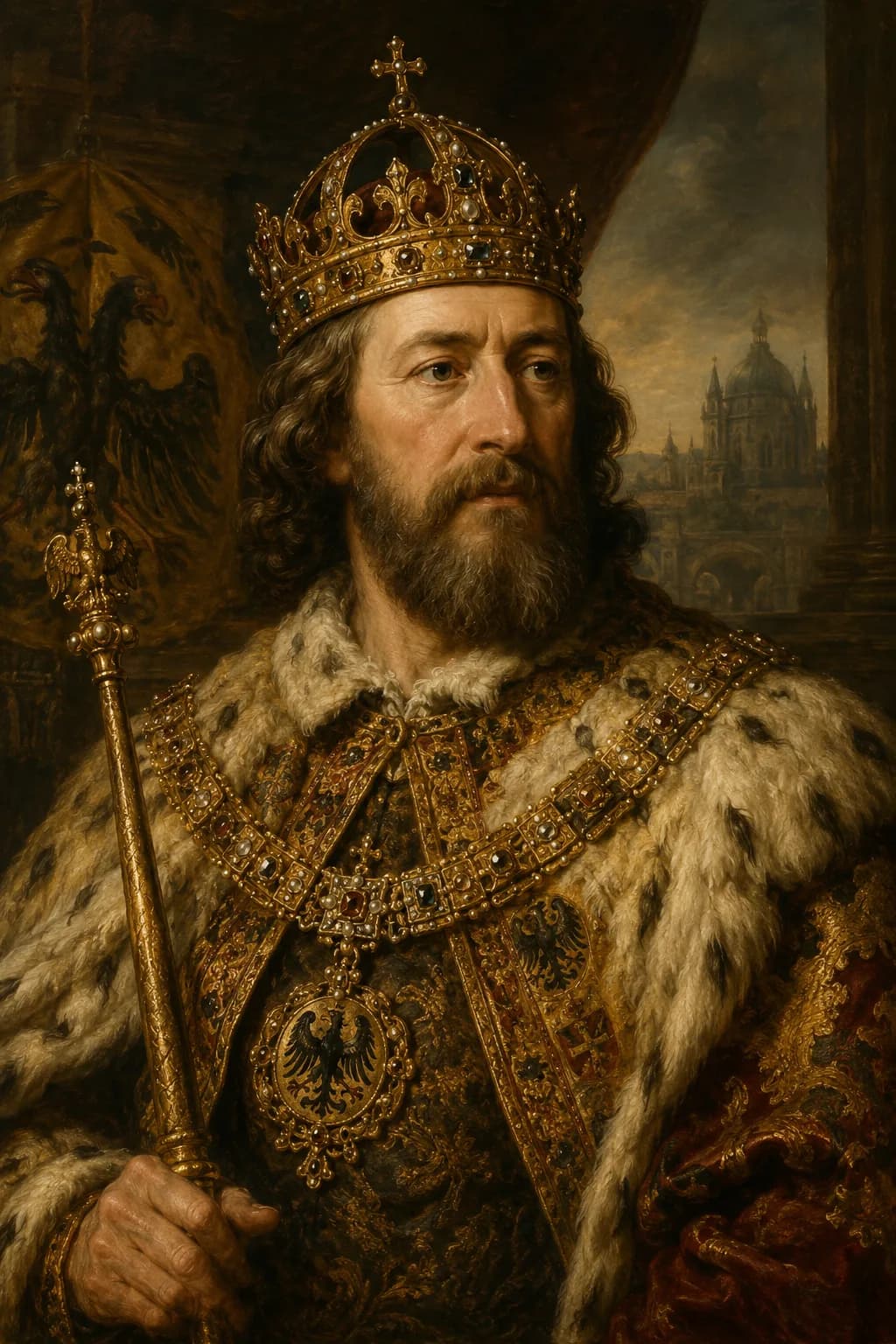
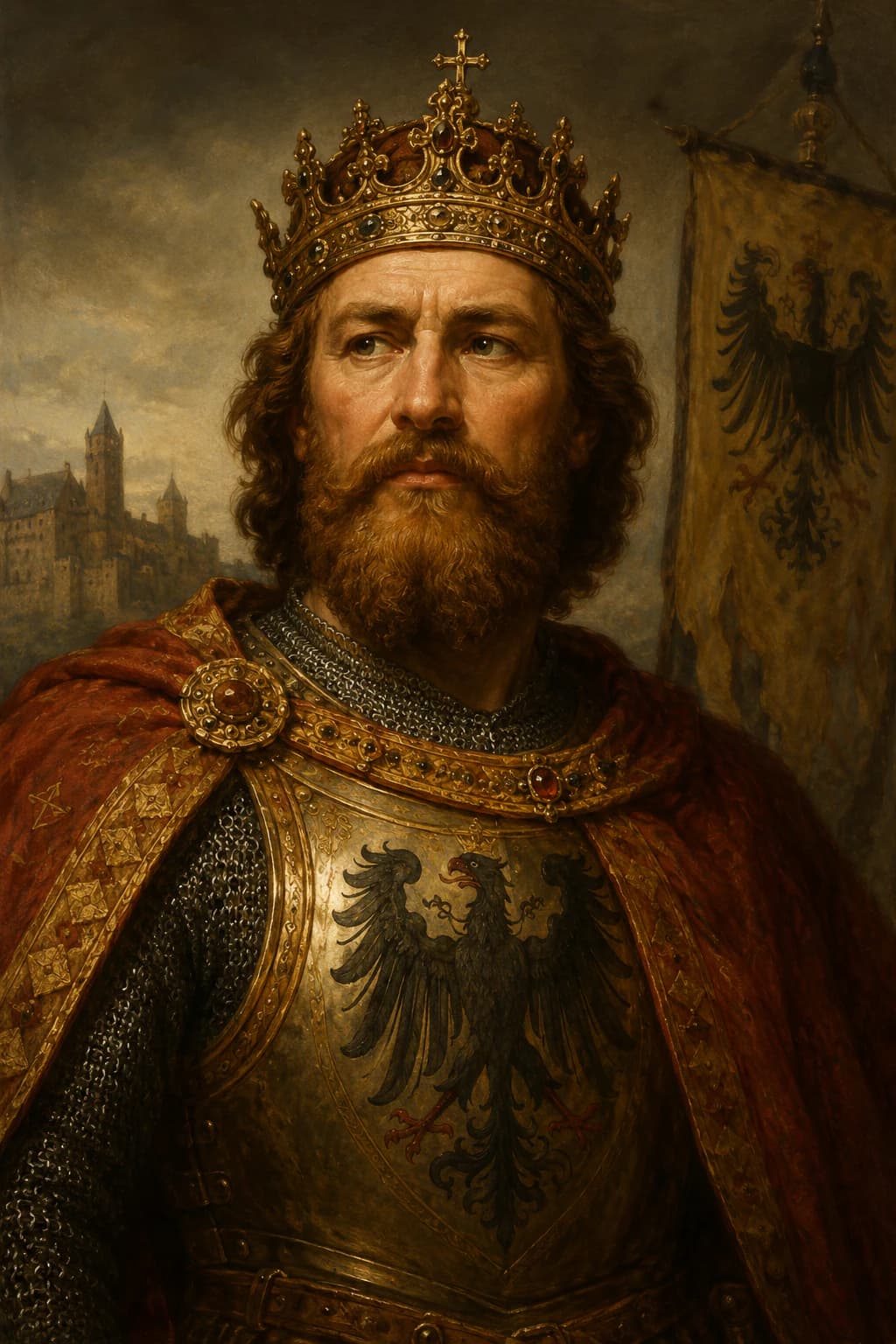
A Saxonking entered in 962. He left with a title that claimed a place above ordinary kingship.
Otto I already ruled the East Frankish kingdom, the realm from which medieval Germany developed. Victory over the Magyars at Lechfeld in 955 had strengthened his reputation. Intervention in Italy brought another kingdom within his reach.
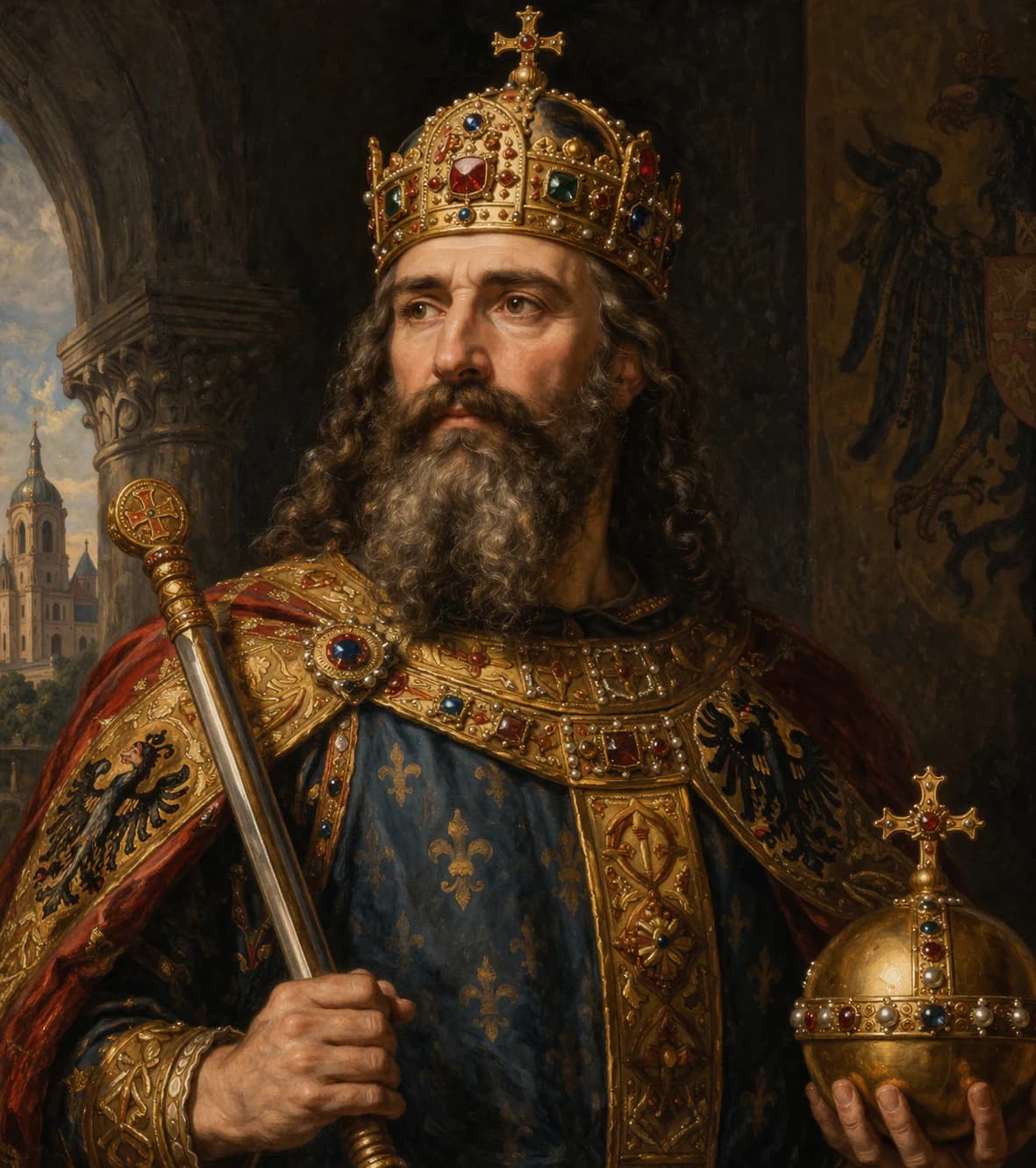
On 2 February 962, Pope John XII crowned Otto emperor in . The ceremony revived the western imperial title associated with Charlemagne, who had received it in 800.
“An imperialcrown offered prestige. Governing the lands beneath it required something more.”
Otto did not restore the ancient Roman Empire. His authority joined German kingship, claims in Italy and a special relationship with the papacy. The eastern Roman emperors in Constantinople had their own claim to ’s inheritance.
Historians often use 962 as the beginning of the Holy Roman Empire. The name and its institutions developed later. What began here was a durable connection between German rulers and the western imperialcrown.
1000 CE
Step 2 of 101000 CEAccessible mode
Bishops Help Hold the Kingdom Together
An emperor could travel with his court. He could not be present in every district at once.
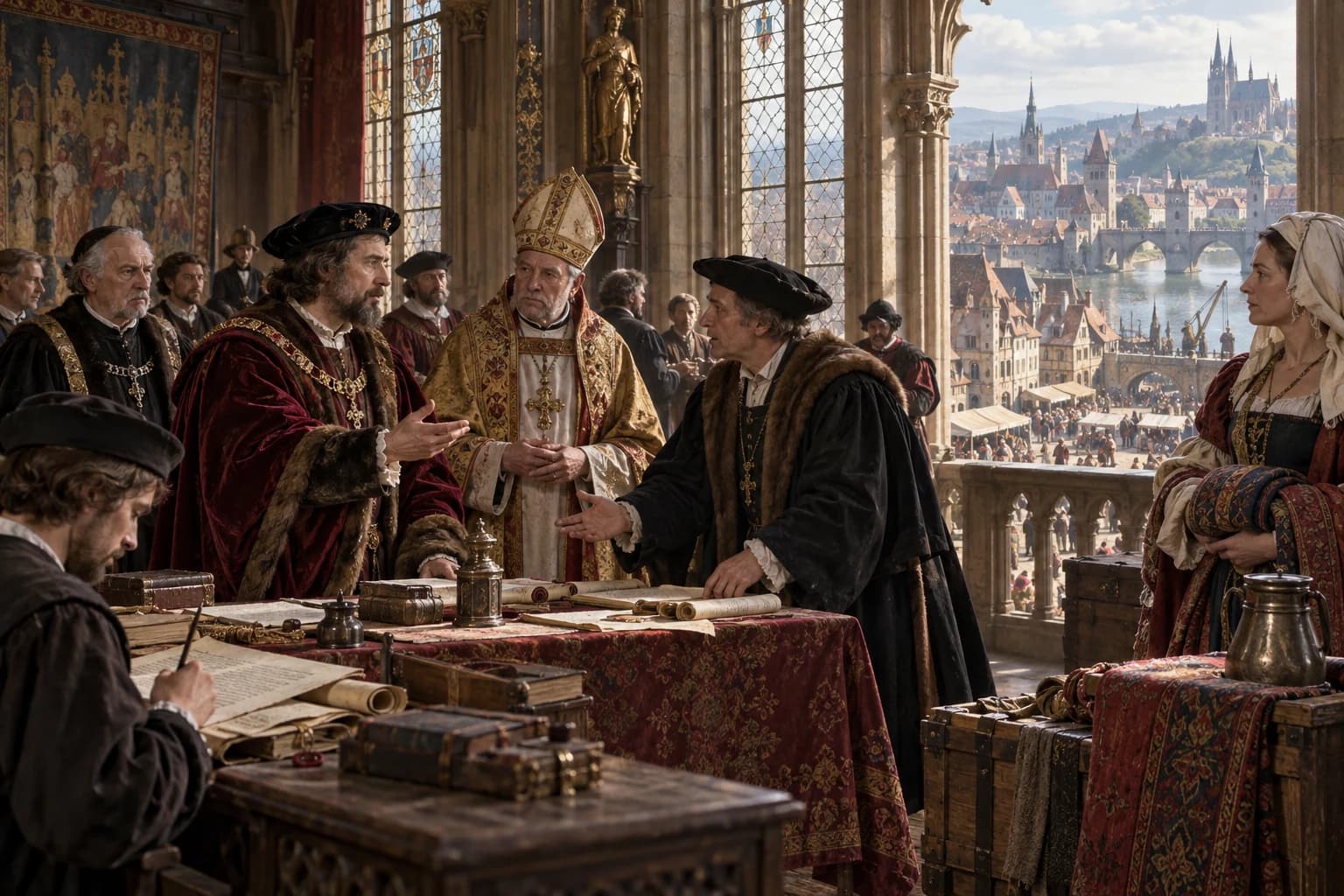
Otto and his successors relied on dukes, counts, bishops and abbots to make authority work locally. Royal government followed the ruler between palaces, monasteries and assemblies rather than operating from one permanent capital.
Church leaders were particularly useful allies. They controlled land, possessed educated staff and could provide supplies, advice and military support. Rulers supported monasteries and churches and tried to influence important appointments.
“The Church helped rulers govern. Its power also gave church leaders reasons to resist.”
A bishop’s office did not normally pass to a legitimate son. That made church lands different from an aristocratic family’s inheritance. It did not make bishops powerless or automatically obedient.
Under the Ottonian and Salian dynasties, the partnership helped sustain royal government. But it created a difficult question: if bishops served both God and the king, who had the right to choose them?
1077 CE
Step 3 of 101077 CEAccessible mode
Who Could Appoint a Bishop?
At in 1077, a king sought forgiveness from a pope. The encounter exposed a struggle over the foundations of power.
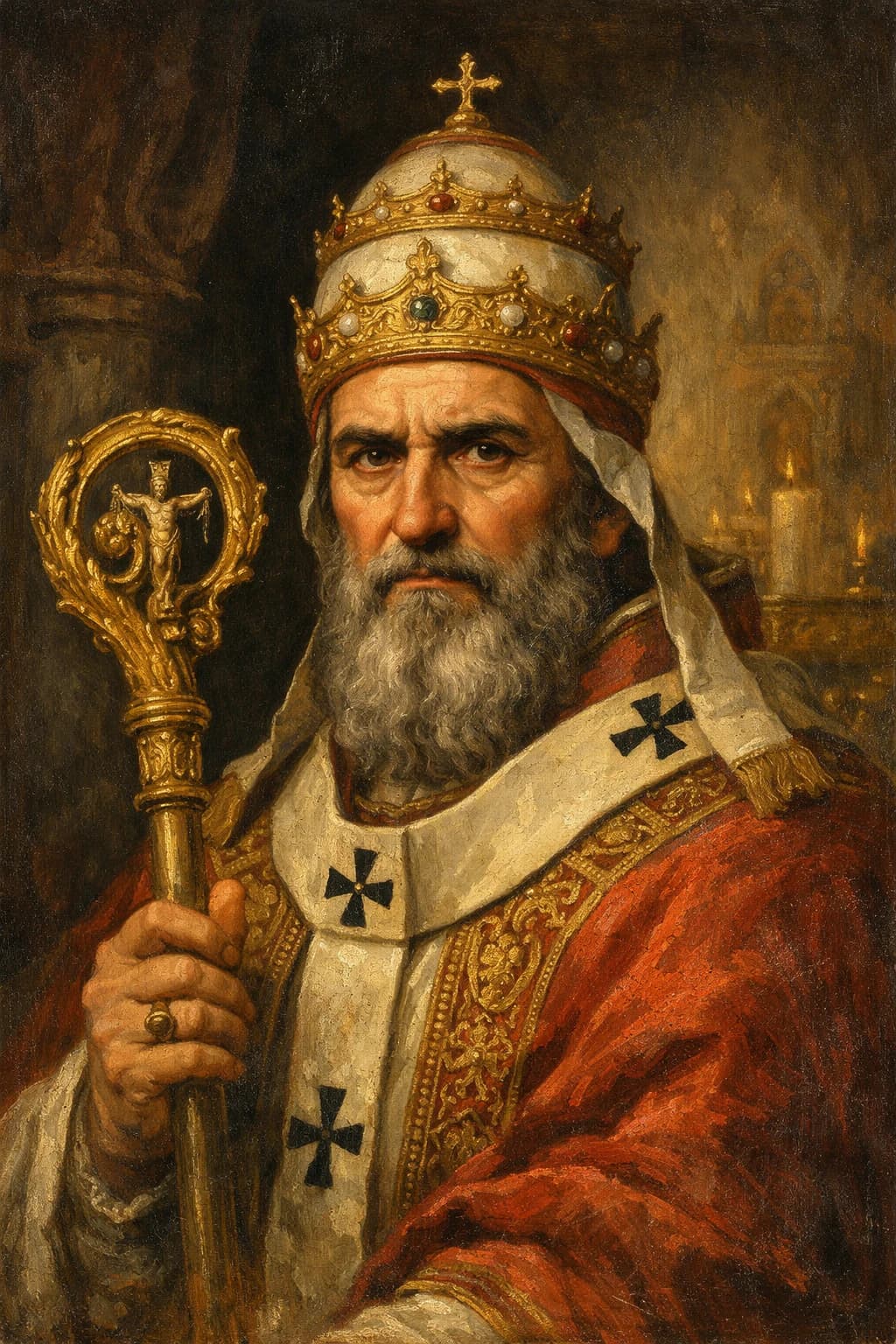
Pope Gregory VII argued that secular rulers should not control the installation of bishops. Henry IV, the German king, defended a practice on which royal authority depended. Their dispute became the Investiture Controversy.
Gregory excommunicated Henry in 1076. German opponents used the crisis to challenge the king. Henry crossed the Alps and sought absolution at , where the pope was staying under the protection of Matilda of Tuscany.
“ restored communion. It did not restore agreement.”
The pope lifted the excommunication, but the political conflict continued. Henry faced a rival king and later returned to Italy. In 1084, a rival pope crowned him emperor.
The Concordat of in 1122 reached a compromise under Henry’s son, Henry V. It distinguished the spiritual installation of bishops from the grant of their worldly rights. The struggle had shown how dangerous it could be when religious judgement unsettled political loyalty.
1183 CE
Step 4 of 101183 CEAccessible mode
Italian Cities Challenge the Emperor
Northern Italy offered wealth and imperial prestige. Its cities had their own ideas about who should govern them.
Frederick I Barbarossa became king in 1152 and emperor in 1155. He sought to recover imperial rights, revenues and obedience, especially in the prosperous cities south of the Alps.
Communes such as Milan resisted. Frederick’s destruction of Milan in 1162 showed the violence behind his claims. A league of northern Italian cities formed a strong opposition, supported by Pope Alexander III.
“Imperial authority could survive a bargain that imperial armies had failed to impose.”
The Lombard League defeated Frederick at in 1176. In the Peace of Constance in 1183, he recognised important rights of the cities while they acknowledged his imperial authority.
Later Hohenstaufen rulers faced renewed conflict. Frederick II’s power in Sicily alarmed popes who feared being surrounded. After his death in 1250, dynastic struggles and disputed elections made the German princes still more important to the future of the crown.
1356 CE
Step 5 of 101356 CEAccessible mode
The Electors Set the Rules
The crown was too important to leave without rules. In 1356, Charles IV defined who should choose its holder.
Royal elections had long been part of the empire’s political life. Rival candidates and disputed claims could divide it. The Golden Bull of 1356 set out a clearer procedure.
Seven electors received the decisive votes: the archbishops of Mainz, Trier and Cologne, the king of Bohemia, the count palatine of the Rhine, the duke of Saxony and the margrave of Brandenburg.
“The emperor’s authority began with the agreement of other powerful rulers.”
They chose the King of the Romans, the ruler expected to hold the imperial dignity. A majority was enough. The document also protected important rights and privileges of the electoral territories.
The arrangement made the crown more predictable without making it hereditary. Charles IV, whose own power was rooted in Bohemia, gave a select group of territorial rulers a lasting place at the centre of the imperial constitution.
1495 CE
Step 6 of 101495 CEAccessible mode
A Scattered Empire Seeks Common Law
By 1495, the empire was a patchwork of territories. Its rulers still needed ways to settle disputes together.
Princes, bishops, counts and imperial cities governed lands with different privileges. Some answered directly to the emperor; others belonged within larger lordships. The empire’s common framework sat above these local powers.
“Many rulers could share a legal order without sharing one government.”
Further reforms created imperial circles, regional groupings intended to help enforce peace and organise common responsibilities. Not every plan worked, and collecting money remained difficult.
Habsburg rulers increasingly held the crown, but their family possessions were not the whole empire. The reforms gave smaller territories reasons to value common institutions even when they resisted an emperor’s ambitions.
1521 CE
Step 7 of 101521 CEAccessible mode
The Reformation Divides the Empire
A religious dispute spread through an empire that had no single ruler able to settle it for everyone.
Martin Luther’s challenge to church practices began in 1517 and widened into a struggle over doctrine and authority. Printed pamphlets carried the arguments between universities, courts, towns and households.
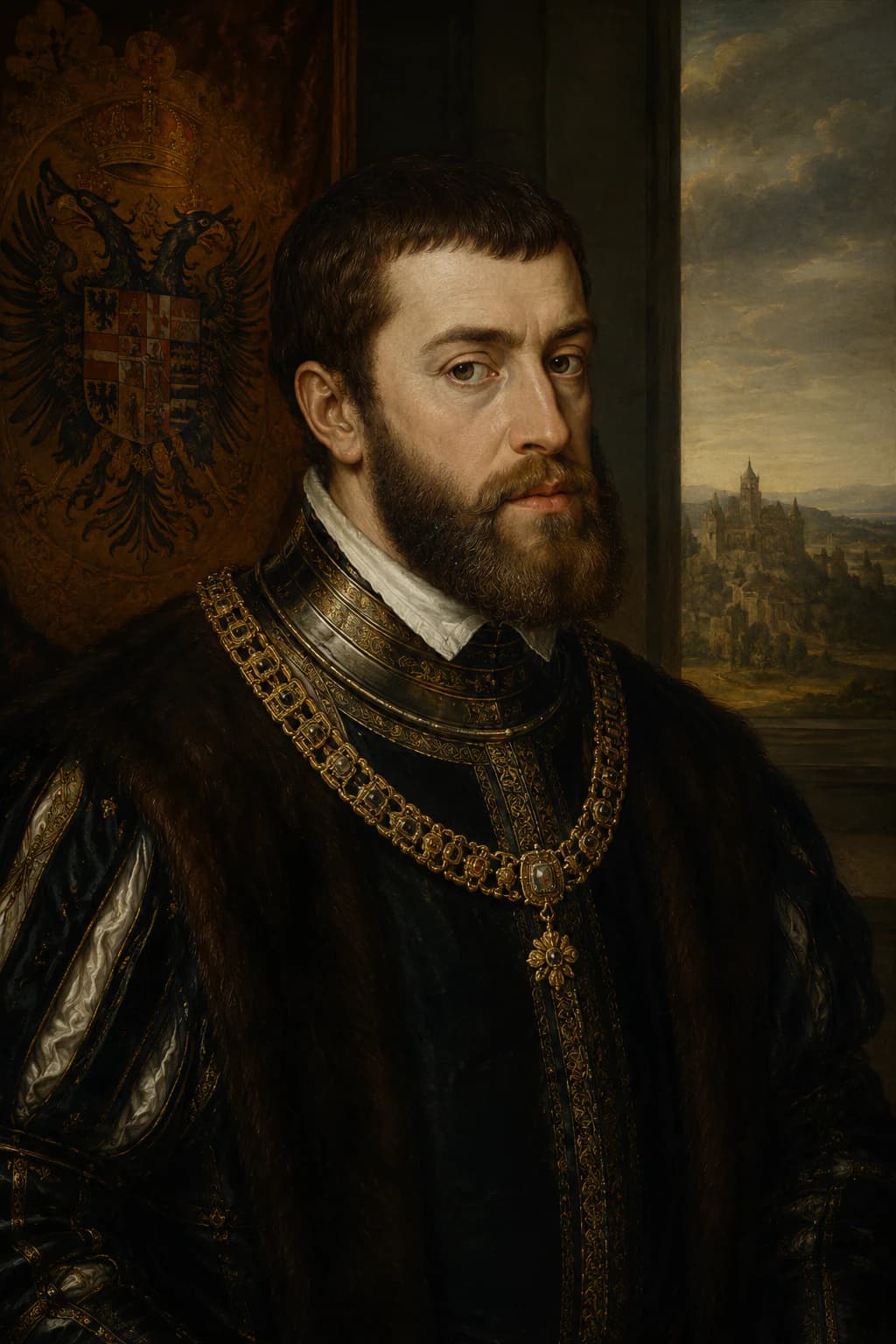
At in 1521, Luther refused to withdraw his teachings before Charles V and the imperialassembly. The emperor condemned him, but protection from sympathetic rulers prevented that judgement from ending the movement.
“A divided faith became a problem of shared government.”
Princes and cities adopted religious reforms for different reasons. Belief mattered, alongside control of church property and local government. Religious conflict became entangled with disputes over imperial power.
The Peace of Augsburg in 1555 recognised Catholic and Lutheran territorial arrangements, with exceptions and conditions. It gave rulers substantial control over official religion, not universal freedom of conscience. Calvinists remained outside the settlement, and the unresolved questions would return.
1618 CE
Step 8 of 101618 CEAccessible mode
War Consumes Central Europe
In 1618, a rebellion in Bohemia opened a conflict that the empire could not contain.
Protestant opponents of Habsburg rule threw royal officials from a window in . The Defenestration of became the opening crisis of the Thirty Years’ War.
The defeat of the Bohemian rebels at White Mountain in 1620 strengthened Ferdinand II. It did not end the war. Other rulers feared Habsburg power or fought to defend their religious and territorial interests.
“The war’s burden fell on people who had little say in its decisions.”
Denmark and Sweden intervened. France, despite being Catholic, later entered the struggle against the Habsburgs. Religion mattered, but alliances also followed dynastic and strategic interests.
Armies lived off occupied territories. Requisitioning, plunder, hunger and disease devastated communities, with some regions suffering far more than others. For civilians, the struggle over who should govern the empire became a struggle to keep families, farms and towns alive.
Negotiations at and produced agreements between the emperor, imperial estates and outside powers. They confirmed territorial rights and strengthened rules for religious coexistence.
Calvinists gained recognition alongside Catholics and Lutherans. The settlement also confirmed the separation of the Dutch Republic and the Swiss Confederation from the imperial framework.
“Westphalia changed the empire’s balance. It did not write its obituary.”
The princes gained protections, but they did not all become fully independent modern states. Imperial courts, law and obligations continued. From 1663, a permanent Imperial Diet met at .
Austria and Prussia became increasingly powerful rivals during the eighteenth century. Their wars strained the shared order, yet smaller territories still used its institutions. The empire endured because common rules could be valuable even when its members disagreed.
1806 CE
Step 10 of 101806 CEAccessible mode
Napoleon Breaks the Imperial Framework
The empire’s final crisis came from wars that redrew Europe faster than its institutions could adapt.
The French Revolutionary and Napoleonic wars brought military defeat and territorial upheaval. In 1803, a major redistribution dissolved most ecclesiastical states and absorbed many smaller territories into larger ones.
Francis II created the hereditary title of Emperor of Austria in 1804. He still held the Holy Romancrown, but now possessed another imperial title tied to his own dynasty.
“The title ended in 1806. The territories and institutions it had shaped had a much longer afterlife.”
After Napoleon’s victory at Austerlitz in 1805, German rulers formed the Confederation of the Rhine under French protection in 1806 and left the empire. On 6 August, Francis laid down the Holy Romanimperialcrown and declared the imperial bonds dissolved.
There would be no successor. The Austrian Empire continued, while later German arrangements followed different rules. The Holy Roman Empire left a long history of courts, cities, regional rights and negotiated authority: a political world whose survival had depended on more than one ruler’s strength.
Continue reading
Finished The Holy Roman Empire?
Choose the next story, follow a connected moment, or explore the people behind this story.