People

Gregory VII

Gregory VII was Pope from 1073 to 1085 and a leading figure in the Gregorian Reform. His conflict with Holy Roman Emperor Henry IV over lay investiture led to Canossa, civil war, exile, and a lasting transformation of church-state relations.

Born
1015 CE
Died
1085 CE
Role
Pope

Pope (c. 1015–1085)

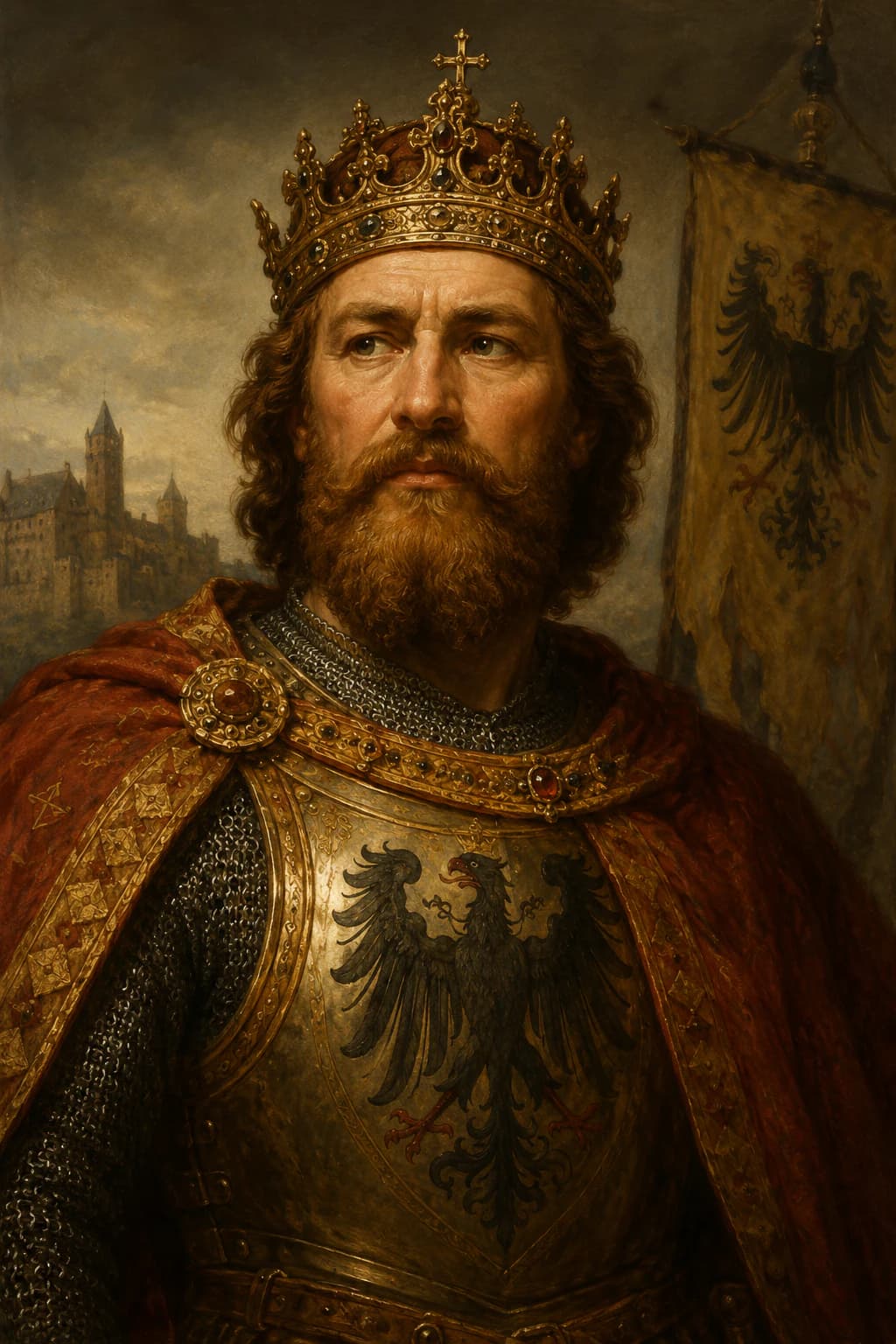
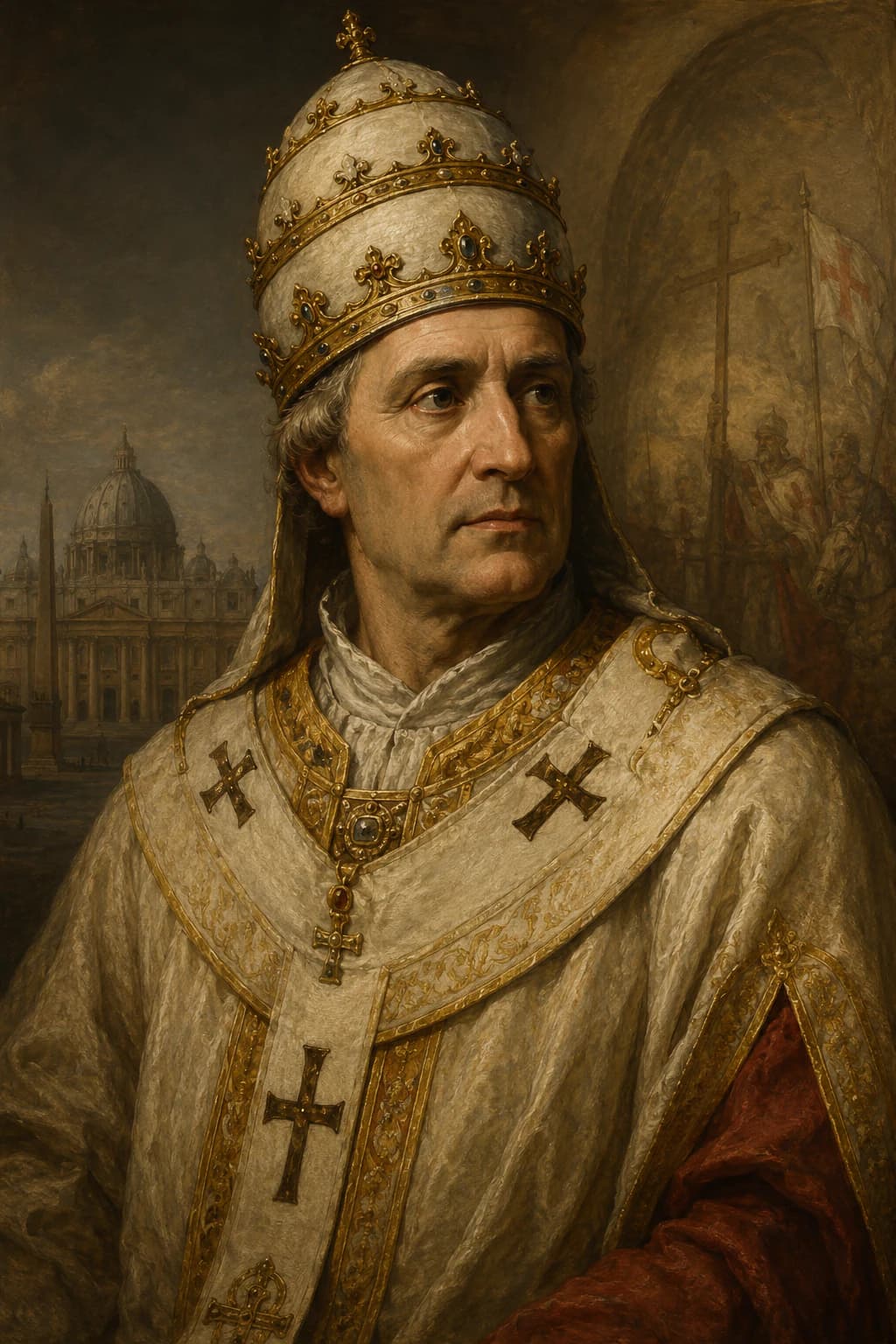
AI-generated portrait of Pope Gregory VII
AI-assisted historical reconstruction

An illustrative reconstruction based on historical context. It is not a photograph or documentary likeness. Image policy

Quick answer

Gregory VII was Pope from 1073 to 1085 and a leading figure in the Gregorian Reform. His conflict with Holy Roman Emperor Henry IV over lay investiture led to Canossa, civil war, exile, and a lasting transformation of church-state relations.

Born
1015 CE
Died
1085 CE
Role
Pope
Years
1015-1085 CE
Quick facts

Profile details

Additional identity and tagging details that are not already covered in the introduction.

Full name
Pope Gregory VII
Also known as
Hildebrand
Facts

Gregory VII timeline facts

Selected specifics from this profile's life story.

c. 1015–1049
Roman reformer

Hildebrand, later Gregory VII, rose from relatively obscure origins to become the driving organiser of eleventh-century church reform.

1075–1076
Conflict with Henry IV

Gregory banned lay investiture of bishops and excommunicated Henry IV of Germany after the emperor refused to comply and attempted to depose the pope.

1084
Rome captured, Pope expelled

Henry IV captured Rome in 1084, installed his antipope, and Gregory was forced to flee to Norman-held southern Italy, where he died the following year.

After 1085
Legacy of the Gregorian Reform

Gregory VII was canonised in 1606. His papacy is seen as the turning point that established the medieval church's claim to independence from and superiority over secular government.

Life Journey

Reform, confrontation, and exile

Follow the story in a more continuous narrative, with a reading mode that matches how much depth you want.

Complete chronology

c. 1015–1049

Roman reformer

The eleventh-century church was entangled with lay power at almost every level. Kings and nobles influenced the appointment of bishops and abbots, church offices could be bought and sold through simony, and reformers condemned clerical marriage or concubinage as signs of spiritual disorder. These issues were not only moral. Bishops controlled land, courts, revenue, and military obligations, so whoever controlled appointments controlled a major part of European government. Hildebrand, probably of modest Tuscan or Roman background, rose inside the reforming circles that gathered around the papacy from the 1040s. He served several popes before becoming pope himself, learning the machinery of reform from within. By 1073, he was not an idealistic outsider. He was the movement's most experienced strategist.
1073

Election as Pope

The circumstances of Gregory VII's election were unconventional: accounts suggest that the crowd at Alexander II's funeral spontaneously acclaimed Hildebrand as his successor, a popular enthusiasm that accelerated the formal process. Whether this enthusiasm was genuinely spontaneous or had been prepared is uncertain. What is clear is that Gregory entered the papacy with a well-defined programme and the backing of reform-minded clergy across Europe. He also entered with enemies: the powers who profited from clerical patronage — and above all the Holy Roman Emperor Henry IV — would soon understand what the new pope intended to do.

1075

Dictatus Papae

The Dictatus Papae — a list of twenty-seven propositions recorded in the papal register for 1075 — represents the sharpest surviving statement of Gregory's programme, though scholars debate whether it was a formal manifesto, a working memorandum, or a collection of principles. Its claims were astonishing: the pope could depose emperors, release subjects from loyalty to unjust rulers, and exercise unique authority over bishops and councils. These were not abstract slogans. Bishops were major landholders, administrators, and political actors. To deny rulers control over their appointment was to challenge the structure of medieval government. Gregory was arguing that sacred office could not be treated as a royal asset.

1075–1076

Conflict with Henry IV

The confrontation came quickly. Gregory banned lay investiture and demanded that Henry IV stop appointing bishops in Germany and northern Italy. Henry refused and convened a synod of German bishops at Worms in January 1076, which declared Gregory deposed. Gregory responded by excommunicating Henry and releasing his subjects from their oath of loyalty. The significance of this response was not merely theological. Excommunication of a king created a political crisis: vassals who had sworn oaths to a monarch could now argue that those oaths were void, and German princes who were already chafing under Henry's authority saw their opportunity. The church and the German nobility were suddenly aligned against the king.

1077

Canossa

The scene at Canossa in January 1077 became one of the most celebrated moments of medieval politics. Henry, having received news that German princes were meeting to depose him in favour of a rival, made the extraordinary gesture of humiliation that the canonical rules of penance demanded. Gregory — staying at Canossa as the guest of Countess Matilda of Tuscany — could not deny absolution to a penitent without violating the logic of the very authority he claimed. He lifted the excommunication. Henry's opponents were deprived of their justification. The king returned to Germany and resumed the civil war. What looked like Gregory's greatest triumph was simultaneously a strategic gift to his enemy, because the moment absolution was granted, the political crisis it had created was defused.

1077–1080

German civil war

German princes had elected a rival king — Rudolf of Swabia — and the conflict between him and Henry IV dragged on for years. Gregory initially maintained a posture of neutrality, but the prolonged nature of the war and the ambiguity of his position ultimately forced his hand. In 1080 he again excommunicated Henry and recognised Rudolf as king. Rudolf died that same year, depriving Gregory of his candidate. Henry, freed from domestic crisis, turned his attention southward. He appointed an antipope — Clement III — and prepared to deal with Gregory directly. The pattern of the following years was not the triumph Gregory had achieved at Canossa but something quite different.

1084

Rome captured, Pope expelled

Henry's march on Rome in 1084 brought the crisis to its military conclusion. Most of the city's population and clergy accepted the antipope Clement III, and Henry was crowned emperor by him. Gregory, besieged in the Castel Sant'Angelo, was rescued by his Norman allies under Robert Guiscard, whose relief forces sacked Rome so violently that the population turned against Gregory. He could not remain in the city. He withdrew southward, to Salerno, and died there in May 1085. His reported last words — 'I have loved righteousness and hated iniquity, therefore I die in exile' — became the defining image of a papacy that had achieved moral clarity at the cost of political survival.

1085

Death in Salerno

The immediate outcome of Gregory's papacy looked like failure. He had been driven from Rome, his candidate for the German throne was dead, an antipope occupied the chair of Peter, and the emperor who had stood barefoot in the snow at Canossa had proved more durable than the humiliation suggested. Yet the programme Gregory had advanced — the Gregorian Reform — did not die with him. His successors continued to press the investiture dispute, and the ideas he had articulated about papal supremacy, clerical celibacy, and the independence of church appointments continued to shape the agenda of the medieval church for decades. The dispute was formally settled by the Concordat of Worms in 1122, thirty-seven years after Gregory's death, in terms that represented a compromise but acknowledged the principles he had fought for.

After 1085

Legacy of the Gregorian Reform

The Investiture Controversy that Gregory VII made unavoidable is now considered one of the most consequential political conflicts of the medieval period. It did not create a modern separation of church and state, but it did force Europeans to think of spiritual and secular authority as distinct powers with rival jurisdictions. Gregory's largest claims were not fully realised, and the Concordat of Worms in 1122 produced compromise rather than total papal victory. Even so, he changed the terms of argument. Kings could no longer treat bishops as ordinary royal appointees without challenge, and popes after Gregory inherited a far more assertive model of office. His canonisation in 1606 came centuries later, perhaps because he remained an uncomfortable saint: uncompromising, politically disruptive, and impossible to domesticate.

Continue in context

Connected stories

Move from the profile into the wider events and settings this figure belongs to.

Tertiary paths

Content note

This profile is written for educational use and connects to related Stories of History pages. The main portrait is an AI-assisted historical reconstruction, included as an illustrative aid rather than documentary evidence. Image policy

References

Sources & Further Reading

Reliable reference works, archives and reading paths connected to this profile.

Further reading

  1. Encyclopaedia Britannica, Search results for Gregory VII,” accessed June 2026.Open source
  2. WorldCat, Books and library holdings for Gregory VII,” accessed June 2026.Open source

Primary sources

  1. Library of Congress, Search results for Gregory VII,” accessed June 2026.Open source

Reviewed claim sources

Loading reviewed claim sources...

A weekly route through history

Find out first about the latest published stories, feature notes and occasional Premium offers in one weekly email.