People

Frederick I Barbarossa

Frederick I Barbarossa was Holy Roman Emperor from 1155 to 1190, a Hohenstaufen ruler who fought the Lombard League, challenged papal power, and died during the Third Crusade.

Born
1122 CE
Died
1190 CE
Role
Holy Roman Emperor

Holy Roman Emperor (1122-1190)

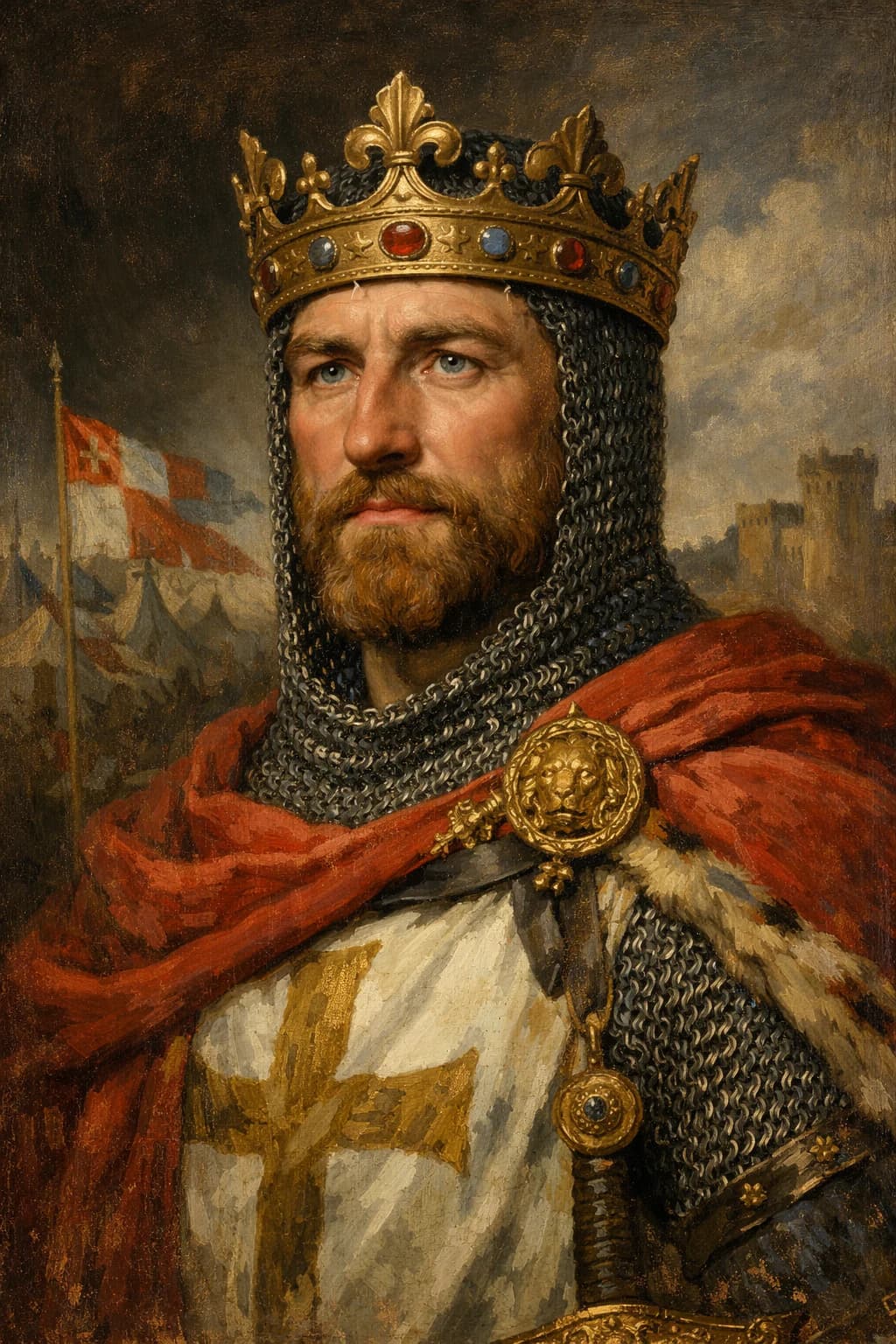
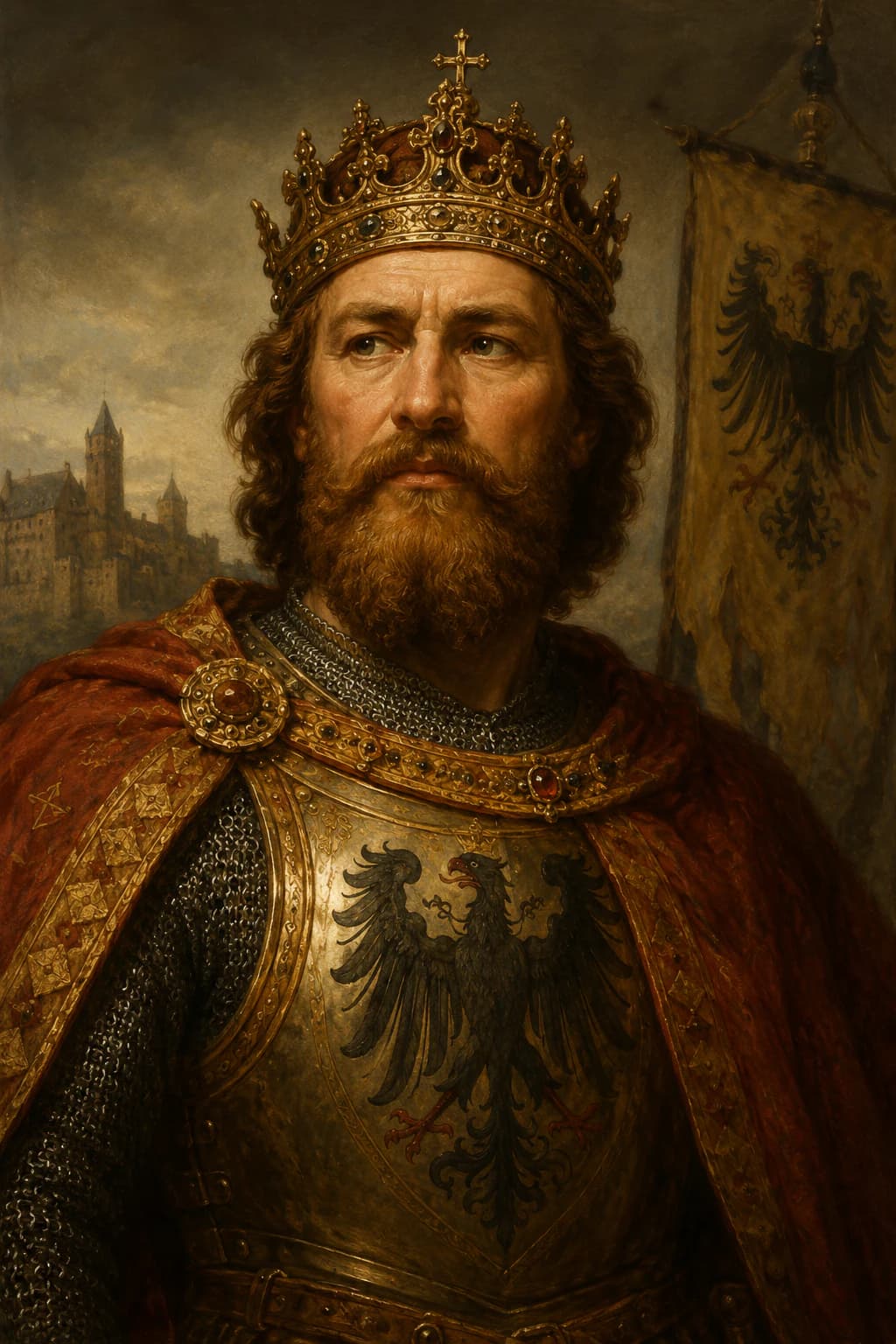
AI-generated portrait of Frederick I Barbarossa in medieval imperial robes
AI-assisted historical reconstruction

An illustrative reconstruction based on historical context. It is not a photograph or documentary likeness. Image policy

Quick answer

Frederick I Barbarossa was Holy Roman Emperor from 1155 to 1190, a Hohenstaufen ruler who fought the Lombard League, challenged papal power, and died during the Third Crusade.

Born
1122 CE
Died
1190 CE
Role
Holy Roman Emperor
Years
1122-1190 CE
Quick facts

Profile details

Additional identity and tagging details that are not already covered in the introduction.

Also known as
Frederick I, Frederick Barbarossa, Friedrich Barbarossa
Facts

Frederick I Barbarossa timeline facts

Selected specifics from this profile's life story.

1122
Hohenstaufen prince

Frederick was born into the Hohenstaufen family, with blood ties that helped him bridge rival German noble factions.

1158-1162
Italian struggle

Frederick tried to impose imperial authority over northern Italian communes, culminating in the destruction of Milan.

1180
German consolidation

Frederick strengthened royal authority in Germany by bringing down Henry the Lion, the powerful Welf duke of Saxony and Bavaria.

After 1190
Imperial afterlife

Frederick's memory became attached to ideas of German empire, medieval kingship and the legend of a sleeping ruler who would return.

Life Journey

The emperor who tried to bind empire, Italy and crusade

Follow the story in a more continuous narrative, with a reading mode that matches how much depth you want.

Complete chronology

1122

Hohenstaufen prince

Frederick, later known as Barbarossa because of his reddish beard, was born around 1122 into the Hohenstaufen dynasty. His father was Frederick II, Duke of Swabia, and his mother Judith came from the rival Welf family. That ancestry mattered. The German kingdom was not a simple hereditary monarchy, and the long rivalry between Hohenstaufen and Welf interests had weakened royal authority. Frederick's mixed lineage helped him appear as a candidate who could reconcile competing aristocratic blocs while still carrying the prestige of a powerful imperial house.
1152

Elected king

In 1152, after the death of his uncle Conrad III, Frederick was elected King of the Romans by the German princes. He moved quickly to project energy and order. Medieval German kingship depended on negotiation with dukes, bishops and regional powers, and Frederick understood that authority had to be performed as well as claimed. He confirmed privileges, settled disputes and cultivated support while presenting himself as the defender of imperial rights. His ambition was not merely to rule Germany, but to revive the imperial dignity associated with Charlemagne and Otto the Great.

1155

Imperial coronation

Frederick entered Italy to receive the imperial crown, a journey that exposed the central tension of his reign. The emperor needed Rome and papal recognition, yet Italian cities and popes resisted imperial domination. In 1155, Pope Adrian IV crowned Frederick Holy Roman Emperor. The ceremony elevated him, but it did not solve the deeper question of who controlled northern Italy, imperial rights and the relationship between pope and emperor. Frederick saw the empire as a living legal order; many Italians saw his claims as interference backed by German arms.

1158-1162

Italian struggle

Frederick's Italian policy focused on regalian rights, revenues and obedience from wealthy communes such as Milan. At the Diet of Roncaglia in 1158, imperial lawyers articulated a strong vision of imperial power rooted in Roman law. The cities resisted, and Milan became the leading opponent. In 1162, after a hard campaign, Frederick forced Milan's surrender and ordered its destruction. The victory was dramatic but dangerous. It showed the reach of imperial force, yet it also convinced many cities that survival required collective resistance rather than separate negotiation.

1159-1177

Papal conflict

The papal schism of 1159 turned Frederick's Italian ambitions into a wider struggle over legitimacy. He supported antipopes against Alexander III, while Alexander became the spiritual centre of resistance to imperial pressure. This was not a simple contest between religion and politics; both sides used law, diplomacy and alliance-building. Frederick wanted an empire whose ruler could shape the order of Christendom. Alexander and his allies rejected any settlement that made the papacy dependent on imperial will. The conflict widened the gap between Frederick's ideal of authority and the political realities around him.

1176

Lombard resistance

Northern Italian cities formed the Lombard League to resist Frederick's pressure, and their endurance changed the balance of the reign. In 1176, at the Battle of Legnano, imperial forces suffered a serious defeat. The loss did not destroy Frederick, but it ended the illusion that northern Italy could be held by repeated expeditions alone. He had to make peace with Alexander III at Venice in 1177 and later accept a compromise with the Lombard cities at Constance in 1183. The emperor retained honour and formal rights, but the communes preserved much of their practical autonomy.

1180

German consolidation

Frederick's German policy was often more successful than his Italian campaigns. His most important domestic turning point came in the conflict with Henry the Lion, Duke of Saxony and Bavaria. Henry had been a major power in the empire and a member of the Welf dynasty, but his refusal to support Frederick in Italy damaged their relationship. In 1180, Henry was condemned and stripped of his duchies. The settlement broke one of the greatest princely power blocs in Germany and allowed Frederick to redistribute authority, though it also showed that imperial rule still worked through aristocratic bargaining and punishment.

1189-1190

Third Crusade

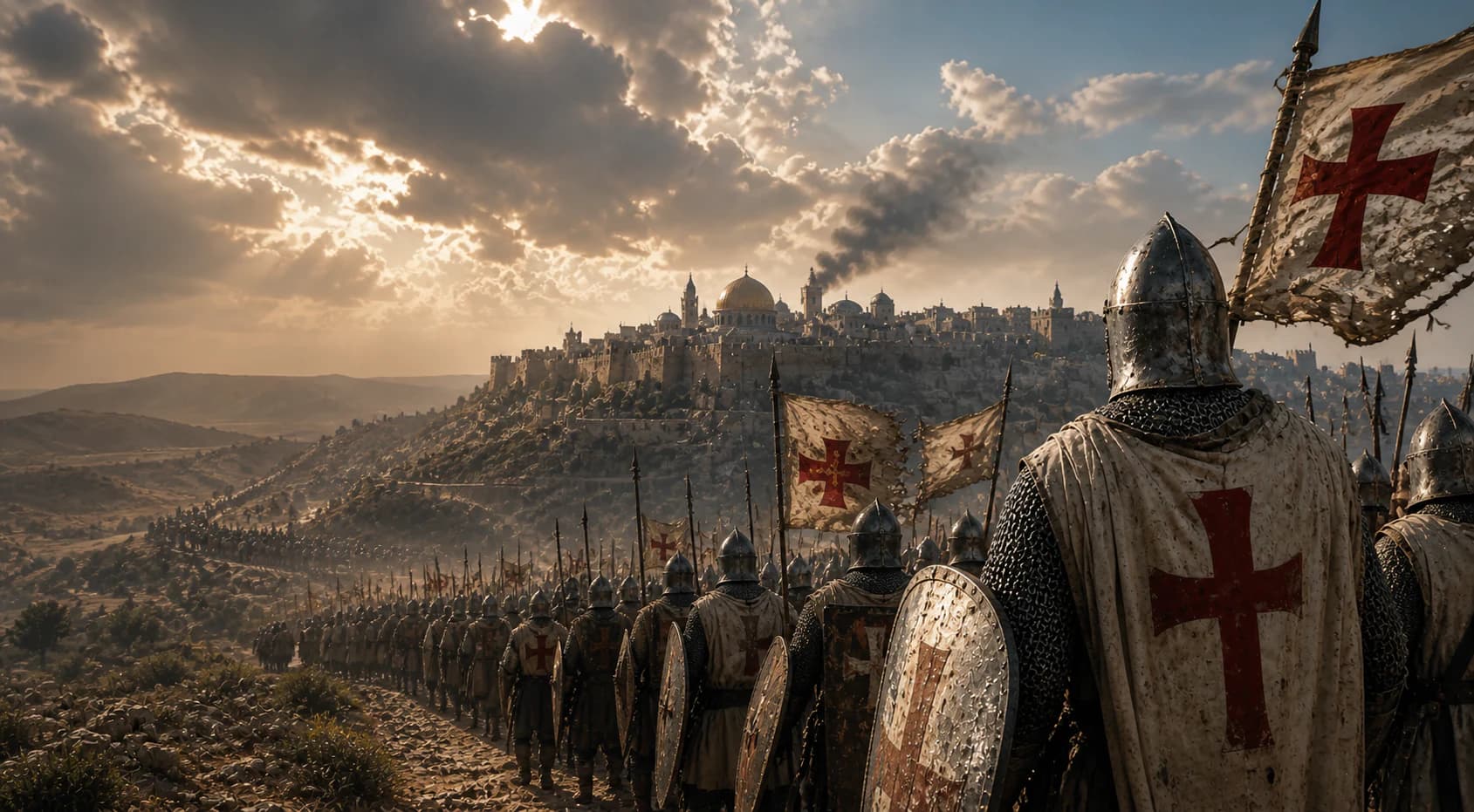
After Saladin's capture of Jerusalem in 1187, Frederick joined the Third Crusade alongside the kings of France and England. He was older than his fellow crusading monarchs but commanded immense prestige and led a major army overland through the Balkans and Anatolia. In June 1190, he drowned in the Saleph River in Cilicia, probably while crossing or bathing. His sudden death shattered the morale and cohesion of the German crusading force. Many returned home, while others continued in reduced numbers. The emperor who had spent his life pursuing sacred imperial authority died before seeing Jerusalem.

After 1190

Imperial afterlife

Frederick Barbarossa's historical legacy is double-edged. He strengthened the prestige of the Holy Roman Empire, drew on Roman law to define imperial rights and proved a formidable political operator. Yet his Italian wars also revealed the limits of medieval empire when faced by wealthy cities, papal resistance and regional autonomy. Later generations turned him into something larger than a ruler: a symbol of imperial greatness, German memory and even the legend of a sleeping king awaiting return. The real Frederick was more complex - pragmatic, ambitious, pious, forceful and often unable to make his grandest claims permanent.

Continue in context

Connected stories

Move from the profile into the wider events and settings this figure belongs to.

Tertiary paths

Content note

This profile is written for educational use and connects to related Stories of History pages. The main portrait is an AI-assisted historical reconstruction, included as an illustrative aid rather than documentary evidence. Image policy

References

Sources & Further Reading

Reliable reference works, archives and reading paths connected to this profile.

Further reading

  1. Encyclopaedia Britannica, Search results for Frederick I Barbarossa,” accessed June 2026.Open source
  2. WorldCat, Books and library holdings for Frederick I Barbarossa,” accessed June 2026.Open source

Primary sources

  1. Library of Congress, Search results for Frederick I Barbarossa,” accessed June 2026.Open source

Reviewed claim sources

Loading reviewed claim sources...

A weekly route through history

Find out first about the latest published stories, feature notes and occasional Premium offers in one weekly email.