People

Richard I

Richard I, known as Richard the Lionheart, was King of England from 1189 to 1199. Son of Henry II and Eleanor of Aquitaine, he led the Third Crusade, fought Saladin, was captured and ransomed, and spent most of his reign outside England.

Born
1157 CE
Died
1199 CE
Role
King of England

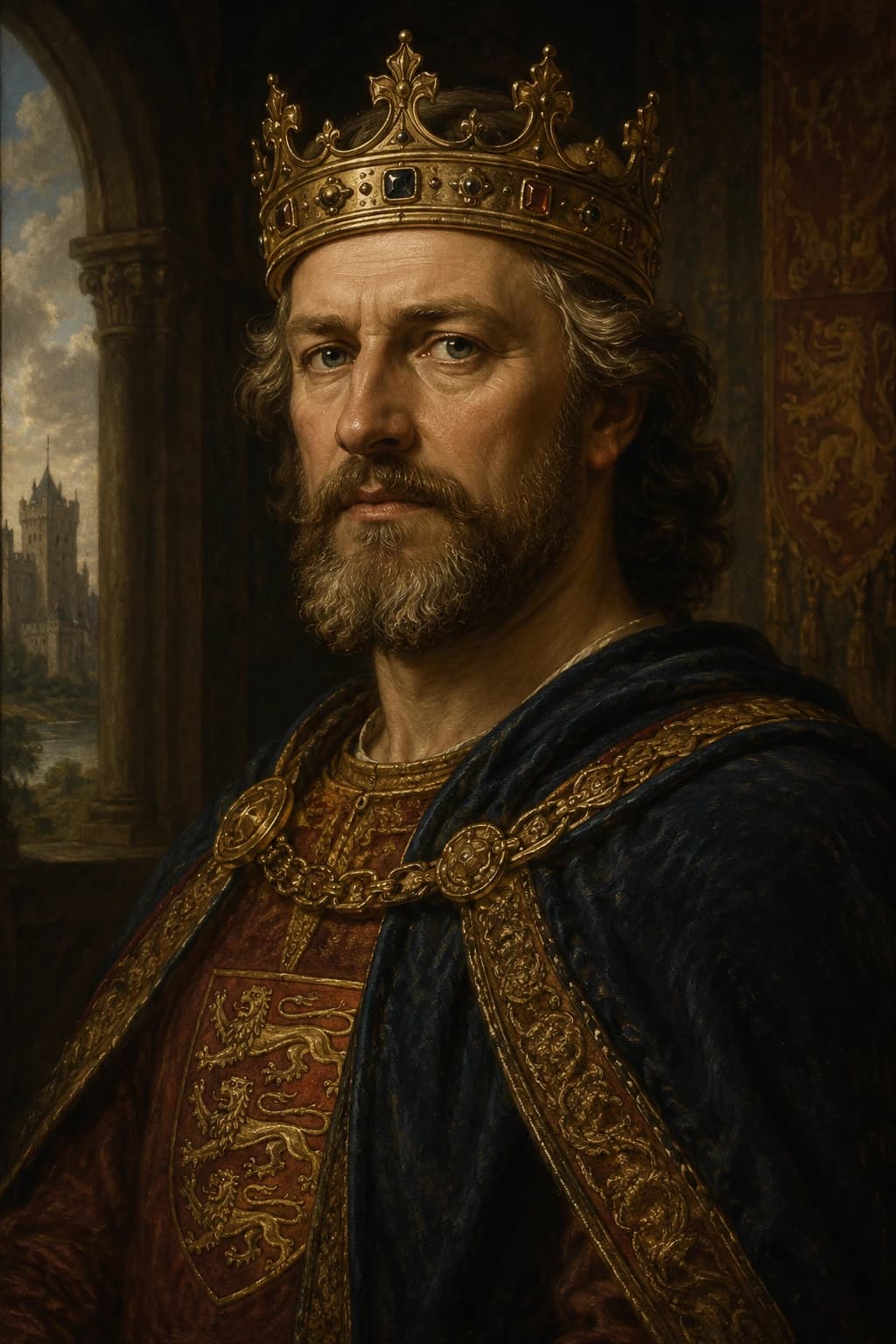
King of England (1157–1199)

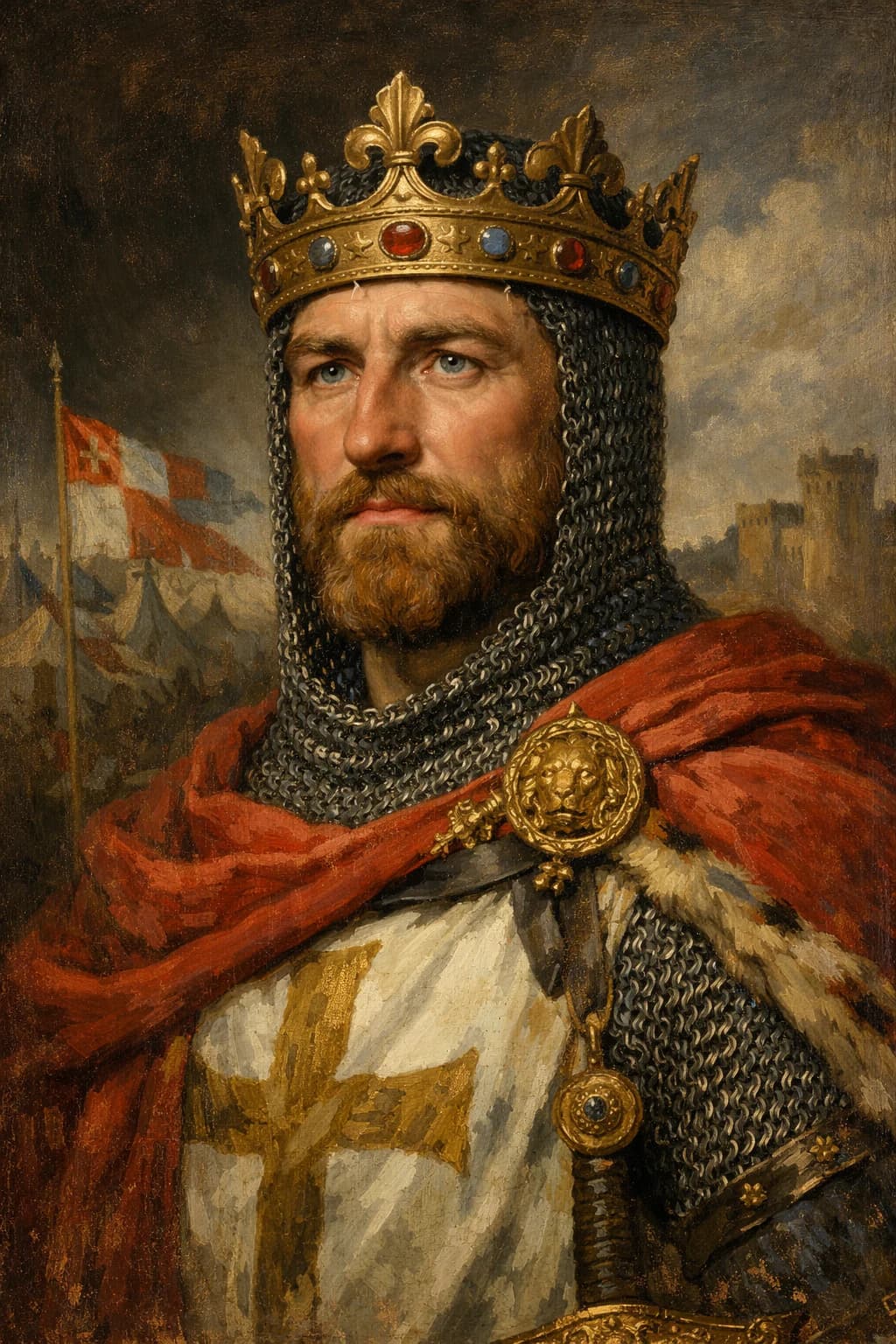
AI-generated portrait of Richard I in medieval crusader armour
AI-assisted historical reconstruction

An illustrative reconstruction based on historical context. It is not a photograph or documentary likeness. Image policy

Quick answer

Richard I, known as Richard the Lionheart, was King of England from 1189 to 1199. Son of Henry II and Eleanor of Aquitaine, he led the Third Crusade, fought Saladin, was captured and ransomed, and spent most of his reign outside England.

Born
1157 CE
Died
1199 CE
Role
King of England
Years
1157-1199 CE
Facts

Richard I timeline facts

Selected specifics from this profile's life story.

1157
Noble Birth

Richard was born in 1157 to Henry II and Eleanor of Aquitaine, inside the vast Angevin empire stretching across England and western France.

1189
Becomes King

Richard became king in 1189 and immediately treated his realms as a resource base for the Third Crusade.

1192–1194
Capture and Ransom

Returning from crusade, Richard was captured by Duke Leopold of Austria and handed to Emperor Henry VI, forcing England to raise a vast ransom.

1199
Death and Legacy

Richard died in 1199 from a crossbow wound at Chalus, leaving a warrior legend and a politically strained inheritance to John.

Life Journey

A warrior king driven by conflict, ambition, and reputation

Follow the story in a more continuous narrative, with a reading mode that matches how much depth you want.

Complete chronology

1157

Noble Birth

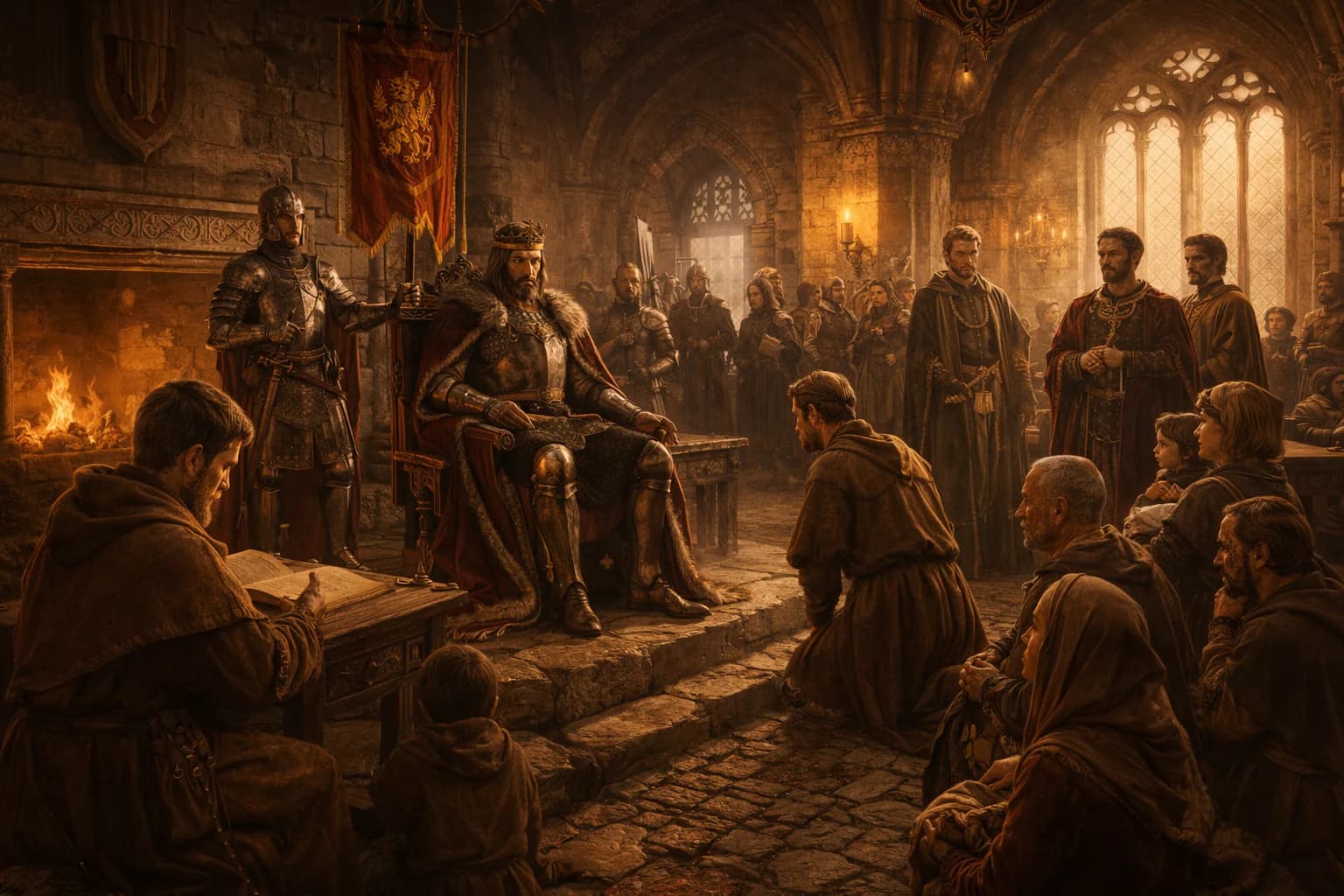
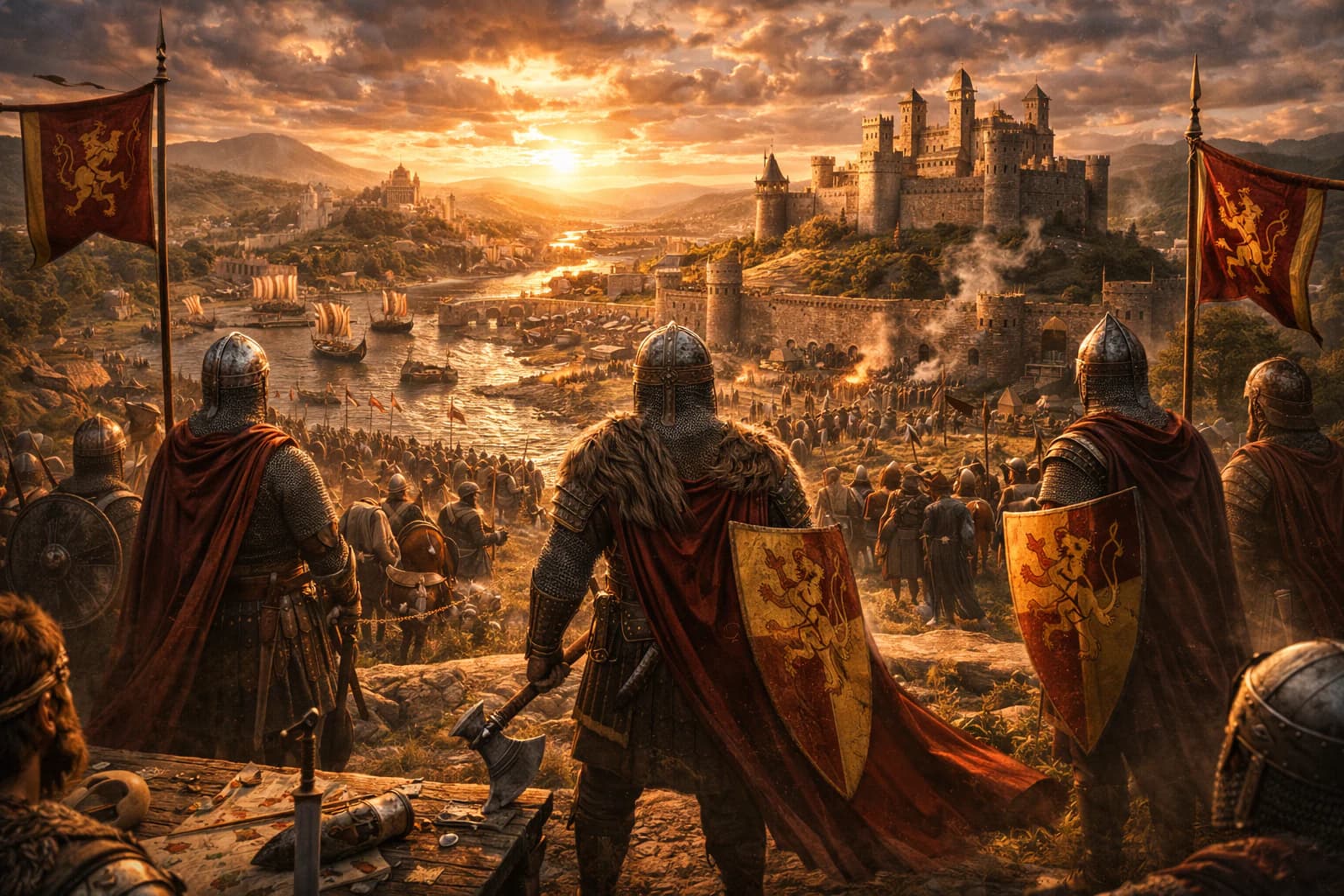
Richard I was born at Oxford in 1157, the third legitimate son of Henry II of England and Eleanor of Aquitaine. His world was not an English kingdom in isolation but an Angevin collection of lands: England, Normandy, Anjou, Maine, Touraine and, through Eleanor, Aquitaine. French was his political language, western France his main arena, and aristocratic warfare his education. Richard grew up in a family of formidable personalities and violent rivalries. Henry II was a master of law and power; Eleanor was one of Europe's greatest heiresses and political actors. From childhood, Richard inherited not a settled crown but a set of territories that had to be held by negotiation, fear, loyalty and war.
1172

Duke of Aquitaine

Richard was invested with Aquitaine in his youth, and the duchy became the forge of his military character. Aquitaine was wealthy, cultured and difficult to govern, filled with nobles who resisted central authority and expected their duke to negotiate as much as command. Richard chose command. He fought repeated campaigns against rebellious lords, captured strongholds and developed a reputation for speed, courage and severity. He also absorbed the troubadour culture and chivalric values of his mother's lands. Aquitaine made him more than an English prince. It made him a southern French warlord with a taste for glory and a practical knowledge of how castles, hostages, money and reputation held lordship together.

1170s–1180s

Rebellion Against Father

The Angevin family was a political battlefield. Henry II tried to distribute lands among his sons while retaining ultimate control, a formula almost designed to create resentment. Richard joined the great rebellion of 1173-1174 alongside his brothers and with Eleanor's support, though Henry defeated them. Later conflicts continued as Richard fought to secure Aquitaine and his place in the succession. By the late 1180s he allied with Philip II of France against his own father. Henry died in 1189 after defeat and humiliation, reportedly shocked to find his youngest son John among those who had betrayed him. Richard's accession therefore came through family war, not smooth dynastic affection. Medieval kingship often began at home as a contest before it became a crown.

1189

Becomes King

Richard inherited the throne after Henry II's death in 1189. His coronation in Westminster was magnificent but shadowed by anti-Jewish violence in London and later massacres in English towns, exposing the volatility of crusading enthusiasm and royal transition. Richard's central priority was the Third Crusade, launched after Saladin captured Jerusalem in 1187. To fund it, he sold offices, rights and lands, joking according to later tradition that he would sell London if he could find a buyer. England was not irrelevant to him, but it was not where his imagination lived. It was a wealthy kingdom whose administration could finance his larger Angevin and crusading ambitions.

1189–1192

Third Crusade

Richard's crusade made his legend. On the journey east he conquered Cyprus, a strategic prize that strengthened the crusader position and later became a key eastern Mediterranean base. At Acre he joined the long siege and helped force the city's surrender in 1191, though disputes with Philip II of France and Duke Leopold of Austria poisoned relations among the crusaders. Richard's execution of Muslim prisoners after Acre remains one of the darkest acts of the campaign. Yet militarily he was formidable. He marched down the coast under constant pressure, maintained discipline and won a major victory at Arsuf. The crusade showed his virtues and vices together: courage, organisation and tactical brilliance, alongside brutality, pride and political friction.

1191–1192

Conflict with Saladin

The conflict between Richard and Saladin has often been romanticised as a meeting of noble opponents. They never met in person, but they negotiated through envoys, exchanged gifts and watched one another's strategy closely. Saladin was trying to preserve Muslim unity and prevent Jerusalem from falling again; Richard needed a victory that would justify the crusade but lacked the resources to hold Jerusalem securely if he took it. Twice the crusaders came close, and twice Richard judged the risk too great. The final treaty in 1192 allowed Christian pilgrims access to Jerusalem while leaving the city under Muslim control. For crusading idealists, it was incomplete. For a commander reading supply lines and politics, it was the best settlement available.

1192–1194

Capture and Ransom

Richard's journey home became a political disaster. Disguised and travelling through hostile territory, he was captured near Vienna by Leopold of Austria, whom he had offended during the crusade, and then transferred to Emperor Henry VI. Holding a crusader king prisoner was scandalous but profitable. The ransom demanded was enormous, around 150,000 marks, and England was taxed heavily to raise it. Richard's brother John and Philip II of France exploited his absence, trying to carve up his authority. The episode shows the cost of Richard's style of kingship. His courage took him across the world; his capture made his subjects pay for the risks of his glory.

1194–1199

Final Campaigns

Richard returned in 1194 and quickly reasserted control, forgiving John after a theatrical submission but turning most of his energy toward war with Philip II. The struggle was not a sideshow. The Angevin empire's French lands were the core of Richard's political inheritance, and Philip was the most dangerous Capetian king yet faced by the Plantagenets. Richard campaigned relentlessly, recovered ground and built Chateau Gaillard above the Seine as a statement of military engineering and defiance. His administrative ministers kept England functioning while he fought abroad. This absence later damaged his reputation as an English king, but in Angevin terms his priorities made sense: lose Normandy and the whole family empire would begin to collapse.

1199

Death and Legacy

Richard died not at Jerusalem or in a grand field battle, but during the siege of the minor castle of Chalus-Chabrol in 1199. A crossbow bolt wounded him; infection followed. He forgave the young crossbowman according to some accounts, though the man was reportedly executed after Richard's death. His body was divided for burial: entrails at Chalus, heart at Rouen, body at Fontevraud near his parents. The symbolism fits a divided life. Richard was king of England, duke of Normandy and Aquitaine, crusader, poet, commander and Angevin prince. His legend as the Lionheart is powerful because it rests on real military brilliance. But his reign left heavy taxation, long absence and a fragile succession. John inherited the throne and soon lost much of what Richard had spent his life defending.

Continue in context

Connected stories

Move from the profile into the wider events and settings this figure belongs to.

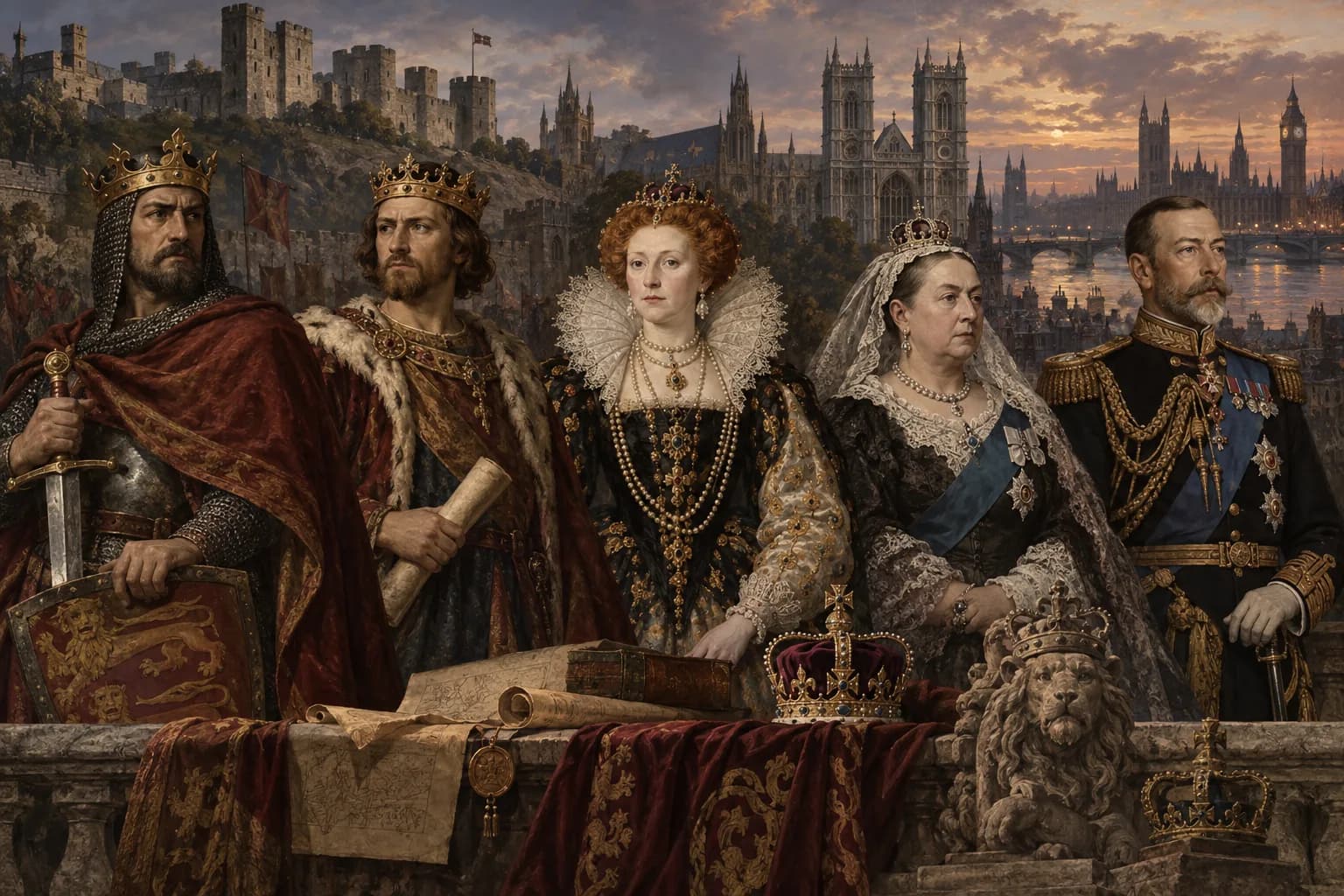
British Monarchs lineage
Lineage42 rulers
British Monarchs
1066 CE–present

Trace the English and later British monarchy from William I to today.

View lineage
Tertiary paths

Content note

This profile is written for educational use and connects to related Stories of History pages. The main portrait is an AI-assisted historical reconstruction, included as an illustrative aid rather than documentary evidence. Image policy

References

Sources & Further Reading

Reliable reference works, archives and reading paths connected to this profile.

Further reading

  1. Encyclopaedia Britannica, Search results for Richard I,” accessed June 2026.Open source
  2. WorldCat, Books and library holdings for Richard I,” accessed June 2026.Open source

Primary sources

  1. Library of Congress, Search results for Richard I,” accessed June 2026.Open source

Reviewed claim sources

Loading reviewed claim sources...

A weekly route through history

Find out first about the latest published stories, feature notes and occasional Premium offers in one weekly email.