People

Henry II

Henry II was King of England from 1154 to 1189 and the first Plantagenet ruler. He restored royal authority after the Anarchy, expanded common law, ruled the Angevin empire, and clashed with Thomas Becket and his own family.

Born
1133 CE
Died
1189 CE
Role
Plantagenet king

Plantagenet king (1133–1189)

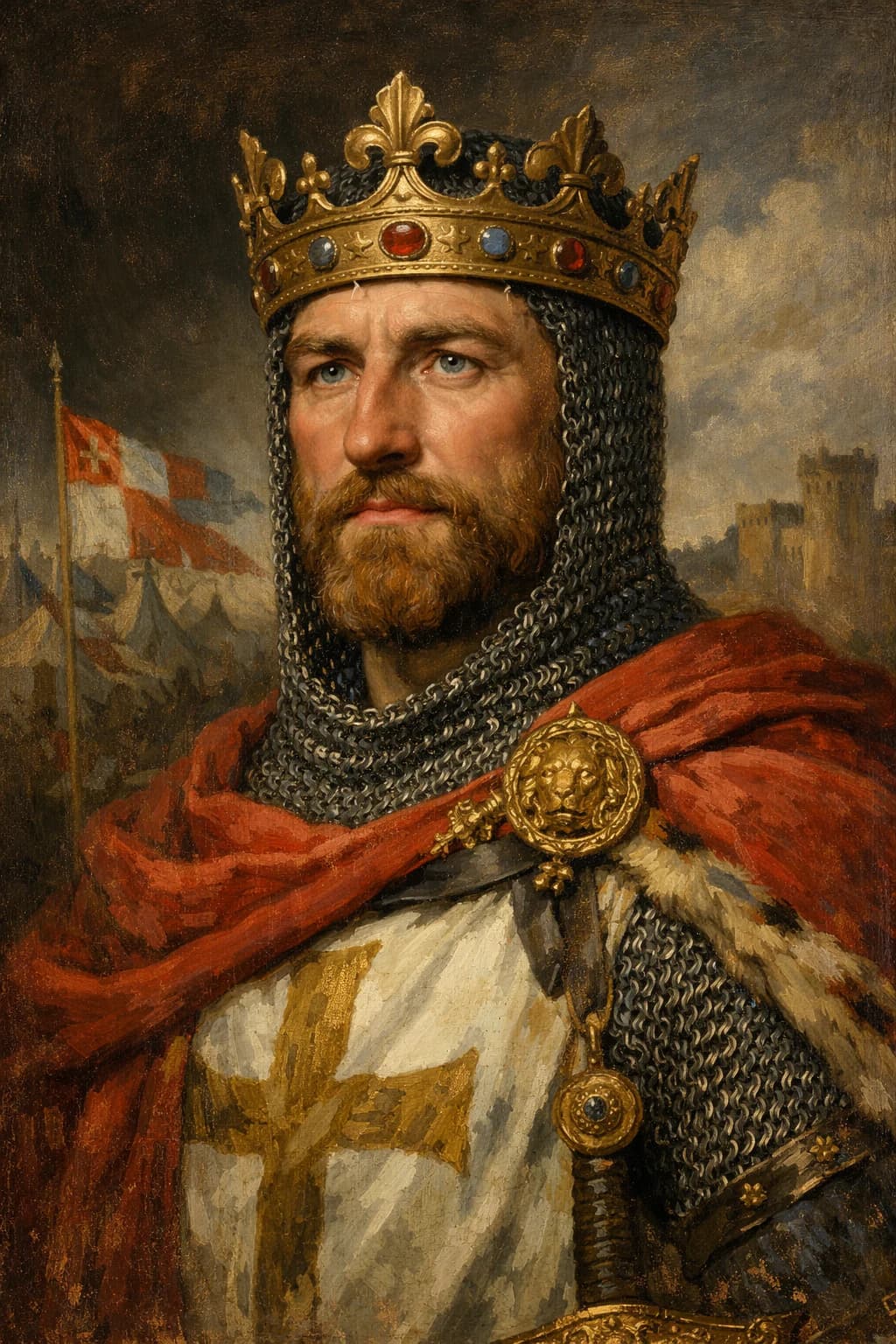
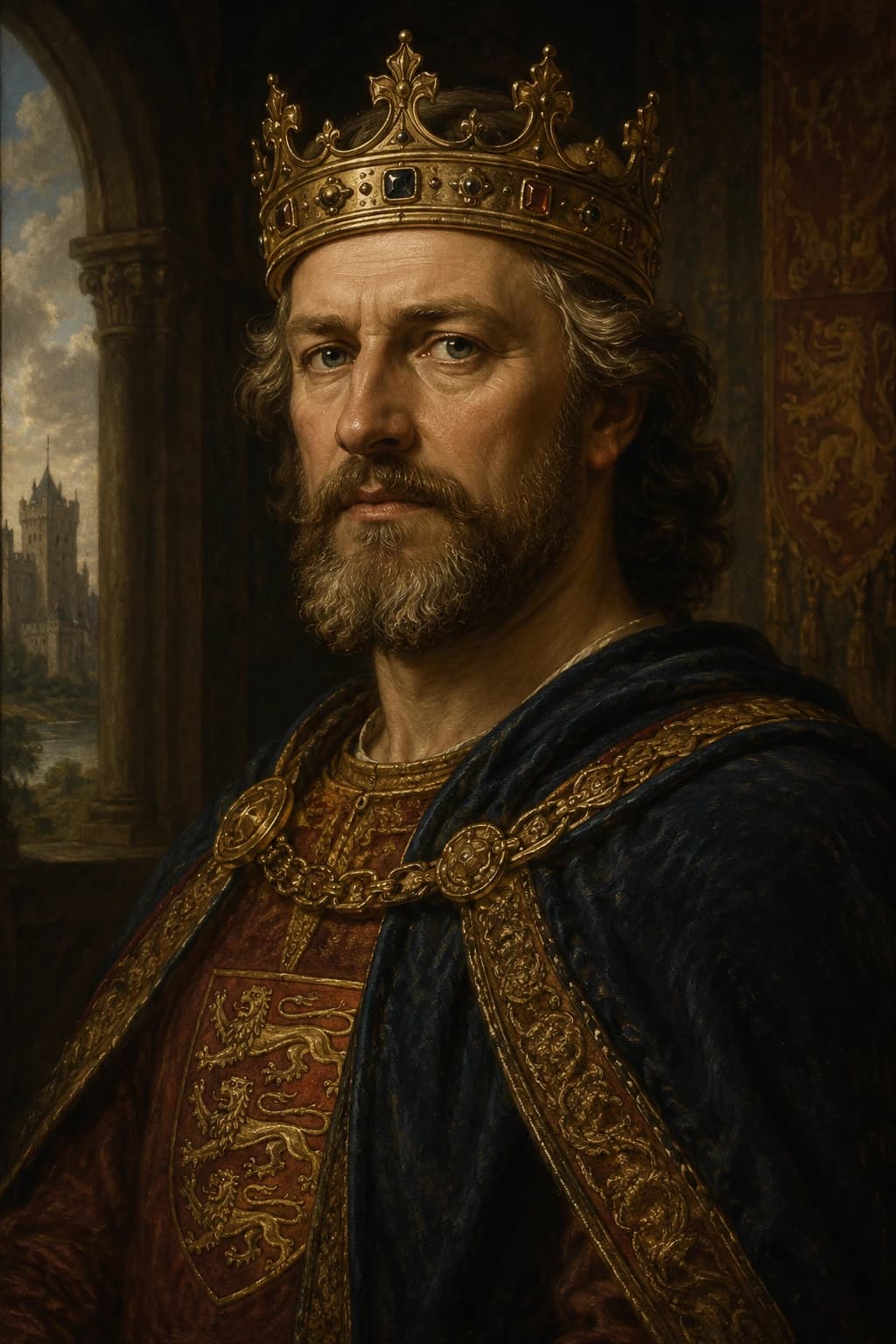
AI-generated portrait of Henry II in medieval royal attire
AI-assisted historical reconstruction

An illustrative reconstruction based on historical context. It is not a photograph or documentary likeness. Image policy

Quick answer

Henry II was King of England from 1154 to 1189 and the first Plantagenet ruler. He restored royal authority after the Anarchy, expanded common law, ruled the Angevin empire, and clashed with Thomas Becket and his own family.

Born
1133 CE
Died
1189 CE
Role
Plantagenet king
Years
1133-1189 CE
Facts

Henry II timeline facts

Selected specifics from this profile's life story.

1133
Born into conflict

Henry II was born in 1133 to Empress Matilda and Geoffrey of Anjou, during the civil war that made royal authority in England dangerously fragile.

1150s–1160s
Expanding the realm

Henry ruled England, Normandy, Anjou, Maine, Touraine, and Aquitaine, making him more territorially powerful than the French king he formally owed homage to for French lands.

1170s–1180s
Family rebellions

Henry's sons, supported at times by Eleanor of Aquitaine and the French crown, repeatedly rebelled against his refusal to surrender real power.

post-1189
Enduring influence

Henry II's Angevin empire fragmented after his death, but his reforms in law, finance, and royal authority reshaped English government for generations.

Life Journey

Power, reform and the strain of empire

Follow the story in a more continuous narrative, with a reading mode that matches how much depth you want.

Complete chronology

1133

Born into conflict

Henry's childhood unfolded against the violence of the Anarchy, the long struggle between his mother Matilda and King Stephen. He inherited claims, enemies, and expectations before he inherited a crown. Through Matilda he was grandson of Henry I; through Geoffrey he belonged to the rising house of Anjou; through his own experience he learned what happened when kingship lost grip. Castles multiplied, magnates acted independently, and royal justice weakened. Henry's later hunger for order was not abstract. He had seen a kingdom in which central authority could be bargained away, defied, or ignored. That memory shaped the energetic, sometimes impatient ruler he became.
1140s–1150s

Inheritance and ambition

Henry's rise came through a remarkable sequence of inheritance, war, and marriage. He became Duke of Normandy in 1150, Count of Anjou after Geoffrey's death, and in 1152 married Eleanor of Aquitaine, one of Europe's most powerful heiresses, shortly after her marriage to Louis VII of France was annulled. The union brought Aquitaine into Henry's orbit and created a political formation stretching from the Scottish border to the Pyrenees. Historians call it the Angevin empire, though it was not a single unified state. It was a layered collection of lordships, customs, languages, and obligations. Henry's genius lay in moving through that complexity with speed and force.

1154

Claiming the crown

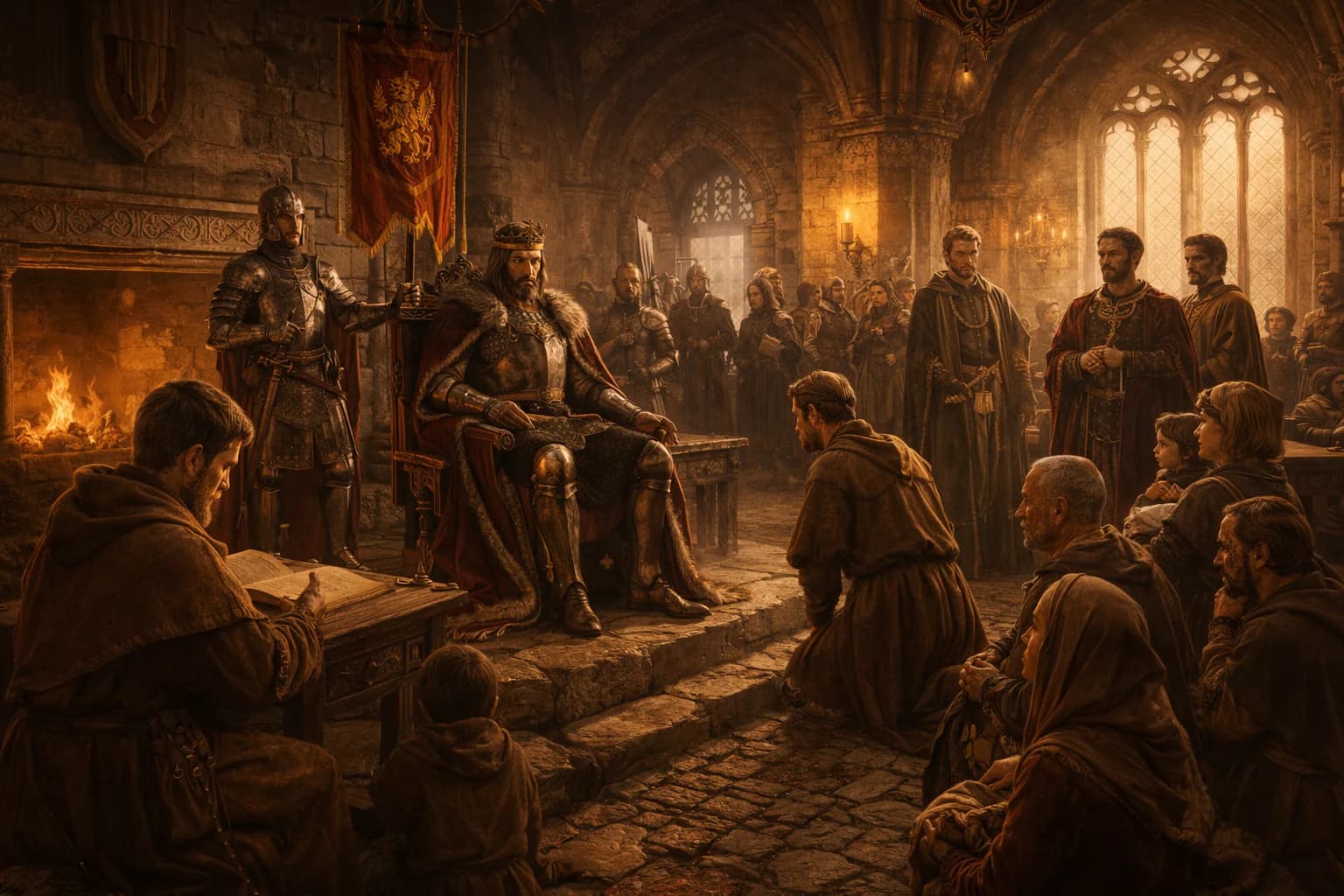
The Treaty of Wallingford had recognised Henry as Stephen's heir, and when Stephen died in 1154 the young Angevin ruler entered England with unusual expectations on him. He was not merely succeeding a king; he was expected to repair kingship itself. Henry moved against unauthorised castles, reclaimed royal lands, disciplined sheriffs, and reasserted rights that had drifted into private hands during the war. His early reign was a work of political recovery. Where Stephen had often had to negotiate weakness, Henry projected restless command. The settlement of the Anarchy gave him the throne, but his own administrative drive gave the throne renewed force.

1150s–1160s

Expanding the realm

Henry's territories made him one of the dominant rulers of twelfth-century Europe, but their scale created permanent strain. In England he was king; in Normandy and Anjou he was duke or count; in Aquitaine he ruled through Eleanor's rights and local expectations that resisted northern control. He owed homage to the Capetian king of France for continental lands while often possessing far greater resources than his overlord. This unstable arrangement demanded constant travel, negotiation, military readiness, and family management. Henry's realm looked magnificent on a map, but it was held together by personal authority rather than shared institutions. Its strength and fragility were the same thing.

1160s–1170s

Legal reforms

Henry II's most lasting achievement was legal. Through measures associated with the Assizes of Clarendon and Northampton, the development of possessory assizes, wider use of royal writs, and the work of itinerant justices, he made the king's courts more accessible and more profitable. Local disputes over land, crime, and rights increasingly passed through procedures connected to royal authority. The point was not humanitarian reform in the modern sense. Henry wanted order, revenue, and control. Yet the effect was transformative. Law became more standardised, records mattered more, and the crown presented itself as the place where justice could be obtained. Later English common law grew from this hard practical soil.

1160s–1170

Conflict with Becket

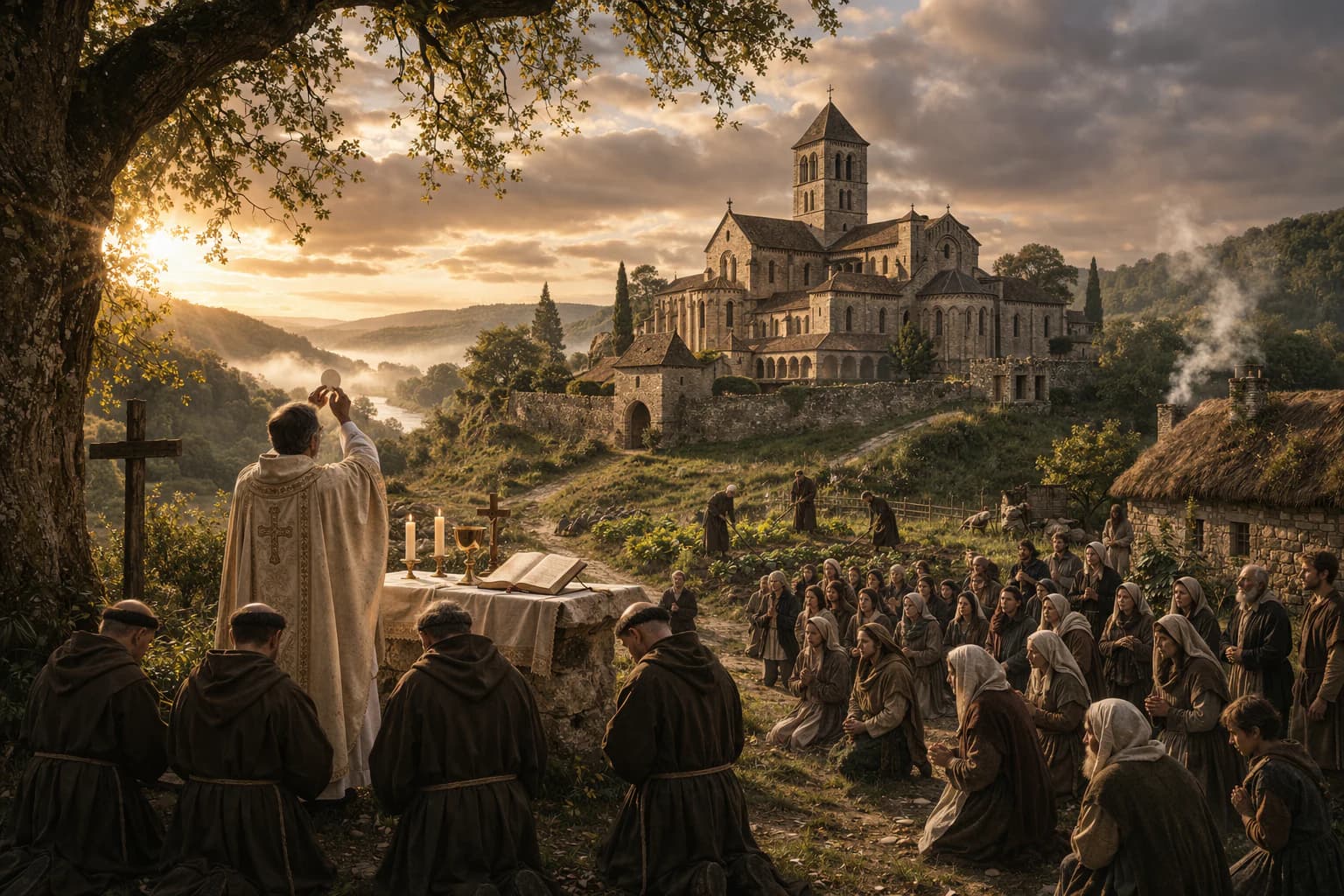
Henry expected Thomas Becket to help bring the church into closer alignment with royal government. Instead, after becoming Archbishop of Canterbury in 1162, Becket recast himself as a defender of ecclesiastical liberty. The dispute centred on clerical privilege, appeals to Rome, and the Constitutions of Clarendon, but it also became a contest of temperament. Both men turned principle into personal battle. Becket's exile, return, and renewed confrontation ended on 29 December 1170, when four knights murdered him in Canterbury Cathedral after taking the king's angry words as licence. Henry almost certainly did not order the killing in a formal sense, but he could not escape moral responsibility. Becket's martyrdom turned a political quarrel into a spiritual crisis.

1170s–1180s

Family rebellions

The Angevin empire was also a family problem. Henry had sons who expected lands and authority: Henry the Young King, Richard, Geoffrey, and John. He crowned the Young King during his lifetime but gave him little independent power, a recipe for frustration. In 1173-1174 a major revolt drew in his sons, Eleanor of Aquitaine, disaffected nobles, the king of France, and the king of Scots. Henry survived, but the pattern never fully disappeared. His family politics were shaped by a contradiction he could not solve: he needed heirs to govern a sprawling inheritance, but he distrusted any transfer of authority that might weaken his own control. The result was recurring rebellion inside the dynasty itself.

1180s

Declining strength

By the 1180s Henry's energy was no longer enough to master every fracture. The Young King died in 1183, Geoffrey died in 1186, and Richard emerged as both heir and rival. Philip II of France exploited Angevin family divisions with patient skill, encouraging rebellion and pressing territorial advantage. Henry's final defeat in 1189 forced him to accept humiliating terms, including recognition of Richard as heir. According to tradition, the discovery that his beloved youngest son John had also joined the rebellion broke him emotionally; whether or not the scene is embellished, it captures the truth of his final collapse. A ruler who had built power through relentless movement died cornered by the very dynasty meant to preserve his work.

post-1189

Enduring influence

Henry II died at Chinon in 1189, succeeded by Richard I. His continental empire would not survive intact, but his English institutions proved more durable than his dynastic settlement. Royal justice, administrative record-keeping, fiscal discipline, and the idea of the crown as the central guardian of order all gained force during his reign. His legacy is therefore not cleanly heroic. He was brilliant, abrasive, reforming, suspicious, and often ruthless. The Becket crisis revealed the violence that could follow unchecked anger; the family rebellions revealed the limits of personal rule over a vast composite realm. Yet Henry mattered because he turned post-civil-war kingship into a working engine. Few medieval English rulers did more to shape how power would actually operate.

Continue in context

Connected stories

Move from the profile into the wider events and settings this figure belongs to.

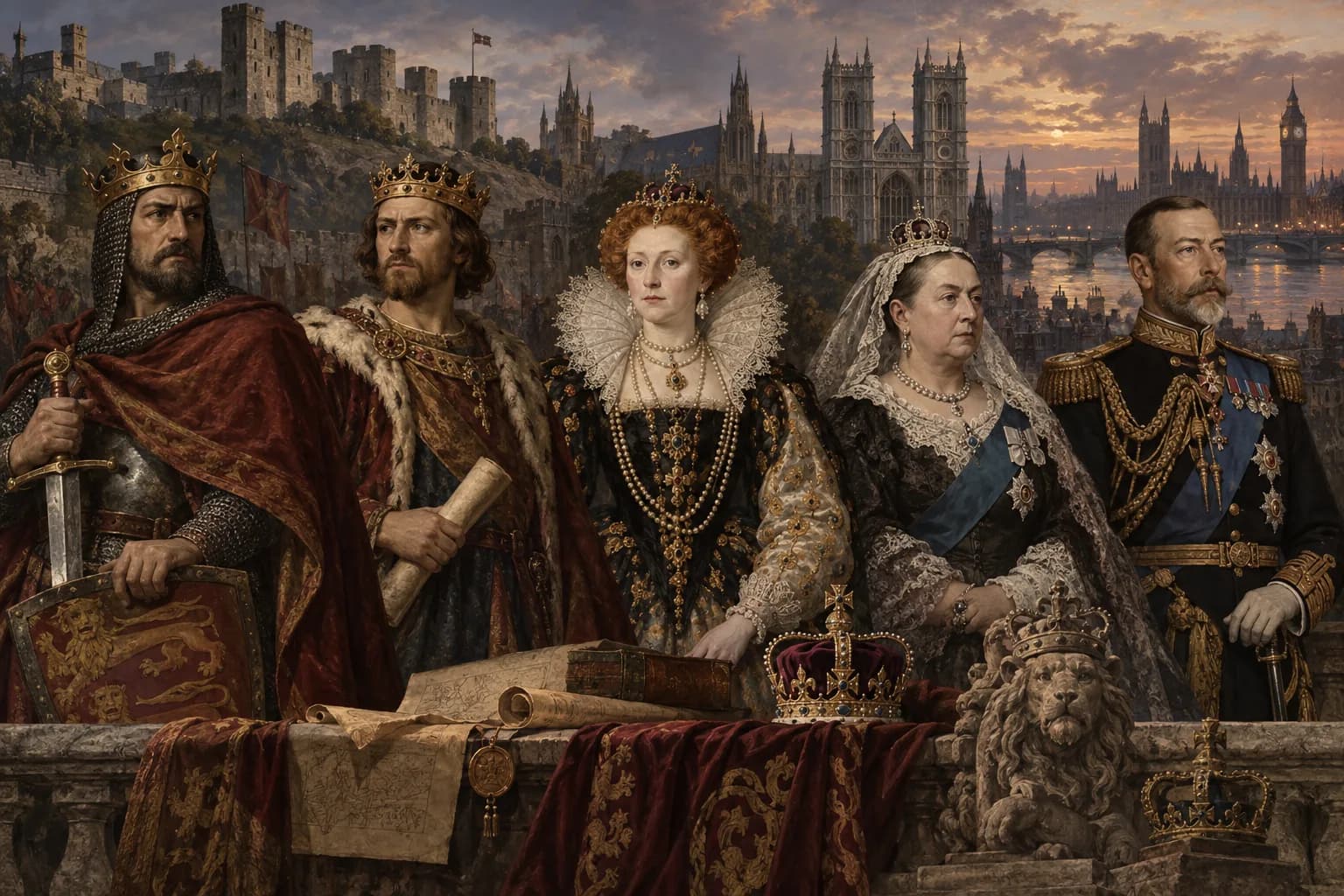
British Monarchs lineage
Lineage42 rulers
British Monarchs
1066 CE–present

Trace the English and later British monarchy from William I to today.

View lineage
Tertiary paths

Content note

This profile is written for educational use and connects to related Stories of History pages. The main portrait is an AI-assisted historical reconstruction, included as an illustrative aid rather than documentary evidence. Image policy

References

Sources & Further Reading

Reliable reference works, archives and reading paths connected to this profile.

Further reading

  1. Encyclopaedia Britannica, Search results for Henry II,” accessed June 2026.Open source
  2. WorldCat, Books and library holdings for Henry II,” accessed June 2026.Open source

Primary sources

  1. Library of Congress, Search results for Henry II,” accessed June 2026.Open source

Reviewed claim sources

Loading reviewed claim sources...

A weekly route through history

Find out first about the latest published stories, feature notes and occasional Premium offers in one weekly email.