← People

Ferdinand II

Ferdinand II, Holy Roman Emperor (1578–1637) was holy roman emperor. A Habsburg ruler determined to restore Catholic authority, he defeated the Bohemian revolt but helped widen a conflict that devastated communities and forced limits on imperial ambition.

Born
1578 CE
Died
1637 CE
Role
Holy Roman Emperor
Full name
Ferdinand II, Holy Roman Emperor
Also known as
Ferdinand II of Habsburg, Emperor Ferdinand II

Holy Roman Emperor (1578–1637)

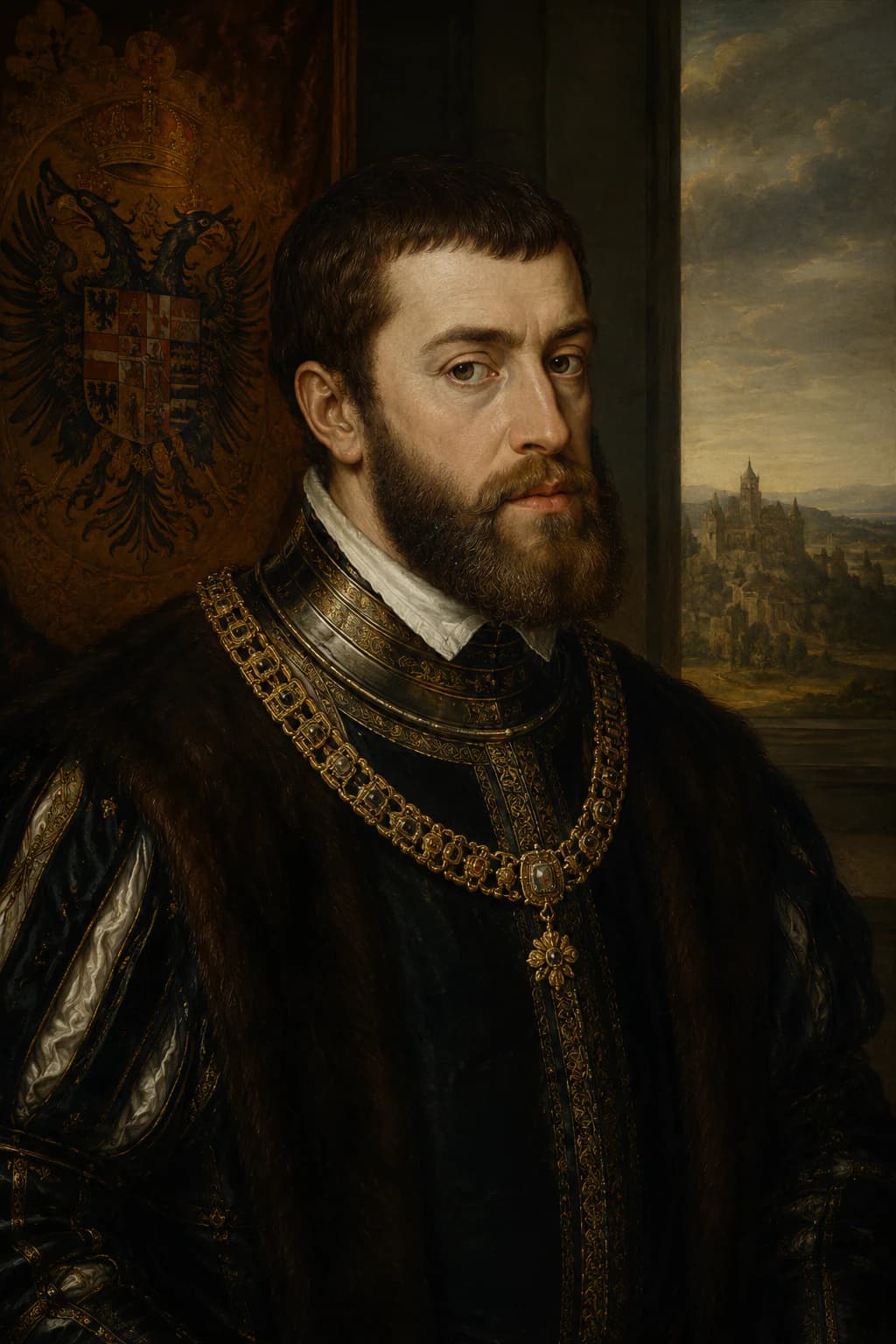
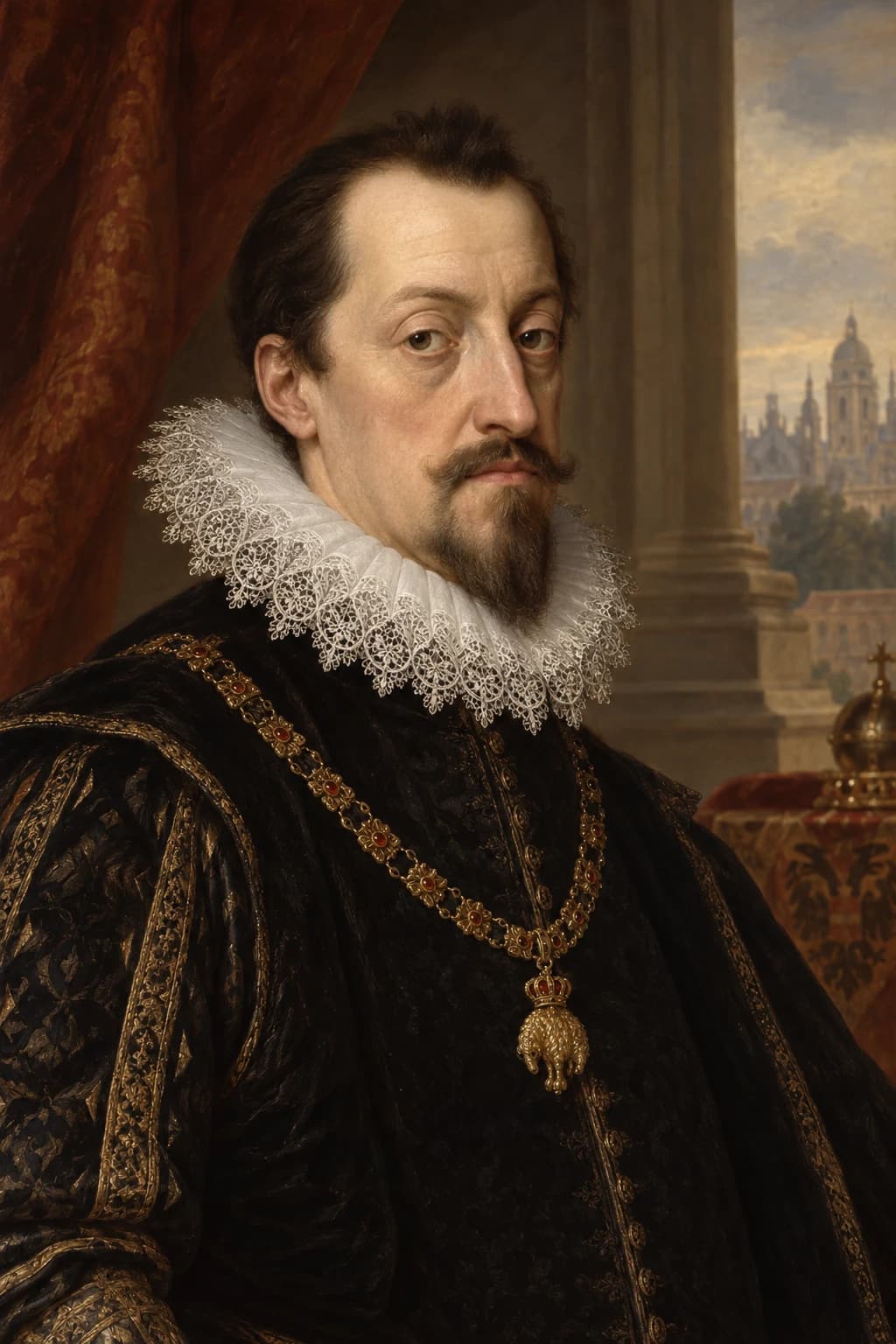
AI-generated portrait of Ferdinand II, Holy Roman Emperor in period clothing; an illustrative historical reconstruction, not a documentary likeness
AI-assisted historical reconstruction

An illustrative reconstruction based on historical context. It is not a photograph or documentary likeness. Image policy Attribution

Life Journey

The emperor whose victories could not end the war

Follow Ferdinand through religious enforcement, Bohemian rebellion and the escalating Thirty Years’ War.

Complete chronology

1578–1596

A Habsburg prince in Graz

The dynasty’s territories did not form a single uniform state. Ferdinand inherited responsibilities in Inner Austria, where religious divisions made government a contested undertaking. He began exercising personal rule in 1596. His commitment to Catholic renewal became a political programme as well as a religious conviction, bringing him into conflict with subjects and estates of other confessions.
1596–1617

Enforcing religious change

Ferdinand’s measures removed Protestant ministers and teachers and put pressure on communities to accept Catholic worship. These policies aimed to consolidate authority, not merely persuade individuals in a debate. Their effects included exclusion and migration as well as religious change. His experience encouraged the belief that firm government could rebuild unity through enforcement.

1617–1618

The Bohemian crown

Bohemia possessed traditions of estate participation and substantial religious diversity. Ferdinand’s reputation made his accession a source of anxiety for those who depended on existing protections. The dispute concerned the constitution of the kingdom as well as belief. Cooperation required trust that privileges would be respected, and that trust was already breaking down.

1618–1619

Rebellion and imperial election

Bohemian opponents challenged Habsburg officials and eventually selected Frederick of the Palatinate as their king. Ferdinand’s imperial election gave him a wider title during a crisis in his own dynastic lands. These were distinct contests: authority in Bohemia was disputed even while the electors recognised him within the empire. The overlap drew more rulers into the struggle.

1620

Victory at White Mountain

Habsburg forces and their allies broke the rebellion’s military position at White Mountain. Ferdinand could now impose reprisals and reorder the kingdom’s government. Opponents elsewhere still feared the consequences of his strengthened position. A decisive local defeat therefore failed to produce a general peace, illustrating how victory could shift the balance enough to encourage new resistance.

1621–1627

Rebuilding Bohemia by coercion

Ferdinand treated the defeated revolt as grounds for major changes. Confiscated property rewarded loyal supporters, while non-Catholics faced pressure to convert or leave. The 1627 settlement made the Bohemian crown hereditary in the Habsburg line and reduced the estates’ authority. These changes strengthened the monarchy through lasting losses for people whose rights and livelihoods had depended on the previous order.

1629

Success encourages a larger demand

Military advances encouraged Ferdinand to press a sweeping interpretation of religious restoration across the empire. The edict challenged possessions and arrangements on which Protestant territories relied. Even rulers concerned with their own autonomy had reason to resist the consequences. Religious conviction and imperial ambition reinforced each other, making accommodation harder at the moment Ferdinand appeared strongest.

1630–1634

Intervention and mistrust

The emperor faced pressure from princes as well as enemy armies. Wallenstein’s military resources made him valuable, but his independence made him suspect. Ferdinand’s changing treatment of him exposed the tension between a ruler and a commander capable of negotiating for himself. The killing at Eger removed the general without removing the larger problems of war, finance and trust.

1635–1637

Compromise without a final peace

Accommodation with many imperial estates offered a way to rebuild cooperation within the empire. The concessions of 1635 did not bring Sweden and France into a final settlement. Ferdinand secured his son’s succession but left him a war still consuming resources and lives. His reign shows both the force of dynastic government and the limits of trying to impose unity across a diverse realm.

Continue in context

Connected stories

Move from the profile into the wider events and settings this figure belongs to.

Tertiary paths

Content note

This profile is written for educational use and connects to related Stories of History pages. The main portrait is an AI-assisted historical reconstruction, included as an illustrative aid rather than documentary evidence. Image policy Image attribution

References

Sources & Further Reading

Reliable reference works, archives and reading paths connected to this profile.

Sources used

  1. Die Welt der Habsburger, “Ferdinand II,” accessed 2 October 2026.

    Life dates, Inner Austrian rule and accession chronology.

    Open source
  2. Die Welt der Habsburger, “Ferdinand II: the emperor metes out punishment,” accessed 2 October 2026.

    Bohemian reprisals, confiscations and the 1627 constitutional change; erroneous execution count omitted.

    Open source
  3. Die Welt der Habsburger, “Ferdinand II: an emperor’s fantasies of omnipotence,” accessed 2 October 2026.

    The Edict of Restitution and the limits of imperial success.

    Open source
  4. Die Welt der Habsburger, “The final years of Ferdinand II’s reign: defeats, a contract killing and an offer of peace,” accessed 2 October 2026.

    Swedish intervention, Wallenstein, Prague peace and succession.

    Open source

Further reading

  1. Encyclopaedia Britannica, “Search results for Ferdinand II,” accessed June 2026.Open source
  2. WorldCat, “Books and library holdings for Ferdinand II,” accessed June 2026.Open source

Primary sources

  1. Library of Congress, “Search results for Ferdinand II,” accessed June 2026.Open source

Reviewed claim sources

Loading reviewed claim sources...

A monthly route through history

Find out first about the latest published stories, feature notes and occasional Premium offers in one monthly email.