← People

Martin Luther

Martin Luther (1483–1546) was theologian and religious reformer. A monk whose challenge to indulgences became a break with Rome, he helped transform European Christianity while leaving a legacy also marked by hostility to rebellion and violent antisemitism.

Born
1483 CE
Died
1546 CE
Role
Theologian and religious reformer
Also known as
Luther, the Reformer, Martin Luther, the Reformer

Theologian and religious reformer (1483–1546)

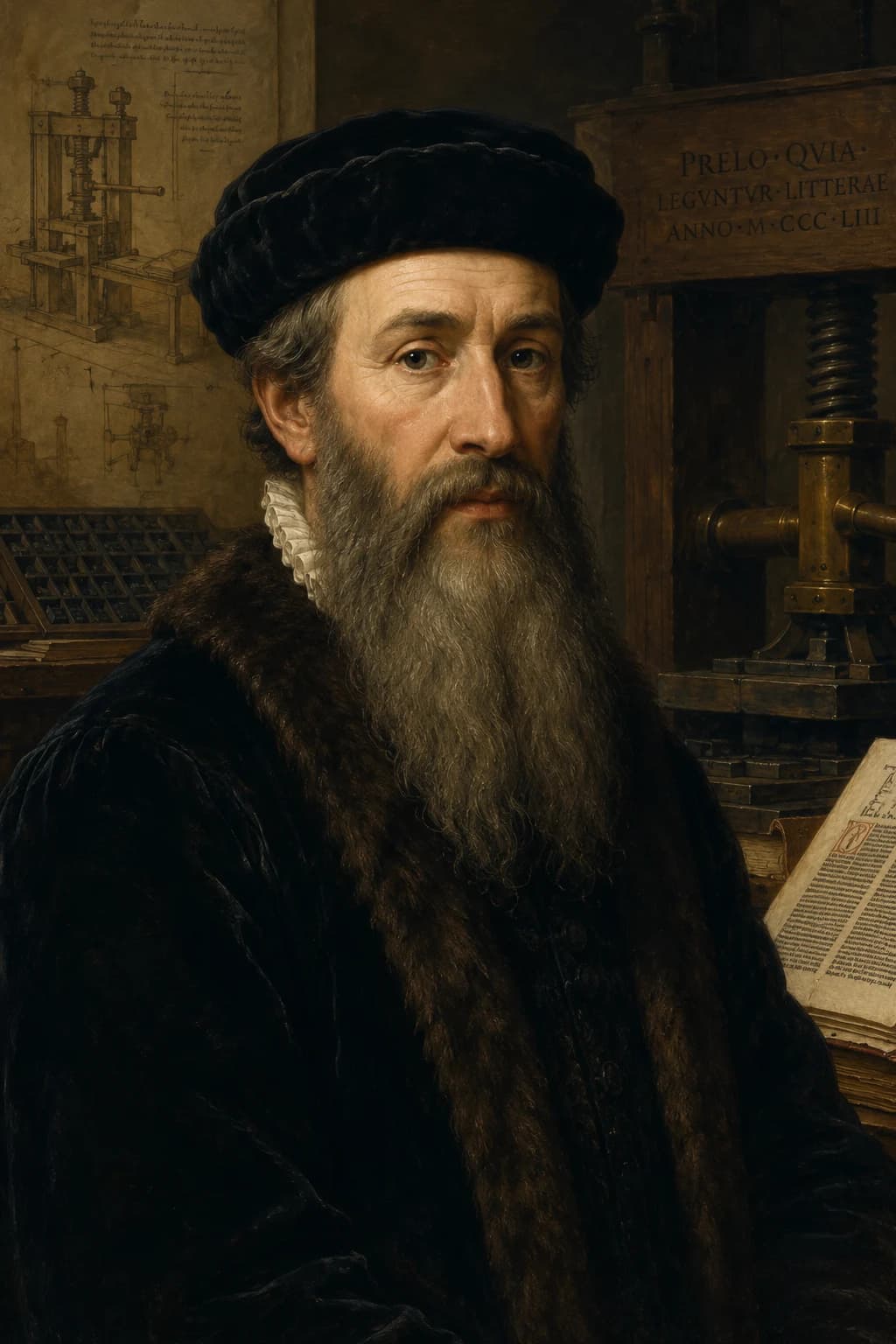
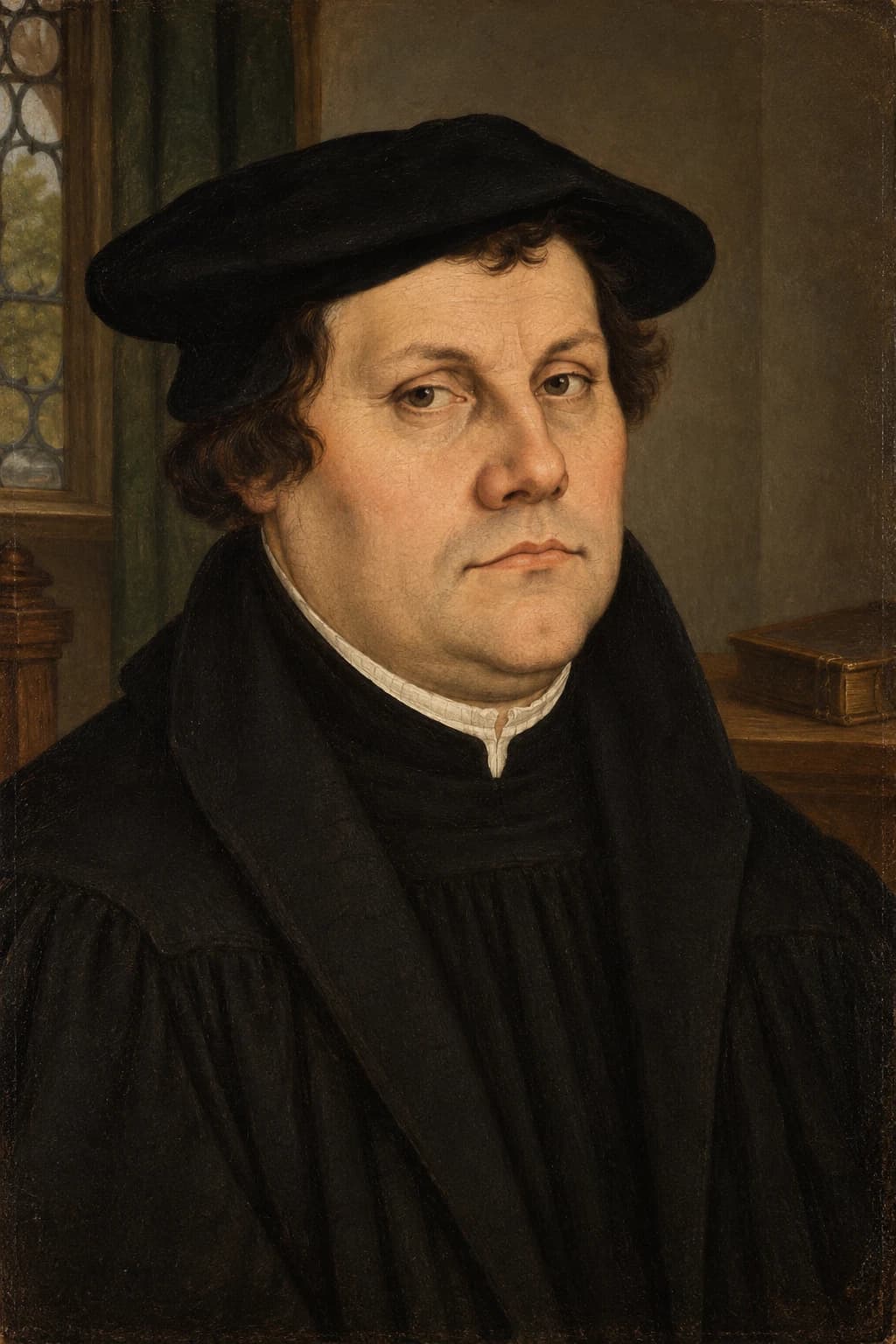
AI-generated portrait of Martin Luther in period clothing; an illustrative historical reconstruction, not a documentary likeness
AI-assisted historical reconstruction

An illustrative reconstruction based on historical context. It is not a photograph or documentary likeness. Image policy Attribution

Life Journey

The monk whose arguments divided an empire

Follow Luther from religious anxiety to reform, protection by princes and a deeply contested legacy.

Complete chronology

1483–1505

A student in a changing world

Luther’s family sought education as a route to advancement. University study placed him within the intellectual life of a society where Christian institutions shaped learning and public authority. His decision to enter an Augustinian monastery changed that expected career. The future reformer began inside the Church’s structures, not as an outsider seeking to abolish them.
1505–1512

A monk searches for assurance

Religious discipline and the study of scripture occupied Luther as he moved into teaching. His developing emphasis on faith and divine grace emerged from those concerns. Becoming a doctor of theology in 1512 gave him an institutional position from which to debate church practice. Scholarship and personal religious struggle supplied the foundations of his public challenge.

1517

The indulgence controversy

Indulgences concerned the remission of penalties associated with sin, but their promotion and financial setting troubled Luther. His letter to church authorities on 31 October 1517 included propositions for debate. Printing spread the dispute beyond its original audience. The documented challenge matters more than treating the later door-nailing image as a securely established eyewitness event.

1518–1521

The argument becomes a break

Responses from church authorities pushed Luther to explain what grounds could justify religious teaching. Scripture and faith became central to a challenge that extended beyond particular indulgence practices. The controversy now threatened the Church’s authority to define acceptable belief. Excommunication in 1521 placed Luther outside its communion, while his growing readership made the dispute harder to contain.

1521

Before the emperor at Worms

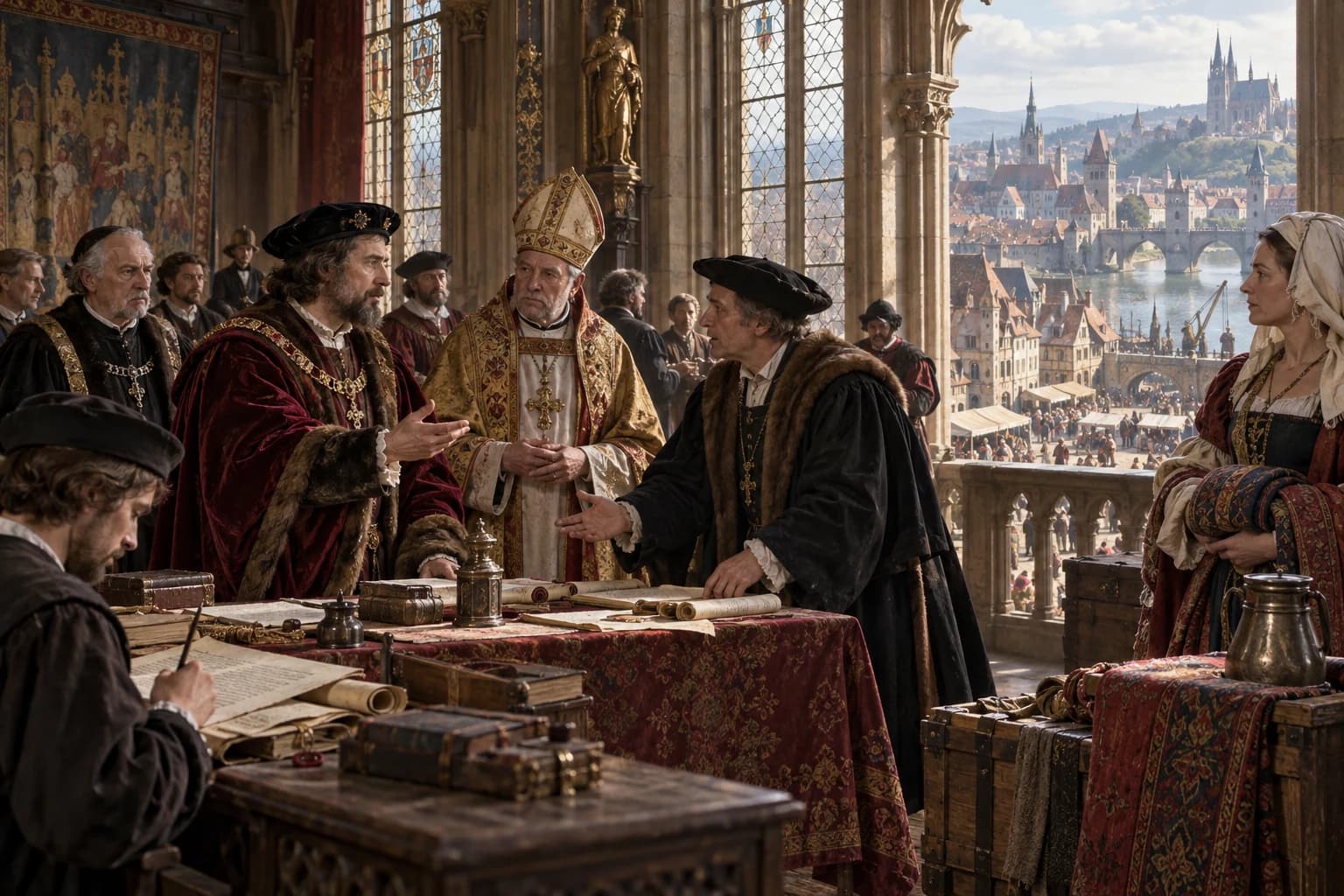
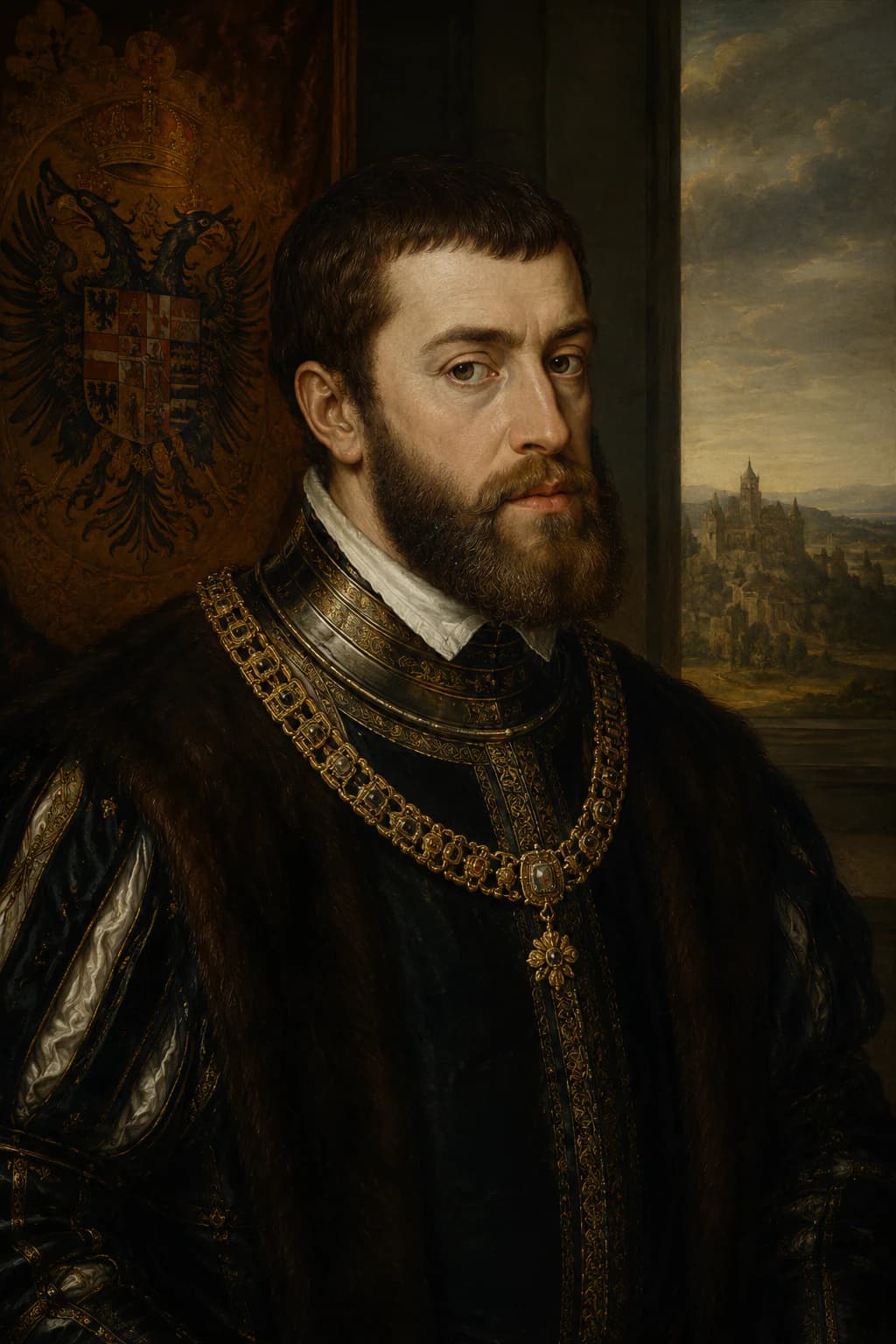
The hearing at Worms joined religious judgement to imperial government. Charles sought to defend the established faith, while Luther argued that his position required a convincing refutation. Condemnation did not guarantee arrest or silence. Support from territorial rulers gave the reformer protection and revealed how much imperial enforcement depended on cooperation within the realm.

1521–1522

Protection at the Wartburg

Luther’s seclusion supplied time for translation and writing while reform continued elsewhere. The German New Testament published in 1522 helped bring scripture to readers outside the learned Latin world. Translation involved interpretation as well as access, and printers helped distribute the result. His survival depended on political protection even while his authority rested on religious arguments.

1522–1534

Reform enters daily life

The movement now had to establish practices for churches, education and households. Luther resisted changes he considered too abrupt while promoting teaching and reformed worship. His marriage in 1525 made former monastic lives part of a new household. The Bible translation was a collaborative undertaking, showing that the Reformation developed through networks rather than one person’s work alone.

1525

The limits of his challenge

Some rebels drew on religious language to demand changes in their conditions. Luther rejected their use of force and sided decisively with established authorities. His writings against the insurgents exposed a sharp limit to his challenge: resistance to papal authority did not imply permission to overthrow secular rulers. That position had grave consequences in a conflict marked by violent repression.

1543–1546 and after

A divided and harmful legacy

The antisemitic work of 1543 cannot be set aside as a minor detail of Luther’s career. It promoted hostility and coercion against Jewish communities and became part of a longer history of Christian anti-Judaism. Luther died before the imperial religious settlement of 1555. His influence on worship, education and language coexists with ideas that later persecutors could draw upon.

Continue in context

Connected stories

Move from the profile into the wider events and settings this figure belongs to.

Tertiary paths

Content note

This profile is written for educational use and connects to related Stories of History pages. The main portrait is an AI-assisted historical reconstruction, included as an illustrative aid rather than documentary evidence. Image policy Image attribution

References

Sources & Further Reading

Reliable reference works, archives and reading paths connected to this profile.

Sources used

  1. Luther.de, “Martin Luther’s Life,” accessed 2 October 2026.

    Broad life chronology and Bible publication; the theses-door claim is treated separately.

    Open source
  2. Luther.de, “The 95 Theses and their Results,” accessed 2 October 2026.

    Indulgence controversy, correspondence and the distinction between evidence and legend.

    Open source
  3. City of Worms, “The 1521 Diet of Worms,” accessed 2 October 2026.

    Imperial hearing and the consequences of refusal.

    Open source
  4. Luther.de, “Luther’s Return to Wittenberg,” accessed 2 October 2026.

    Worship reform and the Peasants’ War; the page’s erroneous 1521 return date is not used.

    Open source
  5. United States Holocaust Memorial Museum, “Christian Persecution of Jews Over the Centuries,” accessed 2 October 2026.

    Luther’s antisemitic writings of 1543 and their place in a longer history of persecution.

    Open source

Further reading

  1. Encyclopaedia Britannica, “Search results for Martin Luther,” accessed June 2026.Open source
  2. WorldCat, “Books and library holdings for Martin Luther,” accessed June 2026.Open source

Primary sources

  1. Library of Congress, “Search results for Martin Luther,” accessed June 2026.Open source

Reviewed claim sources

Loading reviewed claim sources...

A monthly route through history

Find out first about the latest published stories, feature notes and occasional Premium offers in one monthly email.